• Home
  • LAB REPORTS
    • Reports & Prices
    • Verify Report
    • Report Lookup Guide
    • Testing FAQs
    • Reports Divider
    • Color Types
    • Gem Treatments
  • Resources
    • Hyperion • Inclusion Search
    • Sherlock • Inclusion Research
    • Siamese Twins • Paired Images
    • Four Treasures • Reference Database
    • Research Tools Divider
    • Articles
    • Books
    • Book/Instrument Reviews
    • Fine Images for Sale
    • Lotus Bibliography
    • Latest Lectures
    • Gemology Lectures
  • About
    • About Lotus
    • Our Staff
    • Trade Memberships
    • Lectures Divider
  • Contact

Lotus Gemology Logo

  • Home
  • LAB REPORTS
    • Reports & Prices
    • Verify Report
    • Report Lookup Guide
    • Testing FAQs
    • Reports Divider
    • Color Types
    • Gem Treatments
  • Resources
    • Hyperion • Inclusion Search
    • Sherlock • Inclusion Research
    • Siamese Twins • Paired Images
    • Four Treasures • Reference Database
    • Research Tools Divider
    • Articles
    • Books
    • Book/Instrument Reviews
    • Fine Images for Sale
    • Lotus Bibliography
    • Latest Lectures
    • Gemology Lectures
  • About
    • About Lotus
    • Our Staff
    • Trade Memberships
    • Lectures Divider
  • Contact
    • Verify Report

Articles

Judging Gems — A History of Gem Appraisal

Judging Gems — A History of Gem Appraisal

Jack M. Ogden
First Published: 18 May 2026

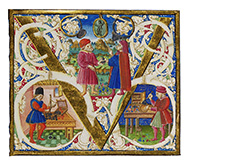
This article is a brief survey of the historical methods of describing and assessing the quality of coloured gemstones, tracing these from ancient times to the end of the 18th century. Examining historical texts and inventories reveals how features and flaws of gemstones were observed and used to determine their value. The article considers various historical periods, including the ancient world, medieval Muslim world, early India, and medieval Europe, highlighting the changing criteria and expertise involved in judging gems. This study demonstrates the historical depth of gem connoisseurship and its influence on modern gem assessment practices.
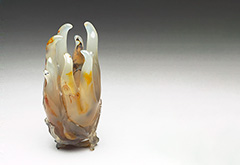
Taking a Shine: Agate Carvings for the Qing Court

Taking a Shine: Agate Carvings for the Qing Court

Julie Bellemare
First Published: 18 May 2026

During the Qing dynasty (1644–1911), court artisans carved agates with a high degree of technical ability and inventiveness. Agate wares produced during the reign of the Yongzheng (1723–35) and Qianlong (1736–1795) emperors exploit the full breadth of chromatic effects and degrees of translucency offered by these silicate stones. During this period, agate carvings were produced in high numbers, and imperial commissions made conscious use of the stone’s unique material qualities. Because the geological environment in which agates are formed affects their pigmentation, the range of agate colors recorded in historical documents and seen in surviving objects reflects a variety of geographical origins. This paper considers how agates were understood by scholars and appreciated by emperors at a time of territorial expansion and interest in new minerals.

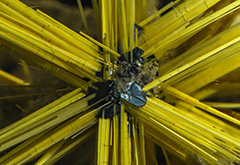
Beyond Rutile — The Micro-World of Quartz

Beyond Rutile — The Micro-World of Quartz

John I. Koivula and Nathan Renfro
First Published: 18 May 2026

Throughout the history of gemology, quartz has been a main target of gemological microscopists. A detailed study of the wide variety of inclusions in quartz is as complex an earth-science related mental exercise as any gemologist would ever care to undertake. This is not surprising, as quartz occurs in a wider range of geologic environments than any other mineral species, and the inclusions it holds testify to this.

Kenya’s Penny Lane Mine – A Study in the Rarity of Coloured Gemstones

Kenya’s Penny Lane Mine – A Study in the Rarity of Coloured Gemstones

John M. Saul
First Published: 18 May 2026

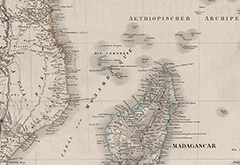
East Africa's Mozambique orogenic belt stretches from Eastern Antarctica through East Africa to the Arabian penninsula. The highly mineralized zone is the source of many rich gem deposits, one of which is detailed in this article.

From Baoshi to Fei Cui — Qing-Burmese Gem Trade, c. 1644–1800

From Baoshi to Fei Cui — Qing-Burmese Gem Trade, c. 1644–1800

SUN Laichen
First Published: 18 May 2026

This article traces the shift in Sino–Burmese gem exchange from a Ming-era emphasis on baoshi (寳石; rubies, sapphires, tourmalines and others) to the Qing embrace of Burmese jade, or fei cui (翡翠). Using Yunnan-centered sources, it argues that the term fei cui was first applied to Burmese jade in 1719 (Ni Tui), marking a conceptual turn that paralleled a market one: by the late 18th century, fei cui trade through Tengyue/Dali expanded rapidly, values soared, and top fei cui surpassed Xinjiang yu (nephrite) in price. Court taste—especially under Qianlong—accelerated demand, reorienting extraction and commerce in northern Burma. The study highlights evolving terminology, monopolies over ruby/sapphire, and growing jade-working industries, concluding that Chinese consumer preference was the primary external force shaping Burmese gem mining and exports from the Yuan–Ming through the Qing and into the modern era.

Echoes in Stone — Reflections on Gemology

Richard W. Hughes
First Published: 18 May 2026

An introduction to the articles in this special issue of the Chinese Journal of Gems & Gemmology, edited by Lotus Gemology's Richard W. Hughes and first published in May 2026.

Chinese Gemmological Education — Past and Future

Chinese Gemmological Education — Past and Future

Yang Mingxing, Zhang Qian, Shen ('Andy') Haitian, Yuan Xinjiang
First Published: 18 May 2026

Gemmology in China has existed for many millennia, but has undergone rapid change and development in the past three decades. Today China is training more gemmologists than the rest of the world combined and has become the leader in the field.

Emeralds from the Silk Roads — From Myth to Reality

Emeralds from the Silk Roads — From Myth to Reality

Marie-Laure Cassius-Duranton, Vincent Pardieu and Stefanos Karampelas
First Published: 18 May 2026

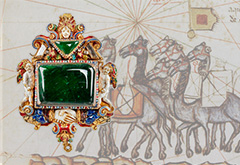
The earliest known emerald mines are thought to have been in Egypt. However recent discoveries suggest that emerald may have also been known from Central Asia.

Thin films in Russian emerald

Blooming Bouquet: Thin Films in Russian Emerald

E. Billie Hughes
First Published: 3 February 2026

Thin films create a bouquet of color inside a Russian emerald.

metal sulfide crystal in spinel

Metal Sulfide in Spinel

E. Billie Hughes
First Published: 3 February 2026

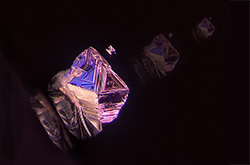
A strikingly textured crystal is suspended within a pink spinel.

Results 11 - 20 of 126 Page 2 of 13
  • 1
  • 2
  • 3
  • 4
  • 5
  • 6
  • 7
  • 8
  • 9
  • 10

LOTUS GEMOLOGY CO. LTD.
Silom 19 Bldg,
Suite 411, 4th Fl.
45/1 Soi 19, Silom Rd
Bangkok 10500, Thailand

+66 (02) 117 3616
+66 (0)9 9229 8646

  • Facebook
  • Instagram
  • HOME PAGE
  • ABOUT LOTUS
  • GEMOLOGY REPORTS
  • CONTACT LOTUS
  • BOOKS
  • ARTICLES
  • LECTURES
  • IMAGES FOR PURCHASE
  • REPORT LOOKUP
  • HYPERION INCLUSION DATABASE
  • SHERLOCK INCLUSION RESEARCH
  • FOUR TREASURES REFERENCE DATABASE
Memberships • Thanks • Privacy Policy • Site Map
© 2013–2026 Lotus Gemology. All Rights Reserved.