Padparadscha Sapphire Inclusions
Explore padparadscha sapphire inclusions in Hyperion, the Lotus Gemology inclusion database. Hyperion contains photomicrographs of inclusions and internal features in natural padparadscha sapphires, documented with information on geographic origin, treatment, lighting conditions, field of view, photographer and published references.
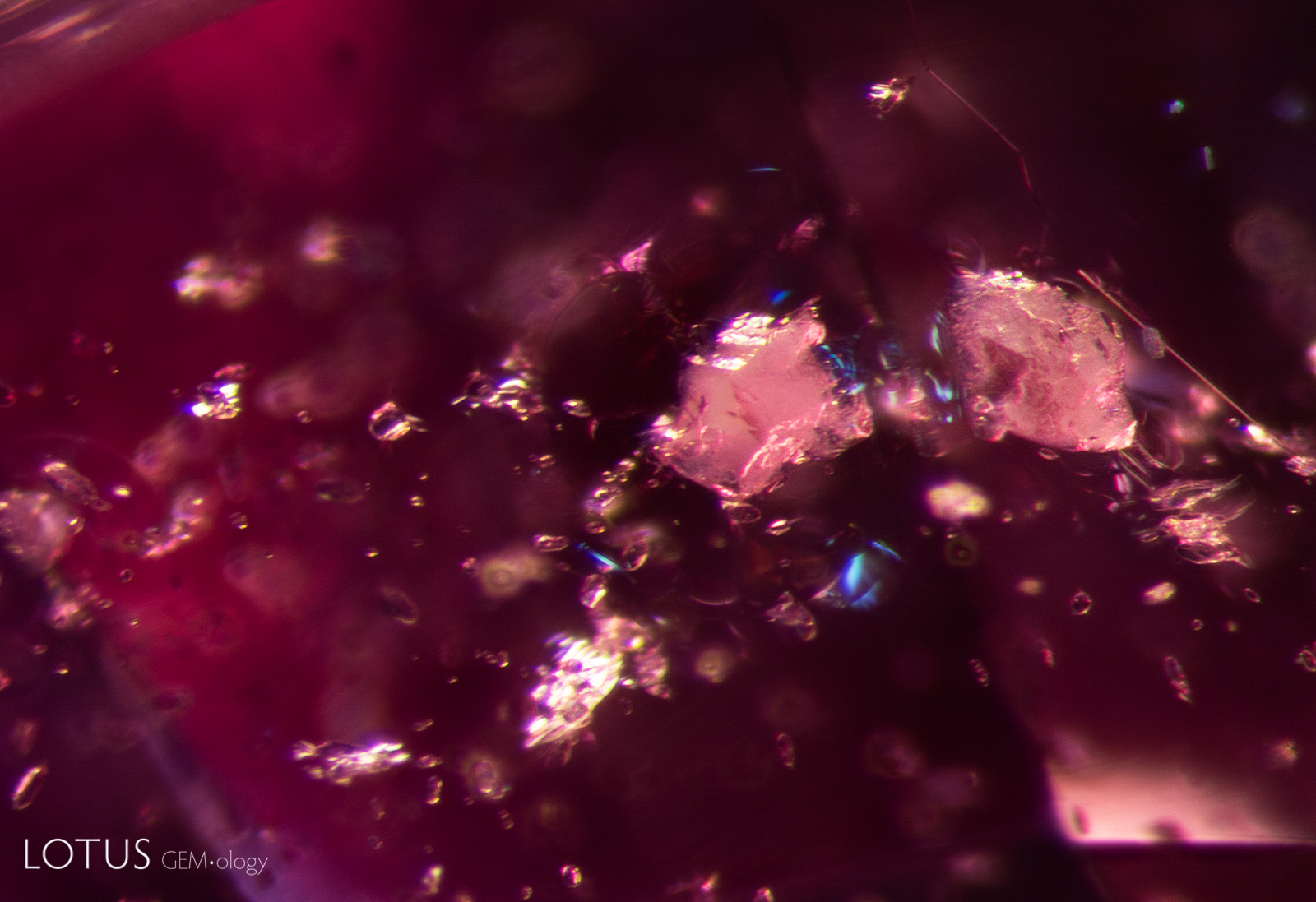
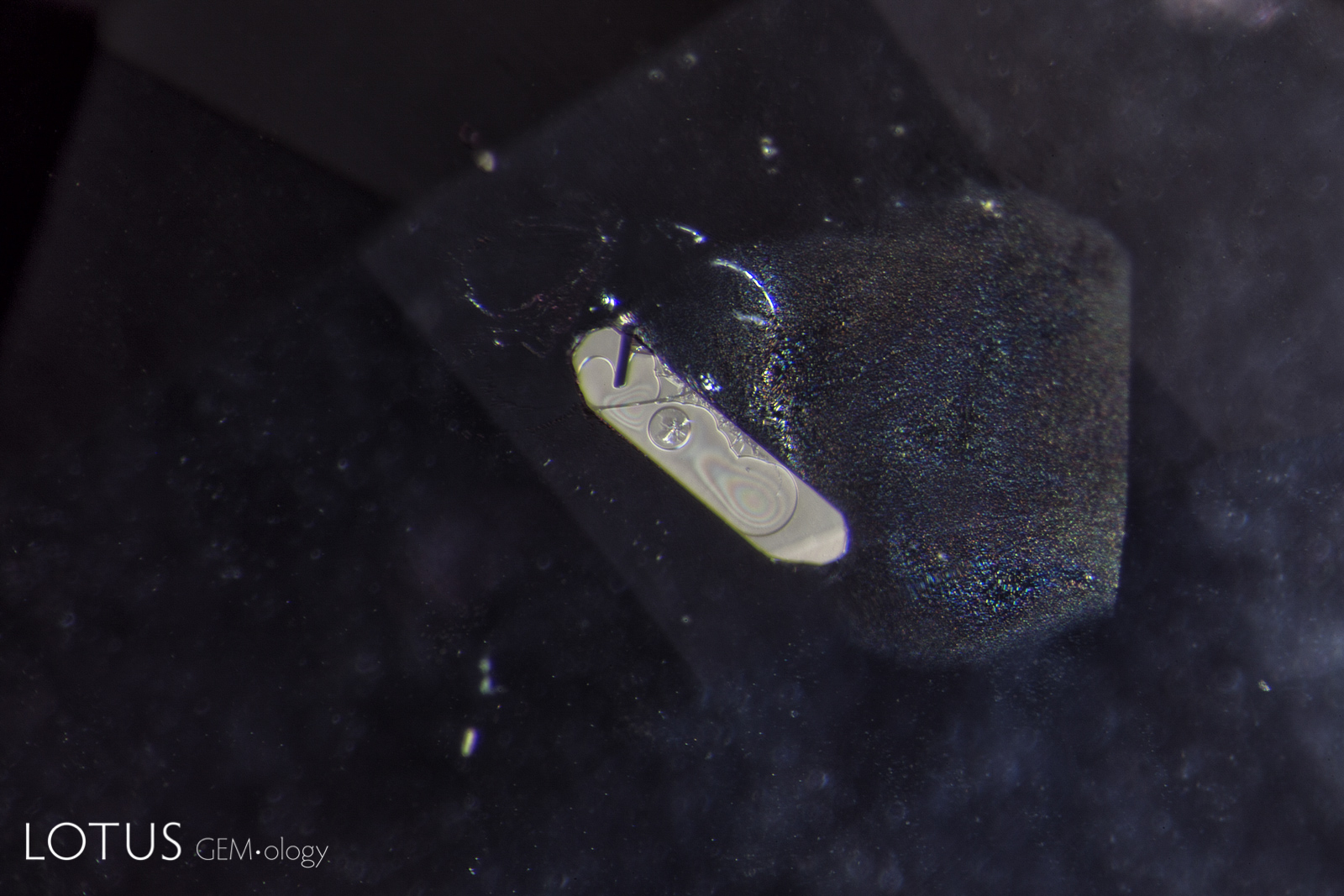
A blocky, white crystal of what is either carpathite or analcime stands out in this Madagascar sapphire.
Natural Padparadscha Sapphire •
Madagascar •
Enhancements:
None Detected (None) •
Lighting Conditions:
Dark Field + Diffuse Fiber Optic
Photographer:
E. Billie Hughes •
Image Number:
A-003-6226-1
• Field of View = 2mm
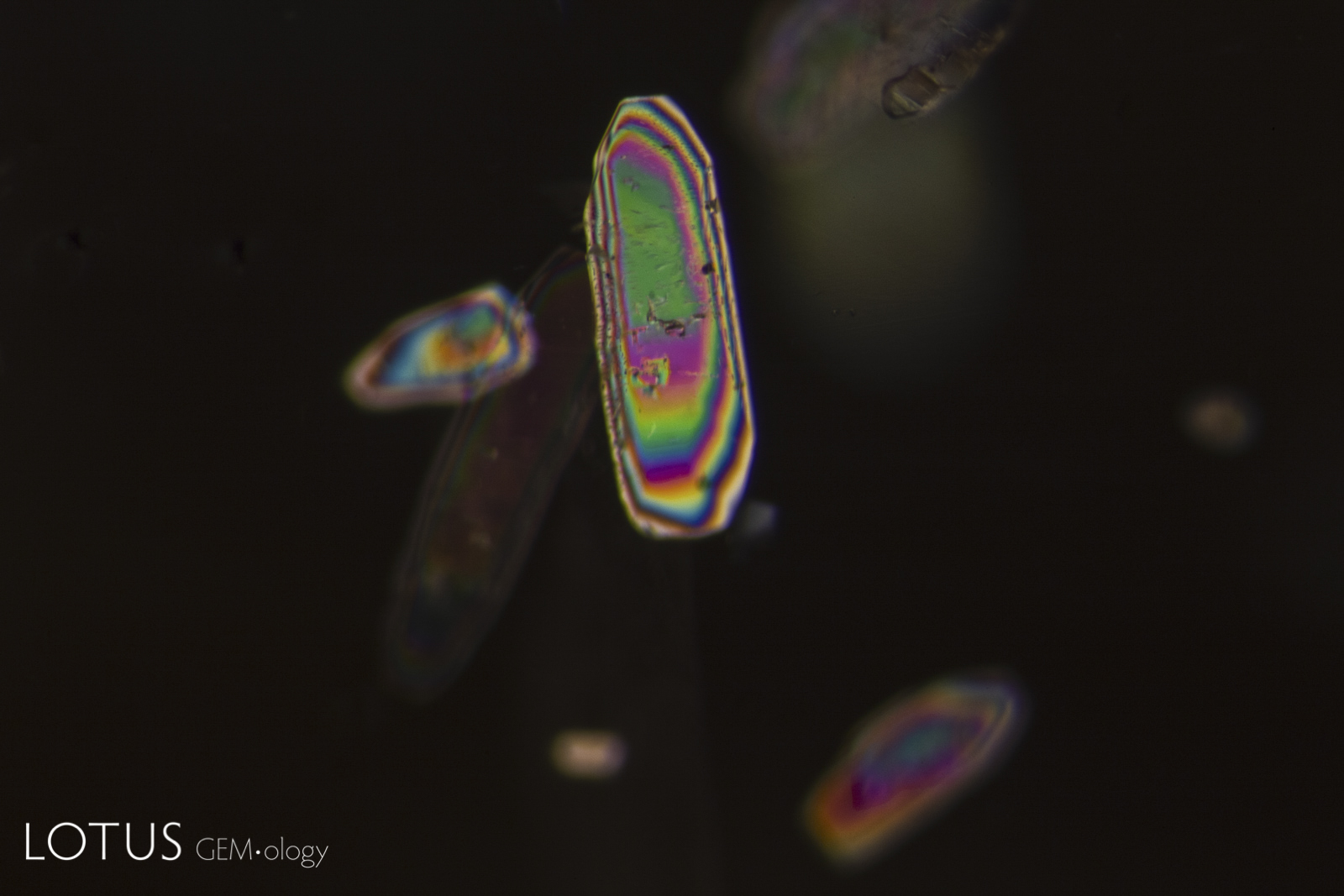
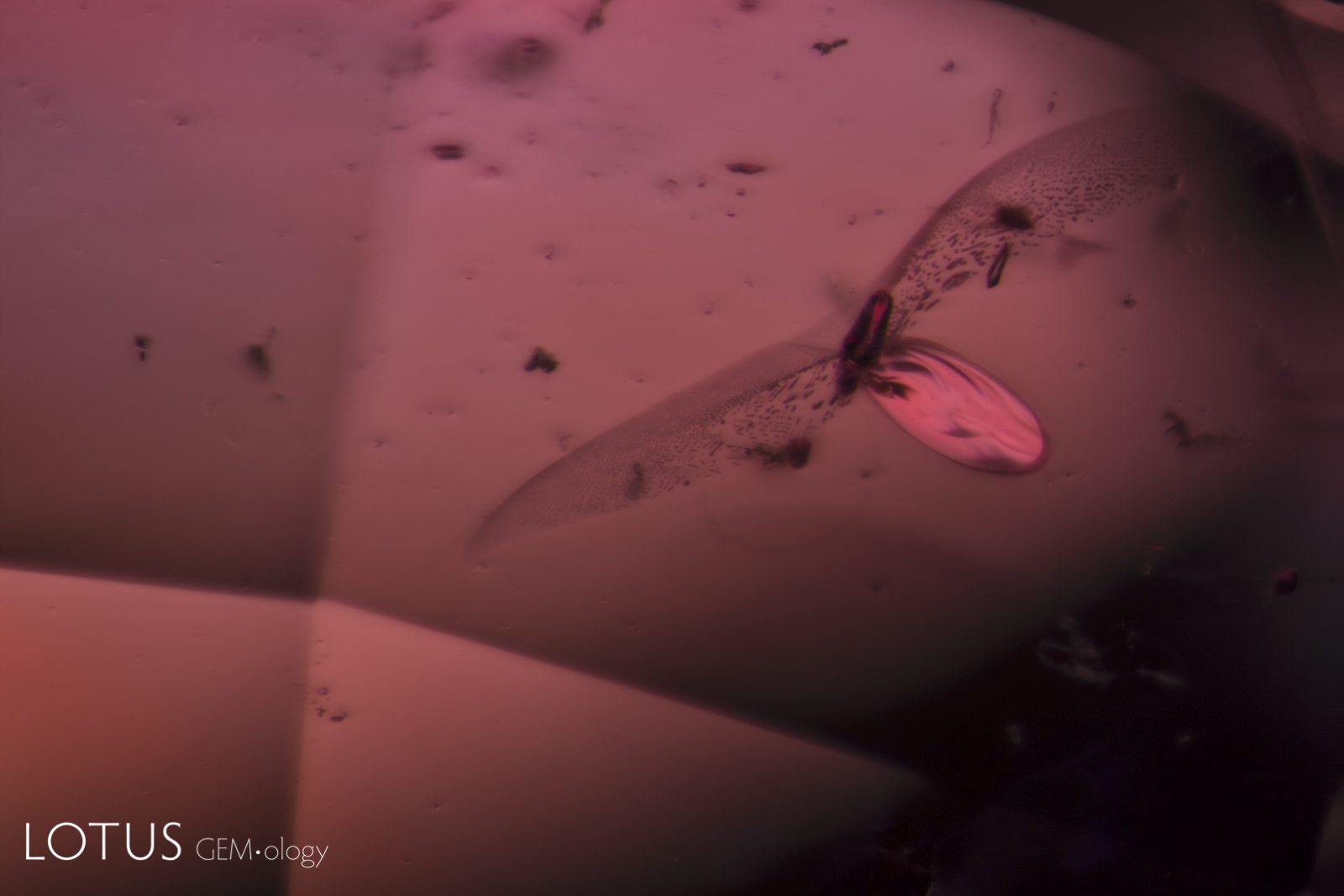
This padparadscha sapphire from Sri Lanka displayed unusual ghost crystals, several of which were cut through on the surface. In reflected light at the surface, they were detectable only by the inclusions in the crystals themselves, showing no difference in luster from the surrounding sapphire, but stood out brilliantly between crossed polars. This identified them as corundum in corundum. Edward Gübelin first identified corundum in corundum in 1940.
Natural Padparadscha Sapphire •
Sri Lanka (Ceylon) •
Enhancements:
None Detected (None) •
Lighting Conditions:
Diffuse Light Field + Crossed Polars
Photographer:
Richard W. Hughes •
Image Number:
A-003-4093-1
Gübelin, E.J. (1948) Gemstone inclusions. Journal of Gemmology, Vol. 1, No. 7, July, pp. 7–39; RWHL*.
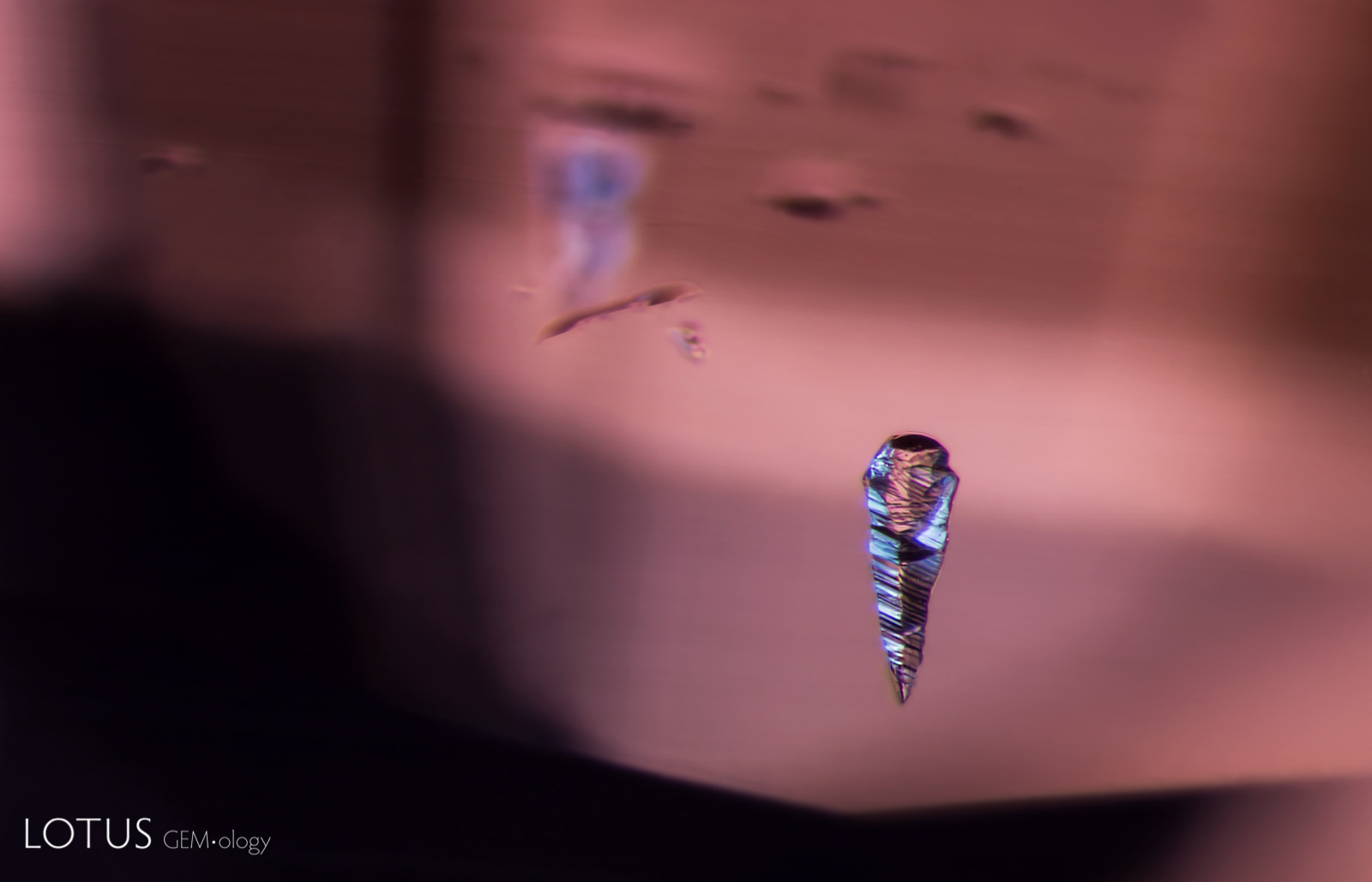
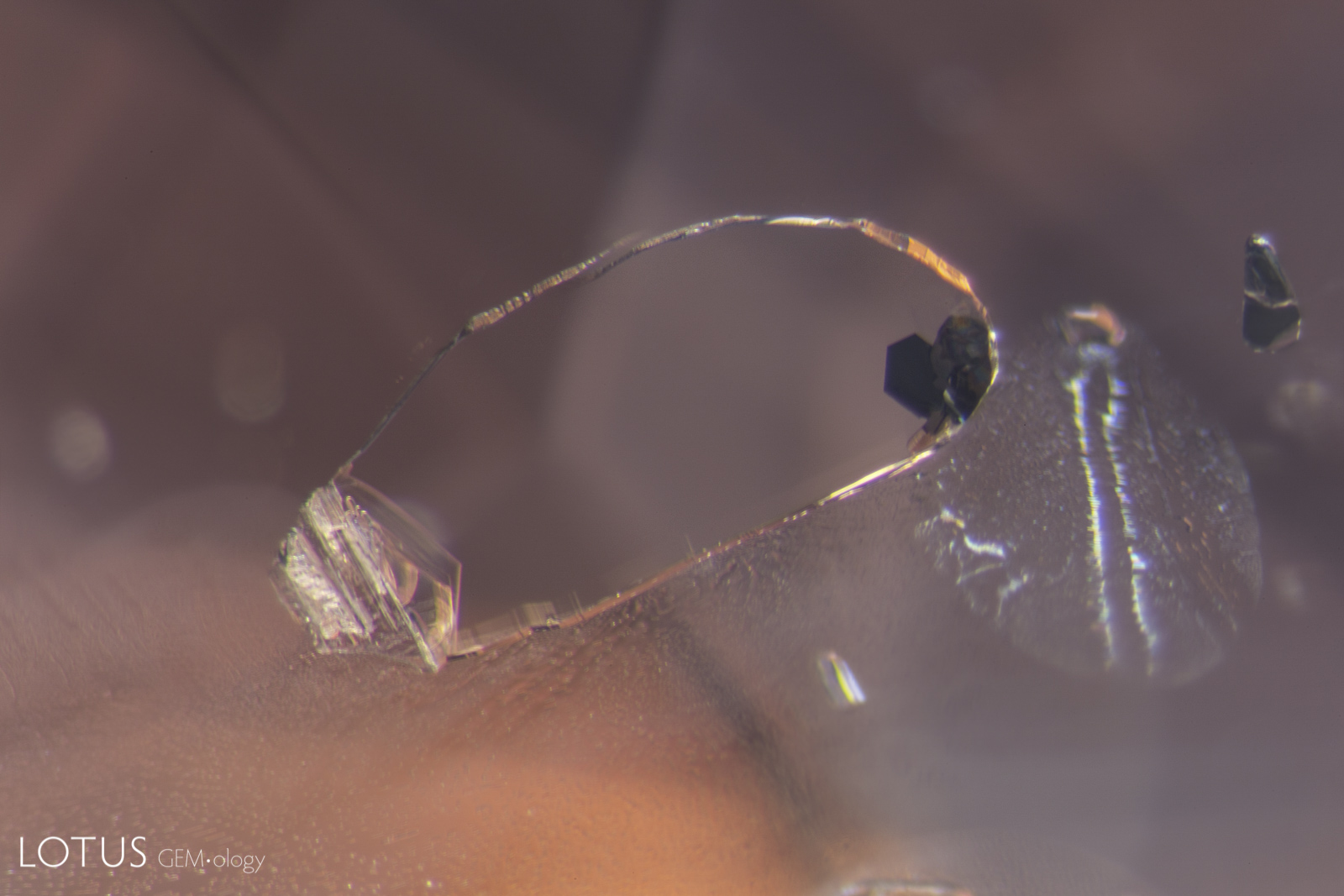
In this negative crystal within an untreated Sri Lanka padparadscha, one can see a high-relief hexagonal plate of graphite, along with a needle of diaspore. The undamaged nature of the negative crystal and diaspore needle confirms that the gem has not been heat treated.
Natural Padparadscha Sapphire •
Sri Lanka (Ceylon) •
Enhancements:
None Detected (None) •
Lighting Conditions:
Fiber Optic: Overhead
Photographer:
Richard W. Hughes •
Image Number:
A-003-3562-2
Koivula, J.I. (1980) Carbon dioxide as a fluid inclusion. Gems & Gemology, Vol. 16, No. 12, pp. 386–390; RWHL*.
Hughes, R.W., Manorotkul, W. et al. (2017) Ruby & Sapphire: A Gemologist's Guide. Bangkok, Lotus Publishing, 816 pp.; RWHL*.
In this negative crystal within an untreated Sri Lanka padparadscha, one can see a hexagonal plate of graphite, along with a needle of diaspore. The undamaged nature of the negative crystal and diaspore needle confirms that the gem has not been heat treated.
Natural Padparadscha Sapphire •
Sri Lanka (Ceylon) •
Enhancements:
None Detected (None) •
Lighting Conditions:
Fiber Optic: Transmitted
Photographer:
Richard W. Hughes •
Image Number:
A-003-3562-1
Koivula, J.I. (1980) Carbon dioxide as a fluid inclusion. Gems & Gemology, Vol. 16, No. 12, pp. 386–390; RWHL*.
Hughes, R.W., Manorotkul, W. et al. (2017) Ruby & Sapphire: A Gemologist's Guide. Bangkok, Lotus Publishing, 816 pp.; RWHL*.
In this flattened negative crystal in a Sri Lankan padparadscha sapphire, multiple phases can be found, including both liquid and gaseous carbon dioxide and a diaspore needle. Because diaspore’s refractive index (nα = 1.682–1.706 nβ = 1.705–1.725 nγ = 1.730–1.752) is so close to corundum (1.762–1.770) the diaspore needle almost disappears into the sapphire, appearing like a narrow indentation into the negative crystal. Liquid carbon dioxide becomes a gas at a fairly low temperature, with just the heat of the microscope causing the bubble to disappear. Intact negative crystals such as this are positive proof that the specimen has not been heat treated.
Natural Padparadscha Sapphire •
Sri Lanka (Ceylon) •
Enhancements:
None Detected (None) •
Lighting Conditions:
Dark Field
Photographer:
Richard W. Hughes •
Image Number:
A-002-6853-2
Eppler, W.F. (1966) The origin of negative crystals in gemstones. Journal of Gemmology, Vol. 10, No. 2, April, pp. 49–56; RWHL*.
Koivula, J.I. (1980) Carbon dioxide as a fluid inclusion. Gems & Gemology, Vol. 16, No. 12, pp. 386–390; RWHL*.
Hughes, R.W., Manorotkul, W. et al. (2017) Ruby & Sapphire: A Gemologist's Guide. Bangkok, Lotus Publishing, 816 pp.; RWHL*.
In this flattened negative crystal in a Sri Lankan padparadscha sapphire, multiple phases can be found, including both liquid and gaseous carbon dioxide and a diaspore needle. Because diaspore’s refractive index (nα = 1.682–1.706 nβ = 1.705–1.725 nγ = 1.730–1.752) is so close to corundum (1.762–1.770) the diaspore needle almost disappears into the sapphire, appearing like a narrow indentation into the negative crystal. Liquid carbon dioxide becomes a gas at a fairly low temperature, with just the heat of the microscope causing the bubble to disappear. Intact negative crystals such as this are positive proof that the specimen has not been heat treated.
Natural Padparadscha Sapphire •
Sri Lanka (Ceylon) •
Enhancements:
None Detected (None) •
Lighting Conditions:
Dark Field + Overhead Fiber Optic
Photographer:
Richard W. Hughes •
Image Number:
A-002-6853-1
Eppler, W.F. (1966) The origin of negative crystals in gemstones. Journal of Gemmology, Vol. 10, No. 2, April, pp. 49–56; RWHL*.
Koivula, J.I. (1980) Carbon dioxide as a fluid inclusion. Gems & Gemology, Vol. 16, No. 12, pp. 386–390; RWHL*.
Hughes, R.W., Manorotkul, W. et al. (2017) Ruby & Sapphire: A Gemologist's Guide. Bangkok, Lotus Publishing, 816 pp.; RWHL*.
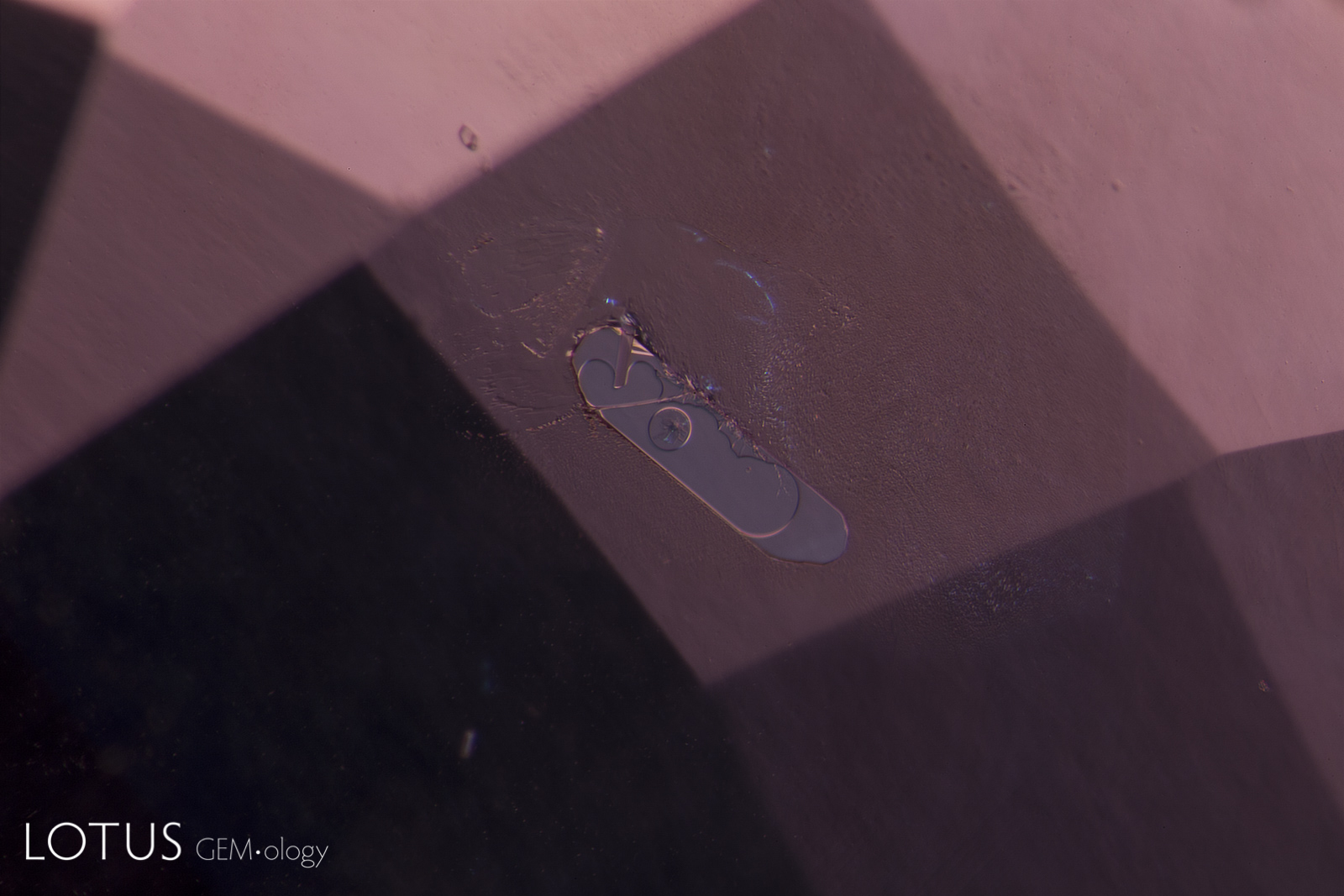
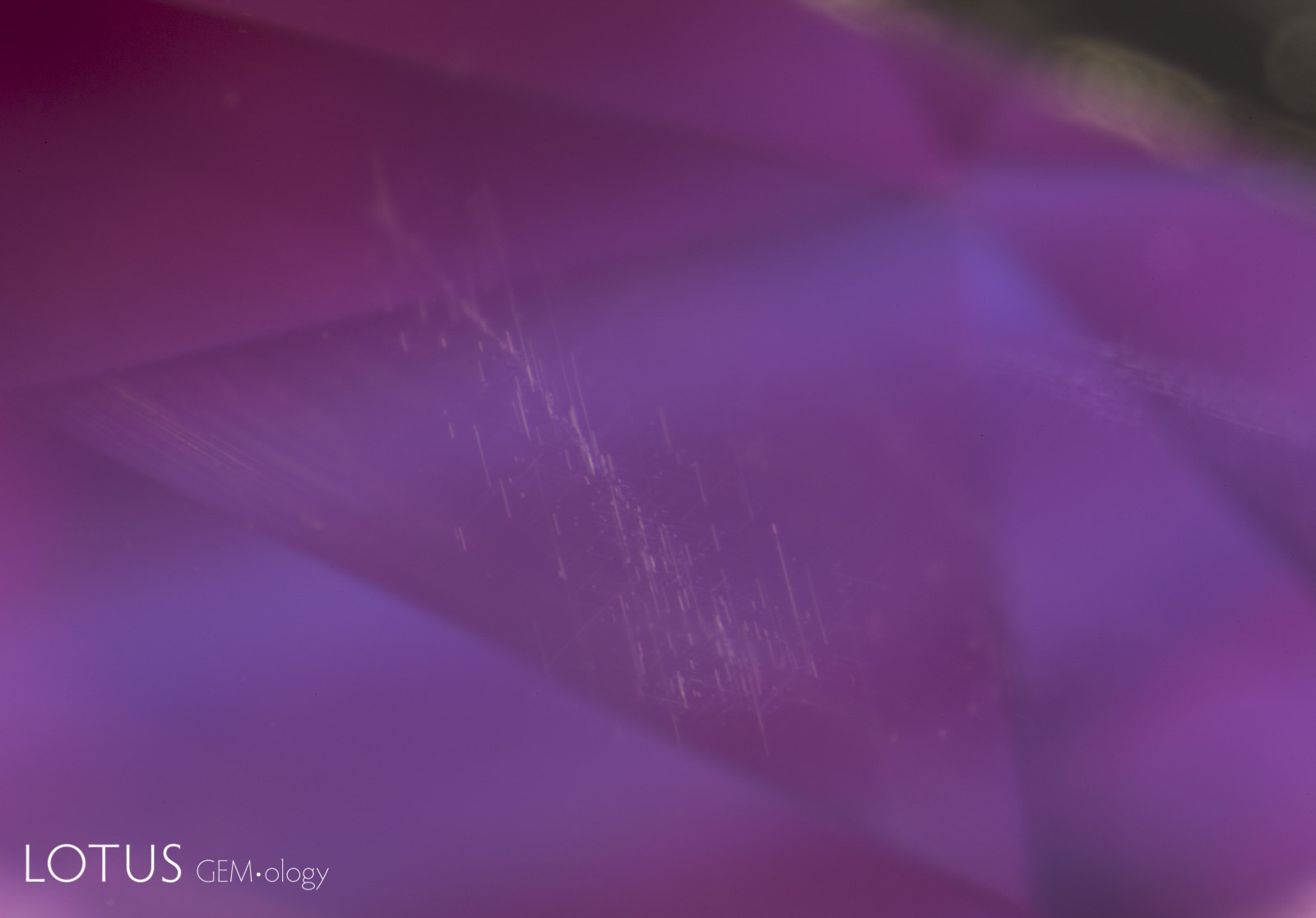
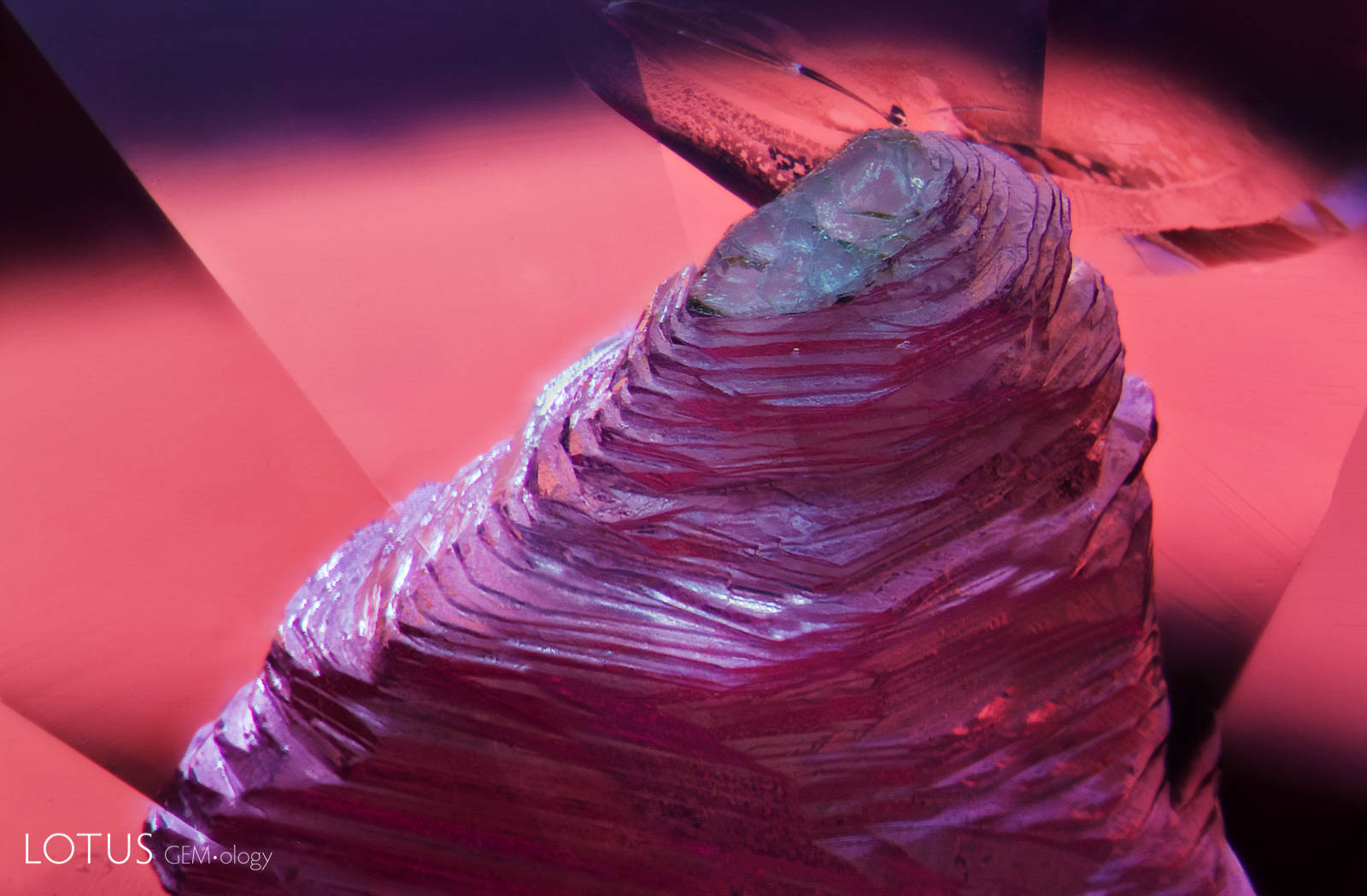
Like a terraced mountain, this large negative crystal rises in the center of an untreated padparadscha sapphire from Sri Lanka.
Natural Padparadscha Sapphire •
Sri Lanka (Ceylon) •
Enhancements:
None Detected (None) •
Lighting Conditions:
Fiber Optic: Oblique
Photographer:
E. Billie Hughes •
Image Number:
A-001-3521-1
Hughes, R.W., Manorotkul, W. et al. (2014) Ruby & Sapphire: A Collector's Guide. Bangkok, Gem and Jewelry Institute of Thailand, 384 pp.; RWHL*.
Hughes, R.W., Manorotkul, W. et al. (2017) Ruby & Sapphire: A Gemologist's Guide. Bangkok, Lotus Publishing, 816 pp.; RWHL*.
24 Total Images
Results: 13 – 24 | Page 2 of 2 Pages
Padparadscha sapphire inclusions may include mineral crystals, rutile silk, healed fissures, fluid inclusions, negative crystals, growth features and other internal features formed during or after crystal growth. Such features are important to gemologists because they can provide evidence useful in identifying sapphire, recognizing treatment and evaluating geographic origin.
Padparadscha Sapphire Inclusion Photomicrographs
The Hyperion padparadscha sapphire gallery includes microscopic features documented in natural padparadscha sapphires. Each entry is accompanied by descriptive information and, where available, references to the gemological literature.
What Inclusions Can Reveal About Padparadscha Sapphire
Inclusions are an important part of padparadscha sapphire identification. Their form, composition, orientation and alteration can help gemologists distinguish natural sapphire from synthetic material, recognize evidence of treatment, and study the geological environment in which the sapphire formed.
Hyperion combines inclusion photomicrography with supporting gemological information so that individual features can be compared with documented examples of padparadscha sapphires.
About Hyperion
Hyperion is the Lotus Gemology searchable inclusion database. It allows users to browse gemstone inclusions by gem type, geographic origin, treatment and keyword.
Search the Complete Hyperion Database