Madagascar Sapphire Inclusions
Explore Madagascar sapphire inclusions in Hyperion, the Lotus Gemology inclusion database. Hyperion contains photomicrographs of inclusions and internal features in natural sapphires from Madagascar, documented with information on treatment, lighting conditions, field of view, photographer and published references.
Polysynthetic twinning is secondary twinning, forming after the host crystal grew. When the stone is placed between crossed polars, the dazzling colors of these polysynthetic twin planes can be easily seen.
Natural Sapphire •
Madagascar •
Enhancements:
None Detected (None) •
Lighting Conditions:
Diffuse Light Field + Crossed Polars
Photographer:
E. Billie Hughes •
Image Number:
A-001-3471-1
Hughes, R.W. (1997) Ruby & Sapphire. Boulder, CO, RWH Publishing, 512 pp.; RWHL*.
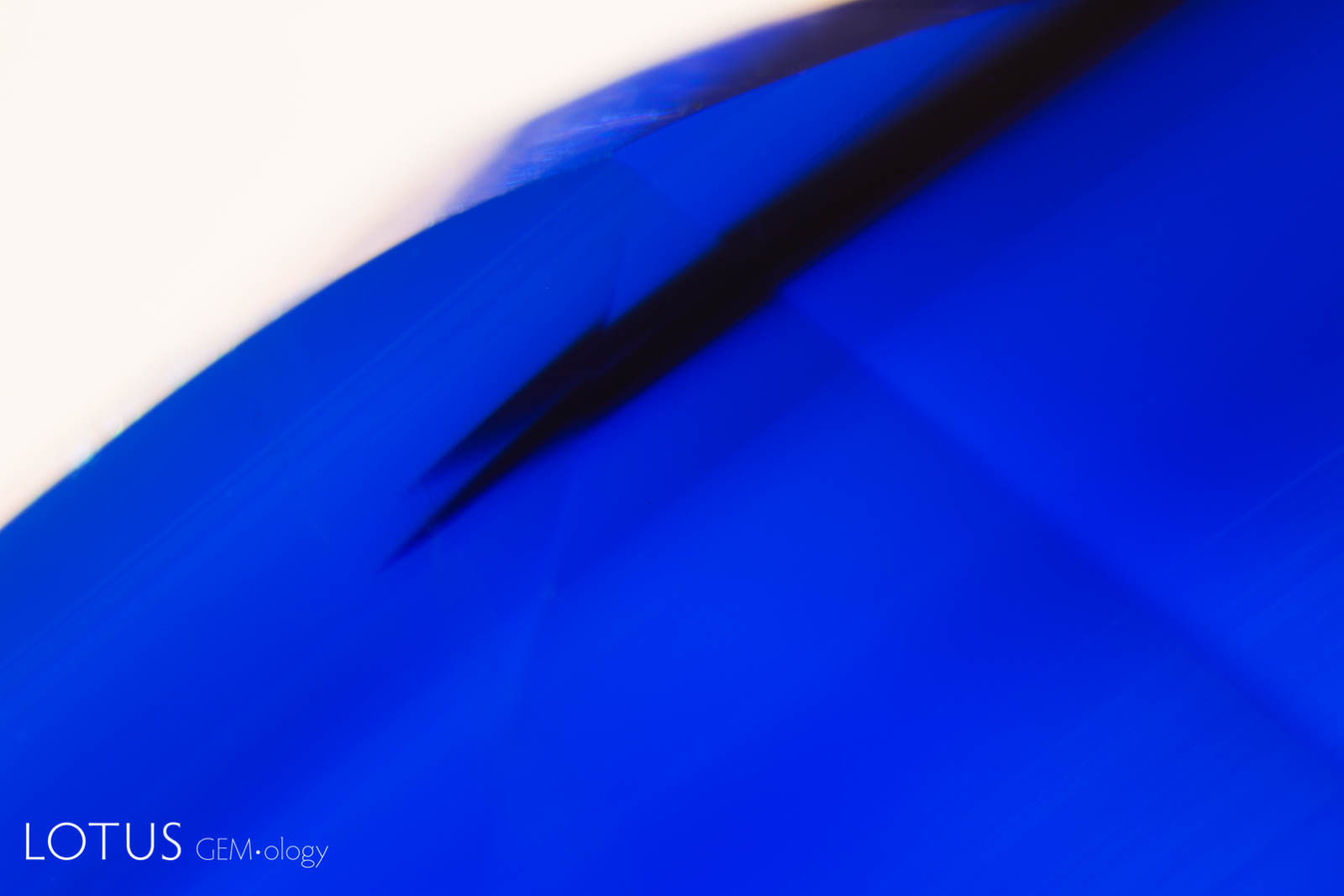
A deep blue color zone is visible in this Madagascar sapphire. Note that the deep blue zone is devoid of turbidity, while the surrounding area is extremely cloudy. This shows a lack of internal diffusion and thus offers evidence that the stone has not been subjected to high-temperature heat treatment.
Natural Sapphire •
Madagascar •
Enhancements:
None Detected (None) •
Lighting Conditions:
Diffuse Light Field (Transmitted Light)
Photographer:
E. Billie Hughes •
Image Number:
A-001-3382-1
Koivula, J.I. (1987) Internal diffusion. Journal of Gemmology, Vol. 20, No. 7/8, pp. 474–477; RWHL*.
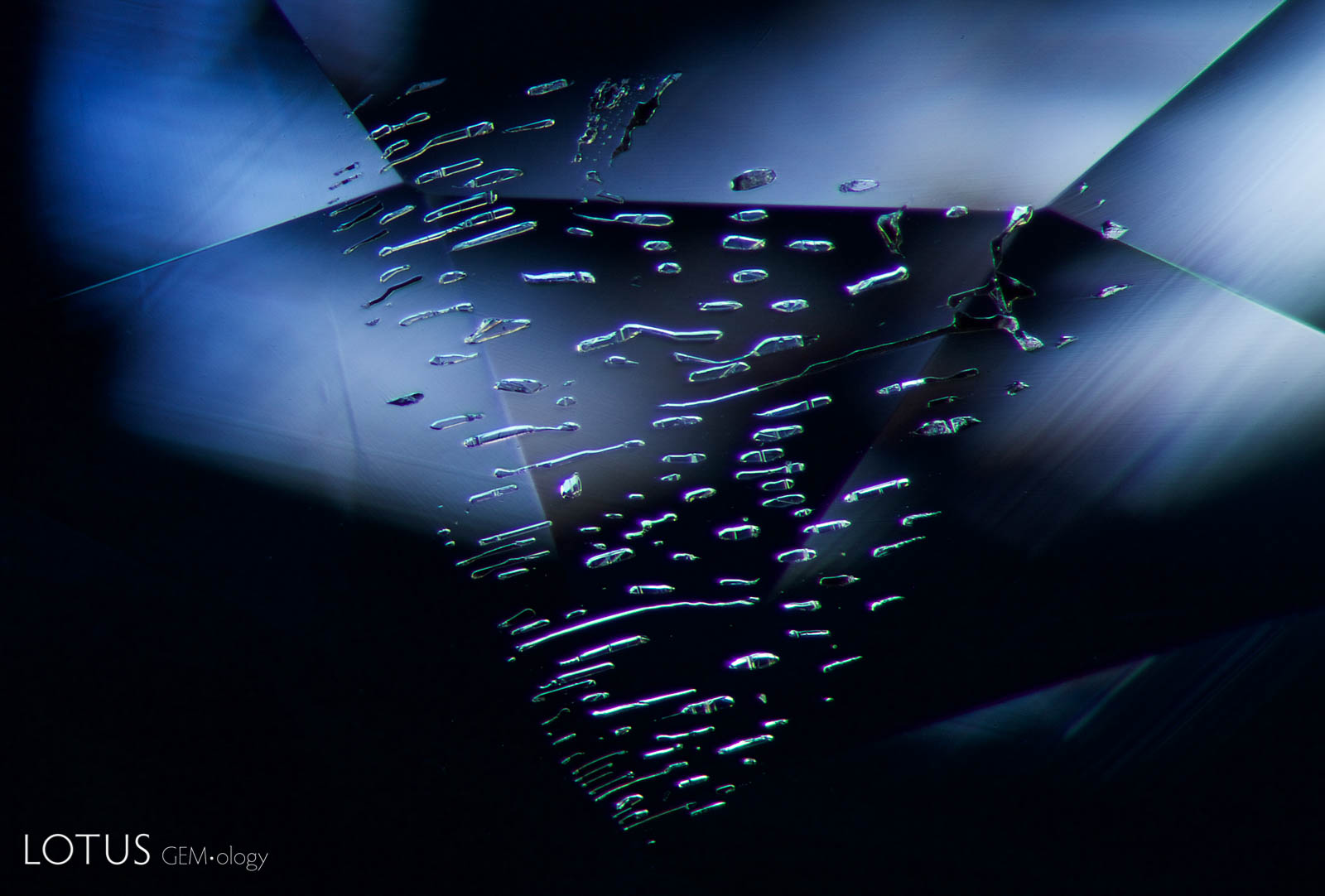
An unheated fingerprint with many small channels showing no signs of heat-induced damage are a welcome sight in this sapphire from Madagascar.
Natural Sapphire •
Madagascar •
Enhancements:
None Detected (None) •
Lighting Conditions:
Darkfield + Blue Filter
Photographer:
E. Billie Hughes •
Image Number:
A-001-3393-2
Roedder, E. (1962) Ancient fluids in crystals. Scientific American, Vol. 207, pp. 38–47; RWHL*.
Hughes, R.W. (1997) Ruby & Sapphire. Boulder, CO, RWH Publishing, 512 pp.; RWHL*.
An unheated fingerprint with many small channels showing no signs of heat-induced damage are a welcome sight in this sapphire from Madagascar.
Natural Sapphire •
Madagascar •
Enhancements:
None Detected (None) •
Lighting Conditions:
Shadowing
Photographer:
E. Billie Hughes •
Image Number:
A-001-3393-1
Roedder, E. (1962) Ancient fluids in crystals. Scientific American, Vol. 207, pp. 38–47; RWHL*.
Hughes, R.W. (1997) Ruby & Sapphire. Boulder, CO, RWH Publishing, 512 pp.; RWHL*.
Many crystals contain shallow fissures on their surfaces. In sapphires from Sri Lanka, Myanmar and Madagascar, these fissures often contain yellow stains. High-temperature heating not only destroys the yellow stains, but begins a process of healing, where the fissures turn white and start forming fingerprints.
Natural Sapphire •
Madagascar •
Enhancements:
None Detected (None) •
Lighting Conditions:
Diffuse Light Field (Transmitted Light)
Photographer:
Richard W. Hughes •
Image Number:
A-001-3319-2
Dense clouds of exsolved titanium-bearing minerals have created the fanciful scenery within this untreated sapphire from Madagascar. As the crystal cooled these growing clouds sucked titanium from the surrounding sapphire, thus robbing it of an essential chromophore. The result is decolorized zones surrounding the clouds, a process dubbed “chromophore cannibalization” by microphotographic maestro John Koivula.
Natural Sapphire •
Madagascar •
Enhancements:
None Detected (None) •
Lighting Conditions:
Fiber Optic: Oblique + Shadowing
Photographer:
Richard W. Hughes •
Image Number:
A-001-3319-1
Sharp angular growth zoning, which is typical in Madagascar sapphire. This can help separate natural stones from Verneuil flame fusion synthetics, which have curved color banding.
Natural Sapphire •
Madagascar •
Enhancements:
None Detected (None) •
Lighting Conditions:
Dark Field
Photographer:
E. Billie Hughes •
Image Number:
A-001-3307-2
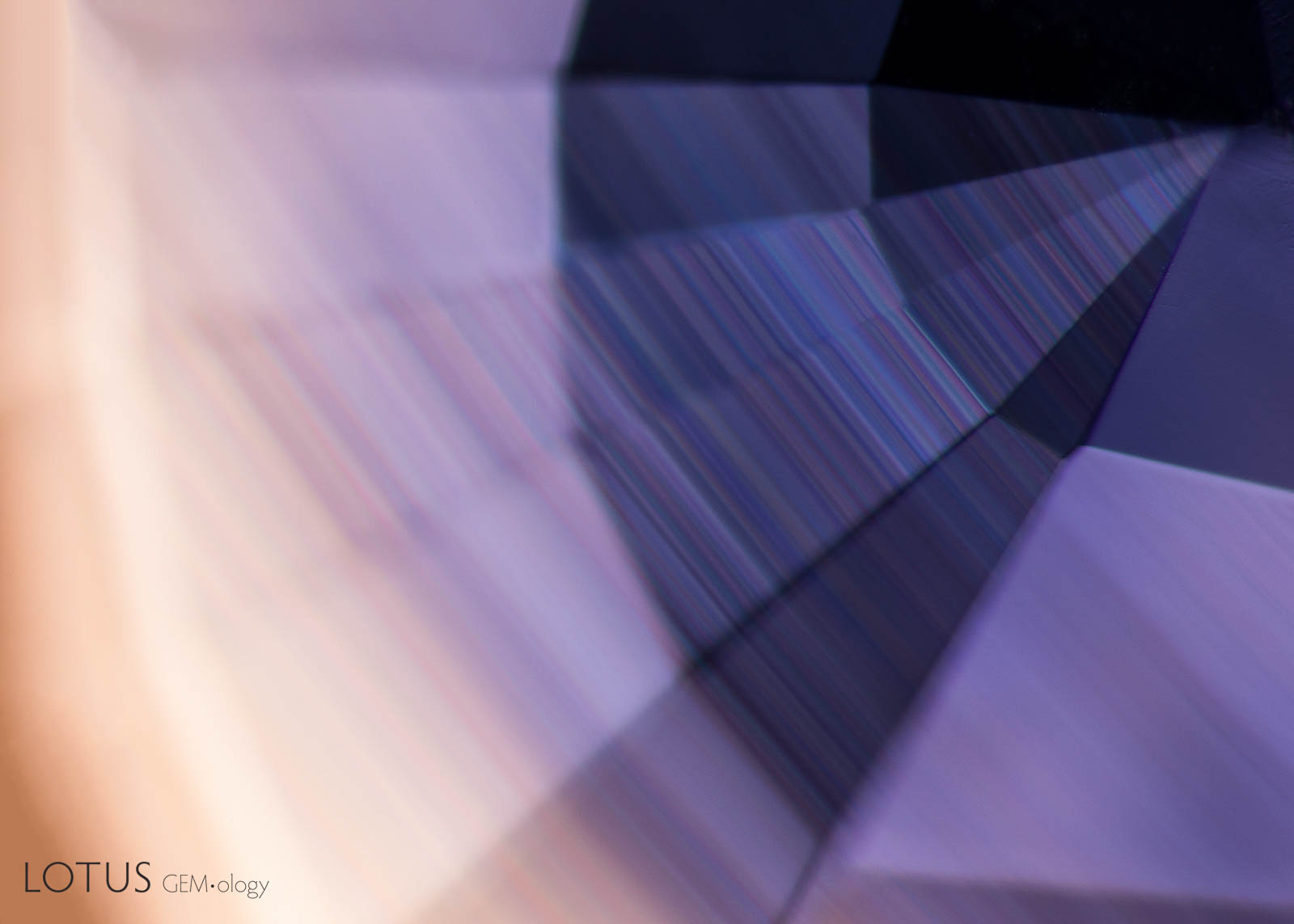
These fine parallel lines show the sharp angular growth zoning typical in Madagascar sapphire. These lines can be distinguished from polishing lines because they cross several facets.
Natural Sapphire •
Madagascar •
Enhancements:
None Detected (None) •
Lighting Conditions:
Dark Field
Photographer:
E. Billie Hughes •
Image Number:
A-001-3307-1
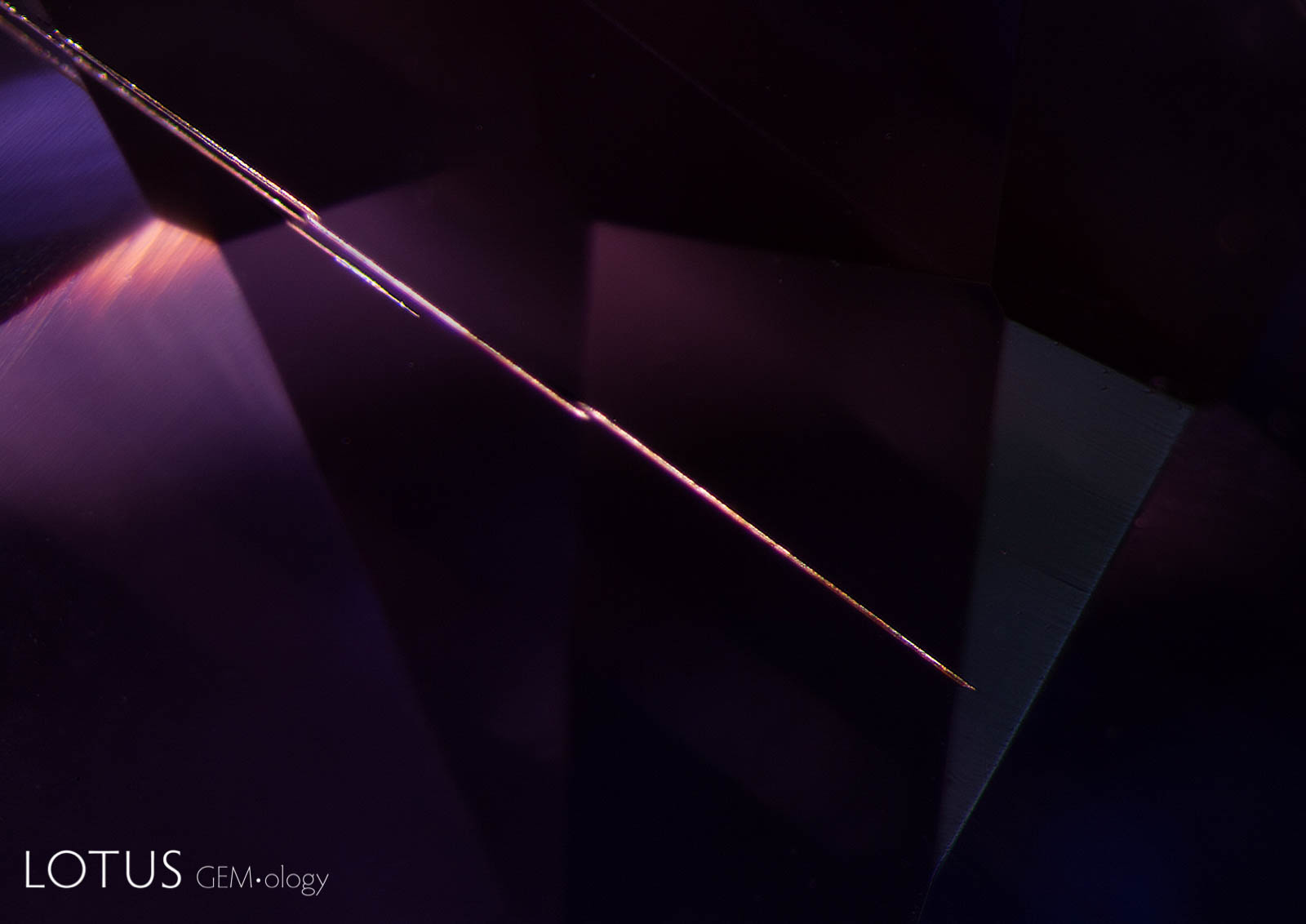
A long, orange-stained growth tube pierces this Madagascar sapphire. These fine growth tubes are a common feature in sapphire from Madagascar.
Natural Sapphire •
Madagascar •
Enhancements:
None Detected (None) •
Lighting Conditions:
Dark Field
Photographer:
E. Billie Hughes •
Image Number:
A-001-3306-1
The shiny, droplet-like marks on the surface may look like water or oil, but they are actually spall marks. They do not rub or scrape off, but are fused onto the surface as a result of heat treatment. This example is on a heated Madagascar pink sapphire.
Natural Sapphire •
Madagascar •
Enhancements:
Heat (H) •
Lighting Conditions:
Dark Field + Oblique Fiber Optic
Photographer:
E. Billie Hughes •
Image Number:
A-001-3337-1
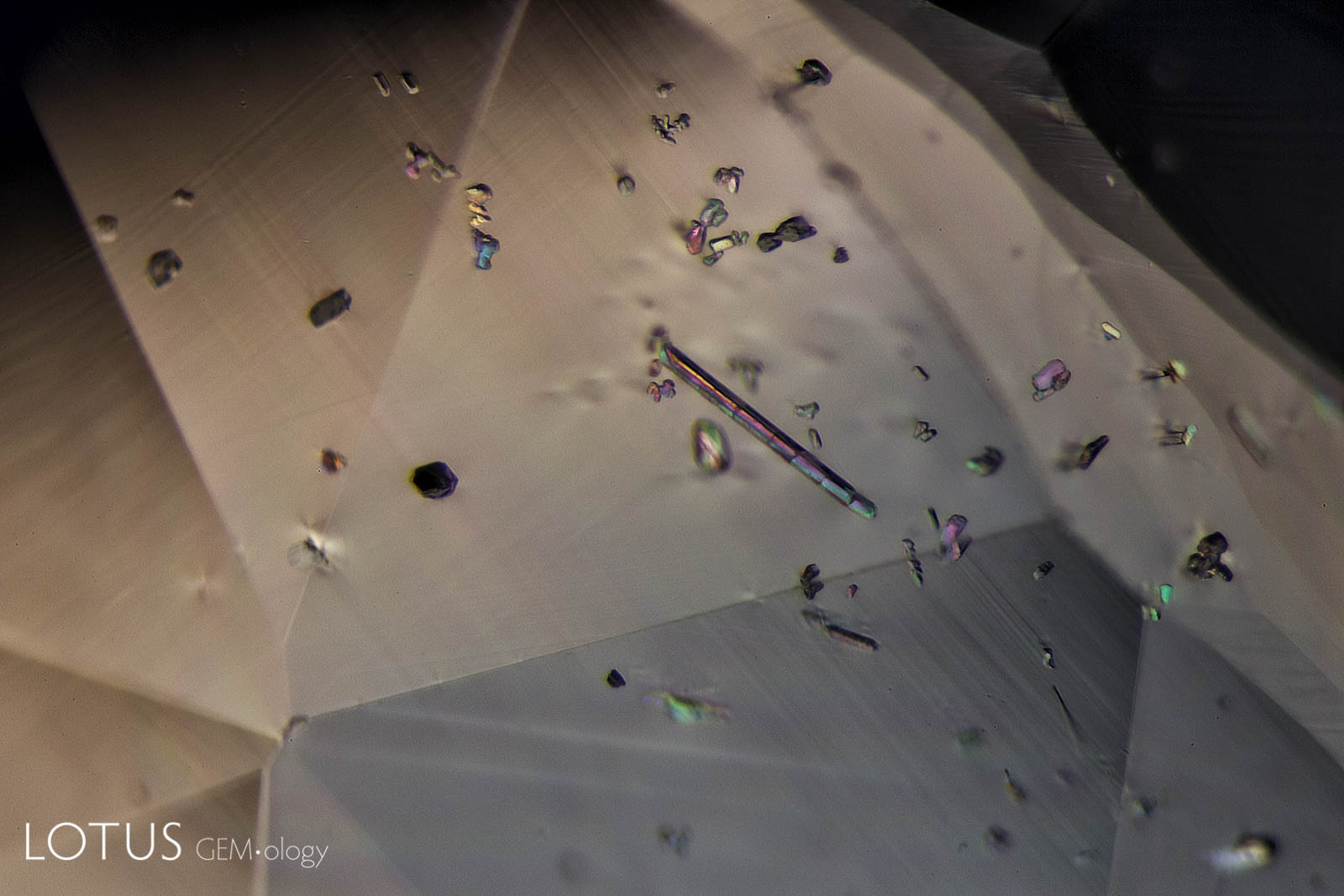
Tiny birefringent crystals in a Madagascar sapphire. When viewed between crossed polars, their doubly refractive nature becomes obvious.
Natural Sapphire •
Madagascar •
Enhancements:
None Detected (None) •
Lighting Conditions:
Diffuse Light Field + Crossed Polars
Photographer:
Richard W. Hughes •
Image Number:
A-001-3204-3
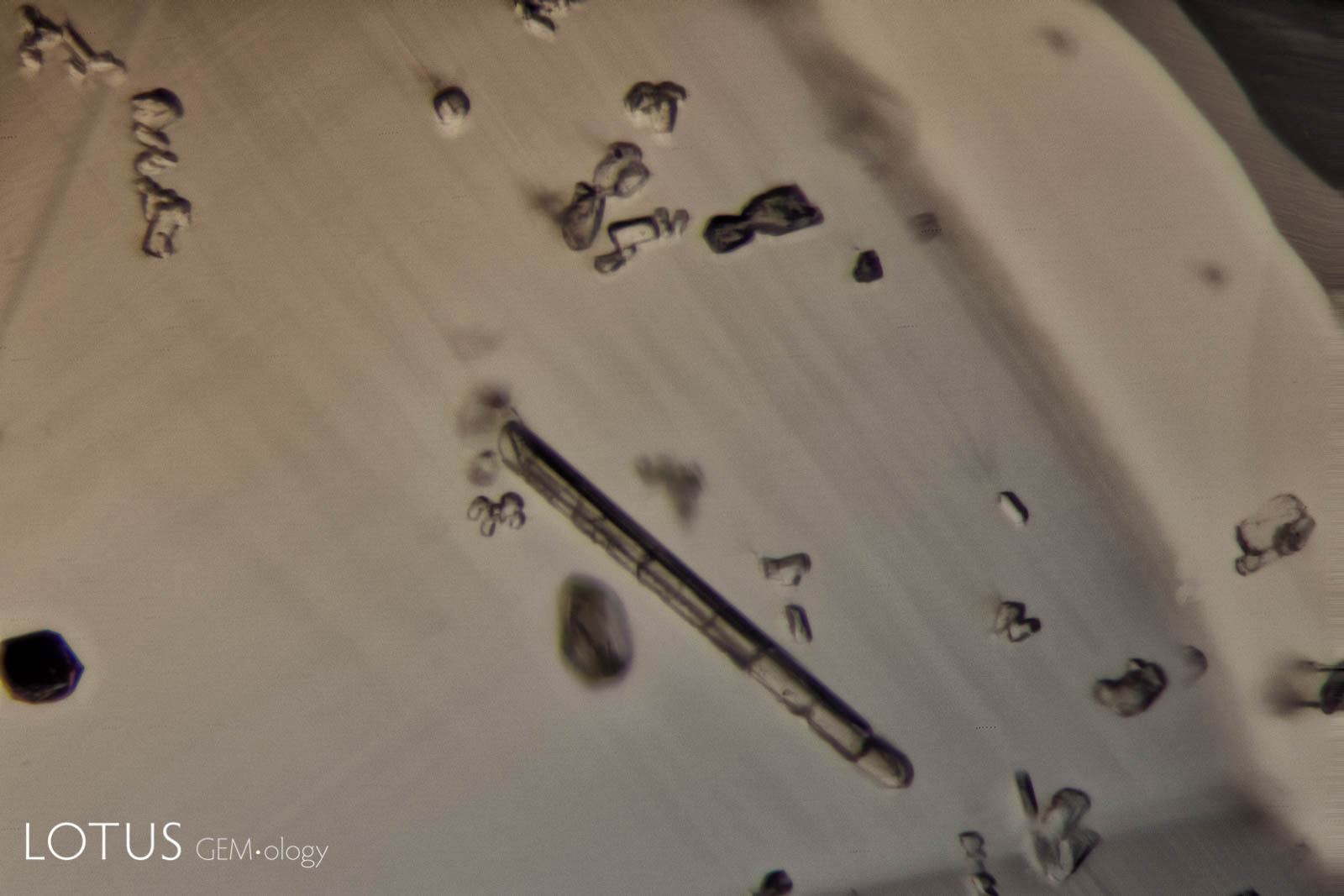
Tiny birefringent crystals in a Madagascar sapphire.
Natural Sapphire •
Madagascar •
Enhancements:
None Detected (None) •
Lighting Conditions:
Diffuse Light Field + Parallel Polars
Photographer:
Richard W. Hughes •
Image Number:
A-001-3204-2
Madagascar sapphire inclusions may include mineral crystals, rutile silk, healed fissures, fluid inclusions, negative crystals, growth features and other internal features formed during or after crystal growth. Such features are important to gemologists because they can provide evidence useful in identifying sapphire and evaluating a possible Madagascar origin.
Madagascar Sapphire Inclusion Photomicrographs
The Hyperion Madagascar sapphire gallery includes microscopic features documented in sapphires from Madagascar. Each entry is accompanied by descriptive information and, where available, references to the gemological literature.
What Inclusions Can Reveal About Madagascar Sapphire
Inclusions are an important part of geographic origin determination in sapphire. Their form, composition, orientation and associations can provide evidence that, when considered together with other gemological properties, may support or contradict a Madagascar origin.
Hyperion combines inclusion photomicrography with supporting gemological information so that individual features can be compared with documented examples from Madagascar sapphires.
About Hyperion
Hyperion is the Lotus Gemology searchable inclusion database. It allows users to browse gemstone inclusions by gem type, geographic origin, treatment and keyword.