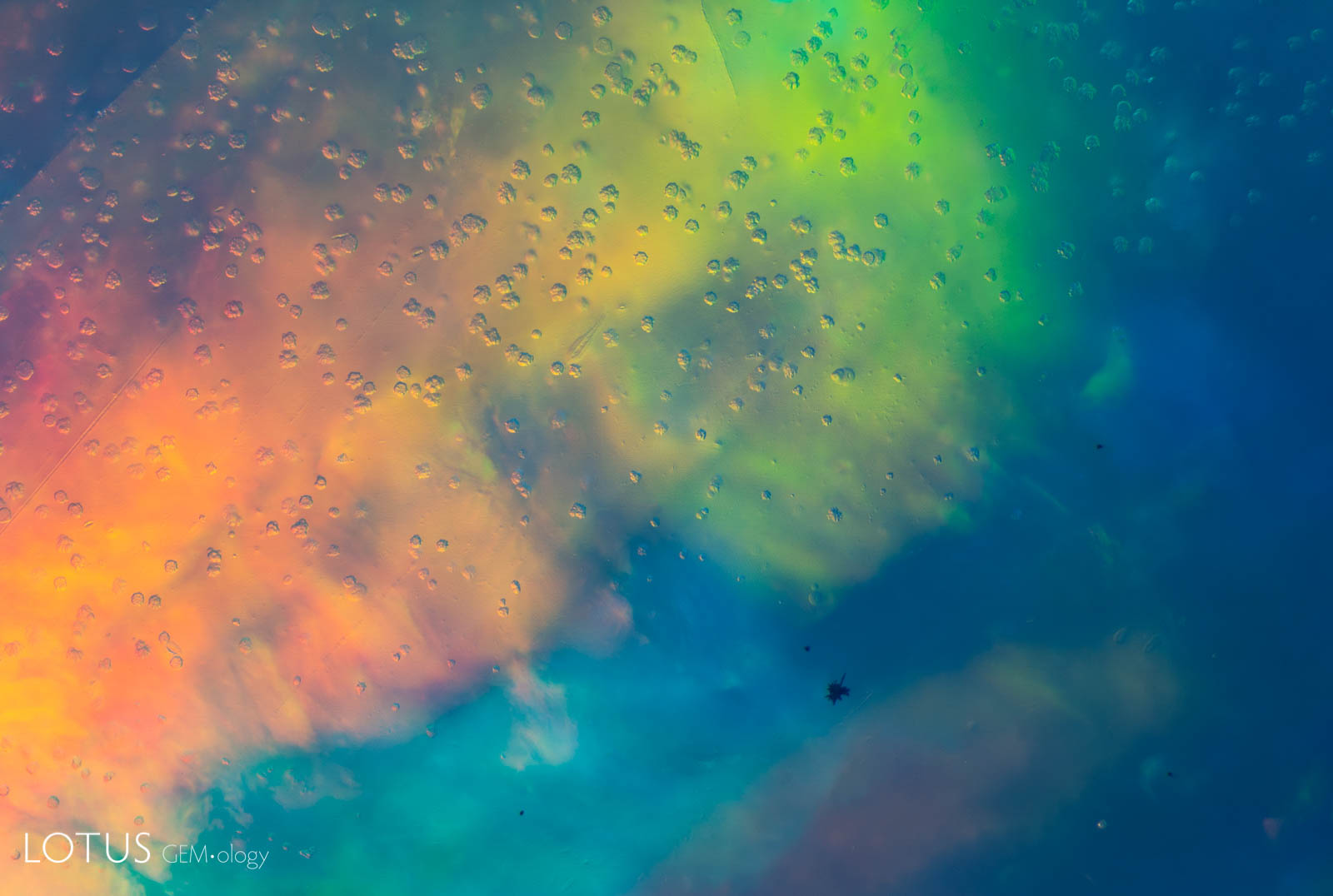
Opal Inclusions
Explore opal inclusions in Hyperion, the Lotus Gemology inclusion database. Hyperion contains photomicrographs of inclusions and internal features in natural opal, documented with information on geographic origin, treatment, lighting conditions, field of view, photographer and published references.
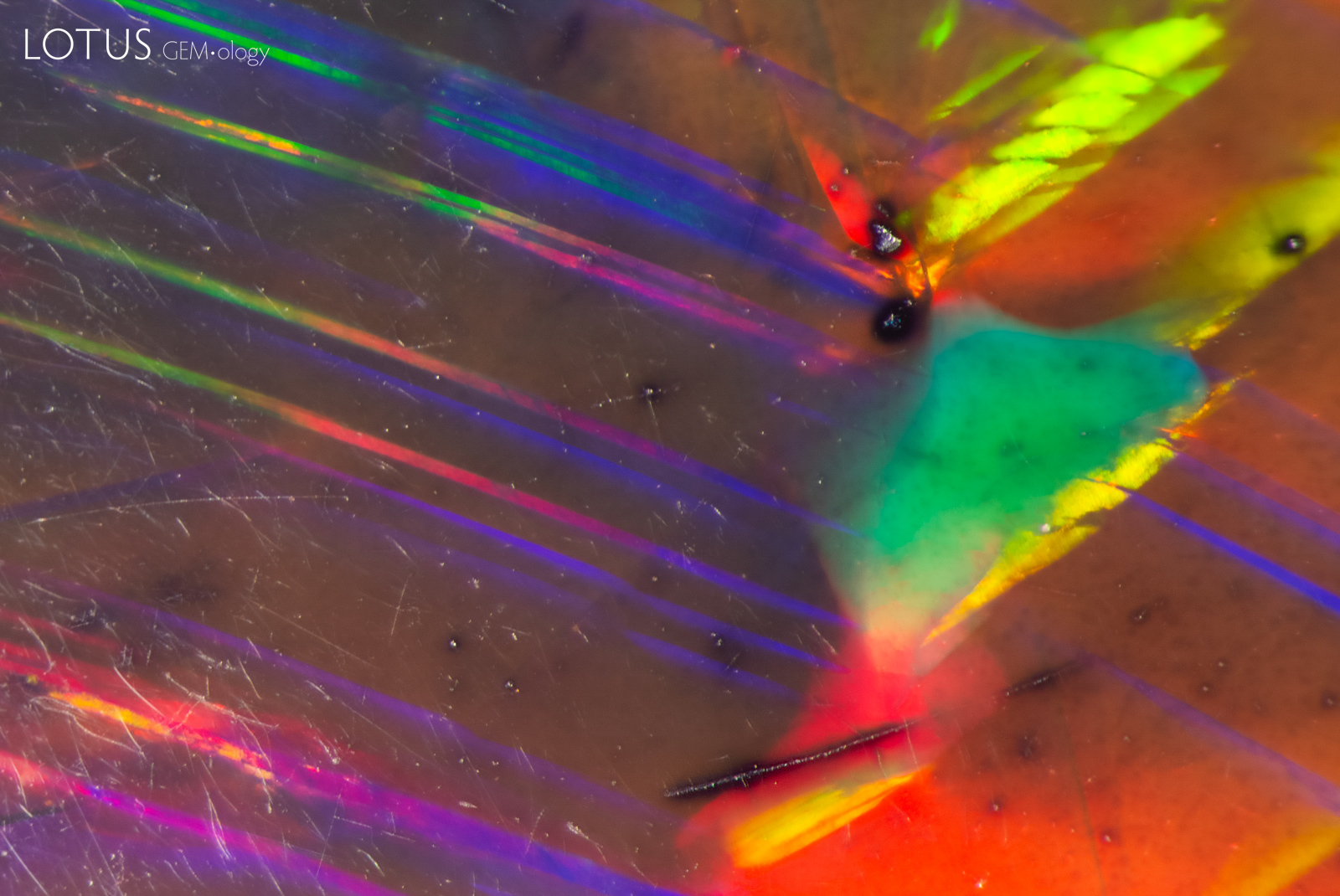
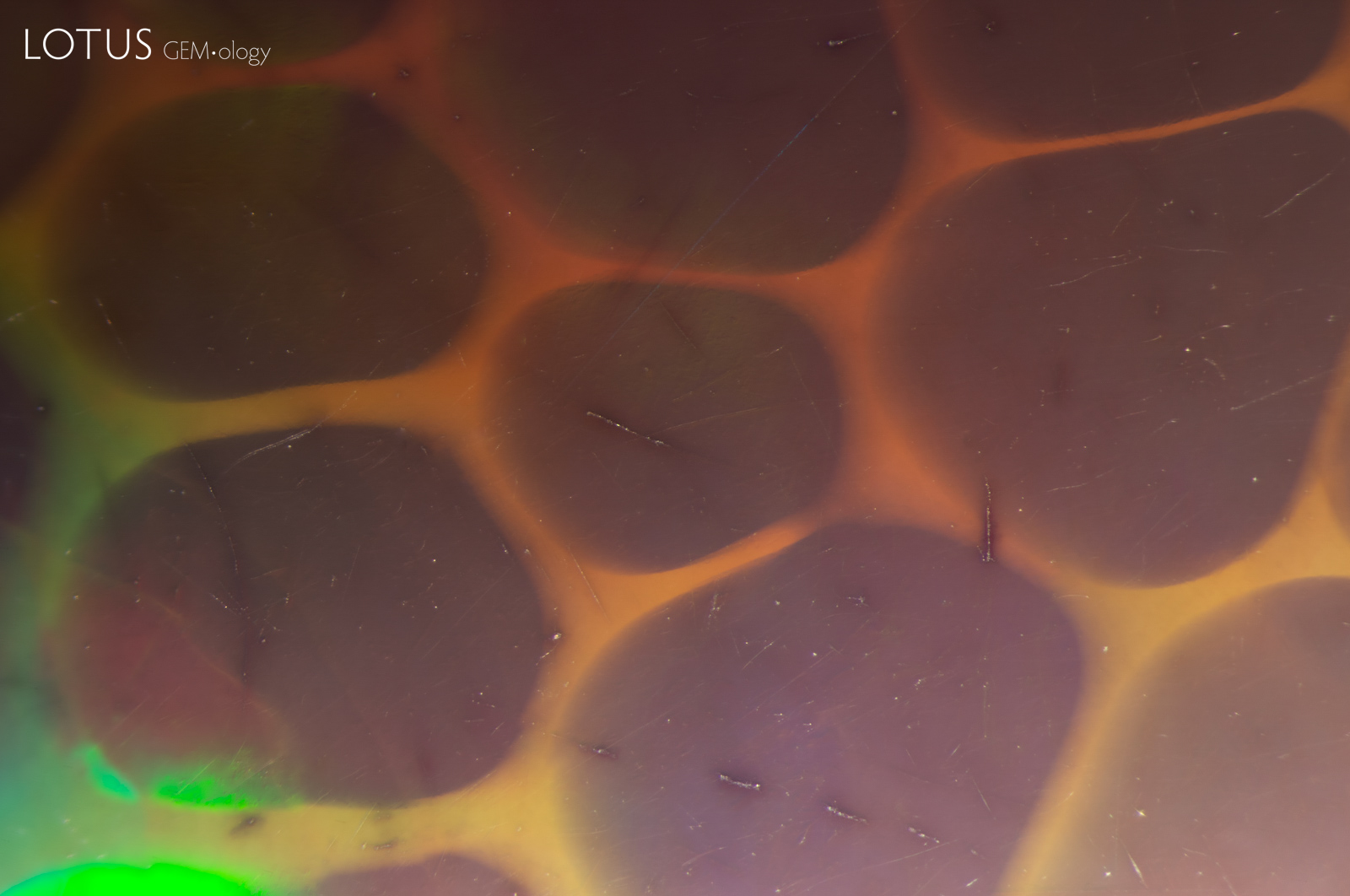
In addition to the dazzling play of color display in this opal, several black spots can be observed. These are particularly concentrated around the pits and scratches on the surface, as well as appearing in fainter blotches elsewhere in the stone.
Natural • Opal • Black •
No Origin •
Enhancements:
Dyed (D) •
Lighting Conditions:
Fiber Optic: Diffuse Oblique
Photographer:
E. Billie Hughes •
Image Number:
A-005-8467-1
• Field of View = 3mm
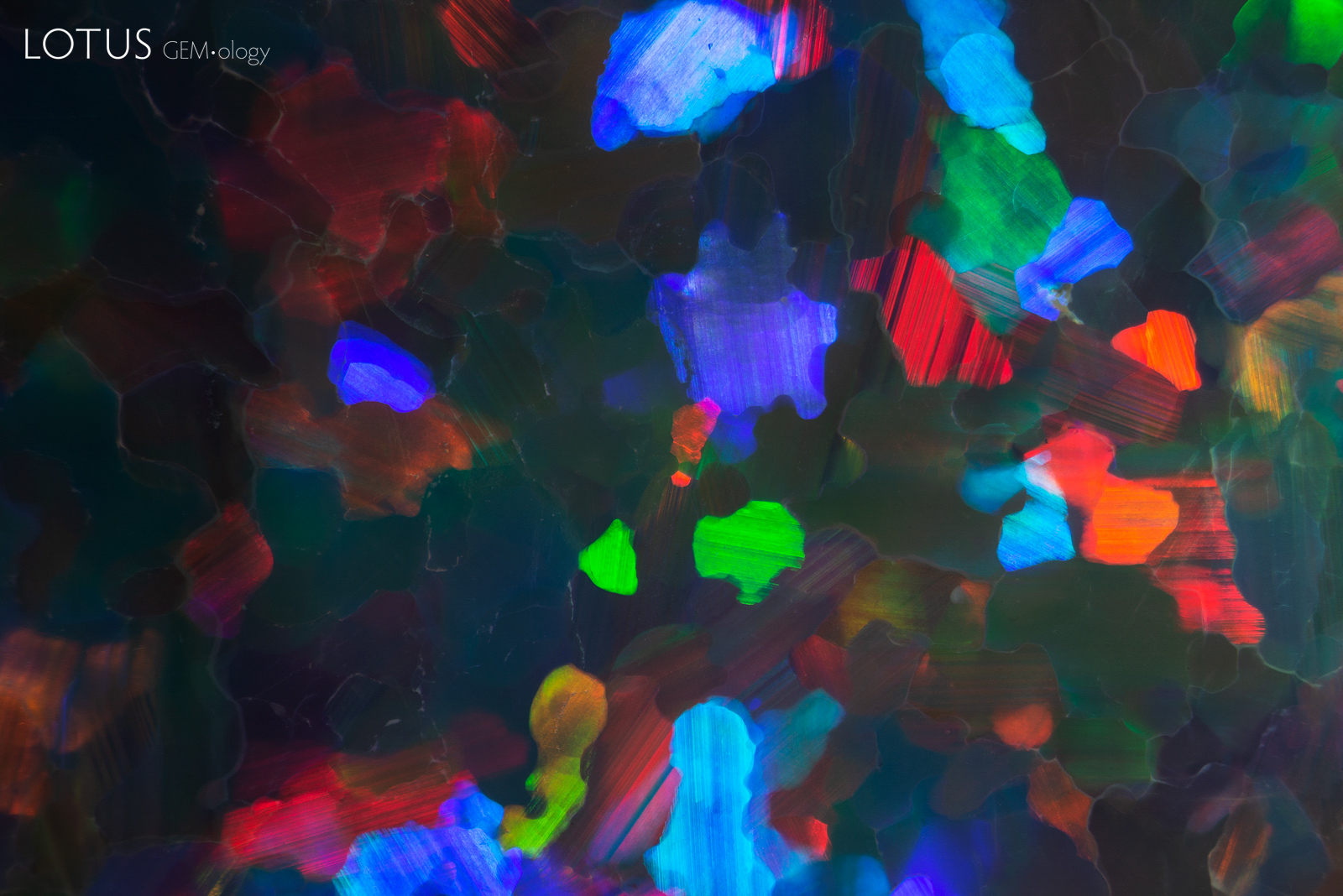
Play of color and a cellular structure can be observed in this opal. Areas around fine scratches in the stone display a dark color concentration, providing evidence that the stone was smoke treated.
Natural • Opal • Black •
No Origin •
Enhancements:
Dyed (D) •
Lighting Conditions:
Fiber Optic: Diffuse Oblique
Photographer:
E. Billie Hughes •
Image Number:
A-005-8465-2
• Field of View = 2.4mm
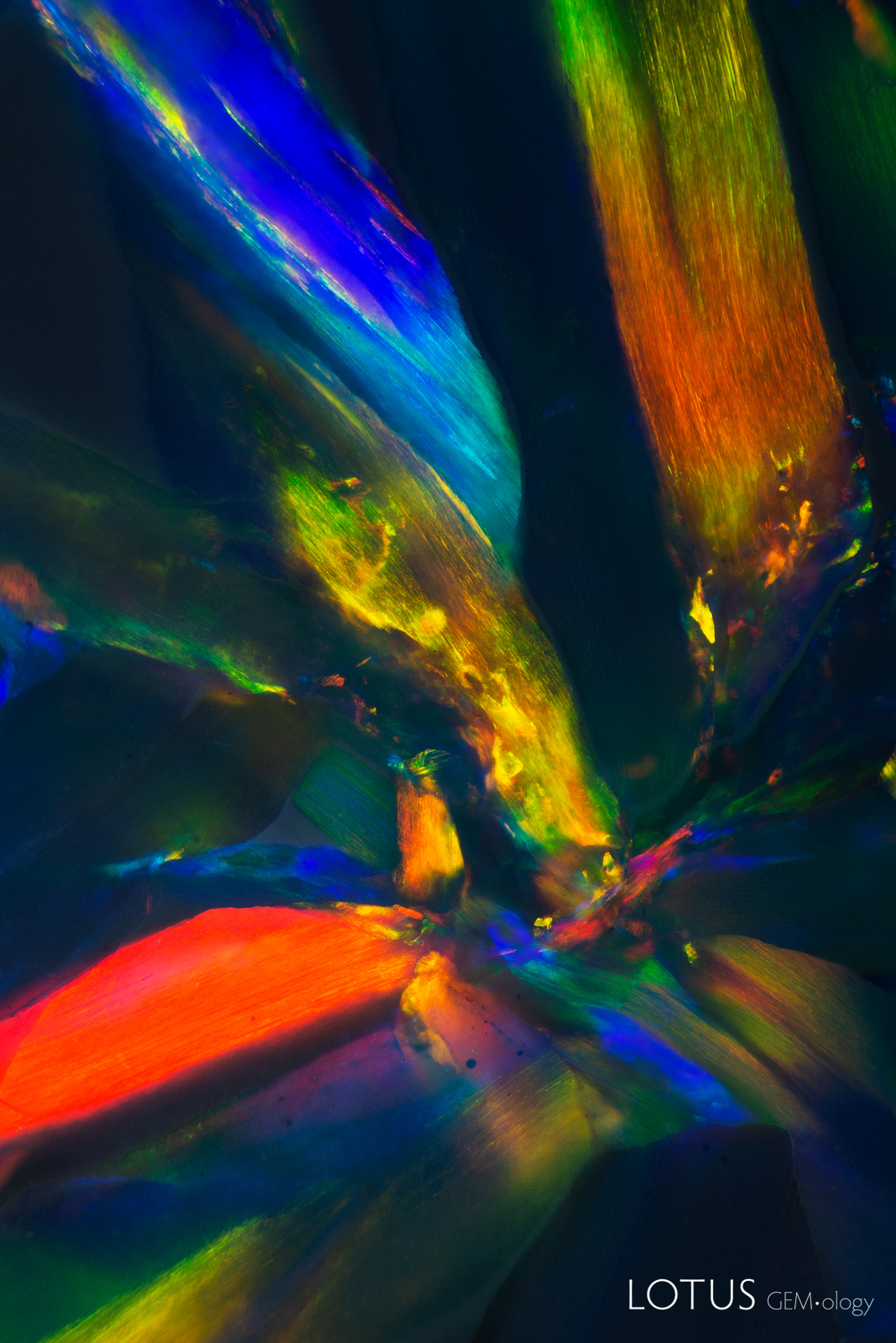
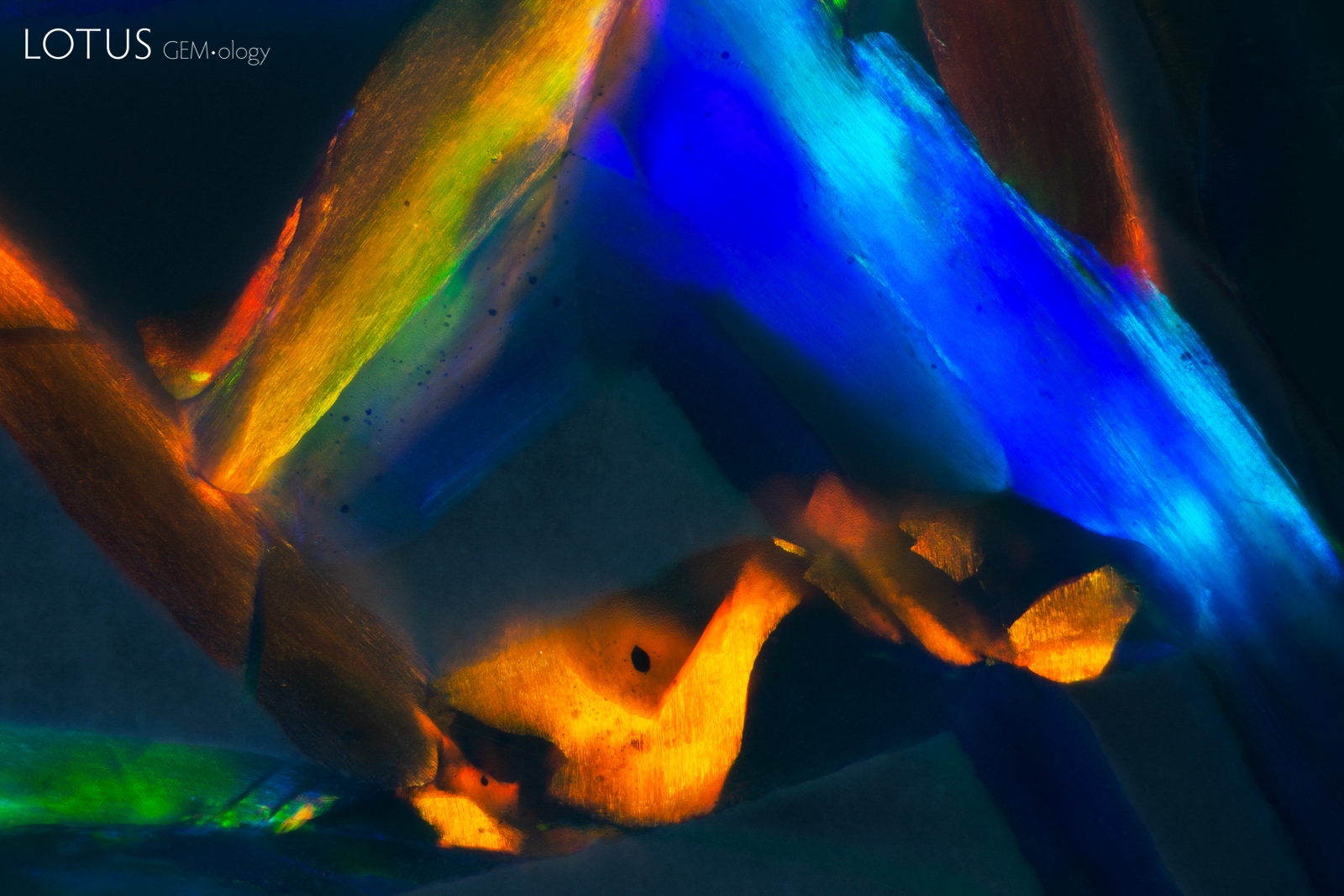
This opal displays a bright play-of-color effect. Opal is made up of a three dimensional array of silica spheres. If the spheres are the right size, light diffracts between the spheres to create the play of color effect. The rarest and most prized pieces tend to display areas with red color.
Natural • Opal • Black •
Australia •
Enhancements:
None Detected (None) •
Lighting Conditions:
Fiber Optic: Diffuse Overhead
Photographer:
E. Billie Hughes •
Image Number:
A-003-9120-2
• Field of View = 10mm
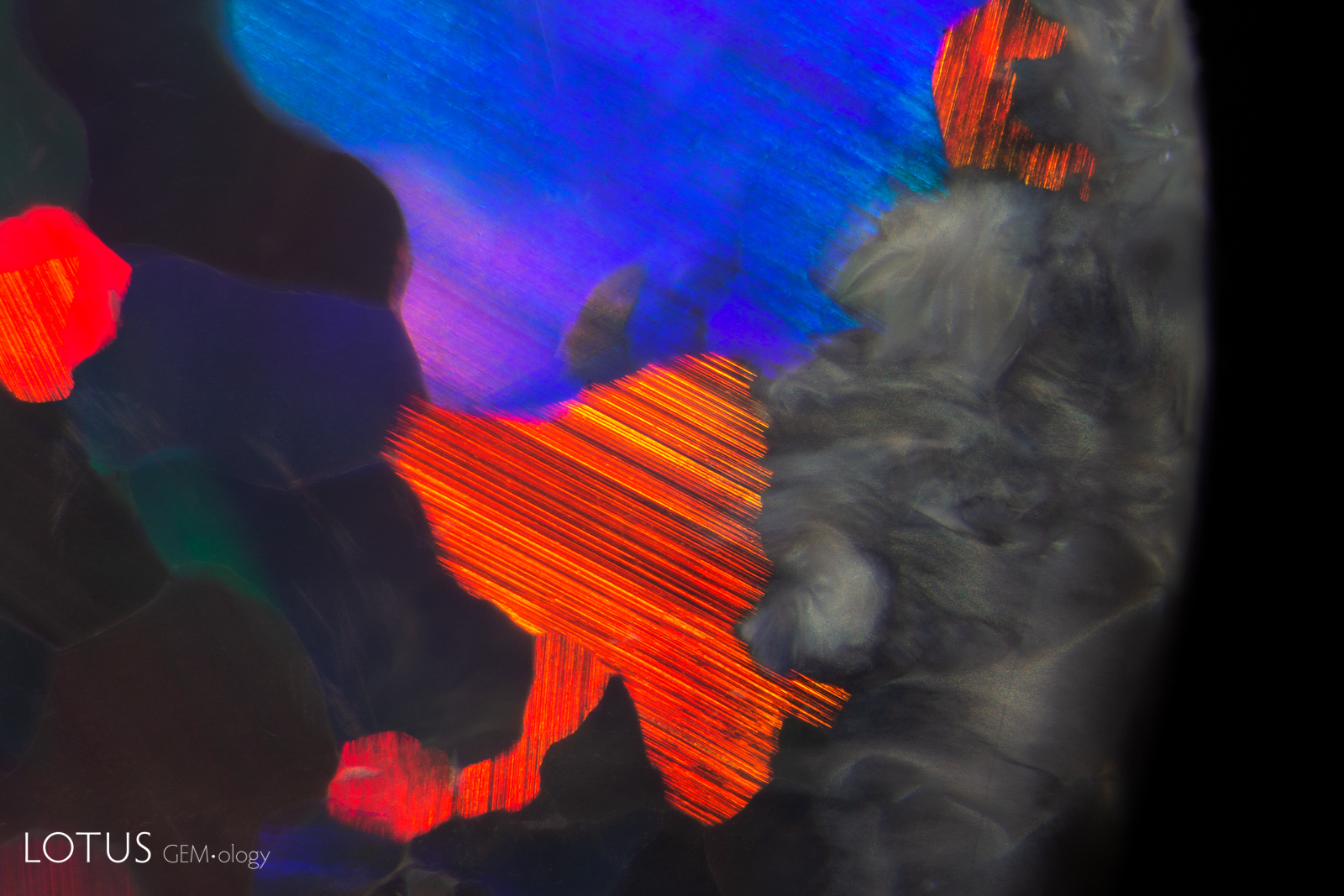
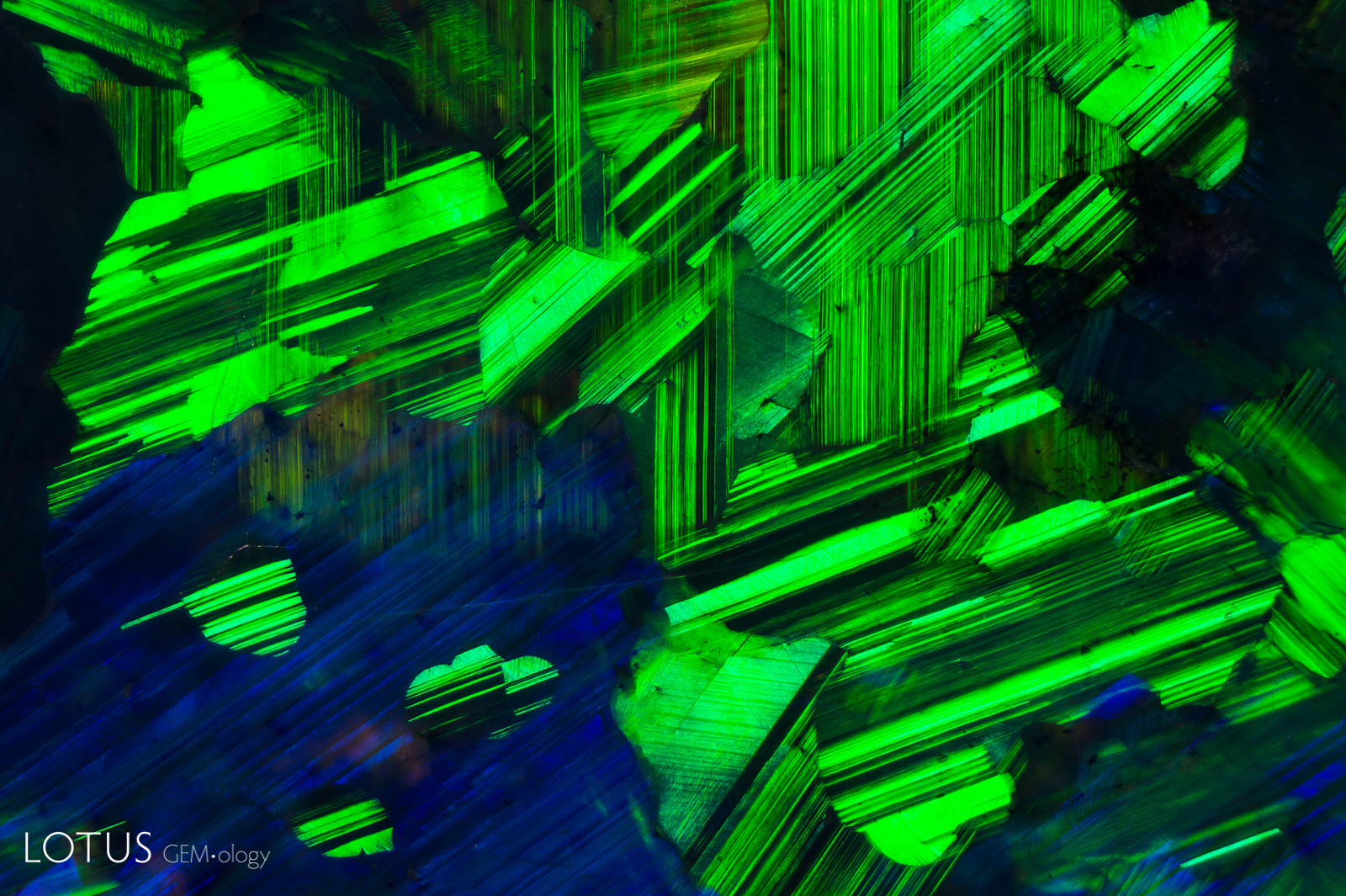
While the play-of-color effect is evident in this opal, on the right we can also see swirled grey potch.
Natural • Opal • Black •
Australia •
Enhancements:
None Detected (None) •
Lighting Conditions:
Fiber Optic: Diffuse Overhead
Photographer:
E. Billie Hughes •
Image Number:
A-003-9120-1
• Field of View = 3mm
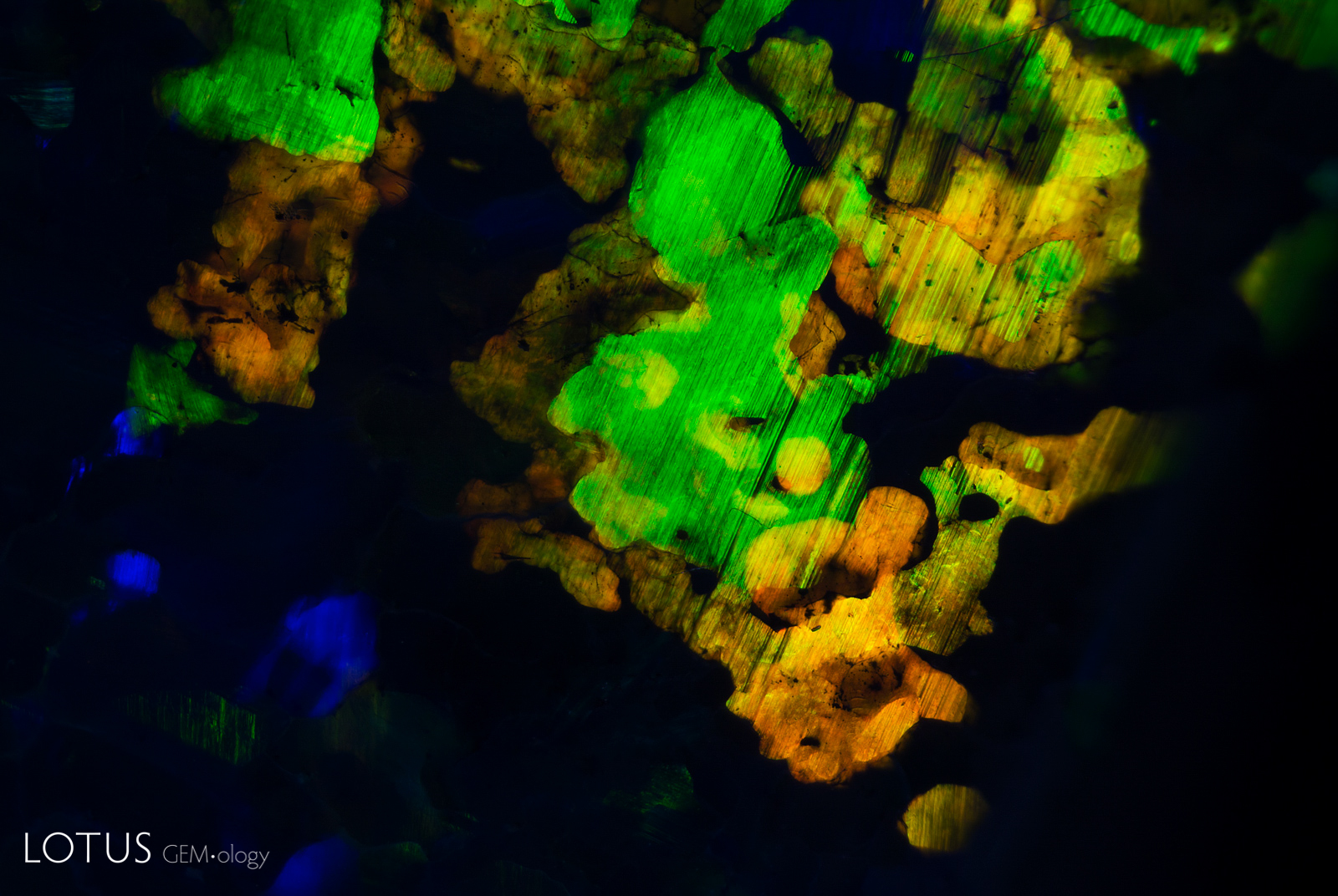
The play-of-color effect can be seen interspersed with grey potch in this opal.
Natural • Opal • Black •
Australia •
Enhancements:
None Detected (None) •
Lighting Conditions:
Fiber Optic: Diffuse Overhead
Photographer:
E. Billie Hughes •
Image Number:
A-003-9022-2
• Field of View = 4mm
The play-of-color effect can be seen interspersed with grey potch in this opal.
Natural • Opal • Black •
Australia •
Enhancements:
None Detected (None) •
Lighting Conditions:
Fiber Optic: Diffuse Overhead
Photographer:
E. Billie Hughes •
Image Number:
A-003-9022-1
• Field of View = 3mm
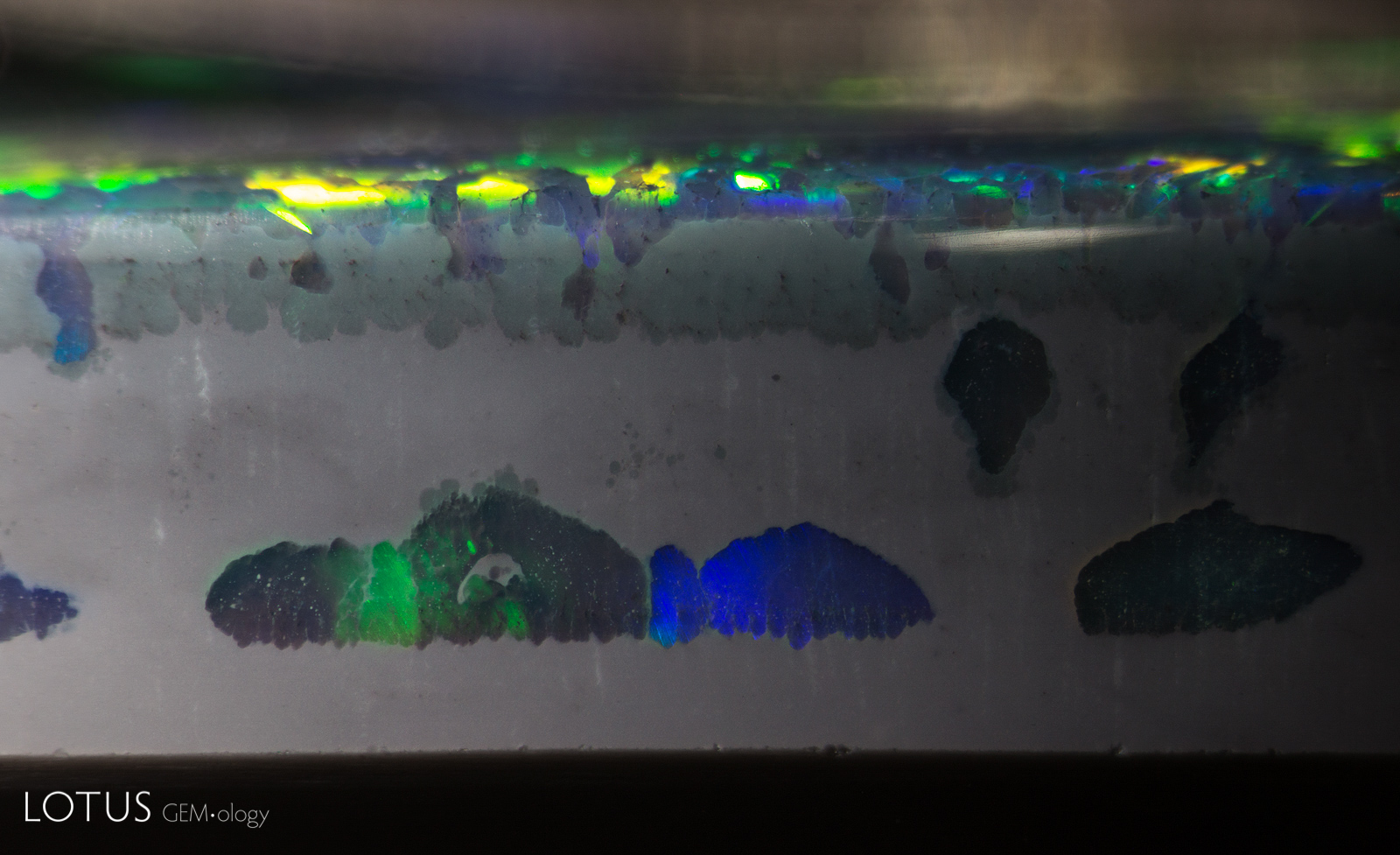
In this piece of opal, when viewed from the side, we can see where small pieces of precious opal are embedded inside the gray potch.
Natural • Opal •
Australia •
Enhancements:
None Detected (None) •
Lighting Conditions:
Fiber Optic: Diffuse Oblique
Photographer:
E. Billie Hughes •
Image Number:
A-003-5713-3
• Field of View = 10mm
A beautiful play-of-color effect is captured in this opal image.
Natural • Opal •
Australia •
Enhancements:
None Detected (None) •
Lighting Conditions:
Fiber Optic: Diffuse Oblique
Photographer:
E. Billie Hughes •
Image Number:
A-003-5713-2
• Field of View = 5mm
Vibrant zones of color can be seen in this opal.
Natural • Opal •
Australia •
Enhancements:
None Detected (None) •
Lighting Conditions:
Fiber Optic: Diffuse Oblique
Photographer:
E. Billie Hughes •
Image Number:
A-003-5713-1
• Field of View = 5mm
Spheres and a black flake in opal; FOV 3.5 mm
Natural • Opal • Crystal •
No Origin •
Enhancements:
None Detected (None) •
Lighting Conditions:
Fiber Optic: Diffuse Oblique
Photographer:
E. Billie Hughes •
Image Number:
A-003-2615-1
Opal inclusions may include mineral crystals, fluid inclusions, fractures, growth structures, host-rock remnants and other internal features formed during or after opal formation. Such features are important to gemologists because they can provide evidence useful in identifying opal, understanding its geological history, recognizing treatment and, in some cases, determining geographic origin.
Opal Inclusion Photomicrographs
The Hyperion opal gallery includes microscopic features found in opals from deposits around the world. Each entry is accompanied by descriptive information and, where available, references to the gemological literature.
What Inclusions Can Reveal About Opal
Inclusions and internal structures are an important part of opal identification. Their form, composition and associations can help gemologists distinguish natural opal from synthetic and imitation materials, recognize evidence of treatment, and study the geological environment in which the opal formed.
Hyperion combines inclusion photomicrography with supporting gemological information so that individual features can be compared with documented examples from known opal deposits.
About Hyperion
Hyperion is the Lotus Gemology searchable inclusion database. It allows users to browse gemstone inclusions by gem type, geographic origin, treatment and keyword.