
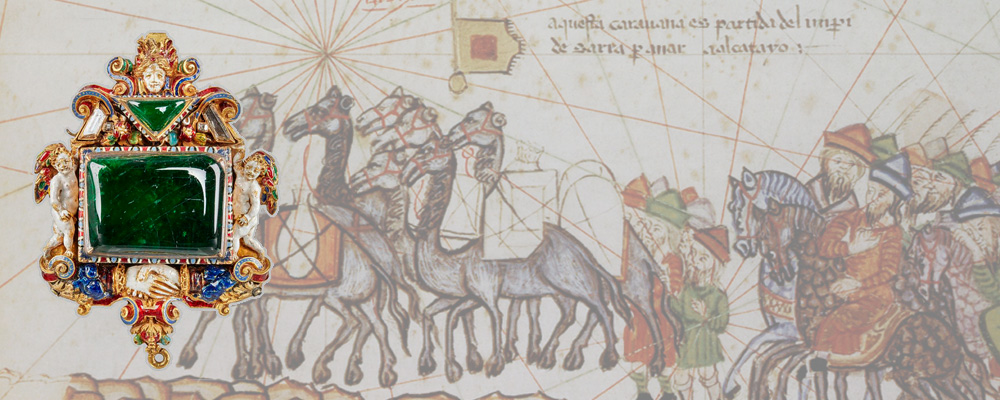
The earliest known emerald mines are thought to have been in Egypt. However recent discoveries suggest that emerald may have also been known from Central Asia.
Alexander the Great and Emerald
The earliest known mention in classical literature (Theophrastus, On Stones, 35) suggests that emeralds (Greek smaragdoi) may have been found in the Himalayas, in a region called Bactria or “Bactriana” by Theophrastus. However, the identity of the stone and the exact location remain unclear. The possible discovery is linked to the military campaigns of Alexander the Great (356–323 BCE) in “India” (331–326 BCE), which took his army into eastern Gandhara—now part of Punjab, northwest Pakistan. These campaigns helped introduce the West to new and exotic goods from the East, including gemstones. After his death, Alexander’s achievements were idealized and became part of Western legend.
The association between emeralds, monsters and the East, is commonplace in myths, legends and lore in European culture since Antiquity. Alexander the Great (356–323 BCE/end of Zhou Dynasty) was the king of Macedon. He became legendary as a classical hero and during the Middle Ages, the main character of a series of tales recounting his historical and imaginary exploits in the East.
Emerald was featured in the Roman d’Alexandre [The Alexander Romance], among the most popular and successful books during the Middle Ages in Europe (5th–late 15th century CE). One of the chapters tells the story of the Valley of Emeralds, a deep rivine located somewhere in Central Asia, where the gems are protected by snakes and dragons. According to various versions of the story, emeralds were said to have hung from the reptiles’ necks or were even encrusted in place of their eyes (Tervarent, 1997, p. 184). In this 15th-century illumination illustrating the myth, from the Royal MS 20 B XX preserved in the British Library in London (Figure 1), the coveted emeralds are directly embedded in the heads of the dragons and Alexander with his soldiers are killing the monsters to recover the gems (Cassius-Duranton, 2024a, pp. 77–78).[1]
Discovered roughly two millennia ago in Egypt, somehow in the ancient Mediterranean world emerald became associated with lands to the East. But in Asia, especially for the Chinese, emerald was a gem from the West.[2] From myth to reality, emeralds are a bridge between East and West.
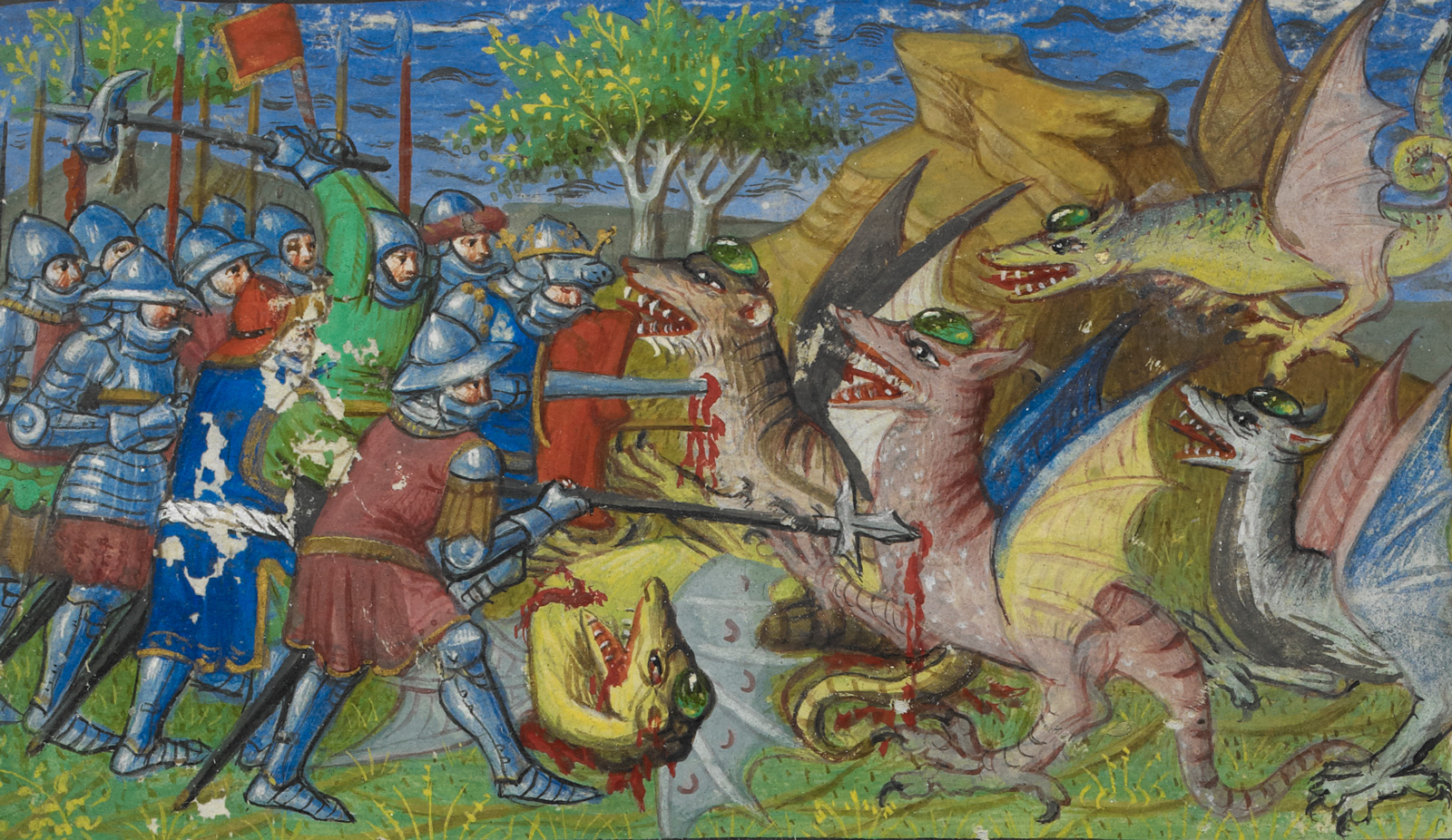 Figure 1. Master of the Royal Alexander, Alexander and his troops fighting against the emerald dragons. From Le livre et la vraye hystoire du bon roy Alixandre, Royal MS 20 B XX, folio 73r, ca. 1420–1425 CE. Photo: British Library, London, © British Library Board.
Etymology of Emerald – The Central Asian Connection
European words for “emerald”, like émeraude in French, Smaragd in German, smeraldo in Italian, or esmeralda in Spanish, stem from the Greek σμάραγδος (smaragdos), which means “green stone”. Regarding the origin of the Greek word, philologists do not agree.
Some believe it comes from the Sanskrit मरगत (marakata), while others believe the opposite – that it is of Greek origin (Monod, 1974, p. 51; Porzig, quoted by Mohebbi, 2016, p. 195; Biswas, 1994, p. 146).
Or it might have come from somewhere in between. Persia acted as a cultural and trade link between India and the Mediterranean, passing along words, materials, and knowledge about gems. Information flowed both ways—through the Persians—before reaching Greek and Roman texts, with each group adding their own changes and sharing it further.
It is hard to say, as the first preserved treatises dedicated to gemstones which mentioned the emerald were written at the same time in Greek and Sanskrit during the 4th century BCE. Ratna Pariksha [Gemstone Appraisal], an ancient Indian practice, is mentioned for the first time in Kautilya’s Arthashastra (323–299 BCE). In the West, the first Greek treatise, Peri Lithon [On Stones] was written by Theophrastus (circa 315 BCE). The Greek Σμάραγδος (smaragdos) became the Latin smaragdus and gave the Arabic and Persianالزمرد (zummurud), transmitted to Chinese 祖母绿 (pinyin: zǔmǔlǜ), as a transliteration from الزمرد (zummurud). In Sanskrit it is मरगत (marakata).
Recent studies suggest emeralds were introduced into China during Kublai Khan’s (grandson of Genghis) Yuan Dynasty (1271–1368) by Muslim merchants of Persian and Arab origin who settled in China and transmitted certain names and knowledge related to gemstones to the Chinese (Qiu, 2024, pp. 128–141).
According to Ephraim Ayil (2024), the word smaragdos has its origins in a West Semitic language of the second millennium BCE. Like the words for “tea” and “rice”, the meaning has remained stable over several millennia. It simply means “green stone.” What has changed is the various stones to which it has been applied.
| Date/Period | Event |
|---|---|
| c. 3500–1500 BCE | Vague references to the use of green stones in Egypt that some believe were emerald. These early dates have been discredited (Sinkankas, 1981). |
| c. 400 BCE to 400 CE | The term vaidūrya is first used in Sanskrit literature, appearing in the Mahābhārata and refers to a blue-to-green gem (Wojtilla, 2012). |
| 5th Century BCE | Herodotus mentions σμάραγδος (smaragdos). As emerald was probably unknown at this early date, the term probably did not refer to the modern emerald (Sinkankas, 1981). |
| c. 4th Century BCE | Vaidūrya is borrowed as bēryllos into Greek, referring to a green gem. This is the root of the modern English word beryl (Sinkankas, 1981). |
| 4th to 3rd Century BCE | Theophrastus in his treatise Peri Lithon (On Stones) describes σμάραγδος (smaragdos) and mentions Bactria as a possible source. There is little chance that this was our modern emerald (Caley et al., 1956; Eichholz et al., 1965). |
| 3rd Century BCE | The Septuagint (LXX), a Greek translation of a now-lost version of the Hebrew Bible, mentions 22 gems in 55 passages, including smaragdos (Pietersma & Wright, 2007). |
|
3rd Century BCE |
The Lithika (attributed to Posidippos of Pella in Egypt) mentions 13 gems, including smaragdos (Austin et al., 2002). |
| c. 20 BCE to 20 CE | Strabo’s Geography mentions gold mines near the Red Sea where emeralds are also found (Roller, 2014). |
| After 30 BCE | The Romans conquer the Ptolemies of Egypt and established sprawling emerald mining operations in the Eastern Desert centred around the complex at Sikait (Harrell, 2024). |
| c. 79 CE | Pliny the Elder’s Natural History mentions 12 different types of smaragdi; among these, four are possibly the modern emerald. He describes their origins as Scythia, Bactria, Egypt, and Ethiopia (Eichholz & Pliny, 1962). |
| After 30 BCE | The Romans conquer the Ptolemies of Egypt and established sprawling emerald mining operations in the Eastern Desert centred around the complex at Sikait (Harrell, 2024). |
| c. 79 CE | Pliny the Elder’s Natural History mentions 12 different types of smaragdi; among these, four are possibly the modern emerald. He describes their origins as Scythia, Bactria, Egypt, and Ethiopia (Eichholz & Pliny, 1962). |
| c. mid-2nd Century CE | In Claudius Ptolemy’s Geography, a map shows Smaragdos Mountain, indicating the location of the Egyptian smaragdos mines (Berggren & Jones, 2000). |
| 1366 and forward | 祖母绿 (zǔmǔlǜ) is first mentioned in China, borrowed from the Persian زُمُرُّد (zummurud). It is unclear exactly what gem was being discussed; the actual term used is 瑟瑟 (sèsè), which refers to a deep green colour (Laufer, 1919). |
| 1405–1538 | Following the fall of the Mongol Empire in the mid-14th century, land-based Silk Roads declined in reliability, and maritime routes, particularly under the Ming dynasty, became the dominant trade arteries (Liu, 2010). |
| 1492 | Columbus first visits the “New World”; in the decades that follow, Colombian emeralds are traded by the Spanish around the world, becoming the gold standard. They find a particularly welcome audience in the Gunpowder Empires (Mughals, Persians, Ottomans) (Sinkankas, 1981). |
| 1798–1825 | French chemist Nicolas-Louis Vauquelin analyses beryls and discovers a new oxide, which he termed “terre du beryl” (glucine) (Vauquelin, 1798). This is the first step in defining the beryl mineral species (Weeks & Leicester, 1968). |
| 1947 | Emerald is discovered at Ajmer/Rajsamand in Rajasthan, India. This is the first documented discovery of emerald in India (Crookshank, 1947). |
| 1958 | First documented discovery of emerald in Pakistan at Mingora (Swat) (Kazmi et al., 1989). |
| 1977 | First documented discovery of emerald in Afghanistan at Panjshir (Abdullah, 1977). |
| 2000–2004 | First documented discoveries of emerald in China (Dayakou, Yunnan and Davdar, Xinjiang) (Blauwet, 2005). |
| 2011 | First documented discovery of emerald in Ethiopia (Cevallos et al., 2012) |
When it comes to studying old gemstone texts, it’s important to remember that the meanings of words change over time and vary by culture. For example, from ancient times to the late 18th century—before modern mineralogy—the word smaragdos could refer to many green stones, like green quartz, jasper, chalcedony, malachite, or possibly even jade, not just true emeralds.
This makes it hard to know if the “emeralds” mentioned in ancient texts are the same as the vivid green beryls we call emeralds today, or when people first discovered and wore them. Still, we can look for links between these texts and archaeological finds to learn more.
The fanciful story of the smaragdos seal of Polycrates, tyrant of Samos (6th century BCE) recounted by Herodotus in the 5th century BCE is probably one of the earliest testimonies of the possible use of this gem in the western world.[3] But we owe its very first description to Theophrastus, a pupil of the philosopher Aristotle and contemporary of Alexander the Great. In his treatise Peri Lithon [On Stones] (Caley & Richards, 1956), he describes the smaragdos:
But the smaragdos also has certain powers, for it makes the color of water just like its own, as we have said before; a stone of moderate size affects a small amount of the water in which it is placed, the largest kind the whole of 24 the water, and the worst kind only the part close to it.”
And, regarding its origin, according to him:
The stones which are used for mosaics come from Bactriana near the desert They are collected by horsemen who go out at the time of the etesian winds; for they are visible then, since the violence of the winds disturbs the sand. But they are small in size and not large.
It is important to note that there is no evidence that Theophrastus travelled to Bactria, so probably he only recounts stories coming from former soldiers, merchants or travellers.
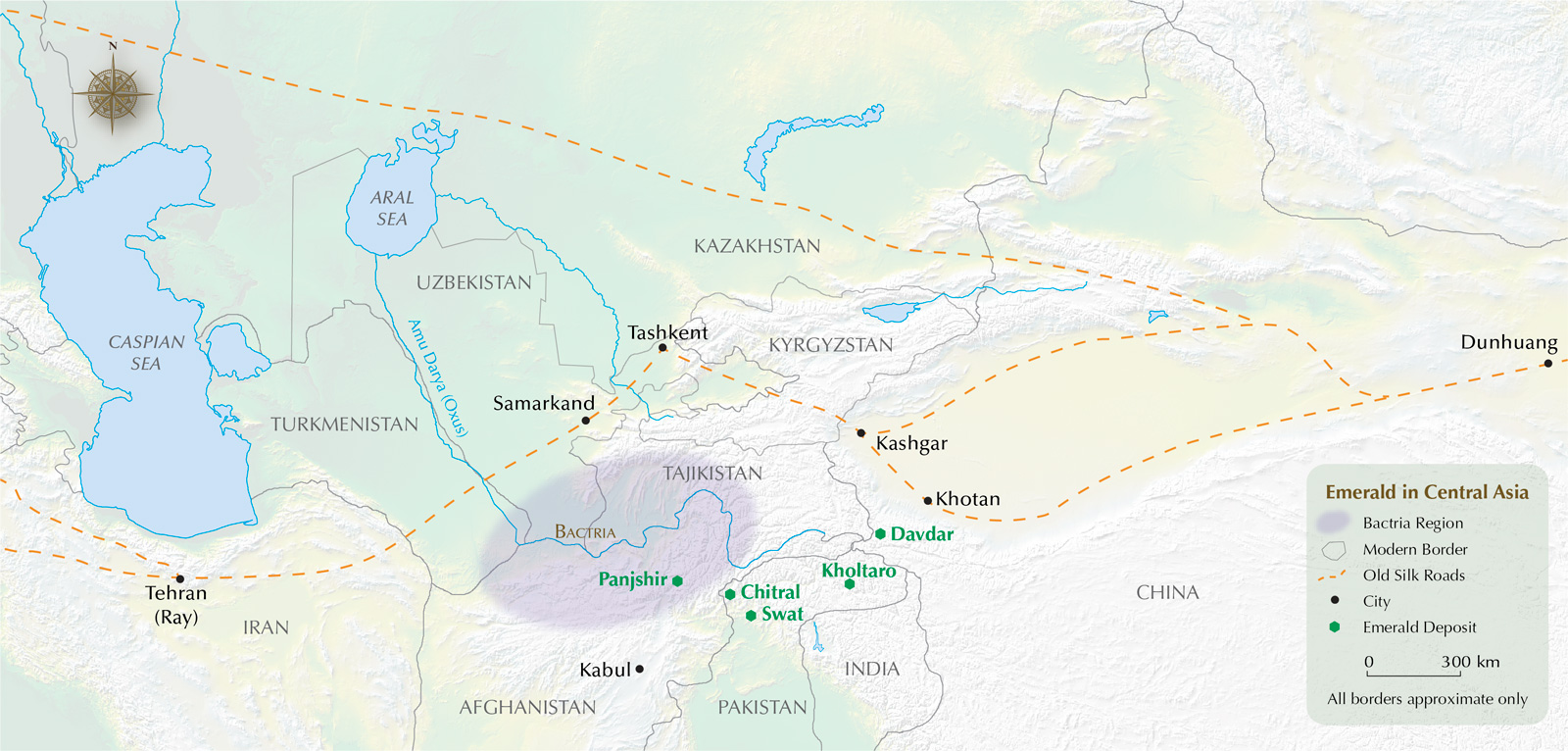 Figure 2. Map of the Indo-Scythian Kingdom of Bactria at its maximum extension around 50 BCE, along with the Central Asian emerald deposits known today. All borders/rivers approximate only. Map: Richard W. Hughes/Lotus Gemology and Françoise Vinet Curnuz.
Bactria
Bactria was a region inhabited by the Bactrians, an ancient Iranian civilization in Central Asia that developed between the mountain ranges of the Hindu-Kush, Pamir and the Karakoram ranges, on both sides of the Amu Darya (Oxus) river, spanning parts of present-day Afghanistan, Tajikistan, Uzbekistan and northwest of Pakistan (Figure 2). Bactria was one of the provinces of the Achaemenid Empire that fell to Alexander the Great c. 329 to 327 BCE. It later belonged to the huge empire built by the Macedonian king who spent most of his ruling years conducting a military campaign throughout Western Asia, Central Asia, parts of South Asia and Egypt. By the age of 30, he had created a major empire, stretching from Greece to northwestern India, opening the commercial, diplomatic and cultural routes that became known later as the Silk Road (Frankopan, 2015, p. 37; Thoresen, 2017, p. 160). Thanks to the bridge established by Alexander the Great between East and West, the gem trade expanded.
If we turn to archaeology, contrary to what has often been reported, emeralds did not feature in the jewels of Pharaonic Egypt. They were quite rare from the time of Alexander the Great’s conquest of Egypt and after his death through the Hellenistic era (323–30 BCE). Emeralds only became a gem commodity after Rome seized control of Egypt (30 BCE) and established the famous mining complex in the Eastern Desert.
What is believed to be the oldest known emerald is a gold ring belonging to the Ganymede hoard (ca. 330–300 BCE) featuring a cabochon emerald. It is currently housed in New York’s Metropolitan Museum of Art (Figure 3; see Williams & Ogden, 1994, n. 34, p. 79). Its style suggests it is from the Hellenistic period (330–300 BCE; slightly before Theophrastus). A similar ring, having carnelian instead of an emerald, was found in the necropolis of Derveni near Thessaloniki. It is housed in the Archaeological Museum of Thessaloniki.
The emerald set in this possibly Hellenistic-era ring has yet to be analysed. The museum website states: “Emeralds first appeared in jewellery at this time and probably came from mines in the eastern Egyptian desert, though it is possible that some came from the Ural Mountains.” In the mid-20th century, the notion of gems from the Central Urals caught on and was repeated ever after, but to date, there is no evidence to support this hypothesis. The Scythian are known to have mined gold, but few gems have come to light so far. Their gold jewellery and metalwork reflect limited use of a few gems, primarily turquoise, with cornelian and rarely amber.
When it comes to engraved emeralds, the earliest may be a portrait of a Ptolemaic princess, now in Paris (Vollenweider, M.-L. & Avisseau-Broustet, M., 1995), and another royal portrait perhaps of Arsinoë III, now in a private collection (Scarisbrick, 2004; Thoresen, 2017).
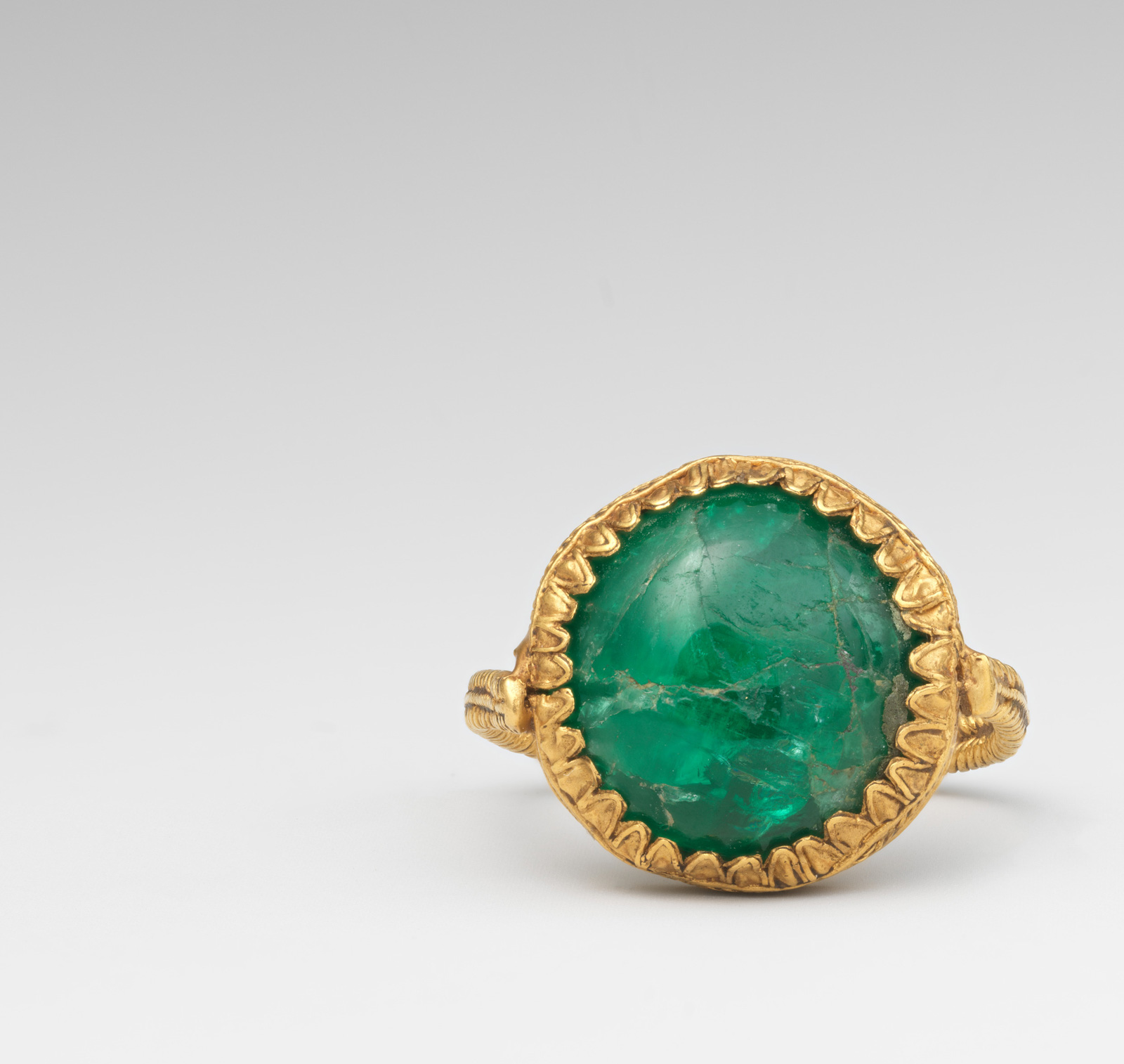 Figure 3. Hellenistic ring in gold with emerald cabochon, circa 330–300 BCE, The Metropolitan Museum of Art (MMA), New York, RMN-Grand Palais. Photo: MMA.
Theophrastus and Pliny the Elder
Theophrastus’ treatise was a major reference used by Pliny the Elder, the Roman scholar who wrote the first European encyclopaedia, the Historia Naturalis (Natural History), during the 1st century. In the Western world, it remained a major source for the scholars until the advent of modern sciences in the wake of the Enlightenment during the 18th century. Pliny devoted Book 37 to the study of the sources, characteristics and virtues of gemstones. According to him, in his time, emeralds were among the most coveted gems after diamonds and pearls, and they came in twelve types. Among them, only three can be considered as emeralds in our perspective:
There are twelve kinds of smaragdus, or emeralds, the most notable being the Scythian, named after the people in whose land it is found. No other kind is deeper in color or more flawless; it stands apart in quality from all other emeralds as much as they do from other gemstones. Next in rank and origin are the Bactrian emeralds, said to be gathered from rock fissures by the locals when the Etesian winds blow. During this season, the desert sands are violently displaced, exposing the glittering stones, though these are reportedly much smaller than the Scythian variety. Third in order are the Egyptian emeralds, which are mined near Coptos, a city in the Thebaid, from deposits in the surrounding hills.
— Pliny the Elder, Book 37, Section 17
as translated by Eichholz, 1962
This passage highlights one of the greatest problems with translated works. Pliny is describing smaragdi (‘green stones’), which the translator (Finot) turns into emerald.
For Pliny, the most beautiful smaragdi (emeralds?) came first from Scythia, then Bactria and then Egypt. He quotes Theophrastus about the smaragdi from Bactria, but he is the first to mention Scythian and Egyptian deposits, because at the time of Theophrastus, these deposits were probably not yet known.
Egyptian deposits were highly productive from Roman times onwards. Emerald jewellery became fashionable and spread to all Romanized regions including Mediterranean Basin and Brittania (England) to Mare Caspium (Caspian Sea) and the northern coast of the Euxinus Pontus (Black Sea) and continued in Byzantium during the first centuries of the Empire (Cassius-Duranton, 2024, p. 63, note 25).
If we consider the small number of Roman jewels set with emeralds that have been scientifically analysed, the vast majority are usually identified as Egyptian (or mistakenly as Austrian). But, in 1997, a Gallo-Roman earring in gold and emerald was discovered during archaeological excavations in Miribel (France). The emerald was found to have an oxygen isotope composition similar to emeralds from the Swat Valley in Pakistan (Figure 4) (Giuliani et al., 2000; Schwarz & Giuliani, 2002). As mentioned above, these results need further confirmation in gemmological laboratories and comparing the data with the results presented in the scientific literature (e.g., Nikopoulou et al., 2023 and 2025).
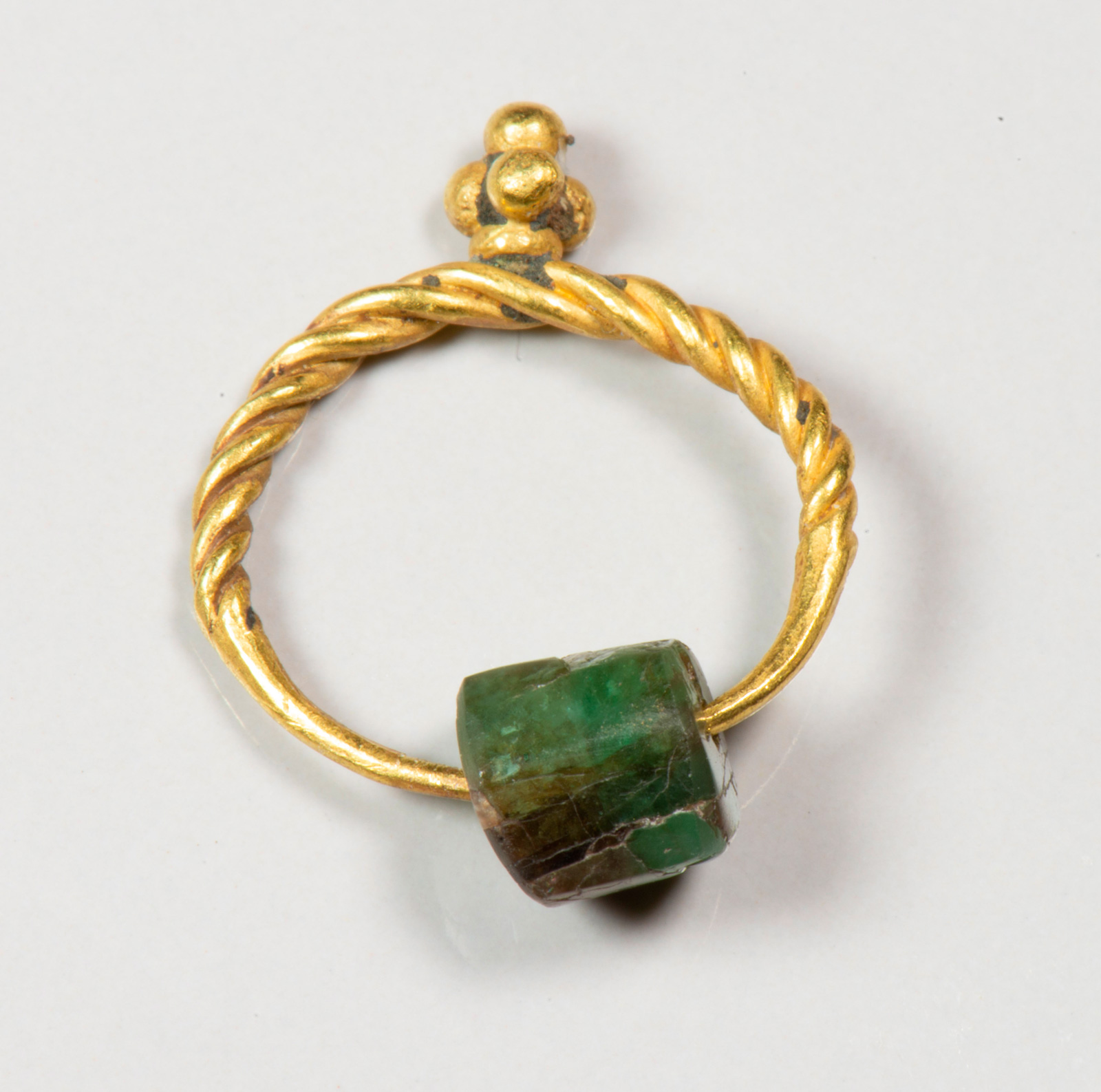 Figure 4. Gallo-Roman earring excavated in Miribel (France), gold, emerald (Swat, Pakistan solely identified by oxygen isotopes), 1st century, MNHN, Paris. Photo: François Farges.
What Was Scythia?
For historians, the historical geography of Bactria and Egypt is quite clear and well known, but this is not the case for Scythia. Currently, Scythia is defined as a region spanning parts roughly from the Danube to the Don, Caucasus, and Volga, so mostly Eurasian Steppe. But the definition was much more complex and larger in Antiquity. The image we have of the people or group of people known in antiquity as the Scythians is characterized by its vagueness, despite a few notes from ancient authors. The Scythians were a loose confederation of nomadic tribes. Little about them was known to the Greeks and Romans with whom they came into contact around the northern Black Sea region. Likewise, the quality of the interaction is mostly opaque.
According to the Greek historian Herodotus (440 BCE), the Scythian tribes covered a large territory between Europe and Asia, including the Ural region. Ancient scholars offered varying interpretations of Scythia’s location. Herodotus also mentioned the Scythians from Asia. What we do know is that the footprint of their territory was not static but changed over time.
In Pliny’s Natural History, he mentions the Scythians several times (Book 4, 27 and Books 6, 14, 15, 19), but associates them with different geographical areas, some quite far apart. Thus, the exact regions he discusses are difficult to determine. In Book 6, after talking about Bactrians and the Oxus (Amu Darya) River (Book 7, Section 18), he claims: “Beyond this river are the peoples of Scythia”. And, as he emphasizes in his description of smaragdi origins, Bactria and Scythia were close. The Scythians were nomadic peoples of which a branch migrated from Central Asia southward into the northwestern Indian subcontinent, the present-day Afghanistan, Pakistan, Eastern Iran and Northern India. They established an Indo-Scythian kingdom that last between 150 BCE and 400 CE (Figure 5).
Pliny mentions Scythia and Bactria once each in Book 37: NH, 37.65, but is actually quoting from Theophrastus (On Stones, 25 at “tanoi”; Caley & Richards, 1956).
If the smaragdi Pliny was describing was indeed the emerald of today, those from Bactria and Scythia might correspond to one or more of the known emerald deposits in the western portion of the Greater Himalayas. Russian (Ural) emeralds have not been identified in jewellery before the 19th century; only a vague mention was found in one museum note (Williams and Ogden, 1994; see again Figure 3).
Aethiopia
Interestingly enough, Egypt and Asia were not the only sources mentioned by Pliny (Eichholz, 1962):
Next in esteem to the Cyprian 'smaragdi' come the Ethiopian, which, according to Juba, are found at a distance of twenty-five days' journeying from Coptos, and are bright green, although they are rarely flawless or uniform in tint.
Modern commentators have largely dismissed this, because they knew there were emeralds in Egypt and were unaware of any in Ethiopia. So, it was assumed that Pliny was referring to the Egyptian deposits. This changed in 2011, when genuine emerald was discovered in Ethiopia (Cevallos et al., 2012).
Aethiopia was a vast region that included most of north Africa west of the Nile and south of ancient Egypt's boundary. Coptos (today’s Qift) is on the Nile, 43 km from Luxor. A 25-day journey might just put you into the territory then known as Aethiopia. From Qift to Ethiopia’s Shakiso emerald deposit is 2,300 km as the crow flies. Probably a bit further than a month’s walk, but remember, many of the sources cited in early literature were trading towns, not mining localities. A perfect example is Mogaung historically being named as the source of Burmese jade. This misstatement has been repeated even in the 20th-century when the exact source was already known (Hpakan area, not Mogaung, which is 120 km away).
As the great British B.W. Anderson once sagely advised, the most common mistake gemmologists make is the failure to consider enough possibilities….
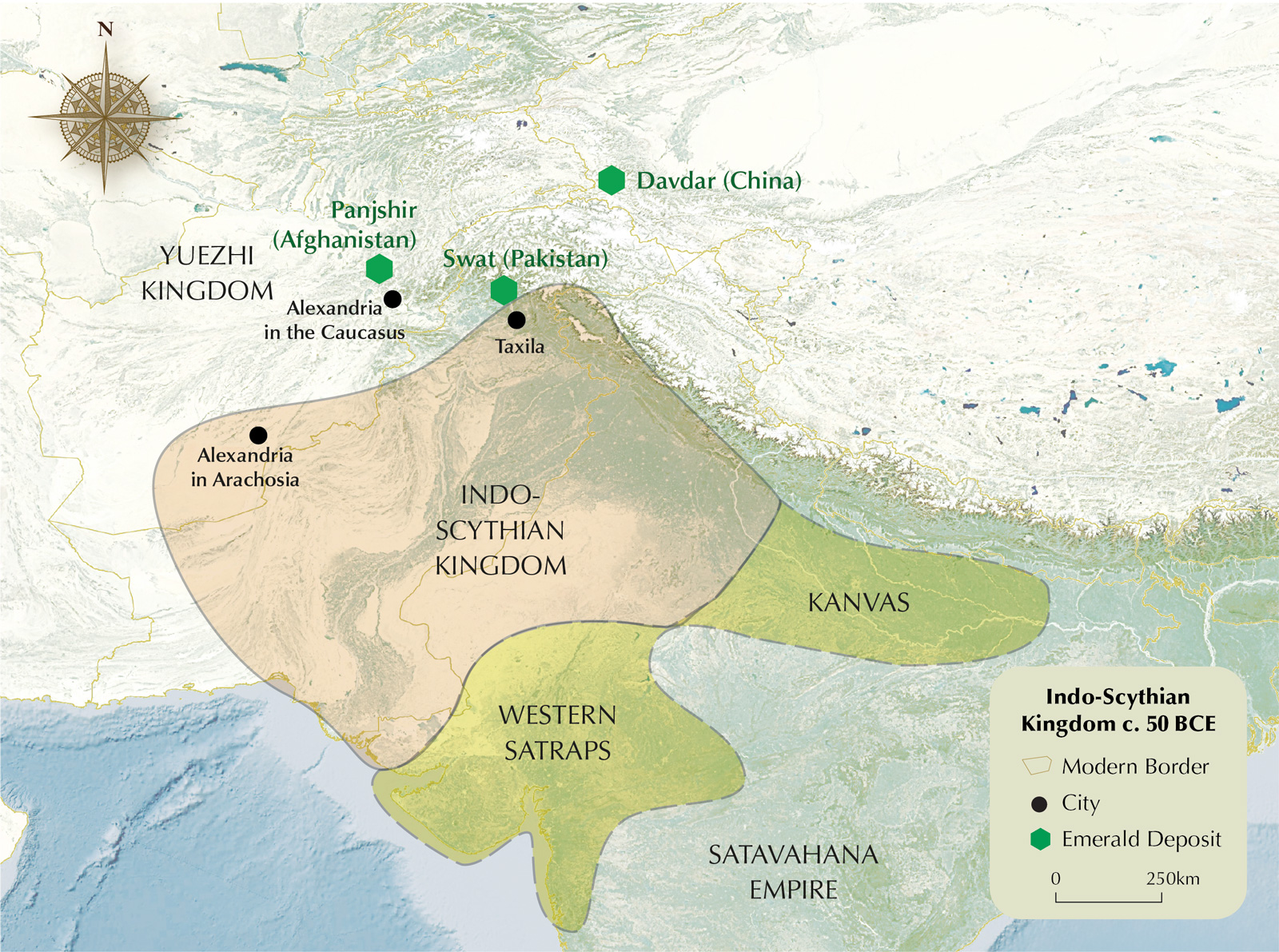 Figure 5. Map of the Indo-Scythian kingdom in the 1st century BCE, in relation with known Central Asian emerald deposits. The Indo-Scythian kingdom at its greatest extent overlayed territory that was formerly the kingdom of Bactria, the Graeco-Bactrian kingdom, and the Indo-Greek kingdom. Map: Françoise Vinet Cornum and Richard W. Hughes/Lotus Gemology.
Beyond Pliny – Solinus
In the wake of Pliny, the Roman scholar Solinus (3rd–4th century; Solinus, 1955) wrote the Polyhistor. Chapter 16 discusses various curiosities in Scythia, including the emerald. According to him, Scythia is an inhospitable region, populated by monsters such as arimaspians and griffins, where gold and gems abound. Arimaspians and griffins were initially associated with the protection of gold by Herodotus (XXVII) (Delplace, 1990):
In Asian Scythia, there are rich but uninhabitable lands: for although they abound in gold and precious stones, everything is at the discretion of Griffins, monstrous birds whose ferocity knows no bounds. Their rage makes access to the mines difficult and rare; if they see anyone approaching, they tear them to pieces, as if born to punish reckless avarice. The Arimaspians wage war against them to gain possession of these stones, the nature of which we shall not disdain to study. Scythia is the land of emeralds. Theophrastus assigns emeralds the third place among precious stones: for although there are emeralds in Egypt, (…), those of Scythia are the most beautiful.
Solinus quotes Theophrastus rather than Pliny, but he is the first to create a connection between the emeralds and the legend of the arimaspians and griffins. Depending on the authors, the monsters are in various regions, like Scythia, Bactria or India. Afterwards, during the Middle Ages, the lapidaries recounted that in Scythia, emeralds were coveted by the arimaspians, or beings with one eye like the Cyclops. The guardians of the emeralds were the griffins, hybrid monsters, half-lion, half-eagle. According to legend, to win back the emeralds, the arimaspians tried to kill the griffins. This story was repeated in lapidaries from the Middle Ages, most notably that of Marbode of Rennes (1035–1123), who, along with Pliny, was a major source in later lapidary literature.
Bala's Bile — The Birth of Emeralds in Indian Lore
According to early Indian lapidaries, gems were born from the sacrifice of Bala (Bali), the powerful king of the Dânavas. The gods dismembered his body and scattered the pieces into the world. These pieces grew into gems. Various versions of this myth are recounted in numerous texts, including Buddhabhatta’s Ratnapariksha (Finot, 1896, Chapter 6, Verses 141–152), (Finot, 1896, pp. 33–34), the Agastimata (283–288) (6th–13th century) (Finot, 1896, pp. 123–124), and the Garuda Purana (6th–12th century)(Shastri, 1978).
Bala’s bile was said to be the origin of emeralds and the place where it supposedly fell was beyond the Himalayas, at a mountain in a place with balsam trees near the desert next to the sea. This is a remarkable description of the location of the Egyptian emerald mines near the Red Sea, which began production during Greco-Roman times.[4]
Oriental and Western Emeralds
Following the European “discovery” of the New World, by the 16th century, Colombia had become the world’s most important emerald producer. An international trade was organized between New World ports and Spain, Portugal, and India. Goa, the Portuguese commercial centre, was the main arrival point for Colombian emeralds in India. At the time of the “Gunpowder Empires”[5], the greatest demand in the world for emeralds came from Muslim princes, especially from the Mughal court (Lane, 2010). This Colombian emerald trade grew under Emperor Jahangir’s reign (1605–1627). In his Memoirs (Jahangir, 1999), Jahangir describes an unusually beautiful emerald from a new mine:
Another was an emerald, also among Adil Khan’s offerings. Although it is from a new mine, it is of such a beautiful colour and delicacy as I have never before seen.
But, for the Westerners, the association between emeralds and the Orient continued even after the discovery of Colombian deposits.
Boetius de Boodt on Emeralds
In his Gemmarum et Lapidum Historia, after repeating the obligatory reference to Pliny’s twelve types of emeralds, Anselmus Boetius de Boodt (1609) claims that: “Today, emeralds are distinguished into two categories. Some are oriental, others western”. According to him, “oriental” emeralds are hard, have a beautiful vivid green colour, are transparent and of great price. While he states that they are from the Oriental Indies, he says the exact location is still uncertain.
Boetius de Boodt divided emeralds into two categories, those from the “Orient” and those from “Peru.” Those from Peru were said to be much larger and could have a nice colour, but could also be dull, included and less hard. Oriental emeralds were described as better but smaller than those from Peru: “The most perfect Oriental emeralds rarely exceed the size of a large hazelnut”. Boetius de Boodt highlights the fact that Western emeralds are found in large quantities on the market and oriental emeralds are rarer. He adds also that some jewellers prefer the emeralds from Peru to the Oriental stones because of their more pleasant colour (Boetius de Boodt, 1644, pp. 249–251).
Once again, we must place his statements in historical context. At the time, “Peru” referred to the Viceroyalty of Peru, established by Emperor Charles V in 1542, a large territory which included most of South America and lasted for two centuries. As Brazilian emerald deposits are not mentioned in the literature before the 20th century, he is certainly referring to Colombian emeralds. The distinction between “Oriental” and “Peru” is believed to be trade terminology because, since antiquity, it was believed that the hardest and thus best gems came from the Orient (India, etc.) (Bycroft, 2019, pp. 149–172).
The Portuguese physician Garcia de Orta is among the sources quoted by Boetius de Boodt. In 1563, he published in Goa his Coloquios dos simples e drogas medicinais da India [Conversations on the Simples and Medicinal Drugs of India]. According to Orta: “The emeralds brought from the Peruvian province of the New World are suspected of being falsified” (Book 1, Chapter 48), emphasizing the mistrust associated with new geographical origins for gems. Following the 18th century discovery of diamonds in Brazil, they were often sent for sale in India, because the Indian diamonds were considered to be of better quality.
Original Sin
On the topic of emeralds, Tavernier wrote: “It is an old mistake…. The East has never produced any, either on the mainland or in the islands, and having made an exact search for them in all my travels, no one has ever been able to mark any link with Asia where they are found” (Tavernier, 1676, Vol. 2, Chapter 19). But other authors from the same period, such as Robert de Berquen (1661) and Pouget Fils (1762), continued to mention “oriental” emeralds in their treatises, comparing them with the ones from the New World.
This is yet another example of how words can potentially be misunderstood by later researchers. The epitaph ‘oriental’ was not a statement of geographical origin but rather was used as a prefix to indicate superior hardness—and thus, quality. Because the gems found in the New World were softer than the corundums, thus the “oriental” topaz was yellow sapphire, “oriental” amethyst was violet sapphire and the “oriental” emerald was not an emerald at all, but a green sapphire (Bournon, 1802; Bycroft, 2019).
One of the enduring paradoxes in the gem and jewellery industry is that, while many are captivated by the idea of gem provenance, few are willing to invest in fieldwork to systematically document the origin of these stones with precision and credibility.
In the case of emeralds and many other gems, a touch of mystery often adds perceived value. Details about how a stone was mined, by whom, and through what supply chains it travelled can be less enchanting than the romantic notion of a gem surfacing from some ancient, hidden mine in a mist-covered jungle, carried by intrepid yet fashionably rugged traders. Ironically, a mine that is no longer active tends to hold even greater appeal for many collectors and connoisseurs. The idea of a ‘lost’ or ‘historic’ source resonates more strongly than, in the best case, images of a modern open-pit operation populated by excavators and workers clad in high-visibility gear more typical of road construction sites than treasure hunts or, in the worst case scenario, photos reminiscent of those by Sebastião Salgado of artisanal gold miners in Brazil (Salgado, 2019), even if they are truly artistic.
Kris Lane summarizes that aspect in Color of Paradise: Emeralds in the Age of the Gunpowder Empires (2010):
Emeralds were quickly divorced from the context of their production, alienated from their producers’ hands, ‘fetishized’, as Karl Marx famously put it. Buyers had no idea (or desire to know) how much labour each stone had required, how much blood (God forbid!) it had cost in transit. Yet provenance still mattered to many Old-World consumers, whether in Lisbon or Kandahar. Emeralds, like diamonds and pearls, were simply supposed to come from ‘the Orient’. Trapped by this ancient bias, confirmed by Marco Polo, European traders began almost immediately to divide Colombian emeralds into two categories: ‘old’, or ‘oriental’ (best quality), and ‘new’, or ‘Peruvian’ (mediocre). They did this almost from the moment of contact as a reflection, I believe (in part since it happened again with Brazilian diamonds in the early eighteenth century), of a generalized Old-World perception of the Americas as a false, or at least ‘half-baked’, Orient.
While traders often hid their sources, it’s unlikely that Jean-Baptiste Tavernier was being secretive or mysterious when he said there were no emerald mines in Asia. Unlike diamonds, which he famously acquired in India, there’s no record of him buying emeralds there. More likely, he may have brought Colombian emeralds with him to India to trade for diamonds, since emeralds were easier to carry and hide than gold or silver.
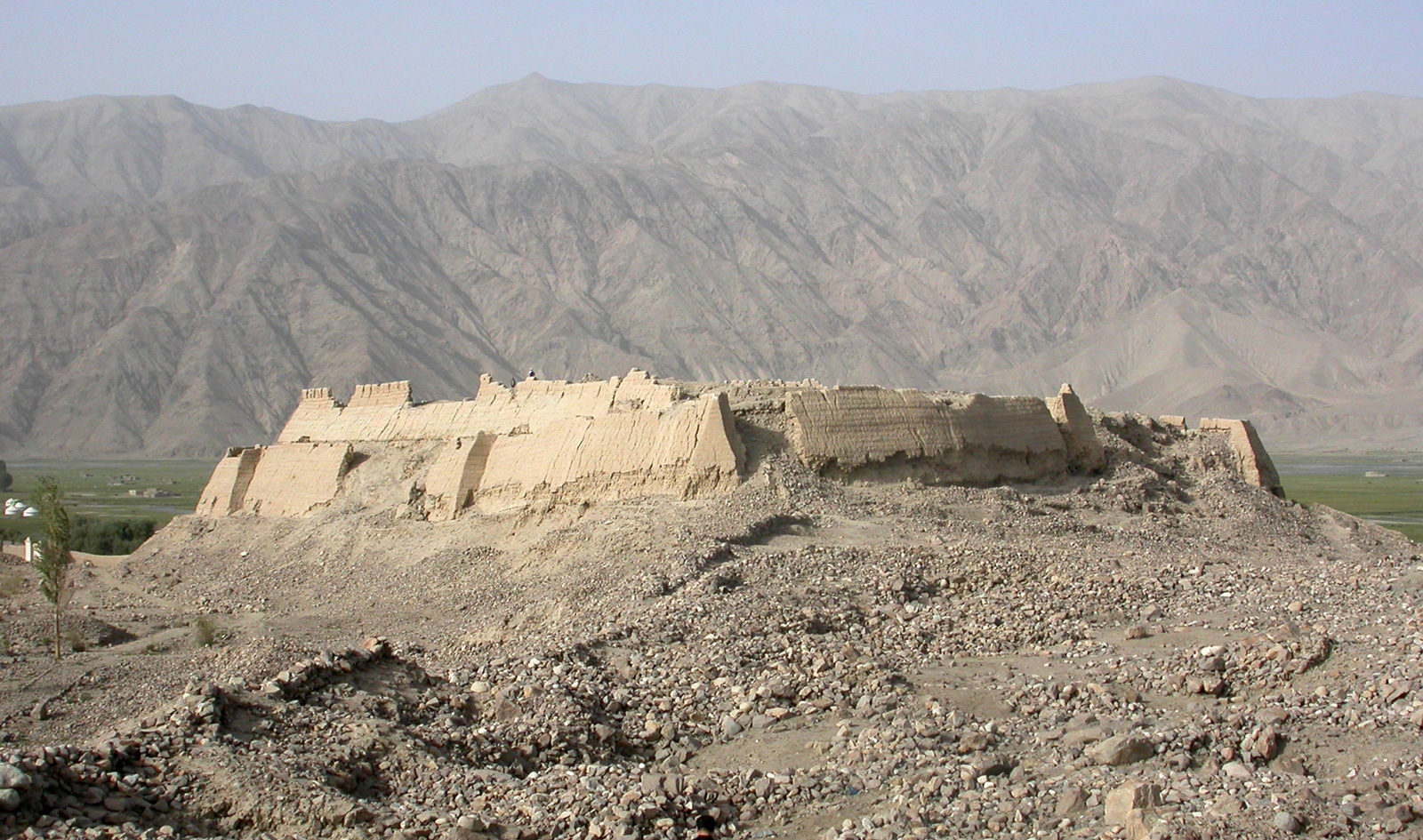 Figure 6. An old Silk Road fortress at Tashkurgan (China). At the end of the Middle Ages, insecurity on the Silk Roads had become a serious problem and fortresses were built to offer protection for the trade. After trade collapsed in the 15th century, the need disappeared and thus they were abandoned. Photo: Vincent Pardieu, 2006.
It is therefore more likely that, if they were once known, the locations of ancient Asian emerald mines had simply been forgotten. For centuries after the conquests of Alexander the Great, luxuries such as silk and gemstones flowed from China to Europe via the overland routes later known as the Silk Roads. However, this trade network collapsed at the end of the Middle Ages—roughly two centuries before Tavernier's travels in Asia.
Nevertheless, in defence of Tavernier, it is also interesting to note two important aspects.
- According to the various Arab and Persian treatises on gemstones, such as those of al-Bīrūnī (973–1052) and al-Ṭaifāshī (1180–1253), only Egypt is mentioned as a source of emerald.
- Despite the fact of emerald’s long-documented history in the West, thus far no emeralds older than the Middle Ages have been found in Chinese archaeological sites.
If emeralds were known in Central Asia from ancient times up to the 7th century, they might have reached China as Buddhism spread from India through Afghanistan. However, emeralds seem to have become known and valued in China only later.
During the Mongol–Yuan dynasty (1271–1368), many Muslims from Persia and the Arab world moved to China, where they were locally known as “Hui” people. They played a big role in the gemstone and jewellery trade between East and West, especially around the time of Marco Polo. Some gems used in ancient China, including emeralds, were brought from the West. That’s why the Chinese word for emerald comes from Persian.
The oldest known Chinese objects featuring emeralds are believed to be those from the tomb of King Liangzhuang (15th century, including 52 emeralds). Gemmological analyses conducted at Wuhan’s University of Geosciences led to the belief that these emeralds might be of Egyptian and/or Austrian origin (Luo et al., 2019; Cao et al, 2024; Yang, 2024). This is within the realm of possibility as these gems are said to have been brought back to China by the famous Chinese navigator Zheng He, who travelled by sea to Africa between 1405 and 1433. The inclusions presented in the article are more like those from Egypt than those from Austria, e.g., no amphibole needle inclusions were observed in any of the emeralds (see again Nikopoulou et al., 2023 and 2025). Additional study will be needed to further confirm the belief that these emeralds are probably from Egypt.
From Land to Sea — Collapse of the Cenral Asia Silk Road
The decline of the land-based Silk Roads that took place at the end of the Middle Ages can be attributed to growing insecurity caused by a series of devastating events, including the Crusades (11th–13th centuries), the Mongol invasions (1209–1236) and the Timurid campaigns (1383–1385), all of which resulted in the deaths of millions.
Central Asia was also ravaged by outbreaks of bubonic plague (‘black death’) during this period, which is believed to have first jumped species from fleas to rats to humans in that region. The extensive trade networks helped the disease rapidly spread, killing an estimated 30–60% of the population in affected areas across Eurasia during 1347–1351 (Frankopan, 2015).[6]
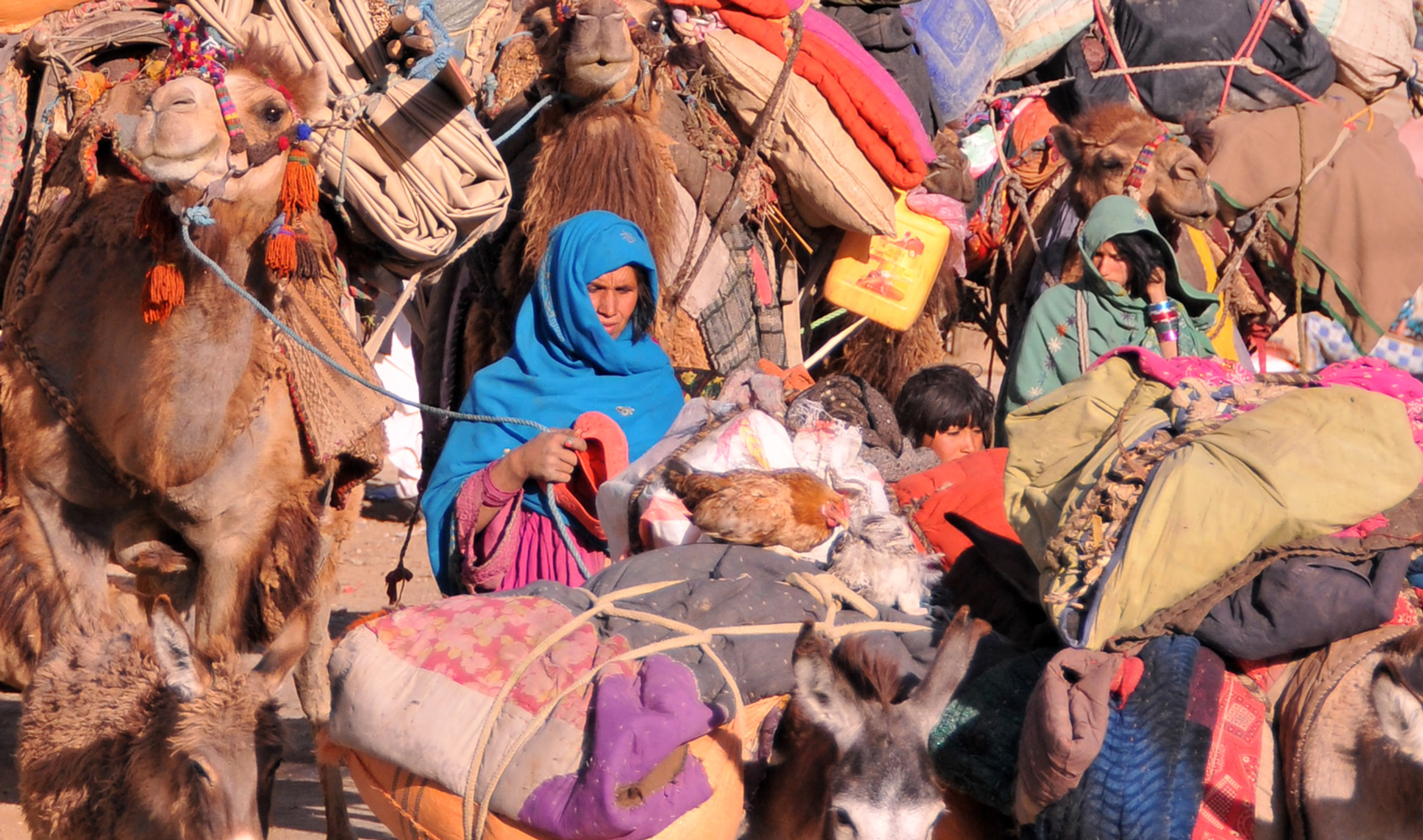 Figure 7. Kushi nomads on their way with their livestock to their summer grazing areas in the Panjshir valley of Afghanistan. For centuries, herders, and traders have walked along the emerald valleys along the Silk Roads. Considering that emerald has now been discovered in several locations near to important trade routes, it is difficult to imagine that no one previously collected and traded the green crystals at Panjshir, Swat or Davdar. But who knows? The Malagasy people walked across sapphires of various colours for hundreds of years. It was only in recent times that outsiders arrived and recognized their value. Photo: Vincent Pardieu, © GIA, 2010.
In contrast, the development of maritime trade routes offered new opportunities for traders. Vasco da Gama’s successful voyage from Portugal to India around the African cape in 1497–1498 opened what would become the Spice Route. Similarly, the Spanish established a transoceanic route connecting Europe, the Americas, and Asia via the Philippines following Columbus’s arrival in the New World in 1492 and Magellan’s expedition reaching the Philippines in 1521. Interestingly, Tavernier noted in his Travels that the first Colombian emeralds to reach India likely arrived via the Philippines with Spanish traders (Tavernier, 1676, Vol. 2, Chapter 19).
As the population along the Silk Roads declined and as international trade moved from land routes through Central Asia to maritime ones, if gem miners had been active, they would have lost their markets. Those who survived likely turned to other livelihoods in the absence of demand for their stones. This theory provides a possible explanation for the fact that, even if there had been emerald mining during the Middle Ages (500–1500 CE), by the time of Tavernier’s journeys to Asia in the 1600s, knowledge of the Central Asian emerald mines might have been lost.
Green Glow
Yet, as gemstones are durable, the appreciation for emeralds persisted across generations in major consumer regions in the Middle East and India, which from the end of the Middle Ages through the Industrial Revolution remained among the world's largest economies. Emeralds were seen in Asia as especially attractive for two main reasons:
- For the leaders of the Islamic world (Mughals, Ottomans and Safavids), green is the colour of Islam and of Paradise. Thus, emeralds were desired because of their sacred colour. Many were inscribed with verses from the Qur’anor used as ornaments (Cassius-Duranton, 2024b). European traders were able to use the emeralds, gold and silver produced from American mines to trade for the Asian products (silk, porcelain, spices, tea…) in high demand in the rest of the world.
- Emeralds also had the advantage of being lighter to transport than silver and gold, as well as being seen as rare, mysterious and exotic.
Not unlike today, when it came to the geographical origins of gemstones, traders were often less than honest. Gradually from 16thcentury onwards, people came to believe most emeralds were of Colombian origin, even if there were other possible origins. A recent gemmological study of emeralds set in a 16th-century pendant linked to Catherine de’ Medici (Figure 8) suggested they were of Pakistani origin, although a historian had declared without evidence that they were of Colombian origin (Panczer et al., 2025). This article demonstrates the benefits of interdisciplinary research projects between historians and gemmologists and the importance of scientific studies of museum samples, because such research can help in the understanding of works of art and the history of gemstones.
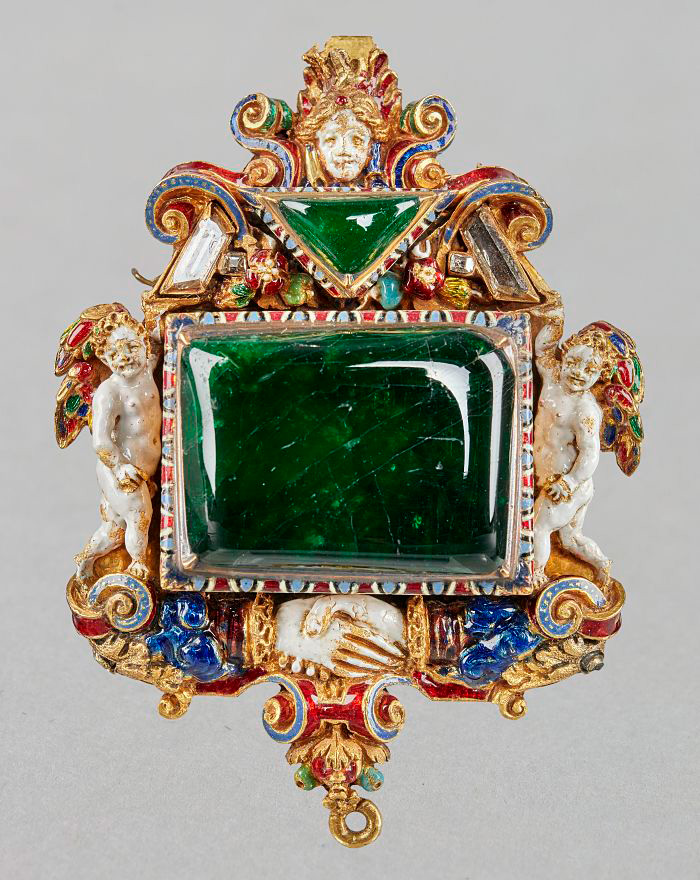 Figure 8. Catherine de’ Medici’s 16th-century pendant, enamelled gold, diamonds, emeralds (BnF Collection No. 56.336). Photo: Serge Oboukhoff; Museum of the National Library of France.
Brave Old World? Central Asian Emeralds
The first modern discovery of emerald in Asia occurred in Rajasthan, India, shortly after the country gained independence (Crookshank, 1947; Roy, 1955). It was the result of systematic geological surveys and prospecting led by Indian geologists and mining authorities. These emeralds, often pale in colour, are hosted in ultramafic rocks associated with pegmatitic intrusions (Giuliani et al., 2019). Their inclusions, such as two-phase fluid inclusions, are like those found in emeralds from Egypt and Austria (Gübelin & Koivula, 1986).
A few years later, in 1958, deep green emeralds were discovered in Pakistan’s Swat Valley (Kazmi et al., 1989), an archaeologically rich region with sites dating back over 3,000 years. This area fell under Greek control following Alexander the Great’s invasion in 327/326 BCE. The emeralds occur in talc-carbonate and chlorite schists without pegmatitic veins and also contain two-phase inclusions, like those found in India and Egypt (Gübelin & Koivula, 1986).
In the mid-1970s, another significant discovery took place in Afghanistan’s Panjshir Valley, following geological surveys conducted by Soviet and Afghan teams. During this period, local shepherds and villagers reported finding green crystals in the rocks. These were brought to the attention of Afghan geologists – possibly affiliated with the Afghan Geological Survey or Soviet-backed exploration groups (Abdullah et al., 1977; Poullen & Bariand, 1978; Bowersox, 1985).
Notably, some Panjshir emeralds contain multi-phase fluid inclusions resembling the jagged three-phase inclusions that are characteristic of Colombian emeralds (Gübelin & Koivula, 1986; Schwarz & Pardieu, 2009; Saeseaw et al., 2014).
Another fascinating aspect is the valley’s geography: it lies just south of the ancient lapis lazuli mines of Badakhshan, believed to have been worked for over 8,000 years: Indeed, lapis beads from this region have been found in Indus Valley archaeological sites (Jarrige et al., 2013) meaning that gem miners or traders have probably visited Panjshir for centuries even before the establishment of the Silk Roads. The Panjshir Valley itself is rich in Bronze Age sites, and its entrance lies close to the probable location of Alexandria in the Caucasus, one of the cities founded by Alexander the Great (see Figure 2). This fascinating discovery renewed the interest in the writings of Theophrastus and the mystery of his Bactrian emeralds (Forestier & Piat, 1998).
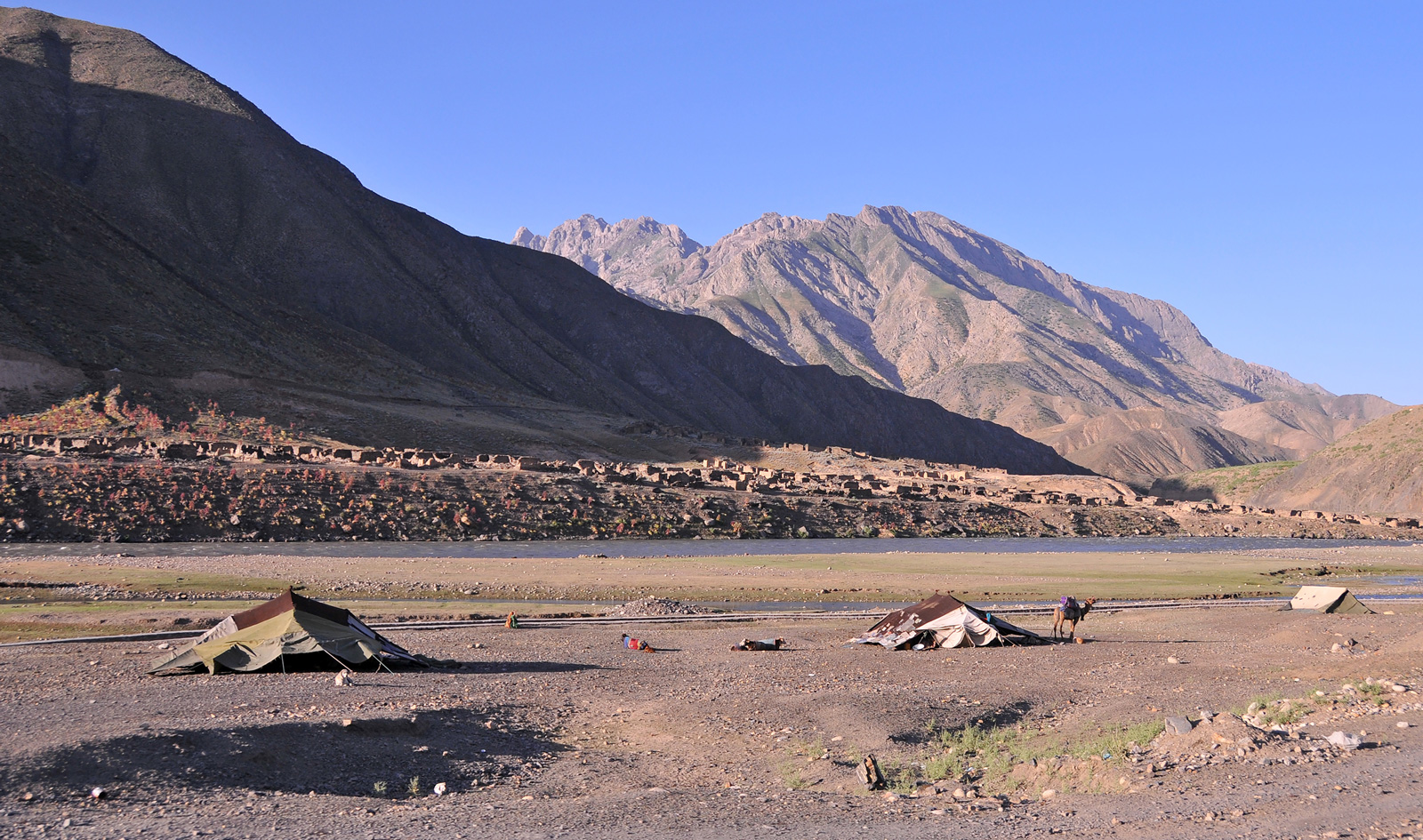 Figure 9. Nomad camp at the entrance of the Panjshir valley. In the background lie the ruins of a former refugee camp built during the Afghan civil war before 2001. Such a scene is evocative of what this valley might have looked like during the times of the Silk Roads. Photo: Vincent Pardieu; © GIA 2010.
In 1985, another deposit was discovered at high altitude near Khaltaro in northern Pakistan (Kazmi et al., 1989; Laurs et al., 1996), although it is unlikely this location was known or worked in antiquity.
Enter the Dragon
Around the same time, another emerald deposit was uncovered near Dayakou village in Malipo County, Yunnan Province, China—close to the Vietnamese border—by tungsten miners. However, like the Khaltaro material, the emeralds from these remote deposits have limited commercial potential (Yu, 2024).
The most interesting surprise came in the early 2000’s with the discovery of an emerald deposit in the Xinjiang province of China producing stones that were similar to those from Colombia. It was revealed in 2005 (Blauwet et al., 2005) and confirmed during the visit to the deposit in 2006 by one of the authors (Pardieu, 2006; Schwarz & Pardieu, 2009, Pardieu et al., 2022). The emerald-producing area was located along the Karakoram Highway near Davdar village south of Tashkurgan, an ancient city believed to have served as a Silk Road crossroads, linking caravans heading north to Kashgar, east to Kargilik, west to the Wakhan Corridor and Badakhshan, and south to Hunza and Chitral. During the Han dynasty, Tashkurgan was the capital of the Kingdom of Puli (蒲犁), mentioned in both the Book of Han and the Book of the Later Han. It is also commonly believed to be the location of the “Stone Tower”, described by the Greco-Roman author Ptolemy (100–160s/170s CE), as the midpoint between Europe and China on the Silk Roads.
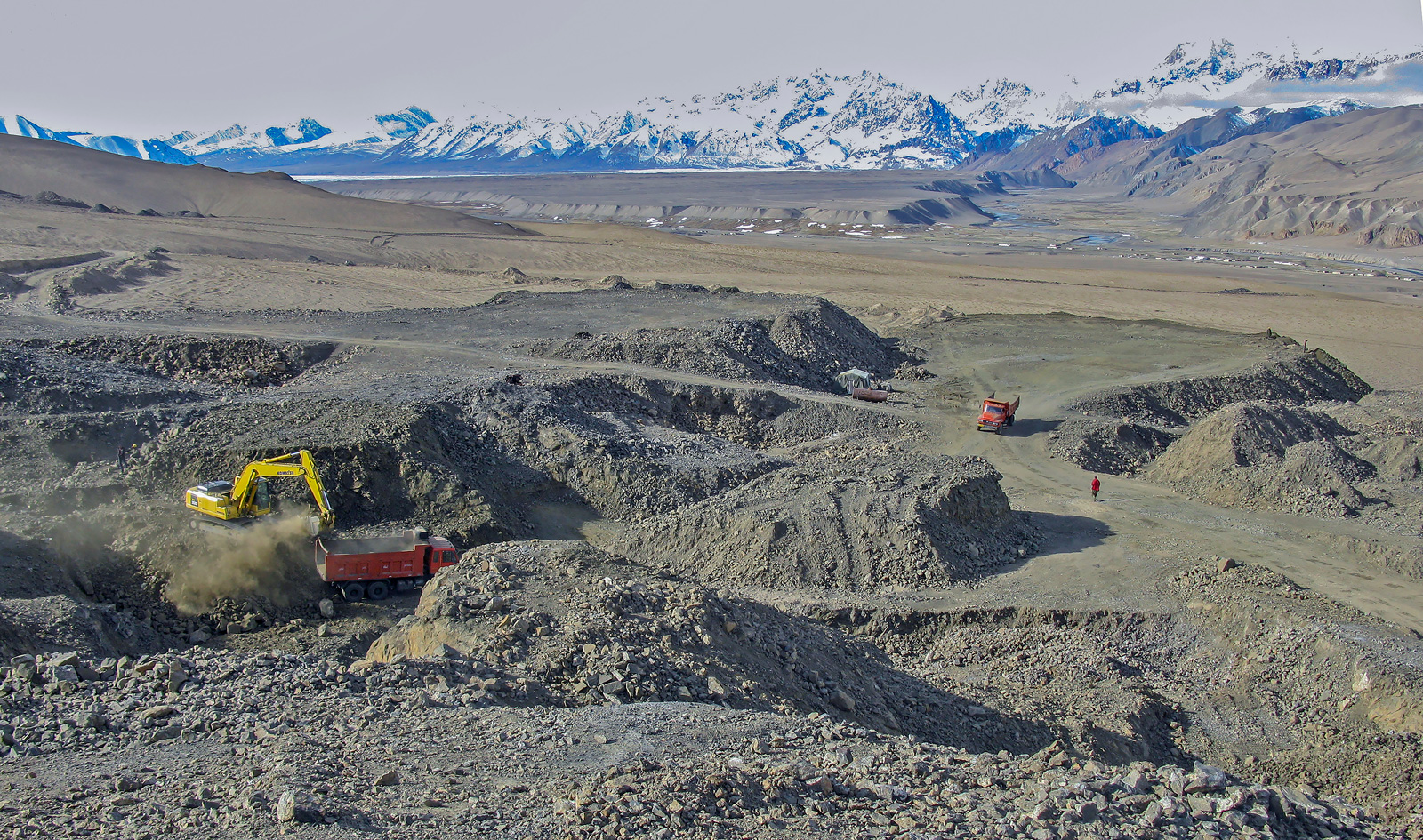 Figure 10. Emerald mining near Davdar village in the western Chinese province of Xinjiang. Davdar lies within sight of the Karakoram Highway just a few hundred metres from the current mining site. During the times of the Silk Roads, caravans had possibly walked only meters from the emeralds. Photo: Alex Chang.
This deposit lies just a few hundred meters from the Karakoram Highway (see Figure 10) linking China with Pakistan, along an ancient Silk Road caravan route. Thus, it is remarkable that it was not until the early 2000’s that local shepherds stumbled across the stones. For a millennium or more, caravans had passed vanishingly close by.
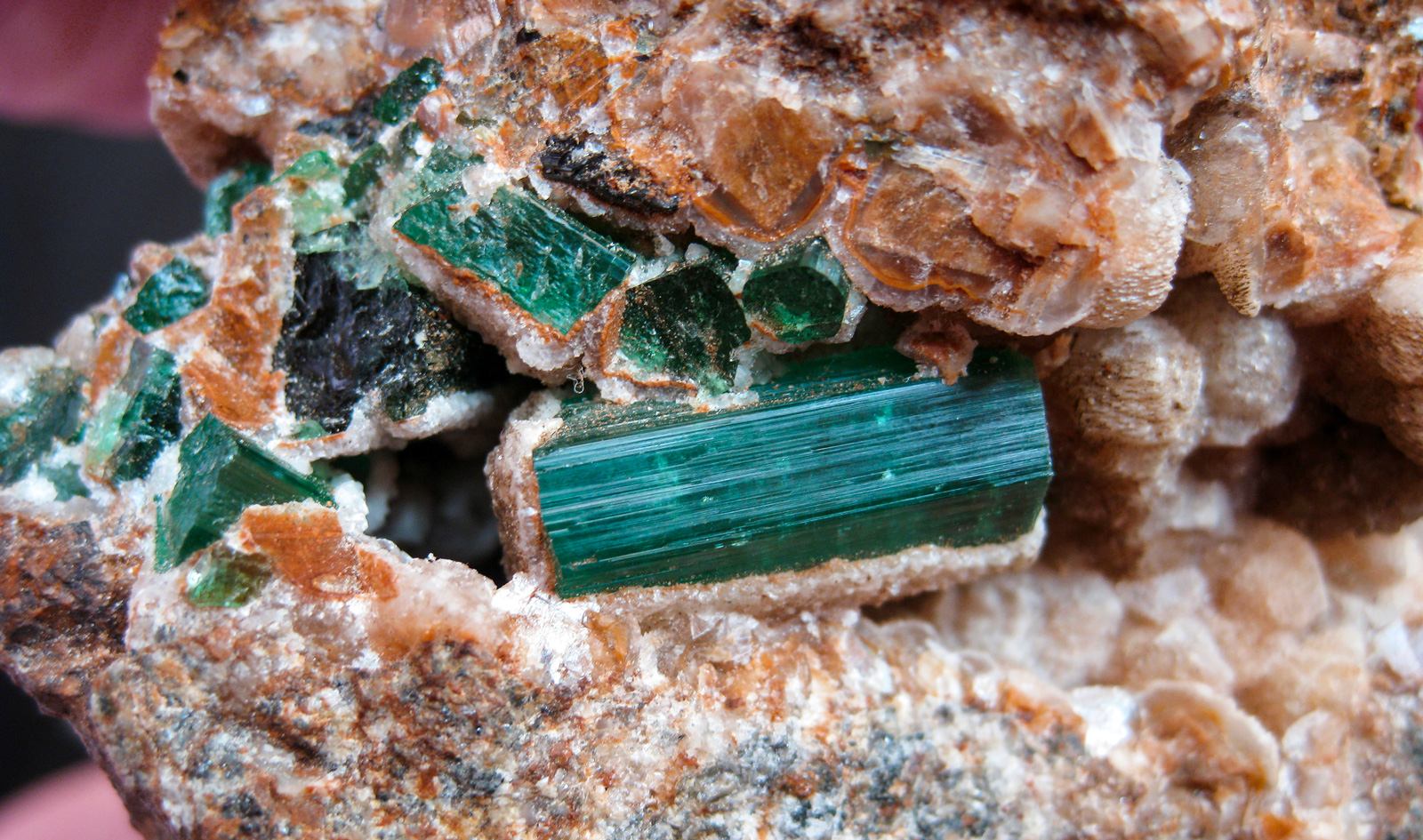 Figure 11. Emerald from Davdar (China) in a quartz rich vein within sandstone. Centre crystal approx. 2 cm in length. Photo: Vincent Pardieu, © GIA.
The geology of the Davdar deposit is particularly intriguing, where emeralds are hosted in sandstone (see Figure 11), exhibit a deep green colour, and often occur in large crystals. They frequently contain jagged three-phase inclusions (see Figure 12) strikingly similar to those found in Colombian emeralds (Saeseaw et al., 2014). This discovery raises important questions about the validity of previous origin determinations of emeralds found in treasures as Colombian as these conclusions were based primarily on the observation of inclusion features.
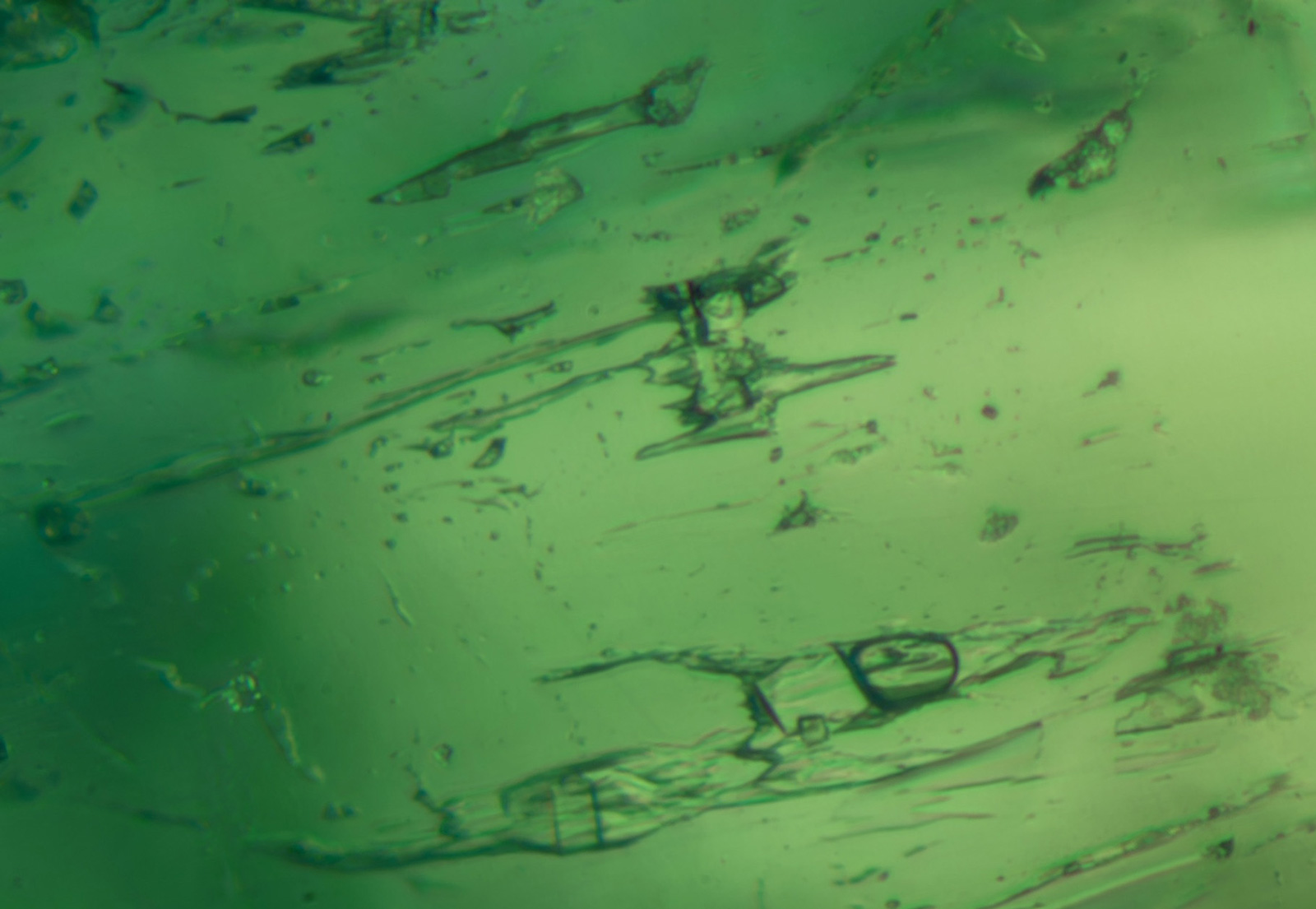 Figure 12. For decades, jagged-edged three-phase cavities such as this were believed to be a unique feature of Colombian emeralds. As a result, emeralds with such inclusions in Mughal treasures were assumed to be of Colombian origin. Nevertheless, the existence of such inclusions in Chinese emeralds like this one, collected by author VP during his visit to Davdar in 2006, raises the possibility that some of these emeralds could have been mined in Asia. Photo: S. Luetrakulprawat/ICA Lab.
Emerald discoveries across Asia have continued: Two new emerald deposits were reported in 2018 to have been discovered in the Shanxi and Sichuan provinces of China (Dai et al. 2018; Yu et al., 2022). Even more recently a new discovery of emeralds was made near Chitral in northern Pakistan (Hanser et al., 2022), another historic Silk Road crossroads—almost as if nature, and perhaps human curiosity, were intent on proving Tavernier wrong.
Crown Questions
By the late 20th century, researchers began using oxygen isotope analysis to identify the geographic origin of emeralds (Giuliani, 2000). Emeralds from archaeological and historical jewellery were compared with a limited set of reference samples. The results showed that stones in objects made before Colombian emeralds reached Europe and India in the 16th century matched samples from Pakistan, Egypt, and Austria. However, these findings were based only on oxygen isotope data and a relatively small reference collection.
In 2021, emeralds in a 13th-century reliquary crown[7] at the Diocesan Museum in Namur, Belgium were examined. While testing was limited to portable XRF, the chemical profiles suggested the emeralds might be from Pakistani sources (Bruni et al., 2021). However, more testing is needed using non-destructive methods like those in gem labs, such as microscopy, chemical analysis, and spectroscopy—to confirm their origin.
The GIA did a major study on emerald origin in 2019 (Saeseaw et al., 2019), but unfortunately the study did not include emeralds of Pakistani or Egyptian origin. Their chemical analyses were collected by LA-ICP-MS.
This illustrates some of the challenges faced in current testing. Different instruments, methods, and samples—combined with significant gaps in the necessary origin data ranges of data sets with which to compare, often make it difficult to reach accurate conclusions.
Only a few emeralds from this period have been studied using a range of chemical, spectroscopic, and microscopic non-destructive methods, and compared with a sufficiently broad reference collection, including emeralds from recently discovered deposits in Central Asia and Ethiopia (e.g., Nikopoulou et al., 2024). We hope that will change going forward and with more specimen and data collection, we can better know more about this fascinating page of human history.
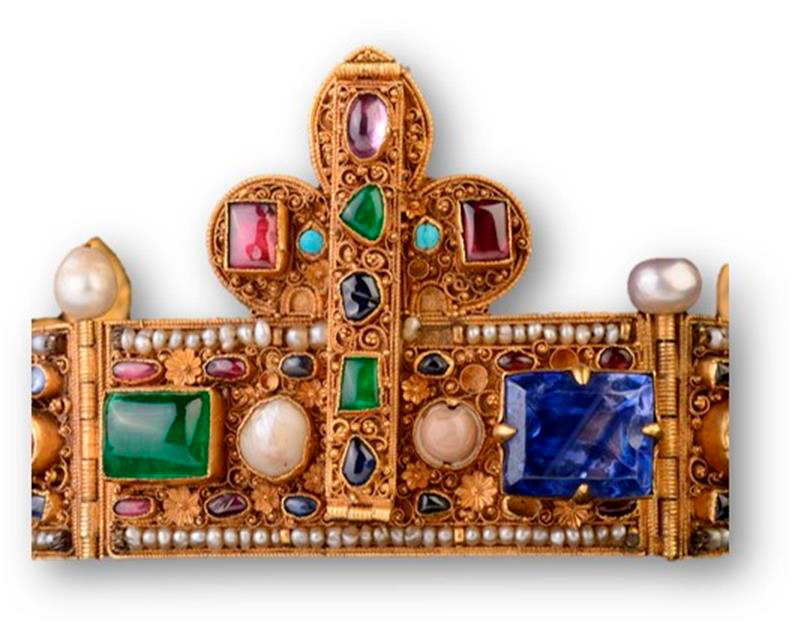 Figure 13. A portion of a crown-reliquary in gold, pearls, gemstones, 13th century, Musée Diocésain, Namur (Belgium). In 2021, the emeralds were identified by visual examination and portable XRF chemistry. Musée Diocésain, Namur.
Challenges in Origin Determination
As mentioned, the main challenge in determining the origin of gemstones like emeralds lies not only in access to advanced analytical instruments and qualified specialists, but also in the availability of reliable reference data. This requires a comprehensive and well-documented collection of emerald reference samples from all known deposits that have produced gems—from antiquity to the present. Unfortunately, this critical requirement is often overlooked in many studies. Numerous publications rely on comparative analyses using stones that are merely believed to be from a given locality, often without solid provenance, which undermines the validity of the conclusions.
Another key consideration is that reference collections must be regularly updated (Pardieu, 2020). New discoveries can significantly alter earlier interpretations. This is particularly relevant with the discovery of emeralds deposits in the Panjshir valley of Afghanistan and more recently near Davdar village in western Xinjiang, China. These deposits are of interest because they produce emeralds that share some visual and inclusion features with Colombian stones (Schwarz & Pardieu, 2009; Saeseaw et al., 2014). Furthermore, these sites lie on former branches of the Silk Roads, raising the possibility that some emeralds previously identified as Colombian—based on the presence of jagged three-phase inclusions—could have been mined in Asia.
In that context, it is interesting to note the various emerald discoveries made in Asia since the time of Jean-Baptiste Tavernier. While he may have regarded these deposits as mythical, today they are very real.
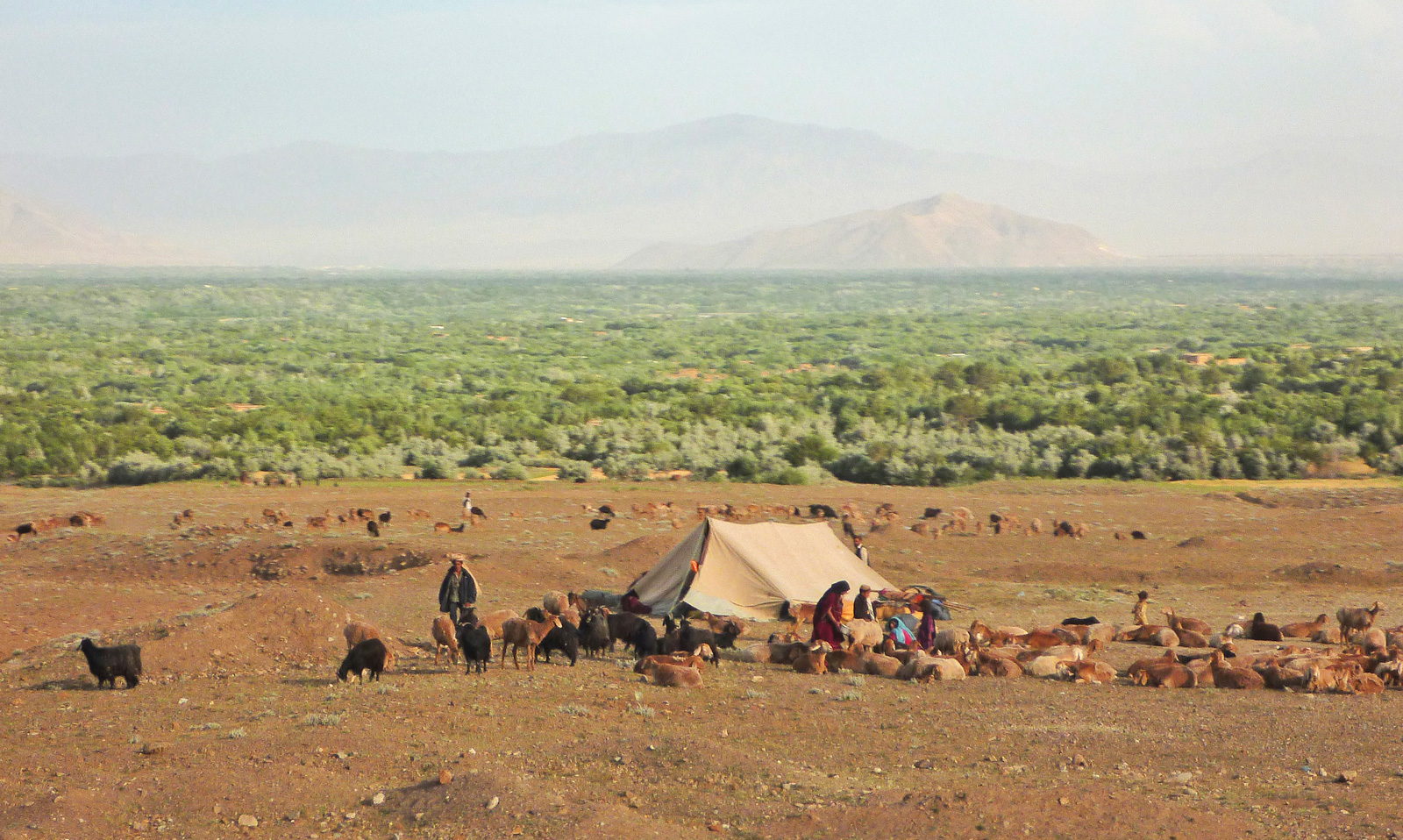 Figure 14. Nomads and their livestock at the entrance of the Panjshir Valley. On the green plain between them and the mountains in the background likely stood Alexandria in the Caucasus, one of the cities founded by Alexander the Great. It is remarkable that during the Greek period, no one discovered the emerald deposits located in the Panjshir Valley just north of that site. Photo: Vincent Pardieu, © GIA, 2010.
From Myth to Reality
Looking ahead, future research into the origin of emeralds found in archaeological artifacts and antique jewellery could uncover ancient secrets about the antique emerald trade between Europe, Asia and possibly even Africa. It might also add significant romance about emeralds from current known Asian or African deposits if it could be confirmed that indeed these deposits were producing emeralds at the time of Theophrastus and Pliny. To be valid, such work must be conducted by qualified archaeologists carefully documenting their finds and experienced scientists using data collected from those specimens to compare with reliable data acquired from trusted reference collections. Only then will historians, archaeologists and scientists be able to confirm that emerald mining and trading along the Silk Roads was not merely a myth—but a verifiable historical and scientific reality.

About the Authors
Marie-Laure Cassius-Duranton is senior exhibition content manager at L’ÉCOLE, School of Jewelry Arts (supported by Van Cleef & Arpels) in Paris. A gemologist and art historian, she has published on the history of gems, curated gem and jewelry exhibitions, and co-organized the Precious Ornaments seminar with the Collège de France, overseeing its publications. She previously taught art history and gemology, is a member of the French Chamber of Specialized Experts (CNES) and has worked as a jewelry expert for auction houses.
Vincent Pardieu was Lab Director at Bangkok's Asian Institute of Gemological Sciences. He then moved to Gübelin, and was later Field Gemologist at the GIA Laboratory, Bangkok. His prolific writings and research can be found on his own website, at lotusgemology.com and at the GIA's website. Today he is an independent field gemologist, and, more than any other person, has been responsible for establishing field gemology as a vital portion of research gemology.
Dr. Stefanos Karampelas is Professor of Mineralogy and Gemmology at the School of Geology of the Aristotle University of Thessaloniki (Greece). He also works with the Laboratoire Français de Gemmologie (LFG), Paris as a research partner and teaches advanced gemmology at the University of Nantes, France. He is a geologist and gemmologist and holds a joint PhD in Materials Physics from the University of Nantes (France) and in Mineralogy from Aristotle University of Thessaloniki (Greece). He has published numerous articles, contributed to books, and frequently lectures to international scientific conferences. Stefanos also sits on the review board of several different publications, including Gems and Gemology, the Journal of Gemmology and Minerals.
Footnotes
[1] Similar stories exist in association with other gem mines, such as Golconda’s diamonds and Mogok’s rubies. The tale was first recorded by Epiphanius, bishop of Salamis in Cyprus (d. 40 CE) and later appears in the story of Sinbad the Sailor in the Thousand and One Arabian Nights. For more see Hughes et al., 2014, pp. 44–45.
[2] Until the documented discovery of emerald deposits in India, Afghanistan, Pakistan and, finally China, during the 20th and the beginning of the 21st century.
[3] Smaragdos is not necessarily emerald and would be highly dubious at this early date. This also probably applies to Theophrastus.
[4] Cleopatra VII Philopator (r. 51–30 BCE) has been commonly associated with these emerald mines in popular 19th-century European culture, but in fact her connection to emerald is rather tenuous (Ogden, 2022).
[5] The “Gunpowder Empires” refer to three powerful Islamic empires that rose between the 15th and 18th centuries, known for their military success using weapons like cannons and muskets.
[6] Diseases brought by Europeans to the New World also had a devasting impact on native Americans, who had no previous exposure and, thus, no immunity. This killed an estimated 80–95% of the population in the decades that followed Columbus’ 1492 arrival. In central Mexico, the population is estimated to have declined from around 25 million in 1491 to about 1 million by 1600 — a 96% reduction, while in the Andes, similar catastrophic drops occurred following Spanish contact in the 1530s. Trading networks were instrumental in spreading such diseases, which often spread via native-to-native interaction, not just contact with Europeans. As a result, the diseases spread even faster than the European expansion across the Americas, destroying cultures that in multiple respects were far more advanced than those of Europe at the time (Mann, 2005; Diamond, 1999).
[7] A reliquary crown is a ceremonial crown designed to hold or display relics—sacred objects associated with saints or other religious figures, such as bones, fragments of clothing, or items they touched.
Notes
This article is based on a lecture given by authors Marie-Laure Cassius-Duranton and Vincent Pardieu entitled “Emeralds in Asia – From Myth to Reality” in June 2024 in Shanghai as part of the Garden of Emeralds exhibit organized by L’ÉCOLE Van Cleef & Arpels. It first appeared in the Journal of Gems & Gemmology in May 2026.
References
- Abdullah, S., Chmyriov, V.M., Stazhilo-Alekseev, K.F., Dronov, V.I., Gannon, P.J., Lubemov, B.K., Kafarskiy, A.K. & Malyarov, E.P. (1977) Mineral Resources of Afghanistan, 2nd edn. Ministry of Mines and Industries, Afghan Geological and Mines Survey, Kabul, Afghanistan, 419 pp.
- Austin, C., Bastianini, G. and Posidippos of Pella (2002) Posidippi Pellaei Quae Supersunt Omnia. [All that survives of Posidippus of Pella]. [in Latin and Italian], Biblioteca Classica, No. 3, Milan: LED Edizioni Universitarie, 234 pp.
- Ayil, E.S. (2024) Identifying the Stones of Classical Hebrew: A Modern Philological Approach. Ancient Languages and Civilizations. Leiden: Brill, 252 pp.
- Berggren, J.L. and Jones, A. (2000) Ptolemy's Geography: An Annotated Translation of the Theoretical Chapters. Princeton: Princeton University Press, 192 pp.
- Biswas, A.K. (1994) Vaidurya, marakata and other beryl family gem minerals: Etymology and traditions in ancient India. Indian Journal of History of Science, Vol. 29, No. 2, pp. 139–154.
- Blauwet, D., Quinn, E.P. and Muhlmeister, S. (2005) Gem News International: New emerald deposit in Xinjiang, China. Gems & Gemology, Vol. 41, No. 1, Spring, pp. 56–57.
- Boetius de Boodt, A. and Toll, A. (1644) Le Parfait Joaillier, ou Histoire des pierreries. [The Perfect Jeweller, or History of Stoneworks]. [in French], 299 pp.
- Bopearachchi, O. (2017) Maritime of Buddhist Thought and Art. Inaugural Talk, Tang Centre for Silk Road Studies.
- Bournon, C., de (1798) An analytical description of the crystalline forms of corundum, from the East Indies, and from China. Philosophical Transactions of the Royal Society of London, Vol. 88, pp. 428–448.
- Bournon, C., de (1802) Description of the corundum stone, and its varieties, commonly known by the names of oriental ruby, sapphire, &c.; with observations on some other mineral substances. Philosophical Transactions of the Royal Society of London, Vol. 92, pp. 233–326.
- Bycroft, M. (2019) Boethius de Boodt and the emergence of the Oriental/Occidental distinction in European mineralogy. In Gems in the Early Modern World: Materials, Knowledge and Global Trade, 1450–1800, Edited by Bycroft, M. and Dupré, S., Cham, Switzerland: Palgrave Macmillan, pp. 149–172.
- Bruni, Y., Hatert, F., George, P., Cambier, H. and Strivay, D. (2021) A gemmological study of the reliquary crown of Namur, Belgium. European Journal of Mineralogy, Vol. 33, No. 2, pp. 221–232.
- Caley, E.R., Richards, J.C. and Theophrastus (1956) Theophrastus on Stones. Columbus, OH: Ohio State University, 238 pp.
- Cao, Y., Yang, M. and Luo, Z. (2024) Late but precious: The dissemination and use of emerald in the Ming Dynasty in China. [in Chinese with English abstract], Journal of Gems & Gemmology, Vol. 26, No. 6, pp. 140–147.
- Cassius-Duranton, M.-L. (2024a) The many faces of the emerald in the Western world: History, culture & symbols. In Garden of Emeralds Exhibition,[parallel English and Chinese texts] Edited by L’École, Shanghai: L’École | Van Cleef & Arpels, pp. 56–91.
- Cassius-Duranton, M.-L. (2024b) Emeralds in Islamic arts and civilizations. In Garden of Emeralds Exhibition, [parallel English and Chinese texts] Edited by L’École, Shanghai: L’École | Van Cleef & Arpels, pp. 94–111.
- Crookshank, H. (1947) Emeralds in Mewar. Indian Minerals, Vol. 1, No. 1, January, pp. 28–30.
- Delplace, C. (1990) Le griffon dans la peinture romaine et les reliefs en stuc. Revue archéologique de Picardie, No. 1–2, pp. 89–97.
- Dai, H., Wang, D., Liu, L., Yu, Y. and Dai, J. (2018) Mineralogical characteristics of emeralds in the Jieka rare metal deposit, Sichuan, China. [in Chinese with English abstract], Acta Mineralogica Sinica, Vol. 38, No. 2, pp. 135–141.
- Dai, H., Wang, D., Liu, L., Huang, F. and Wang, C. (2018) Study of emerald-grade beryl from tungsten-beryllium polymetallic deposit in Zhen’an, Shaanxi Province by electron probe and micro-area X-ray diffraction [电子探 针和微区X射线衍射研究陕西镇安 钨-铍多金属矿床中祖母绿级绿柱石]. [in Chinese], 岩矿测试 [Rock and Mineral Analysis], Vol. 37, No. 3, May, pp. 336–345.
- Delplace, C. (1990) Le griffon dans la peinture romaine et les reliefs en stuc. [The griffin in Roman painting and stucco reliefs]. [in French], Revue archéologique de Picardie, No. 1–2, pp. 89–97.
- Diamond, J. (1999) Guns, Germs and Steel | The Fates of Human Societies. W.W. Norton, New York, 528 pp.
- Eichholz, D.E. and Pliny the Elder (1962) Natural History, Books 36–37. [parallel Latin and English texts], Loeb Classical Library, Cambridge, MA: Harvard University Press, Volume X, 344 pp.
- Eichholz, D.E. and Theophrastus (1965) De Lapidus: Edited with Introduction, Translation and Commentary. Oxford: Clarendon Press, 141 pp.
- Finot, L. (1896) Les Lapidaires Indiens. [Indian Lapidaries]. [in French], Paris: Librarie Émile Bouillon, Éditeur, 280 pp.
- Forrestier, F.H. and Piat, D.H. (1998) Émeraudes de Bactriane: Mythe ou réalité, La vallée du Panjshir (Afghanistan). [Emeralds of Bactria: Myth or reality, the Panjshir Valley (Afghanistan)]. In L'émeraude : Connaissances Actuelles et Prospectives, [in French] Edited by Giard, D., Paris: Association Française de Gemmologie, pp. 139–146.
- Frankopan, P. (2015) The Silk Roads: A New History of the World. New York: Knopf, 636 pp.
- Giuliani, G., Chaussidon, M., Schubnel, H.-J., Piat, D.H., Rollion-Bard, C., France-Lanord, C., Giard, D., Narvaez, D.d. and Rondeau, B. (2000) Oxygen isotopes and emerald trade routes since antiquity. Science, Vol. 287, No. 5453, pp. 631–633.
- Greville, C. (1798) On the corundum stone from Asia. Philosophical Transactions of the Royal Society of London, Vol. 88, pp. 403–448.
- Hanser, C.S., Häger, T., Botcharnikov, R.E. and Gul, B. (2022) Emerald from the Chitral region, Pakistan: A new deposit. Journal of Gemmology,Vol. 38, No. 3, pp. 234–252.
- Harrell, J.A. (2024) Archaeology and Geology of Ancient Egyptian Stones. Oxford: Archaeopress, 2 Vols., Volume I: Archaeological and Geological Background, and Building and Utilitarian Stones. Volume II: Ornamental Stones, Gemstones, and Metals, 1049 pp.
- Hughes, R.W., Manorotkul, W. and Hughes, E.B. (2014) Ruby & Sapphire: A Collector's Guide. Bangkok: Gem and Jewelry Institute of Thailand, 384 pp.
- Jarrige, J.-F., Jarrige, C., Quivron, G., Wengler, L. and Sarmiento Castillo, D. (2013) Mehrgarh | Neolithic Period | Seasons 1997–2000 | Pakistan. In Mémoires des Missions Archéologiques Françaises en Asie Centrale et en Asie Moyenne, Série Indus-Balochistan, Paris: Editions de Boccard, Vol. 15, see Chapter 4, Burials, pp. 145–146.
- Kazmi, A.H. and Snee, L.W., editor (1989) Emeralds of Pakistan: Geology, Gemology and Genesis. New York: Geological Survey of Pakistan and Van Nostrand Reinhold, 269 pp.
- Lane, K. (2010) Colour of Paradise: The Emerald in the Age of Gunpowder. New Haven and London: Yale University Press, 280 pp.
- Laufer, B. (1919) Sino-Iranica: Chinese contributions to the history of civilization in ancient Iran. Field Museum of Natural History, Anthropoligical Series, Publication 201, Vol. 15, No. 3, 630–pp.
- Laurs, B.M., Dilles, J.H. and Snee, L.W. (1996) Emerald mineralization and metasomatism of amphibolite, Khaltaro granitic pegmatite-hydrothermal vein system, Haramosh Mountains, northern Pakistan. Canadian Mineralogist, Vol. 34, No. 6, December, pp. 1253–1286.
- Liu, X. (2010) The Silk Road in World History. Oxford: Oxford University Press, 168 pp.
- Luo, Z., Yang, M., Fang, Q., Lu, R., Cai, L. and Hu, Y. (2019) Provenance of emerald from Prince Liangzhuang’s tomb in Ming dynasty, Hubei, China.36th International Gemmological Conference, Nantes, France, pp. 209–211.
- Mann, C.C. (2005) 1491 | New Revelations of the Americas Before Columbus. New York: Random House, (480 pp.).
- Mohebbi, P. (2016) Les mots et les choses de l'Europe en persan (12e-15e siècle). [The words and things of Europe in Persian (12th–15th century)]. [in French], Paris: Editions L'Harmattan, 250 pp.
- Monod, T. (1974) Le mythe de “l'Émeraude des Garamantes”. [The Myth of the Emerald of the Garamantes (Libya)]. [in French], Antiquités africaines,Vol. 8, pp. 51–66.
- Nikopoulou, M., Karampelas, S., Gaillou, E., Hennebois, U., Maouche, F., Herreweghe, A., Papadopoulou, L., Melfos, V., Kantiranis, N., Nectoux, D. and Delaunay, A. (2023) Non-destructive study of Egyptian emeralds preserved in the collection of the museum of the Ecole des Mines. Minerals, Vol. 13, No. 2, pp. 158–172.
- Nikopoulou, M., Karampelas, S., Tsangaraki, E., Papadopoulou, L., Katsifas, C., Nazlis, I., Touloumtzidou, A., Melfos, V. and Kantiranis, N. (2024) Study of green-coloured gems of the Roman period from the collections of the Archaeological Museum of Thessaloniki (Greece) and their possible geographic origin. Journal of Raman Spectroscopy, No. 55, pp. 1341–1354.
- Nikopoulou, M., Karampelas, S., Hennebois, U., Gruss, P., Gaillou, E., Fritsch, E., Herreweghe, A., Papadopoulou, L., Melfos, V., Kantiranis, N. and Delaunay, A. (2025) Microscopic, Spectroscopic and Chemical Analysis of Emeralds from Habachtal, Austria. Minerals, 22 pp.
- Ogden, J. (2018) Diamonds: An Early History of the King of Gems. London: Yale University Press, 388 pp.
- Ogden, J.M. (2022) Cleopatra’s emerald mines: The marketing of a myth. Journal of Gemmology, Vol. 38, No. 2, pp. 156–170.
- Orta, G., da (1563) Coloquios dos simples, e drogas he cousas mediçinais da India. [Colloquies on the Simples & Drugs of India]. [in Portuguese], Goa: Ionnes, 217 pp.
- Panczer, G, Fesquet, R., Moshi, L., Riondet, G., Cassius-Duranton, M.-L., Gilles-Guéry, L., Delaunay, A., Karampelas, S. (2025) Emeralds in Catherine de’ Medici’s pendant: An unexpected geographic origin, Gems & Gemology, in press.
- Pardieu, V. (2006) Summer 2006 Gemmological expedition report to ruby, emerald and spinel mining areas in Central Asia: Part 4: China (Xin Jiang) Emeralds from the Silk Road. www.fieldgemology.org, accessed 02 Jan 2012
- Pardieu, V. (2020) Field gemology: The evolution of data collection. InColor, No. 45, pp. 37–42.
- Pardieu, V. and Marshall, D. (2009) Emeralds from China (presentation). ICA Congress Panyu, May 2009.
- Pardieu, V., Nicol, C-A., Marshall, D., Sangsawong, S. (2022) Les émeraudes de Chine. In: Giuliani, G. (ed) Émeraudes, Tout un Monde! Les Éditions Piat, Paris, France.
- Pietersma, A. and Wright, B.G., editor (2007) A New English Translation of the Septuagint. Oxford: Oxford University Press, 1056 pp.
- Pliny the Elder (1st century) Historia Naturalis (Natural History), Book 37, Section 17.
- Poullen, J.F. and Bariand, P. (1978) Famous mineral localities: The pegmatites of Laghman, Nuristan, Afghanistan. Mineralogical Record, Vol. 9, No. 5, pp. 301–308.
- Qui, T. (2024) Emerald and Chinese society during the Yuan and Ming Dynasties. In Garden of Emeralds Exhibition, [parallel English and Chinese texts] Edited by L’École, Shanghai: L’École | Van Cleef & Arpels, pp. 128–141.
- Roller, D.W. and Strabo (2014) The Geography. The Geography of Strabo: An English Translation, with Introduction and Notes. Cambridge: Cambridge University Press, 891 pp.
- Roller, D.W. (2024) The Geographical Guide of Ptolemy of Alexandria | An Analysis. Routledge Monographs in Classical Studies, Oxon, UK: Routledge, 231 pp.
- Roy, B.C. (1955) Emerald deposits in Mewar and Ajmer Merwara. Records of the Geological Survey of India 86, 377–401.
- Saeseaw, S., Pardieu, V. and Sangsawong, S. (2014) Three-phase inclusions in emerald and their impact on origin determination. Gems & Gemology,Vol. 50, No. 2, Summer, pp. 114–132.
- Saeseaw, S., Renfro, N.D., Palke, A.C., Sun, Z. and McClure, S.F. (2019) Geographic origin determination of emerald. Gems & Gemology, Vol. 55, No. 4, pp. 614–646.
- Salgado, S. (2019) Gold. Cologne: Tashen, 208 pp.
- Scarisbrick, D. (2004) Historic Rings: Four Thousand Years of Craftsmanship. Tokyo/New York: Kodansha International, 356 pp.
- Schmetzer, K. (2021) History of emerald mining in the Habachtal deposit of Austria, Part 1. Gems & Gemology, Vol. 57, No. 4, Winter, pp. 338–371.
- Schwarz, D. and Pardieu, V. (2009) Emeralds from the Silk Road countries – A comparison with Colombia. InColor, No. 12, Fall/Winter, pp. 38–43.
- Shastri, J.L., editor (1978) Garuda Purana. Ancient Indian Tradition and Mythology, English translation 1978, Delhi: Motilal Banarsidass, Vol. 12, Part 1, see pp. 224–246.
- Sinkankas, J. (1981) Emerald and Other Beryls. Radnor, PA: Chilton Book Co., 665 pp.
- Solinus, C.J. (1955) The Excellent and Pleasant Worke Collectanea Rerum Memorabilium of Caius Julius Solinus. Translated by Golding, A., Gainesville, FL: Scholars’ Facsimiles & Reprints.
- Tavernier, J.B. (1676) Les Six Voyages de Monsieur J.B. Tavernier, Ecuyer, Baron d’Aubonne, en Turquie, en Perse, et aux Indes. [The Six Voyages of Monsieur J.B. Tavernier, Esquire, Baron of Aubonne, in Turkey, Persia, and the Indies]. [in French], Paris: Gervais Clouzier, 2 Vols., 1st edition, 628, 525 pp.
- Tervarent, G., de (1997) Attributs et Symboles dans l’Art Profane: Dictionnaire d'un Langage Perdu (1450–1600). [Attributes and Symbols in Secular Art: Dictionary of a Lost Language (1450–1600)]. [in French], Geneva: DROZ, 536 pp.
- Thackston, W.M., editor (1999) The Jahangirnama | Memoirs of Jahangir, Emperor of India. Washington, DC: Smithsonian Institution, 502 pp.
- Theophrastus (1902) Peri Lithon (On Gemstones), French translation by F. de Mély in Les Lapidaires Grecs, Vol. III, Paris: Ernest Leroux, 318 pp.
- Thoresen, L. (2017) Archaeogemmology and ancient literary sources on gems and their origins. In Gemstones in the First Millennium AD: Mines, Trade, Workshops and Symbolism, Edited by Greiff, S., Hilgner, A. and Quast, D., Mainz: Römisch-Germanischen Zentralmuseum (RGZM), RGZM Tagungen 30, pp. 155–217.
- Yang, M. (2024) A latecomer but cherished gemstone: The proliferation and uses of emeralds in China. In Garden of Emeralds Exhibition, Edited by L’École, Shanghai: L’École | Van Cleef & Arpels, pp. 118–127.
- Yu, X. (2024) From trials to treasures: The emeralds from China. In Garden of Emeralds Exhibition, Edited by L’École, Shanghai: L’École | Van Cleef & Arpels, pp. 112–117.
- Yu, X., Long, Z., Zhang, Y., Qin, L., Zhang, C., Xie, Z., Wu, Y., Yan, Y., Wu, M. and Wan, J. (2021) Overview of gemstone resources in China. Crystals,Vol. 11, No. 10, 22 pp.
- Vollenweider, M.-L. and Avisseau-Broustet, M. (1995) Camées et intailles, Les Portraits grecs du Cabinet des Médailles. [Cameos And Intaglios: The Greek Portraits from the Cabinet Des Médailles]. [in French], Éditions de la Bibliothèque nationale de France, Paris: Bibliothèque nationale de France, 2 Vols., Vol. 1: Les Portraits Grecs du Cabinet des Médailles. Catalogue Raisonné; Vol. 2: Les Portraits Romains Du Cabinet Des Médailles Catalogue Raisonné, 123, 1008 pp.
- Weeks, M.E. and Leicester, H.M. (1968) Discovery of the Elements. Easton, PA: Journal of Chemical Education, 7th edition, 896 pp.
- Williams, D. and Ogden, J. (1994) Greek Gold | Jewellery of the Classical World. New York: Harry N. Abrams, 264 pp.
- Wojtilla, G. (2012) Contributions to the cultural history of emerald in early India. Acta Orientalia Academiae Scientiarum Hungaricae, Vol. 65, No. 4, December, pp. 463–478.