Throughout the history of gemology, quartz has been a main target of gemological microscopists. A detailed study of the wide variety of inclusions in quartz is as complex an earth-science related mental exercise as any gemologist would ever care to undertake. This is not surprising, as quartz occurs in a wider range of geologic environments than any other mineral species, and the inclusions it holds testify to this.
The Microworld of Quartz
Quartz, found as a major component in many different rock types, represents each of the three main groups of rock classification: igneous, metamorphic, and sedimentary. And these are just major component rocks. As a minor component quartz is universal, found virtually everywhere on earth. In view of this wide-ranging paragenesis, it is not surprising that the inclusion family of quartz is equally impressive. The longer one studies this subject, the longer the list of known inclusions becomes.
As a mineral, the quartz we find with recognizable inclusions, crystallizes in the trigonal crystal system and the trigonal trapezohedral 32 class, and is known as alpha-quartz. It is second in volume only to feldspar as a rock-forming mineral in the earth’s crust.
In crystal form, quartz is divided into two major groups, which are determined by their crystalline morphology. That is whether the quartz has developed from solutions as single crystals or has precipitated en-masse as tightly interlocking crystals of microscopic to submicroscopic size. The single-crystal form of quartz is known as single-crystal quartz, macrocrystalline quartz, phanerocrystalline quartz, or simply as quartz; while the submicroscopic masses, comprising the chalcedonies and jaspers, are referred to as cryptocrystalline quartz or microcrystalline quartz. The single-crystal quartz varieties include colorless rock crystal, amethyst, smoky quartz, citrine, and rose quartz, while those in the cryptocrystalline grouping include agate, and jasper, among others.
With a diverse environment, and a common transparent diaphaneity, nature has created, in quartz, a crystalline material unique to the mineral world, as it offers scientists a lucid glimpse at otherwise hidden geologic processes, revealed through the solid and fluid inclusions it holds. Through the detailed study of inclusions in quartz, temperatures and pressures of mineral formation can sometimes be determined with a reasonable degree of accuracy. Associated mineral crystallization sequences can be learned as well. Furthermore, this is only the beginning. For when sufficient inclusions are present, the growth and subsequent geologic history of a host quartz crystal are recorded in the inclusions. Quartz offers us a unique window to the earth’s interior.
As quartz forms, very often remnants from the geologic womb are incorporated within developing crystals. These remnants are either solids and/or fluids (liquids and gases) and are collectively termed by gemologists as inclusions. If it can be observed within a quartz crystal or fashioned quartz gem with the unaided eye, with a hand lens, or with an optical microscope, whatever the source of illumination, then it is an inclusion.
When examining inclusions in quartz, if possible, the inclusions must first be classified to determine their age relationship with respect to their host. Toward this end, any inclusions can be classified as belonging to one of three main groups:
- Protogenetic: Pre-host formation
- Syngenetic: Formation contemporary with the host
- Epigenetic: Post-host formation
Protogenetic Inclusions
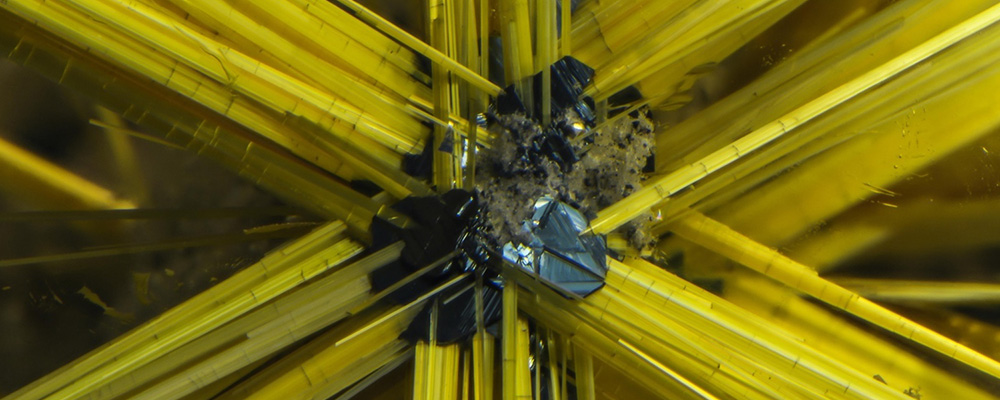
Protogenetic inclusions are solids that existed before the host crystal started to grow. They quit growing but did not completely dissolve back into solution and were later captured by the growing quartz host. An excellent example of protogenetic inclusions in quartz are the 6-rayed stellate forms of rutile with hematite and ilmenite centers that are only rarely found intact in Brazilian quartzes from Brazil. By studying these inclusions, the crystal pockets and veins from which such quartz is mined can be better understood. In this example, the first solution to invade contained excess iron oxide, which grew out of solution as hematite. Then titanium also entered the chemical mixture and ilmenite started to form over the hematite. Then, the iron became depleted, and rutile started to form in epitaxial orientation off the ilmenite. Now the “star bursts” were formed: In the final chemical sequence, the hematite-ilmenite-rutile containing pockets and veins were filled with solutions rich in silica, and quartz grew around the already existing “star bursts”, forming protogenetic inclusions in the quartz.
Syngenetic Inclusions
Syngenetic inclusions are any inclusions that developed simultaneously with their host. They can be either solids, or fluids trapped in primary or secondary voids during crystallization. Syngenetic mineral inclusions are generally very well-formed, showing .An excellent example of syngenetic mineral inclusions in quartz is the highly dispersive transparent euhedral bright yellow anatase crystals found in association with rutile fibers in some quartz gems from Brazil.
Epigenetic Inclusions
Epigenetic inclusions are inclusions that formed after the quartz host has ceased to grow. At first, this may sound confusing: How can an inclusion form in something after that “something” has quit growing and can no longer trap anything? Dendrites are one answer. All epigenetic inclusions commonly associated with single crystal quartz are crack fillers. Solutions not capable of “growing quartz” can still carry “foreign” mineral matter with them and deposit it in existing cracks in the form of crystalline residues, radial concretions, and branching dendrites. Typical dendrites of black manganese oxide and reddish orange radial concretions of iron oxide are frequent decorators of fractures in quartz.
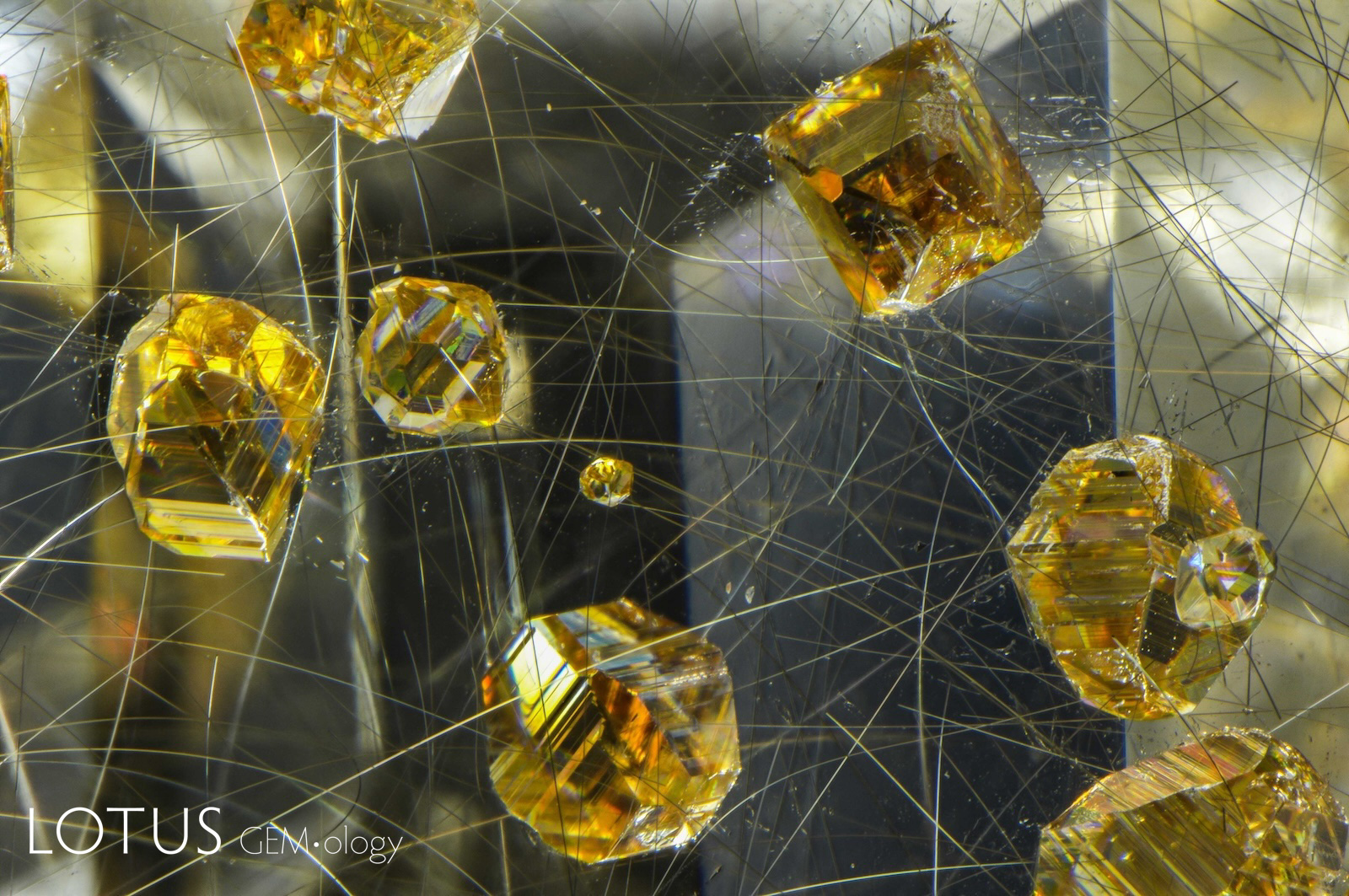 Quartz from Brazil with syngenetic yellow anatase crystals and rutile fibers. Field of View: 9.93mm.
All photos: John Koivula/Nathan Renfro.
Tales from the Crypts
Although mineral inclusions can be protogenetic, syngenetic, or epigenetic, natural fluid inclusions must always be syngenetic because, by their nature, they must be trapped by a growing crystal, to be incorporated within the crystal. In a very real sense fluid inclusions trap themselves. In other words, the very same solutions in which the host is growing are also the solutions that become trapped as fluid inclusions. They, so to speak, “seal the lids” on their own negative crystal coffins. In addition to essentially pure water, other liquids such as salt-rich aqueous brines, hydrocarbons (petroleum), methane, and carbon dioxide, among others, are also known to occur. Salt-rich brines may even deposit solid crystalline salts within the fluid inclusions that contain them, creating what are called daughter crystals. Because most fluid inclusions contain both liquid and gaseous phases, they are termed two-phase inclusions (2-phase inclusions), and if a daughter crystal should precipitate or form then a three-phase (3-phase) fluid inclusion is created within the quartz host. In cases where more than one daughter crystal has formed, and/or more than one liquid phase is present, such fluid inclusions may be referred to as “complex” or “multiphase”.
The variety found when studying inclusions in quartz is incredible. To do a proper job of such a study a well-equipped gemological photomicroscope is essential. Quartz has been investigated more than any other mineral, with the possible exceptions of diamond and gold. During these explorations numerous inclusions have been observed, studied, and identified. Nowhere else in the mineral world is the diversity of nature so well displayed as in the world of inclusions in quartz.
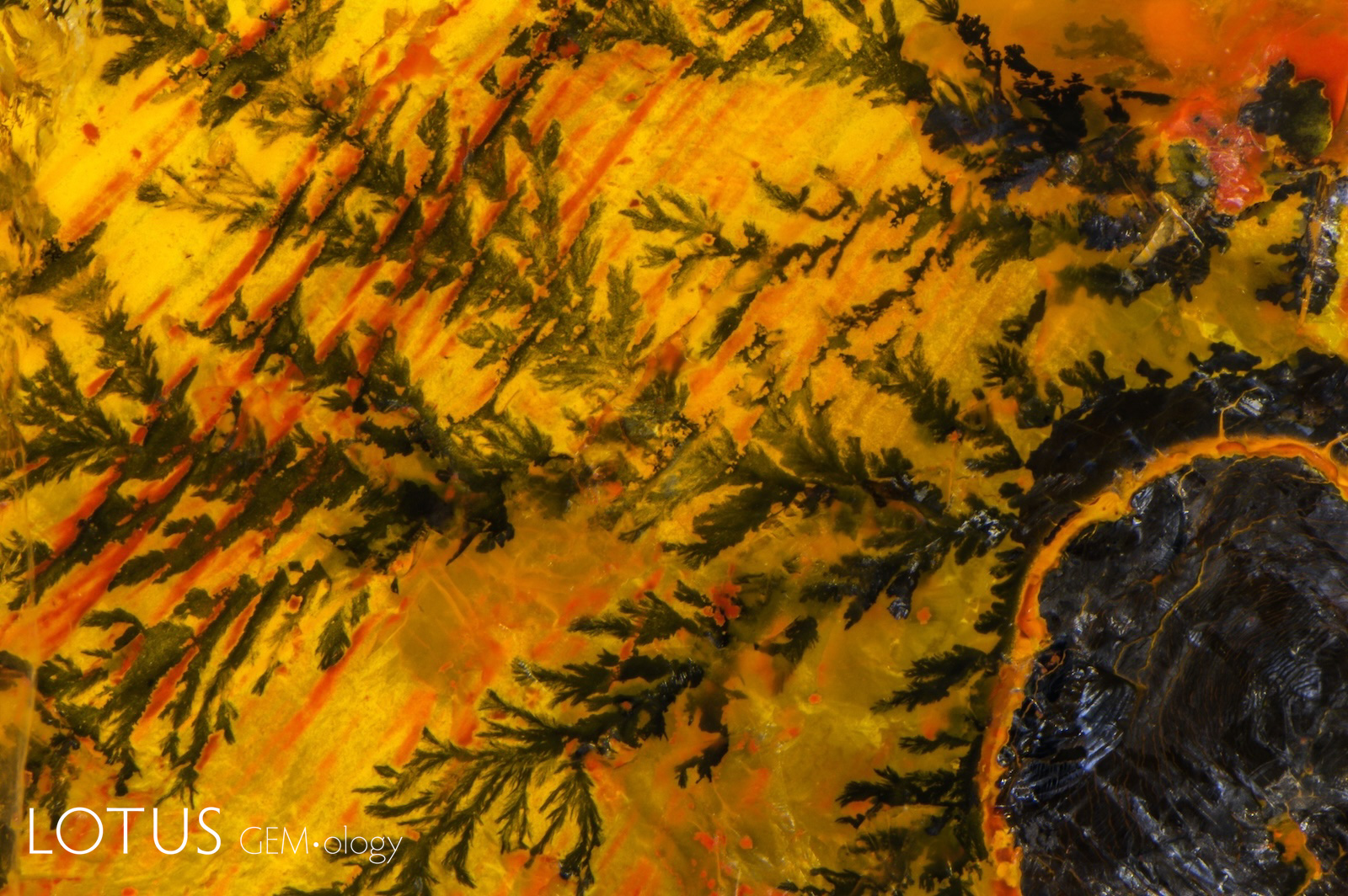 Quartz from Madagascar with epigenetic opaque black manganese oxide dendrites. Field of View: 12.26mm.
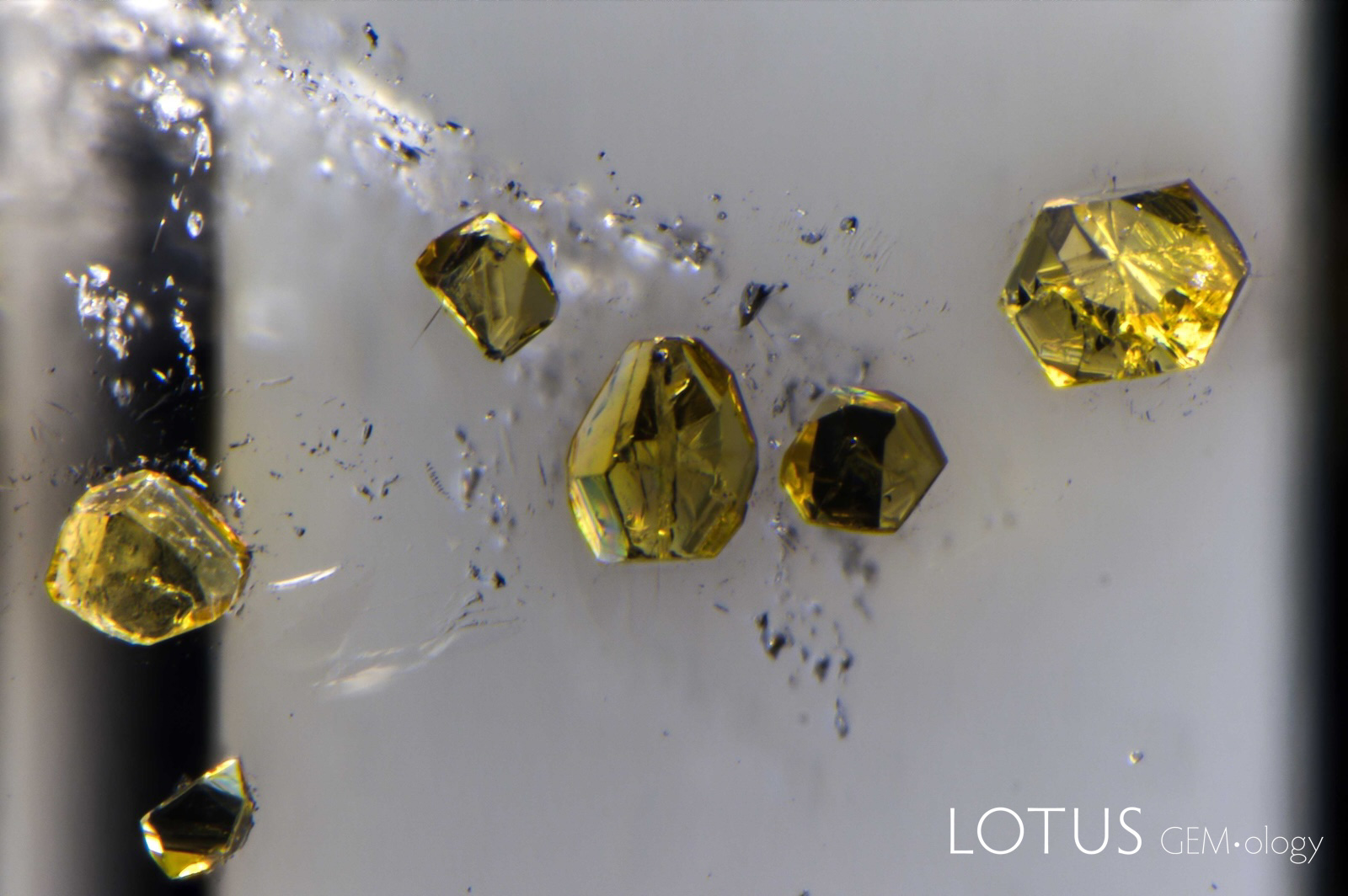 Quartz from the state of California, USA with syngenetic transparent yellow crystals of fluornatromicrolite. Field of View: 3.78mm.
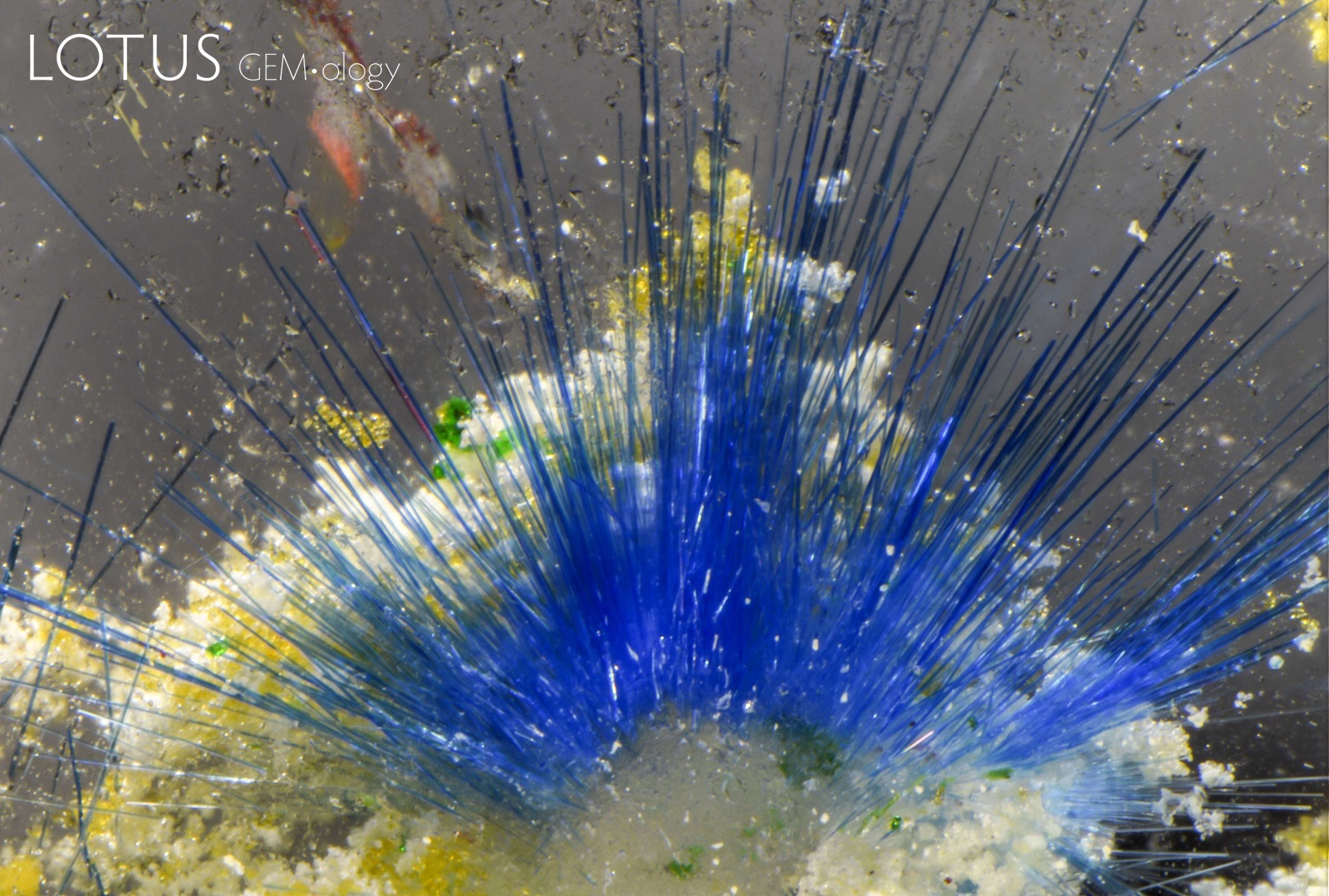 Quartz from South Africa with syngenetic bright blue crystals of papagoite, and green crystals of tangeite. Field of View: 10.14mm.
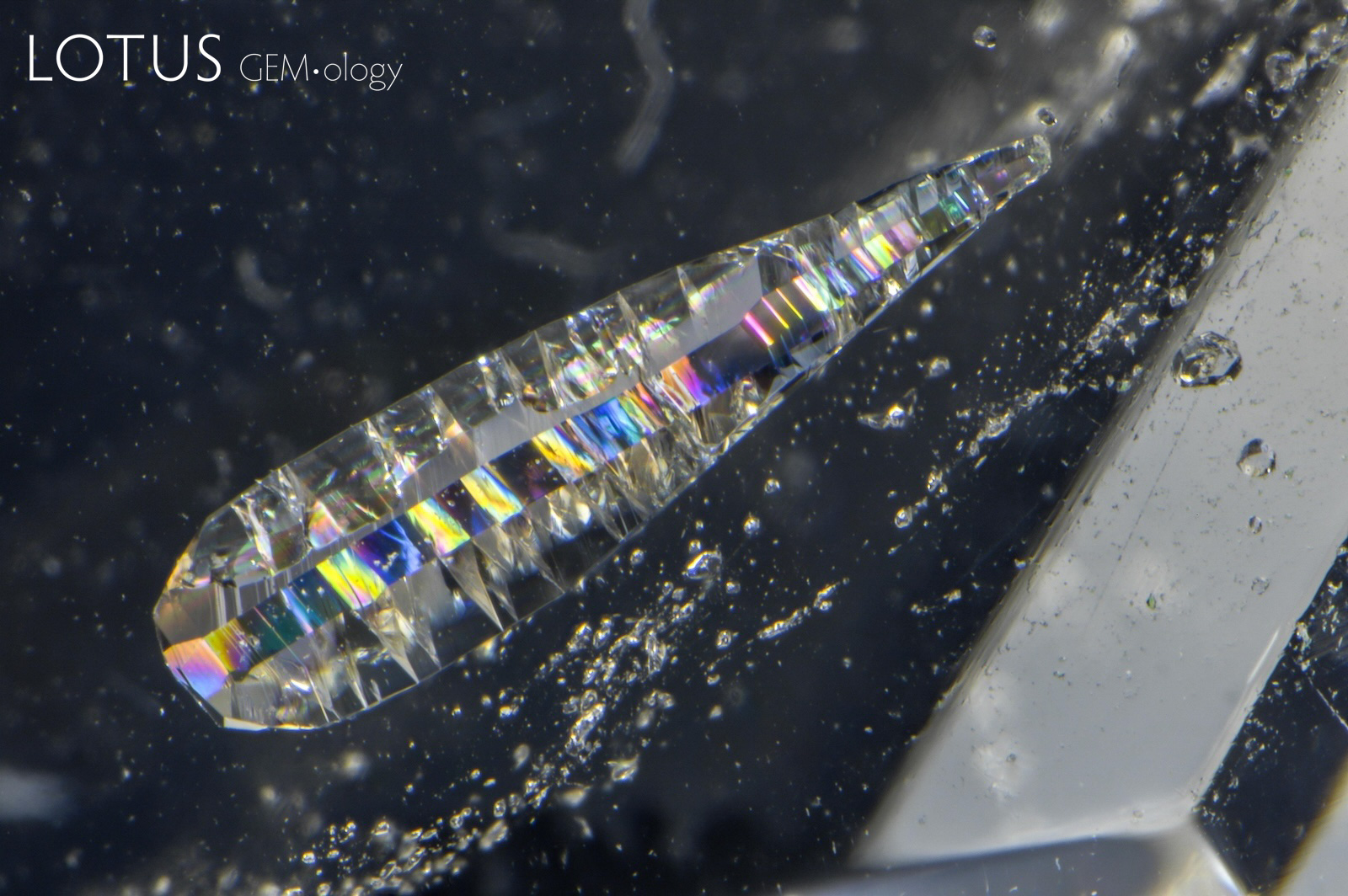 Quartz from Brazil with a syngenetic transparent color changing-crystal of triphyllite. Field of View: 7.04mm.
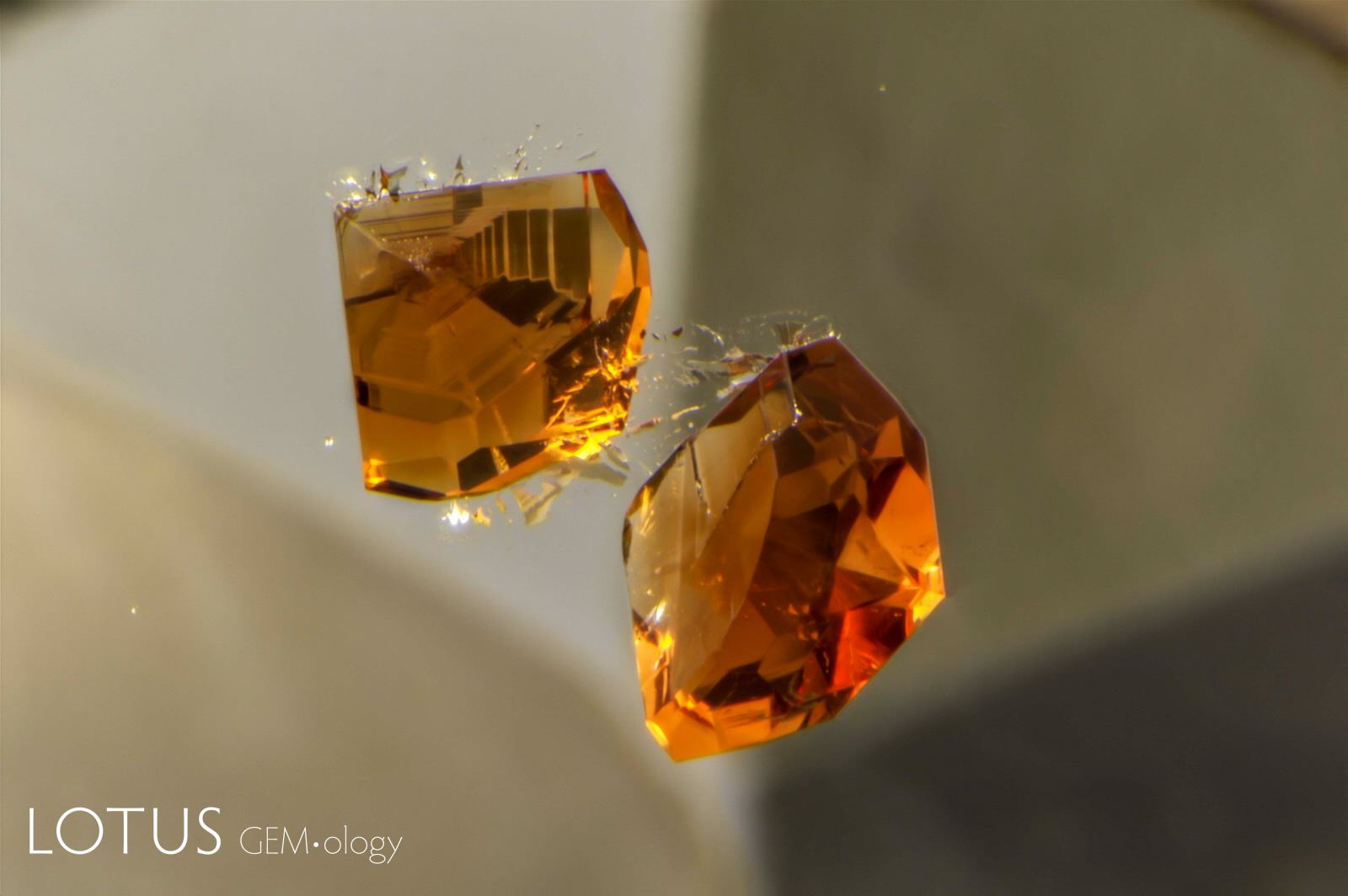 Quartz from the state of Nevada, USA with syngenetic face-rich spessartine garnet inclusions. Field of View: 4.22mm.
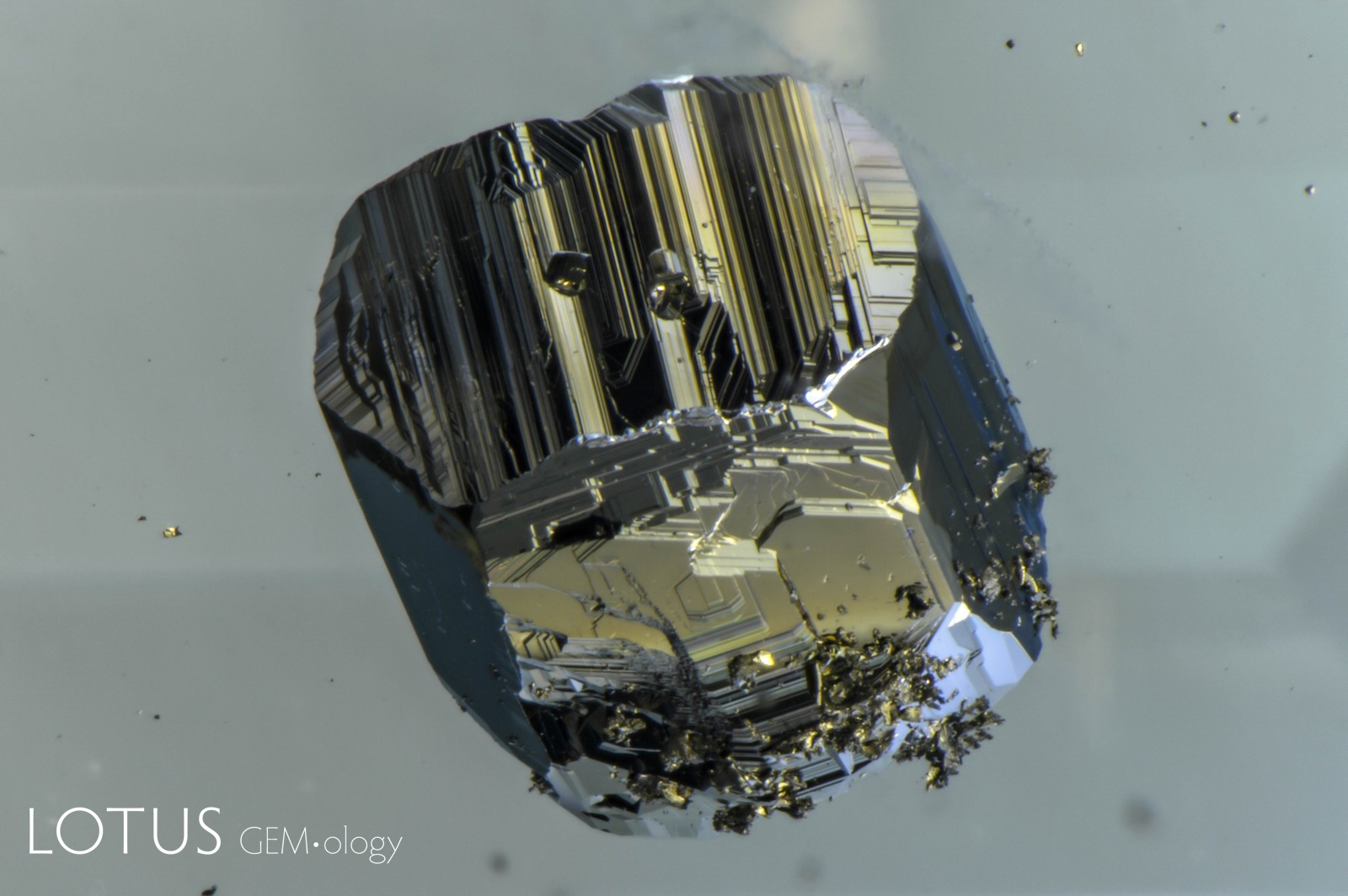 Quartz from the state of Washington, USA with a syngenetic opaque brassy yellow crystal of pyrite. Field of View: 4.86mm.
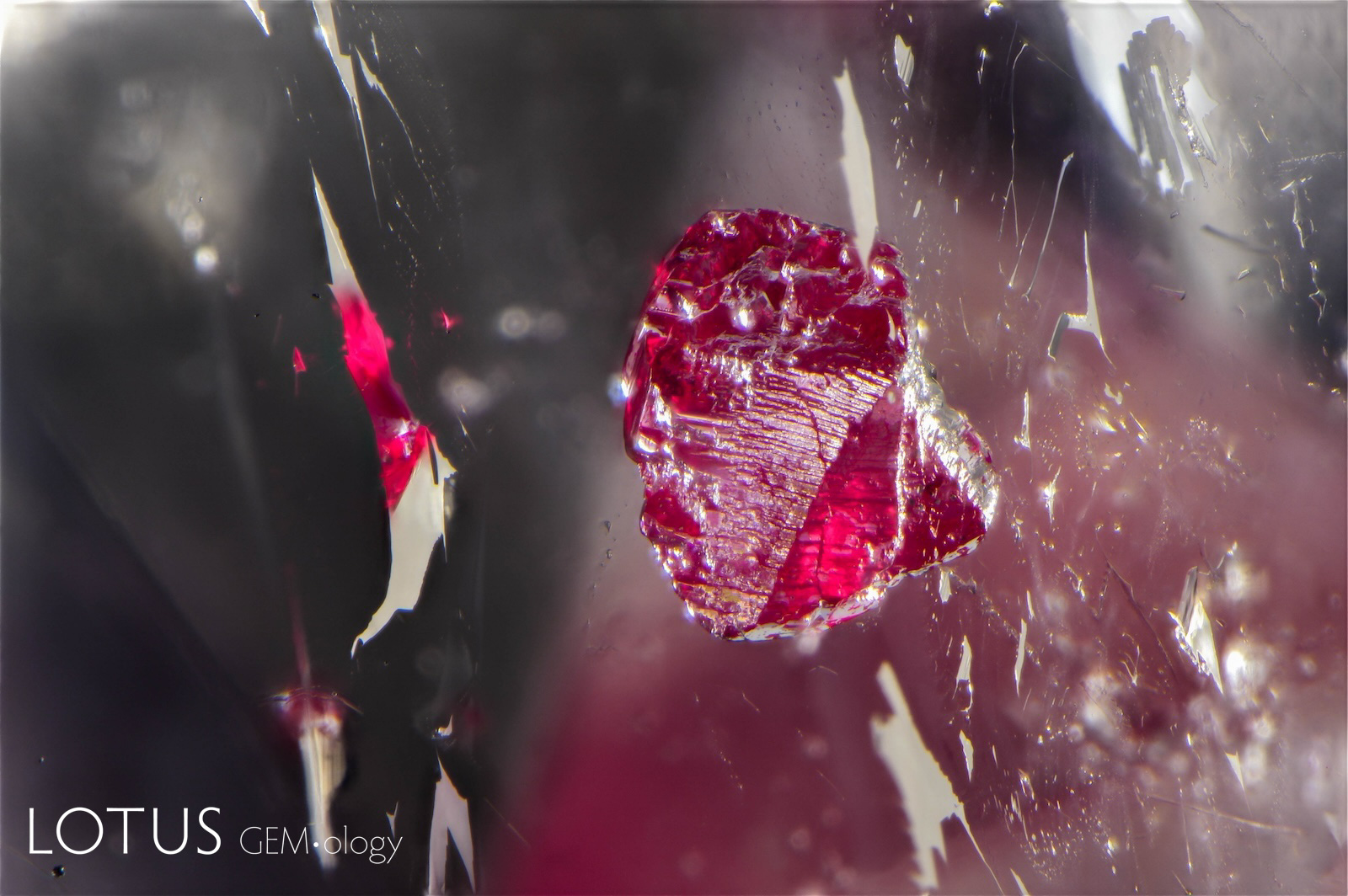 Quartz from China with a bright red single crystal of syngenetic cinnabar as an inclusion. Field of View: 4.84mm.
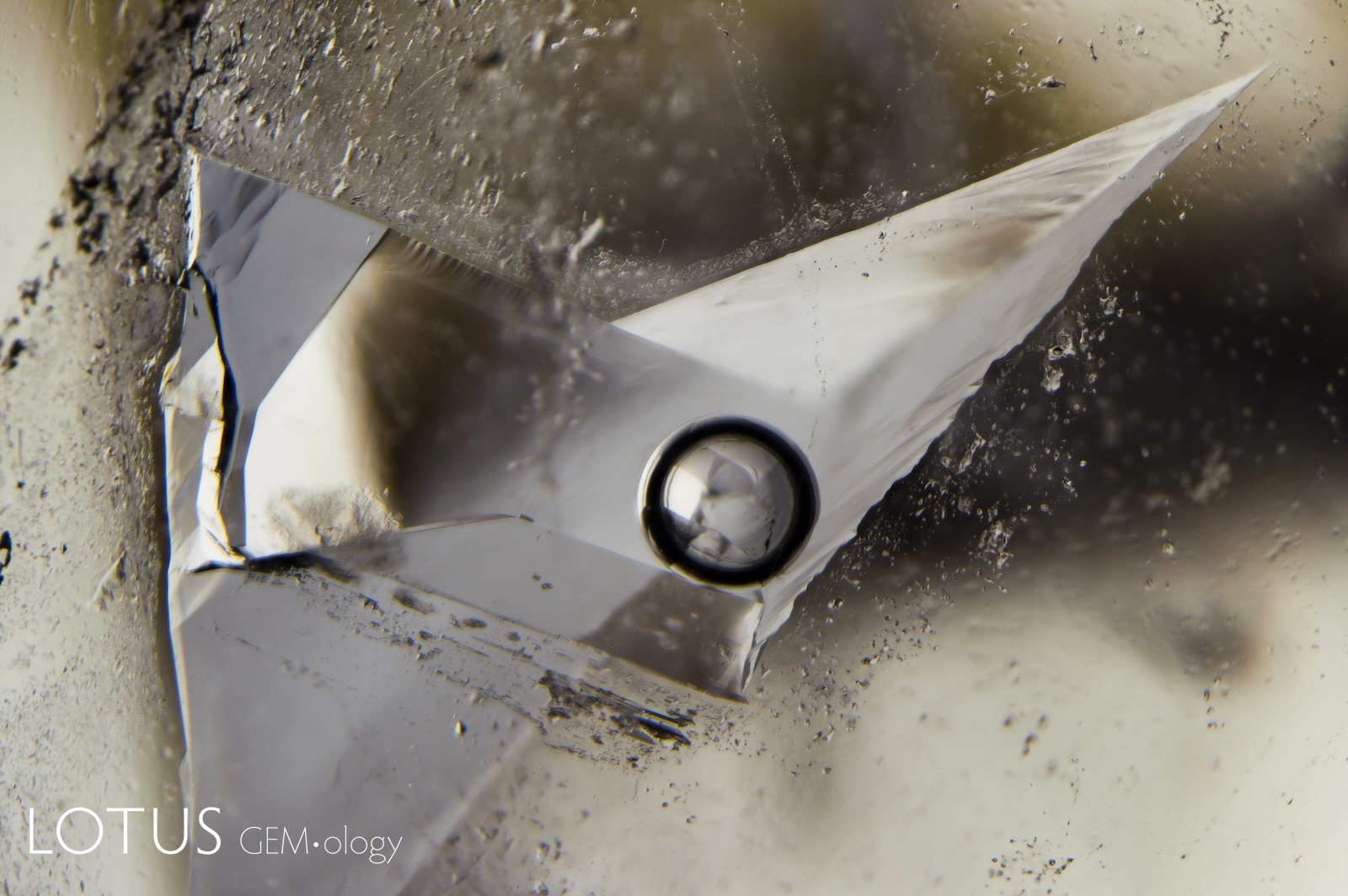 Quartz from Madagascar with a syngenetic primary two-phase fluid inclusion with a large vapor bubble. Field of View: 11.52mm.
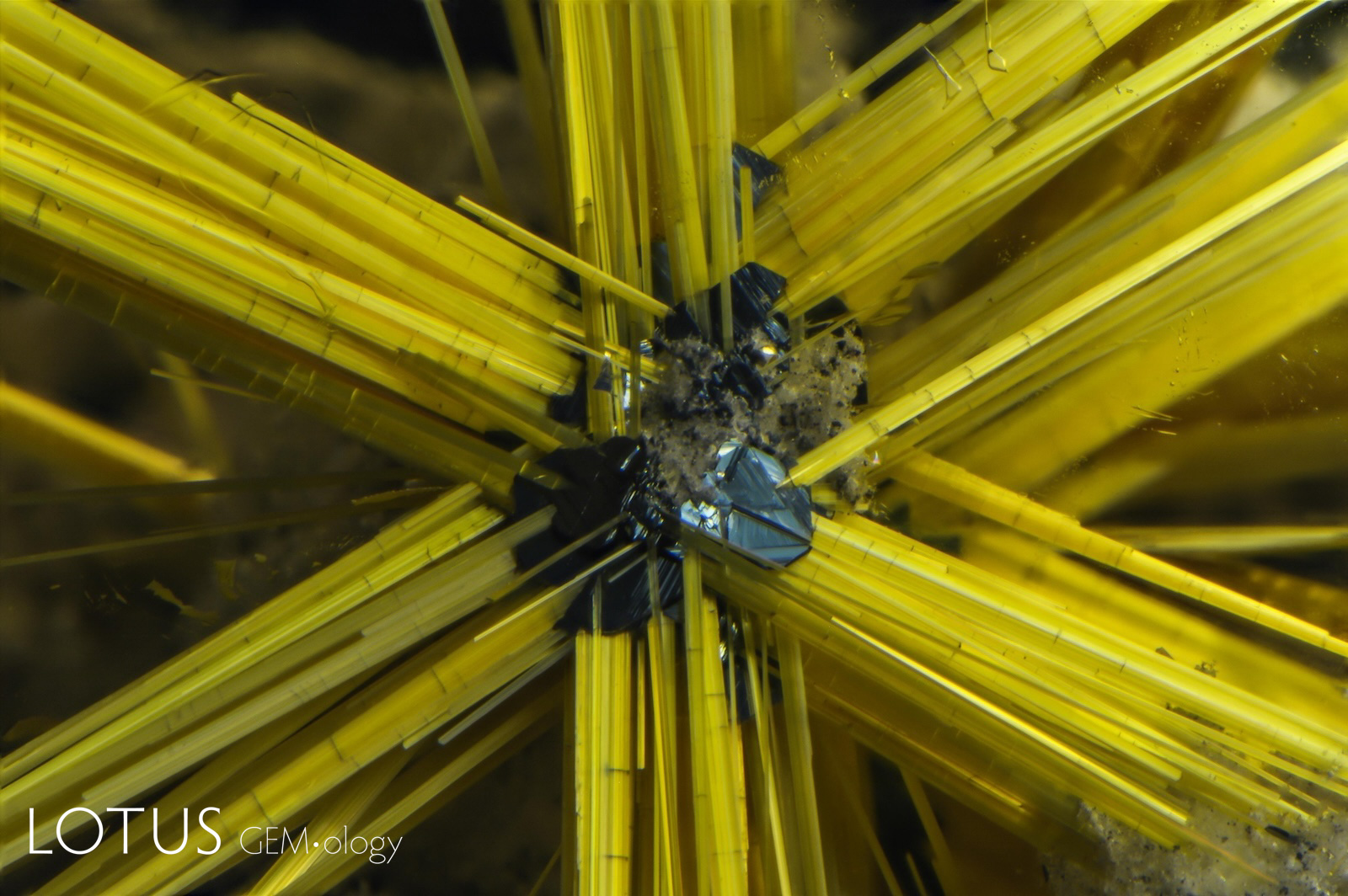 Quartz from Brazil with a protogenetic rutile star with a hematite/ilmenite core. Field of View: 7.19mm.

About the Authors
John I. Koivula, B.A., B.Sc., G.G., F.G.A., Fellow Royal Microscopical Society is the co-author of the magnificent Photoatlas of Inclusions in Gemstones, Vols. 1–3 and the author of the MicroWorld of Diamonds, along with several other books and numerous articles. He is currently Analytical Microscopist at the Gemological Institute of America and is the world's foremost gem photomicrographer and inclusionist. John’s images have graced the covers and contents of numerous books and journals. In addition, he won 1st Place and others in Nikon’s Small World photomicrographic competitions. Koivula is an honorary life member of both the Finnish Gemmological Society and the Gemmological Association of Great Britain, and was named as one of the 64 most influential people of the 20th century in the jewelry industry by Jewelers' Circular Keystone magazine and one of the 50 most important figures that have shaped the history of gems since antiquity by the Association Française de Gemmologie (AFG). John was bestowed The Richard T. Liddicoat Award from GIA in 2009. He also has been awarded the Robert M. Shipley Award by the American Gem Society, the Scholarship Foundation Award by the American Federation and California Federation of Mineralogical Societies, the Antonio C. Bonanno Award for excellence in gemology by the Accredited Gemologists Association, and Koivula was the first recipient of the Richard T. Liddicoat Journalism Award from the American Gem Society. John was also the technical and scientific advisor to the famous MacGyver television series from 1986–1993. Many of his books can be seen at www.microworldofgems.com, and are available from the GIA and Gem-A bookstores.
Nathan Renfro’s interest in minerals was sparked in his late teens when he caught a glimpse of his grandfather’s rock collection. From that point, there was no turning back. In 2006, he completed his undergraduate studies in geology and then enrolled in GIA’s Graduate Gemologist (GG) program at the Carlsbad campus as a recipient of the William Goldberg Diamond Corporation scholarship. After earning the GIA GG diploma, Nathan was hired by GIA as a diamond grader. In 2008 he joined the Gem Identification department, in Carlsbad California, where he currently holds the position of Manager/Microscopist. Nathan has authored and co-authored dozens of articles on gemology, and has lectured to gem and mineral groups throughout the United States. His primary areas of interest are inclusion identification, photomicrography, lapidary arts and the defect chemistry of corundum.
Notes
First published in the Journal of Gems & Gemmology in May 2026.
References
- Blum, J.R., Leonhard, G., Seyfert, A.H. and Söchting, E. (1854) Die Einschlüsse von Mineralien in krystallisirten Mineralien; deren chemische Zusammensetzung und die Art ihrer Entstehung. [The Inclusions of Minerals in Crystallized Minerals; Their Chemical Composition and the Nature of their Formation]. [in German], Haarlem: Loosjes, 264 pp., 8 color plates.
- Gübelin, E.J. and Koivula, J.I. (1986) Photoatlas of Inclusions in Gemstones. Zürich, Switzerland: ABC Edition, revised Jan. 1992, 532 pp.
- Gübelin, E.J. and Koivula, J.I. (2005) Photoatlas of Inclusions in Gemstones, Volume 2. Basel, Switzerland: Opinio Publishers, 830 pp.
- Hyršl, J. and Niedermayr, G. (2003) Magic World: Inclusions in Quartz. [in English and German], Bode Verlag GmbH, 240 pp.