☰
Close ×
  • Home
  • About
    • About Lotus
    • Our Staff
    • Gemology Lectures
    • Latest Lectures
    • Thanks
    • Site Map
    • Trade Memberships
  • Reports
    • Lotus Report Verification
    • Report Lookup Guide
    • Reports & Prices
    • Color Types
    • Enhancements
    • Testing FAQs
  • Resources
    • Articles
    • Books
    • Hyperion • Inclusion Search
    • Sherlock • Inclusion Research
    • Siamese Twins • Paired Images
    • Four Treasures • Reference Database
    • Book/Instrument Reviews
    • Fine Images for Sale
    • Lotus Bibliography
  • Contact

Lotus Gemology Logo

  • Home
  • About
    • About Lotus
    • Our Staff
    • Gemology Lectures
    • Latest Lectures
    • Thanks
    • Site Map
    • Trade Memberships
  • Reports
    • Lotus Report Verification
    • Report Lookup Guide
    • Reports & Prices
    • Color Types
    • Enhancements
    • Testing FAQs
  • Resources
    • Articles
    • Books
    • Hyperion • Inclusion Search
    • Sherlock • Inclusion Research
    • Siamese Twins • Paired Images
    • Four Treasures • Reference Database
    • Book/Instrument Reviews
    • Fine Images for Sale
    • Lotus Bibliography
  • Contact
    • REPORT VERIFICATION

Articles

From Fei Cui to Jadeite and Back • Questions and Answers

From Fei Cui to Jadeite and Back — Questions and Answers

Lotus Gemology
First Published: 1 July 2023

Recent studies show that the gem known throughout the non-Chinese world as "jadeite" jade is actually a rock composed of three major mineral components – jadeite, omphacite and kosmochlor. These components grow in a submicroscopic aggregate with grains so small that normal lab instruments cannot easily determine the true composition. As a result, China's gem trade has adopted the traditional term "fei cui" (pronounced 'fay cho-y') to cover all the pyroxene jades. Lotus Gemology has done the same starting on 1 July 2023, dropping the names jadeite/omphacite/kosmochlor in favor of the scientifically more correct "fei cui."

Describing Color in Gems • A Fool's Guide • Lotus Gemology

Describing Color in Gems — A Fool's Guide

Richard W. Hughes
First Published: 1 June 2023

Color types such as "pigeon's blood," "Paraíba" and "cobalt blue" have become wildly popular in the gem trade. But there is a vast difference between coining such terms and applying them in a way that is both consistent and logical. Richard Hughes casts a critical eye on the subject.

A Canary in the Ruby Mine • Low-Temperature Heat Treatment Experiments on Burmese Ruby

Canary in the Ruby Mine — Low-Temperature Heating of Burmese Ruby

E. Billie Hughes & Wim Vertriest
First Published: 1 January 2023

Detection of heat treatment below 1200°C in ruby and sapphire can present challenges to gemologists. In this study, the authors heated Burmese ruby samples and detailed the features that help in the detection of heat treatment.

Yellow Sapphires with Unstable Color

Yellow Sapphires with Unstable Color

E. Billie Hughes
First Published: 1 July 2022

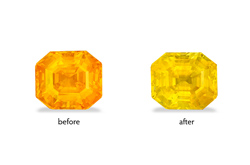
Some yellow sapphires contain unstable color centers. The following discussion outlines case studies of stones that faded after testing in the lab, and how color may be restored.

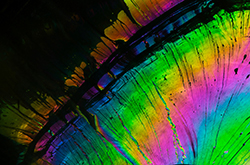
Before and after appearance of an oiled apatite

Apatite Oiling — Before and After

E. Billie Hughes
First Published: 1 April 2022

Oil treatment has a significant impact on the appearance of an apatite.

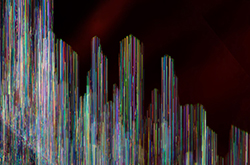
Hogbomite-filled dislocations in a Vietnamese spinel

Vietnamese Skyline

Wimon Manorotkul
First Published: 1 April 2022

Hogbomite-filled dislocations in a Vietnamese spinel.

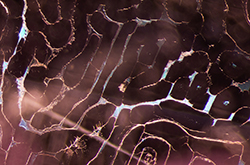
Spinel with maze-like fingerprint.

An A-maze-ing Fingerprint in Spinel

E. Billie Hughes
First Published: 1 April 2022

A web-like fingerprint creates a maze-like pattern in spinel.

The Skin Game • Beryllium Diffusion in Sapphire

Beryllium Diffusion in Orange Sapphire — The Skin Game

Richard W. Hughes
First Published: 1 March 2022

The early history of beryllium diffusion in sapphire, starting with the 2001 appearance of large numbers of padparadscha sapphires in the Thai gem market.

Bubbling Up • Carbon Dioxide in Sapphire

Bubbling Up — Carbon Dioxide Inclusion in Sapphire

Wimon Manorotkul
First Published: 1 March 2022

The internal world never fails to amaze, as witnessed by this incredible video of a negative crystal in a Sri Lanka sapphire.

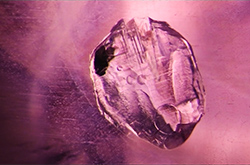
An apatite crystal appears to float, suspended over a rutile silk cloud in a star sapphire.

Apatite in Blue Sapphire

E. Billie Hughes
First Published: 1 September 2021

An apatite crystal appears to float, suspended over a rutile silk cloud in a star sapphire.

Results 11 - 20 of 109 Page 2 of 11
  • 1
  • 2
  • 3
  • 4
  • 5
  • 6
  • 7
  • 8
  • 9
  • 10

LOTUS GEMOLOGY CO. LTD.
Silom 19 Bldg,
Suite 411, 4th Fl.
45/1 Soi 19, Silom Rd
Bangkok 10500, Thailand

+66 (02) 117 3616
+66 (0)9 9229 8646

  • facebook
  • instagram
  • HOME PAGE
  • ABOUT LOTUS
  • GEMOLOGY REPORTS
  • CONTACT LOTUS
  • BOOKS
  • ARTICLES
  • LECTURES
  • IMAGES FOR PURCHASE
  • REPORT LOOKUP
  • HYPERION INCLUSION DATABASE
  • SHERLOCK INCLUSION RESEARCH
  • FOUR TREASURES REFERENCE DATABASE

  • Memberships  •  Privacy Policy  •  Site Map
    © 2013–2026 Lotus Gemology. All Rights Reserved.