
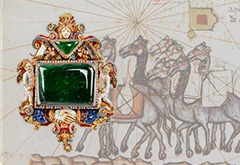
Emeralds from the Silk Roads — From Myth to Reality
The earliest known emerald mines are thought to have been in Egypt. However recent discoveries suggest that emerald may have also been known from Central Asia.
The earliest known emerald mines are thought to have been in Egypt. However recent discoveries suggest that emerald may have also been known from Central Asia.
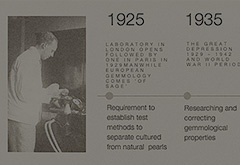
This article traces the development of the modern gemological laboratory from 1925 to the present date, a 100-year journey that has seen not just a gradual and then explosive evolution in the application and maturity of the science, but importantly the standing that gemological laboratories have enjoyed within the gemstone industry and the scientific community. The passionate people involved have made tremendous contributions to the understanding of gem materials and their willingness to embrace the latest technology as well as attract successive generations to the field has made the study of gem materials within gemological laboratories one of the most exciting theatres of life.
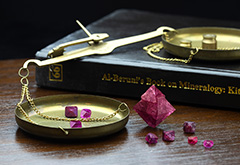
Abū Rayḥān Muḥammad ibn Aḥmad al-Bīrūnī was born in 973 CE, in what is now Uzbekistan. A polymath of the Islamic Golden Age, he distinguished himself in numerous fields, including medicine, astronomy, history, mathematics, physics, mineralogy, gemmology, encyclopedism, geography, philosophy, sociology, and travel. His vast intellectual contributions rank him among the greatest minds of any era. Al-Bīrūnī authored some 145 works, but tragically many of these are now lost. Given the sheer scale and depth of his intellectual legacy, any attempt to comprehensively study al-Bīrūnī’s contributions is inevitably limited and fraught with gaps. However, what we do know demonstrates that this was a remarkable man, on the order of an Aristotle or Einstein. And yet much of the world has never even heard of him. This paper will largely focus on his gemmological work, while also touching on his other accomplishments.
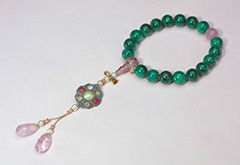
The early history of Burmese fei cui (pyroxene jade) in China has not been examined in detail. However, China’s economic expansion since 1978 has sparked renewed interest, prompting fresh efforts to better understand the history of this important gem. Building on earlier research, this article draws on both established and newly uncovered historical materials to provide a more comprehensive account of Empress Dowager Cixi’s influence on fei cui culture, while also addressing additional questions.

This article traces the shift in Sino–Burmese gem exchange from a Ming-era emphasis on baoshi (寳石; rubies, sapphires, tourmalines and others) to the Qing embrace of Burmese jade, or fei cui (翡翠). Using Yunnan-centered sources, it argues that the term fei cui was first applied to Burmese jade in 1719 (Ni Tui), marking a conceptual turn that paralleled a market one: by the late 18th century, fei cui trade through Tengyue/Dali expanded rapidly, values soared, and top fei cui surpassed Xinjiang yu (nephrite) in price. Court taste—especially under Qianlong—accelerated demand, reorienting extraction and commerce in northern Burma. The study highlights evolving terminology, monopolies over ruby/sapphire, and growing jade-working industries, concluding that Chinese consumer preference was the primary external force shaping Burmese gem mining and exports from the Yuan–Ming through the Qing and into the modern era.
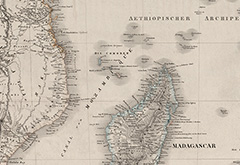
East Africa's Mozambique orogenic belt stretches from Eastern Antarctica through East Africa to the Arabian penninsula. The highly mineralized zone is the source of many rich gem deposits, one of which is detailed in this article.
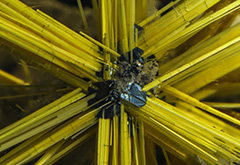
Throughout the history of gemology, quartz has been a main target of gemological microscopists. A detailed study of the wide variety of inclusions in quartz is as complex an earth-science related mental exercise as any gemologist would ever care to undertake. This is not surprising, as quartz occurs in a wider range of geologic environments than any other mineral species, and the inclusions it holds testify to this.
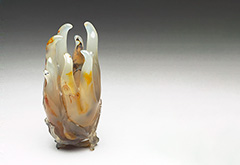
During the Qing dynasty (1644–1911), court artisans carved agates with a high degree of technical ability and inventiveness. Agate wares produced during the reign of the Yongzheng (1723–35) and Qianlong (1736–1795) emperors exploit the full breadth of chromatic effects and degrees of translucency offered by these silicate stones. During this period, agate carvings were produced in high numbers, and imperial commissions made conscious use of the stone’s unique material qualities. Because the geological environment in which agates are formed affects their pigmentation, the range of agate colors recorded in historical documents and seen in surviving objects reflects a variety of geographical origins. This paper considers how agates were understood by scholars and appreciated by emperors at a time of territorial expansion and interest in new minerals.
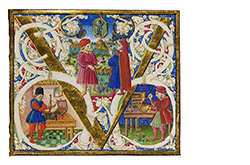
This article is a brief survey of the historical methods of describing and assessing the quality of coloured gemstones, tracing these from ancient times to the end of the 18th century. Examining historical texts and inventories reveals how features and flaws of gemstones were observed and used to determine their value. The article considers various historical periods, including the ancient world, medieval Muslim world, early India, and medieval Europe, highlighting the changing criteria and expertise involved in judging gems. This study demonstrates the historical depth of gem connoisseurship and its influence on modern gem assessment practices.
An introduction to the articles in this special issue of the Chinese Journal of Gems & Gemmology, edited by Lotus Gemology's Richard W. Hughes and first published in May 2026.
He who sees things grow from the beginning will have the best view of them.
Aristotle
Gemmology, in its modern form, has grown so refined, so intricate, that it sometimes forgets to breathe. For this special issue of the Journal of Gems & Gemmology, we’ve opened the windows. What you’ll find here is a gathering of voices—diverse in tone, wide in scope—speaking not only of stones, but of stories, of histories, of big questions that shimmer just beyond the reach of certainty.
Rather than confine our contributors to the microscope and the method, we asked them to wander. To wonder. To raise their eyes above the horizon. These essays do not always offer answers. But they offer ways of seeing—and that is often where discovery begins.
A wise friend once shared with me two commandments:
Years have passed. I still drift now and then into the world of novels, and the Greeks remain, for me, a mountain only partly climbed. But I see his point. Fiction—no matter how fine—is always a shadow play, a blurring of the light. And the Greeks? They looked directly into the sun. In these pages, you may glimpse their brilliance, along with that of many other scholars who followed.
That same friend taught me one more lesson: the greatest breakthroughs often come from those who stand outside the circle. Interlopers. Rebels unbound by rules. Their eyes are untrained, and that is their strength—they do not know what cannot be done, and so they go and do it. When we force others into the box of orthodoxy, we may silence the very spark that lights the way forward.
You’ll find a thread woven through many of these essays: history. Not by chance, but by intent. History is more than a ledger of what came before, it is an engine of empathy. To truly understand the motivations of others is to see our own more clearly, and to soften the distance between ourselves and those who came before—or who walk beside us now.
History is not only a vessel of feeling, but also a time machine. It carries us into vanished worlds, lost voices, forgotten textures of life. In that sense, history is kin to gemmology. For what is a gem but a memory in mineral form—a trace of fire and pressure, time and transformation? Each one holds a silence that speaks, if we learn how to listen.
As you turn these pages, a quiet pattern emerges. The early seekers of knowledge, those we now call scientists, refused to be confined. They roamed freely between stars and syllables, formulae and verse, philosophy and poetry. To them, art and science were not opposites, but companions in this journey towards understanding.
In that same spirit, the writers gathered here bring with them wisdom from beyond the lab. They speak to both sides of our intellect—analytic and intuitive—where insight is shaped not only by precision, but by imagination.
Aristotle reminds us that the clearest view comes from the beginning. So for this issue we’ve asked our authors to step back—not to narrow the gaze, but to widen it. To sit not in the front row, but at a distance. From there, the lines may blur—but a new dimension reveals itself. As we move back, perspective bends… the land we inhabit changes… our flat earth gradually becomes a globe.
Richard W. Hughes
Lotus Gemology
Bangkok, Thailand

The articles that composed the special issue of the Journal of Gems & Gemmology included (alphabetical by first author):
In addition, there is one more article that did not appear in the special issue: