

Gem Treatment Disclosure — Trust
The ethics of gem enhancement disclosure.
The ethics of gem enhancement disclosure.
A brief look at the famous emerald and alexandrite from Russia's Ural Mountain mines.
A 2006 mission to remote ruby and spinel localities in Tajikistan.

When it comes to gemology, whether it is practiced in the lab or jewelry store, the importance of traveling to the source cannot be emphasized enough. Not only is information more accurate at the source, but the experiences will also make you a better salesperson.
In search of ruby and sapphire on the lost Isle of Madagascar.

The examination of a yellow sapphire provides a lesson in the power of gemological microscopy.
Introducing the blue filter as a gemological tool to separate natural and Verneuil synthetic yellow sapphires.
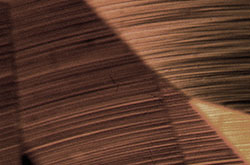
Virtually all gemologists are aware of the curved growth lines and gas bubbles in Verneuil (flame-fusion) synthetic corundum, but few understand exactly why they occur and how they are distributed in these stones. This article clarifies these important identifying features.
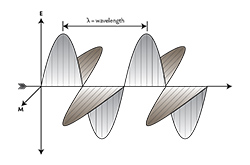
The optical properties of crystals are intimately related to their crystal structures. This article examines the precise relationship between optic character and sign and crystal structure.
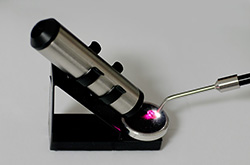
Many gemologists have difficulty mastering the direct-vision spectroscope. This article eases the pain.