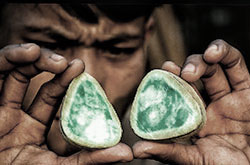
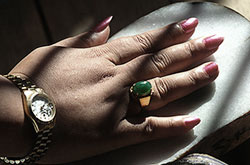
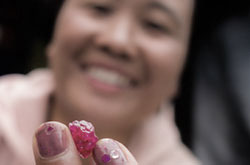
This article traces the shift in Sino–Burmese gem exchange from a Ming-era emphasis on baoshi (寳石; rubies, sapphires, tourmalines and others) to the Qing embrace of Burmese jade, or fei cui (翡翠). Using Yunnan-centered sources, it argues that the term fei cui was first applied to Burmese jade in 1719 (Ni Tui), marking a conceptual turn that paralleled a market one: by the late 18th century, fei cui trade through Tengyue/Dali expanded rapidly, values soared, and top fei cui surpassed Xinjiang yu (nephrite) in price. Court taste—especially under Qianlong—accelerated demand, reorienting extraction and commerce in northern Burma. The study highlights evolving terminology, monopolies over ruby/sapphire, and growing jade-working industries, concluding that Chinese consumer preference was the primary external force shaping Burmese gem mining and exports from the Yuan–Ming through the Qing and into the modern era.