Gemology Books Bibliography

Gemology Books Bibliography

Explore books on gems, gemology, jewelry and mineralogy in Four Treasures, the Lotus Gemology reference database. This bibliography brings together matching book records from the collection, with publication details, abstracts and cover images where available.

Gemology Book References

The list below matches books concerning gemology and related subjects in the database's searchable fields. Some works cover several branches of gems, jewelry or mineralogy.
3,261–3,280 of 3,452 matching references

Les pierres précieuses de l'Orient ancien, des Sumériens aux Sassanides
Precious Stones of the Ancient Near East, from the Sumerians to the Sasanids
Edited Book
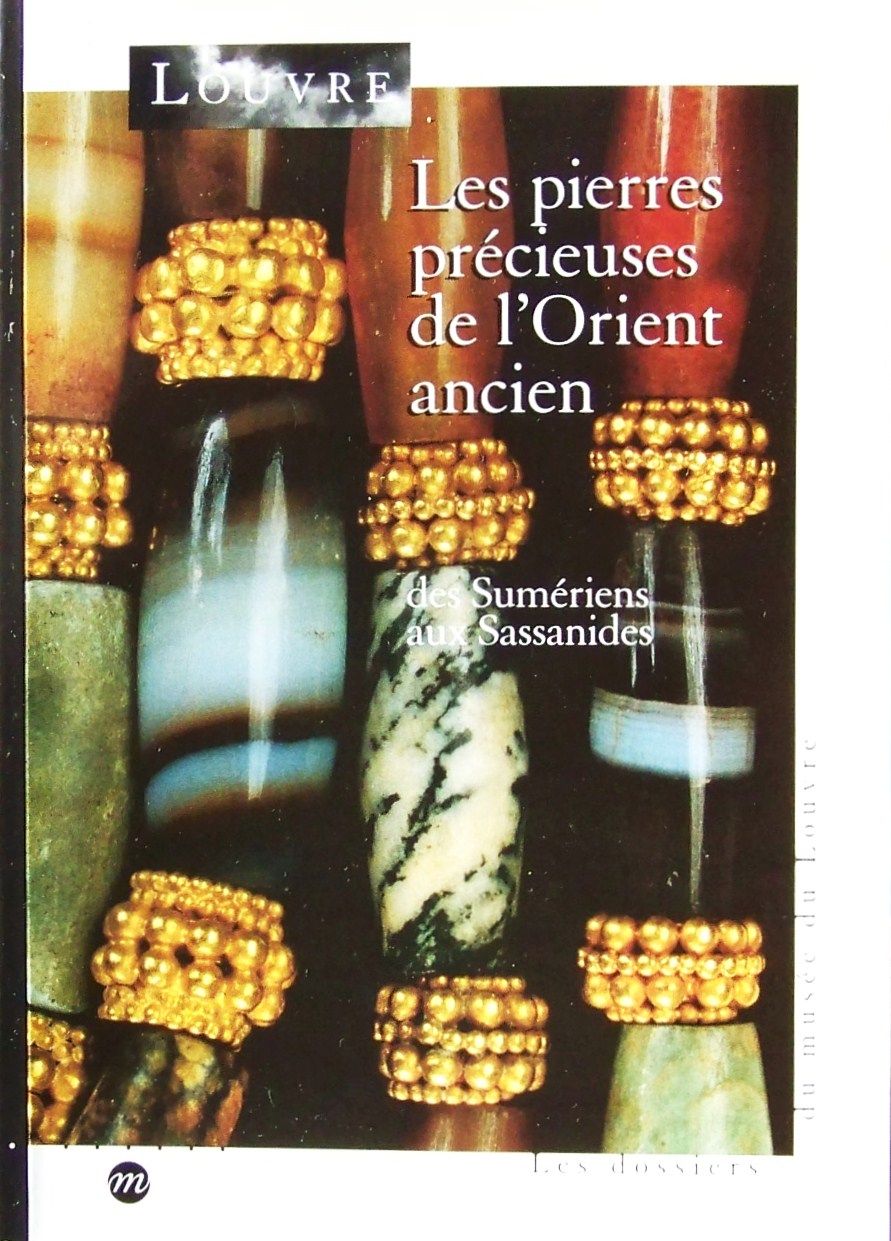
Tallon, F., editor (1995) Les pierres précieuses de l'Orient ancien, des Sumériens aux Sassanides. [Precious Stones of the Ancient Near East, from the Sumerians to the Sasanids]. Paris, Louvre Museum, 128 pp..
Record No. 27751  |  Sinkankas/Born No.: NIS/NIB  |  Language: in French  |  not seen
The ancient Near East, from the fourth millennium B.C. to the seventh century A.D., developed a luxury craft industry based on precious stones. This dossier from the Louvre Museum presents beautiful pieces—ornaments of princes or offerings to the gods—and explains the techniques.

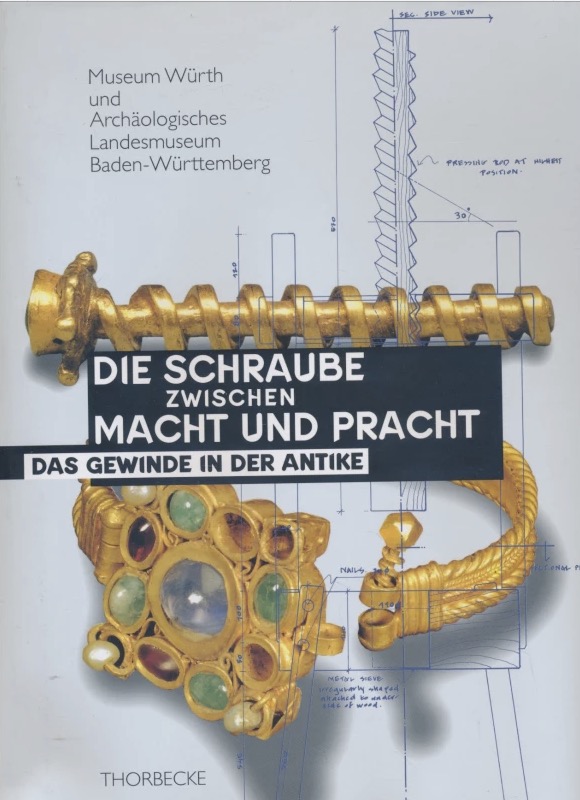
Über den Goldenen Schmuck der Spätantike
The golden jewelry of Late Antiquity
Book Section
Deppart-Lippitz, B. (1995) Über den Goldenen Schmuck der Spätantike. [The golden jewelry of Late Antiquity] In: Die Schraube zwischen Macht und Pracht: Das Gewinde in der Antike [The Screw between power and Splendor: The Thread in Antiquity], Baden-Württemberg: Museum Würth und Archäologisches Landesmuseum, pp.  113–140.
Record No. 26957  |  ISBN/ISSN: 9783800000000  |  Language: in German with English absracts  |  not seen
On the occasion of the 50th anniversary of the Würth Group in 1995, a unique exhibition on the history of the screw and the thread in antiquity was presented for the first time through a joint effort by the Museum Würth in Künzelsau-Gaisbach and the Archaeological State Museum of Baden-Württemberg. The exhibition was supported by over twenty museums in Europe and the USA with precious Late Antique jewelry exhibits. Special thanks are due to co-initiator Dr. Rüdiger Krause, director of the Archaeological State Museum and president of the State Heritage Office of Baden-Württemberg, to Prof. Dr. Dieter Planck, and especially to Reinhold Würth and all the scholars involved in the research project, for making this exhibition possible, which has now been crowned with a scholarly publication on a topic previously neglected in general cultural history. The exhibition’s preparation and the development of the volume were preceded by intensive and thorough research on the topic of threads in antiquity. This involved not only ancient threading techniques based on archaeological remains or written sources attesting to such techniques, but also the political and social conditions of Late Antiquity, which were particularly defined by rank insignia and prestige objects (fibulae, arm rings, bracelets, pectorals, pectoral crosses, belts, etc.) using screw fastenings. The richly illustrated and high-quality volume, featuring numerous (including full-page) color and black-and-white images, drawings, and maps, is structured as follows: after the introductory foreword by Reinhold Würth (pp. 7–13) and the exhibition introduction by Dieter Planck (pp. 14–22), the main thematic section is divided into four specific areas: Rüdiger Krause writes on “The Thread in Antiquity” (pp. 23–54), Astrid Schürmann on “The Transmission of Ancient Authors” (pp. 55–76), Barbara Theune-Großkopf on “Onion-Head Fibulae and Their Wearers – Jewelry and Rank Insignia” (pp. 77–112), and Barbara Deppert-Lippitz on “The Golden Jewelry of Late Antiquity” (pp. 113–140). A special feature of the volume is the inclusion of English and French summaries preceding each article, along with trilingual captions (German, English, French) for all images.

Roman Intaglios

Book Section
Henig, M. (1995) Roman Intaglios. In: Excavations At York Minster, London: Royal Commission On the Historical Monuments of England, 2 Vols., Volume I, from Roman Fortress to Norman Cathedral (Part 1 the Site / Part 2 the Finds) Roman to Norman: the Roman Legionary Fortress At York.in Early Middle Ages AD 71–1070 , pp. 372–373.
Record No. 17223  |  ISBN/ISSN: 9780110000000  |  not seen
In the late 1960s, York Minster was in imminent danger of collapse. By means of extensive engineering the building was saved, and, in a campaign of archaeological excavation, the opportunity was taken to retrieve years of little-known history from beneath the floors. Underneath was found the headquarters of the Roman legionary fortress which was subjected to numerous modifications, both subtle and drastic, over a span of a 1000 years. This sequence of history closed in AD 1070 with the construction of the Norman Cathedral of Archbishop Thomas of Bayeux. The historical evidence contained in this text offers a detailed account of social, economic and ideological change in a place favoured by Roman, Anglian, Viking and Norman invaders. This publication describes the rescue excavations of part of the Roman legionary fortress (in particular, barracks, headquarters building, and streets), post-Roman use of the fortress, and an Anglo-Scandinavian cemetery. Part 1 is devoted to the excavation and its techniques. Contributions include `From the foundation of York to the end of the Roman period' by B Heywood (1-8), `The post-Roman period to 1066' by E James (9-15), `The excavation campaign' (16-22) and `The excavations' (23-176) by A D Phillips, `Note on the first-cohort barracks' by D P Davison (170-3), and `Roman to Norman at York Minster' by M O H Carver (177-205). Part 1 concludes with several tables, including phasing and dating.Part 2 on the finds begins with `Roman architectural and sculptured stonework' by T F C Blagg (223-45), followed by `Roman inscribed stones' by R P Wright & R S O Tomlin (246-7), `Roman wall-plaster from York Minster' by F J Weatherhead (248-64), `Analysis of mortar samples from the Roman phases of York Minster' by S E Warren & J Evans (265-8), `Roman tile fabric' by I M Betts (268-9), `Stamped and marked tiles' by E M King (270-1), `The samian pottery' by G Simpson (272-90), `Amphorae' by D F Williams (291-303), `Mortaria' by K Hartley (304-23), `Roman coarse pottery' by J R Perrin (324-45), `Roman glass' by J Price (346-71), `Roman intaglios' by M Henig (372-3), `Roman ironwork' by W H Manning (374-7), `Roman non-ferrous metalwork' by G Lloyd-Morgan (378-90), `Roman brooches' by S A Butcher (391-3), `Roman coins' by P J Casey (394-413), `Roman and early medieval bone and antler objects' by A G MacGregor (414-27), `An ivory weaving tablet' by P Walton (428-9), and `Objects of shale and jet' by M Henig (430-2).Under the section devoted to finds of the early medieval period, c 400-1100, contributions include `Pre-Conquest sculpture' by J Lang (433-68) with a note on the Anglo-Saxon pigment by P Wilthew (465), `Post-Roman pottery' by J Holdsworth (468-80), `Early medieval glass fragments' by V I Evison (481-3), `Iron objects' by I H Goodall (484-8; note on the spur by B Ellis on 487-8), `Iron-bound coffins and coffin-fittings from the pre-Norman cemetery' by B Kjolbye-Biddle (489-521), `Non-ferrous metal objects' by A R Goodall (522-6), `Post-Roman coins' by E J E Pirie (527-30), `Ferrous slag' by J G McDonnell (531-2), `Animal bone from post-Roman contexts' by D J Rackham (533-58, including `The bird bones' by E P Allison on 556-7), and `Palaeopathological report on selected skeletons from the pre-Norman cemetery' by F Lee (559-73). The report concludes with an `Assemblage summary' by M O H Carver & B Heywood (574-617), and an `Index to material held in archive' by A Sinclair (618-20).

Saphire von Indaia, Minas Gerais, Brasilien
Sapphires from Indaia, Minas Gerais, Brazil
Journal Article
Henn, U., Bank, H. and Bank, F.H. (1995) Saphire von Indaia, Minas Gerais, Brasilien. [Sapphires from Indaia, Minas Gerais, Brazil] Zeitschrift der Deutschen Gemmologischen Gesellschaft, Vol. 43, No. 3/4, pp. 111–116.
Record No. 4812  |  Language: In German  |  not seen

Sapphires and rubies from Laos

Conference Paper
Bosshart, G. (1995) Sapphires and rubies from Laos. 25th International Gemmological Conference Program, Rayong, Thailand pp. 23–26.
Record No. 2859  |  not seen

Zur deutschsprachigen Rezeption der naturkundliche Schriften des Thomas von Cantimpré und Albertus Magnus. Zum Steinbuch der Salzburger Handschrift M. III 3

On the German-language reception of the scientific writings of Thomas of Cantimpré and Albertus Magnus: On the book of stones in the Salzburg manuscript M. III 3
Book Section
Schnell, B. (1994) Zur deutschsprachigen Rezeption der naturkundliche Schriften des Thomas von Cantimpré und Albertus Magnus. Zum Steinbuch der Salzburger Handschrift M. III 3. [On the German-language reception of the scientific writings of Thomas of Cantimpré and Albertus Magnus: On the book of stones in the Salzburg manuscript M. III 3] In: Licht der Natur. Medizin in Fachliteratur und Dichtung. Festschrift für Gundold Keil zum 60. Geburtstag, Göppinger Arbeiten zur Germanistik, 585, Göppingen, pp. 421–422.
Record No. 27969  |  Sinkankas/Born No.: NIS/NIB  |  Language: in German  |  not seen
The manuscript contains the German translation of the De mineralibus and of the chapter on engraved stones by Thomas of Cantimpré, published in the article.
Archaeology of Tamil Nadu (Kongu Country)
Archaeology of Tamil Nadu (Kongu Country)

Book
Rajan, K.G. (1994) Archaeology of Tamil Nadu (Kongu Country). Delhi, Book India Publishing, 182 pp.
Record No. 27372  |  not seen

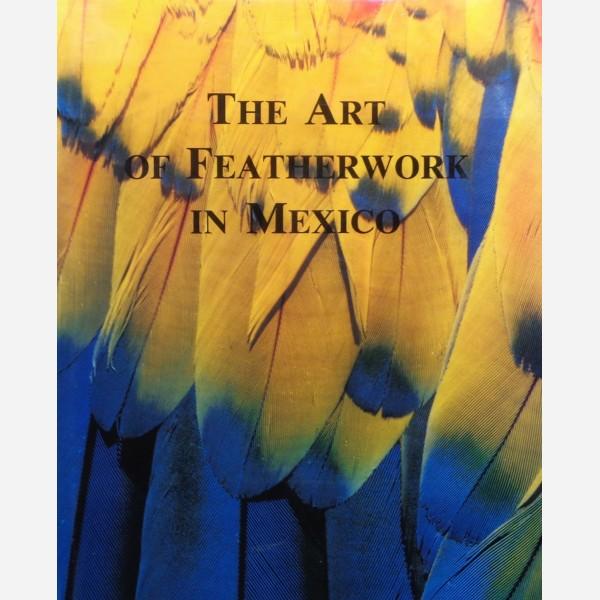
The Art of Featherwork in Mexico

Book
Castello Yturbide, T. (1993) The Art of Featherwork in Mexico. Mexico City, Fomento cultural Banamex, 255 pp.
Record No. 28651  |  ISBN/ISSN: 9789690000000  |  Sinkankas/Born No.: NIS/NIB  |  not seen
Featherworks were among the most highly prized objects in the early post-Conquest period. Hernan Cortes sent feathered objects to Holy Roman Emperor Charles V to dazzle him with their richness and unique qualities. Others, like Diego de Soto, carried packages of featherworks from New Spain to Spain to give to Charles V soon after the Spanish Conquest. Many featherworks found their way into cabinets of curiosities throughout Europe, no doubt collected because they symbolized the exotic “New World” across the Atlantic. Still today, feathered goods like the so-called Headdress of Moctezuma are some of the most prized possessions of European museums.
The Liber Lapidum of Marbode of Rennes and Its First French Translation
The Liber Lapidum of Marbode of Rennes and Its First French Translation

Thesis
Kahn, S. (1993) The Liber Lapidum of Marbode of Rennes and Its First French Translation. Oxford University
Record No. 27932  |  not seen

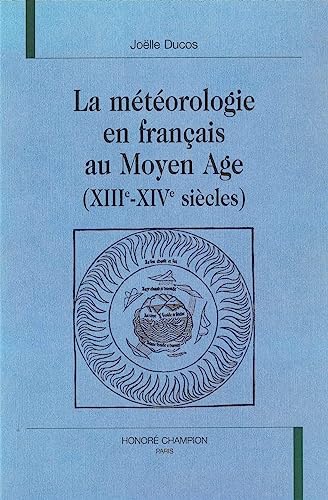
La météorologie en français. Réception des Météorologiques d’Aristote (XIIIᵉ et XIVᵉ siècles)
Meteorology in French: Reception of Aristotle’s Meteorologica (13ᵗʰ and 14ᵗʰ centuries)
Book
Ducos, J. (1993) La météorologie en français. Réception des Météorologiques d’Aristote (XIIIᵉ et XIVᵉ siècles). [Meteorology in French: Reception of Aristotle’s Meteorologica (13ᵗʰ and 14ᵗʰ centuries)] Paris, Honoré Champion
Record No. 27888  |  ISBN/ISSN: 9782850000000  |  Sinkankas/Born No.: NIS/NIB  |  Language: in French  |  not seen
The object of this research is to investigate the mediaeval reception in French of Aristotle’s Meteorologica. Through a comparative examination of French and Latin translators ‘practices in the 13th and 14th centuries, a preliminary analysis of the difficulties of the translation from Aristotle is carried out, bringing to light the mediaeval definition of an Aristotelian text. A lexis of meteorology gradually forms up and the semantic field of air exemplifies the alterations in the language induced by those translations. The scholastic reading of Meteorologica reveals a multifarious questioning, while meteorology seems a merely marginal concern. Rational reflection on hydrometeors and wind however takes shape, involving original developments, and indue course, the observation of the real as well. On the contrary, the French Encyclopaedia, in constructing a synthesis of all cultures, apparently does not popularize the newest advances of knowledge. In fact, as an echo of the disputes of scholastics, it requires several levels of reading. French meteorology thus appears as the outcome of a cultural encounter rather than the reflection of popular lore. It evidences how difficult it was for Aristotelian theories to be assimilated, on account of epistemological obstacles and of a still present underlying symbolism. Nevertheless, thanks to Aristotle, a French discourse on meteorology was building up.

Lapis-lazuli beads in Susa and Central Asia: A preliminary study
Book Section
Casanova, M. (1993) Lapis-lazuli beads in Susa and Central Asia: A preliminary study. In: South Asian Archaeology 1993: Proceedings of the Twelfth International Conference of the European Association of South Asian Archaeologists held in Helsinki, Annales Academiae Scientarum Fennicae, Seri.es B, vol. 271, Helsinki: Suomalainen Tiedeakatemia
Record No. 27749  |  ISBN/ISSN: 9789510000000  |  Sinkankas/Born No.: NIS/NIB  |  not seen

Mineral inclusions in gemstones recently observed, analyzed and identified
Conference Paper
Gübelin, E.J. (1993) Mineral inclusions in gemstones recently observed, analyzed and identified. XXIV International Gemmological Conference, Paris S. 85.
Record No. 3114  |  not seen

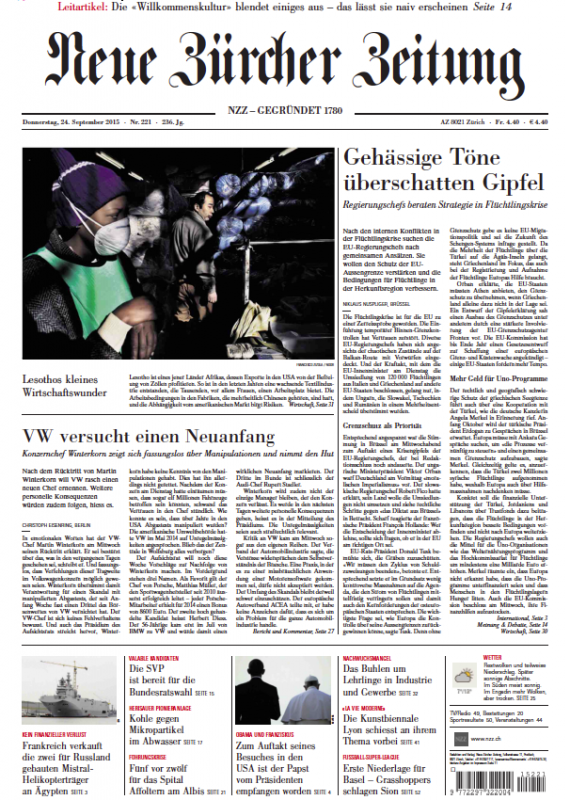
Anwendung der UV-Strahlung in der Gemmologie

Application of UV radiation in gemmology
Newspaper Article
Gübelin, E.J. (1993) Anwendung der UV-Strahlung in der Gemmologie. [Application of UV radiation in gemmology] Neue Zürcher Zeitung, No. 92, 22-Apr, Zürich
Record No. 2196  |  Language: in German  |  not seen

Oro, Jade, Boques: Costa Rica

Gold, Jade, Forests: Costa Rica
Book
Calvo Mora, M., Bonilla Vargas, L. and Sanchez Perez, J. (1992) Oro, Jade, Boques: Costa Rica. [Gold, Jade, Forests: Costa Rica], FISA, Escudo de Oro, 156 pp.
Record No. 28594  |  ISBN/ISSN: 9788440000000  |  Language: in Spanish  |  not seen

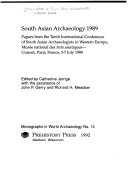
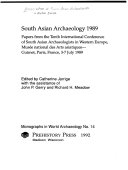
South Asian Archaeology 1989: Papers from the Tenth International Conference of South Asian Archaeologists in Western Europe, Musée National Des Arts Asiatiques-Guimet, Paris, France, 3-7 July 1989
Edited Book
Jarrige, C., Gerry, J.P. and Meadow, R.H., editor (1992) South Asian Archaeology 1989: Papers from the Tenth International Conference of South Asian Archaeologists in Western Europe, Musée National Des Arts Asiatiques-Guimet, Paris, France, 3-7 July 1989.. Madison, WI, Prehistory Press, 483 pp..
Record No. 27748  |  ISBN/ISSN: 9781880000000  |  Sinkankas/Born No.: NIS/NIB  |  not seen
Presents 57 papers from the tenth International Conference of South Asian Archaeologists in Western Europe, Musee National des Arts Asiatiques-Guimet, Paris, France, 3–7 July 1989. The text comprises 36 papers on archaeology (early lithic cultures; Mohenjo-Daro and Harappa; settlements and objects of Chalcolithic and Bronze Age cultures; pottery, environmental evidence) and 21 papers on art history (sculpture; paintings; terracottas; coins from the 1st to the 17th centuries AD).

The sources of the lapis lazuli found in Iran
Book Section
Casanova, M. (1992) The sources of the lapis lazuli found in Iran. In: South Asian Archaeology 1989: Papers from the Tenth International Conference of South Asian Archaeologists in Western Europe, Musée National Des Arts Asiatiques-Guimet, Paris, France, 3-7 July 1989, Monographs in World Archaeology 14, Madison, WI: Prehistory Press, pp. 49–56.
Record No. 27747  |  Sinkankas/Born No.: NIS/NIB  |  not seen

The faking of gems in the eighteenth century
Book Section
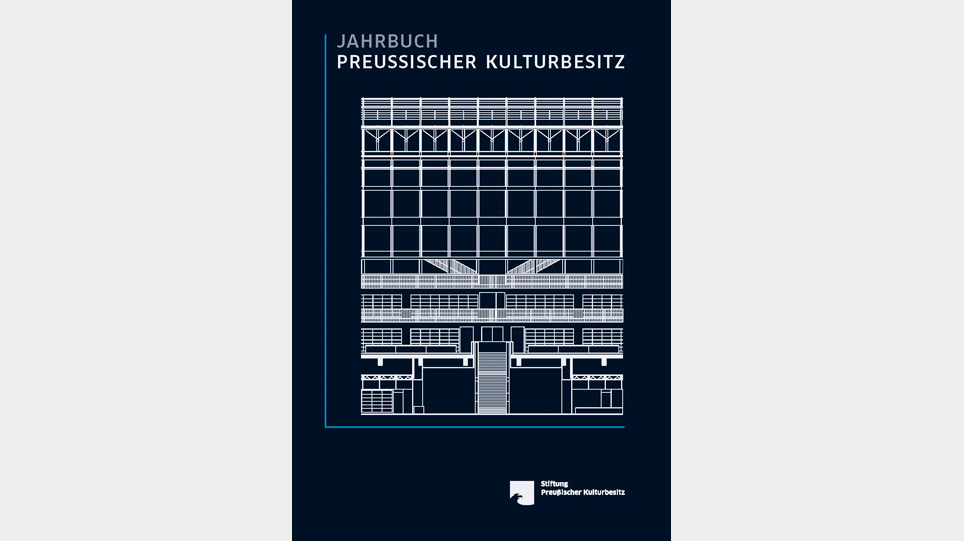
Rudoe, J. (1992) The faking of gems in the eighteenth century. In: Why Fakes Matter, Essays on Problems of Authencity, London: British Museum Press, pp. 23–31.
Record No. 26845  |  ISBN/ISSN: 9780710000000  |  Sinkankas/Born No.: NIS/NIB  |  not seen
In this book, scholars from a variety of disciplines provide new evidence about some of the most significant forgers and forgeries. The reception of fakes is considered, as is their importance as evidence for the history of taste and the art market.

Kaiser Tiberius: Ein neuer Kameo für die Antikensammlung

Emperor Tiberius: A new cameo for the antiquities collection
Journal Article
Platz-Horster, G. (1992) Kaiser Tiberius: Ein neuer Kameo für die Antikensammlung. [Emperor Tiberius: A new cameo for the antiquities collection] Jahrbuch Preussischer Kulturbesitz, Vol. 29, pp. 389–398.
Record No. 26343  |  Sinkankas/Born No.: NIS/NIB  |  Language: in German  |  not seen
Study of concept, nomenclature, species and classification of jade
Study of concept, nomenclature, species and classification of jade

Journal Article
Wang, C. (1992) Study of concept, nomenclature, species and classification of jade. Geology-Geochemistry, No. 6, pp. 24–29.
Record No. 6678  |  Sinkankas/Born No.: NIS/NIB  |  Language: in Chinese  |  not seen
The paper discusses the definition of jade virtue" in Chinese civilization and the distinction between jade and fei cui (jadeite), explores the gemological definitions and the Chinese-English nomenclature of nephrite (soft jade) and jadeite (hard jade), and further examines and identifies newly discovered varieties of jade and fei cui. Finally, it proposes a precise definition and systematic classification of jade."

The jewelry craft of the ancient Mexicans and their art of working in stone and making feather ornaments

Book Section
Seler, E. (1991) The jewelry craft of the ancient Mexicans and their art of working in stone and making feather ornaments. In: Collected Works in Mesoamerican Linguistic and Archaeology, Culver City: Laberinthos, Vol. 2 , pp. 270–295.
Record No. 28652  |  Sinkankas/Born No.: NIS/NIB  |  not seen

Building a Gemological Library

Gemological books range from general identification manuals and textbooks to specialized works on individual gems, mineralogy, jewelry, treatments, synthesis, history and gem-producing regions.

For a curated selection of particularly useful books, read The Gemologist's Core Library — Classic Books on Gemology, Jewelry and Mineralogy.

About Four Treasures

Four Treasures is Lotus Gemology's freely accessible gemological reference database. Use the full database to search by author, title or keyword and explore literature on gemology, mineralogy, jewelry and related fields. Where available, hyperlinks on titles may lead directly to the full publication.

Search the Complete Four Treasures Database