
Mottled fissures and planes provide evidence of heat treated spinel.
Heated Spinel?
Although most spinels that pass through gemological laboratories are untreated, treated samples are occasionally received. Oiling is the most common treatment, but heated spinels are observed on rare occasions.
A red spinel was recently examined, with a declared origin of Tanzania. Both the photoluminescence spectrum and microscopic observations provided evidence that the stone had been heated. Given how rarely heated spinel is encountered, the inclusion scenes were worth documenting.
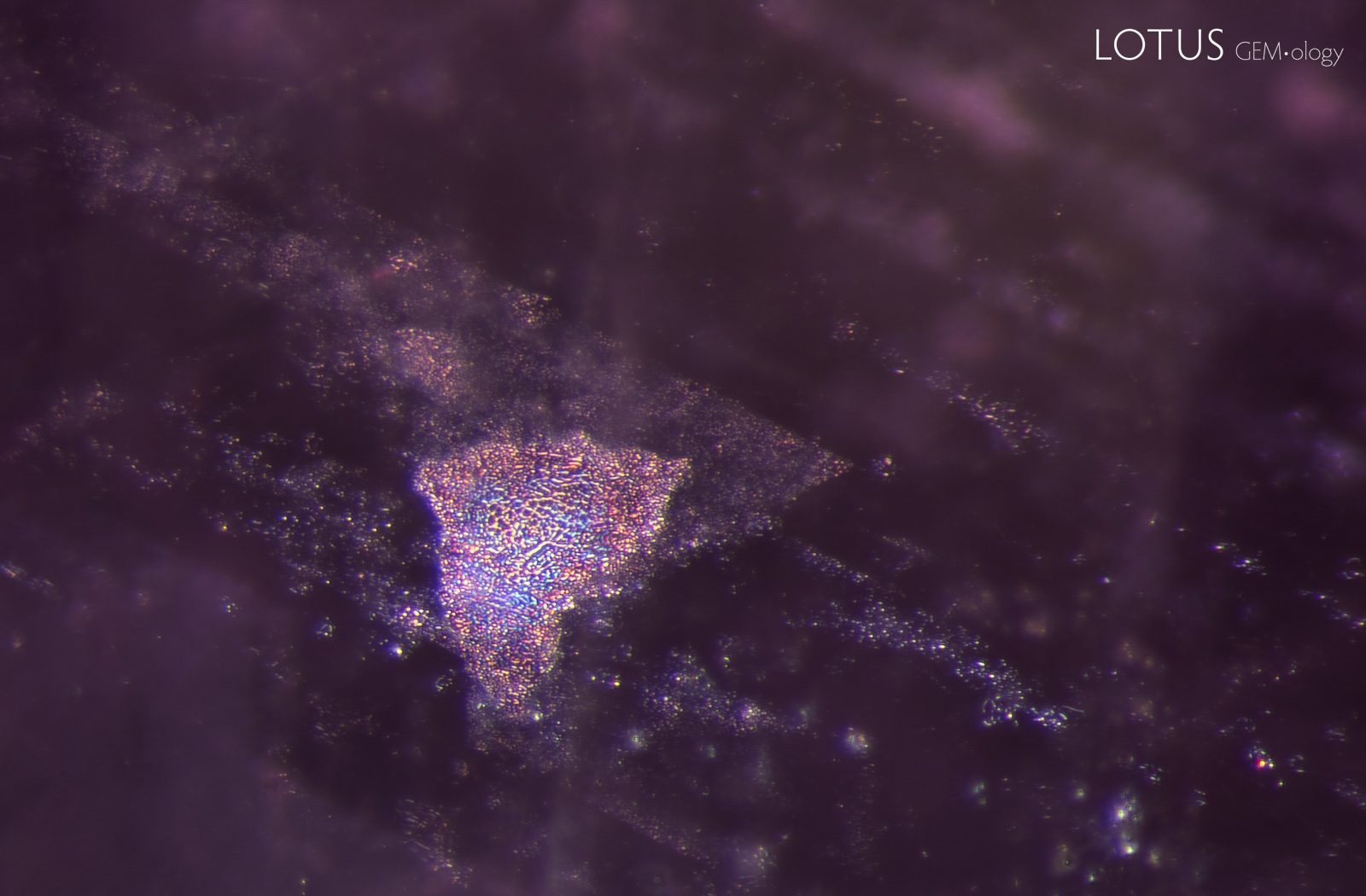 Figure 1. Complex planes with mottled particles in heated spinel may be the remnants of oriented lamellae. Viewed in diffused fiber-optic lighting. Photomicrograph by E. Billie Hughes/Lotus Gemology. Field of view 1.6 mm.
One interesting characteristic was the presence of several flat plates with a mottled surface appearance (figure 1), which may have been heated remnants of the oriented lamellae sometimes seen in Tanzanian spinel. Partially healed fissures with a glassy appearance and irregular melted channels were also observed (figure 2). These features were quite different from the fingerprints often present in unheated spinel.
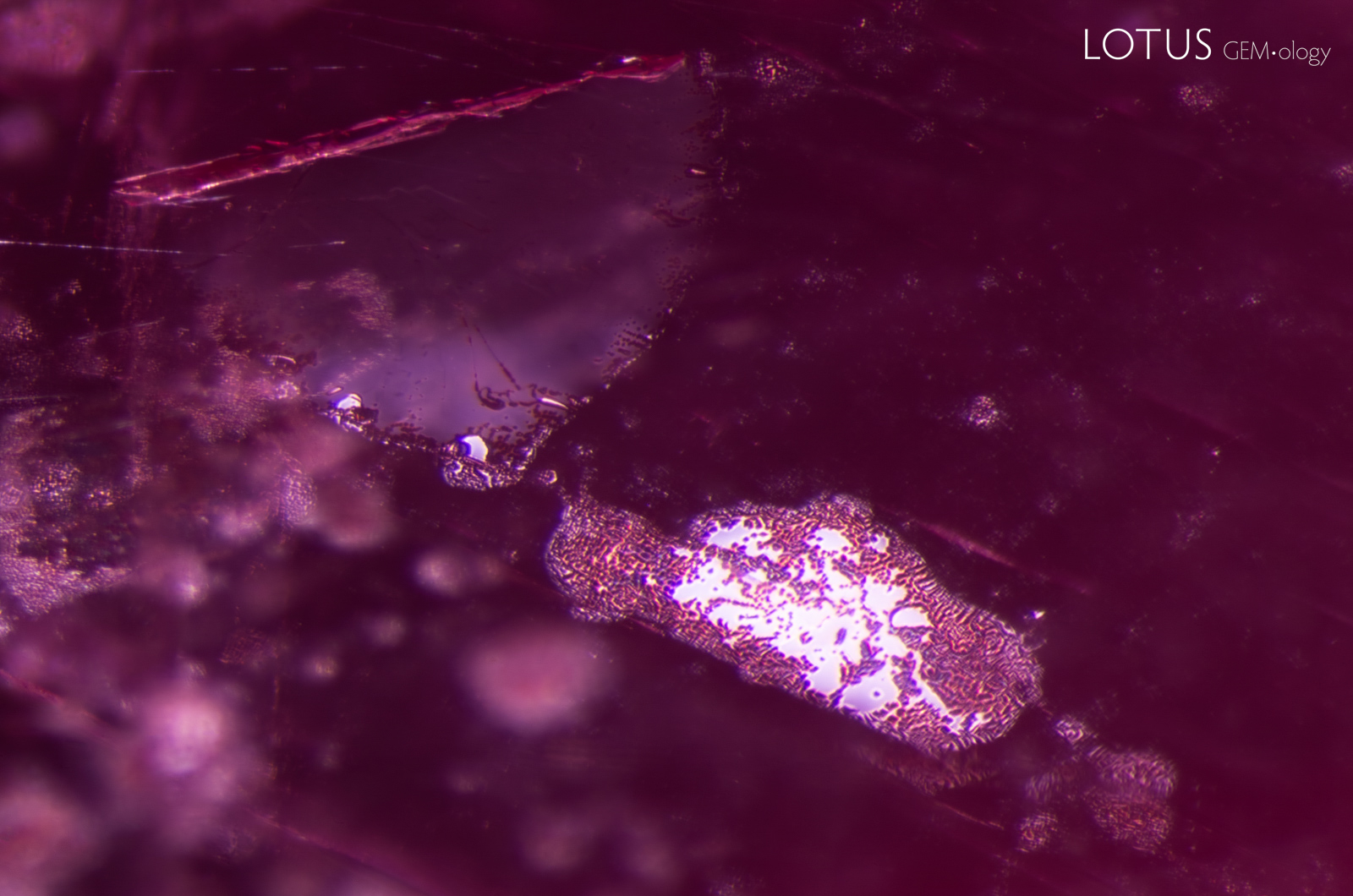 Figure 2. Partially healed fissures with melted channels and glassy areas provide evidence that this spinel underwent heat treatment. Viewed in darkfield and diffused fiber-optic lighting. Photomicrograph by E. Billie Hughes/Lotus Gemology; field of view 1.9 mm.

About the Author
E. Billie Hughes is Co-Founder and Managing Director of Lotus Gemology, where she oversees the company's day-to-day operations while continuing gemological research and laboratory work. After graduating from UCLA, she became a Fellow of the Gemmological Association of Great Britain (FGA). Her research focuses on ruby and sapphire, including low-temperature heat treatment, and she has authored and co-authored articles in leading gemological journals. She has conducted fieldwork at gem deposits around the world, including nearly every major ruby and sapphire locality.
Billie is an internationally recognized educator who has lectured for trade organizations, museums, and luxury jewelry houses, including extensive educational work with Van Cleef & Arpels. She has also served as a judge on Thailand's The Secret Gems television series. An award-winning photographer and photomicrographer, her images have received honors in the Nikon Small World and Gem-A competitions and have appeared in publications including National Geographic and Forbes. She is also the creator of Hyperion, Lotus Gemology's online inclusion database.
Billie developed an interest in gemstones from an early age, accompanying her parents on expeditions to mines and gem-producing regions around the world. That lifelong passion for fieldwork, laboratory research, education, and photography continues to shape her work at Lotus Gemology today.
Notes
This article first appeared in Gems & Gemology, Spring 2026, Vol. 62, No.1, p. 84.