Sapphire Inclusions
Explore sapphire inclusions in Hyperion, the Lotus Gemology inclusion database. Hyperion contains photomicrographs of inclusions and internal features in natural sapphire, documented with information on geographic origin, treatment, lighting conditions, field of view, photographer and published references.
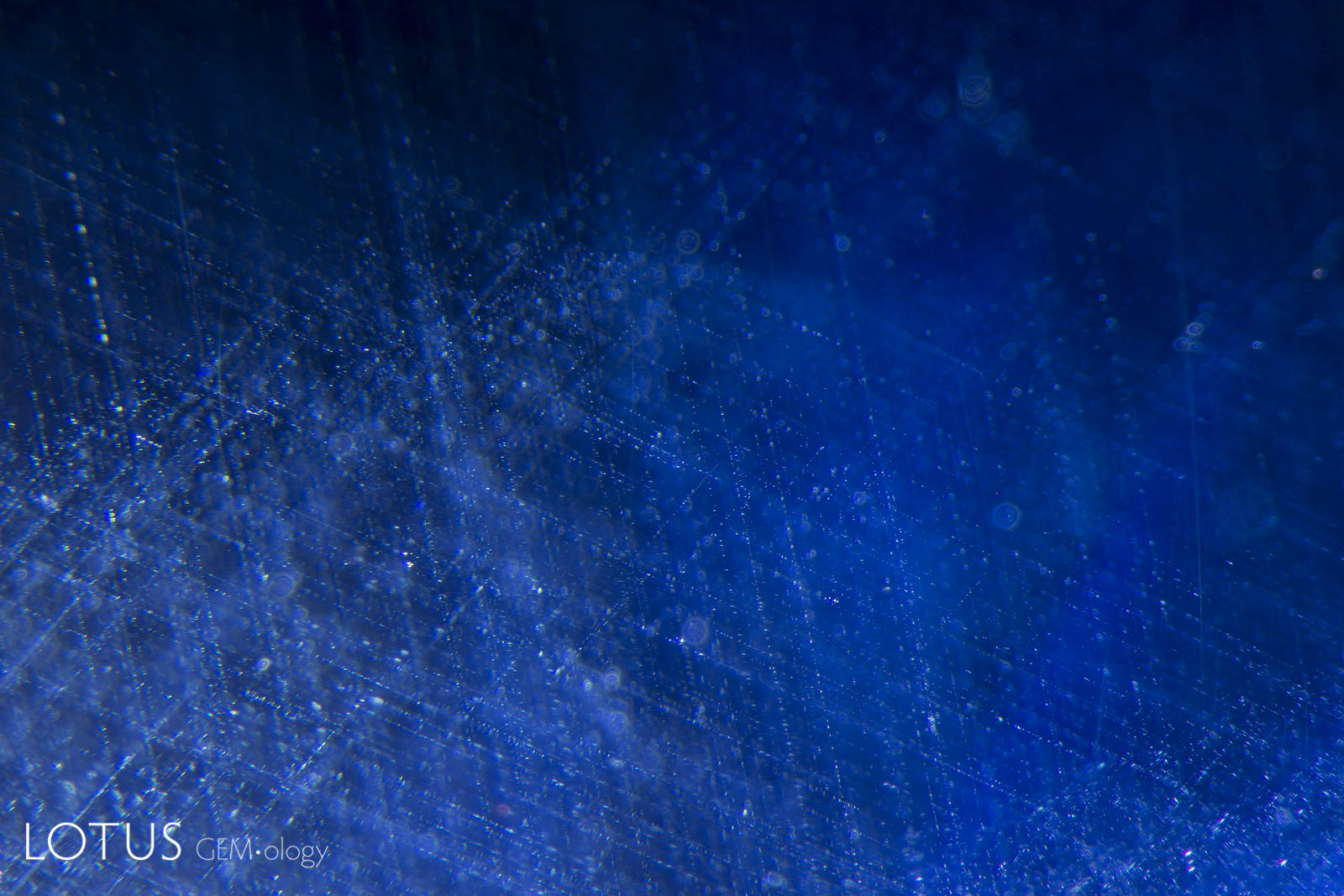
When a silky sapphire is heated to a high enough temperature, titanium from the rutile silk is forced into solid solution, coloring the stone blue. But the silk may also contain other elements that cannot dissolve into sapphire so readily, leaving behind silk “skeletons,” as shown here.
Natural Sapphire •
Sri Lanka (Ceylon) •
Enhancements:
Heat (H) •
Lighting Conditions:
Fiber Optic: Oblique
Photographer:
Richard W. Hughes •
Image Number:
A-001-0616-1
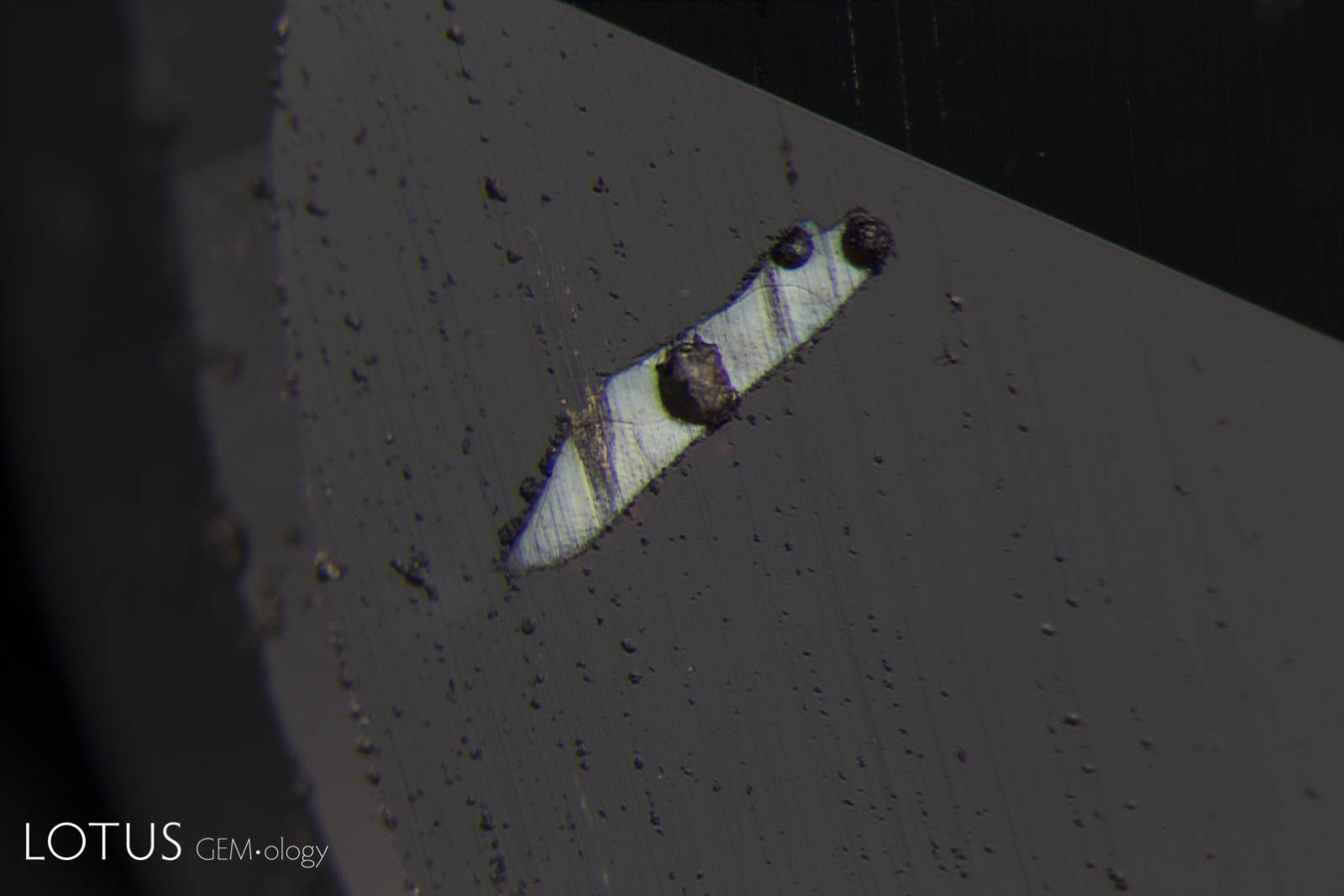
Nigeria sapphire; heated; crystal of what is probably rutile breaking the surface
Natural Sapphire •
Nigeria •
Enhancements:
Heat (H) •
Lighting Conditions:
Fiber Optic: Diffuse Overhead
Photographer:
Wimon Manorotkul •
Image Number:
A-001-0554-2
Hughes, R.W. (1997) Ruby & Sapphire. Boulder, CO, RWH Publishing, 512 pp.; RWHL*.
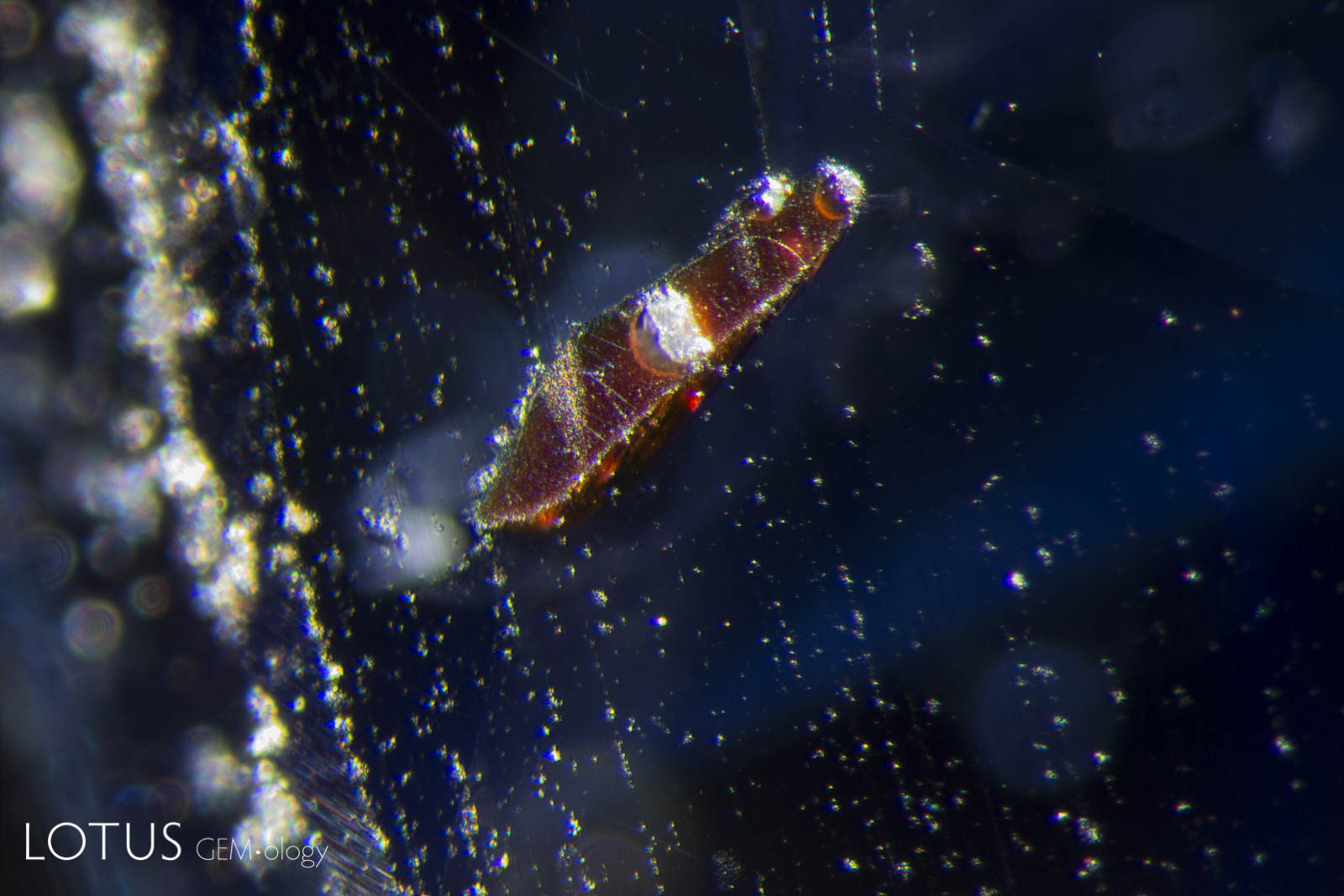
An orange rutile crystal polished through the surface of this sapphire from Nigeria.
Natural Sapphire •
Nigeria •
Enhancements:
Heat (H) •
Lighting Conditions:
Fiber Optic: Oblique
Photographer:
Wimon Manorotkul •
Image Number:
A-001-0554-1
Hughes, R.W. (1997) Ruby & Sapphire. Boulder, CO, RWH Publishing, 512 pp.; RWHL*.
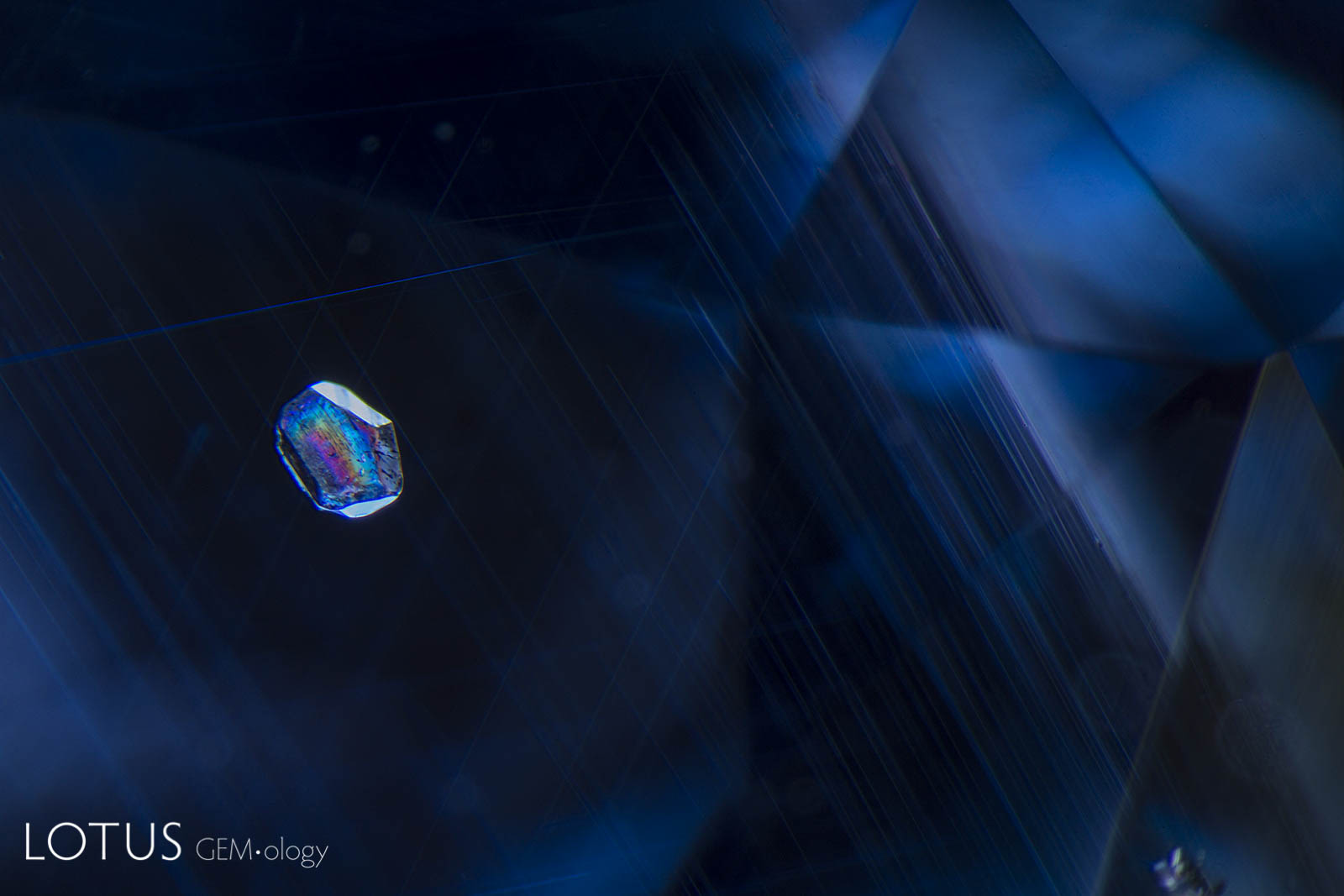
A euhedral birefringent crystal floats against a canvas of rutile silk in this untreated sapphire from Sri Lanka.
Natural Sapphire •
Sri Lanka (Ceylon) •
Enhancements:
None Detected (None) •
Lighting Conditions:
Diffuse Light Field + Crossed Polars
Photographer:
Richard W. Hughes •
Image Number:
A-001-0499-1
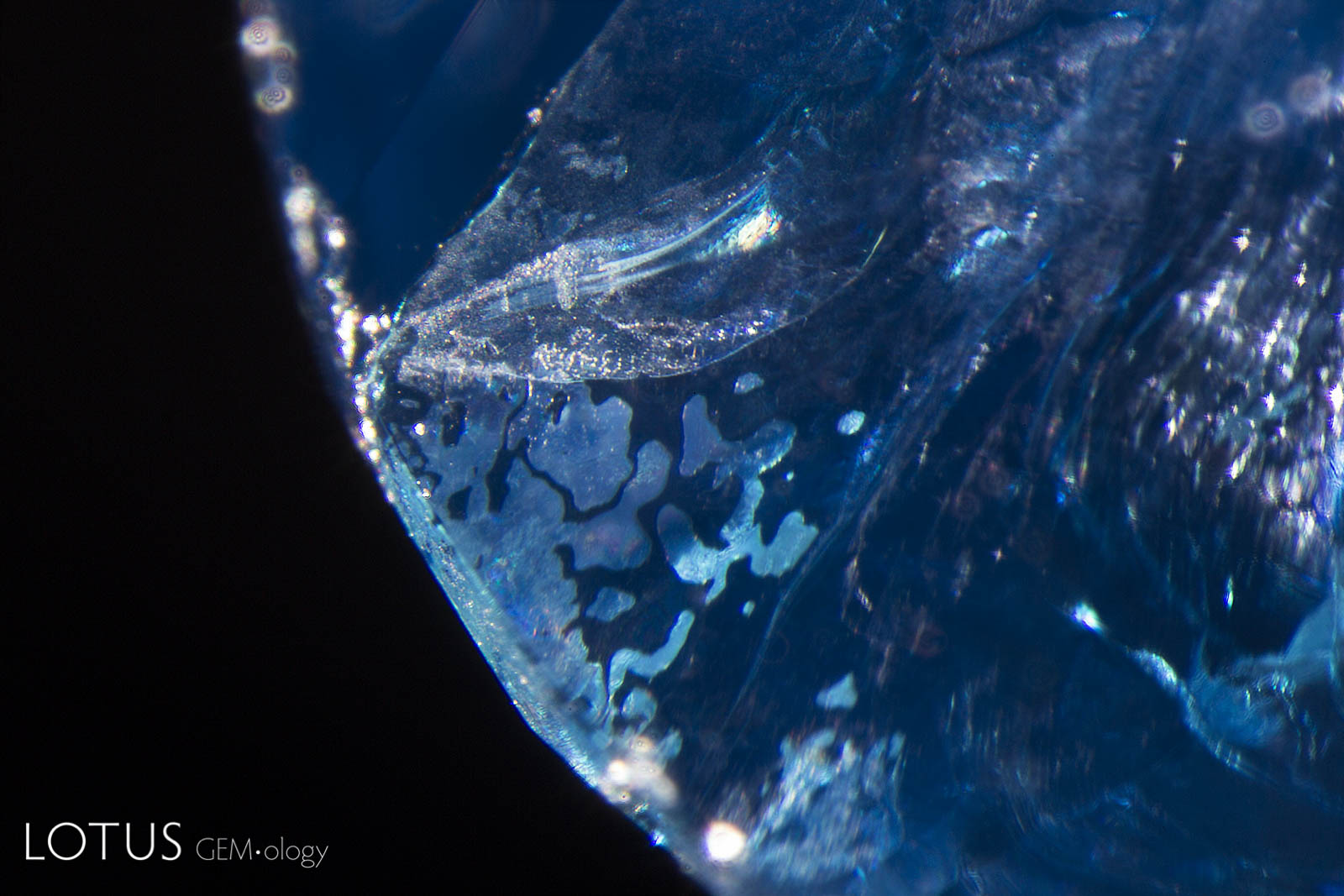
Many gems entering the market from Burma have been found to be oiled in an attempt to conceal their fissures. In transmitted light, the trapped air bubbles within the oil-filled fissures appear in high relief rounded patches. If the hot point is stroked against the surface, when the temperature is sufficiently raised, the trapped air bubbles will expand and contact as the hot point move closer or farther from them.
Natural Sapphire •
Myanmar (Burma) •
Enhancements:
Fissure Filling with colorless Oil/resin (FF-O1) •
Lighting Conditions:
Fiber Optic: Oblique
Photographer:
Richard W. Hughes •
Image Number:
A-001-0479-2
Lotus Gemology (2015) Lotus Gemology Lab Alert for Oiled Gems. Bangkok, LotusGemology.com, RWHL*.
This untreated Burmese sapphire displays a fingerprint made up of well-formed negative crystals. Because high-temperature heat treatment will generally damage such cavities, undamaged negative crystals are strong evidence of the lack of high-temperature heat treatment.
Natural Sapphire •
Myanmar (Burma) •
Enhancements:
Fissure Filling with colorless Oil/resin (FF-O1) •
Lighting Conditions:
Fiber Optic: Transmitted
Photographer:
Richard W. Hughes •
Image Number:
A-001-0479-1
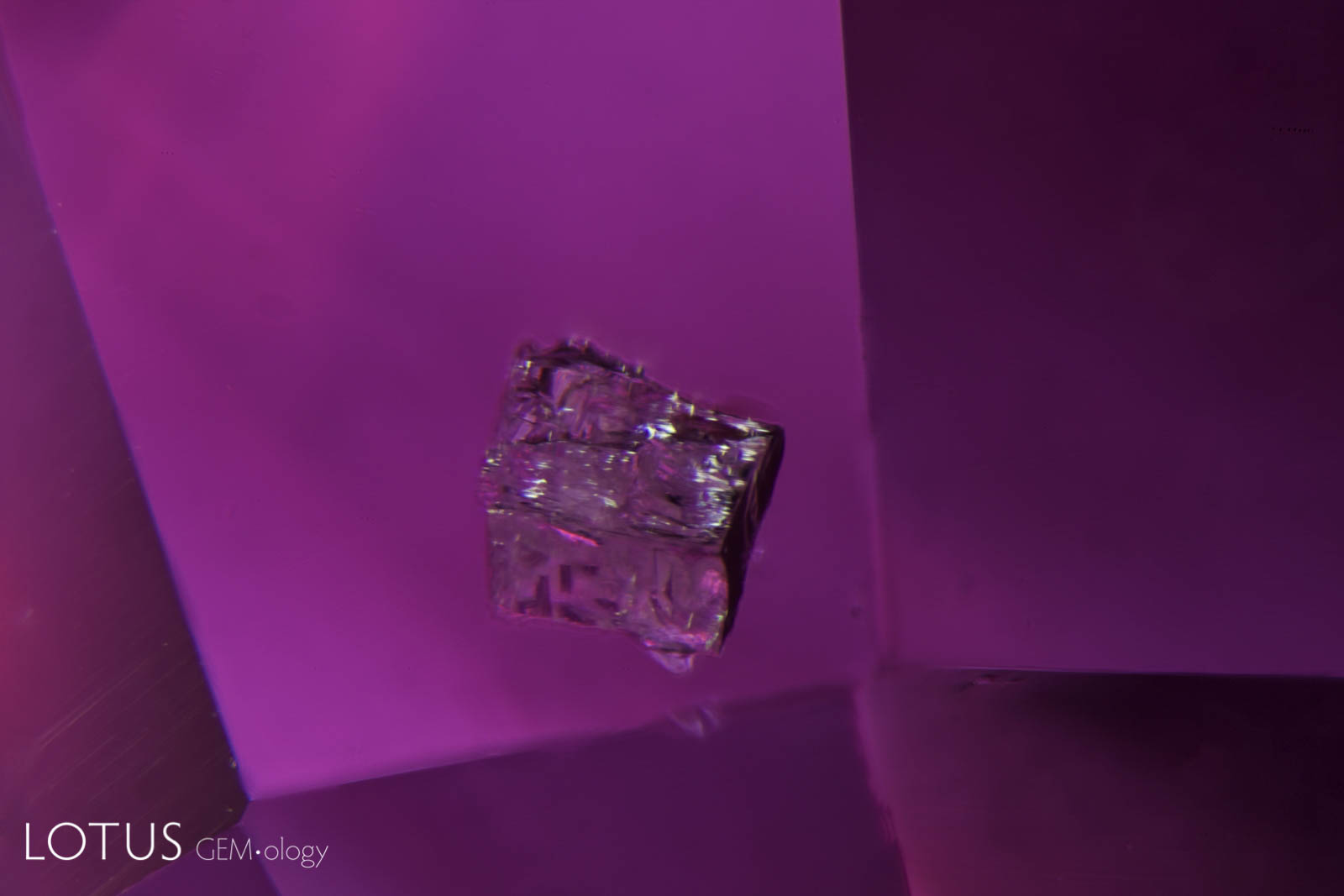
A blocky zircon crystal in a pink sapphire from Madagascar’s Ilakaka region.
Natural Sapphire •
Madagascar •
Enhancements:
None Detected (None) •
Lighting Conditions:
Fiber Optic: Oblique
Photographer:
Richard W. Hughes •
Image Number:
A-001-1705-1
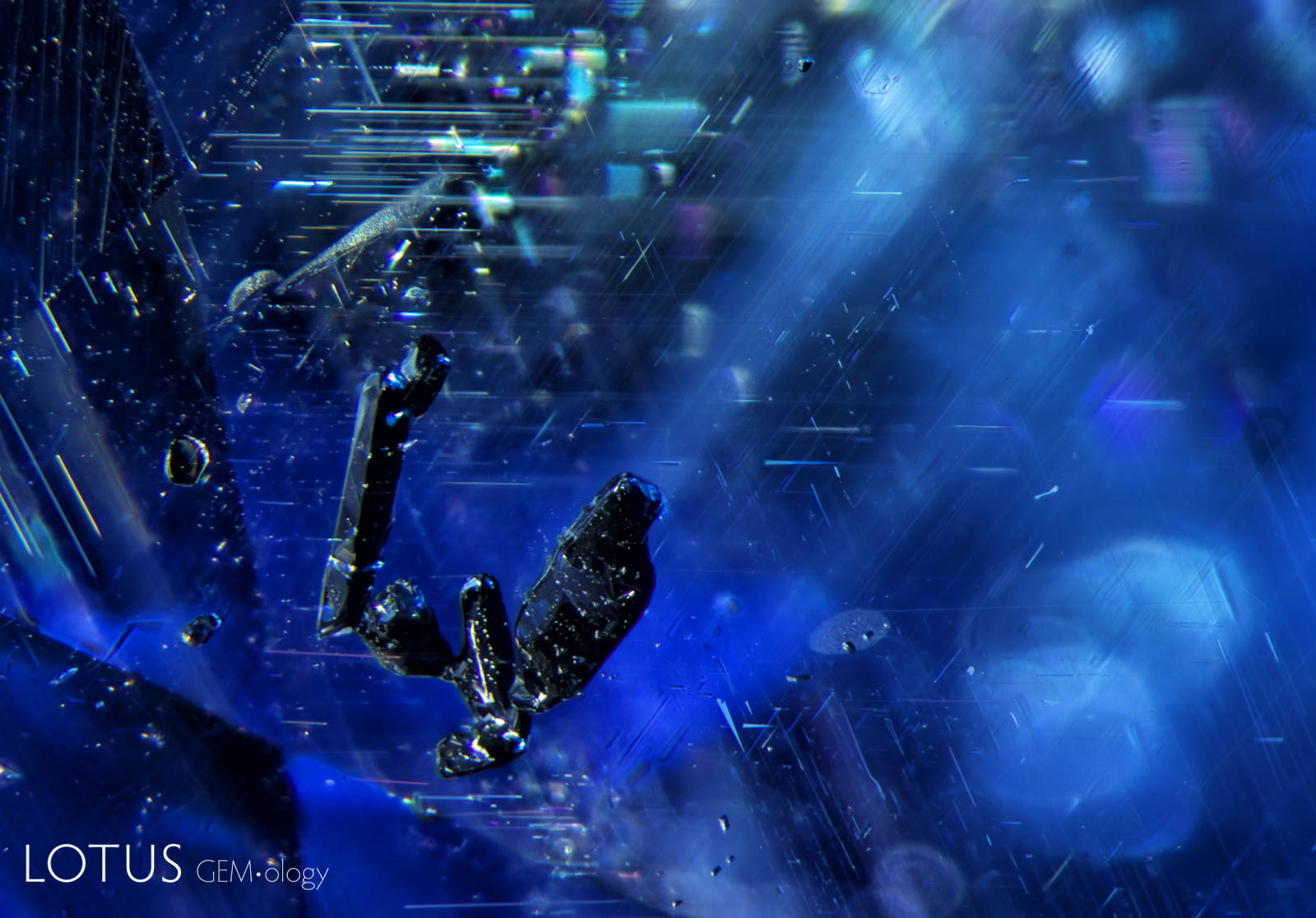
Primary rutile crystals caught amidst secondary rutile silk in this sapphire from Sri Lanka.
Natural Sapphire •
Sri Lanka (Ceylon) •
Enhancements:
None Detected (None) •
Lighting Conditions:
Fiber Optic: Oblique
Photographer:
Richard W. Hughes •
Image Number:
A-001-1114-2
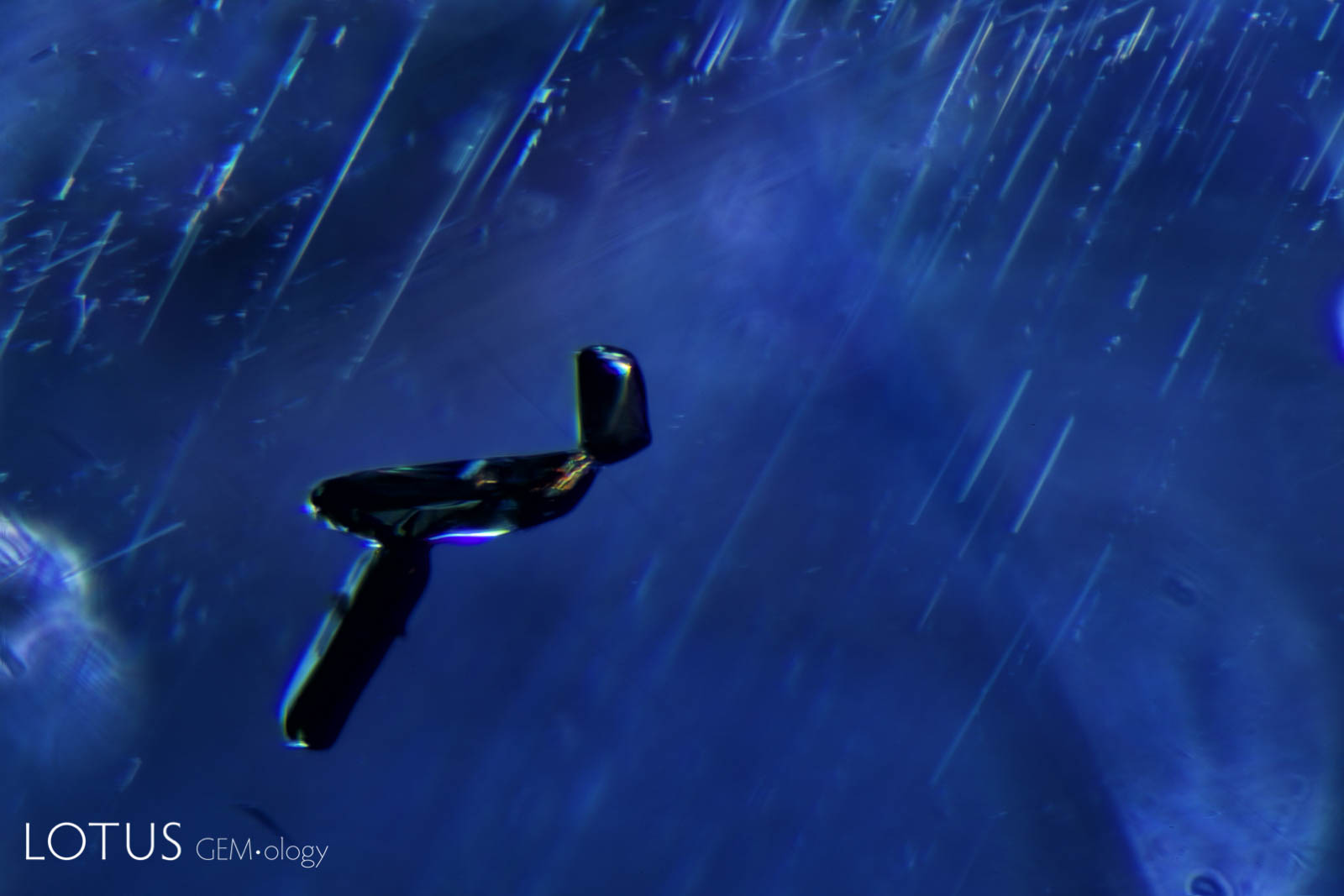
Looking like a pistol, a group of three primary rutile crystals sits against a background of secondary rutile silk in this sapphire from Sri Lanka.
Natural Sapphire •
Sri Lanka (Ceylon) •
Enhancements:
None Detected (None) •
Lighting Conditions:
Fiber Optic: Oblique
Photographer:
Richard W. Hughes •
Image Number:
A-001-1114-1
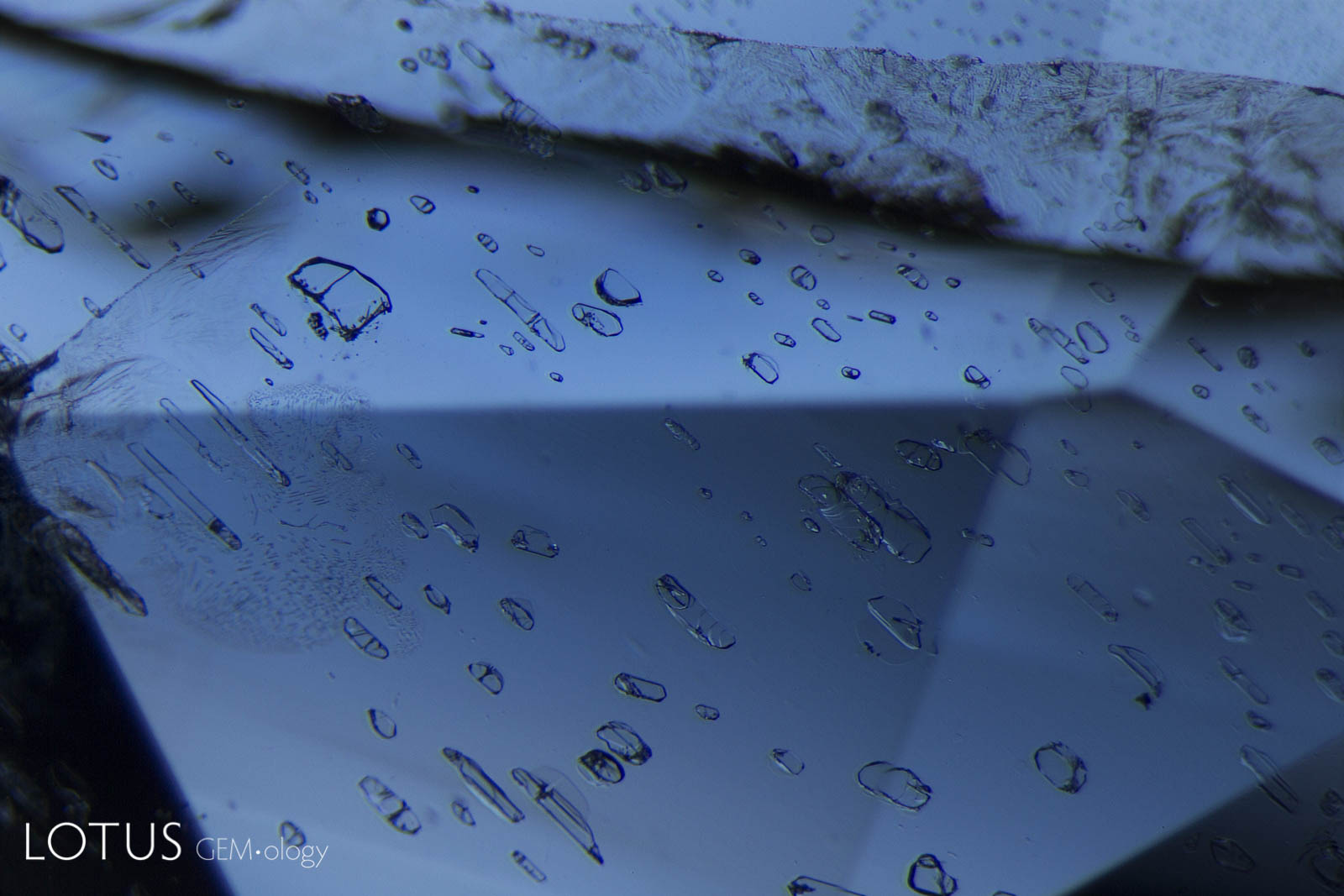
Certain type of solid inclusions are heat sensitive and may alter when the gem is heat treated. Here we see crystals that have altered into “snowball” like forms. In addition, the coefficient of thermal expansion of the included crystals was greater than corundum. Thus when heated, they expanded more than the surrounding sapphire, producing glassy discoid fissures.
Natural Sapphire •
Sri Lanka (Ceylon) •
Enhancements:
Heat (H) •
Lighting Conditions:
Fiber Optic: Oblique
Photographer:
Richard W. Hughes •
Image Number:
A-001-1052-1
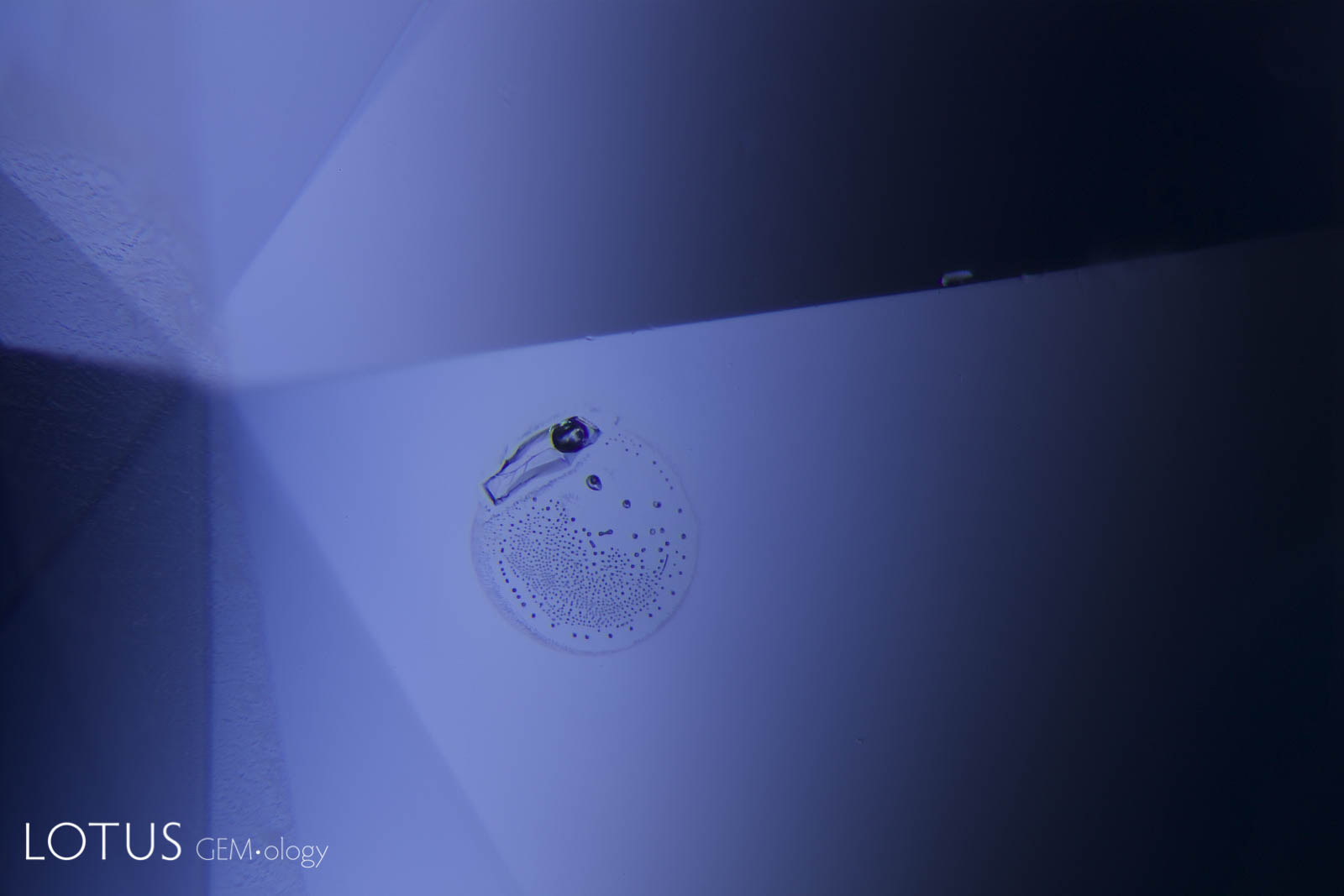
High-temperature heat treatment has the potential to alter certain types of solid inclusions. Here we see an included crystal that melted during heat treatment, turning into glass. Because a glass takes up less volume than a crystal, the result is a void, in the form of a bubble within the glass.
Natural Sapphire •
Sri Lanka (Ceylon) •
Enhancements:
Heat (H) •
Lighting Conditions:
Fiber Optic: Transmitted
Photographer:
Richard W. Hughes •
Image Number:
A-001-0976-1
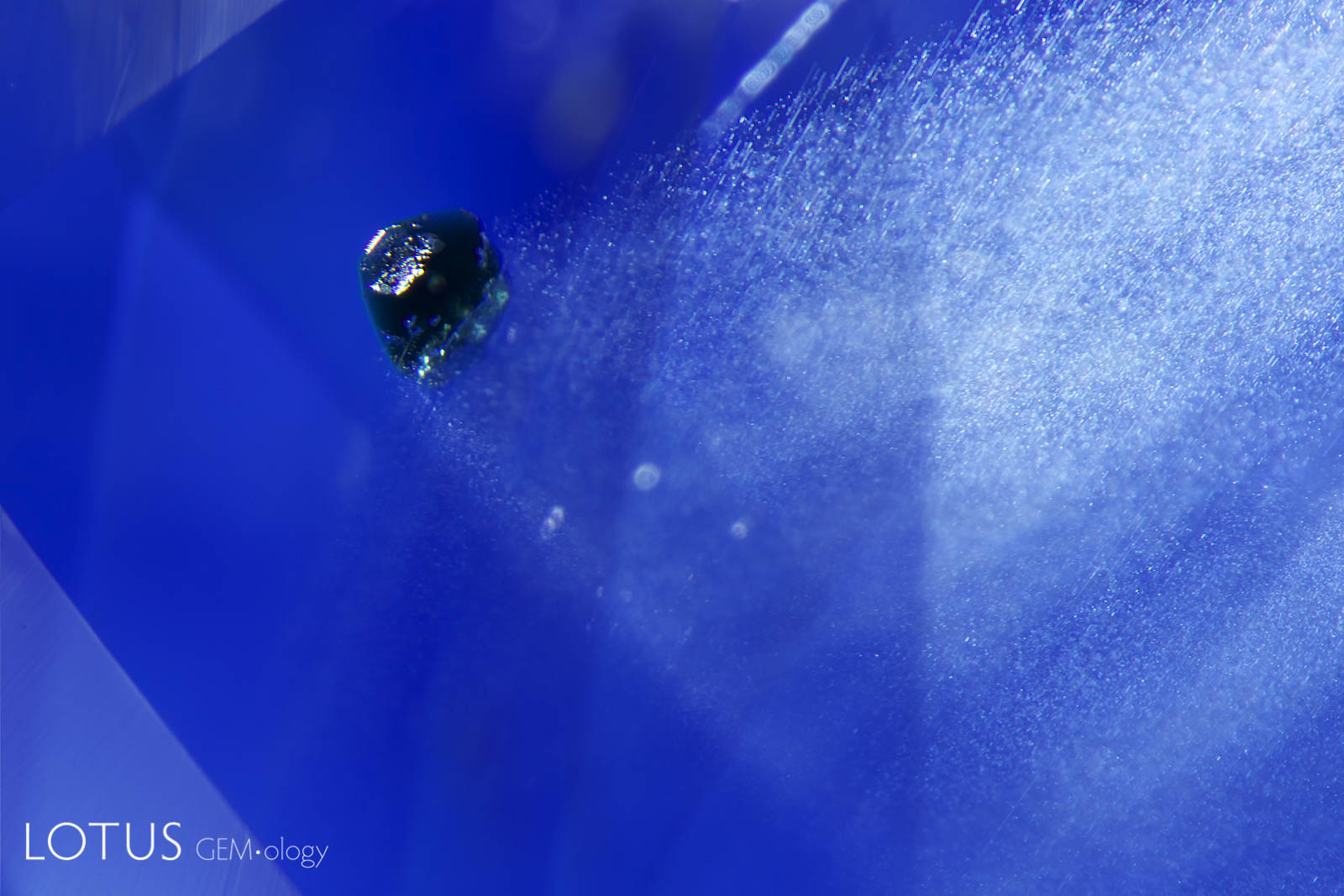
An unusual green crystal was found trapped in this unheated blue sapphire from Serendib, with a cloud of rutile silk trailing in its wake.
Natural Sapphire •
Sri Lanka (Ceylon) •
Enhancements:
None Detected (None) •
Lighting Conditions:
Fiber Optic: Oblique
Photographer:
Richard W. Hughes •
Image Number:
A-001-0946-2
Hughes, R.W. (1997) Ruby & Sapphire. Boulder, CO, RWH Publishing, 512 pp.; RWHL*.
Sapphire inclusions may include mineral crystals, rutile silk, healed fissures, fluid inclusions, negative crystals, color zoning and other features formed during or after crystal growth. Such features are important to gemologists because they can provide evidence useful in identifying sapphire, understanding its geological history, recognizing treatment and, in some cases, determining geographic origin.
Sapphire Inclusion Photomicrographs
The Hyperion sapphire gallery includes microscopic features found in sapphires from major deposits around the world. Each entry is accompanied by descriptive information and, where available, references to the gemological literature.
What Inclusions Can Reveal About Sapphire
Inclusions are an important part of sapphire identification. Their form, composition, orientation and alteration can help gemologists distinguish natural sapphire from synthetic material, recognize evidence of heat treatment, and study the geological environment in which the sapphire formed.
Hyperion combines inclusion photomicrography with supporting gemological information so that individual features can be compared with documented examples from known sapphire deposits.
About Hyperion
Hyperion is the Lotus Gemology searchable inclusion database. It allows users to browse gemstone inclusions by gem type, geographic origin, treatment and keyword.