Sapphire Inclusions
Explore sapphire inclusions in Hyperion, the Lotus Gemology inclusion database. Hyperion contains photomicrographs of inclusions and internal features in natural sapphire, documented with information on geographic origin, treatment, lighting conditions, field of view, photographer and published references.
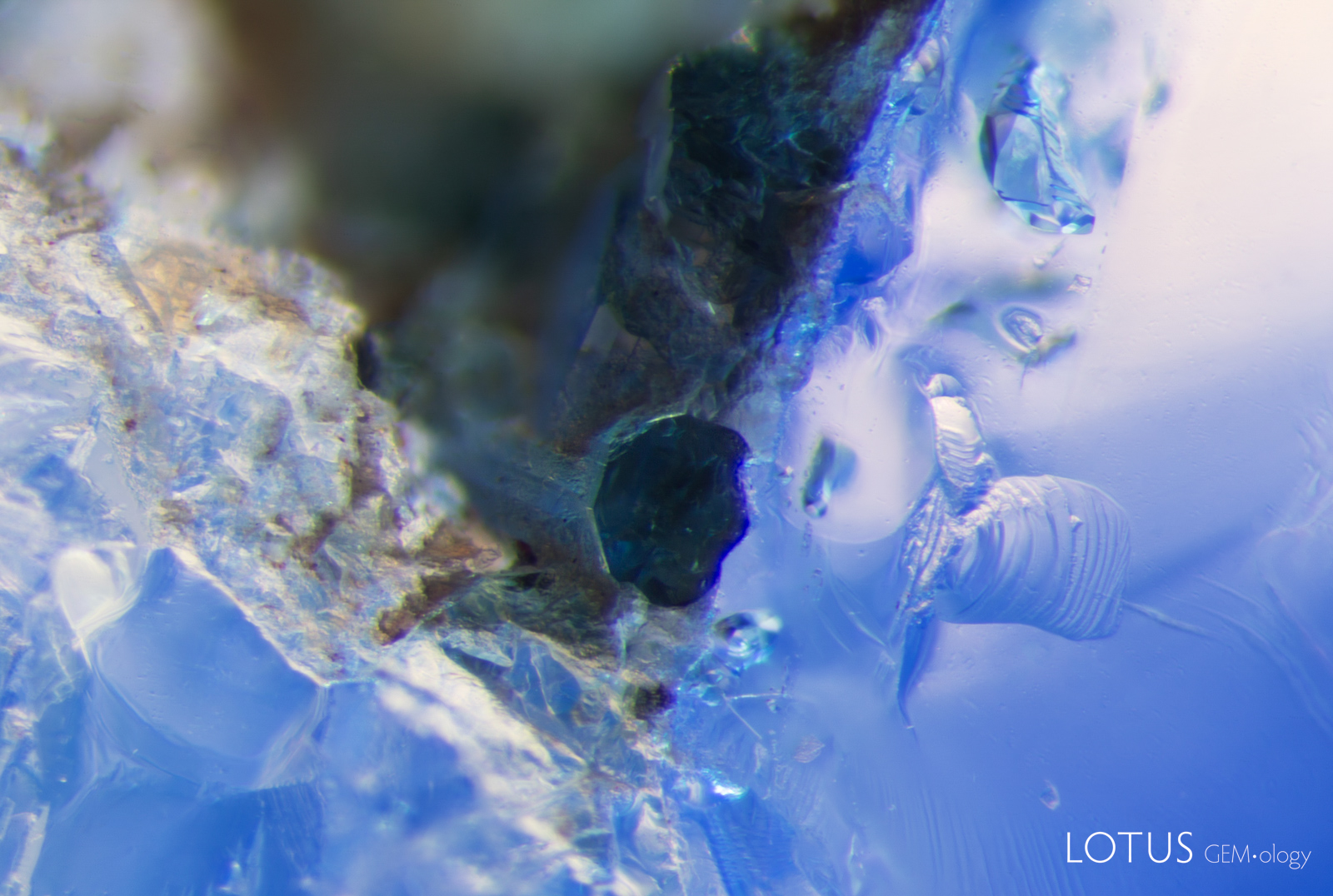
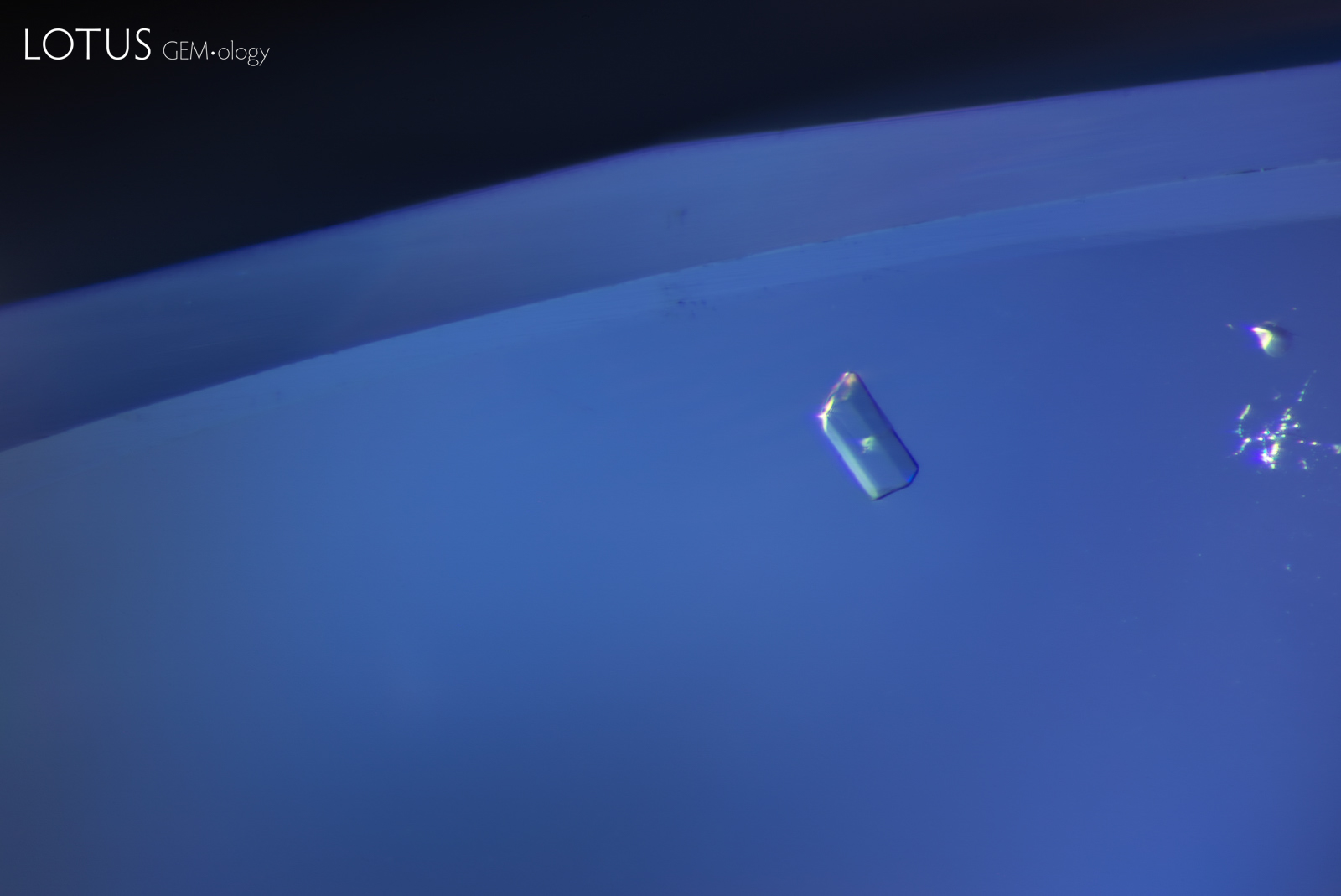
Under magnification, a green crystal could be observed on the surface of this sapphire. Micro Raman analysis identified it as tourmaline, a mineral known to occur in Kashmir sapphire.
Natural Sapphire •
India (Kashmir) •
Enhancements:
None Detected (None) •
Lighting Conditions:
Fiber Optic: Oblique
Photographer:
E. Billie Hughes •
Image Number:
A-006-0625-2
• Field of View = 1.7mm
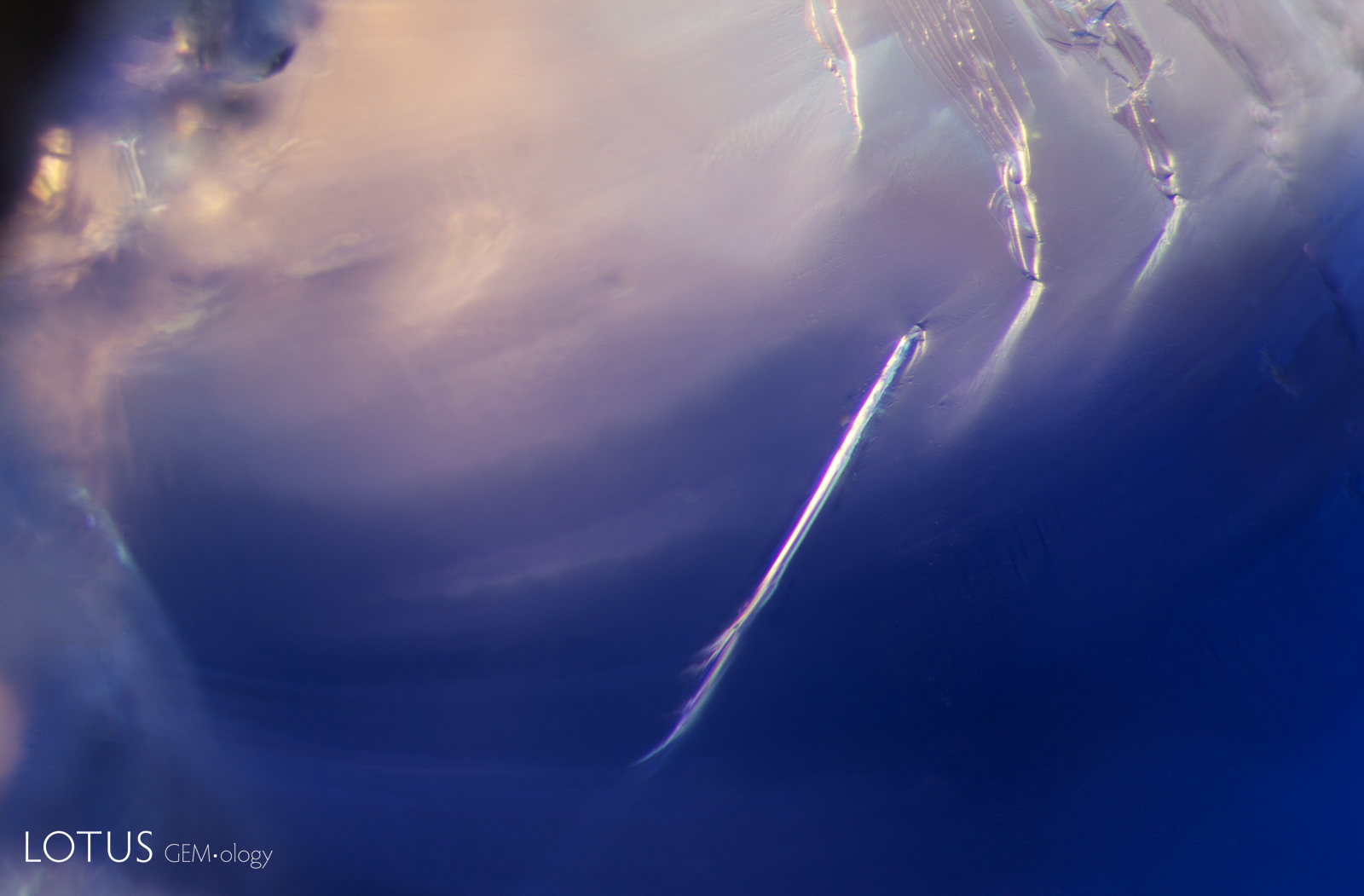
This sapphire contained a rod-like inclusion, identified by micro Raman as pargasite. Pargasite is known to occur in Kashmir sapphire, as well as sapphires from other origins.
Natural Sapphire •
India (Kashmir) •
Enhancements:
None Detected (None) •
Lighting Conditions:
Fiber Optic: Diffuse Oblique
Photographer:
E. Billie Hughes •
Image Number:
A-006-0625-1
• Field of View = 2.4mm
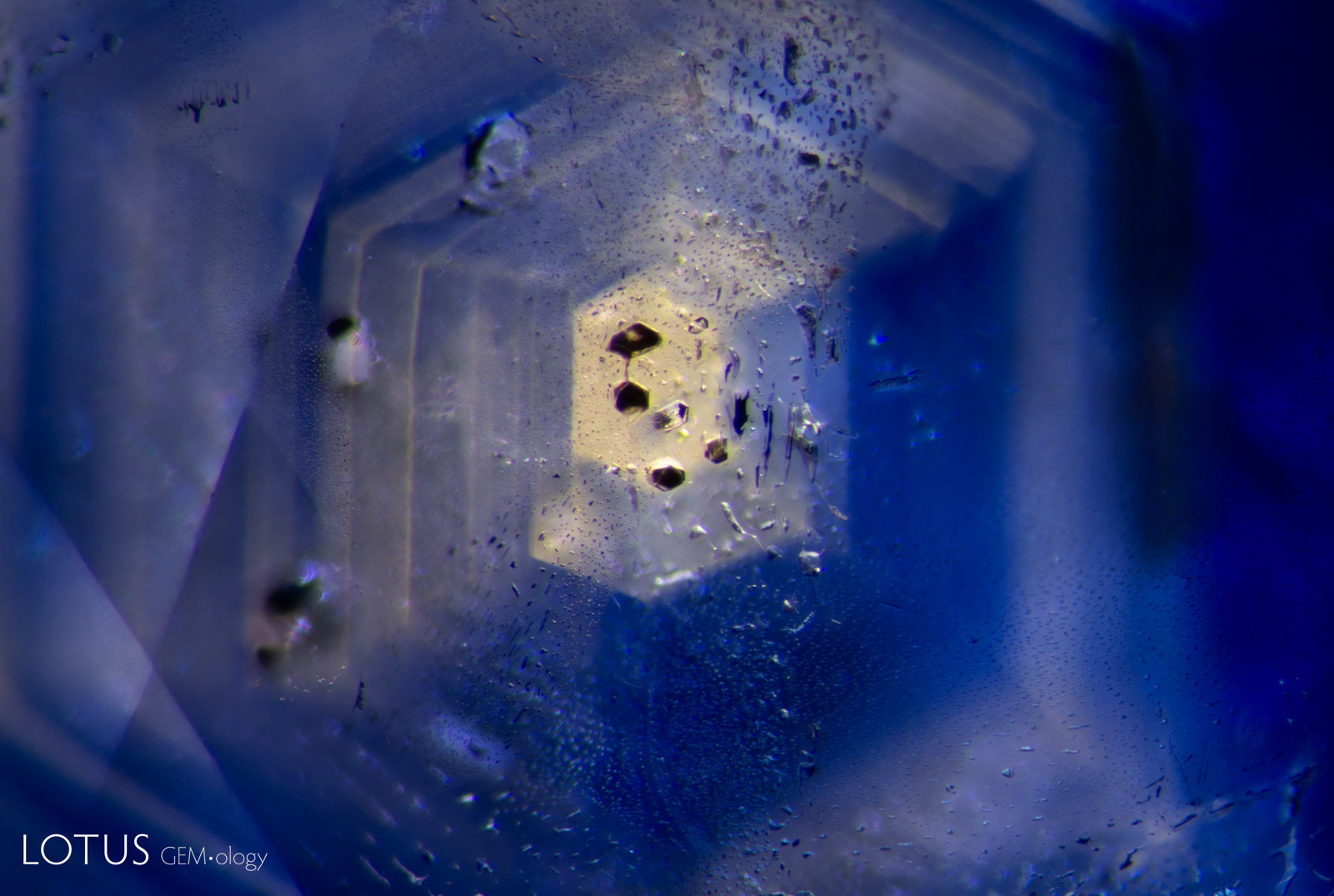
This blue sapphire displays distinct hexagonal color zoning, with crystal inclusions occurring within the pale yellow core.
Natural Sapphire •
Metamorphic •
Enhancements:
Fissure Filling with colorless Oil/resin (FF-O2); No indications of heating (No indications of heating) •
Lighting Conditions:
Fiber Optic: Oblique
Photographer:
Natcha Rattana-anan •
Image Number:
A-005-9384-1
• Field of View = 2.8mm
This basalt related sapphire contains a richly varied inclusion scene. We can observe negative crystals, thin films, as well as irregular “silk” particles in this stone.
Natural Sapphire •
Basalt Related •
Enhancements:
None Detected (None) •
Lighting Conditions:
Fiber Optic: Diffuse Oblique
Photographer:
E. Billie Hughes •
Image Number:
A-006-0383-1
• Field of View = 1.7mm
Dense, angular clouds of fine particles cut a striking figure in this heated blue sapphire.
Natural Sapphire •
Madagascar •
Enhancements:
Heat (H) •
Lighting Conditions:
Fiber Optic: Oblique
Photographer:
E. Billie Hughes •
Image Number:
A-006-0153-1
• Field of View = 4.5mm
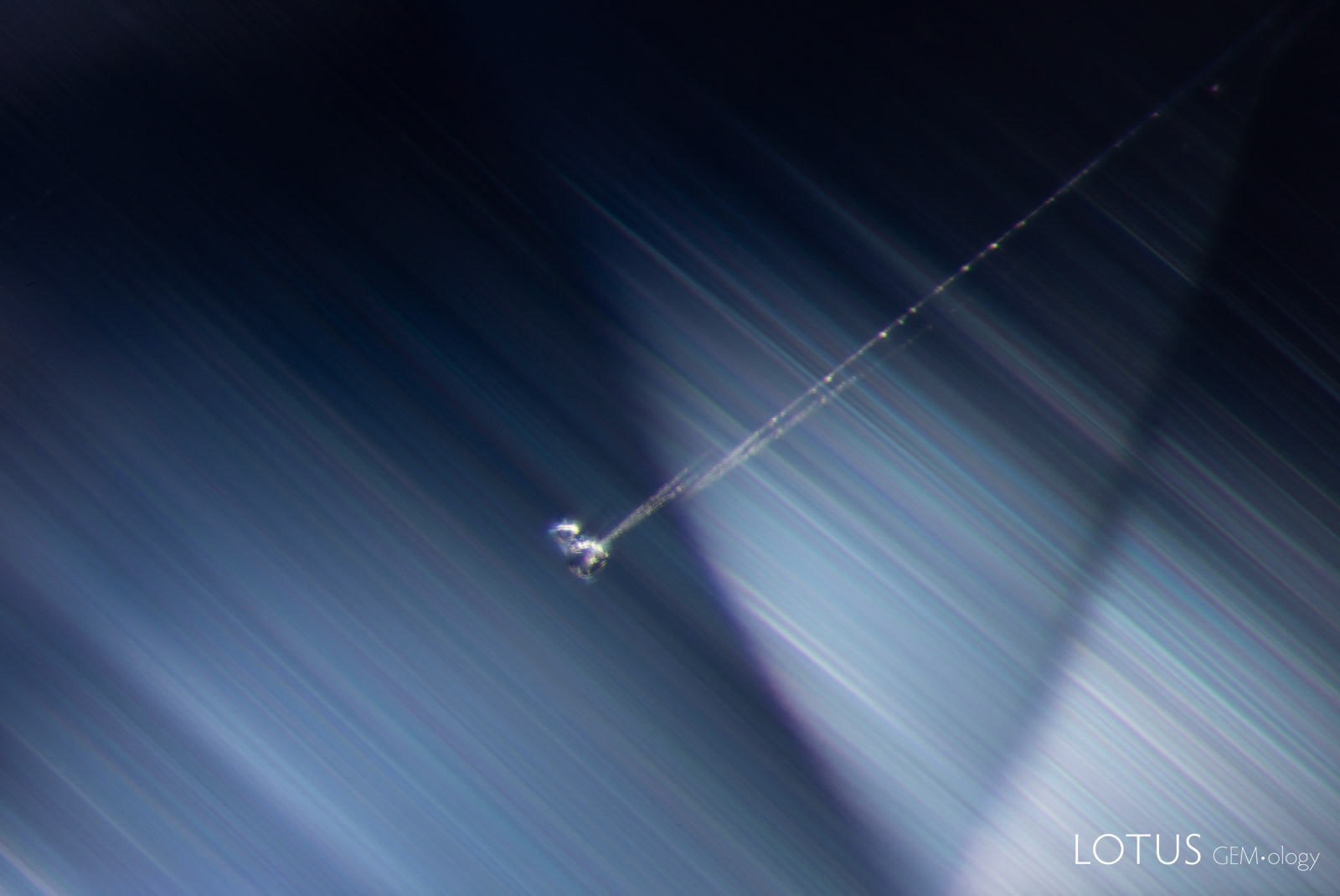
A transparent, prismatic feldspar crystal (identified with micro Raman) can be seen nestled just by the girdle of this untreated sapphire.
Natural Sapphire •
India (Kashmir) •
Enhancements:
None Detected (None) •
Lighting Conditions:
Fiber Optic: Oblique
Photographer:
E. Billie Hughes •
Image Number:
A-006-0126-2
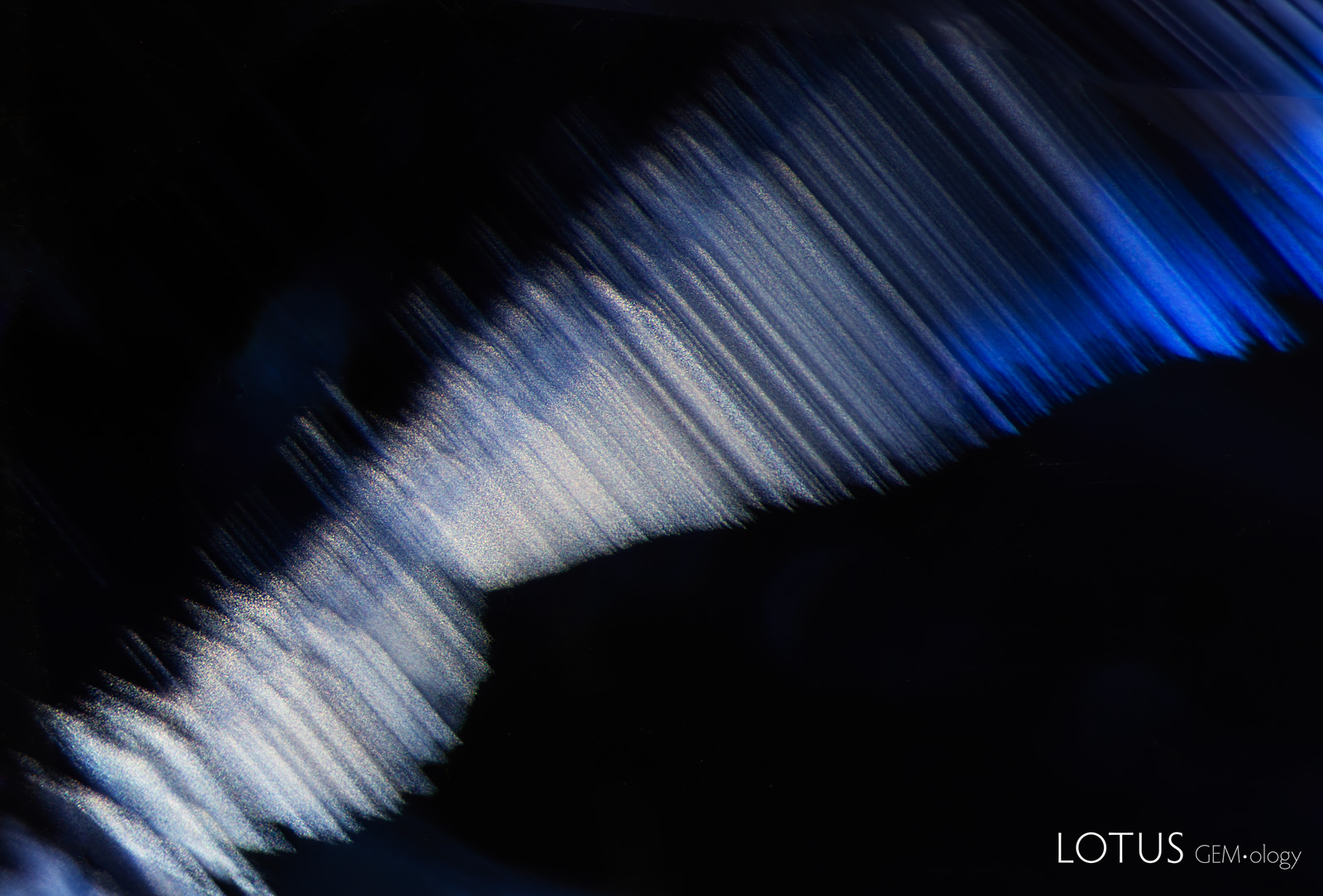
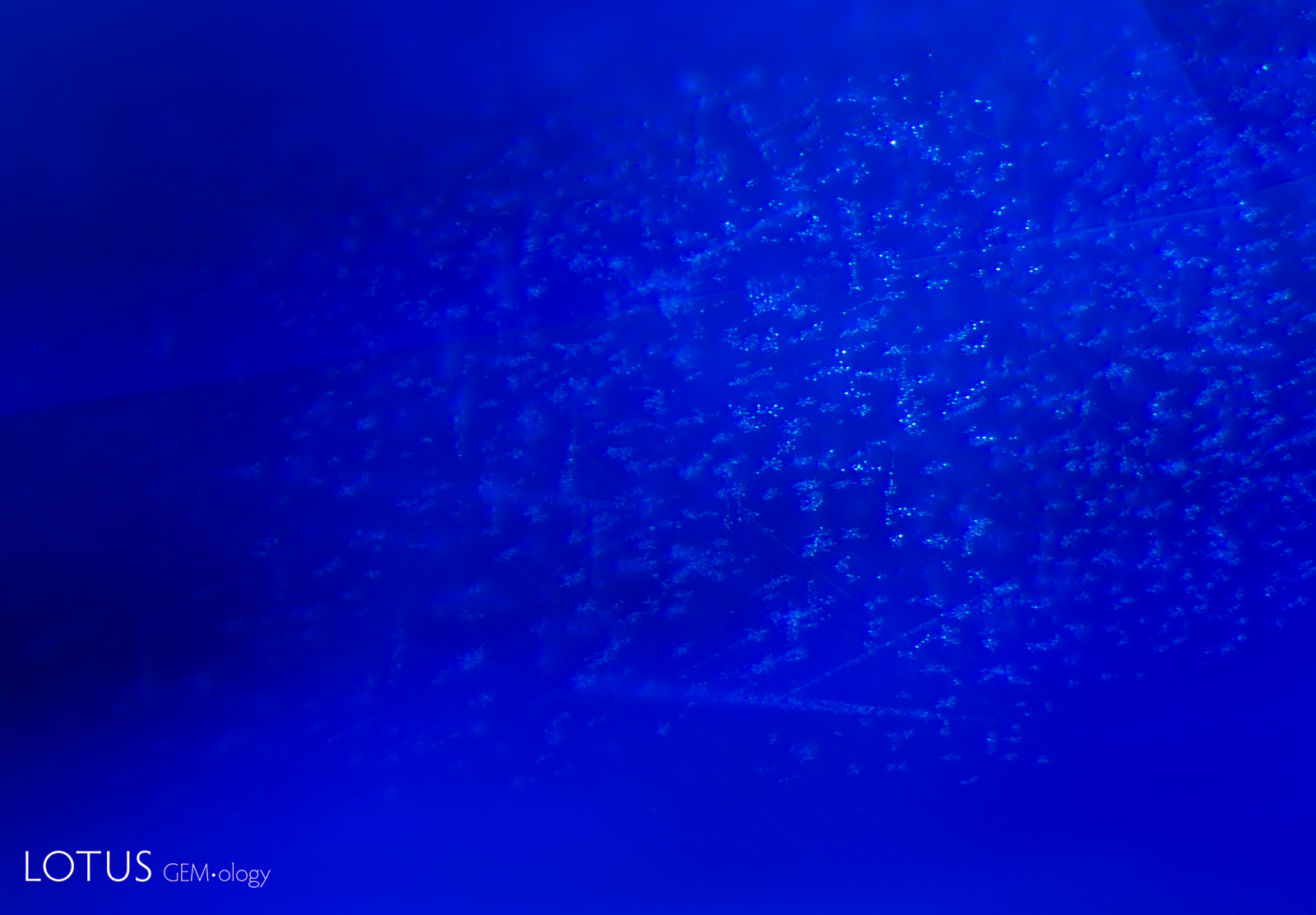
Blue velvet. When magnified, a delicate cloud of snowflake-like particle clusters can be observed in this sapphire. The particles diffuse the light, giving the stone its signature velvety glow.
Natural Sapphire •
India (Kashmir) •
Enhancements:
None Detected (None) •
Lighting Conditions:
Fiber Optic: Oblique
Photographer:
E. Billie Hughes •
Image Number:
A-006-0126-1
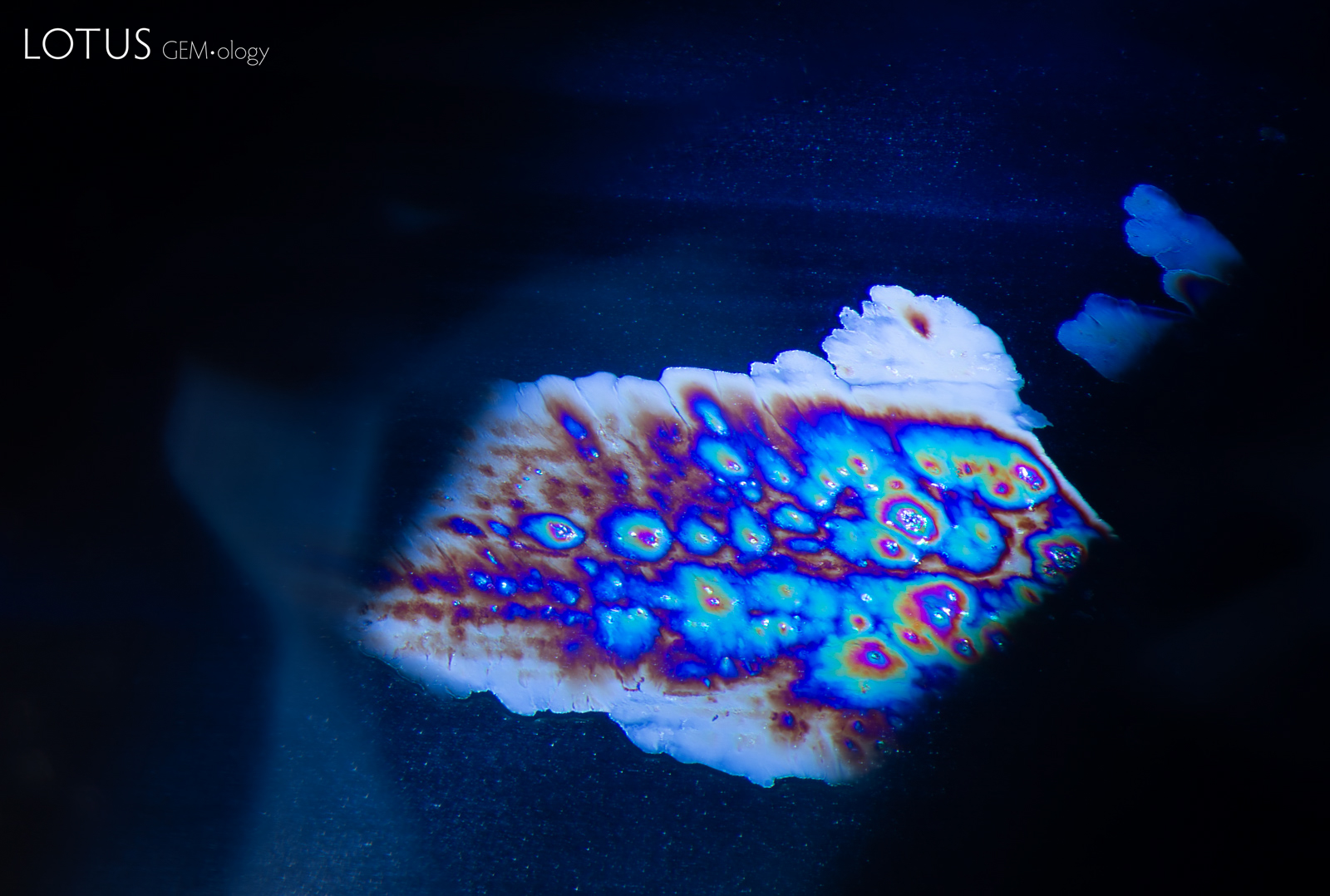
High temperature heat treatment has created irregular, iridescent thin film patterns in this blue sapphire. In the background, clouds of dotted, partially dissolved silk can be observed.
Natural Sapphire •
Myanmar (Burma); Mogok/Namya •
Enhancements:
Heat (H) •
Lighting Conditions:
Dark Field + Oblique Fiber Optic
Photographer:
E. Billie Hughes •
Image Number:
A-006-0102-4
• Field of View = 4.5mm
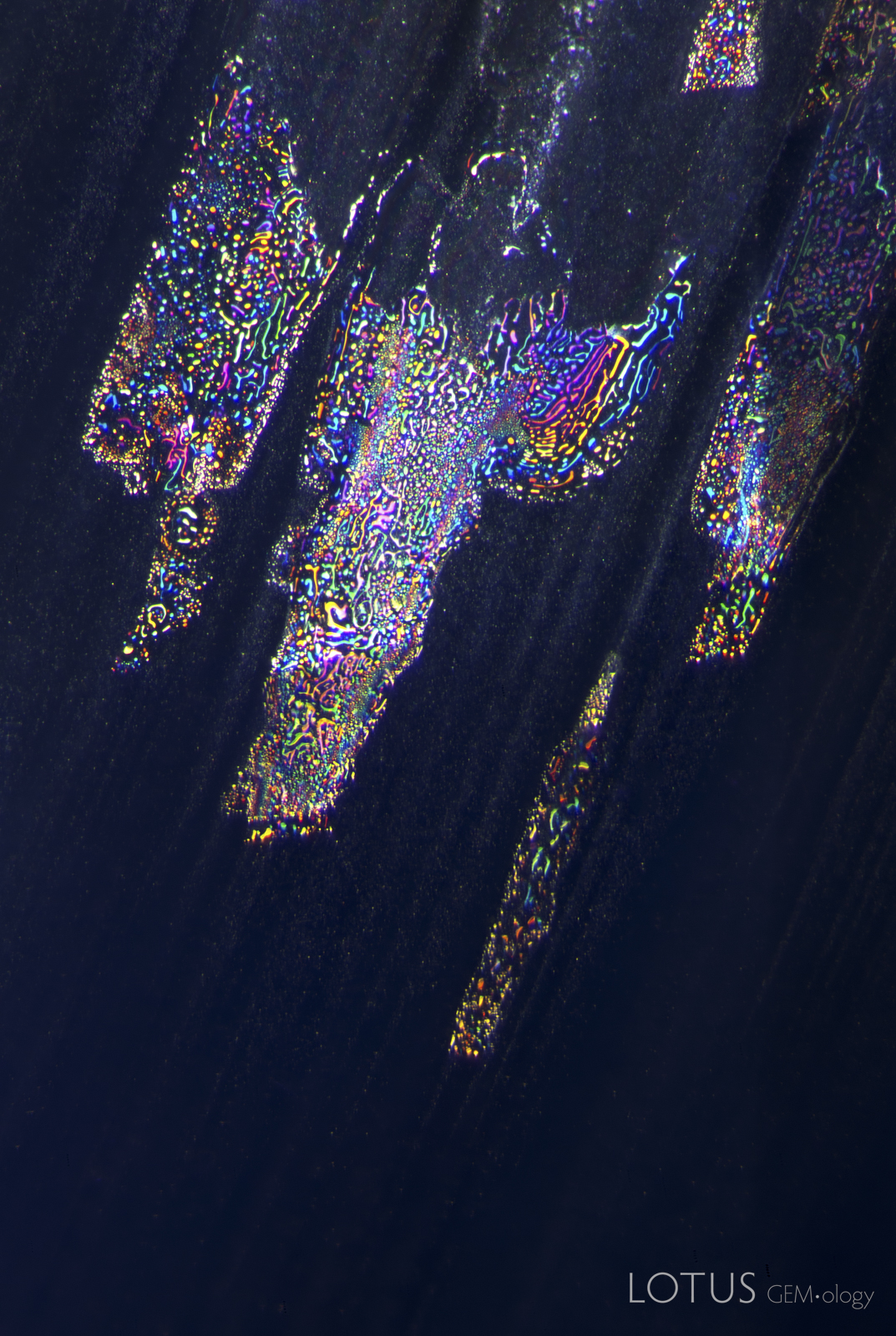
Meteor shower. The high temperature used when treating this blue sapphire from Myanmar (Burma) has resulted in some unusual iridescent fingerprints situated in the basal plane and aligned with the bands of partially dissolved silk remnants.
Natural Sapphire •
Myanmar (Burma); Mogok/Namya •
Enhancements:
Heat (H) •
Lighting Conditions:
Fiber Optic: Diffuse Oblique
Photographer:
Kaylan Khourie •
Image Number:
A-006-0102-1
• Field of View = 2.2mm
The melted, bubbly texture of this fingerprint provides evidence that this Montana sapphire was heated. Sample courtesy Mike Gray.
Natural Sapphire •
USA (Montana); Non-Yogo •
Enhancements:
Heat (H) •
Lighting Conditions:
Dark Field
Photographer:
E. Billie Hughes •
Image Number:
R-005-7878-1
• Field of View = 3.7mm
This heated Montana sapphire contains a melted crystal in the center of a bubbly fingerprint. Sample courtesy Mike Gray.
Natural Sapphire •
USA (Montana); Non-Yogo •
Enhancements:
Heat (H) •
Lighting Conditions:
Dark Field
Photographer:
E. Billie Hughes •
Image Number:
R-005-7880-1
• Field of View = 2.8mm
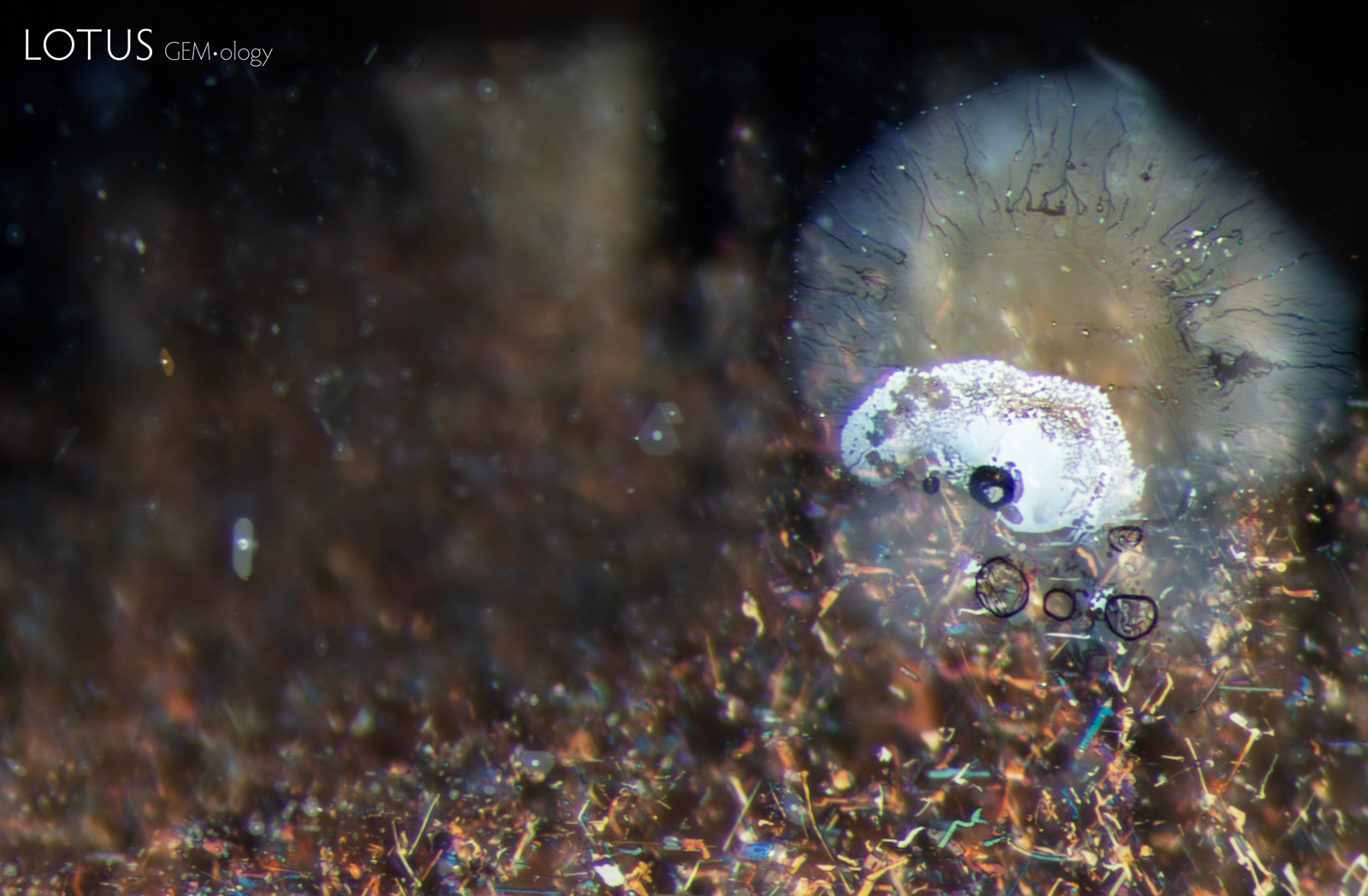
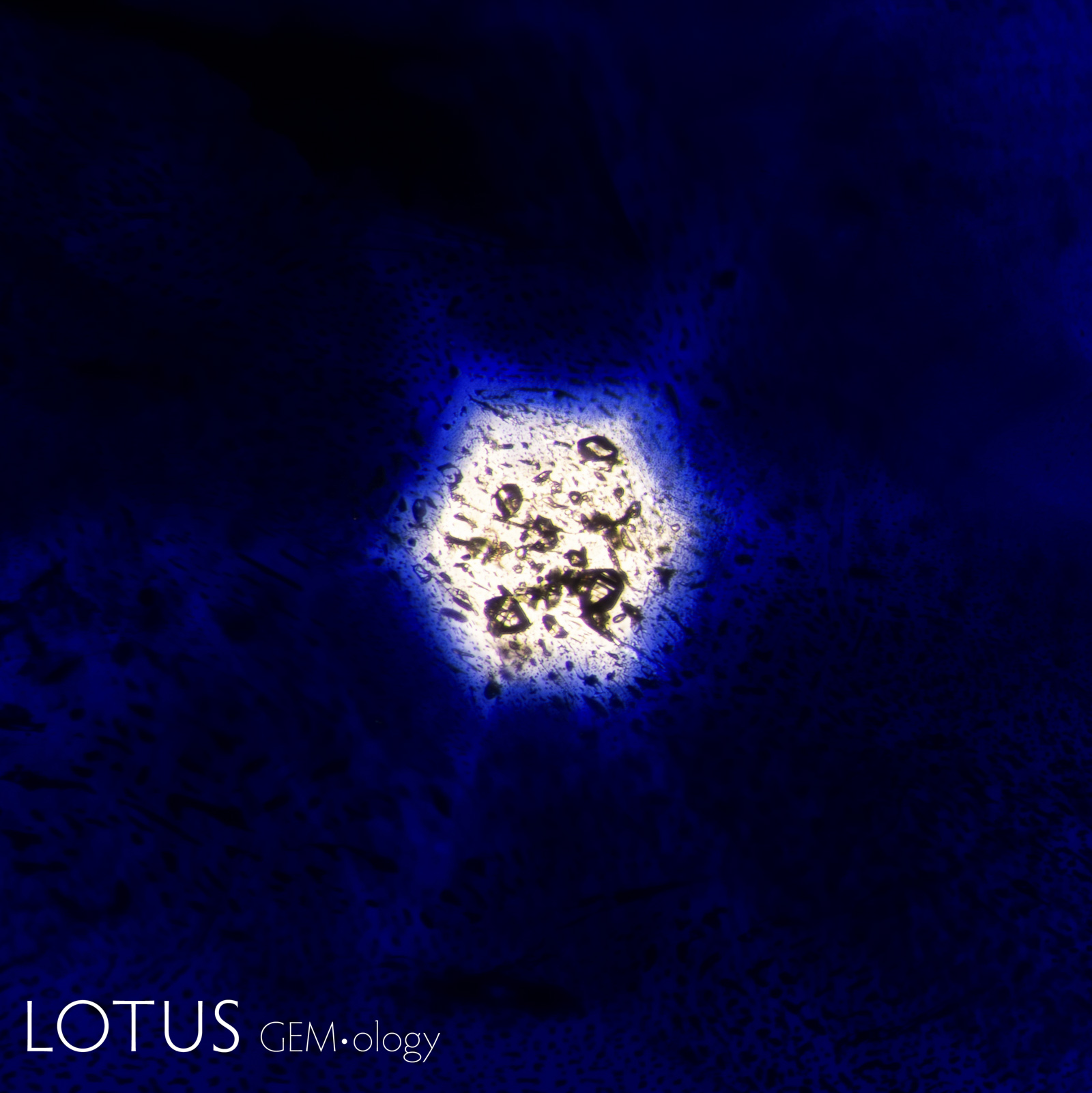
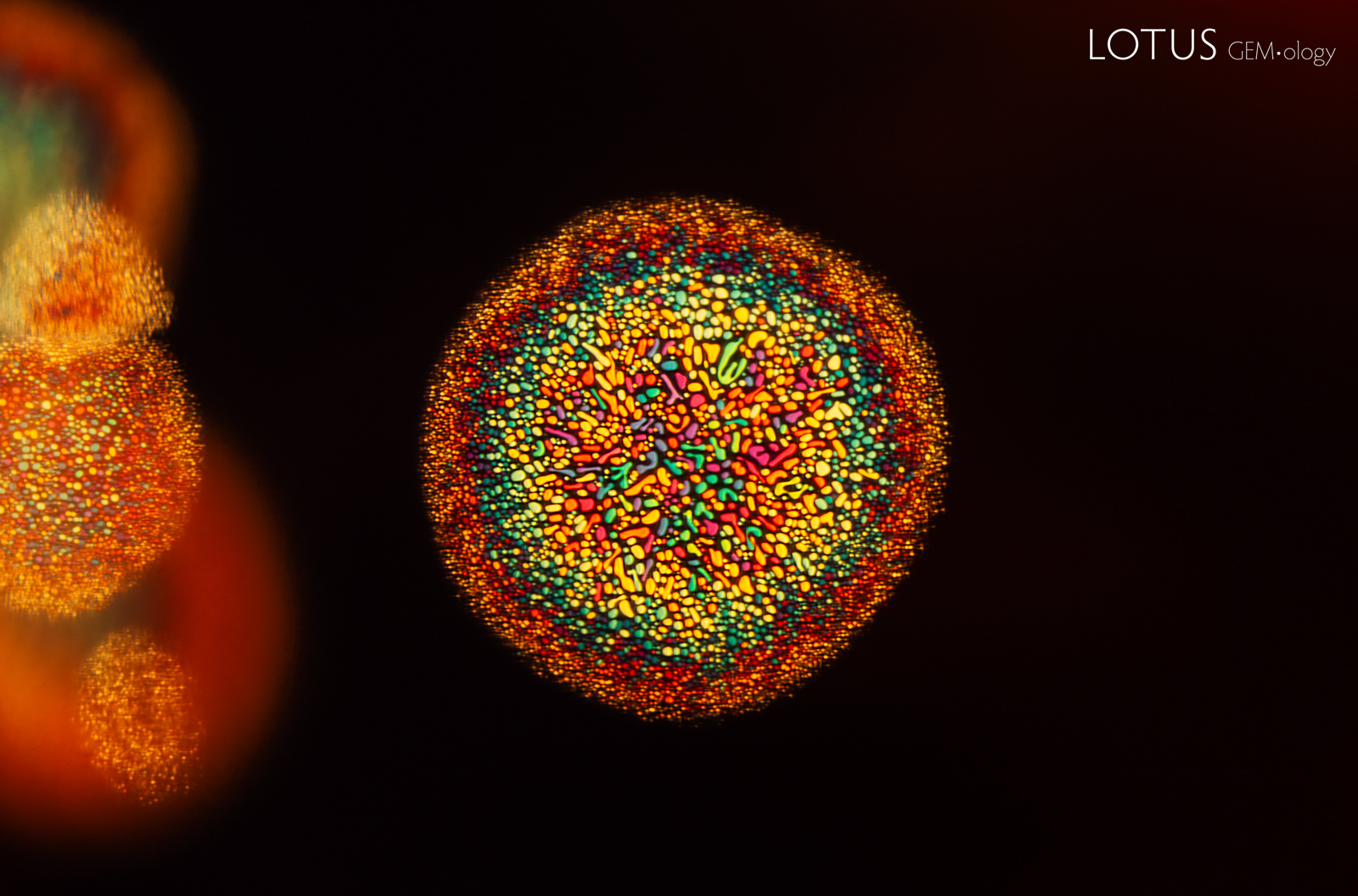
This cluster of melted crystals with a frosty “snowball” appearance and glassy discoid around them is a clear sign that their sapphire host has been heat treated.
Natural Sapphire •
Sri Lanka (Ceylon) •
Enhancements:
Heat (H) •
Lighting Conditions:
Dark Field + Diffuse Fiber Optic
Photographer:
E. Billie Hughes •
Image Number:
A-003-0140-1
Sapphire inclusions may include mineral crystals, rutile silk, healed fissures, fluid inclusions, negative crystals, color zoning and other features formed during or after crystal growth. Such features are important to gemologists because they can provide evidence useful in identifying sapphire, understanding its geological history, recognizing treatment and, in some cases, determining geographic origin.
Sapphire Inclusion Photomicrographs
The Hyperion sapphire gallery includes microscopic features found in sapphires from major deposits around the world. Each entry is accompanied by descriptive information and, where available, references to the gemological literature.
What Inclusions Can Reveal About Sapphire
Inclusions are an important part of sapphire identification. Their form, composition, orientation and alteration can help gemologists distinguish natural sapphire from synthetic material, recognize evidence of heat treatment, and study the geological environment in which the sapphire formed.
Hyperion combines inclusion photomicrography with supporting gemological information so that individual features can be compared with documented examples from known sapphire deposits.
About Hyperion
Hyperion is the Lotus Gemology searchable inclusion database. It allows users to browse gemstone inclusions by gem type, geographic origin, treatment and keyword.