Sapphire Inclusions
Explore sapphire inclusions in Hyperion, the Lotus Gemology inclusion database. Hyperion contains photomicrographs of inclusions and internal features in natural sapphire, documented with information on geographic origin, treatment, lighting conditions, field of view, photographer and published references.
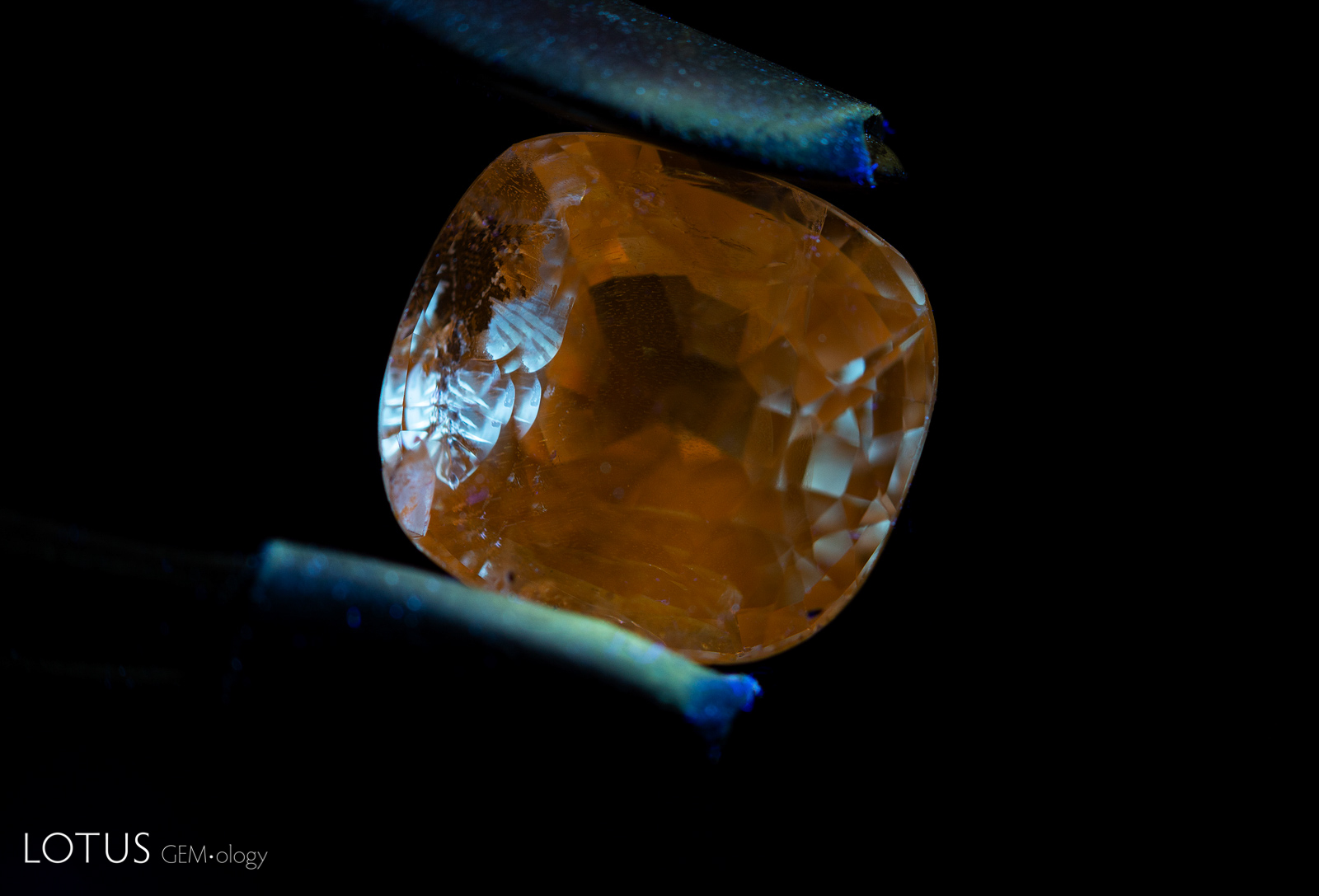
Vibrant orange and red color zoning can be seen in this sapphire under a longwave UV torch.
Natural Sapphire •
Central Asia •
Enhancements:
None Detected (None) •
Lighting Conditions:
Ultraviolet: Longwave
Photographer:
E. Billie Hughes •
Image Number:
A-004-5337-1
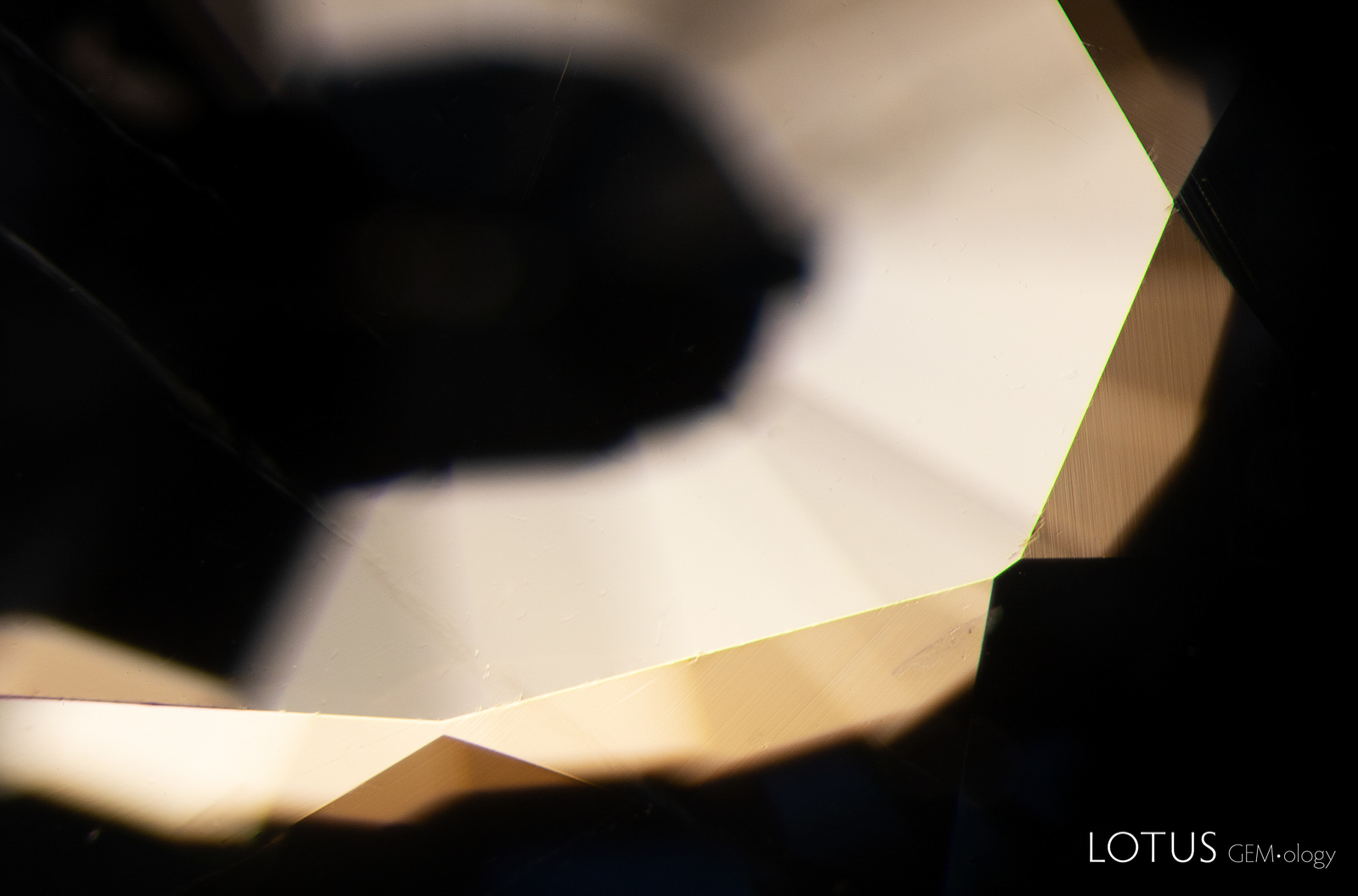
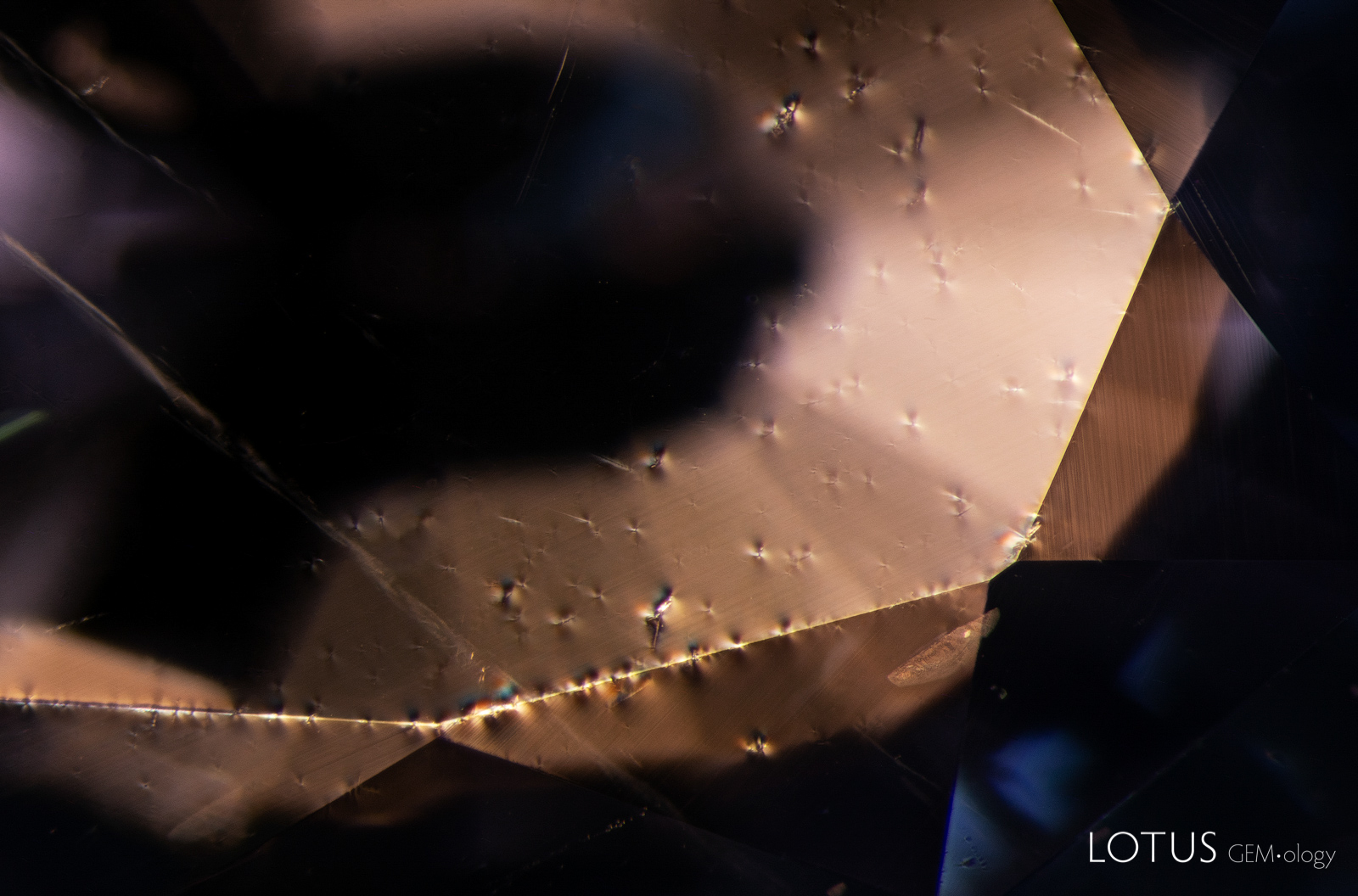
When illuminated with a longwave UV torch, this sapphire displayed areas with chalky fluorescence. These chalky areas were fissures that were treated with a filler that fluoresced under the UV light. After detection, the owner of the stone opted to remove the filler.
Natural Sapphire •
Myanmar (Burma); Mogok •
Enhancements:
None Detected (None) •
Lighting Conditions:
Ultraviolet: Longwave
Photographer:
E. Billie Hughes •
Image Number:
A-004-5878-1
This sapphire was treated with heat and pressure.
Natural Sapphire •
Sri Lanka (Ceylon) •
Enhancements:
Heat (H) •
Lighting Conditions:
Dark Field
Photographer:
E. Billie Hughes •
Image Number:
A-004-5487-2
• Field of View = 5mm
[various authors] (2019) Squeezing sapphire: Pressure-heated sapphire.
When this heat and pressure treated sapphire was viewed under crossed polars, several small strain patterns became visible.
Natural Sapphire •
Sri Lanka (Ceylon) •
Enhancements:
Heat (H) •
Lighting Conditions:
Dark Field + Crossed Polars
Photographer:
E. Billie Hughes •
Image Number:
A-004-5487-1
• Field of View = 5mm
[various authors] (2019) Squeezing sapphire: Pressure-heated sapphire.
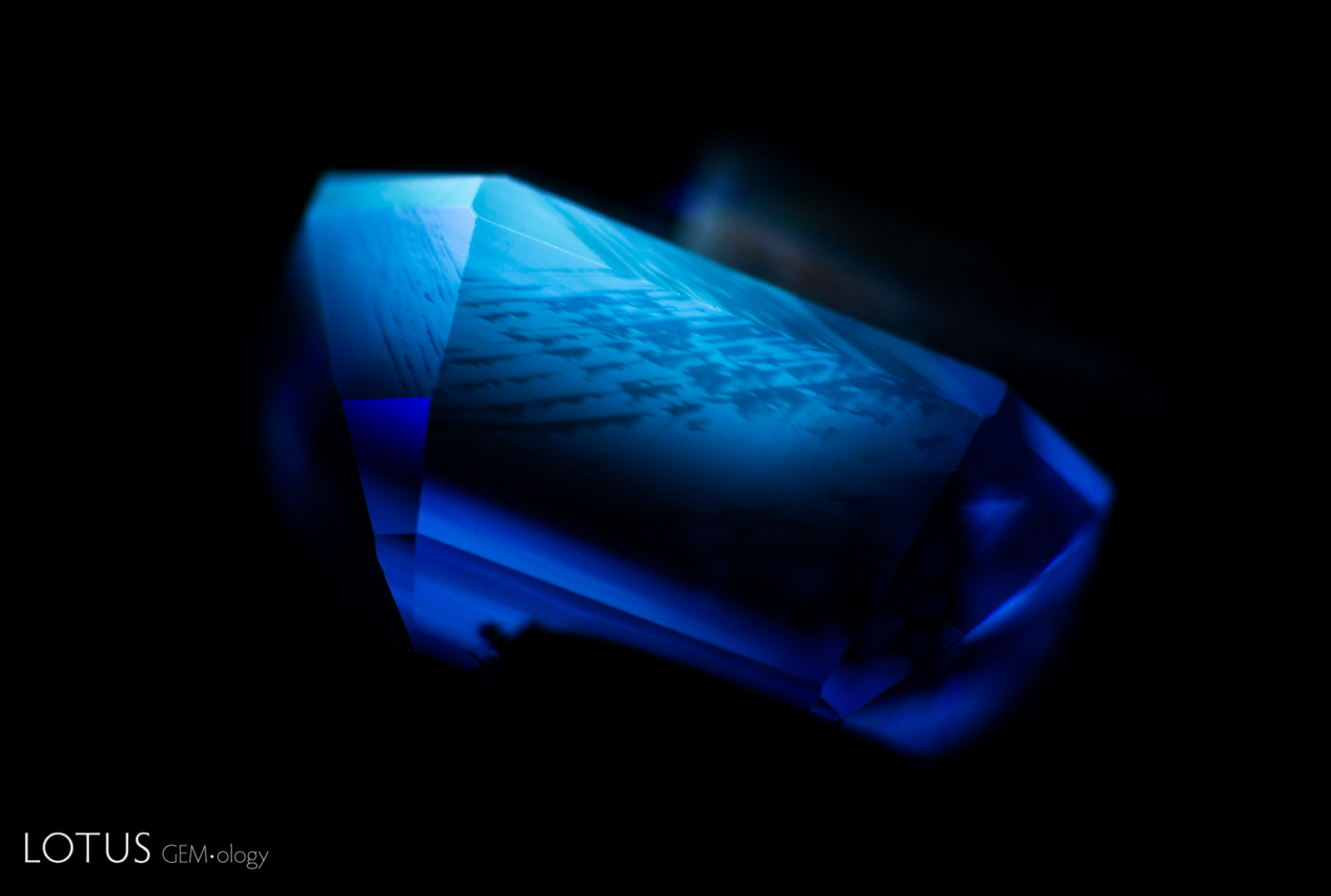
A chalky, angular appearance is apparent when this sapphire is viewed in shortwave UV illumination.
Natural Sapphire •
Madagascar •
Enhancements:
Heat (H) •
Lighting Conditions:
Ultraviolet: Shortwave
Photographer:
E. Billie Hughes •
Image Number:
A-004-5032-1
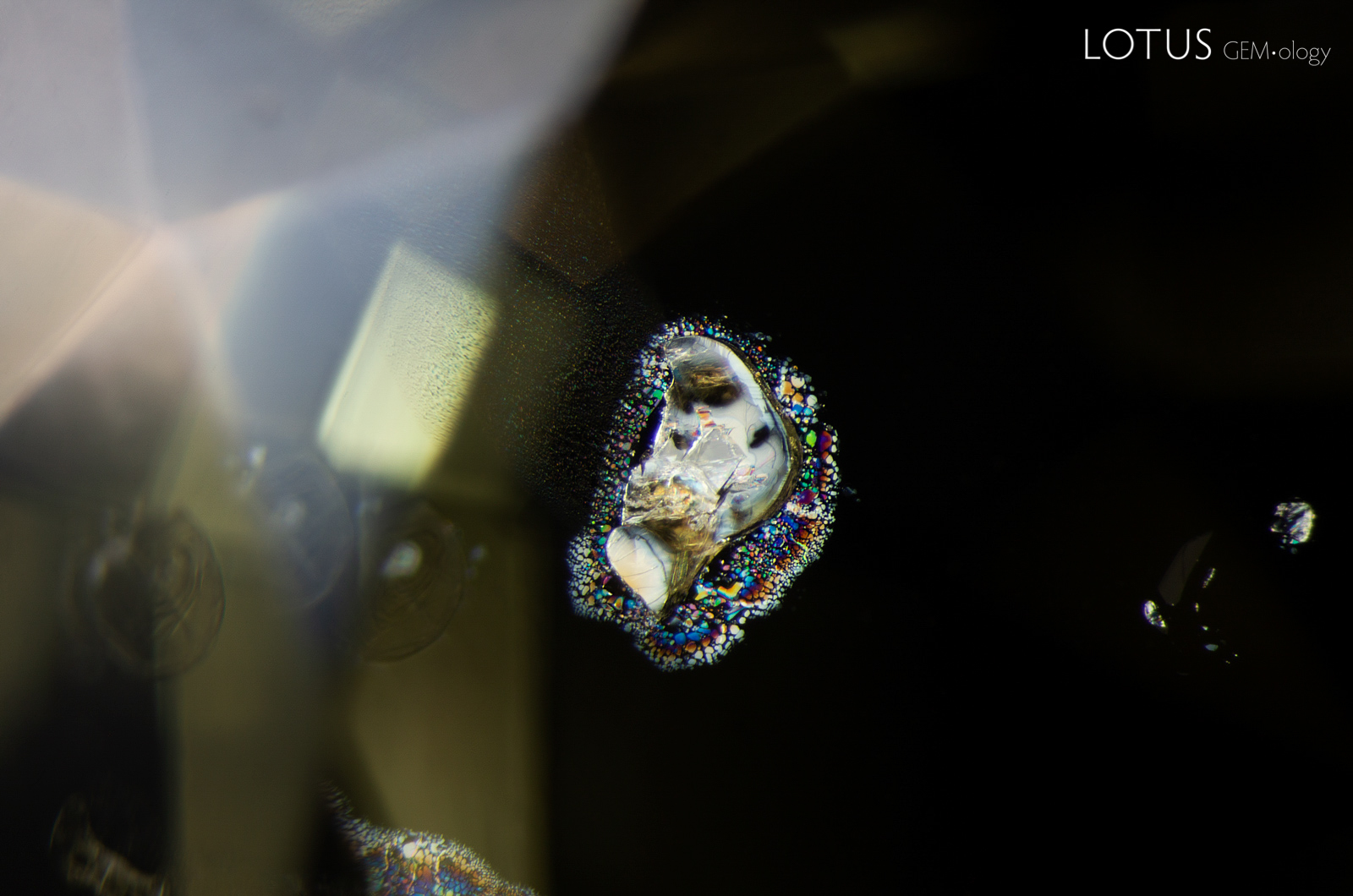
A beautiful iridescent rosette pattern appeared around this crystal when illuminated with fiber optic light. The crystal in the center is likely mica.
Natural Sapphire •
Myanmar (Burma); Mogok •
Enhancements:
None Detected (None) •
Lighting Conditions:
Fiber Optic: Diffuse Oblique
Photographer:
E. Billie Hughes •
Image Number:
A-004-3663-2
• Field of View = 6mm
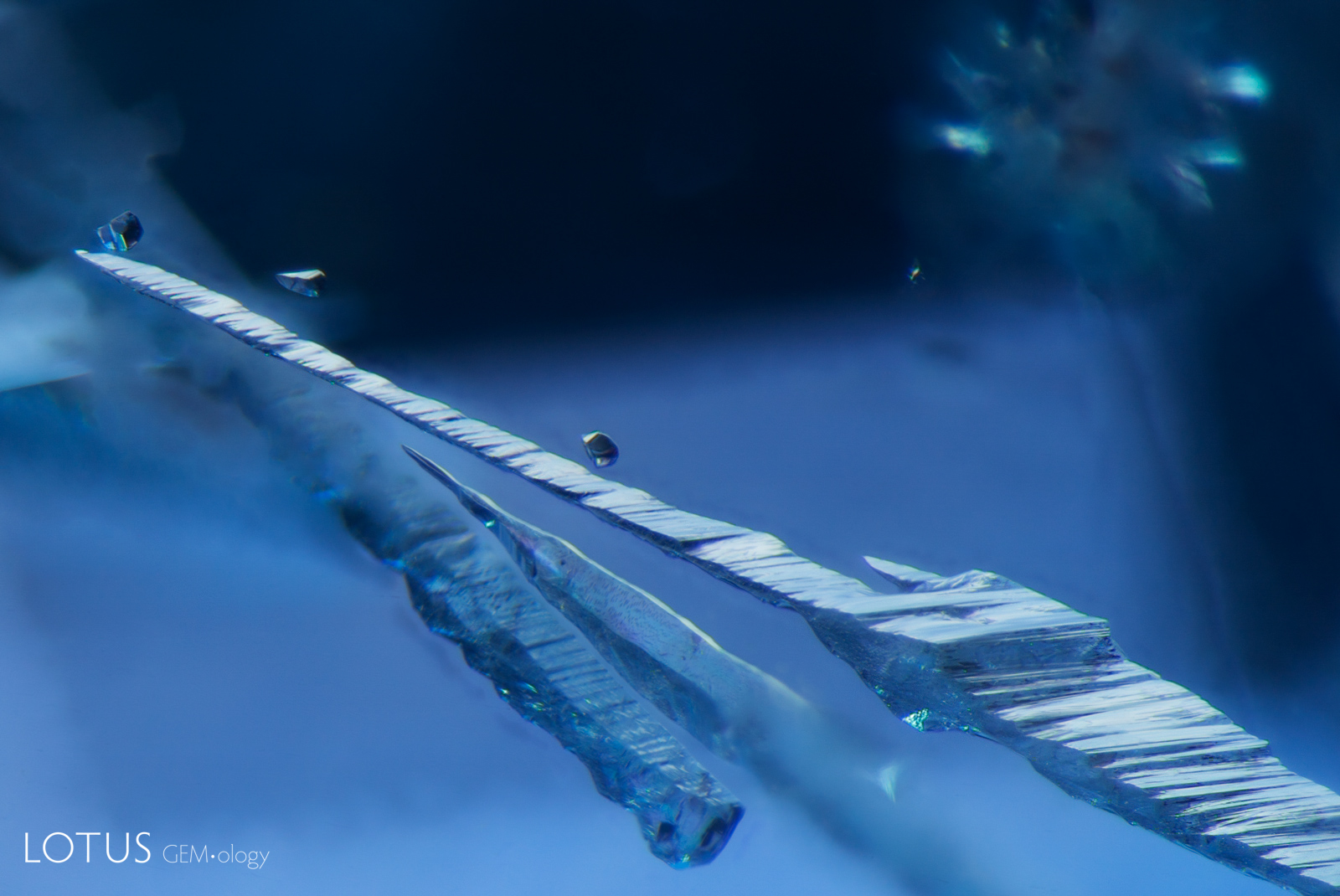
This heat-treated blue sapphire from Madagascar showed unusual features just below the surface. Note the series of bubbly fingerprints and at the center a cavity featuring two frozen bubbles.
Natural Sapphire •
Madagascar •
Enhancements:
Heat (H) •
Lighting Conditions:
Dark Field
Photographer:
Richard W. Hughes •
Image Number:
A-004-2295-1
• Field of View = 4mm
Viewed under the microscope this sapphire displays straight zoned bands of fine texture clouds, giving the stone a soft glow.
Natural Sapphire •
Basalt Related •
Enhancements:
None Detected (None) •
Lighting Conditions:
Dark Field + Diffuse Fiber Optic
Photographer:
E. Billie Hughes •
Image Number:
A-004-1939-1
• Field of View = 5.5mm
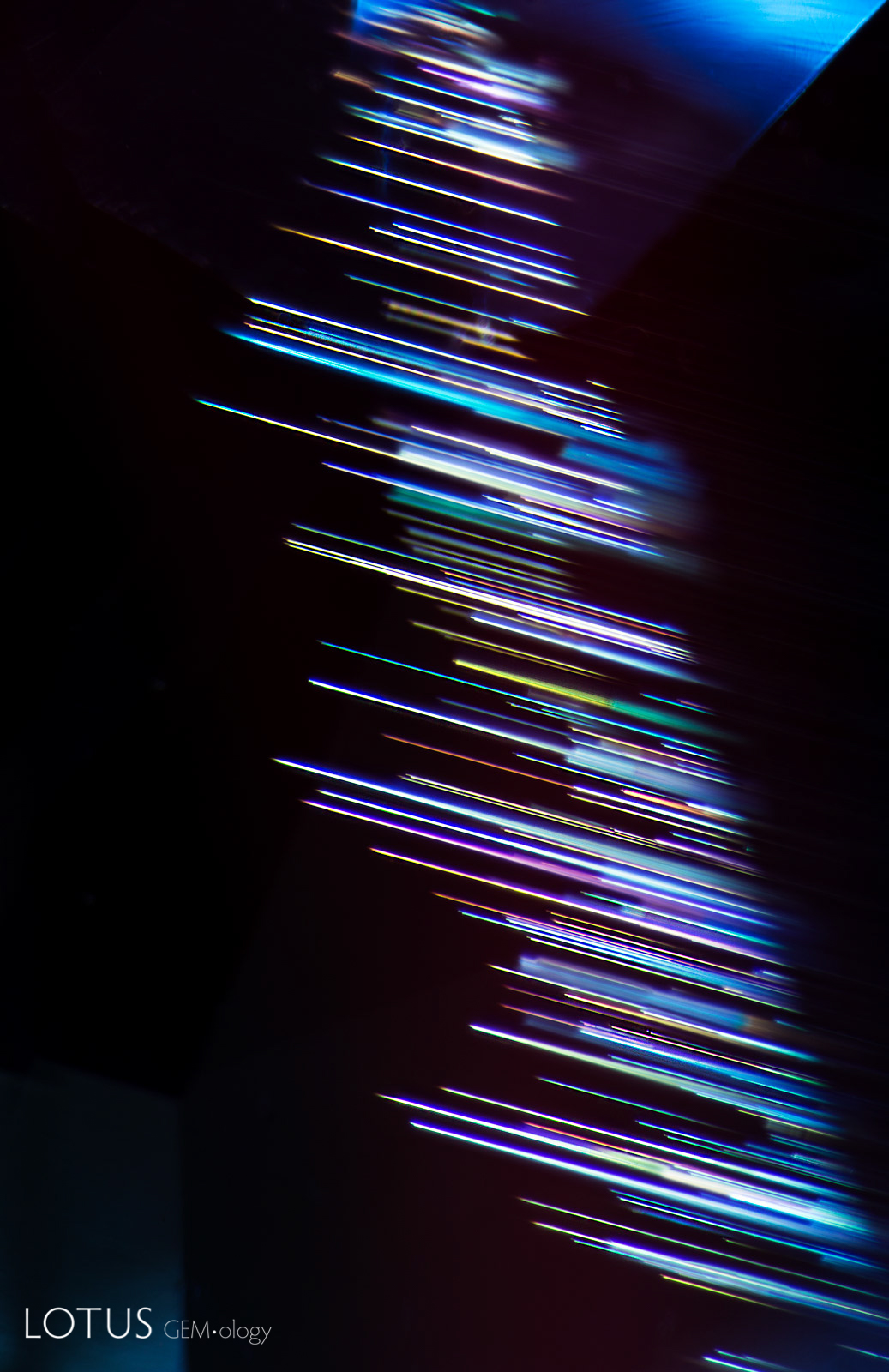
Stairway to heaven. Elongated apatite crystals, identified with micro Raman, extend across this dramatic inclusion scene in an untreated sapphire.
Natural Sapphire •
Myanmar (Burma); Mogok •
Enhancements:
None Detected (None) •
Lighting Conditions:
Diffuse Light Field + Blue Filter + Diffuse Fiber Optic
Photographer:
E. Billie Hughes •
Image Number:
A-004-1746-1
• Field of View = 4mm
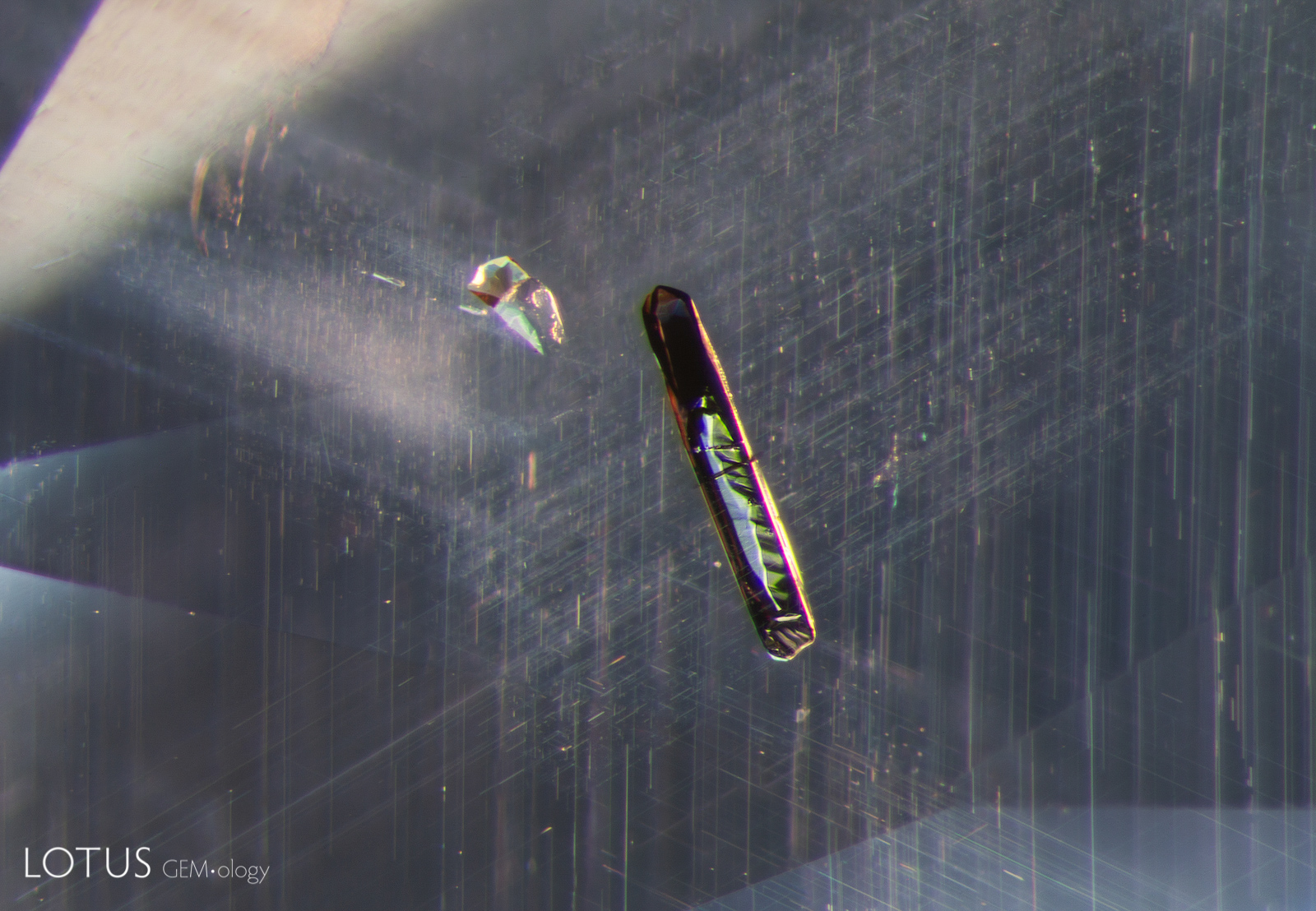
Two types of rutile can be viewed in t his inclusion scene: fine rutile “silk” needles and the dark brownish primary rutile crystal present in the foreground. The primary rutile was identified with micro Raman. Note that when illuminated with reflected light the primary rutile shows an extremely high luster where cut through on the surface.
Natural Sapphire •
Sri Lanka (Ceylon) •
Enhancements:
None Detected (None) •
Lighting Conditions:
Dark Field + Diffuse Overhead Fiber Optic
Photographer:
E. Billie Hughes •
Image Number:
A-004-1647-2
• Field of View = 2mm
Two types of rutile can be viewed in t his inclusion scene: fine rutile “silk” needles and the dark brownish primary rutile crystal present in the foreground. The primary rutile was identified with micro Raman.
Natural Sapphire •
Sri Lanka (Ceylon) •
Enhancements:
None Detected (None) •
Lighting Conditions:
Dark Field + Diffuse Fiber Optic
Photographer:
E. Billie Hughes •
Image Number:
A-004-1647-1
• Field of View = 2mm
A dramatic series of rutile silk needles decorates the interior of this sapphire from Sri Lanka.
Natural Sapphire •
Sri Lanka (Ceylon) •
Enhancements:
None Detected (None) •
Lighting Conditions:
Fiber Optic: Oblique
Photographer:
Wimon Manorotkul •
Image Number:
A-004-1643-1
• Field of View = 10mm
Sapphire inclusions may include mineral crystals, rutile silk, healed fissures, fluid inclusions, negative crystals, color zoning and other features formed during or after crystal growth. Such features are important to gemologists because they can provide evidence useful in identifying sapphire, understanding its geological history, recognizing treatment and, in some cases, determining geographic origin.
Sapphire Inclusion Photomicrographs
The Hyperion sapphire gallery includes microscopic features found in sapphires from major deposits around the world. Each entry is accompanied by descriptive information and, where available, references to the gemological literature.
What Inclusions Can Reveal About Sapphire
Inclusions are an important part of sapphire identification. Their form, composition, orientation and alteration can help gemologists distinguish natural sapphire from synthetic material, recognize evidence of heat treatment, and study the geological environment in which the sapphire formed.
Hyperion combines inclusion photomicrography with supporting gemological information so that individual features can be compared with documented examples from known sapphire deposits.
About Hyperion
Hyperion is the Lotus Gemology searchable inclusion database. It allows users to browse gemstone inclusions by gem type, geographic origin, treatment and keyword.