Sapphire Inclusions
Explore sapphire inclusions in Hyperion, the Lotus Gemology inclusion database. Hyperion contains photomicrographs of inclusions and internal features in natural sapphire, documented with information on geographic origin, treatment, lighting conditions, field of view, photographer and published references.
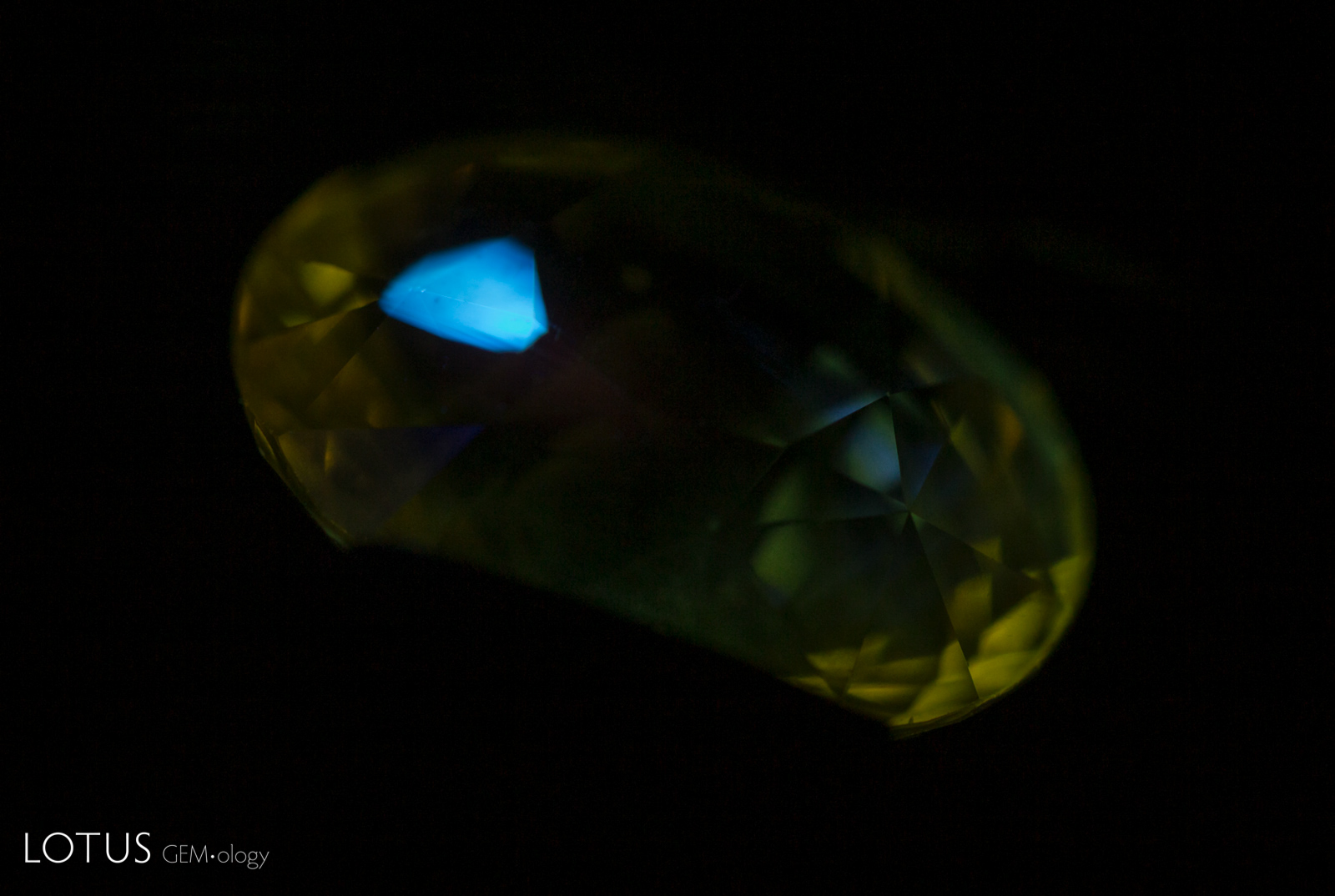
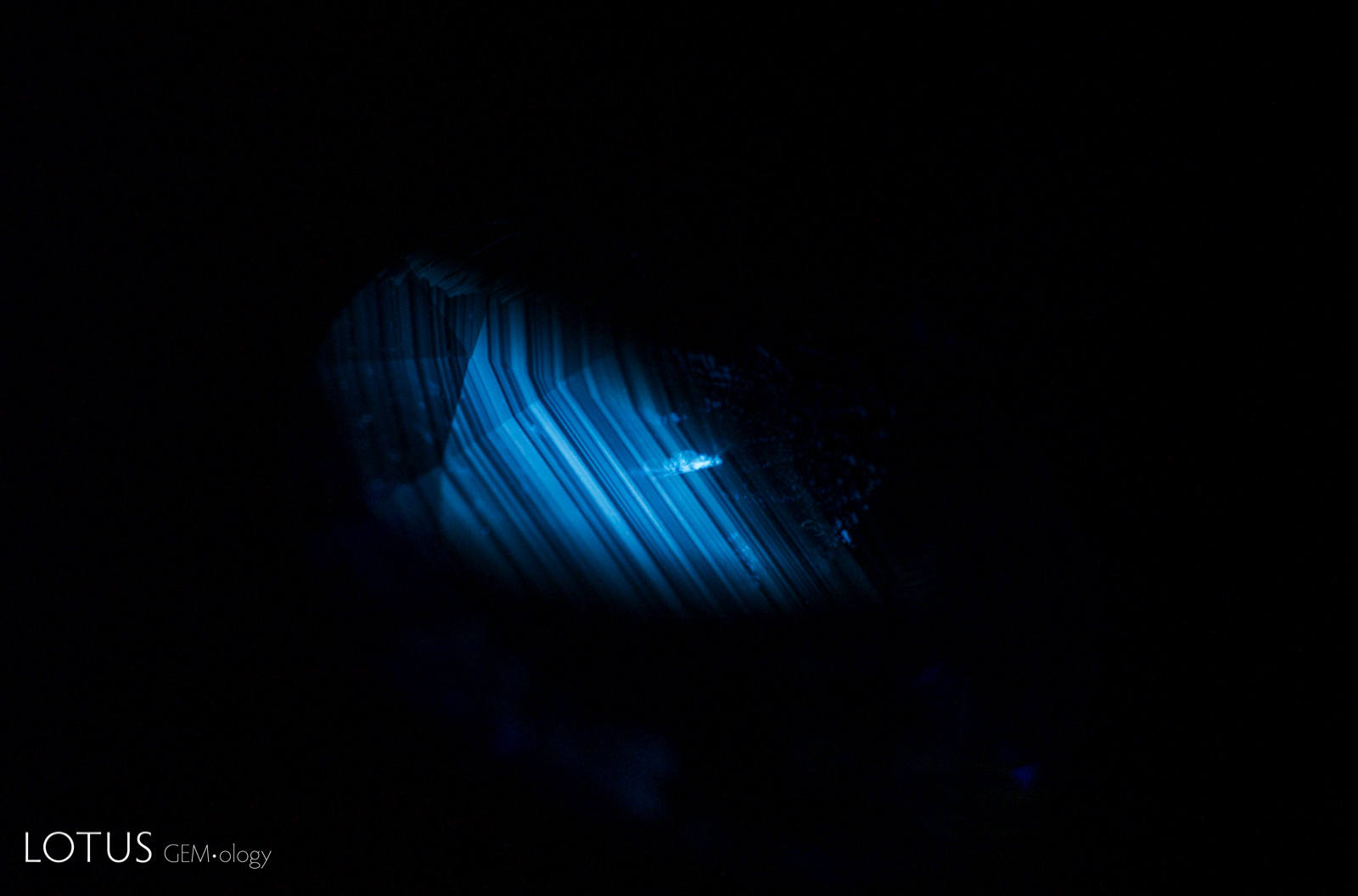
A small, chalky fluorescent patch can be observed when carefully examining this heated yellow sapphire in short wave UV illumination.
Natural Sapphire •
Sri Lanka (Ceylon) •
Enhancements:
Heat (H) •
Lighting Conditions:
Ultraviolet: Shortwave
Photographer:
E. Billie Hughes •
Image Number:
A-003-9608-1
Hughes, R.W. and Emmett, J.L. (2005) Heat Seeker: UV fluorescence as a gemological tool. The Guide, Vol. 24, No. 5, Part 1, Sept.–Oct., pp. 1, 4–7; RWHL*.
Hughes, R.W., Manorotkul, W. and Hughes, E.B. (2017) Ruby & Sapphire: A Gemologist's Guide. Bangkok, Lotus Publishing, 816 pp.; RWHL*.
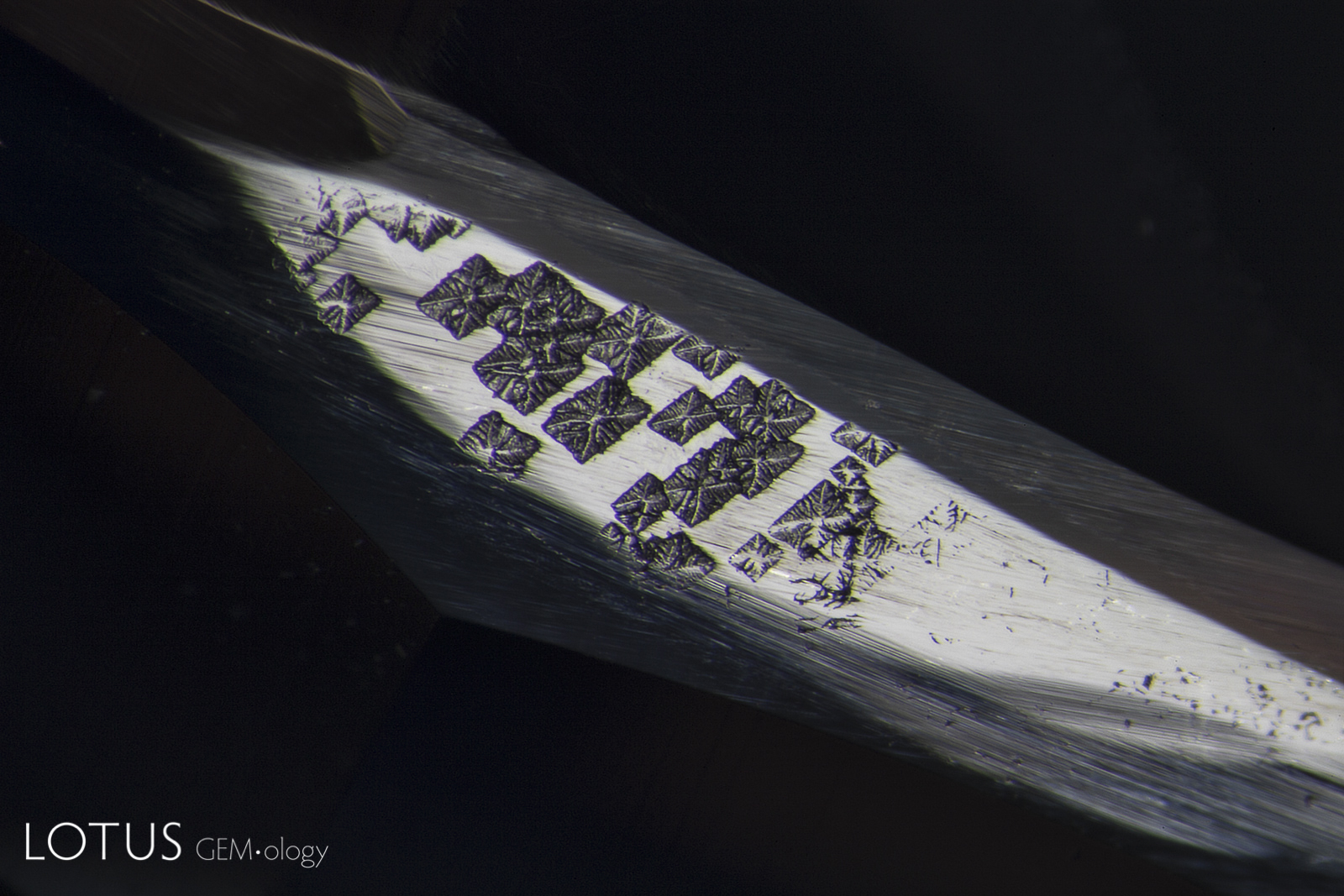
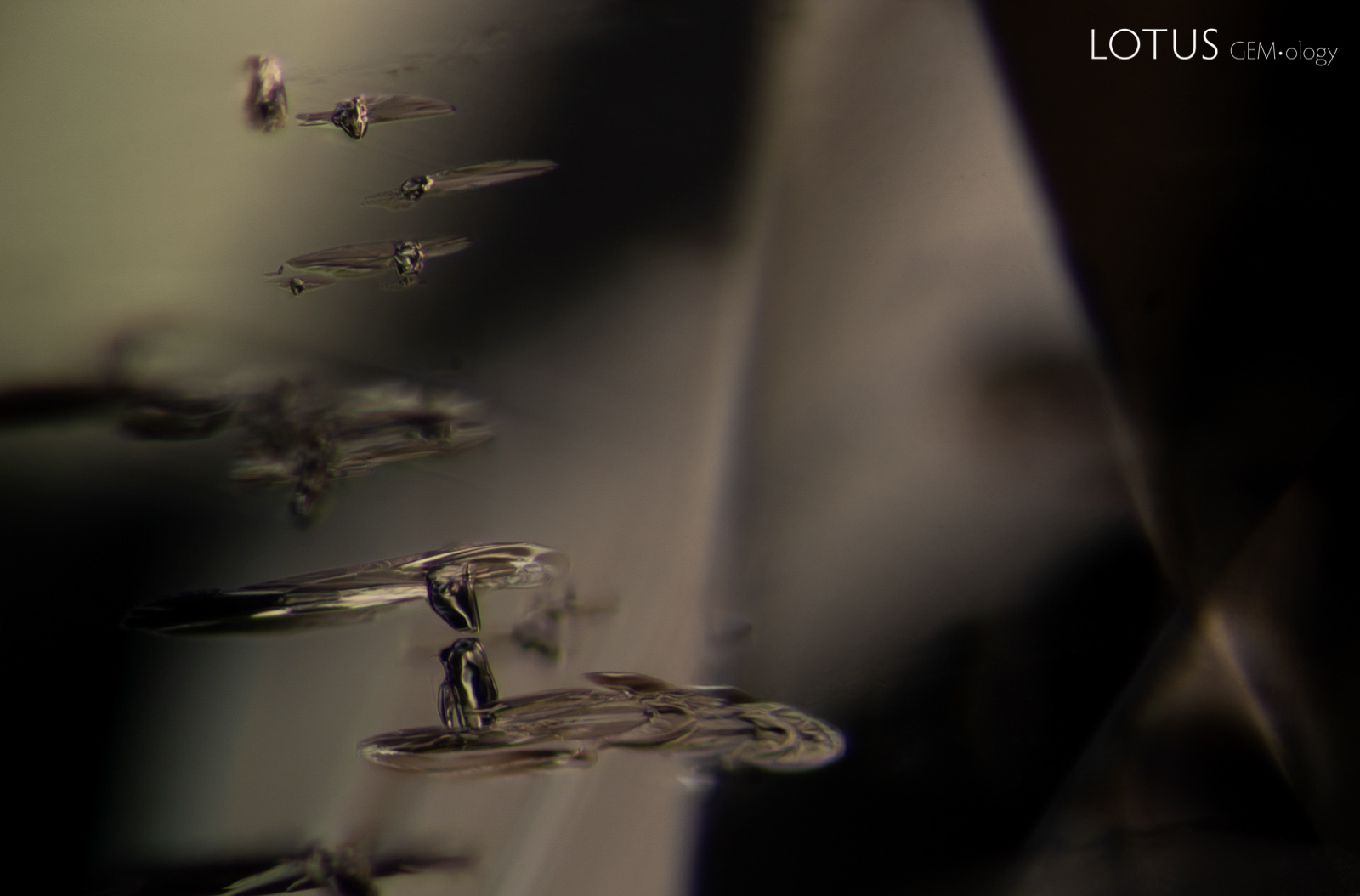
In the “We thought we had seen it all” department, this unusual inclusion was found on the polished girdle of an untreated Madagascar sapphire. We believe it to be made up of growth marks on the surface of the original sapphire crystal.
Natural Sapphire •
Madagascar •
Enhancements:
None Detected (None) •
Lighting Conditions:
Fiber Optic: Diffuse Overhead
Photographer:
Richard W. Hughes •
Image Number:
A-003-9743-1
• Field of View = 5mm
This basalt-related sapphire contained many crystal inclusions that were all oriented parallel to the basal plane. Notice how the fissures around each crystal are all aligned.
Natural Sapphire •
Basalt Related •
Enhancements:
None Detected (None) •
Lighting Conditions:
Dark Field
Photographer:
E. Billie Hughes •
Image Number:
A-003-8707-1
• Field of View = 2.5mm
Hughes, R.W., Manorotkul, W. and Hughes, E.B. (2017) Ruby & Sapphire: A Gemologist's Guide. Bangkok, Lotus Publishing, 816 pp.; RWHL*.
Gübelin, E.J. and Koivula, J.I. (2008) Photoatlas of Inclusions in Gemstones, Volume 3. Basel, Switzerland, Opinio Publishers, 672 pp.; RWHL*.
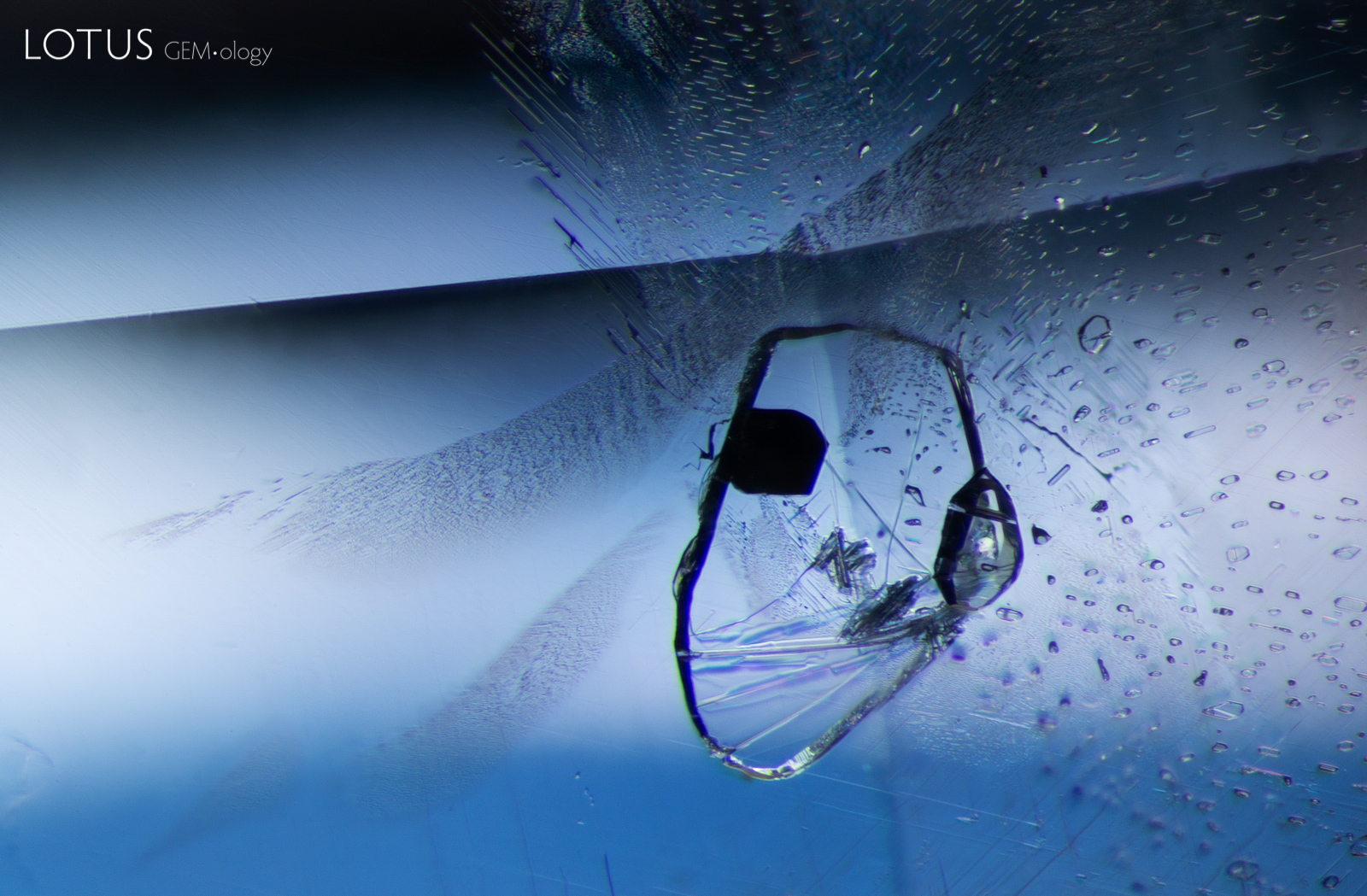
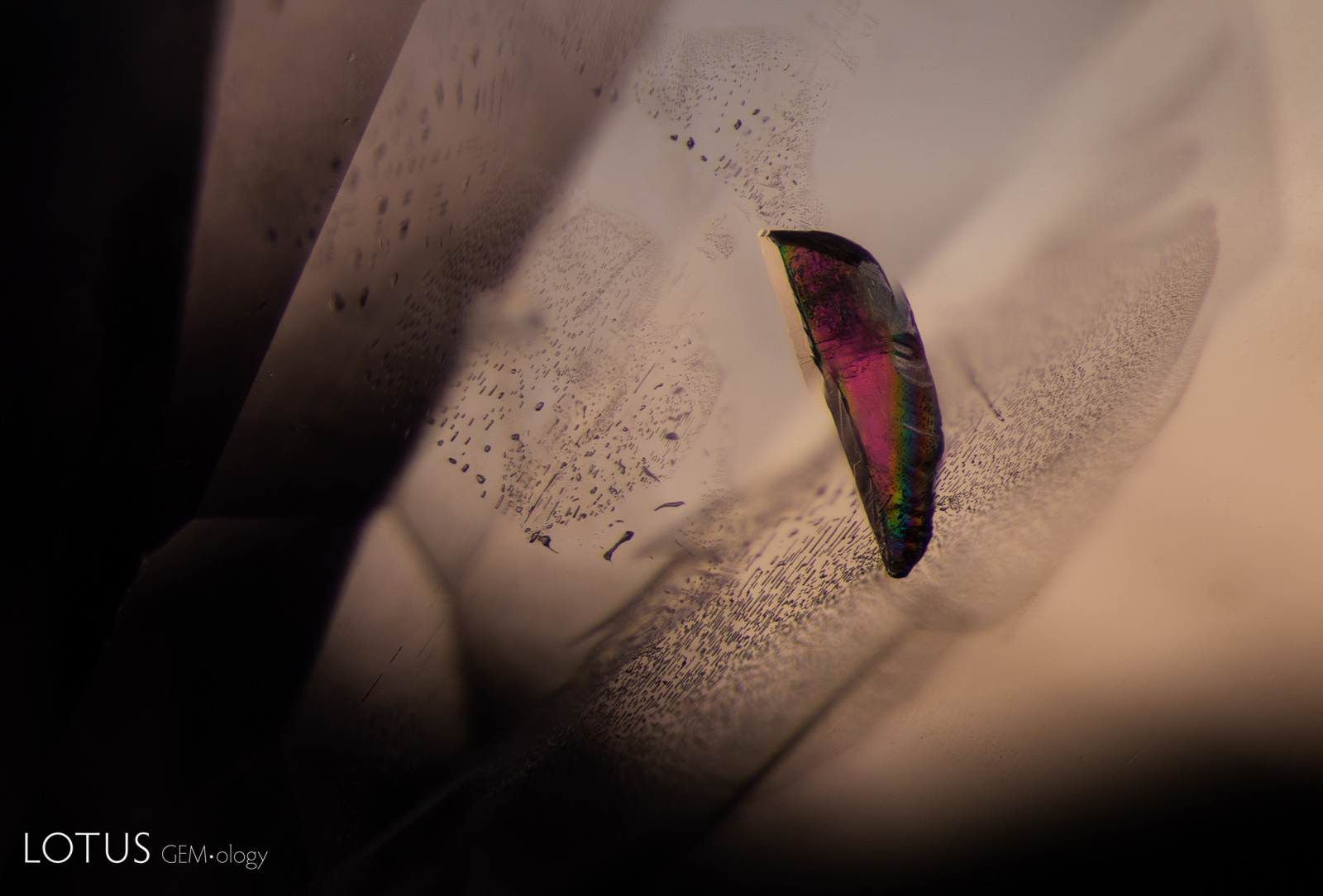
When we examine this sapphire from Sri Lanka, the euhedral crystal pictured here stood out immediately. Analysis with micro Raman confirmed that the crystal is apatite.
Natural Sapphire •
Sri Lanka (Ceylon) •
Enhancements:
None Detected (None) •
Lighting Conditions:
Darkfield + Diffuse Fiber Optic + Shadowing
Photographer:
E. Billie Hughes •
Image Number:
A-003-8555-1
• Field of View = 3.5mm
Gübelin, E.J. and Koivula, J.I. (2008) Photoatlas of Inclusions in Gemstones, Volume 3. Basel, Switzerland, Opinio Publishers, 672 pp.; RWHL*.
Hughes, R.W., Manorotkul, W. and Hughes, E.B. (2017) Ruby & Sapphire: A Gemologist's Guide. Bangkok, Lotus Publishing, 816 pp.; RWHL*.
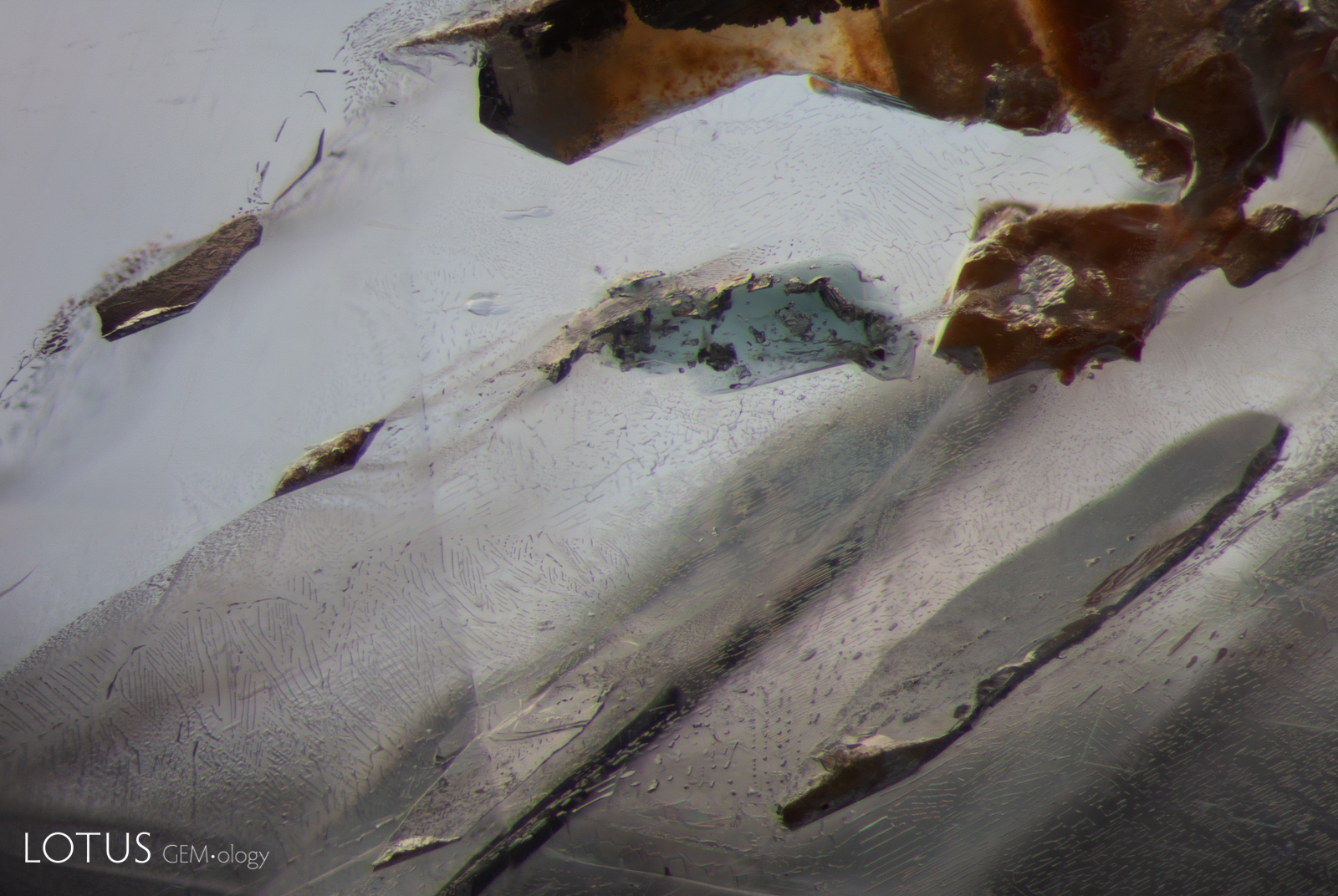
Ensconced between fingerprints and negative crystals in this sapphire is a green spinel crystal, which was identified with micro Raman.
Natural Sapphire •
Sri Lanka (Ceylon) •
Enhancements:
None Detected (None) •
Lighting Conditions:
Diffuse Light Field + Blue Filter
Photographer:
E. Billie Hughes •
Image Number:
A-003-8554-1
• Field of View = 3mm
Hughes, R.W., Manorotkul, W. and Hughes, E.B. (2017) Ruby & Sapphire: A Gemologist's Guide. Bangkok, Lotus Publishing, 816 pp.; RWHL*.
Gübelin, E.J. and Koivula, J.I. (2008) Photoatlas of Inclusions in Gemstones, Volume 3. Basel, Switzerland, Opinio Publishers, 672 pp.; RWHL*.
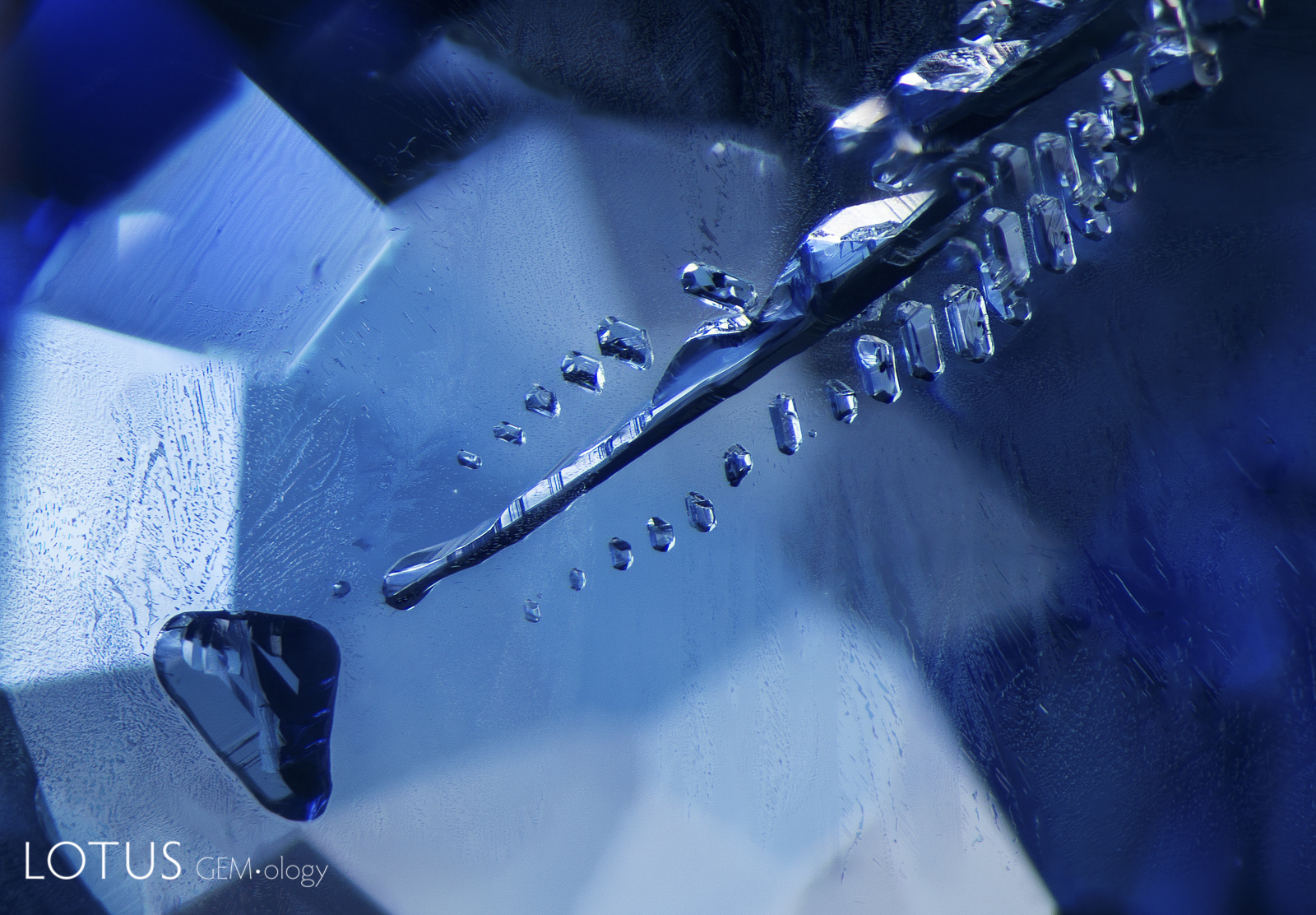
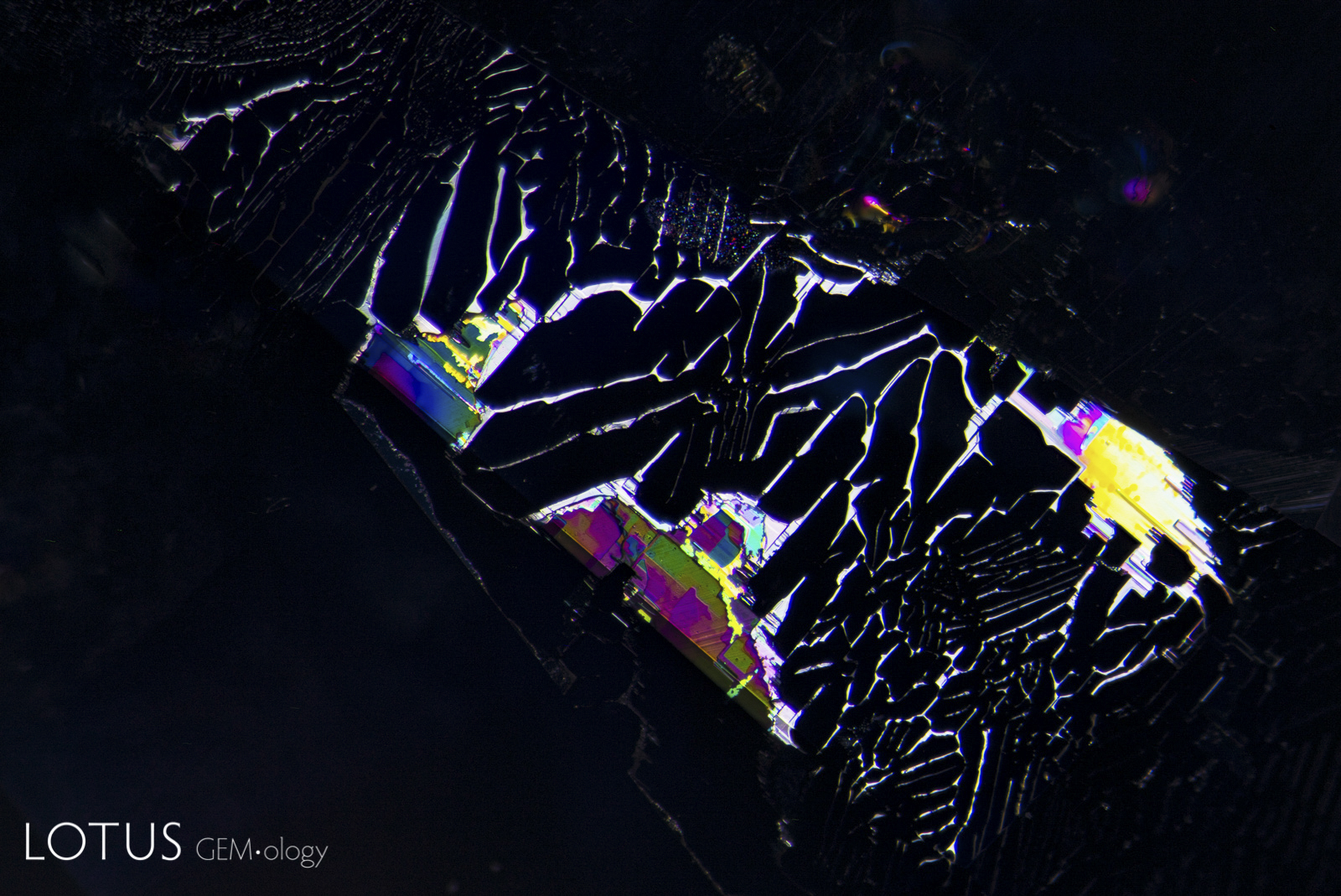
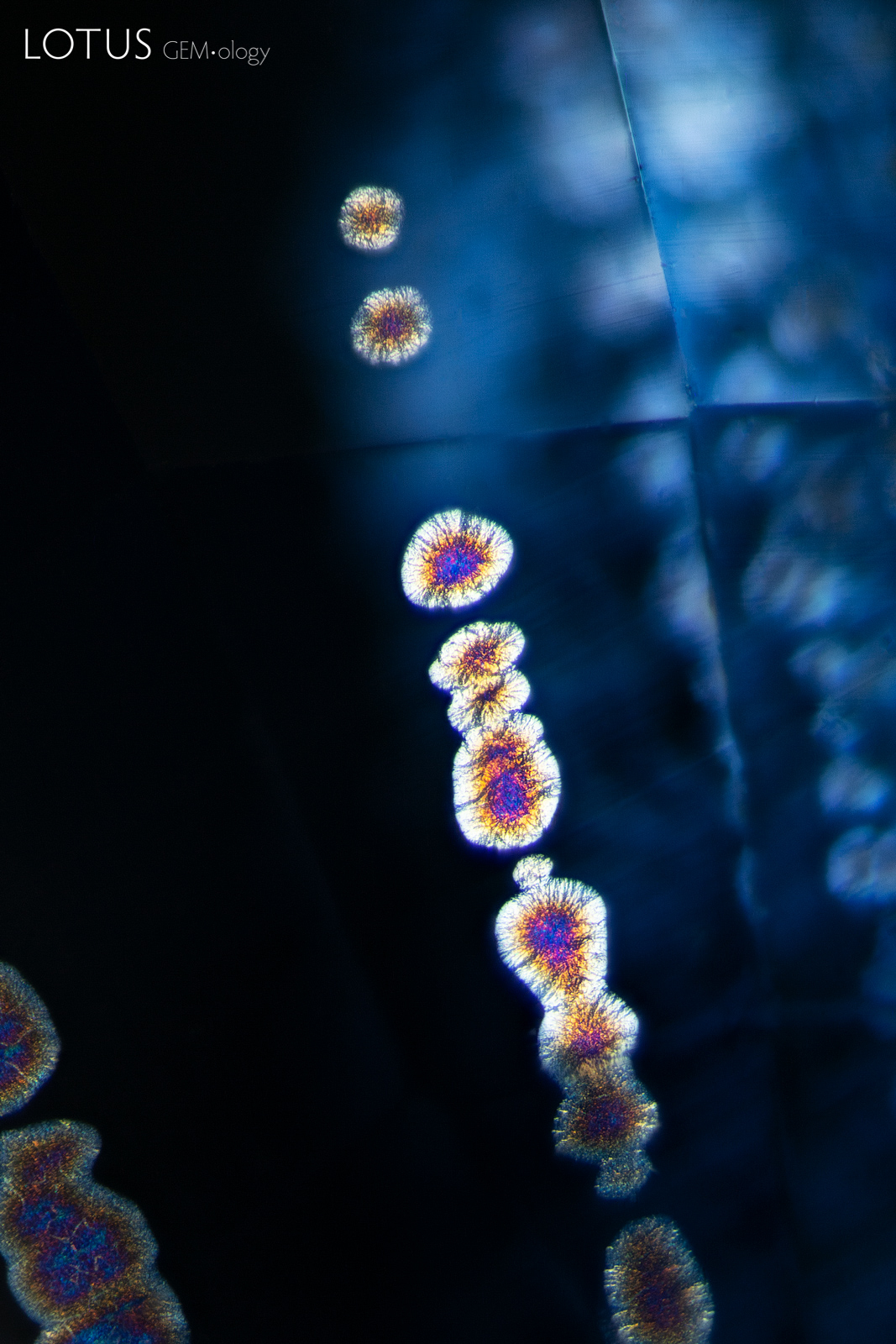
The healing pattern of this healed fissure in a Sri Lankan sapphire suggests it lies along a pyramid face, oblique to the c-axis. Should it lie perpendicular to the c-axis, the healing would reveal triangular or hexagonal healing; if parallel to the c-axis, the healing would be rectangular. Thus the nearly rectangular healing reveals its orientation along a pyramid face close to the c-axis. The use of oblique illumination reveals far more surface detail than ordinary dark or light field.
Natural Sapphire •
Sri Lanka (Ceylon) •
Enhancements:
Heat (H) •
Lighting Conditions:
Fiber Optic: Diffuse Oblique
Photographer:
Richard W. Hughes •
Image Number:
A-003-7802-1
• Field of View = 5.5mm
Hughes, R.W., Manorotkul, W. and Hughes, E.B. (2017) Ruby & Sapphire: A Gemologist's Guide. Bangkok, Lotus Publishing, 816 pp.; RWHL*.
The angular chalky reaction, observable with short wave illumination, provides clear evidence that this blue sapphire was heated.
Natural Sapphire •
Not Determinable •
Enhancements:
Heat (H) •
Lighting Conditions:
Ultraviolet: Shortwave
Photographer:
E. Billie Hughes •
Image Number:
A-003-7649-7
Hughes, R.W. and Emmett, J.L. (2005) Heat Seeker: UV fluorescence as a gemological tool. The Guide, Vol. 24, No. 5, Part 1, Sept.–Oct., pp. 1, 4–7; RWHL*.
Hughes, R.W., Manorotkul, W. and Hughes, E.B. (2017) Ruby & Sapphire: A Gemologist's Guide. Bangkok, Lotus Publishing, 816 pp.; RWHL*.
678 Total Images
Results: 97 – 108 | Page 9 of 57 Pages
Sapphire inclusions may include mineral crystals, rutile silk, healed fissures, fluid inclusions, negative crystals, color zoning and other features formed during or after crystal growth. Such features are important to gemologists because they can provide evidence useful in identifying sapphire, understanding its geological history, recognizing treatment and, in some cases, determining geographic origin.
Sapphire Inclusion Photomicrographs
The Hyperion sapphire gallery includes microscopic features found in sapphires from major deposits around the world. Each entry is accompanied by descriptive information and, where available, references to the gemological literature.
What Inclusions Can Reveal About Sapphire
Inclusions are an important part of sapphire identification. Their form, composition, orientation and alteration can help gemologists distinguish natural sapphire from synthetic material, recognize evidence of heat treatment, and study the geological environment in which the sapphire formed.
Hyperion combines inclusion photomicrography with supporting gemological information so that individual features can be compared with documented examples from known sapphire deposits.
About Hyperion
Hyperion is the Lotus Gemology searchable inclusion database. It allows users to browse gemstone inclusions by gem type, geographic origin, treatment and keyword.
Search the Complete Hyperion Database