Sapphire Inclusions
Explore sapphire inclusions in Hyperion, the Lotus Gemology inclusion database. Hyperion contains photomicrographs of inclusions and internal features in natural sapphire, documented with information on geographic origin, treatment, lighting conditions, field of view, photographer and published references.
Rose channels meeting at 86.1/93.9° angles in this sapphire create a striking geometric appearance.
Natural Sapphire •
East Africa •
Enhancements:
None Detected (None) •
Lighting Conditions:
Photographer:
E. Billie Hughes •
Image Number:
A-003-7596-2
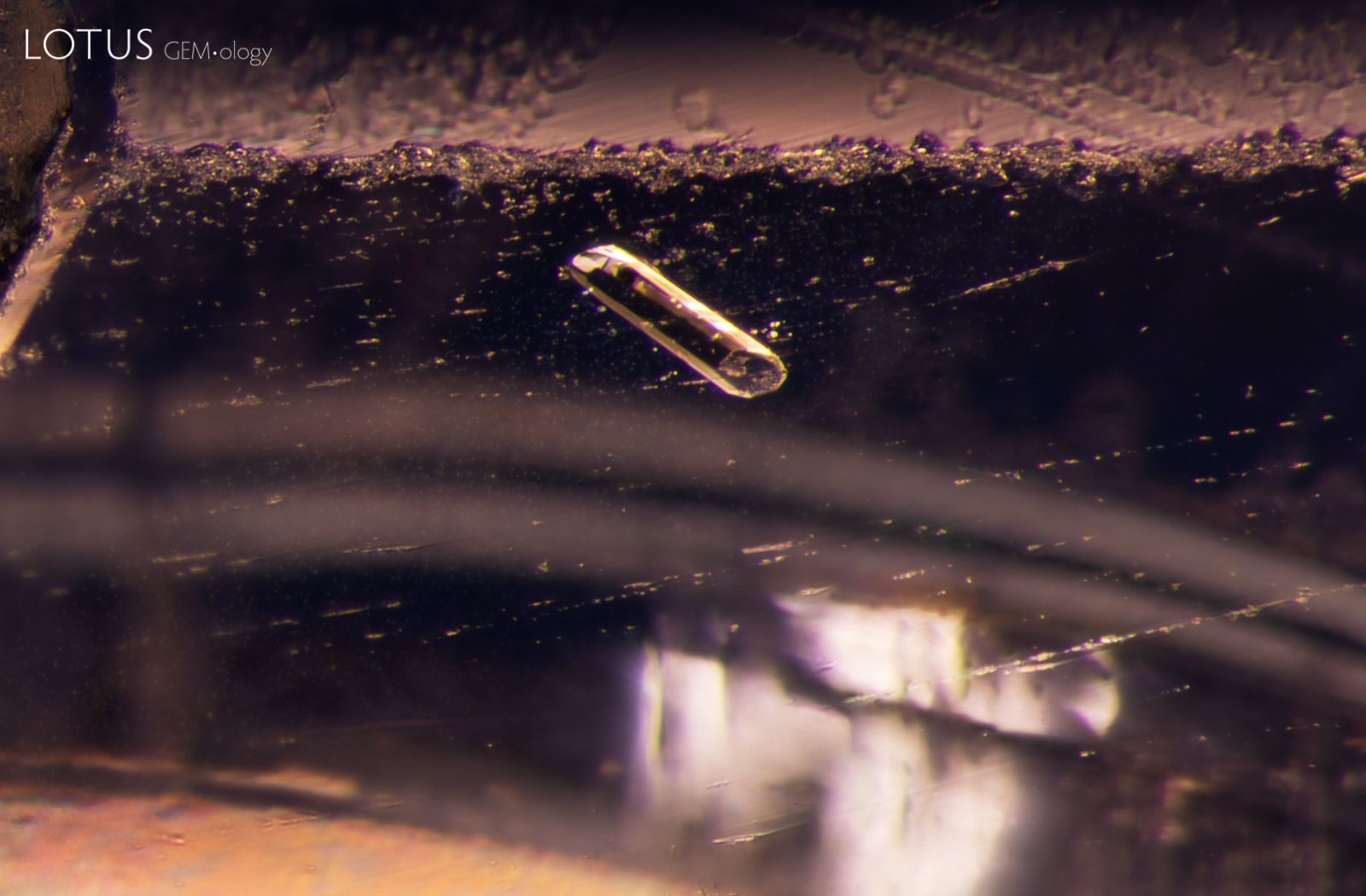
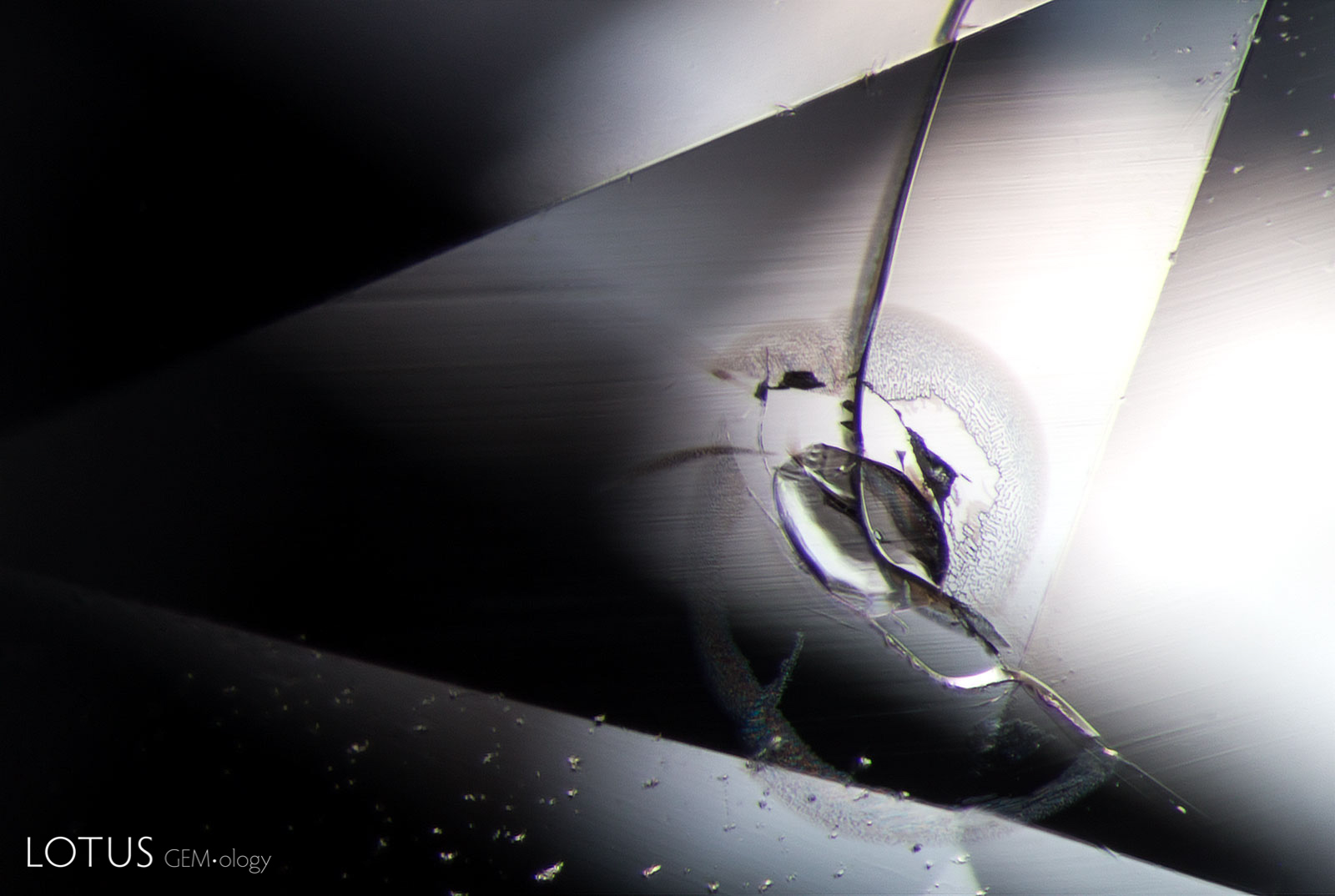
This slightly yellowish crystal, embedded in a blue sapphire, was identified as hydroxylapatite with Raman spectroscopy. In the background we can also see Rose channels criss-crossing the stone.
Natural Sapphire •
East Africa •
Enhancements:
None Detected (None) •
Lighting Conditions:
Dark Field
Photographer:
E. Billie Hughes •
Image Number:
A-003-7596-1
• Field of View = 3mm
By looking at the fingerprint in the interior of the stone, we can see how the naturals on this sapphire got their distinctive spotted texture.
Natural Sapphire •
India (Kashmir) •
Enhancements:
None Detected (None) •
Lighting Conditions:
Dark Field + Diffuse Fiber Optic + Blue Filter
Photographer:
E. Billie Hughes •
Image Number:
A-003-7462-4
• Field of View = 4mm
Pargasite crystals, like the one pictured here whose identity was confirmed with Raman spectroscopy, are a well-known inclusion in Kashmir sapphire.
Natural Sapphire •
India (Kashmir) •
Enhancements:
None Detected (None) •
Lighting Conditions:
Dark Field
Photographer:
E. Billie Hughes •
Image Number:
A-003-7462-3
• Field of View = 2mm
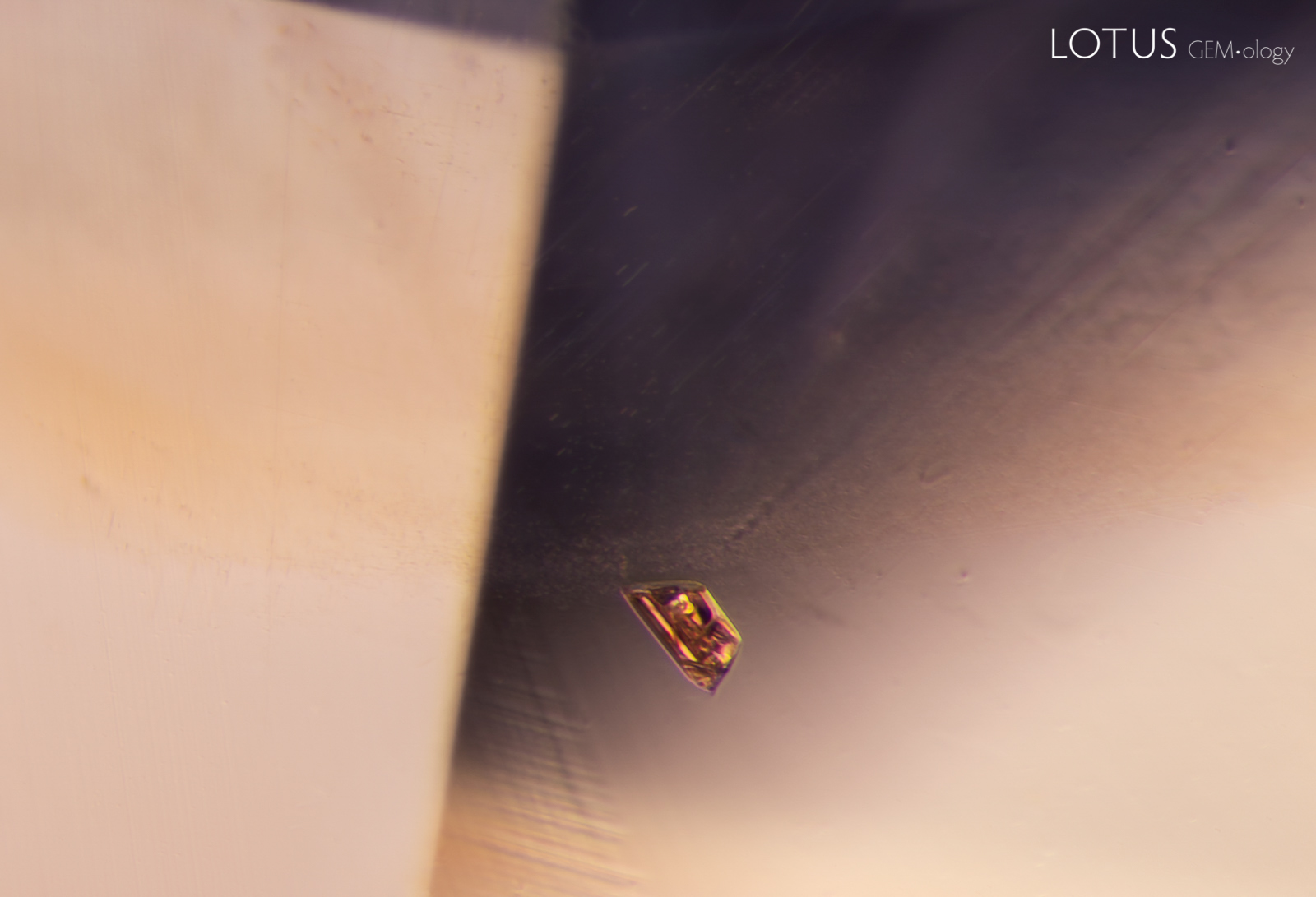
A brown phlogopite crystal (identified with micro Raman) is present inside this blue sapphire.
Natural Sapphire •
Myanmar (Burma); Mogok/Namya •
Enhancements:
None Detected (None) •
Lighting Conditions:
Dark Field
Photographer:
E. Billie Hughes •
Image Number:
A-003-7385-2
• Field of View = 2mm
After analysis with Raman, we were able to confirm the identity of this pair of crystals as hydroxylapatite.
Natural Sapphire •
Myanmar (Burma); Mogok/Namya •
Enhancements:
None Detected (None) •
Lighting Conditions:
Dark Field + Blue Filter
Photographer:
E. Billie Hughes •
Image Number:
A-003-7385-1
• Field of View = 2mm
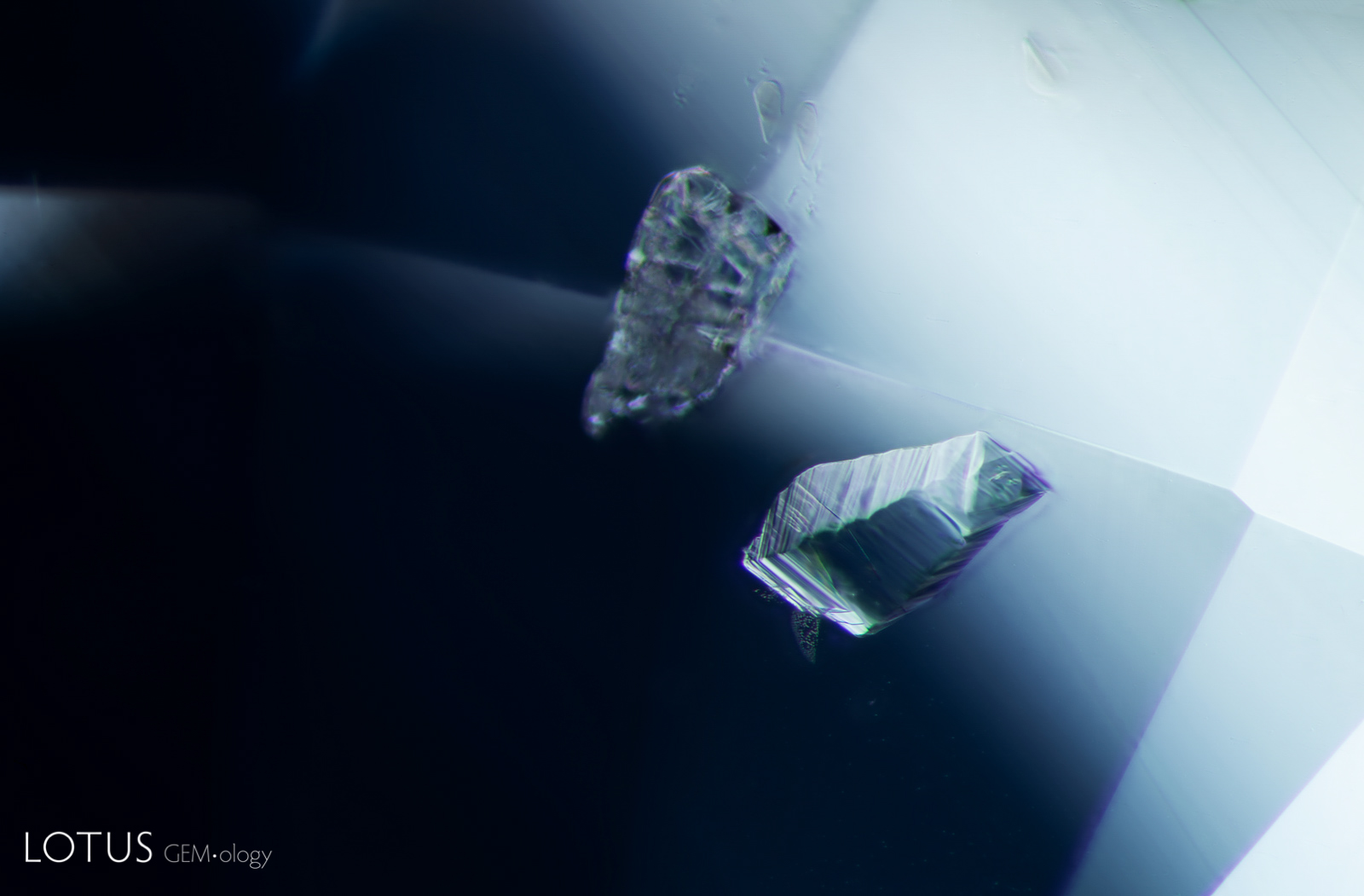
The calcite crystal (identified with raman spectroscopy) pictured here has a triangular zoning pattern on one end.
Natural Sapphire •
Sri Lanka (Ceylon) •
Enhancements:
None Detected (None) •
Lighting Conditions:
Dark Field + Blue Filter
Photographer:
E. Billie Hughes •
Image Number:
A-003-7256-1
• Field of View = 3mm
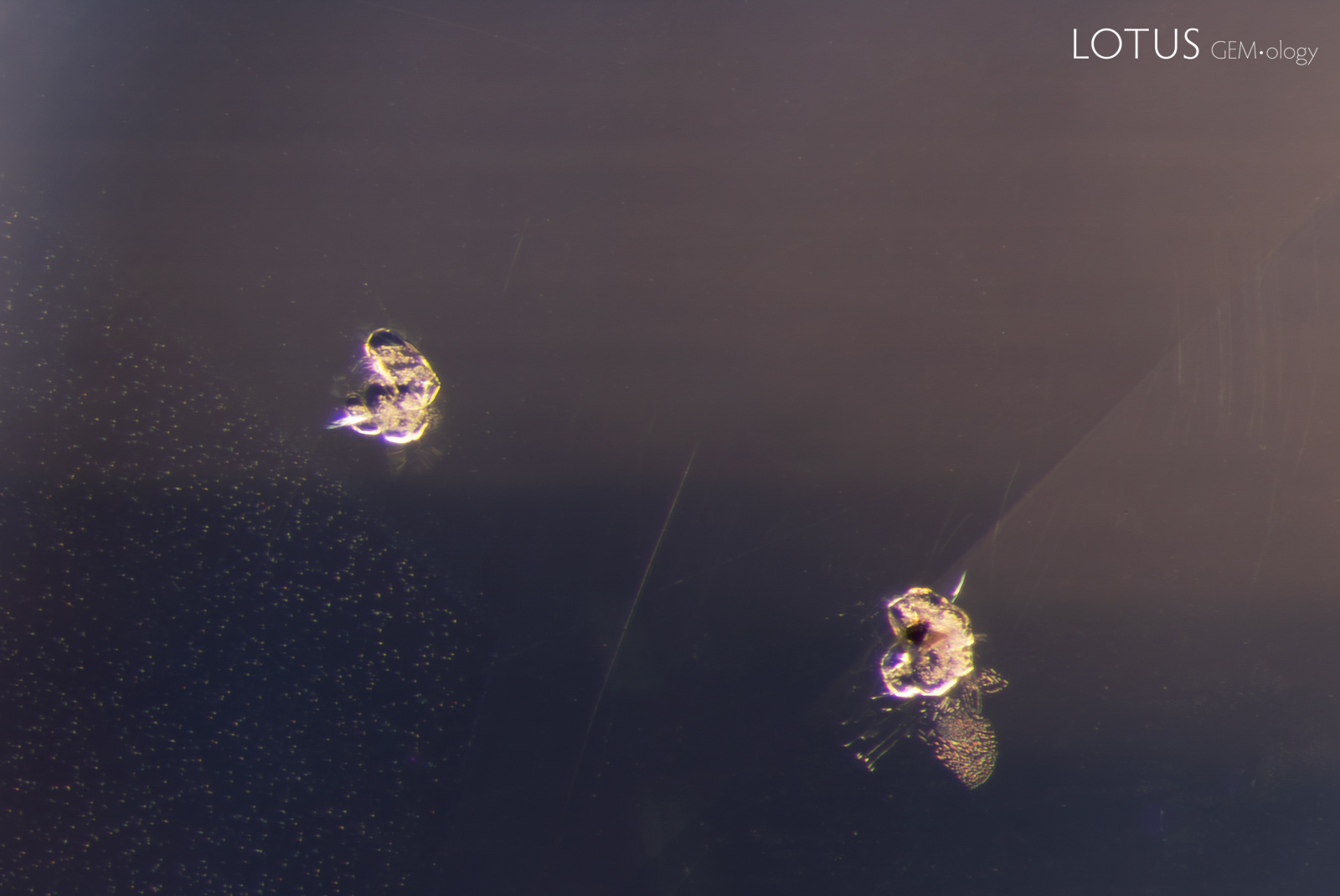
A pair of zircon crystals (identity confirmed with raman spectroscopy) are suspended in this blue sapphire that hails from Kashmir.
Natural Sapphire •
India (Kashmir) •
Enhancements:
None Detected (None) •
Lighting Conditions:
Dark Field
Photographer:
E. Billie Hughes •
Image Number:
A-003-7201-1
• Field of View = 2mm
A rounded zircon crystal is cut through in this untreated sapphire from Myanmar (Burma). Its identity was confirmed with micro Raman.
Natural Sapphire •
Myanmar (Burma); Mogok •
Enhancements:
None Detected (None) •
Lighting Conditions:
Fiber Optic: Oblique
Photographer:
Wimon Manorotkul •
Image Number:
A-003-6375-2
• Field of View = 3mm
Florida, 2100.
Natural Sapphire •
Basalt Related •
Enhancements:
Heat (H) •
Lighting Conditions:
Fiber Optic: Diffuse Overhead
Photographer:
Richard W. Hughes •
Image Number:
A-003-7264-2
• Field of View = 5mm
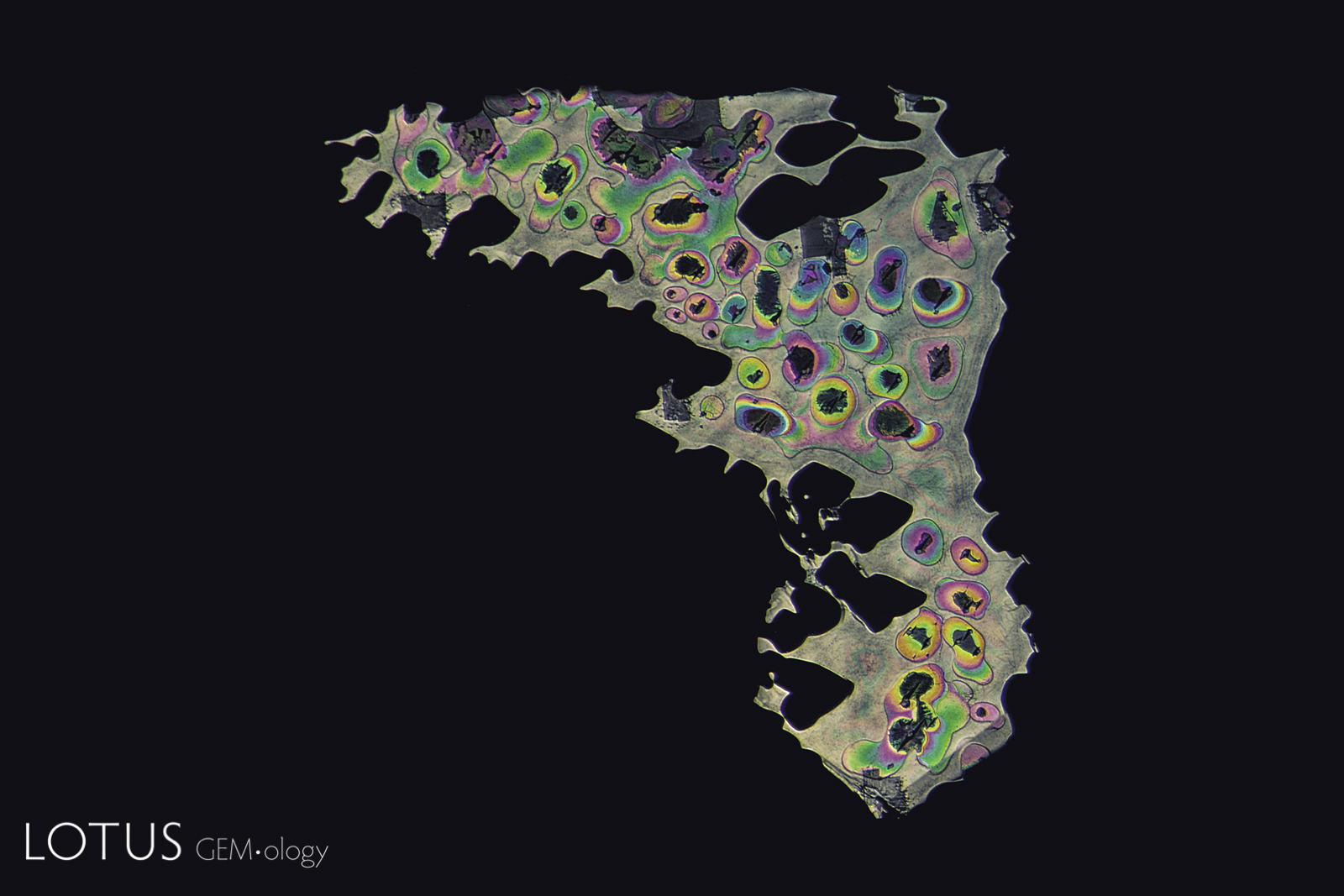
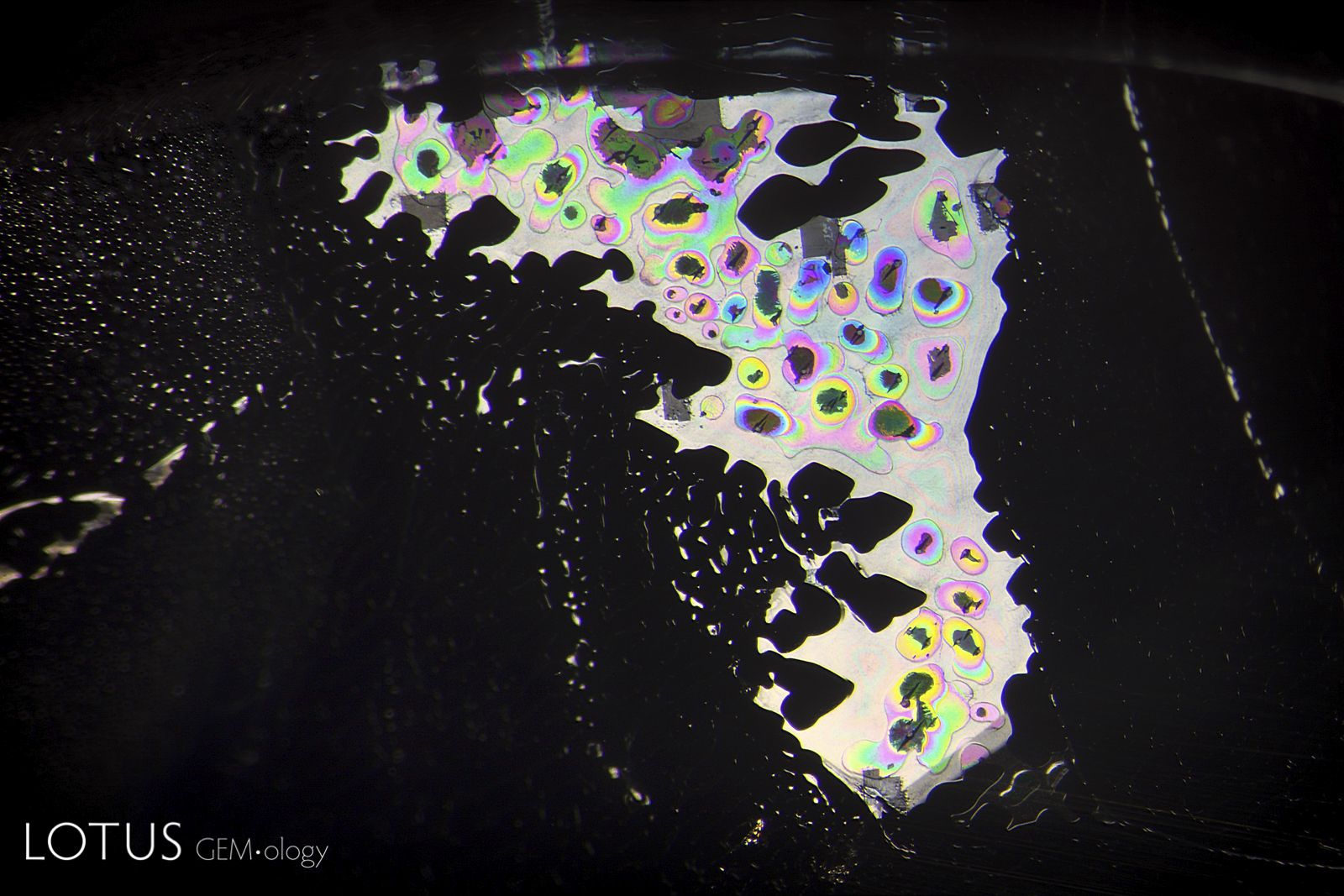
Photomicrography is no different than ordinary photography. It’s all about controlling light. In this case, a nondescript fluid inclusion in dark-field illumination morphed into a spectral spectacular when light was brought from above.
Natural Sapphire •
Basalt Related •
Enhancements:
Heat (H) •
Lighting Conditions:
Fiber Optic: Diffuse Overhead
Photographer:
Richard W. Hughes •
Image Number:
A-003-7264-1
• Field of View = 5mm
Koivula, J.I. (1982) Inclusions in a better light. Gemological Institute of America, Eash, D.M., ed., In International Gemological Symposium Proceedings, Santa Monica, CA, pp. 471–476; RWHL*.
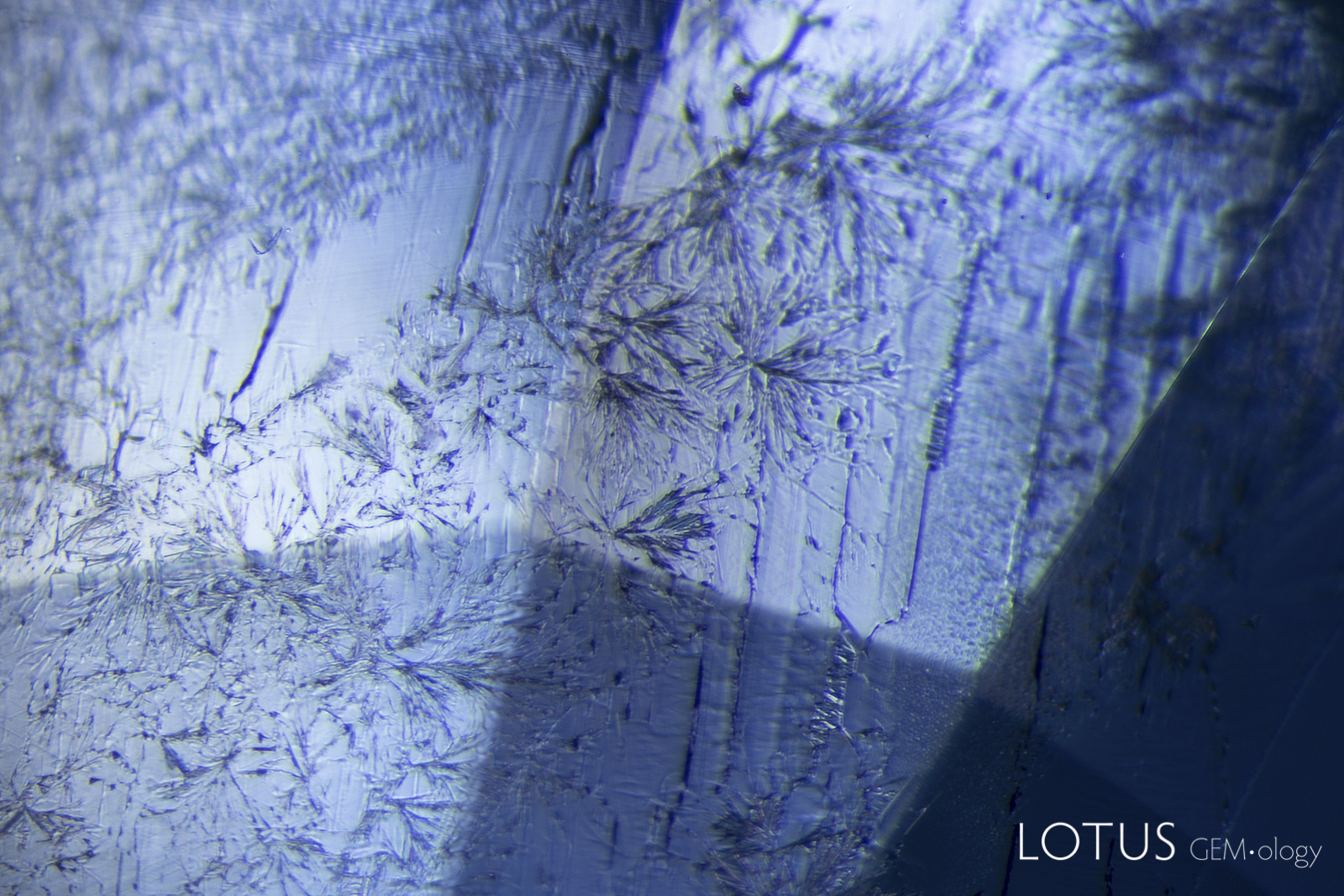
Burmese sapphires from the Mogok Stone Tract often contain fissures with a characteristic dendrite-like healing pattern such as that exhibited here. Such features represent subtle clues regarding their origin.
Natural Sapphire •
Myanmar (Burma); Mogok •
Enhancements:
None Detected (None) •
Lighting Conditions:
Fiber Optic: Oblique
Photographer:
Richard W. Hughes •
Image Number:
A-003-7025-2
• Field of View = 3mm
Sapphire inclusions may include mineral crystals, rutile silk, healed fissures, fluid inclusions, negative crystals, color zoning and other features formed during or after crystal growth. Such features are important to gemologists because they can provide evidence useful in identifying sapphire, understanding its geological history, recognizing treatment and, in some cases, determining geographic origin.
Sapphire Inclusion Photomicrographs
The Hyperion sapphire gallery includes microscopic features found in sapphires from major deposits around the world. Each entry is accompanied by descriptive information and, where available, references to the gemological literature.
What Inclusions Can Reveal About Sapphire
Inclusions are an important part of sapphire identification. Their form, composition, orientation and alteration can help gemologists distinguish natural sapphire from synthetic material, recognize evidence of heat treatment, and study the geological environment in which the sapphire formed.
Hyperion combines inclusion photomicrography with supporting gemological information so that individual features can be compared with documented examples from known sapphire deposits.
About Hyperion
Hyperion is the Lotus Gemology searchable inclusion database. It allows users to browse gemstone inclusions by gem type, geographic origin, treatment and keyword.