Sapphire Inclusions
Explore sapphire inclusions in Hyperion, the Lotus Gemology inclusion database. Hyperion contains photomicrographs of inclusions and internal features in natural sapphire, documented with information on geographic origin, treatment, lighting conditions, field of view, photographer and published references.
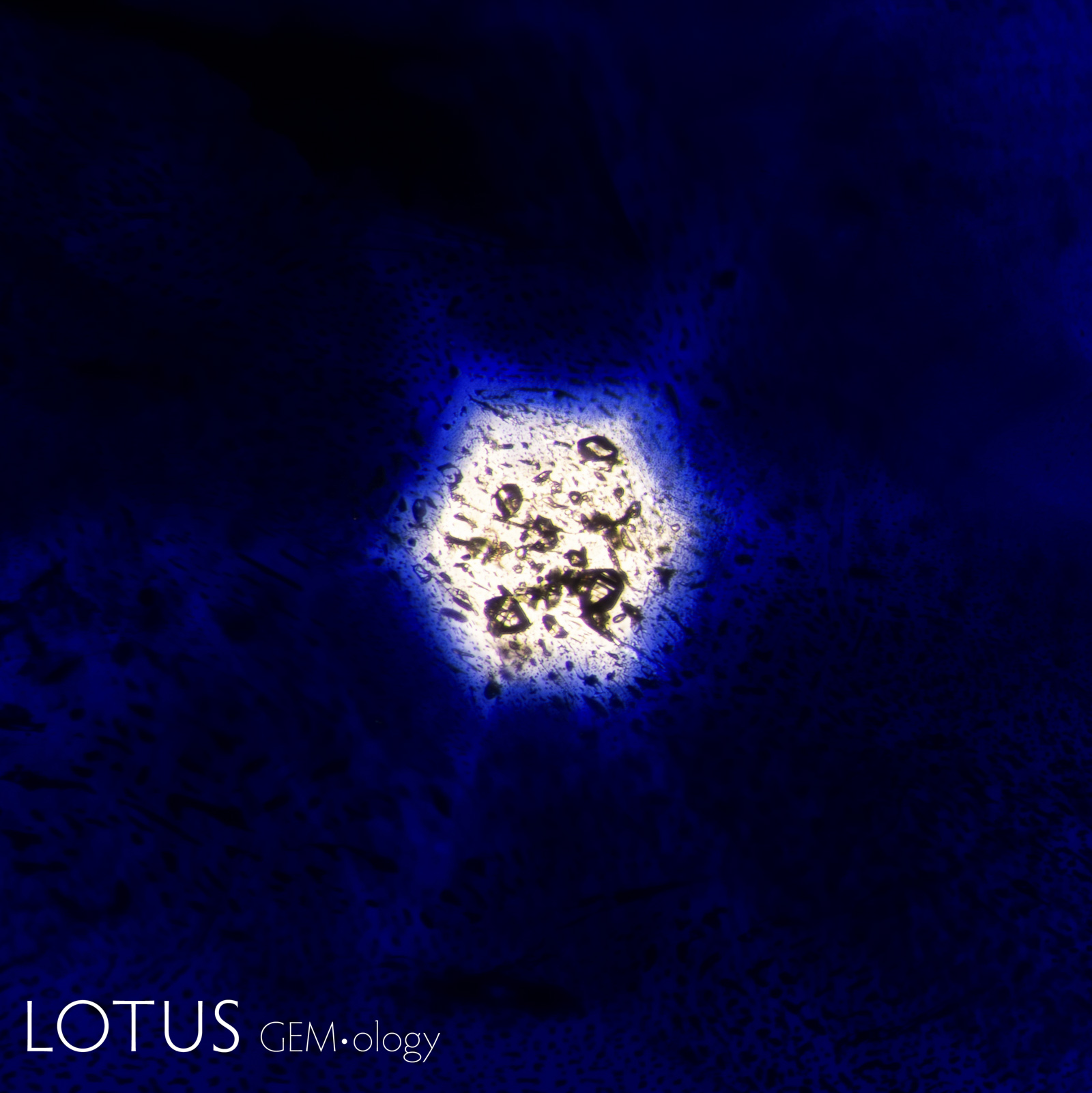
This dark blue sapphire from a metamorphic source was sliced thin perpendicular to the c-axis, revealing a pale yellow core with a concentration of transparent birefringent crystals.
Natural Sapphire •
Metamorphic •
Enhancements:
Fissure Filling with colorless Oil/resin (FF-O1); No indications of heating (No indications of heating) •
Lighting Conditions:
Light Field + Shadowing
Photographer:
Richard W. Hughes •
Image Number:
A-005-8233-1
• Field of View = 6mm
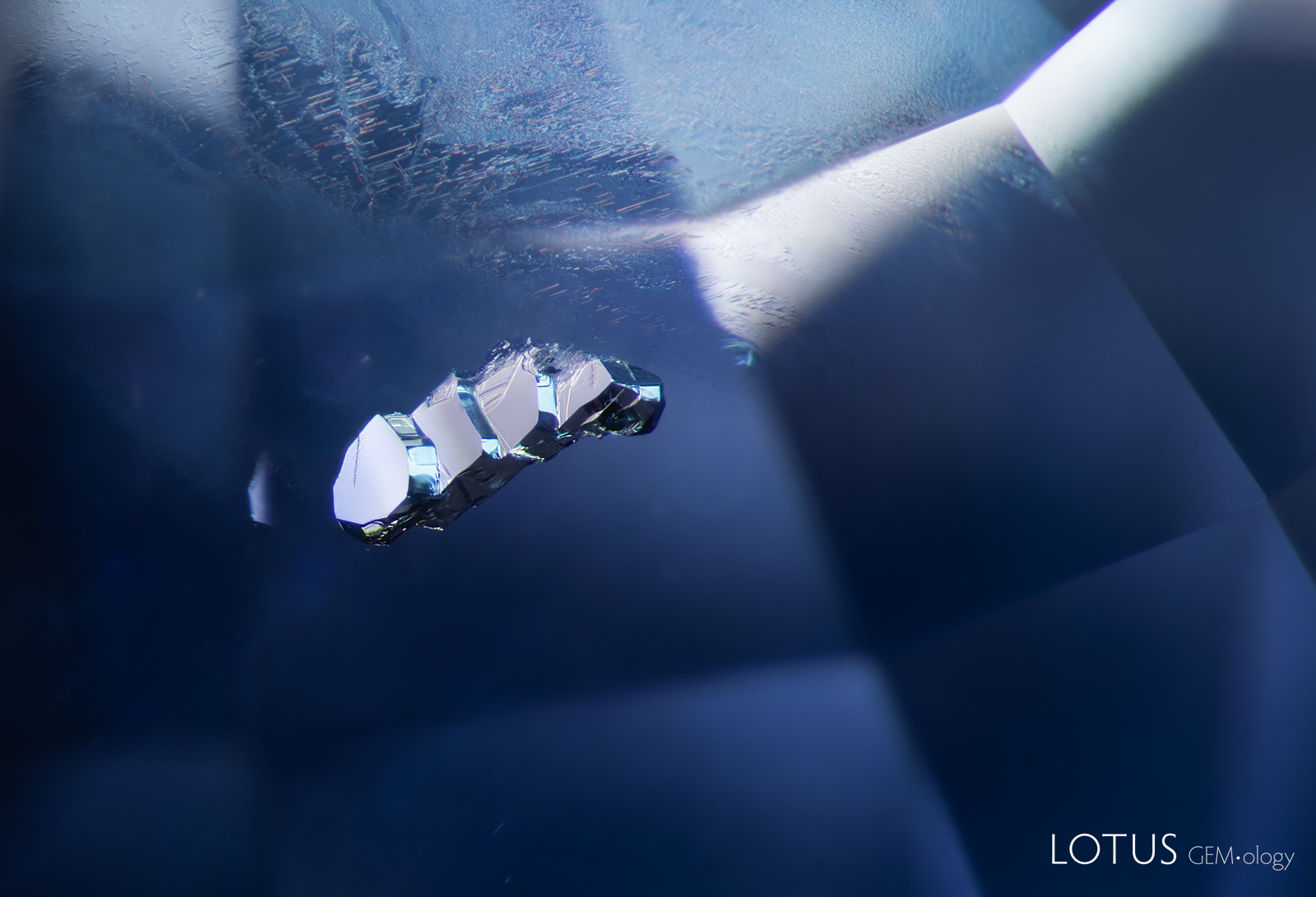
A terrace-like structure on this stacked negative crystal creates a distinctive internal landscape in this untreated sapphire from Sri Lanka. The large flat faces are basal pinacoid faces, which lie perpendicular to the c-axis.
Natural Sapphire •
Sri Lanka (Ceylon) •
Enhancements:
None Detected (None) •
Lighting Conditions:
Diffuse Dark Field + Diffuse Fiber Optic + Blue Filter
Photographer:
E. Billie Hughes •
Image Number:
A-005-7622-1
• Field of View = 4.5mm
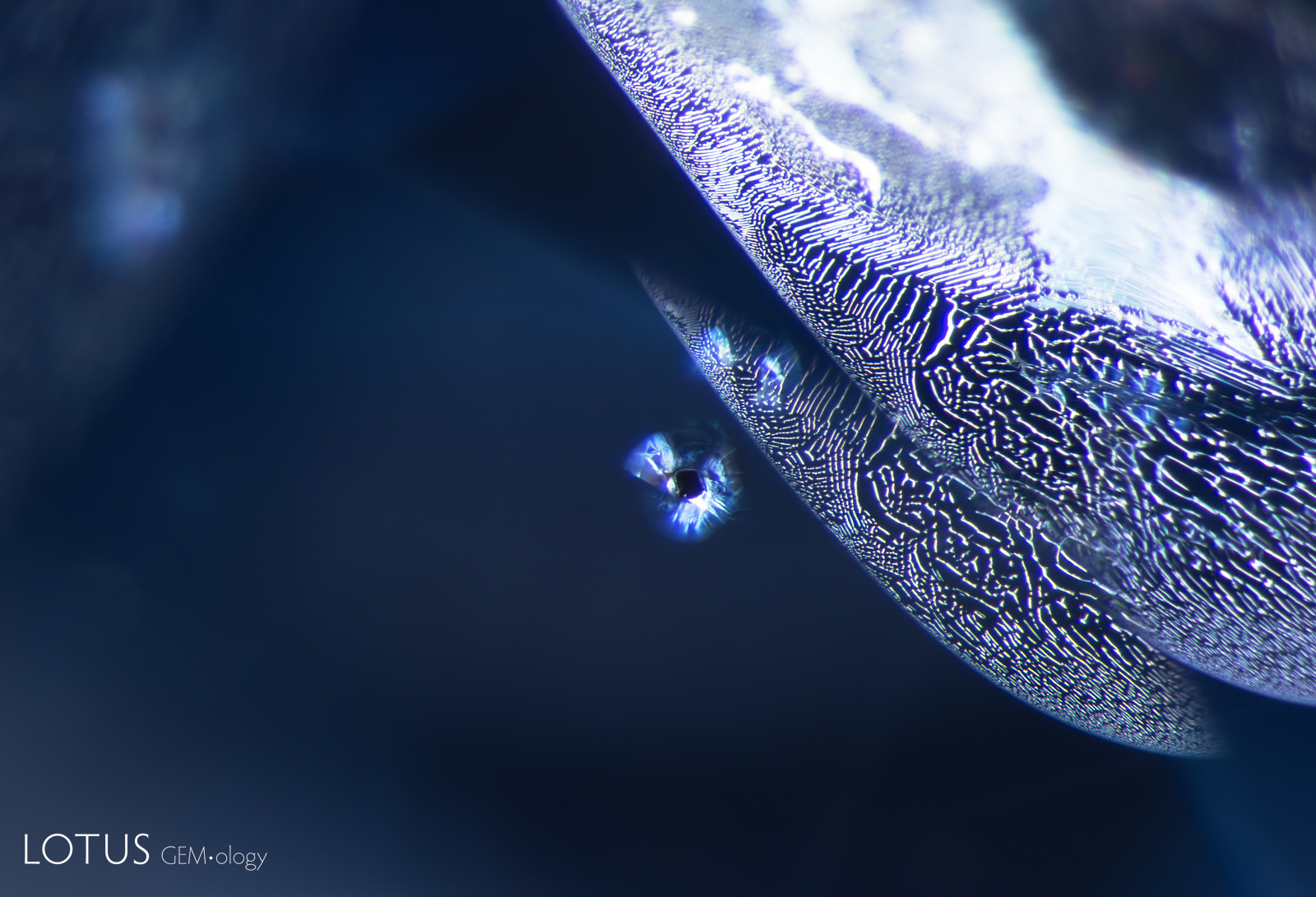
A tiny winged crystal, likely uraninite, peeks out from behind a fingerprint in this untreated Sri Lankan sapphire.
Natural Sapphire •
Sri Lanka (Ceylon) •
Enhancements:
None Detected (None) •
Lighting Conditions:
Diffuse Dark Field + Diffuse Fiber Optic + Blue Filter
Photographer:
E. Billie Hughes •
Image Number:
A-005-7587-4
• Field of View = 3.7mm
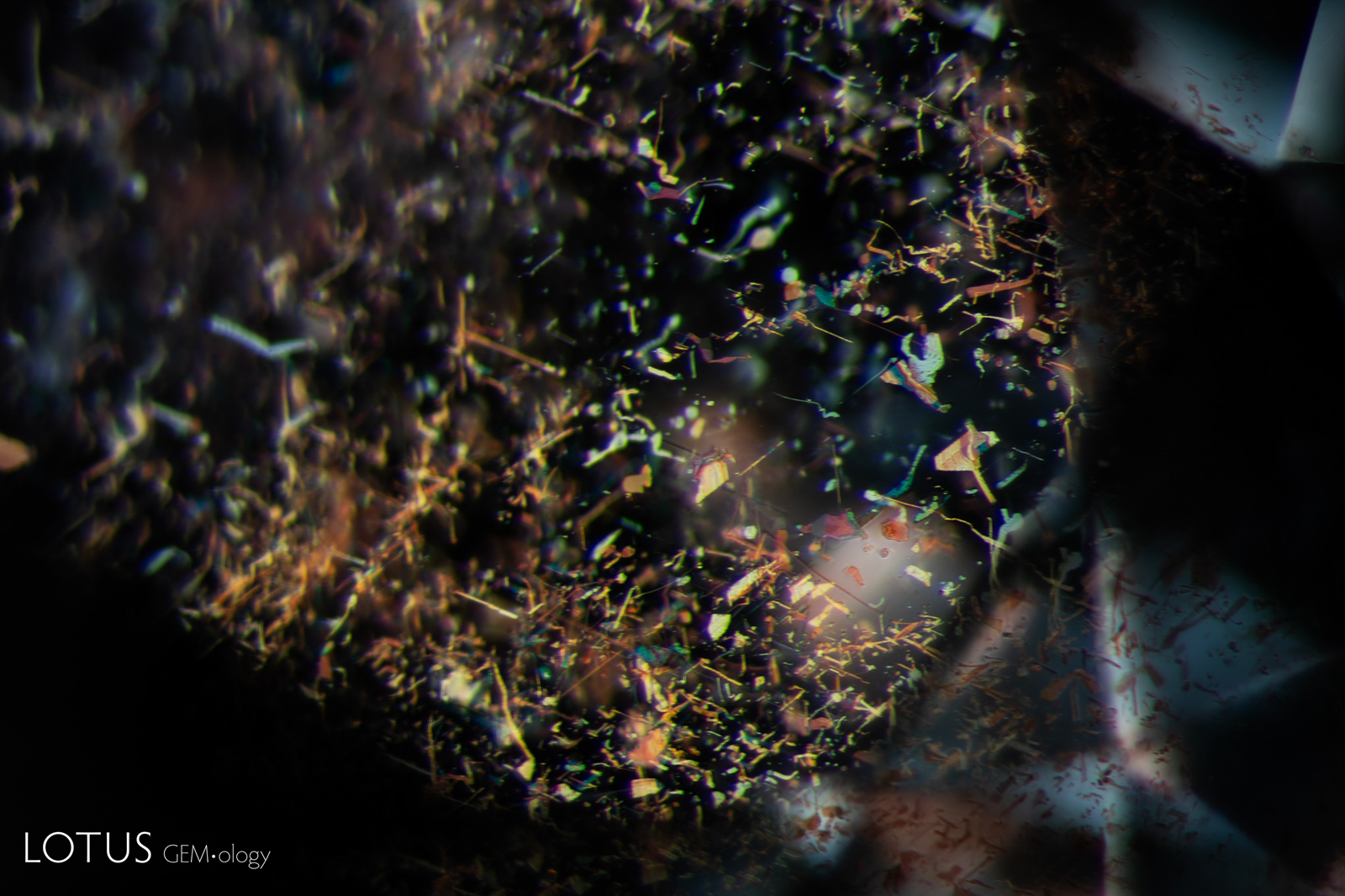
A cloud of irregularly shaped platelets creates a confetti-like appearance in this Songea sapphire. Specimen courtesy Nomad’s.
Natural Sapphire •
Tanzania; Songea •
Enhancements:
None Detected (None) •
Lighting Conditions:
Fiber Optic: Diffuse Oblique
Photographer:
E. Billie Hughes •
Image Number:
R-005-7703-1
• Field of View = 2.8mm
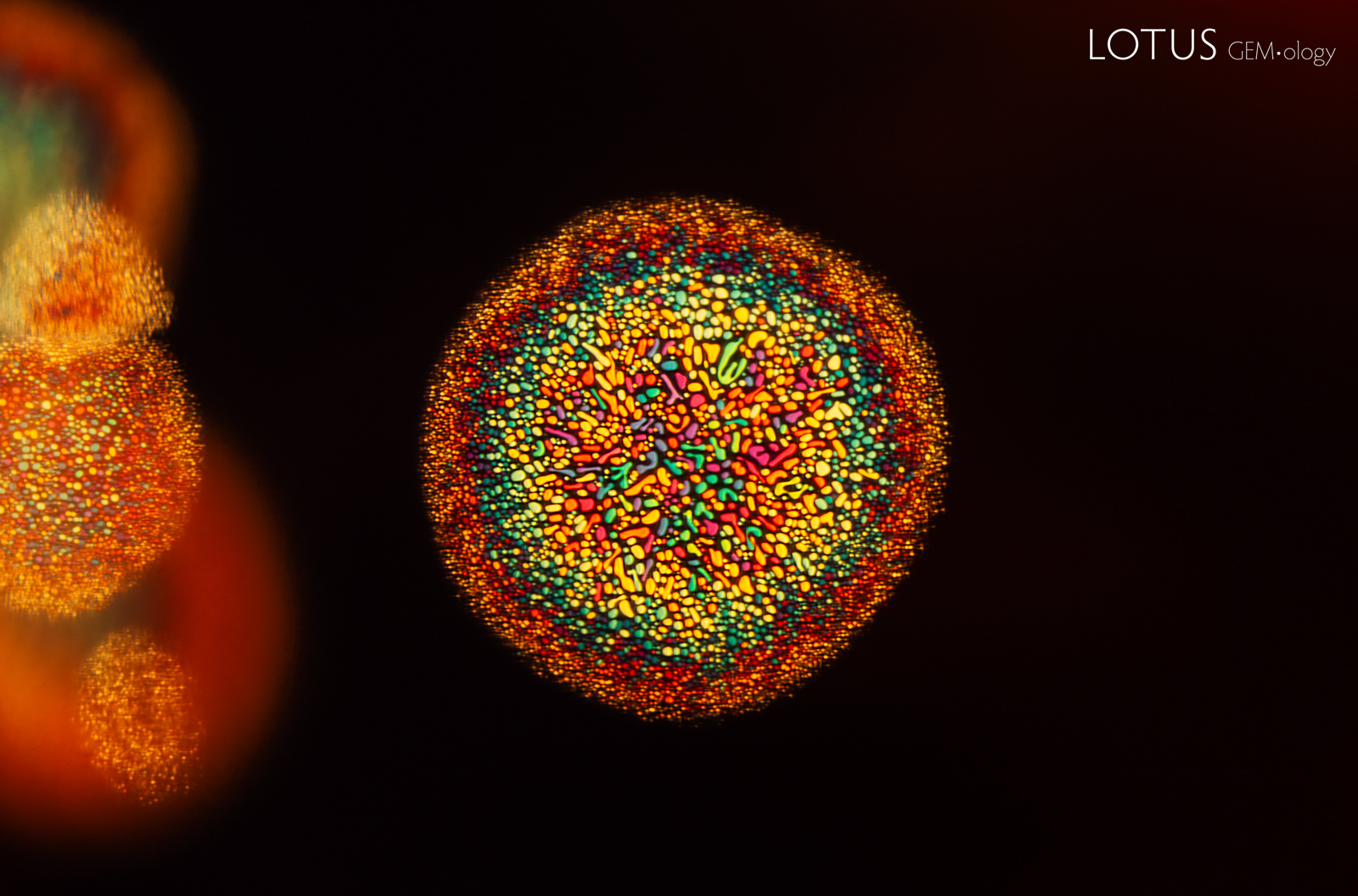
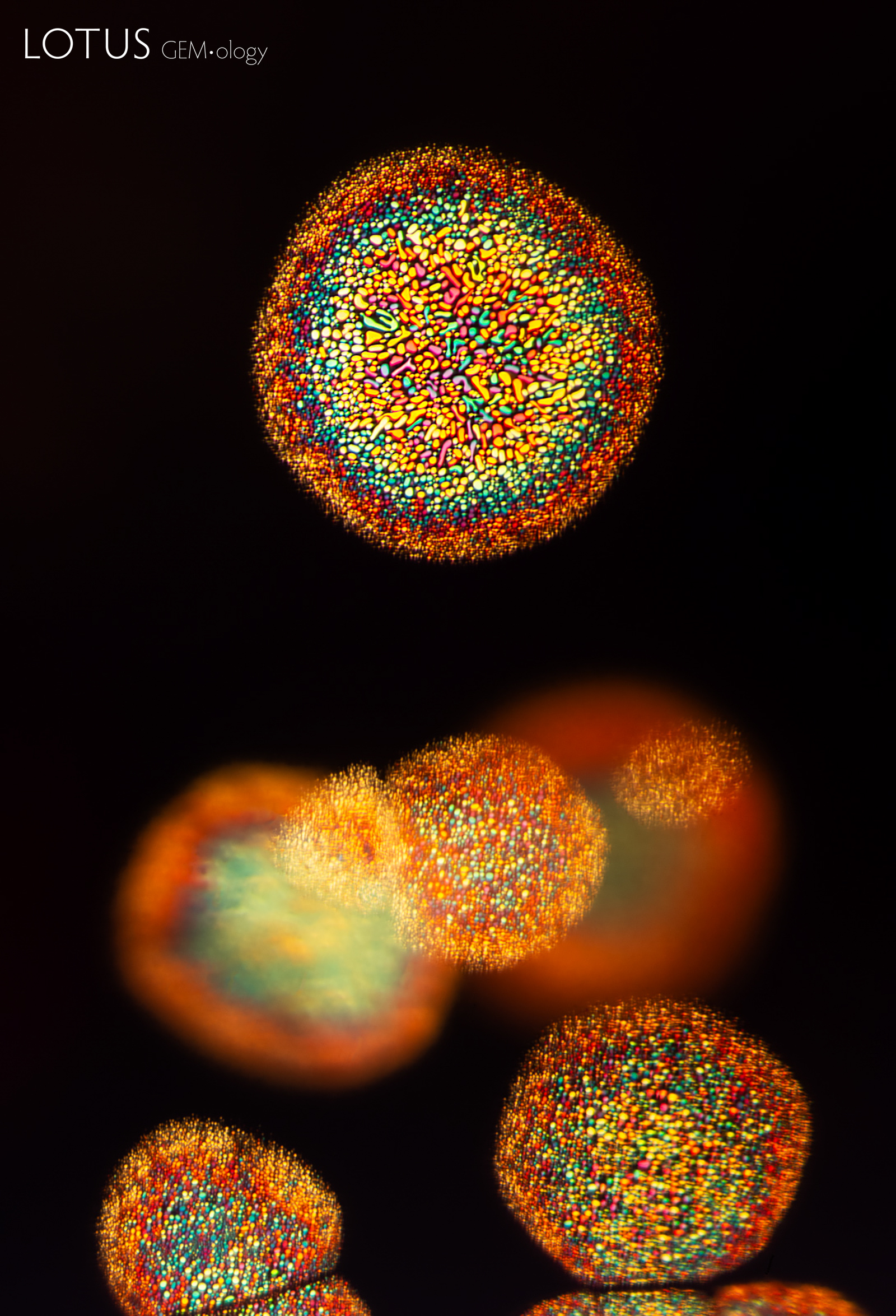
Thin film decrepitation inclusions create a firework display in this beryllium diffused orange sapphire. These likely developed as a consequence of the sapphire being heat treated.
Natural Sapphire •
No Origin •
Enhancements:
Heat + Diffusion of external coloring agents (H-D) •
Lighting Conditions:
Fiber Optic: Diffuse Oblique
Photographer:
E. Billie Hughes •
Image Number:
A-005-8053-5
• Field of View = 1.6mm
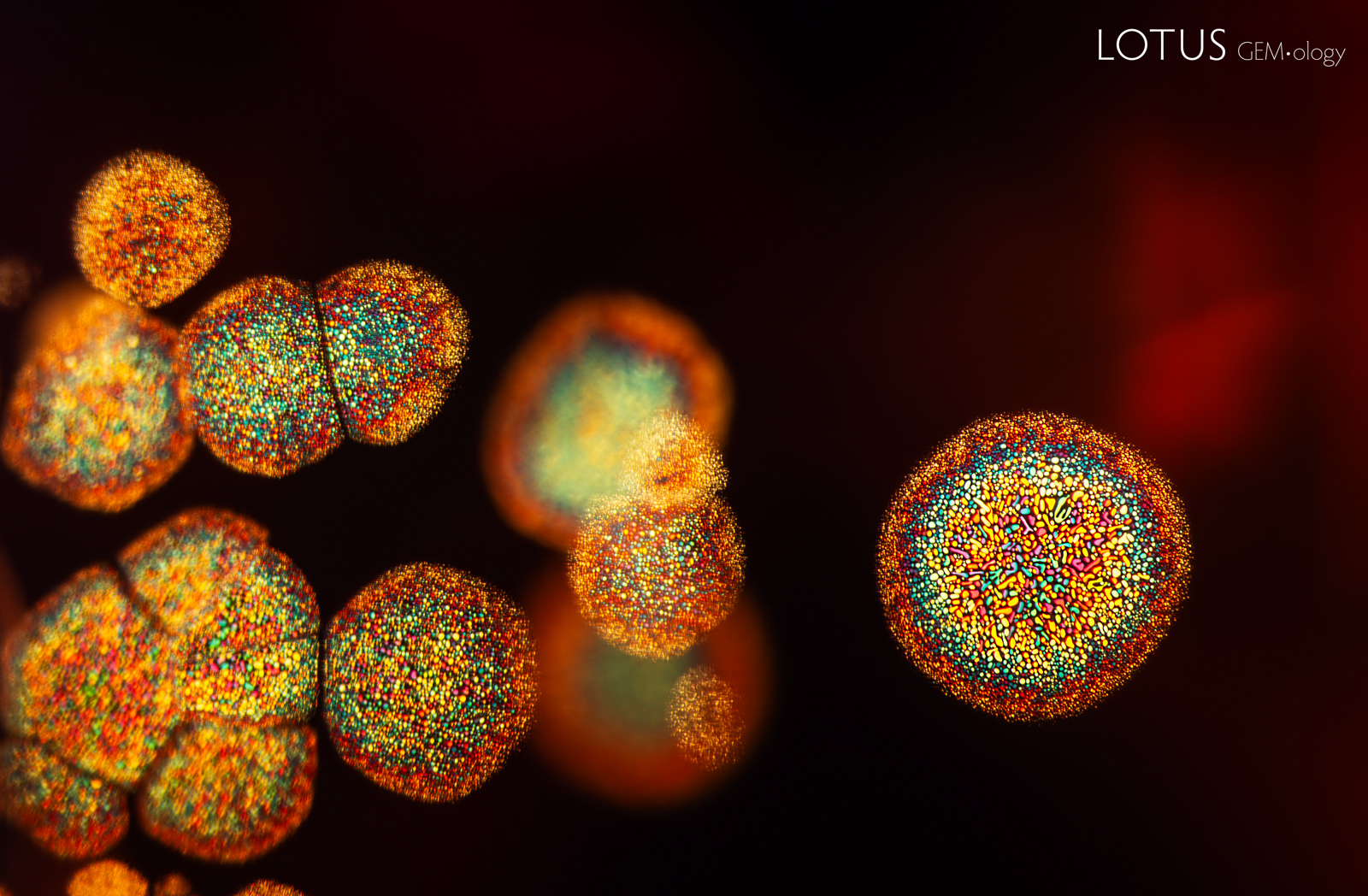
Thin film decrepitation inclusions create a firework display in this beryllium diffused orange sapphire. These likely developed as a consequence of the sapphire being heat treated.
Natural Sapphire •
No Origin •
Enhancements:
Heat + Diffusion of external coloring agents (H-D) •
Lighting Conditions:
Fiber Optic: Diffuse Oblique
Photographer:
E. Billie Hughes •
Image Number:
A-005-8053-3
• Field of View = 1.8mm
Thin film decrepitation inclusions create a firework display in this beryllium diffused orange sapphire. These likely developed as a consequence of the sapphire being heat treated.
Natural Sapphire •
No Origin •
Enhancements:
Heat + Diffusion of external coloring agents (H-D) •
Lighting Conditions:
Fiber Optic: Diffuse Oblique
Photographer:
E. Billie Hughes •
Image Number:
A-005-8053-2
• Field of View = 2.2mm
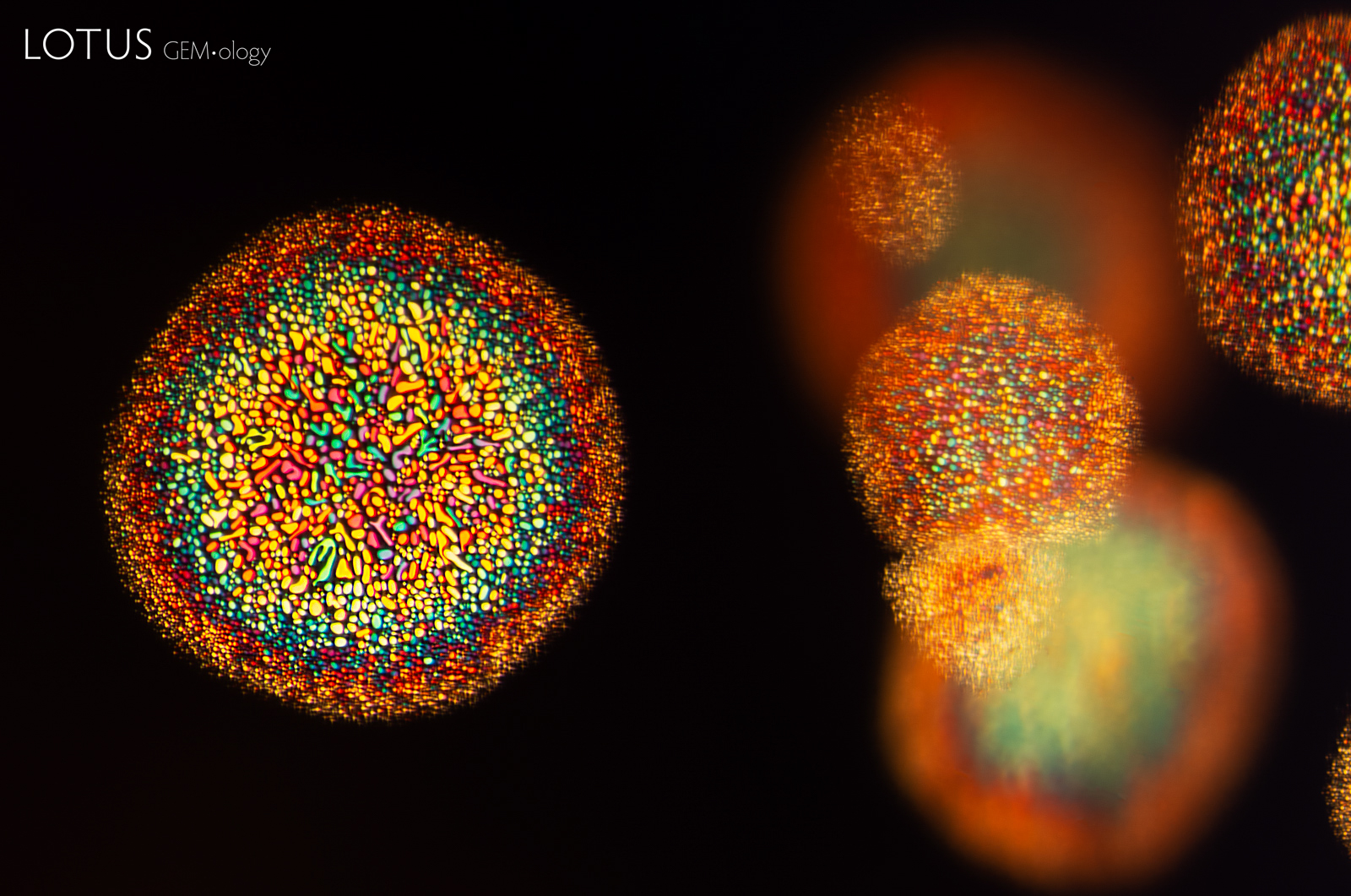
Thin film decrepitation inclusions create a firework display in this beryllium diffused orange sapphire. These likely developed as a consequence of the sapphire being heat treated.
Natural Sapphire •
No Origin •
Enhancements:
Heat + Diffusion of external coloring agents (H-D) •
Lighting Conditions:
Dark Field + Diffuse Fiber Optic
Photographer:
E. Billie Hughes •
Image Number:
A-005-8053-1
• Field of View = 3mm
Mirroring the play of light on water, thin-film inclusions shimmer within this sapphire.
Natural Sapphire •
USA (Montana); Yogo Gulch •
Enhancements:
None Detected (None) •
Lighting Conditions:
Fiber Optic: Diffuse Oblique
Photographer:
Natcha Rattana-anan •
Image Number:
A-005-7608-3
• Field of View = 1.8mm
• Magnification = 10x
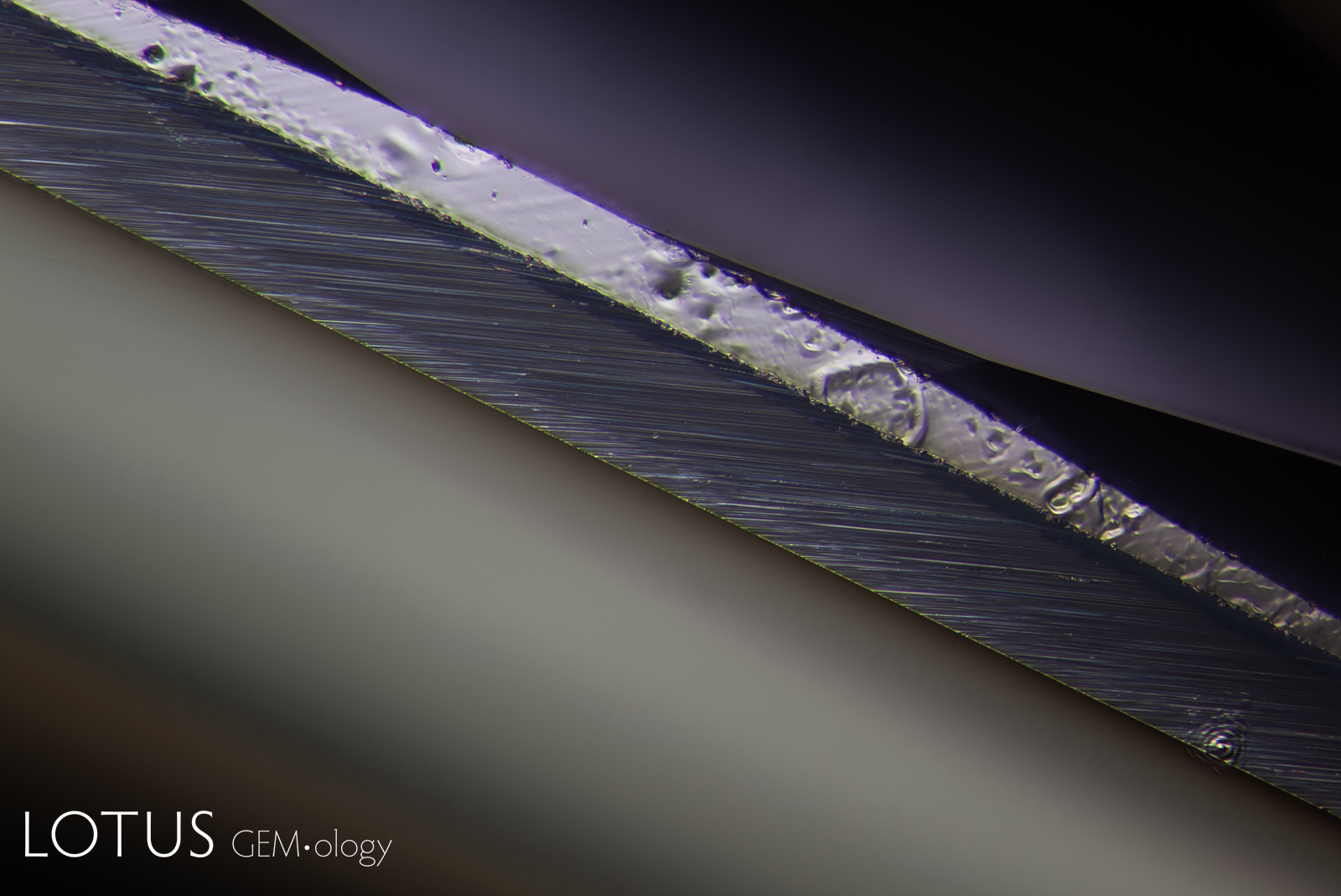
The high temperature that this blue sapphire from Madagascar was exposed to during beryllium diffusion treatment melted part of the girdle of the stone. Also, in the lower right corner of the photo is the tiny ablation spot that the LIBS created in order to detect the beryllium.
Natural Sapphire •
Madagascar •
Enhancements:
Heat + Diffusion of external coloring agents (H-D) •
Lighting Conditions:
Diffuse Dark Field with Blue Filter + Diffuse Fibre Optic
Photographer:
Kaylan Khourie •
Image Number:
A-005-2634-3
• Field of View = 2.8mm
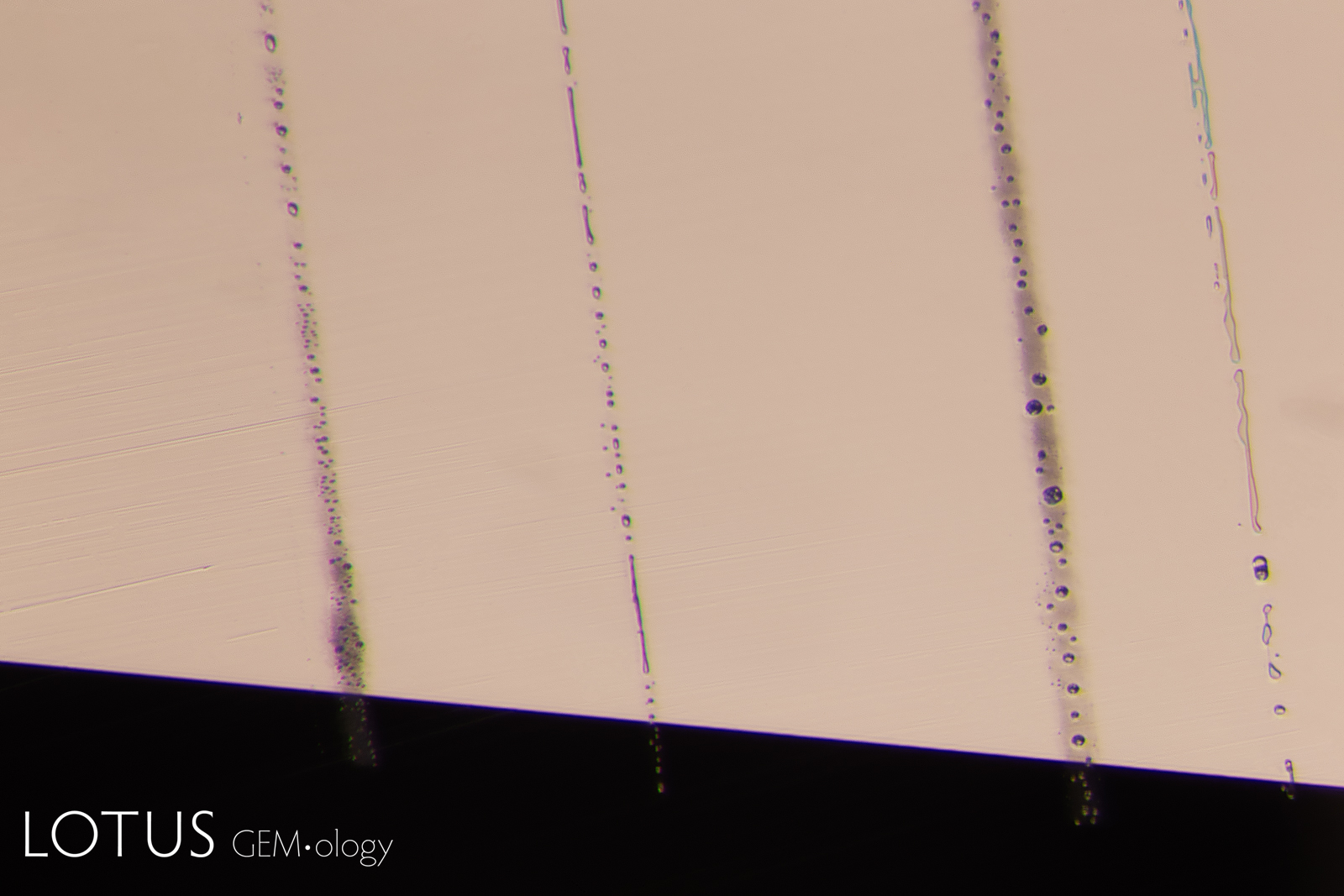
The rose channels in this Madagascar blue sapphire have melted and begun to “neck down” due to the high temperature it was exposed to during beryllium diffusion treatment.
Natural Sapphire •
Madagascar •
Enhancements:
Heat + Diffusion of external coloring agents (H-D) •
Lighting Conditions:
Diffuse Dark Field
Photographer:
Kaylan Khourie •
Image Number:
A-005-2634-1
• Field of View = 1.6mm
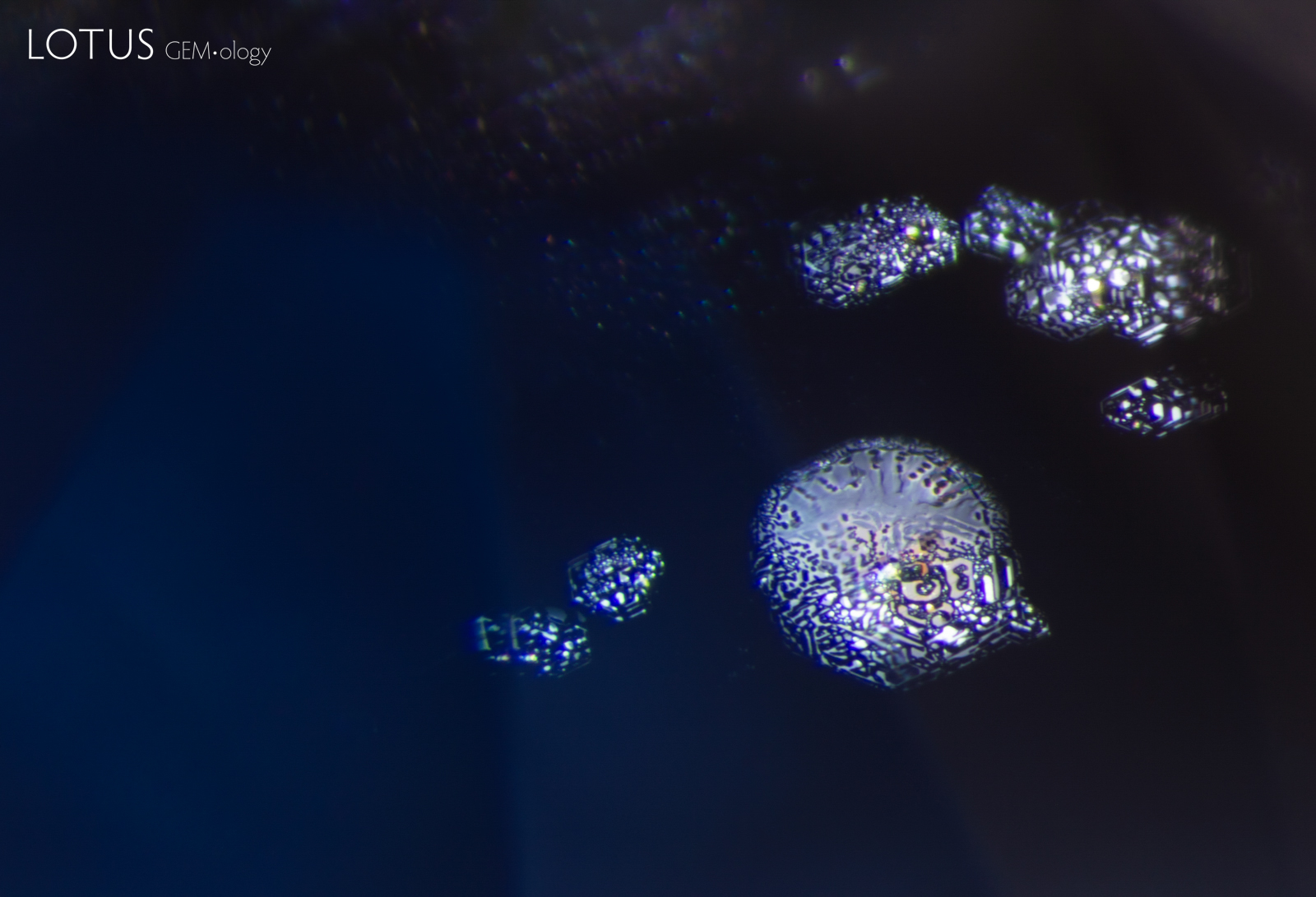
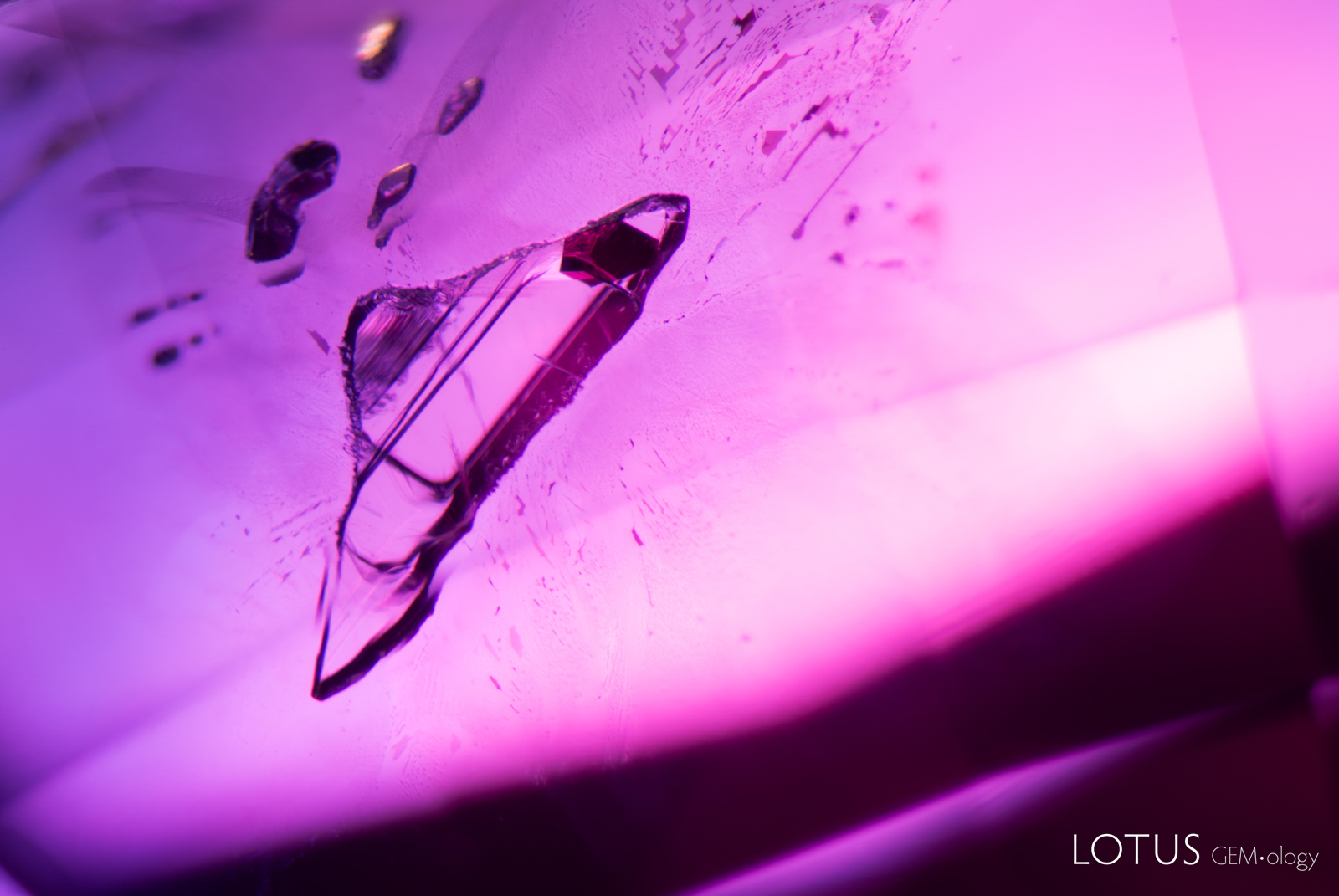
As the gas bubble contracts under fiber-optic light heating, only prismatic dark crystals and diaspore needles remain in this negative crystal.
Natural Sapphire •
Sri Lanka (Ceylon) •
Enhancements:
None Detected (None) •
Lighting Conditions:
Dark Field + Diffuse Fiber Optic + Shadowing
Photographer:
Natcha Rattana-anan •
Image Number:
A-005-6712-3
• Field of View = 3.6mm
• Magnification = 5x
Sapphire inclusions may include mineral crystals, rutile silk, healed fissures, fluid inclusions, negative crystals, color zoning and other features formed during or after crystal growth. Such features are important to gemologists because they can provide evidence useful in identifying sapphire, understanding its geological history, recognizing treatment and, in some cases, determining geographic origin.
Sapphire Inclusion Photomicrographs
The Hyperion sapphire gallery includes microscopic features found in sapphires from major deposits around the world. Each entry is accompanied by descriptive information and, where available, references to the gemological literature.
What Inclusions Can Reveal About Sapphire
Inclusions are an important part of sapphire identification. Their form, composition, orientation and alteration can help gemologists distinguish natural sapphire from synthetic material, recognize evidence of heat treatment, and study the geological environment in which the sapphire formed.
Hyperion combines inclusion photomicrography with supporting gemological information so that individual features can be compared with documented examples from known sapphire deposits.
About Hyperion
Hyperion is the Lotus Gemology searchable inclusion database. It allows users to browse gemstone inclusions by gem type, geographic origin, treatment and keyword.