Sapphire Inclusions
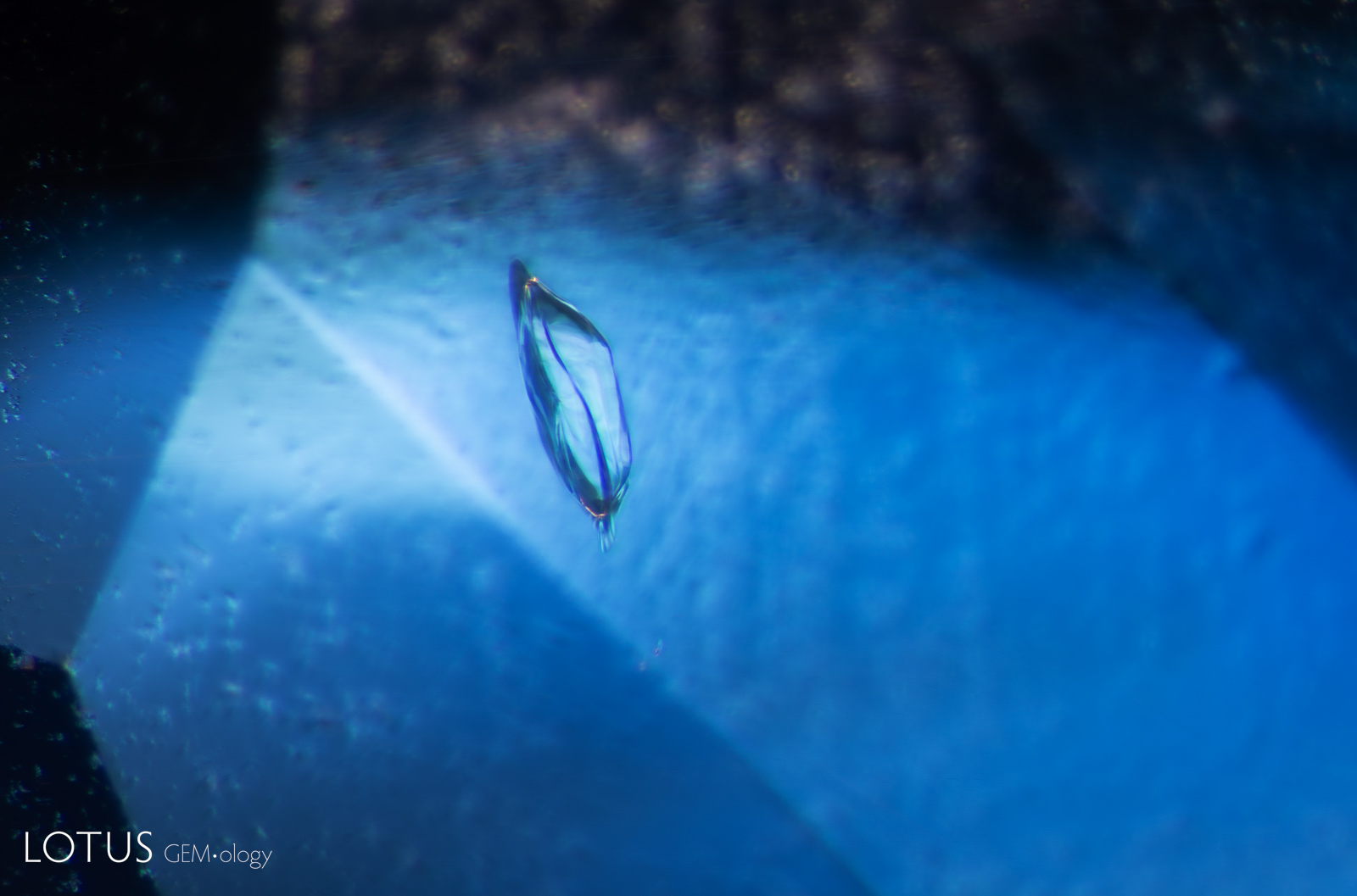
Explore sapphire inclusions in Hyperion, the Lotus Gemology inclusion database. Hyperion contains photomicrographs of inclusions and internal features in natural sapphire, documented with information on geographic origin, treatment, lighting conditions, field of view, photographer and published references.
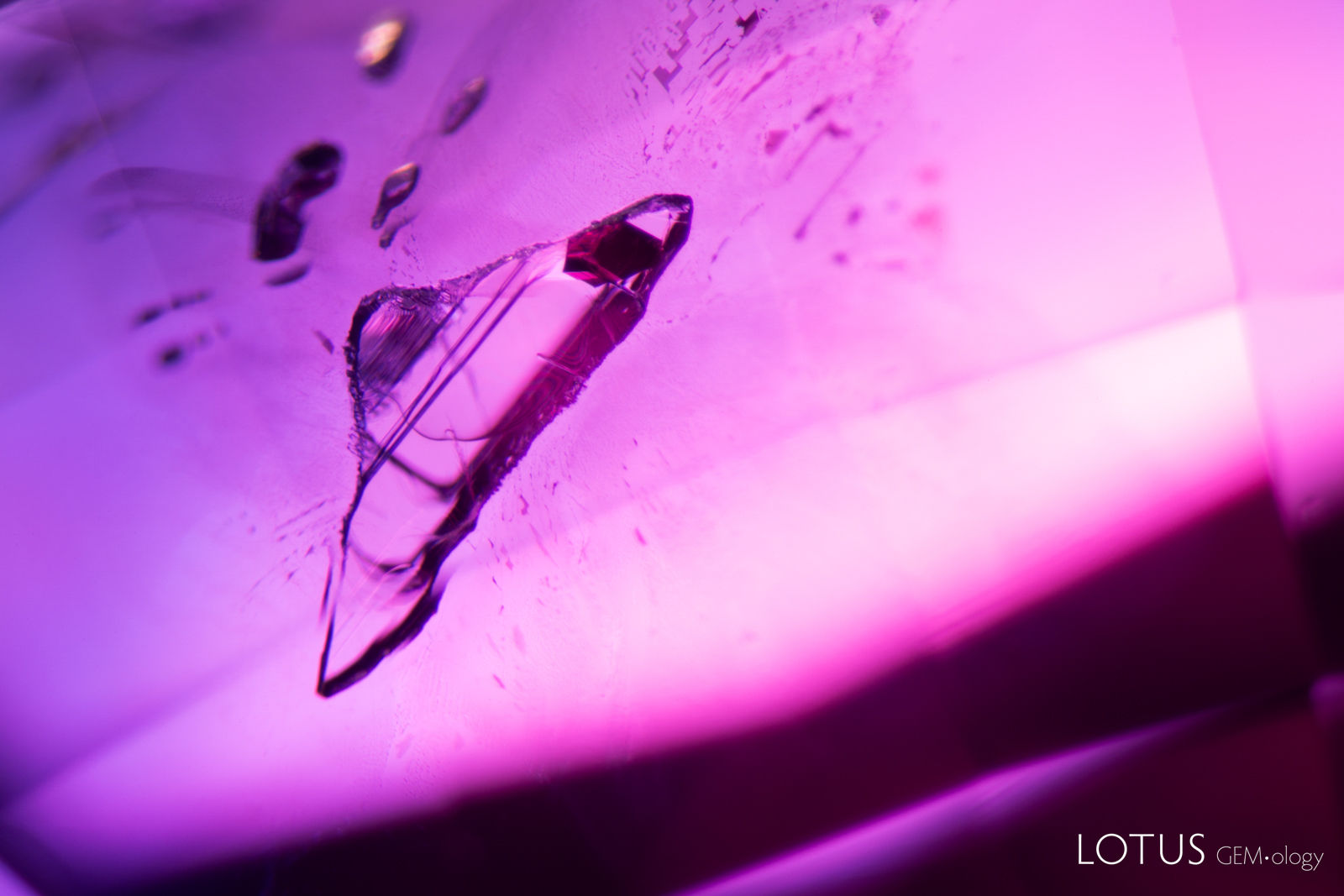
This negative crystal within a ruby contains a gas bubble, which contracts under heating from the fiber-optic light, accompanied by prismatic dark crystals and fine diaspore needles.
Natural Sapphire •
Sri Lanka (Ceylon) •
Enhancements:
None Detected (None) •
Lighting Conditions:
Dark Field + Diffuse Fiber Optic + Shadowing
Photographer:
Natcha Rattana-anan •
Image Number:
A-005-6712-2
• Field of View = 3.6mm
• Magnification = 5x
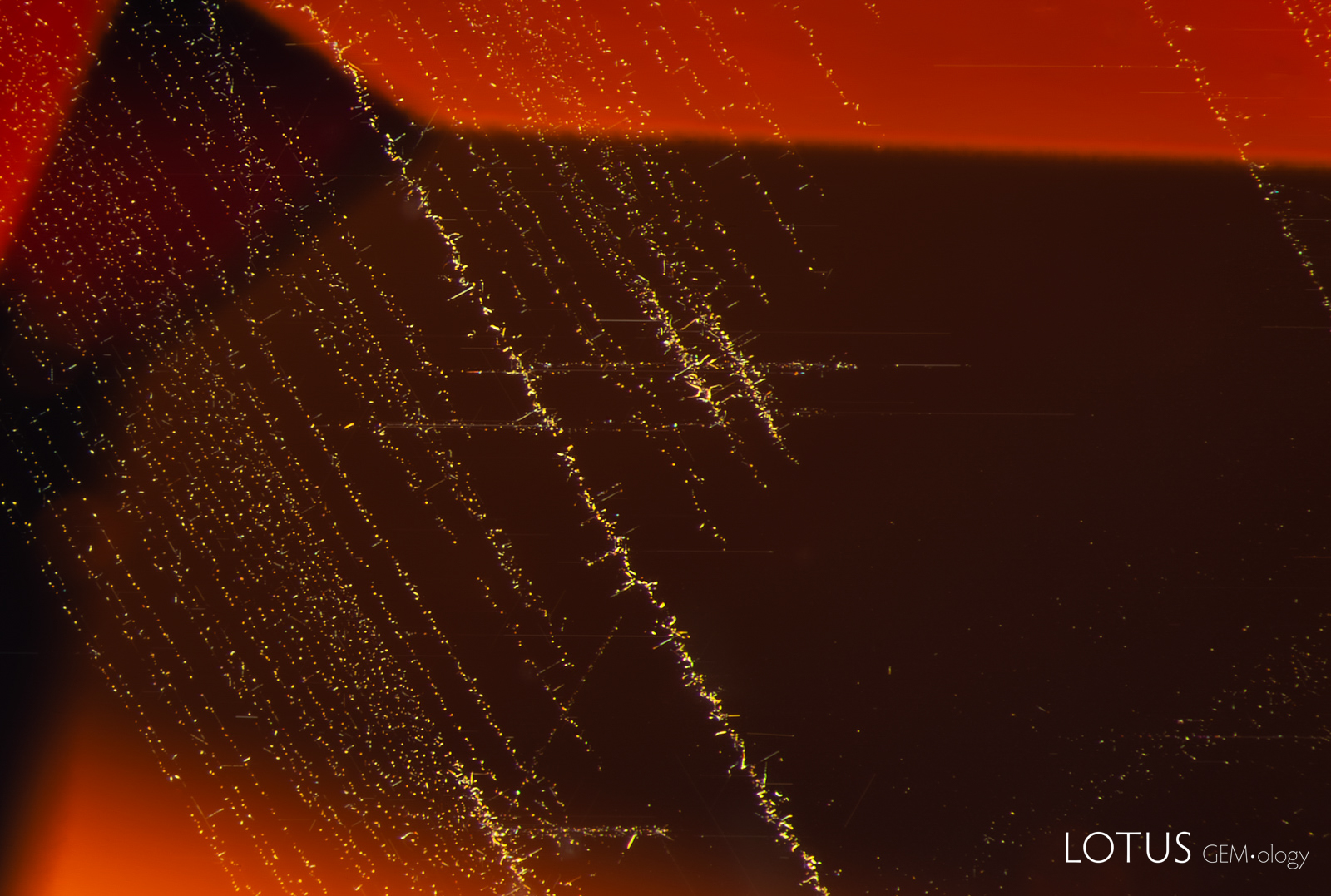
In yellow and orange sapphires from Chanthaburi, Thailand, a thin layer of iron-rich silk is often found just under the table.
Natural Sapphire •
Thailand (Siam); Chanthaburi •
Enhancements:
None Detected (None) •
Lighting Conditions:
Dark Field + Diffuse Fiber Optic
Photographer:
E. Billie Hughes •
Image Number:
A-005-7369-1
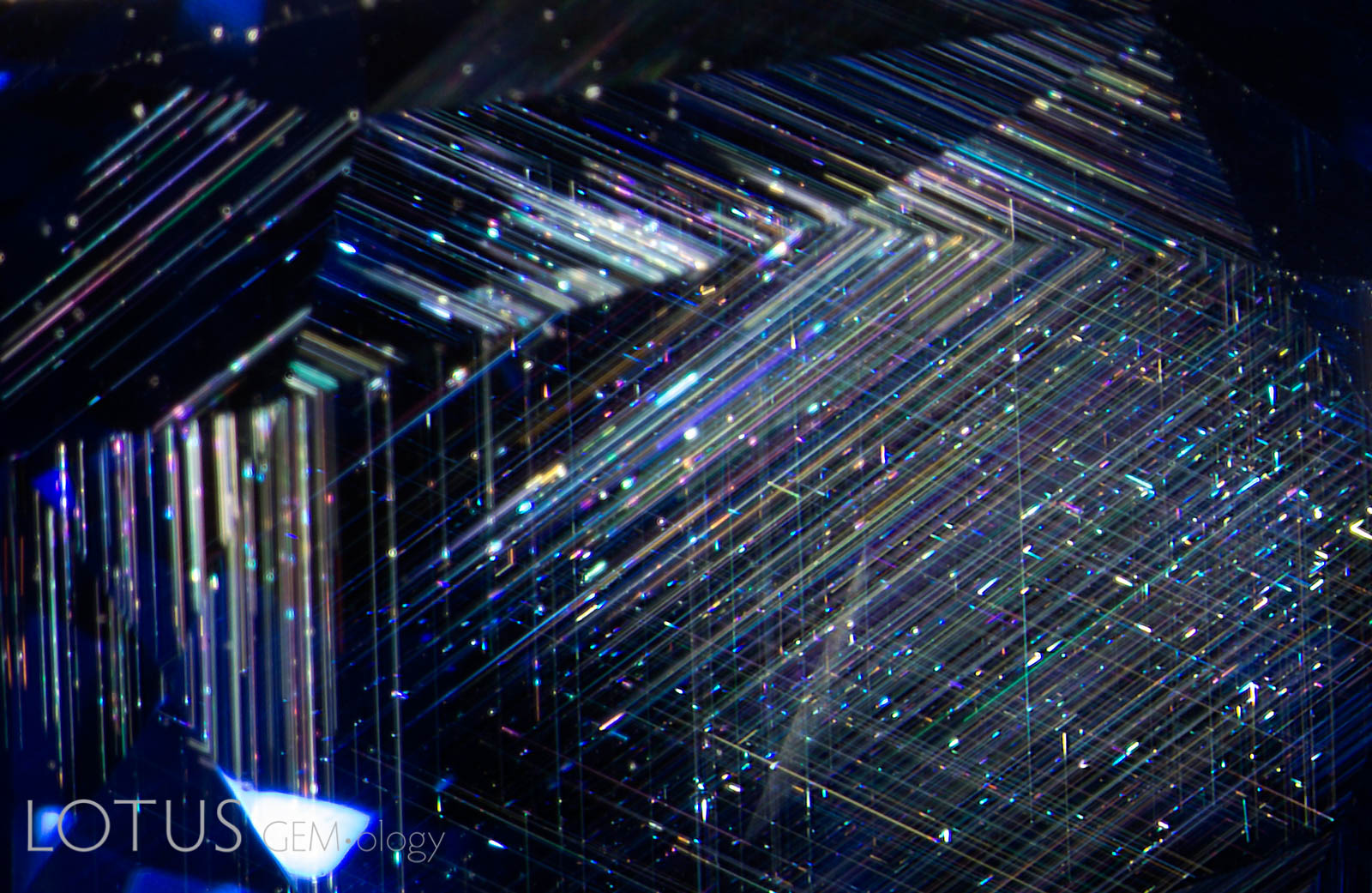
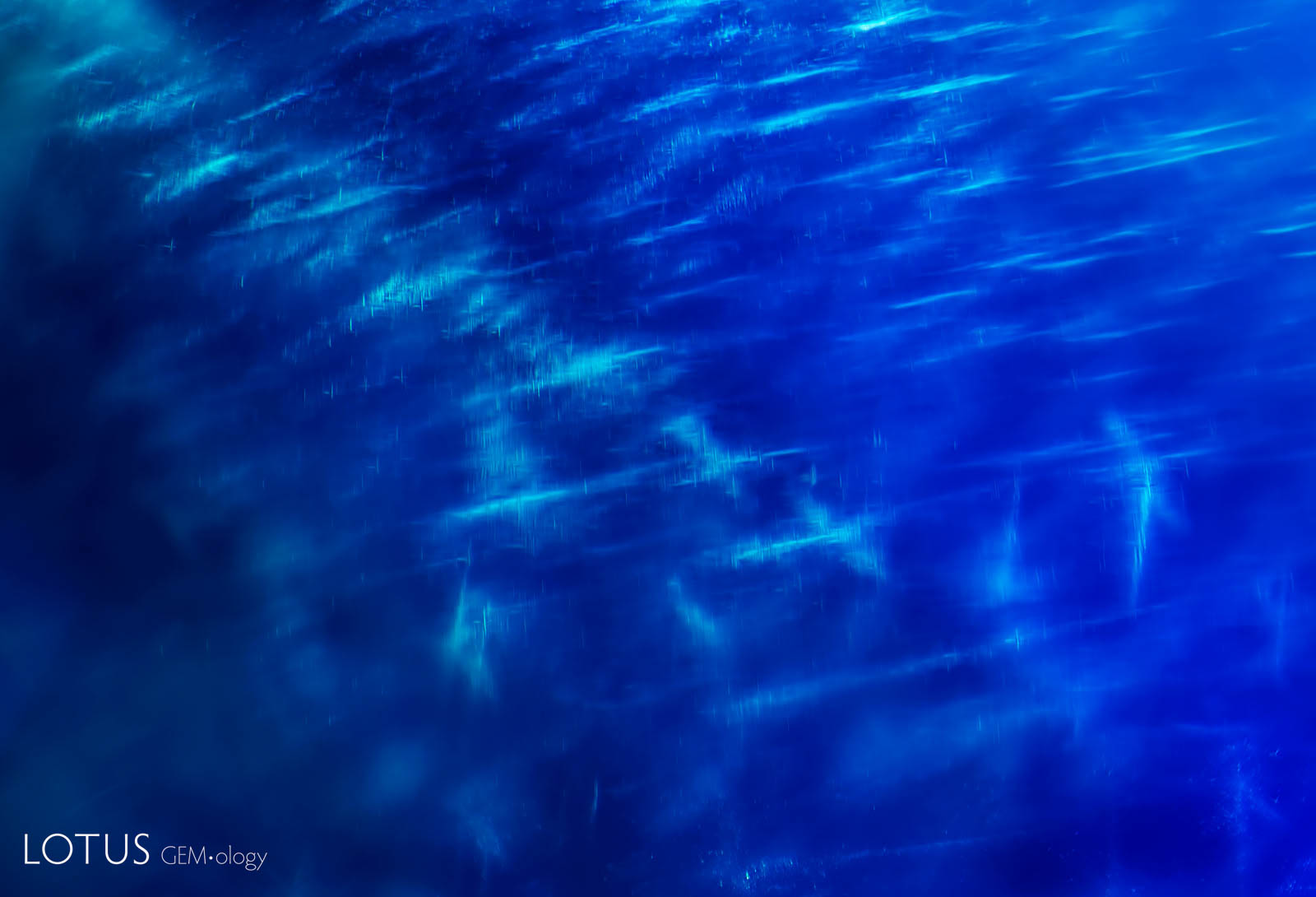
This cornflower blue sapphire features fine unaltered rutile silk needles in intersecting planes; a common sight in sapphires from Myanmar (Burma).
Natural Sapphire •
Myanmar (Burma); Mogok/Namya •
Enhancements:
None Detected (None) •
Lighting Conditions:
Fiber Optic: Oblique
Photographer:
Wimon Manorotkul •
Image Number:
A-005-2094-1
• Field of View = 2.8mm
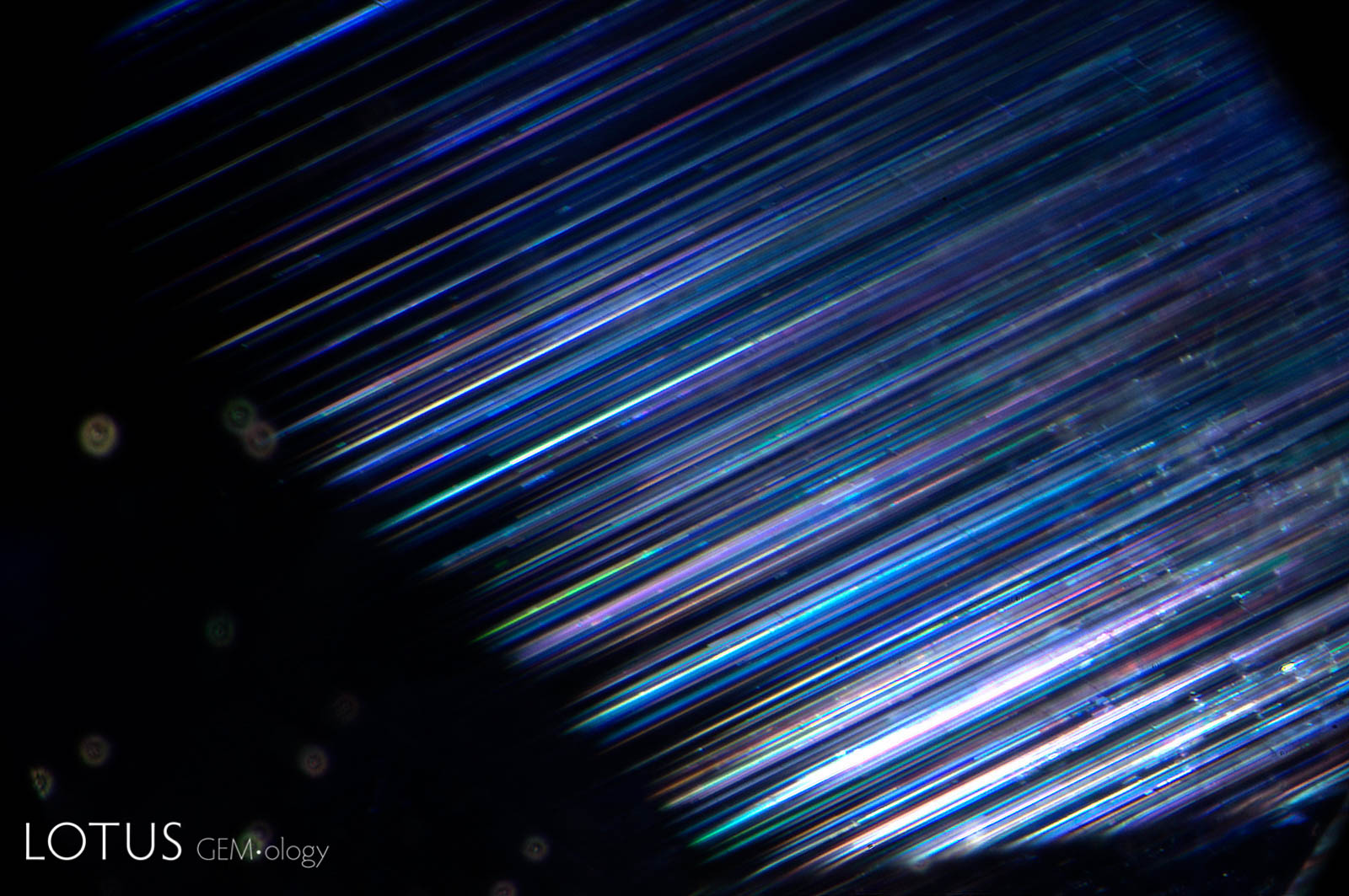
Exsolved rutile silk in Ceylon blue sapphire. The rutile unmixes in three directions at 60/120° in the plane of the basal pinacoid.
Natural Sapphire •
Sri Lanka (Ceylon) •
Enhancements:
None Detected (None) •
Lighting Conditions:
Photographer:
Wimon Manorotkul •
Image Number:
P-10018-1
Exsolved rutile silk in Ceylon blue sapphire. The rutile unmixes in three directions at 60/120° in the plane of the basal pinacoid.
Natural Sapphire •
Sri Lanka (Ceylon) •
Enhancements:
None Detected (None) •
Lighting Conditions:
Photographer:
Wimon Manorotkul •
Image Number:
P-10018-2
Zoned particles in Kashmir sapphire.
Natural Sapphire •
India (Kashmir) •
Enhancements:
None Detected (None) •
Lighting Conditions:
Fiber Optic: Oblique
Photographer:
Wimon Manorotkul •
Image Number:
A-005-0669-3
• Field of View = 2.3mm
Stellate cottony silk in Kashmir sapphire.
Natural Sapphire •
India (Kashmir) •
Enhancements:
None Detected (None) •
Lighting Conditions:
Fiber Optic: Oblique
Photographer:
Wimon Manorotkul •
Image Number:
A-005-0669-2
• Field of View = 4.1mm
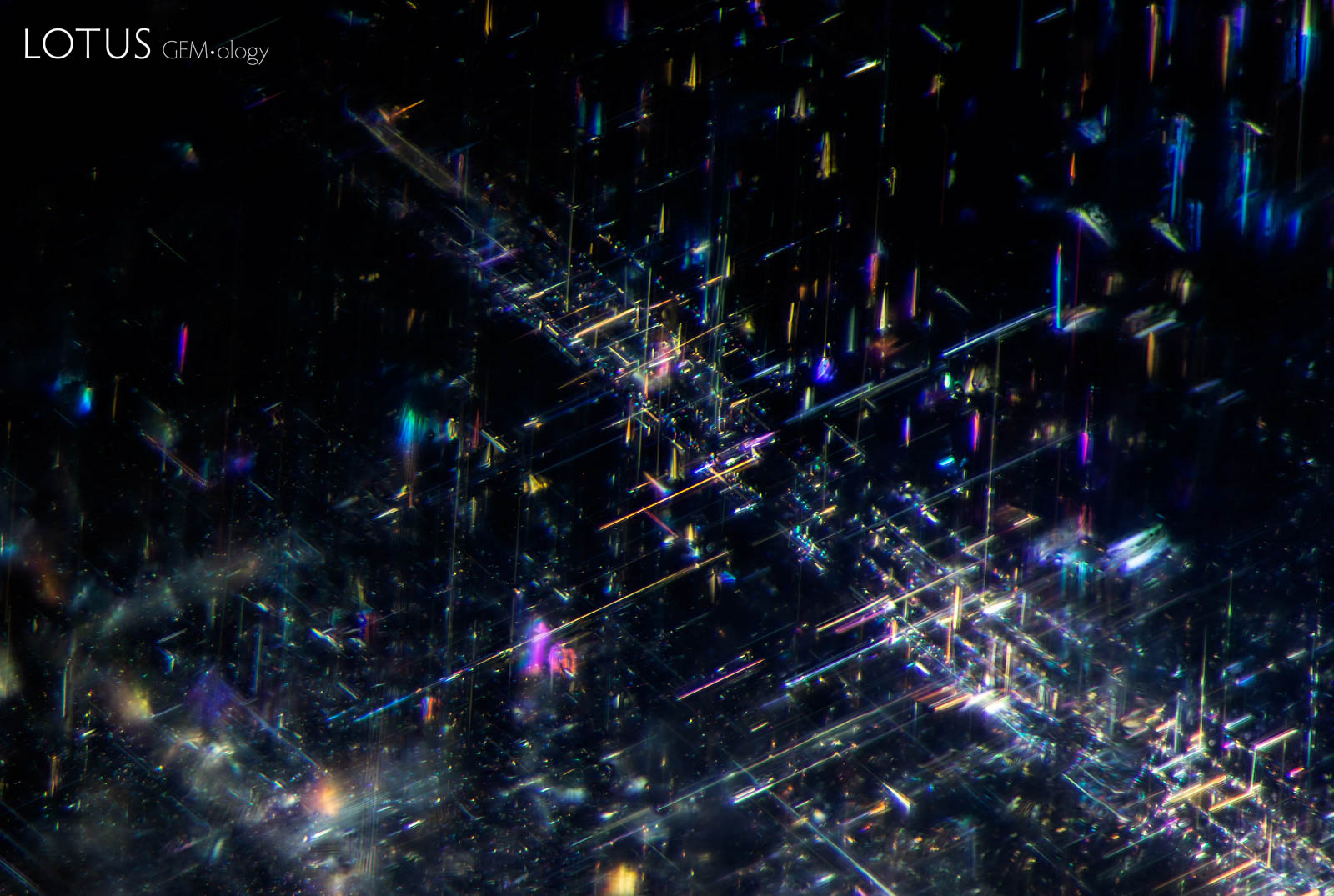
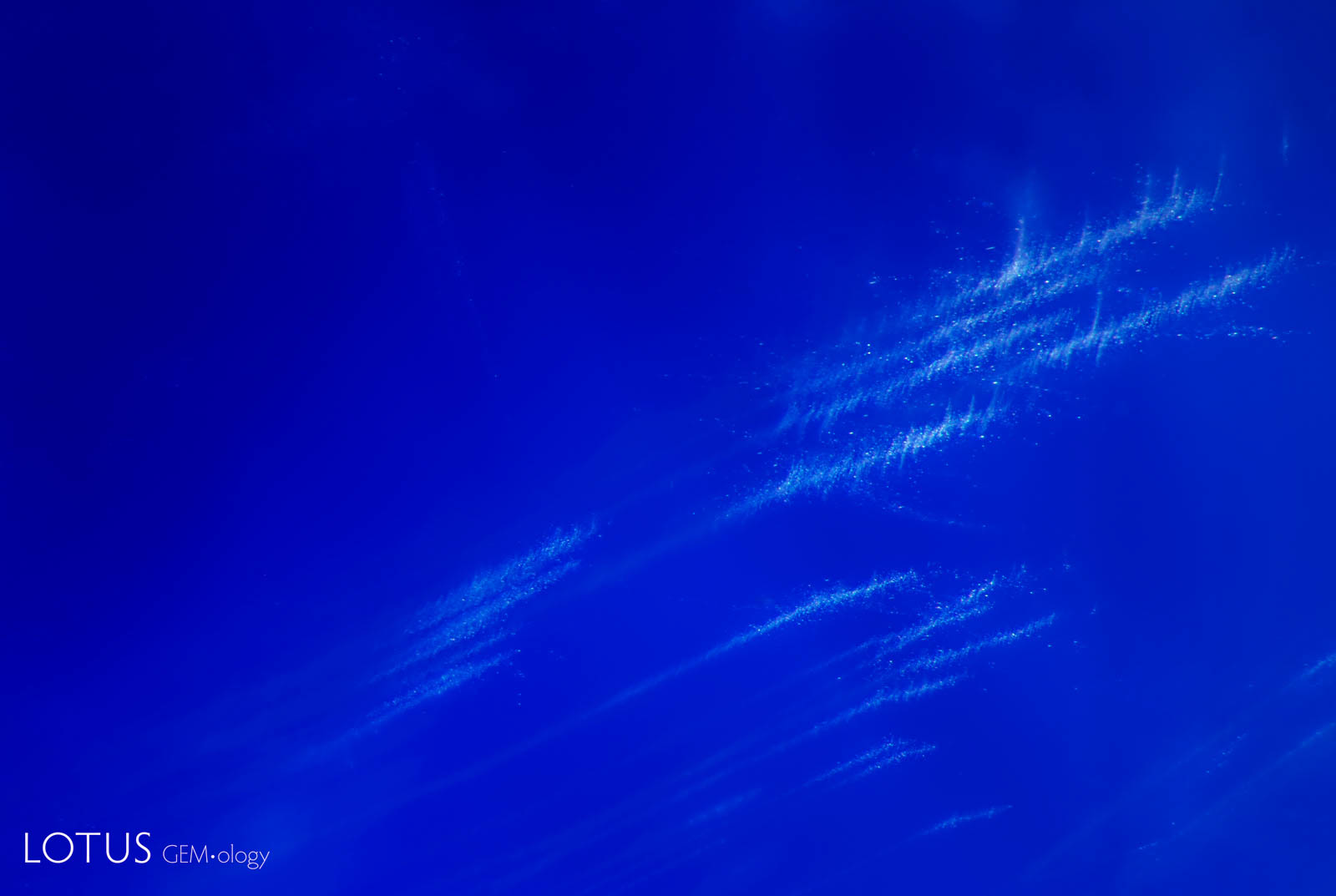
Appearing like stardust against the night sky, streams of tiny particles can be seen in the interior of this blue sapphire.
Natural Sapphire •
Basalt Related •
Enhancements:
None Detected (None) •
Lighting Conditions:
Fiber Optic: Oblique
Photographer:
E. Billie Hughes •
Image Number:
A-005-2797-1
• Field of View = 3mm
The classic Kashmir sapphire locality above Sumjam in India produces crystals that may contain a variety of solid inclusions. We analyzed this example, with microRaman, which showed it to be diaspore—α-AlO(OH)—aluminum hydroxide.
Natural Sapphire •
India (Kashmir) •
Enhancements:
None Detected (None) •
Lighting Conditions:
Photographer:
E. Billie Hughes •
Image Number:
A-005-0437-1
• Field of View = 3mm
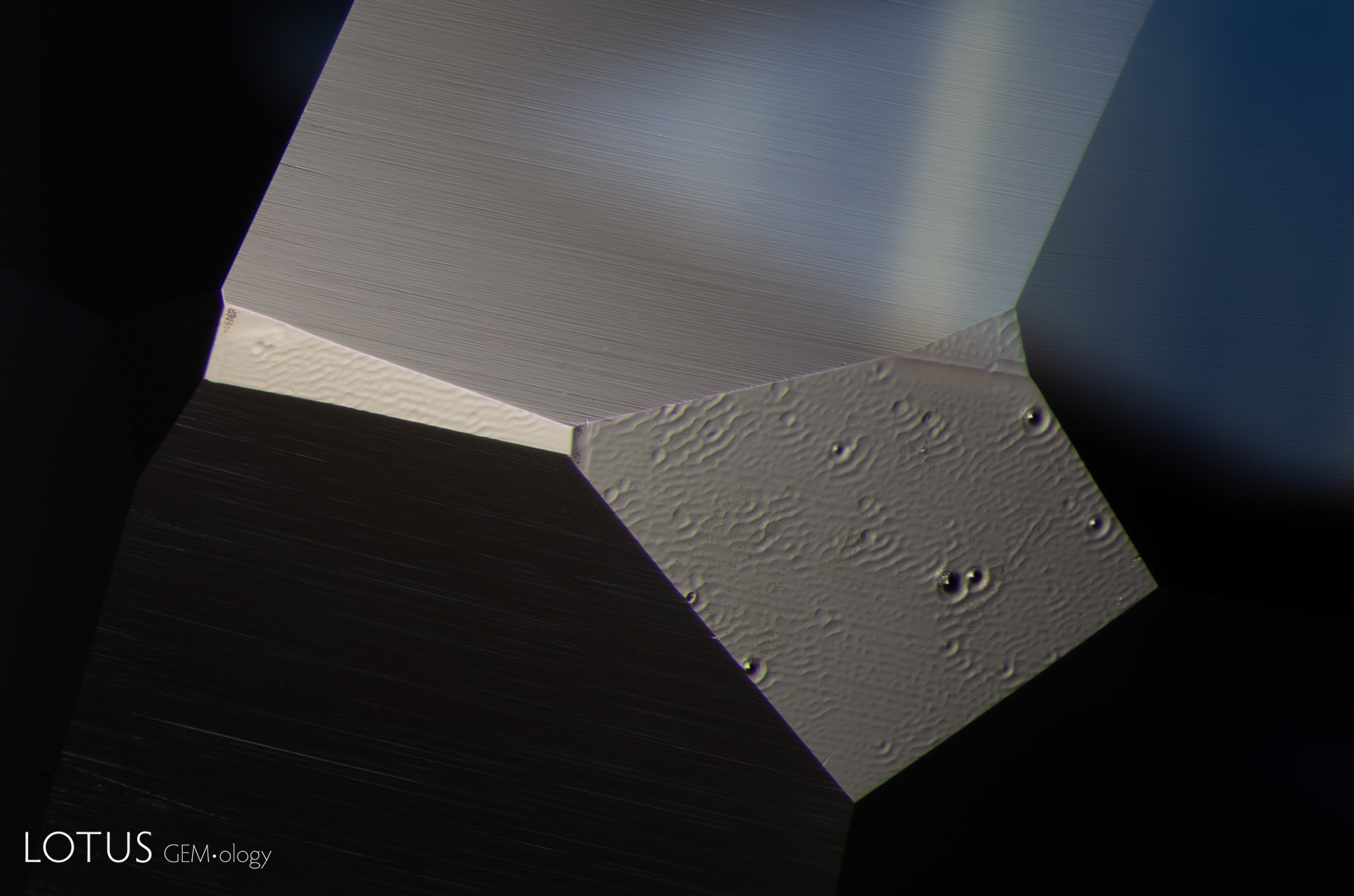
A subtle sign of treatment. Ruby and sapphire surfaces often develop a melted texture when heated, sometimes forming “frozen” droplets that resemble water but cannot be wiped away. To minimize this appearance, stones are frequently repolished. In this case, a few facets were missed, leaving behind telltale signs of heat treatment.
Natural Sapphire •
Sri Lanka (Ceylon) •
Enhancements:
Heat (H) •
Lighting Conditions:
Dark Field + Overhead Fiber Optic
Photographer:
E. Billie Hughes •
Image Number:
A-005-6905-1
• Field of View = 4mm
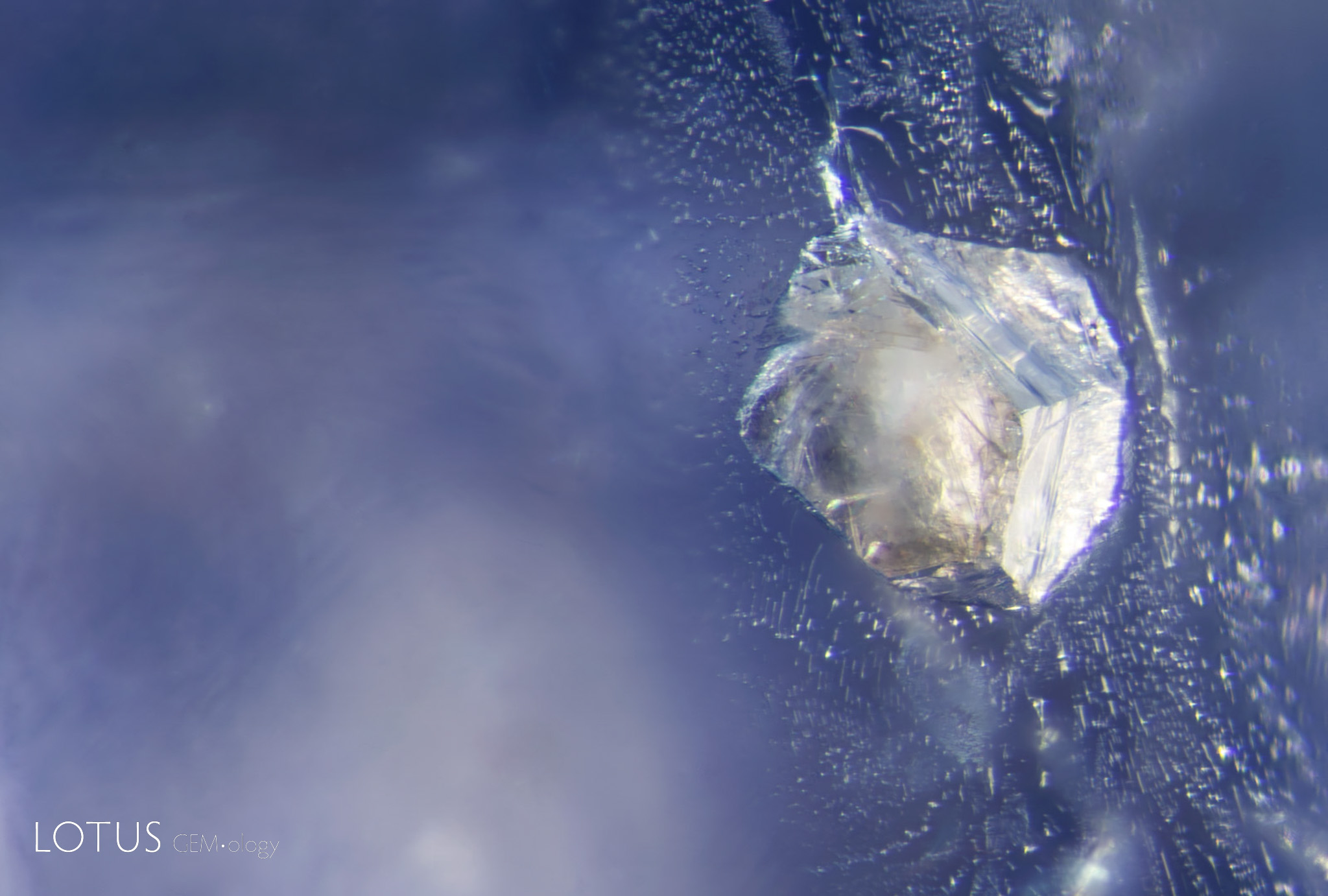
A bubble is present in this cavity in a blue sapphire treated with heat and pressure. With the gentle heat of a hot point, we observed that the bubble is mobile. It is unusual to see a mobile bubble present in a heated sapphire, as they may make cavities explode when heated, but it is possible that the addition of pressure kept this inclusion intact.
Natural Sapphire •
Sri Lanka (Ceylon) •
Enhancements:
Heat (H) •
Lighting Conditions:
Light Field (Transmitted Light)
Photographer:
E. Billie Hughes •
Image Number:
A-005-6408-1
• Field of View = 1.6mm
[various authors] (2019) Squeezing sapphire: Pressure-heated sapphire.
This teardrop-shaped anorthite feldspar crystal was found in a sapphire from Madagascar. The same stone also contained orange crystals of baddeleyite.
Natural Sapphire •
Madagascar •
Enhancements:
None Detected (None) •
Lighting Conditions:
Light Field + Oblique Fiber Optic
Photographer:
E. Billie Hughes •
Image Number:
A-003-6073-1
Sapphire inclusions may include mineral crystals, rutile silk, healed fissures, fluid inclusions, negative crystals, color zoning and other features formed during or after crystal growth. Such features are important to gemologists because they can provide evidence useful in identifying sapphire, understanding its geological history, recognizing treatment and, in some cases, determining geographic origin.
Sapphire Inclusion Photomicrographs
The Hyperion sapphire gallery includes microscopic features found in sapphires from major deposits around the world. Each entry is accompanied by descriptive information and, where available, references to the gemological literature.
What Inclusions Can Reveal About Sapphire
Inclusions are an important part of sapphire identification. Their form, composition, orientation and alteration can help gemologists distinguish natural sapphire from synthetic material, recognize evidence of heat treatment, and study the geological environment in which the sapphire formed.
Hyperion combines inclusion photomicrography with supporting gemological information so that individual features can be compared with documented examples from known sapphire deposits.
About Hyperion
Hyperion is the Lotus Gemology searchable inclusion database. It allows users to browse gemstone inclusions by gem type, geographic origin, treatment and keyword.