Spinel Inclusions
Explore spinel inclusions in Hyperion, the Lotus Gemology inclusion database. Hyperion contains photomicrographs of inclusions and internal features in natural spinel, documented with information on geographic origin, treatment, lighting conditions, field of view, photographer and published references.
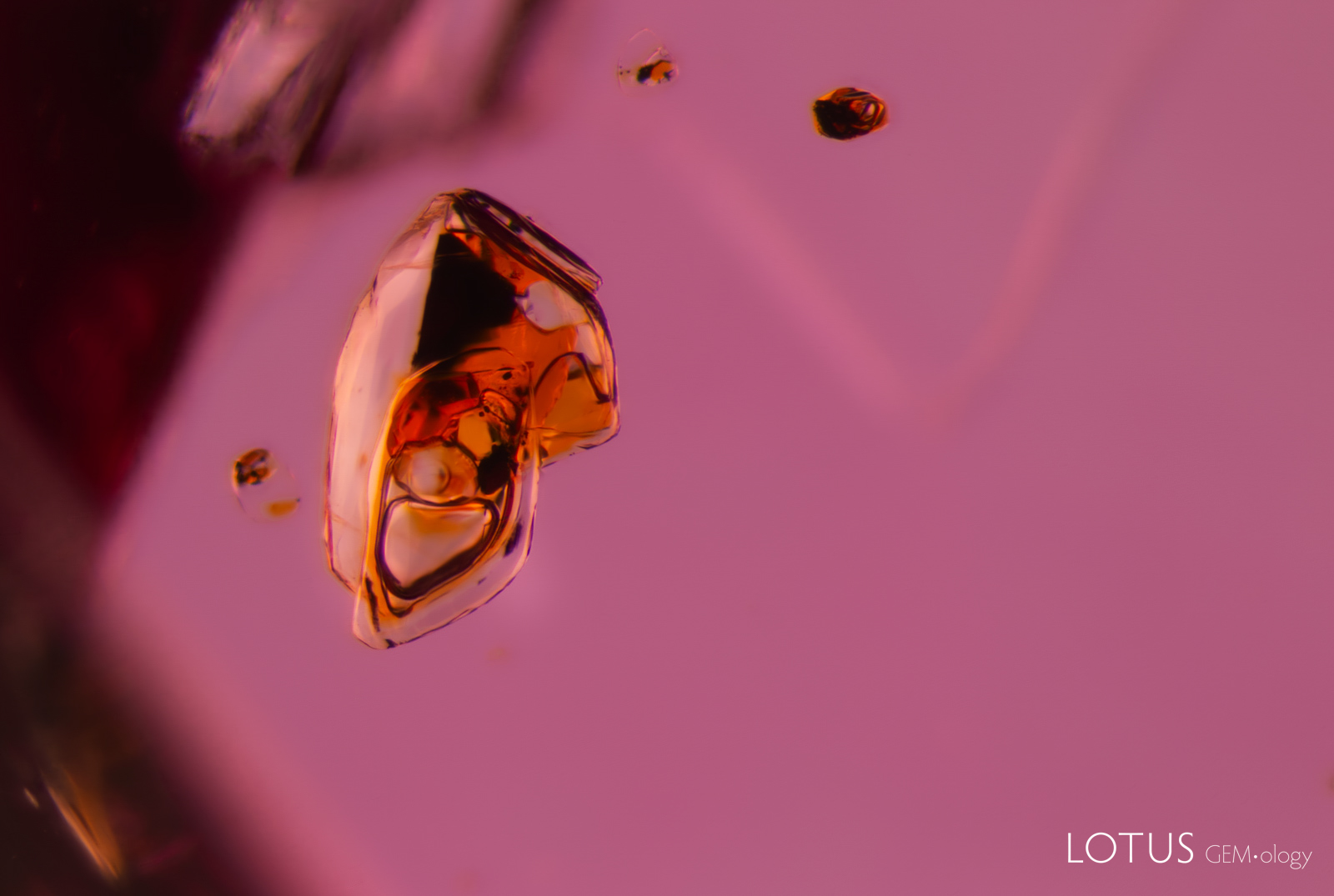
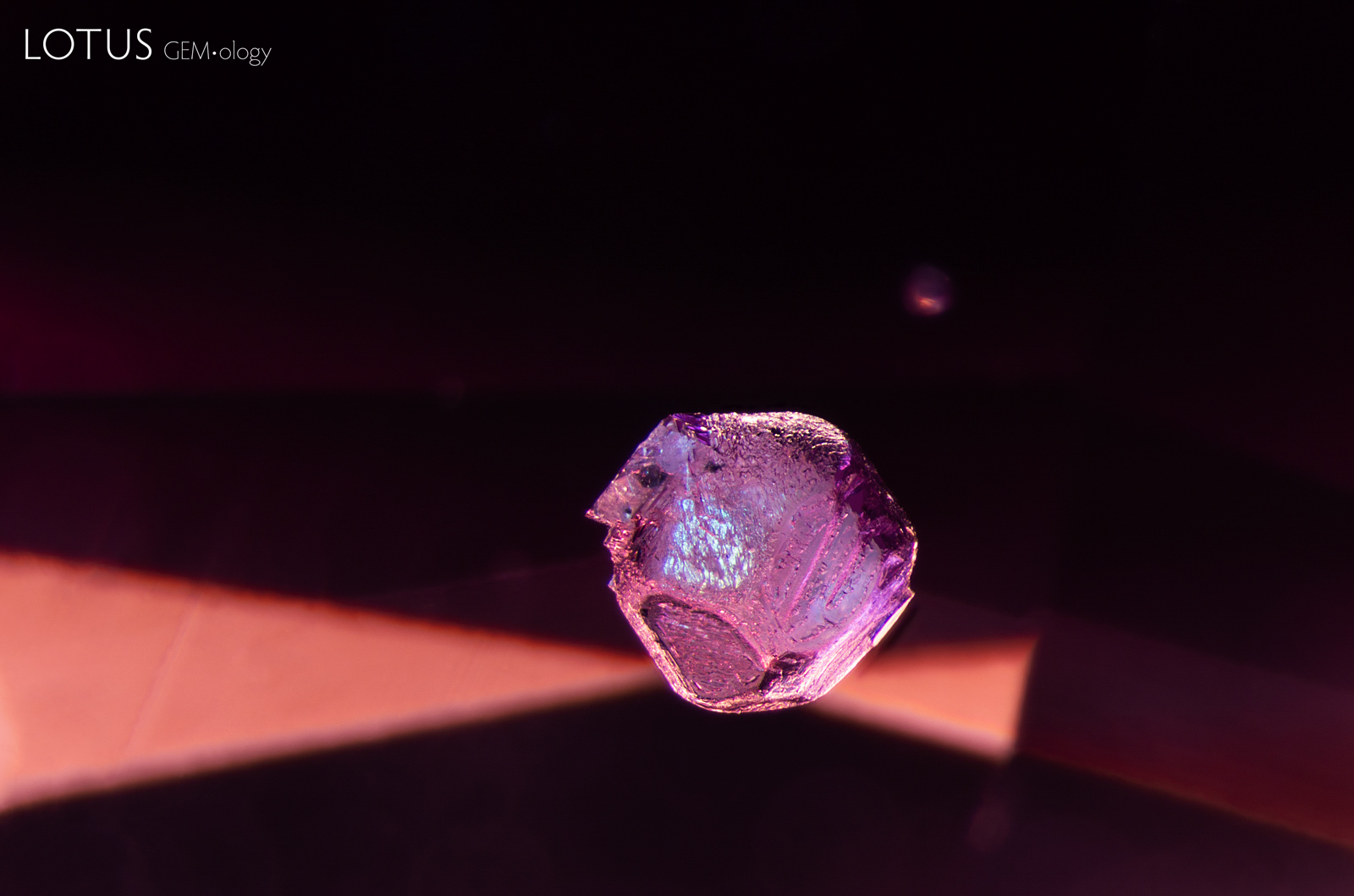
Fluid inclusions like these are typically found in spinel from Burma. The yellowish cavity is filled with a sulfur rich liquid.
Natural Spinel •
Myanmar (Burma); Mogok/Namya •
Enhancements:
None Detected (None) •
Lighting Conditions:
Diffuse Light Field (Transmitted Light)
Photographer:
E. Billie Hughes •
Image Number:
R-004-0104-1
• Field of View = 2.1mm
Amazing apatite. Apatite crystals (like this one, which was identified with micro Raman, are common guests in spinels.
Natural Spinel •
Myanmar (Burma); Mogok/Namya •
Enhancements:
None Detected (None) •
Lighting Conditions:
Dark Field + Diffuse Fiber Optic
Photographer:
E. Billie Hughes •
Image Number:
A-004-9890-1
• Field of View = 4.7mm
Apatite crystal with an embedded graphite platelet. Gemologists often refer to this apatite/graphite combination as a “belly button” apatite. These are common in spinels from Burma.
Natural Spinel •
Myanmar (Burma); Mogok/Namya •
Enhancements:
None Detected (None) •
Lighting Conditions:
Dark Field + Diffused Light
Photographer:
Kaylan Khourie •
Image Number:
A-004-8668-1
• Field of View = 4.5mm
Gübelin, E.J. (1973) Internal World of Gemstones. Zürich: ABC Verlag, reprinted 1983, 234 pp.
A series of dislocation needles can be observed when this pink spinel is lit with fiber optic illumination. Inclusions like these are typical for Vietnamese spinel.
Natural Spinel •
Vietnam •
Enhancements:
None Detected (None) •
Lighting Conditions:
Fiber Optic: Diffuse Oblique
Photographer:
E. Billie Hughes •
Image Number:
A-004-7728-2
• Field of View = 3mm
A euhedral prismatic crystal, likely apatite, stands out in its spinel host.
Natural Spinel •
Afghanistan •
Enhancements:
None Detected (None) •
Lighting Conditions:
Dark Field + Diffuse Fiber Optic
Photographer:
E. Billie Hughes •
Image Number:
A-004-7204-1
• Field of View = 3.5mm
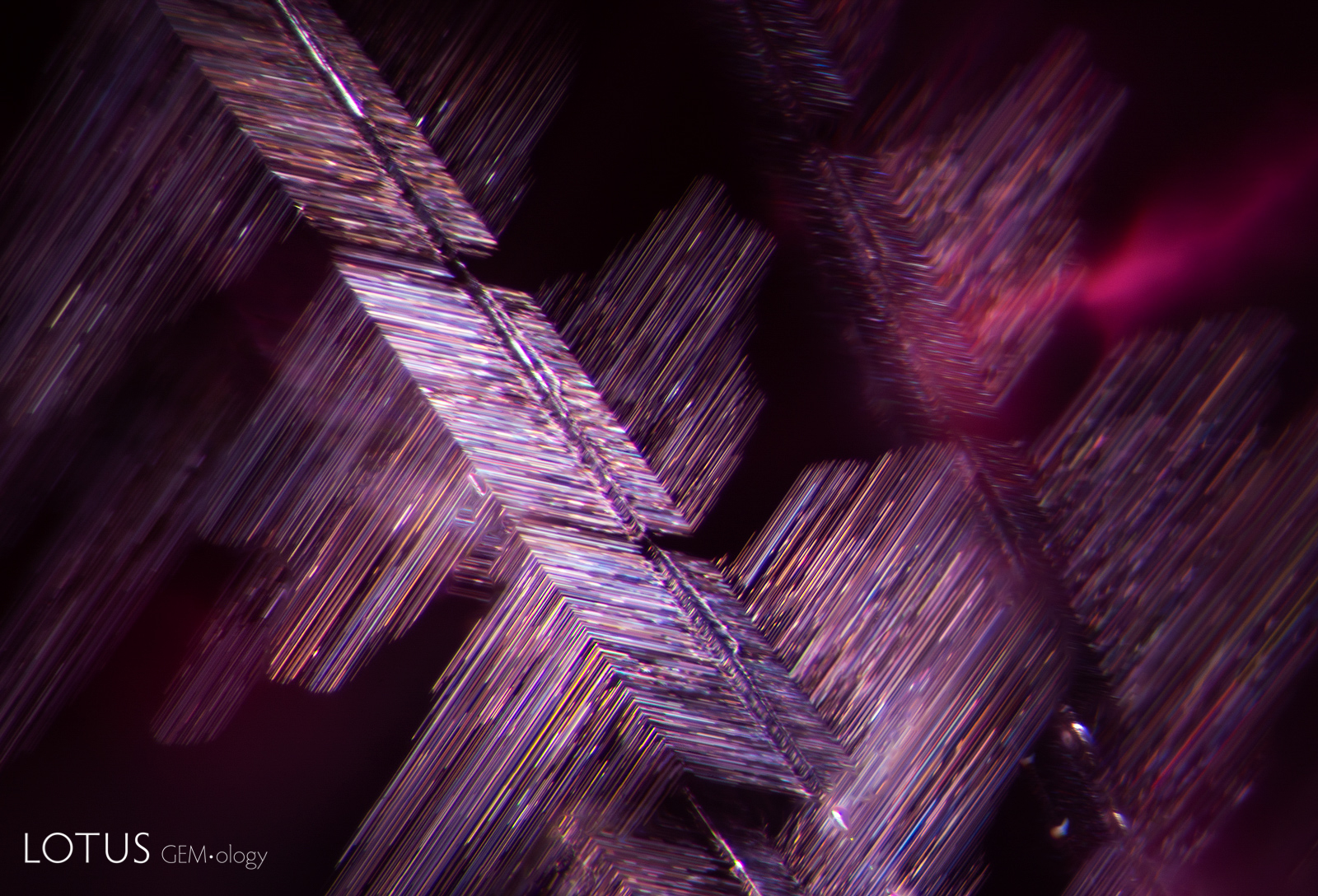
Under magnification, bands of dislocations can be observed in this blue spinel. These features are often observed in spinels from Vietnam.
Natural Spinel •
Vietnam •
Enhancements:
None Detected (None) •
Lighting Conditions:
Fiber Optic: Oblique
Photographer:
E. Billie Hughes •
Image Number:
A-004-6476-1
• Field of View = 2mm
A crystal in this blue spinel is connected to a series of tubes.
Natural Spinel •
Madagascar •
Enhancements:
None Detected (None) •
Lighting Conditions:
Fiber Optic: Diffuse Oblique
Photographer:
E. Billie Hughes •
Image Number:
A-004-5815-1
• Field of View = 4mm
This spinel was treated with cobalt diffusion. Signs of the treatment can be seen in the drippy appearance of the fingerprint and slightly melted, rounded edges of the crystal seen here.
Natural Spinel •
Not Determinable •
Enhancements:
Heat + Diffusion of external coloring agents (H-D) •
Lighting Conditions:
Dark Field
Photographer:
E. Billie Hughes •
Image Number:
A-004-3658-1
• Field of View = 4mm
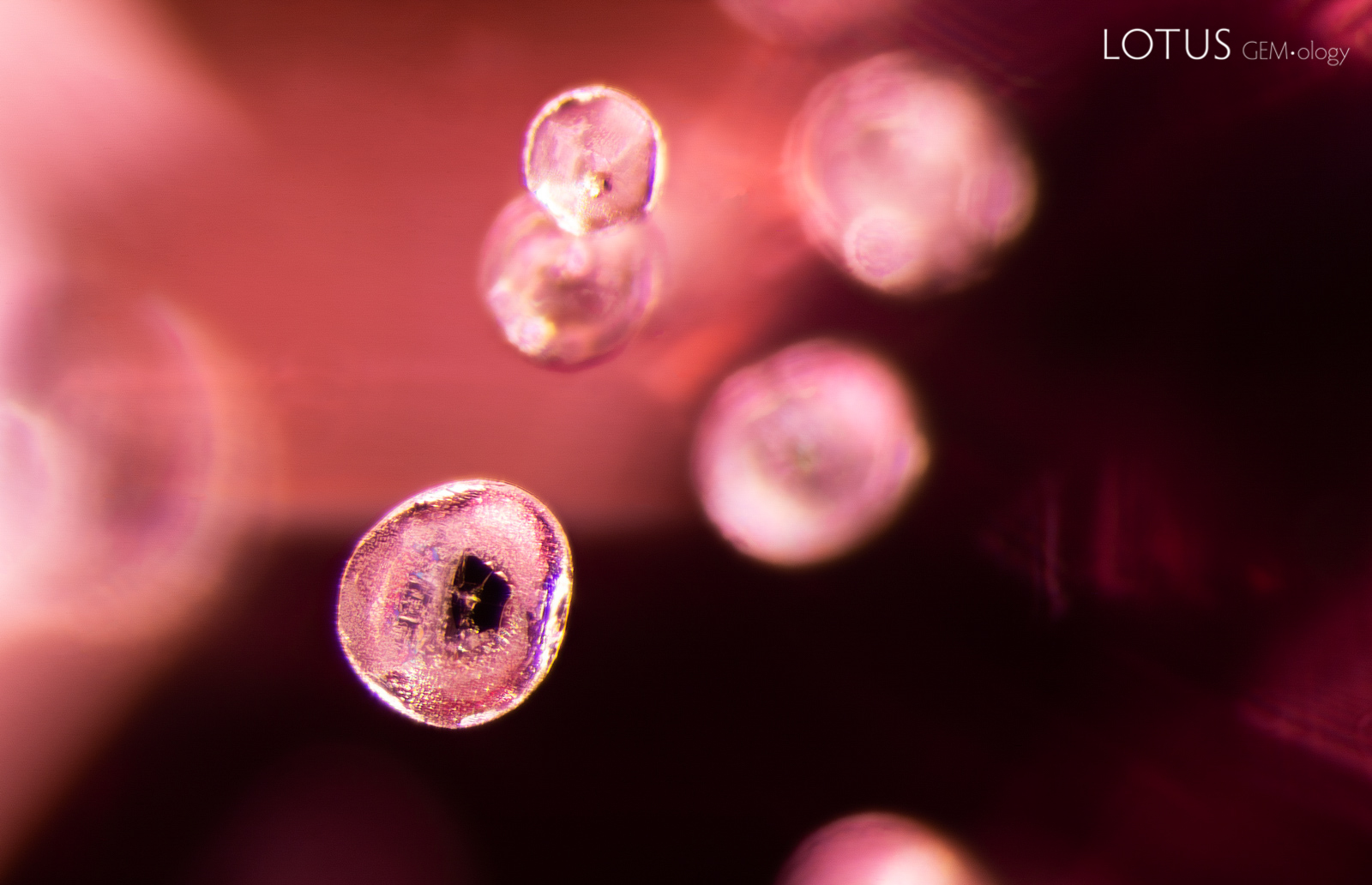
Numerous rounded crystals were suspended in this spinel. Analysis with micro Raman determined that they are apatite crystals with a black graphite platelet in the center.
Natural Spinel •
Myanmar (Burma); Mogok/Namya •
Enhancements:
None Detected (None) •
Lighting Conditions:
Dark Field + Oblique Fiber Optic
Photographer:
E. Billie Hughes •
Image Number:
A-004-4762-2
• Field of View = 2.5mm
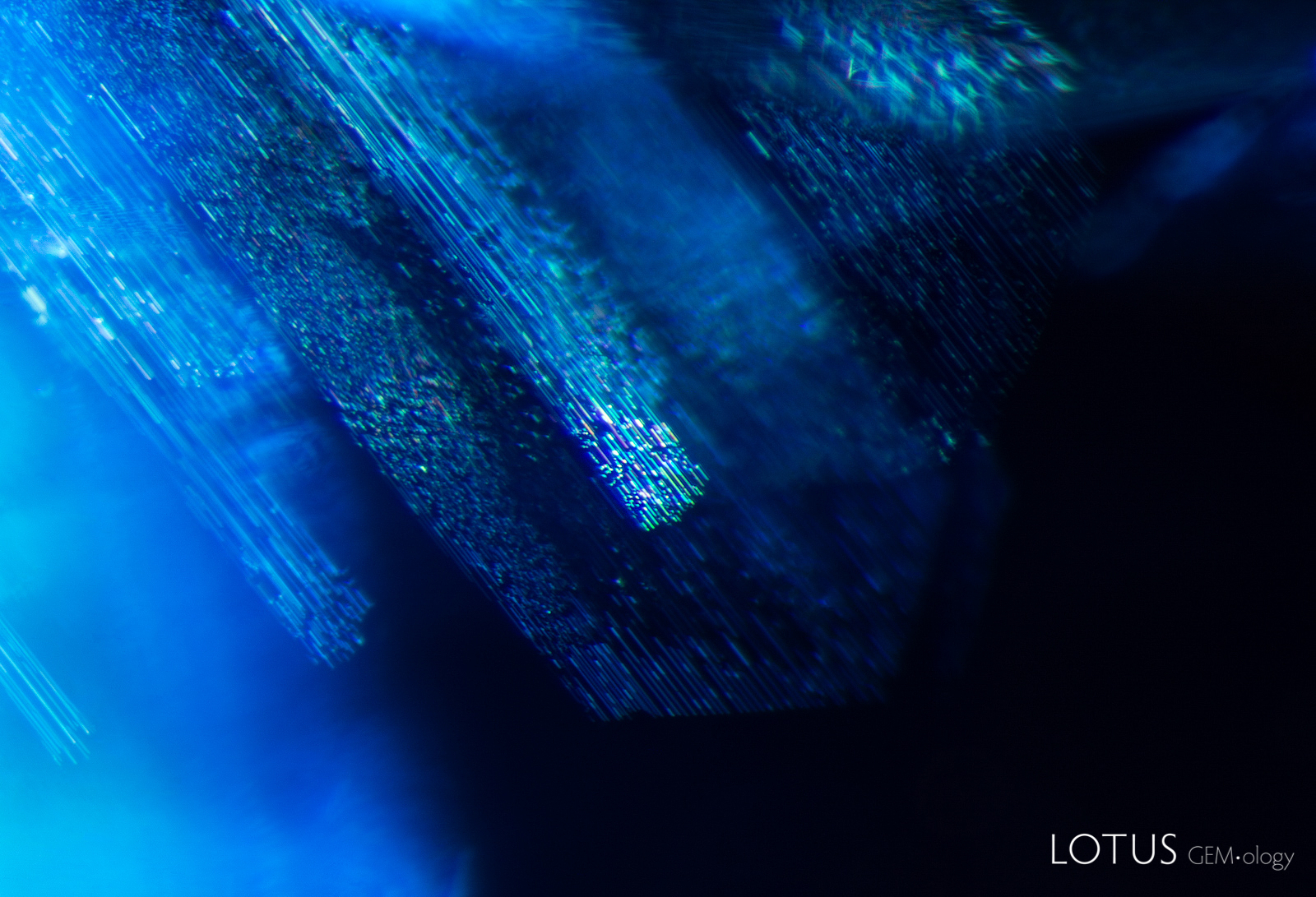
A series of oriented planes can be observed in this spinel. This inclusions have been reported in many blue spinels from Tanzania.
Natural Spinel •
Tanzania; Mahenge •
Enhancements:
None Detected (None) •
Lighting Conditions:
Dark Field + Blue Filter
Photographer:
E. Billie Hughes •
Image Number:
A-004-2679-1
• Field of View = 2mm
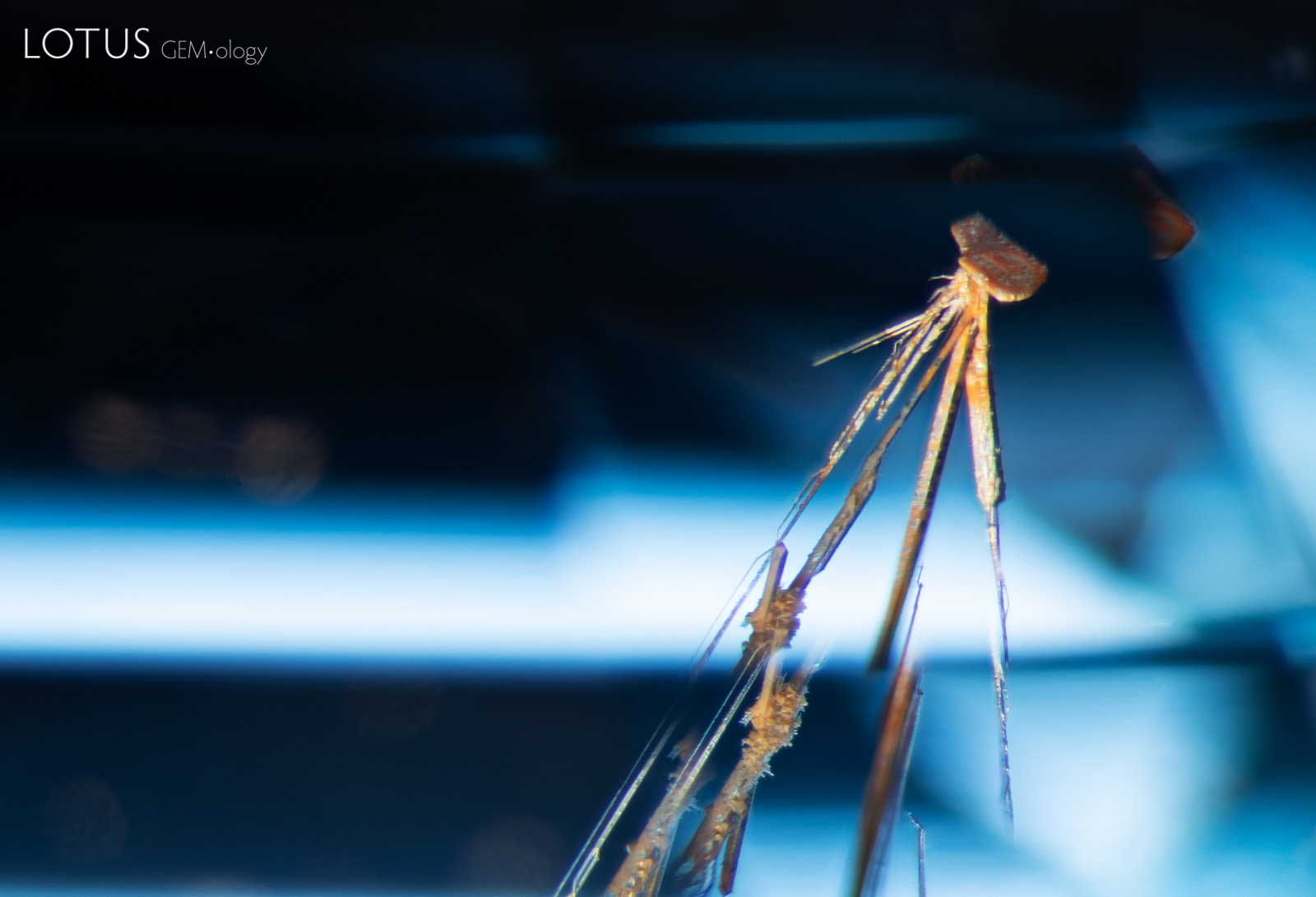
I believe I can fly. A dolomite crystal (identified with micro Raman) appears to take flight as it is flanked by dislocation needle “wings.”
Natural Spinel •
Vietnam •
Enhancements:
None Detected (None) •
Lighting Conditions:
Dark Field + Diffuse Fiber Optic
Photographer:
E. Billie Hughes •
Image Number:
A-004-1943-1
• Field of View = 4mm
A series of planes can be observed in this spinel when using fiber optic illumination. Such planes have been seen in Tanzanian spinels of various colors.
Natural Spinel •
Tanzania; Mahenge •
Enhancements:
None Detected (None) •
Lighting Conditions:
Fiber Optic: Diffuse Oblique
Photographer:
E. Billie Hughes •
Image Number:
A-004-1824-1
• Field of View = 3mm
Spinel inclusions may include mineral crystals, healed fissures, fluid inclusions, negative crystals, growth features and other internal features formed during or after crystal growth. Such features are important to gemologists because they can provide evidence useful in identifying spinel, understanding its geological history, recognizing treatment and, in some cases, determining geographic origin.
Spinel Inclusion Photomicrographs
The Hyperion spinel gallery includes microscopic features found in spinels from major deposits around the world. Each entry is accompanied by descriptive information and, where available, references to the gemological literature.
What Inclusions Can Reveal About Spinel
Inclusions are an important part of spinel identification. Their form, composition and alteration can help gemologists distinguish natural spinel from synthetic material, recognize evidence of treatment, and study the geological environment in which the spinel formed.
Hyperion combines inclusion photomicrography with supporting gemological information so that individual features can be compared with documented examples from known spinel deposits.
About Hyperion
Hyperion is the Lotus Gemology searchable inclusion database. It allows users to browse gemstone inclusions by gem type, geographic origin, treatment and keyword.