Spinel Inclusions
Explore spinel inclusions in Hyperion, the Lotus Gemology inclusion database. Hyperion contains photomicrographs of inclusions and internal features in natural spinel, documented with information on geographic origin, treatment, lighting conditions, field of view, photographer and published references.
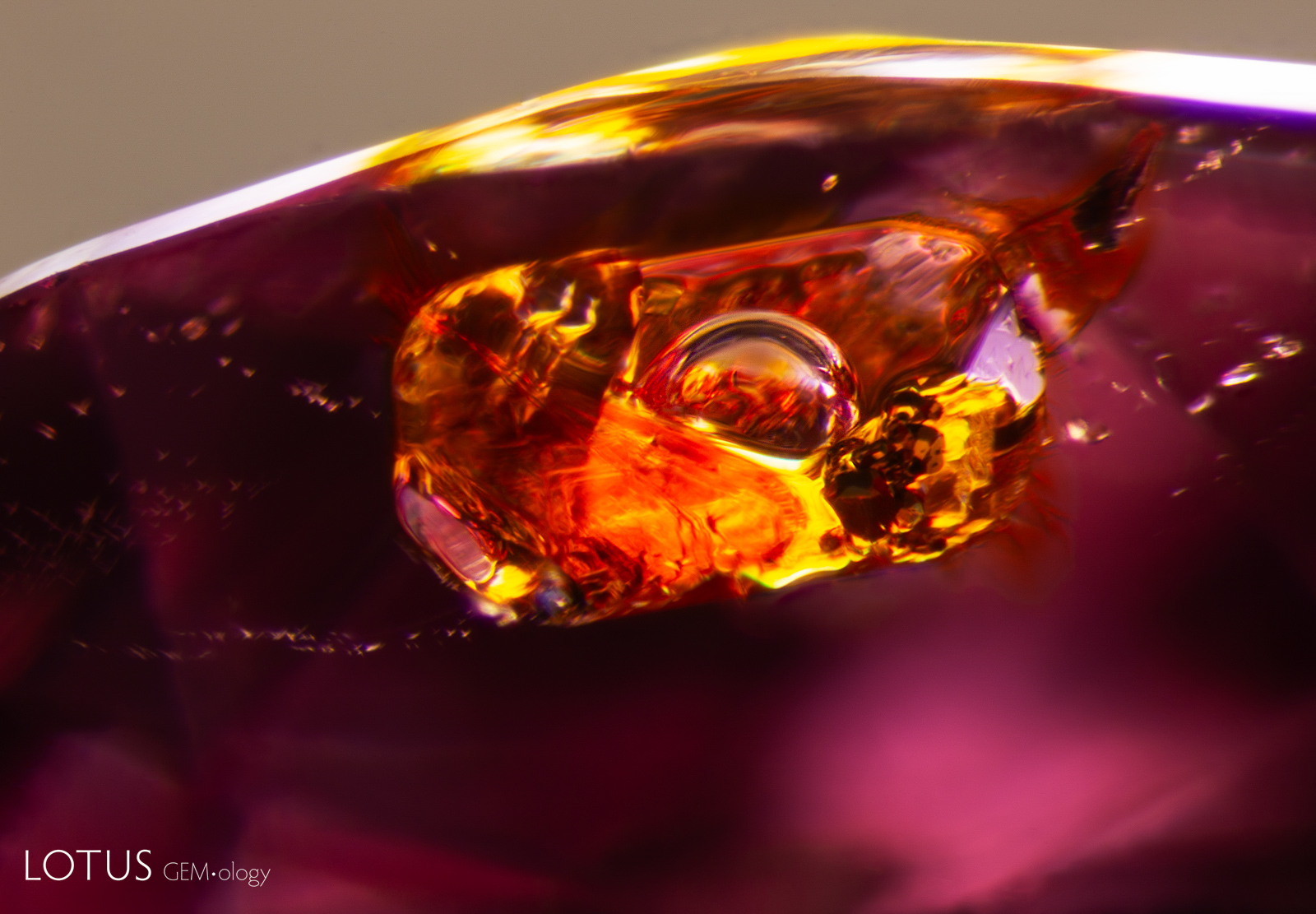
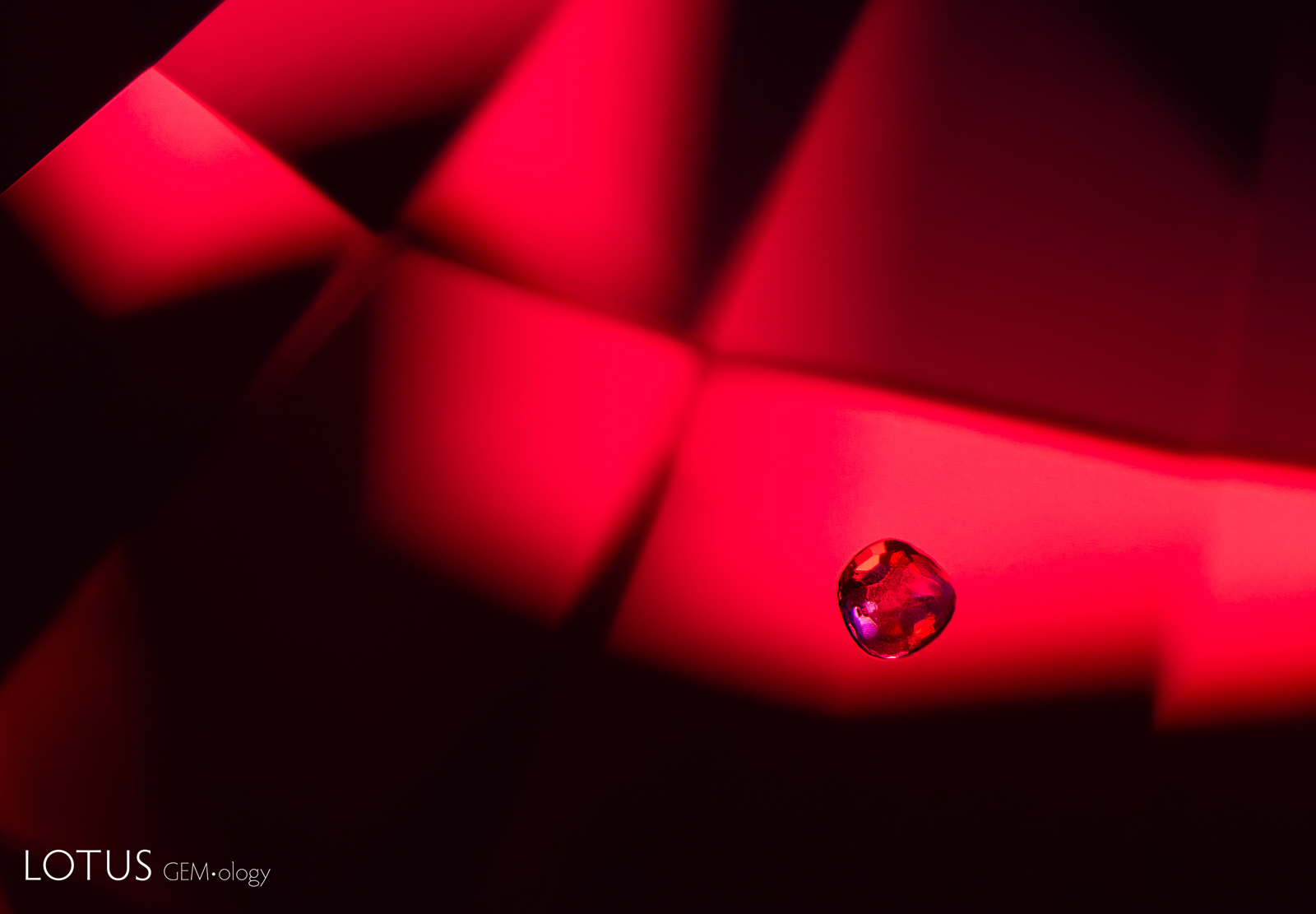
A small cavity containing a mobile bubble can be observed under magnification in this spinel. Raman spectroscopy confirmed that the yellow-orange areas are sulfur-rich fluids. Sample courtesy Rosway.
Natural Spinel •
Myanmar (Burma); Mogok/Namya •
Enhancements:
None Detected (None) •
Lighting Conditions:
Diffuse Light Field + Fiber Optic
Photographer:
E. Billie Hughes •
Image Number:
A-006-0671-1
• Field of View = 1.8mm
This negative crystal is filled with a yellowish orange liquid and contains a gas bubble at its center. These fluid inclusions, likely sulfur-rich liquids, are typically observed in Burmese spinels.
Natural Spinel •
Myanmar (Burma); Mogok/Namya •
Enhancements:
None Detected (None) •
Lighting Conditions:
Diffuse Light Field (Transmitted Light)
Photographer:
Pimmada Rojtanat •
Image Number:
R-005-4726-3
• Field of View = 2.6mm
When viewed under the microscope, this spinel can be seen hosting a tiny dolomite inclusion, which was identified with Raman spectroscopy.
Natural Spinel •
Tanzania •
Enhancements:
None Detected (None) •
Lighting Conditions:
Dark Field + Diffuse Fiber Optic
Photographer:
E. Billie Hughes •
Image Number:
A-006-0331-1
• Field of View = 4.5mm
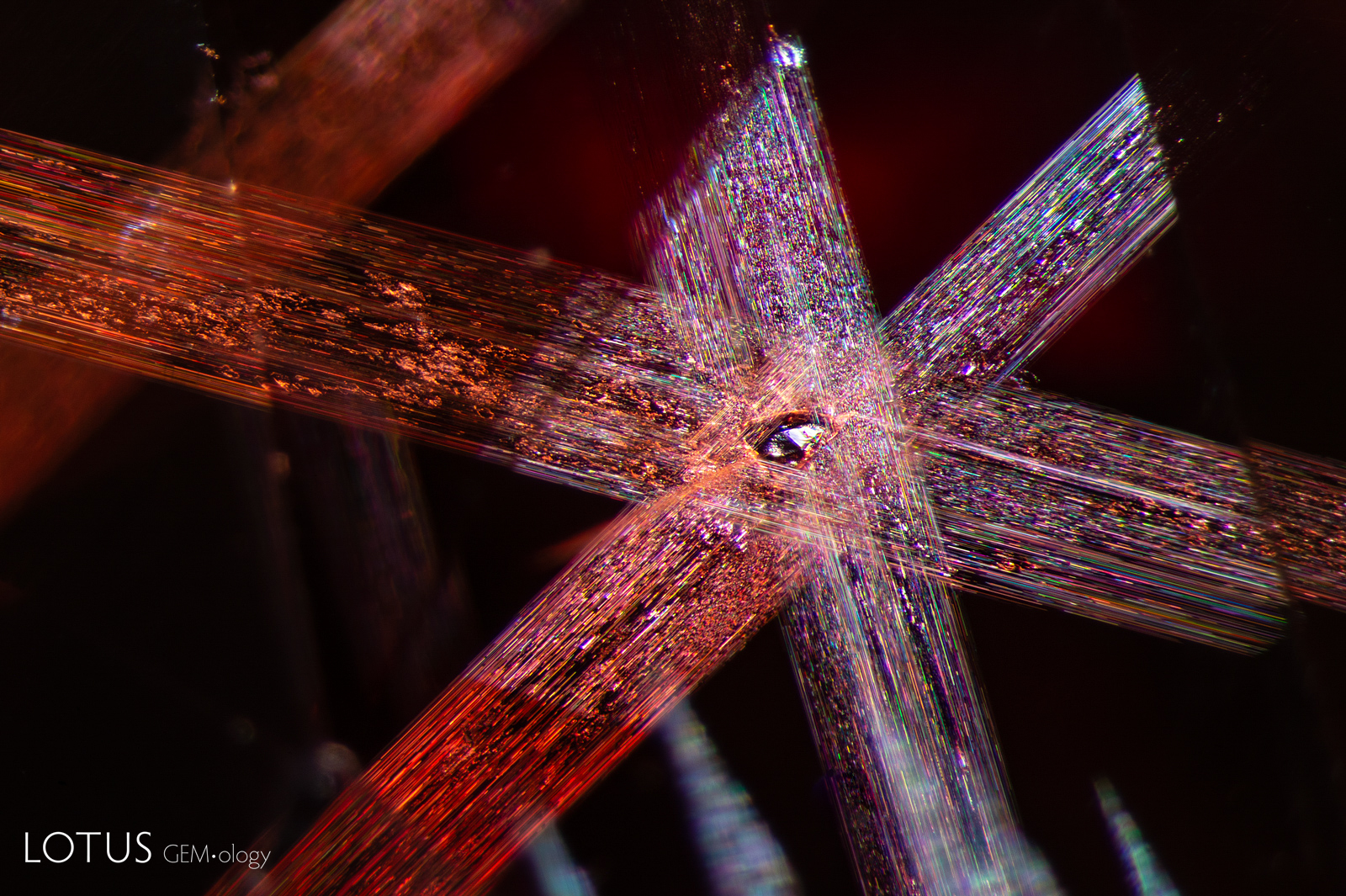
Stellar spinel. Bands of dislocation needles radiate around a dolomite crystal (identified with micro Raman) to create a stellate pattern in this spinel.
Natural Spinel •
Vietnam •
Enhancements:
None Detected (None) •
Lighting Conditions:
Fiber Optic: Oblique
Photographer:
E. Billie Hughes •
Image Number:
A-005-9280-2
• Field of View = 3.7mm
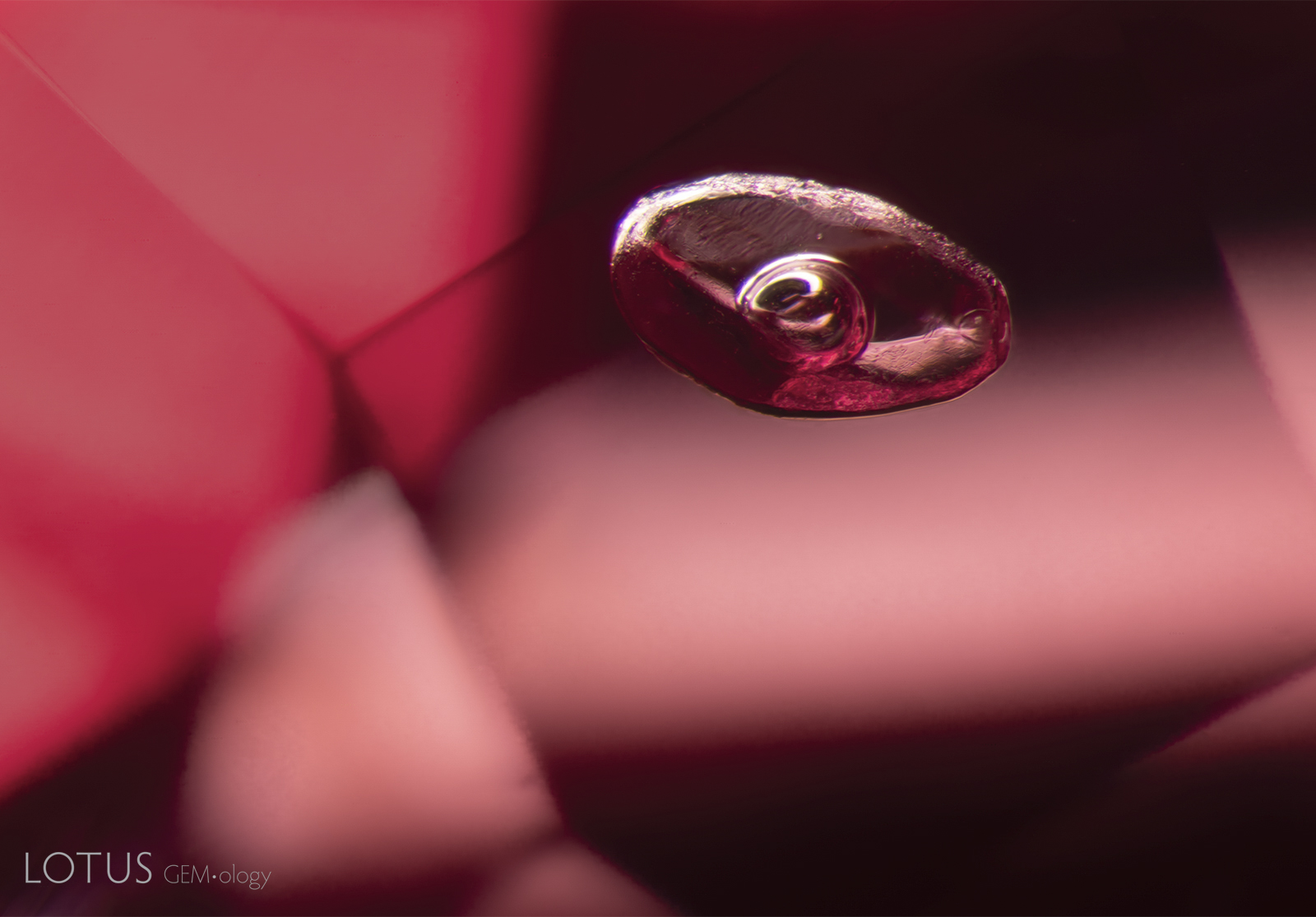
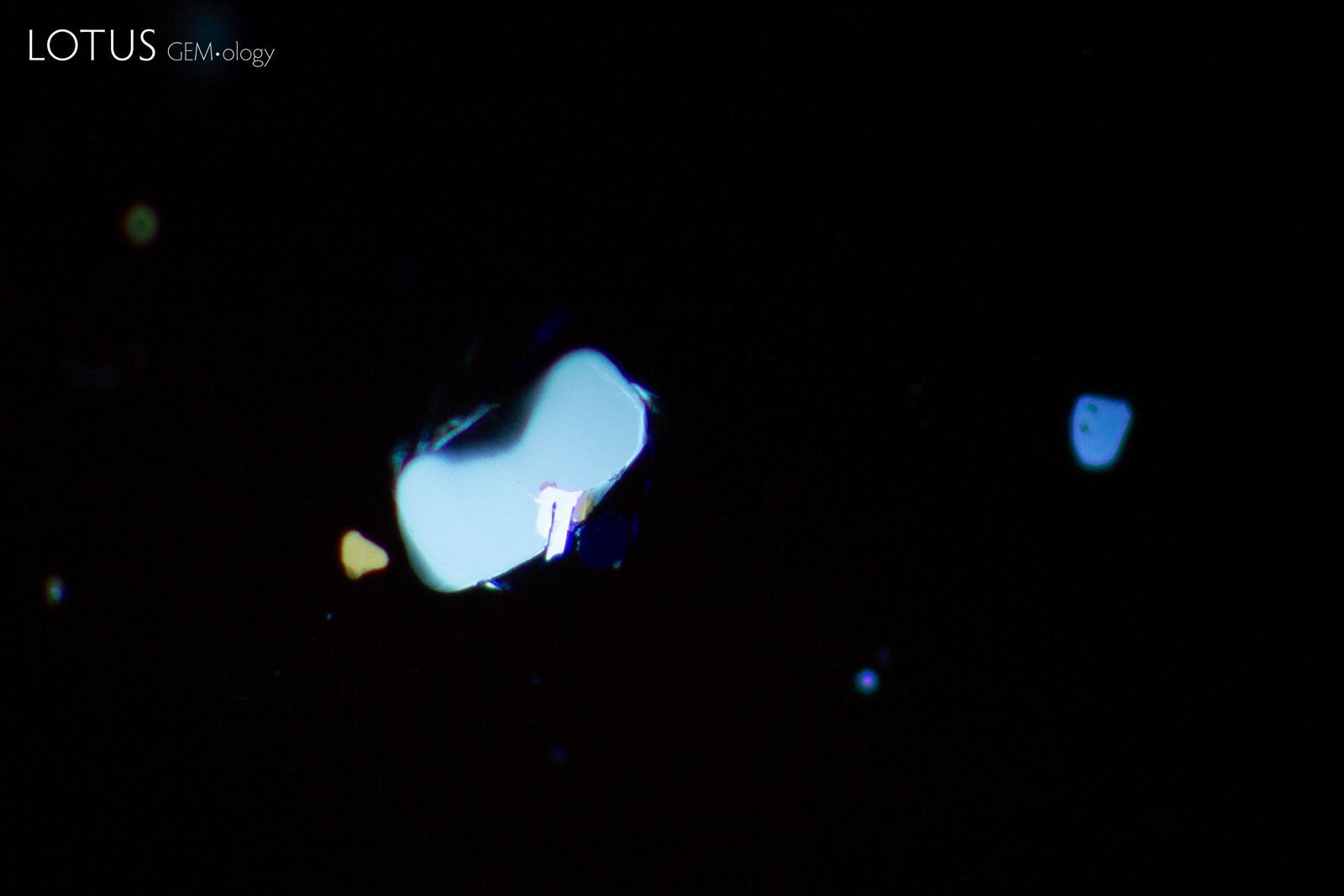
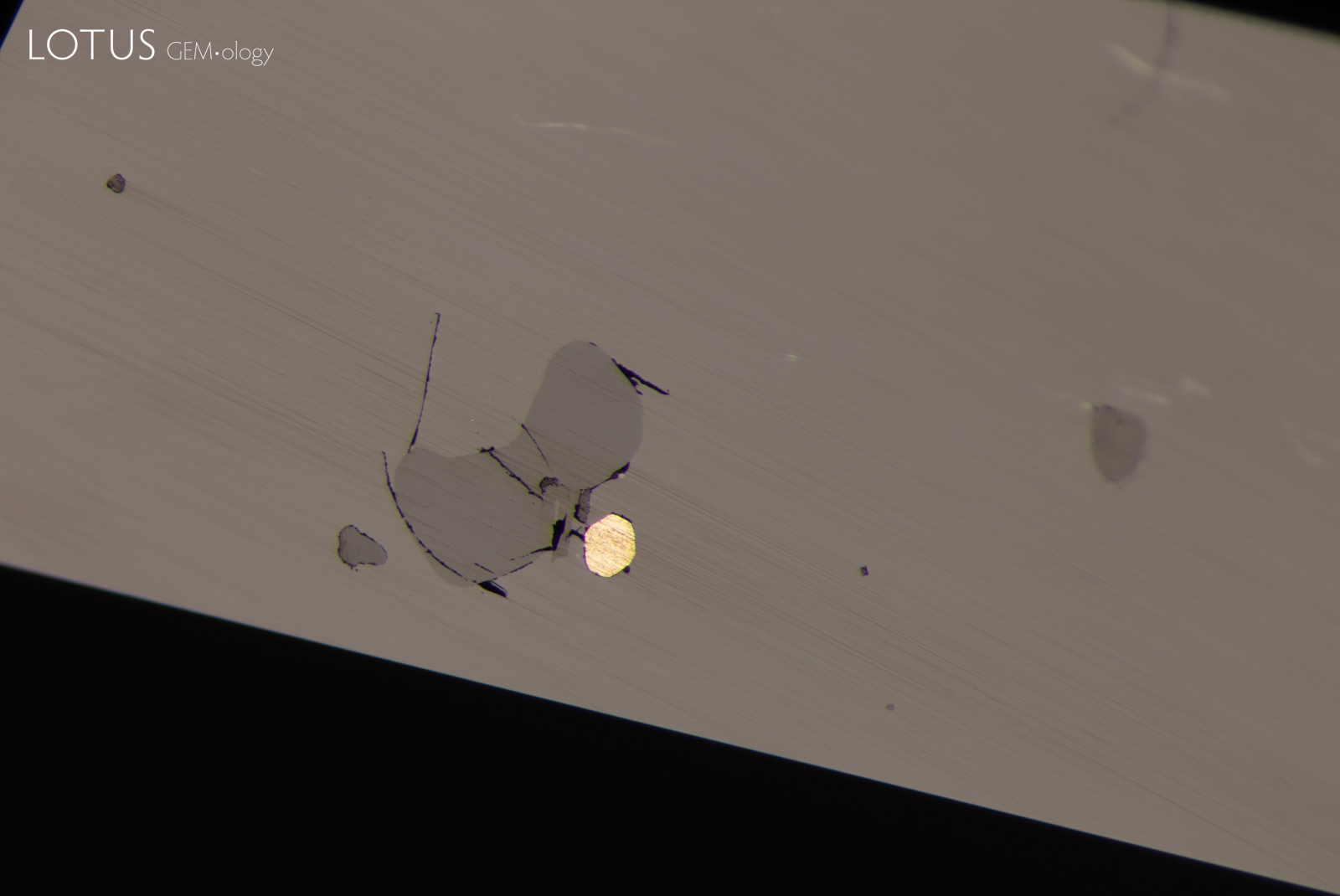
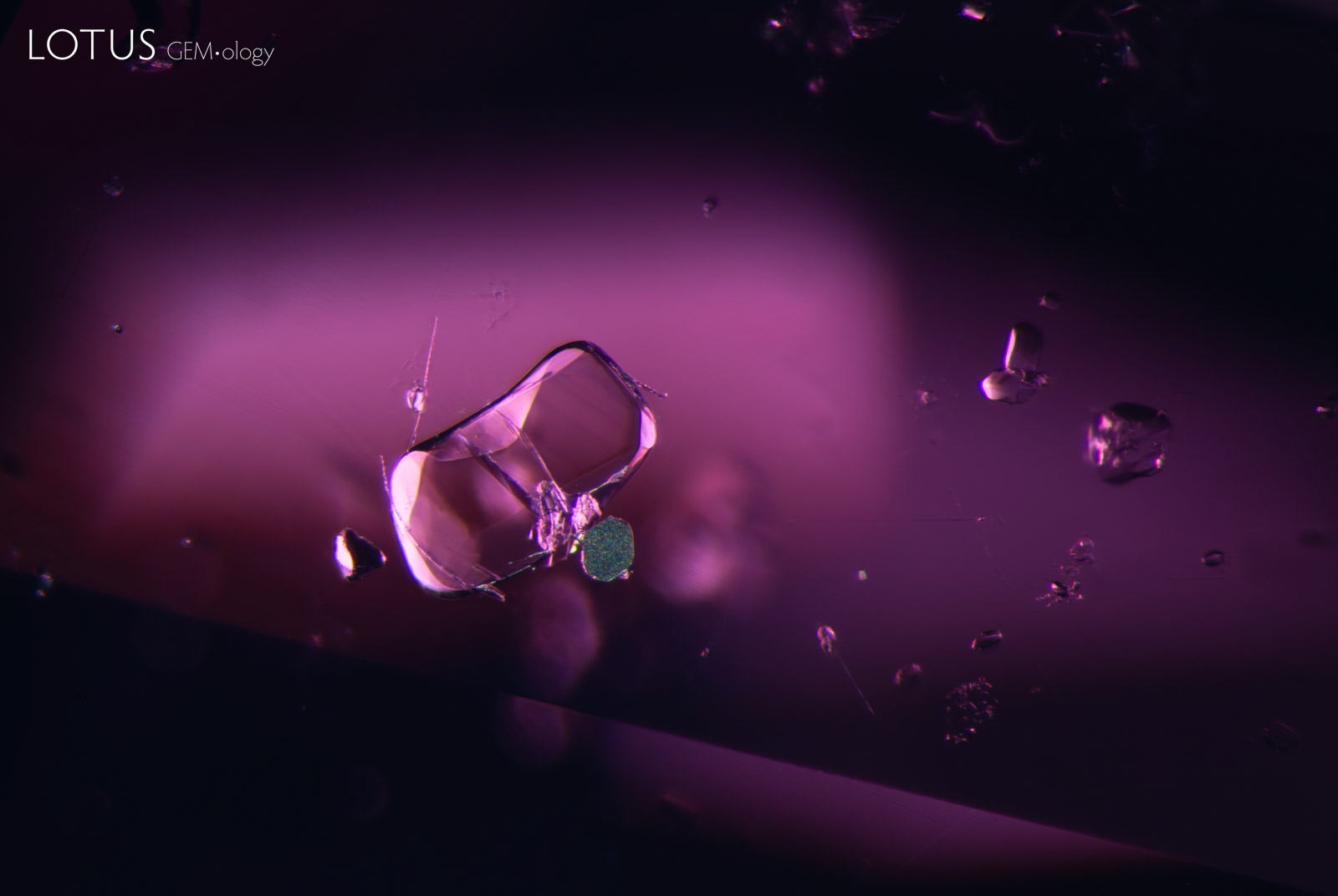
A large negative crystal with a mobile gas bubble resides in this unheated Burmese spinel. Analyses with microRaman spectroscopy were inconclusive. However, a near-invisible fissure extends through this negative crystal to the surface. By using a hot point, oil leaked out of this fissure and others around the stone. Therefore, the cavity may be filled with oil.
Natural Spinel •
Myanmar (Burma); Mogok/Namya •
Enhancements:
Fissure Filling with colorless Oil/resin (FF-O3); No indications of heating (No indications of heating) •
Lighting Conditions:
Dark Field + Oblique Fiber Optic
Photographer:
Kaylan Khourie •
Image Number:
A-005-9145-1
• Field of View = 2.7mm
• Magnification = 6.5x
Hughes, R.W. (2020) Oiled spinel & tanzanite — shocking revelations.
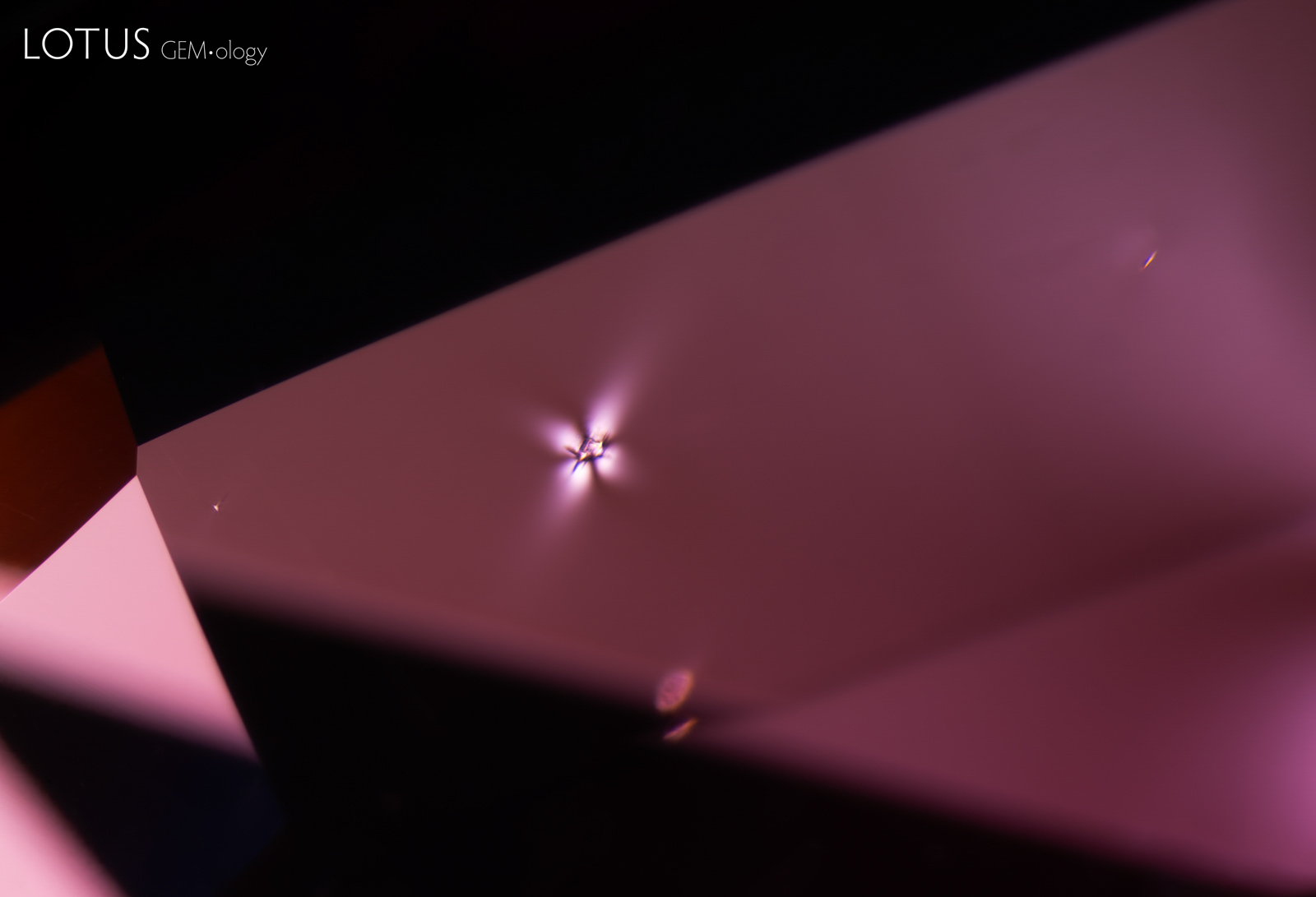
A small forsterite crystal, identified by micro Raman spectroscopy, is suspended within this spinel. Between crossed polars a strain pattern can be observed, producing the appearance of a tiny shining star.
Natural Spinel •
Badakhshan •
Enhancements:
None Detected (None) •
Lighting Conditions:
Dark Field + Crossed Polars
Photographer:
E. Billie Hughes •
Image Number:
A-005-9017-1
• Field of View = 6.4mm
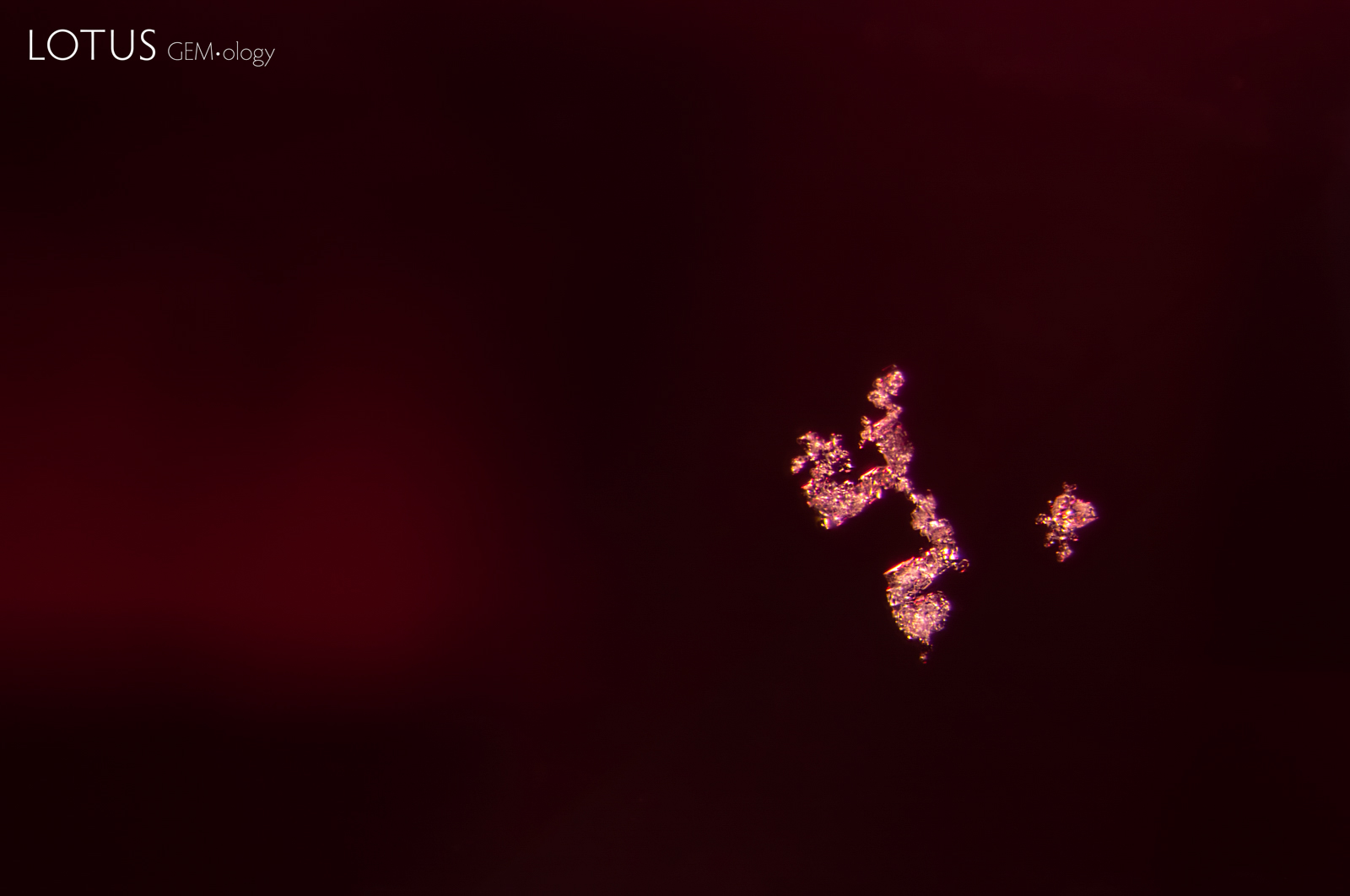
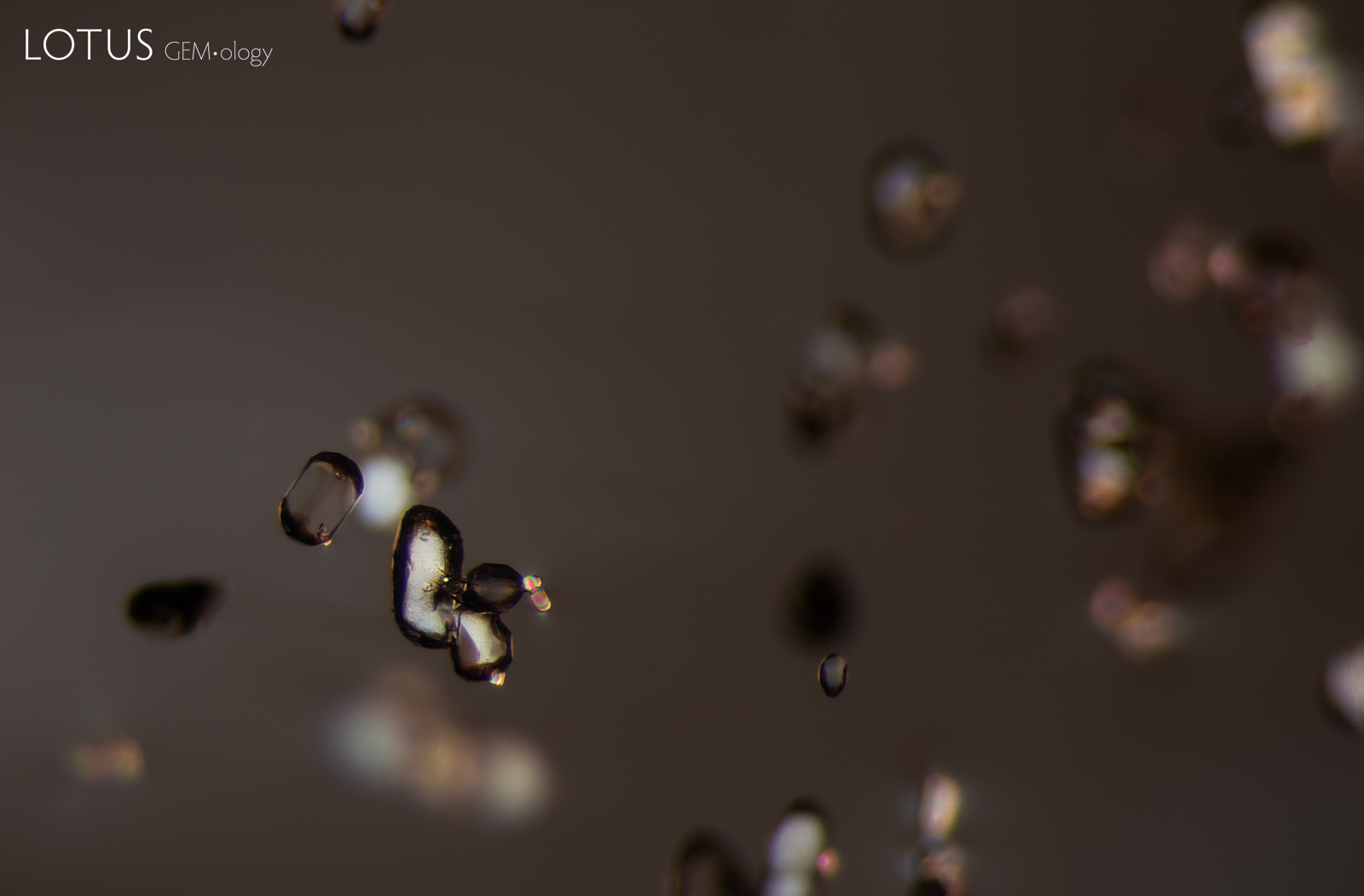
A cluster of unidentified crystals in a Vietnamese spinel.
Natural Spinel •
Vietnam •
Enhancements:
None Detected (None) •
Lighting Conditions:
Dark Field + Diffuse Fiber Optic
Photographer:
Natcha Rattana-anan •
Image Number:
A-005-7645-2
• Field of View = 2.8mm
This spinel before (left) and after (right) filler removal clearly demonstrates that fissure filling with an oil or resin can have a dramatic impact on the appearance of a gem. This is why it it critical that all gems with fissures be carefully checked for fillers.
Natural Spinel •
Myanmar (Burma); Mogok/Namya •
Enhancements:
None Detected (None) •
Lighting Conditions:
Diffuse Overhead
Photographer:
•
Image Number:
A-003-7249-1
Octahedral crystals like this one are a classic inclusion in spinel, echoing the crystal structure of their host.
Natural Spinel •
Myanmar (Burma); Mogok/Namya •
Enhancements:
None Detected (None) •
Lighting Conditions:
Fiber Optic: Diffuse Oblique
Photographer:
E. Billie Hughes •
Image Number:
A-005-8058-1
• Field of View = 2.5mm
This Mozambican spinel contains many transparent, doubly refractive crystals. Raman analysis identified the larger, more elongated crystals as apatite, while the small rounded ones are zircon.
Natural Spinel •
Mozambique •
Enhancements:
None Detected (None) •
Lighting Conditions:
Dark Field + Crossed Polars
Photographer:
E. Billie Hughes •
Image Number:
R-005-7320-1
• Field of View = 3.4mm
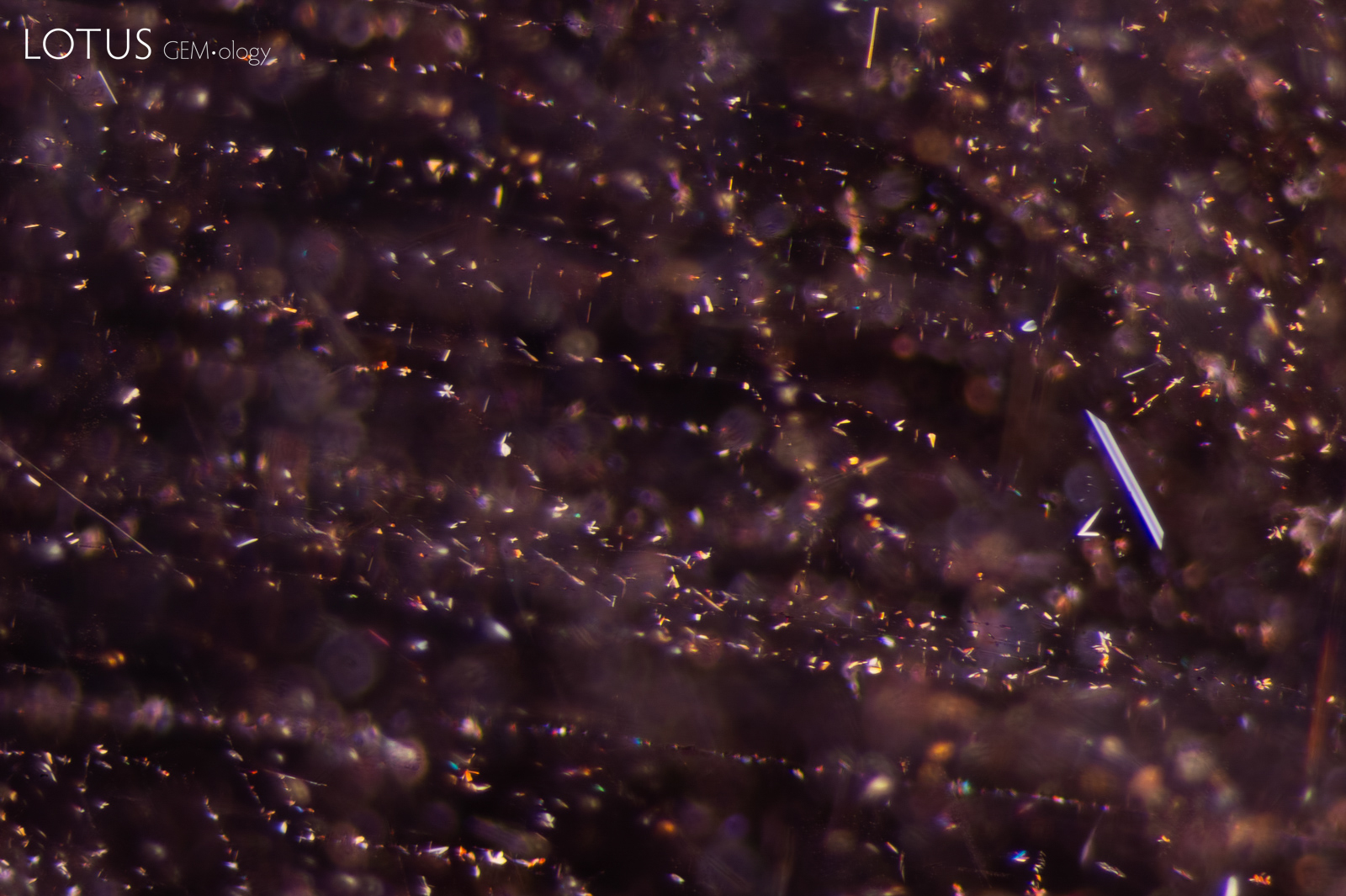
Small platelets and needles are scattered across this spinel from Mozambique.
Natural Spinel •
Mozambique •
Enhancements:
None Detected (None) •
Lighting Conditions:
Dark Field
Photographer:
E. Billie Hughes •
Image Number:
R-005-7318-1
• Field of View = 2.7mm
A series of interesting crystals are suspended in this Mozambican pink spinel. Both the larger and the smaller, more transparent crystals were identified as forsterite using Raman spectroscopy.
Natural Spinel •
Mozambique •
Enhancements:
None Detected (None) •
Lighting Conditions:
Dark Field + Diffuse Fiber Optic
Photographer:
E. Billie Hughes •
Image Number:
R-005-7317-1
• Field of View = 2.1mm
Spinel inclusions may include mineral crystals, healed fissures, fluid inclusions, negative crystals, growth features and other internal features formed during or after crystal growth. Such features are important to gemologists because they can provide evidence useful in identifying spinel, understanding its geological history, recognizing treatment and, in some cases, determining geographic origin.
Spinel Inclusion Photomicrographs
The Hyperion spinel gallery includes microscopic features found in spinels from major deposits around the world. Each entry is accompanied by descriptive information and, where available, references to the gemological literature.
What Inclusions Can Reveal About Spinel
Inclusions are an important part of spinel identification. Their form, composition and alteration can help gemologists distinguish natural spinel from synthetic material, recognize evidence of treatment, and study the geological environment in which the spinel formed.
Hyperion combines inclusion photomicrography with supporting gemological information so that individual features can be compared with documented examples from known spinel deposits.
About Hyperion
Hyperion is the Lotus Gemology searchable inclusion database. It allows users to browse gemstone inclusions by gem type, geographic origin, treatment and keyword.