Kashmir Sapphire Inclusions
Explore Kashmir sapphire inclusions in Hyperion, the Lotus Gemology inclusion database. Hyperion contains photomicrographs of inclusions and internal features in natural sapphires from Kashmir, documented with information on treatment, lighting conditions, field of view, photographer and published references.
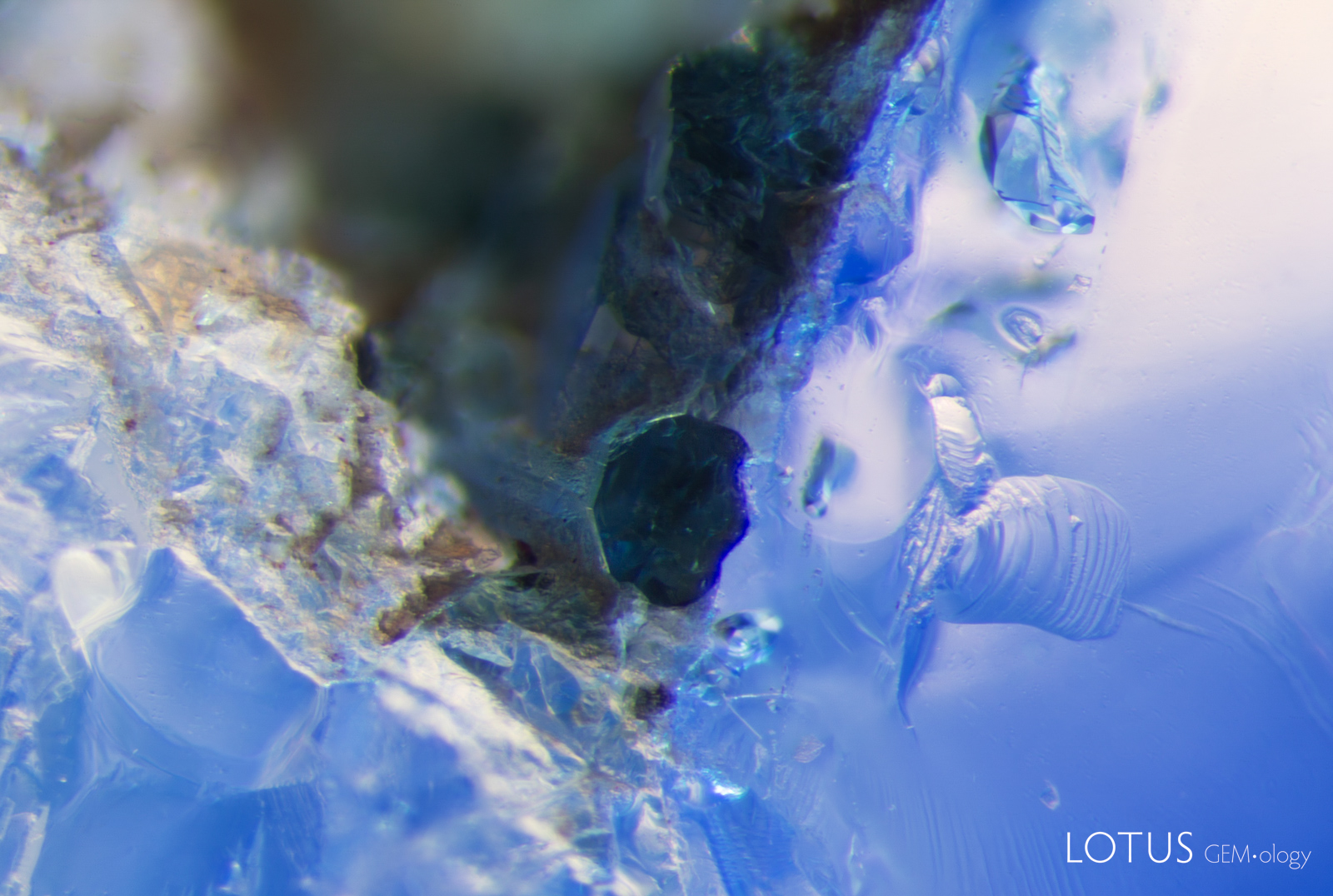
Under magnification, a green crystal could be observed on the surface of this sapphire. Micro Raman analysis identified it as tourmaline, a mineral known to occur in Kashmir sapphire.
Natural Sapphire •
India (Kashmir) •
Enhancements:
None Detected (None) •
Lighting Conditions:
Fiber Optic: Oblique
Photographer:
E. Billie Hughes •
Image Number:
A-006-0625-2
• Field of View = 1.7mm
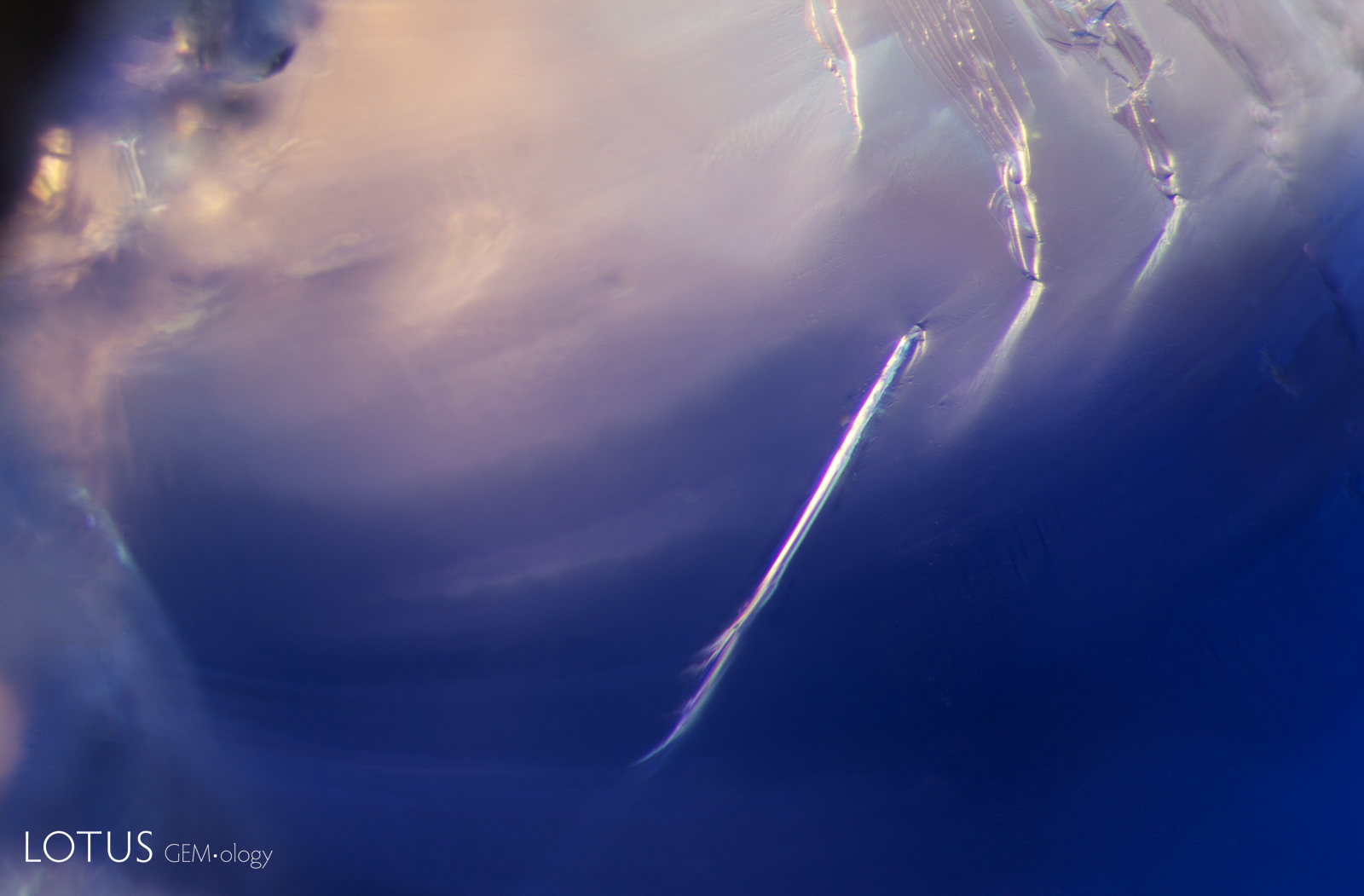
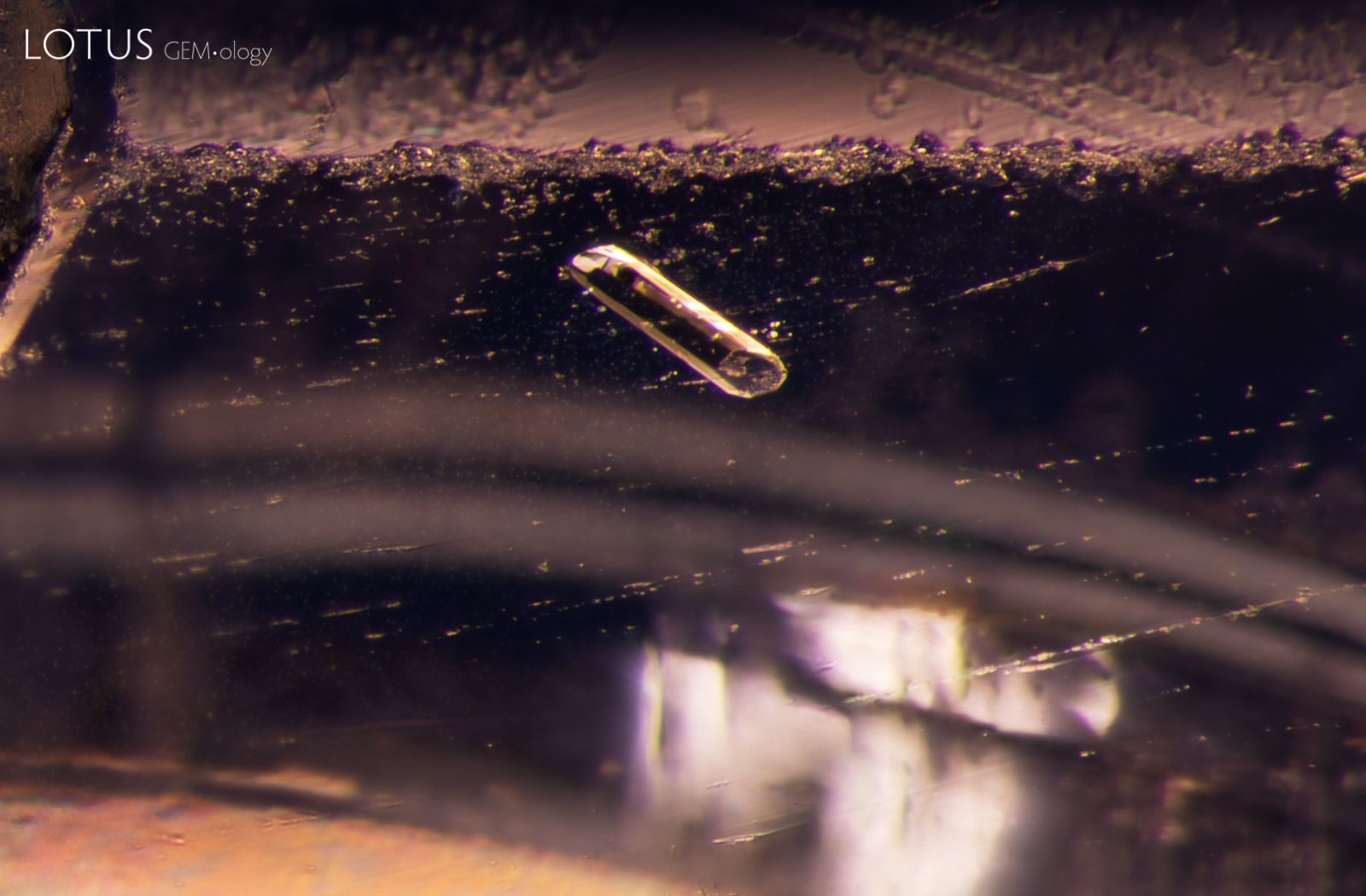
This sapphire contained a rod-like inclusion, identified by micro Raman as pargasite. Pargasite is known to occur in Kashmir sapphire, as well as sapphires from other origins.
Natural Sapphire •
India (Kashmir) •
Enhancements:
None Detected (None) •
Lighting Conditions:
Fiber Optic: Diffuse Oblique
Photographer:
E. Billie Hughes •
Image Number:
A-006-0625-1
• Field of View = 2.4mm
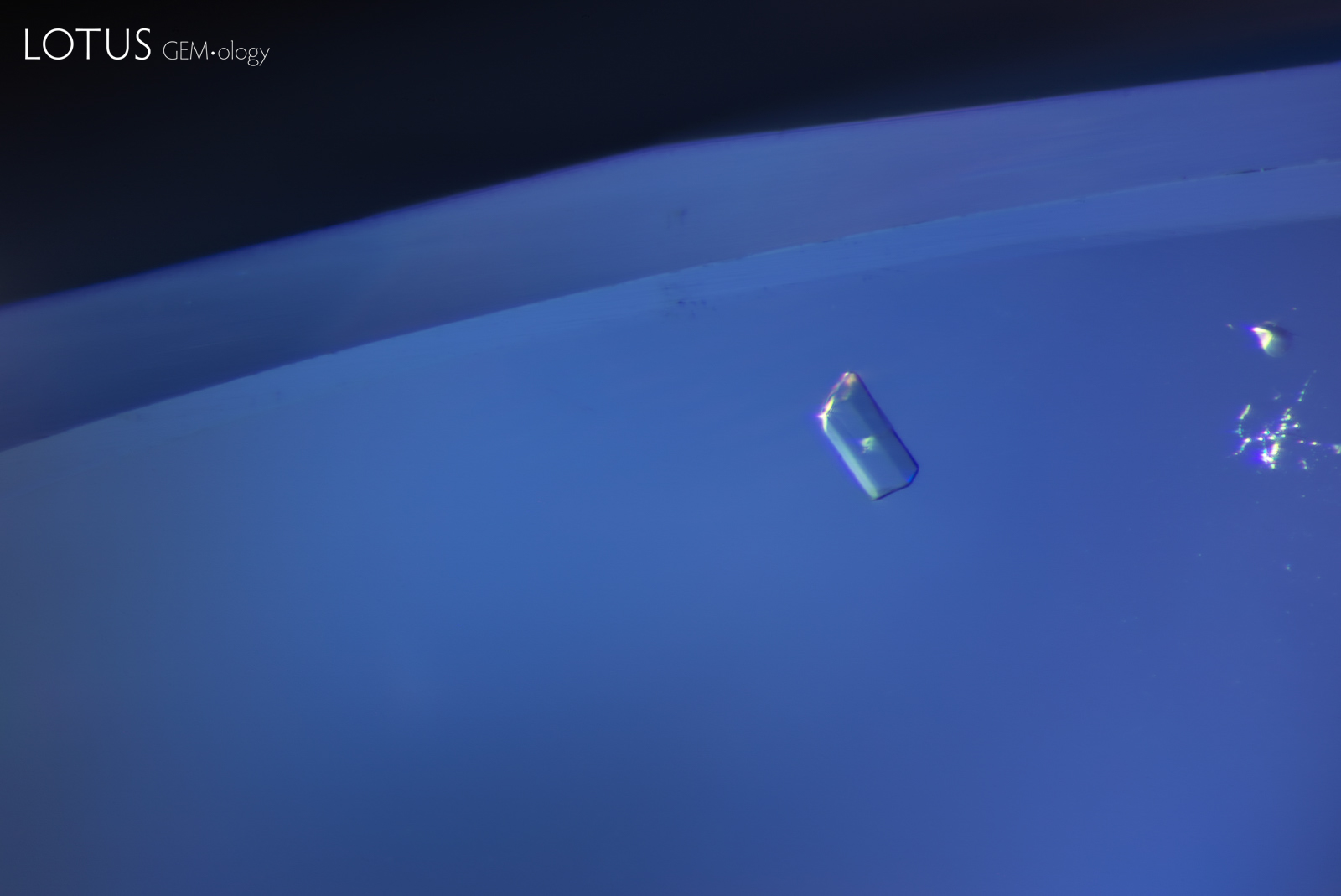
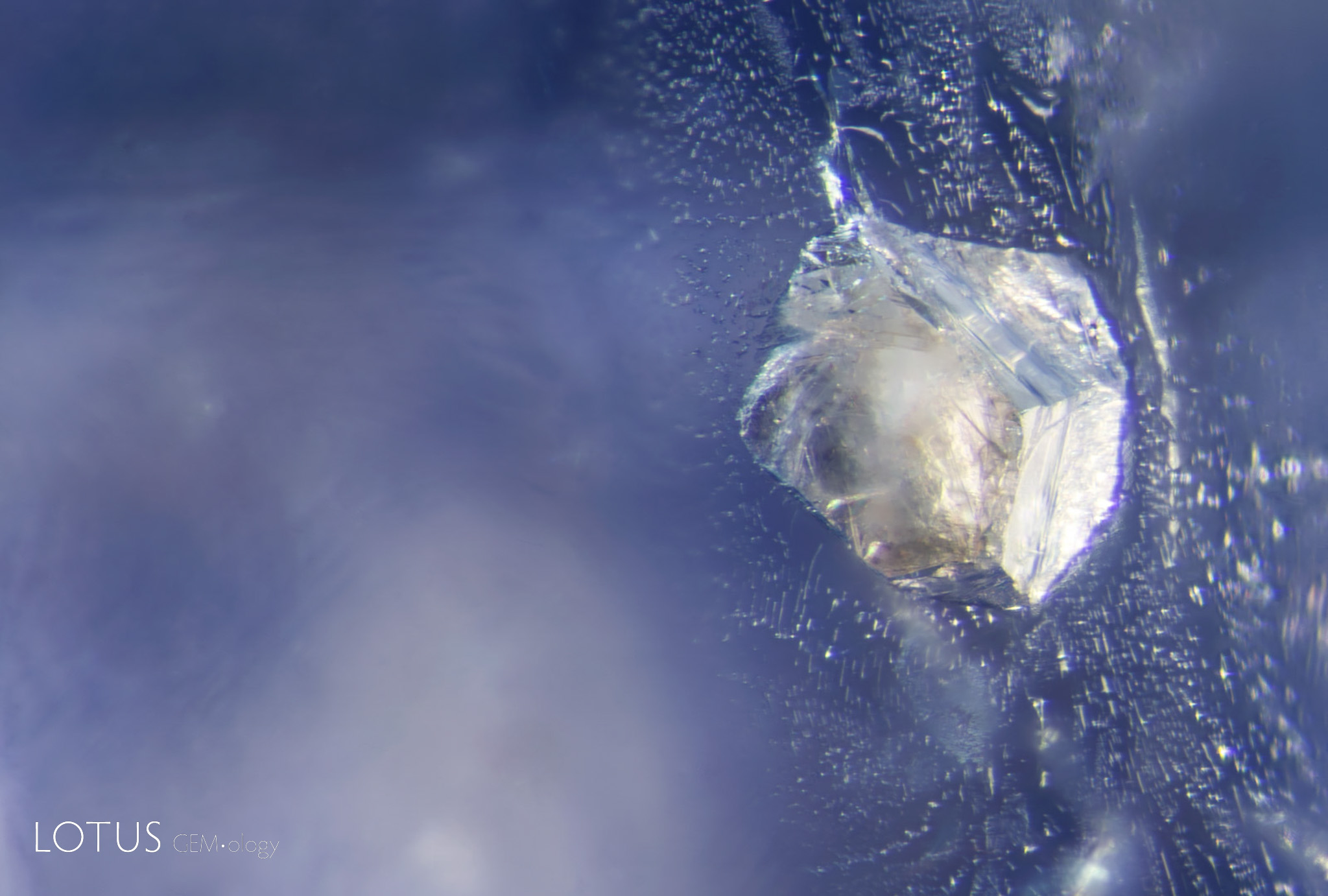
A transparent, prismatic feldspar crystal (identified with micro Raman) can be seen nestled just by the girdle of this untreated sapphire.
Natural Sapphire •
India (Kashmir) •
Enhancements:
None Detected (None) •
Lighting Conditions:
Fiber Optic: Oblique
Photographer:
E. Billie Hughes •
Image Number:
A-006-0126-2
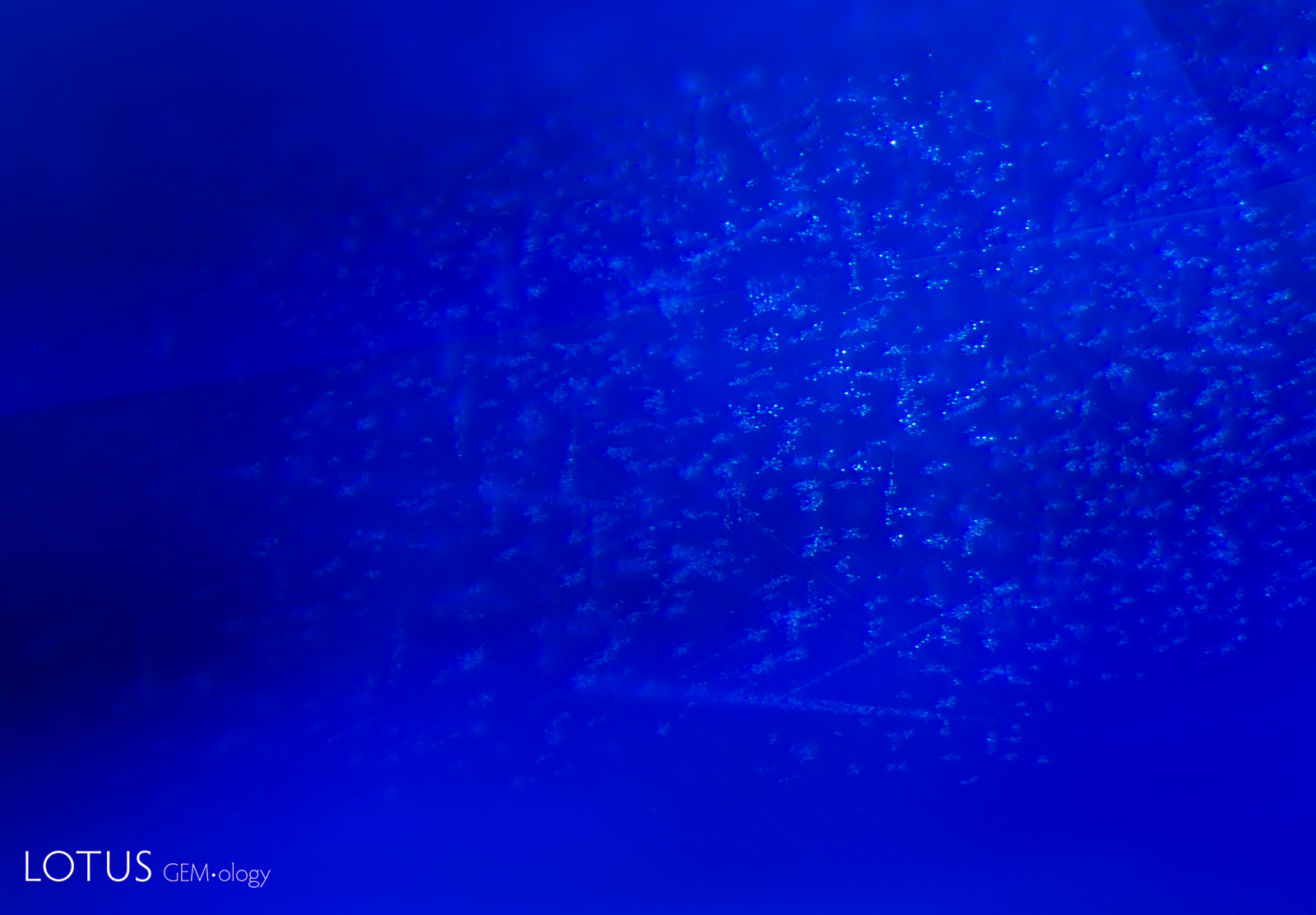
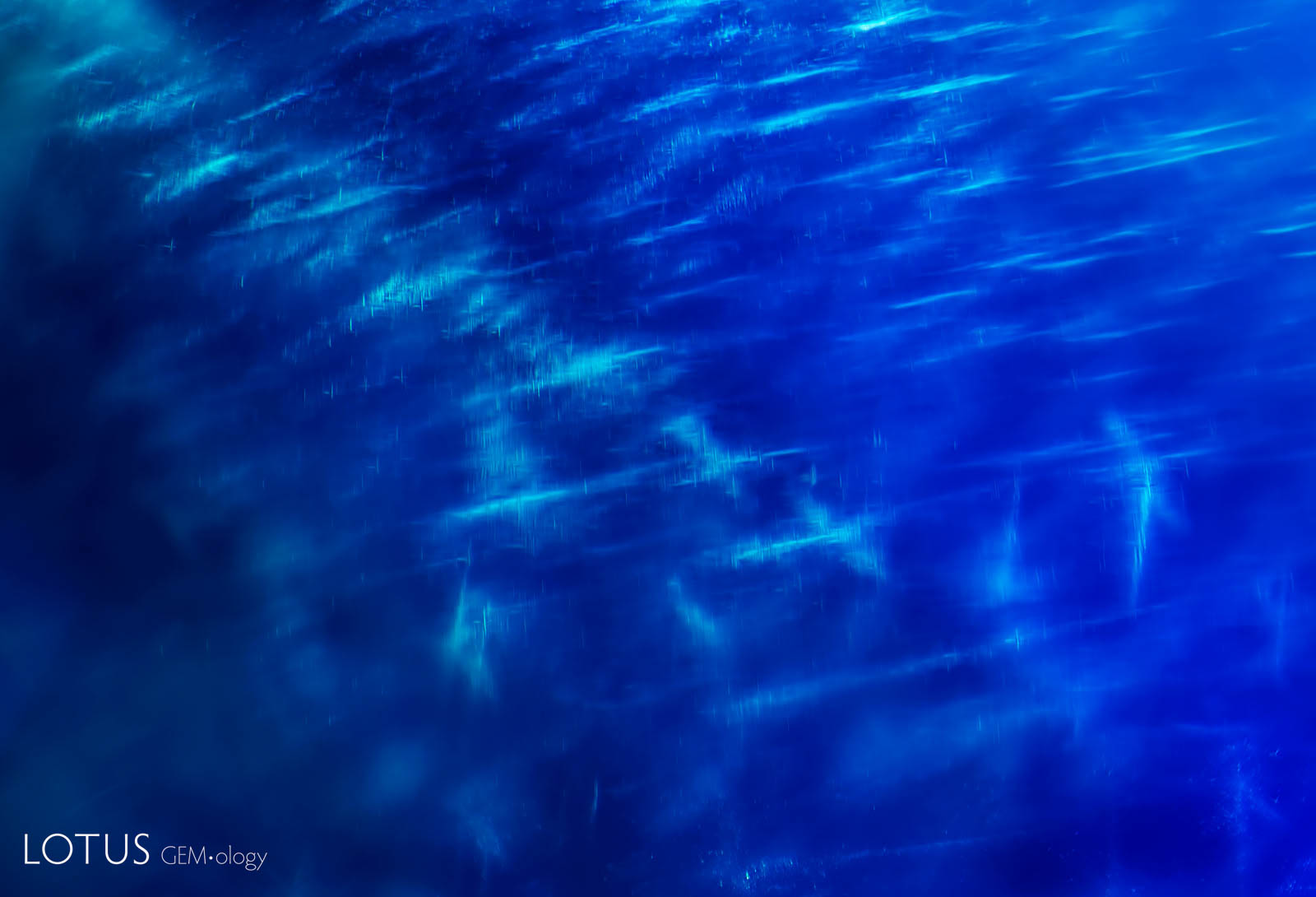
Blue velvet. When magnified, a delicate cloud of snowflake-like particle clusters can be observed in this sapphire. The particles diffuse the light, giving the stone its signature velvety glow.
Natural Sapphire •
India (Kashmir) •
Enhancements:
None Detected (None) •
Lighting Conditions:
Fiber Optic: Oblique
Photographer:
E. Billie Hughes •
Image Number:
A-006-0126-1
Zoned particles in Kashmir sapphire.
Natural Sapphire •
India (Kashmir) •
Enhancements:
None Detected (None) •
Lighting Conditions:
Fiber Optic: Oblique
Photographer:
Wimon Manorotkul •
Image Number:
A-005-0669-3
• Field of View = 2.3mm
Stellate cottony silk in Kashmir sapphire.
Natural Sapphire •
India (Kashmir) •
Enhancements:
None Detected (None) •
Lighting Conditions:
Fiber Optic: Oblique
Photographer:
Wimon Manorotkul •
Image Number:
A-005-0669-2
• Field of View = 4.1mm
The classic Kashmir sapphire locality above Sumjam in India produces crystals that may contain a variety of solid inclusions. We analyzed this example, with microRaman, which showed it to be diaspore—α-AlO(OH)—aluminum hydroxide.
Natural Sapphire •
India (Kashmir) •
Enhancements:
None Detected (None) •
Lighting Conditions:
Photographer:
E. Billie Hughes •
Image Number:
A-005-0437-1
• Field of View = 3mm
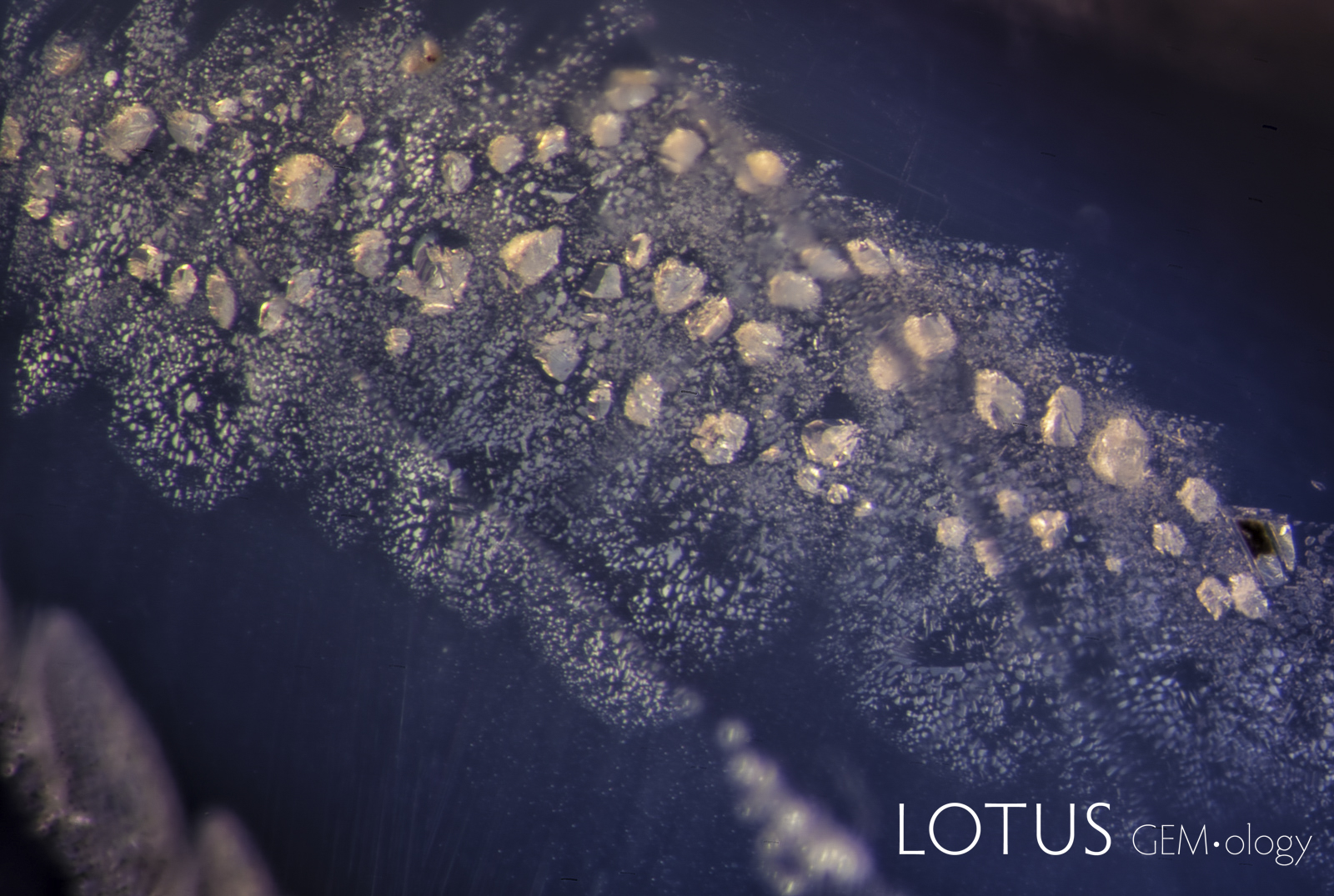
Negative crystals filled with an unknown substance (microRaman suggests they could be diaspore) in a sapphire from India’s famous Kashmir mines near Sumjam. Each is surrounded by small decrepitation halos that are parallel to the basal plane.
Natural Sapphire •
India (Kashmir) •
Enhancements:
None Detected (None) •
Lighting Conditions:
Dark Field
Photographer:
Richard W. Hughes •
Image Number:
A-004-9313-1
• Field of View = 3.5mm
This piece of Kashmir sapphire rough we examined had an interesting elongated, prismatic crystal attached to the surface. Analysis with micro Raman identified it as tourmaline.
Natural Sapphire •
India (Kashmir) •
Enhancements:
None Detected (None) •
Lighting Conditions:
Dark Field + Diffuse Fiber Optic
Photographer:
E. Billie Hughes •
Image Number:
A-004-6394-1
• Field of View = 3.5mm
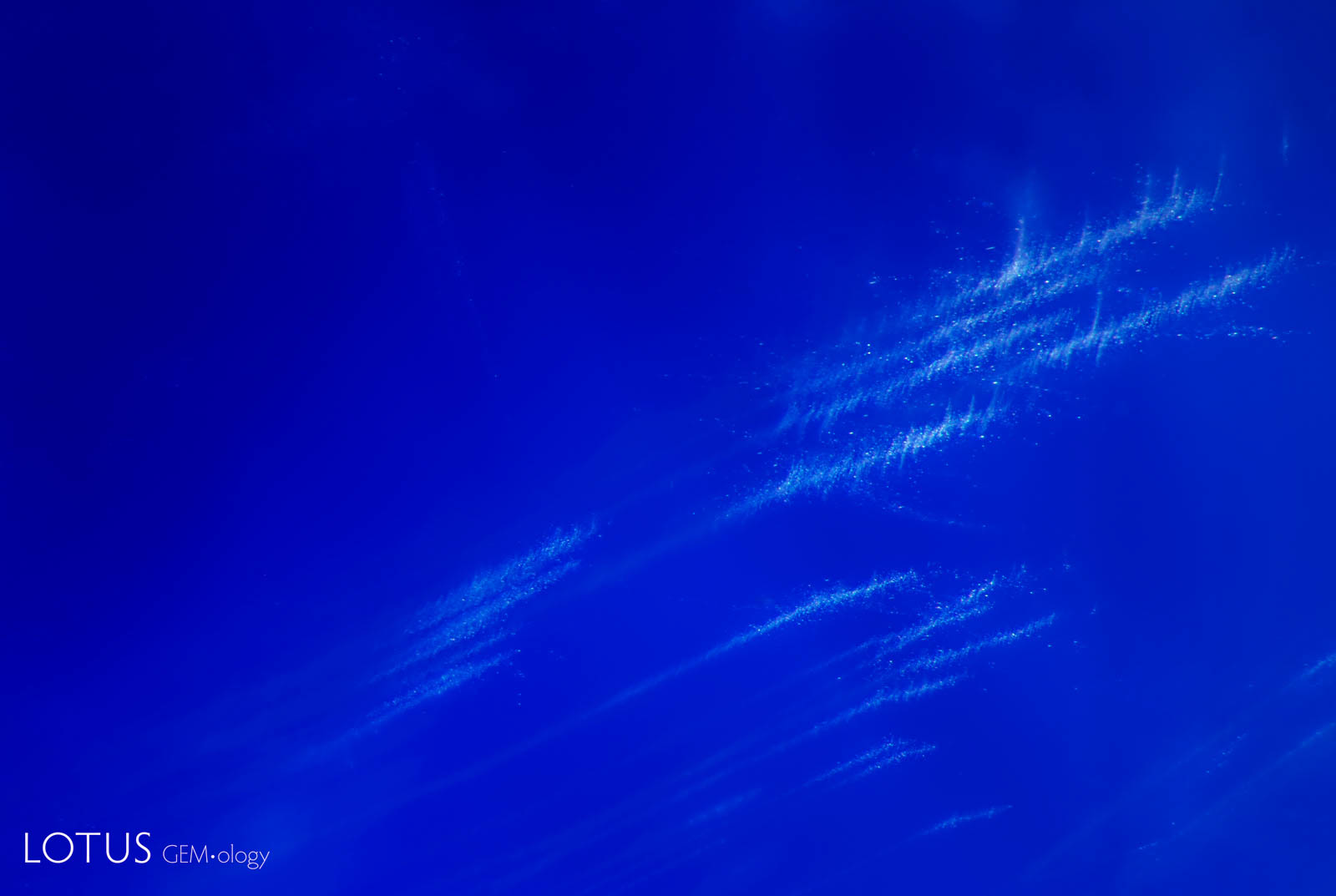
Dense texture clouds, as depicted here, are the hallmark of Kashmir sapphire, giving these stones their famed “velvety” appearance.
Natural Sapphire •
India (Kashmir) •
Enhancements:
None Detected (None) •
Lighting Conditions:
Fiber Optic: Oblique
Photographer:
E. Billie Hughes •
Image Number:
A-004-0632-1
• Field of View = 2.5mm
By looking at the fingerprint in the interior of the stone, we can see how the naturals on this sapphire got their distinctive spotted texture.
Natural Sapphire •
India (Kashmir) •
Enhancements:
None Detected (None) •
Lighting Conditions:
Dark Field + Diffuse Fiber Optic + Blue Filter
Photographer:
E. Billie Hughes •
Image Number:
A-003-7462-4
• Field of View = 4mm
Pargasite crystals, like the one pictured here whose identity was confirmed with Raman spectroscopy, are a well-known inclusion in Kashmir sapphire.
Natural Sapphire •
India (Kashmir) •
Enhancements:
None Detected (None) •
Lighting Conditions:
Dark Field
Photographer:
E. Billie Hughes •
Image Number:
A-003-7462-3
• Field of View = 2mm
Kashmir sapphire inclusions may include mineral crystals, rutile silk, healed fissures, fluid inclusions, negative crystals, growth features and other internal features formed during or after crystal growth. Such features are important to gemologists because they can provide evidence useful in identifying sapphire and evaluating a possible Kashmir origin.
Kashmir Sapphire Inclusion Photomicrographs
The Hyperion Kashmir sapphire gallery includes microscopic features documented in sapphires from Kashmir. Each entry is accompanied by descriptive information and, where available, references to the gemological literature.
What Inclusions Can Reveal About Kashmir Sapphire
Inclusions are an important part of geographic origin determination in sapphire. Their form, composition, orientation and associations can provide evidence that, when considered together with other gemological properties, may support or contradict a Kashmir origin.
Hyperion combines inclusion photomicrography with supporting gemological information so that individual features can be compared with documented examples from Kashmir sapphires.
About Hyperion
Hyperion is the Lotus Gemology searchable inclusion database. It allows users to browse gemstone inclusions by gem type, geographic origin, treatment and keyword.