Zambian Emerald Inclusions
Explore Zambian emerald inclusions in Hyperion, the Lotus Gemology inclusion database. Hyperion contains photomicrographs of inclusions and internal features in natural emeralds from Zambia, documented with information on treatment, lighting conditions, field of view, photographer and published references.
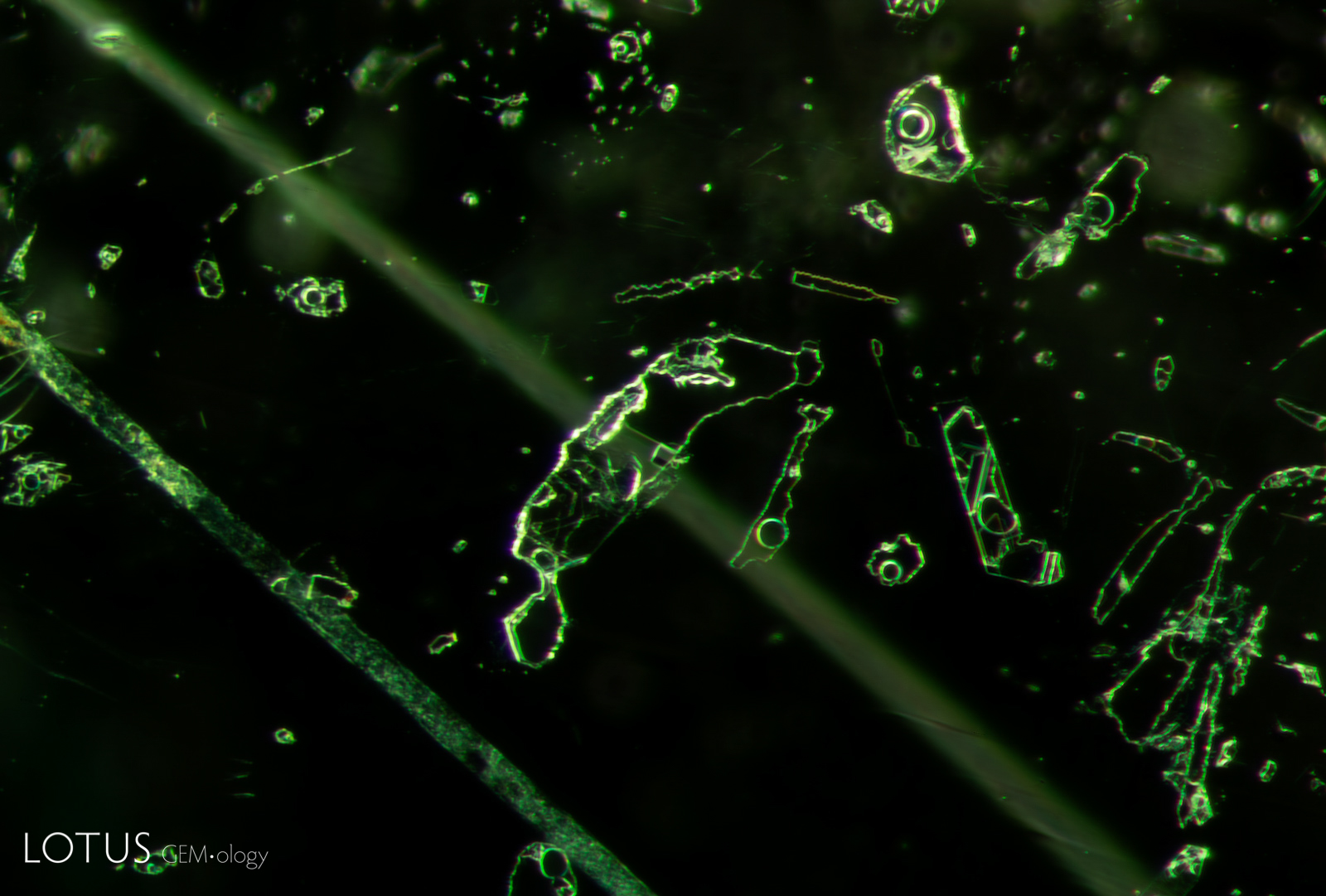
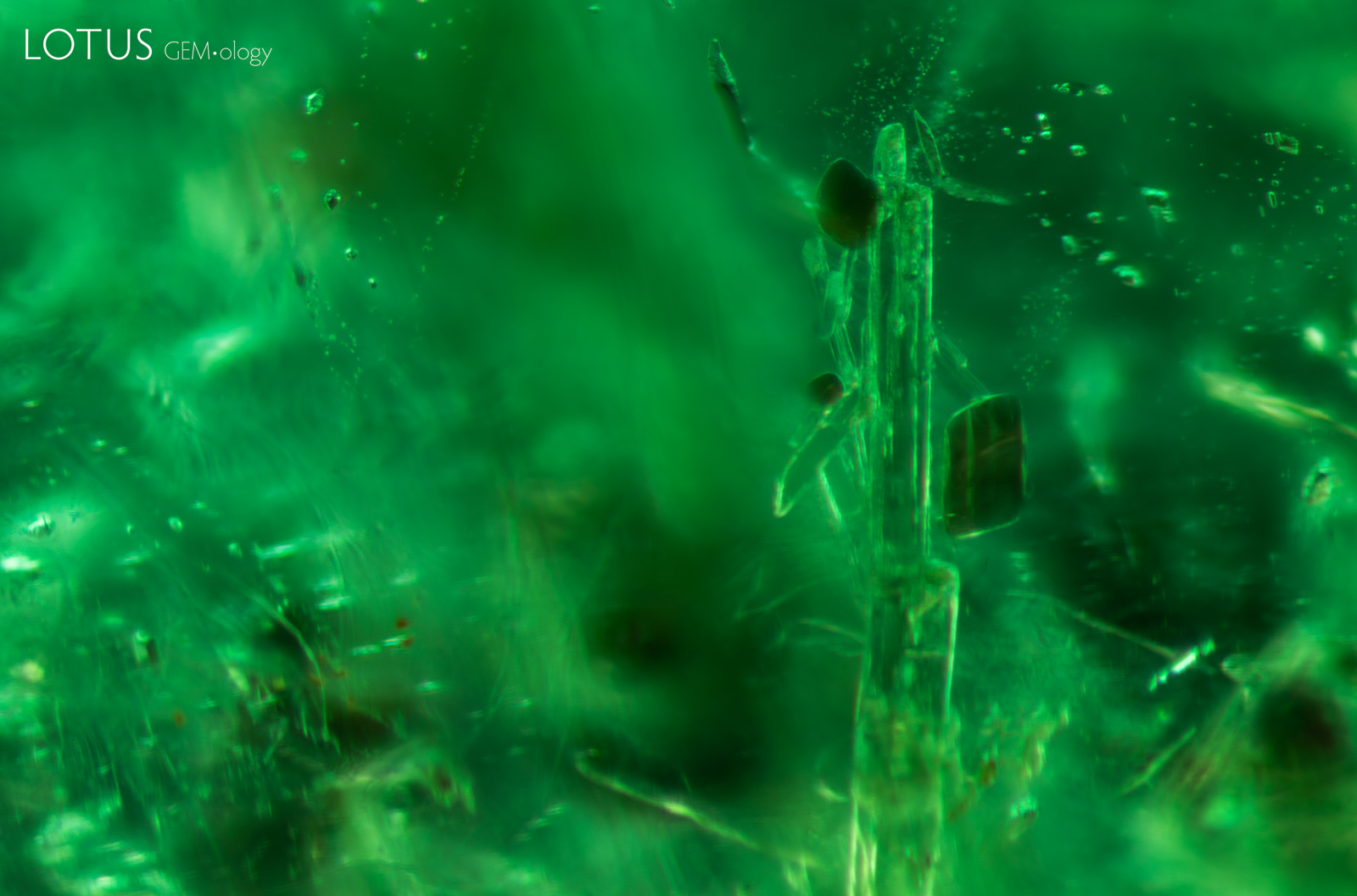
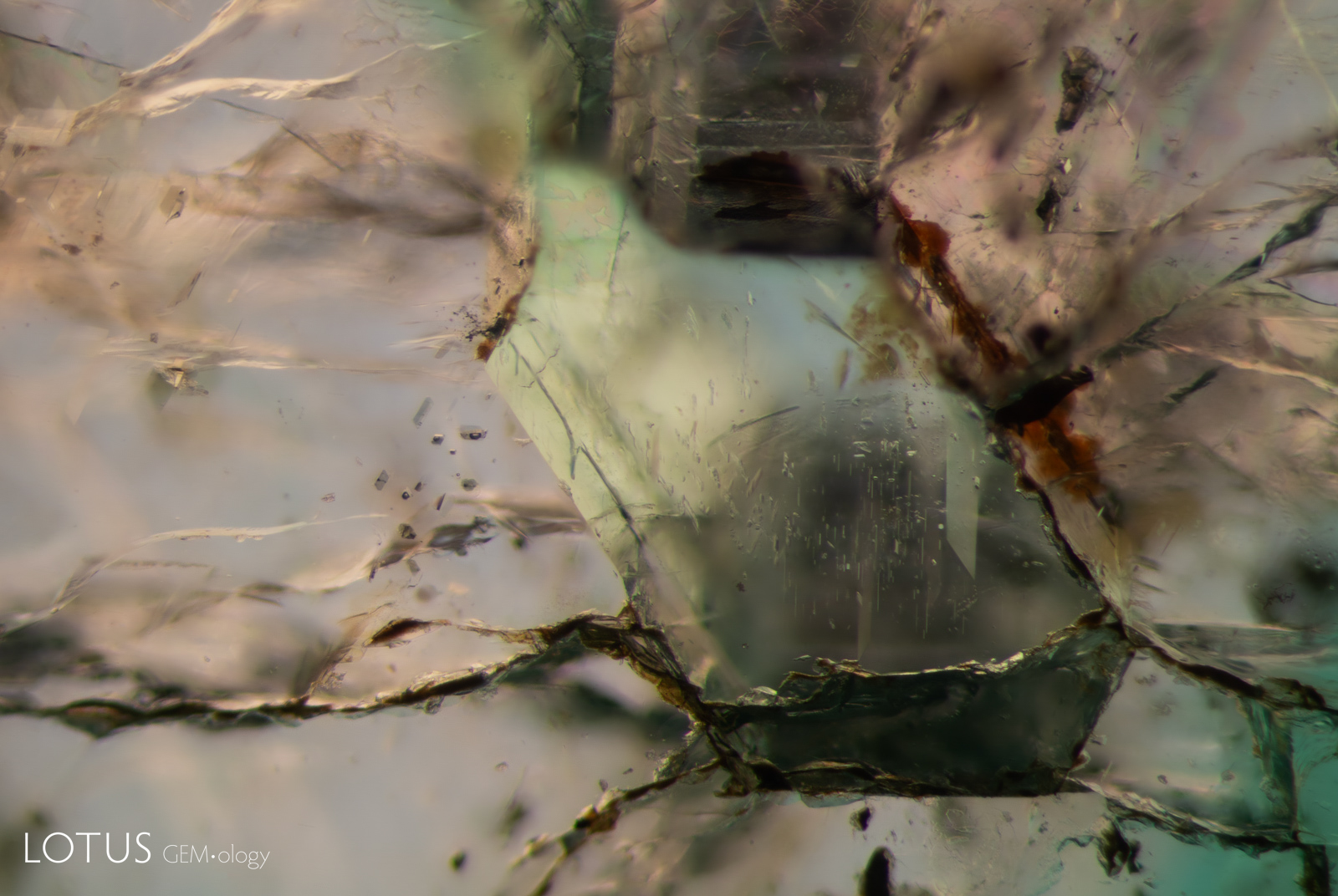
An interesting multiphase inclusion is trapped in this Zambian emerald. While micro Raman analysis could not identify all of the components, it did confirm the presence of carbon dioxide and cristobalite. Specimen courtesy Gemfields.
Natural • Beryl • Emerald •
Zambia; Kafubu •
Enhancements:
None Detected (None) •
Lighting Conditions:
Dark Field
Photographer:
E. Billie Hughes •
Image Number:
R-004-7170-2
• Field of View = 1.6mm
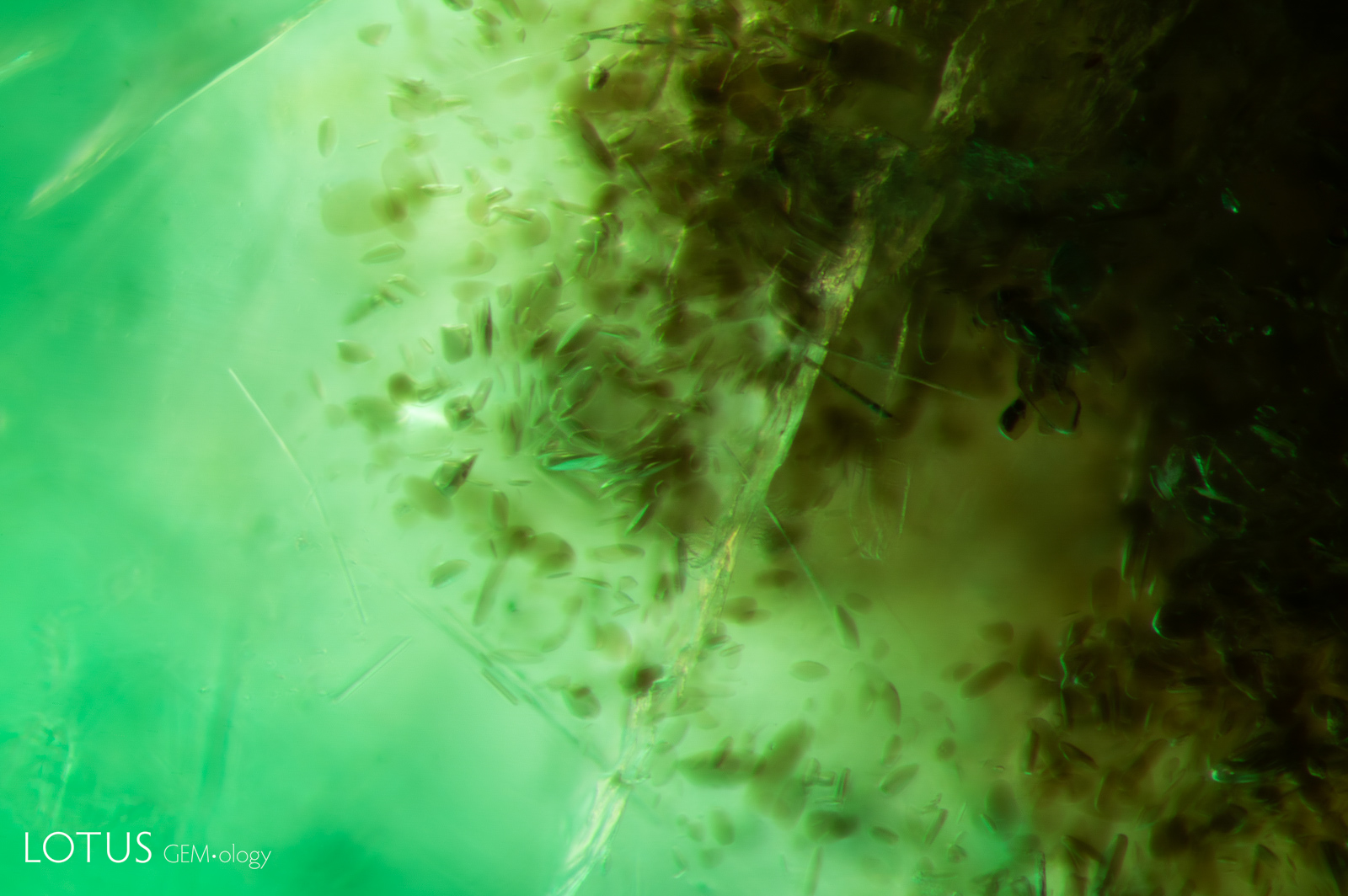
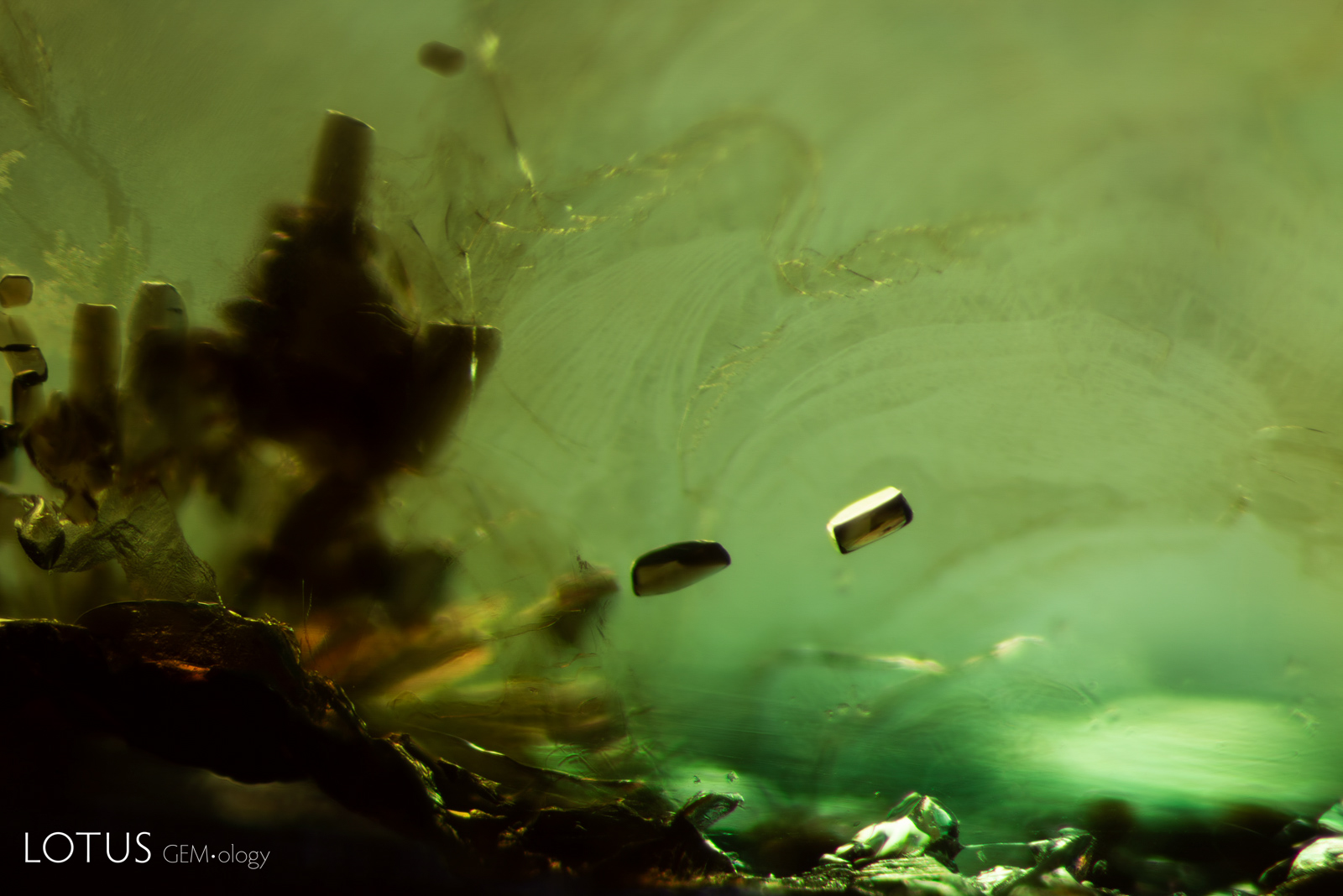
Numerous transparent brown crystals, likely mica, are clustered in this Zambian emerald. Specimen courtesy Gemfields.
Natural • Beryl • Emerald •
Zambia; Kafubu •
Enhancements:
None Detected (None) •
Lighting Conditions:
Dark Field + Oblique Fiber Optic
Photographer:
E. Billie Hughes •
Image Number:
R-004-7169-1
• Field of View = 1.6mm
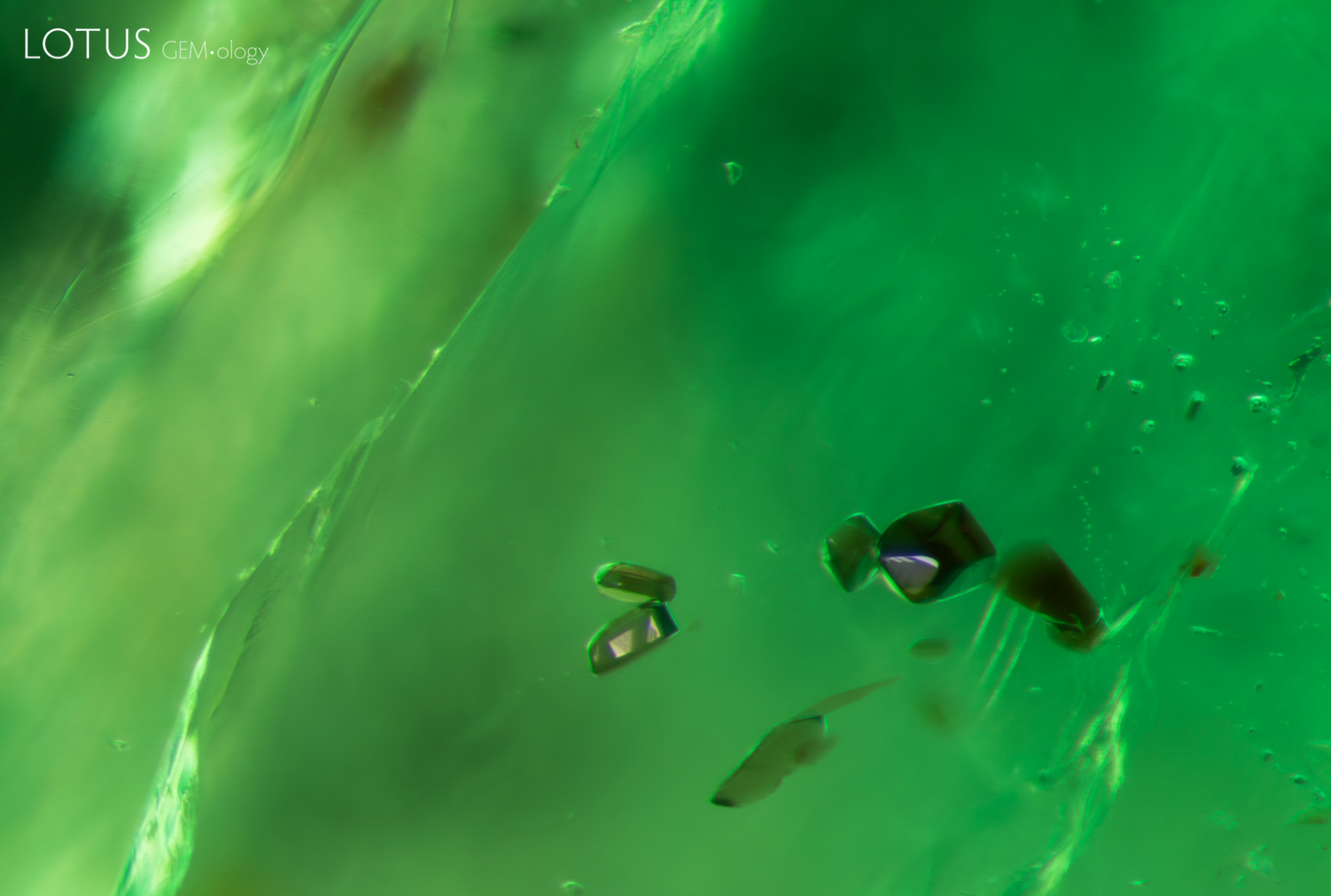
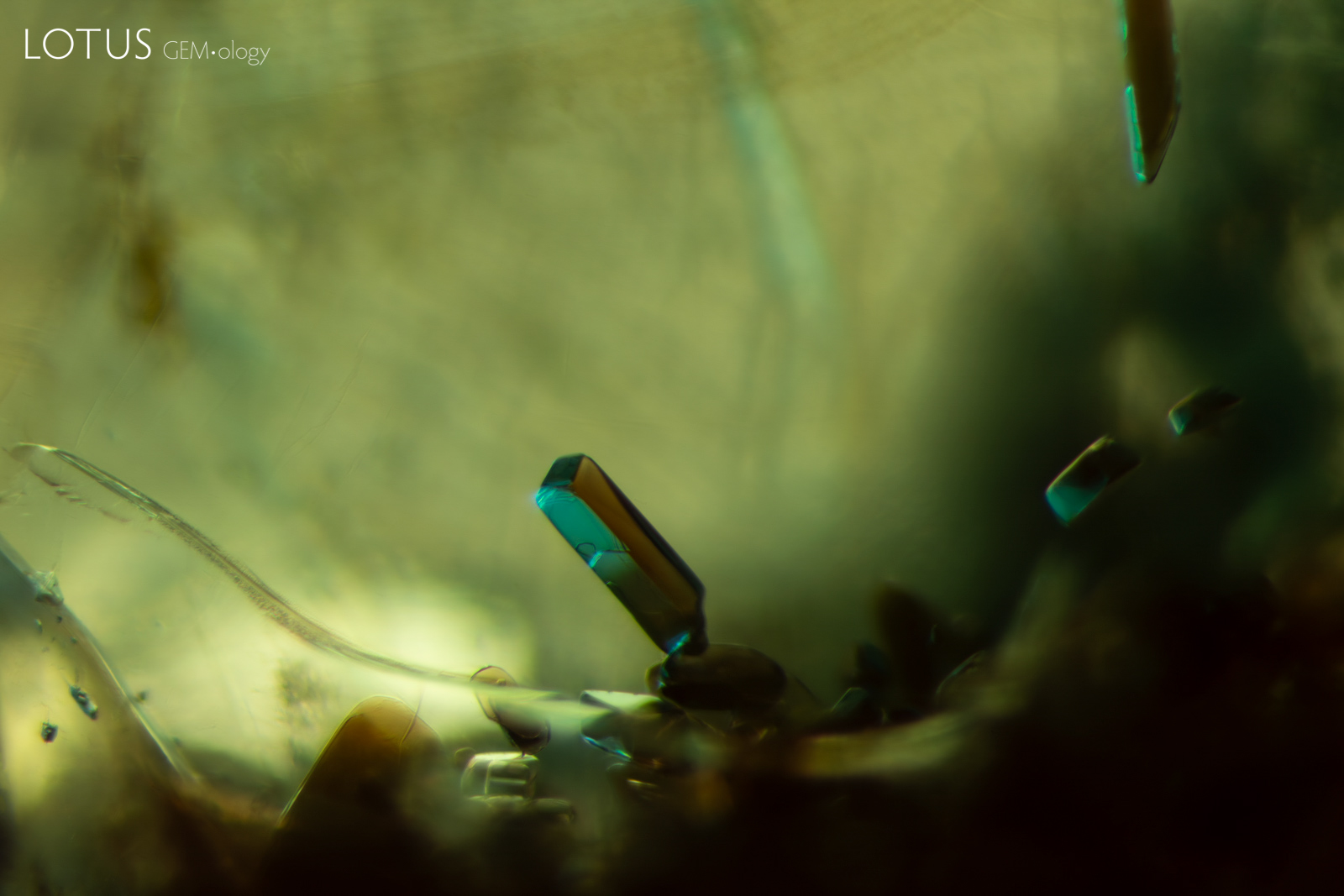
Brown tinted mica crystals like these (which were identified with micro Raman) are a commonly found inclusion in Zambian emeralds. Specimen courtesy Gemfields.
Natural • Beryl • Emerald •
Zambia; Kafubu •
Enhancements:
None Detected (None) •
Lighting Conditions:
Dark Field + Diffuse Fiber Optic
Photographer:
E. Billie Hughes •
Image Number:
R-004-7167-1
• Field of View = 1.6mm
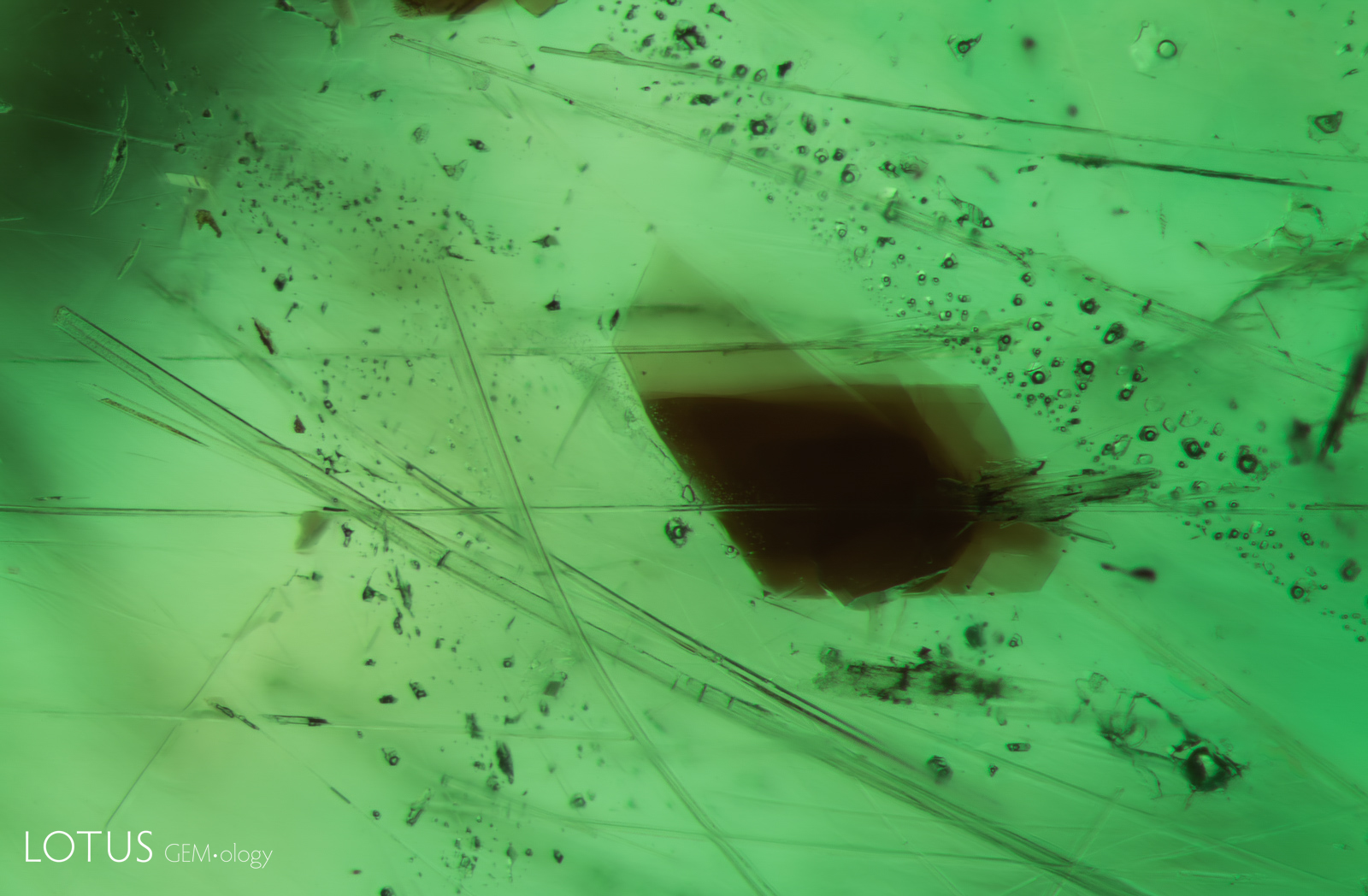
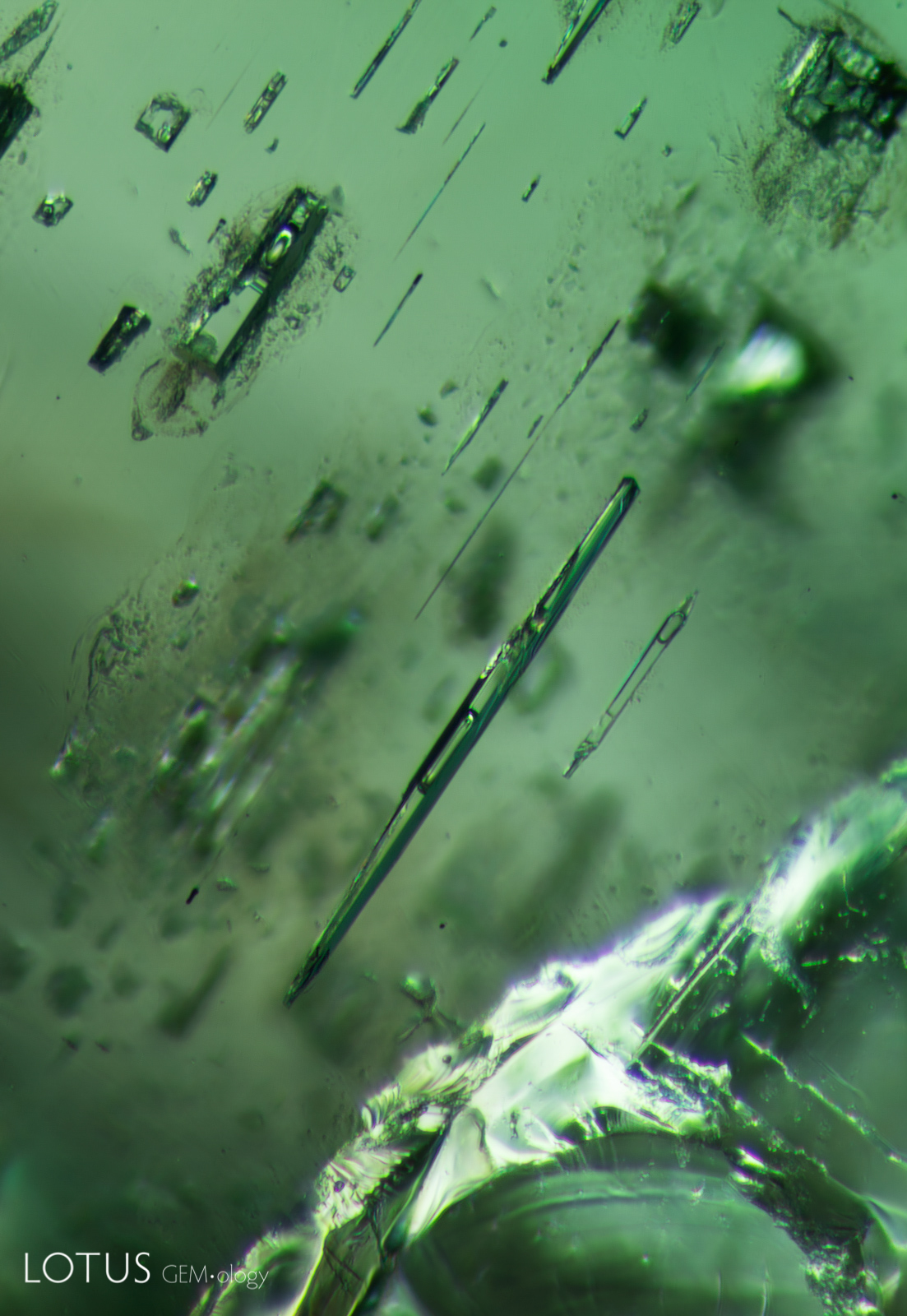
Brown, platey mica crystals and long, needle-like tremolite crystals (both identified with micro Raman) are present in this inclusion scene in a Zambian emerald. There are also several small two phase inclusions. Specimen courtesy Gemfields.
Natural • Beryl • Emerald •
Zambia; Kafubu •
Enhancements:
None Detected (None) •
Lighting Conditions:
Diffuse Light Field (Transmitted Light)
Photographer:
E. Billie Hughes •
Image Number:
R-004-7164-2
• Field of View = 2mm
A mixture of crystals can be seen in this Zambian emerald. Micro Raman revealed that the elongated needles are tremolite, while the brown crystals are mica. Specimen courtesy Gemfields.
Natural • Beryl • Emerald •
Zambia; Kafubu •
Enhancements:
None Detected (None) •
Lighting Conditions:
Dark Field
Photographer:
E. Billie Hughes •
Image Number:
R-004-7163-1
• Field of View = 1.6mm
Blocky, elongated two phase inclusions appear to rain down in this emerald from Zambia. Upon careful inspection, carbon dioxide bubbles can be seen in these cavities. Specimen courtesy Gemfields.
Natural • Beryl • Emerald •
Zambia; Kafubu •
Enhancements:
None Detected (None) •
Lighting Conditions:
Dark Field + Blue Filter
Photographer:
E. Billie Hughes •
Image Number:
R-004-7162-5
• Field of View = 1.6mm
Small brown mica crystals (identified with micro Raman) appear to float in their emerald host. Specimen courtesy Gemfields.
Natural • Beryl • Emerald •
Zambia; Kafubu •
Enhancements:
None Detected (None) •
Lighting Conditions:
Light Field (Transmitted Light)
Photographer:
E. Billie Hughes •
Image Number:
R-004-7161-2
• Field of View = 2.8mm
Small brown mica crystals (identified with micro Raman) appear to float in their emerald host. Specimen courtesy Gemfields.
Natural • Beryl • Emerald •
Zambia; Kafubu •
Enhancements:
None Detected (None) •
Lighting Conditions:
Light Field (Transmitted Light)
Photographer:
E. Billie Hughes •
Image Number:
R-004-7161-1
• Field of View = 2.2mm
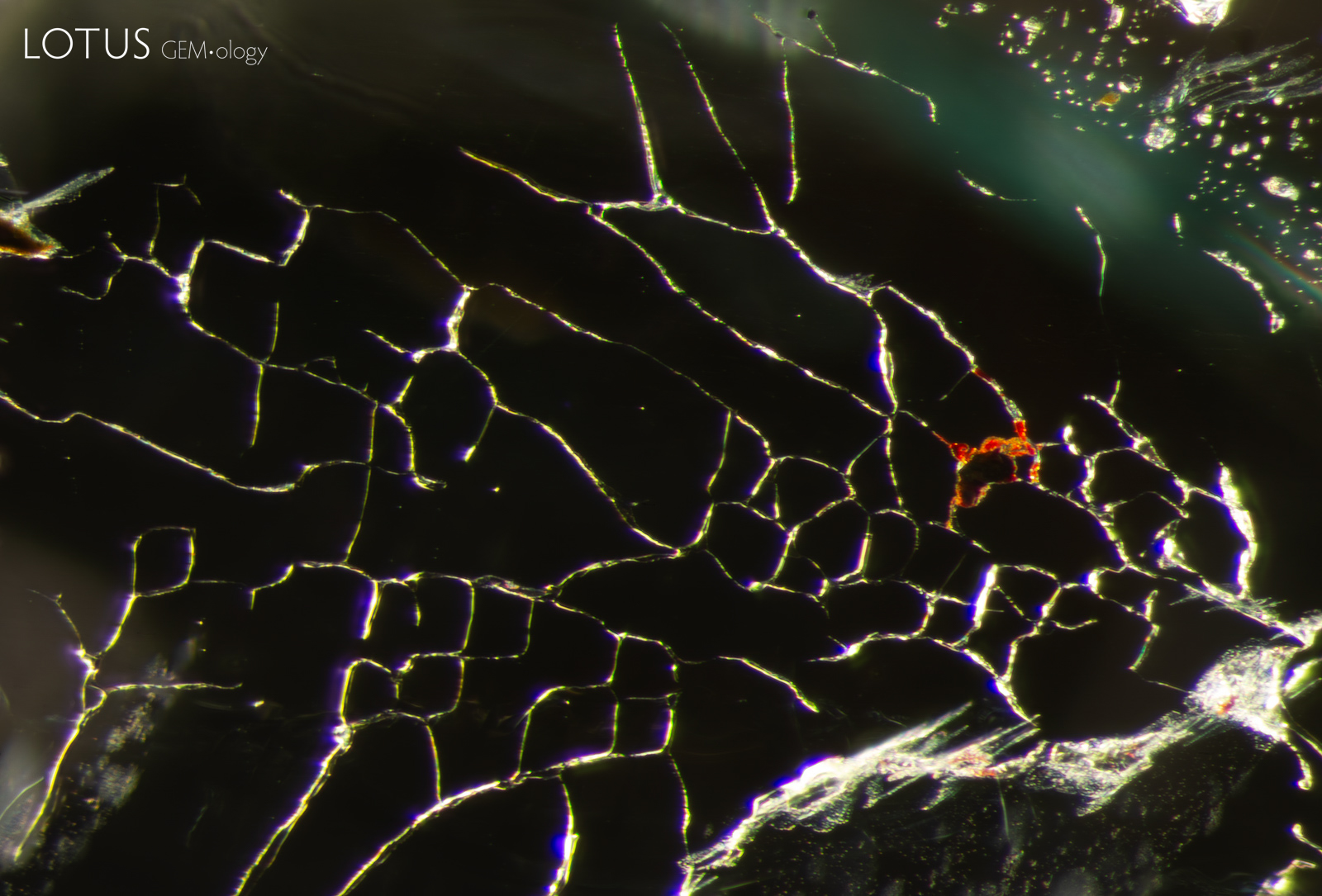
This webbed fingerprint has a small area of orange staining. Specimen courtesy Gemfields.
Natural • Beryl • Emerald •
Zambia; Kafubu •
Enhancements:
None Detected (None) •
Lighting Conditions:
Dark Field
Photographer:
E. Billie Hughes •
Image Number:
R-004-7160-1
This emerald contained strong green color zoning. Specimen courtesy Gemfields.
Natural • Beryl • Emerald •
Zambia; Kafubu •
Enhancements:
None Detected (None) •
Lighting Conditions:
Light Field (Transmitted Light)
Photographer:
E. Billie Hughes •
Image Number:
R-004-7159-1
• Field of View = 5.6mm
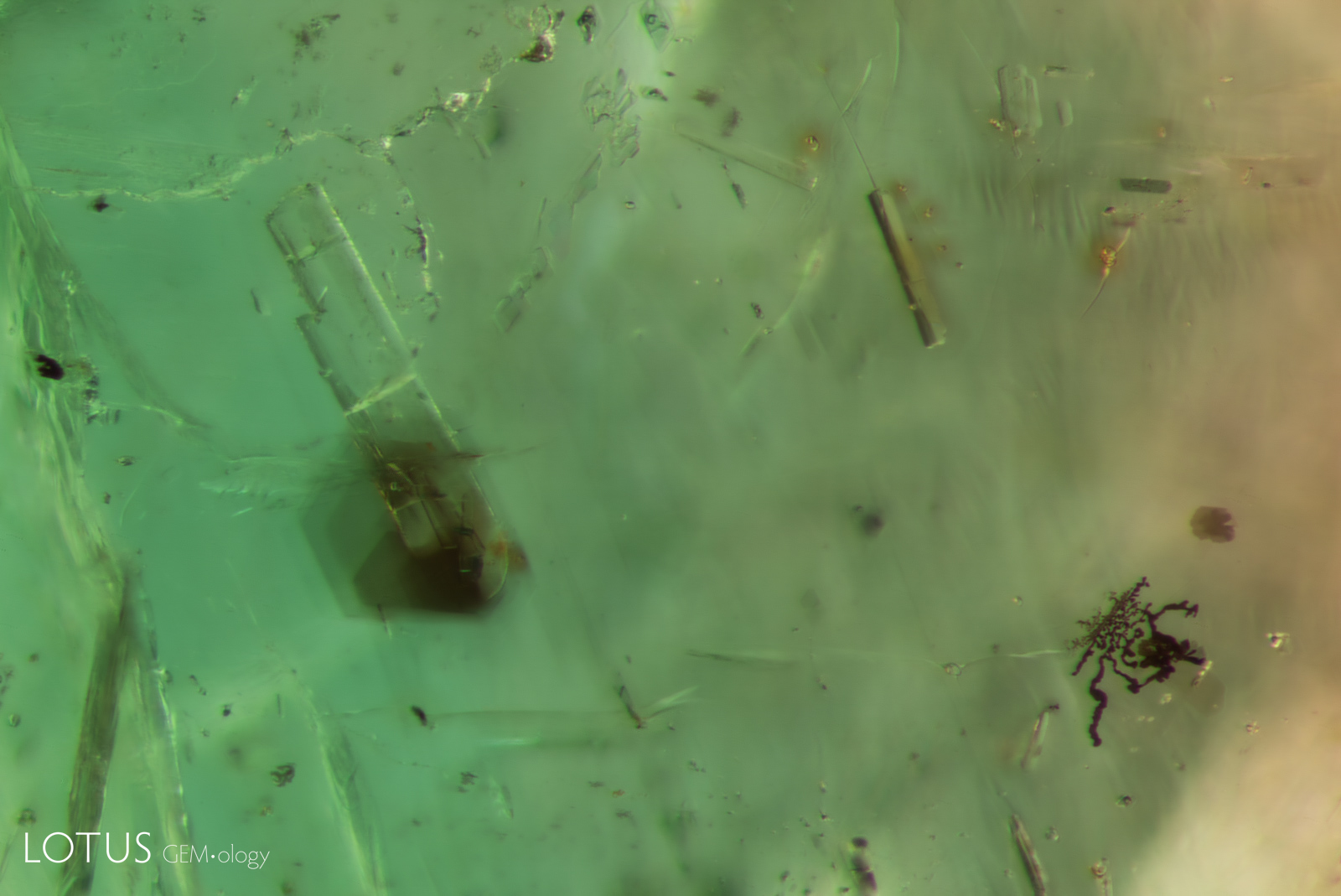
Analysis with micro Raman identified the transparent, rod-like inclusions in this Zambian emerald as apatite. Specimen courtesy Gemfields.
Natural • Beryl • Emerald •
Zambia; Kafubu •
Enhancements:
None Detected (None) •
Lighting Conditions:
Light Field (Transmitted Light)
Photographer:
E. Billie Hughes •
Image Number:
R-004-7158-3
• Field of View = 1.6mm
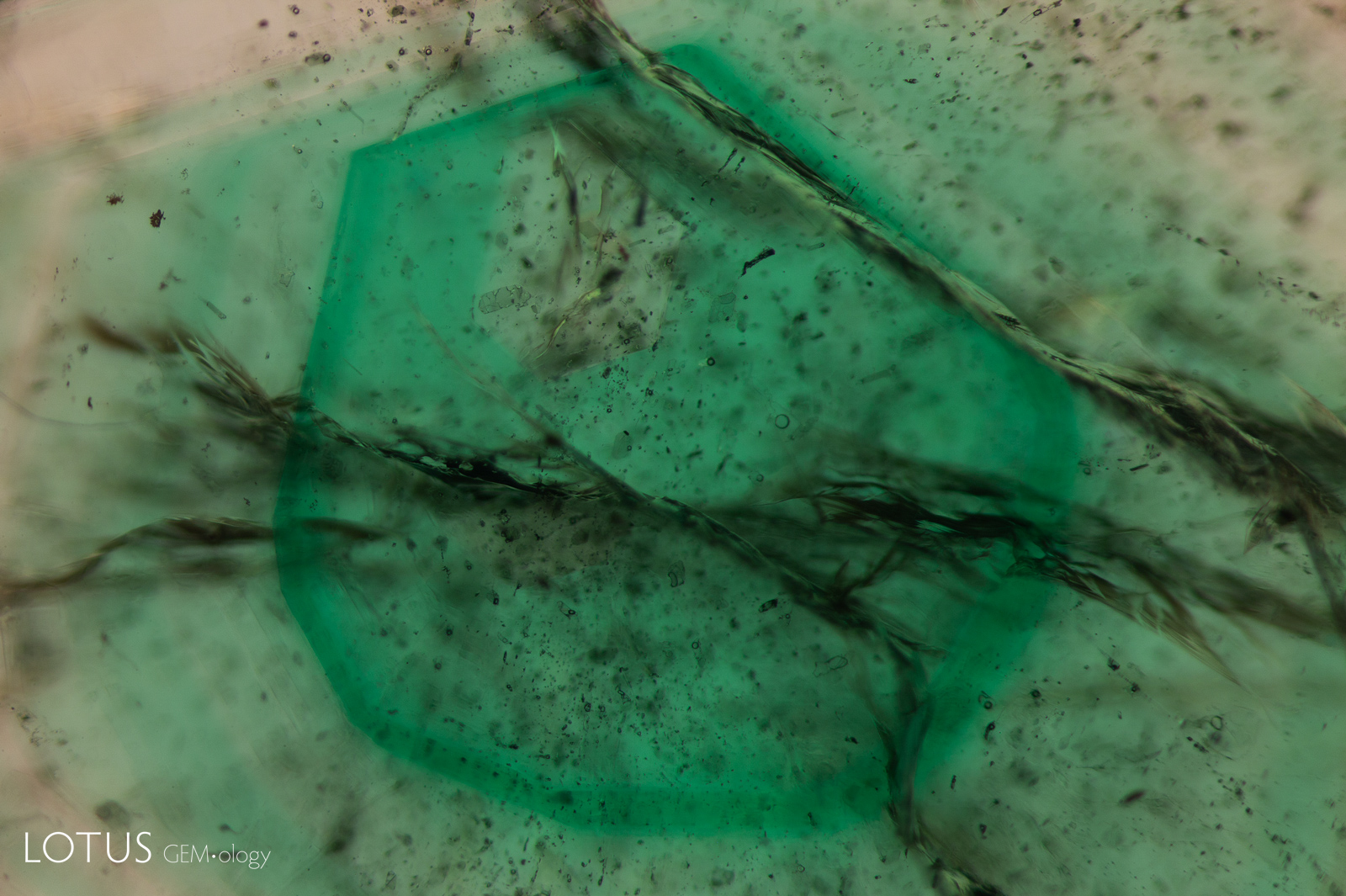
Emerald in emerald. A hexagonal core of emerald can be seen in the center of this larger emerald sample from Zambia. Note that the core also has its own inclusions of iridescent planes and fine needles. Specimen courtesy Gemfields.
Natural • Beryl • Emerald •
Zambia; Kafubu •
Enhancements:
None Detected (None) •
Lighting Conditions:
Light Field (Transmitted Light)
Photographer:
E. Billie Hughes •
Image Number:
R-004-7158-2
• Field of View = 3.2mm
32 Total Images
Results: 13 – 24 | Page 2 of 3 Pages
Zambian emerald inclusions may include mineral crystals, fluid inclusions, multiphase inclusions, healed fissures, growth features and other internal features formed during or after crystal growth. Such features are important to gemologists because they can provide evidence useful in identifying emerald and evaluating a possible Zambian origin.
Zambian Emerald Inclusion Photomicrographs
The Hyperion Zambian emerald gallery includes microscopic features documented in emeralds from Zambia. Each entry is accompanied by descriptive information and, where available, references to the gemological literature.
What Inclusions Can Reveal About Zambian Emerald
Inclusions are an important part of geographic origin determination in emerald. Their form, composition and associations can provide evidence that, when considered together with other gemological properties, may support or contradict a Zambian origin.
Hyperion combines inclusion photomicrography with supporting gemological information so that individual features can be compared with documented examples from Zambian emeralds.
About Hyperion
Hyperion is the Lotus Gemology searchable inclusion database. It allows users to browse gemstone inclusions by gem type, geographic origin, treatment and keyword.
Search the Complete Hyperion Database