Zambian Emerald Inclusions
Explore Zambian emerald inclusions in Hyperion, the Lotus Gemology inclusion database. Hyperion contains photomicrographs of inclusions and internal features in natural emeralds from Zambia, documented with information on treatment, lighting conditions, field of view, photographer and published references.
A cluster of crystals, likely mica, of various sizes and shapes is suspended in this Zambian emerald.
Natural • Beryl • Beryl • Emerald •
Zambia •
Enhancements:
Fissure Filling with colorless Oil/resin (FF-O3) •
Lighting Conditions:
Light Field (Transmitted Light)
Photographer:
Natcha Rattana-anan •
Image Number:
A-005-5941-2
• Field of View = 2.2mm
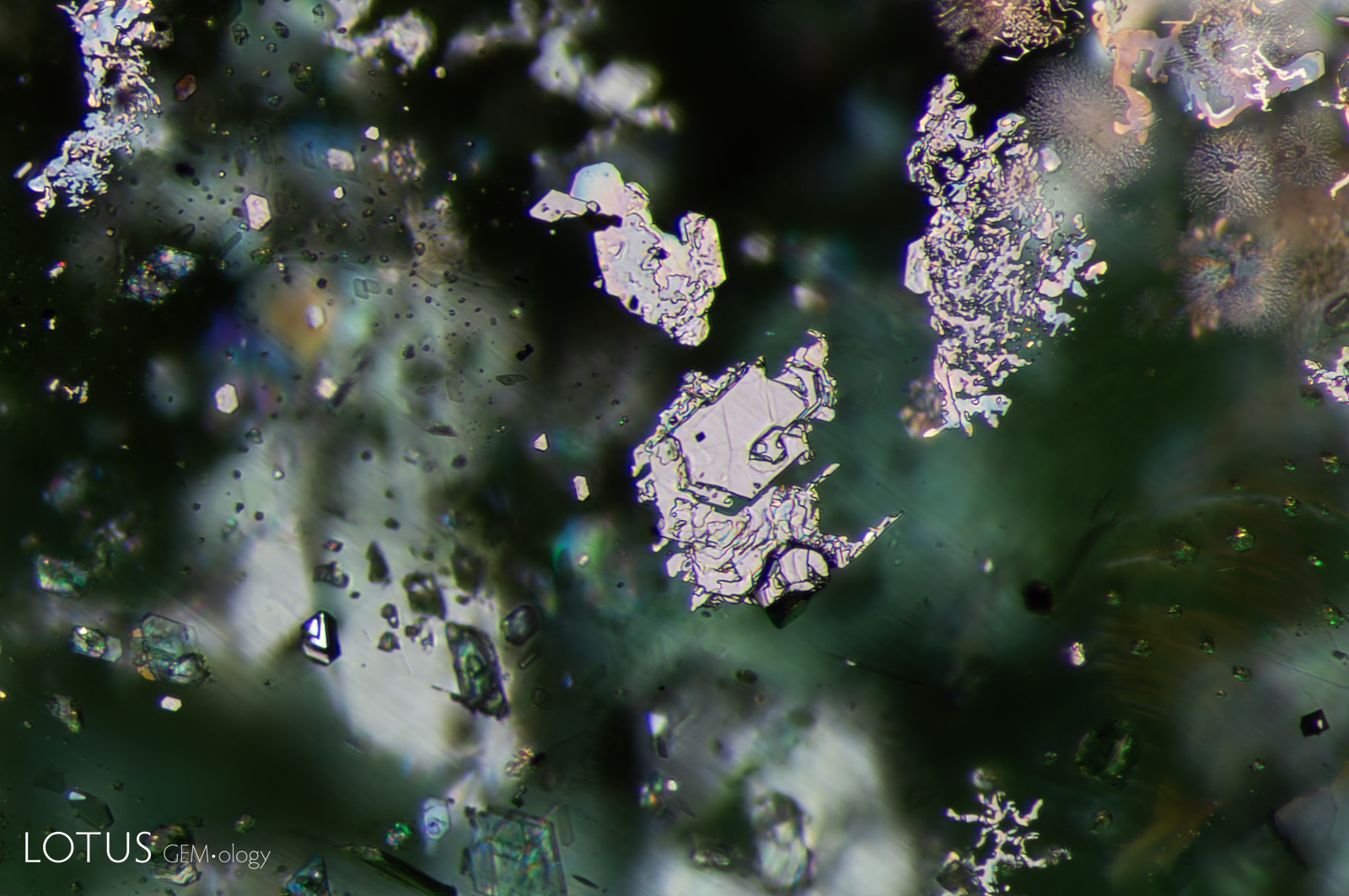
A cluster of crystals (likely mica) reaches the surface of this Zambian emerald. When exposed to the gentle heat of the microscope light, oil droplets leaked out at the boundary between the inclusions and the host.
Natural • Beryl • Beryl • Emerald •
Zambia •
Enhancements:
Fissure Filling with colorless Oil/resin (FF-O3) •
Lighting Conditions:
Dark Field + Diffuse Fiber Optic
Photographer:
Natcha Rattana-anan •
Image Number:
A-005-5941-1
• Field of View = 2.2mm
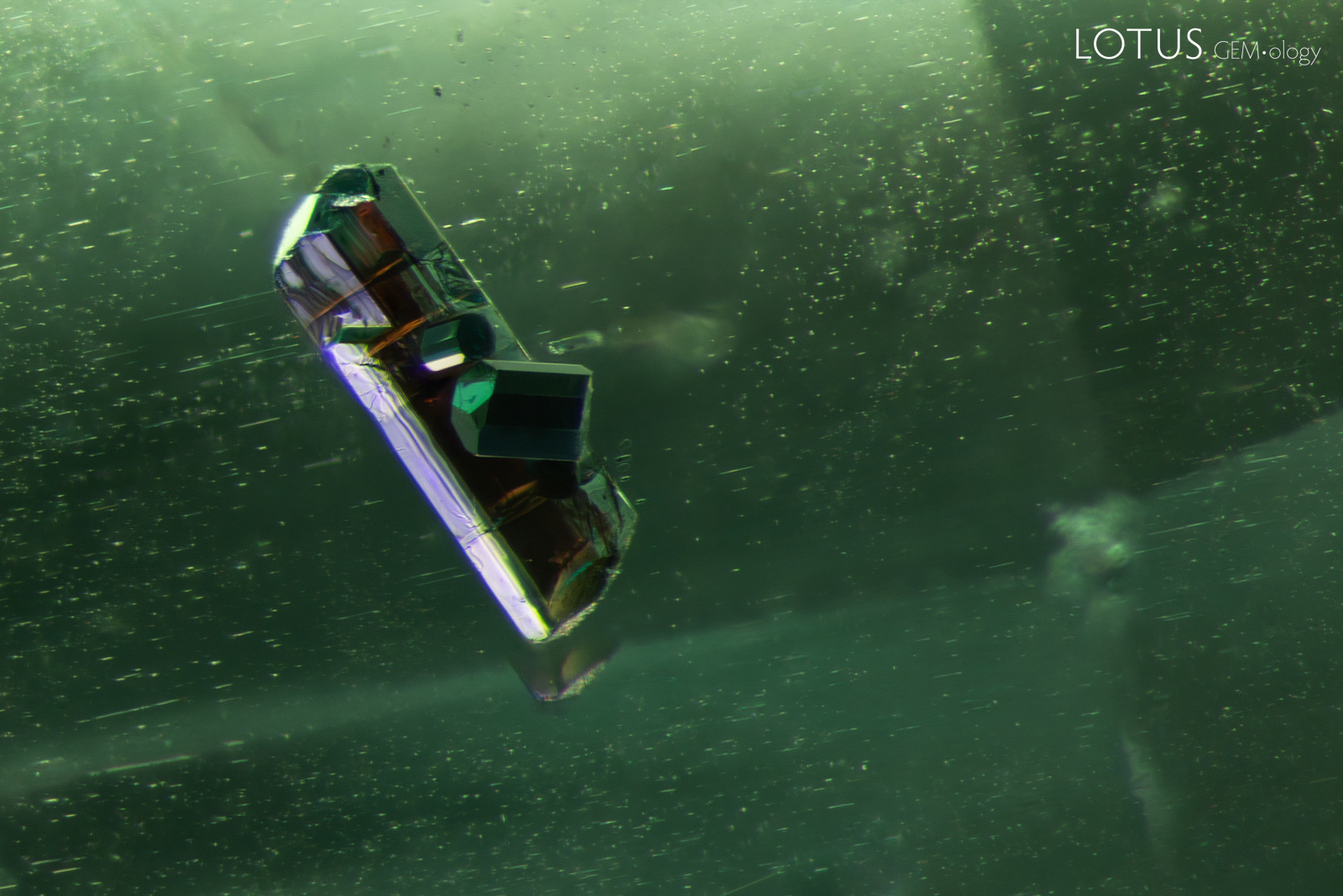
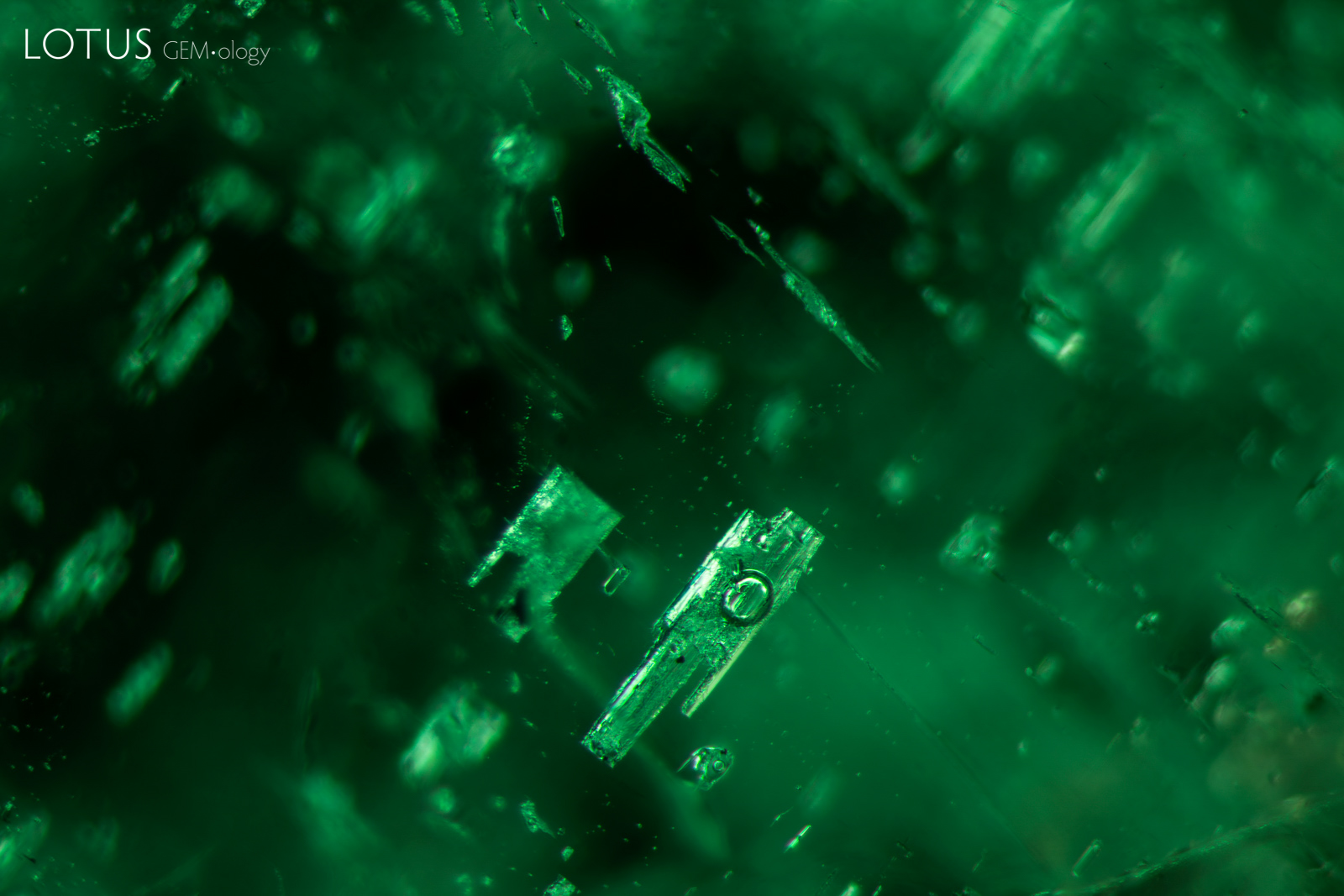
A brown, prismatic crystal, possibly tourmaline, is suspended inside of this schist-hosted emerald.
Natural • Beryl • Beryl • Emerald •
Zambia •
Enhancements:
Fissure Filling with colorless Oil/resin (FF-O2) •
Lighting Conditions:
Dark Field + Diffuse Fiber Optic
Photographer:
E. Billie Hughes •
Image Number:
A-005-6143-1
• Field of View = 1.4mm
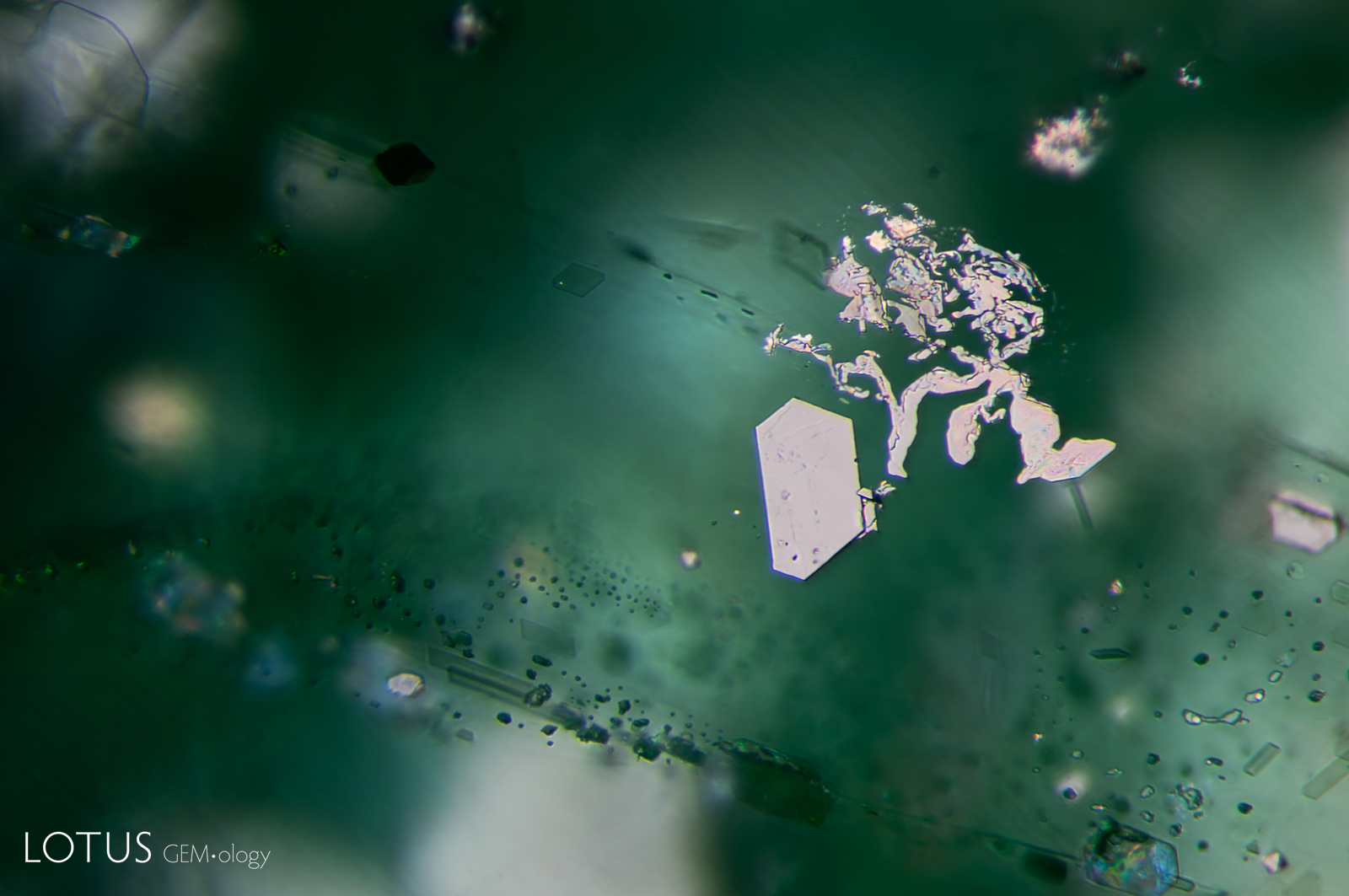
The whomping willow. Iridescent platelets (likely ilmenite), one hexagonal and others irregular in shape, stand out against a verdant background in this Zambian emerald.
Natural • Beryl • Beryl • Emerald •
Zambia •
Enhancements:
Fissure Filling with colorless Oil/resin (FF-O1–2) •
Lighting Conditions:
Dark Field + Diffuse Fiber Optic
Photographer:
E. Billie Hughes •
Image Number:
A-005-6469-2
• Field of View = 2.5mm
Iridescent platelets (likely ilmenite) stand out against a verdant background in this Zambian emerald. Some areas of the platelets have dendritic shapes, while others show hexagonal forms.
Natural • Beryl • Beryl • Emerald •
Zambia •
Enhancements:
Fissure Filling with colorless Oil/resin (FF-O1–2) •
Lighting Conditions:
Dark Field + Diffuse Fiber Optic
Photographer:
E. Billie Hughes •
Image Number:
A-005-6469-1
• Field of View = 1.6mm
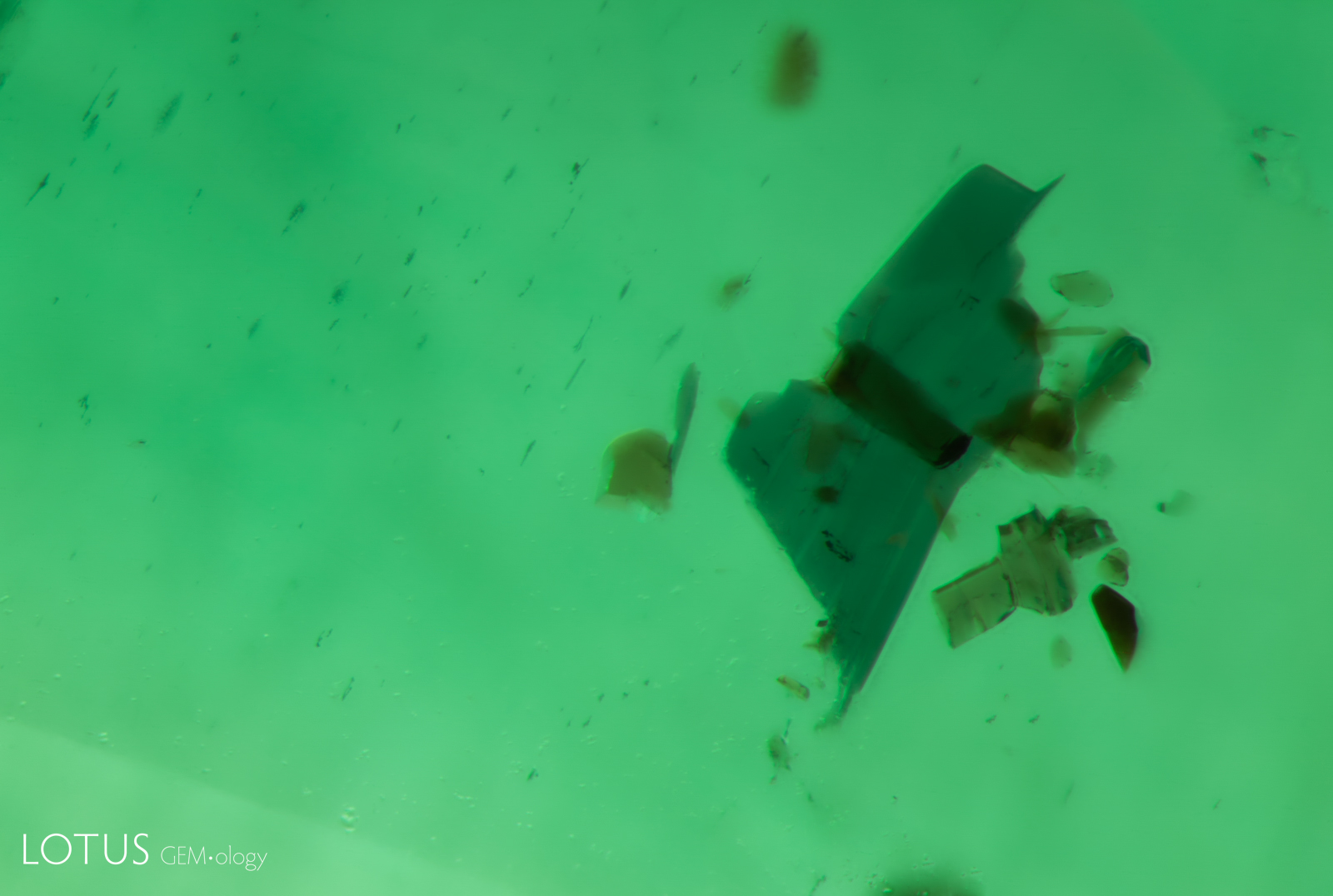
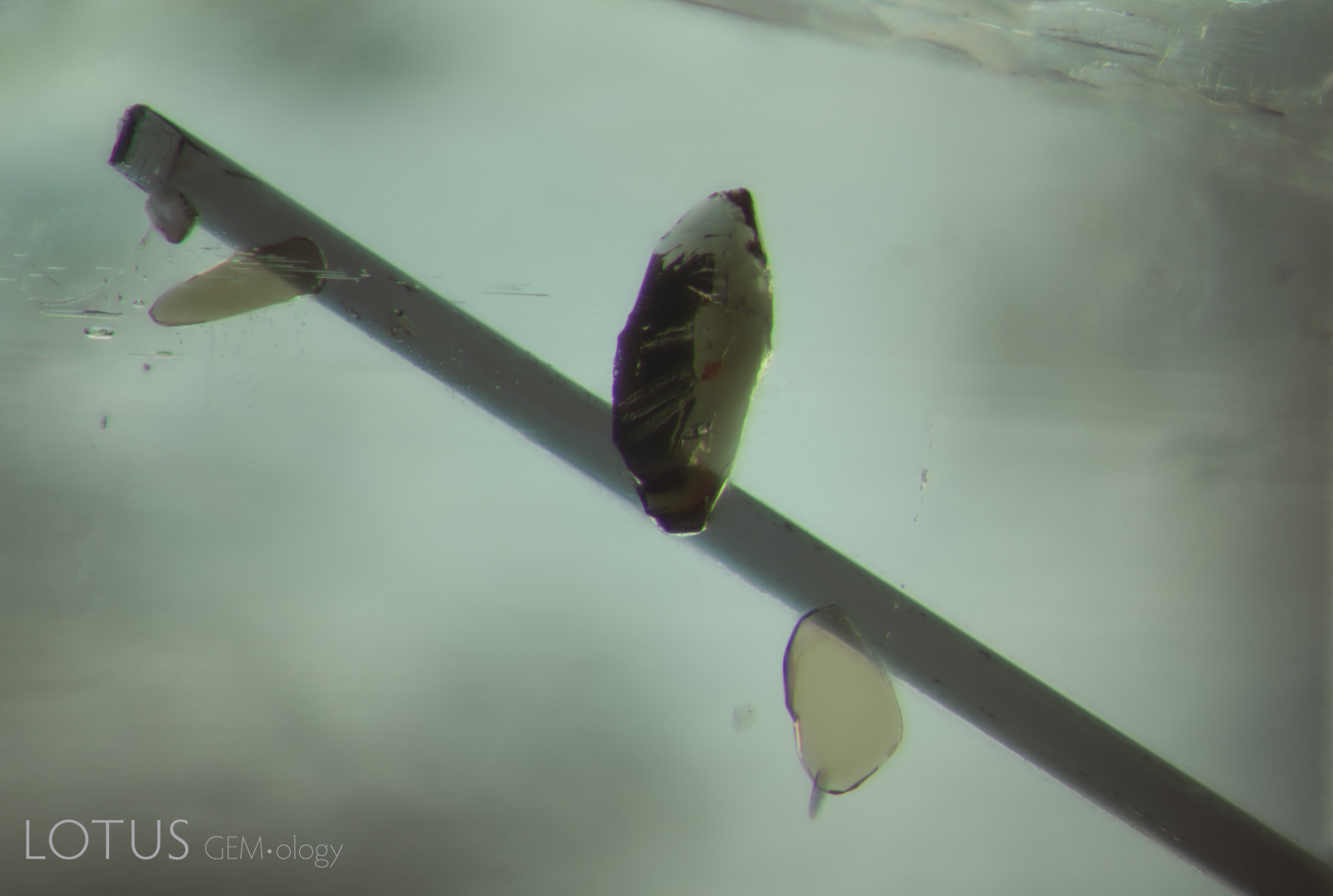
A tourmaline rod (possibly fluor-dravite) and a few phlogopite mica crystals decorate the interior of this emerald from Zambia.
Natural • Beryl • Beryl • Emerald •
Zambia •
Enhancements:
Fissure Filling with colorless Oil/resin (FF-O2) •
Lighting Conditions:
Diffuse Light Field (Transmitted Light)
Photographer:
Kaylan Khourie •
Image Number:
A-005-4334-1
• Field of View = 1.8mm
• Magnification = 10x
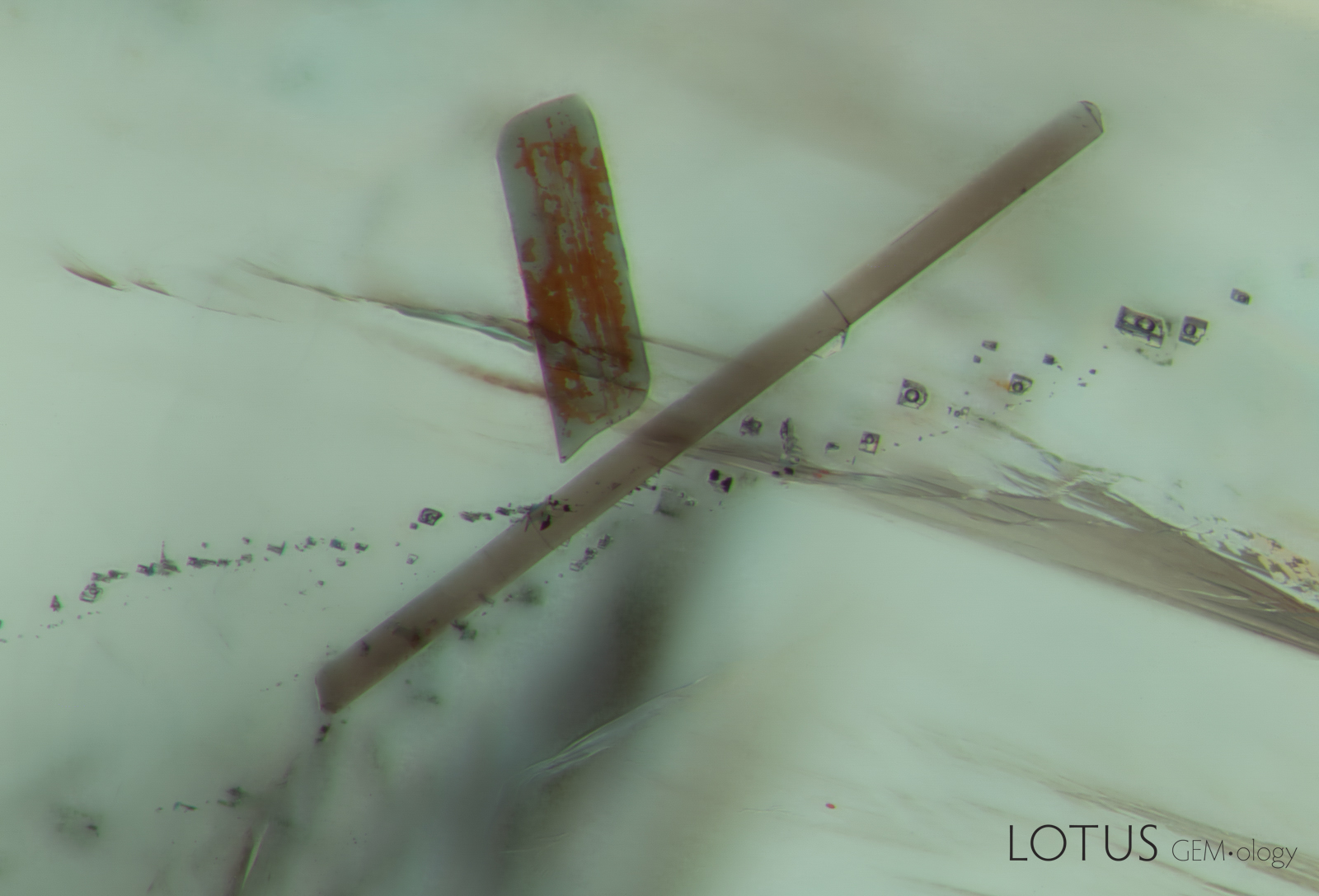
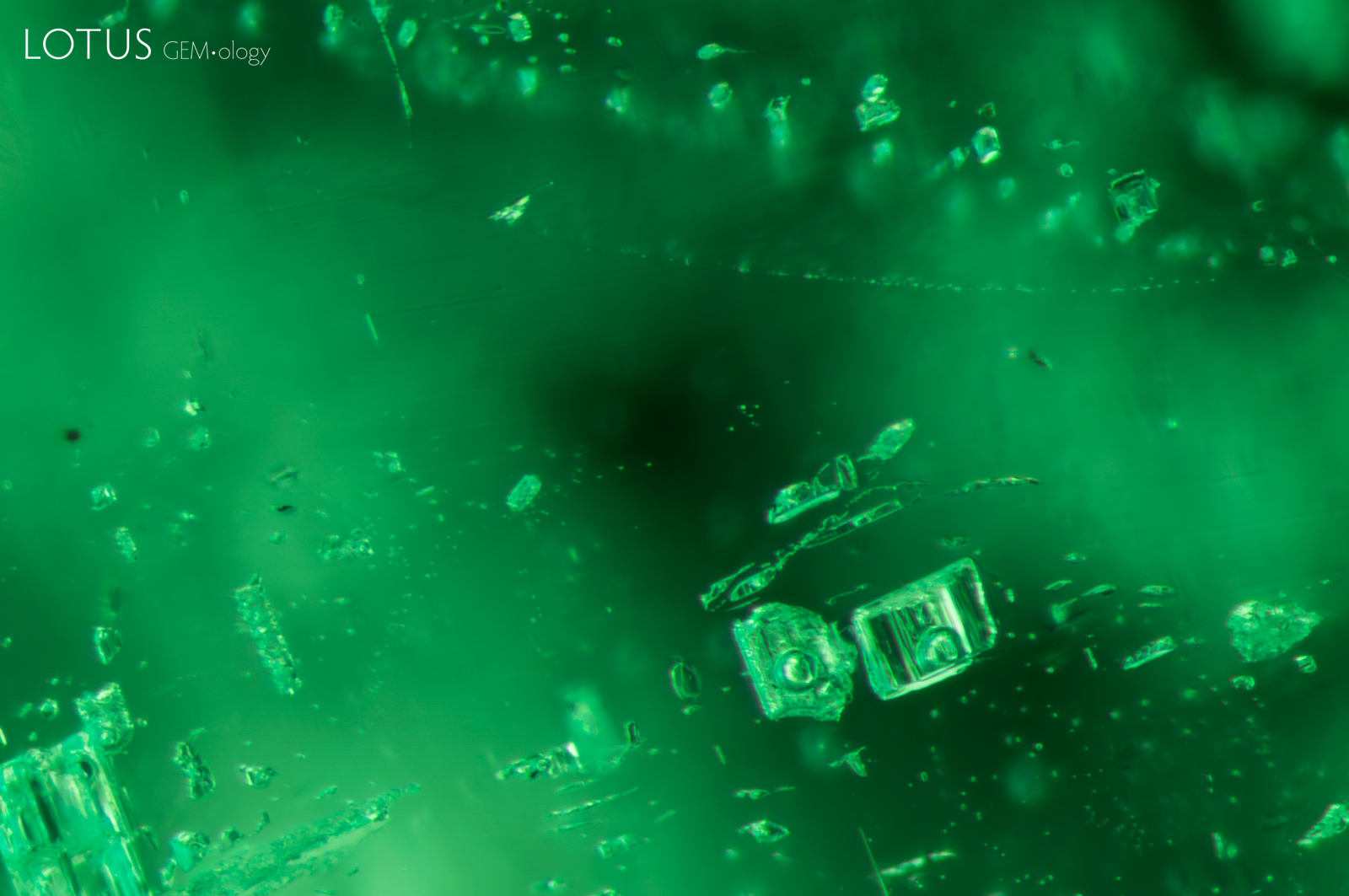
Two tourmaline crystals, one epigenetically stained with iron-oxides, are trapped with several blocky 2-phase inclusions in this Zambian emerald.
Natural • Beryl • Beryl • Emerald •
Zambia •
Enhancements:
Fissure Filling with colorless Oil/resin (FF-O2) •
Lighting Conditions:
Diffuse Light Field (Transmitted Light)
Photographer:
Kaylan Khourie •
Image Number:
A-005-4334-2
• Field of View = 1.8mm
• Magnification = 10x
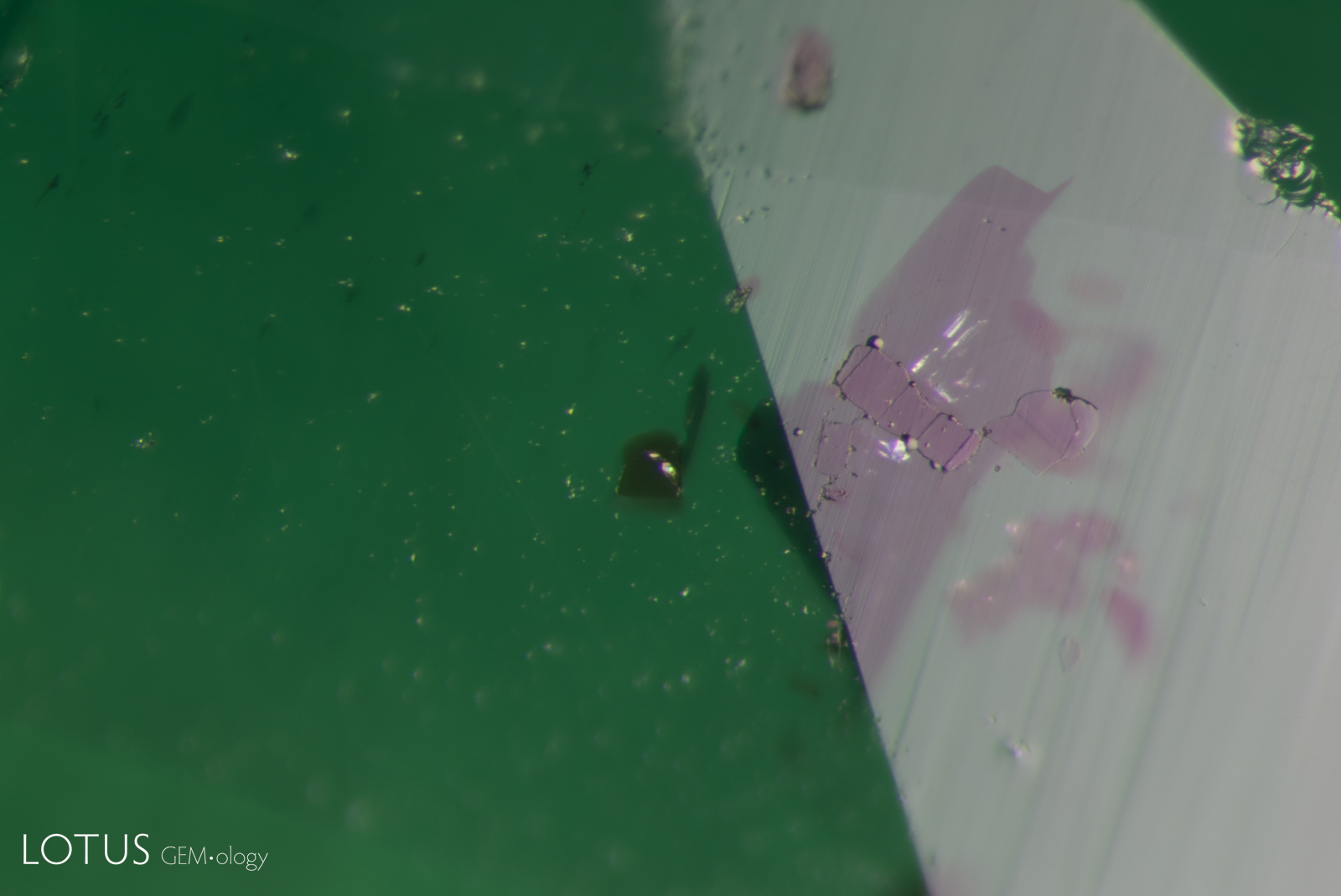
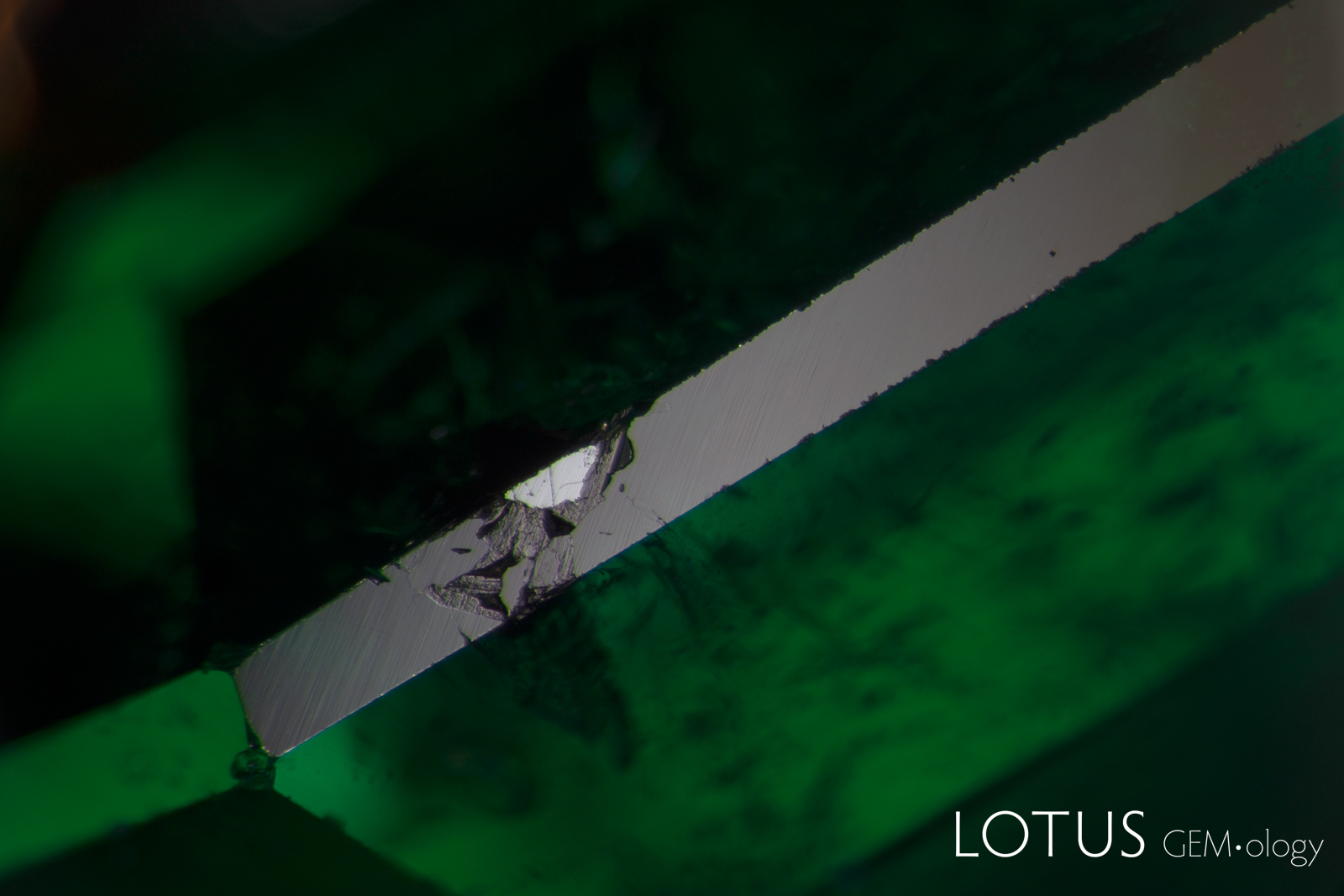
This schist-hosted emerald revealed an intriguing surface-reaching agglomeration of pyrochlore (high-than-host luster) and phlogopite mica (similar-to- and lower-than-host lusters); identified by micro Raman spectroscopy.
Natural • Beryl • Emerald •
Zambia •
Enhancements:
Fissure Filling with colorless Oil/resin (FF-O1) •
Lighting Conditions:
Dark Field + Oblique Fiber Optic
Photographer:
Kaylan Khourie •
Image Number:
A-005-1227-1
• Field of View = 5.1mm
• Magnification = 3.5x
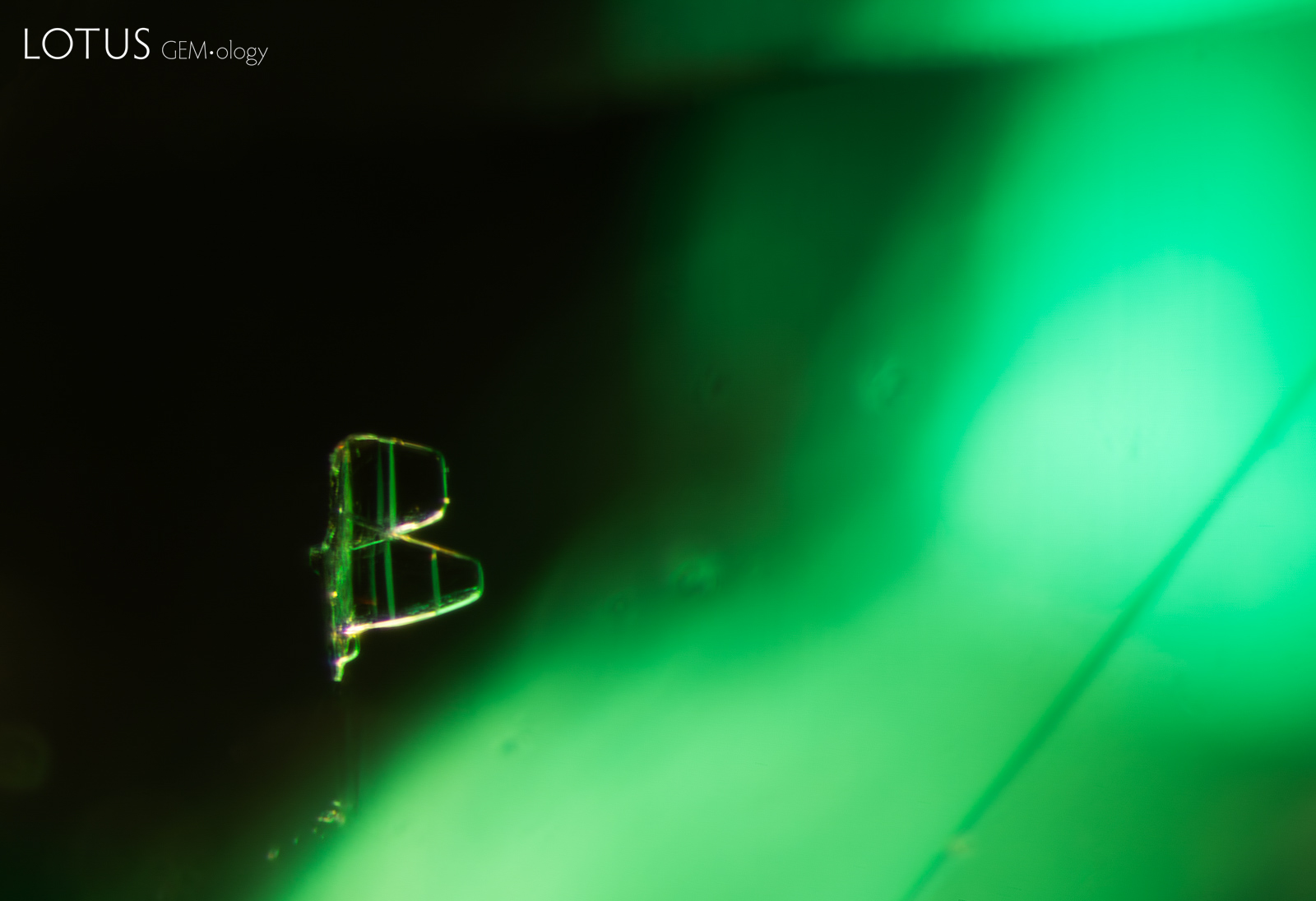
This crystal in an emerald looked just like a “B.” Perhaps that is fitting for a member of the “B”eryl family!
Natural • Beryl • Emerald •
Zambia •
Enhancements:
Fissure Filling with colorless Oil/resin (FF-O2) •
Lighting Conditions:
Dark Field
Photographer:
E. Billie Hughes •
Image Number:
A-004-8878-1
• Field of View = 1.6mm
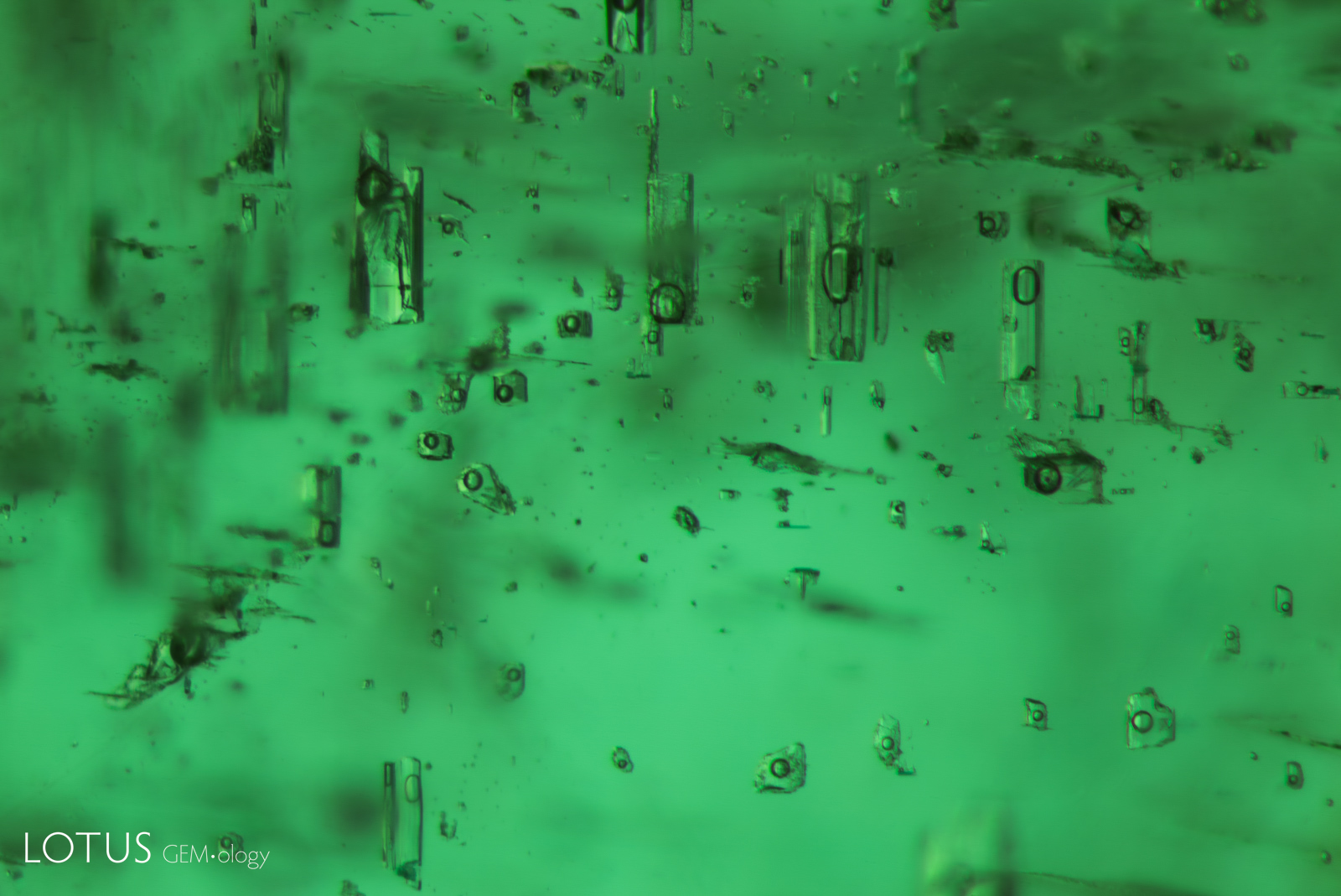
Blocky two-phase inclusions like those pictured here are often found in emeralds from Zambia and other schist-hosted origins. The bubbles seen inside are carbon dioxide. Specimen courtesy Gemfields.
Natural • Beryl • Beryl • Emerald •
Zambia; Kafubu •
Enhancements:
None Detected (None) •
Lighting Conditions:
Dark Field
Photographer:
E. Billie Hughes •
Image Number:
R-004-7171-4
• Field of View = 3mm
Blocky two-phase inclusions like those pictured here are often found in emeralds from Zambia and other schist-hosted origins. The bubbles seen inside are carbon dioxide. Specimen courtesy Gemfields.
Natural • Beryl • Beryl • Emerald •
Zambia; Kafubu •
Enhancements:
None Detected (None) •
Lighting Conditions:
Dark Field
Photographer:
E. Billie Hughes •
Image Number:
R-004-7171-3
• Field of View = 2.8mm
Blocky two-phase inclusions like those pictured here are often found in emeralds from Zambia and other schist-hosted origins. The bubbles seen inside are carbon dioxide. Specimen courtesy Gemfields.
Natural • Beryl • Beryl • Emerald •
Zambia; Kafubu •
Enhancements:
None Detected (None) •
Lighting Conditions:
Dark Field + Oblique Fiber Optic
Photographer:
E. Billie Hughes •
Image Number:
R-004-7171-1
• Field of View = 1.6mm
Zambian emerald inclusions may include mineral crystals, fluid inclusions, multiphase inclusions, healed fissures, growth features and other internal features formed during or after crystal growth. Such features are important to gemologists because they can provide evidence useful in identifying emerald and evaluating a possible Zambian origin.
Zambian Emerald Inclusion Photomicrographs
The Hyperion Zambian emerald gallery includes microscopic features documented in emeralds from Zambia. Each entry is accompanied by descriptive information and, where available, references to the gemological literature.
What Inclusions Can Reveal About Zambian Emerald
Inclusions are an important part of geographic origin determination in emerald. Their form, composition and associations can provide evidence that, when considered together with other gemological properties, may support or contradict a Zambian origin.
Hyperion combines inclusion photomicrography with supporting gemological information so that individual features can be compared with documented examples from Zambian emeralds.
About Hyperion
Hyperion is the Lotus Gemology searchable inclusion database. It allows users to browse gemstone inclusions by gem type, geographic origin, treatment and keyword.