Explore books, articles and historical sources on ruby, sapphire and corundum in Four Treasures, the Lotus Gemology reference database. This bibliography brings together matching records from the collection, with publication details, abstracts and cover images where available.
Ruby & Sapphire References
The list below matches the terms ruby, rubies, sapphire or corundum in the database's searchable fields. Some references discuss these gems as part of a broader subject. Linked titles take you to external links where you may find the full reference.
4,601–4,620 of 4,671 matching references
Mineralogical Survey: Report of the Director of the Mineralogical Survey for 1904,” Ceylon Administrative Reports for the Year 1904
Journal Article
Coomaraswamy, A.K. (1905) Mineralogical Survey: Report of the Director of the Mineralogical Survey for 1904,” Ceylon Administrative Reports for the Year 1904.Ceylon Administrative Reports for the Year 1904, Vol. 2, pp. E1–21, illustrations, map, 3 plates.
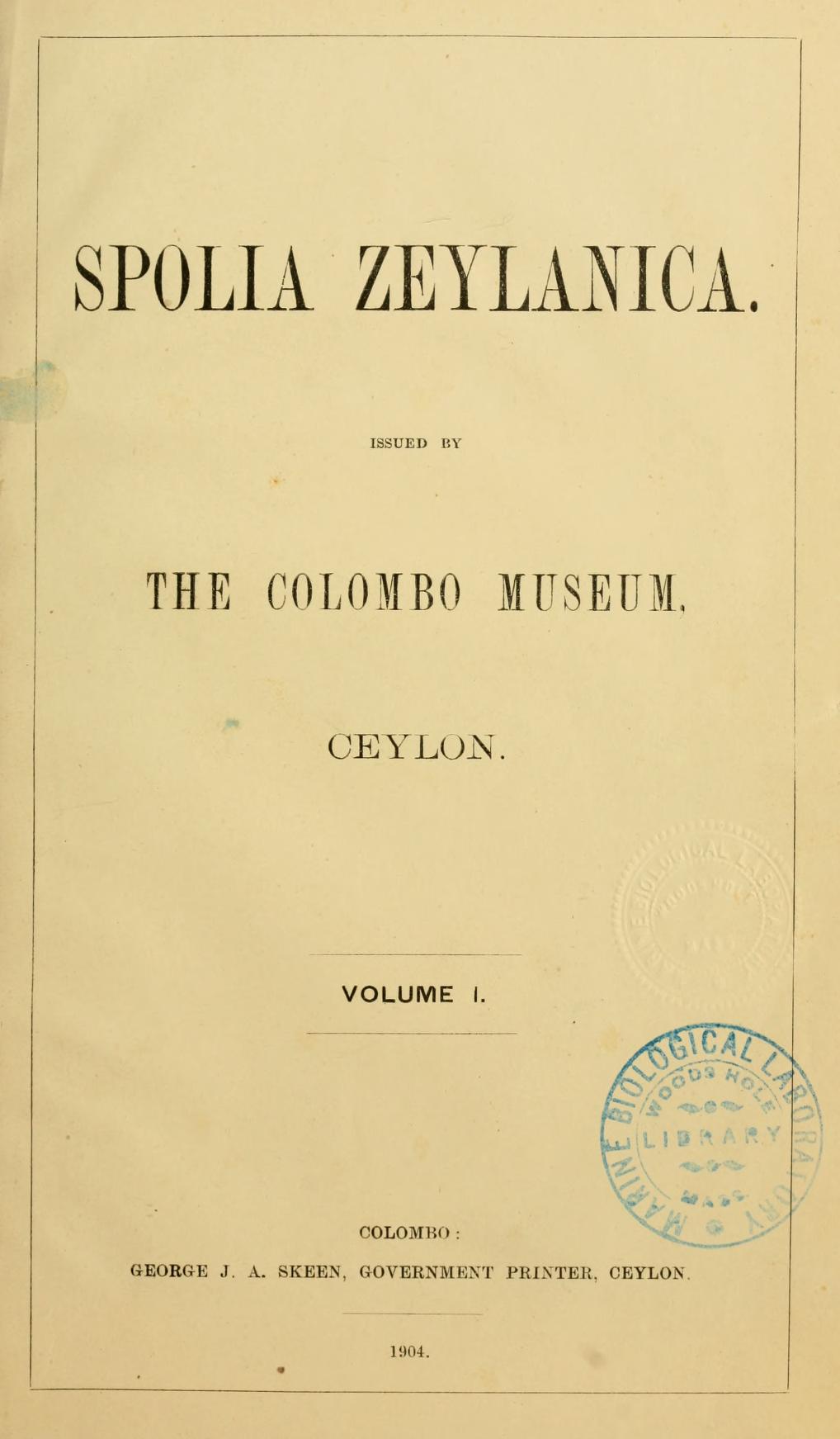
Coomaraswamy, A.K. (1904) The crystalline rocks of Ceylon.Spolia Zeylanica (Ceylon Journal of Science), Vol. 1, Part 4, pp. 105–111.
Record No. 606 | Sinkankas/Born No.: NIS/NIB | not seen
Reference copied to clipboard!
corundum, ruby, sapphire, Sri Lanka.12, gems
A concise account of the crystalline rocks of Ceylon, intended to summarize their character and classification as then understood. Coomaraswamy discusses the terminology of “gneiss” and “granulite,” preferring the latter for many Ceylonese rocks, and regards them as belonging to the Charnockite Series described from southern India, the two regions forming a closely related petrographical province. He describes the principal rock types and their mineral banding, together with the crystalline limestones and rocks intermediate between limestone and granulite. The latter may contain diopside, phlogopite, amphibole, scapolite, spinel, sphene, calcite and, more rarely, serendibite, and may occur at limestone–granulite contacts, as inclusions, dykes or bands; some also yield mica of commercial value. Coomaraswamy argues that, whatever their ultimate origin, the crystalline limestones were essentially contemporaneous with the granulites and crystallized under broadly comparable high-temperature conditions. He also distinguishes the wollastonite-bearing Galle group and discusses the structural geology of the crystalline series, particularly foliation, folding and the influence of rock structure on the development of parallel strike valleys such as those around Hatton. The paper is an important early synthesis of Ceylon’s Precambrian crystalline geology and provides geological context for the mineral and gem deposits associated with these rocks.
[Madagascar corundum]
Madagascar corundum
Journal Article
Minerals Yearbook (1901–1975) [Madagascar corundum].Minerals Yearbook, 1901: pp. 766–769; 1907: p. 839; 1939: p. 1395; 1940: p. 1463; 1946: p. 555; 1960: p. 500; 1961: p. 594; 1975: p. 665,
Record No. 1277 | not seen
Reference copied to clipboard!
corundum, Madagascar.12, gems
[Chinese corundum]
Chinese corundum
Journal Article
U.S. Consular Reports (1900) [Chinese corundum].U.S. Consular Reports, Vol. 72, No. 232, January, p. 95.
Record No. 1746 | not seen
Reference copied to clipboard!
corundum, China.12, gems
Notes on ruby corundum from Sringeri
Journal Article
Evans, J.W. (1900) Notes on ruby corundum from Sringeri.Records of the Mysore Geological Department, Vol. 1, Part 3, p. 79.
Record No. 726 | not seen
Reference copied to clipboard!
corundum, ruby, India.12, gems
Notes on corundum deposits in the south of Mysore
Journal Article
Evans, J.W. (1900) Notes on corundum deposits in the south of Mysore.Records of the Mysore Geological Department, Part 1, pp. 14–18.
Record No. 725 | not seen
Reference copied to clipboard!
corundum, India.12, gems
Le Corindon. D’Après T.–H. Holland
The Corundum. Based on T.–H. Holland
Book
Collot, P. (1899)Le Corindon. D’Après T.–H. Holland. [The Corundum. Based on T.–H. Holland] Dijon, Imprimerie Darantiere, 19 pp.
Record No. 2735 | Sinkankas/Born No.: NIS/NIB | Language: in French | not seen
Reference copied to clipboard!
corundum, history.1, India.12, gems
Collot’s Le Corindon is a short French treatment of corundum based on T. H. Holland’s contemporary work on the mineral, particularly his revised Corundum section of the Manual of the Geology of India. It surveys corundum as a mineral species, including its physical and chemical properties, varieties, geological occurrence, geographical distribution, and economic uses. Particular attention is given to Indian deposits, where corundum occurs in numerous geological environments and had long been worked both as an abrasive and, in its transparent colored varieties, as ruby and sapphire. The work discusses the relationships between corundum and its enclosing rocks, its associated minerals, and the conditions under which deposits suitable for commercial exploitation occur. It also distinguishes ordinary industrial corundum from gem-quality material and summarizes information on mining and utilization. The booklet is essentially a concise French presentation of Holland’s more extensive study and reflects the increasing economic and geological interest in corundum at the end of the nineteenth century.
[Yogo Gulch sapphires]
Yogo Gulch sapphires
Newspaper Article
Great Falls Tribune (1897–1978) [Yogo Gulch sapphires].Great Falls Tribune, 1897: August 24; 1900, Nov. 2; 1901: June 3; 1903: March 14; 1910: Sept. 8; 1913: July 13; 1920: July 4; 1924: April 25; 1930: Jan. 7; 1941: April 13; 1959: Sept. 1; 1963: April 15; 1968: Aug.; 1969: March 30; 1973: July 29; 1978: Dec. 20, Great Falls, MT
Record No. 2780 | not seen
Reference copied to clipboard!
corundum, USA.12, Montana.12, gems
Rubin und Sapphir
Ruby and Sapphire
Book
Bauer, M. (1897)Rubin und Sapphir. [Ruby and Sapphire] Hamburg, Verlagsanstalt und Druckerei A., 47 pp.
Record No. 2708 | Sinkankas/Born No.: 466; NIB | Language: in German | not seen
Reference copied to clipboard!
corundum, ruby, sapphire, Burma.12, gems
Sinkankas: Excellent summary of knowledge about ruby and sapphire, properties, colors, color vs value in gems, heat treatment, nomenclature, chatoyancy, optical properties, origin & location of deposits, methods of mining, misleading terms, other misc data.
Rubies in North Dakota
Journal Article
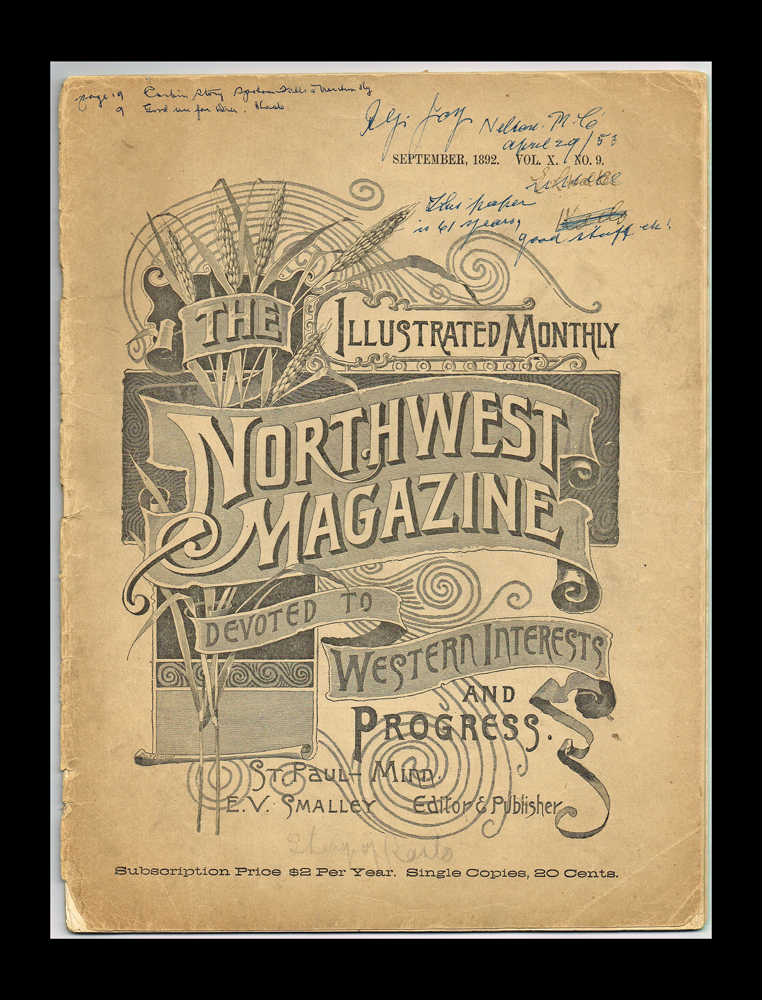
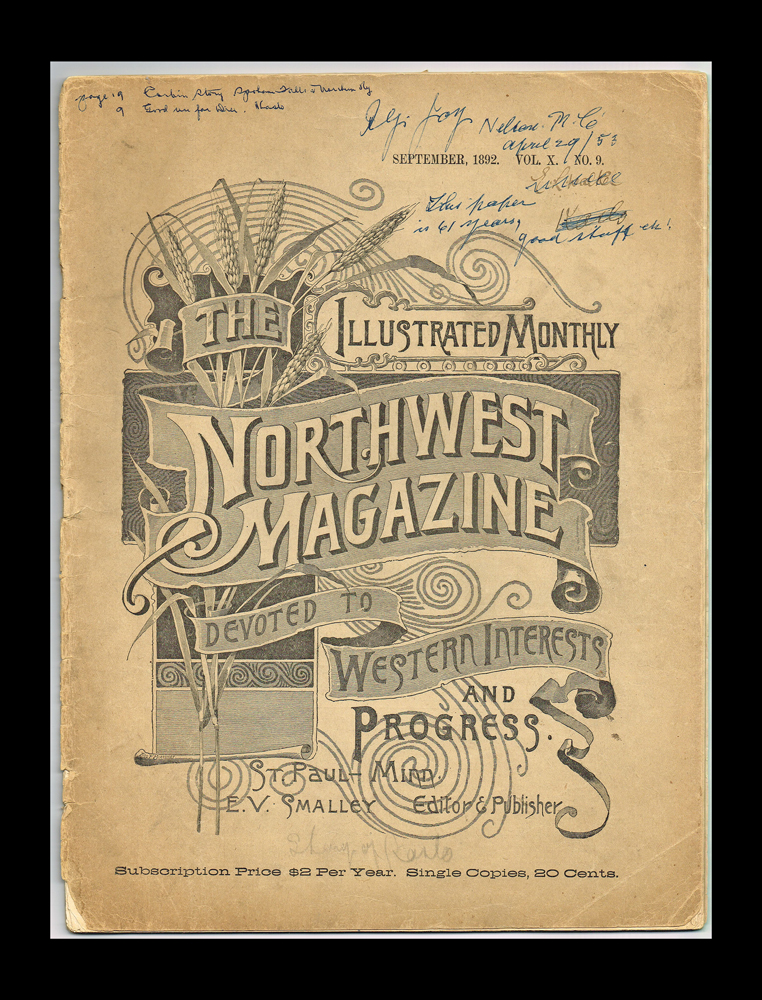
Northwest Magazine (1897) Rubies in North Dakota.Northwest Magazine, Vol. 12, No. 6, p. 26.
Record No. 1366 | not seen
Reference copied to clipboard!
corundum, USA.12, North Dakota.12, gems
A valuable Idaho sapphire
Journal Article
Northwest Magazine (1897) A valuable Idaho sapphire.Northwest Magazine, Vol. 15, No. 6, p. 42.
Record No. 1365 | not seen
Reference copied to clipboard!
corundum, USA.12, Idaho.12, gems
The sapphires of Montana
Journal Article
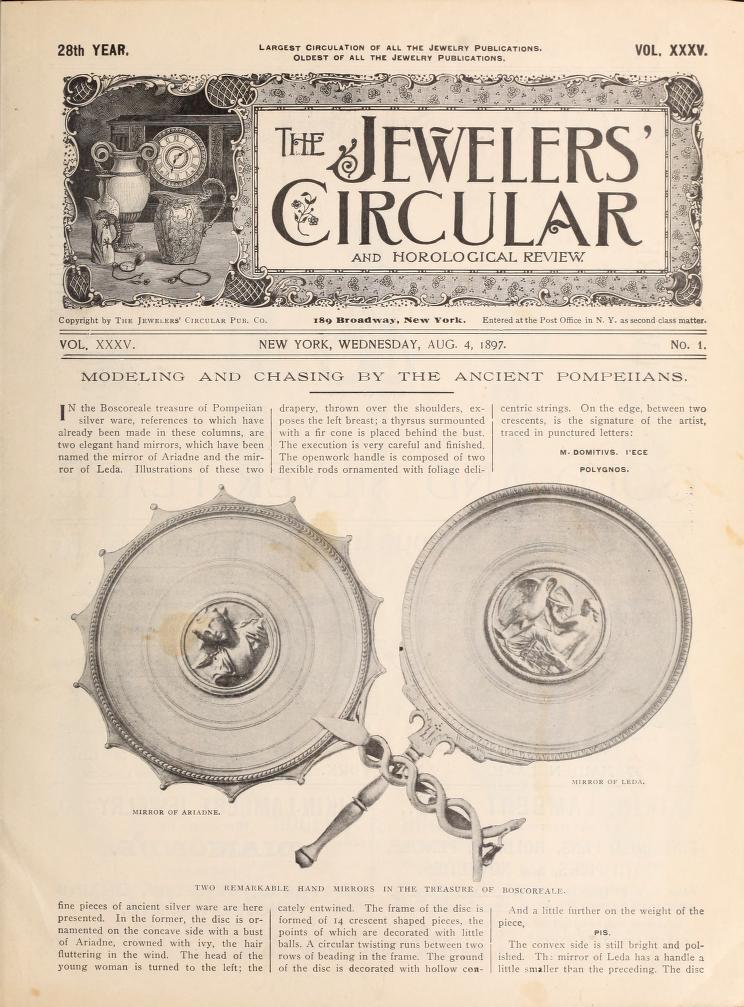
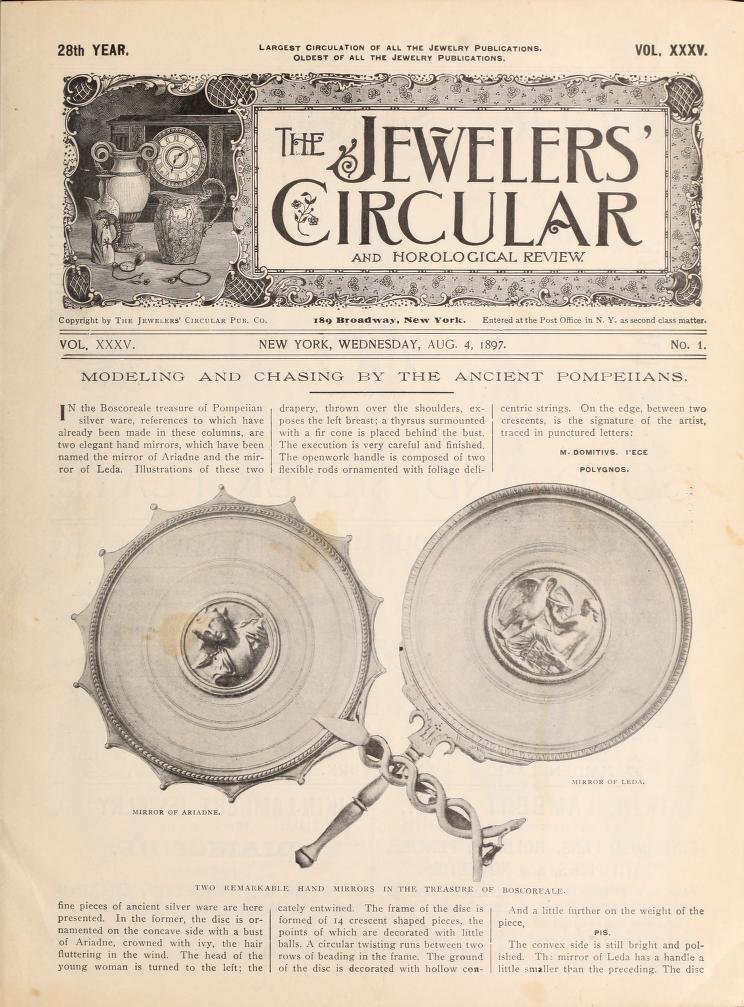
Kunz, G.F. (1897) The sapphires of Montana.Jewelers Circular, Vol. 35, No. 20, p. 37.
Record No. 1146 | not seen
Reference copied to clipboard!
corundum, USA.12, Montana.12, gems
Impetus to sapphire mining in Fergus County, Idaho
Journal Article
Anonymous (1897) Impetus to sapphire mining in Fergus County, Idaho.Jewelers Circular, Vol. 35, No. 6, p. 9.
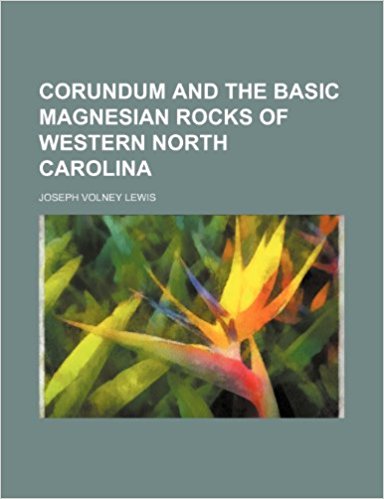
Lewis, J.V. (1896)Corundum and the basic magnesian rocks of western North Carolina. Winston,, M.I. & J.C. Stewart, 107 pp.
Record No. 7423 | seen
Reference copied to clipboard!
Corundum, USA.12, North Carolina.12, gems
Lewis presents a detailed study of the corundum deposits and associated basic magnesian rocks of western North Carolina, describing their geographical distribution, geology, mineralogy, and economic importance. He traces a belt of peridotitic and related rocks through the region and examines the relationship of corundum to these ultrabasic bodies and their altered products, including serpentine and talcose rocks. Individual mines and prospects are described, together with the occurrence, character, and quality of their corundum and associated minerals. Lewis discusses the geological origin of the deposits, the alteration of the enclosing rocks, and the manner in which corundum occurs in veins and contact zones. Attention is also given to mining methods, production, and the commercial use of corundum as an abrasive, as well as to crystals and colored varieties of mineralogical or gemological interest. The bulletin provides an important late nineteenth-century account of the Appalachian corundum belt and its relationship to the basic magnesian rocks of western North Carolina.
Catalogue of The Highly Important Stock of Jewels of Messrs. Ridpath & Ridpath
Catalog
Christie Manson and Woods (1896)Catalogue of The Highly Important Stock of Jewels of Messrs. Ridpath & Ridpath. London: Christie, Manson and Woods
Record No. 2728 | Sinkankas/Born No.: NIS/NIB | not seen
Reference copied to clipboard!
corundum, quality.10, gems
Contains the sale of a ruby 46.75 cts (48.019 metric carats) purported to be the Mandalay ruby
Report to the Government of India, Foreign Department, on the sapphires of Kashmir
Book Section
Plowden, T.C. (1893) Report to the Government of India, Foreign Department, on the sapphires of Kashmir. In: A Dictionary of the Economic Products of India, pp. 473–475.
Record No. 2848 | not seen
Reference copied to clipboard!
corundum, sapphire, Kashmir.12, India.12, gems
[Gem mining in Ceylon]
Gem mining in Ceylon
Report
Brown, C.B. (1893)[Gem mining in Ceylon]. Ceylon Gem and Mining Syndicate, Ltd., January,
Record No. 2718 | not seen
Reference copied to clipboard!
corundum, Sri Lanka.12, gems
Exploring the Literature of Corundum
Ruby and sapphire research spans mineralogy, gem deposits, identification, treatments, synthesis and the history of the gem trade. Older publications can also be useful for tracing terminology, early observations and accounts of mining localities. Publication dates and the original source should be considered when using historical descriptions.
Four Treasures is Lotus Gemology's freely accessible gemological reference database. Use the full database to search by author, title or keyword and explore literature on gemology, mineralogy, jewelry and related fields. Where available, hyperlinks on titles may lead directly to the full publication.


![[Madagascar corundum]](/media/publications/327672627202-20 at 19.52.10.jpg "[Madagascar corundum]")
![[Yogo Gulch sapphires]](/media/publications/25379796484010180608_book.jpg "[Yogo Gulch sapphires]")