Gemology Books Bibliography

Gemology Books Bibliography

Explore books on gems, gemology, jewelry and mineralogy in Four Treasures, the Lotus Gemology reference database. This bibliography brings together matching book records from the collection, with publication details, abstracts and cover images where available.

Gemology Book References

The list below matches books concerning gemology and related subjects in the database's searchable fields. Some works cover several branches of gems, jewelry or mineralogy.
2,421–2,440 of 3,502 matching references

Lab Notes: Spinel and sapphire colored by cobalt (?)
Journal Article
Fryer, C.W. (1982) Lab Notes: Spinel and sapphire colored by cobalt (?). Gems & Gemology, Vol. 18, No. 4, Winter, pp. 231–233.
Record No. 4594  |  ISBN/ISSN: 0016626X  |  Sinkankas/Born No.: NIS/NIB  |  RWHL

Tourmaline as an inclusion in Zambian emeralds
Journal Article
Koivula, J.I. (1982) Tourmaline as an inclusion in Zambian emeralds. Gems & Gemology, Vol. 18, No. 4, Winter, pp. 225–227.
Record No. 4191  |  ISBN/ISSN: 0016626X  |  Sinkankas/Born No.: NIS/NIB  |  RWHL
This article reports the identification of tourmaline crystals as inclusions in emeralds from Zambia, in south-central Africa. To under stand the paragenesis responsible for this unusual association, the geology of the area is reviewed. The gemological properties of these emeralds are also noted.

Lab Notes: Spinel inclusions

Journal Article
Crowningshield, G.R. (1982) Lab Notes: Spinel inclusions. Gems & Gemology, Vol. 18, No. 2, p. 107.
Record No. 4136  |  ISBN/ISSN: 0016626X  |  Sinkankas/Born No.: NIS/NIB  |  RWHL

Jade forms from ancient China

Journal Article
Tucker, E. (1982) Jade forms from ancient China. Gems & Gemology, Vol. 18, No. 1, Spring, pp. 20–31.
Record No. 2304  |  ISBN/ISSN: 0016626X  |  Sinkankas/Born No.: NIS/NIB  |  RWHL
The attraction of jade is two-fold: the nature of the material and ihe way it is used. The color, texture, and feel of jrrde are easily appreciated, but the symbolism of the motifs in which it is carved is an enigma to many of the stone's admirers. This article briefly examines some of the symbols used in jade carved in China, including an introduction to the religions on which much of this symbolism is based. By mastering ihese basic symbols and the philosophy behind them, collector and seller alilze can gain greater rrnderstanding of [he cultural and philosophical meaning of the rrrt involved in a particular piece

Mineral inclusions contribute towards elucidating the genesis of the diamond
Journal Article
Gübelin, E.J. (1982) Mineral inclusions contribute towards elucidating the genesis of the diamond. Journal of Gemmology, Vol. 18, No. 4, October, pp. 297–320.
Record No. 2161  |  ISBN/ISSN: 221252  |  Sinkankas/Born No.: 2590; NIB  |  RWHL
Gübelin examines mineral inclusions in natural diamonds as evidence for the conditions and processes of diamond formation in the upper mantle. He distinguishes two principal inclusion assemblages: an ultramafic suite characterized by chromium-bearing olivine, chrome-pyrope garnet, enstatite, chrome diopside, and chromite, and an eclogitic suite characterized particularly by pyrope-almandine garnet and omphacitic clinopyroxene, with rarer coesite, corundum (ruby), rutile, kyanite, and ilmenite. Minerals of the two suites had not then been observed together in a single diamond, whereas several inclusions belonging to one suite may coexist, indicating distinct paragenetic environments. Their chemistry, morphology, and relationships to the enclosing diamond are used to argue that diamond and its inclusions crystallized at great depth under upper-mantle pressures and temperatures and that diamond did not originate in kimberlite during its subsequent ascent. Gübelin discusses experimental and mineralogical evidence for crystallization from carbon-bearing ultramafic or eclogitic melts or partially molten material, with H₂O- and CO₂-rich fluids and Fe-Ni-Cu-Co sulphides playing potentially important roles. Sulphide inclusions, particularly pyrrhotite, are considered in relation to possible reduction reactions capable of precipitating carbon as diamond, while trapped gases provide additional evidence concerning the diamond-forming environment. The preservation of nickel-rich pyrrhotite is interpreted as evidence of rapid cooling, and the survival of diamond during transport requires rapid ascent in kimberlitic eruptions. Photomicrographs illustrate characteristic inclusions of olivine, garnet, enstatite, chrome diopside, omphacitic clinopyroxene, chromite, coesite, ruby, rutile, biotite, sulphides, and even diamond within diamond. The latter demonstrate that diamond growth could occur in successive episodes rather than as a single continuous event. Gübelin concludes that mineral inclusions provide direct samples of the otherwise inaccessible environment in which diamonds formed and permit important constraints to be placed on their paragenesis, pressure-temperature conditions, growth history, and subsequent transport to the Earth’s surface.

A contribution to the separability of natural and synthetic emeralds
Journal Article
Hänni, H.A. (1982) A contribution to the separability of natural and synthetic emeralds. Journal of Gemmology, Vol. 18, No. 2, April, pp. 138–144.
Record No. 1978  |  ISBN/ISSN: 221252  |  Sinkankas/Born No.: NIS/NIB  |  RWHL

Irradiation of colored gemstones

Book Section
Rossman, G.R. (1982) Irradiation of colored gemstones. In: International Gemological Symposium Proceedings 1982, Santa Monica, CA: Gemological Institute of America, pp. 94–99.
Record No. 1497  |  Sinkankas/Born No.: NIS/NIB  |  RWHL

Pinpoint illumination: A controllable system of lighting for gem microscopy
Journal Article
Koivula, J.I. (1982) Pinpoint illumination: A controllable system of lighting for gem microscopy. Gems & Gemology, Vol. 18, No. 2, Summer, pp. 83–86.
Record No. 1114  |  ISBN/ISSN: 0016626X  |  Sinkankas/Born No.: NIS/NIB  |  RWHL
Pinpoint illumination uses a highly flexible but extremely durable glass fiber-optic bundle that incorporates six easily interchangeable light wands of various shapes and cross-sectional thicknesses down to one millimeter in diameter. The wands are hand held and can be used to illuminate hard-to-reach areas in complex jewelry ino~intingsW. ith the pinpoint, ill~lmintaor, a gemstone can be examined from any angle; the light source is placed exactly where it is needed, minimizing glare and unwanted external or internal reflections.

Gem Trade Lab Notes: Ruby: Synthetic star; Sapphire: Dangers of heating sapphires during jewelry repair; Natural sapphire with heat-induced star; Treated synthetic sapphire

Journal Article
Fryer, C.W. (1982) Gem Trade Lab Notes: Ruby: Synthetic star; Sapphire: Dangers of heating sapphires during jewelry repair; Natural sapphire with heat-induced star; Treated synthetic sapphire. Gems & Gemology, Vol. 18, No. 2, Summer, pp. 105–107.
Record No. 792  |  ISBN/ISSN: 0016626X  |  Sinkankas/Born No.: NIS/NIB  |  RWHL
CIA’s faceting instructor, Bill Kerr, had in his possession a boule of German-produced synthetic corundum. After rounding the larger end and polishing it, he noticed how the three rays crossed each other to form the expected six-ray star and then extended down the sides of the rough boule still attached. This inspired the attempt to cut a cat’s-eye stone oriented 90° to the c-axis of the boule, resulting in the 6.23 ct synthetic cat’s-eye ruby shown on the left in figure 12. On the right of this double-exposure photograph is the same stone viewed on the end and parallel to the c-axis—one-half of the star is now visible. Another section of the same boule (toward the bottom) that was later worked into a stone contained part of the transparent seed crystal with a shallow overgrowth of the asteriated material. This material, when cut, produced a weak star with an open center caused by the non-asteriated seed-crystal section—a very unusual stone indeed (see figure 13).

Gem Trade Lab Notes: Sapphire, heat treated [yellow]
yellow
Journal Article
Fryer, C.W. (1982) Gem Trade Lab Notes: Sapphire, heat treated [yellow]. Gems & Gemology, Vol. 18, No. 4, Winter, p. 231.
Record No. 791  |  ISBN/ISSN: 0016626X  |  Sinkankas/Born No.: NIS/NIB  |  RWHL
A natural sapphire of unusual color came into the New York lab for identification. The brilliant orange-yellow seemed unnatural, and the lack of fluorescence and absence of an iron line in the absorption spectrum strongly suggested a heat-treated stone. The clincher, however, was an unpolished burned area near the multiplane girdle (figure 13). Figure 14 shows yet another example of incomplete repolishing of a heat-treated orangy yellow natural sapphire. It came from a lot of six stones, all of which clearly owed their color to heat treatment. One yellow sapphire from another lot of four stones recently seen in New York faded appreciably after exposure to south daylight for a day or so. Normally, we would assume that the color was due to irradiation and not to heat, but we recently heard that certain heat-treated yellow natural sapphires may fade (Gems & Gemology, Spring 1982, pp. 47–48). This has not yet been confirmed.

Gem Trade Lab Notes: Sapphire, diffusion colored

Journal Article
Fryer, C.W. (1982) Gem Trade Lab Notes: Sapphire, diffusion colored. Gems & Gemology, Vol. 18, No. 3, Fall, p. 173.
Record No. 790  |  ISBN/ISSN: 0016626X  |  Sinkankas/Born No.: NIS/NIB  |  RWHL
The first reaction we had to a group of 21 quite clean" blue cabochon natural sapphires received in our New York lab was: "Something is suspicious. Why didn't the cutter facet them?" Sure enough, under immersion the color proved to be surface induced, or as we state on reports: "Natural sapphire with color synthetically enhanced by a surface diffusion process." We are definitely against saying "Natural sapphire, treated color," because it is not the same as, nor as durable as, plain heat treatment. The evidence of surface diffusion of blue natural sapphire cabochons is best seen at the girdle edge (figure 15)."

The Yogo sapphire

Book Section
Baron, A.A. (1982) The Yogo sapphire. In: International Gemological Symposium Proceedings 1982, Santa Monica, CA: Gemological Institute of America, pp. 341–347.
Record No. 435  |  Sinkankas/Born No.: NIS/NIB  |  RWHL

Thai (Siam) ruby identification study
Journal Article
American Gemological Laboratories (1982) Thai (Siam) ruby identification study. Gemline Information Service, Report No. 110, pp. 1–24.
Record No. 231  |  Sinkankas/Born No.: NIS/NIB  |  RWHL

Some observations on treatment of lavender jadeite
Journal Article
Koivula, J.I. (1982) Some observations on treatment of lavender jadeite. Gems & Gemology, Vol. 18, No. 1, Spring, pp. 32–35.
Record No. 149  |  ISBN/ISSN: 0016626X  |  Sinkankas/Born No.: NIS/NIB  |  RWHL
The separation of naturally colored lavender jadeite from color-treated material is a problem that has long plagued gemologists. One theory is that the dying agents being used are of an organic nature. If this is true, they should break down at elevated temperatures and lose their coloring ability. Naturally colored lavender jadeite, however, should retain its color and not bleach on heating. T o investigate this theory, the author sawed 42 different specimens of lavender jadeite in half. One half of each specimen was heated while the other half was retained as a color control. Those stones that bleached on heating showed a strong orange fluorescence to long-wave ultraviolet radiation before heating and a moderate bluish-purple X-ray fluorescence both before and after heating. The control halves of those stones that retained their color when heated to as high as 1000°C fluoresced a very weak brownish red when exposed to long-wave ultraviolet radiation and a strong reddish purple to pink when exposed to X-ray radiation both before and after heating.

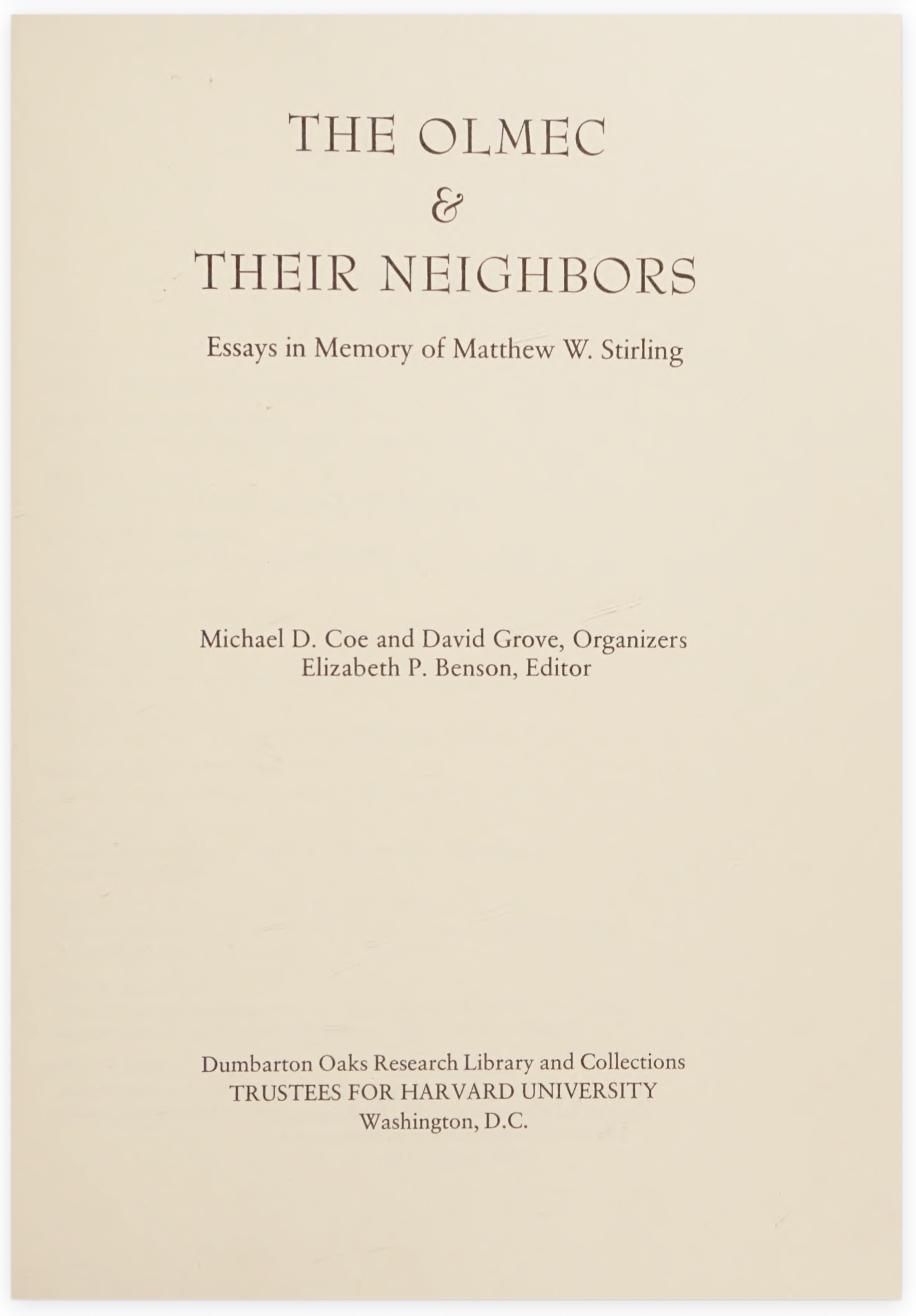
Obsidian production and the State in Teotihuacan
Journal Article
Spence, M.W. (1981) Obsidian production and the State in Teotihuacan. American Antiquity, Vol. 46, No. 4, pp. 769–788.
Record No. 28639  |  ISBN/ISSN: 00027316, 23255064  |  DOI: https://doi.org/10.2307/280105  |  Sinkankas/Born No.: NIS/NIB  |  RWHL
Obsidian production was a major component of Classic period Teotihuacan's economy, with hundreds of workshops producing cores and blades of green obsidian and bifaces of grey obsidian for distribution throughout central Mexico. Although green obsidian was evidently obtained through a state network, grey obsidian procurement was conducted independently by most workshop groups. Most production took place in residential areas beyond the major public structures of the city, but some of these craftsmen also worked periodically within the public precincts where their output would have been at the disposition of state officials. The burden of this levy fell primarily upon those sectors of the industry that were most dependent on the state for support and most involved in external distribution. However, despite this evidence of an important administered element in the Teotihuacan obsidian industry, the workshops apparently maintained their independence from the state. This may have been due to their organization in strong social units that had a long history of independent existence, and to their self-reliance in procurement and distribution during the earlier stages of the industry's development.

Guerrero and the Olmec

Book Section
Paradis, L.I. (1981) Guerrero and the Olmec. In: The Olmec and Their Neighbors: Essays in Memory of Matthew W. Stirling, Washington, DC: Dumberton Oaks Research Library and Collections, pp. 195–208.
Record No. 28498  |  Sinkankas/Born No.: NIS/NIB  |  RWHL
The Dumbarton Oaks Conference on the Olmec, held in late October 1967, was pervaded by the generous and gentle spirit of the “grandfather of Olmec studies,” Matthew Stirling. It was my first conference on a Pre-Columbian theme and my first sight of the great man. He and his wife, Marion Stirling, invited the participants and those associated with Dumbarton Oaks to their home for dinner on Saturday night. It was there that I found myself sitting at the feet of all of the North American archaeologists who had been present at the actual excavation of the great Offering 4 at La Venta—the famous group of thirteen stone figures and six halved celts arranged as a ritual group. They described how it all had to be recorded, photographed and removed in the same day for fear that it might be stolen that night. Robert Heizer told how the next day they were able to pinpoint exactly the balancing offering, which appeared to be wizardry to the laborers. But the most moving part of that conference was Matthew Stirling, the man who had excavated all the important Olmec sites and had unerringly called attention to most of what we still know about that mysterious civilization. His love affair with the Olmec sites began with a blue-jade masquette in the Berlin Museum which he had gone to see in 1920. What attracted Matthew Stirling and all olmecistas from José Melgar through Miguel Covarrubias to the present generation is the remarkable conception and mastery of form and technique in the working of materials—especially the working of hard stones such as jade and serpentine. It might be said that no other lithic culture in world history has been as precise in its choice of stones and as accomplished in the working of them as the Olmec. I would like to discuss Olmec forms and materials from the highlands of Mexico—especially north-central Guerrero.

Olmec forms and materials found in Central Guerrero
Book Section
Griffin, G.G. (1981) Olmec forms and materials found in Central Guerrero. In: The Olmec and Their Neighbors: Essays in Memory of Matthew W. Stirling, Washington, DC: Dumberton Oaks Research Library and Collections, pp. 209–222.
Record No. 28493  |  Sinkankas/Born No.: NIS/NIB  |  RWHL
The Dumbarton Oaks Conference on the Olmec, held in late October 1967, was pervaded by the generous and gentle spirit of the “grandfather of Olmec studies,” Matthew Stirling. It was my first conference on a Pre-Columbian theme and my first sight of the great man. He and his wife, Marion Stirling, invited the participants and those associated with Dumbarton Oaks to their home for dinner on Saturday night. It was there that I found myself sitting at the feet of all of the North American archaeologists who had been present at the actual excavation of the great Offering 4 at La Venta—the famous group of thirteen stone figures and six halved celts arranged as a ritual group. They described how it all had to be recorded, photographed and removed in the same day for fear that it might be stolen that night. Robert Heizer told how the next day they were able to pinpoint exactly the balancing offering, which appeared to be wizardry to the laborers. But the most moving part of that conference was Matthew Stirling, the man who had excavated all the important Olmec sites and had unerringly called attention to most of what we still know about that mysterious civilization. His love affair with the Olmec sites began with a blue-jade masquette in the Berlin Museum which he had gone to see in 1920. What attracted Matthew Stirling and all olmecistas from José Melgar through Miguel Covarrubias to the present generation is the remarkable conception and mastery of form and technique in the working of materials—especially the working of hard stones such as jade and serpentine. It might be said that no other lithic culture in world history has been as precise in its choice of stones and as accomplished in the working of them as the Olmec. I would like to discuss Olmec forms and materials from the highlands of Mexico—especially north-central Guerrero.

Application to gem identification of fluorescence X-ray analysis
Journal Article
Ohguchi, H. (1981) Application to gem identification of fluorescence X-ray analysis. Journal of the Gemological Society of Japan, Vol. 8, No. 1–4, pp. 145–149.
Record No. 26952  |  DOI: https://doi.org/10.14915/gsjapan.8.1-4_145  |  Sinkankas/Born No.: NIS/NIB  |  RWHL
The recent synthetic technique of gem materials has progressed surprisingly, and newer synthetic gemstones have appeared on the market one after another. Those who are engaged in research and manufacturing synthetic gemstones have placed their great efforts in producing the gemstones which most closely resemble natural stones. Including our country, with research laboratories, universities, and major manufacturing industries, as well as specialized makers such as Gilson and all sorts of fields of the world, research work has been carried out daily. And the synthetic gemstones that have reached the market one after another have caused great confusion in the business of gemstones, and furthermore, made our identification work more difficult. In the identification of gemstones, there is one big restriction. That is “Non-destructiveness.” Therefore, we must conduct our important work of gem identification within the restriction of not causing damage to the gemstones. Up to now, we have employed various testing instruments in measuring the optical characters as well as physical properties to pass judgment as to whether a gemstone is synthetic or natural. However, with the recent synthetic gemstones, it has become increasingly difficult to make the decision with the conventional testing equipment. As means of providing the distinct decision of synthetic or natural origin of all gemstones, we have turned our attention to “Fluorescence X-Ray Analysis” in that place against the situation. From the numerous data obtained up to now, other than the essential components that are included only in synthetic or only in natural stones, and as a result, we have become able to recognize them clearly. In this way, the fluorescence X-ray analysis device has become increasingly important as the indispensable examination technique in our identification work. Presently, in our association, we have installed the fluorescence X-ray analysis device and are utilizing it in the identification work of alexandrite, emerald, corundum, turquoise, black pearl, and so on.

Electron Beam X-ray Microanalysis

Book
Heinrich, K.F.J. (1981) Electron Beam X-ray Microanalysis. New York, Van Nostrand Reinhold, 578 pp.
Record No. 26936  |  ISBN/ISSN: 9780440000000  |  Sinkankas/Born No.: NIS/NIB  |  RWHL
In 1948, Raymond Castaing, then a student of A. Guinier, presented to the University of Paris a doctoral thesis entitled “Application of Electron Beams to a Method of Local Chemical and Crystallographic Analysis.” The instrument he described had been produced by modifying an electron microscope, using an electron beam focused to a diameter of less than a micrometer (1 µm = 10⁻⁶ m) to excite X-rays within a microscopic region on the specimen surface. Spectral analysis of these X-rays provided information about the composition of the excited region, while the crystalline structure of the area could also be investigated using the Kossel-line X-ray diffraction technique. Castaing’s electron probe microanalyzer has since become the most important tool for elemental microanalysis, distinguished by its high spatial resolution, nondestructive operation, quantitative potential, wide elemental detection range, and compatibility with a variety of specimen types.

Gem Trade Lab Notes: Dyed lapis lazuli, difficult to detect

Journal Article
Kane, R.E. (1981) Gem Trade Lab Notes: Dyed lapis lazuli, difficult to detect. Gems & Gemology, Vol. 17, No. 2, Summer, p. 103.
Record No. 26772  |  Sinkankas/Born No.: NIS/NIB  |  RWHL
The laboratory is frequently asked to determine whether lapis lazuli items have been treated, with the most common evidence being blue dye visible in fractures or porous zones. Another, less commonly encountered treatment is a surface wax coating, historically used to mask dye or improve the stone’s appearance. Dying is typically done to enhance whitish areas, while waxing can prevent dye from rubbing off or hide poor polishing. A recent case involved a lapis lazuli round-bead necklace submitted to the Los Angeles lab, which displayed an uneven distribution of intense blue and purple hues—suggesting dye. Initial acetone swab testing, however, failed to lift any blue color under normal pressure, though vigorous rubbing produced a faint stain. Microscopic inspection revealed a patchy wax coating, especially where calcite and pyrite were exposed. The wax, easily lifted with a probe, had acted as a barrier to dye detection. Once removed, reapplication of the acetone swab confirmed the presence of dye beneath.

Building a Gemological Library

Gemological books range from general identification manuals and textbooks to specialized works on individual gems, mineralogy, jewelry, treatments, synthesis, history and gem-producing regions.

For a curated selection of particularly useful books, read The Gemologist's Core Library — Classic Books on Gemology, Jewelry and Mineralogy.

About Four Treasures

Four Treasures is Lotus Gemology's freely accessible gemological reference database. Use the full database to search by author, title or keyword and explore literature on gemology, mineralogy, jewelry and related fields. Where available, hyperlinks on titles may lead directly to the full publication.

Search the Complete Four Treasures Database