Explore books on gems, gemology, jewelry and mineralogy in Four Treasures, the Lotus Gemology reference database. This bibliography brings together matching book records from the collection, with publication details, abstracts and cover images where available.
Gemology Book References
The list below matches books concerning gemology and related subjects in the database's searchable fields. Some works cover several branches of gems, jewelry or mineralogy.
2,461–2,480 of 3,454 matching references
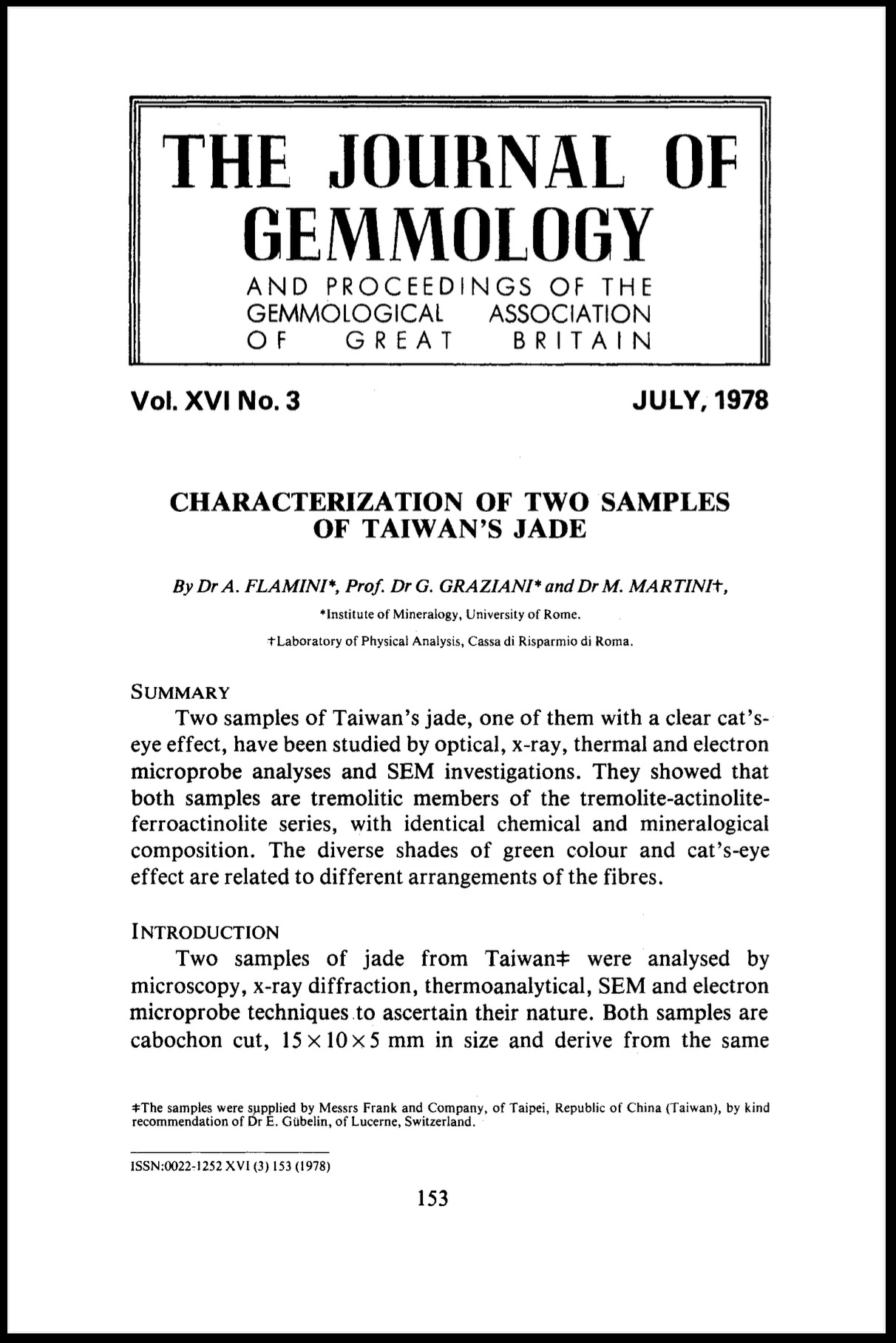
Characterization of two samples of Taiwan’s jade
Journal Article
Flamini, A., Graziani, G. and Martini, M. (1978) Characterization of two samples of Taiwan’s jade.Journal of Gemmology, Vol. XVI, No. 3, pp. 153–161.
Record No. 6748 | ISBN/ISSN: 221252 | RWHL
Reference copied to clipboard!
gems, jade, nephrite, Taiwan, nephrite cat’s eye
Two samples of Taiwan's jade, one of them with a clear cat's-eye effect, have been studied by optical, x-ray, thermal and electron microprobe analyses and SEM investigations. They showed that both samples are tremolitic members of the tremolite-actinolite- ferroactinolite series, with identical chemical and mineralogical composition. The diverse shades of green colour and cat's-eye effect are related to different arrangements of the fibres.
Quartz with appearance of jade
Journal Article
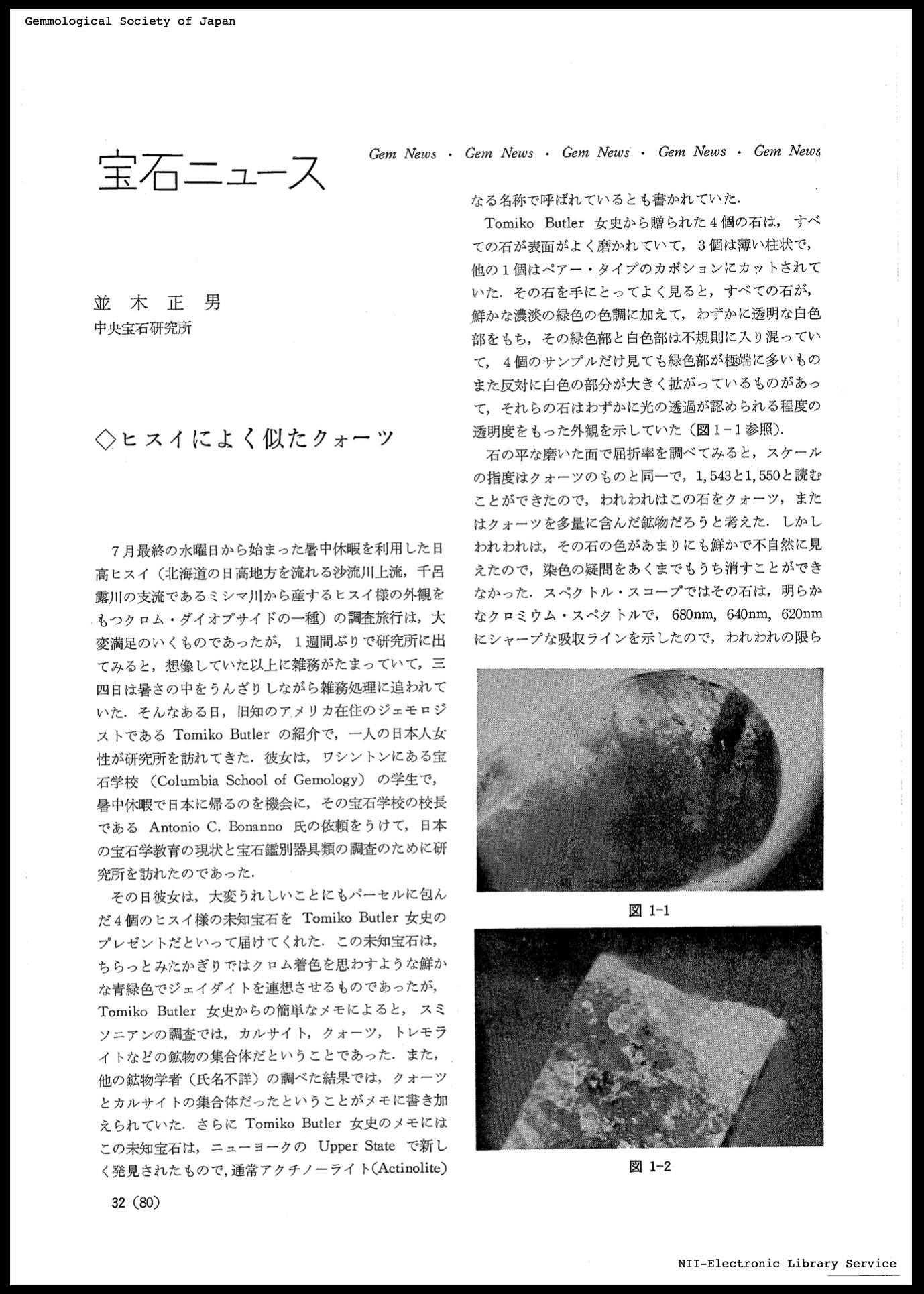
Namiki, M. (1978) Quartz with appearance of jade.Journal of The Gemmological Society of Japan, Vol. 5, No. 2, pp. 80–82.
gems, jade, jadeite, jadeite, fei cui identification, quartz
Namiki examines four jade-like green ornamental stones reportedly discovered in upstate New York. The specimens consist chiefly of quartz: X-ray diffraction showed that both the white and green portions are predominantly quartz, with a small amount of calcite in the white portion and about 10% diopside in the green portion; microscopic dark-green grains were identified as chrome diopside. The material has refractive indices of approximately 1.543 and 1.550 and a specific gravity of about 2.65. Its vivid green color initially raised suspicion of dyeing, but spectroscopy showed chromium absorption lines at 680, 640, and 620 nm, while X-ray fluorescence confirmed chromium and a very small amount of nickel, with no detectable iron. Namiki therefore concludes that the material is naturally chromium-colored quartz rather than dyed quartzite; photographs and X-ray diffraction and fluorescence diagrams illustrate the specimens and analytical results.
Taiwan cat’s eye
Journal Article
Huang, C.K. and Yeh, C.L. (1978) Taiwan cat’s eye.Journal of The Gemmological Society of Japan [宝石学会誌], Vol. 5, No. 4, pp. 157–164.
The Taiwan Cat's-Eye"is a tremolite cat's-eye. The gem material, cat's-eye tremolite occurs as veins at the contacts of graphite-sericite schist and serpentinite sills in association with nephrite, asbestus, talc and diopside-dominant skarn in the Fengtien area, south of Hualien. It is greenish yellow, pale yellow, honey yellow, green, rarely dark green, dark brown or black in color; translucent to opaque. H. 6-7, G. 3.045. Under the microscope, cat's-eye tremolite is colorless or pale green in color, consisting solely of fine, long sub-parallel fibers of tremolite in contrast to nephrite. Twisting or bending and wavy extinction are common. c∧Z' 0゜-10゜. α 1.613, β 1.626, γ 1.637; γ-α 0.24. The X-ray data are very similar to those of tremolite from St. Gotthard, Switzerland. Four chemical analyses reveal no marked differences in composition between the varieties of different colors, showing about 10% of the ferro-actinolite molecule. Some gemological features are also given. Diopside shows more crystal forms than previously reported, and the occurrence of grossularite is limited to diopside-grossularite veins near the contacts. Minor uvarovite and vesuvianite were first found in Taiwan. The former occuring as minute inclusions in diopside has n l. 778 and a_0 11.87A, corresponding to uvarovite with 10% Cr_2O_3. The latter of small prismatic crystals shows similarity in X-ray data to vesuvianite from Canzoccoli, Italy. The mineralization of the Fengtien nephrite-asbestus deposits may be divided into two stages : skarn formation and ore deposition, which might have taken place during serpentinitization by hydrothermal solutions rich in silica and lime. Cat's-eye tremolite was formed evidently later than nephrite."
Durchsichtiger, blau-rot changierender korund aus Kolumbien
Transparent, blue-red changing corundum from Colombia
Journal Article
Bank, H., Schmetzer, K. and Maes, J. (1978) Durchsichtiger, blau-rot changierender korund aus Kolumbien. [Transparent, blue-red changing corundum from Colombia]Zeitschrift der Deutschen Gemmologischen Gesellschaft, Vol. 27, No. 2, pp. 102–103.
Record No. 4697 | Language: In German | RWHL
Reference copied to clipboard!
corundum, Colombia.12, gems
Bank, Schmetzer, and Maes describe a transparent Colombian corundum exhibiting a blue-to-red color change under different illumination. The brief report concerns this unusual color-change corundum and its gemological characteristics, documenting Colombia as a source of such material.
Sapphire-blue euclase: A new collector’s gem
Journal Article
Gübelin, E.J. (1978–79) Sapphire-blue euclase: A new collector’s gem.Gems & Gemology, Vol. 16, No. 4, Winter, pp. 104–110.
Record No. 2138 | ISBN/ISSN: 0016626X | RWHL
Reference copied to clipboard!
gems, euclase
The tears of Heliades
Journal Article
Gübelin, E.J. (1978) The tears of Heliades.Gems & Gemology, Vol. 16, No. 3, Fall, pp. 66–76.
Record No. 2130 | ISBN/ISSN: 0016626X | RWHL
Reference copied to clipboard!
amber, inclusions, gems
An insight into crystal growth techniques
Journal Article
Wood, J.D.C. (1978) An insight into crystal growth techniques.Journal of Gemmology, Vol. 16, No. 1, Jan., pp. 11–29.
Bank, H. (1978) Edelsteine aus Kenya. [Gemstones from Kenya]Zeitschrift der Deutschen Gemmologischen Gesellschaft, Vol. 27, No. 4, Dec., pp. 185–195.
Record No. 427 | Language: In German | RWHL
Reference copied to clipboard!
corundum, Kenya.12, gems
Bank surveys gemstones occurring in Kenya, discussing the country’s growing importance as a source of gem materials. The article covers a range of Kenyan gemstones and their occurrences, with attention to their mineralogical and gemological characteristics. It provides a contemporary overview of Kenyan gem production during a period when East African deposits were becoming increasingly important to the international gemstone trade.
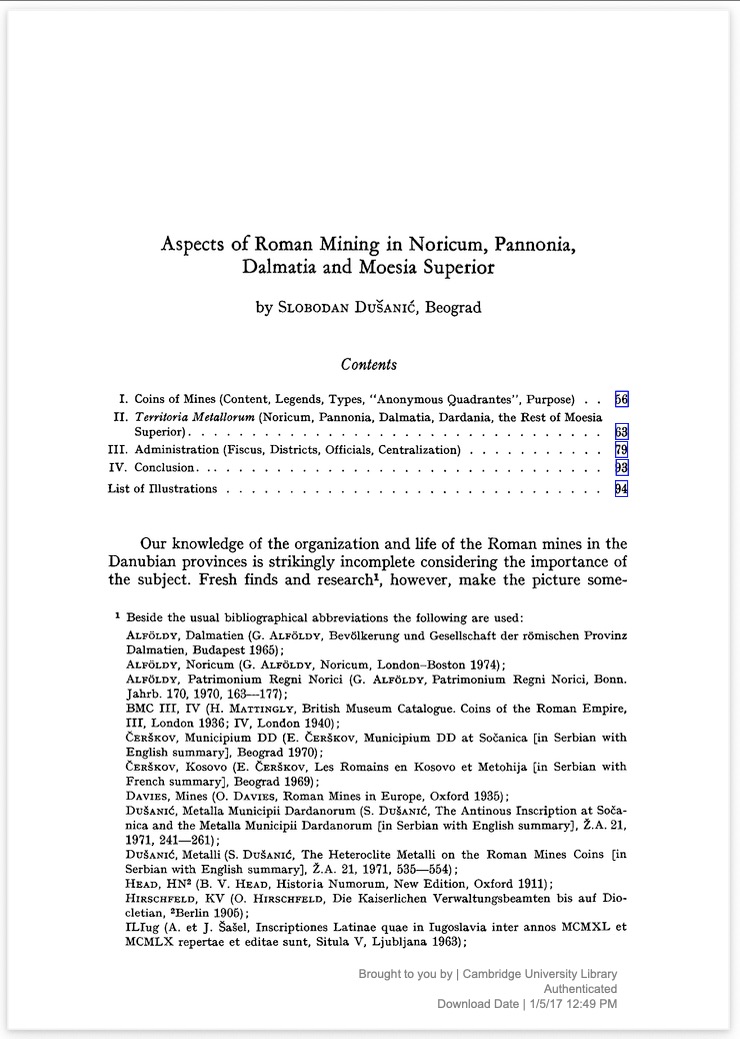
Dušanić, S. (1977) Aspects of Roman mining in Noricum, Pannonia, Dalmatia and Moesia Superior. In: Band 6 Politische Geschichte (Provinzen und Randvölker: Lateinischer Donau-Balkanraum), Aufstieg und Niedergang der römischen Welt (ANRW) / Rise and Decline of the Roman World, pp. 52–94.
gems, ancient mining, Europe, archaeology, archaeogemology
Our knowledge of the organization and life of the Roman mines in the Danubian provinces is strikingly incomplete considering the importance of the subject. Fresh finds and research, however, make the picture somewhat clearer; the following discussion concentrates on several points which, studied primarily on the basis of written sources, allow of a certain progress. The main conclusion of the present study is that Roman mining in the Danubian provinces—and, no doubt, also elsewhere—was more of a system than is commonly thought. That branch of industry demanded special care which exceeded the means of an area or a province, as illustrated by the transportations of peregrini from Dalmatia to Moesia Superior and Dacia for compulsory work in the mines. The hard fact that metals, especially precious ones, were both rare and needed, naturally led to the relative centralization of the mining administration, and to a distinction between the provinces which were rich in minerals and those which were not. Conceivably, such a state of affairs must have had manifold consequences. One of them should be stressed: the gradual municipalization of the provincial territory, which is a process common to all the Empire, was bound to affect the countries of central Noricum, southern Pannonia, northern Dalmatia, and almost the whole of Moesia Superior in a far lower degree, owing to the occurrence of mines within the vast fiscal domains. This had a bearing on all aspects of life there, notably on the organization of the portorium and on the degree of Romanization of the indigenous population.
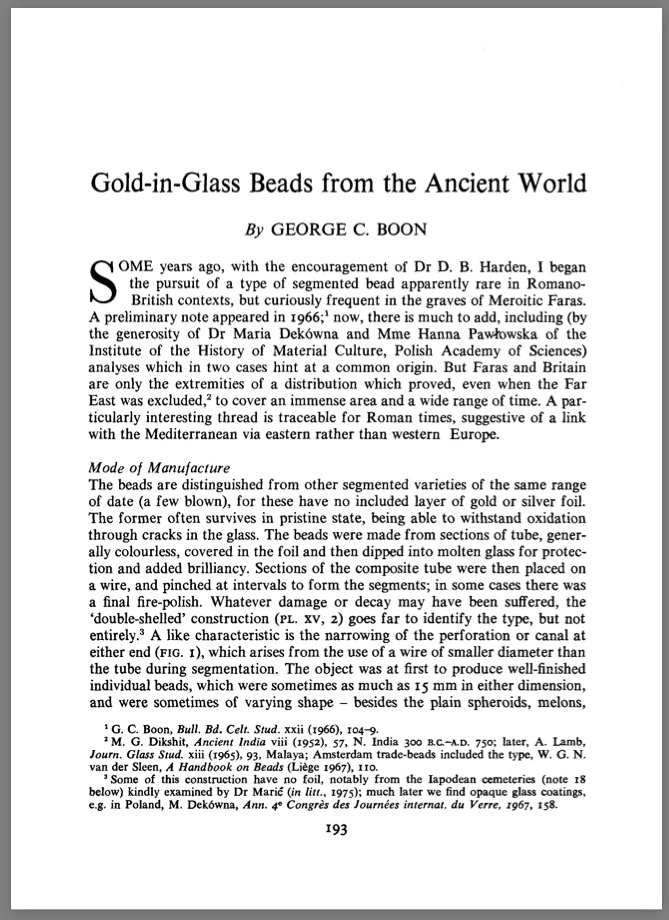
gems, ancient gemology, ancient jewelry, early metallurgy, glyptic, engraved gems, magical gems, amulets, beads, glass, gold
Some years ago, with the encouragement of Dr D.B. Harden, I began the pursuit of a type of segmented bead apparently rare in Romano-British contexts, but curiously frequent in the graves of Meroitic Faras. A preliminary note appeared in 1966; now, there is much to add, including (by the generosity of Dr Maria Dekowna and Mme Hanna Pawtowska of the Institute of the History of Material Culture, Polish Academy of Sciences) analyses which in two cases hint at a common origin. But Faras and Britain are only the extremities of a distribution which proved, even when the Far East was excluded, to cover an immense area and a wide range of time. A particularly interesting thread is traceable for Roman times, suggestive of a link with the Mediterranean via eastern rather than western Europe.
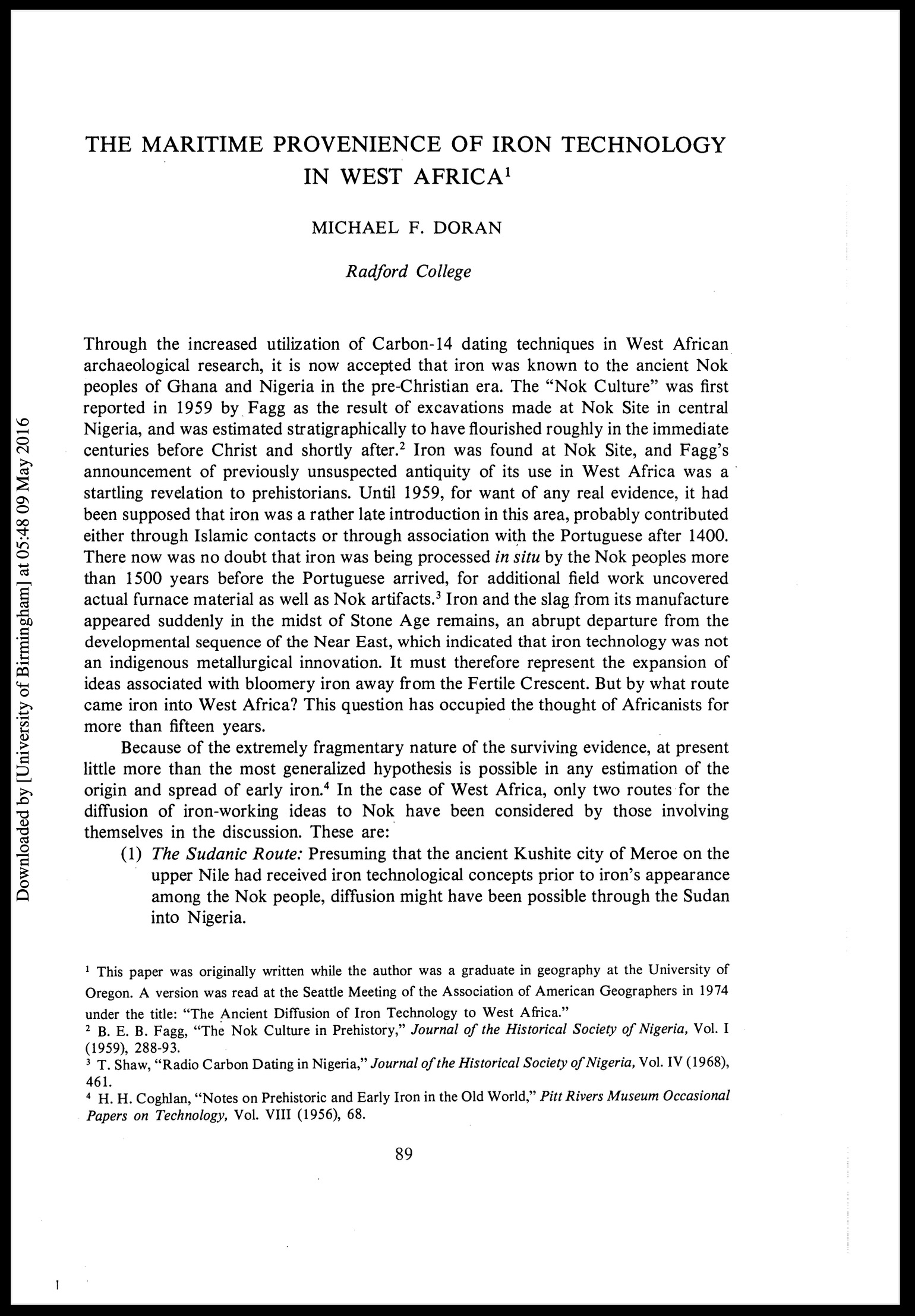
gems, history of gemology, history of mineralogy, Arabic mineralogy, history of science, Greek science, astronomy
Through the increased use of Carbon-14 dating in West African archaeology, it is now widely accepted that iron was known to the ancient Nok peoples of present-day Ghana and Nigeria during the pre-Christian era. The Nok Culture" was first identified in 1959 by Bernard Fagg following excavations at the Nok Site in central Nigeria, and stratigraphic analysis placed the culture in the centuries surrounding the birth of Christ. Iron was discovered at the site, and Fagg’s announcement of its unexpectedly early use in West Africa came as a revelation to prehistorians. Before this discovery, the prevailing view was that iron had been introduced relatively late, either through Islamic influence or contact with the Portuguese after 1400. However, subsequent fieldwork revealed furnace remains alongside Nok artifacts, confirming that iron was being smelted locally more than 1,500 years before Portuguese arrival. Remarkably, iron and slag appeared suddenly amid Stone Age remains, unlike the gradual technological progression seen in the Near East. This discontinuity suggests that iron technology was not an indigenous invention in West Africa but rather a product of external influence, likely diffused from the Fertile Crescent. The precise route by which iron-making knowledge reached West Africa, however, remains a subject of ongoing scholarly debate."
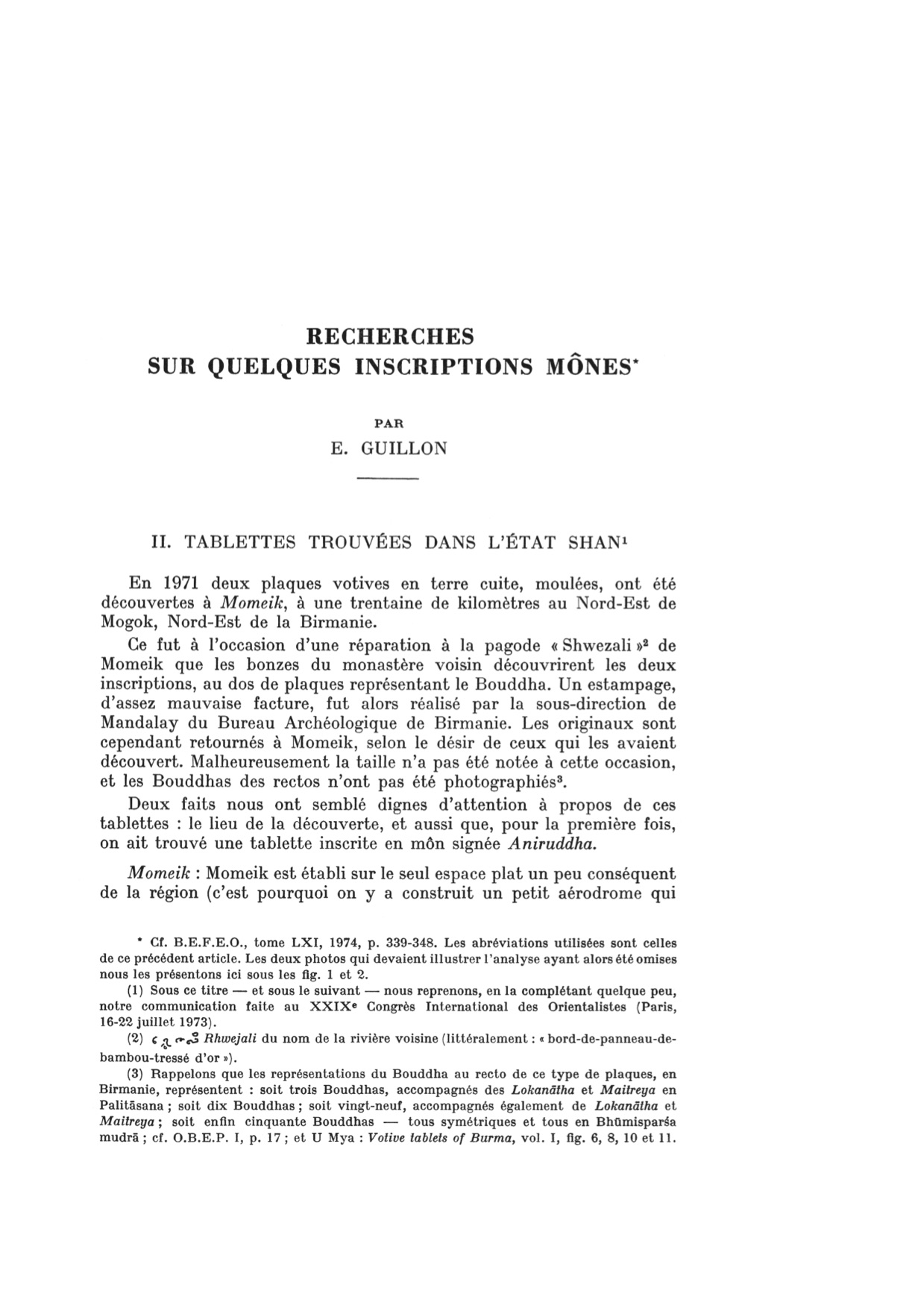
Guillon (1977) Recherches sur quelques inscriptions mônes. [Research on some Mon inscriptions]Bulletin de l'École française d'Extrême-Orient, Vol. 64, pp. 83–114.
Record No. 2617 | Sinkankas/Born No.: NIS/NIB | Language: in French | RWHL
Reference copied to clipboard!
corundum, Burma.12, Cambodia.12, gems
Guillon studies several Mon inscriptions from Burma and Thailand, providing transcriptions, translations, linguistic analysis, and discussion of their historical setting. Of particular gemological interest is his treatment of two votive terracotta plaques discovered in 1971 at Mogok, an area he notes had long been known for its ruby mines; he discusses evidence for an ancient Mon presence there and the historical connections between Upper Burma, Pagan, and Mon regions. Other sections examine a Pagan inscription, fragments of a thirteenth-century sculptured plaque from Bassein, and an engraved bell near Tavoy, using the inscriptions to investigate Mon language, political geography, religious patronage, and cultural relations across Burma and neighboring regions. The Mogok material is especially significant in providing archaeological and epigraphic evidence from within the historic ruby-mining district.
Takubo, H. (1977) Refractive indices and specific gravities of beryls. [緑柱石の屈折率と比重]Journal of The Gemmological Society of Japan [宝石学会誌], Vol. 4, No. 3, pp. 3–8.
Record No. 2390 | Sinkankas/Born No.: NIS/NIB | Language: in Japanese with English abstract | RWHL
Reference copied to clipboard!
beryl, emerald, gems
Studies on the refractive indices and specific gravities of natural and synthetic beryls are reviewed. Effects of impurities, temperature and pressure on these propertles are discussed. For synthetic beryls, refractive indices and specific gravity are strongly affected by the water pressure applied during synthesis. The emerald with refractive indices as high as natural emeralds can be synthesized by using the high pressure technique.
Further notes on mono- and bi-phase inclusions in amethyst and topaz
Journal Article
Gübelin, E.J. (1977) Further notes on mono- and bi-phase inclusions in amethyst and topaz.Journal of Gemmology, Vol. 15, No. 6, April, pp. 289–294.
Record No. 2125 | ISBN/ISSN: 221252 | RWHL
Reference copied to clipboard!
quartz, topaz, inclusions, gems
Analytical results of poly-mineralic sulfide inclusions in diamond
Journal Article
Gübelin, E.J. (1977) Analytical results of poly-mineralic sulfide inclusions in diamond.Gems & Gemology, Vol. 15, No. 11, p. 321–327.
A study of recent Chatham synthetic ruby and synthetic blue sapphire crystals with a view to identification of possible faceted material
Journal Article
Scarratt, K. (1977) A study of recent Chatham synthetic ruby and synthetic blue sapphire crystals with a view to identification of possible faceted material.Journal of Gemmology, Vol. 15, No. 7, July, pp. 347–353.
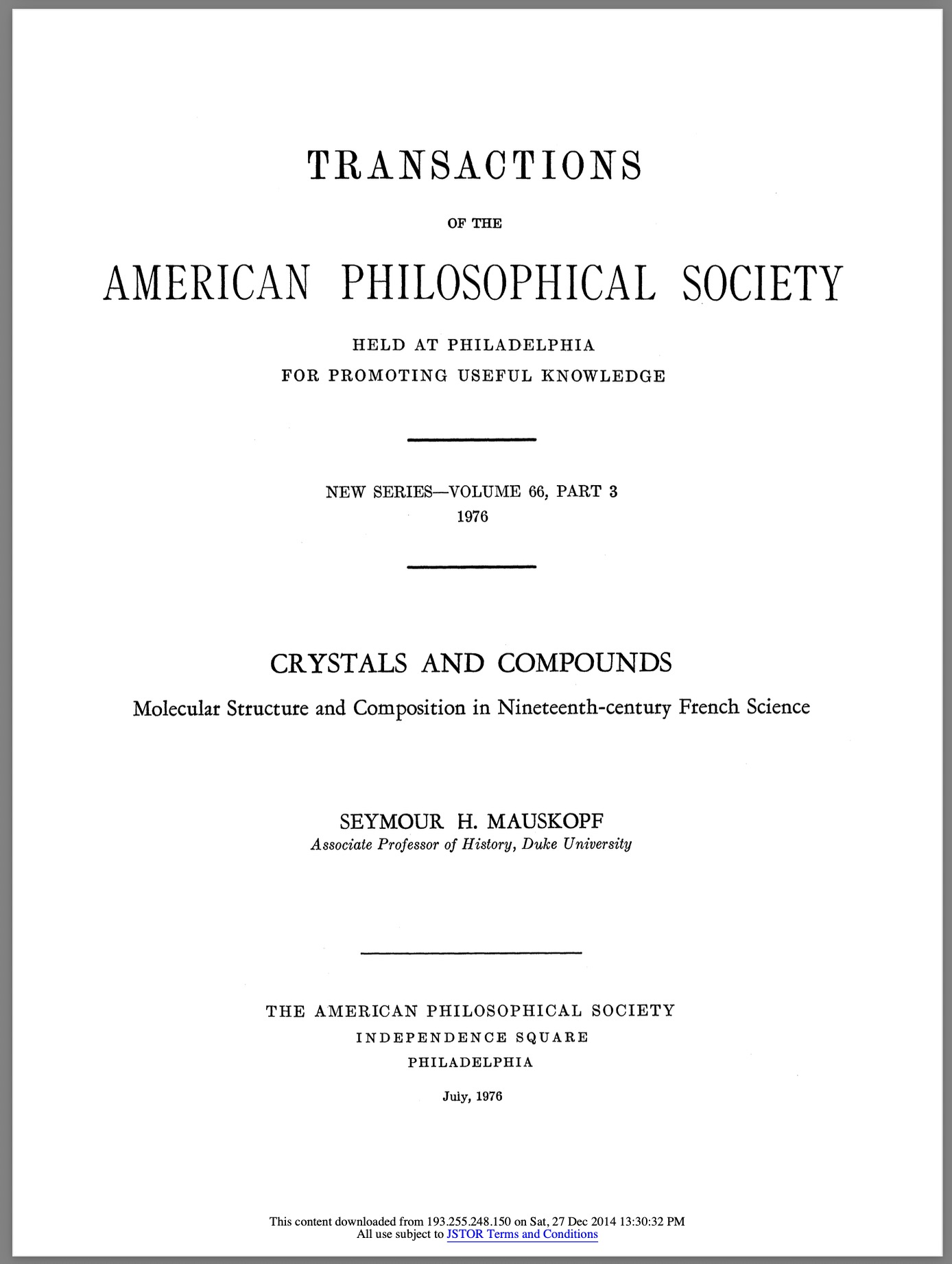
Mauskopf, S.H. (1976) Crystals and compounds: Molecular structure and composition in nineteenth-century French science.Transactions of the American Philosophical Society, Vol. 66, No. 3, pp. 1–82.
gems, history of gemology, history of mineralogy, Arabic mineralogy, history of science, crystallography
Recent scholarship has greatly extended our understanding of the history of theories concerning the ultimate nature and structure of matter. This is particularly true for the period preceding the emergence of Dalton’s atomic theory. We now know something of the hierarchical theories of material structure prevalent in the seventeenth century, in the thought of Robert Boyle and Isaac Newton, for example. We have begun to perceive how important Newton’s ideas concerning the structure of matter and the forces that bound substances together or pulled them apart were for the physical and chemical philosophers of the eighteenth century. Dalton’s chemical atomic theory no longer appears quite so lacking in background as it did twenty-five years ago. At the same time, Dalton’s true innovation in turning from consideration of force to consideration of atomic weight has likewise been clarified.
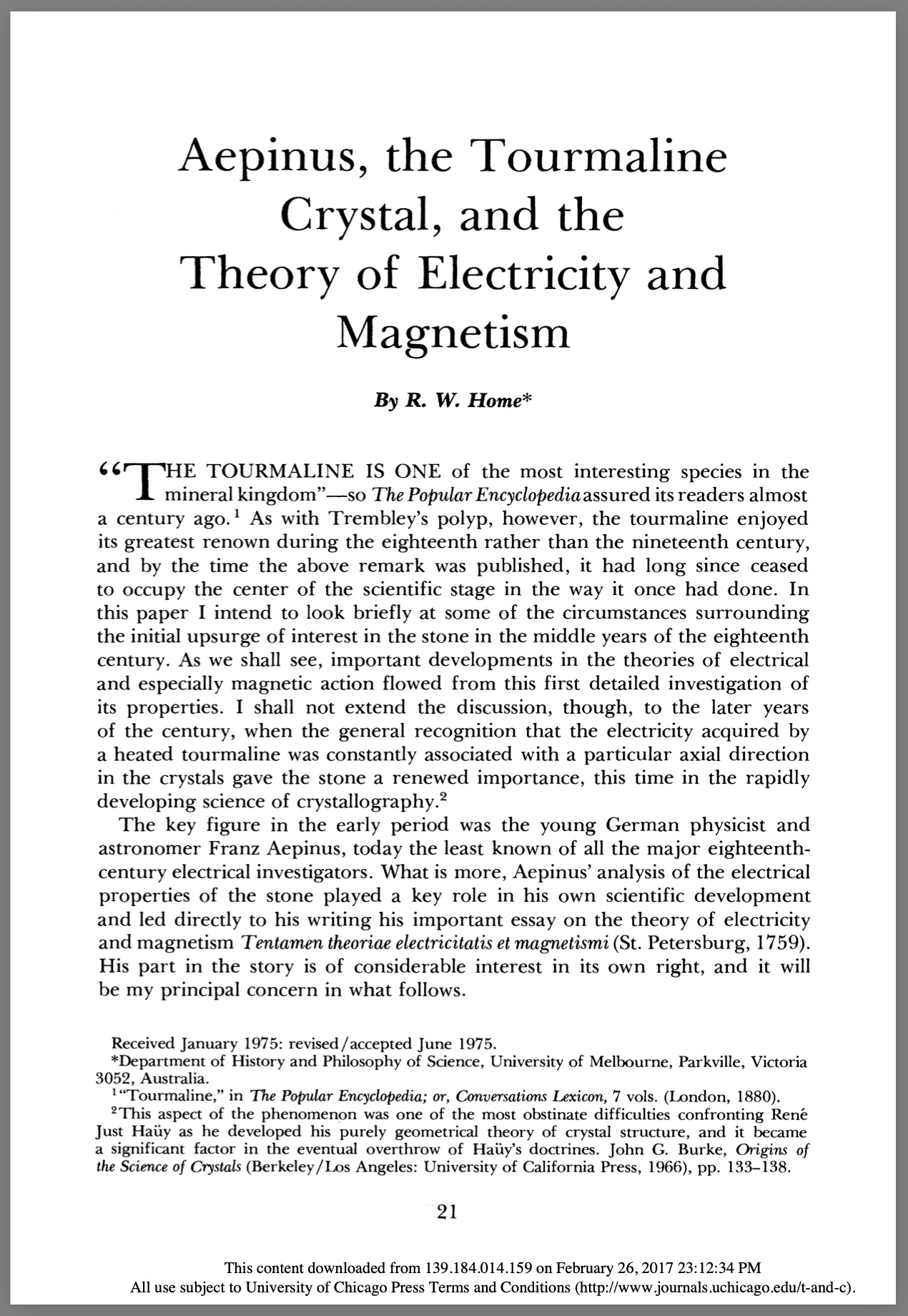
The tourmaline is one of the most interesting species in the mineral kingdom”—so The Popular Encyclopedia assured its readers almost a century ago. As with Abraham Trembley’s polyp, however, the tourmaline enjoyed its greatest renown during the eighteenth rather than the nineteenth century, and by the time the above remark was published, it had long since ceased to occupy the centre of the scientific stage in the way it once had done. In this paper I intend to look briefly at some of the circumstances surrounding the initial upsurge of interest in the stone in the middle years of the eighteenth century. As we shall see, important developments in the theories of electrical and especially magnetic action flowed from this first detailed investigation of its properties. I shall not extend the discussion, though, to the later years of the century, when the general recognition that the electricity acquired by a heated tourmaline was constantly associated with a particular axial direction in the crystals gave the stone a renewed importance, this time in the rapidly developing science of crystallography.
Building a Gemological Library
Gemological books range from general identification manuals and textbooks to specialized works on individual gems, mineralogy, jewelry, treatments, synthesis, history and gem-producing regions.
Four Treasures is Lotus Gemology's freely accessible gemological reference database. Use the full database to search by author, title or keyword and explore literature on gemology, mineralogy, jewelry and related fields. Where available, hyperlinks on titles may lead directly to the full publication.