Gemology Books Bibliography

Gemology Books Bibliography

Explore books on gems, gemology, jewelry and mineralogy in Four Treasures, the Lotus Gemology reference database. This bibliography brings together matching book records from the collection, with publication details, abstracts and cover images where available.

Gemology Book References

The list below matches books concerning gemology and related subjects in the database's searchable fields. Some works cover several branches of gems, jewelry or mineralogy.
2,841–2,860 of 3,454 matching references

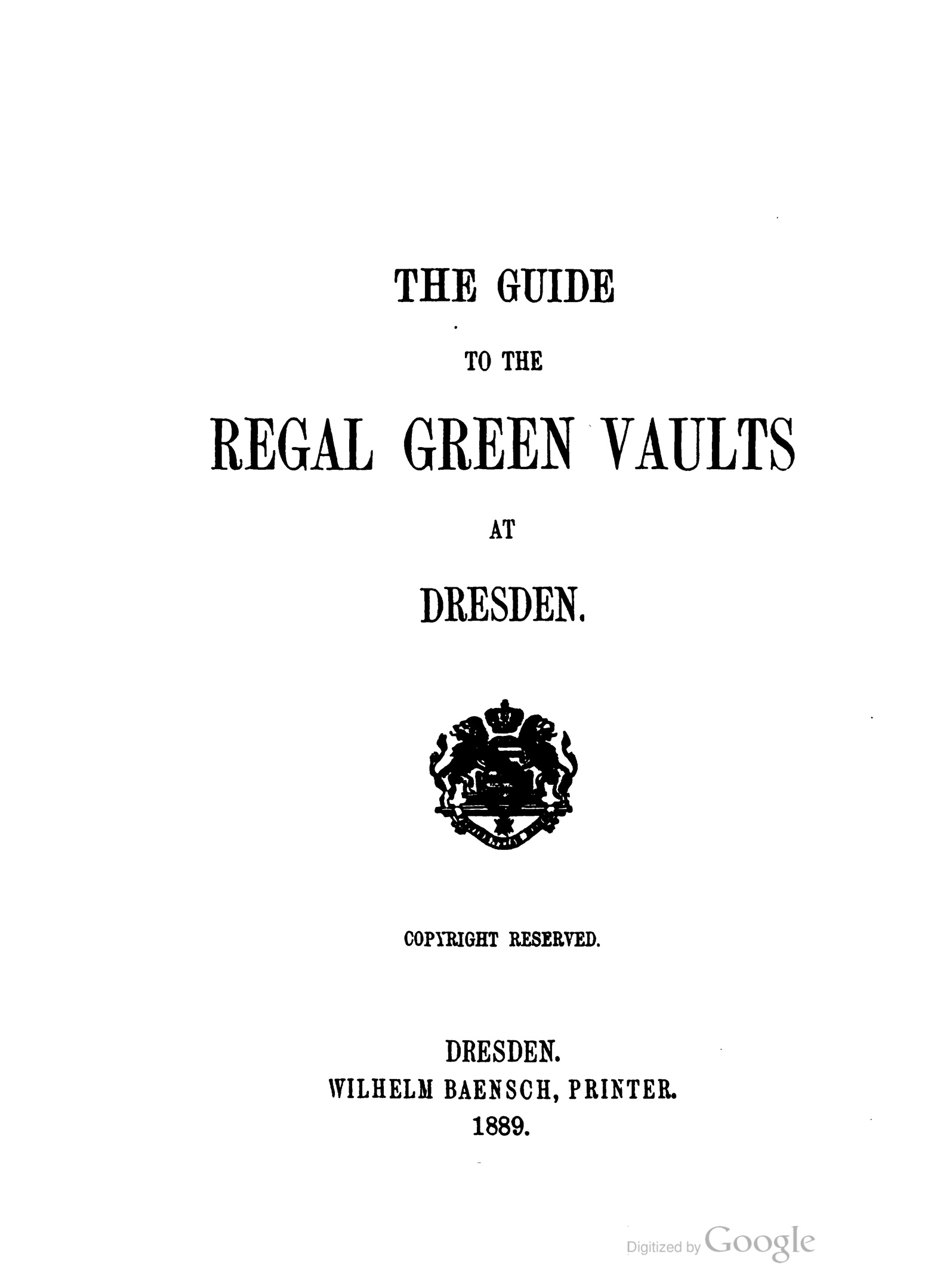
The Guide to the Regal Green Vaults at Dresden
Book
Anonymous (1889) The Guide to the Regal Green Vaults at Dresden. Dresden, Wilhelm Baensch, 88 pp.
Record No. 2694  |  RWHL
This guide provides a room-by-room catalogue of the treasures displayed in the Royal Green Vaults (Grünes Gewölbe) in Dresden, describing the objects exhibited in the eight rooms of the western wing of the Royal Palace. The collection is particularly important for gemological and jewelry history, encompassing jewels, precious and ornamental stones, carved hardstones, rock crystal, gold- and silversmiths’ work, and other richly mounted objects from the Saxon royal collections. Individual entries briefly identify and describe the objects, making the volume a useful nineteenth-century record of the arrangement and contents of one of Europe’s most important historic treasuries. The 1889 English edition was published in Dresden by Wilhelm Baensch and contains 88 pages, with engraved plates and illustrations.

The pacification of Burmah

Journal Article
Boulger, D.C. (1889) The pacification of Burmah. The National Review, Vol. 13, No. 76, June, pp. 503–516.
Record No. 2633  |  Sinkankas/Born No.: NIS/NIB  |  RWHL
Boulger examines the British effort to pacify Upper Burma following its annexation after the Third Anglo-Burmese War, discussing the persistent armed resistance, disorder, and administrative difficulties that confronted the new colonial government. He considers the military measures required to suppress resistance and establish effective authority beyond the principal towns, together with the political and administrative problems created by the removal of the Burmese monarchy. Particular attention is given to the difficulty of distinguishing organized opposition from ordinary banditry, the need to secure communications and extend government control into the countryside, and the broader question of whether British policy was succeeding in restoring stability. Although not specifically gemological, the article provides useful contemporary background to the establishment of British authority in Upper Burma during the same period in which the ruby mines of Mogok and the jade-producing districts of northern Burma were becoming increasingly accessible to British officials, travelers, and commercial interests.

Korund von Ceylon

Corundum from Ceylon
Journal Article
Busz, K. (1889) Korund von Ceylon. [Corundum from Ceylon] Zeitschrift für Krystallographie und Mineralogie, Vol. 15, pp. 622–623.
Record No. 546  |  Sinkankas/Born No.: NIS/NIB  |  Language: In German  |  RWHL
Busz describes corundum specimens from Ceylon, concentrating on their crystallographic form and physical characteristics. He records the crystal forms and combinations displayed by the specimens and discusses their habit and surface development, adding to the detailed mineralogical characterization of Ceylonese corundum. The short paper is principally crystallographic rather than an account of mining or gem production and is of gemological interest for its documentation of the morphology of corundum from one of the historically important sources of ruby and sapphire.

Colection des Anciens Alchimistes Grecs
Collection of the Ancient Greek Alchemists
Book
Berthelot, P.E.M. and Ruelle, C.-É. (1888) Colection des Anciens Alchimistes Grecs. [Collection of the Ancient Greek Alchemists] Paris, G. Steinheil, 3 Vols. + Index
Record No. 17295  |  Sinkankas/Born No.: NIS/NIB  |  Language: in French and Greek  |  RWHL
Berthelot and Ruelle assemble, edit, translate, and interpret the surviving Greek texts relating to ancient alchemy, providing one of the fundamental source collections for the history of early chemistry. The work includes Greek texts with French translations and extensive commentary on the techniques, substances, apparatus, and theories described by Greek and Byzantine alchemical writers. Of particular gemological interest are passages dealing with minerals, metals, coloring processes, and the artificial production or imitation of precious materials, including recipes intended to give stones the appearance and colors of emerald, ruby, sapphire, and other gems. The collection is especially important for documenting ancient methods of dyeing, staining, and otherwise altering stones and glass, and for tracing the relationship between practical craft recipes and the developing theoretical traditions of alchemy.

Precious stones

Book Section
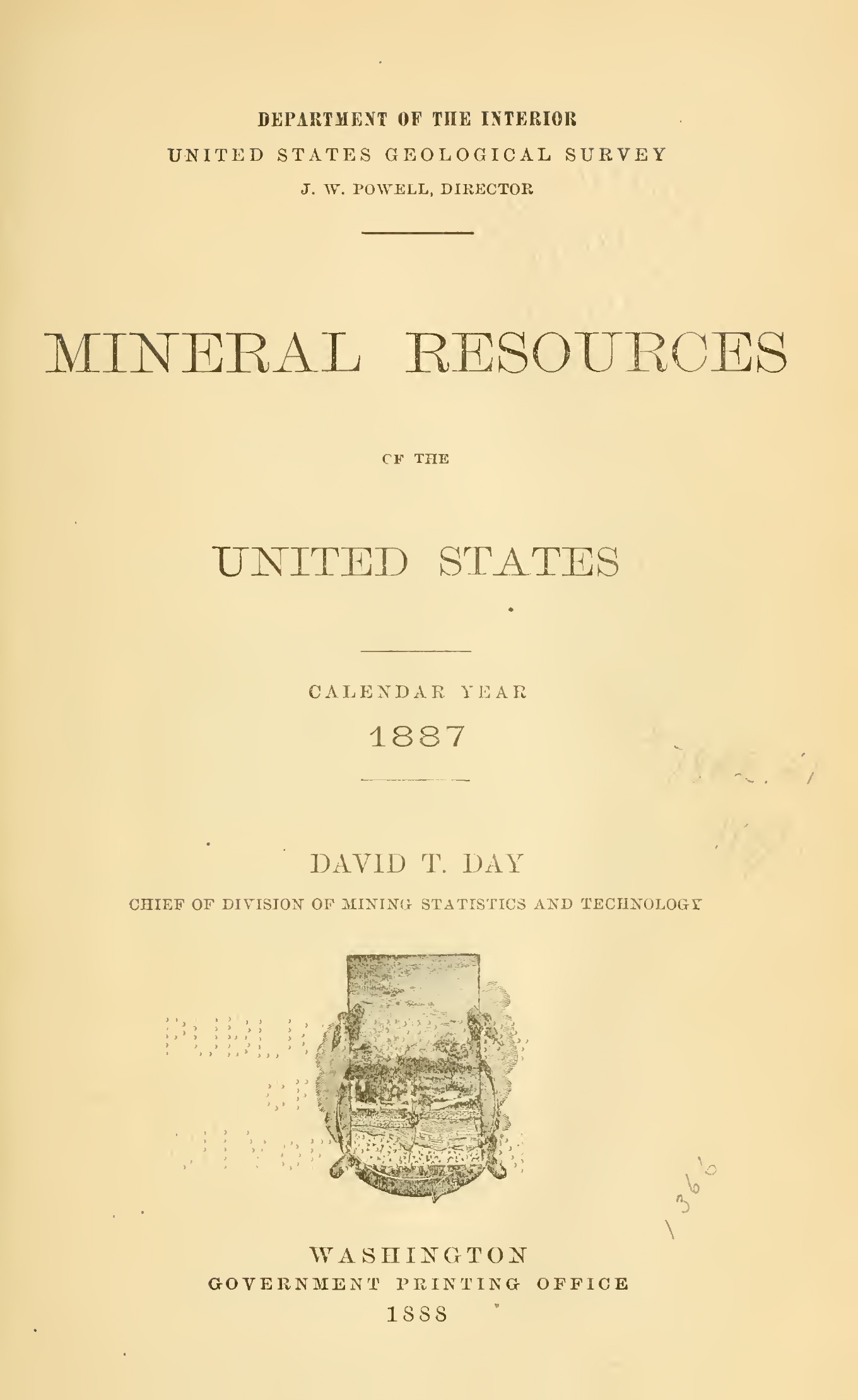
Kunz, G.F. (1888) Precious stones. In: Mineral Resources of the United States | Calendar Year 1887, Washington: Govt. Printing Office, pp. 555–579.
Record No. 17009  |  Sinkankas/Born No.: 3603; NIB  |  RWHL
Kunz reviews the precious-stone industry and trade in 1887, beginning with American gem mining and estimated U.S. production, then describing recent discoveries and developments involving diamond, zircon, beryl, phenacite, garnet, tourmaline, hiddenite, rock crystal, chrysoprase, agate, pectolite, feldspars, rhodonite, turquoise, cyanite, labradorite, and ornamental stones. Kunz-1888-Precious stones.pdf A substantial section treats foreign sources, particularly the rapidly expanding South African diamond mines, their mining and sorting methods, production, values, consolidation, and effects on the international diamond trade; Kunz also discusses Brazilian, Indian, and Australian diamond production and the growth of diamond imports, cutting, and consumption in the United States. Of particular gemological interest are detailed accounts of the Kashmir sapphire deposit, discovered in 1882 in the Zanskar Range, and the Mogok ruby mines of Burma, including British attempts to lease the mines, contemporary mining practices, royalties, and trade. Kunz also surveys changing fashions in gems, including cat’s-eye, alexandrite, moonstone, opal, and amber, and notes the rapidly growing American interest in carved jade and other hardstone objects. He discusses Alaskan jade, Central American jadeite artifacts, Burmese jadeite, and Māori jade objects, while recording contemporary theories concerning the provenance of American jadeite. The report concludes with accounts of important gem collections and their dispersal or acquisition, including the Hope collection, the French Crown jewels, C.W. King’s engraved gems, the Sommerville collection, W. Hayes Ward’s ancient cylinders, and Isaac Lea’s collection of gems studied for microscopic inclusions.

The Cabinet • Talks with Experts • VI. Mr. George F. Kunz on art works in jade and other hard stones
Journal Article
Kunz, G.F. (1888–89) The Cabinet • Talks with Experts • VI. Mr. George F. Kunz on art works in jade and other hard stones. The Art Amateur, Vol. 20, Nos. 1, 3, pp. 3–4, 51–52.
Record No. 6910  |  Sinkankas/Born No.: NIS/NIB  |  RWHL
Kunz discusses the artistic working of jade and other hard ornamental stones, drawing upon his gemological experience to explain the materials, techniques, and aesthetic qualities of carved objects. He considers jade particularly in relation to Chinese workmanship, describing the skill required to fashion an exceptionally hard and resistant material and the ways in which differences in color, translucency, texture, and natural form could be exploited by the lapidary. The discussion extends to other hard stones used for decorative and artistic objects and emphasizes the relationship between the intrinsic qualities of the mineral and the design imposed upon it. Presented as an interview or “talk with an expert” rather than a formal mineralogical paper, the article provides a useful contemporary account of late nineteenth-century attitudes toward jade carving, hardstone craftsmanship, collecting, and the appreciation of such objects as works of art.

A Bibliography of Indian Geology

Book
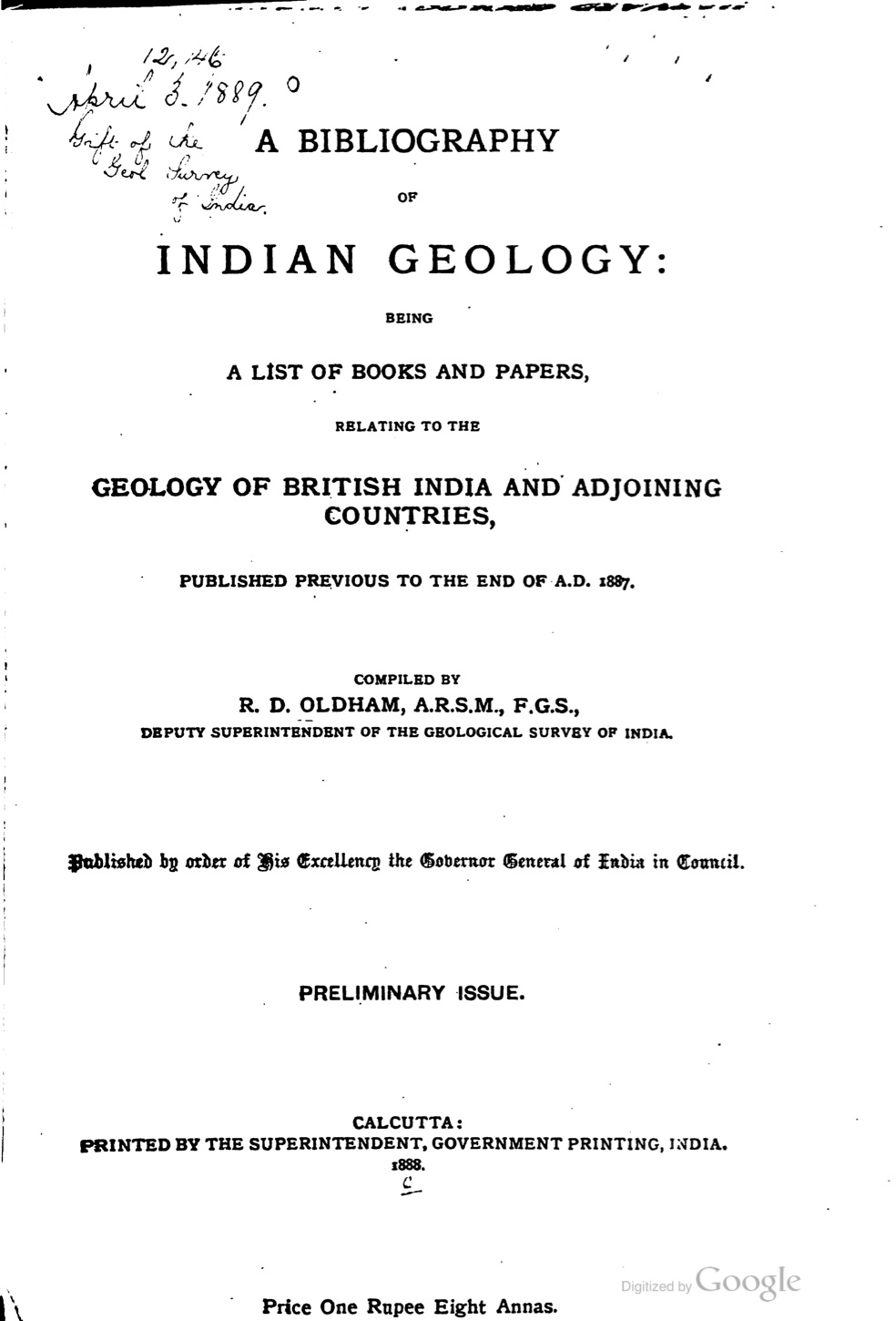
Oldham, R.D. (1888) A Bibliography of Indian Geology. Calcutta, Geological Survey of India, 145 pp.
Record No. 2837  |  Sinkankas/Born No.: NIS/NIB  |  RWHL
Oldham’s bibliography provides a systematic guide to the literature of Indian geology published up to the late nineteenth century, bringing together references to books, official reports, journal articles, and other publications concerning the geology and mineral resources of India. Compiled in connection with the Geological Survey of India, it covers geological formations, mineralogy, mining, economic deposits, and individual minerals and localities, with entries arranged to facilitate consultation of the rapidly expanding literature. For gemological research it is particularly valuable as a contemporary bibliographic guide to early accounts of India’s diamonds, corundum, precious stones, and other mineral resources, and for tracing reports scattered through Geological Survey publications and other nineteenth-century sources.

Plain Tales from the Hills

Book
Kipling, R. (1888) Plain Tales from the Hills. Calcutta, Thacker, Spink & Co., 283 pp.
Record No. 2805  |  RWHL
Kipling’s first collection of short stories portrays British and Indian life in colonial India, particularly the social world of Anglo-Indian officials, soldiers, journalists, and their families. Although primarily literary rather than gemological, it is of interest for its contemporary descriptions of Indian society, material culture, trade, and attitudes during the late nineteenth century. Gemological relevance is slight, but references to jewelry, precious objects, and personal adornment occur within Kipling’s broader depiction of wealth, status, and everyday life in British India. The volume is chiefly useful as cultural and historical background for understanding the environment in which the Indian gem and jewelry trade operated during this period.

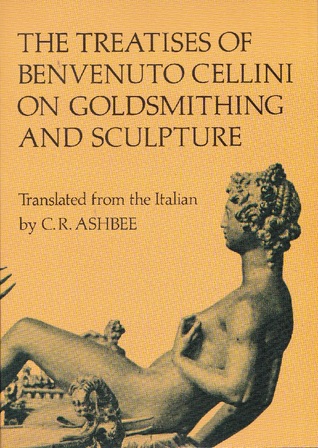
The Treatises of Benvenuto Cellini on Goldsmithing and Sculpture
Book
Cellini, B. and Ashbee, C.R. (1888) The Treatises of Benvenuto Cellini on Goldsmithing and Sculpture. London, Edward Arnold, 164 pp.
Record No. 2726  |  Sinkankas/Born No.: 1215; NIB  |  RWHL
Cellini’s treatises provide a practical account of Renaissance goldsmithing and sculpture, describing the materials, tools, and techniques employed by a master craftsman. Of particular gemological interest are his discussions of jewelry manufacture, the setting and mounting of precious stones, enameling, casting, soldering, gilding, and the working of gold and silver, together with observations on diamonds and other gems and their use in elaborate ornaments. Cellini explains workshop procedures from the craftsman’s perspective, often illustrating them from his own experience, making the work an important primary source for the techniques used in sixteenth-century European jewelry and decorative metalwork. Ashbee’s English translation made Cellini’s technical writings accessible to an English-speaking audience and preserves valuable evidence for the close relationship between the Renaissance goldsmith, jeweler, sculptor, and gem worker.

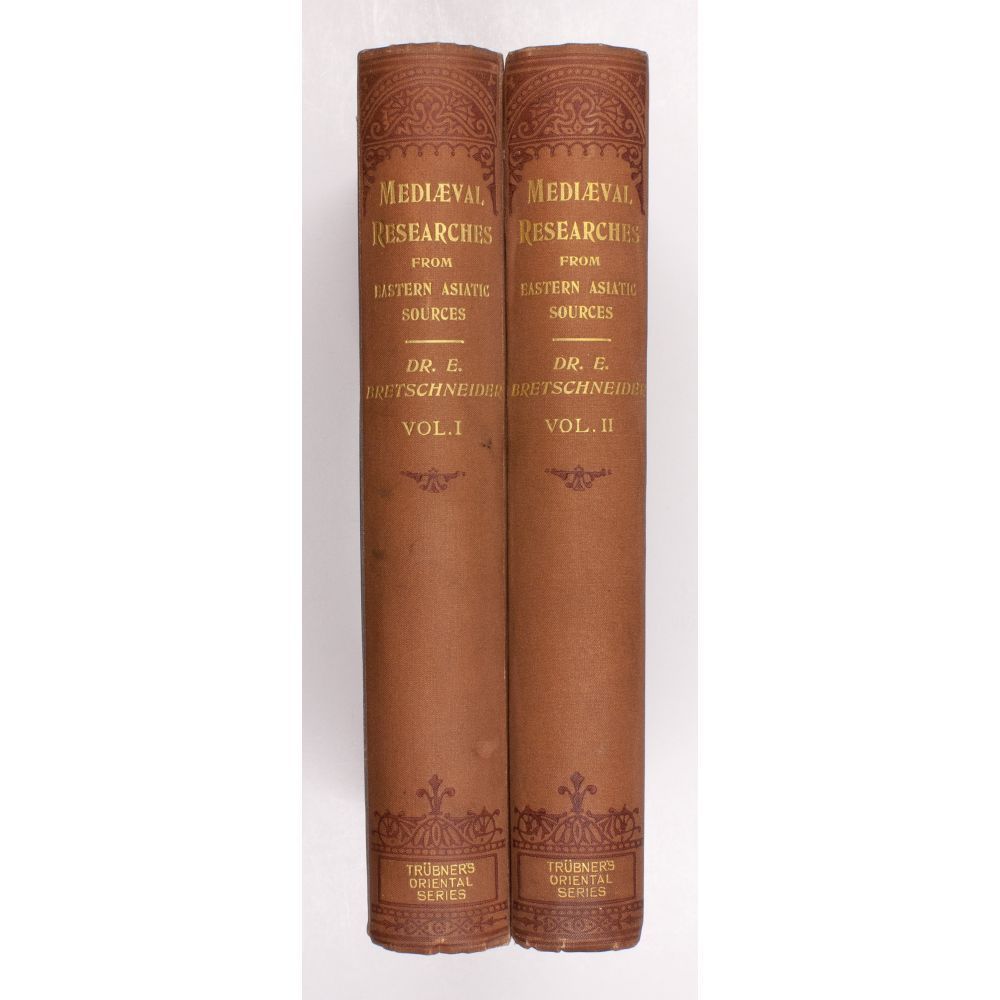
Medieval Researches from Eastern Asiatic Sources
Book
Bretschneider, E. (1887) Medieval Researches from Eastern Asiatic Sources. London, Kegan Paul, Trench, Trübner and Co., 2 Vols., 334, 352 pp.
Record No. 2717  |  Sinkankas/Born No.: NIS/NIB  |  RWHL
Mediæval Researches from Eastern Asiatic Sources is a famous two-volume work by the physician and sinologist E. Bretschneider. First published in London in 1888, it collects translated fragments and notes from Chinese and Asian texts. The book explores the history and geography of Central and Western Asia from the 13th through the 17th century. Bretschneider brings together historical and geographical studies derived principally from Chinese and other East Asian sources, using them to reconstruct medieval knowledge of Central and Western Asia and relations between China and regions farther west. The work examines Chinese accounts of peoples, countries, routes, embassies, conquests, and commerce, particularly during the Mongol period, and compares Chinese records with Persian, Arabic, and European sources. Detailed discussions cover Central Asia, Turkestan, Persia, Afghanistan, India, and adjoining regions, including geographical names, travel routes, commodities, and mineral products. For gemological research the work is valuable for its translations and interpretations of Chinese references to precious stones, spinel, lapis lazuli, turquoise and jade, particularly materials associated with Khotan and other Central Asian regions, and for documenting the historical routes by which these materials reached China.

The turquoise

Journal Article
Anonymous (1886) The turquoise. Chambers’s Journal, Vol. 3, No. 116, 20 March, pp. 181–183.
Record No. 29071  |  Sinkankas/Born No.: NIS/NIB  |  RWHL
A popular account of turquoise covering its historical use, folklore, mineral characteristics, and importance in jewelry, with particular attention to the Persian mines near Nishapur. Drawing extensively on A. Houtum Schindler’s report, the article describes the deposits, underground workings and surface diggings, mining hazards, and damage to stones caused by blasting. It discusses grading, cutting and polishing, prices, and the influence of color, size, shape, and the quality termed zât on value. Particular attention is given to color instability and the reported practice of keeping inferior stones damp to preserve their appearance before sale. The article also distinguishes turquoise from odontolite and glass imitations, reviews beliefs concerning its protective powers, and concludes with the reproduction of turquoise blue in ceramics. It provides a contemporary overview of Persian turquoise production and trade alongside nineteenth-century gemological knowledge.

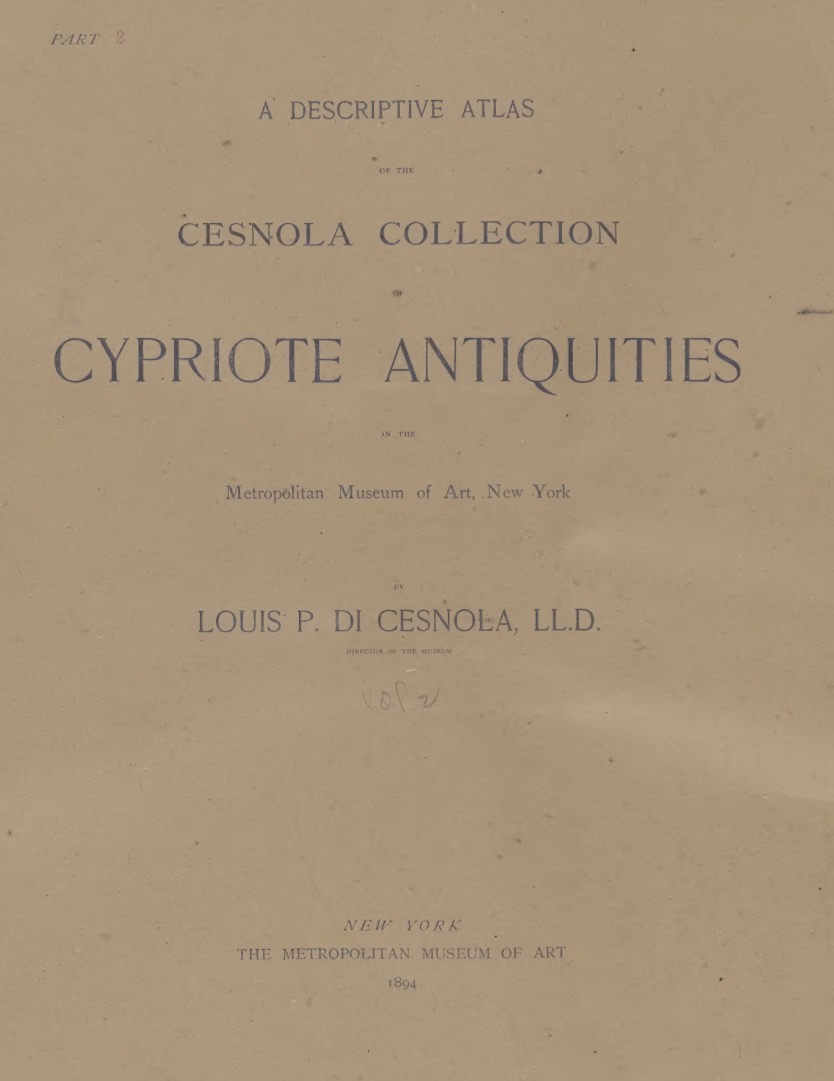
A Descriptive Atlas of the Cesnola Collection of Cypriote Antiquities in the Metropolitan Museum of Art, New York
Book
di Cesnola, L.P. (1885–1903) A Descriptive Atlas of the Cesnola Collection of Cypriote Antiquities in the Metropolitan Museum of Art, New York. Boston, New York, J.R. Osgood, Metropolitan Museum of Art, 3 Vols.
Record No. 27072  |  Sinkankas/Born No.: NIS/NIB  |  RWHL
An illustrated catalogue of the Cesnola collection of Cypriote antiquities, presenting objects through plates and accompanying descriptions intended to support comparative archaeological study. Of particular gemological interest is the third volume (1903), which includes objects in gold and precious stones, rock crystal and glass, together with engraved cylinders and inscribed stones. The descriptions record materials, physical characteristics, decorative details, and reported findspots, including features discernible under magnification but not clearly reproduced photographically. Dating is generally confined to broad periods. The atlas provides an early documentary source for the study of ancient lapidary work, ornament, and the use of gemstones in objects collected in Cyprus.

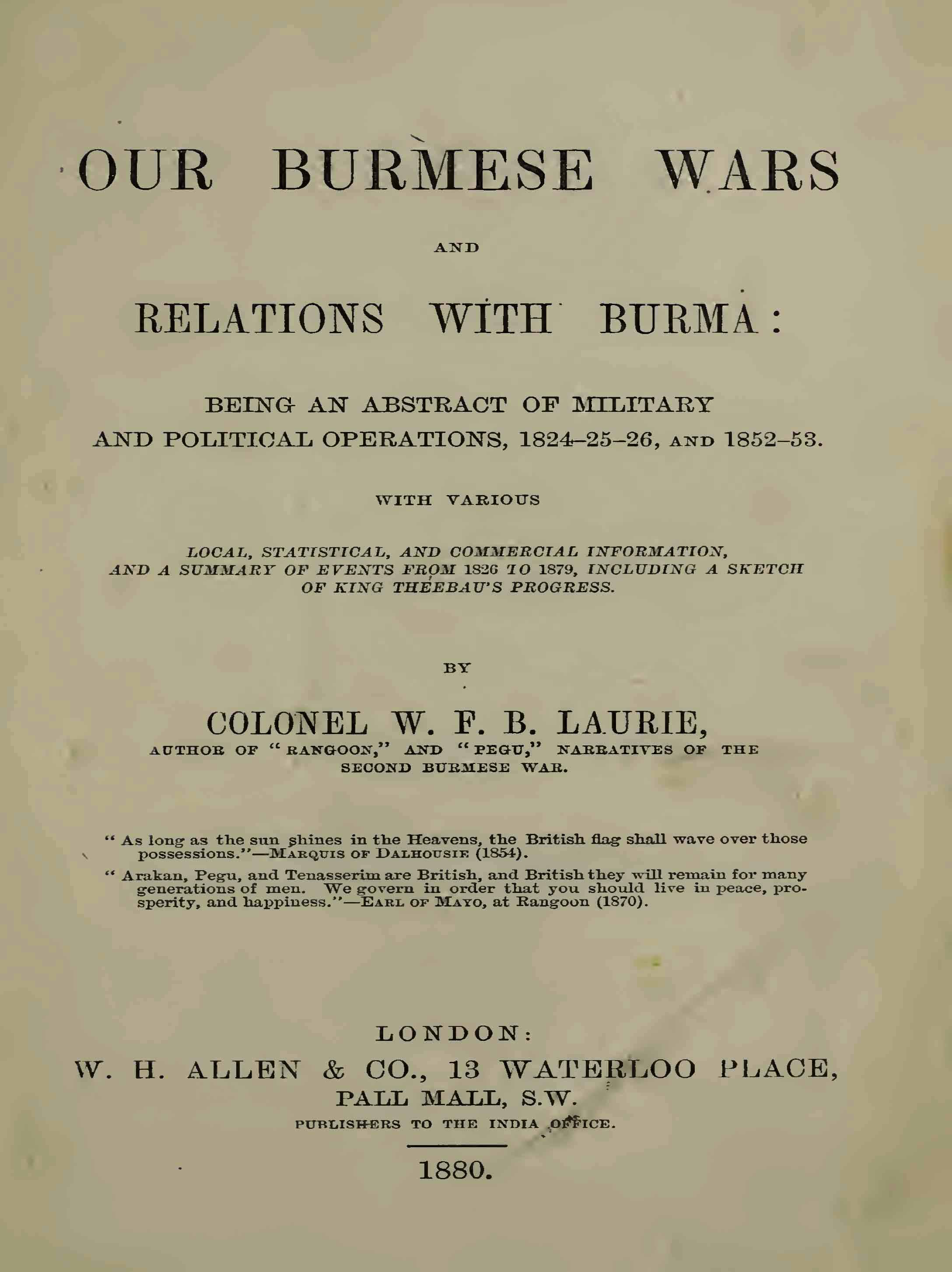
Our Burmese Wars and Relations with Burma

Book
Laurie, W.F.B. (1885) Our Burmese Wars and Relations with Burma. London, W.H. Allen, 487 pp.
Record No. 2818  |  Sinkankas/Born No.: NIS/NIB  |  RWHL
Laurie provides a historical account of British military and political relations with Burma, concentrating on the First Burmese War of 1824–1826 and the Second Burmese War of 1852–1853, while extending the narrative through subsequent events to 1879 and the early reign of King Theebaw. Drawing on official dispatches, military narratives, and contemporary accounts, he describes campaigns, battles, diplomacy, annexations, and the development of British administration in Arakan, Tenasserim, and Pegu. The later sections broaden the work beyond military history to include information on population, revenue, commerce, communications, and the trade routes linking Mandalay, Bhamo, Yunnan, and China, as well as an assessment of the economic and strategic value of Upper Burma. Although not principally a gemological work, it provides useful historical and commercial background for understanding Burma immediately before the British annexation of Upper Burma and the subsequent opening of the country’s important ruby and jade-producing regions to intensified European investigation and trade.

Afghan [and Persian] field notes

Journal Article
Griesbach, C.L. (1885–1887) Afghan [and Persian] field notes. Records, Geological Survey of India, 1885: Vol. 18, Pt. 1: pp. 57–64; 1886, Vol. 19, No. 1, Afghan and Persian Field notes, 48–65; No. 4, Field–Notes from Afghanistan: Turkistan, 235–267; 1887: Vol. 20, No. 1, From Túrkestán to India, pp. 17–26; No. 2, To accompany a geological sketch map of Afghanistán and North–Eastern Khorassan, pp. 93–103.
Record No. 850  |  Sinkankas/Born No.: NIS/NIB  |  RWHL
Griesbach’s five-part series presents geological observations made during service with the Afghan Boundary Commission, covering Afghanistan and eastern Khorassan, including the Herat region, Afghan Turkistan, and the return journey across the Hindu Kush to India. The reports describe stratigraphy, fossil assemblages, mountain structure, igneous intrusions, coal-bearing formations, and glacial and alluvial deposits, concluding with a regional synthesis and geological sketch map. Of particular gemological interest is the account of the Nishapur turquoise mines in the second installment (1886, p. 62). Griesbach associates turquoise with contact rock in volcanic ash at Madan hill, reports approximately 1,000 workings of which about 100 were active, and notes that the best stones were recovered from decomposed talus, where extraction was easier than from solid matrix. The series provides an early geological framework for the region, with many correlations explicitly regarded as provisional. The 1887 installments also describe rocks around Jagdalak, although there is no explicit mention of ruby or spinel.

Leisure Hours Among the Gems

Book
Hamlin, A.C. (1884) Leisure Hours Among the Gems. Boston, James R. Good, 439 pp.
Record No. 29488  |  Sinkankas/Born No.: 2695: NIB  |  RWHL
Hamlin presents a broad popular survey of gemstones, combining mineralogical information with historical accounts, legends, famous specimens, mining localities, cutting, valuation, and use in jewelry. He discusses diamonds, rubies, sapphires, emeralds, tourmalines, topaz, garnets, opals, turquoise, pearls, and numerous other ornamental materials, describing their physical properties, colors, geographical sources, and notable examples. Particular attention is given to American gemstones and mineral localities, including the tourmalines of Maine, a subject on which Hamlin had previously written extensively. The work blends contemporary gemological knowledge with anecdotes and historical lore and provides a useful late-nineteenth-century account of popular and commercial attitudes toward precious stones in the United States.

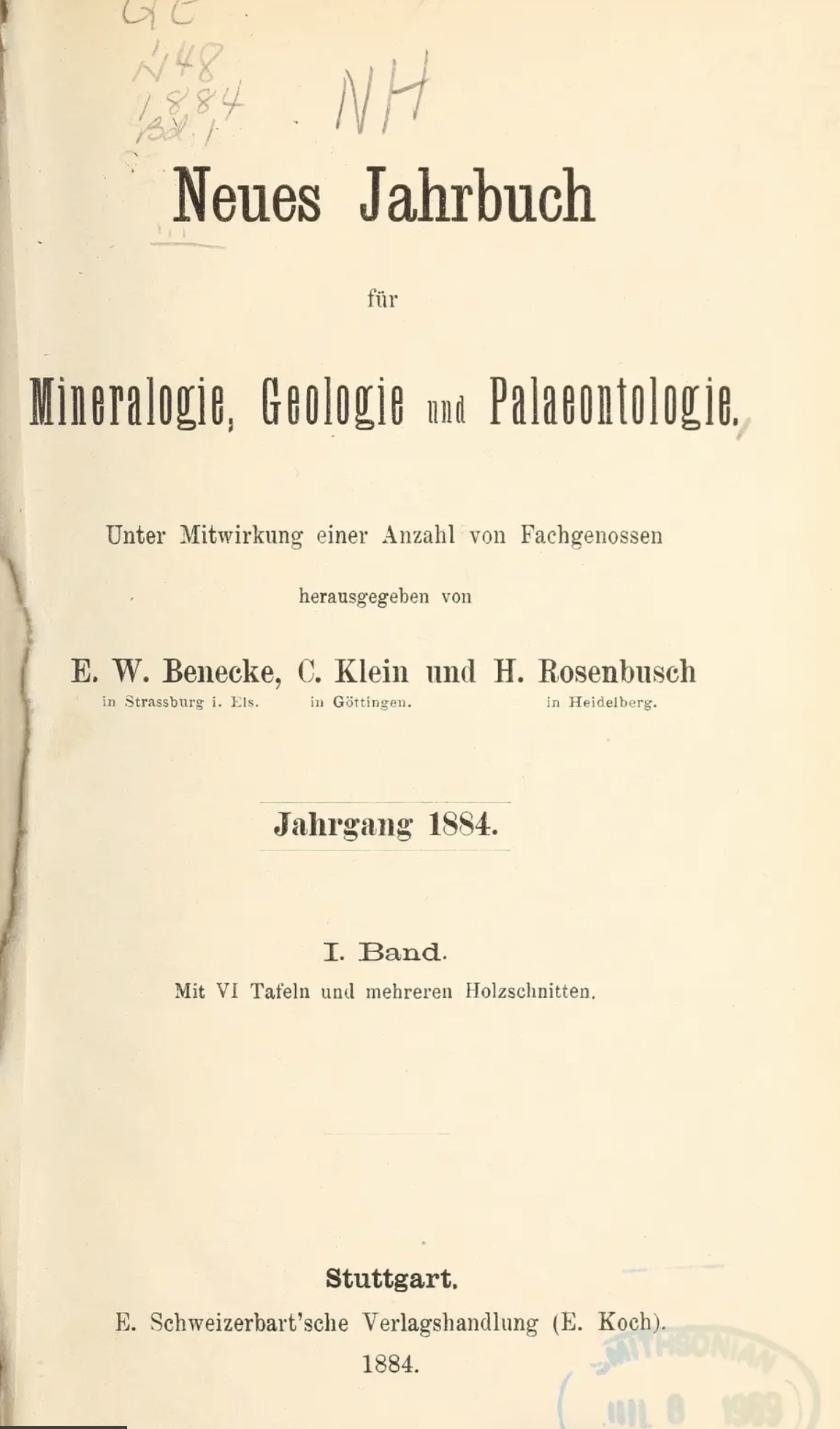
Über Euklas, Topas, Diamant und Pyrrhotin aus Brasilien
On euclase, topaz, diamond and pyrrhotite from Brazil
Journal Article
Kenngott, A. (1884) Über Euklas, Topas, Diamant und Pyrrhotin aus Brasilien. [On euclase, topaz, diamond and pyrrhotite from Brazil] Neues Jahrbuch für Mineralogie, Geologie und Paläontologie, Pt. 1, pp. 187–191.
Record No. 29374  |  Sinkankas/Born No.: NIS/NIB  |  Language: in German  |  RWHL
Kenngott discusses specimens of euclase, topaz, diamond, and pyrrhotite from Brazil, describing their mineralogical and crystallographic characteristics. He records observations on crystal form, physical properties, and associations, with particular attention to features useful in characterizing the Brazilian specimens. The paper contributes to nineteenth-century knowledge of Brazil’s rich mineral resources and is of gemological interest for its treatment of three important Brazilian gem minerals—euclase, topaz, and diamond.

The Catechism of John Hamilton, Archbishop of St. Andrews, 1552
Book
Hamilton, J. and Law, T.G. (1884) The Catechism of John Hamilton, Archbishop of St. Andrews, 1552. Oxford, Clarendon Press, 312 pp.
Record No. 5232  |  Sinkankas/Born No.: NIS/NIB  |  RWHL
Hamilton’s Catechism, originally printed in 1552 and here reprinted with an introduction by Thomas Graves Law, is a vernacular exposition of Roman Catholic doctrine prepared for the instruction of clergy and laity in Scotland immediately before the Reformation. It explains the Creed, sacraments, Ten Commandments, prayer, Christian conduct, and related matters of faith and practice. The work is primarily theological rather than mineralogical or gemological; its relevance to gemstone research lies in a passing reference on p. 28, preserved within a valuable sixteenth-century Scottish text and made accessible through Law’s nineteenth-century scholarly edition.

Inscriptions de l'oracle de dodone et pierre gravée (communication faite a l'académie des inscriptions)
Journal Article
Carapanos, C. (1883) Inscriptions de l'oracle de dodone et pierre gravée (communication faite a l'académie des inscriptions). Revue Archéologique, Vol. 2, July–December, pp. 354–358.
Record No. 28874  |  ISBN/ISSN: 00350737, 21043868  |  Sinkankas/Born No.: NIS/NIB  |  RWHL
Carapanos discusses inscriptions associated with the ancient oracle of Dodona and an engraved stone, in a communication presented to the Académie des Inscriptions. He describes and interprets the inscriptions and considers their archaeological and historical significance in relation to the sanctuary and its practices. The engraved stone is examined as part of this material, with attention to its inscription and iconography. The paper contributes to the documentation and interpretation of finds from Dodona and is of gemological interest for its treatment of an ancient engraved gem.

Brockhaus' conversations-lexikon. Allgemeine deutsche real-encyklopädie
Brockhaus' conversation dictionary. General German real encyclopedia
Book
Brockhaus, F.A. (1883) Brockhaus' conversations-lexikon. Allgemeine deutsche real-encyklopädie. [Brockhaus' conversation dictionary. General German real encyclopedia] Leipzig, F.A. Brockhaus, 948 pp.
Record No. 8080  |  Sinkankas/Born No.: NIS/NIB  |  Language: in German  |  RWHL
Brockhaus’ Conversations-Lexikon is a general German-language encyclopedia covering geography, history, biography, science, technology, literature, art, politics, and other fields of contemporary knowledge. Its mineralogical entries include descriptions of minerals and gemstones, their physical properties, composition, occurrence, uses, and terminology, reflecting late nineteenth-century scientific understanding. Entries relating to precious stones and ornamental materials provide a useful contemporary reference for German gemological and mineralogical nomenclature and for prevailing knowledge of their sources and characteristics.

Die Imitationen

The Imitations
Book
Lebner, S. (1883) Die Imitationen. [The Imitations] Leipzig, A. Hartleben's Verlag, 256 pp.
Record No. 3281  |  Sinkankas/Born No.: NIS/NIB  |  Language: in German  |  RWHL
Lebner discusses the manufacture of imitations and substitutes for natural and manufactured products, including materials intended to resemble precious stones and other ornamental substances. The work describes contemporary methods, materials, and recipes used to reproduce the appearance of valuable natural products, with attention to coloring, transparency, surface treatment, and other techniques employed in imitation. Of gemological interest are the sections dealing with artificial and imitation gemstones, which provide evidence for the materials and manufacturing practices available in the late nineteenth century and for the contemporary problems of distinguishing such products from natural gems.

Building a Gemological Library

Gemological books range from general identification manuals and textbooks to specialized works on individual gems, mineralogy, jewelry, treatments, synthesis, history and gem-producing regions.

For a curated selection of particularly useful books, read The Gemologist's Core Library — Classic Books on Gemology, Jewelry and Mineralogy.

About Four Treasures

Four Treasures is Lotus Gemology's freely accessible gemological reference database. Use the full database to search by author, title or keyword and explore literature on gemology, mineralogy, jewelry and related fields. Where available, hyperlinks on titles may lead directly to the full publication.

Search the Complete Four Treasures Database