Gemology Books Bibliography

Gemology Books Bibliography

Explore books on gems, gemology, jewelry and mineralogy in Four Treasures, the Lotus Gemology reference database. This bibliography brings together matching book records from the collection, with publication details, abstracts and cover images where available.

Gemology Book References

The list below matches books concerning gemology and related subjects in the database's searchable fields. Some works cover several branches of gems, jewelry or mineralogy.
3,101–3,120 of 3,451 matching references

De proprietatibus ac virtutibus medicis animalium, plantarum ac gemmarum, tractatus triplex, auctore Habdarrahmano Asiutensi Aegyptio, nunc primum ex arabico idiomate latinitate donatus ab Abrahamo Ecchellensi Maronita,… Ex MS Codice Bibliothecae Eminentissimi Cardinalis Mazarini
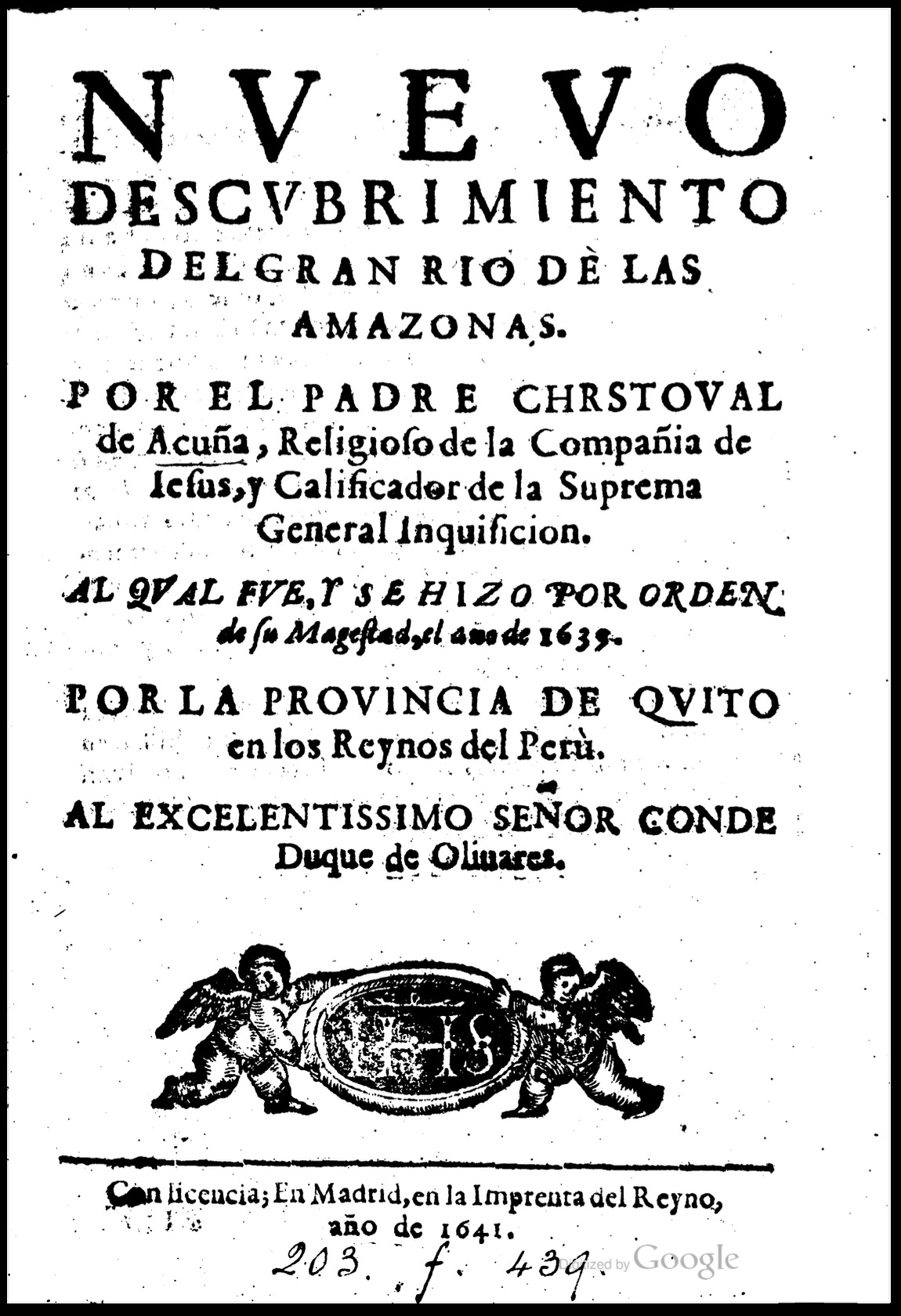
On the properties and medicinal virtues of animals, plants, and gems, a triple treatise, authored by Habdarrahmano Asiutensi Aegyptio, now first translated from the Arabic language into Latin by Abrahamo Ecchellensi Maronita,... From the manuscript of the Library of the Most Eminent Cardinal Mazarini
Book
Habdarrahmano [Abd al-Rahman ibn Abi Bakr Galal al-Din al-Suyuti] (1644) De proprietatibus ac virtutibus medicis animalium, plantarum ac gemmarum, tractatus triplex, auctore Habdarrahmano Asiutensi Aegyptio, nunc primum ex arabico idiomate latinitate donatus ab Abrahamo Ecchellensi Maronita,… Ex MS Codice Bibliothecae Eminentissimi Cardinalis Mazarini. [On the properties and medicinal virtues of animals, plants, and gems, a triple treatise, authored by Habdarrahmano Asiutensi Aegyptio, now first translated from the Arabic language into Latin by Abrahamo Ecchellensi Maronita,... From the manuscript of the Library of the Most Eminent Cardinal Mazarini] Paris, Sebastianum Cramoisy, 179 pp.
Record No. 7525  |  Sinkankas/Born No.: NIS/NIB  |  RWHL
A Latin translation by the Maronite scholar Abraham Ecchellensis of an Arabic work attributed to Jalāl al-Dīn al-Suyūṭī, drawn from a manuscript in Cardinal Mazarin’s library. The treatise is divided into three parts dealing with the properties and medicinal virtues of animals, plants, and gemstones. Of particular gemological interest is the section on gems, which records their names, characteristics, and supposed therapeutic and other virtues, preserving elements of the Arabic-Islamic lapidary and medical traditions and making them accessible to seventeenth-century European readers.

Nuevo descubrimiento del gran rio de las Amazonas
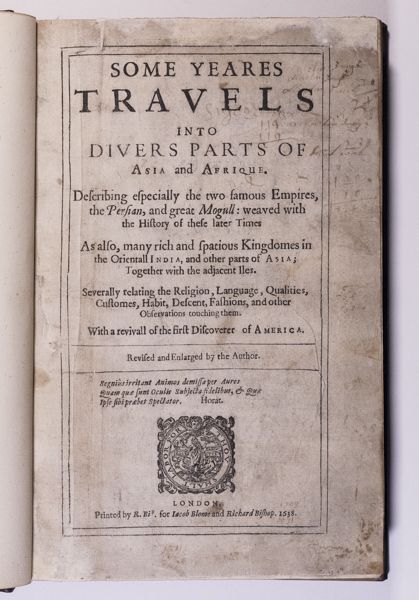
New discovery of the great Amazon River
Book
Acuña, C., de (1641) Nuevo descubrimiento del gran rio de las Amazonas. [New discovery of the great Amazon River] Madrid, Imprenta del Reyno, 92 pp.
Record No. 7500  |  Sinkankas/Born No.: NIS/NIB  |  Language: in Spanish  |  RWHL
A firsthand account of the 1639 expedition down the Amazon River by the Jesuit Cristóbal de Acuña, providing one of the earliest detailed European descriptions of the river and its surrounding lands. Acuña records the geography, tributaries, Indigenous peoples, settlements, customs, trade, natural products, and resources encountered along the route. Of particular gemological interest are reports of gold, silver, and precious stones said to occur in the Amazonian interior, reflecting early colonial interest in the mineral wealth of the region and the continuing search for rich sources of precious materials in South America.

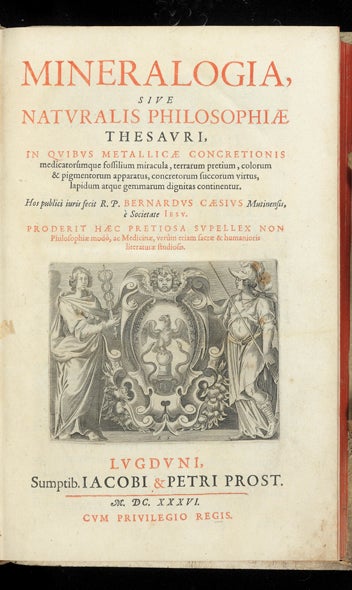
Some Yeares Travels into Divers Parts of Asia and Afrique
Book
Herbert, T. (1638) Some Yeares Travels into Divers Parts of Asia and Afrique. London, Jacob Blome & Richard Bishop
Record No. 2787  |  Sinkankas/Born No.: NIS/NIB  |  RWHL
A travel narrative by Sir Thomas Herbert describing journeys through parts of Persia, India, the Middle East, and Africa during the early seventeenth century. Herbert combines firsthand observations with historical, geographical, ethnographic, and natural-history information on the regions he visited, including cities, peoples, customs, trade, plants, animals, and natural resources. Of particular gemological interest are his references to pearls, precious stones, mines, and luxury commodities encountered in Persia and India, making the work a useful early English source on the gem trade and material wealth of Asia.

Mineralogia, sive Naturalis Philosophiae Thesauri, in quibus Metallicae Concretionis medicatorúmque fossilium miracula, terrarum pretium, colorum & pigmentorum apparatus, concretorum succorum virtus, lapidum atque gemmarum dignitas continentur
Mineralogy, or the Treasures of Natural Philosophy, in which are contained the marvels of metallic concretions and medicating fossils, the value of lands, the arrangement of colors and pigments, the power of concreted juices, and the worth of stones and gems
Book
Caesius, B. (1636) Mineralogia, sive Naturalis Philosophiae Thesauri, in quibus Metallicae Concretionis medicatorúmque fossilium miracula, terrarum pretium, colorum & pigmentorum apparatus, concretorum succorum virtus, lapidum atque gemmarum dignitas continentur. [Mineralogy, or the Treasures of Natural Philosophy, in which are contained the marvels of metallic concretions and medicating fossils, the value of lands, the arrangement of colors and pigments, the power of concreted juices, and the worth of stones and gems] Lugduni, Iacoi & Petri Prost, 626 pp.
Record No. 7506  |  Sinkankas/Born No.: 1221  |  Language: in Latin  |  RWHL
Schuh: Very scarce. Compendium of all the author ever discovered or read about the subject of mineralogy. It was published posthumously from notes he left by his Order at Lyon six years after his death. Printed in a double column format in a relatively small type-size, the work is a vast storehouse of all things mineralogical, including new ideas, restatements of earlier authors, observations and superstitious belief. The uncritical selection of material led Webster in his Metallographia (London, 1671, p. 29) to criticize the author as too digressive and as mixing tares with the wheat. Partington thinks the use of the term ‘Mineralogia’ in the title is the first modern usage of the word… The work opens by listing the evils and benefits of mineralogy. Mining is considered dangerous because of the lurking underground spirits…the author notes that the study of mineralogy helps one to understand the bible. It provides medicines and money, ornaments for religious purposes, tools used in agriculture, industry, painting, music and alchemy. Cesi then answers the question he posed earlier and declares mineralogy to be a true philosophy, worthy of careful study… The numerous citations to earlier authors provide evidence of Cesi’s wide reading. Commonly, many authors are referenced on single points. For example, in describing the generation of minerals he closely follows Aristotle but also cites Theophrastus, Avicenna, Albertus Magnus, Agricola, Gregorius Reisch, Pliny, Boodt, Francis Rueus, Marbode, the Bible, and numerous church fathers. The author is uncritical of the views he presents, and accepts the authority of the ancient and medieval authors as his own. He believes that the Sun, Moon and stars influence the subterranean world of minerals and metals, and that gems have miraculous curative powers. He includes a chapter on the magnet… Cesi divides his work into five sections: the first treats mineralogy proper, the second the economic and commercial aspects, for example colors and pigments, the third, lapidifying juices of the earth that congeal into minerals, the fourth gems and the fifth metals. At the conclusion is a long and thankfully comprehensive index. Much insight about ancient philosophy and its affect in the 17th century can be gained from studying Cesi’s Mineralogia.”–Schuh, Mineralogy & Crystallography: A Biobibliography, 1469 to 1920, pp. 358-59.

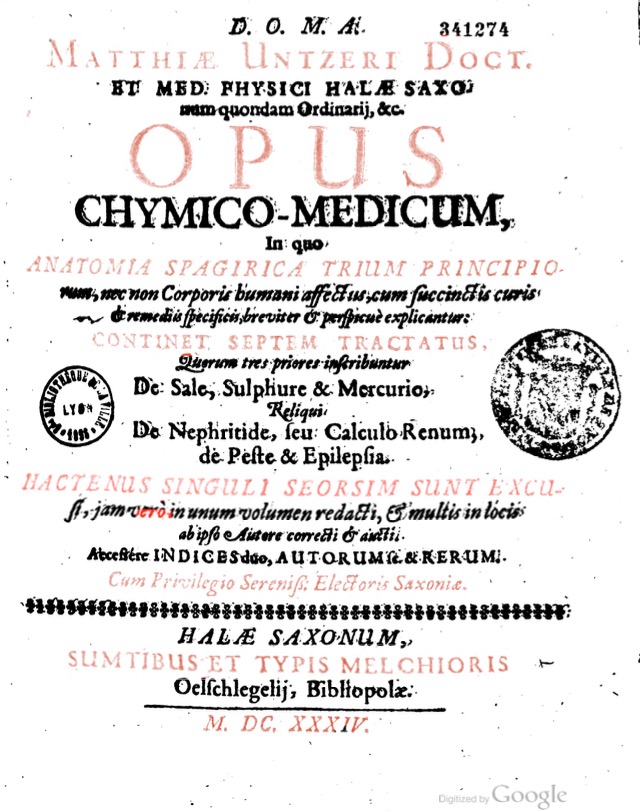
Opus chymico-medicum, continens tractatus septem, de sale, mercurio, nephrite, duplices de peste et epilepsia
Chemical-Medical Work, Containing Seven Treatises, on Salt, Mercury, Nephrite, Doubles on Plague and Epilepsy
Book
Untzer, M. (1634) Opus chymico-medicum, continens tractatus septem, de sale, mercurio, nephrite, duplices de peste et epilepsia. [Chemical-Medical Work, Containing Seven Treatises, on Salt, Mercury, Nephrite, Doubles on Plague and Epilepsy] Halæ Saxonum, Oelschlegelij, 2511 pp.
Record No. 7552  |  Sinkankas/Born No.: NIS/NIB  |  Language: in Latin  |  RWHL
A collection of seven chemical-medical treatises by Matthias Untzer, combining Paracelsian medicine, pharmacy, and early chemistry. Separate sections deal with salt, mercury, plague, epilepsy, and other medical subjects, including a treatise devoted specifically to nephrite and its therapeutic properties. Of particular gemological interest is this discussion of the lapis nephriticus (nephrite or “kidney stone”), whose supposed ability to prevent or cure kidney and urinary disorders—especially when worn against the body—gave rise to the European name nephrite. The work is an important early seventeenth-century source for the medicinal use and reputation of jade in Europe.

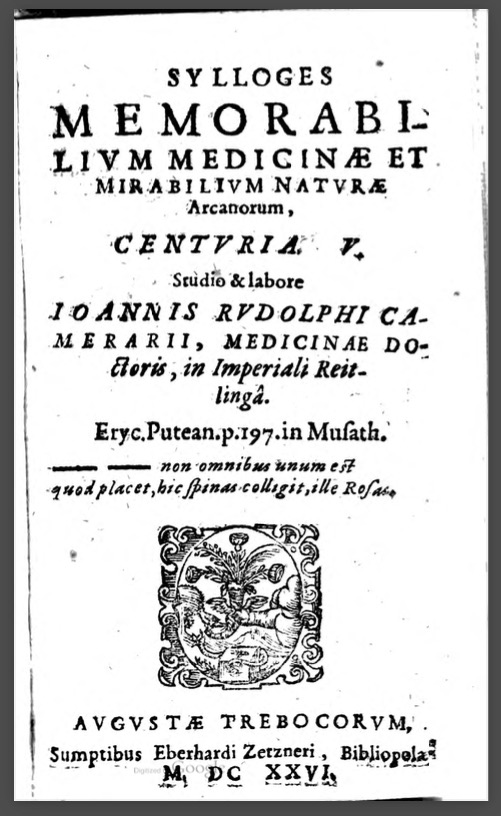
Sylloges Memorabilium Medicinae Et Mirabilium Naturae Arcanorum, Centuriae
Collections of Memorable Medical and Natural Marvels, Centuries
Book
Camerarius, J.R. (1626, 1683) Sylloges Memorabilium Medicinae Et Mirabilium Naturae Arcanorum, Centuriae. [Collections of Memorable Medical and Natural Marvels, Centuries], Cotta, 746 pp.
Record No. 7507  |  Language: in Latin  |  RWHL
A collection of medical observations, unusual cures, natural phenomena, and marvels compiled by Joachim Camerarius the Younger, arranged in “centuries,” or groups of one hundred accounts. Drawing upon medical experience, correspondence, earlier authorities, and reports of remarkable occurrences, the work ranges across medicine, pharmacology, natural history, and the mirabilia tradition. Of particular gemological interest are discussions of stones, minerals, and other unusual natural substances, including their supposed medicinal and occult properties, reflecting the close relationship between medicine, natural history, and lapidary lore in the seventeenth century.

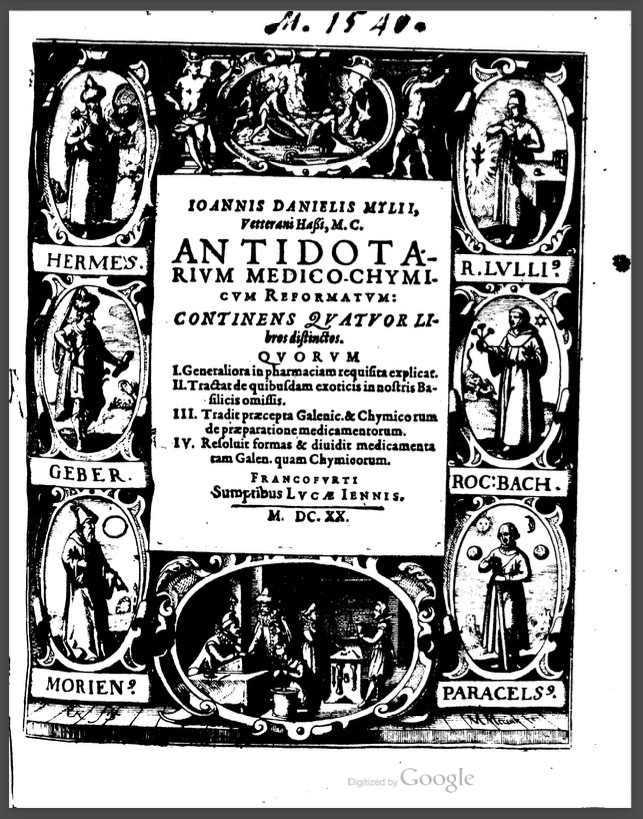
Antidotarium medico-chymicum reformatum
Reformed Medicinal-Chemical Antidotary
Book
Mylius, J.D. (1620) Antidotarium medico-chymicum reformatum. [Reformed Medicinal-Chemical Antidotary] Francof, Jennis, 1044 pp.
Record No. 7536  |  Sinkankas/Born No.: NIS/NIB  |  Language: in Latin  |  RWHL
A substantial medico-chemical pharmacopoeia by Johann Daniel Mylius, presenting the preparation and use of remedies within the Paracelsian and early chemical-medical tradition. The work describes numerous medicines derived from plants, animals, metals, minerals, and other substances, together with methods of distillation, extraction, purification, and chemical preparation. Of particular gemological interest are preparations involving precious stones, minerals, and metals and their supposed medicinal virtues, illustrating the continued incorporation of gems into seventeenth-century pharmaceutical and alchemical practice.

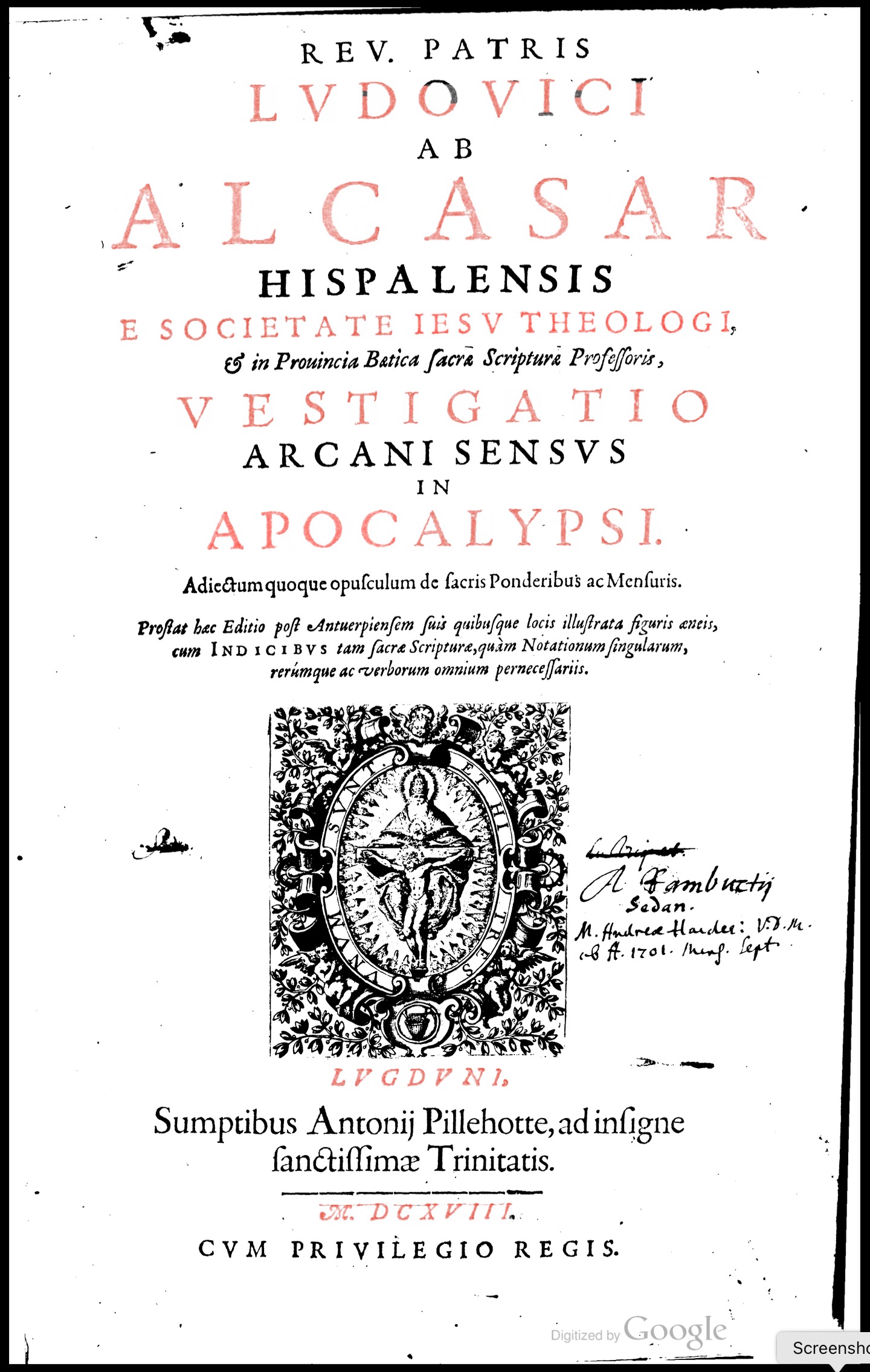
Vestigatio arcani sensus in Apocalypsi
Investigation of the hidden meaning in the Apocalypse
Book
Alcázar, L. (1618) Vestigatio arcani sensus in Apocalypsi. [Investigation of the hidden meaning in the Apocalypse], Antonij Pillehotte, 778, 74 pp.
Record No. 7502  |  Sinkankas/Born No.: NIS/NIB  |  Language: in Latin  |  RWHL
A substantial Jesuit commentary on the Book of Revelation by Luis del Alcázar, devoted to uncovering its hidden or allegorical meaning through detailed analysis of its imagery, symbols, and biblical context. Alcázar interprets the Apocalypse largely in relation to the historical development of the Church rather than as a prediction of distant future events. Of particular gemological interest is his treatment of the precious stones of the foundations of the New Jerusalem in Revelation 21, discussing their identities and symbolic meanings within Christian exegetical and lapidary traditions.

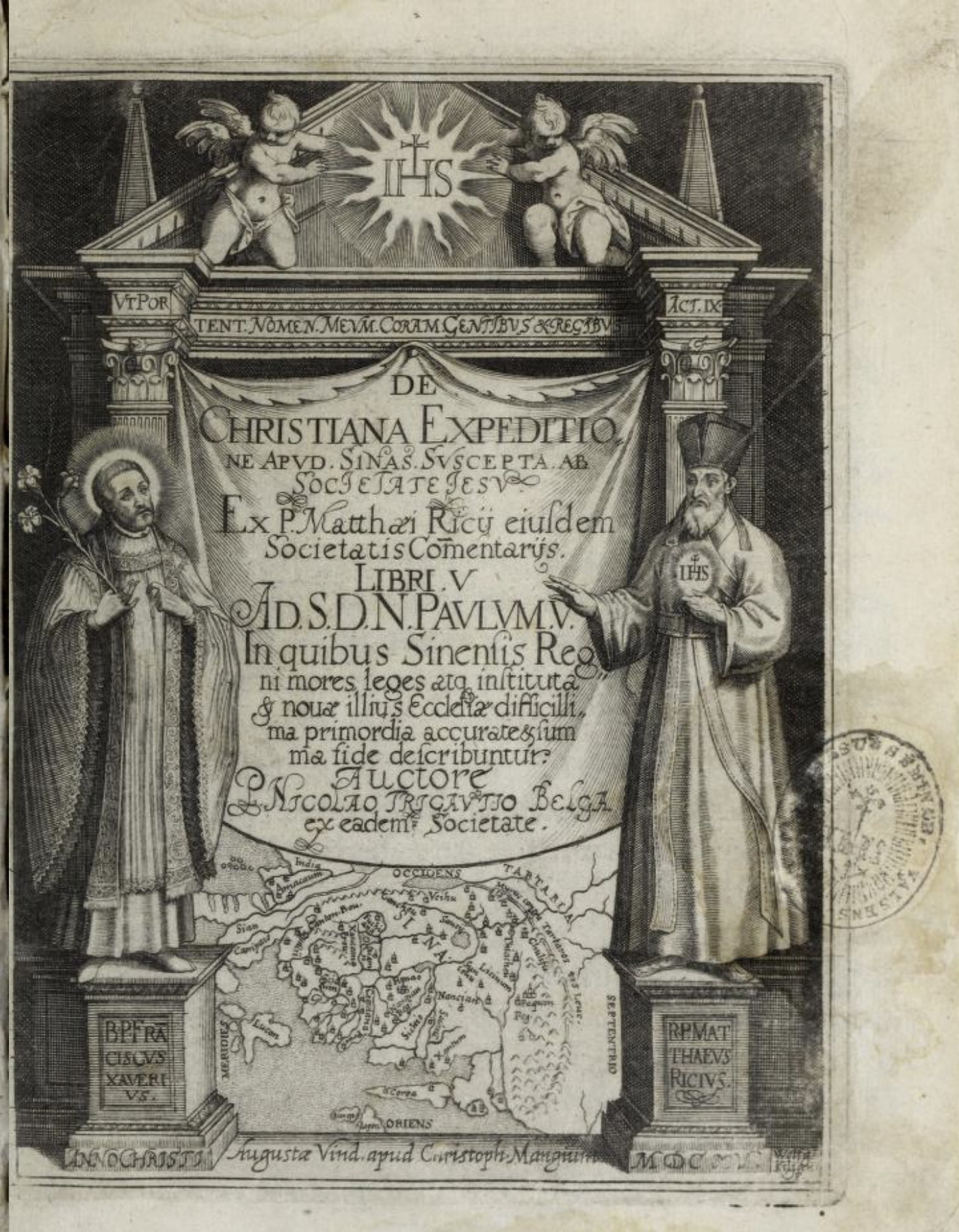
De Christiana expeditione apud Sinas

On the Christian Expedition to China
Book
Trigault, N. (1616) De Christiana expeditione apud Sinas. [On the Christian Expedition to China], 716 pp.
Record No. 6874  |  Sinkankas/Born No.: NIS/NIB  |  Language: in Latin  |  RWHL
Nicolas Trigault’s De Christiana expeditione apud Sinas is the influential Latin account of the Jesuit mission to China, based largely on the journals and papers of Matteo Ricci and first published at Augsburg in 1615. Trigault describes the establishment and progress of the mission, together with extensive observations on Ming China, including its geography, government, social hierarchy, religion, education, customs, cities, commerce, manufactures, and natural products. Of particular interest to historians of gemology and material culture are references to jade, precious stones, pearls, gold, silver, and other valued substances, as well as Chinese luxury goods and their uses and trade. The work played a major role in introducing European readers to contemporary China and remains an important early European source for Chinese material culture and natural resources during the late Ming period. The book recounts the establishment of the Jesuit mission in China in the late 1500s led by Matteo Ricci. When Ricci predicted a solar eclipse in 1592 with greater accuracy than the astronomers of the Chinese court, Emperor Wan-li invited Ricci to Beijing. In Beijing, Ricci translated Euclid and other works into Chinese, and created a map of the world in Chinese. There is a brief mention of jade trading in the kingdom of Cascar (northwest of Yarkand).

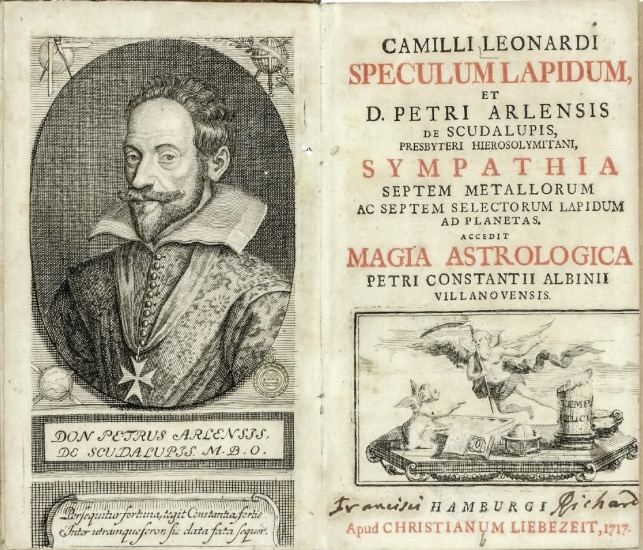
Sympathia septem metallorum, ac septem selectorum lapidum ad planeta
The sympathy of the seven metals and the seven chosen stones with the planets
Book
Petrus, A.d.S. (1610) Sympathia septem metallorum, ac septem selectorum lapidum ad planeta. [The sympathy of the seven metals and the seven chosen stones with the planets] Paris, Charles Sevestre and David Gill, 499 pp.
Record No. 10935  |  Sinkankas/Born No.: 5109; NIB  |  Language: in Latin  |  RWHL
An astrological and medico-alchemical treatise examining the supposed correspondences between the seven classical planets, the seven metals, and seven selected precious stones. Petrus discusses the “sympathies” linking celestial bodies with terrestrial substances and the influences these relationships were believed to exert upon their properties and medicinal or occult virtues. Of particular gemological interest is its treatment of gemstones within the early seventeenth-century tradition of planetary lapidaries, in which particular stones were associated with planets and credited with therapeutic, protective, or talismanic powers.

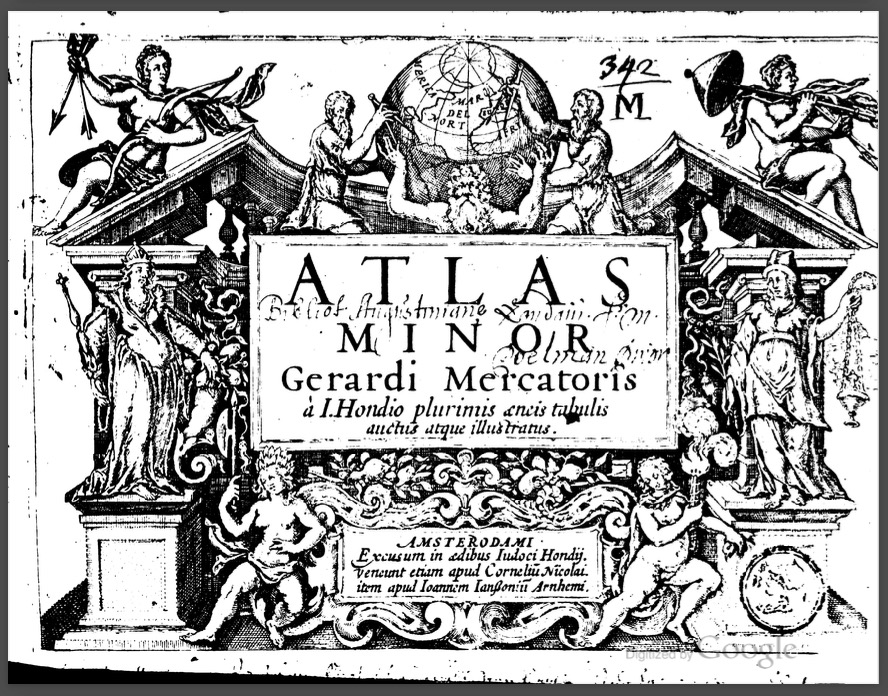
Atlas minor Gerardi Mercatoris

Gerardus Mercator's Minor Atlas
Book
Mercator, G. and Hondius, J. (1610) Atlas minor Gerardi Mercatoris. [Gerardus Mercator's Minor Atlas] Amsterdam, 684 pp.
Record No. 7534  |  Language: in Latin  |  RWHL
A reduced-format edition of Gerard Mercator’s celebrated atlas, edited and expanded by Jodocus Hondius, designed to make Mercator’s geographical work available in a more compact and accessible form. The volume contains maps and accompanying geographical descriptions of Europe, Asia, Africa, and the Americas, discussing countries, cities, peoples, natural resources, and commerce. Of particular gemological interest are references to regions associated with gold, silver, pearls, precious stones, and other valuable commodities, reflecting early seventeenth-century European knowledge of the geographical sources and trade of gems and precious materials.

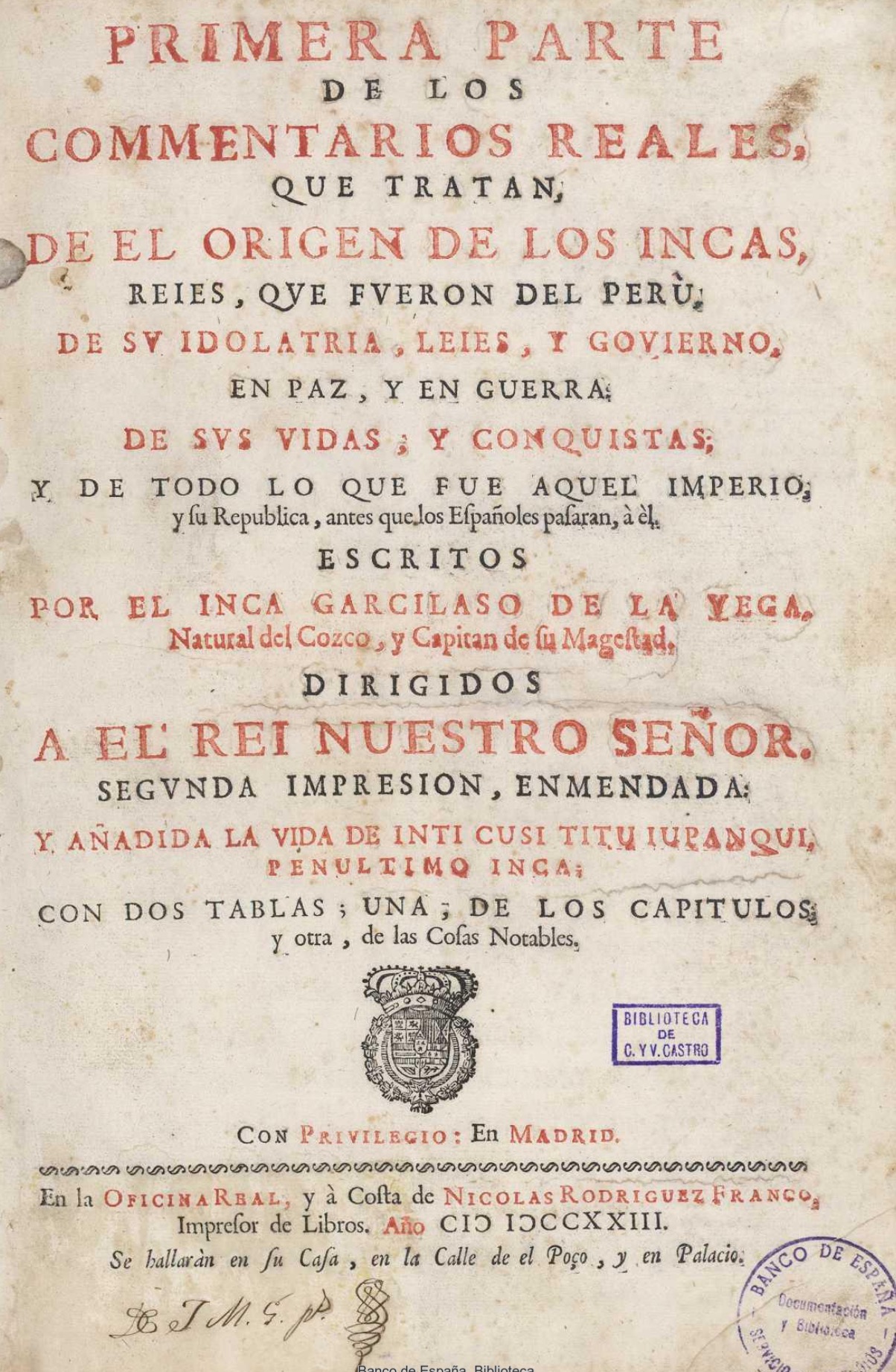
Comentarios Reales de los Incas

Real Comments of the Incas
Book
Garcilaso de la Vega (1609, 1617) Comentarios Reales de los Incas. [Real Comments of the Incas] Lisboa, Pedro Crasbeeck
Record No. 7523  |  Sinkankas/Born No.: NIS/NIB  |  Language: in Spanish  |  RWHL
A major account of Inca history and culture by Garcilaso de la Vega, “El Inca,” the son of a Spanish conquistador and an Inca noblewoman. Published in two parts, the first in 1609 and the second posthumously in 1617, the work describes Inca origins, rulers, religion, government, customs, conquests, agriculture, architecture, and material culture, drawing upon Garcilaso’s childhood memories, Indigenous oral traditions, and Spanish chronicles. Of particular gemological interest are accounts of Inca gold and silver, precious and ornamental stones, jewelry, ritual objects, temple treasures, mining, and the symbolic and economic uses of valuable materials in the Andean world.

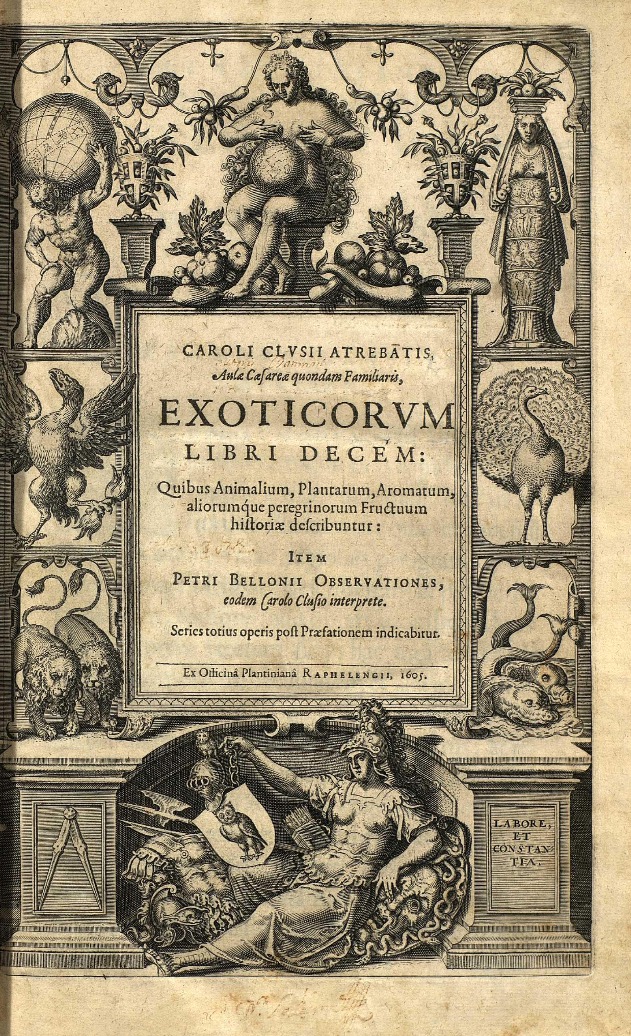
Exoticorum Libri Decem

Ten Books on Exotic Things
Book
Clusius, C., de (1605) Exoticorum Libri Decem. [Ten Books on Exotic Things] Lugdunum Batavorum, Ex Officinâ Plantinianâ Raphelengii, 821 pp.
Record No. 7064  |  Sinkankas/Born No.: NIS/NIB  |  Language: in Latin  |  RWHL
A major natural-history compendium by Carolus Clusius (Charles de l’Écluse), devoted to exotic natural products reaching Europe from Asia, Africa, and the Americas. Arranged in ten books, it describes and illustrates unfamiliar plants, animals, shells, stones, and other natural substances, drawing upon specimens, travelers’ reports, correspondence, and earlier publications. Of particular gemological interest are discussions of precious and ornamental stones and other mineral substances, including their names, appearance, geographic origins, reputed properties, and uses. The work is an important early source for the transmission of knowledge about exotic gems and natural materials into European natural history during the Age of Exploration.

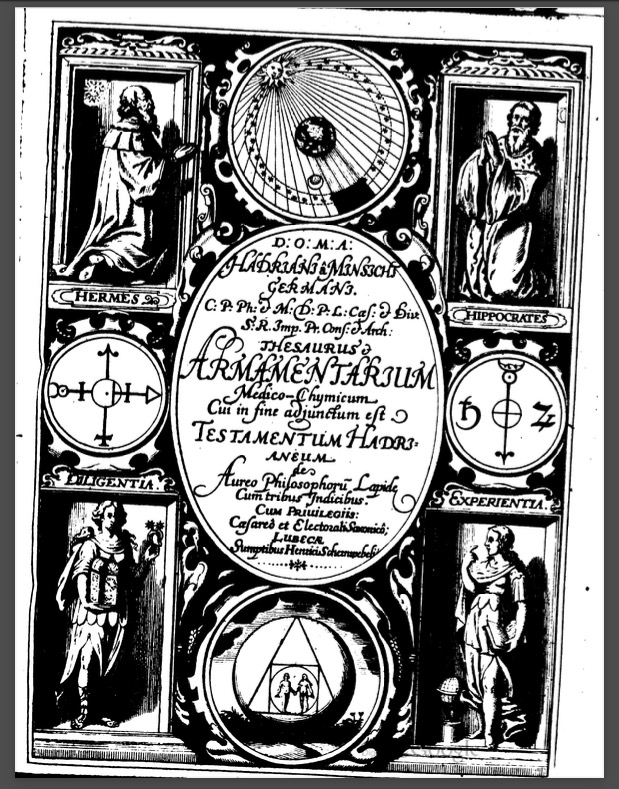
Hadriani a Mynsicht alias Tribudenii…” Thesaurus Et Armamentarium Medico-Chymicum: Hoc est Selectißimorum, contra quosuis morbos, pharmacorum conficiendorum secretissima ratio : Propria laborum experienta, multiplici & felicissima praxi confirmata… Cui In Fine Adiunctum Est Testamentum Hadrianeum De Aureo Philosophorum Lapide
Hadrianus of Mynsicht, also known as Tribudenius, ...” Medical-Chemical Treasury and Armamentarium: Namely the Most Select, secret method of preparing remedies against any disease : Confirmed by our own laborious experience, and by manifold and most successful practice ... To Which is Added at the End Hadrian's Testament Concerning the Golden Stone of the Philosophers.
Book
Mynsicht, A., von (1603–1638) Hadriani a Mynsicht alias Tribudenii…” Thesaurus Et Armamentarium Medico-Chymicum: Hoc est Selectißimorum, contra quosuis morbos, pharmacorum conficiendorum secretissima ratio : Propria laborum experienta, multiplici & felicissima praxi confirmata… Cui In Fine Adiunctum Est Testamentum Hadrianeum De Aureo Philosophorum Lapide. [Hadrianus of Mynsicht, also known as Tribudenius, ...” Medical-Chemical Treasury and Armamentarium: Namely the Most Select, secret method of preparing remedies against any disease : Confirmed by our own laborious experience, and by manifold and most successful practice ... To Which is Added at the End Hadrian's Testament Concerning the Golden Stone of the Philosophers.] Lubecae, Sumptibus Henrici Schernwebelii, 525 pp.
Record No. 7537  |  Sinkankas/Born No.: NIS/NIB  |  Language: in Latin  |  RWHL
A substantial medico-chemical and pharmaceutical compendium by Adrian von Mynsicht (Hadrianus a Mynsicht), presenting preparations and secret remedies for a wide range of diseases based on the author’s chemical experiments and medical practice. The work belongs to the Paracelsian tradition, combining pharmacy, medicine, alchemy, and early chemistry and describing numerous preparations made from vegetable, animal, and mineral substances. Of particular gemological interest is its treatment of minerals, metals, and stones as ingredients in medicines and chemical preparations. The volume concludes with the Testamentum Hadrianeum de Aureo Philosophorum Lapide, an alchemical treatise concerning the philosophers’ stone and the transmutation and perfection of metals.

Wide Collections, Part 1

广志绎
Book
Wang, S. (1597) Wide Collections, Part 1. [广志绎]
Record No. 16778  |  Sinkankas/Born No.: NIS/NIB  |  Language: in Chinese  |  RWHL
Wang Shixing’s Guang Zhi Yi [廣志繹; Expanded Interpretations of the Gazetteers] is a geographical and ethnographic work based substantially on the author’s extensive travels as a Ming official. It records observations on different regions of China, their landscapes, populations, customs, products, commerce, agriculture, and natural resources, rather than relying solely on earlier geographical literature. Of particular interest to gemological and mineralogical history are its notices of regional products and valuable natural materials, including jade and other stones, and the commercial routes by which such materials circulated. Its observations provide useful evidence for the geography of resources and commodity trade in late Ming China. Volume 5 contains accounts of the Burmese invasions into Yunnan in the late 16th century and of Wang's advice for mobilizing troops and provisions to counter the invasion. Mention is also made of amber and gems in Mongmit and of a Ming delegation to the capital of the Toungoo dynasty (old Pegu). Prefaced in 1597. Wang Shixing was a military general whose troops were stationed in Lancang in southwestern Yunnan, near the Burmese border. His record is considered very reliable.

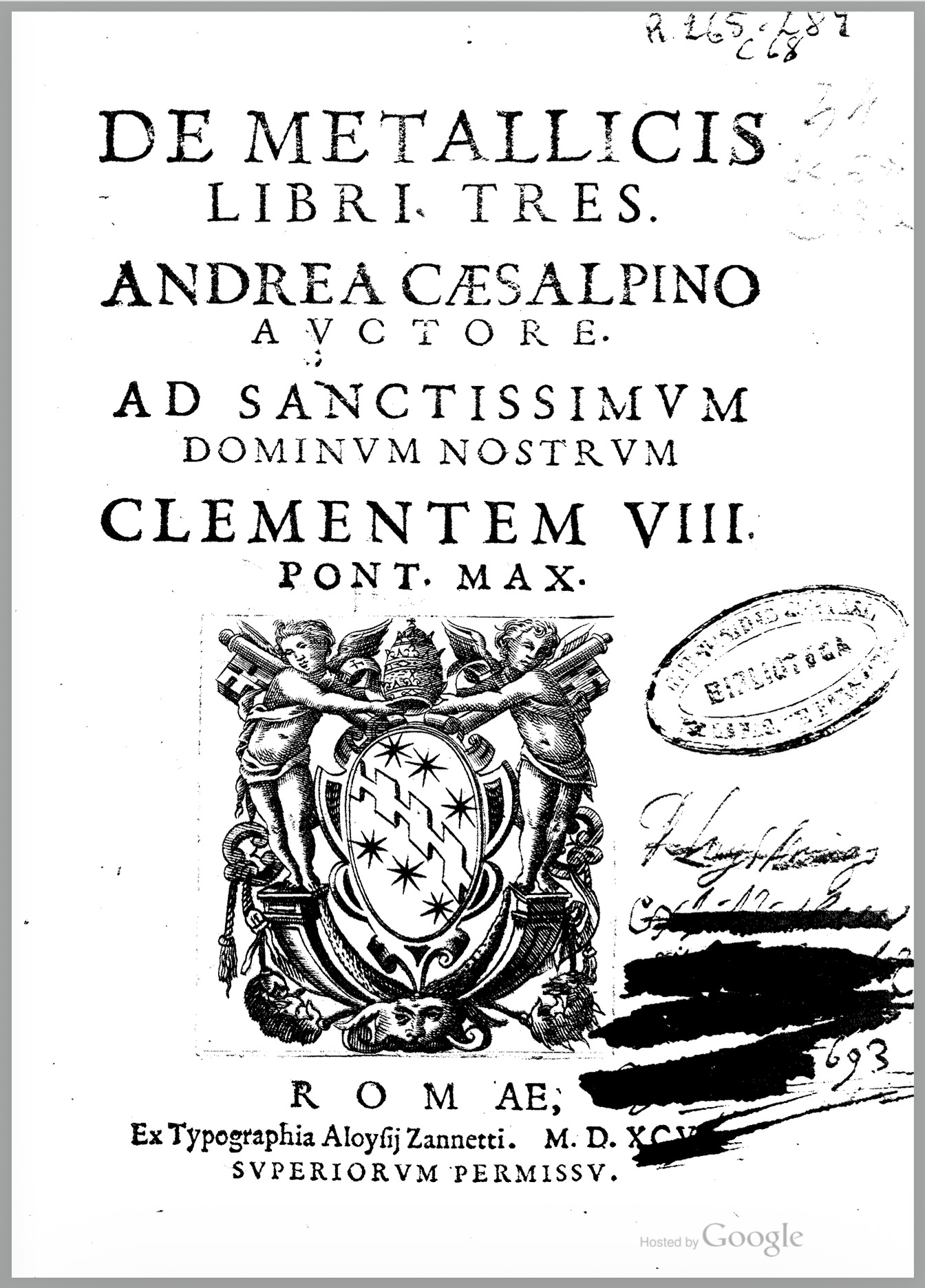
De metallicis libri tres

Three Books on Metals
Book
Cesalpino, A. (1596) De metallicis libri tres. [Three Books on Metals] Rome, ex typographia Aloysii Zanetti, 222 pp.
Record No. 29447  |  Sinkankas/Born No.: 1218–1219 (not seen); NIB  |  Language: in Latin  |  RWHL
Andrea Cesalpino’s De metallicis libri tres is a late sixteenth-century treatise on minerals, metals, stones, and related substances, organized into three books. Cesalpino attempts a systematic classification of mineral bodies according to their observable properties and modes of formation, discussing metals, metallic minerals, earths, salts, stones, and precious stones within an Aristotelian framework. He considers such characteristics as color, transparency, hardness, density, cleavage, and response to heat, together with the geological environments in which mineral substances occur. Precious and ornamental stones receive significant attention, including diamond, ruby, sapphire, emerald, topaz, garnet, amethyst, opal, and others. The work is an important early contribution to systematic mineralogy, notable for its effort to classify minerals through physical characteristics and natural relationships rather than solely through their medicinal or magical properties.

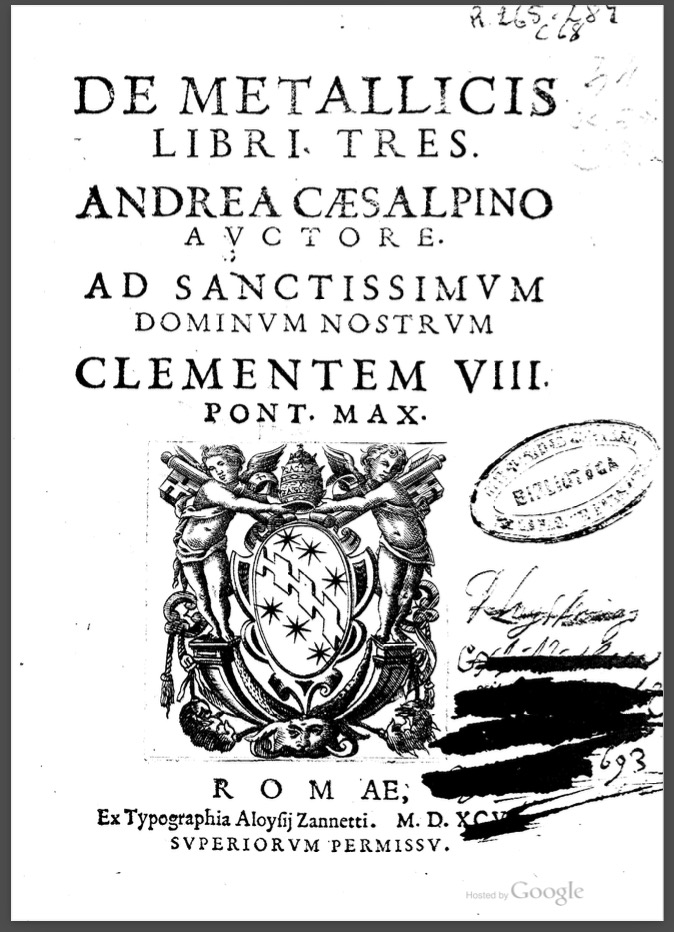
De metallicis libri tres

Three Books on Metals
Book
Cesalpinus, A. (1596) De metallicis libri tres. [Three Books on Metals] Rome, ex typographia Aloysii Zanetti, 222 pp.
Record No. 7509  |  Sinkankas/Born No.: NIS/NIB  |  Language: in Latin  |  RWHL
An important early systematic treatise on minerals and metals by the Italian physician and naturalist Andrea Cesalpino, arranged in three books. Cesalpino discusses the origins, formation, classification, physical properties, and varieties of mineral substances, drawing upon classical authorities while attempting to organize them according to observable characteristics. The work treats metals, ores, earths, stones, and precious stones and is particularly significant in the history of mineralogy for its attempt to develop a coherent classification of mineral substances before the emergence of modern chemical mineralogy.

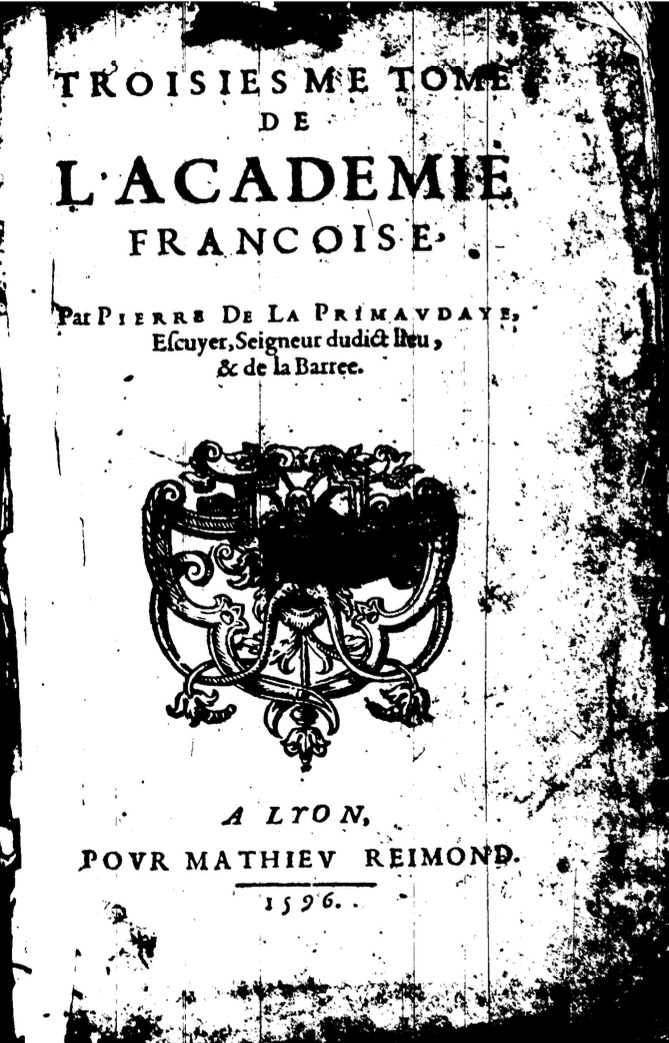
De l’Académie Française

Of the Académie Française
Book
Primaudaye, P., de la, (1590) De l’Académie Française. [Of the Académie Française] Paris, Guillaume Chaudiere, Vol. 3 , 326 pp.
Record No. 17084  |  Sinkankas/Born No.: NIS/NIB  |  Language: in French  |  RWHL
The third volume of La Primaudaye’s encyclopedic Académie Française, presenting philosophical and moral discussions of the natural world, humanity, and divine creation. Written in the form of learned discourses, it draws upon classical, biblical, and contemporary authorities to examine natural phenomena and the properties of animals, plants, metals, minerals, and stones. Of particular gemological interest are discussions of precious stones, their origins, colors, physical properties, reputed virtues, and symbolic significance, reflecting Renaissance ideas derived from classical natural history and the lapidary tradition.

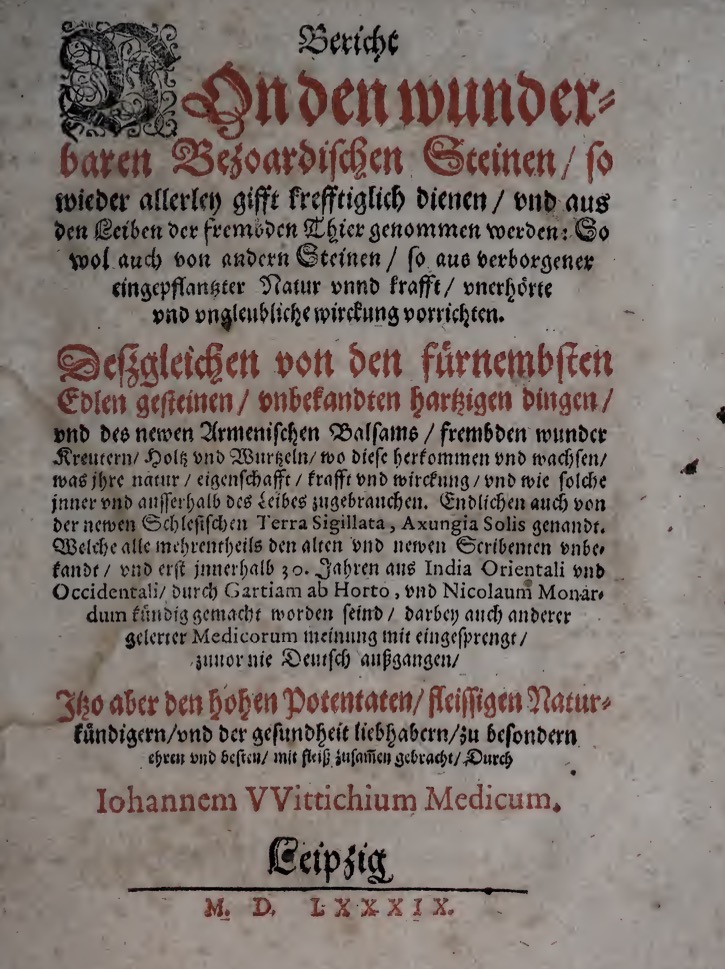
Bericht von den wunderbaren bezoardischen Steinen…
Report on the Wonderful Bezoar Stones…
Book
Wittich, J. (1589) Bericht von den wunderbaren bezoardischen Steinen…. [Report on the Wonderful Bezoar Stones…] Leipzig, Hans Steinmanns Erben, 181 pp.
Record No. 6860  |  Sinkankas/Born No.: 7291 (not seen); NIB  |  Language: in German  |  RWHL
A specialized Renaissance treatise on bezoar stones, examining their origins, varieties, physical characteristics, medicinal preparation, and reputed powers against poisons and disease. Wittich discusses both genuine and counterfeit bezoars and the means by which they might be distinguished, reflecting their great value and medical reputation in sixteenth-century Europe. The work is particularly relevant to gemological history because bezoars were collected, traded, tested, and mounted as precious objects alongside gemstones and were frequently incorporated into elaborate jewelry, vessels, and princely treasuries.

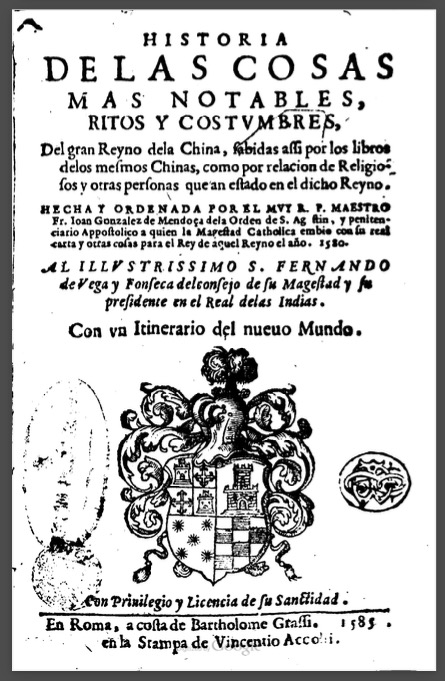
L'historia del gran regno della China

The History of the Great Kingdom of China
Book
Mendoza, J.G., de (1587) L'historia del gran regno della China. [The History of the Great Kingdom of China] Rome, Andrea Muschio, 508 pp.
Record No. 7533  |  Language: in Italian  |  RWHL
A widely read account of China compiled by the Spanish Augustinian Juan González de Mendoza from missionary reports, travel narratives, and other contemporary sources rather than from personal travel in China. The work describes the geography, government, cities, religion, customs, commerce, manufactures, natural products, and wealth of the Ming empire and played a major role in shaping late sixteenth-century European ideas about China. Of particular gemological interest are references to precious materials, luxury goods, jewelry, and mineral resources within Chinese trade and material culture.

Building a Gemological Library

Gemological books range from general identification manuals and textbooks to specialized works on individual gems, mineralogy, jewelry, treatments, synthesis, history and gem-producing regions.

For a curated selection of particularly useful books, read The Gemologist's Core Library — Classic Books on Gemology, Jewelry and Mineralogy.

About Four Treasures

Four Treasures is Lotus Gemology's freely accessible gemological reference database. Use the full database to search by author, title or keyword and explore literature on gemology, mineralogy, jewelry and related fields. Where available, hyperlinks on titles may lead directly to the full publication.

Search the Complete Four Treasures Database