Gemology Books Bibliography

Gemology Books Bibliography

Explore books on gems, gemology, jewelry and mineralogy in Four Treasures, the Lotus Gemology reference database. This bibliography brings together matching book records from the collection, with publication details, abstracts and cover images where available.

Gemology Book References

The list below matches books concerning gemology and related subjects in the database's searchable fields. Some works cover several branches of gems, jewelry or mineralogy.
3,081–3,100 of 3,451 matching references

Veterum Illustrium Philosophoruro, Poetarum, Rhetorum et Oratorum Imagines, ex vetustis nununis, gemmis, etc.
Portraits of Famous Ancient Philosophers, Poets, Rhetoricians, and Orators, from Ancient Coins, Gems, etc.
Book
Bellori, G.P. (1685) Veterum Illustrium Philosophoruro, Poetarum, Rhetorum et Oratorum Imagines, ex vetustis nununis, gemmis, etc. [Portraits of Famous Ancient Philosophers, Poets, Rhetoricians, and Orators, from Ancient Coins, Gems, etc.] Rome, Jacobum de Rubeis, 16 pp., 92 plates
Record No. 28872  |  Sinkankas/Born No.: 1685 (not seen); NIB  |  Language: in Latin  |  RWHL
Giovanni Pietro Bellori’s Veterum Illustrium Philosophorum, Poetarum, Rhetorum et Oratorum Imagines is an antiquarian study of portraits of celebrated Greek and Roman philosophers, poets, rhetoricians, and orators preserved on ancient coins, engraved gems, and other antiquities. The work reproduces these portraits in a substantial series of engraved plates accompanied by brief explanatory text, using inscriptions and comparisons among surviving objects to identify the individuals represented. Of particular gemological interest is its extensive use of ancient engraved gemstones as historical and iconographic evidence, documenting important examples of classical glyptic art known in 17th-century European collections. The volume is an important early contribution to the systematic study and publication of ancient gems and to the development of classical archaeology, portrait iconography, and gem collecting.

Viaggi nella Turchia, nella Persia, e nelle Indie
Travels in Turkey, Persia, and the Indies
Book
Tavernier, J.B. (1682) Viaggi nella Turchia, nella Persia, e nelle Indie. [Travels in Turkey, Persia, and the Indies] Rome, Giovanni Luetti, 2 Parts in 1 Vol., 488, 359 pp.
Record No. 29559  |  Sinkankas/Born No.: 6511  |  Language: in Italian  |  RWHL.
Sinkankas: This work is highly valued by historians and geographers for its rich and detailed descriptions of the regions visited by Jean-Baptiste Tavernier between 1631 and 1668, including the landscapes, cultures, and political figures he encountered during a time when dependable reports from the Near East and Asia were rare. While some have questioned the accuracy of his accounts, scholars such as William Crooke and Valentine Ball have largely defended Tavernier’s reliability, particularly when tested against modern research. In the realm of gemology, his observations have stood the test of time, especially regarding his dealings in large, high-quality gemstones—an area of expertise that reflects his success as a jeweler in Paris and his deliberate travels to acquire and sell precious stones to European royalty. His accounts are organized into five books on Turkey and Persia and three on India, the latter being of particular interest. Key chapters describe the jewels of the Great Mughal Aurangzeb, the diamond mines of India including Raolconda, the trade’s measurement systems, and details on colored gemstones, pearls, coral, amber, and medicinal materials. Tavernier is credited with the earliest descriptions of several legendary gems, including the Great Mogul, the Koh-i-Noor, and the Florentine diamonds. His “Tavernier Blue,” sold to the French royal house, is believed to be the origin of the Hope Diamond. Notably, his works include some of the earliest visual representations of famous diamonds and gemstones, with detailed engraved plates depicting these remarkable treasures, adding further historical and gemological value to his narrative.This work is highly valued by historians and geographers for its rich and detailed descriptions of the regions visited by Jean-Baptiste Tavernier between 1631 and 1668, including the landscapes, cultures, and political figures he encountered during a time when dependable reports from the Near East and Asia were rare. While some have questioned the accuracy of his accounts, scholars such as William Crooke and Valentine Ball have largely defended Tavernier’s reliability, particularly when tested against modern research. In the realm of gemology, his observations have stood the test of time, especially regarding his dealings in large, high-quality gemstones—an area of expertise that reflects his success as a jeweler in Paris and his deliberate travels to acquire and sell precious stones to European royalty. His accounts are organized into five books on Turkey and Persia and three on India, the latter being of particular interest. Key chapters describe the jewels of the Great Mughal Aurangzeb, the diamond mines of India including Raolconda, the trade’s measurement systems, and details on colored gemstones, pearls, coral, amber, and medicinal materials. Tavernier is credited with the earliest descriptions of several legendary gems, including the Great Mogul, the Koh-i-Noor, and the Florentine diamonds. His “Tavernier Blue,” sold to the French royal house, is believed to be the origin of the Hope Diamond. Notably, his works include some of the earliest visual representations of famous diamonds and gemstones, with detailed engraved plates depicting these remarkable treasures, adding further historical and gemological value to his narrative.

An Historical Relation of Ceylon

Book
Knox, R. (1681) An Historical Relation of Ceylon. London, pp. 4–7, 50–51
Record No. 2807  |  Sinkankas/Born No.: NIS/NIB  |  RWHL
Robert Knox’s An Historical Relation of Ceylon is a firsthand account of the island of Ceylon (Sri Lanka), based on nearly twenty years that Knox spent there after being detained by the Kingdom of Kandy in 1660. The work describes the island’s geography, natural products, government, religion, customs, agriculture, commerce, and everyday life, as well as Knox’s captivity and eventual escape. Of particular gemological interest are his observations on Ceylon’s precious stones, including their occurrence, recovery, qualities, and use, providing contemporary evidence for the island’s long-established gem industry. The work is an important 17th-century European eyewitness source for Sri Lankan society, natural resources, and the production and trade of gemstones.

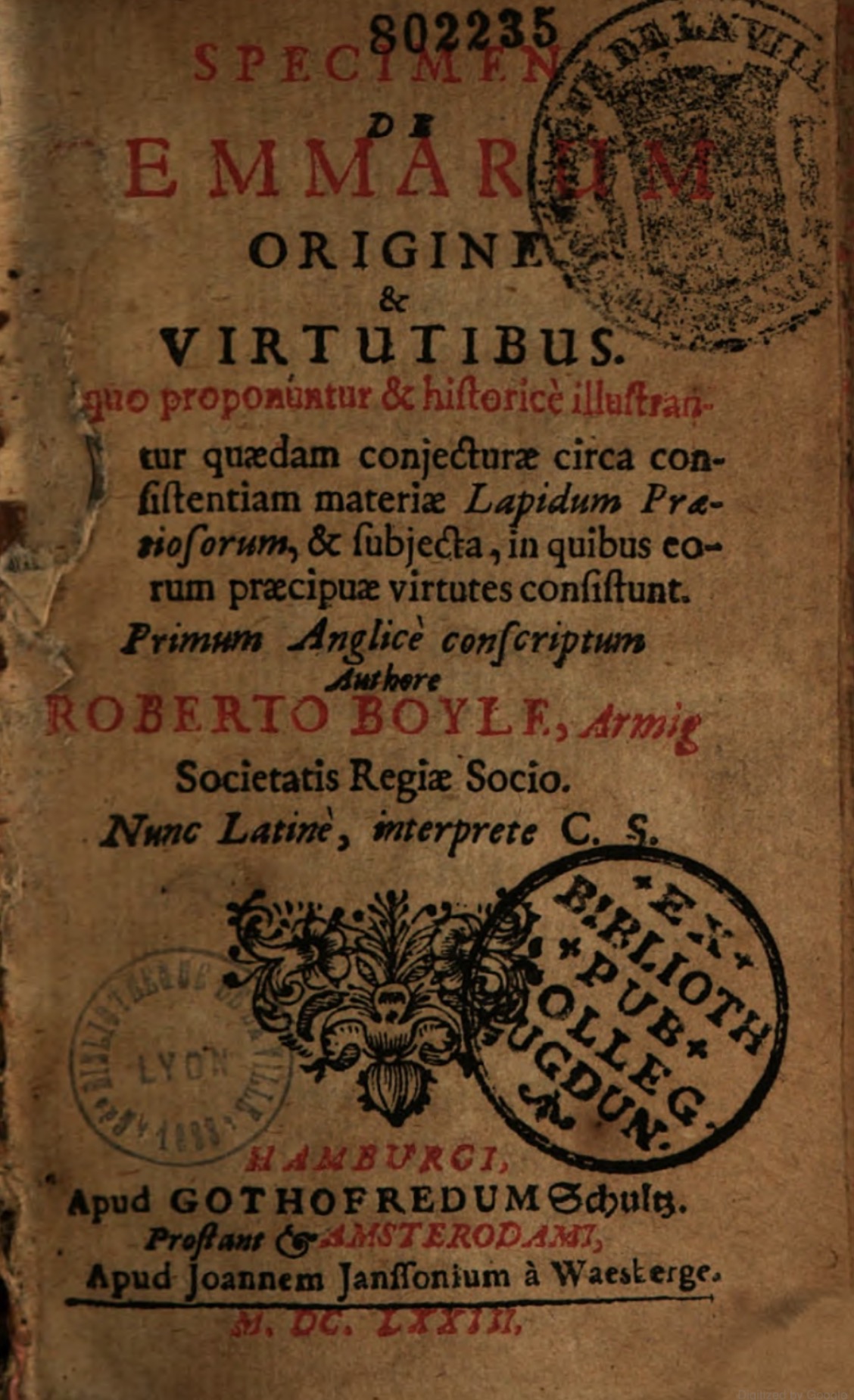
Specimen de Gemmarum origine et virtutibus
A Treatise on the Origin and Properties of Gems
Book
Boyle, R. (1680) Specimen de Gemmarum origine et virtutibus. [A Treatise on the Origin and Properties of Gems] Hamburgi, Gothofredum Schulz, 206 pp.
Record No. 8084  |  Sinkankas/Born No.: NIS/NIB  |  Language: in Latin  |  RWHL
Robert Boyle’s Specimen de Gemmarum origine et virtutibus is a Latin edition of his experimental study of the origin, physical properties, and supposed virtues of gemstones. Boyle examines contemporary theories of gem formation and considers properties such as hardness, transparency, color, specific gravity, and responses to heat and chemical agents, drawing upon experiments, observations, travelers’ reports, and earlier lapidary literature. He discusses diamonds and numerous colored stones while critically examining traditional claims concerning the medicinal and supernatural powers attributed to gems. The work is important in the development of gemology because it approaches gemstones increasingly through observation and experiment rather than relying solely upon classical authority and traditional lore, reflecting the broader transition toward experimental natural philosophy in the 17th century.

A Collection of Several Relations and Treatises Singular and Curious of John Baptista Tavernier, Baron of Aubonne
Book
Tavernier, J.-B. (1680) A Collection of Several Relations and Treatises Singular and Curious of John Baptista Tavernier, Baron of Aubonne. London, Moses Pitt
Record No. 1683  |  RWHL
Sinkankas: This work is highly valued by historians and geographers for its rich and detailed descriptions of the regions visited by Jean-Baptiste Tavernier between 1631 and 1668, including the landscapes, cultures, and political figures he encountered during a time when dependable reports from the Near East and Asia were rare. While some have questioned the accuracy of his accounts, scholars such as William Crooke and Valentine Ball have largely defended Tavernier’s reliability, particularly when tested against modern research. In the realm of gemology, his observations have stood the test of time, especially regarding his dealings in large, high-quality gemstones—an area of expertise that reflects his success as a jeweler in Paris and his deliberate travels to acquire and sell precious stones to European royalty. His accounts are organized into five books on Turkey and Persia and three on India, the latter being of particular interest. Key chapters describe the jewels of the Great Mughal Aurangzeb, the diamond mines of India including Raolconda, the trade’s measurement systems, and details on colored gemstones, pearls, coral, amber, and medicinal materials. Tavernier is credited with the earliest descriptions of several legendary gems, including the Great Mogul, the Koh-i-Noor, and the Florentine diamonds. His “Tavernier Blue,” sold to the French royal house, is believed to be the origin of the Hope Diamond. Notably, his works include some of the earliest visual representations of famous diamonds and gemstones, with detailed engraved plates depicting these remarkable treasures, adding further historical and gemological value to his narrative.This work is highly valued by historians and geographers for its rich and detailed descriptions of the regions visited by Jean-Baptiste Tavernier between 1631 and 1668, including the landscapes, cultures, and political figures he encountered during a time when dependable reports from the Near East and Asia were rare. While some have questioned the accuracy of his accounts, scholars such as William Crooke and Valentine Ball have largely defended Tavernier’s reliability, particularly when tested against modern research. In the realm of gemology, his observations have stood the test of time, especially regarding his dealings in large, high-quality gemstones—an area of expertise that reflects his success as a jeweler in Paris and his deliberate travels to acquire and sell precious stones to European royalty. His accounts are organized into five books on Turkey and Persia and three on India, the latter being of particular interest. Key chapters describe the jewels of the Great Mughal Aurangzeb, the diamond mines of India including Raolconda, the trade’s measurement systems, and details on colored gemstones, pearls, coral, amber, and medicinal materials. Tavernier is credited with the earliest descriptions of several legendary gems, including the Great Mogul, the Koh-i-Noor, and the Florentine diamonds. His “Tavernier Blue,” sold to the French royal house, is believed to be the origin of the Hope Diamond. Notably, his works include some of the earliest visual representations of famous diamonds and gemstones, with detailed engraved plates depicting these remarkable treasures, adding further historical and gemological value to his narrative.

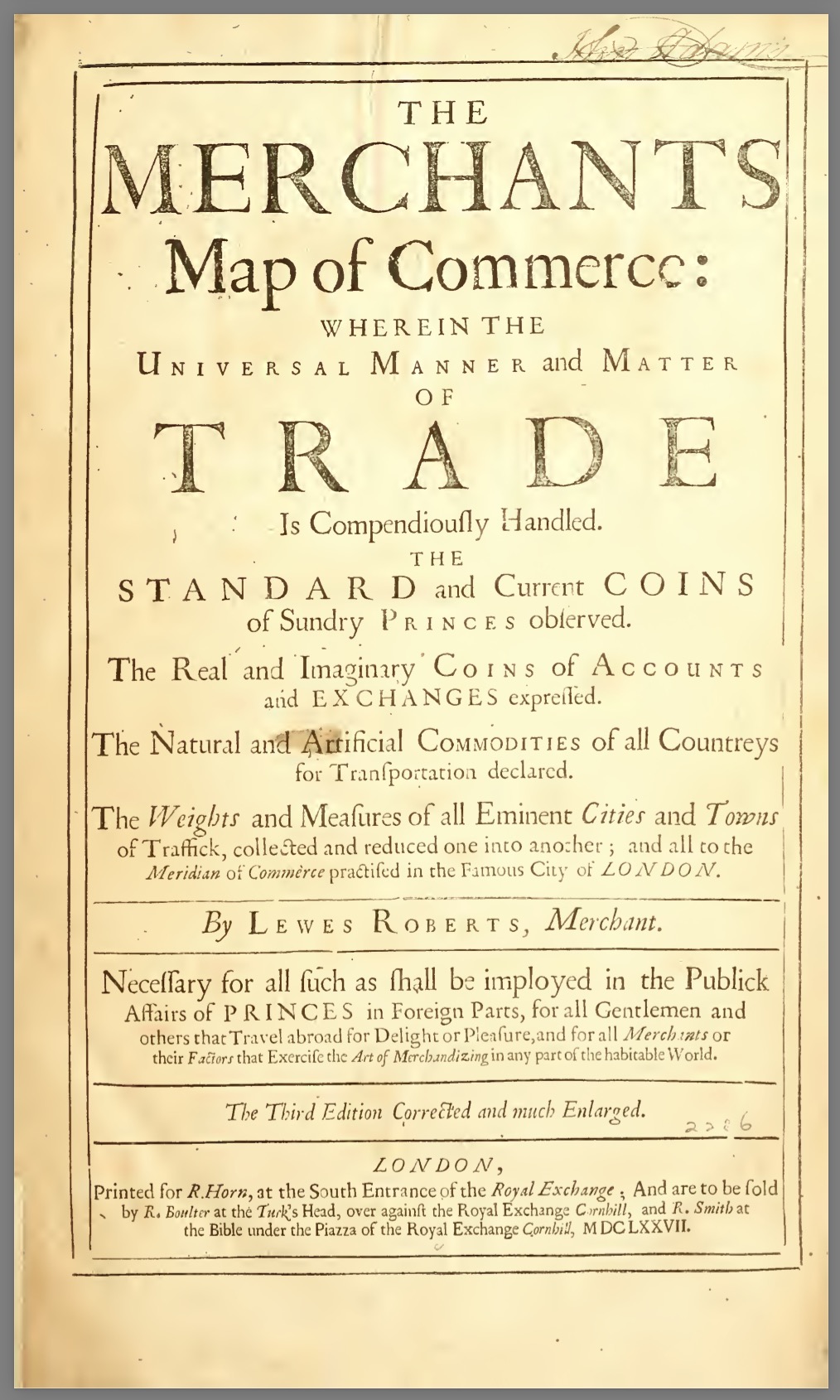
A description of the diamond-mines, as it was presented by the Right Honourable, the Earl Marshal of England, to the R. Society
Journal Article
Howard, H. (1677) A description of the diamond-mines, as it was presented by the Right Honourable, the Earl Marshal of England, to the R. Society. Philosophical Transactions of the Royal Society of London, Vol. 12, No. 136, pp. 907–917.
Record No. 29009  |  Sinkankas/Born No.: NIS/NIB  |  RWHL
The parts of the World known to contain Diamonds, are the Island Borneo, and the Continent of India extra & intra Gangem; Pegu is likewise reported to have several, but the King not potent, his Country being but thinly inhabited, contents himself with his Mines of Rich Metals, Gold, Silver, Brass, Tin and Lead, and several other Commodities his Country affords, in great plenty, rather than to suffer new enquiries to be made, lest the discovery of such an additional Treasure should invite some of his Neighbours, more potent, to invade him. But leaving the description of other places to those that know them better, I shall only keep myself to the Coast of Coromandel, with which I am acquainted, and having visited several of its Mines, am able to say something thereof Experimentally.

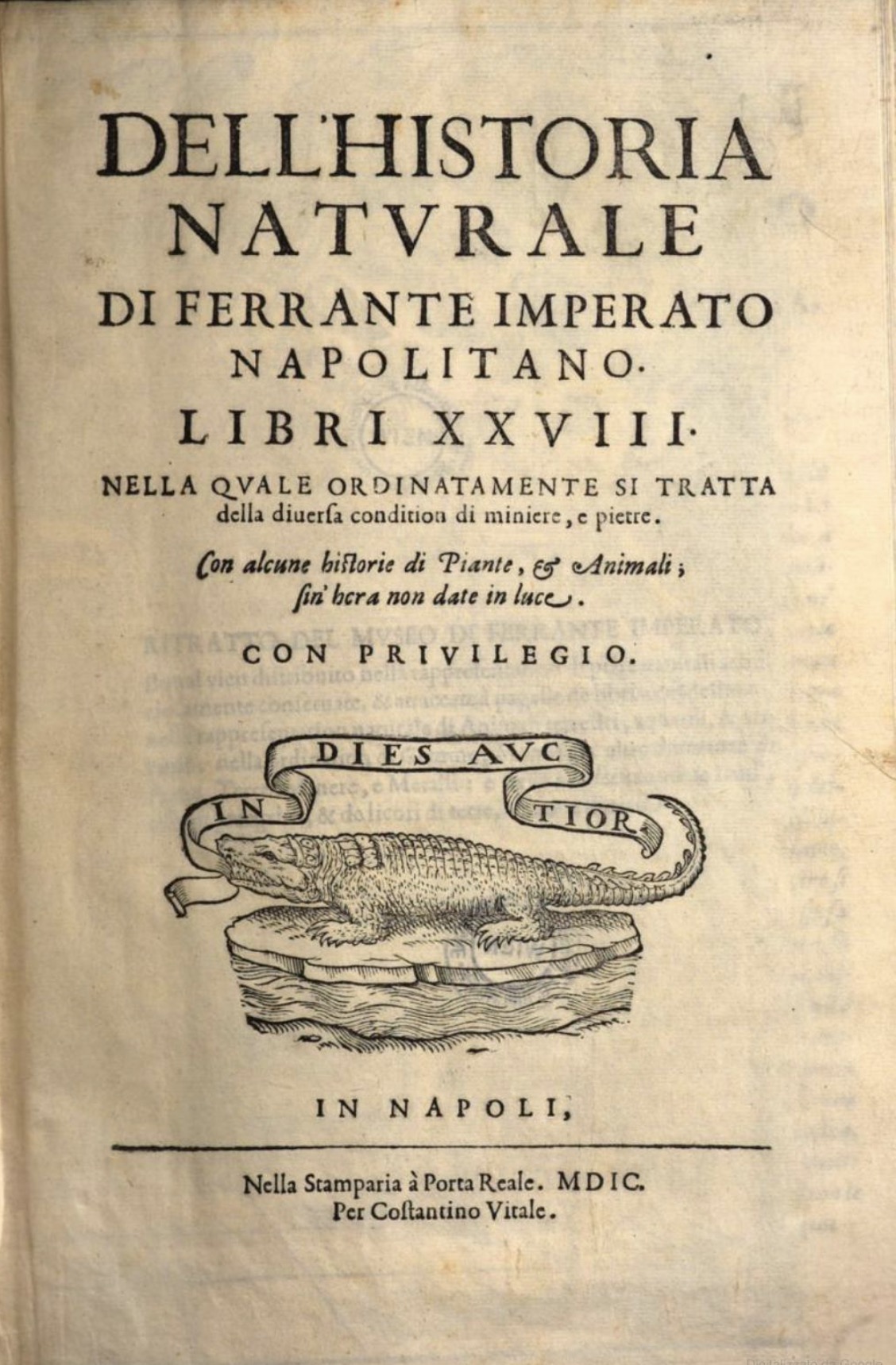
The Merchants Map of Commerce: Wherein, the Universal Manner and Matter of Trade is Compendiously Handled
Book
Roberts, L. (1677) The Merchants Map of Commerce: Wherein, the Universal Manner and Matter of Trade is Compendiously Handled. London, Horn, 475 pp.
Record No. 17078  |  Sinkankas/Born No.: NIS/NIB  |  RWHL
Lewes Roberts’s The Merchants Map of Commerce is a comprehensive 17th-century handbook of international trade, describing the principal commercial cities, ports, markets, commodities, currencies, weights and measures, customs duties, and trading practices of Europe, Asia, Africa, and the Americas. Intended as a practical guide for merchants, it provides detailed information on the movement and valuation of goods through contemporary trading networks. Of particular interest to gemologists are its references to diamonds, rubies, sapphires, pearls, and other precious commodities, including their principal sources and markets and aspects of their trade and valuation. The work provides valuable evidence for the commercial routes by which gemstones circulated between Asian producing regions, Middle Eastern entrepôts, and European markets during the 17th century.

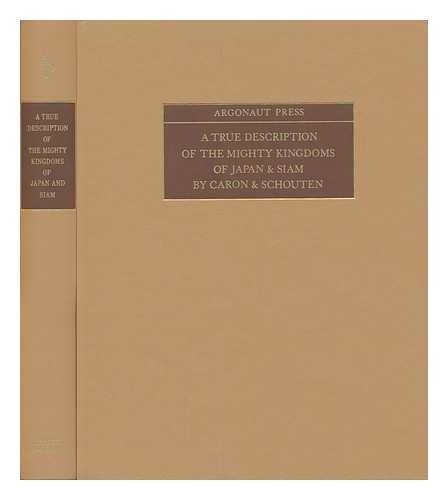
Dell'Historia naturale di Ferrante Imperato napolitano
Natural History by Ferrante Imperato, Neapolitan
Book
Imperato, F. (1672) Dell'Historia naturale di Ferrante Imperato napolitano. [Natural History by Ferrante Imperato, Neapolitan] Venetia, Presso Combi & La Noù, 696 pp. (see pp. 598–599)
Record No. 7430  |  Sinkankas/Born No.: NIS/NIB  |  Language: in Latin  |  RWHL
Ferrante Imperato’s Historia naturale is an encyclopedic natural history based substantially on the celebrated collection or cabinet of curiosities assembled by the Neapolitan apothecary and naturalist. The work treats minerals, rocks, metals, earths, plants, animals, fossils, and other natural substances, combining direct observation with information derived from classical and contemporary authorities. Its extensive mineralogical sections describe the appearance, properties, origins, varieties, and uses of numerous stones and minerals and make the book an important early contribution to European mineralogy and collecting. Of particular gemological interest are discussions of precious and ornamental stones, including the material on pp. 598–599, providing evidence for 17th-century identification, terminology, properties, and uses of gem materials.

A True Description of the Mighty Kingdoms of Japan & Siam
Book
Caron, F. and Schouten, J. (1671) A True Description of the Mighty Kingdoms of Japan & Siam. New York, N. Israel/Da Capo Press, 197 pp.
Record No. 4675  |  ISBN/ISSN: 906072111X  |  Sinkankas/Born No.: NIS/NIB  |  RWHL
François Caron and Joost Schouten’s A True Description of the Mighty Kingdoms of Japan & Siam brings together two important 17th-century European accounts of Japan and Siam written by officials of the Dutch East India Company. Caron describes Japanese government, social hierarchy, religion, customs, commerce, cities, warfare, justice, and everyday life, based on his long residence in Japan, while Schouten provides a comparable description of Ayutthaya-period Siam, including the monarchy, administration, religion, customs, trade, natural products, and foreign communities. Both accounts are particularly valuable for their observations on Asian commerce and luxury goods. Of gemological interest are references to precious stones, jewelry, gold, silver, and other valuable commodities traded or used in Siam and Japan, providing contemporary evidence for the movement and consumption of gems within 17th-century Asian trading networks.

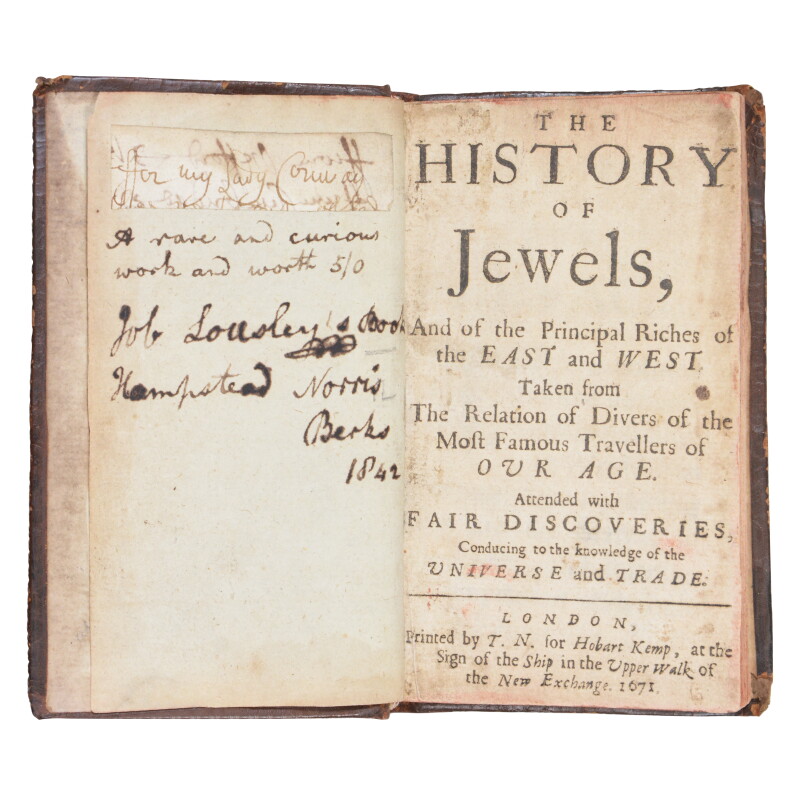
The History of Jewels and of the Principal Riches of the East and West
Book
Chappuzeau, S. (1671) The History of Jewels and of the Principal Riches of the East and West. London, Hobart Kemp, 128 pp.
Record No. 2727  |  Sinkankas/Born No.: NIS/NIB  |  RWHL
Samuel Chappuzeau’s The History of Jewels, and of the Principal Riches of the East and West is an early English-language work devoted to precious stones, pearls, and other valuable natural products. It discusses diamonds, rubies, sapphires, emeralds, pearls, and other gems, including their geographical sources, qualities, sizes, values, trade, and notable specimens, while also treating other commodities regarded as riches of the East and West. Drawing upon contemporary travel and commercial literature, the book reflects European knowledge of the principal gem-producing regions and international gem trade during the 17th century. It is particularly valuable to historians of gemology for its descriptions of the characteristics and valuation of precious stones and for its evidence concerning the routes by which Asian and American luxury materials reached European markets.

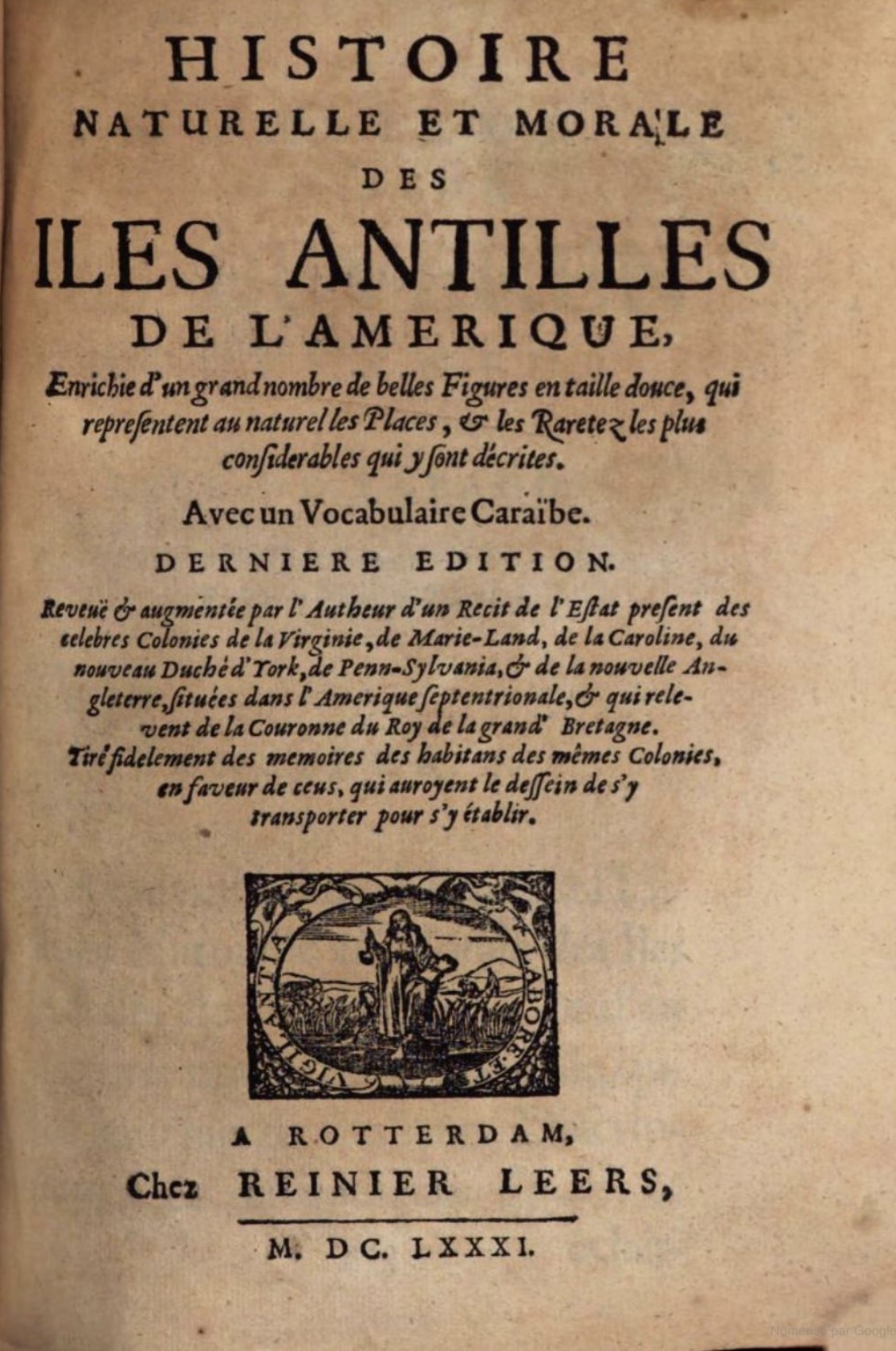
Histoire morale des îles Antilles de l’Amérique
Moral History of the Caribbean Islands of America
Book
Rochefort, C., de (1667) Histoire morale des îles Antilles de l’Amérique. [Moral History of the Caribbean Islands of America] Lyon, Christofle Fovrmy, 680 pp. (see p. 152)
Record No. 7103  |  Sinkankas/Born No.: NIS/NIB  |  Language: in French  |  RWHL
Charles de Rochefort’s Histoire morale des îles Antilles de l’Amérique is a 17th-century account of the Caribbean islands, their Indigenous inhabitants, European settlements, natural environment, resources, customs, and colonial society. It describes the geography, plants, animals, foods, medicines, commerce, and material culture of the Antilles, together with observations on Indigenous languages, beliefs, warfare, social practices, and relations with Europeans. The work combines natural history and ethnography with information derived from travelers and colonial observers. Of gemological interest is the discussion on p. 152 of stones and mineral materials found or used in the region, providing an early European record relevant to the occurrence, identification, or Indigenous use of ornamental stones in the Caribbean.

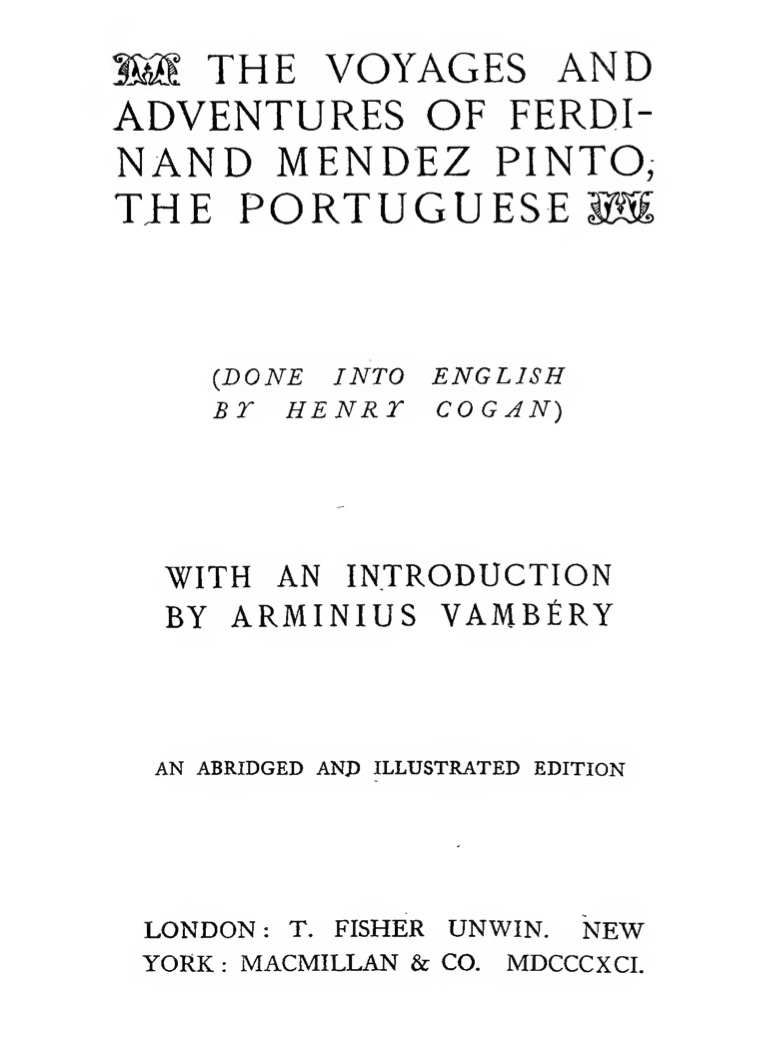
The Voyages and Adventures, of Ferdinand Mendez Pinto, the Portuguese
Book
Pinto, F.M. (1663) The Voyages and Adventures, of Ferdinand Mendez Pinto, the Portuguese. London, J. Macock
Record No. 3331  |  Sinkankas/Born No.: NIS/NIB  |  RWHL
A seventeenth-century English translation of Fernão Mendes Pinto’s Peregrinação, first published in Portuguese in 1614, recounting the author’s extensive travels and adventures across Asia during the sixteenth century. The work describes voyages through India, Southeast Asia, China, and Japan, combining personal narrative with accounts of regional geography, peoples, customs, religions, trade, warfare, and natural products. Of particular interest to gemological history are Pinto’s observations on Asian commerce and luxury goods, including precious stones and other valuable commodities encountered in the trading networks of South and Southeast Asia.

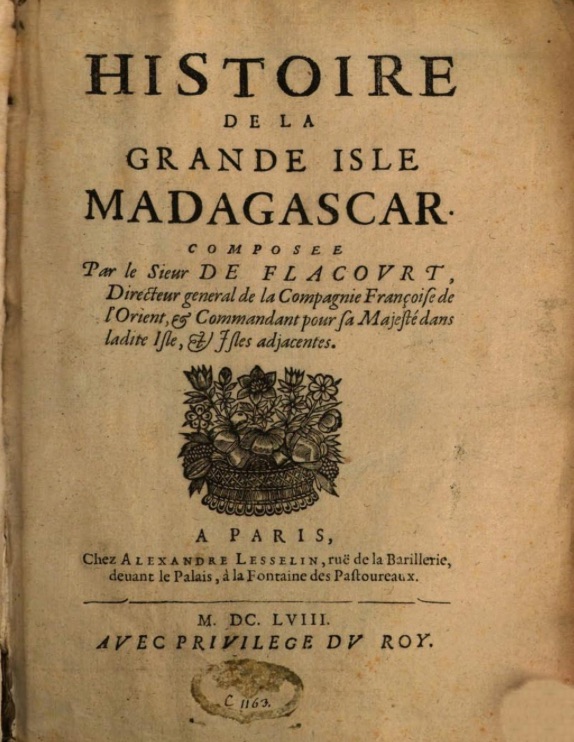
Histoire de la Grande Isle Madagascar
History of the great island Madagascar
Book
Flacourt, E.d. (1658) Histoire de la Grande Isle Madagascar. [History of the great island Madagascar] Paris, Chez G. de Lvyne, 2 v. in 1.
Record No. 7441  |  Language: in French  |  RWHL
Flacourt’s Histoire de la Grande Isle Madagascar is one of the earliest substantial European accounts of Madagascar, based largely on the author’s residence there as governor of the French settlement at Fort-Dauphin from 1648 to 1655. The work describes the island’s geography and regions, inhabitants and social customs, religion, material culture, fauna, flora and natural resources, followed by an account of the French colony and its relations and conflicts with the Malagasy population. Of particular gemological interest, Flacourt records the occurrence of precious stones in Madagascar, including topaz, aquamarine, emerald, ruby and sapphire, making the work an important early source for the history of Madagascar’s gem resources.

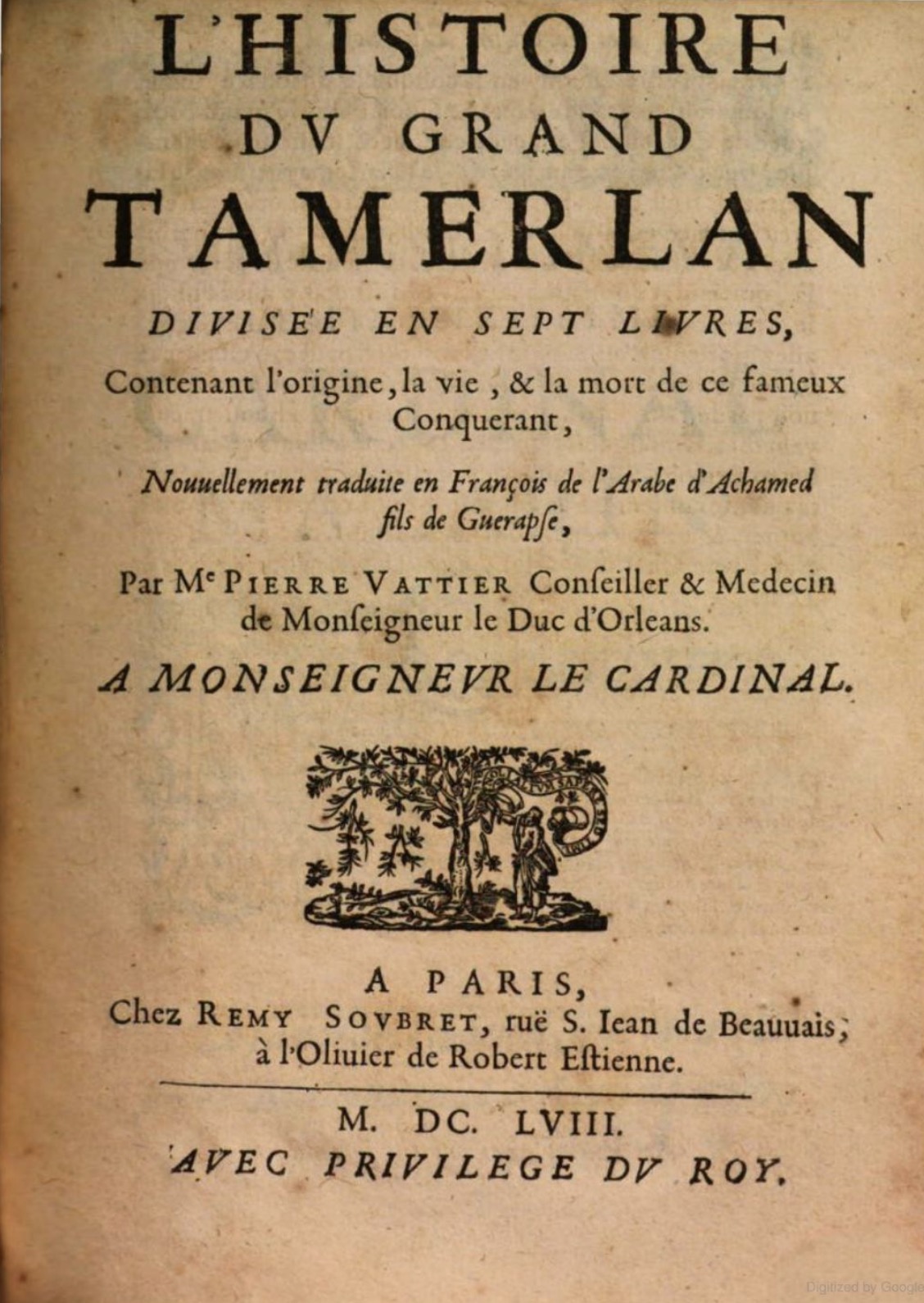
L’Histoire du grand Tamerlan

History of the Great Tamerlane
Book
Ibn Arabschah (1658) L’Histoire du grand Tamerlan. [History of the Great Tamerlane] Paris, 248 pp.
Record No. 7101  |  Sinkankas/Born No.: NIS/NIB  |  Language: in French  |  RWHL
L’Histoire du grand Tamerlan is a French translation of the Arabic history of Timur (Tamerlane) by Aḥmad ibn ʿArabshāh, a 15th-century Syrian historian who experienced Timur’s conquest of Damascus and subsequently lived at the Timurid court in Samarkand. The work recounts Timur’s origins, military campaigns, conquests, court, character, and death, presenting a notably hostile counterpoint to the more celebratory Timurid chronicles. It contains descriptions of the wealth, tribute, spoils, luxury goods, and material culture associated with Timur’s campaigns and court. Of gemological interest are references to precious stones, jewelry, gold, and other valuable objects acquired as tribute or booty and circulated among the courts and trading centers of Central and Western Asia, providing useful historical context for the movement and prestige of gems in the late 14th and early 15th centuries.

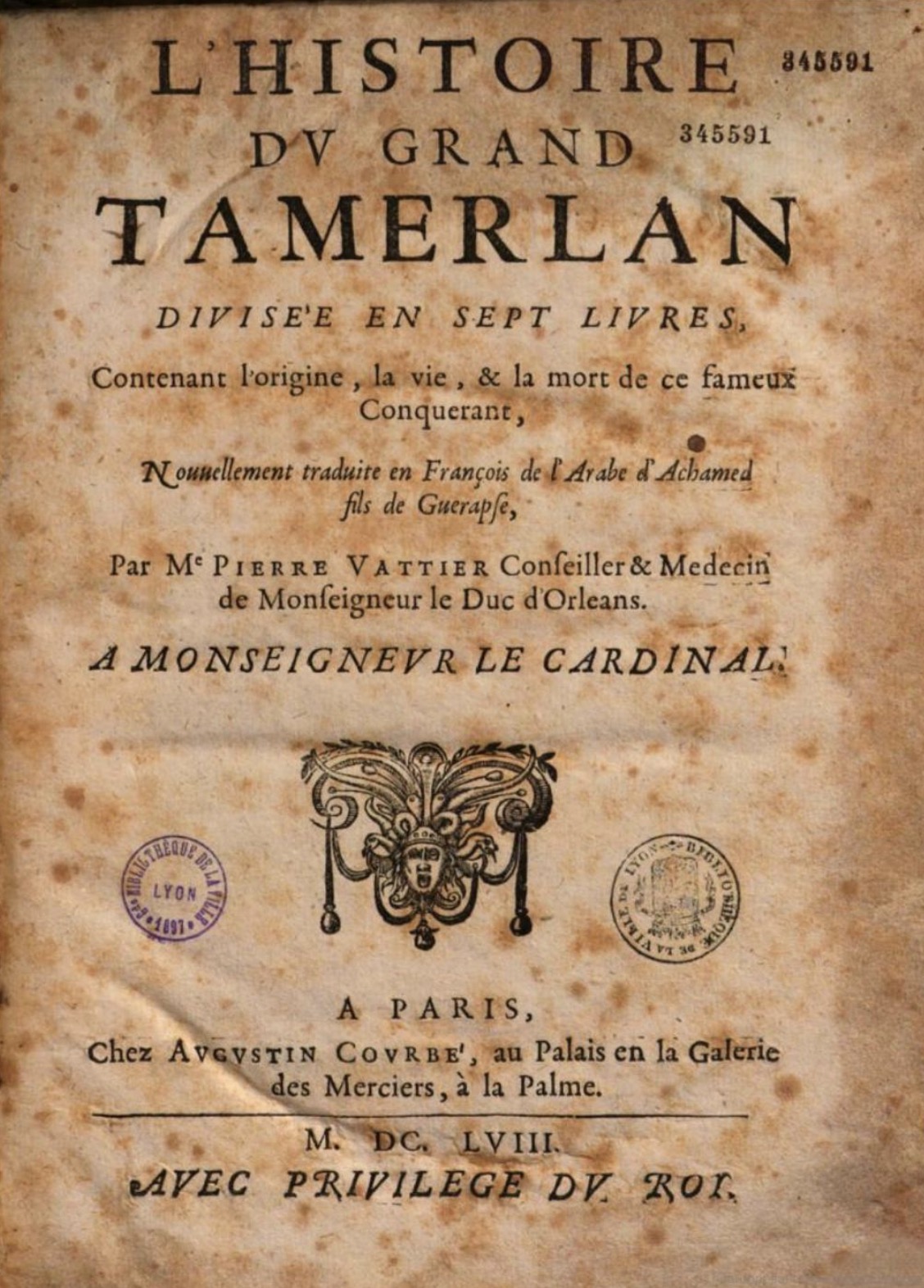
L'Histoire du grand Tamerlan, en sept livres
The History of the Great Tamerlane, in Seven Books
Book
Vattier, P. (1658) L'Histoire du grand Tamerlan, en sept livres. [The History of the Great Tamerlane, in Seven Books] Paris, Avcvstin Covrbe, 248 pp.
Record No. 7095  |  Language: in French  |  RWHL
Pierre Vattier’s L’Histoire du grand Tamerlan, en sept livres is a 17th-century French translation and adaptation of the Arabic history of Timur (Tamerlane) by the 15th-century Syrian historian Aḥmad ibn ʿArabshāh. Divided into seven books, it recounts Timur’s origins, rise to power, military campaigns, conquests, court, character, and death, presenting the conqueror from a perspective markedly less favorable than official Timurid histories. The work describes the enormous wealth accumulated through Timur’s conquests, including tribute, booty, luxury goods, precious objects, and the riches of the cities and courts encountered by his armies. Of gemological interest are references to precious stones, jewelry, gold, and other valuable materials, providing historical context for the possession and movement of luxury commodities across Central and Western Asia during the late 14th and early 15th centuries.

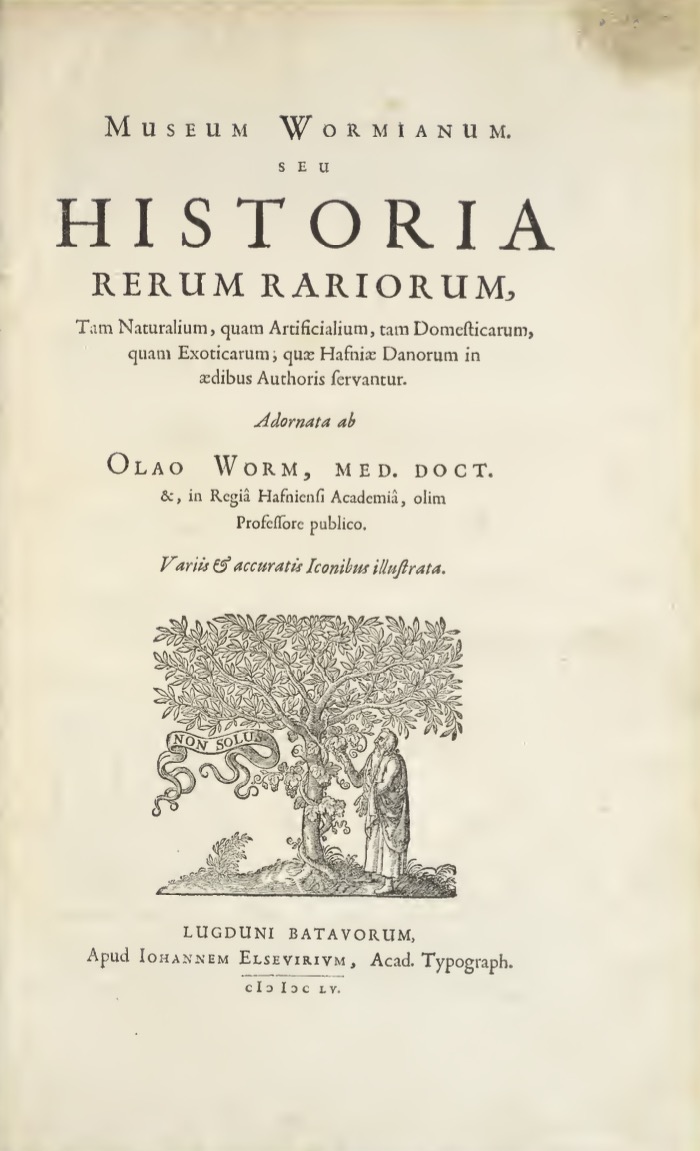
Museum Wormianum seu Historia rerum rariorum
Wormian Museum or History of Rare Things
Book
Worm, O. (1655) Museum Wormianum seu Historia rerum rariorum. [Wormian Museum or History of Rare Things] Lugduni Batavorum, Apud Iohannem Elsevirium, 392 pp.
Record No. 6875  |  Sinkankas/Born No.: NIS/NIB  |  Language: in Latin  |  RWHL
Worm’s Museum Wormianum is an illustrated catalogue of the celebrated cabinet of curiosities assembled by the Danish physician and antiquarian Ole Worm. The collection encompasses minerals, stones, fossils, plants, animals, ethnographic objects, antiquities, and other natural and artificial curiosities, arranged as an attempt to describe and classify the natural world. Of gemological interest are its accounts of minerals, crystals, precious stones, and other lapidary materials, combining physical observations with contemporary ideas concerning their origins, properties, and uses. The work is an important record of seventeenth-century mineralogical knowledge and of the cabinet-of-curiosities tradition from which modern natural-history museums developed.

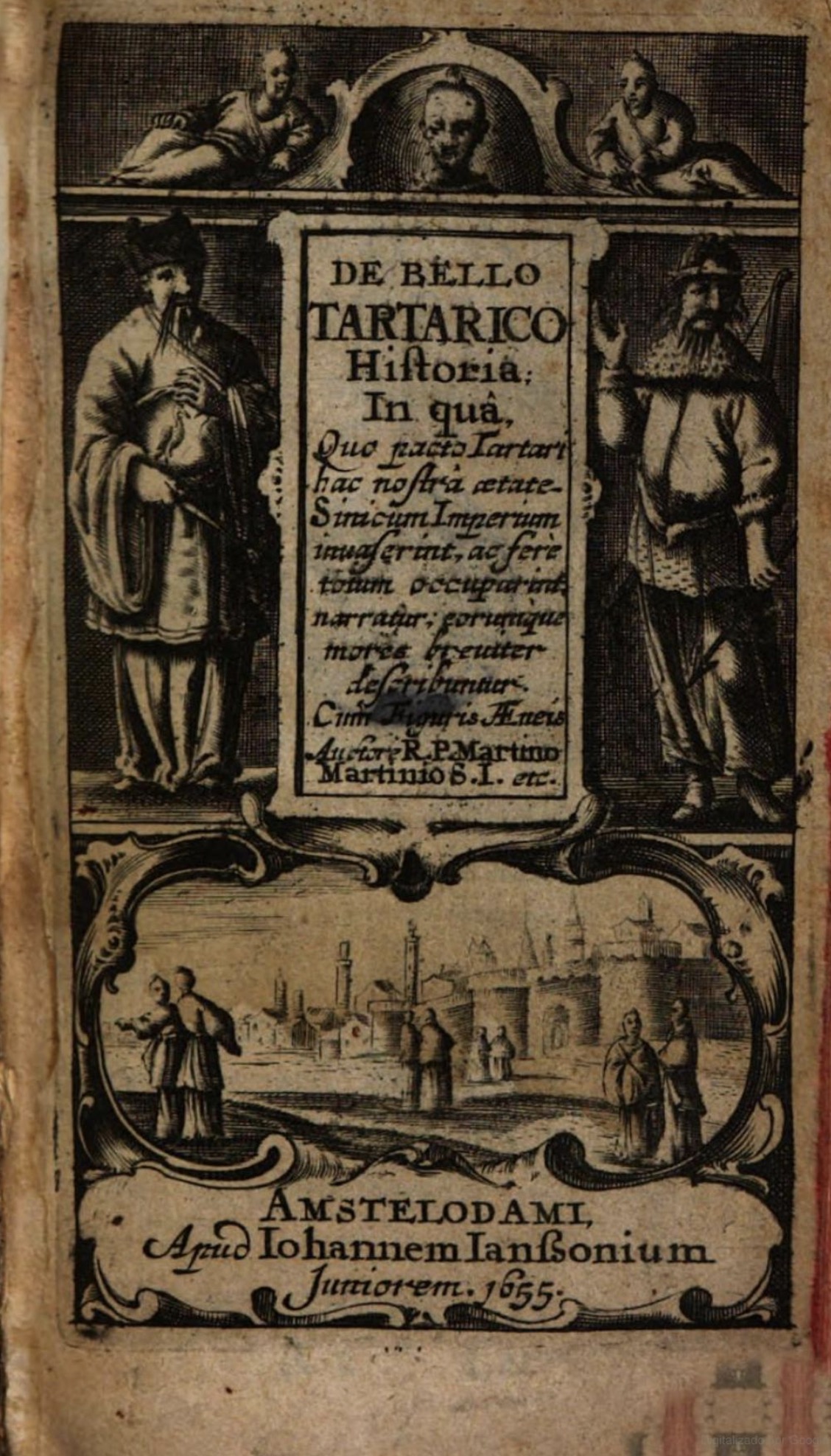
De bello Tartarico historia

History of the Tartar War
Book
Martini, M. (1654) De bello Tartarico historia. [History of the Tartar War] Antverpiae, Balthasaris Moreti, 216 pp. (see p. 44)
Record No. 7094  |  Sinkankas/Born No.: NIS/NIB  |  Language: in Latin  |  RWHL
A contemporary account of the Manchu conquest of China and the collapse of the Ming dynasty by the Jesuit missionary Martino Martini, who had lived and traveled extensively in China. The work describes the military campaigns, political upheavals, cities, peoples, and events surrounding the establishment of Qing rule and became an important early European source on seventeenth-century China. Of particular gemological interest is p. 44, where Martini refers to jade and its importance and value in China, providing an early European account of Chinese appreciation of the material.

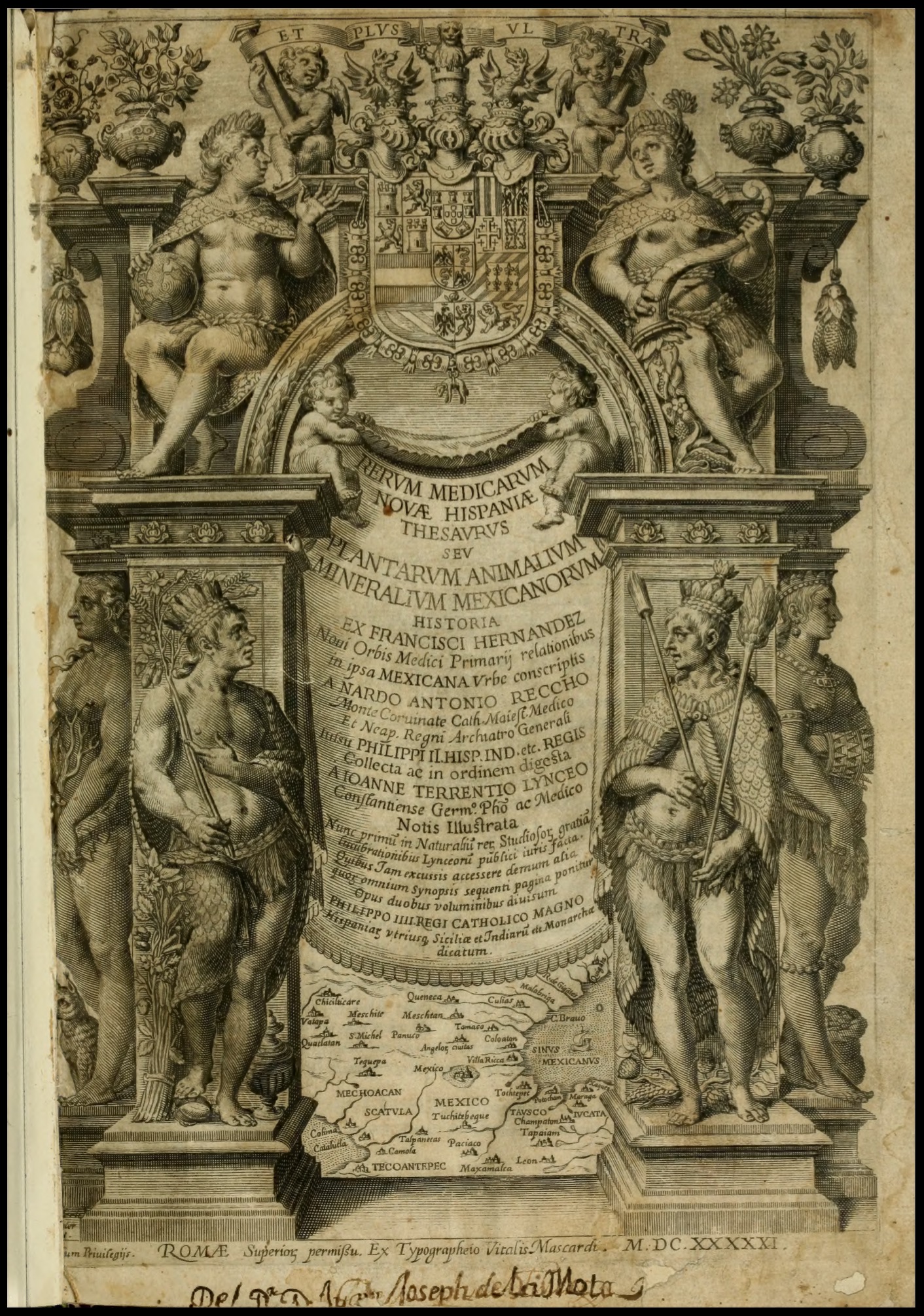
Rerum medicarum Novae Hispaniae thesaurus, seu, Plantarum animalium mineralium Mexicanorum historia
The treasure of medicinal things of New Spain, or, The history of Mexican plants, animals, and minerals
Book
Hernández, F., Cesi, F., Colonna, F., Deversin, B., Faber, J., Greuter, J.F., Hernández, F., Mascardi, V., Masotti, Z., Recchi, N.A. and Terentius, J. (1651) Rerum medicarum Novae Hispaniae thesaurus, seu, Plantarum animalium mineralium Mexicanorum historia. [The treasure of medicinal things of New Spain, or, The history of Mexican plants, animals, and minerals] Romae, Ex typographeio Vitalis Mascardi, 90 pp.
Record No. 7907  |  Sinkankas/Born No.: NIS/NIB  |  Language: in Latin  |  RWHL
A major seventeenth-century compendium of the natural history and materia medica of New Spain, based principally on the investigations of Francisco Hernández and subsequently edited and augmented by members and associates of the Accademia dei Lincei. The work describes Mexican plants, animals, and minerals, combining Hernández’s observations and Indigenous knowledge with commentary by European naturalists. Of particular gemological interest are its accounts of Mexican minerals and stones, including their Indigenous names, physical characteristics, sources, and medicinal uses, making the work an important early source for European knowledge of the mineral resources and gemstone traditions of Mexico.

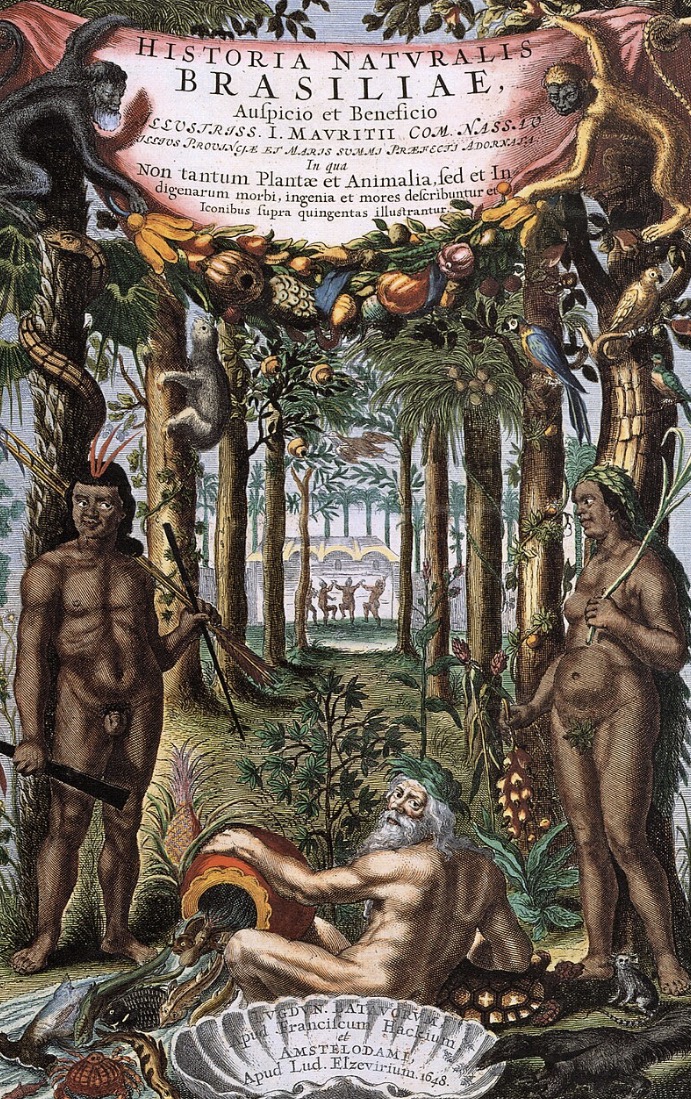
Historia naturalis Brasiliae

Natural History of Brazil
Book
Piso, W., Marcgraf, G. and Laet, J.d. (1648) Historia naturalis Brasiliae. [Natural History of Brazil] Lugdunum Batavorum [Leiden], Apud Franciscum Hackium, 300 pp. (see p. 271)
Record No. 16398  |  Sinkankas/Born No.: NIS/NIB  |  Language: in Latin  |  RWHL
A landmark seventeenth-century natural history of Brazil, produced from observations made during the Dutch occupation of northeastern Brazil. Piso treats medicine, diseases, and useful natural products, while Marcgraf provides systematic descriptions of the region’s plants, animals, geography, and other natural phenomena, with editorial contributions by Johannes de Laet. Richly illustrated, the work was one of the earliest comprehensive scientific accounts of South American nature. Of particular gemological interest is p. 271, where precious stones and mineral materials occurring in Brazil are discussed, providing an important early European record of Brazilian gem resources.

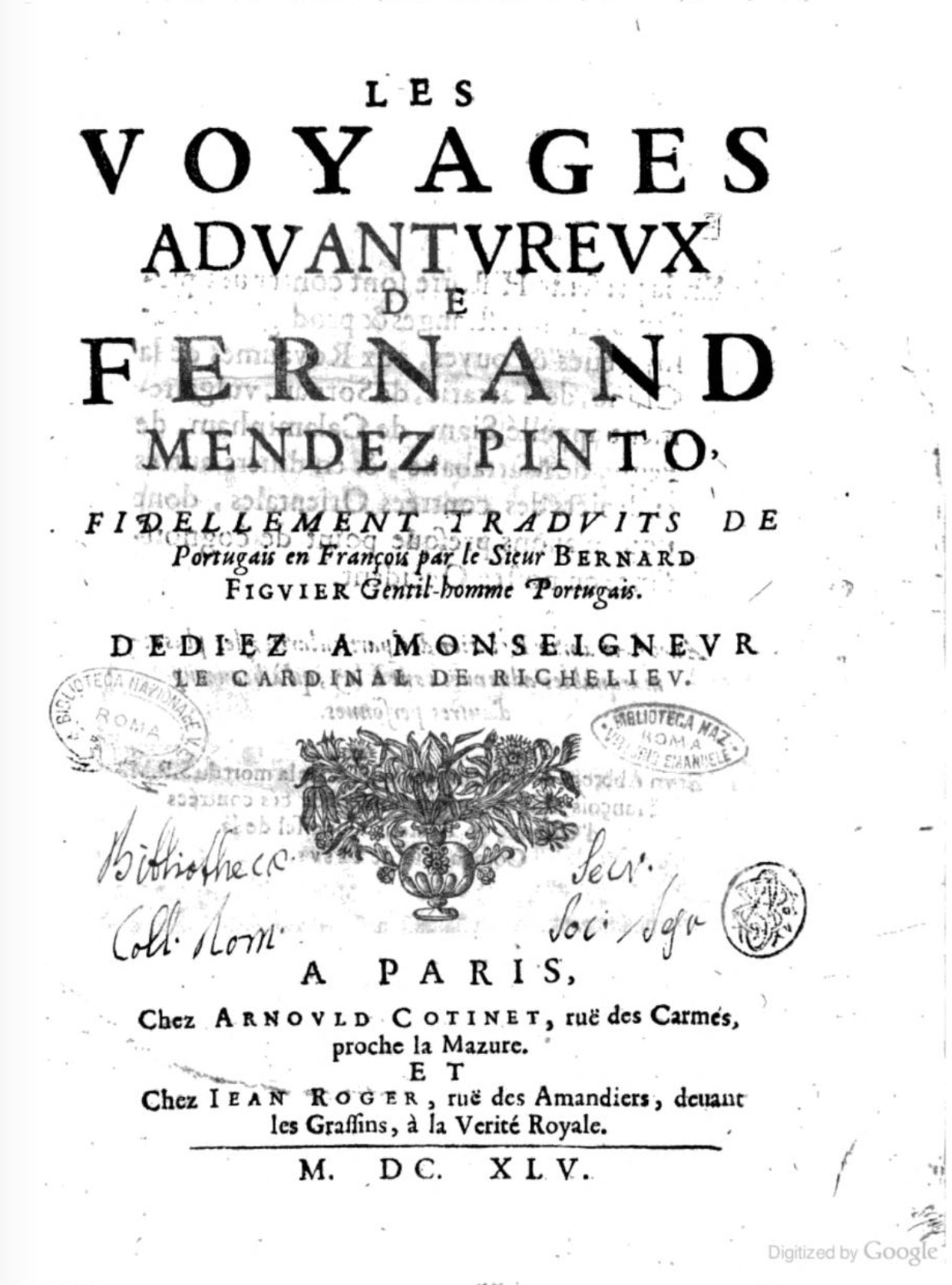
Les Voyages Advantureax De Fernand Mendez Pinto, Fidellement Traduits de Portuguais en Francois par Le Sieur Bernard Figuier, Gentilhomme Portuguais

The Adventurous Voyages of Fernand Mendez Pinto, Faithfully Translated from Portuguese into French by Sieur Bernard Figuier, Portuguese Gentleman
Book
Pinto, F.M. (1645) Les Voyages Advantureax De Fernand Mendez Pinto, Fidellement Traduits de Portuguais en Francois par Le Sieur Bernard Figuier, Gentilhomme Portuguais. [The Adventurous Voyages of Fernand Mendez Pinto, Faithfully Translated from Portuguese into French by Sieur Bernard Figuier, Portuguese Gentleman] Paris
Record No. 2846  |  Sinkankas/Born No.: NIS/NIB  |  Language: in French  |  RWHL
A French translation of Fernão Mendes Pinto’s celebrated account of his travels and adventures in Asia during the sixteenth century. Pinto describes journeys through India, Southeast Asia, China, and Japan, combining observations of peoples, cities, religions, warfare, navigation, commerce, and natural products with accounts of his extraordinary personal experiences. Of particular gemological interest are references to precious stones, pearls, gold, jewelry, and the trade in luxury materials throughout Asian commercial networks, providing an important early European perspective on the wealth and gem trade of the East. Early mention of gems in Thailand; quoted by Gühler (1947)

Building a Gemological Library

Gemological books range from general identification manuals and textbooks to specialized works on individual gems, mineralogy, jewelry, treatments, synthesis, history and gem-producing regions.

For a curated selection of particularly useful books, read The Gemologist's Core Library — Classic Books on Gemology, Jewelry and Mineralogy.

About Four Treasures

Four Treasures is Lotus Gemology's freely accessible gemological reference database. Use the full database to search by author, title or keyword and explore literature on gemology, mineralogy, jewelry and related fields. Where available, hyperlinks on titles may lead directly to the full publication.

Search the Complete Four Treasures Database