Gemology Books Bibliography

Gemology Books Bibliography

Explore books on gems, gemology, jewelry and mineralogy in Four Treasures, the Lotus Gemology reference database. This bibliography brings together matching book records from the collection, with publication details, abstracts and cover images where available.

Gemology Book References

The list below matches books concerning gemology and related subjects in the database's searchable fields. Some works cover several branches of gems, jewelry or mineralogy.
3,301–3,320 of 3,452 matching references

Gemstones of Pakistan: Geology and Gemmology

Book
Kazmi, A.H. and O’Donoghue, M. (1990) Gemstones of Pakistan: Geology and Gemmology. Peshawar, Gemstone Corp. of Pakistan, 146 pp.
Record No. 4841  |  not seen
Maya Incised Jades and Slate Discs from Costa Rica
Maya Incised Jades and Slate Discs from Costa Rica

Unpublished Work
Reents-Budet, D. and Fields, V.M. (1989) Maya Incised Jades and Slate Discs from Costa Rica. Manuscript on file; unpublished report.
Record No. 28619  |  not seen

Jade exchange in Mesoamerica and Central America
Book Section
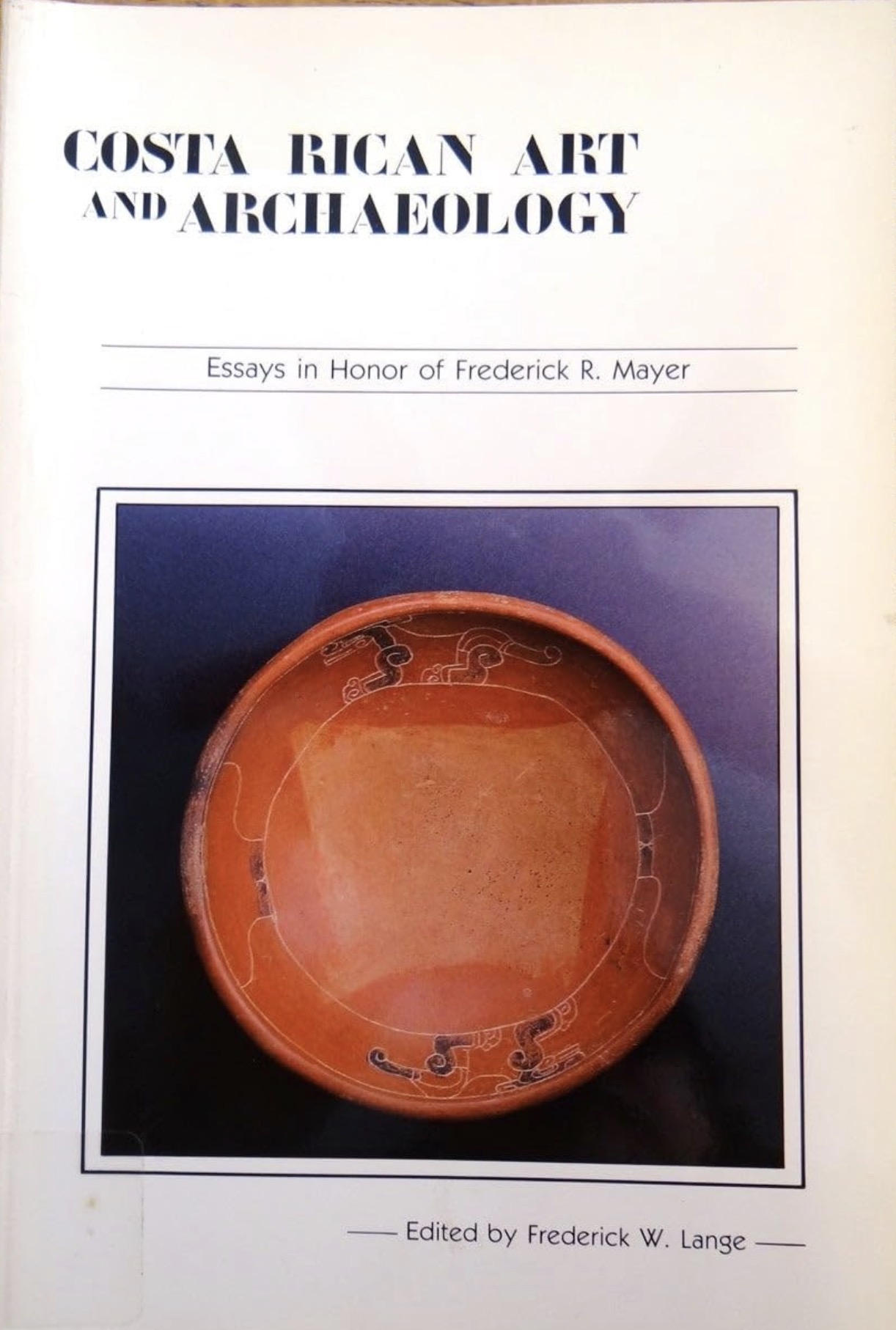
Lange, F.W. and Bishop, R. (1988) Jade exchange in Mesoamerica and Central America. In: Costa Rican Art and Archaeology, Boulder: University of Colorado Press, pp. 67–88.
Record No. 28632  |  ISBN/ISSN: 9781560000000  |  Sinkankas/Born No.: NIS/NIB  |  not seen

The Lapidary Industry of Teotihuacan, Mexico
Thesis
Turner, M.H. (1988) The Lapidary Industry of Teotihuacan, Mexico., Rochester, NY: University of Rochester, 1031 pp.
Record No. 28606  |  Sinkankas/Born No.: NIS/NIB  |  not seen
An analysis of fine stone and shell materials from Teotihuacan was undertaken to define the nature and organization of the city’s lapidary industry. More than 8,000 artefacts and manufacturing remains composed of jadeite, serpentine, slate, other fine stones and a wide variety of Atlantic and Pacific shell species were examined. These materials, recovered by the University of Rochester’s Teotihuacan Mapping Project, included complete and fragmentary beads, pendants, figurines and other ornaments, as well as small and minute waste fragments produced during manufacture. All specimens were identified and analysed both microscopically and macroscopically, and the resulting data were recorded in a computerized database. Three lines of evidence were used to investigate lapidary production at Teotihuacan. First, materials from a suspected workshop district were analysed to determine whether it had indeed functioned as a lapidary barrio. Second, lapidary materials recovered from twenty-seven test excavations were studied for evidence of production activities and for information regarding the use of fine stones and shells in a variety of contexts throughout the city. Third, materials from surface collections across all sectors of Teotihuacan were examined to identify patterns in the distribution and use of lapidary materials and to locate areas where high concentrations of manufacturing debris might indicate workshop activity. The results confirmed that lapidary workshops were concentrated in a barrio on the northeastern edge of the city, as earlier investigators had suspected. This district appears to have produced lapidary objects intended for the middle strata of Teotihuacan society and has therefore been interpreted as a barrio of local workshops. Additional local workshops may also have existed elsewhere within the city. Although the state probably controlled the flow of raw materials into these workshops, direct state control over production itself appears to have been limited. A second, more specialized level of lapidary production was also identified. Workshops located adjacent to major temple and pyramid precincts seem to have operated under the supervision of temple or palace authorities and produced luxury goods intended for the upper levels of society. The study further explored the symbolic significance of fine stones and shells as materials associated with fertility, abundance and prestige. Notably, it demonstrated that images of jadeite were employed as a form of glyphic notation in Teotihuacan mural painting, underscoring the cultural and ideological importance of jade within Teotihuacan society.

Style in lapidary technology: Identifying the Teotihuacan lapidary industry
Book Section
Turner, M.H. (1988) Style in lapidary technology: Identifying the Teotihuacan lapidary industry. In: Art, Ideology, and the City of Teotihuacan, Washington, DC: Dumbarton Oaks Research Library and Collection, 452 pp..
Record No. 28604  |  ISBN/ISSN: 9780880000000  |  not seen

Jadeite, greenstone, and the Pre-Columbian Costa Rican lapidary
Book Section
Chenault, M.L. (1988) Jadeite, greenstone, and the Pre-Columbian Costa Rican lapidary. In: Costa Rican Art and Archaeology, Boulder: University of Colorado Press, pp. 89–110.
Record No. 28422  |  ISBN/ISSN: 9781560000000  |  Sinkankas/Born No.: NIS/NIB  |  not seen

Bestiaires et lapidaires: Un genre littéraire?
Bestiaries and lapidaries, a literary genre?
Book Section
Ringger, K. (1988) Bestiaires et lapidaires: Un genre littéraire? [Bestiaries and lapidaries, a literary genre?] In: Actes du 18ᵉ Congrès International de Linguistique et de Philologie Romanes, Tübingen: Max Niemeyer, 7 Vols., Vol. 6 , pp. 136–148.
Record No. 27965  |  ISBN/ISSN: 3484502266  |  Sinkankas/Born No.: NIS/NIB  |  Language: in French  |  not seen
Ringger asks whether medieval bestiaries and lapidaries can properly be regarded as a literary genre, rather than merely as primitive works of natural history. He argues that they must be understood within the medieval Christian conception of nature as a system of signs: animals and stones possess observable characteristics (semblance) but also multiple spiritual and moral meanings (senefiance). Bestiaries and lapidaries therefore combine descriptions of the natural world with allegorical and exegetical interpretation, transforming natural history into a didactic discourse in which created things reveal divine truths. Ringger emphasizes the close structural relationship between the two traditions and the interaction of scientific, theological, moral and literary elements. He concludes that their characteristic movement between the physical object and its symbolic meanings gives bestiaries and lapidaries a distinctive literary coherence. Later scholarship frequently cites the paper for Ringger’s formulation that these works explicate the multiple meanings of the created world as a divine semblance.

Zum lapidarius des Marbod von Rennes

On the Lapidarius of Marbod of Rennes
Book Section
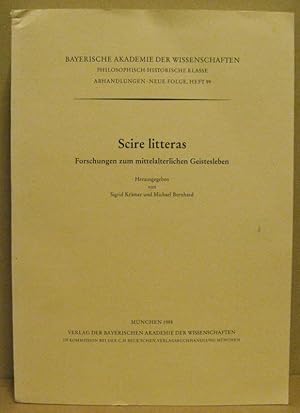
Haefele, H.F. (1988) Zum lapidarius des Marbod von Rennes. [On the Lapidarius of Marbod of Rennes] In: Scire litteras. Forschungen zum mittelalterlichen Geistesleben, Bayerische Akademie der Wissenschaften. Philosophisch-Historische Klasse, Abhandlungen, Neue Folge, 99, Munich: Verlag der Bayerischen Akademie der Wissenschaften, pp. 211–219.
Record No. 27914  |  ISBN/ISSN: 9783770000000  |  Sinkankas/Born No.: NIS/NIB  |  Language: in German  |  not seen
Haefele examines textual and interpretive problems surrounding Marbod of Rennes’ Liber lapidum (Lapidarius), the influential medieval Latin poem on the properties and powers of stones. The study concentrates especially on the prologue and the poem on coral, using these passages to clarify Marbod’s conception of the occult and medicinal powers attributed to stones and aspects of the work’s textual tradition. Haefele also addresses the proposed connection between Marbod’s Lapidarius and the Macer Floridus, rejecting the suggestion that Marbod authored the latter on linguistic, stylistic and conceptual grounds.

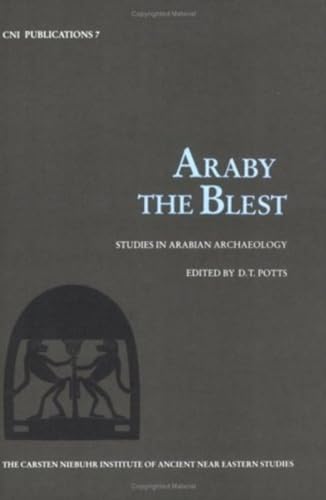
Araby the Blest: Studies in Arabian Archaeology
Edited Book
Potts, D.T., editor (1988) Araby the Blest: Studies in Arabian Archaeology.. Copenhagen, Museum Tuschualnum Press, 264 pp..
Record No. 27258  |  ISBN/ISSN: 9788770000000  |  Sinkankas/Born No.: NIS/NIB  |  not seen
Archaeological exploration of the Arabic Peninsula is not a new phenomenon, but only in the last two decades or so, has it received the scholary attention it deserves. Surveys are now taking place in the entire region, and new excavations have begun in almost every country on the peninsula. This collection of articles on Arabian archaeology takes its place among many of the recent works on the subject, and the articles presented here contributes with both materials and ideas to the field of study. Contributions range from palaeography and prehistory to the Islamic conquest.

Materials issues in art and archaeology

Conference Paper
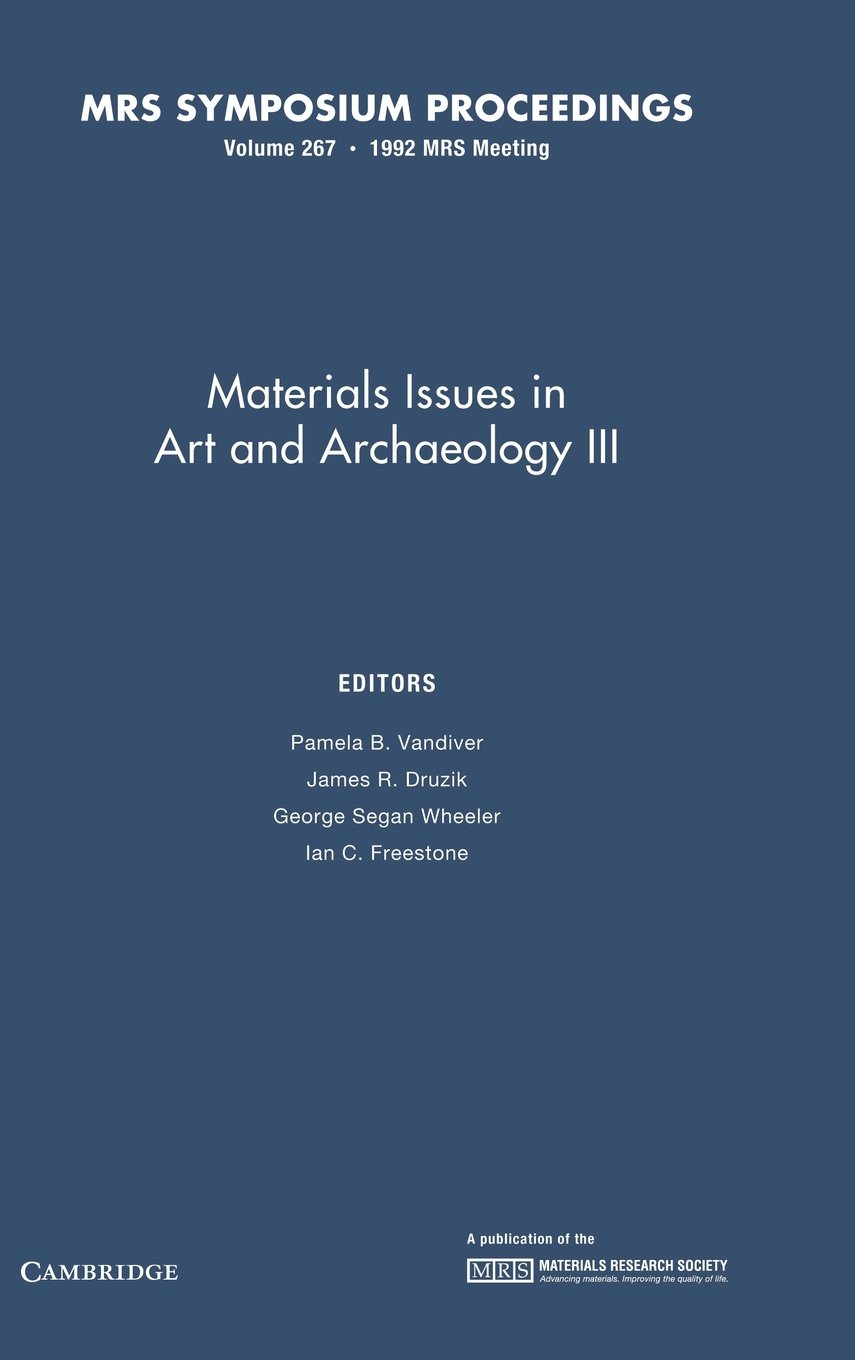
Sayre, E.V., Vandiver, P.B., Sruzik, J. and Stevenson, C. (1988) Materials issues in art and archaeology. Materials issues in art and archaeology, Reno, NV: Cambridge University Press,
Record No. 26404  |  ISBN/ISSN: 931837936  |  not seen
A possible lapidary training piece from Arikamedu, India
A possible lapidary training piece from Arikamedu, India

Journal Article
Gorelick, L. and Gwinnett, A.J. (1988) A possible lapidary training piece from Arikamedu, India. Archaeomaterials, Vol. 2, No. 2, pp. 187–193.
Record No. 26288  |  not seen

Gem Reference Guide

Book
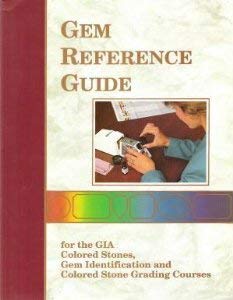
GIA (1988) Gem Reference Guide. Santa Monica, CA, Gemological Institute of America, 270 pp
Record No. 17210  |  seen

Die besonderen Merkmale der individuellen Edelsteine der Granat-Gruppe
The special features of individual gemstones in the garnet group
Journal Article
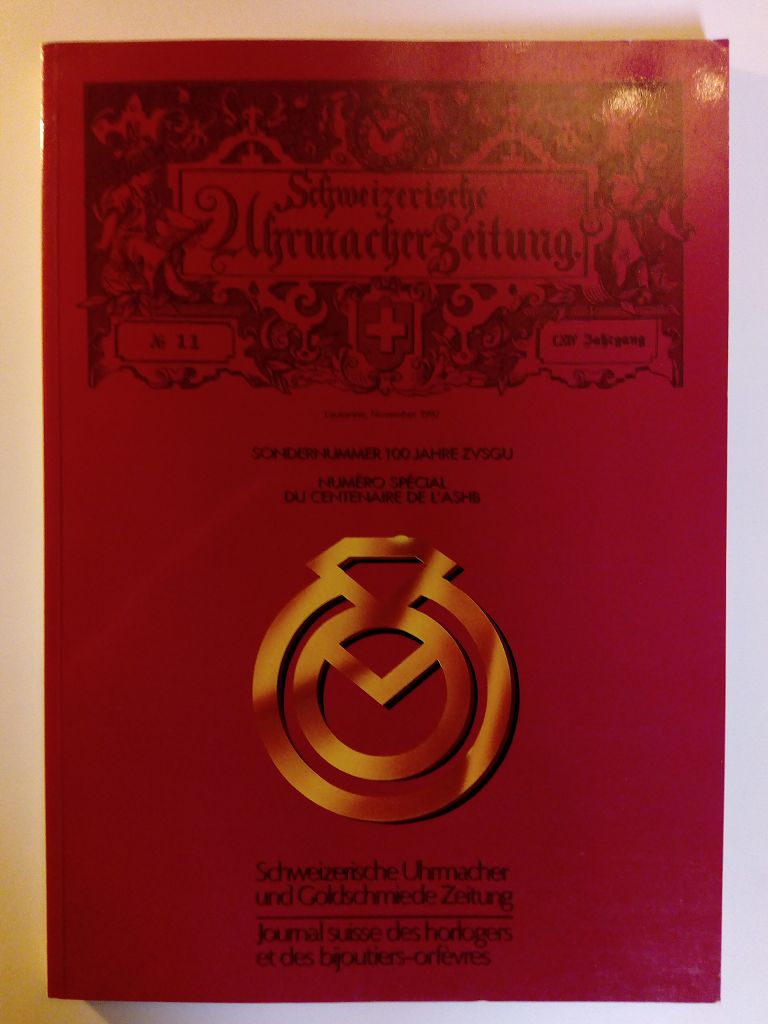
Gübelin, E.J. (1988) Die besonderen Merkmale der individuellen Edelsteine der Granat-Gruppe. [The special features of individual gemstones in the garnet group] Schweizerische Uhrmacher- und Goldschmiede-Zeitung (SUZ), No. 5, pp. 21–31.
Record No. 2191  |  Sinkankas/Born No.: NIS/NIB  |  Language: in German  |  not seen
Gübelin reviews the principal gem varieties belonging to the garnet group, emphasizing the properties that distinguish individual members despite their closely related crystal structures and extensive solid-solution relationships. The article discusses the characteristic colors, physical and optical properties, chemical composition and diagnostic features of the major gem garnets, including the pyrope–almandine–spessartine and grossular–andradite series. Particular attention is given to variations within these groups and to the practical gemological characteristics by which garnet varieties can be identified and separated. The paper provides a concise overview of the diversity of garnet as a gemstone rather than treating garnet as a single homogeneous gem species.

Alexandrit aus einem heuentdeckten Vorkommen in Brasilien
Alexandrite from a newly discovered deposit in Brazil
Journal Article
Gübelin, E.J. (1988) Alexandrit aus einem heuentdeckten Vorkommen in Brasilien. [Alexandrite from a newly discovered deposit in Brazil] Schweizerische Uhrmacher- und Goldschmiede-Zeitung (SUZ), No. 2, pp. 16–22.
Record No. 2190  |  Sinkankas/Born No.: NIS/NIB  |  Language: in German  |  not seen
Gübelin reports on the newly discovered Hematita alexandrite deposit in Minas Gerais, Brazil, discovered in 1987 and notable for producing unusually fine and relatively clean material. He describes the appearance and gemological characteristics of the alexandrite, including its pronounced color change from greenish hues in daylight to reddish or purplish red under incandescent illumination. Particular attention is given to internal features useful for identifying the Brazilian material. Among the characteristic mineral inclusions subsequently identified in Hematita alexandrite are fluorite and apatite, together with mica and fluid inclusions. The discovery was significant because Hematita rapidly became an important source of fine alexandrite at a time when supplies from the traditional Russian and Sri Lankan sources were limited.

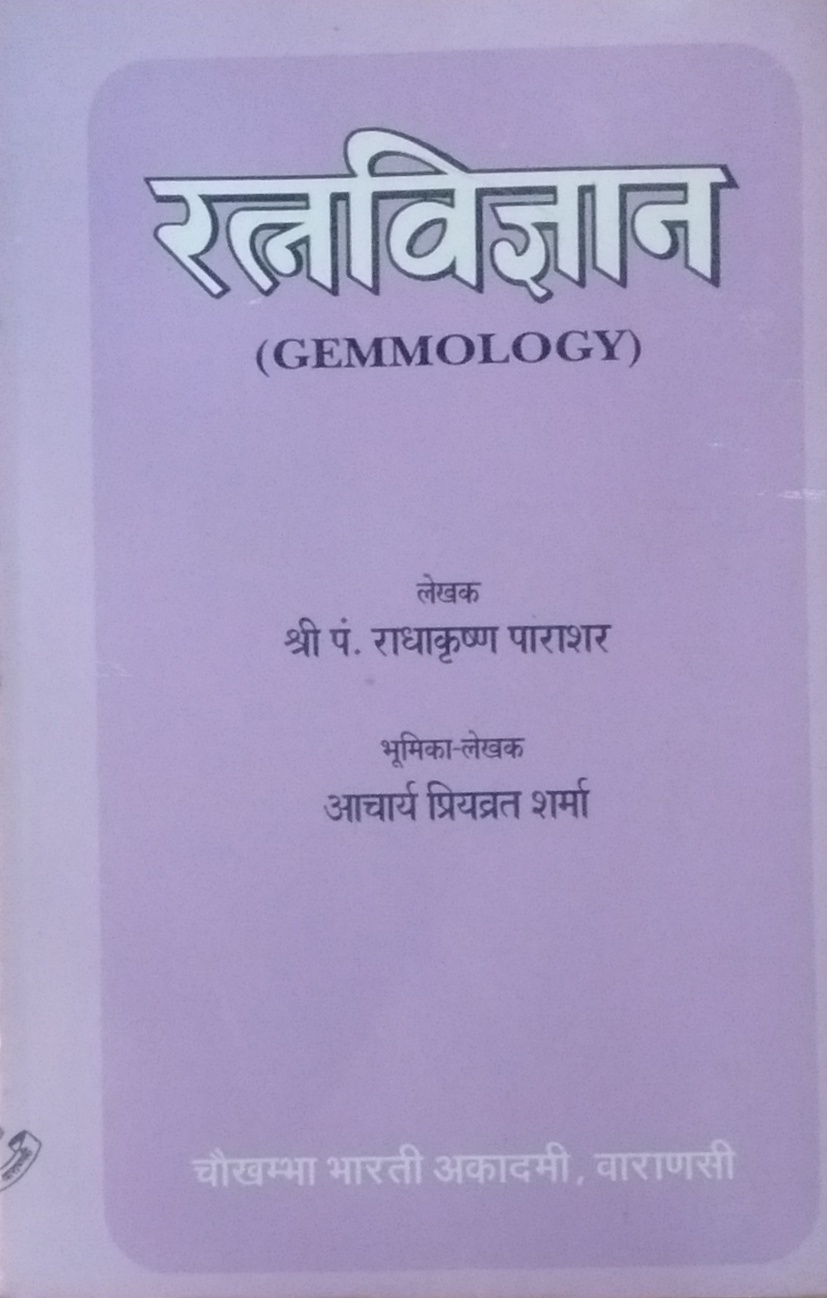
Ratna Vijnana

Gemology
Book
Vyasa, S. (1988) Ratna Vijnana. [Gemology] Dilli, India, Jnana Ganga, 196 pp.
Record No. 1794  |  Sinkankas/Born No.: NIS  |  Language: in Sanscrit and Prakit  |  not seen

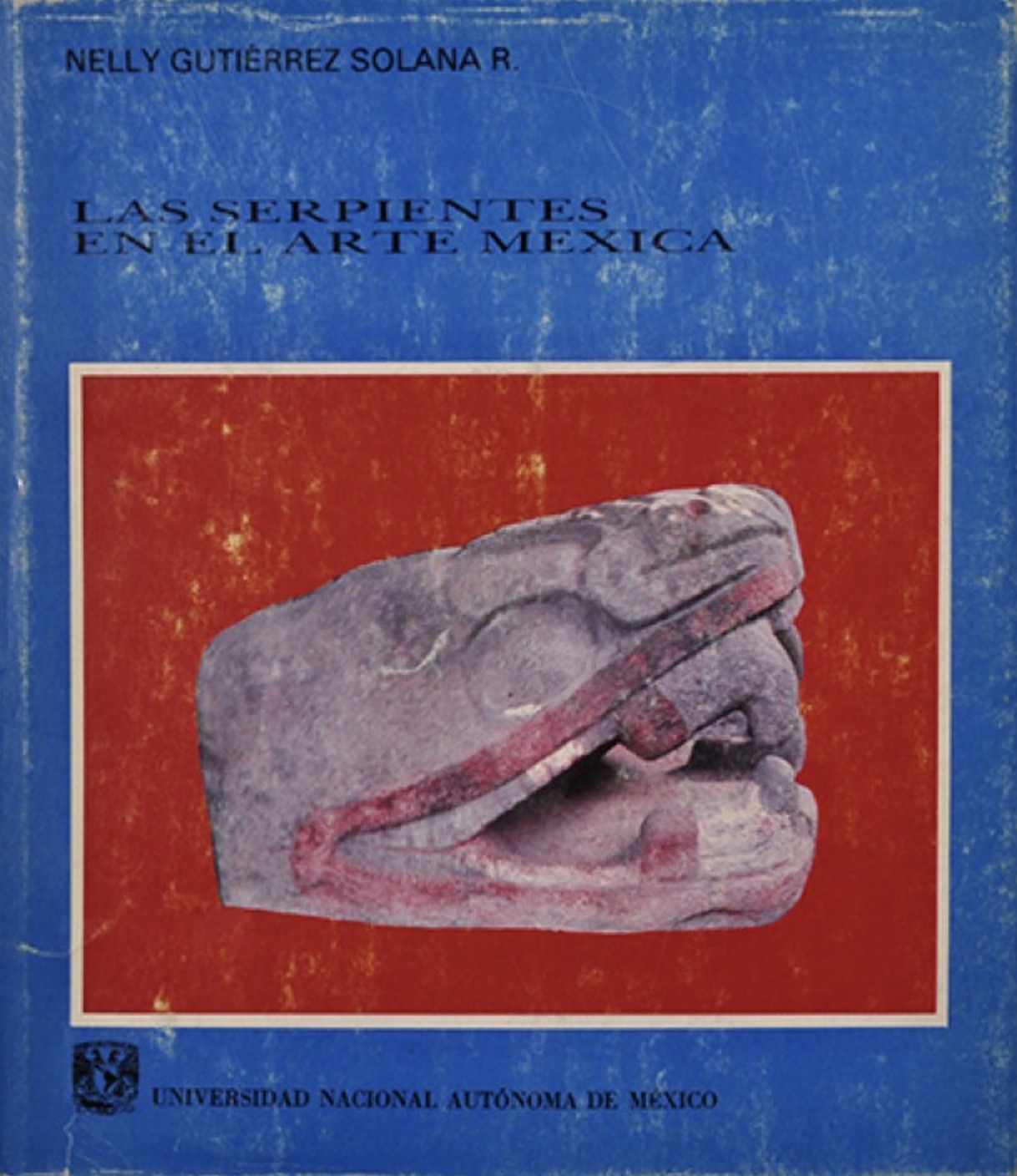
Las serpientes en el arte mexica

Serpents in Mexican Art
Book
Gutiérrez Solana, N. (1987) Las serpientes en el arte mexica. [Serpents in Mexican Art] Mexico City, Universidad Nacional Autónoma de México, 163 pp.
Record No. 28861  |  ISBN/ISSN: 9688377465  |  Sinkankas/Born No.: NIS/NIB  |  Language: in Spanish  |  not seen
Gutiérrez Solana examines the representation and symbolism of serpents in Mexica (Aztec) art, drawing principally on surviving sculpture and related iconographic evidence. She analyzes the physical characteristics used by Mexica artists to distinguish different serpent forms, including the rattlesnake, and develops a classification based on posture, attributes and associated imagery. Particular attention is given to the serpent’s relationships with water, fertility, sexuality and the earth, including its associations with deities such as Tláloc and Chalchiuhtlicue, as well as to feathered and supernatural serpent imagery. By comparing individual representations and their archaeological and religious contexts, the study demonstrates that serpent imagery did not possess a single fixed meaning but acquired different symbolic values according to its attributes and associations. Later iconographic studies continue to use Gutiérrez Solana’s classification of Mexica serpent representations.

Sri Lanka and the Roman empire

Journal Article
Weerakkody, D.P.M. (1987) Sri Lanka and the Roman empire. Modern Sri Lanka Studies, Vol. 2, No. 1–2, pp. 21–32.
Record No. 17228  |  not seen

Emeralds from Goiás State – Brazil

Conference Paper
Barros, J.C. and Kinnaird, J.A. (1987) Emeralds from Goiás State – Brazil. XXI International Gemmological Conference, Abstracts, Rio de Janeiro
Record No. 7803  |  RHL

Maw-sit-sit (kosmochlore jade): A metamorphic rock with a complex composition from Myanmar (Burma). (Abstract)
Conference Paper
Hänni, H.A. and Meyer, J. (1987) Maw-sit-sit (kosmochlore jade): A metamorphic rock with a complex composition from Myanmar (Burma). (Abstract). Proceedings, 26th International Gemmological Conference, Idar-Oberstein pp. 22–24.
Record No. 7713  |  not seen

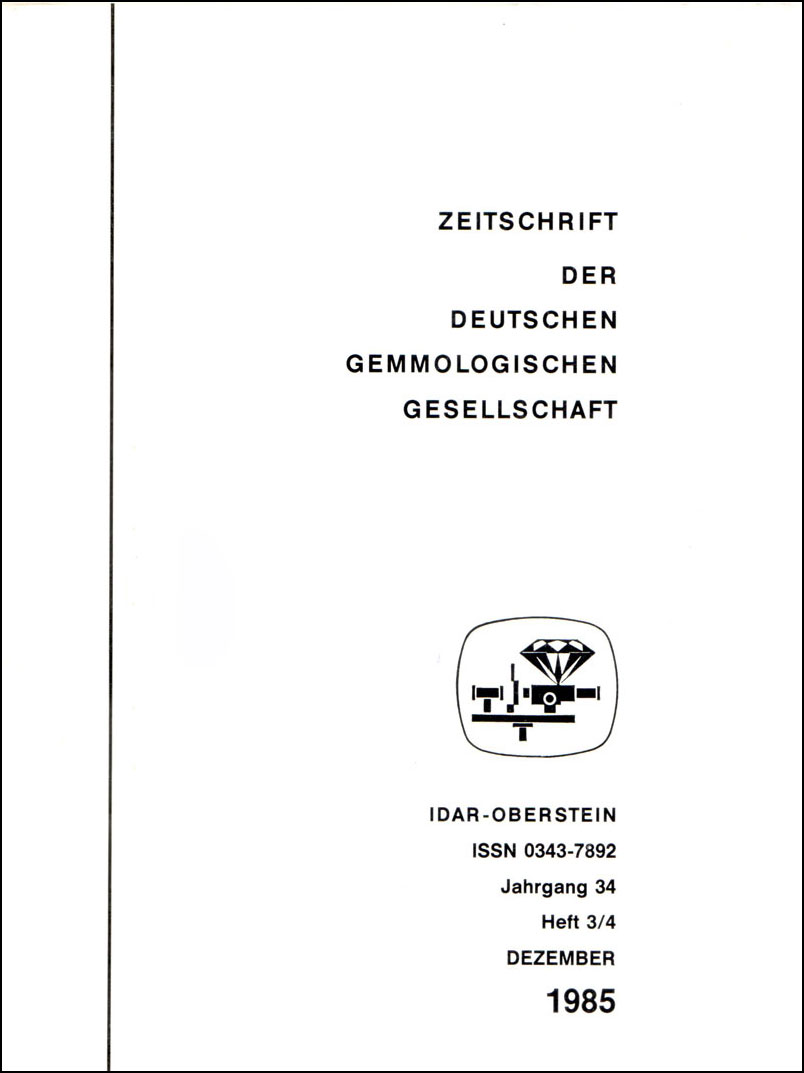
Nach dem Hydrothermalverfahren hergestellte synthetische Smaragde aus der UdSSR

Hydrothermally grown emeralds from the USSR
Journal Article
Lind, T.H., Henn, Ulrich and Bank, Hermann (1987) Nach dem Hydrothermalverfahren hergestellte synthetische Smaragde aus der UdSSR. [Hydrothermally grown emeralds from the USSR] Zeitschrift der Deutschen Gemmologischen Gesellschaft, Vol. 36, pp. 51–60.
Record No. 2385  |  Language: In German  |  not seen
Lind, Henn and Bank examine 50 hydrothermally grown synthetic emeralds produced in the USSR, describing their gemological properties and diagnostic features. The material has SG 2.68–2.70, refractive indices nω 1.578–1.584 and nε 1.571–1.581, and birefringence 0.005–0.008. Microscopic characteristics include conspicuous zonal growth structures and growth tubes extending from black hexagonal platelets. The authors supplement conventional gemological testing with absorption spectroscopy and chemical analysis, including X-ray fluorescence and electron-microprobe methods, to characterize the material and provide criteria for distinguishing these Soviet hydrothermal synthetics from natural emeralds.

Building a Gemological Library

Gemological books range from general identification manuals and textbooks to specialized works on individual gems, mineralogy, jewelry, treatments, synthesis, history and gem-producing regions.

For a curated selection of particularly useful books, read The Gemologist's Core Library — Classic Books on Gemology, Jewelry and Mineralogy.

About Four Treasures

Four Treasures is Lotus Gemology's freely accessible gemological reference database. Use the full database to search by author, title or keyword and explore literature on gemology, mineralogy, jewelry and related fields. Where available, hyperlinks on titles may lead directly to the full publication.

Search the Complete Four Treasures Database