Gemstone Inclusions Bibliography

Gemstone Inclusions Bibliography

Explore books, articles and historical sources on inclusions in gemstones in Four Treasures, the Lotus Gemology reference database. This bibliography brings together matching records from the collection, with publication details, abstracts and cover images where available.

Gemstone Inclusion References

The list below matches the terms inclusion or inclusions in the database's searchable fields. Some references discuss inclusions as part of a broader subject.

81–100 of 1,120 matching references
Pink to purple sapphires from Ilakaka, Madagascar: Insights to separate unheated from heated samples

Pink to purple sapphires from Ilakaka, Madagascar: Insights to separate unheated from heated samples

Karampelas, S., Hennebois, U., Mevellec, J.-Y., Pardieu, V., Delaunay, A. and Fritsch, E. (2023)

Journal Article · Source: Minerals · Volume: Vol. 13 · Issue: No. 5 · Pages: 14 pp.

Abstract
The present study is focused on the analysis of zircon inclusions found in pink to purple sapphires from Ilakaka (Madagascar) with an optical microscope, Fourier-transform infrared (FTIR), and micro-Raman spectroscopy in order to update previous knowledge and find insights to separate heated from unheated samples. In total, 157 zircon inclusions in 15 unheated samples and 74 zircon inclusions in 6 heated samples are analysed using micro-Raman spectroscopy with standardised parameters. The full width at half maximum (FWHM) of the main Raman band due to anti-symmetric stretching vibration ν₃ of the SiO₄ tetrahedron in the zircon structure has been carefully measured. In the unheated samples, it ranges from 6.26 to 21.73 cm⁻¹ with an average of 10.74 cm⁻¹, a median of 10.04 cm⁻¹, and a standard deviation of 2.84 cm⁻¹. On the other hand, it is lower in the heated samples, ranging from 4.83 to 14.97 cm⁻¹ with an average of 7.23 cm⁻¹, median of 7.06 cm⁻¹, and standard deviation of 1.63 cm⁻¹. In our unheated samples, the FWHM was rarely below 7 cm⁻¹. In our heated samples, the FWHM was rarely above 12 cm⁻¹ but mostly below 8 cm⁻¹, with a variation restricted to less than 3 cm⁻¹ in the same sample. The present work will hopefully further contribute to more accurately identifying the low-temperature heat treatment of pink sapphires from Ilakaka, Madagascar.
Keywords
gems, corundum, treatments.6, Madagascar.12, heat treatment, Ilakaka, zircon inclusions, microraman
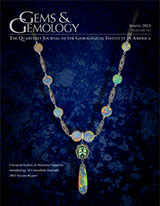
Gemological Characterization of Montana Sapphire from the Secondary Deposits at Rock Creek, Missouri River, and Dry Cottonwood Creek

Gemological Characterization of Montana Sapphire from the Secondary Deposits at Rock Creek, Missouri River, and Dry Cottonwood Creek

Palke, A.C., Renfro, N., Hapeman, J.R. and Berg, R.B. (2023)

Journal Article · Source: Gems & Gemology · Volume: Vol. 59 · Issue: No. 1, Spring · Pages: pp. 2–45

Abstract
Montana has produced large volumes of sapphire from secondary deposits for more than 150 years. While early production was mostly for industrial use as watch and instrument bearings, modern heat treatment technology has enabled the deposits to be worked profitably as gemstone mines, bringing more of this material to the gem and jewelry trade than ever before. Although pale blue and pale green sapphires make up the bulk of the production, fine Montana sapphire comes in nearly every hue, including yellow, orange, purple, and pink, along with very rare finds of ruby. Secondary Montana sapphire shares some similarities with those from Umba and Songea in Tanzania, but it is generally straightforward to separate them on the basis of inclusion scenes and trace element chemistry fingerprints.
Keywords
gems, corundum, inclusions.5, USA.12, Montana.12, Rock Creek, Missouri River, Dry Cottonwood Creek
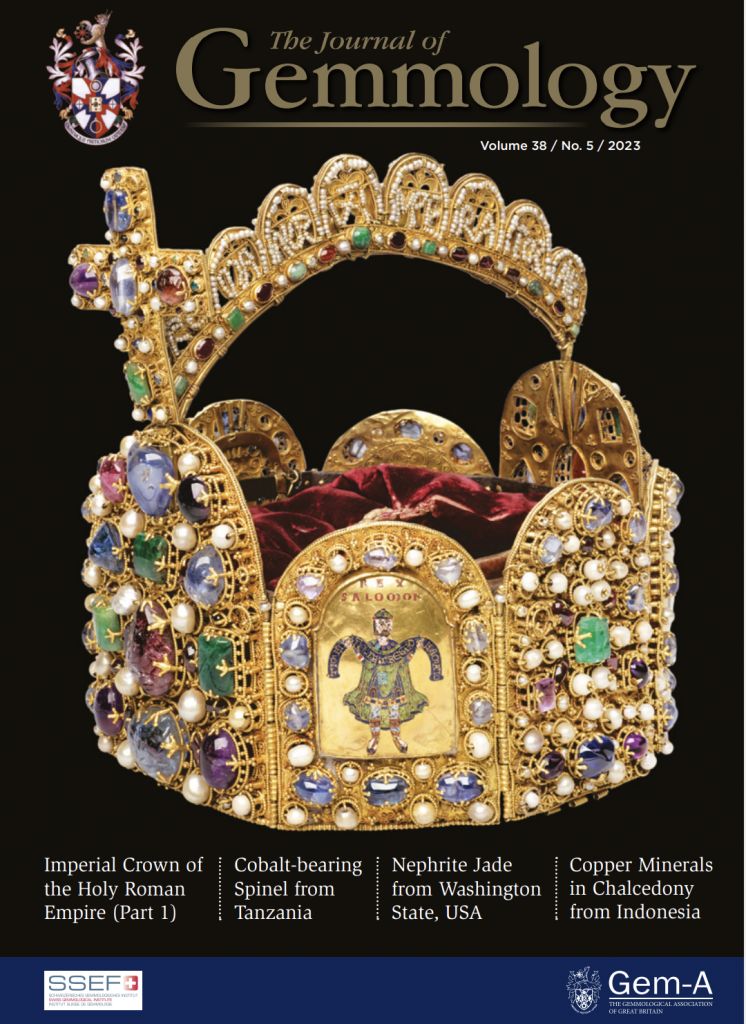
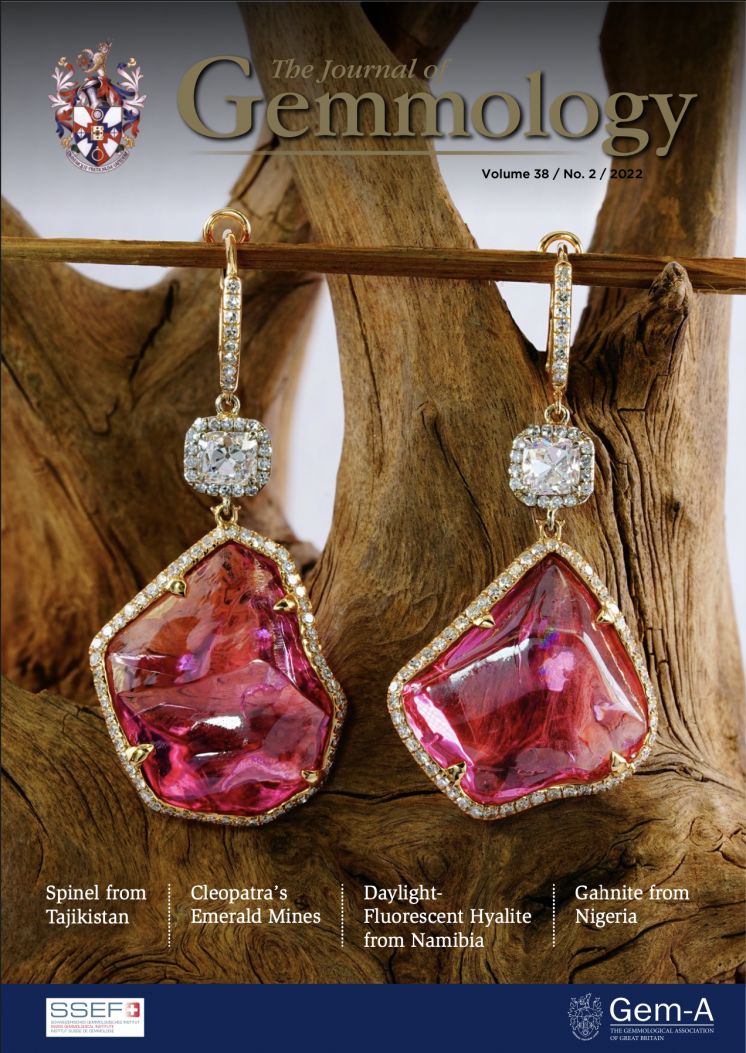
The Imperial Crown of the Holy Roman Empire, Part I: Photoluminescence and raman spectroscopic study of the gemstones

The Imperial Crown of the Holy Roman Empire, Part I: Photoluminescence and raman spectroscopic study of the gemstones

Nasdala, L., Lamers, T., Gilg, H.A., Chanmuang, C., Griesser, M., Kirchwegner, F., Erlacher, A. and Böhmler, M. (2023)

Journal Article · Source: Journal of Gemmology · Volume: Vol. 38 · Issue: No. 5 · Pages: pp. 448–473

Abstract
The Imperial Crown of the Holy Roman Empire is not only a unique and outstanding symbol of European history, it is also one of the most significant works of Western goldsmiths’ art from the High Middle Ages. However, little is known about the gem materials it contains. As part of an interdisciplinary research project led by the Kunsthistorisches Museum Vienna in Austria, the 172 gemstones in the crown were all conclusively identified for the first time using (non-destructive) photoluminescence and Raman spectroscopy. They include 71 blue sapphires, 50 garnets (22 almandines, 22 pyrope-almandines, five pyropes and one grossular), 20 emeralds, 13 amethysts, four chalcedonies and three spinels. In addition, 11 glass imitations of various colours were identified. Raman spectral details and inclusions in the garnets support their assignment to garnet types previously found to be used in antique and early medieval jewellery. The large red spinel in the centre of the crown’s front plate is presumably part of the original crown and, thus, is one of the earliest-known spinels in a historic object, yet it yielded spectroscopic evidence of having been heated.
Keywords
gems, corundum, history.1, sapphire, spinel, garnet, beryl, emerald, amethyst, chalcedony
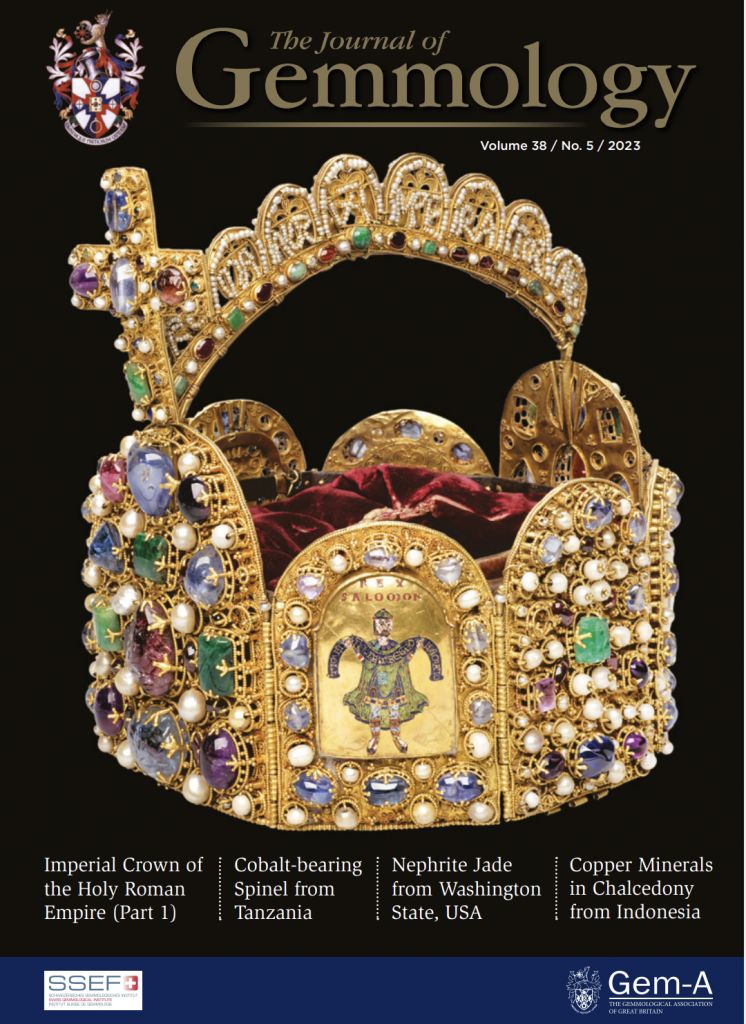
Cobalt-bearing blue spinel from Lukande, near Mahenge, Tanzania

Cobalt-bearing blue spinel from Lukande, near Mahenge, Tanzania

Krzemnicki, M.S., Leuenberger, A. and Balmer, W.A. (2023)

Journal Article · Source: Journal of Gemmology · Volume: Vol. 38 · Issue: No. 5 · Pages: pp. 474–493

Abstract
In September 2021, a new deposit of Co-bearing blue spinel was discovered in the Lukande area, south of Mahenge in central Tanzania. We analysed 44 faceted spinels from this source, ranging from Co-dominated blue to Fe-dominated (greyish) blue. Interestingly, nearly all of these spinels showed characteristic inclusion features, consisting predominantly of oriented rhombic lamellae (inferred to be högbomite), as well as oriented short needles and particles. In addition, trace-element analyses revealed two types of spinel from this new deposit: attractive blue stones that showed an average Co concentration of 32 ppm (designated type I), and darker material with distinctly higher Co (averaging 200 ppm; designated type II). The latter showed a beautiful blue colour only when cut into melee-sized stones (i.e. about 2 mm diameter). Based on their trace-element composition, stones from this new deposit near Lukande can be separated from Co-bearing spinels from Vietnam, Sri Lanka and Pakistan. U-Pb dating of surface-reaching zircon inclusions indicates the Tanzanian spinels formed during a late stage of the East African Orogeny, possibly overprinted by the Kuunga-Malagasy orogeny (about 500–570 million years ago).
Keywords
gems, spinel, cobalt-blue spinel, Tanzania, spinel inclusions
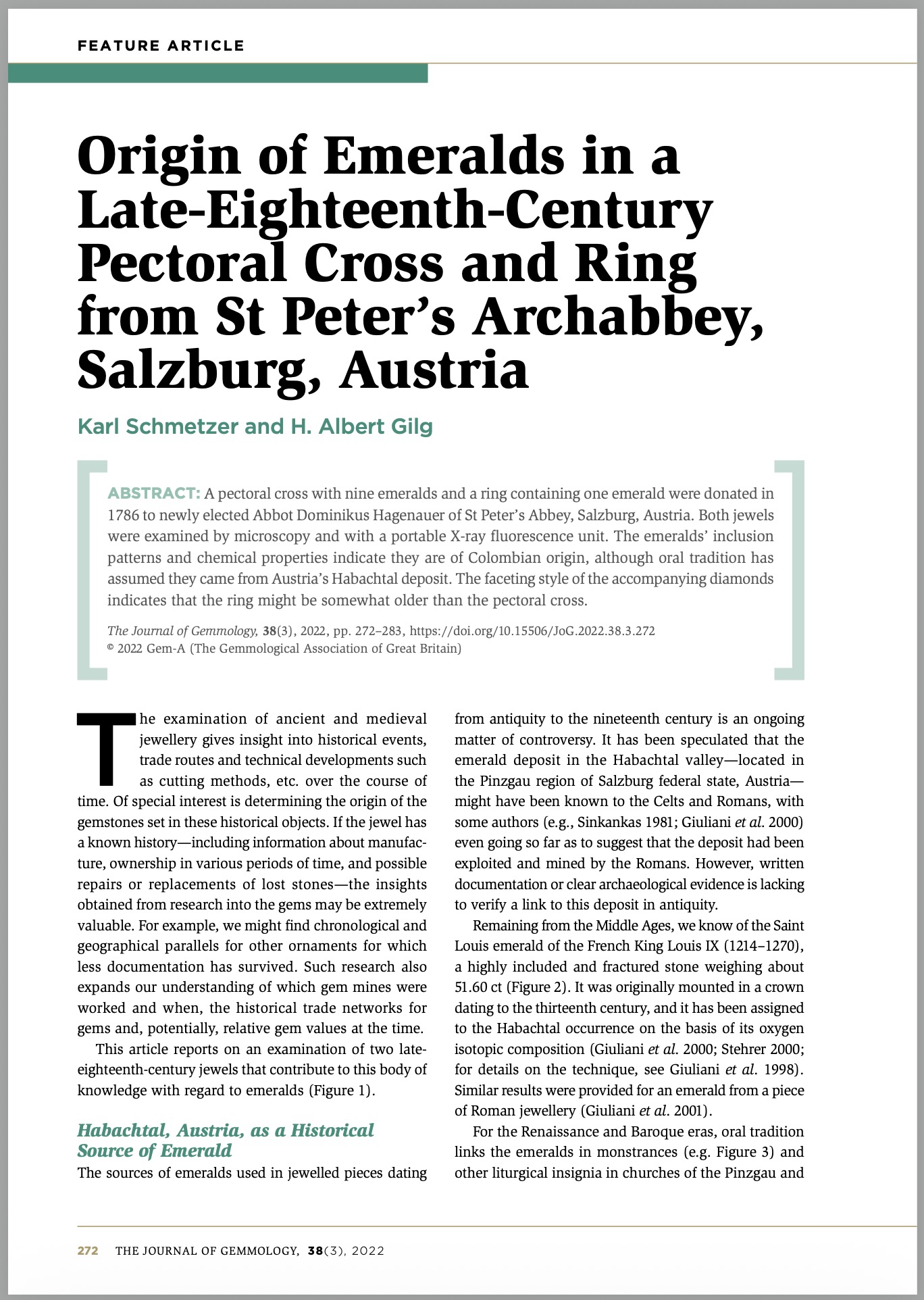
Origin of Emeralds in a Late-Eighteenth-Century Pectoral Cross and Ring from St Peter’s Archabbey, Salzburg, Austria

Origin of Emeralds in a Late-Eighteenth-Century Pectoral Cross and Ring from St Peter’s Archabbey, Salzburg, Austria

Schmetzer, K. and Gilg, H.A. (2022)

Journal Article · Source: Journal of Gemmology · Volume: Vol. 38 · Issue: No. 3 · Pages: pp. 272–283

Abstract
A pectoral cross with nine emeralds and a ring containing one emerald were donated in 1786 to newly elected Abbot Dominikus Hagenauer of St Peter’s Abbey, Salzburg, Austria. Both jewels were examined by microscopy and with a portable X-ray fluorescence unit. The emeralds’ inclusion patterns and chemical properties indicate they are of Colombian origin, although oral tradition has assumed they came from Austria’s Habachtal deposit. The faceting style of the accompanying diamonds indicates that the ring might be somewhat older than the pectoral cross.
Keywords
gems, beryl, emerald, Austria, Habachtal
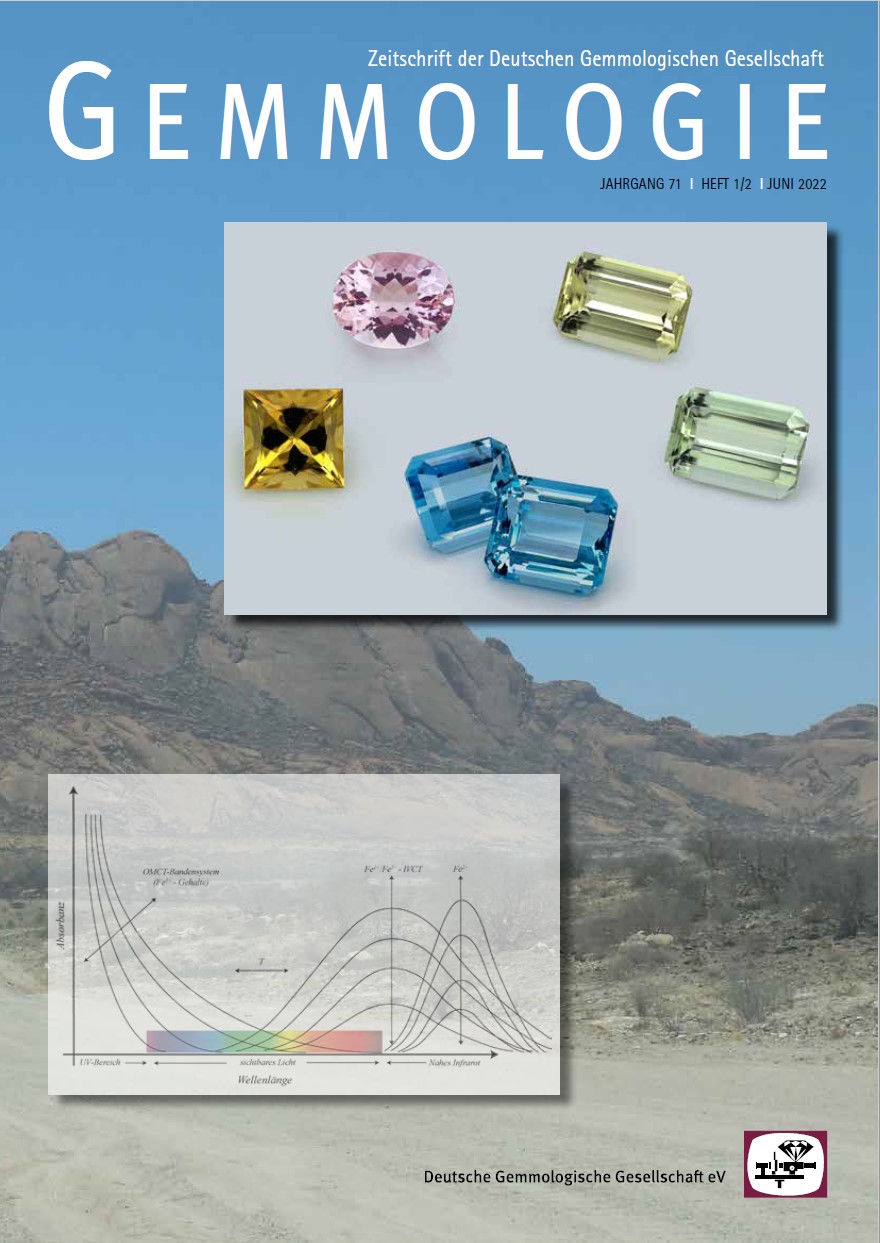
Die Beryll-Gruppe — eine Übersicht zu den Varietäten Aquamarin, Morganit, Heliodore und Goldberyl

Die Beryll-Gruppe — eine Übersicht zu den Varietäten Aquamarin, Morganit, Heliodore und Goldberyl

The beryl group: An overview of the varieties aquamarine, morganite, heliodor, and golden beryl

Henn, U. (2022)

Journal Article · Source: Gemmologie: Zeitschrift der Deutschen Gemmologischen Gesellschaft · Volume: Vol. 71 · Issue: No. 1/2 · Pages: pp. 3–26 · Language: in German

Abstract
The first part of this special issue deals with the origin of the term beryl as well as the denomination of the as gemstones significant varieties, except emerald. Following is a survey of the relevant physical properties that determine crystal structure, crystal chemistry and crystal morphology, as well as gemmological characterization. After a short description of the most important inclusion features the formation conditions and the occurrences are presented, specified for beryl in gem quality. Subsequently the application of the mineral beryl as well as exceptional and famous beryls are described.
Keywords
gems, beryl, aquamarine, morganite, heliodore, goshenite
Les gisemente d’émeraude du Pakistan

Les gisemente d’émeraude du Pakistan

The emerald deposits of Pakistan

Michelou, J.C., Conruz, L., Michelou, Z., Pardieu, V. and Giuliani, G. (2022)

Book Section · Source: Émeraudes, tout un monde! · Publisher: Les Editions du Piat · Pages: pp. 247–258 · Language: in French

Abstract
Michelou and colleagues review the emerald deposits of Pakistan, concentrating on the principal occurrences of the Swat Valley in Khyber Pakhtunkhwa and placing them within their regional geological setting. The chapter describes the geology and mineralization of the deposits, the occurrence of emerald in altered and structurally controlled host rocks, and the characteristics of the crystals produced. It discusses the history of discovery and exploitation, mining methods, production, and the organization of the local trade, together with the practical difficulties posed by the mountainous terrain. The authors also consider the gemological characteristics and quality of Pakistani emeralds, including their color, clarity, inclusions, and comparison with emeralds from other major sources. Additional Pakistani occurrences are reviewed, providing an overview of the country’s emerald resources and their significance within the international emerald trade.
Keywords
gems, beryl, emerald, Pakistan, Swat, Chitral
Géologie et genèse des émeraudes du Panjshir

Géologie et genèse des émeraudes du Panjshir

Geology and genesis of the emeralds of Panjshir

Giuliani, G. (2022)

Book Section · Source: Émeraudes, tout un monde! · Publisher: Les Editions du Piat · Pages: pp. 265–270 · Language: in French

Abstract
Giuliani examines the geology and genesis of the emerald deposits of the Panjshir Valley in Afghanistan, placing the mineralization within the regional tectonic and metamorphic framework of the Hindu Kush. Emerald occurs principally in fracture and vein systems developed in metamorphosed sedimentary rocks, where hydrothermal fluids circulated along faults and shear zones. The chapter describes the host rocks, structural controls, mineral associations, and alteration accompanying emerald formation and considers the sources and transport of the chemical components required for crystallization. Fluid-inclusion, stable-isotope, and geochemical evidence is used to constrain the nature of the mineralizing fluids and the physicochemical conditions of emerald formation. The Panjshir deposits are presented as an important example of emerald mineralization controlled by tectonic structures and fluid-rock interaction, explaining both the localization of the emerald-bearing zones and the distinctive geological character of this major Central Asian gem deposit.
Keywords
gems, beryl, emerald, Afghanistan, Panjshir
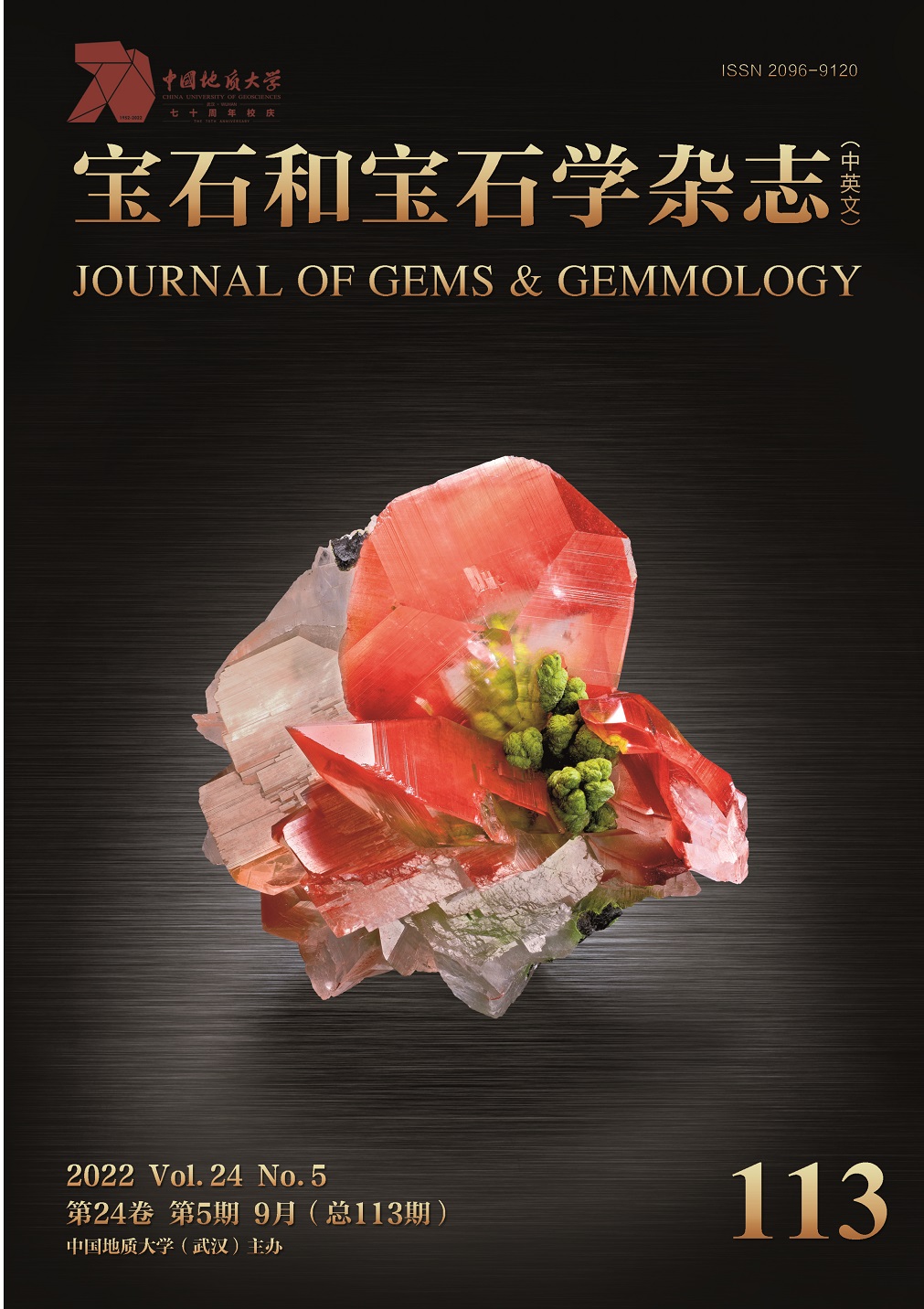
Mineral component and genesis of high-grade green jadeite jade from Guatemala

Mineral component and genesis of high-grade green jadeite jade from Guatemala

Wang, L., Zhang, H., Liu, J., Wang, L., Ouyang, Q., Liu, D. and Liu, W. (2022)

Journal Article · Source: Journal of Gems & Gemmology · Volume: Vol. 24 · Issue: No. 5 · Pages: pp. 11–30 · Language: in Chinese with English abstract

Abstract
High-grade green jadeite jade samples from Guatemala were selected as the research objects. Gem microscope, polarizing microscope, microscopic laser Raman spectrometer, and electron probe microanalyser were used to analyze the appearance characteristics, magnification features, constituent minerals, microstructures, Raman spectra, and mineral chemical compositions of the samples. Based on constituent minerals and their evolution, three periods of mineralization were observed. The product of the early mineralization period is jadeite with coarse-grained, hypautomorphic–automorphic granular-columnar texture and very pure chemical composition. The main mineralization period is characterized by metasomatism, with earlier-stage products being fine-grained jadeite containing relatively higher FeO, Cr₂O₃, MgO, and CaO contents compared to jadeite from the early period, and later-stage products being fine-grained omphacite with high MgO and CaO contents, whose green color shades correspond to Cr₂O₃ variation. The late mineralization period products consist of jadeite (or albite) + titanite in a filling texture, with titanite mainly distributed in reticulated veins between jadeite/omphacite particles or in microfractures. The combination of jadeite (or albite) + titanite + fluid inclusions formed during this late stage appears as white cotton-like zones in jadeite jade, representing fluid-melt inclusions. The fluid phase in these inclusions contains CO₂ and CO, with a strong characteristic Raman shift peak at 2,145 cm⁻¹, indicating a highly reductive formation environment with high CO content, corroborated by the presence of amorphous carbon in the samples. Jadeite is the main or one of the main minerals in most of the high-grade Guatemalan green jadeite jade samples studied. In such samples, the late-stage assemblage of jadeite + reticulated titanite + CO-dominated fluid inclusions commonly found in white “cotton” areas serves as an important reference feature for distinguishing Guatemalan high-grade green jadeite jades from Burmese green jadeite jades.
Keywords
gems, jade, jadeite, fei cui, Guatemala jadeite, fei cui, imperial jade
Microscopic exploration of gem and mineral surfaces

Microscopic exploration of gem and mineral surfaces

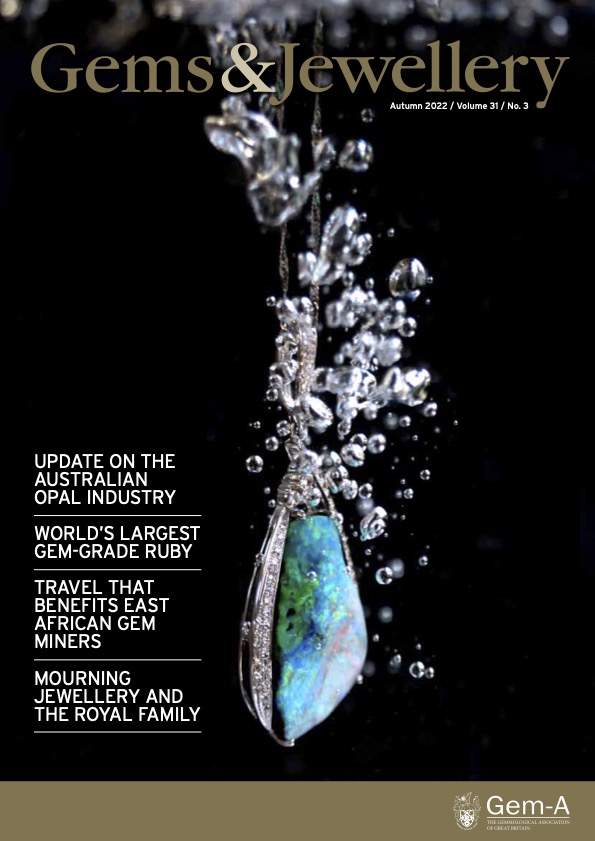
Renfro, N. (2022)

Journal Article · Source: Gems&Jewellery · Volume: Vol. 31 · Issue: No. 3 · Pages: pp. 22–25

Abstract
Nathan Renfro, GIA’s manager of colored stones, explains how studying the surface of minerals and gemstones can provide a wealth of information about the material.
Keywords
gems, corundum, inclusions.5, diamond, quartz, synthetic ruby
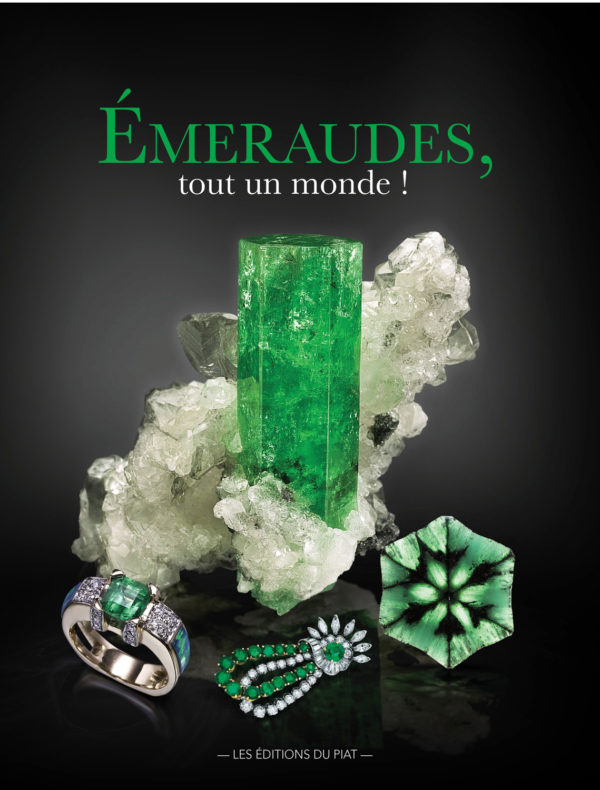
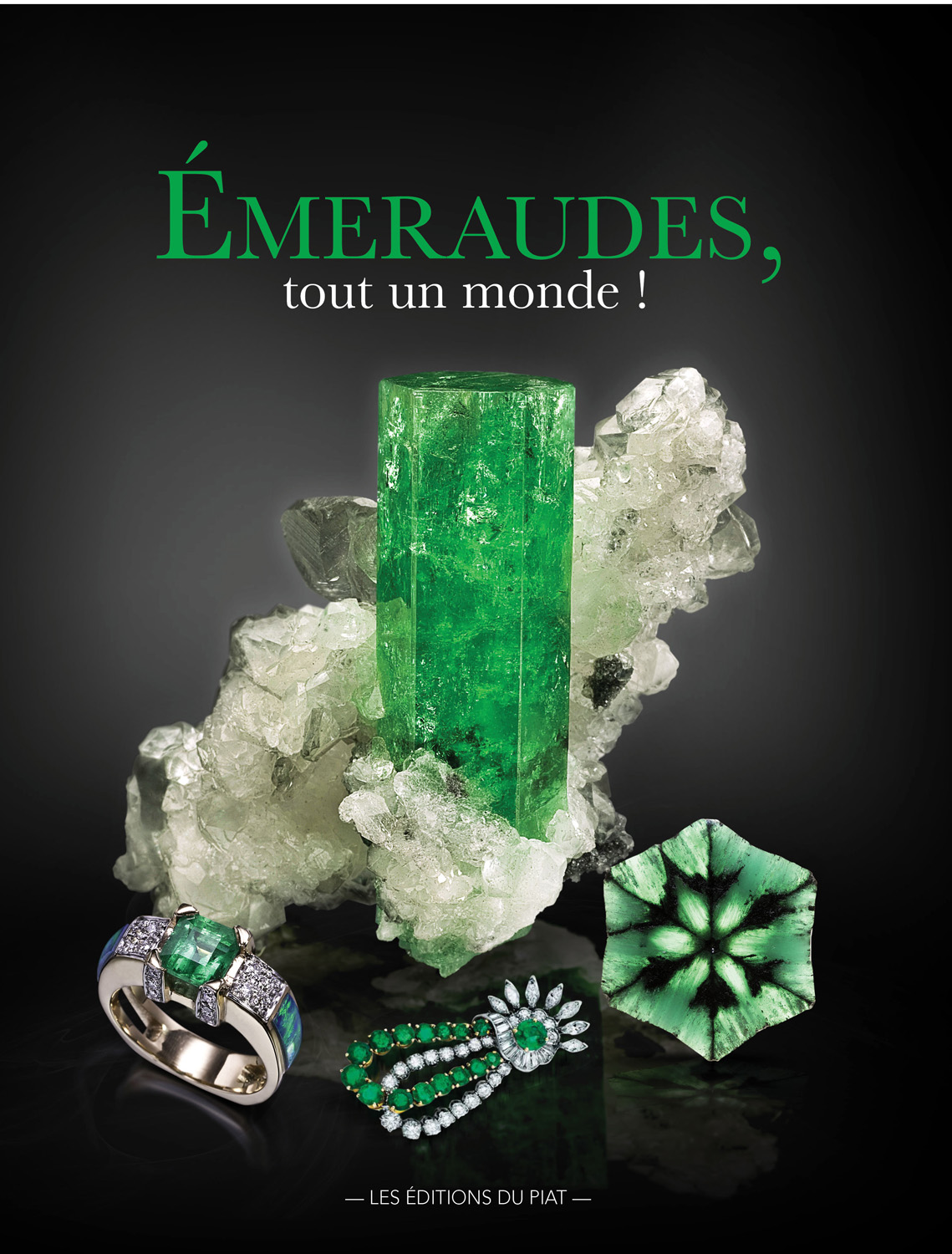
Émeraudes, tout un monde!

Émeraudes, tout un monde!

Emeralds, A Whole World

Giuliani, G. (2022)

Edited Book · Publisher: Les Editions du Piat · Pages: 448 pp. · Language: in French

Abstract
This substantial collective volume, edited by Gaston Giuliani, provides a wide-ranging multidisciplinary survey of emerald, bringing together contributions by specialists in geology, mineralogy, gemology, history, archaeology, mining, and the gem trade. It examines the mineralogical and gemological properties of emerald, the geological processes responsible for its formation, and a typology of emerald deposits, followed by detailed treatments of important producing regions around the world, including Colombia, Brazil, Zambia, Zimbabwe, Madagascar, Ethiopia, Pakistan, Afghanistan, and other localities. Individual chapters address the geology and genesis of deposits, exploration and mining, inclusions, chemistry, geographic origin determination, treatments, and other aspects of gemological identification. Historical sections trace the exploitation, trade, and cultural significance of emerald from antiquity to modern times, including Egyptian, European, Islamic, Asian, and American contexts. Richly illustrated with emerald crystals, cut stones, mines, geological features, inclusions, historical objects, and jewelry, the book combines scientific research with the broader human history of one of the world’s most important colored gemstones.
Keywords
gems, beryl, emerald, Afghanistan, Brazil, Colombia, China, Zimbabwe, Pakistan, Zambia, Madagascar, Mozambique, inclusions, history
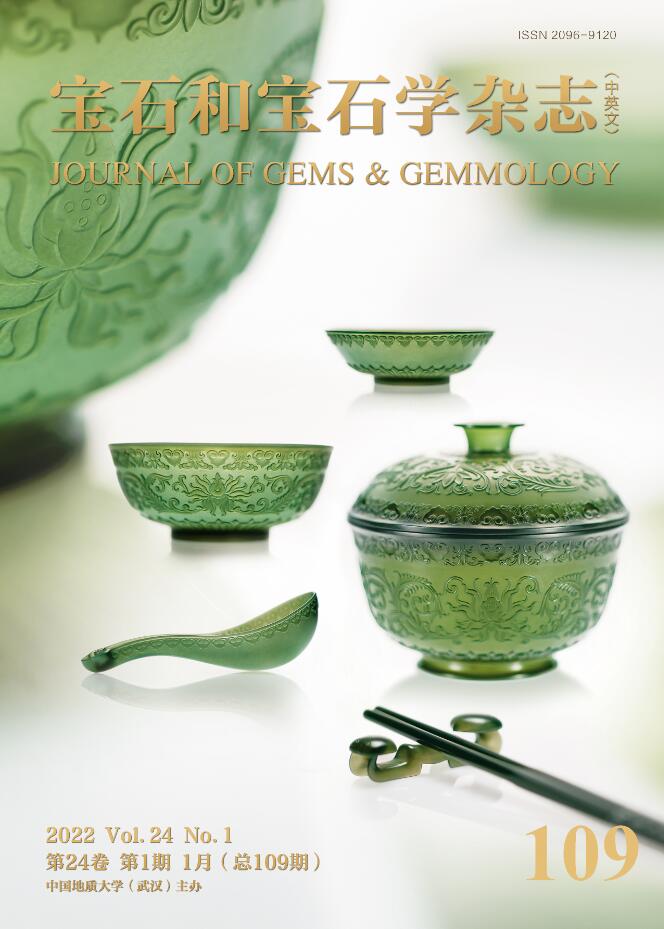
Inclusion and spectral characteristics of sapphire from Ilakaka, Madagascar

Inclusion and spectral characteristics of sapphire from Ilakaka, Madagascar

Liang, B. and Chen, M. (2022)

Journal Article · Source: Journal of Gems & Gemmology · Volume: Vol. 24 · Issue: No. 1 · Pages: pp. 28–38 · Language: in Chinese with English Abstract

Abstract
The inclusions and spectral characteristics of blue and orange sapphire from Ilakaka, Madagascar have been studied by Raman spectroscopy, infrared spectroscopy, LA-ICP-MS, UV-Vis-NIR absorption spectroscopy and fluorescence spectroscopy. This study aimed to enrich the information of characteristics of sapphire from Ilakaka, Madagascar. The results showed that the characteristic inclusions of sapphire from Ilakaka included a large number of liquid CO₂-filled negative crystals and healed fissures filled with pseudosecondary inclusions such as goethite and sulfur. It also contained a variety of solid inclusions, such as calcite, graphite, phlogopite, rutile, hematite and kaolinite. The content of Fe in sapphire was positively correlated with the intensity of blue tone. The absorption lines at 377, 387 nm and 451 nm associated with Fe³⁺ were found in all types of sapphire, and the increase of Fe content could promote the formation of Fe³⁺–Fe³⁺ exchange-coupled ion pairs and enhance the absorption at 377 nm and 451 nm. R1 (694 nm) and R2 (693 nm) fluorescence lines of Cr³⁺ were observed in the fluorescence spectra of almost all samples. Orange sapphires had wide fluorescence peaks at 400–480 nm. The low temperature annealing experiment showed that these fluorescence peaks had poor thermal stability and tended to disappear when heated to 250 °C, while the fluorescence peaks increased significantly when heated to 300 °C. The thermo behavior of those fluorescence peaks may be associated with hole centers [V_Al⁺ + O⁻] and [Mg²⁺ + O⁻].
Keywords
gems, corundum, Madagascar.12, Ilakaka, sapphire
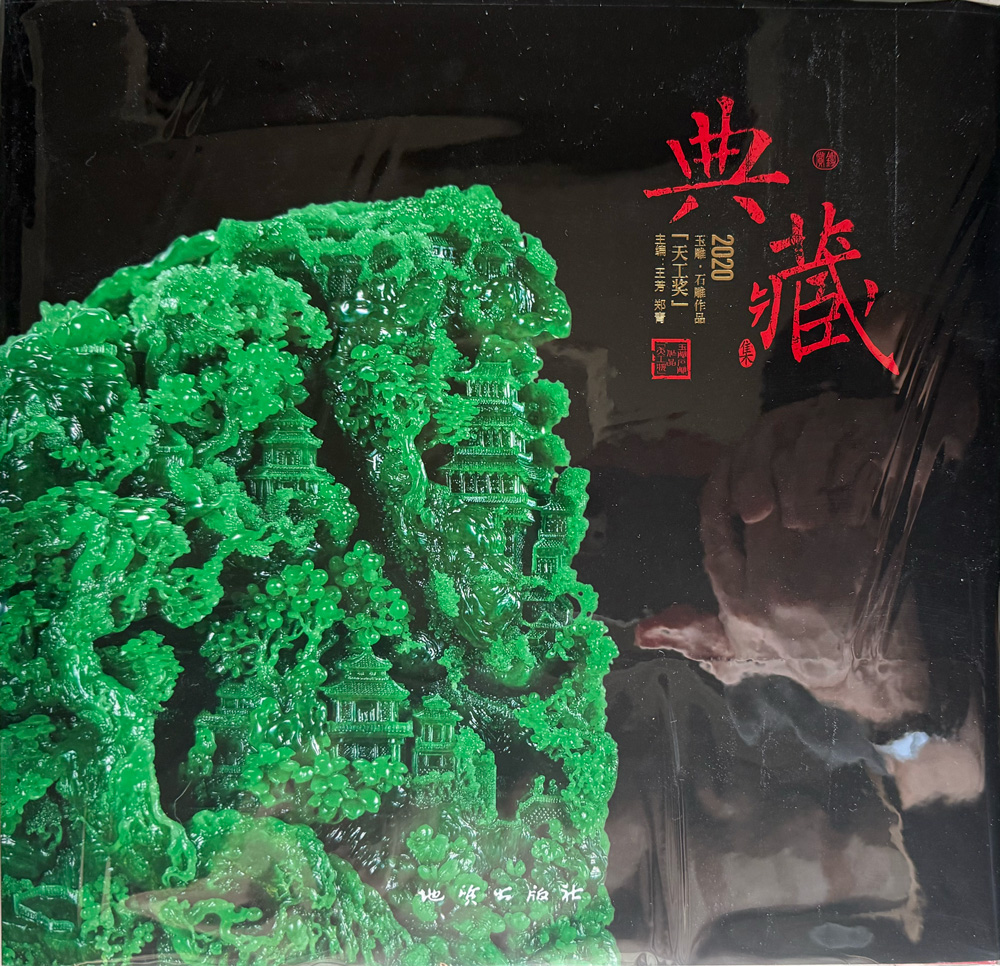
Classic Collections of 2020 China Jade Carving & Stone Carving Works Awarded with Tian Gong Prize

Classic Collections of 2020 China Jade Carving & Stone Carving Works Awarded with Tian Gong Prize

2020中国玉雕·石雕作品天工奖"典藏集"

Yan, A. (2021)

Edited Book · Publisher: 中国地质大学出版社 [China University of Geosciences Press] · Pages: 296 pp. · Language: in Chinese

Abstract
This extensively illustrated catalogue presents the award-winning works from the 2020 Tiangong Prize, one of China’s major national competitions for contemporary jade and stone carving. The collection documents the extraordinary range of materials, techniques, and artistic approaches employed by modern Chinese carvers, encompassing jade and other ornamental stones fashioned as figures, animals, landscapes, vessels, scholar’s objects, and sculptural compositions. Works combine traditional Chinese subjects and symbolism with increasingly individual and contemporary approaches to design, while exploiting the natural color, texture, translucency, inclusions, and form of the rough material as integral elements of the finished carving. The volume provides a valuable visual record of contemporary Chinese lapidary craftsmanship and changing aesthetic preferences, demonstrating the continuing importance of jade carving as both a traditional craft and a modern sculptural art. As a dated record of prize-winning works, it is particularly useful for documenting materials, carving styles, subject matter, and technical standards current in the Chinese jade and ornamental-stone industry in 2020.
Keywords
gems, jade, nephrite, jadeite, fei cui, China, Burma, Chinese jade carving, coral, agate, quartz, rock crystal, chalcedony, onyx, amethyst, turquoise
Purple gem spinel from Vietnam and Afghanistan: Comparison of trace element chemistry, cause of color, and inclusions

Purple gem spinel from Vietnam and Afghanistan: Comparison of trace element chemistry, cause of color, and inclusions

Belley, P.M. and Palke, A.C. (2021)

Journal Article · Source: Gems & Gemology · Volume: Vol. 57 · Issue: No. 3, Fall · Pages: pp. 228–238

Abstract
This study compares two purple gem spinel samples with regard to trace element chemistry and visible light absorption spectra, and presents the first reported example of a spinel with a saturated purple color caused predominantly by chromium and cobalt. Sample VN, from a placer deposit in the Luc Yen district of Vietnam, exhibited strong saturation, orange-red fluorescence in UV, and magnesite and graphite inclusions. Sample AF was from Badakhshan, Afghanistan, with light to medium saturation and containing phlogopite, amphibole, and probable fluid inclusions. UV-Vis-NIR spectra are compared along with trace element chemistry. Sample VN is colored primarily by cobalt (17.9 ppma) and chromium (593 ppma), with minor color contribution from Fe (2437 ppma), and contains significantly more cobalt than typical Cr-enriched red, pink, and purple gem spinels (
Keywords
gems, spinel, Afghanistan, Vietnam
Raman spectroscopic investigation of zircon in gem-quality sapphire: Application in origin determination

Raman spectroscopic investigation of zircon in gem-quality sapphire: Application in origin determination

Xu, W. and Krzemnicki, M.S. (2021)

Journal Article · Source: Journal of Raman Spectroscopy · Volume: Vol. 52

Abstract
In this study, zircon inclusions in selected 115 unheated sapphires originating from metamorphic deposits were studied by confocal micro‐Raman spectroscopy. By comparing Raman features of zircon inclusions in gem‐quality sapphires from Myanmar, India (Kashmir), Sri Lanka, and Madagascar, it could be established that those of younger age (sapphires from Myanmar and India [Kashmir]) contain zircon inclusion which exhibit relatively low ʋ1 and ʋ3 band positions and also smaller FWHM (ʋ3) than those in the older sapphires from Sri Lanka and Madagascar. Binary plotting of ʋ1 versus ʋ3 frequencies (Figure 3) and ʋ3 wavenumber versus FWHM of the studied zircon inclusions provide a method to distinguish young sapphires formed during Alpine‐Himalayan orogeny (Kashmir, Myanmar) from those related to the Pan‐African orogeny (Sri Lanka, Madagascar). This study shows the potential of the non‐destructive method on zircon inclusions in sapphires to be used to distinguish their origin as a service to the commercial gem trade. Zircon inclusions in selected 115 unheated sapphires originating from metamorphic deposits—Myanmar, India (Kashmir), Sri Lanka, and Madagascar—were studied by confocal micro‐Raman spectroscopy. This study shows the potential of the non‐destructive method on zircon inclusions in sapphires to be used to distinguish their origin as a service to the commercial gem trade.
Keywords
gems, corundum, inclusions.5, India.12, Kashmir sapphire, Madagascar.12, Sri Lanka.12, Burma.12, zircon
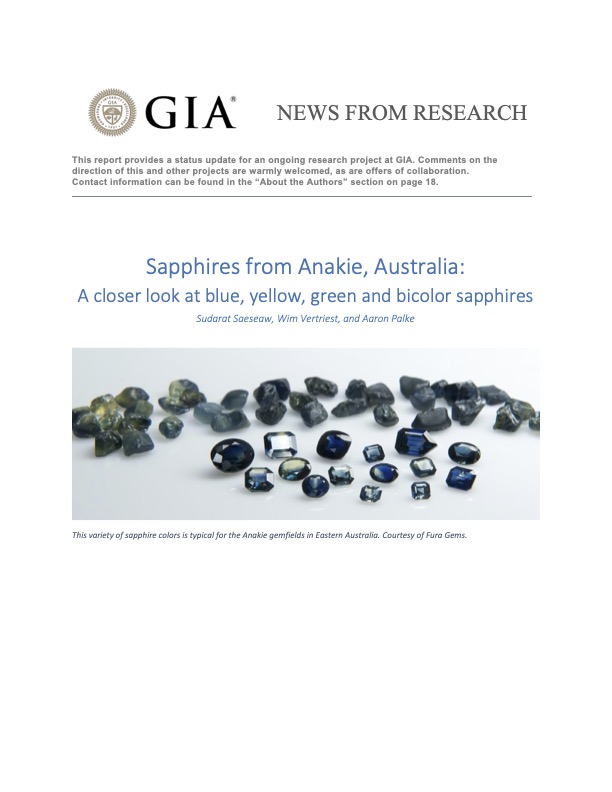
Sapphires from Anakie, Australia: A Closer Look at Blue, Yellow, Green and Bicolor Sapphires

Sapphires from Anakie, Australia: A Closer Look at Blue, Yellow, Green and Bicolor Sapphires

Saeseaw, S., Vertriest, W. and Palke, A. (2021)

Report · Source: GIA News from Research · Publisher: Gemological Institute of America · Pages: 18 pp.

Abstract
Australia has a long and rich sapphire mining history, yet the blue gems from Down Under have rarely been fully appreciated. While they were most desired in the early 1900s, their position has faded to the background. That doesn’t mean that mining stopped; both large and small operations kept operating in the last decades. Recent efforts have cast a new light on the variety of sapphires in Australia, which includes classic blues and yellow, green, and bicolor stones. This suite of colors is also referred to as BGY sapphires, which are classically related to alkali-basalt eruptions. In this study, we take a deeper look at the colors of these sapphires and what caused them, as well as the inclusion scenes observed in these gems.
Keywords
gems, corundum, Australia.12, Queensland, Rubyvale, Sapphire
Cation disorder caused by olivine-ringwoodite phase transition mechanism, possible explanation for blue olivine inclusion in a diamond

Cation disorder caused by olivine-ringwoodite phase transition mechanism, possible explanation for blue olivine inclusion in a diamond

Bassett, W.A. and Skalwold, E.A. (2021)

Journal Article · Source: Minerals · Volume: Vol. 11 · Issue: No. 22 · Pages: 22 pp.

Abstract
Synchrotron X-ray diffraction, as well as visual observations, in a diamond anvil cell (DAC) using soft metal gaskets or slightly reducing gas environment, have revealed that the olivine-ringwoodite transition in olivines of several compositions take place in two steps: step 1: displacive restacking of the oxygen layers, followed by step 2: diffusive reordering of the cations. The initiation of the phase transition was observed at temperatures as low as 200°C below the reported temperature for the phase transition under hydrostatic conditions. These observations, especially residual disordered cations, have important implications for deep-focus earthquakes, the ability of ringwoodite to host surprising amounts of water, and possibly the observation of a blue olivine inclusion in a natural diamond from Brazil and in a pallasitic meteorite from Russia.
Keywords
gems, diamond, mantle; olivine; ringwoodite; wadsleyite; high pressure-temperature; shear deformation; diamond anvil cell; synchrotron radiation

Exploring the Literature of Gemstone Inclusions

The literature of gemstone inclusions covers identification, origin determination, treatments, synthesis, mineral inclusions, fluid inclusions and other internal features of natural and synthetic gems.

For a curated selection of important sources, read Inclusions in Gemstones — Hyperion Literature Sources.

About Four Treasures

Four Treasures is Lotus Gemology's freely accessible gemological reference database. Use the full database to search by author, title or keyword and explore literature on gemology, mineralogy, jewelry and related fields. Where available, hyperlinks on titles may lead directly to the full publication.

Search the Complete Four Treasures Database