Gemstone Inclusions Bibliography

Gemstone Inclusions Bibliography

Explore books, articles and historical sources on inclusions in gemstones in Four Treasures, the Lotus Gemology reference database. This bibliography brings together matching records from the collection, with publication details, abstracts and cover images where available.

Gemstone Inclusion References

The list below matches the terms inclusion or inclusions in the database's searchable fields. Some references discuss inclusions as part of a broader subject.

1,101–1,120 of 1,120 matching references
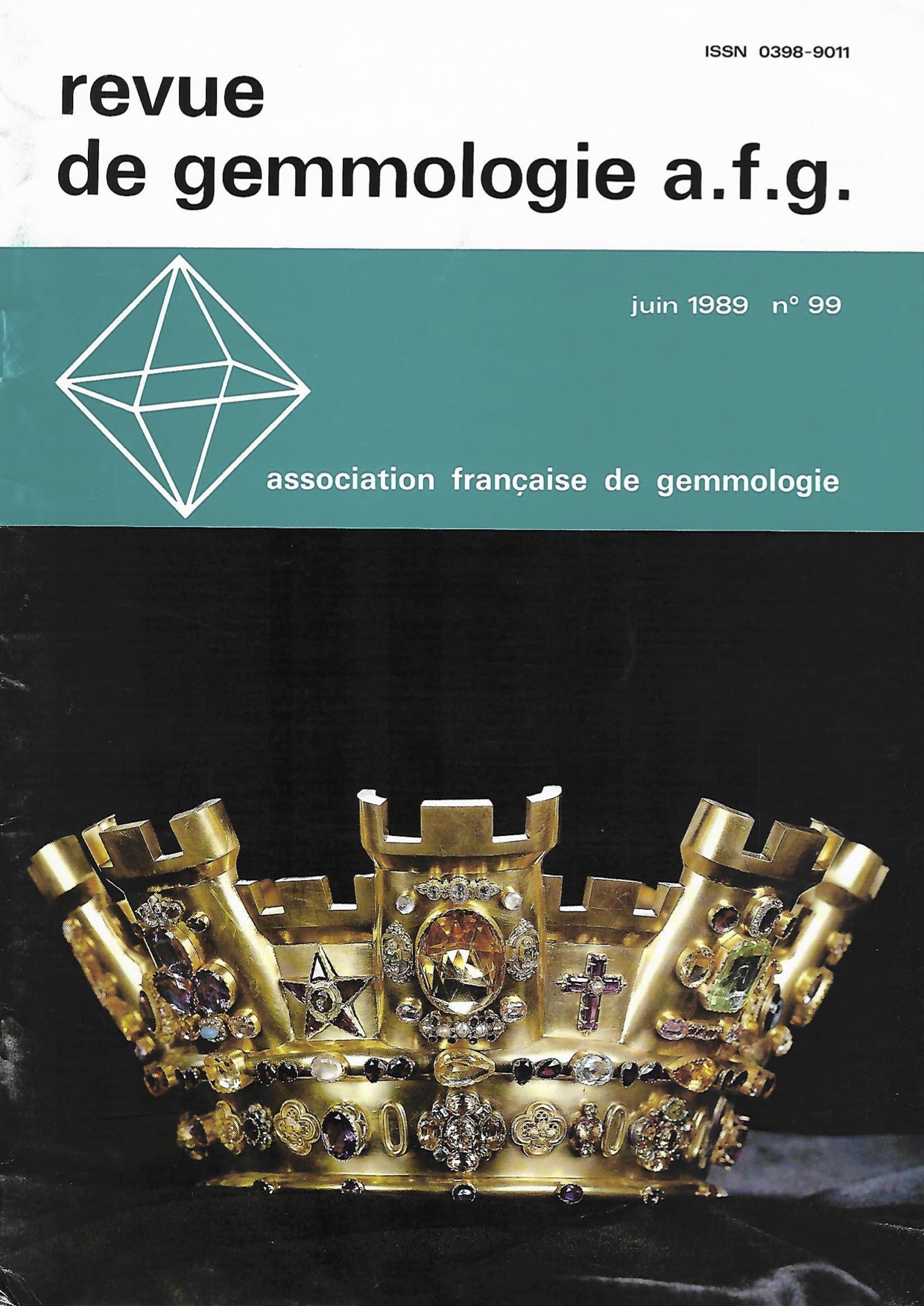
Étude par spectroscopie raman d'inclusions dans les diamants, saphirs et émeraudes

Étude par spectroscopie raman d'inclusions dans les diamants, saphirs et émeraudes

Study by Raman spectroscopy of inclusions in diamonds, sapphires, and emeralds

Dele-Dubois, M.-L., Dhamelincourt, P. and Schubnel, H.-J. (1980)

Journal Article · Source: Revue de Gemmologie A.F.G. · Issue: No. 63 · Pages: pp. 11–14 · Language: in French

Abstract
Dele-Dubois, Dhamelincourt, and Schubnel examine the application of Raman spectroscopy to the non-destructive identification of mineral inclusions in diamonds, sapphires, and emeralds. The technique permits inclusions to be analyzed in situ through the host gemstone by means of their characteristic Raman spectra, avoiding the need to extract or otherwise damage them. The authors demonstrate the usefulness of Raman spectroscopy for identifying very small inclusions that may be difficult to determine by conventional microscopy, illustrating its value both for gemological identification and for investigating the mineral assemblages trapped during gemstone formation.
Keywords
corundum, inclusions.5, diamond, beryl, emerald, spectroscopy, gems
Synthetische Rubine mit Edelsteinqualität, isometrischem Habitus und hoher Zahl unbeschädigter Kristallflächen

Synthetische Rubine mit Edelsteinqualität, isometrischem Habitus und hoher Zahl unbeschädigter Kristallflächen

Synthetic rubies with gemstone quality, isometric habit, and a high number of undamaged crystal faces

Gübelin, E.J. and Knischka, P.O. (1980)

Journal Article · Source: Zeitschrift der Deutschen Gemmologischen Gesellschaft · Volume: Vol. 29 · Issue: No. 3/4 · Pages: pp. 155–185 · Language: In German

Abstract
Gübelin and Knischka describe a new gem-quality synthetic ruby produced by Paul O. Knischka using a proprietary “gradient technique” involving supersaturation and controlled cooling. The resulting crystals have an unusual nearly isometric or pseudocubic habit and exceptionally numerous well-developed, undamaged crystal faces, with examples possessing 32 or 38 faces. The authors compare several types of Knischka synthetic ruby with natural and Verneuil synthetic ruby, examining crystal morphology, trace-element chemistry, optical and gemological properties, fluorescence, and inclusions. In color and general appearance the material closely resembles natural ruby, although it tends toward a more violet red; refractive index, birefringence, and other standard properties offer little assistance in separation. Microscopic features include folded or feather-like inclusions, color zoning, two-phase inclusions, negative crystals, and occasional metallic platelets, some of which can resemble features in natural stones. The study emphasizes the increasing difficulty of distinguishing high-quality synthetic ruby from natural material and the potential diagnostic value of inclusions and trace-element composition.
Keywords
corundum, synthetic corundum.7, gems
Natur und Bedeutung der Mineral-Einschlüsse im natürlichen Diamanten: Eine Uebersicht

Natur und Bedeutung der Mineral-Einschlüsse im natürlichen Diamanten: Eine Uebersicht

Nature and significance of mineral inclusions in natural diamonds: An overview

Gübelin, E.J. (1978)

Journal Article · Source: Zeitschrift der Deutschen Gemmologischen Gesellschaft · Volume: Vol. 27 · Issue: No. 2 · Pages: pp. 61–101 · Language: In German

Abstract
Gübelin reviews the nature and significance of mineral inclusions in natural diamond, considering included minerals as evidence bearing on diamond formation and its geological environment. The paper surveys the principal types of mineral inclusions recognized in diamonds and discusses their mineralogical relationships and importance for understanding the conditions and processes of diamond genesis.
Keywords
diamond, inclusions, gems
Schwarze Einschlüsse in Diamanten

Schwarze Einschlüsse in Diamanten

Black inclusions in diamonds

Gübelin, E.J. (1974)

Journal Article · Source: Zeitschrift der Deutschen Gemmologischen Gesellschaft · Issue: No. 2 · Language: In German

Abstract
Gübelin discusses black inclusions occurring in diamonds and their appearance under gemological examination. The article concerns the nature and identification of these dark internal features and their significance as inclusions in natural diamond.
Keywords
diamond, inclusions, gems
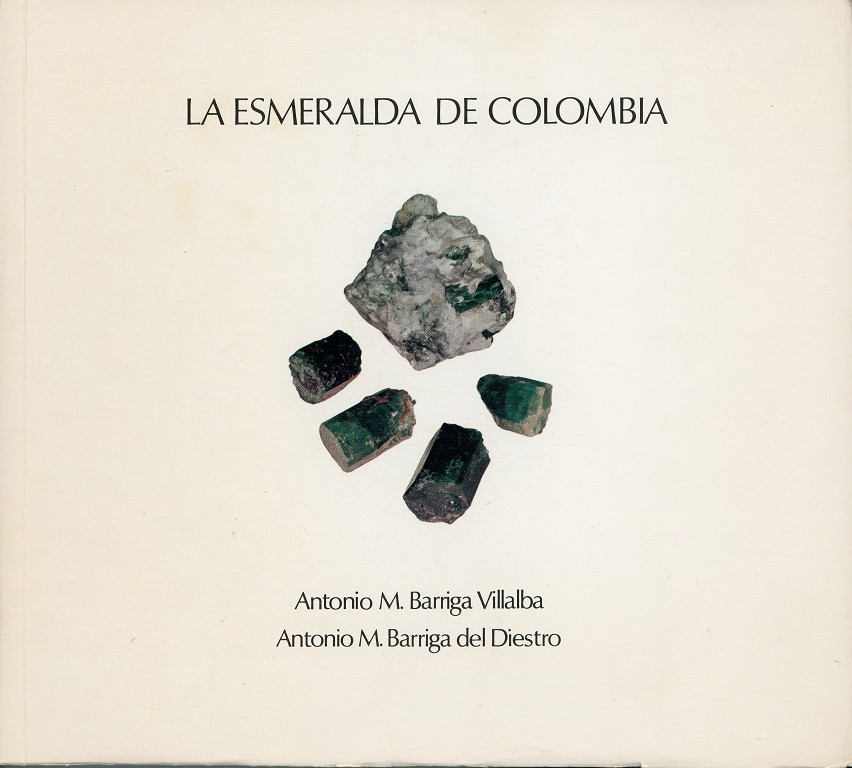
La esmeralda de Colombia: Descripción y Propiedades

La esmeralda de Colombia: Descripción y Propiedades

The Emerald of Colombia: Description and Properties

Barriga Villalba, A.M. and Barriga del Diestro, A.M. (1973)

Book · Publisher: Colegio Mayor de Nuestra Señora del Rosario, Departamento de Publicaciones · Pages: 100 pp. · Language: in Spanish

Abstract
Barriga Villalba and Barriga del Diestro present a monographic study of Colombian emerald, describing its principal characteristics and properties. The work considers emerald as a mineral and gemstone, with attention to its physical and optical properties, characteristic color and inclusions, and the features associated with Colombian material. It also discusses the geological occurrence and principal emerald-producing areas of Colombia, particularly the deposits of the Eastern Cordillera, and addresses aspects of mining and the evaluation of emeralds. The volume provides a contemporary Colombian account of the country’s most important gemstone and its distinguishing gemological and geological characteristics.
Keywords
beryl, emerald, Colombia, gems
Die Natur der Mineraleinschlüsse in Edelsteinen

Die Natur der Mineraleinschlüsse in Edelsteinen

On the nature of mineral inclusions in gemstones

Gübelin, E.J. (1969)

Journal Article · Source: Deutsche Goldschmiede-Zeitung · Issue: March, April, June · Language: in German

Abstract
Gübelin examines the nature and significance of mineral inclusions in gemstones, treating inclusions as evidence of the geological conditions and processes under which their host crystals formed. He discusses the morphology, identification, orientation, and genetic relationships of included minerals and shows how inclusion assemblages and their relationships to other internal features can assist in gemstone identification and provide information on genesis and, in favorable cases, origin. Particular emphasis is placed on systematic microscopic observation and on interpreting inclusions as records of a gemstone’s crystallization and subsequent geological history.
Keywords
inclusions, gems
Die Natur der Mineraleinschlüsse in Edelsteinen

Die Natur der Mineraleinschlüsse in Edelsteinen

The nature of mineral inclusions in gemstones

Gübelin, E.J. (1968)

Journal Article · Source: Schweizer Goldschmied · Issue: mit fortsetzungen · Language: in German

Abstract
First comprehensive article on the determination of inclusions in gemstones by means of the electron microprobe. Techniques are described and results explained. Fine color illustrations. Essentially the same article appeared in Journal of Gemmology, 11(5), 1969, pp. 149–192, with 80 color photographs, 3 figures, and 49 references.
Keywords
inclusions, gems
Black star corundum

Black star corundum

Peterson, H. (1968)

Journal Article · Source: Rocks & Minerals · Volume: Vol. 43 · Pages: pp. 492–493

Abstract
Peterson discusses black star corundum, a dark variety of corundum that displays asterism when cut en cabochon. The article describes the appearance and gemological characteristics of the material and the inclusions responsible for the star effect, produced by oriented needle-like inclusions that reflect light along crystallographically controlled directions. It considers the relationship between the dark body color, inclusions, and visibility of the star, as well as the orientation required in cutting to display the phenomenon effectively. The brief account provides a practical description of black star corundum and the optical phenomenon responsible for its distinctive appearance.
Keywords
corundum, Canada.12, gems
Inclusions in jade

Inclusions in jade

Bergsten, L.J. (1964)

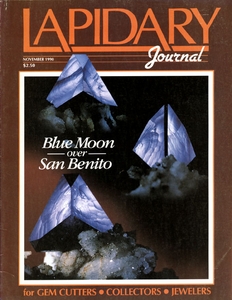
Journal Article · Source: Lapidary Journal · Volume: Vol. 17 · Pages: No. 11 (February), pp. 1076–1078; No. 12 (March), pp. 1080, 1196–1199

Keywords
jade, jadeite, fei cui, nephrite, Wyoming, Burma, inlusions, gems
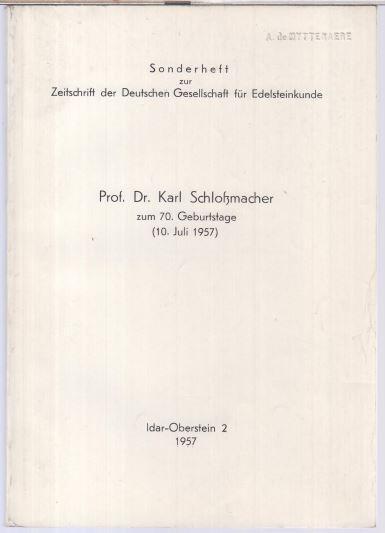
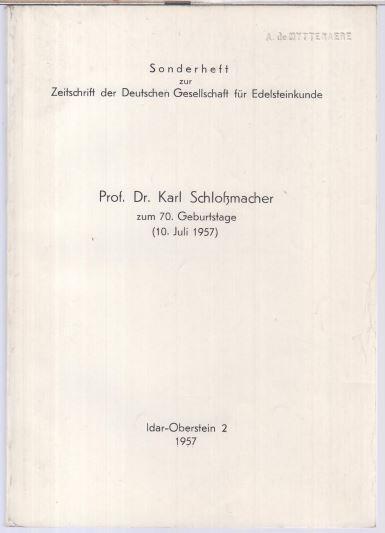
Ekanit: Ein neuer metamikter Edelstein aus Ceylon

Ekanit: Ein neuer metamikter Edelstein aus Ceylon

Ekanite: A new metamict gemstone from Ceylon

Gübelin, E.J. (1962)

Journal Article · Source: Zeitschrift der Deutschen Gesellschaft für Edelsteinkunde · Issue: No. 40 · Language: In German

Abstract
Gübelin gives a detailed gemological account of ekanite, a newly recognized metamict gem mineral from Ceylon, named for F. L. D. Ekanayake, who first recognized its unusual character. The material occurs in the gem gravels near Ellawala, northeast of Ratnapura, and is typically greenish-brown to yellowish-green, transparent to translucent, and sometimes displays chatoyancy or asterism caused by oriented clouds of minute inclusions. Gübelin describes its gemological properties, including its singly refractive character, refractive index of about 1.595, specific gravity of about 3.28, and weak absorption bands, together with microscopic features and inclusions. Chemical investigation showed calcium, thorium, silicon, aluminium, and lead, while measurements demonstrated significant radioactivity associated particularly with thorium. The destruction of the original crystal lattice through radioactive decay accounts for its metamict condition. Gübelin also discusses its probable original crystalline state, chemical composition, and age as estimated by thorium-lead dating, establishing ekanite as an unusual new addition to the gem minerals of Ceylon.
Keywords
ekanite, gems
Beryll mit synthetischem Smaragdüberzug

Beryll mit synthetischem Smaragdüberzug

Beryl with synthetic emerald coating

Gübelin, E.J. (1962)

Journal Article · Source: Zeitschrift der Deutschen Gesellschaft für Edelsteinkunde · Issue: No. 37 · Language: In German

Abstract
Gübelin examines a series of “Emerita” stones produced by Johann Lechleitner, consisting of natural beryl cores coated with a synthetic emerald overgrowth. The specimens demonstrate that even differently colored beryls, including blue aquamarine and yellow heliodor, can acquire essentially the same emerald-green appearance when covered by a sufficiently thick synthetic layer. Conventional physical constants may fail to distinguish these composite stones from natural emerald, making microscopic examination particularly important. Gübelin describes the boundary between the natural beryl core and synthetic emerald mantle and the characteristic inclusions and growth features within the coating, illustrating them with photomicrographs. The study emphasizes the gemological identification problems created by synthetic emerald overgrowth and demonstrates that recognition depends chiefly on careful observation of the coating and its microscopic structural features.
Keywords
synthetic beryl, emerald, gems
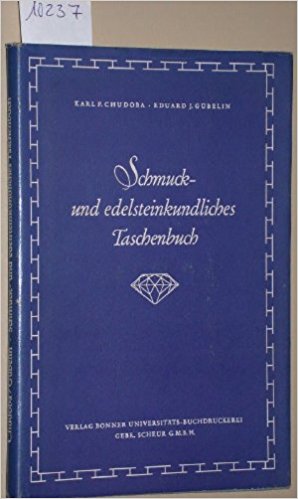
Schmuck- Und Edelsteinkundliches Taschenbuch

Schmuck- Und Edelsteinkundliches Taschenbuch

Jewelry and Gemstone Pocket Handbook

Chudoba, K.F. and Gübelin, E.J. (1953)

Book · Publisher: Verlag Bonner Universitäts-Buchdruckerei · Pages: xii + 158 pp. · Language: in German

Abstract
Chudoba and Gübelin provide a compact practical reference to gemology intended both for identifying gemstones and for standardizing the often confusing terminology used in the German gem trade. The principal gemstones and ornamental materials are arranged alphabetically and characterized by their chemical, crystallographic, and physical properties, important localities, trade names, and diagnostic features. Separate sections treat inclusions in natural gemstones, synthetic stones, doublets and triplets; tables of gemological constants; coated stones; synthetic gems and other imitations; the gemological microscope; and practical identification tables. Particular emphasis is placed on simple tests that can be performed with readily available gemological instruments and on microscopic inclusions as a means of distinguishing natural stones from synthetics and assembled or imitation materials. Conceived as a concise working handbook rather than a comprehensive mineralogical treatise, it became the basis for the substantially enlarged second edition of 1966, retitled Edelsteinkundliches Handbuch, and a further expanded third edition in 1974.
Keywords
gems, gemology,
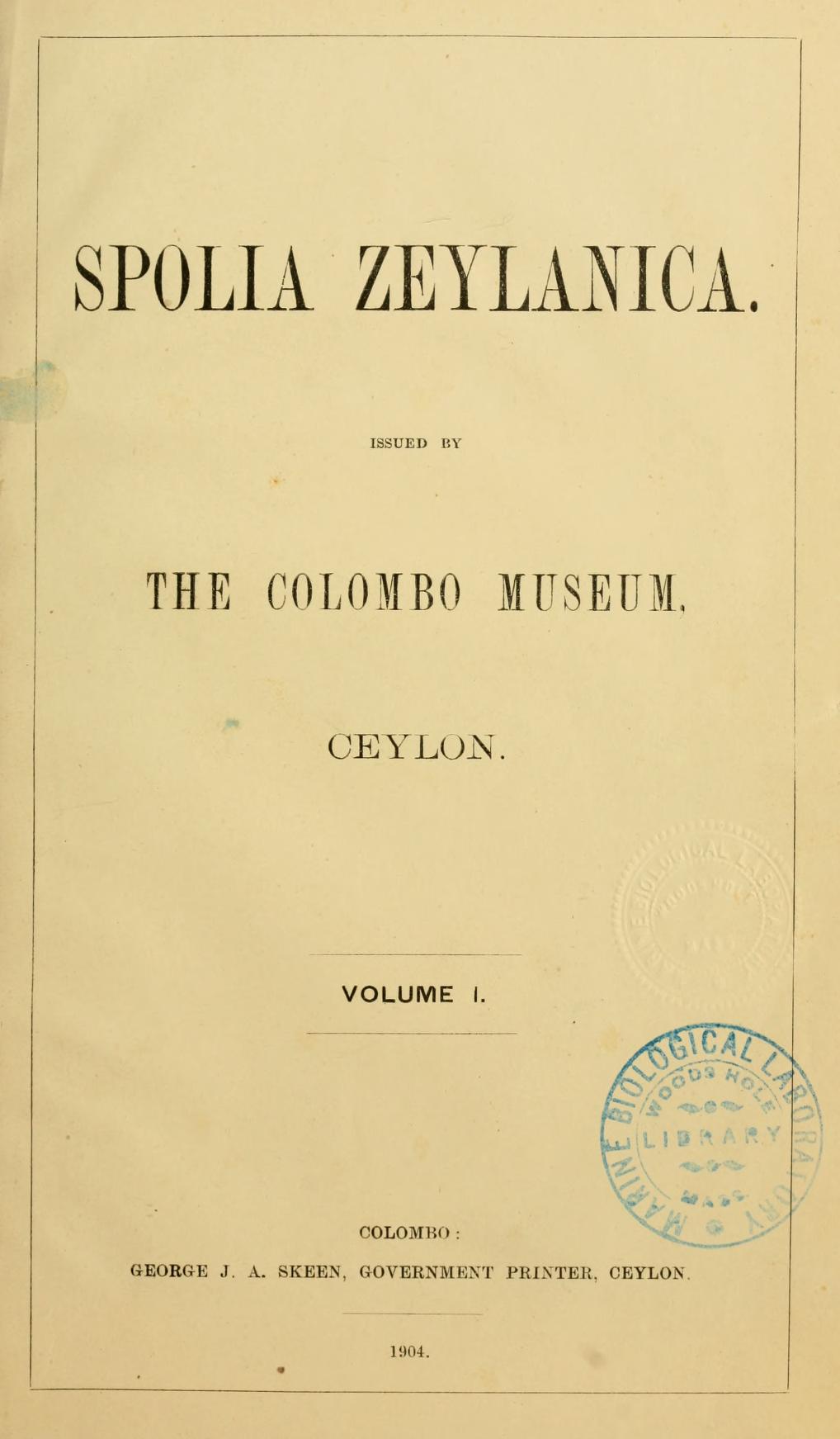
The crystalline rocks of Ceylon

The crystalline rocks of Ceylon

Coomaraswamy, A.K. (1904)

Journal Article · Source: Spolia Zeylanica (Ceylon Journal of Science) · Volume: Vol. 1 · Issue: Part 4 · Pages: pp. 105–111

Abstract
A concise account of the crystalline rocks of Ceylon, intended to summarize their character and classification as then understood. Coomaraswamy discusses the terminology of “gneiss” and “granulite,” preferring the latter for many Ceylonese rocks, and regards them as belonging to the Charnockite Series described from southern India, the two regions forming a closely related petrographical province. He describes the principal rock types and their mineral banding, together with the crystalline limestones and rocks intermediate between limestone and granulite. The latter may contain diopside, phlogopite, amphibole, scapolite, spinel, sphene, calcite and, more rarely, serendibite, and may occur at limestone–granulite contacts, as inclusions, dykes or bands; some also yield mica of commercial value. Coomaraswamy argues that, whatever their ultimate origin, the crystalline limestones were essentially contemporaneous with the granulites and crystallized under broadly comparable high-temperature conditions. He also distinguishes the wollastonite-bearing Galle group and discusses the structural geology of the crystalline series, particularly foliation, folding and the influence of rock structure on the development of parallel strike valleys such as those around Hatton. The paper is an important early synthesis of Ceylon’s Precambrian crystalline geology and provides geological context for the mineral and gem deposits associated with these rocks.
Keywords
corundum, ruby, sapphire, Sri Lanka.12, gems
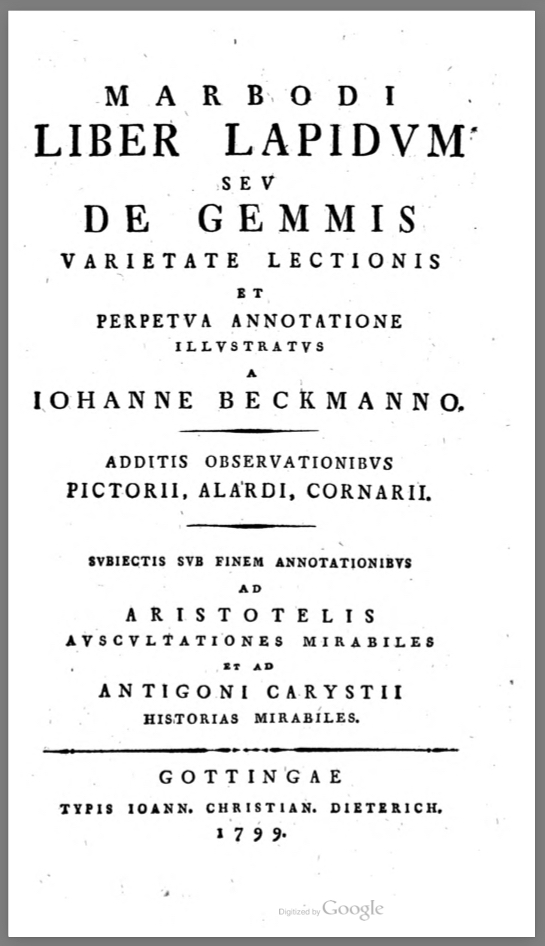
Marbodi Liber lapidum seu De gemmis varietate lectionis et perpetua annotatione illustratus a Iohanne Beckmanno

Marbodi Liber lapidum seu De gemmis varietate lectionis et perpetua annotatione illustratus a Iohanne Beckmanno

Marbode’s Book of Stones, or On the Variety of Gems, illustrated with variant readings and continuous annotation by Johann Beckmann

Marbode de Rennes (1799)

Book · Publisher: Ioann. Christian. Dieterich · Pages: 164 pp. · Language: in Latin

Abstract
Sinkankas: Generally regarded as the most authoritative and useful edition, due to the notes on previous editions and the citations of several versions of the poem. Schuh: Marbode, whose true name was de Marboeuf," received his early education at Angers. After teaching some time at the cathedral school of Angers, he was put at the head of the educational system of the city and Diocese of Anvers in 1067. Later he became archdeacon and in 1096 Urban II appointed him Bishop of Rennes. In his youth he indulged in many excesses, but from the time he became bishop his life was without reproach. In 1104 he was present at the Council of Tours, and in 1109 he was made administrator of the Diocese of Angers. At the age of eighty-eight he resigned his diocese and withdrew to the Benedictine monastery of St. Aubin at Angers where he died soon after. Of the 1799 edition, Schuh said: Scarce. Edited by Johann Beckmann. Regarded as the most authoritative and useful early edition because of the inclusion of notes and citations from previous editions, including those of Pictorius and Alaard."
Keywords
gems, early lapidaries, Marbode, Middle Ages, Medieval

Neuer Vollkommener Natur- und Kunst mäßiger Unterricht von Edelgesteinen

New Complete Natural and Practical Instruction on Precious Stones

Gemma, A., (Förster, Nicolaus) (1719)

Book · Publisher: Nicolaus Förster · Pages: 121 pp. · Language: in German

Abstract
Sinkankas: An extremely rare work on gemstones that emphasizes practical aspects of lapidary treatment and other matters that would be of value to the tradesman and jewelry maker. It is further remarkable for including a chapter on the methods by which Indian lacquerware is manufactured, which of course has nothing to do with gems. Gemma discusses the origin of gemstones in the first chapter, considering at length Robert Boyle’s statements on the same as given in his Exercitatio de Origine et Viribus Gemmarum, supporting some and disputing others. Other citations and quotations from authorities appear throughout the text. Other topics treated include the magical and curative powers of gemstones, physical properties, color and its enhancement by use of foils, the pricing of gems, the manufacture of doublets, artificially colored and imitation gems, and substitutes. One chapter is devoted to “figures” in stones, that is, clouds or swarms of inclusions, banding, and other markings which resemble human or other figures, shells in fossiliferous limestones, insects in amber, and stars in star stones. All of these are treated soberly as natural manifestations and are not thought to be magical or miraculous in nature as had been done not too long before Gemma’s time. Another chapter treats petrification due to mineralized waters. From the practical viewpoint, this work is especially rich in details on the cutting of gemstones and the equipment required to do so, including the art of gem engraving. Gem-cutting equipment then in use is described in minute detail, as well as a process for classifying raw tripoli to make it useful as a polishing agent. In all respects this admirable, reasoned work deserves greater recognition.
Keywords
gems, gemology, lapidary

Corundum Treatments

Koivula, J.I. (n.d., ca. 1984)

Film or Broadcast · Source: GIA Videotape Series · Publisher: Gemological Institute of America · Pages: ~45 minutes

Keywords
corundum, treatments.6, inclusions.5, gems

Exploring the Literature of Gemstone Inclusions

The literature of gemstone inclusions covers identification, origin determination, treatments, synthesis, mineral inclusions, fluid inclusions and other internal features of natural and synthetic gems.

For a curated selection of important sources, read Inclusions in Gemstones — Hyperion Literature Sources.

About Four Treasures

Four Treasures is Lotus Gemology's freely accessible gemological reference database. Use the full database to search by author, title or keyword and explore literature on gemology, mineralogy, jewelry and related fields. Where available, hyperlinks on titles may lead directly to the full publication.

Search the Complete Four Treasures Database