Gemstone Inclusions Bibliography

Gemstone Inclusions Bibliography

Explore books, articles and historical sources on inclusions in gemstones in Four Treasures, the Lotus Gemology reference database. This bibliography brings together matching records from the collection, with publication details, abstracts and cover images where available.

Gemstone Inclusion References

The list below matches the terms inclusion or inclusions in the database's searchable fields. Some references discuss inclusions as part of a broader subject.

1,081–1,100 of 1,120 matching references
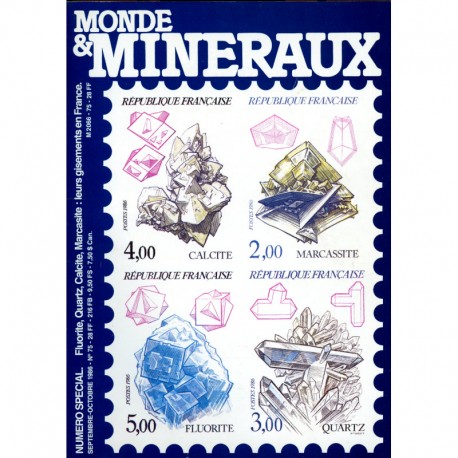
Les inclusions dans la péridot

Les inclusions dans la péridot

Inclusions in peridot

Gübelin, E.J. (1986)

Journal Article · Source: Monde et Mineraux · Issue: No. 76, November–December · Pages: pp. 28–29 · Language: in French

Abstract
Gübelin gives a brief illustrated account of inclusions characteristic of peridot. He describes the internal features encountered in gem-quality olivine, emphasizing mineral inclusions and their diagnostic appearance under the microscope. Typical features of peridot include chromite and other spinel-group crystals, commonly surrounded by stress fractures or disc-like halos, as well as negative crystals and partially healed fractures. Such inclusions are useful both for identifying natural peridot and for interpreting aspects of its geological formation.
Keywords
peridot, inclusions, gems
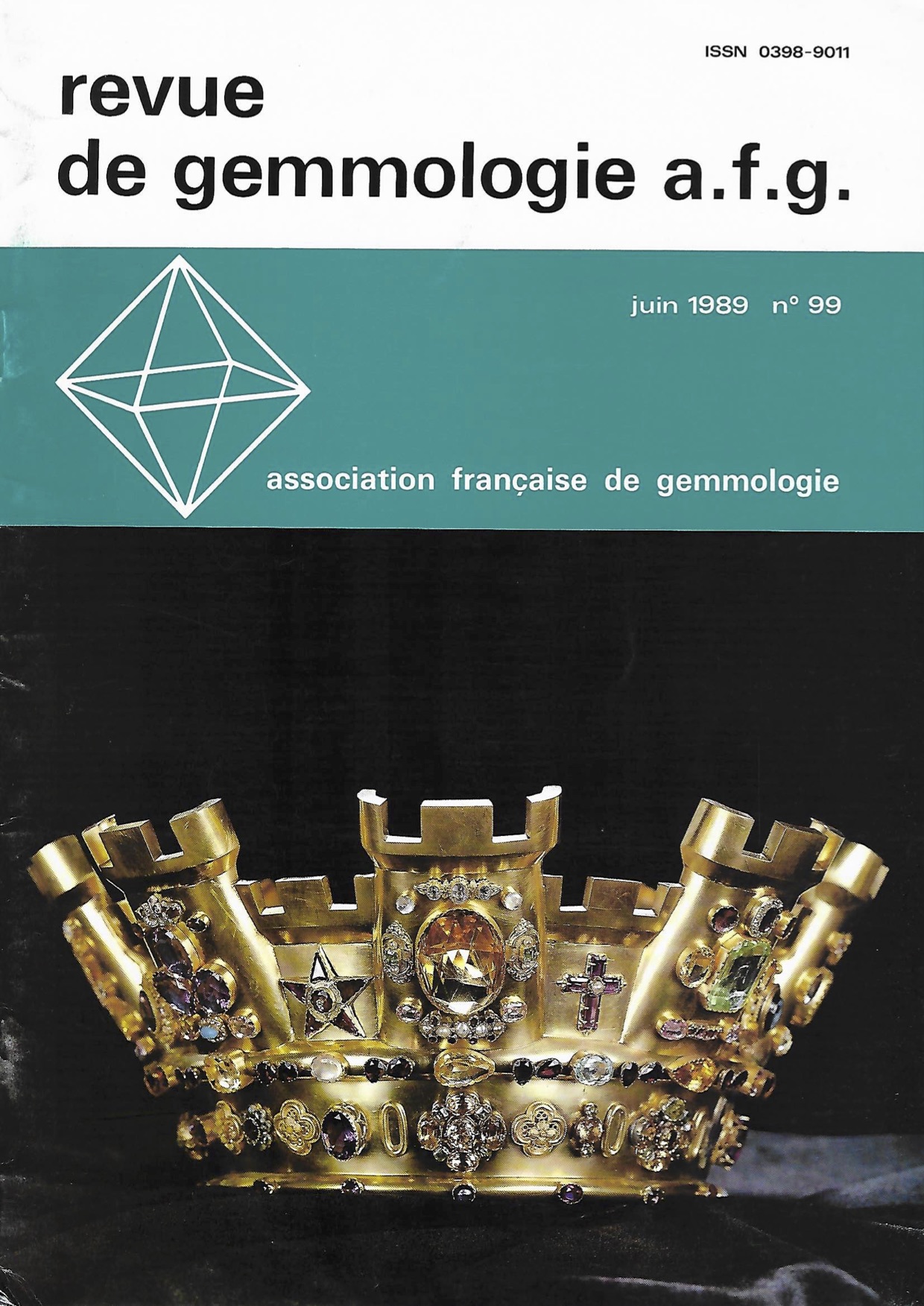
Les opales Mexicaines

Les opales Mexicaines

Mexican opals

Gübelin, E.J. (1986)

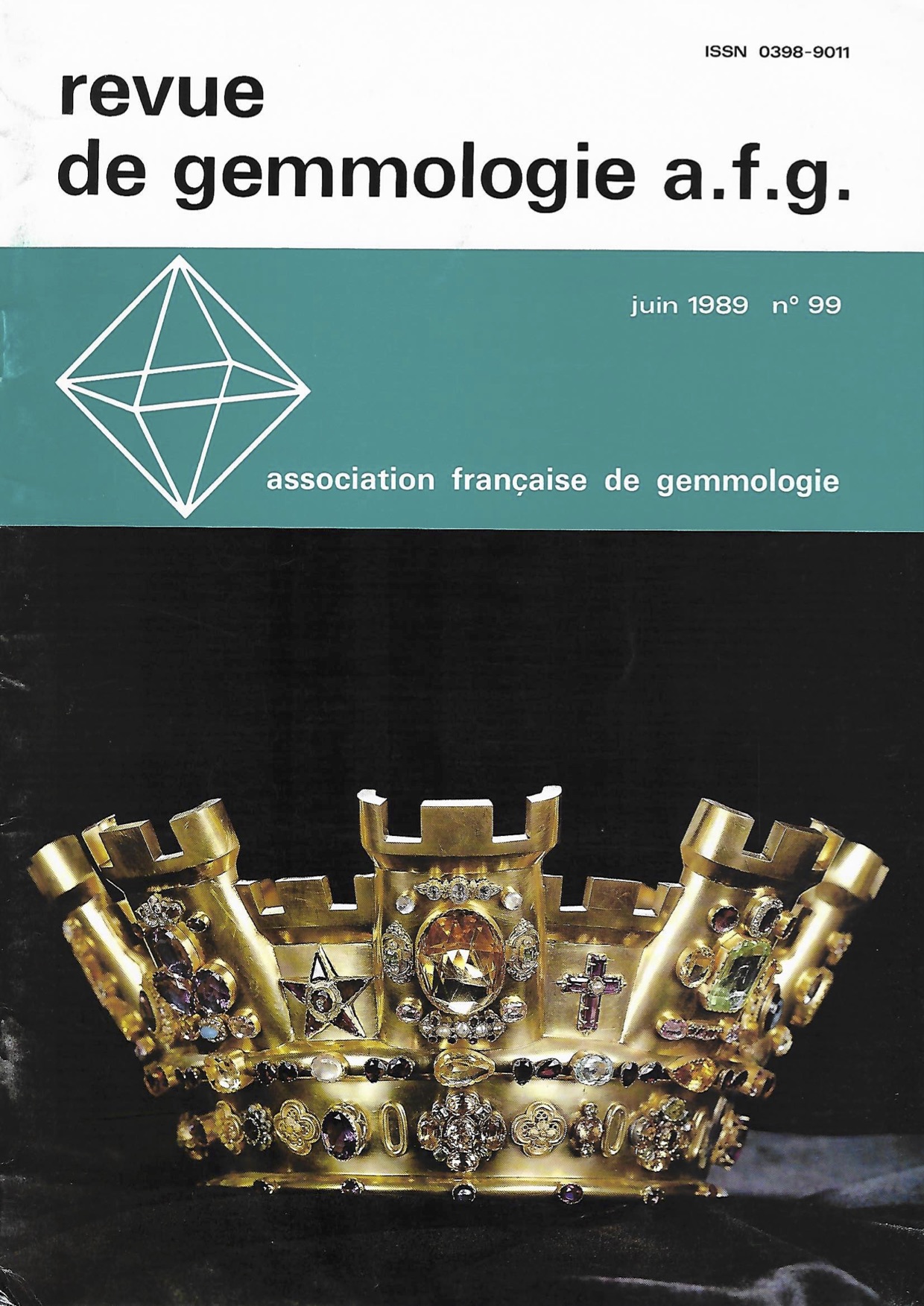
Journal Article · Source: Revue de Gemmologie A.F.G. · Issue: No. 88, September · Pages: pp. 3–6, with 11 color figures · Language: in French

Abstract
Gübelin provides a historical and technical survey of Mexican opal, discussing the principal varieties and their major localities. He notes the use of opal in pre-Columbian Mexico and describes the important deposits in the volcanic regions of Querétaro and Jalisco, where opal occurs in cavities and fractures in rhyolitic rocks. Particular attention is given to Mexican fire opal, with its characteristic yellow, orange and red body colors, as well as transparent precious opal displaying play-of-color. The article discusses the appearance, occurrence and characteristic inclusions of Mexican material; later studies cite Gübelin for two- and three-phase inclusions and mineral inclusions including hornblende, goethite, hematite, fluorite, quartz, cristobalite and chalcedony in Querétaro opal.
Keywords
opal, Mexico, gems
Die diagnostischen eigenschaften der neuen synthesen

Die diagnostischen eigenschaften der neuen synthesen

The diagnostic properties of the new syntheses

Gübelin, E.J. (1986)

Journal Article · Source: Deutsche Goldschmiede-Zeitung · Volume: Vol. 84 · Issue: No. 11 · Pages: pp. 69–76 · Language: in German

Abstract
Gübelin reviews the diagnostic properties of several recently introduced synthetic gemstones and the problems they pose for separation from their natural counterparts. Emphasis is placed on the combination of conventional gemological properties with microscopic examination of inclusions and growth structures, supplemented where necessary by spectroscopic and other analytical methods. The article discusses characteristic features of newer synthetic materials, particularly synthetic corundum and emerald, and shows that physical constants alone may be insufficient for identification as manufacturing techniques increasingly reproduce the appearance and properties of natural stones. Gübelin stresses the diagnostic importance of flux residues, metallic inclusions, growth zoning and other internal features associated with particular synthesis processes. The paper summarizes practical criteria by which these newer products can be recognized in gemological testing.
Keywords
beryl, synthetic beryl, emerald, synthetic corundum, gems
Rasterelektronen-mikroskopie. Einige anwendungen in der edelsteinforschung

Rasterelektronen-mikroskopie. Einige anwendungen in der edelsteinforschung

Scanning electron microscopy. Some applications in gemstone research

Hofmann, C., Schrader, H.W. and Stender, E. (1985)

Journal Article · Source: Goldschmiede Zeitung · Volume: Vol. 83 · Issue: No. 6 · Pages: pp. 76–77 · Language: In German

Abstract
Hofmann, Schrader and Stender describe applications of scanning electron microscopy (SEM) to gemological research, emphasizing its usefulness for examining surface structures and extremely small features beyond the practical resolution of conventional gemological microscopy. Examples illustrate how the technique can reveal the morphology of inclusions, growth and dissolution features, fracture surfaces, and other microscopic structures relevant to gemstone investigation. When combined with electron-beam microanalysis, SEM also permits localized chemical characterization of minute inclusions or surface features. The brief article demonstrates the value of SEM as a complementary research technique where conventional optical microscopy alone provides insufficient morphological or compositional information.
Keywords
beryl, synthetic beryl, emerald, gems, SEM
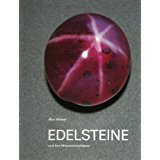
Edelsteine und ihre Mineraleinschlüsse

Edelsteine und ihre Mineraleinschlüsse

Gemstones and their mineral inclusions

Weibel, M. (1985)

Book · Publisher: ABC Verlag · Pages: 111 pp. · Language: in German

Abstract
Weibel provides a concise survey of the principal gemstones with particular emphasis on their mineral inclusions and what these reveal about gemstone formation. Rather than being solely an inclusion atlas, the book introduces the major gem species and relates their characteristic internal minerals and structures to their geological genesis. Numerous photomicrographs illustrate diagnostic inclusions and demonstrate their value for understanding the conditions under which their host gemstones crystallized. The volume was prepared with the assistance of Eduard J. Gübelin, who also supplied some of the photographs. It contains 83 color and 23 black-and-white illustrations. A contemporary Journal of Gemmology review specifically praises its treatment of inclusions and the accompanying explanations of their formation.
Keywords
inclusions, gems
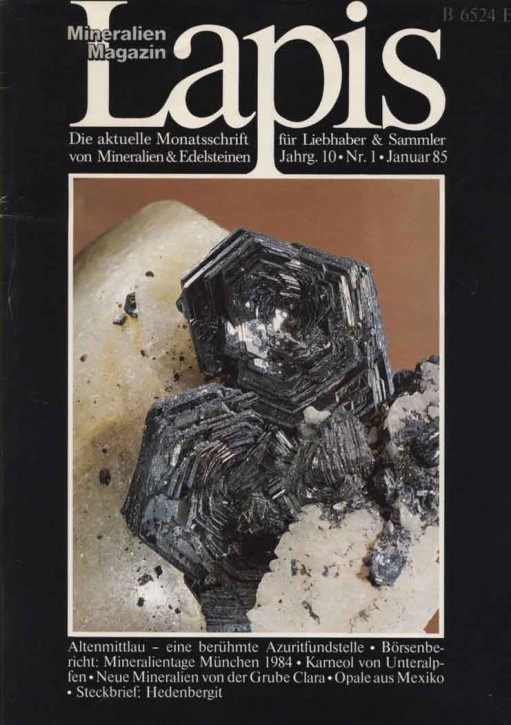
Opale aus Mexico

Opale aus Mexico

Opals from Mexico

Gübelin, E.J. (1985)

Journal Article · Source: Lapis · Volume: Vol. 10 · Issue: No. 1, Januar · Pages: pp. 23–30 · Language: in German

Abstract
Gübelin describes the opal deposits of Mexico, concentrating on the important occurrences in Querétaro and their characteristic transparent to translucent precious and fire opals. He discusses the volcanic geological setting, occurrence of opal in cavities and fractures in rhyolitic rocks, mining and recovery of the material, and the considerable range of body colors and play-of-color displayed by Mexican opals. Particular attention is given to the internal characteristics of the stones, including mineral and fluid inclusions, and to the differences between Mexican volcanic opal and opal from other major producing regions. The article provides both a description of the deposits and a gemological characterization of their products. Gübelin’s article is subsequently cited specifically for opal from the Carbonera mine at La Trinidad, Querétaro.
Keywords
opal, Mexico, gems
Zwei neue Kunstprodukte auf dem Edelsteinmarkt

Zwei neue Kunstprodukte auf dem Edelsteinmarkt

Two new synthetic products on the gemstone market

Gübelin, E.J. (1985)

Journal Article · Source: Deutsche Goldschmiede-Zeitung · Issue: November · Pages: 7 pp. · Language: in German

Abstract
Gübelin describes two recently introduced artificial gem materials: Ramaura flux-grown synthetic ruby and yttrium aluminium gallium garnet (YAGG), a green artificial material used as an imitation of tsavorite. For Ramaura ruby, he discusses manufacture by flux growth at about 1250°C, the use of chromium as the coloring agent, and the effects of flux constituents and growth conditions on crystal form. Because its conventional physical properties closely resemble those of natural ruby, identification relies heavily on microscopic examination; numerous characteristic inclusions are illustrated, while UV-visible spectroscopy is reported to offer no certain separation. The second material, YAGG, differs markedly from tsavorite in its physical properties, with refractive index around 1.90 and specific gravity 5.06–5.08. Gübelin describes its composition and characteristic yellowish flux inclusions and notes that, despite its garnet structure, it is not a silicate. The article contains 42 photographs and illustrations.
Keywords
gems, corundum, synthetic corundum.7, Ramaura, flux, YAAG, synthetic garnet

Gemmologisk Mikroskopi genom Faskontrast Metoden

Gemmological Microscopy through Phase Contrast Method

Gübelin, E.J. (1985)

Journal Article · Source: Gem: Bulletinen Stockholms Gemmologiska Förening · Issue: No. 1 · Language: in Swedish

Abstract
Gübelin describes the application of phase-contrast microscopy to gemology, a technique that greatly increases the visibility of otherwise faint internal structures in transparent gemstones. Phase contrast converts small differences in optical path—caused by variations in refractive index or thickness—into differences in image brightness, making extremely low-contrast inclusions and growth features easier to observe. Gübelin discusses the optical principle and the adaptation of a conventional gemological microscope for phase-contrast observation, emphasizing its usefulness for studying minute inclusions, growth structures and other internal features that may be difficult or impossible to recognize with ordinary bright-field illumination. The technique thus extends the diagnostic possibilities of inclusion microscopy in gemstone identification and research.
Keywords
phase-contrast microscopy, gems
Identification des nouveaux saphirs synthétiques et des saphirs traités

Identification des nouveaux saphirs synthétiques et des saphirs traités

Identification of new synthetic sapphires and treated sapphires

Gübelin, E.J. (1985)

Journal Article · Source: Revue de Gemmologie A.F.G. · Issue: No. 82, March · Language: in French

Abstract
Gübelin examines the identification of newly introduced Chatham flux-grown blue and orange synthetic sapphires and of natural sapphires whose color has been altered by heat treatment or surface diffusion. The physical properties of the Chatham synthetics differ little from those of natural sapphire, making microscopic examination particularly important. Blue Chatham sapphires may show irregular blue, yellow, and colorless zoning, straight or angular growth structures, polysynthetic twinning, coarse or delicate flux residues forming feathers, veils, nets, lace-like patterns, and misleading “fingerprints,” together with black platinum platelets, rods, splinters, and needles that reflect with a characteristic silvery metallic lustre; X-ray analysis confirmed the metallic inclusions as platinum. Some blue specimens also fluoresce intense pale green under long-wave ultraviolet radiation. Chatham orange sapphires range from brownish orange through orange-red to pinkish-orange “padparadschah” colors and likewise contain flux residues and platinum inclusions that provide important evidence of synthetic origin; ultraviolet absorption and electron-spin-resonance measurements are also investigated as possible means of separation from natural stones. Gübelin then discusses heat-treated natural sapphires, in which high temperatures may produce pockmarked surfaces, altered or melted mineral inclusions, circular tension fractures with lace-like rims, enhanced cloudy or phantom-like zoning, and fine exsolved particles producing turbidity. Diffusion-treated sapphires may additionally show strongly colored surface-reaching fissures and inclusions, irregular surface coloration, and concentrations of color along facet junctions and the girdle; immersion in a highly refractive liquid makes these features particularly conspicuous. Gübelin emphasizes that no single characteristic is universally diagnostic and recommends careful comparison of macroscopic appearance, physical properties, ultraviolet response, spectra, and especially microscopic inclusions when distinguishing natural, synthetic, heat-treated, and diffusion-treated sapphires.
Keywords
corundum, synthetic corundum.7, gems
Deux nouveaux produits artificiels sur le marché des pierres précieuses: Le rubis synthétique “Ramaura” et le gallo-aluminate d’yttrium

Deux nouveaux produits artificiels sur le marché des pierres précieuses: Le rubis synthétique “Ramaura” et le gallo-aluminate d’yttrium

Two new artificial products on the gemstone market: Synthetic ruby “Ramaura” and yttrium gallo-aluminate

Gübelin, E.J. (1985–1986)

Journal Article · Source: Revue de Gemmologie A.F.G. · Issue: No. 85, pp. 13–16; No. 86, p. 15; No. 87, pp. 15–16 · Language: in French

Abstract
Gübelin describes two recently introduced artificial gem materials: Ramaura flux-grown synthetic ruby and yttrium gallium aluminate (YAG), the latter marketed as a green imitation of tsavorite garnet. The first portion discusses the manufacture and gemological properties of Ramaura ruby and emphasizes microscopic features useful for separating it from natural ruby, particularly characteristic flux residues and growth-related inclusions. The later installments treat yttrium gallium aluminate, describing its physical and optical properties and characteristic inclusions. The green material has a high refractive index and specific gravity and contains distinctive reddish-brown flux inclusions and wispy veil-like features. The series illustrates the importance of inclusion microscopy in recognizing artificial gem materials whose appearance may closely resemble natural gemstones. Contemporary abstracts confirm that the second installment concentrates on characteristic inclusions and the third on the physical and optical properties and inclusions of yttrium gallium aluminate.
Keywords
corundum, synthetic corundum.7, Ramaura, synthetic garnet, gems
Genetische Aspekte der Mineral-Einschlüsse in Farbsteinen

Genetische Aspekte der Mineral-Einschlüsse in Farbsteinen

Genetic aspects of mineral inclusions in colored gemstones

Gübelin, E.J. (1983)

Journal Article · Source: Zeitschrift der Deutschen Gemmologischen Gesellschaft · Volume: Vol. 32 · Issue: No. 1 · Pages: pp. 10–27 · Language: In German

Abstract
Gübelin discusses mineral inclusions in colored gemstones from the standpoint of their genesis and the information they provide about the geological environment in which their host crystals formed. He distinguishes inclusions according to their relationship to the growth history of the host—pre-existing minerals incorporated during growth, minerals formed contemporaneously with the host, and minerals produced by later alteration or exsolution. Particular attention is given to the morphology, orientation and mineralogical identity of inclusions and to mineral associations characteristic of different geological environments. Such inclusion assemblages can provide evidence for the conditions and sequence of gemstone formation and, in favorable cases, assist in determining geographic origin. The article represents Gübelin’s broader approach of treating inclusions not merely as identification features but as records of gemstone genesis.
Keywords
inclusions, gems
Marques de distinction des nouveaux rubis synthétiques

Marques de distinction des nouveaux rubis synthétiques

Distinguishing marks of new synthetic rubies

Gübelin, E.J. (1983)

Journal Article · Source: Revue de Gemmologie A.F.G. · Issue: No. 76, septembre · Language: in French

Abstract
Gübelin describes the diagnostic characteristics of the newer flux-grown synthetic rubies produced by Chatham, Kashan and Knischka. Particular emphasis is placed on microscopic examination of their characteristic inclusions, some of which may resemble features encountered in natural ruby and therefore complicate identification. The article illustrates and compares the internal features of the three products, showing how inclusion morphology and growth-related characteristics can be used to distinguish these synthetic rubies from natural stones. The paper contains 42 figures, 41 in color.
Keywords
corundum, synthetic corundum.7, gems
Peridot von Zabargad, Rotes Meer

Peridot von Zabargad, Rotes Meer

Peridot from Zabargad, Red Sea

Kurat, G., Niedermayr, G. and Pring, M. (1982)

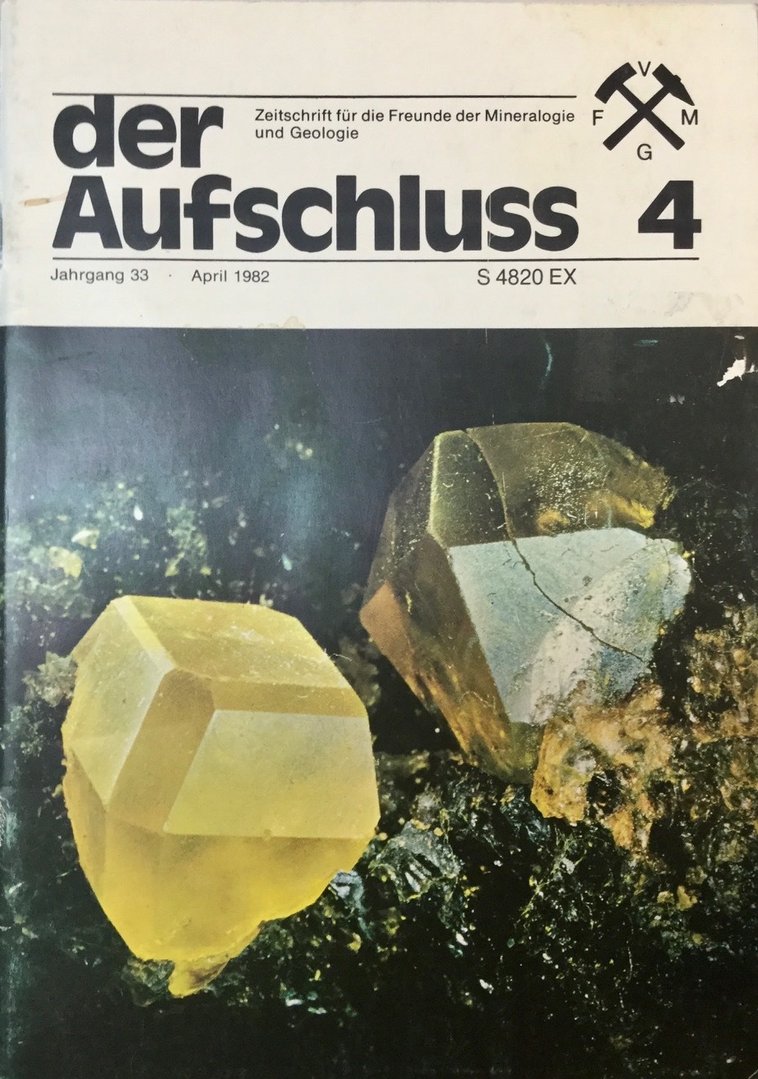
Journal Article · Source: Der Aufschluss · Volume: Vol. 33 · Pages: pp. 169–182 · Language: in German

Abstract
Sinkankas: Account of a personal visit in 1980: geology, petrology, deposits, peridot & inclusions, chemistry, genesis,mineral associates, etc.- valuable firsthand information.
Keywords
peridot, St. John’s Island, Egypt, gems, Classical world
Eine neue Edelstein-Varietät aus Tansania: Gelbe, grüne und rötlich-braune Apatit-Katzenaugen

Eine neue Edelstein-Varietät aus Tansania: Gelbe, grüne und rötlich-braune Apatit-Katzenaugen

A new gemstone variety from Tanzania: Yellow, green, and reddish-brown apatite cat's eyes

Gübelin, E.J. and Schmetzer, K. (1982)

Journal Article · Source: Zeitschrift der Deutschen Gemmologischen Gesellschaft · Volume: Vol. 31 · Issue: No. 4 · Pages: pp. 261–264 · Language: In German

Abstract
Gübelin and Schmetzer describe a new occurrence of cat’s-eye apatite from the Umba Valley, Tanzania, occurring in yellow, green and reddish-brown colors. A small proportion of the material is clear and transparent, but most specimens contain abundant fine, fibre-like inclusions and are therefore suitable for cabochon cutting. Properly oriented cabochons display a strong, sharply defined cat’s-eye effect. Examination of the inclusions showed that the chatoyancy is produced by numerous minute needles of goethite. The article illustrates the material with four color photographs.
Keywords
apatite, Tanzania, gems
Naturfarbene und behandelte gelbe und orange-braune Saphire

Naturfarbene und behandelte gelbe und orange-braune Saphire

Natural and treated yellow and orange-brown sapphires

Schmetzer, K., Bosshart, G. and Hänni, H. (1982)

Journal Article · Source: Zeitschrift der Deutschen Gemmologischen Gesellschaft · Volume: Vol. 31 · Pages: pp. 265–279 · Language: In German

Keywords
corundum, sapphire, color.4, inclusions.5, treatments.6, East Africa.12, Sri Lanka.12, Tanzania.12, gems
Neue Mikrosonden-Analysen von Mineral-Einschlüssen einschliesslich eines Rubins im Diamant

Neue Mikrosonden-Analysen von Mineral-Einschlüssen einschliesslich eines Rubins im Diamant

New microprobe analyses of mineral inclusions including a ruby in diamond

Gübelin, E.J. (1982)

Journal Article · Source: Zeitschrift der Deutschen Gemmologischen Gesellschaft · Volume: Vol. 31 · Issue: No. 1/2 · Pages: pp. 23–40 · Language: In German

Abstract
Gübelin reports electron-microprobe analyses of mineral inclusions from nine diamonds. The inclusions were studied either after crushing the host diamond and separating the enclosed mineral, or by cutting and polishing the diamond until an inclusion was exposed at the surface; separated inclusions could also be examined by X-ray methods. The analytical results are presented for the various inclusion minerals, with discussion of their significance for the origin and formation of their diamond hosts. Of particular interest is the identification of a red inclusion as corundum (ruby), the first substantiated occurrence of ruby as an inclusion in natural diamond; this ruby is assigned to the eclogitic suite of diamond inclusions. The paper contains 17 figures, 16 in color, and two tables.
Keywords
diamond, inclusions, gems

Förklaring av den optiska teorin om kattöque- och stjärn-effekt i ädelstenar

Explanation of the optical theory of cat’s-eye and star effects in gemstones

Gübelin, E.J. (1982)

Journal Article · Source: Gem: Bulletinen Stockholms Gemmologiska Förening · Issue: No. 2 · Pages: pp. 5–10 · Language: in Swedish

Abstract
Gübelin explains the optical principles responsible for chatoyancy (the cat’s-eye effect) and asterism (the star effect) in gemstones. He relates these phenomena to the reflection and scattering of light by numerous regularly oriented inclusions within a transparent or translucent host crystal. Parallel inclusions produce a single luminous band perpendicular to their orientation, giving the cat’s-eye effect when the stone is appropriately cut en cabochon. When inclusions occur in two or more intersecting crystallographic directions, the corresponding bands intersect to produce a star. The geometry and orientation of the inclusions, together with the orientation and shape of the cabochon, therefore determine the position and appearance of the optical effect.
Keywords
chatoyancy, asterism, gems
Erkennungsmerkmale der neuen synthetischen Saphire

Erkennungsmerkmale der neuen synthetischen Saphire

Identification features of the new synthetic sapphires

Gübelin, E.J. (1982)

Journal Article · Source: Deutsche Goldschmiede-Zeitung · Volume: Vol. 80 · Issue: No. 11, November · Pages: pp. 51–57 · Language: in German

Abstract
Gübelin discusses the identification of newly available synthetic and treated blue sapphires, concentrating on Chatham flux-grown synthetic sapphire and on natural sapphires whose color has been modified by heat treatment or surface diffusion. He describes the crystal habits and physical and optical properties of rough and faceted Chatham material, followed by a detailed examination of diagnostic inclusions, some of which closely resemble inclusions in natural sapphire. Twenty-three color photomicrographs illustrate these features. A further 15 photomicrographs document characteristics of color-enhanced sapphires, including altered mineral inclusions surrounded by tension cracks, pockmarked girdle surfaces, pronounced color zoning, and concentrations of color in surface-reaching fractures.
Keywords
corundum, synthetic corundum.7, gems
Taprobanit: Ein neuer Edelstein aus Sri Lanka

Taprobanit: Ein neuer Edelstein aus Sri Lanka

Taprobanite: A new gemstone from Sri Lanka

Gübelin, E.J. (1981)

Journal Article · Source: Zeitschrift der Deutschen Gemmologischen Gesellschaft · Volume: Vol. 30 · Issue: No. 3/4 · Pages: pp. 179–206 · Language: In German

Abstract
Gübelin describes “taprobanite,” a rare red gemstone from Sri Lanka initially thought to be taaffeite because of its similar appearance and gemological properties. Detailed examination showed it to represent a distinct member of the taaffeite mineral group, characterized by differences in chemical composition, crystallographic properties, and optical behavior. The study discusses its identification, physical and optical constants, absorption characteristics, inclusions, and relationship to taaffeite, emphasizing the difficulty of recognizing such rare stones by conventional gemological testing alone. The name derives from Taprobane, the ancient name for Sri Lanka.
Keywords
taaffeite, Sri Lanka, gems
Einschlüsse im Granat aus dem Umba-Tal

Einschlüsse im Granat aus dem Umba-Tal

Inclusions in garnet from the Umba Valley

Gübelin, E.J. (1981)

Journal Article · Source: Zeitschrift der Deutschen Gemmologischen Gesellschaft · Volume: Vol. 30 · Issue: No. 3/4 · Pages: pp. 182–194 · Language: In German

Abstract
Gübelin examines the internal features of garnets from Tanzania’s Umba Valley, a locality producing garnets across the pyrope–almandine–spessartine compositional range. The paper documents and illustrates their characteristic inclusions and considers their value for gemological identification and for interpreting the conditions under which the garnets formed. Later inclusion literature specifically records crystallographically oriented networks and star-like arrangements of rutile needles in Umba Valley garnets, citing Gübelin’s work on this material.
Keywords
garnet, Umba Valley, Tanzania, gems

Exploring the Literature of Gemstone Inclusions

The literature of gemstone inclusions covers identification, origin determination, treatments, synthesis, mineral inclusions, fluid inclusions and other internal features of natural and synthetic gems.

For a curated selection of important sources, read Inclusions in Gemstones — Hyperion Literature Sources.

About Four Treasures

Four Treasures is Lotus Gemology's freely accessible gemological reference database. Use the full database to search by author, title or keyword and explore literature on gemology, mineralogy, jewelry and related fields. Where available, hyperlinks on titles may lead directly to the full publication.

Search the Complete Four Treasures Database