Sapphire Inclusions
Explore sapphire inclusions in Hyperion, the Lotus Gemology inclusion database. Hyperion contains photomicrographs of inclusions and internal features in natural sapphire, documented with information on geographic origin, treatment, lighting conditions, field of view, photographer and published references.
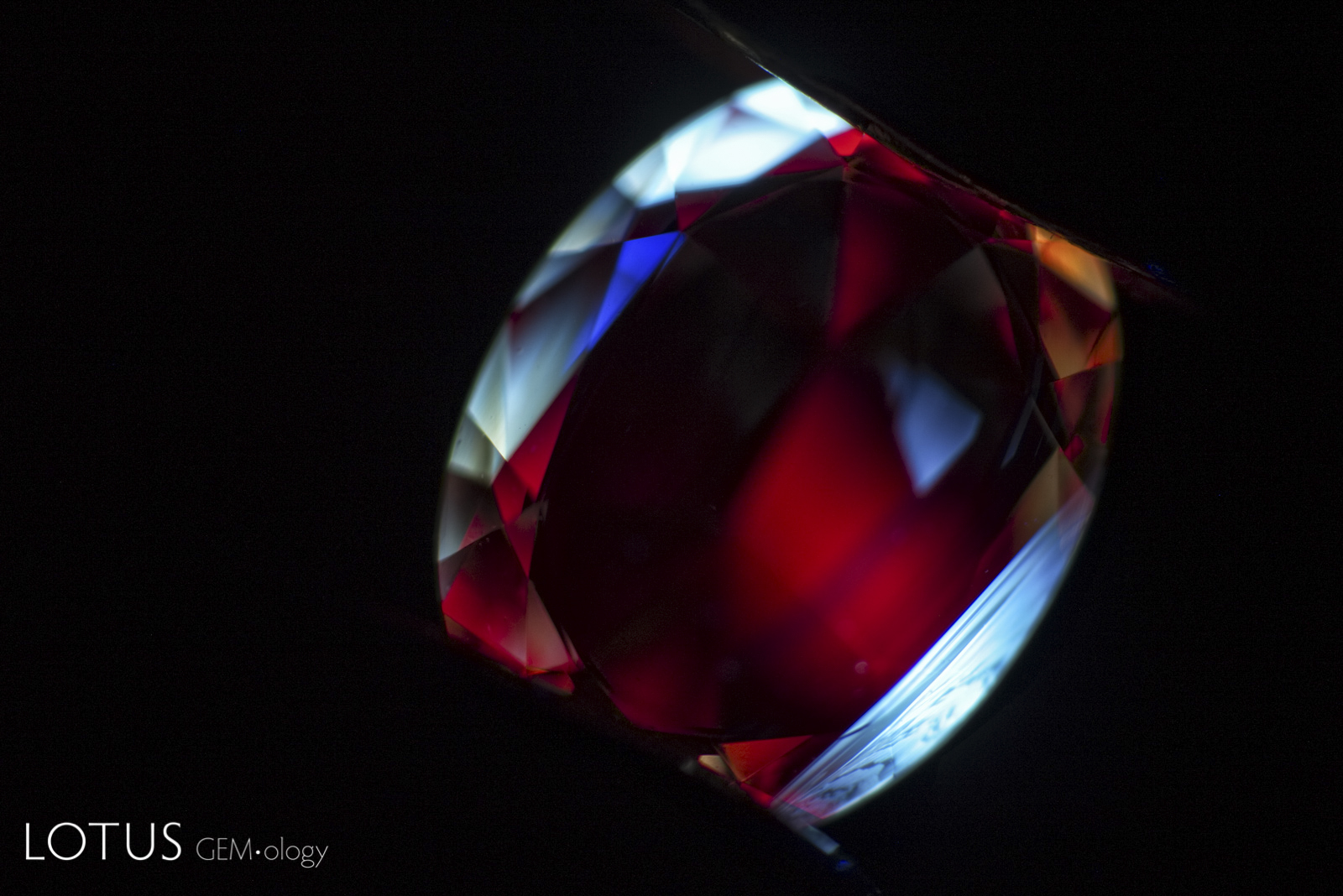
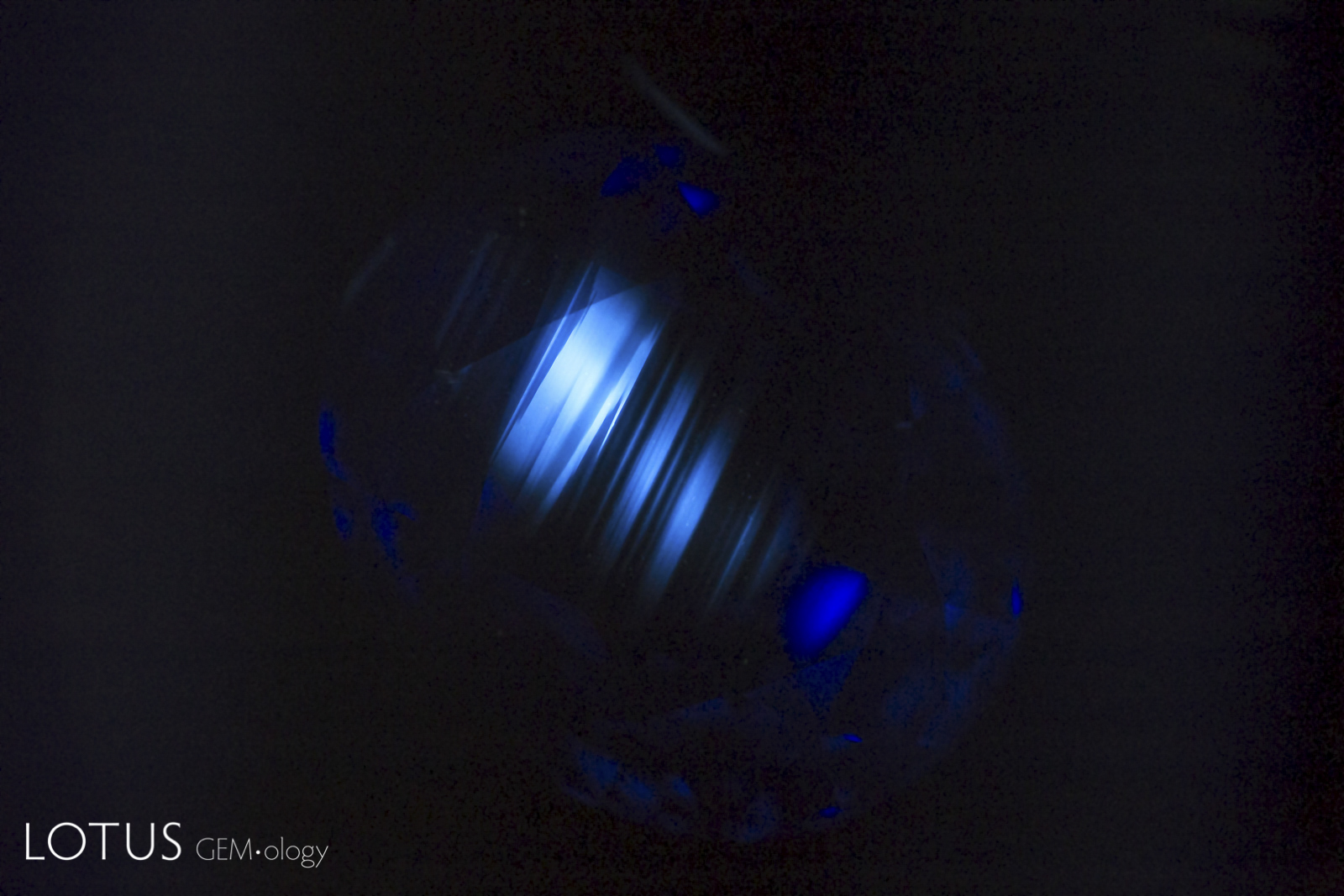
This bright orange sapphire shows no evidence of heat treatment in the microscope, but the chalky zoned shortwave ultraviolet fluorescence quickly unmasks the fact that the stone had been heated.
Natural Sapphire •
Madagascar •
Enhancements:
Heat (H) •
Lighting Conditions:
Ultraviolet: Shortwave
Photographer:
Richard W. Hughes •
Image Number:
A-003-2872-1
Abraded facet junctions on an untreated Sri Lanka sapphire. According to Robert Webster’s “Gems” (1st edition, 1962, p. 66): “Corundum is a hard stone, indeed the impure material is used as an abrasive, and is rated 9 on the scale of hardness devised by F. Mohs. Despite the hardness of the mineral, however, ruby and sapphire need to be handled with some care, for they are to a slight extent brittle and if dropped on a hard surface or given a sharp blow tend to develop internal flaws and cracks.”
Natural Sapphire •
Sri Lanka (Ceylon) •
Enhancements:
None Detected (None) •
Lighting Conditions:
Diffuse Overhead
Photographer:
E. Billie Hughes •
Image Number:
R-003-2383-1
Webster, Robert (1962) Gems: Their Sources, Descriptions and Identification. London: Butterworths, 792 pp., RWHL*
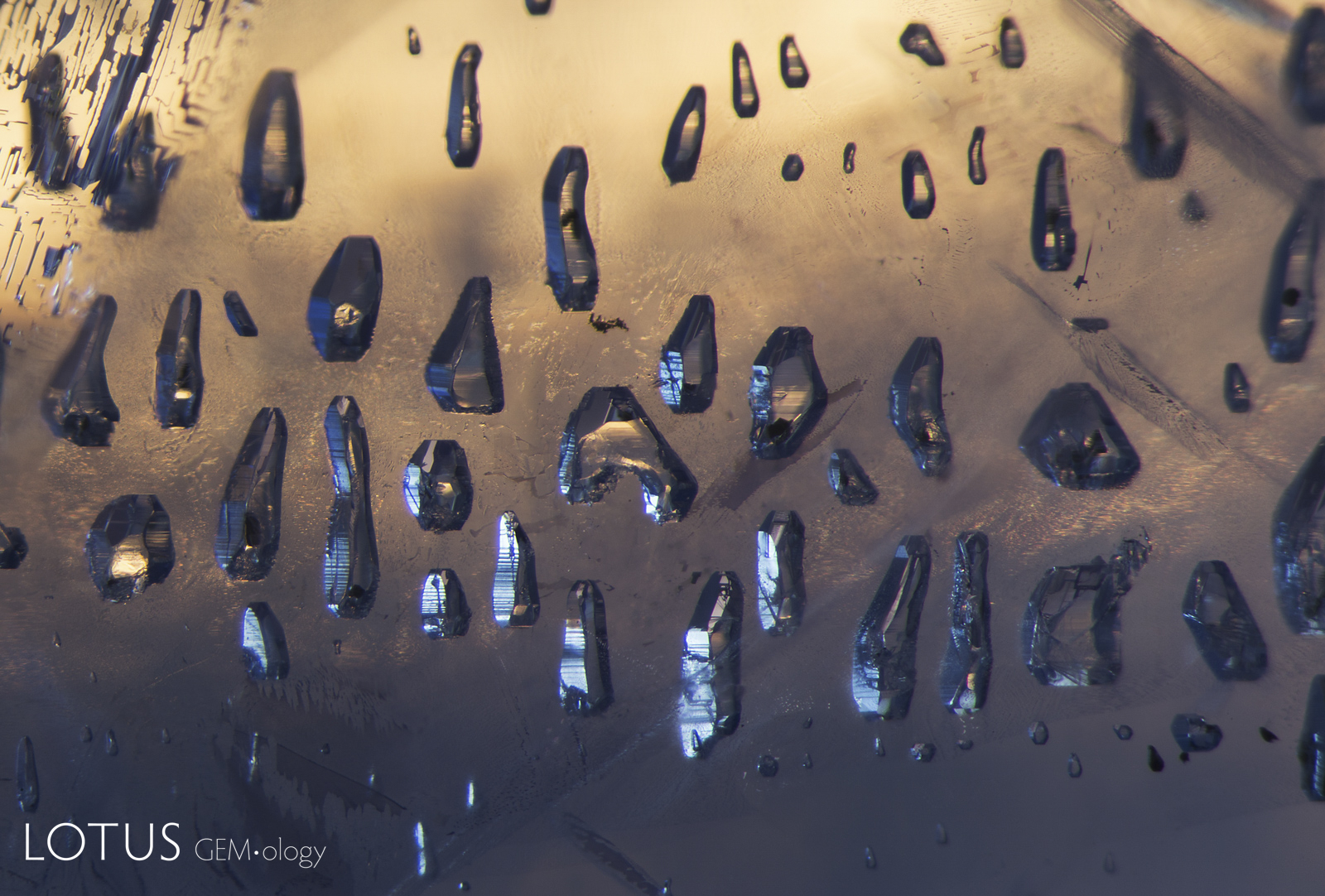
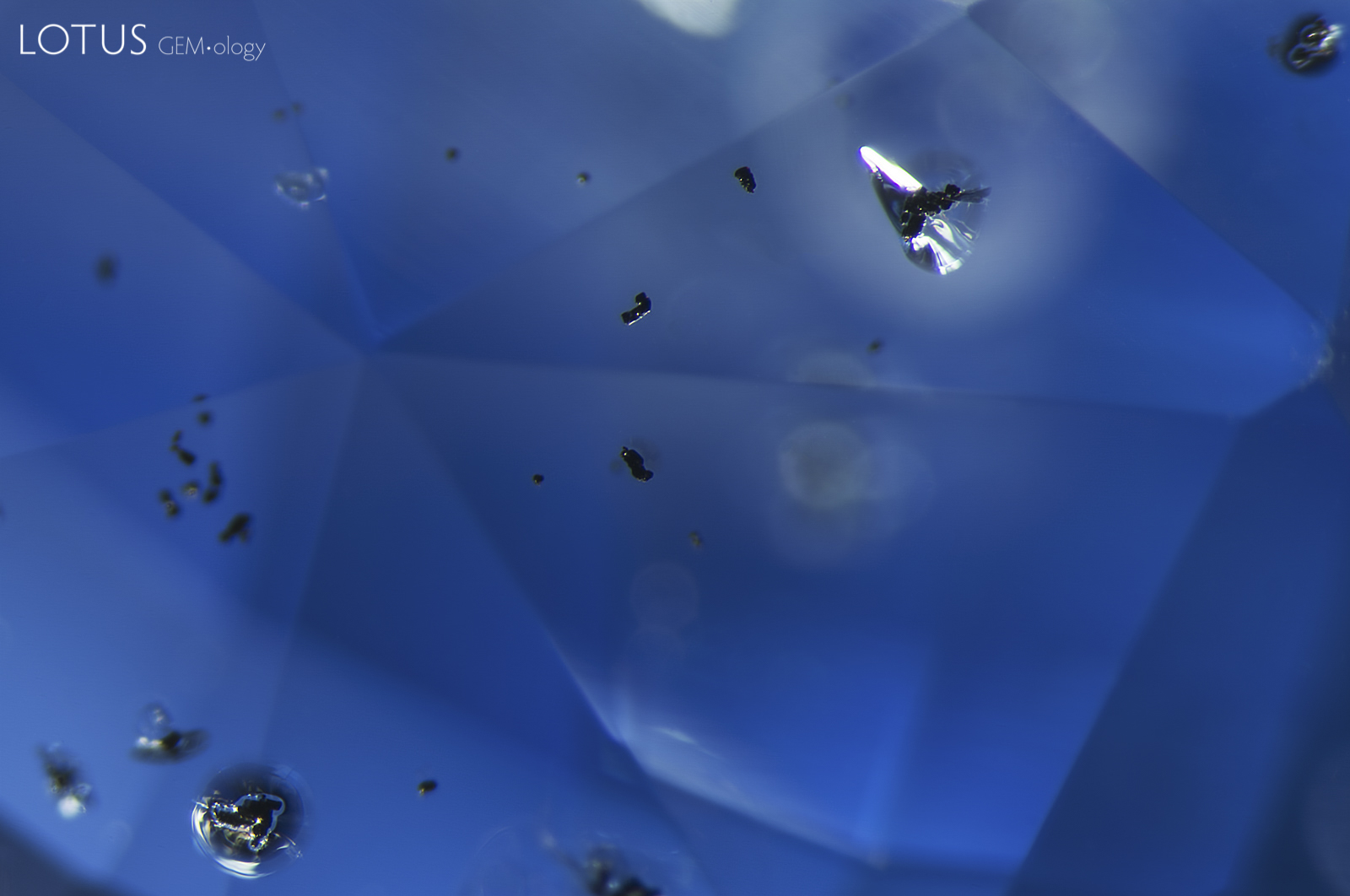
Negative crystals like these can trap other materials inside, forming a natural time capsule. In this case, we can see small black flakes of graphite suspended within the negative crystals in this unheated sapphire from Sri Lanka. Pristine negative crystals such as this offer evidence that the gem has not been subjected to heat treatment.
Natural Sapphire •
Sri Lanka (Ceylon) •
Enhancements:
None Detected (None) •
Lighting Conditions:
Dark Field + Diffuse Fiber Optic
Photographer:
E. Billie Hughes •
Image Number:
A-003-0580-2
Clustered negative crystals like these grew syngenetically, meaning at the same time as their sapphire host. Note their angular “euhedral” shapes. Many contain black flakes of graphite.
Natural Sapphire •
Sri Lanka (Ceylon) •
Enhancements:
None Detected (None) •
Lighting Conditions:
Dark Field + Diffuse Fiber Optic + Blue Filter
Photographer:
E. Billie Hughes •
Image Number:
A-003-0580-1
A rectilinear fingerprint shines brightly inside this untreated sapphire from Sri Lanka.
Natural Sapphire •
Sri Lanka (Ceylon) •
Enhancements:
None Detected (None) •
Lighting Conditions:
Dark Field + Diffuse Fiber Optic + Blue Filter
Photographer:
E. Billie Hughes •
Image Number:
A-003-0137-1
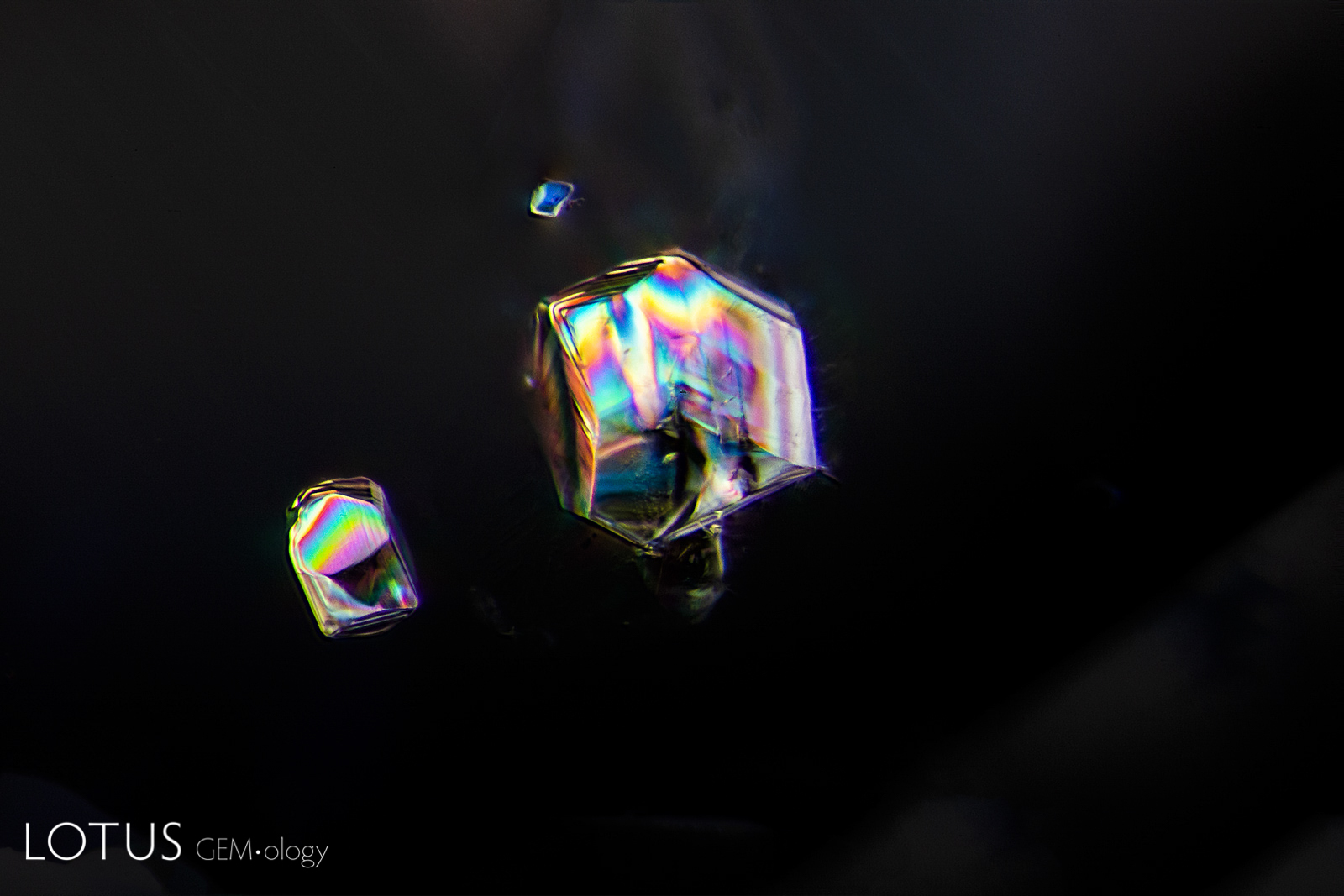
Crossed polars reveals in spectacular fashion the birefringent nature of these included crystal grains in this sapphire derived from a basaltic deposit.
Natural Sapphire •
Basaltic •
Enhancements:
None Detected (None) •
Lighting Conditions:
Diffuse Light Field + Crossed Polars
Photographer:
Richard W. Hughes •
Image Number:
A-002-9697-1
Koivula, J.I. (2007) Photographing gems. In Focus, No. 7, September, pp. 24–59; RWHL**.
Angular zoned chalky shortwave fluorescent reaction, indicative of heat treatment.
Natural Sapphire •
Madagascar •
Enhancements:
Heat (H) •
Lighting Conditions:
Ultraviolet: Shortwave
Photographer:
E. Billie Hughes •
Image Number:
A-002-9410-1
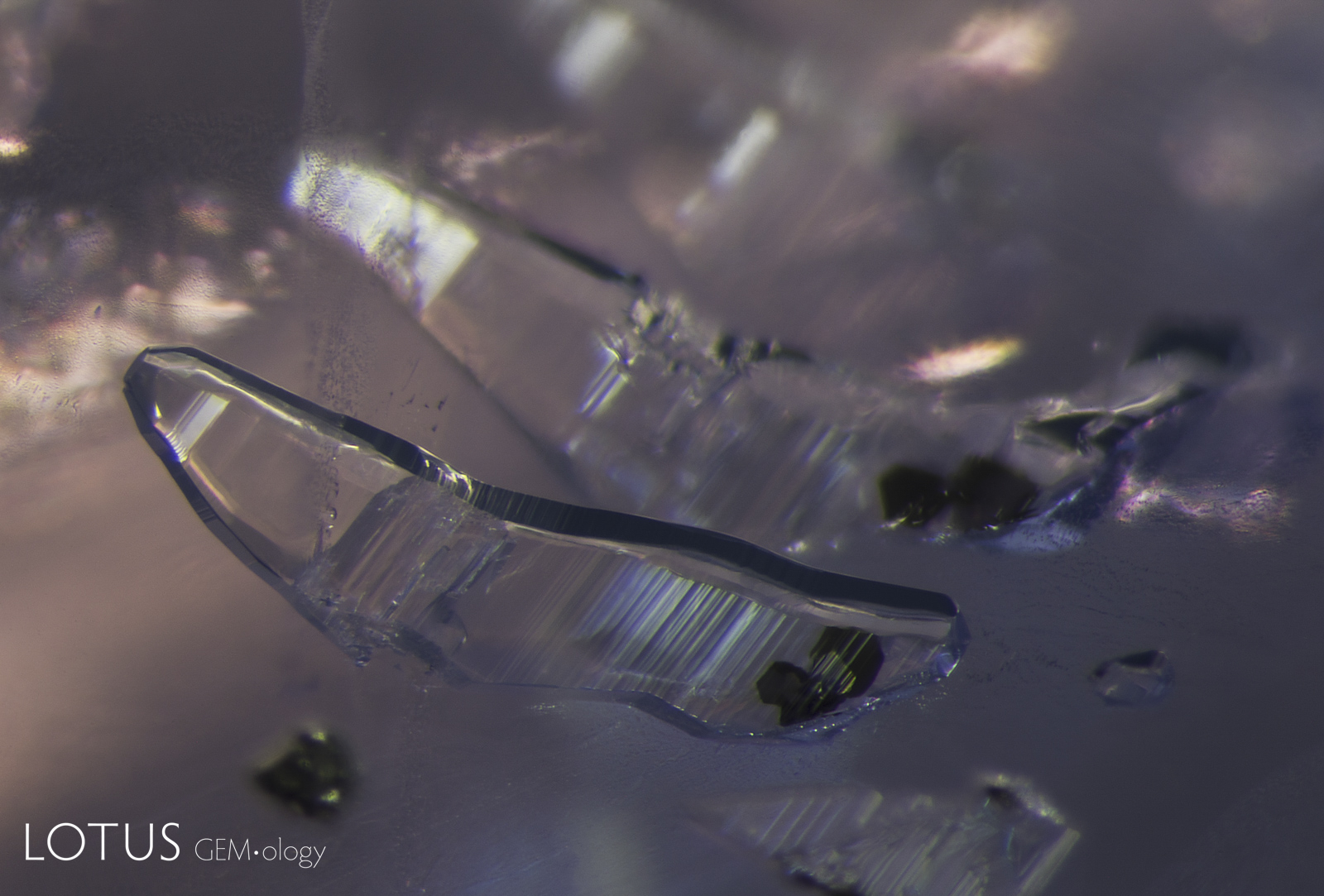
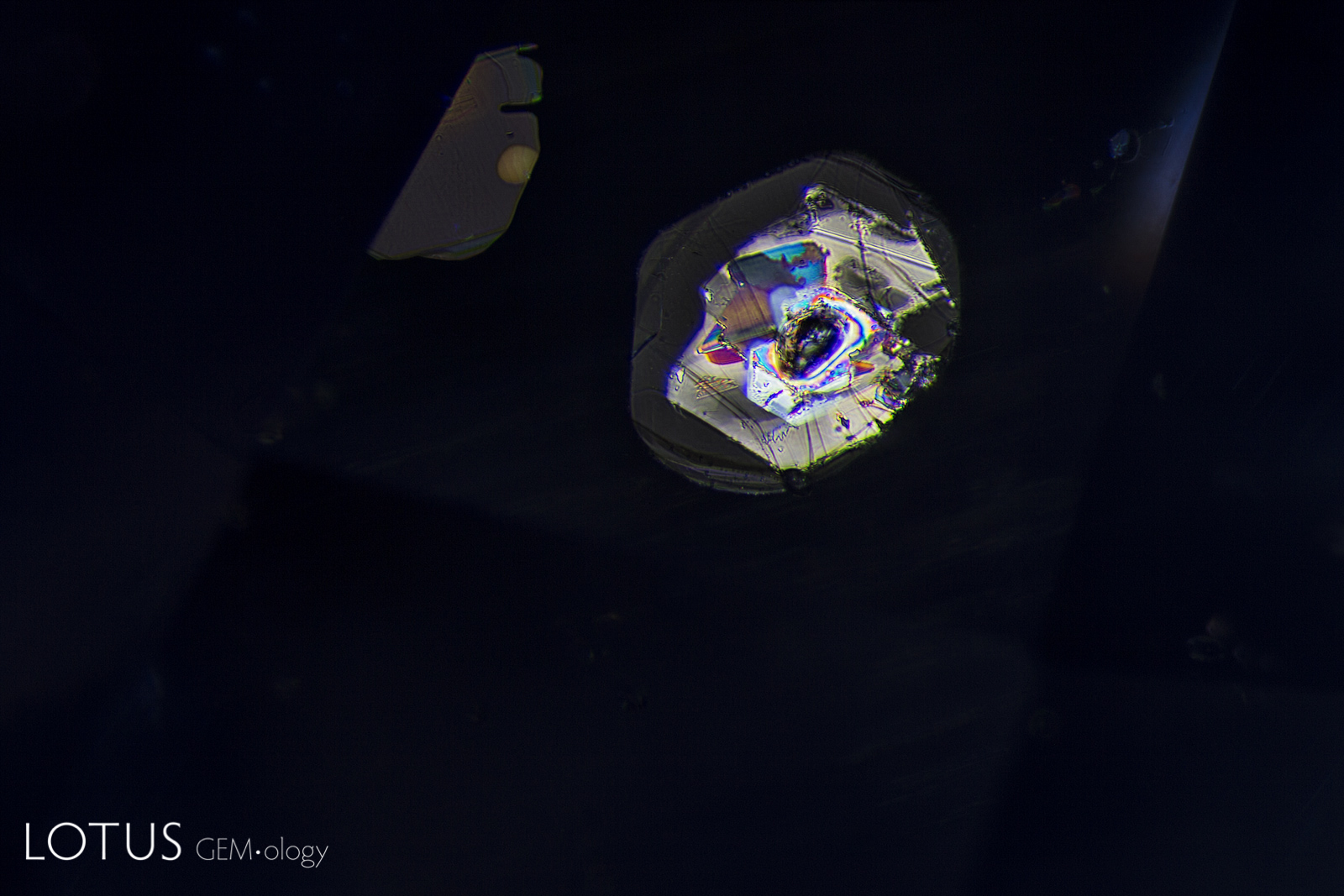
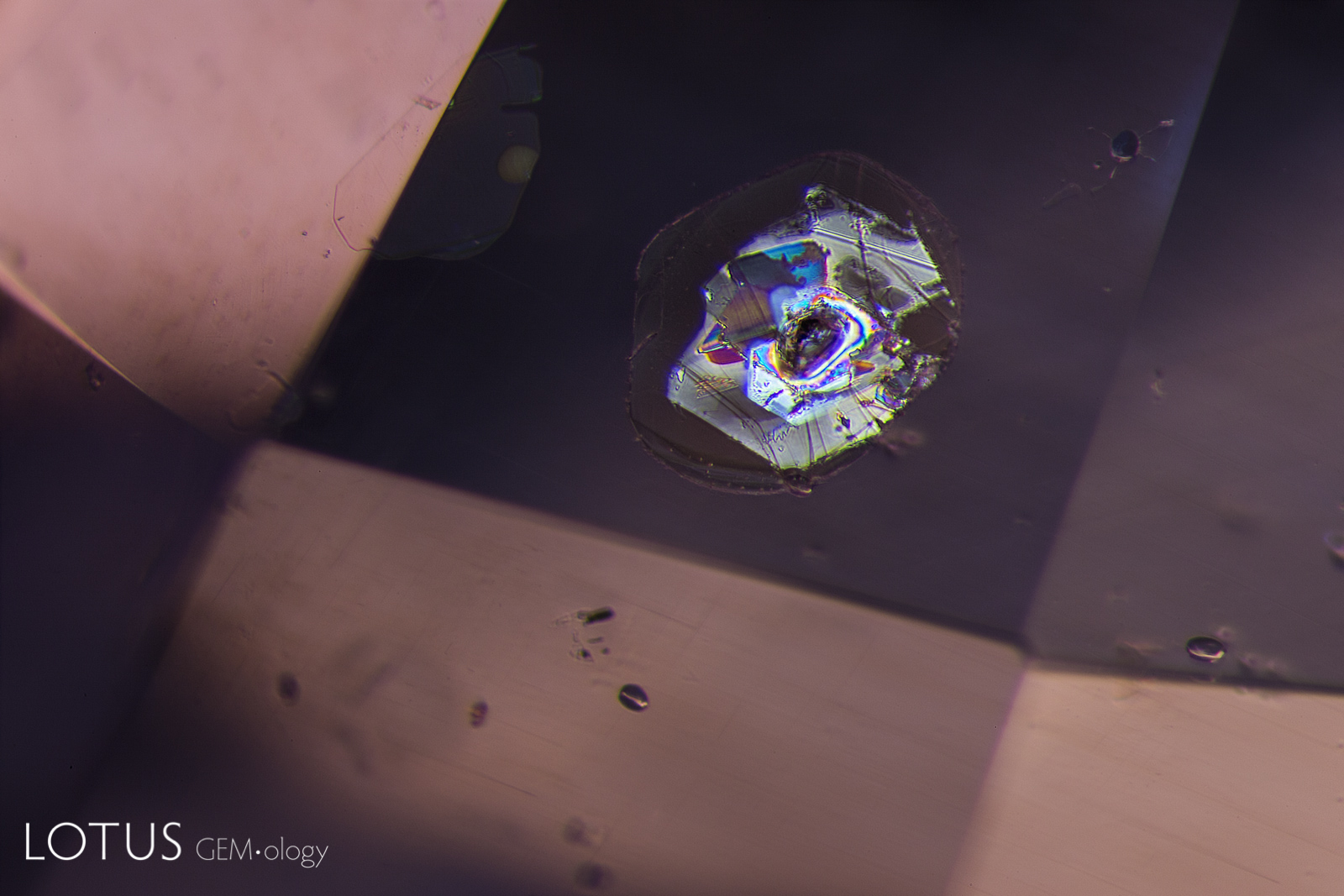
Overhead lighting was used to photograph this scene in a violet sapphire from Sri Lanka, which shows two large mica plates. The undamaged state of the mica reveals that this sapphire has not been subjected to heat treatment.
Natural Sapphire •
Sri Lanka (Ceylon) •
Enhancements:
None Detected (None) •
Lighting Conditions:
Fiber Optic: Overhead
Photographer:
Richard W. Hughes •
Image Number:
A-002-8706-2
Koivula, J.I. (2007) Photographing gems. In Focus, No. 7, September, pp. 24–59; RWHL**.
A combination of dark field and overhead lighting was used to photograph this scene in a violet sapphire from Sri Lanka, which shows two large mica plates and smaller rounded zircon crystals. The undamaged state of the mica reveals that this sapphire has not been subjected to heat treatment.
Natural Sapphire •
Sri Lanka (Ceylon) •
Enhancements:
None Detected (None) •
Lighting Conditions:
Dark Field + Overhead Fiber Optic
Photographer:
Richard W. Hughes •
Image Number:
A-002-8706-1
Koivula, J.I. (2007) Photographing gems. In Focus, No. 7, September, pp. 24–59; RWHL**.
Uraninite crystals with small halos seem to float across this untreated sapphire.
Natural Sapphire •
Sri Lanka (Ceylon) •
Enhancements:
None Detected (None) •
Lighting Conditions:
Dark Field + Diffuse Fiber Optic + Blue Filter
Photographer:
E. Billie Hughes •
Image Number:
A-002-5395-1
This image clearly illustrates what master photomicrographer John Koivula has termed “chromophore cannibalization.” As titanium is drawn out of solid solution to form exsolved rutile silk, the area in the immediate vicinity is decolorized, losing its blue color.
Natural Sapphire •
Sri Lanka (Ceylon) •
Enhancements:
None Detected (None) •
Lighting Conditions:
Diffuse Light Field (Transmitted Light)
Photographer:
E. Billie Hughes •
Image Number:
A-002-8624-2
Koivula, J.I. (1987) Internal diffusion. Journal of Gemmology, Vol. 20, No. 7/8, pp. 474–477; RWHL*.
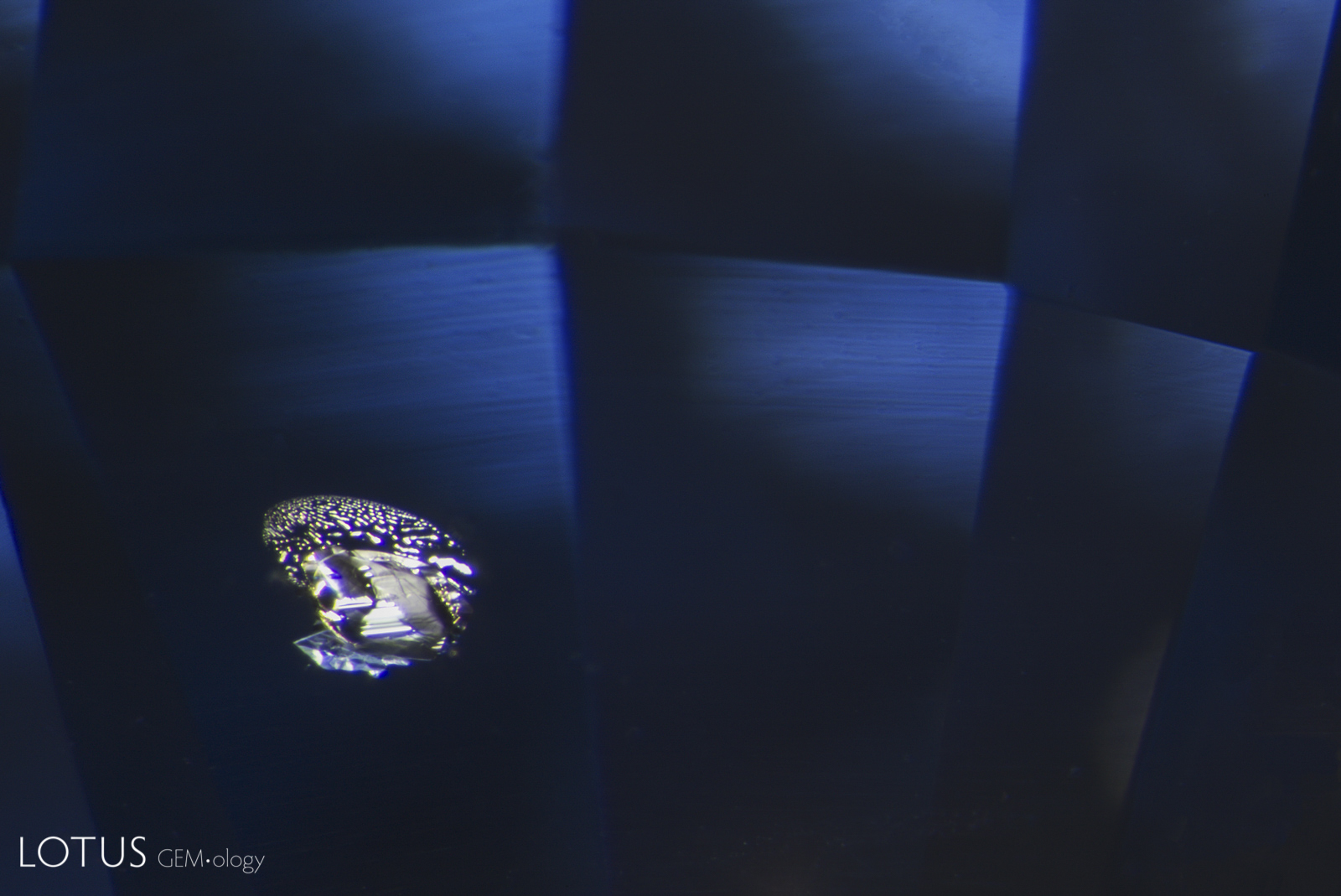
This crystal appears black with darkfield illumination, but when observed with diffuse fiber optic light we can see it has a metallic luster.
Natural Sapphire •
Madagascar •
Enhancements:
None Detected (None) •
Lighting Conditions:
Fiber Optic: Diffuse Oblique
Photographer:
E. Billie Hughes •
Image Number:
A-002-8579-1
Sapphire inclusions may include mineral crystals, rutile silk, healed fissures, fluid inclusions, negative crystals, color zoning and other features formed during or after crystal growth. Such features are important to gemologists because they can provide evidence useful in identifying sapphire, understanding its geological history, recognizing treatment and, in some cases, determining geographic origin.
Sapphire Inclusion Photomicrographs
The Hyperion sapphire gallery includes microscopic features found in sapphires from major deposits around the world. Each entry is accompanied by descriptive information and, where available, references to the gemological literature.
What Inclusions Can Reveal About Sapphire
Inclusions are an important part of sapphire identification. Their form, composition, orientation and alteration can help gemologists distinguish natural sapphire from synthetic material, recognize evidence of heat treatment, and study the geological environment in which the sapphire formed.
Hyperion combines inclusion photomicrography with supporting gemological information so that individual features can be compared with documented examples from known sapphire deposits.
About Hyperion
Hyperion is the Lotus Gemology searchable inclusion database. It allows users to browse gemstone inclusions by gem type, geographic origin, treatment and keyword.