Sapphire Inclusions
Explore sapphire inclusions in Hyperion, the Lotus Gemology inclusion database. Hyperion contains photomicrographs of inclusions and internal features in natural sapphire, documented with information on geographic origin, treatment, lighting conditions, field of view, photographer and published references.
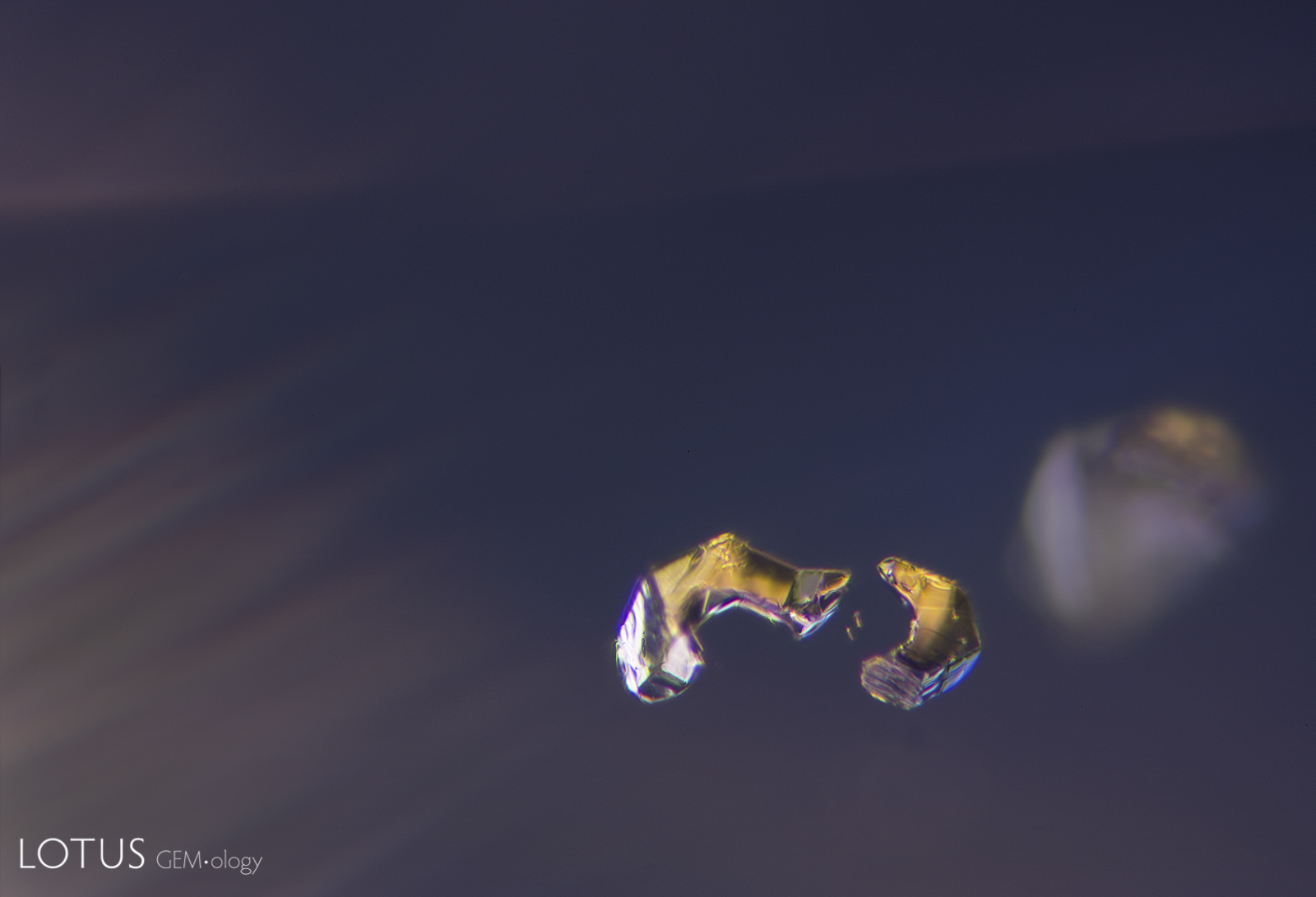
C-shaped crystals with faint growth zoning in the background of this sapphire from Madagascar. Irregular crystals such as this are a common sight in Madagascar sapphire.
Natural Sapphire •
Madagascar •
Enhancements:
None Detected (None) •
Lighting Conditions:
Dark Field
Photographer:
Patharaphum Sudprasert •
Image Number:
A-001-6309-2
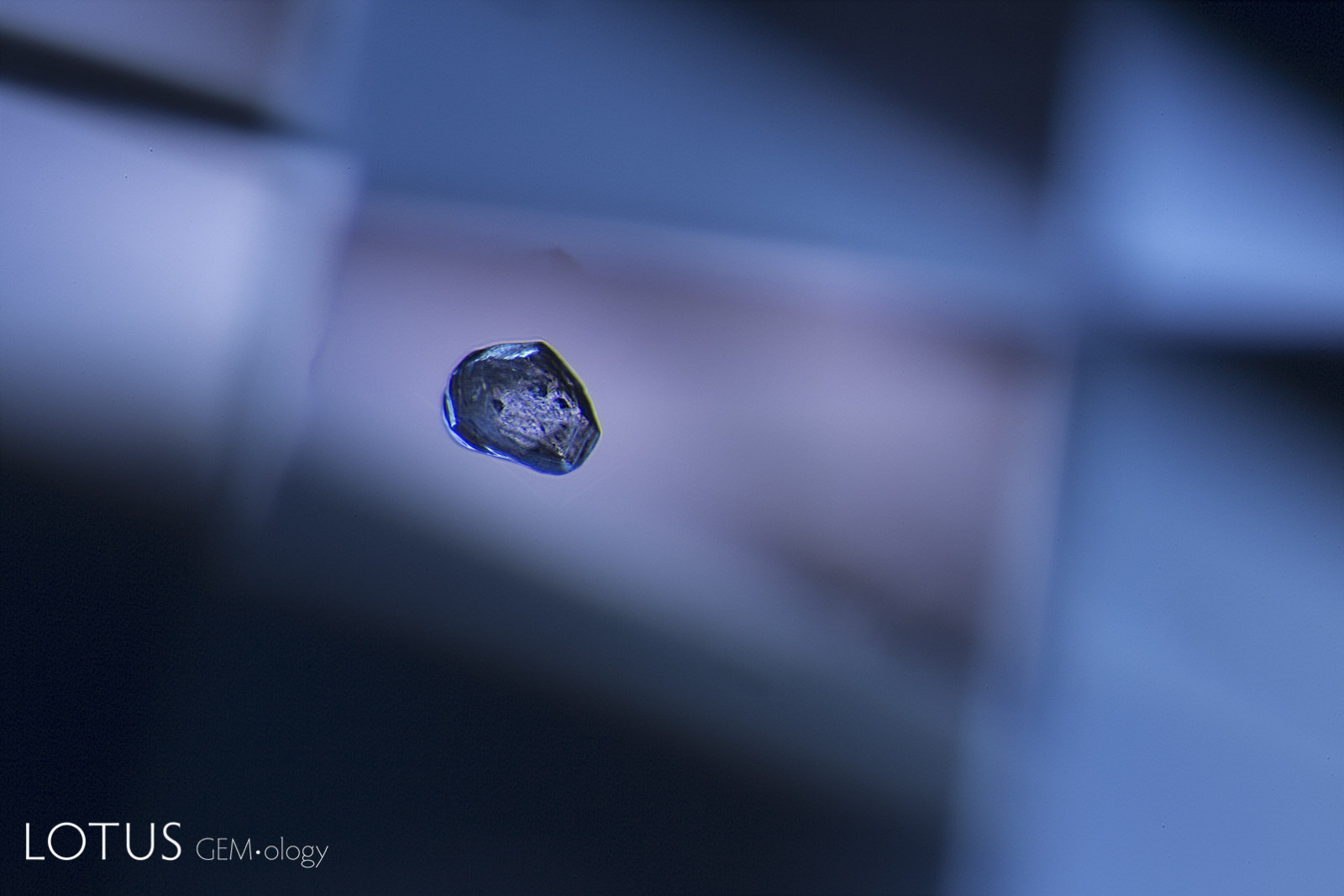
A slightly corroded crystal floats the blue sea of a Madagascar blue sapphire.
Natural Sapphire •
Madagascar •
Enhancements:
None Detected (None) •
Lighting Conditions:
Fiber Optic: Diffuse Oblique
Photographer:
Richard W. Hughes •
Image Number:
A-001-6746-1
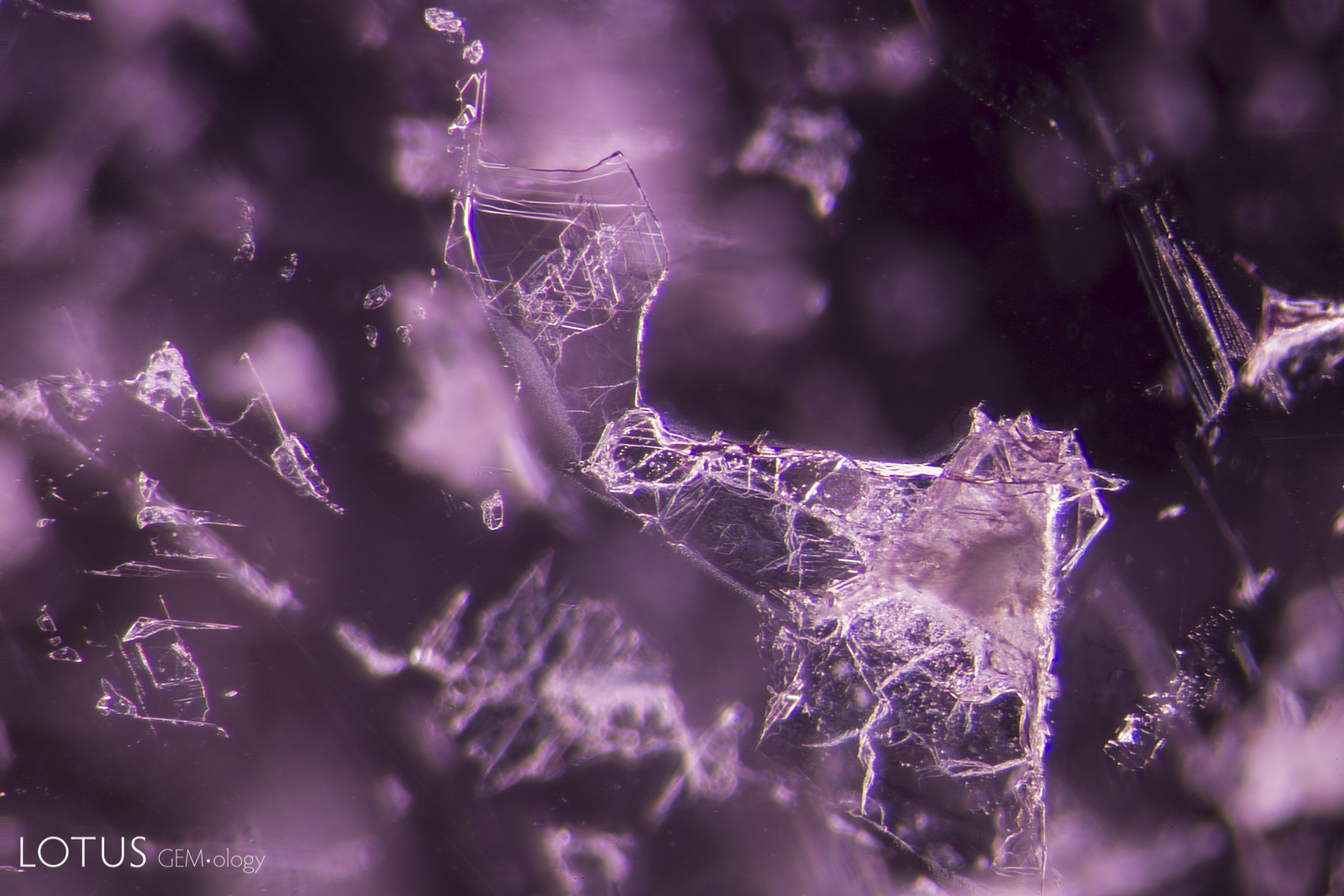
Kaolinite-bearing negative crystals flattened in the basal plane within a purple sapphire from Madagascar. The kaolinite aslo shows up in the infrared spectrum.
Natural Sapphire •
Madagascar •
Enhancements:
None Detected (None) •
Lighting Conditions:
Dark Field
Photographer:
Patharaphum Sudprasert •
Image Number:
A-001-6085-1
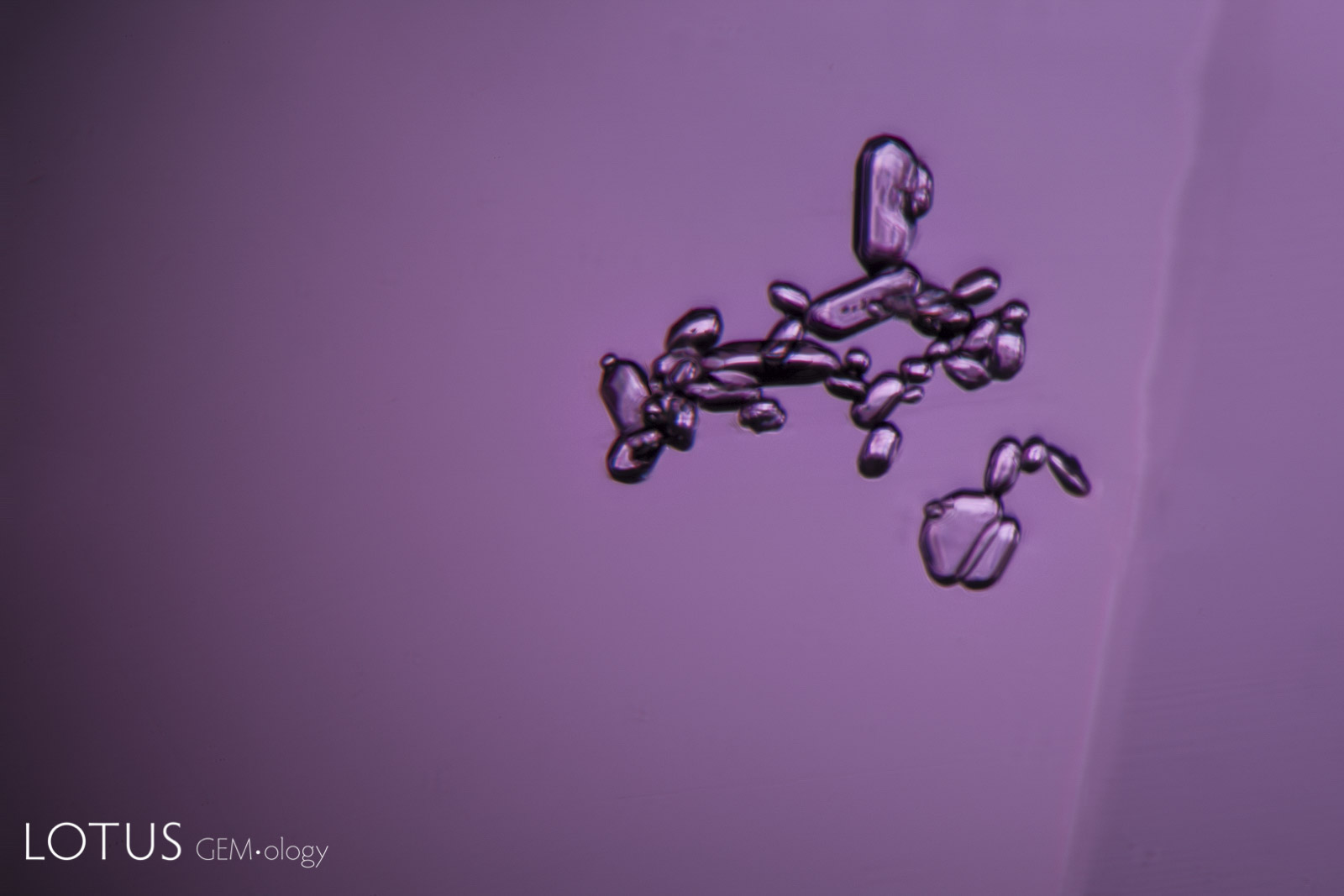
Cluster of small zircon crystals in an untreated purple sapphire from Madagascar. Heat treatment will cause such crystals to become cloudy and more white as the temperature increases. Such zircon crystals are one of the hallmarks of Madagascar sapphires from the central and southern part of the island.
Natural Sapphire •
Madagascar •
Enhancements:
None Detected (None) •
Lighting Conditions:
Fiber Optic: Diffuse Oblique
Photographer:
Richard W. Hughes •
Image Number:
A-001-6115-2
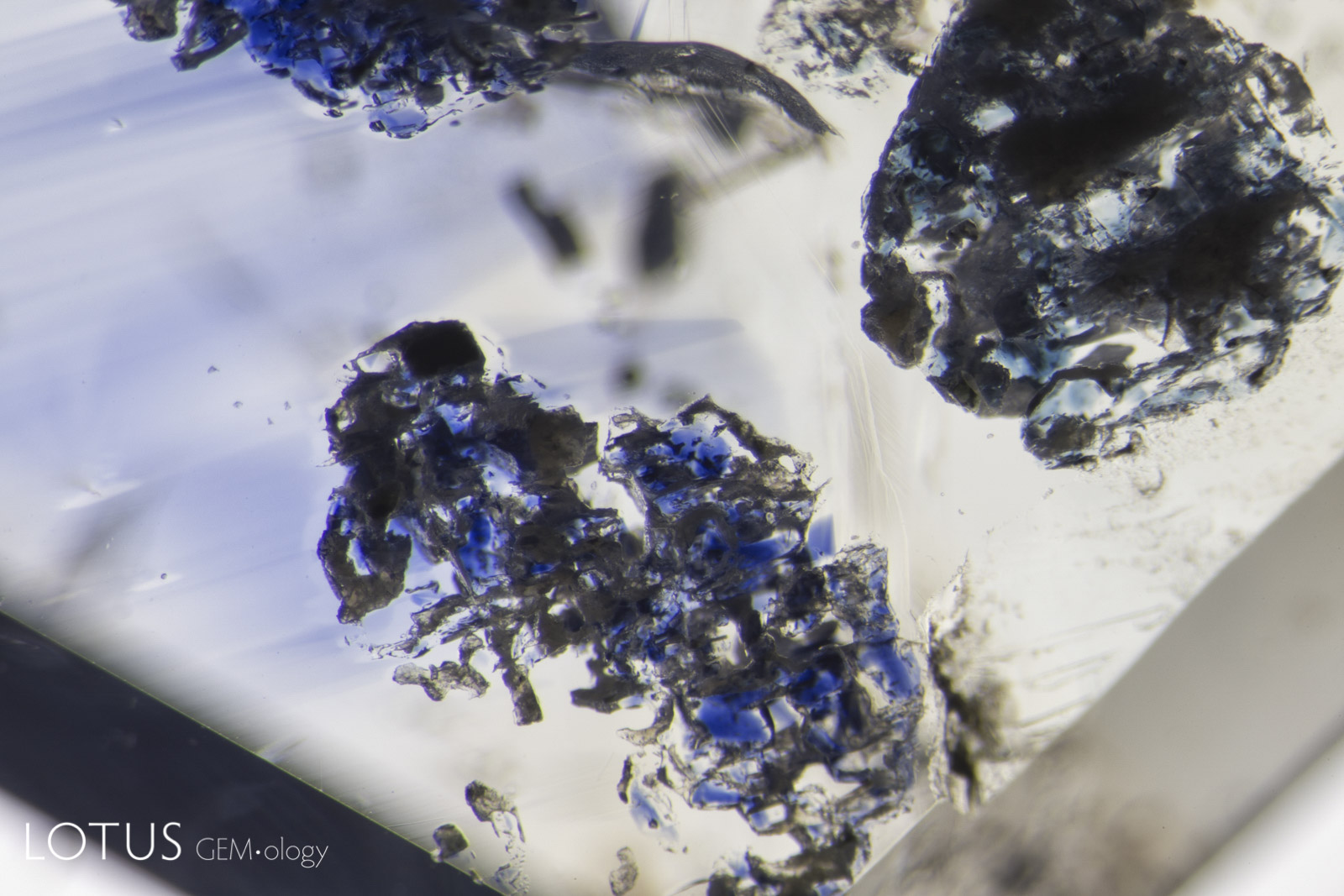
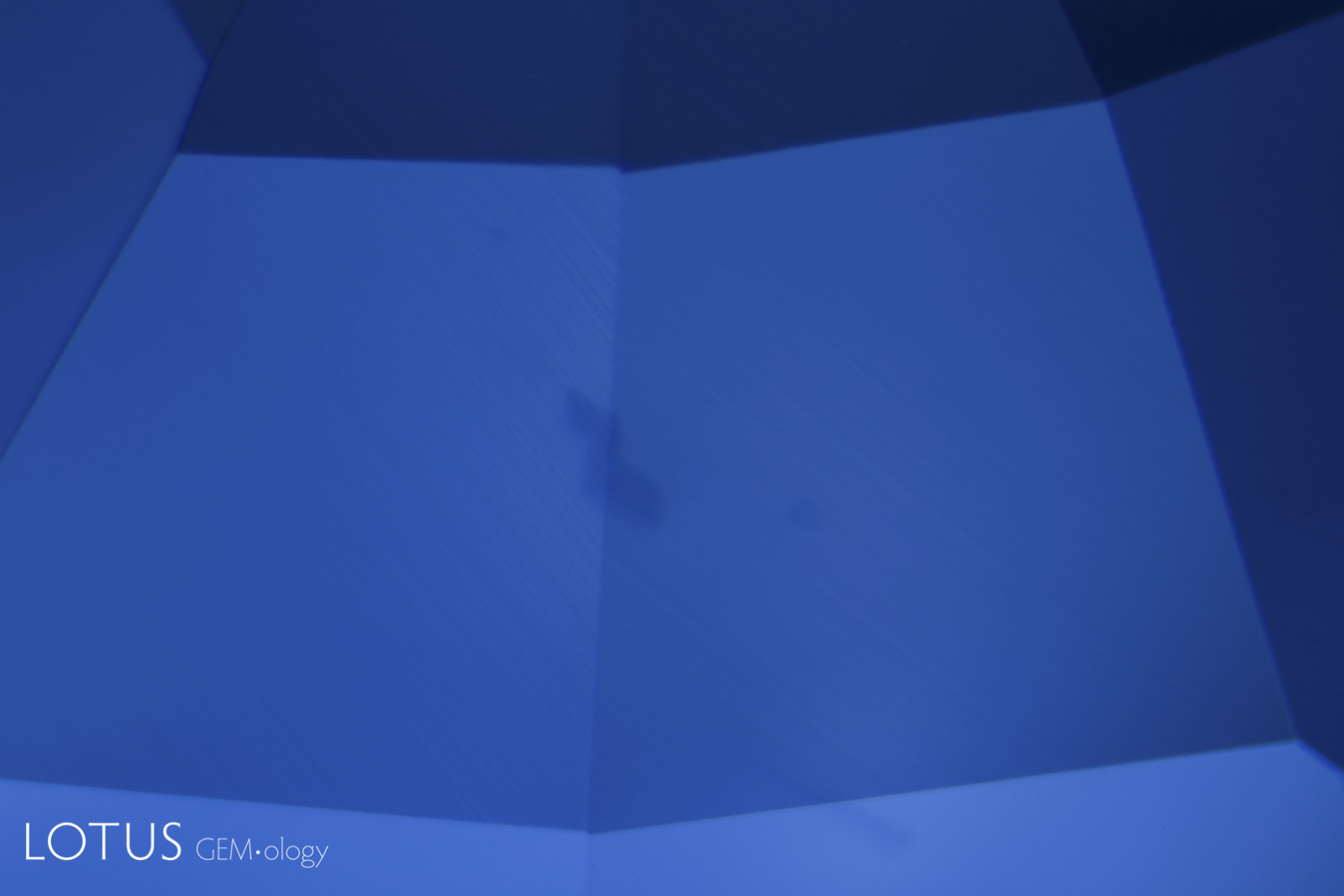
Kashmir sapphires are unique in that the skin of many crystals feature deep blue spots of color, like spots on a leopard’s back. These are sometimes incorporated into finished stones, where they will be found just below the surface.
Natural Sapphire •
India (Kashmir) •
Enhancements:
None Detected (None) •
Lighting Conditions:
Diffuse Light Field + Parallel Polars
Photographer:
Richard W. Hughes •
Image Number:
R-001-6625-1
Small angular blue spots just beneath the surface of a Kashmir sapphire. Rough Kashmir sapphires are quite unusual in that they also display these intense blue spots on the surface.
Natural Sapphire •
India (Kashmir) •
Enhancements:
None Detected (None) •
Lighting Conditions:
Fiber Optic: Diffuse Oblique
Photographer:
Richard W. Hughes •
Image Number:
A-001-6605-1
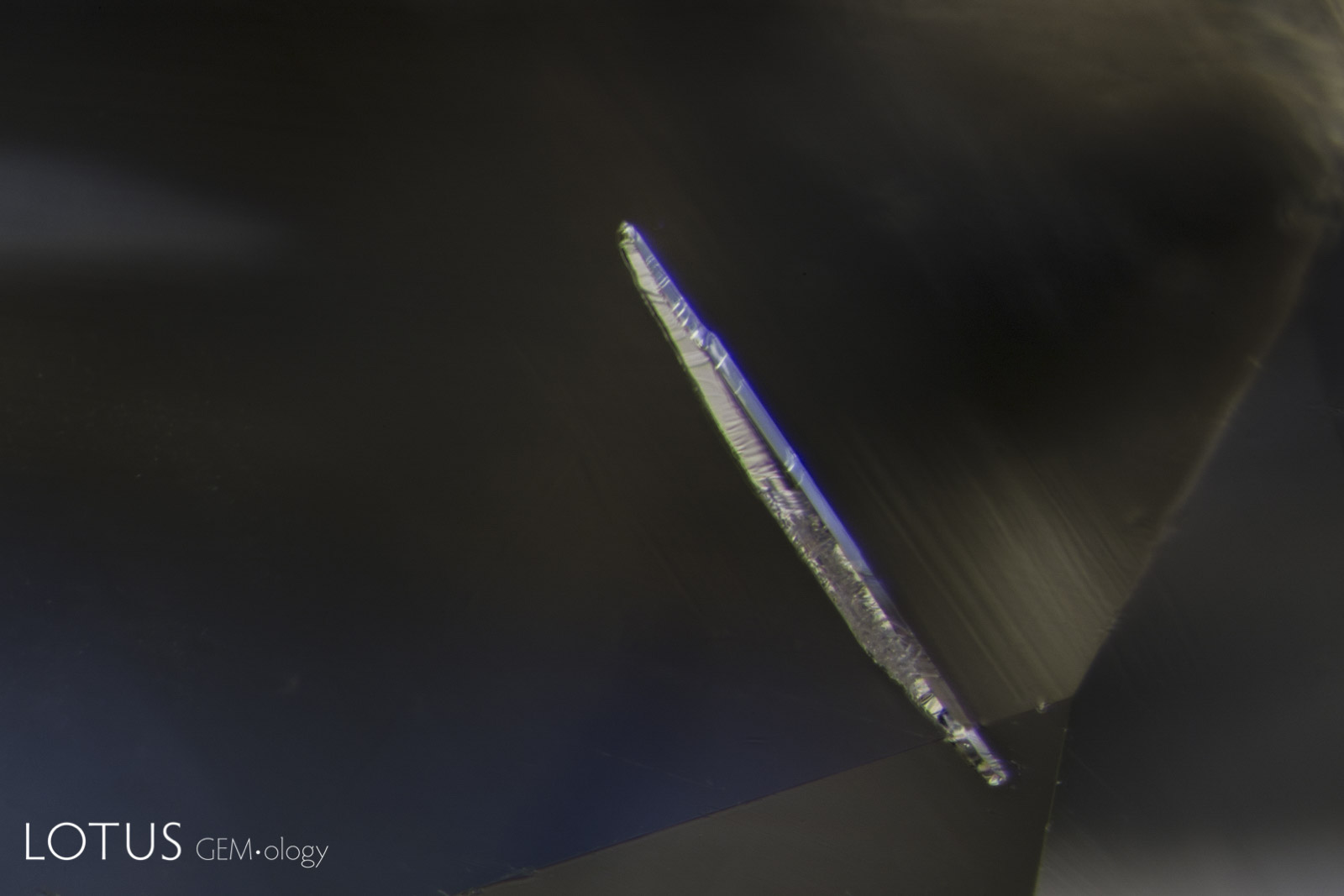
Elongated negative crystal in a yellow sapphire from Sri Lanka.
Natural Sapphire •
Sri Lanka (Ceylon) •
Enhancements:
None Detected (None) •
Lighting Conditions:
Fiber Optic: Diffuse Oblique
Photographer:
Patharaphum Sudprasert •
Image Number:
A-001-6017-1
‘Scuse me while I pierce the sky. A negative crystal cuts through a fingerprint against a sky blue backdrop in this unheated Sri Lanka sapphire.
Natural Sapphire •
Sri Lanka (Ceylon) •
Enhancements:
None Detected (None) •
Lighting Conditions:
Dark Field + Diffuse Fiber Optic
Photographer:
E. Billie Hughes •
Image Number:
A-001-6390-1
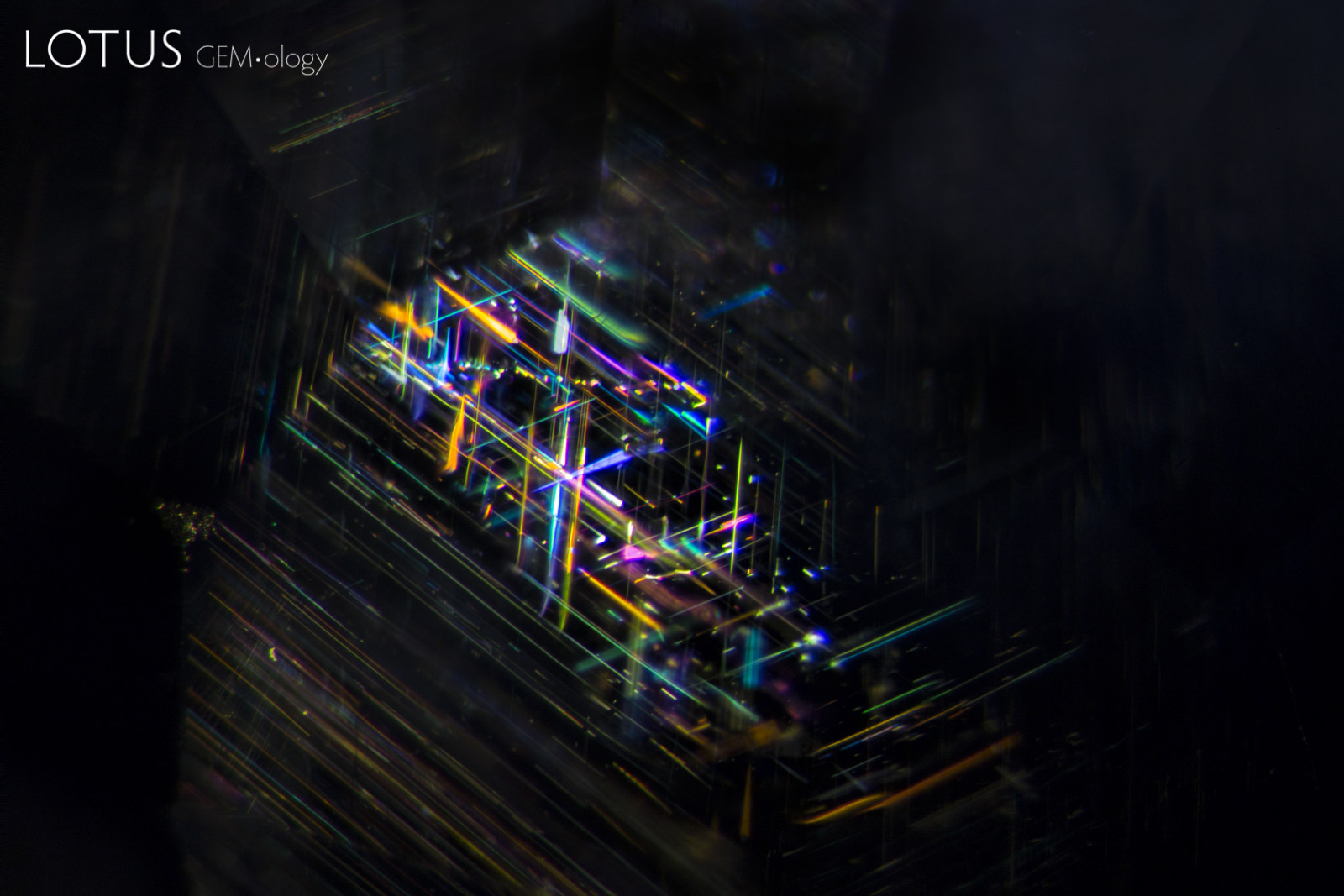
Undissolved rutile silk makes a lovely surprise in this unheated sapphire from Sri Lanka.
Natural Sapphire •
Sri Lanka (Ceylon) •
Enhancements:
None Detected (None) •
Lighting Conditions:
Fiber Optic: Oblique
Photographer:
Patharaphum Sudprasert •
Image Number:
A-001-6207-2
Iridescent fingerprint in a sapphire. The rectangular healing pattern suggests that this fingerprint lies parallel to a prism face.
Natural Sapphire •
Sri Lanka (Ceylon) •
Enhancements:
None Detected (None) •
Lighting Conditions:
Fiber Optic: Oblique
Photographer:
Patharaphum Sudprasert •
Image Number:
A-001-5883-1
Roedder, E. (1962) Ancient fluids in crystals. Scientific American, Vol. 207, pp. 38–47; RWHL*.
A classic scene in a Sri Lankan sapphire, where a secondary “fingerprint” surrounds a primary negative crystal. The basal pinacoid faces feature triangular growth markings, while the interior contains two v-shaped diaspore needles and black plates of graphite.
Natural Sapphire •
Sri Lanka (Ceylon) •
Enhancements:
None Detected (None) •
Lighting Conditions:
Fiber Optic: Transmitted
Photographer:
E. Billie Hughes •
Image Number:
A-001-6088-2
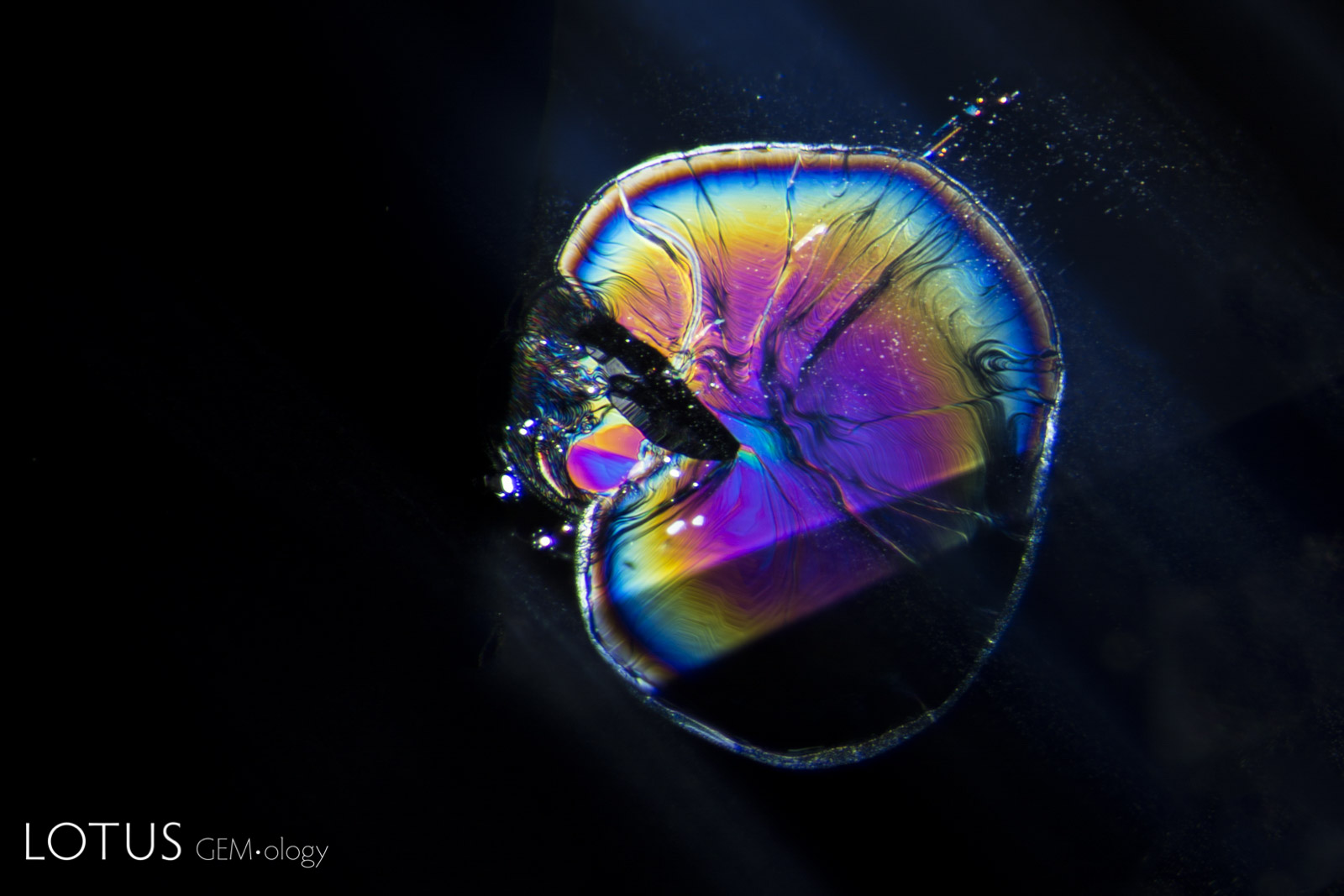
An iridescent fissure surrounds a small crystal in this basaltic sapphire from Bo Ploi, Thailand. When an included crystal such as this is heated, it expands, producing pressure on the host. The easiest release of that pressure is generally in the basal plane, producing a flat “discoid” fissure such as this.
Natural Sapphire •
Thailand (Siam); Bo Ploi •
Enhancements:
Heat (H) •
Lighting Conditions:
Fiber Optic: Oblique
Photographer:
Richard W. Hughes •
Image Number:
A-001-5761-1
Sapphire inclusions may include mineral crystals, rutile silk, healed fissures, fluid inclusions, negative crystals, color zoning and other features formed during or after crystal growth. Such features are important to gemologists because they can provide evidence useful in identifying sapphire, understanding its geological history, recognizing treatment and, in some cases, determining geographic origin.
Sapphire Inclusion Photomicrographs
The Hyperion sapphire gallery includes microscopic features found in sapphires from major deposits around the world. Each entry is accompanied by descriptive information and, where available, references to the gemological literature.
What Inclusions Can Reveal About Sapphire
Inclusions are an important part of sapphire identification. Their form, composition, orientation and alteration can help gemologists distinguish natural sapphire from synthetic material, recognize evidence of heat treatment, and study the geological environment in which the sapphire formed.
Hyperion combines inclusion photomicrography with supporting gemological information so that individual features can be compared with documented examples from known sapphire deposits.
About Hyperion
Hyperion is the Lotus Gemology searchable inclusion database. It allows users to browse gemstone inclusions by gem type, geographic origin, treatment and keyword.