Sapphire Inclusions
Explore sapphire inclusions in Hyperion, the Lotus Gemology inclusion database. Hyperion contains photomicrographs of inclusions and internal features in natural sapphire, documented with information on geographic origin, treatment, lighting conditions, field of view, photographer and published references.
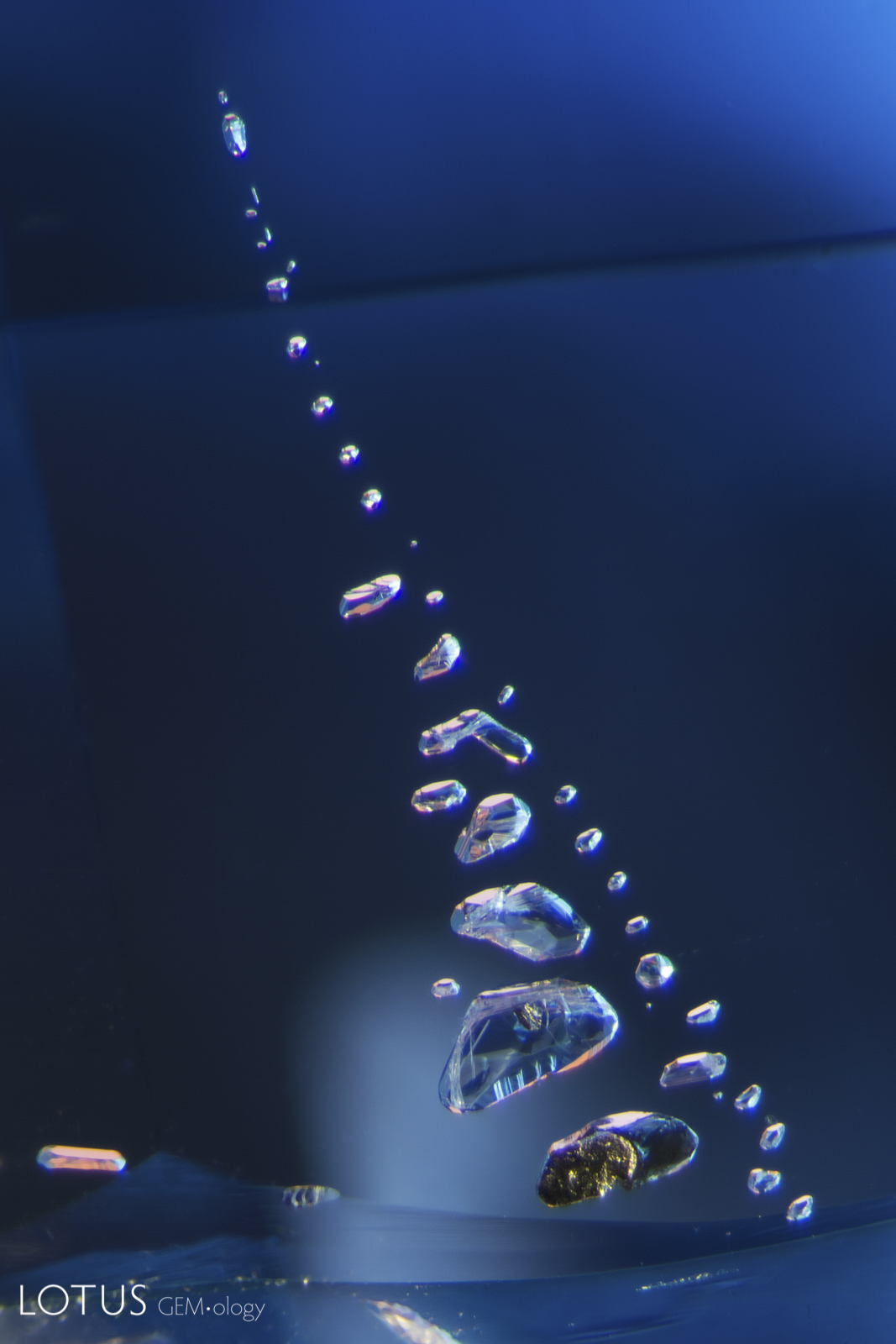
A string of negative crystals decorates the interior of this untreated sapphire. Negative crystals can be identified by the fact that similar faces will all reflect light at exactly the same time.
Natural Sapphire •
Madagascar •
Enhancements:
None Detected (None) •
Lighting Conditions:
Fiber Optic: Diffuse Oblique
Photographer:
E. Billie Hughes •
Image Number:
A-002-0743-1
Knife-shaped rutile silk in Ceylon sapphire, showing that this stone has not been heated at a high temperature.
Natural Sapphire •
Sri Lanka (Ceylon) •
Enhancements:
None Detected (None) •
Lighting Conditions:
Dark Field
Photographer:
Patharaphum Sudprasert •
Image Number:
A-002-0626-1
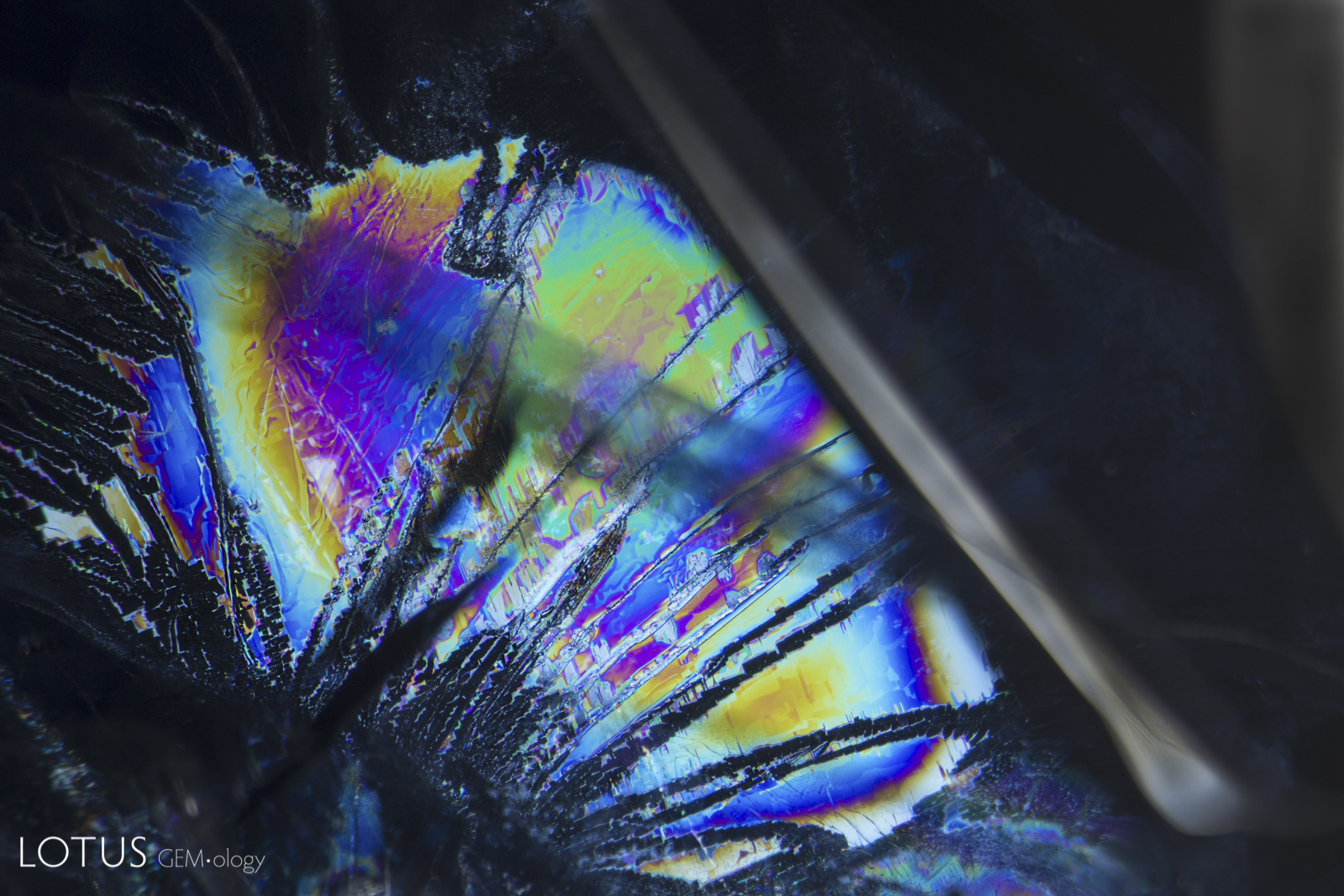
Striking iridescence in a healed fissure within an unheated Burmese sapphire.
Natural Sapphire •
Myanmar (Burma); Mogok •
Enhancements:
None Detected (None) •
Lighting Conditions:
Fiber Optic: Diffuse Oblique
Photographer:
Patharaphum Sudprasert •
Image Number:
A-001-9912-1
Roedder, E. (1962) Ancient fluids in crystals. Scientific American, Vol. 207, pp. 38–47; RWHL*.
Undissolved rutile needles rain down in this untreated sapphire.
Natural Sapphire •
Sri Lanka (Ceylon) •
Enhancements:
None Detected (None) •
Lighting Conditions:
Fiber Optic: Oblique
Photographer:
E. Billie Hughes •
Image Number:
A-001-9774-1
Fingerprint with rectilinear pattern parallel to the c-axis in Sri Lanka sapphire. The pattern of healing betrays the underlying atomic symmetry.
Natural Sapphire •
Sri Lanka (Ceylon) •
Enhancements:
None Detected (None) •
Lighting Conditions:
Diffuse Light Field + Crossed Polars
Photographer:
Patharaphum Sudprasert •
Image Number:
A-001-9720-1
Roedder, E. (1962) Ancient fluids in crystals. Scientific American, Vol. 207, pp. 38–47; RWHL*.
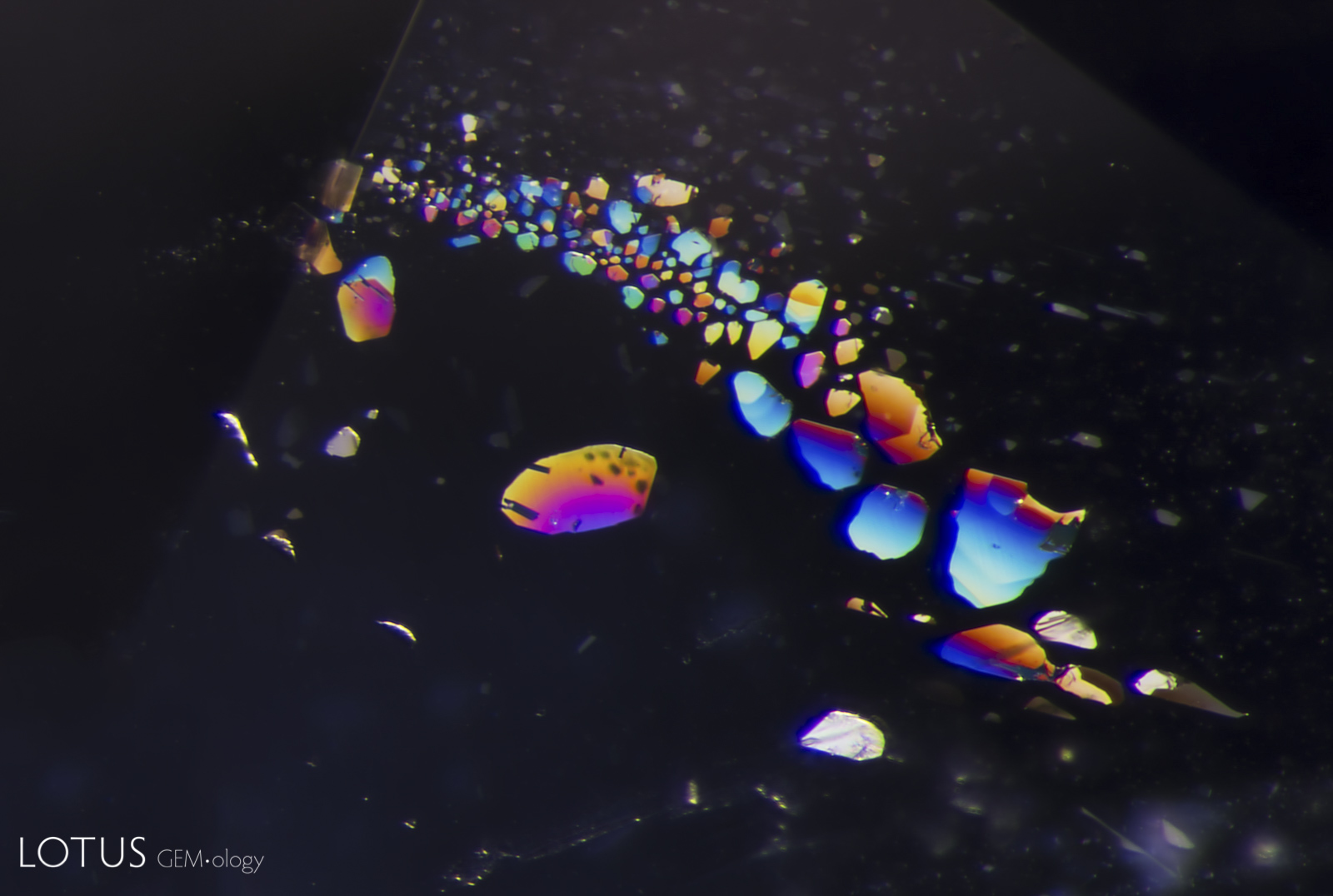
Iridescent negative crystals form a rainbow mosaic in this sapphire.
Natural Sapphire •
Sri Lanka (Ceylon) •
Enhancements:
None Detected (None) •
Lighting Conditions:
Dark Field + Shadowing
Photographer:
E. Billie Hughes •
Image Number:
A-001-9613-1
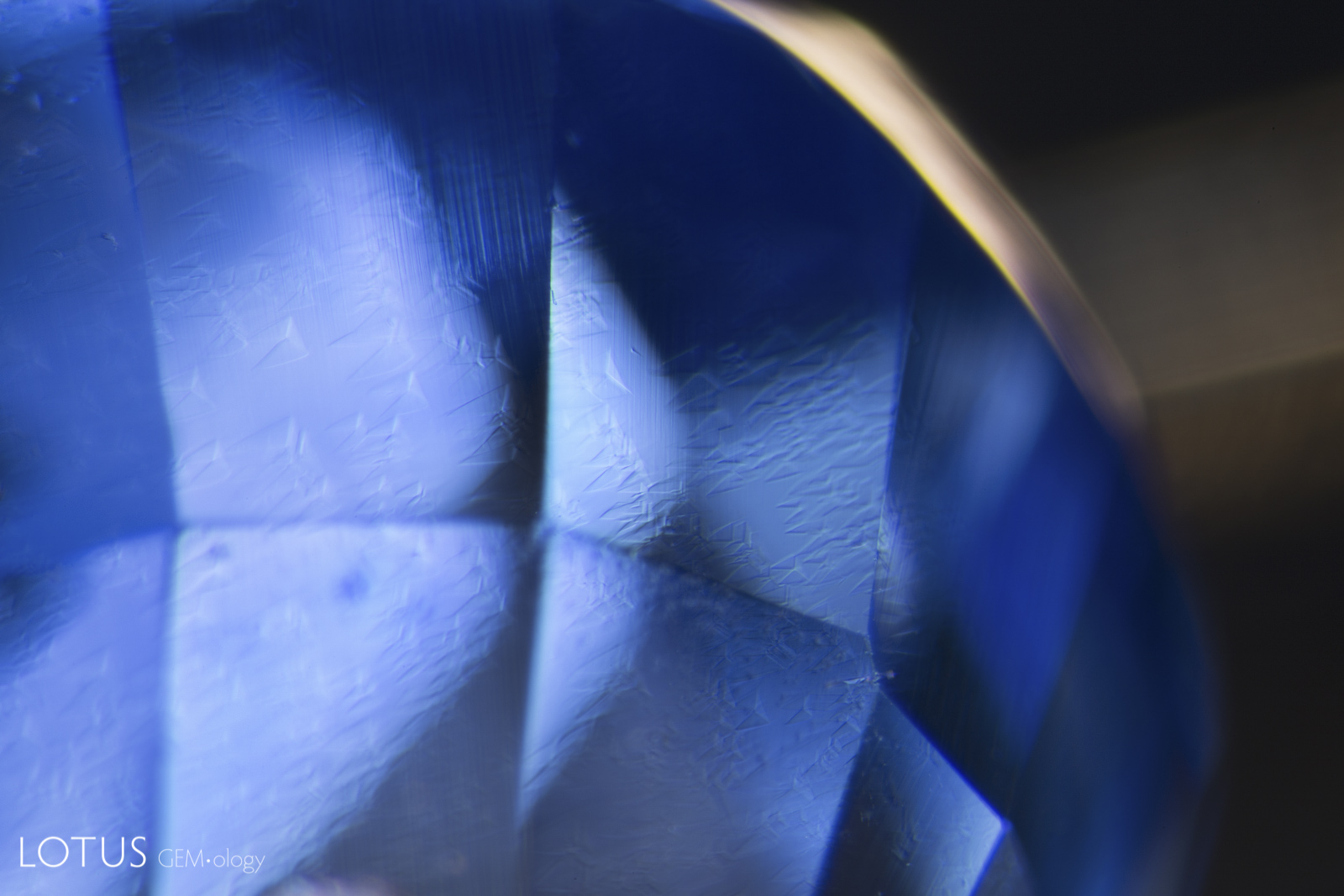
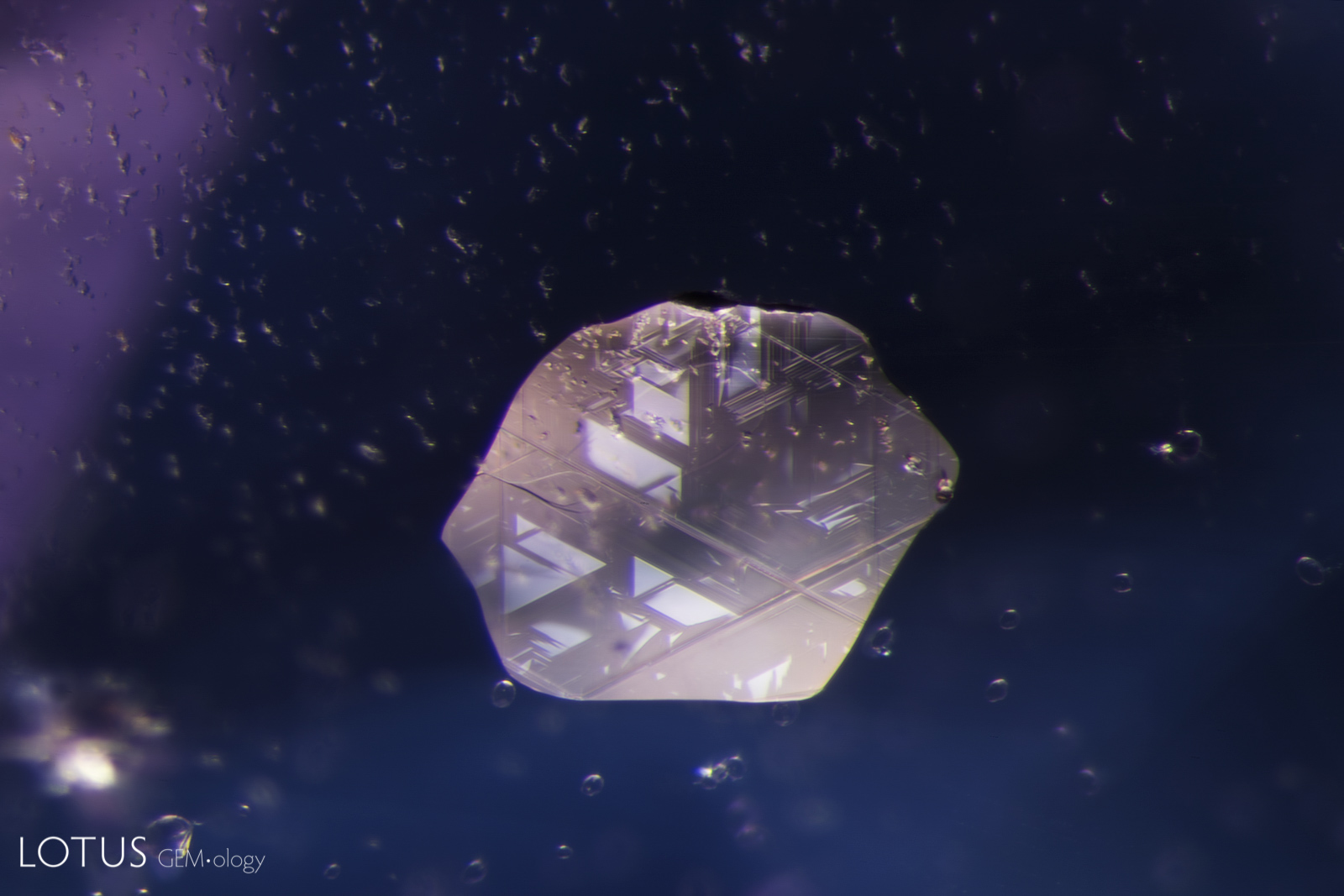
Triangular growth zoning in a Madagascar sapphire. Milky regions contrasting with deep blue zones are common in Madagascar sapphire.
Natural Sapphire •
Madagascar •
Enhancements:
Heat (H) •
Lighting Conditions:
Dark Field + Oblique Fiber Optic
Photographer:
Patharaphum Sudprasert •
Image Number:
A-001-9419-1
Fingerprint with rectilinear healing pattern. This healing pattern of right angles indicates the fingerprint lies on or near to a prism face (parallel to the c axis). As fingerprints form at more oblique angles relative to the c axis, the angles of the healed zones also become more oblique. Fingerprints lying perpendicular to the c axis will display triangular or hexagonal symmetry.
Natural Sapphire •
Sri Lanka (Ceylon) •
Enhancements:
None Detected (None) •
Lighting Conditions:
Diffuse Fiber Optic + Shadowing
Photographer:
E. Billie Hughes •
Image Number:
A-001-9359-1
Roedder, E. (1962) Ancient fluids in crystals. Scientific American, Vol. 207, pp. 38–47; RWHL*.
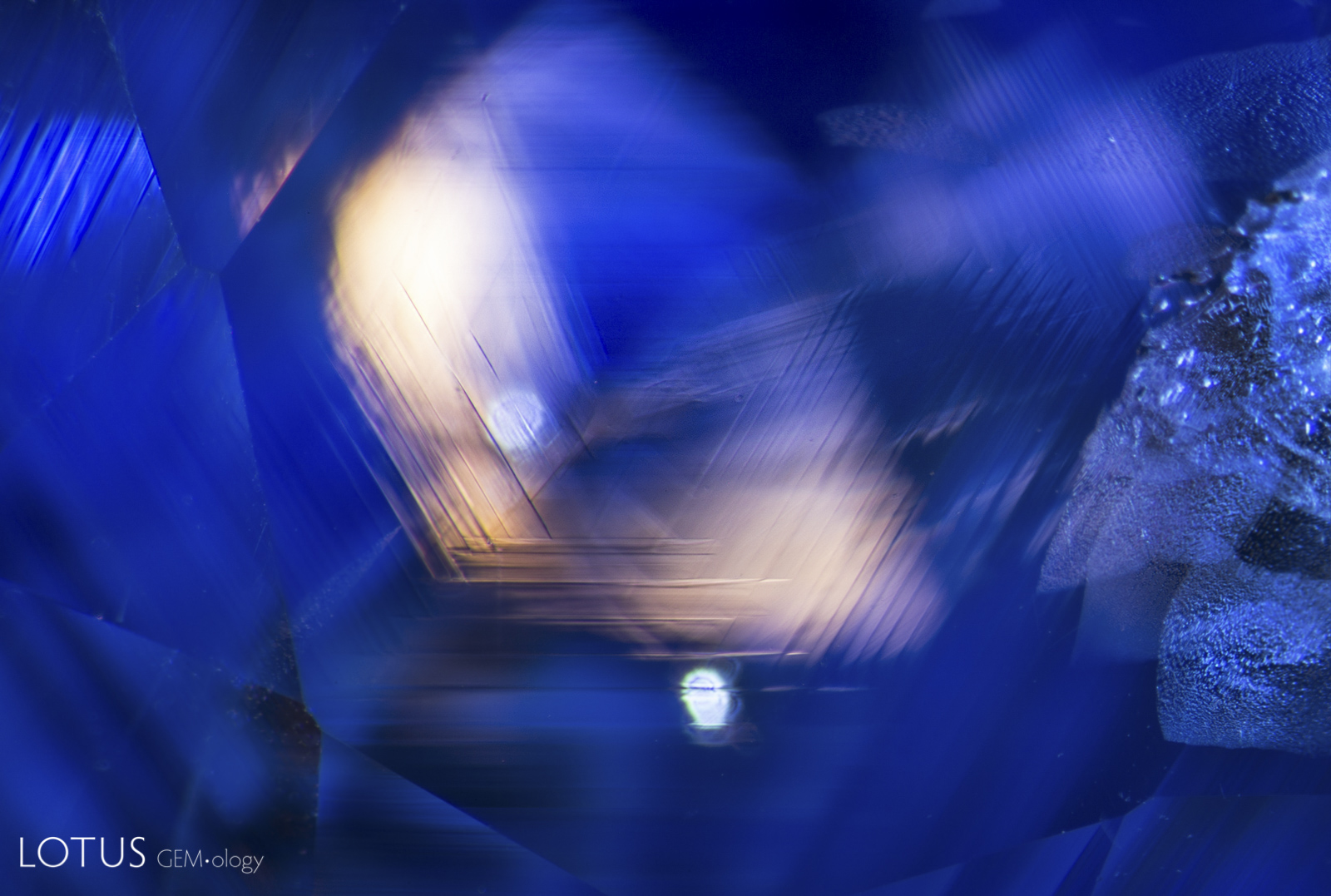
Extremely strong hexagonal growth zoning typically seen in Madagascar sapphire.
Natural Sapphire •
Madagascar •
Enhancements:
None Detected (None) •
Lighting Conditions:
Dark Field + Oblique Fiber Optic
Photographer:
Patharaphum Sudprasert •
Image Number:
A-001-9194-1
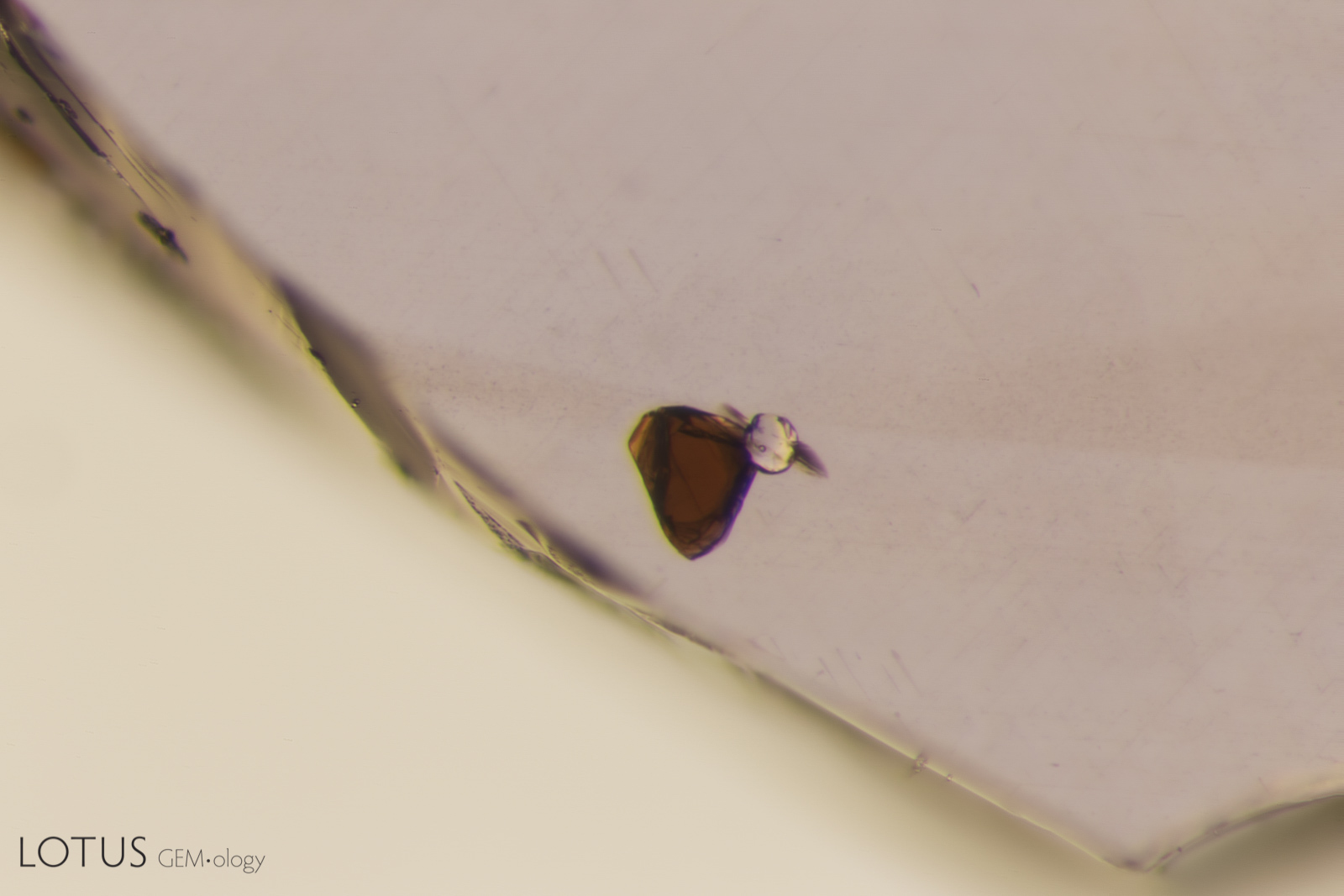
Phlogopite mica (brown) along with a winged zircon crystal in a sapphire from Tunduru.
Natural Sapphire •
Tanzania •
Enhancements:
None Detected (None) •
Lighting Conditions:
Diffuse Light Field (Transmitted Light)
Photographer:
E. Billie Hughes •
Image Number:
R-001-8886-2
An unusual metallic platelet of unknown identity, along with small zircons in a sapphire from Tunduru.
Natural Sapphire •
Tanzania •
Enhancements:
None Detected (None) •
Lighting Conditions:
Fiber Optic: Diffuse Oblique
Photographer:
E. Billie Hughes •
Image Number:
R-001-8890-1
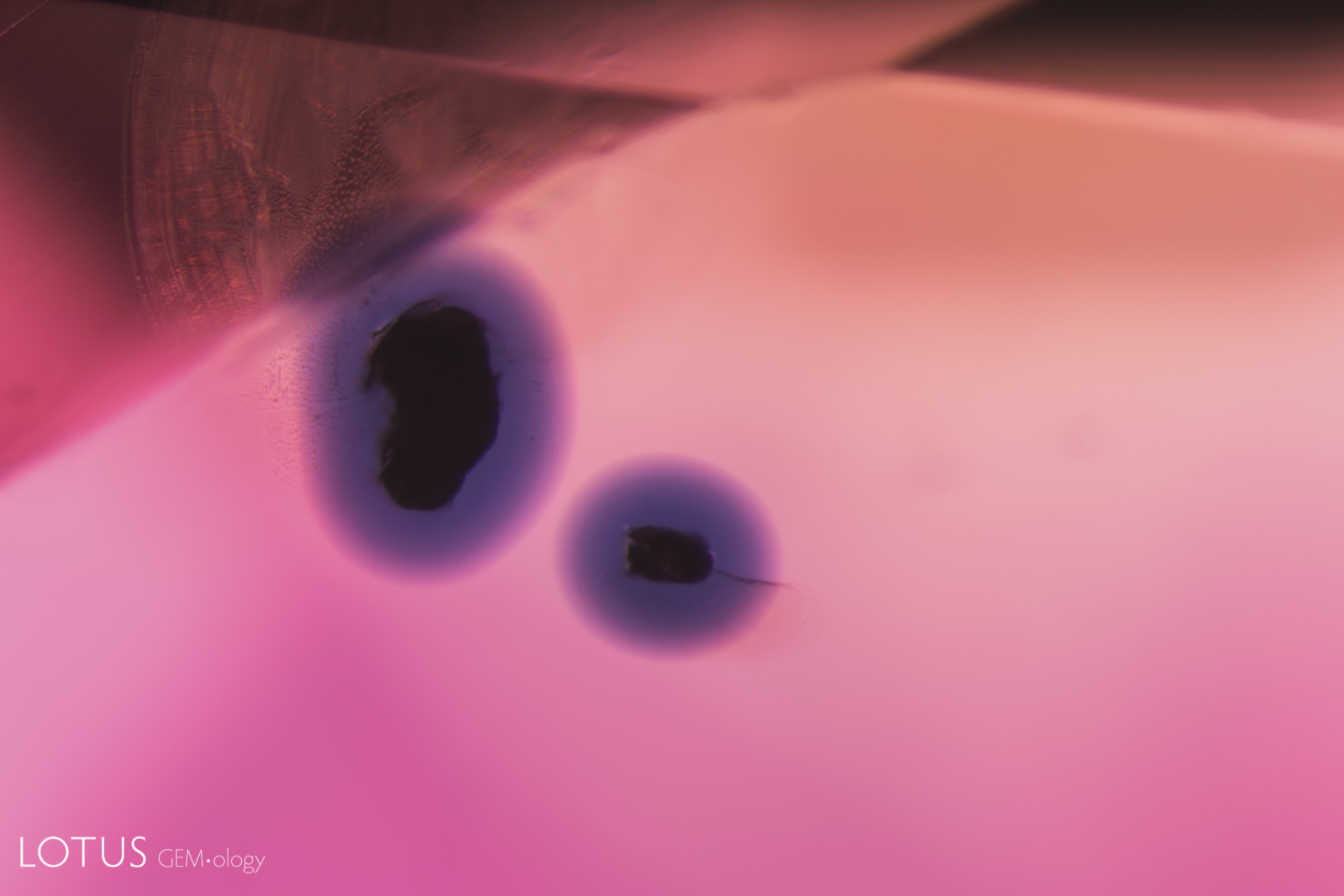
During heat treatment, primary rutile crystals leech titanium into the surrounding corundum, coloring it blue. This process is termed “internal diffusion.”
Natural Sapphire •
Tanzania; Songea •
Enhancements:
Heat + Diffusion of external coloring agents (H-D) •
Lighting Conditions:
Diffuse Light Field (Transmitted Light)
Photographer:
E. Billie Hughes •
Image Number:
R-001-8882-3
Sapphire inclusions may include mineral crystals, rutile silk, healed fissures, fluid inclusions, negative crystals, color zoning and other features formed during or after crystal growth. Such features are important to gemologists because they can provide evidence useful in identifying sapphire, understanding its geological history, recognizing treatment and, in some cases, determining geographic origin.
Sapphire Inclusion Photomicrographs
The Hyperion sapphire gallery includes microscopic features found in sapphires from major deposits around the world. Each entry is accompanied by descriptive information and, where available, references to the gemological literature.
What Inclusions Can Reveal About Sapphire
Inclusions are an important part of sapphire identification. Their form, composition, orientation and alteration can help gemologists distinguish natural sapphire from synthetic material, recognize evidence of heat treatment, and study the geological environment in which the sapphire formed.
Hyperion combines inclusion photomicrography with supporting gemological information so that individual features can be compared with documented examples from known sapphire deposits.
About Hyperion
Hyperion is the Lotus Gemology searchable inclusion database. It allows users to browse gemstone inclusions by gem type, geographic origin, treatment and keyword.