Sapphire Inclusions
Explore sapphire inclusions in Hyperion, the Lotus Gemology inclusion database. Hyperion contains photomicrographs of inclusions and internal features in natural sapphire, documented with information on geographic origin, treatment, lighting conditions, field of view, photographer and published references.
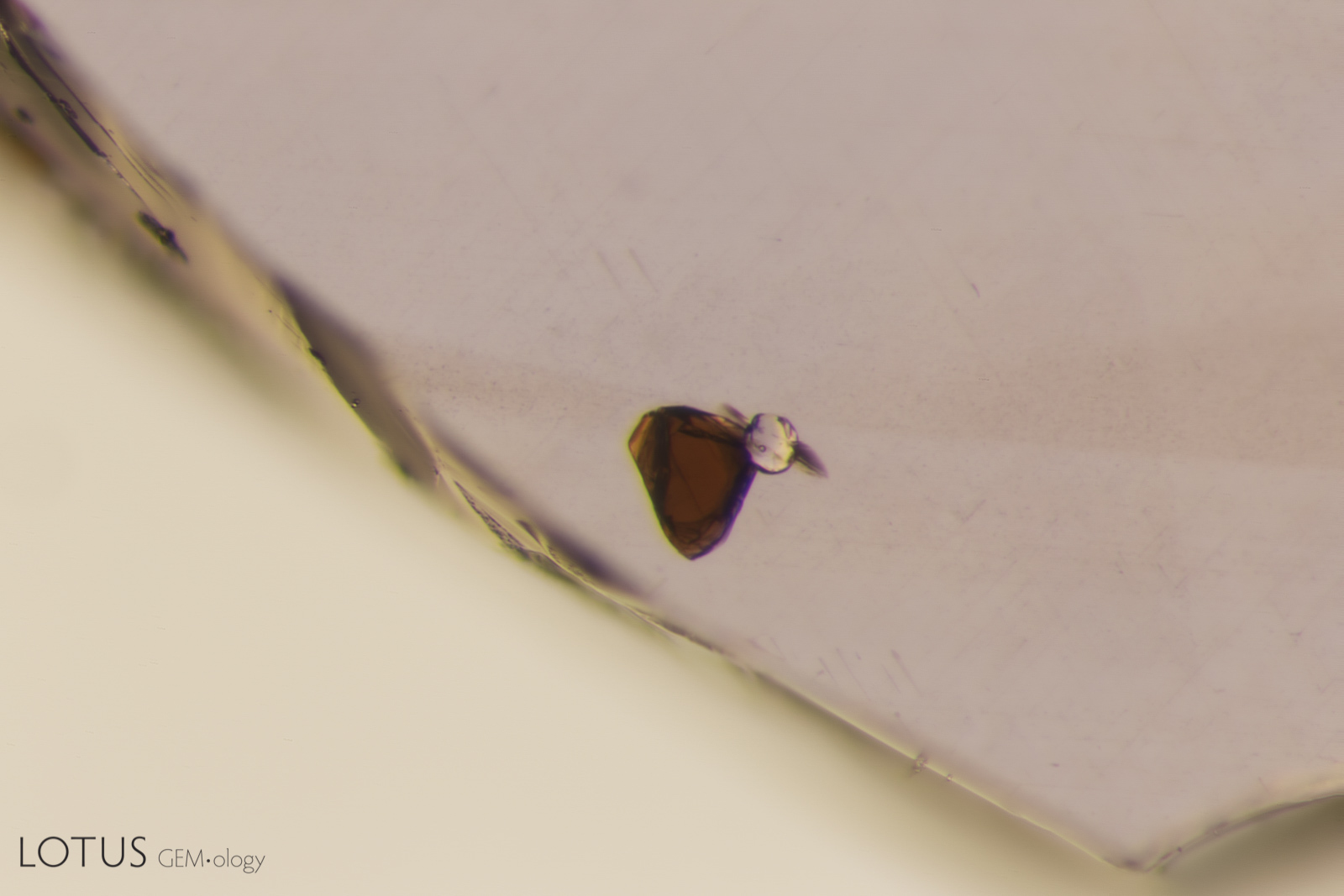
Phlogopite mica (brown) along with a winged zircon crystal in a sapphire from Tunduru.
Natural Sapphire •
Tanzania •
Enhancements:
None Detected (None) •
Lighting Conditions:
Diffuse Light Field (Transmitted Light)
Photographer:
E. Billie Hughes •
Image Number:
R-001-8886-2
“Punsiri” zoning in a heated blue sapphire.
Natural Sapphire •
Sri Lanka (Ceylon) •
Enhancements:
Heat (H) •
Lighting Conditions:
Diffuse Light Field (Transmitted Light)
Photographer:
E. Billie Hughes •
Image Number:
A-001-5990-1
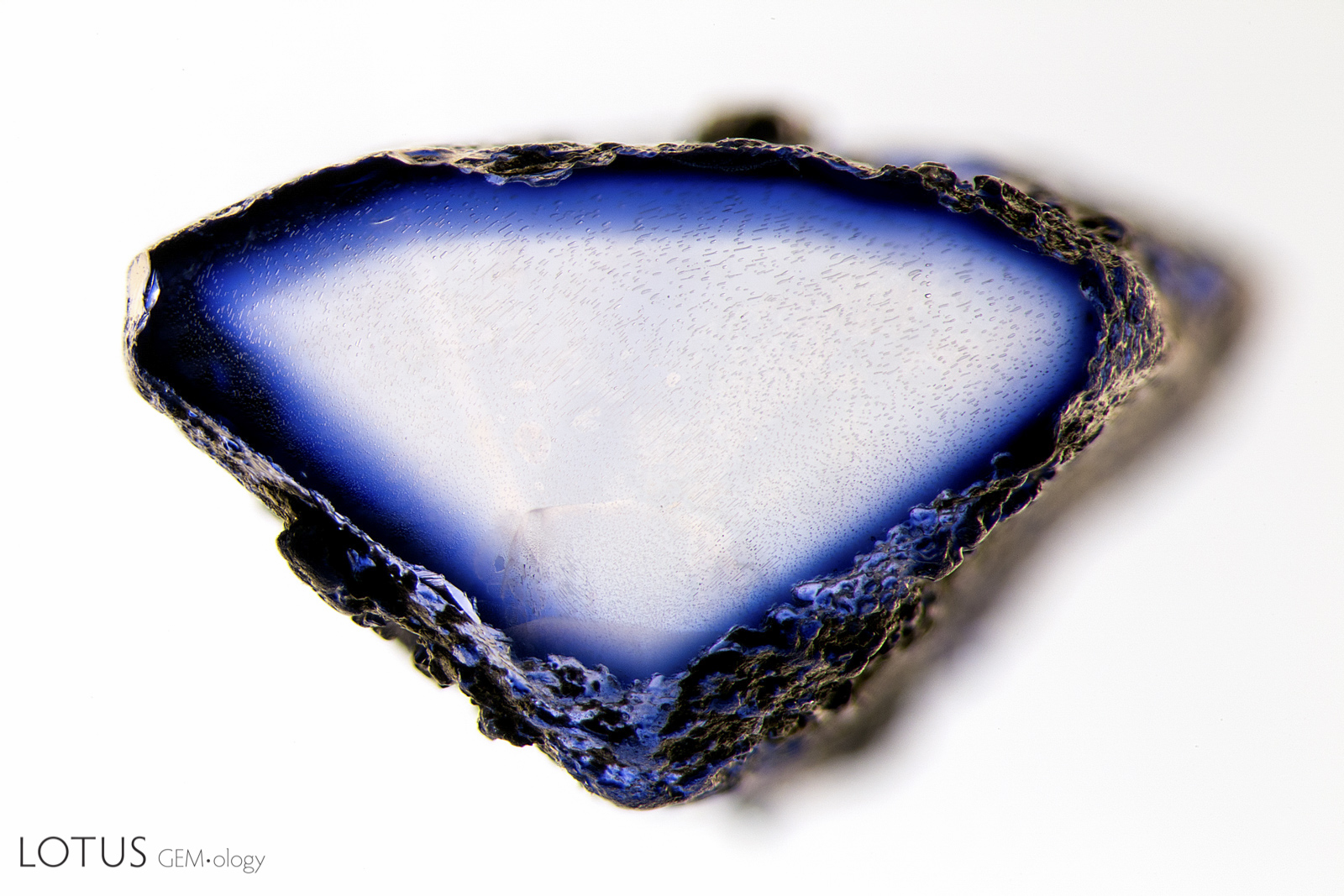
“Deep” titanium-diffused preform sliced open andn polished to reveal the depth of color penetration. Note that much of the color layer will be removed during polishing. Despite claims by manufacturers, the so-called “deep diffusion” process showed no more color penetration than that claimed in the original Linde patents, i.e. up to 0.50 mm.
Natural Sapphire •
•
Enhancements:
Heat + Diffusion of external coloring agents (H-D) •
Lighting Conditions:
Diffuse Light Field (Transmitted Light)
Photographer:
E. Billie Hughes •
Image Number:
R-001-5735-2
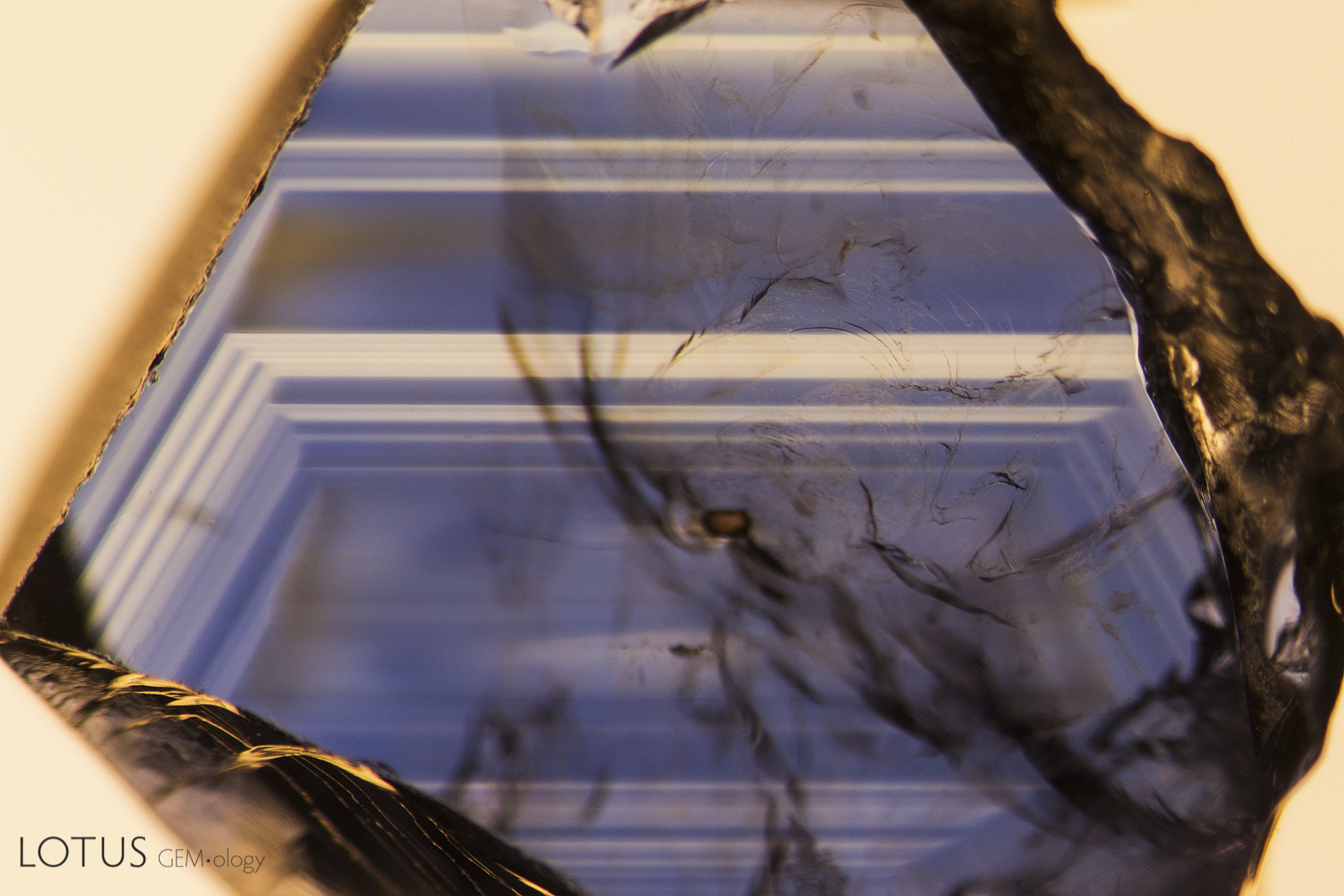
Angular growth zoning in an unheated sapphire from Mambilla, Nigeria.
Natural Sapphire •
Nigeria •
Enhancements:
None Detected (None) •
Lighting Conditions:
Diffuse Light Field (Transmitted Light)
Photographer:
E. Billie Hughes •
Image Number:
R-001-4954-2
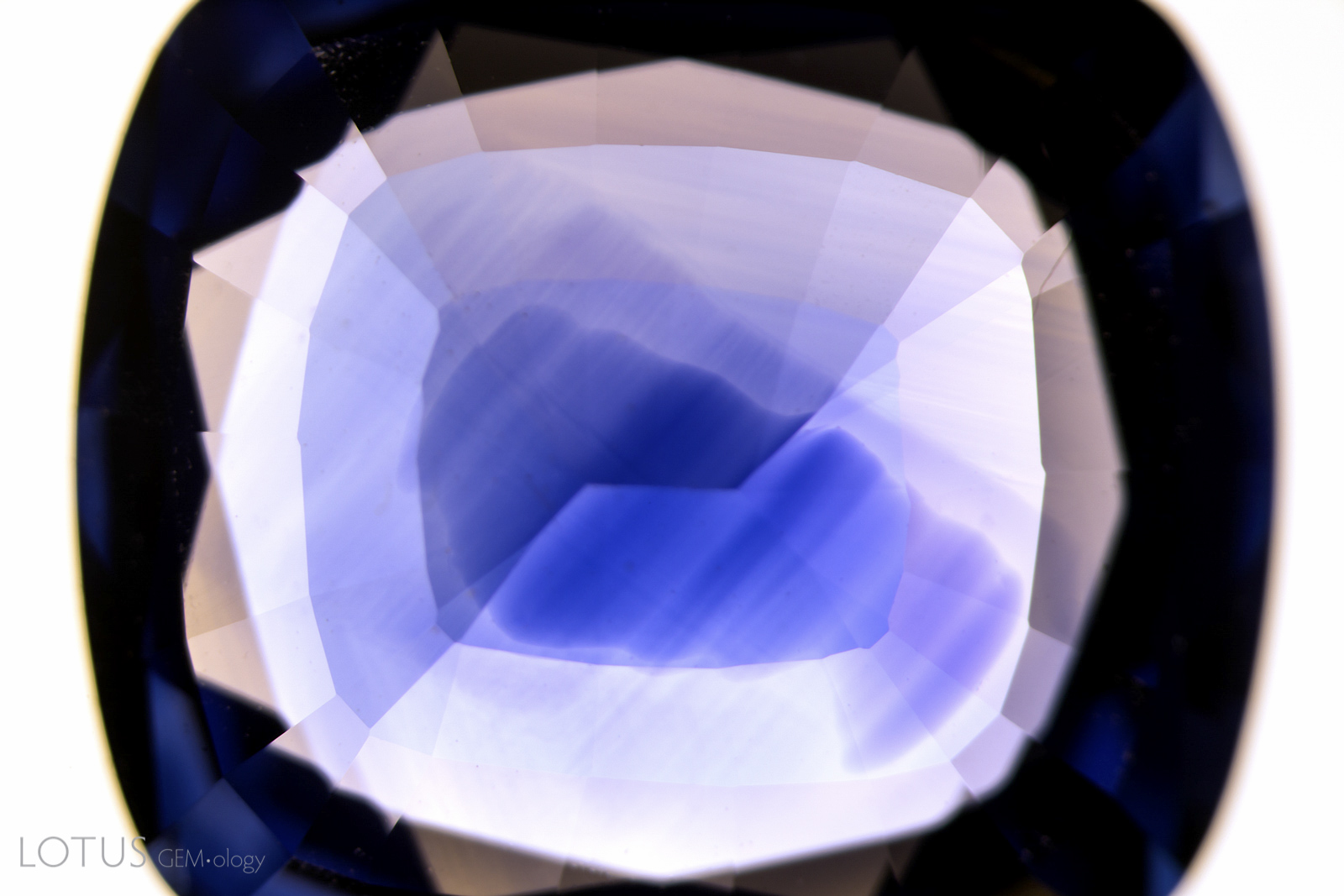
This lattice diffusion treated, heated sapphire shows blue color concentrations along the facet edges when immersed in diiodomethane.
Natural Sapphire •
No Origin •
Enhancements:
Heat + Diffusion of external coloring agents (H-D) •
Lighting Conditions:
Diffuse Light Field + Immersion
Photographer:
E. Billie Hughes •
Image Number:
A-001-7474-1
An unusual metallic platelet of unknown identity, along with small zircons in a sapphire from Tunduru.
Natural Sapphire •
Tanzania •
Enhancements:
None Detected (None) •
Lighting Conditions:
Fiber Optic: Diffuse Oblique
Photographer:
E. Billie Hughes •
Image Number:
R-001-8890-1
During heat treatment, primary rutile crystals leech titanium into the surrounding corundum, coloring it blue. This process is termed “internal diffusion.”
Natural Sapphire •
Tanzania; Songea •
Enhancements:
Heat + Diffusion of external coloring agents (H-D) •
Lighting Conditions:
Diffuse Light Field (Transmitted Light)
Photographer:
E. Billie Hughes •
Image Number:
R-001-8882-3
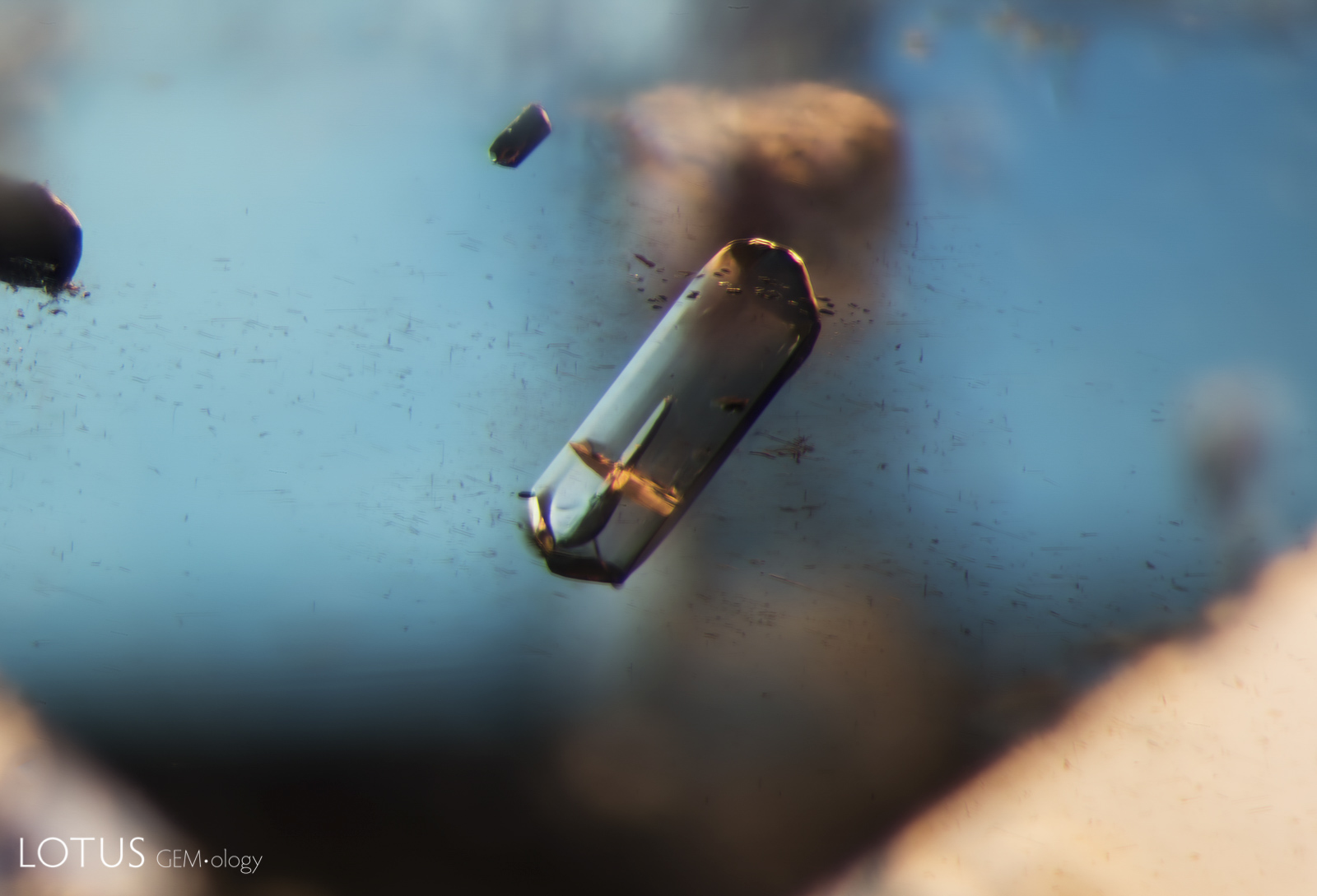
A prism of what is probably apatite in an unheated Songea sapphire.
Natural Sapphire •
Tanzania; Songea •
Enhancements:
None Detected (None) •
Lighting Conditions:
Dark Field + Diffuse Fiber Optic
Photographer:
E. Billie Hughes •
Image Number:
R-001-8824-1
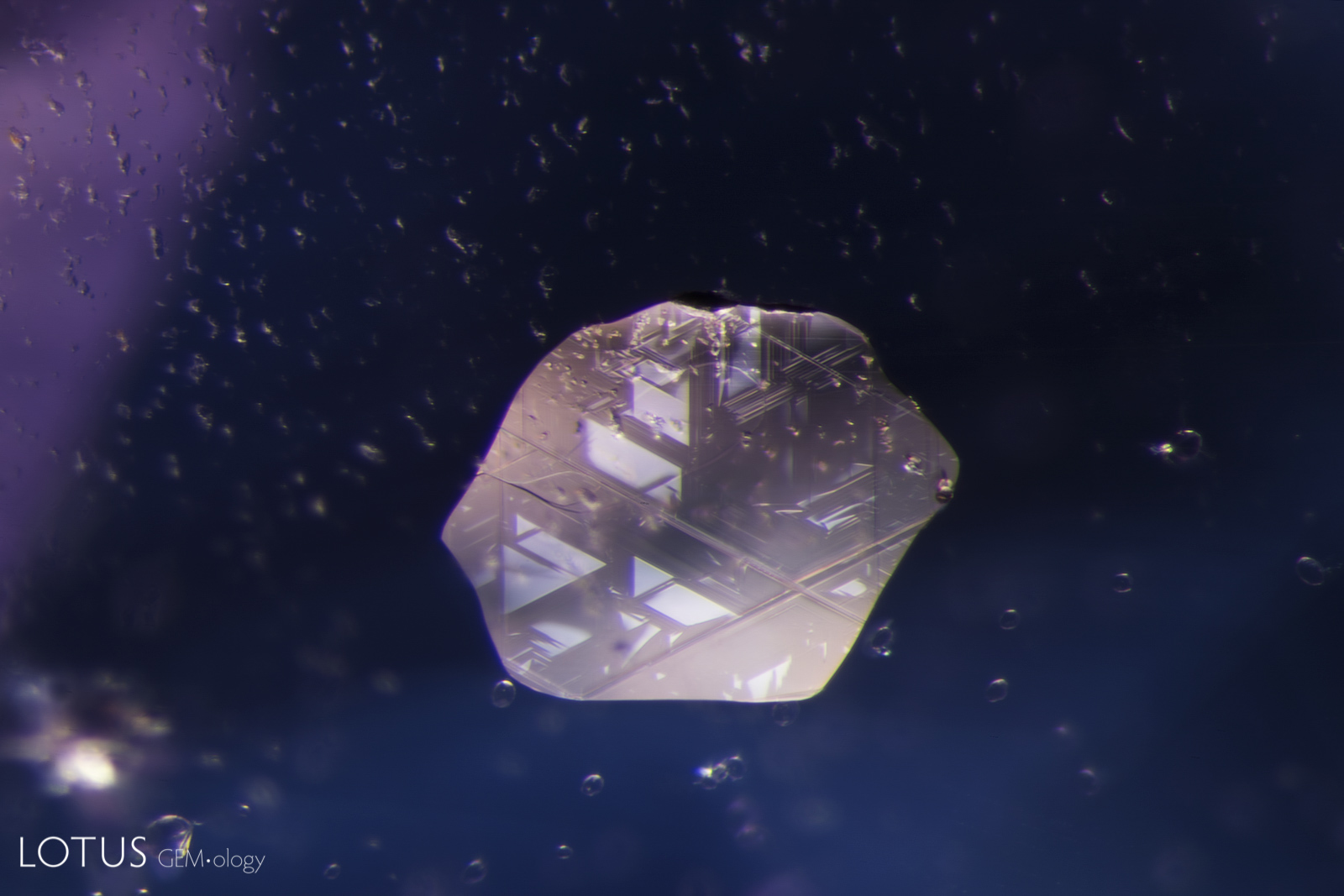
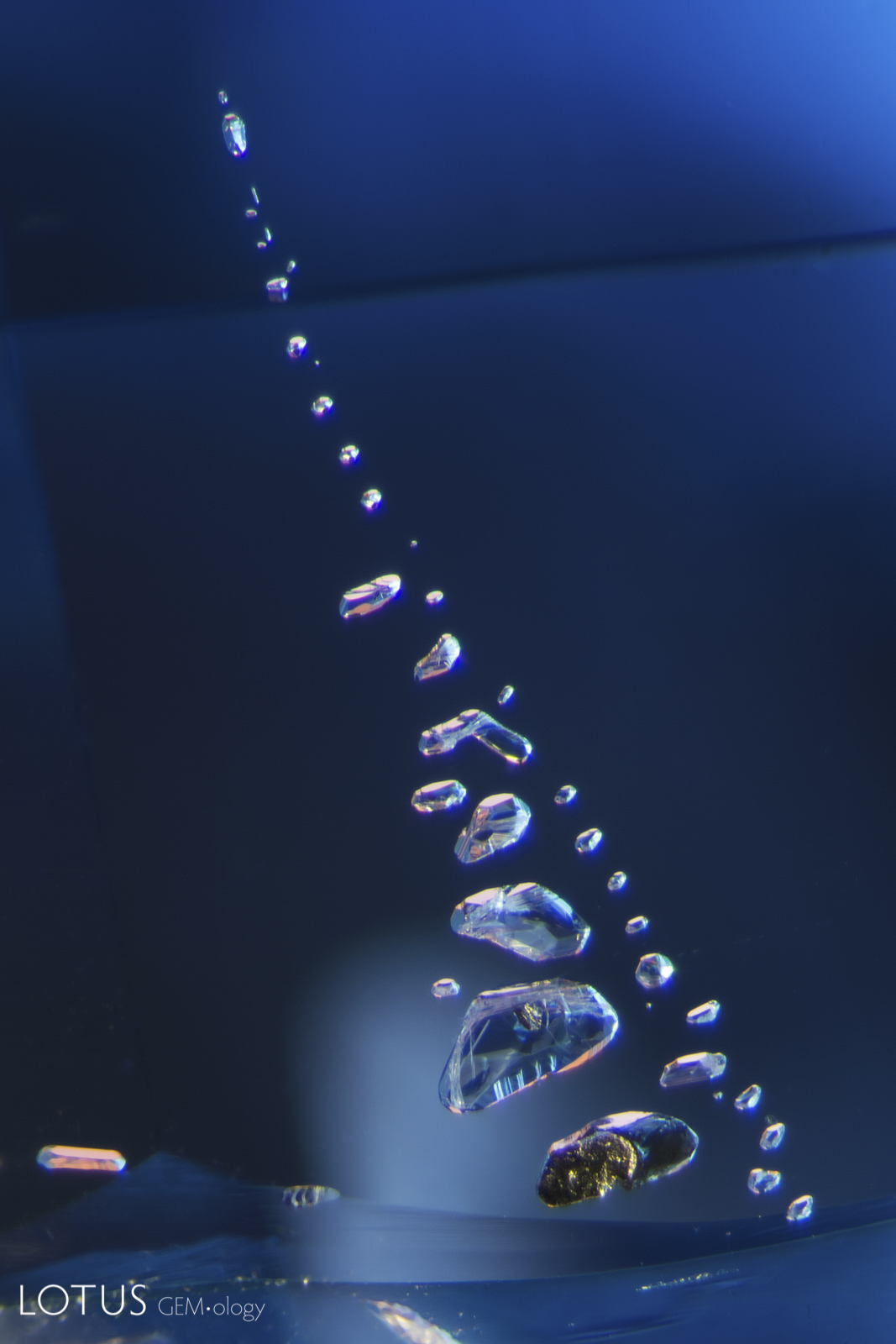
A string of negative crystals decorates the interior of this untreated sapphire. Negative crystals can be identified by the fact that similar faces will all reflect light at exactly the same time.
Natural Sapphire •
Madagascar •
Enhancements:
None Detected (None) •
Lighting Conditions:
Fiber Optic: Diffuse Oblique
Photographer:
E. Billie Hughes •
Image Number:
A-002-0743-1
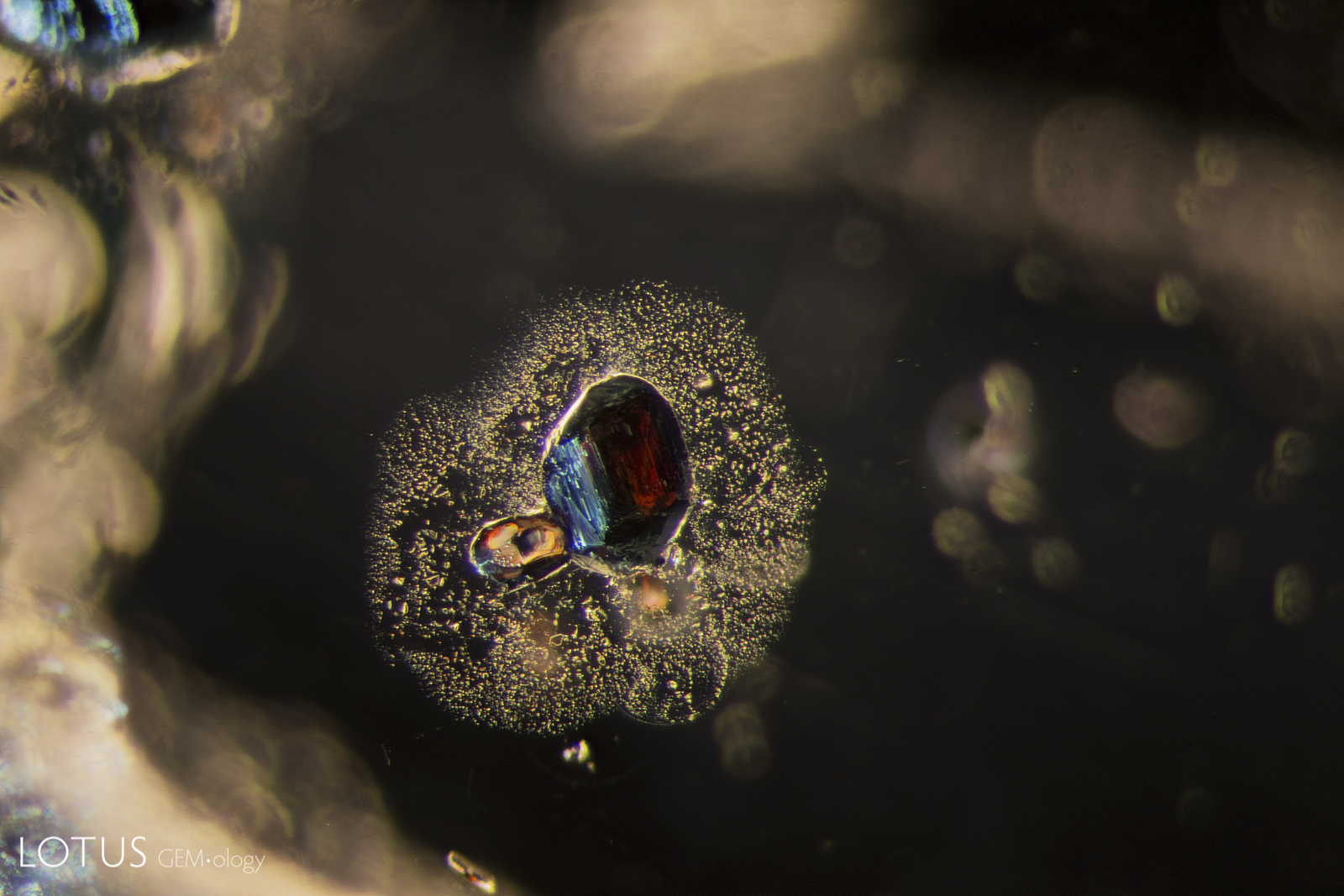
Red-orange crystals shoot through this Pailin (Cambodia) sapphire. Once considered unique to Pailin sapphire, we now know that such uranopyrochlore inclusions are found in sapphires from many sources.
Natural Sapphire •
Cambodia; Pailin •
Enhancements:
Heat (H) •
Lighting Conditions:
Dark Field + Oblique Fiber Optic
Photographer:
E. Billie Hughes •
Image Number:
A-001-8453-2
Primary rutile is a common guest in sapphire from Tanzania’s Songea region, as this unheated specimen shows.
Natural Sapphire •
Tanzania; Songea •
Enhancements:
None Detected (None) •
Lighting Conditions:
Dark Field + Oblique Fiber Optic
Photographer:
E. Billie Hughes •
Image Number:
R-001-8823-1
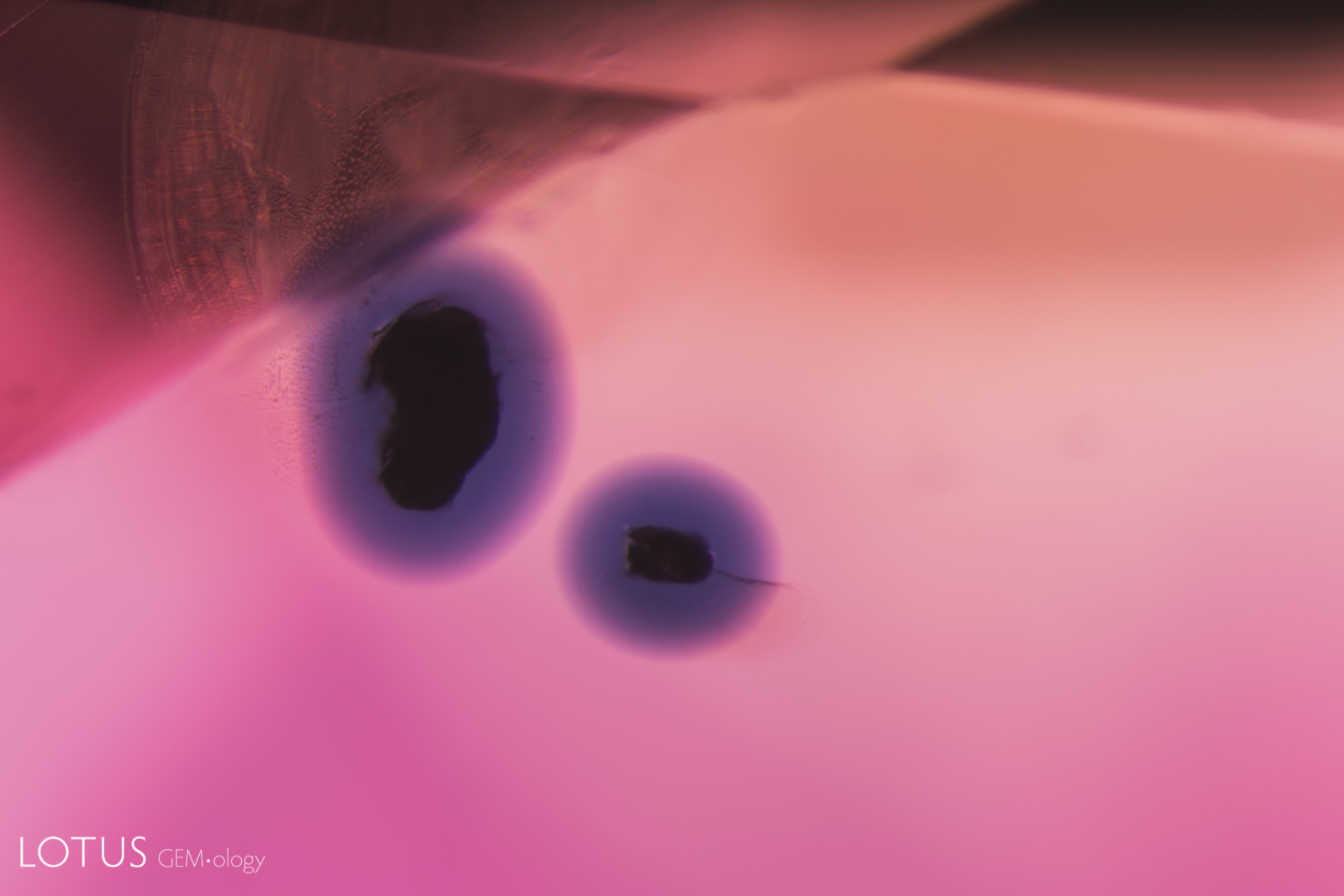
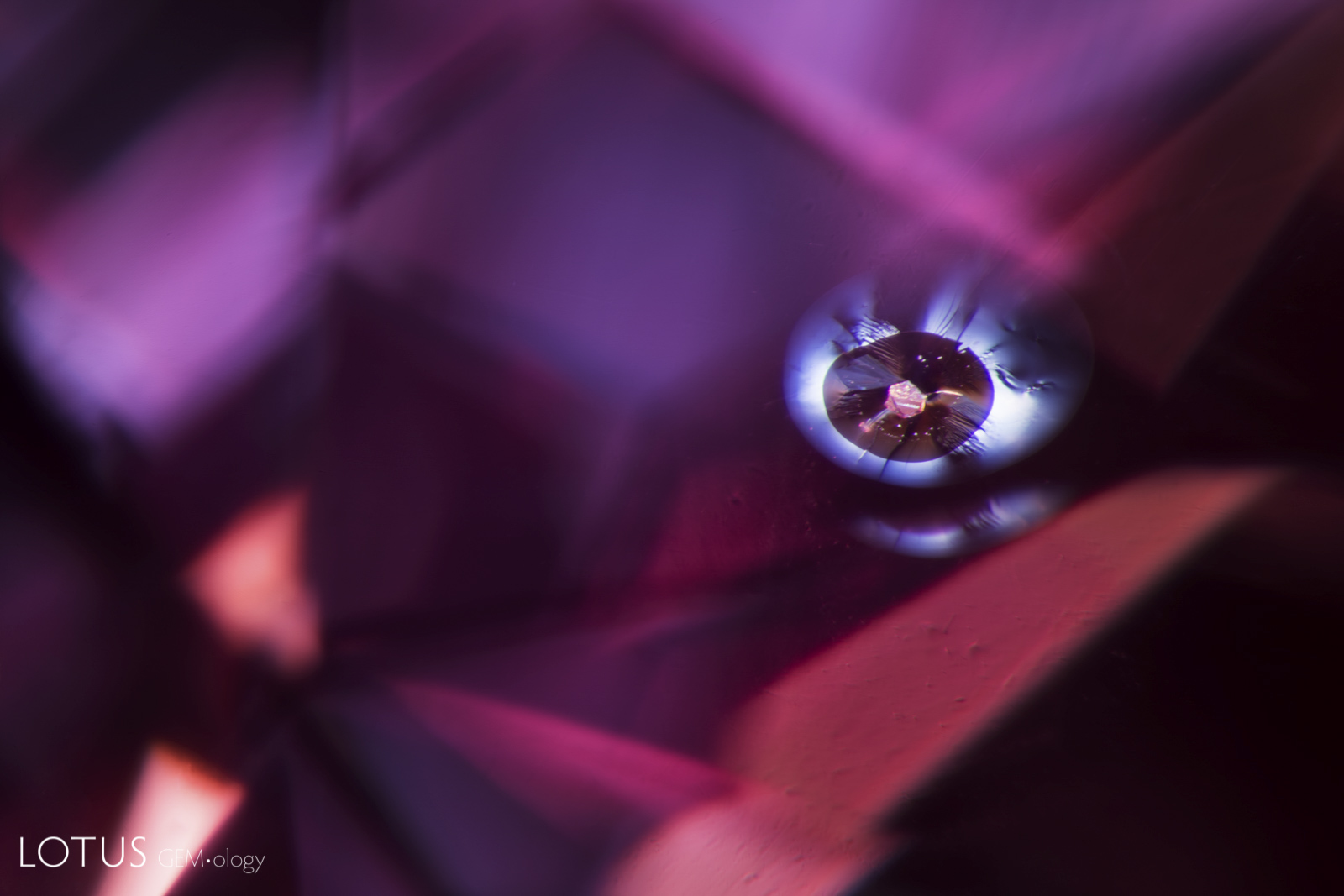
A glassy discoid around this mica crystals suggests that its pink sapphire host was heat treated.
Natural Sapphire •
Madagascar •
Enhancements:
Heat (H) •
Lighting Conditions:
Dark Field + Diffuse Fiber Optic
Photographer:
E. Billie Hughes •
Image Number:
A-002-1531-1
Sapphire inclusions may include mineral crystals, rutile silk, healed fissures, fluid inclusions, negative crystals, color zoning and other features formed during or after crystal growth. Such features are important to gemologists because they can provide evidence useful in identifying sapphire, understanding its geological history, recognizing treatment and, in some cases, determining geographic origin.
Sapphire Inclusion Photomicrographs
The Hyperion sapphire gallery includes microscopic features found in sapphires from major deposits around the world. Each entry is accompanied by descriptive information and, where available, references to the gemological literature.
What Inclusions Can Reveal About Sapphire
Inclusions are an important part of sapphire identification. Their form, composition, orientation and alteration can help gemologists distinguish natural sapphire from synthetic material, recognize evidence of heat treatment, and study the geological environment in which the sapphire formed.
Hyperion combines inclusion photomicrography with supporting gemological information so that individual features can be compared with documented examples from known sapphire deposits.
About Hyperion
Hyperion is the Lotus Gemology searchable inclusion database. It allows users to browse gemstone inclusions by gem type, geographic origin, treatment and keyword.