Sapphire Inclusions
Explore sapphire inclusions in Hyperion, the Lotus Gemology inclusion database. Hyperion contains photomicrographs of inclusions and internal features in natural sapphire, documented with information on geographic origin, treatment, lighting conditions, field of view, photographer and published references.
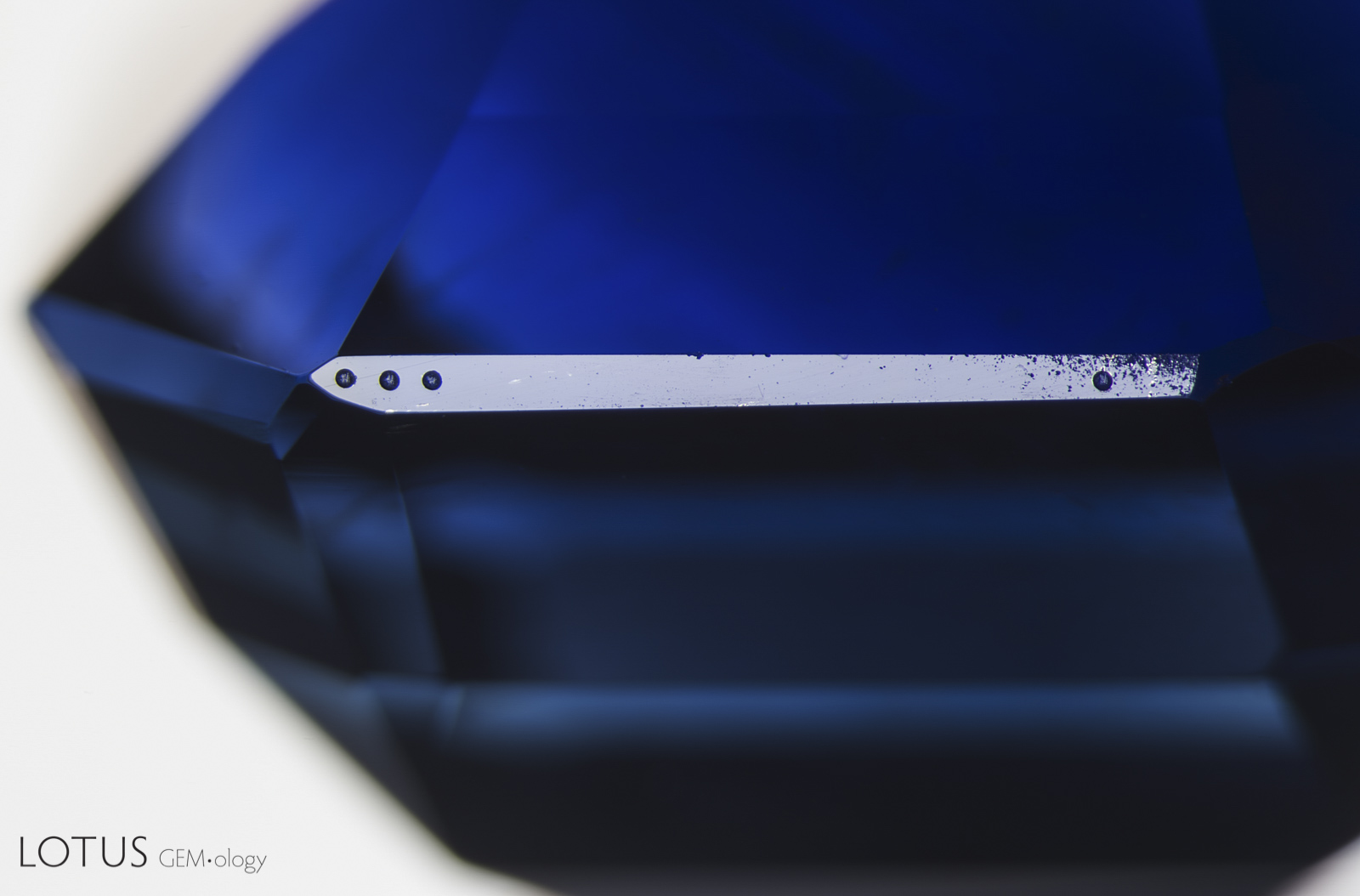
Here four small round marks can be seen on the girdle, indicating that the stone has been analyzed by LA-ICP-MS (Laser Ablation Inductively Coupled Plasma Mass Spectrometry), which allows for chemical analysis of the stone.
Natural Sapphire •
Madagascar •
Enhancements:
None Detected (None) •
Lighting Conditions:
Diffuse Light Field + Blue Filter + Diffuse Oblique Fiber Optic
Photographer:
E. Billie Hughes •
Image Number:
A-002-4410-4
• Field of View = 8mm
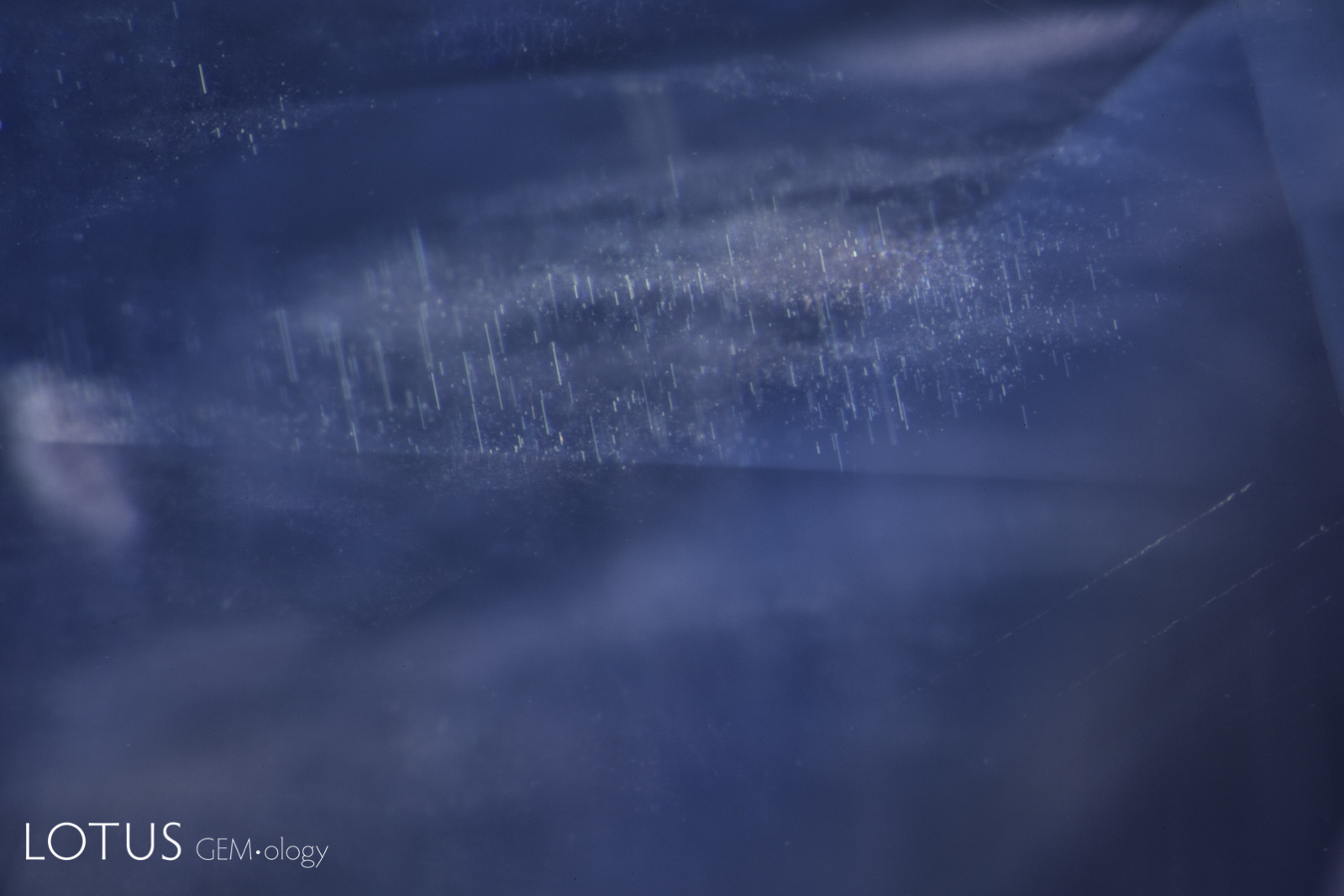
Some Madagascar sapphires contain fine needles of what is probably rutile, as shown here.
Natural Sapphire •
Madagascar •
Enhancements:
None Detected (None) •
Lighting Conditions:
Fiber Optic: Oblique
Photographer:
Richard W. Hughes •
Image Number:
A-002-4410-3
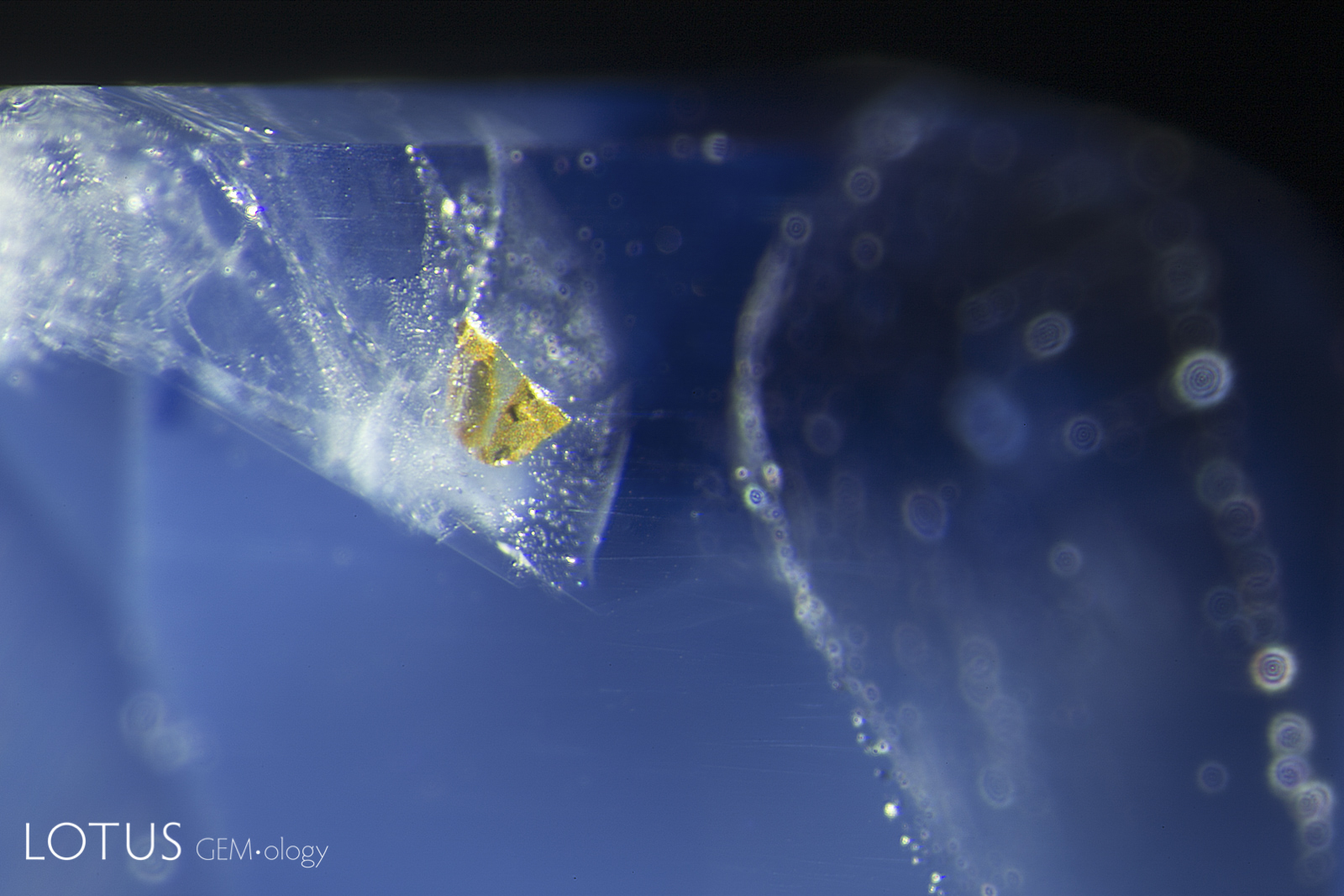
One crucial difference between Kashmir sapphires and those from Madagascar or Sri Lanka is that Kashmir sapphires almost never contain yellow staining in their fissures, while such epigenetic stains are common in Madagascar and Sri Lankan stones. The image here shows such a yellow epigenetic stain a Kashmir-like blue sapphire from Madagascar.
Natural Sapphire •
Madagascar •
Enhancements:
None Detected (None) •
Lighting Conditions:
Fiber Optic: Oblique
Photographer:
Richard W. Hughes •
Image Number:
A-002-4410-2
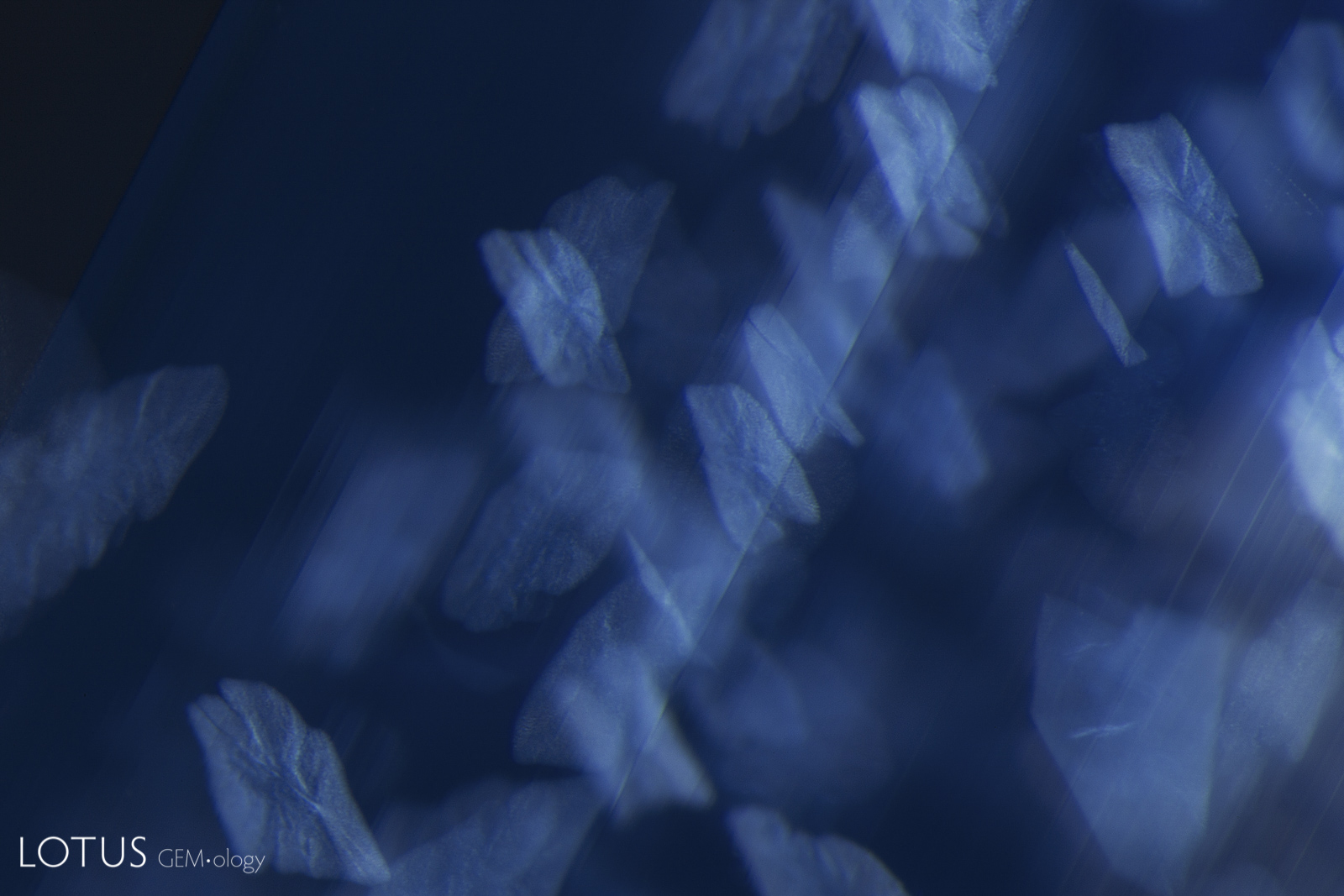
Some Madagascar sapphires feature thin “lace” or “doily” like inclusions that form in a lathe-like pattern. These are often confused with similar “snowflake” like inclusions in Kashmir sapphire.
Natural Sapphire •
Madagascar •
Enhancements:
None Detected (None) •
Lighting Conditions:
Fiber Optic: Oblique
Photographer:
Richard W. Hughes •
Image Number:
A-002-4410-1
These “folded” fingerprints that appear like little pleats or creases are thought to be an indication of Burmese origin in sapphire.
Natural Sapphire •
Myanmar (Burma); Mogok •
Enhancements:
None Detected (None) •
Lighting Conditions:
Fiber Optic: Diffuse Oblique
Photographer:
E. Billie Hughes •
Image Number:
A-002-4235-1
This wound in a sapphire from Sri Lanka has metamorphosed over time into the spectacularly iridescent fingerprint inclusion we see here. Such healed fissures display evidence of the underlying atomic symmetry.
Natural Sapphire •
Sri Lanka (Ceylon) •
Enhancements:
None Detected (None) •
Lighting Conditions:
Fiber Optic: Diffuse Oblique
Photographer:
Richard W. Hughes •
Image Number:
A-002-4348-1
The zoned texture clouds in this Madagascar sapphire are associated with colorless areas, while the deepest blue areas are relatively free of these particle clouds.
Natural Sapphire •
Madagascar •
Enhancements:
None Detected (None) •
Lighting Conditions:
Fiber Optic: Oblique
Photographer:
E. Billie Hughes •
Image Number:
A-002-4116-1
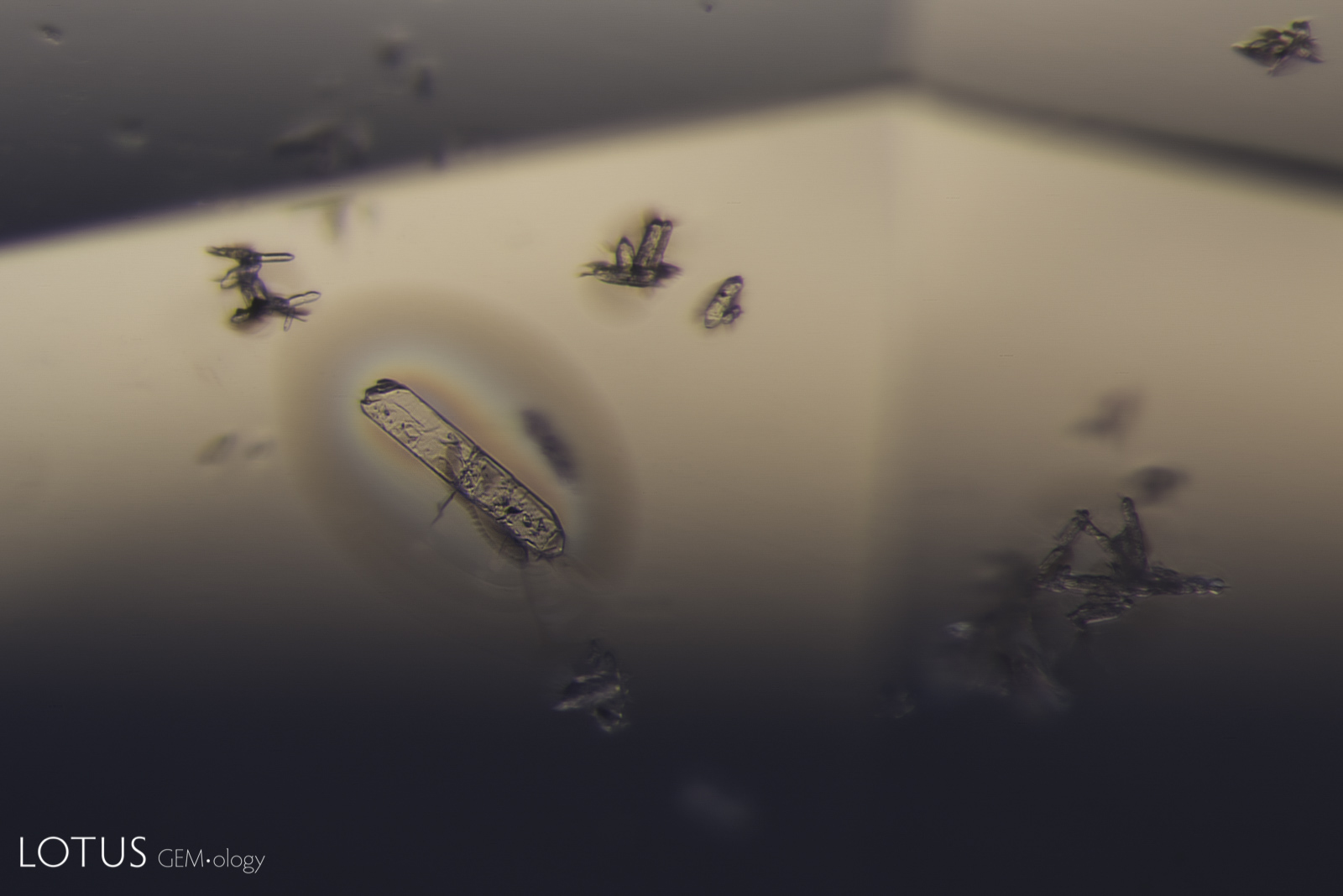
Zircon crystals like these are a common feature in Madagascar sapphire.
Natural Sapphire •
Madagascar •
Enhancements:
None Detected (None) •
Lighting Conditions:
Diffuse Light Field (Transmitted Light)
Photographer:
E. Billie Hughes •
Image Number:
A-002-4117-1
A web-like fingerprint in this sapphire stands out because it is colored by epigenetic staining.
Natural Sapphire •
Madagascar •
Enhancements:
None Detected (None) •
Lighting Conditions:
Diffuse Light Field + Fiber Optic
Photographer:
E. Billie Hughes •
Image Number:
A-002-3902-1
Delicate, wispy inclusions seem to float against the sharp angular growth zoning of this Madagascar sapphire.
Natural Sapphire •
Madagascar •
Enhancements:
None Detected (None) •
Lighting Conditions:
Fiber Optic: Diffuse Oblique
Photographer:
E. Billie Hughes •
Image Number:
A-002-3892-2
A negative crystal, cut through on the surface, is surrounded by a fingerprint “halo.”
Natural Sapphire •
Sri Lanka (Ceylon) •
Enhancements:
None Detected (None) •
Lighting Conditions:
Darkfield + Diffuse Oblique Fiber Optic + Blue Filter
Photographer:
E. Billie Hughes •
Image Number:
A-002-3885-1
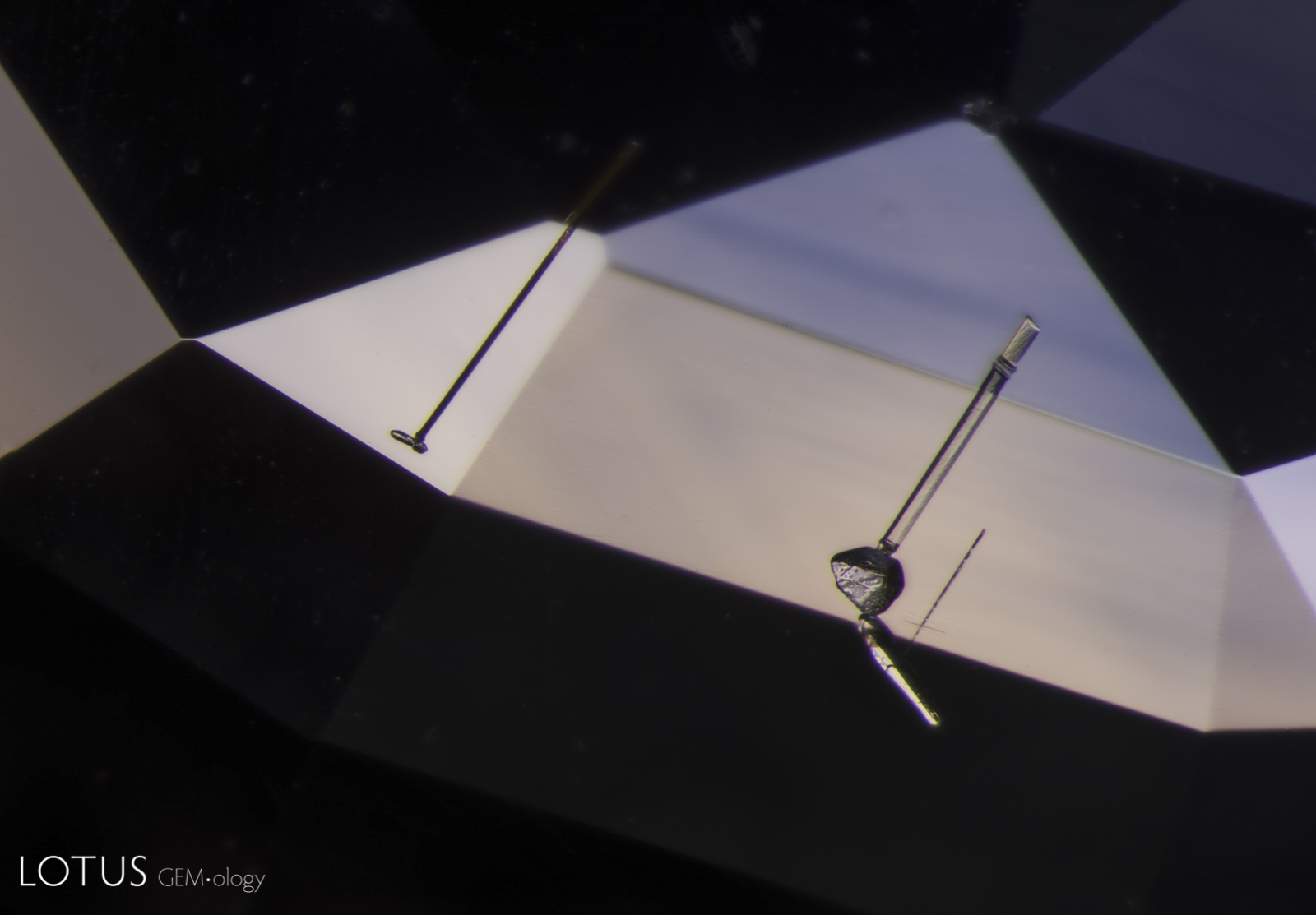
Small crystals attached to growth tubes stand out in this Madagascar sapphire. Note the appearance changes in different types of lighting. Darkfield yields a high-contrast appearance here.
Natural Sapphire •
Madagascar •
Enhancements:
None Detected (None) •
Lighting Conditions:
Dark Field
Photographer:
E. Billie Hughes •
Image Number:
A-002-3802-3
Sapphire inclusions may include mineral crystals, rutile silk, healed fissures, fluid inclusions, negative crystals, color zoning and other features formed during or after crystal growth. Such features are important to gemologists because they can provide evidence useful in identifying sapphire, understanding its geological history, recognizing treatment and, in some cases, determining geographic origin.
Sapphire Inclusion Photomicrographs
The Hyperion sapphire gallery includes microscopic features found in sapphires from major deposits around the world. Each entry is accompanied by descriptive information and, where available, references to the gemological literature.
What Inclusions Can Reveal About Sapphire
Inclusions are an important part of sapphire identification. Their form, composition, orientation and alteration can help gemologists distinguish natural sapphire from synthetic material, recognize evidence of heat treatment, and study the geological environment in which the sapphire formed.
Hyperion combines inclusion photomicrography with supporting gemological information so that individual features can be compared with documented examples from known sapphire deposits.
About Hyperion
Hyperion is the Lotus Gemology searchable inclusion database. It allows users to browse gemstone inclusions by gem type, geographic origin, treatment and keyword.