Sapphire Inclusions
Explore sapphire inclusions in Hyperion, the Lotus Gemology inclusion database. Hyperion contains photomicrographs of inclusions and internal features in natural sapphire, documented with information on geographic origin, treatment, lighting conditions, field of view, photographer and published references.
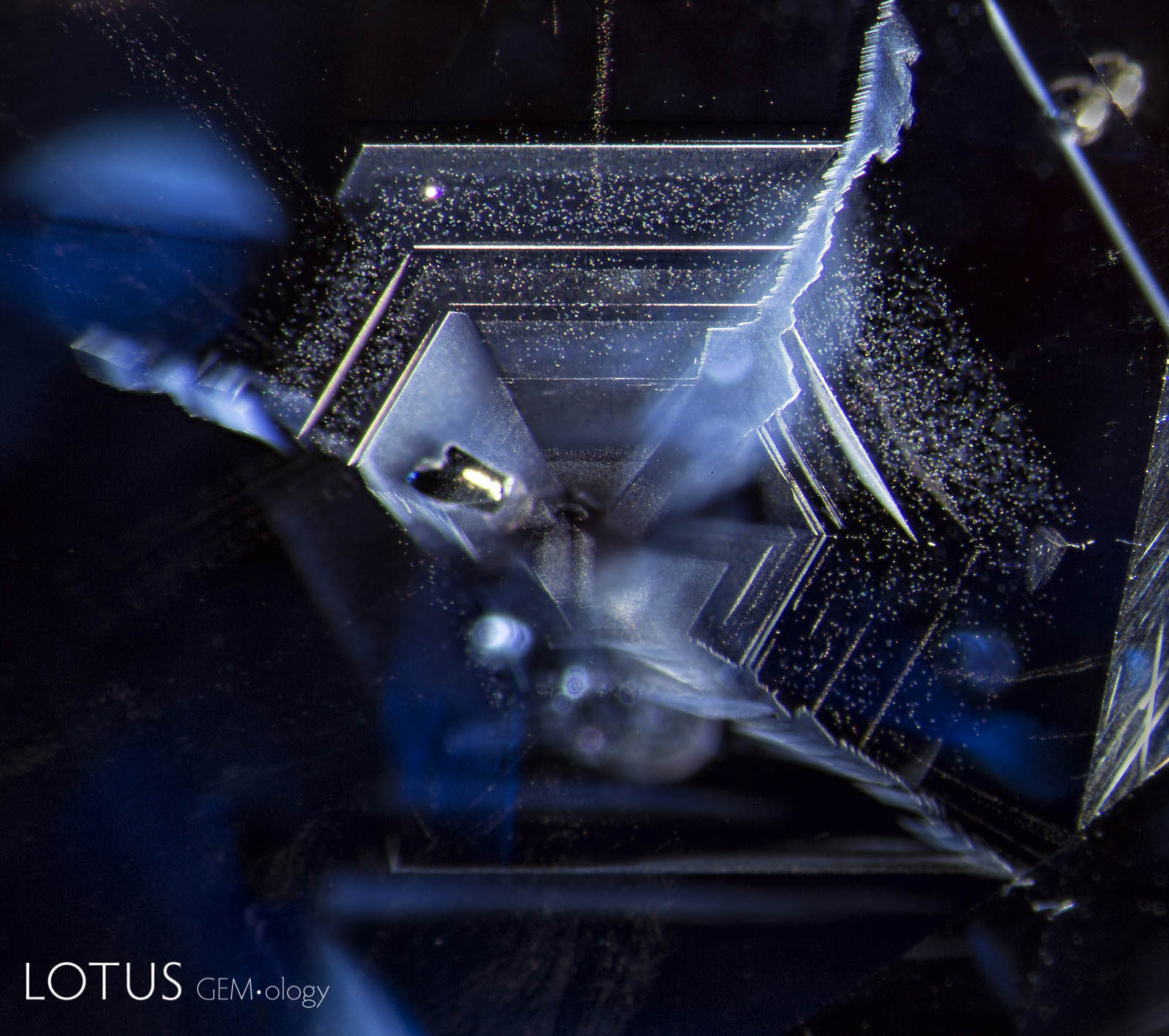
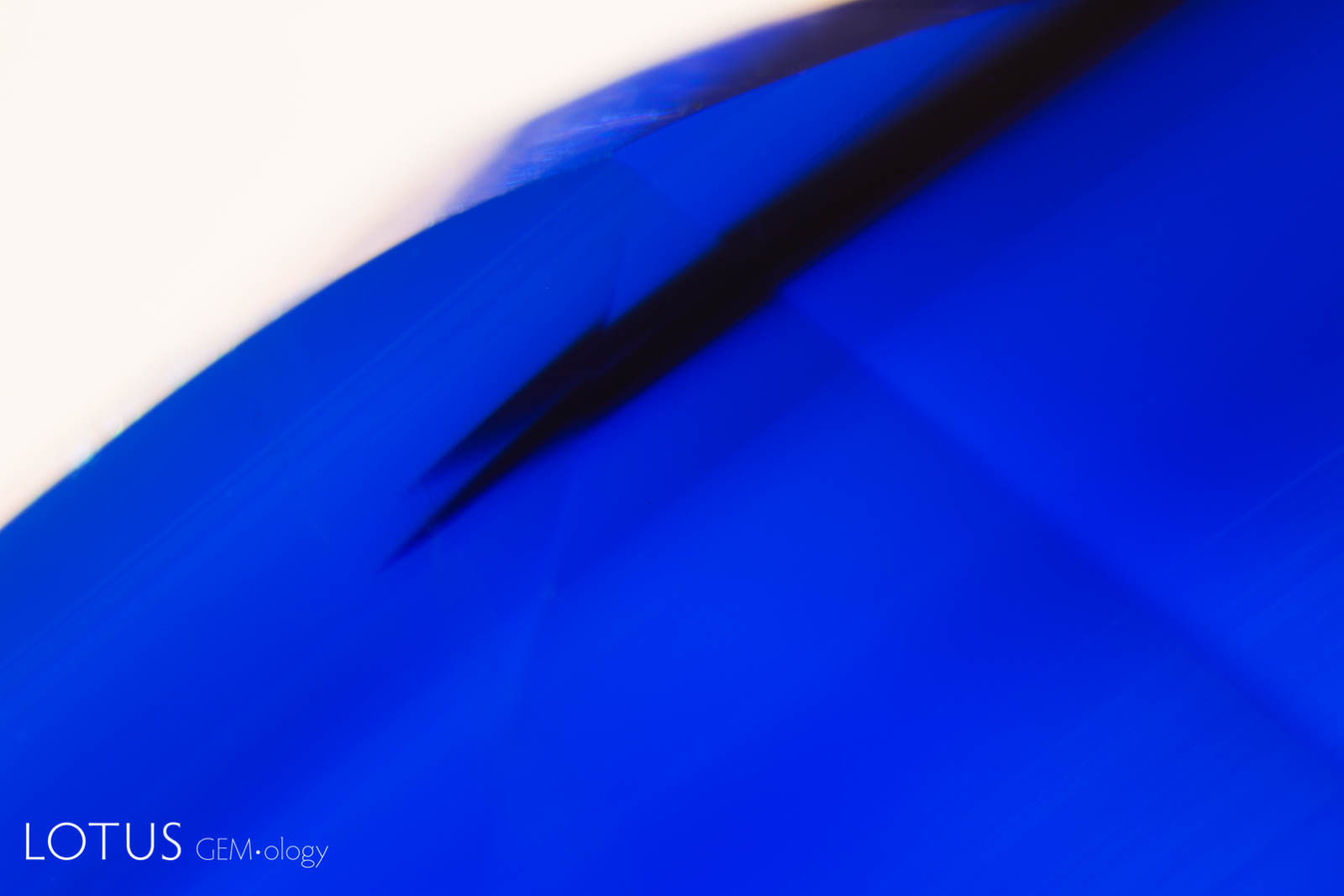
A complex structure of tiny exsolved particles and milky texture clouds outline the shape of this crystal at an earlier stage in its growth. This stone is from Queensland’s Lava Plains mines.
Natural Sapphire •
Australia •
Enhancements:
None Detected (None) •
Lighting Conditions:
Fiber Optic: Oblique
Photographer:
Richard W. Hughes •
Image Number:
A-001-3513-2
Sutherland, F.L., Coenraads, R.R. et al. (2015) Corundum (sapphire) and zircon relationships, Lava Plains gem fields, NE Australia: Integrated mineralogy, geochemistry, age determination, genesis and geographical typing. Mineralogical Magazine, Vol. 79, No. 3, pp. 545–581; not seen.
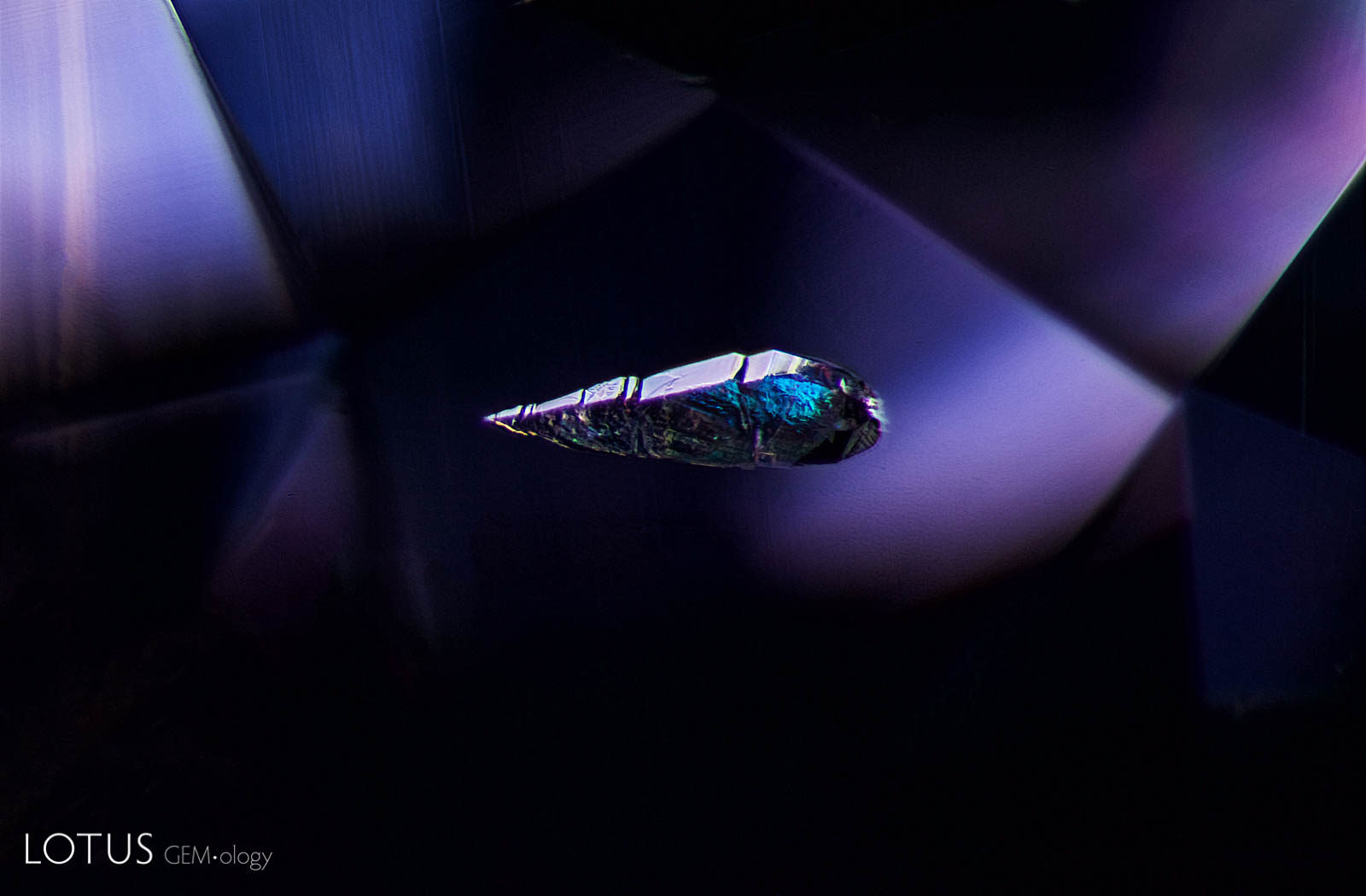
When a rutile-silk containing sapphire is heated, titanium from the rutile dissolves into the surrounding sapphire. Once in solid solution, the titanium reacts with iron, creating a blue color. The result is tiny blue halos surrounding the remnants of the rutile silk, a process dubbed “inkspot internal diffusion” by John Koivula. This partially dissolved silk with blue color concentrations is a clear sign that the sapphire was heated.
Natural Sapphire •
Sri Lanka (Ceylon) •
Enhancements:
Heat (H) •
Lighting Conditions:
Diffuse Light Field (Transmitted Light)
Photographer:
E. Billie Hughes •
Image Number:
A-001-3417-1
Koivula, J.I. (1987) Internal diffusion. Journal of Gemmology, Vol. 20, No. 7/8, pp. 474–477; RWHL*.
Hughes, R.W. (1997) Ruby & Sapphire. Boulder, CO, RWH Publishing, 512 pp.; RWHL*.
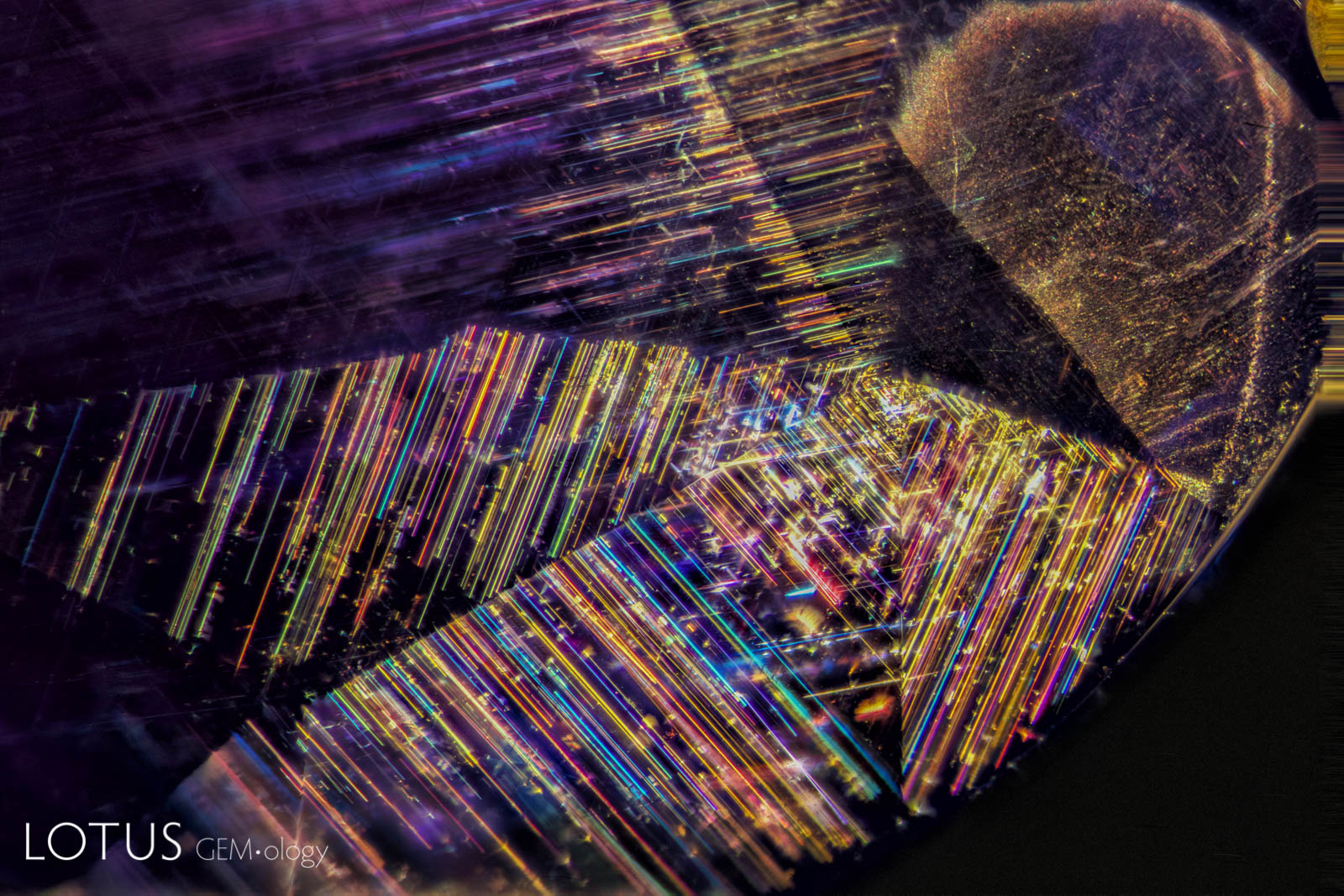
Polysynthetic twinning is secondary twinning, forming after the host crystal grew. When the stone is placed between crossed polars, the dazzling colors of these polysynthetic twin planes can be easily seen.
Natural Sapphire •
Madagascar •
Enhancements:
None Detected (None) •
Lighting Conditions:
Diffuse Light Field + Crossed Polars
Photographer:
E. Billie Hughes •
Image Number:
A-001-3471-1
Hughes, R.W. (1997) Ruby & Sapphire. Boulder, CO, RWH Publishing, 512 pp.; RWHL*.
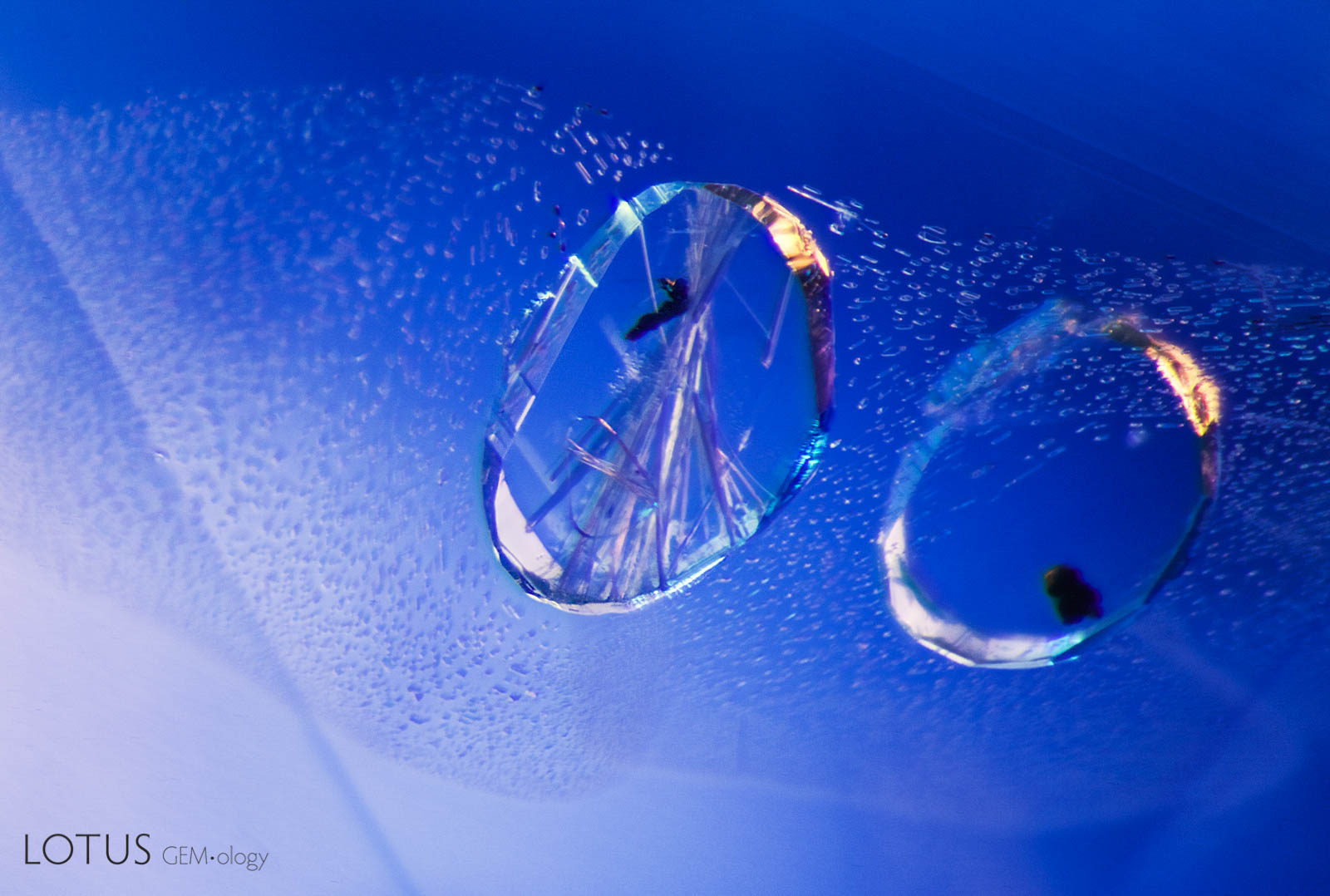
Like Mother Nature’s snow globe, Sri Lankan sapphire often has negative crystals containing other inclusions. In this example we can see small diaspore needles and black graphite flakes inside the cavities.
Natural Sapphire •
Sri Lanka (Ceylon) •
Enhancements:
None Detected (None) •
Lighting Conditions:
Dark Field + Oblique Fiber Optic
Photographer:
E. Billie Hughes •
Image Number:
A-001-3462-4
Eppler, W.F. (1966) The origin of negative crystals in gemstones. Journal of Gemmology, Vol. 10, No. 2, April, pp. 49–56; RWHL*.
Roedder, E. (1962) Ancient fluids in crystals. Scientific American, Vol. 207, pp. 38–47; RWHL*.
Koivula, J.I. (1986) Carbon dioxide fluid inclusions as proof of natural-colored corundum. Gems & Gemology, Vol. 22, No. 3, pp. 152–155; RWHL*.
Hughes, R.W. (1997) Ruby & Sapphire. Boulder, CO, RWH Publishing, 512 pp.; RWHL*.
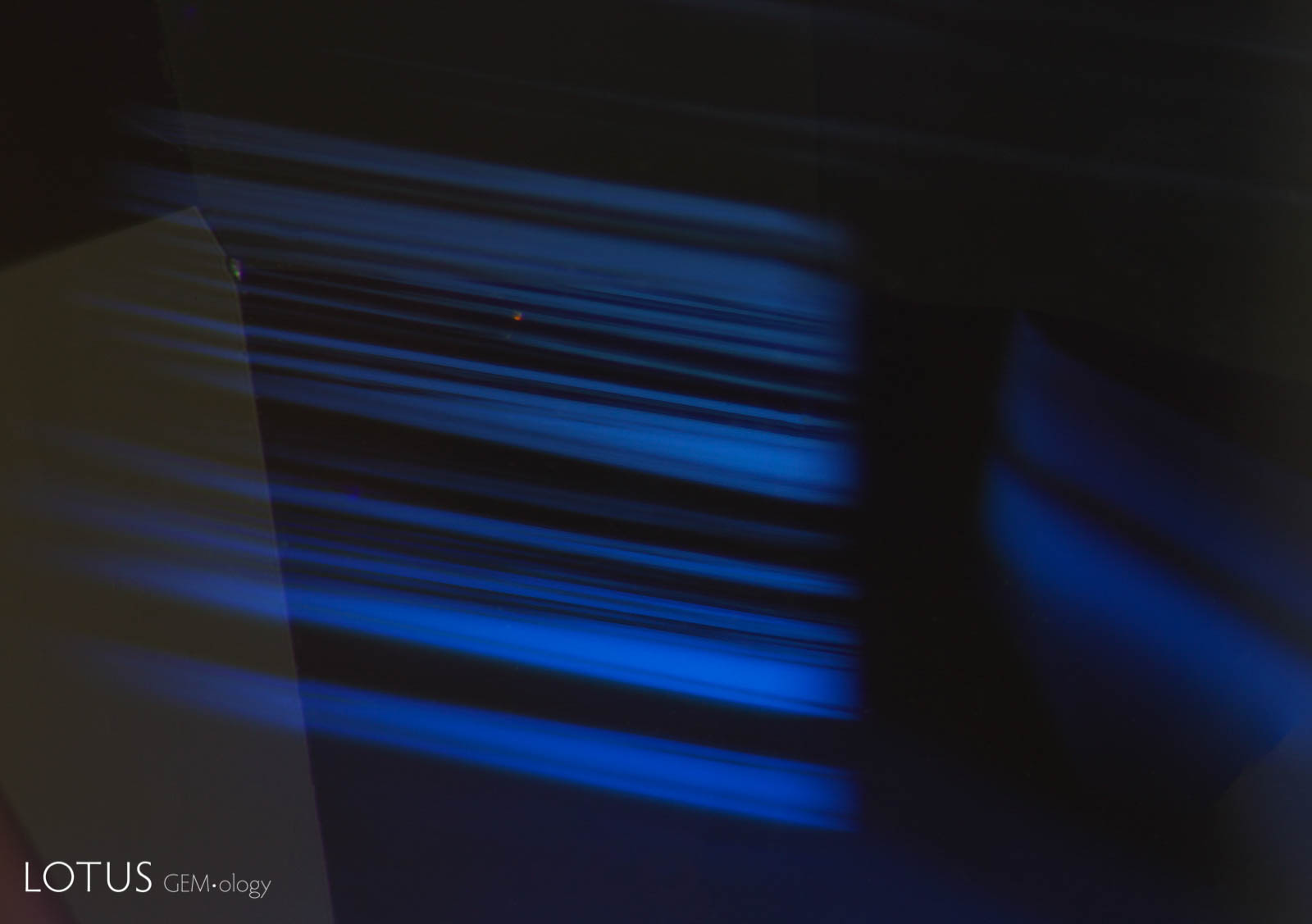
A deep blue color zone is visible in this Madagascar sapphire. Note that the deep blue zone is devoid of turbidity, while the surrounding area is extremely cloudy. This shows a lack of internal diffusion and thus offers evidence that the stone has not been subjected to high-temperature heat treatment.
Natural Sapphire •
Madagascar •
Enhancements:
None Detected (None) •
Lighting Conditions:
Diffuse Light Field (Transmitted Light)
Photographer:
E. Billie Hughes •
Image Number:
A-001-3382-1
Koivula, J.I. (1987) Internal diffusion. Journal of Gemmology, Vol. 20, No. 7/8, pp. 474–477; RWHL*.
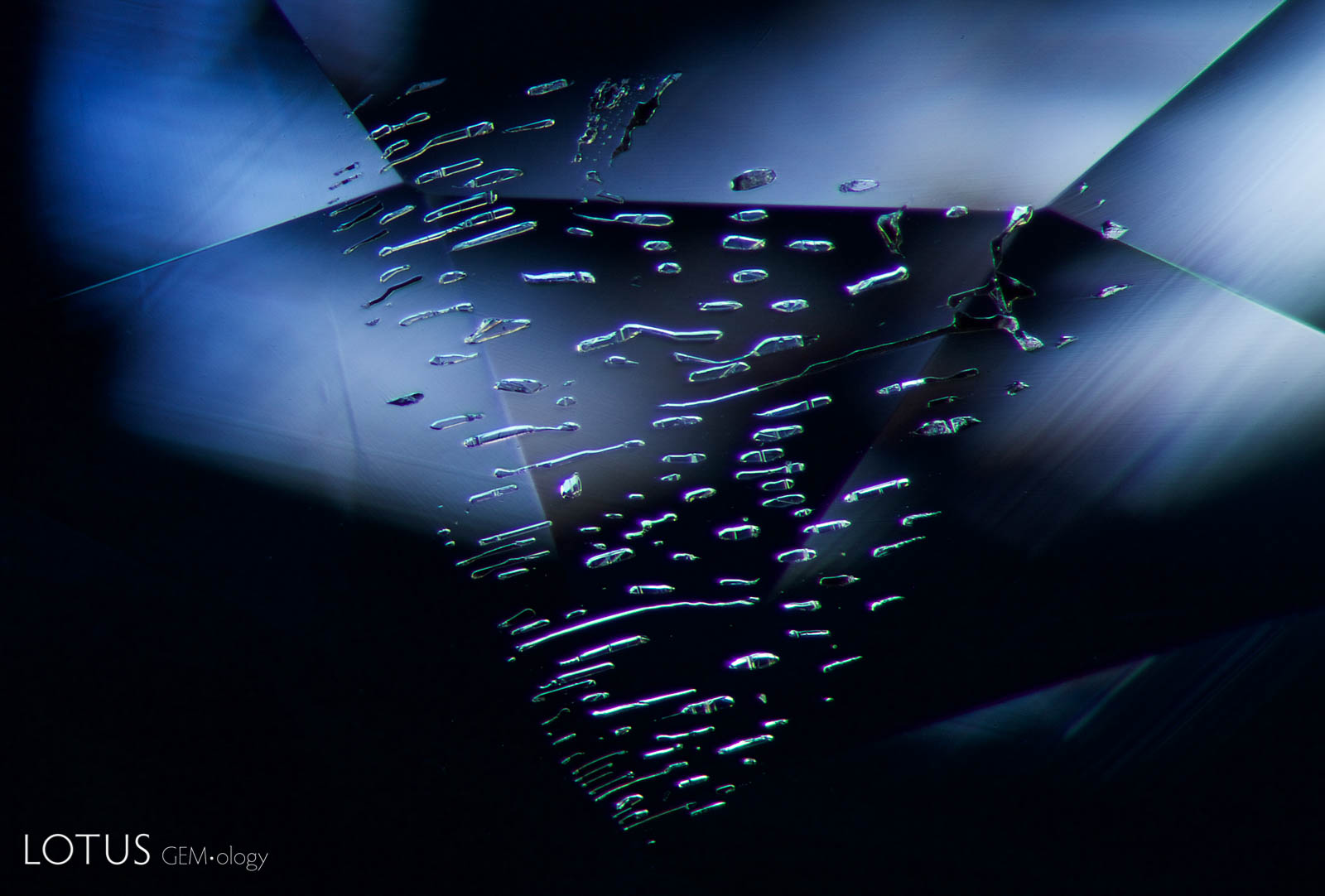
A melted “snowball” crystal is ensconced in heat-altered fingerprints in this heated sapphire from Sri Lanka. Such “snowballs” and bubbly fingerprints are typical of stones heated at high temperatures.
Natural Sapphire •
Sri Lanka (Ceylon) •
Enhancements:
Heat (H) •
Lighting Conditions:
Dark Field
Photographer:
E. Billie Hughes •
Image Number:
A-001-3338-1
Nassau, K. (1981) Heat treating ruby and sapphire: Technical aspects. Gems & Gemology, Vol. 17, No. 3, pp. 121–131; RWHL*.
Crowningshield, R. and Nassau, K. (1981) The heat and diffusion treatment of natural and synthetic sapphires. Journal of Gemmology, Vol. 17, No. 8, Oct., pp. 528–541; RWHL*.
An unheated fingerprint with many small channels showing no signs of heat-induced damage are a welcome sight in this sapphire from Madagascar.
Natural Sapphire •
Madagascar •
Enhancements:
None Detected (None) •
Lighting Conditions:
Darkfield + Blue Filter
Photographer:
E. Billie Hughes •
Image Number:
A-001-3393-2
Roedder, E. (1962) Ancient fluids in crystals. Scientific American, Vol. 207, pp. 38–47; RWHL*.
Eppler, W.F. (1959) The origin of healing fissures in gemstones. Journal of Gemmology, Vol. 7, No. 2, April, pp. 40–66; RWHL*.
Hughes, R.W. (1997) Ruby & Sapphire. Boulder, CO, RWH Publishing, 512 pp.; RWHL*.
An unheated fingerprint with many small channels showing no signs of heat-induced damage are a welcome sight in this sapphire from Madagascar.
Natural Sapphire •
Madagascar •
Enhancements:
None Detected (None) •
Lighting Conditions:
Shadowing
Photographer:
E. Billie Hughes •
Image Number:
A-001-3393-1
Roedder, E. (1962) Ancient fluids in crystals. Scientific American, Vol. 207, pp. 38–47; RWHL*.
Eppler, W.F. (1959) The origin of healing fissures in gemstones. Journal of Gemmology, Vol. 7, No. 2, April, pp. 40–66; RWHL*.
Hughes, R.W. (1997) Ruby & Sapphire. Boulder, CO, RWH Publishing, 512 pp.; RWHL*.
678 Total Images
Results: 481 – 492 | Page 41 of 57 Pages
Sapphire inclusions may include mineral crystals, rutile silk, healed fissures, fluid inclusions, negative crystals, color zoning and other features formed during or after crystal growth. Such features are important to gemologists because they can provide evidence useful in identifying sapphire, understanding its geological history, recognizing treatment and, in some cases, determining geographic origin.
Sapphire Inclusion Photomicrographs
The Hyperion sapphire gallery includes microscopic features found in sapphires from major deposits around the world. Each entry is accompanied by descriptive information and, where available, references to the gemological literature.
What Inclusions Can Reveal About Sapphire
Inclusions are an important part of sapphire identification. Their form, composition, orientation and alteration can help gemologists distinguish natural sapphire from synthetic material, recognize evidence of heat treatment, and study the geological environment in which the sapphire formed.
Hyperion combines inclusion photomicrography with supporting gemological information so that individual features can be compared with documented examples from known sapphire deposits.
About Hyperion
Hyperion is the Lotus Gemology searchable inclusion database. It allows users to browse gemstone inclusions by gem type, geographic origin, treatment and keyword.
Search the Complete Hyperion Database