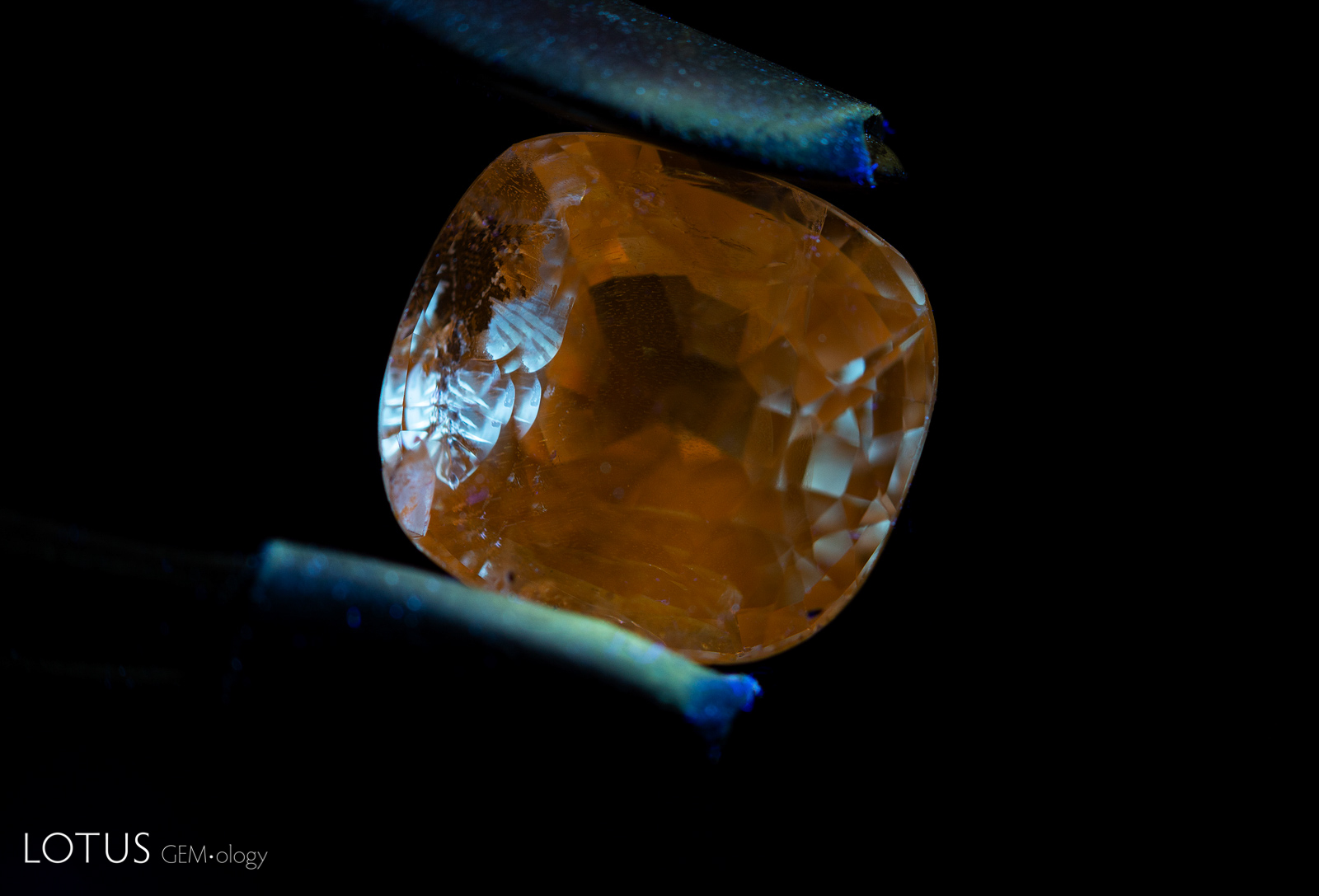
Burmese Sapphire Inclusions
Explore Burmese sapphire inclusions in Hyperion, the Lotus Gemology inclusion database. Hyperion contains photomicrographs of inclusions and internal features in natural sapphires from Myanmar (Burma), documented with information on treatment, lighting conditions, field of view, photographer and published references.
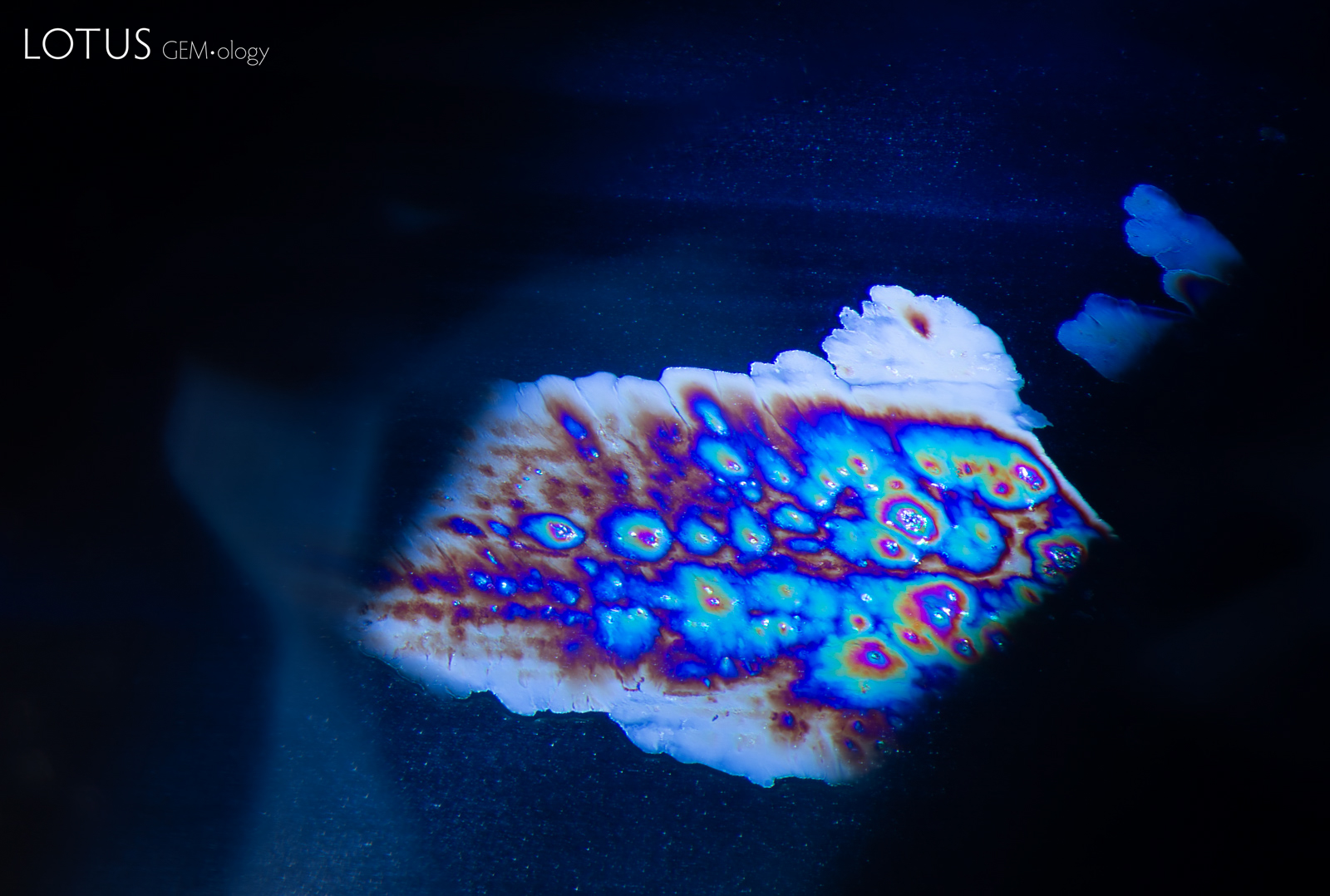
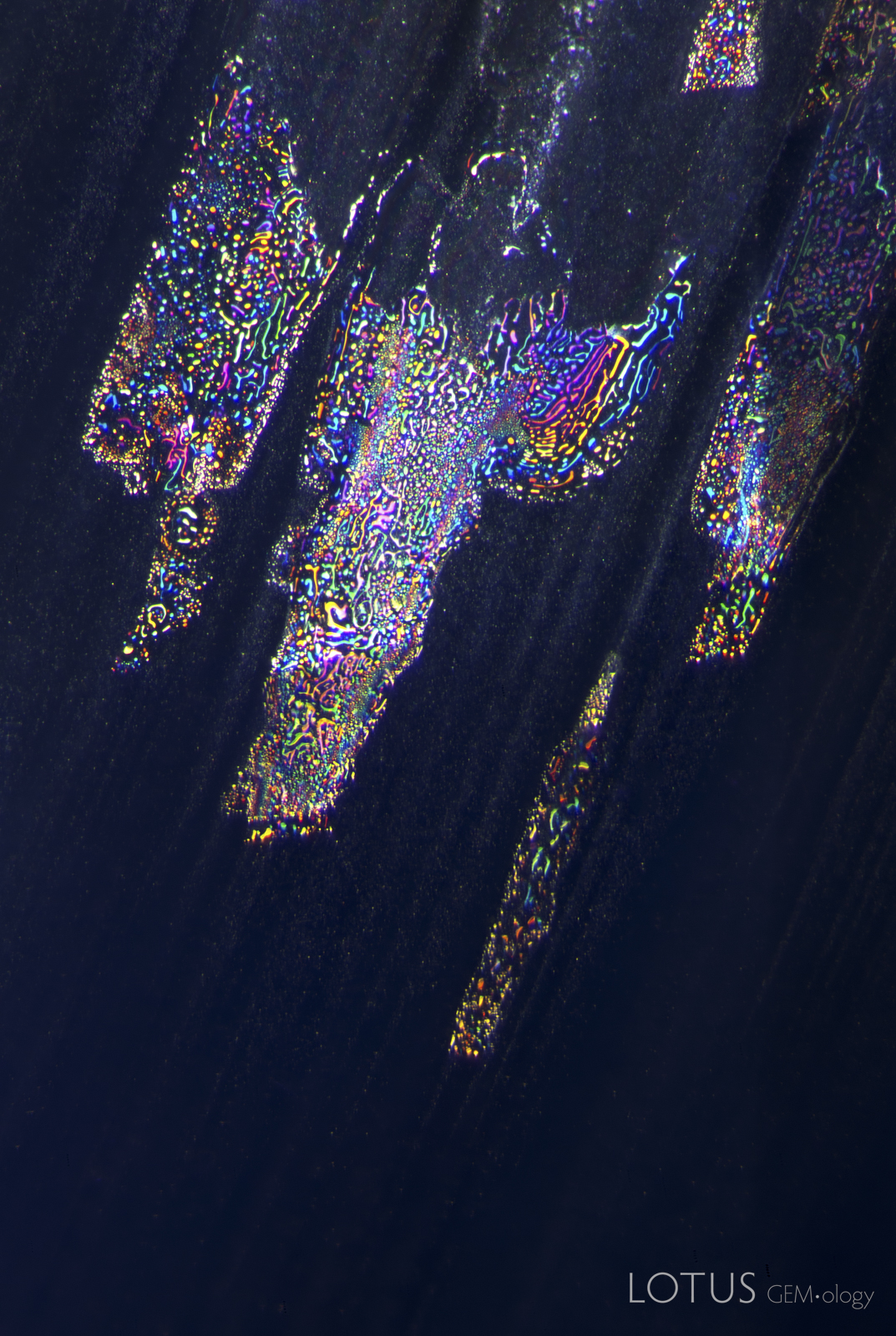
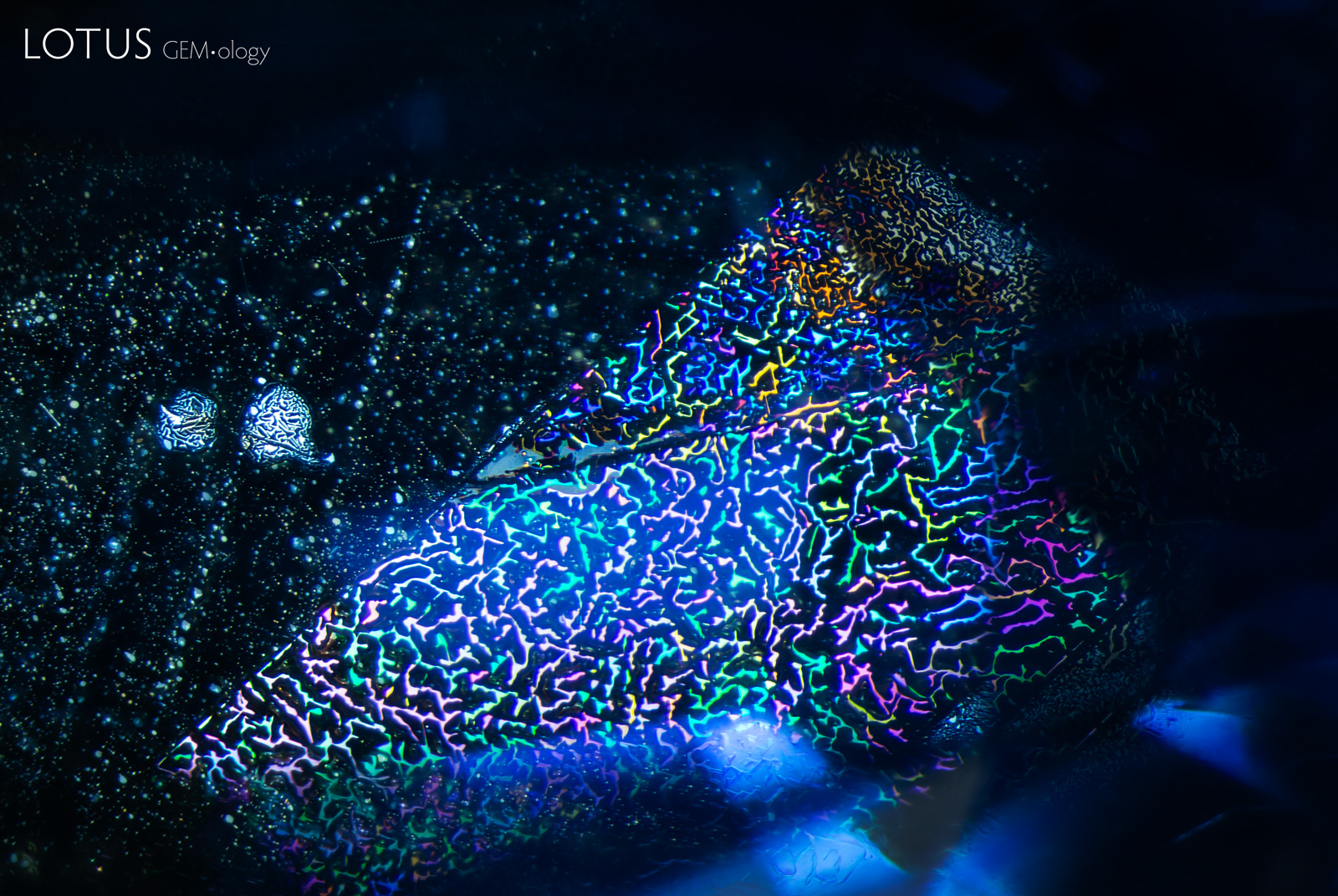
High temperature heat treatment has created irregular, iridescent thin film patterns in this blue sapphire. In the background, clouds of dotted, partially dissolved silk can be observed.
Natural Sapphire •
Myanmar (Burma); Mogok/Namya •
Enhancements:
Heat (H) •
Lighting Conditions:
Dark Field + Oblique Fiber Optic
Photographer:
E. Billie Hughes •
Image Number:
A-006-0102-4
• Field of View = 4.5mm
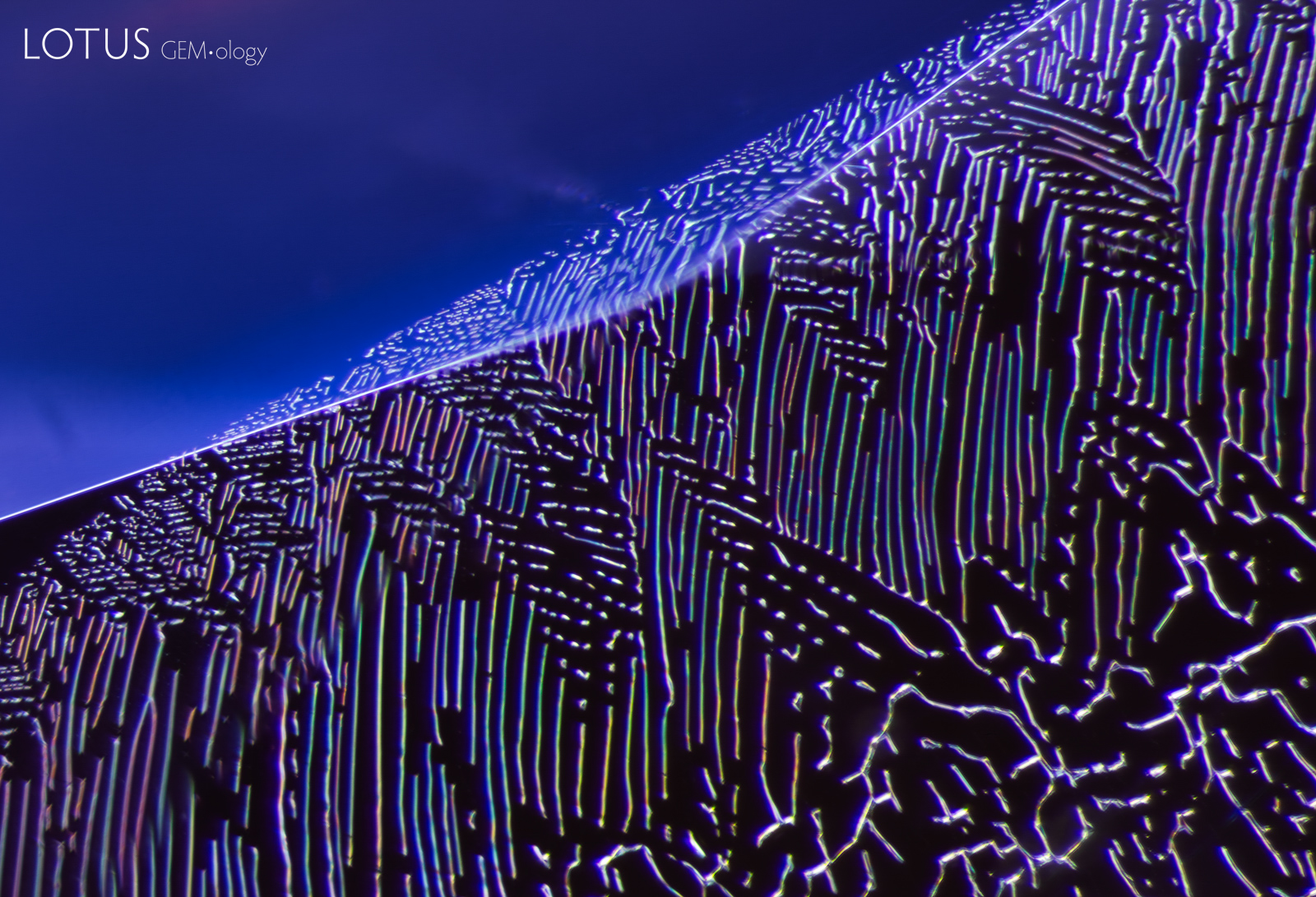
Meteor shower. The high temperature used when treating this blue sapphire from Myanmar (Burma) has resulted in some unusual iridescent fingerprints situated in the basal plane and aligned with the bands of partially dissolved silk remnants.
Natural Sapphire •
Myanmar (Burma); Mogok/Namya •
Enhancements:
Heat (H) •
Lighting Conditions:
Fiber Optic: Diffuse Oblique
Photographer:
Kaylan Khourie •
Image Number:
A-006-0102-1
• Field of View = 2.2mm
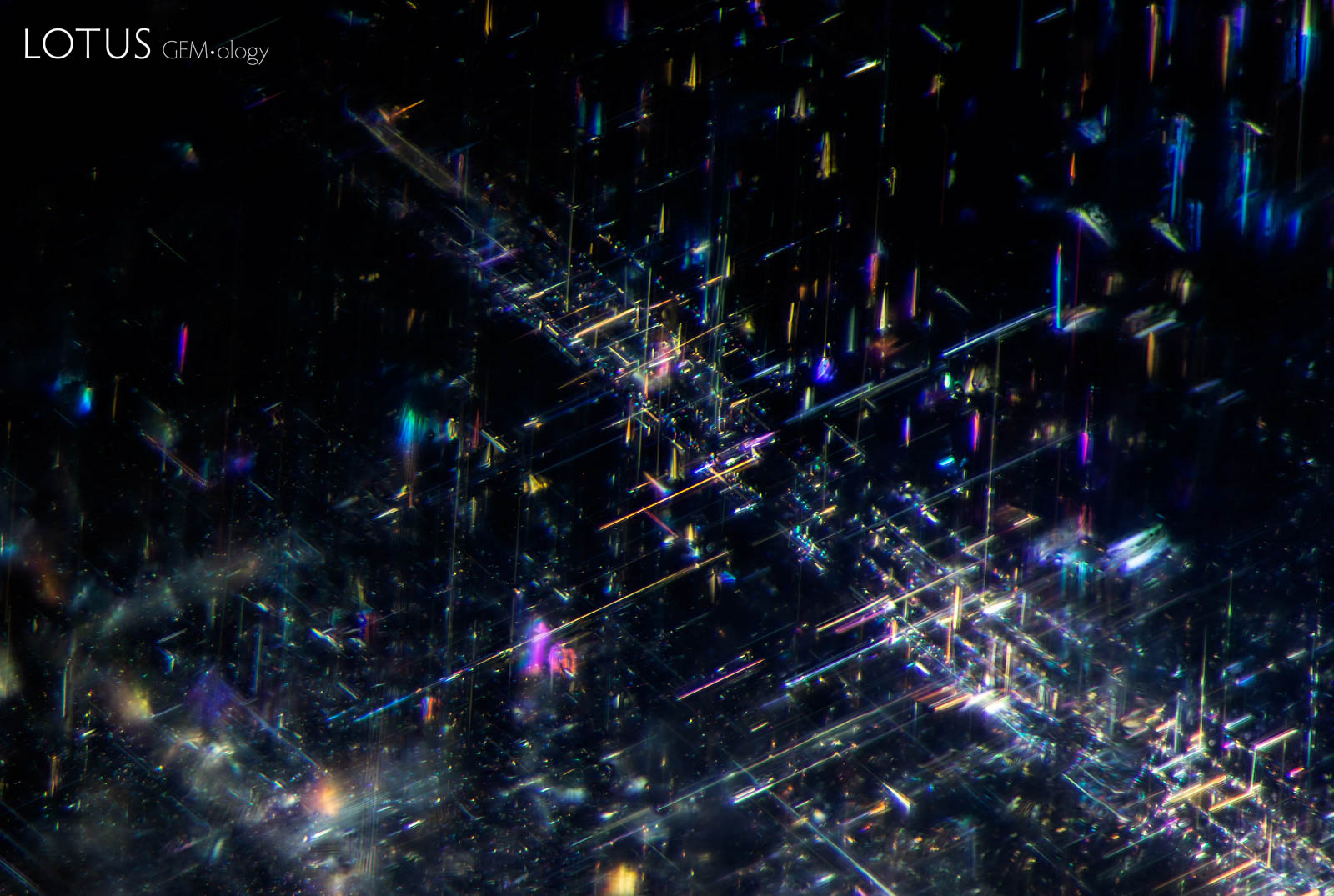
This cornflower blue sapphire features fine unaltered rutile silk needles in intersecting planes; a common sight in sapphires from Myanmar (Burma).
Natural Sapphire •
Myanmar (Burma); Mogok/Namya •
Enhancements:
None Detected (None) •
Lighting Conditions:
Fiber Optic: Oblique
Photographer:
Wimon Manorotkul •
Image Number:
A-005-2094-1
• Field of View = 2.8mm
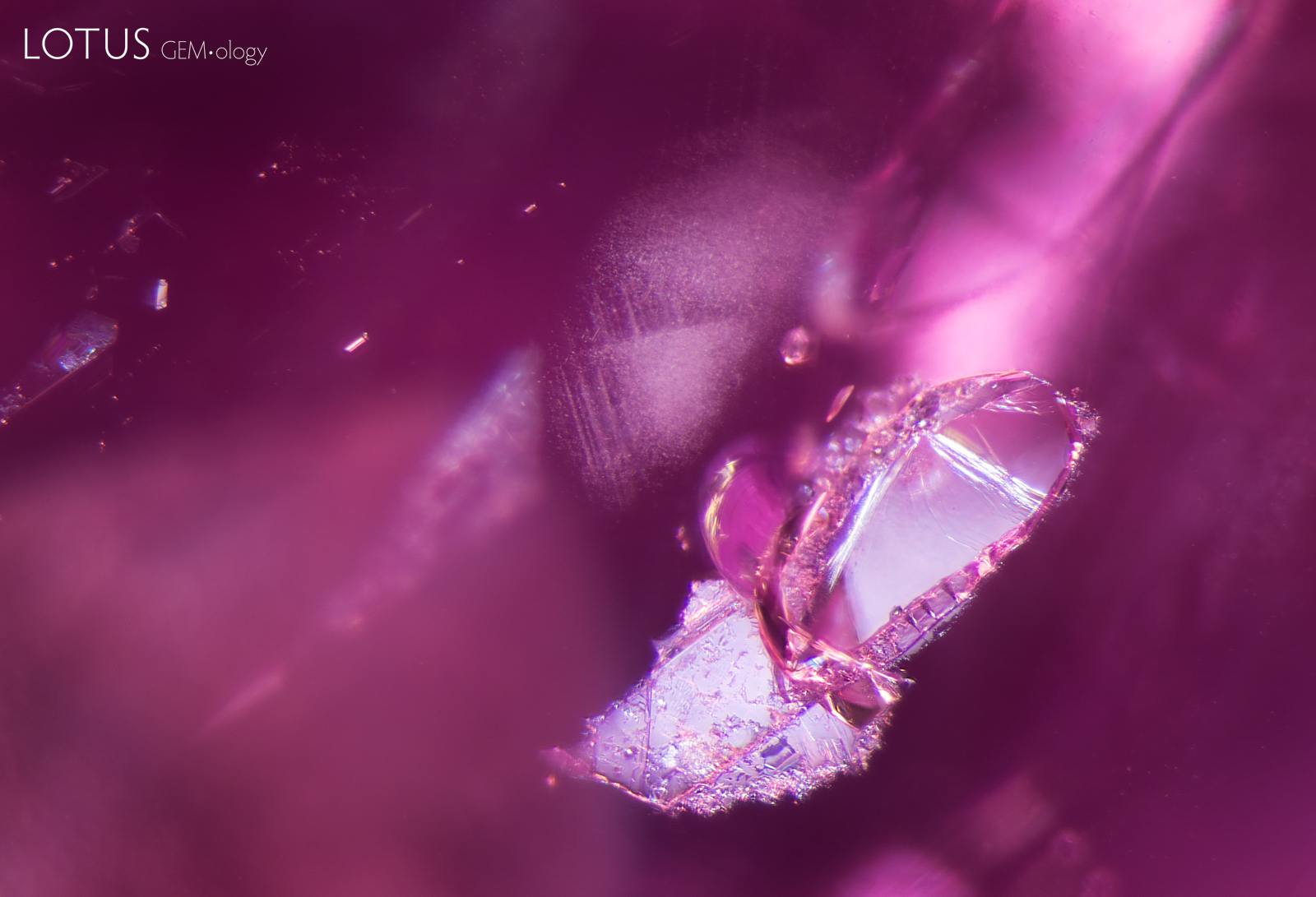
Suspended in time, a negative crystal encapsulates part of the Earth’s history in this pink sapphire.
Natural Sapphire •
Myanmar (Burma); Mogok/Namya •
Enhancements:
None Detected (None) •
Lighting Conditions:
Dark Field + Diffuse Fiber Optic
Photographer:
E. Billie Hughes •
Image Number:
A-005-5717-3
• Field of View = 2mm
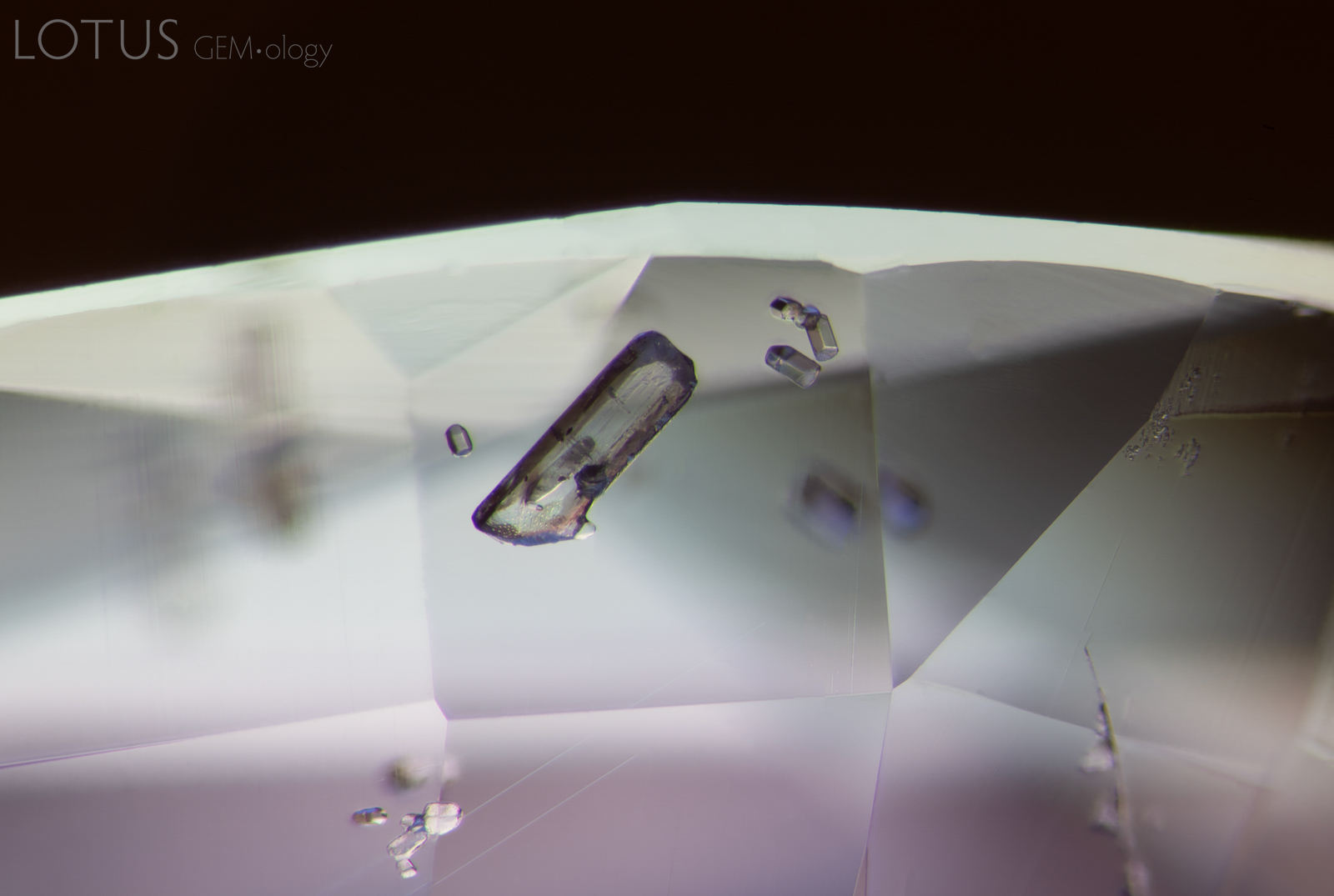
A multitude of prismatic apatite crystals are dispersed across this blue sapphire from Mogok, Myanmar. Apatite, a calcium phosphate mineral, is a common guest in corundum and many other gemstones.
Natural Sapphire •
Myanmar (Burma); Mogok/Namya •
Enhancements:
Fissure Filling with colorless Oil/resin (FF-O1); No indications of heating (No indications of heating) •
Lighting Conditions:
Dark Field + Shadowing
Photographer:
Kaylan Khourie •
Image Number:
A-005-4459-2
• Field of View = 2.8mm
This blue sapphire from Myanmar’s Mogok Valley contains several prismatic apatite crystals. Observation between crossed polarized filters reveals not only the bright interference colors of the apatite, but also of its sub-inclusions.
Natural Sapphire •
Myanmar (Burma); Mogok/Namya •
Enhancements:
Fissure Filling with colorless Oil/resin (FF-O1); No indications of heating (No indications of heating) •
Lighting Conditions:
Dark Field + Crossed Polars
Photographer:
Kaylan Khourie •
Image Number:
A-005-4459-1
• Field of View = 3.6mm
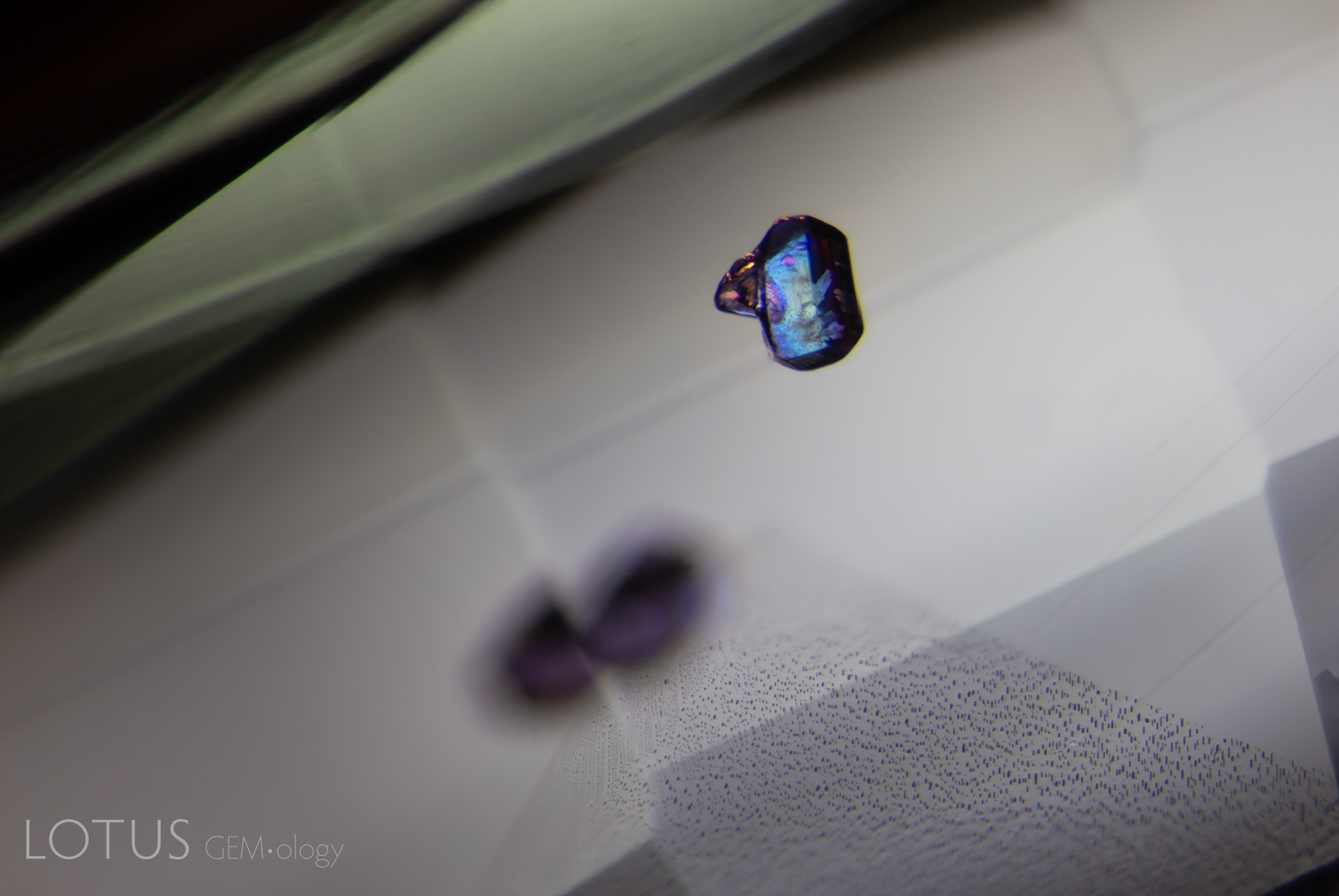
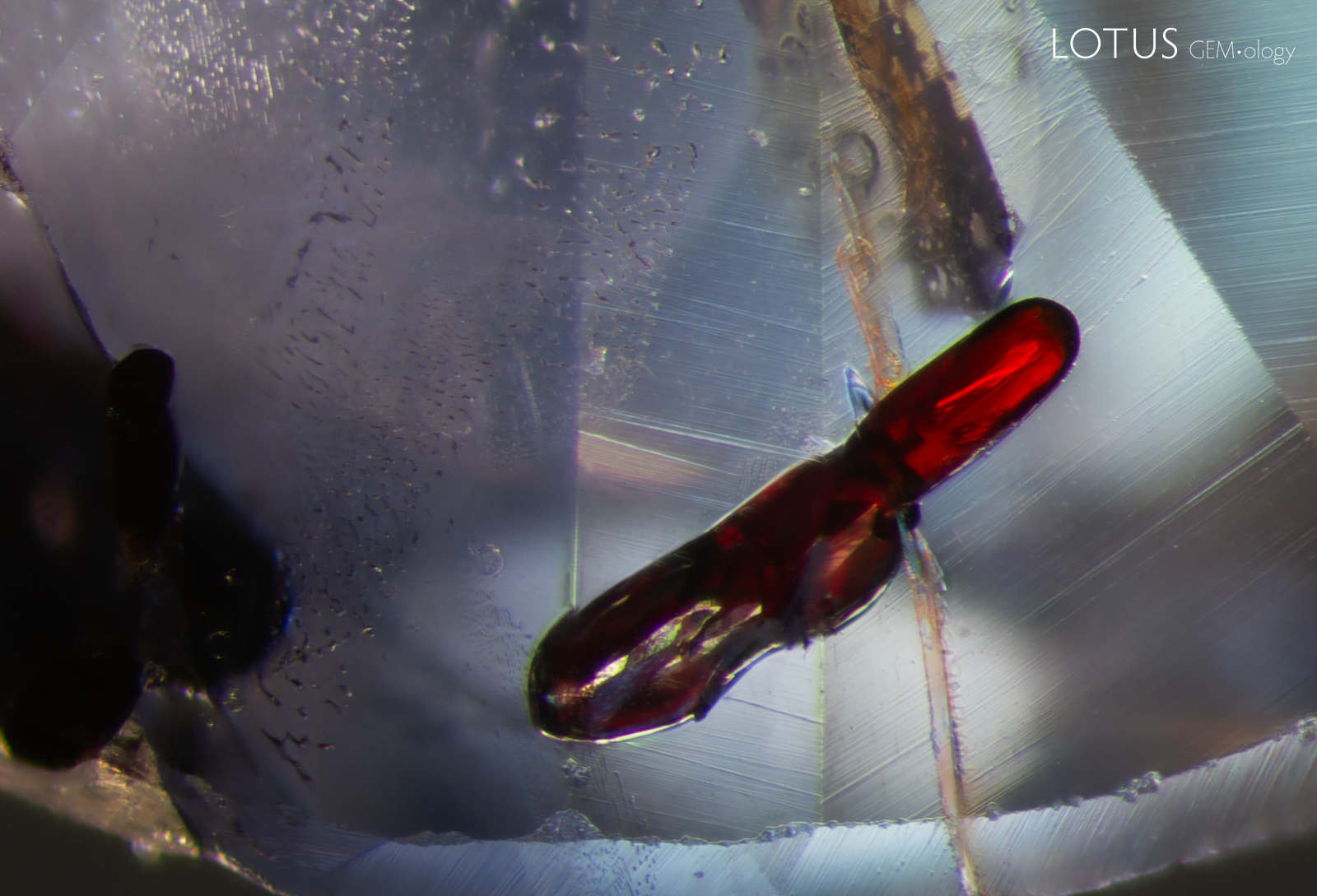
Rutile silk needles are well-known inclusions in Burmese corundum, but rutile can appear in other forms as well. Here, a red rutile crystal (identified with micro Raman) is a prominent feature in this sapphire. Specimen courtesy Vincent Pardieu.
Natural Sapphire •
Myanmar (Burma); Mogok/Namya •
Enhancements:
None Detected (None) •
Lighting Conditions:
Dark Field + Diffuse Fiber Optic
Photographer:
E. Billie Hughes •
Image Number:
R-004-9436-1
• Field of View = 1.7mm
Bright red mica crystals are scattered across the interior of this Burmese sapphire. The crystals were identified with micro Raman. Specimen courtesy Vincent Pardieu.
Natural Sapphire •
Myanmar (Burma); Mogok/Namya •
Enhancements:
None Detected (None) •
Lighting Conditions:
Diffuse Light Field + Blue Filter
Photographer:
E. Billie Hughes •
Image Number:
R-004-9420-1
• Field of View = 2.5mm
Thin films and flat negative crystals light up when illuminated with fiber optic light in this Burmese sapphire. Specimen courtesy Vincent Pardieu.
Natural Sapphire •
Myanmar (Burma); Mogok/Namya •
Enhancements:
None Detected (None) •
Lighting Conditions:
Fiber Optic: Diffuse Oblique
Photographer:
E. Billie Hughes •
Image Number:
R-004-8577-1
• Field of View = 1.5mm
Iridescent thin films in this fingerprint create a stunning display of color in their sapphire host.
Natural Sapphire •
Myanmar (Burma); Mogok •
Enhancements:
Heat (H) •
Lighting Conditions:
Fiber Optic: Diffuse Oblique
Photographer:
E. Billie Hughes •
Image Number:
A-004-9534-2
• Field of View = 4.5mm
Fine channels form a beautiful partially healed fissure in this sapphire, creating a unique “fingerprint” for the stone.
Natural Sapphire •
Myanmar (Burma); Mogok/Namya •
Enhancements:
None Detected (None) •
Lighting Conditions:
Dark Field
Photographer:
E. Billie Hughes •
Image Number:
A-005-0752-1
• Field of View = 2.6mm
Roedder, E. (1962) Ancient fluids in crystals. Scientific American, Vol. 207, pp. 38–47; RWHL*.
When illuminated with a longwave UV torch, this sapphire displayed areas with chalky fluorescence. These chalky areas were fissures that were treated with a filler that fluoresced under the UV light. After detection, the owner of the stone opted to remove the filler.
Natural Sapphire •
Myanmar (Burma); Mogok •
Enhancements:
None Detected (None) •
Lighting Conditions:
Ultraviolet: Longwave
Photographer:
E. Billie Hughes •
Image Number:
A-004-5878-1
Burmese sapphire inclusions may include mineral crystals, rutile silk, healed fissures, fluid inclusions, negative crystals, growth features and other internal features formed during or after crystal growth. Such features are important to gemologists because they can provide evidence useful in identifying sapphire and evaluating a possible Burmese origin.
Burmese Sapphire Inclusion Photomicrographs
The Hyperion Burmese sapphire gallery includes microscopic features documented in sapphires from Myanmar (Burma). Each entry is accompanied by descriptive information and, where available, references to the gemological literature.
What Inclusions Can Reveal About Burmese Sapphire
Inclusions are an important part of geographic origin determination in sapphire. Their form, composition, orientation and associations can provide evidence that, when considered together with other gemological properties, may support or contradict a Burmese origin.
Hyperion combines inclusion photomicrography with supporting gemological information so that individual features can be compared with documented examples from Burmese sapphires.
About Hyperion
Hyperion is the Lotus Gemology searchable inclusion database. It allows users to browse gemstone inclusions by gem type, geographic origin, treatment and keyword.