Burmese Sapphire Inclusions
Explore Burmese sapphire inclusions in Hyperion, the Lotus Gemology inclusion database. Hyperion contains photomicrographs of inclusions and internal features in natural sapphires from Myanmar (Burma), documented with information on treatment, lighting conditions, field of view, photographer and published references.
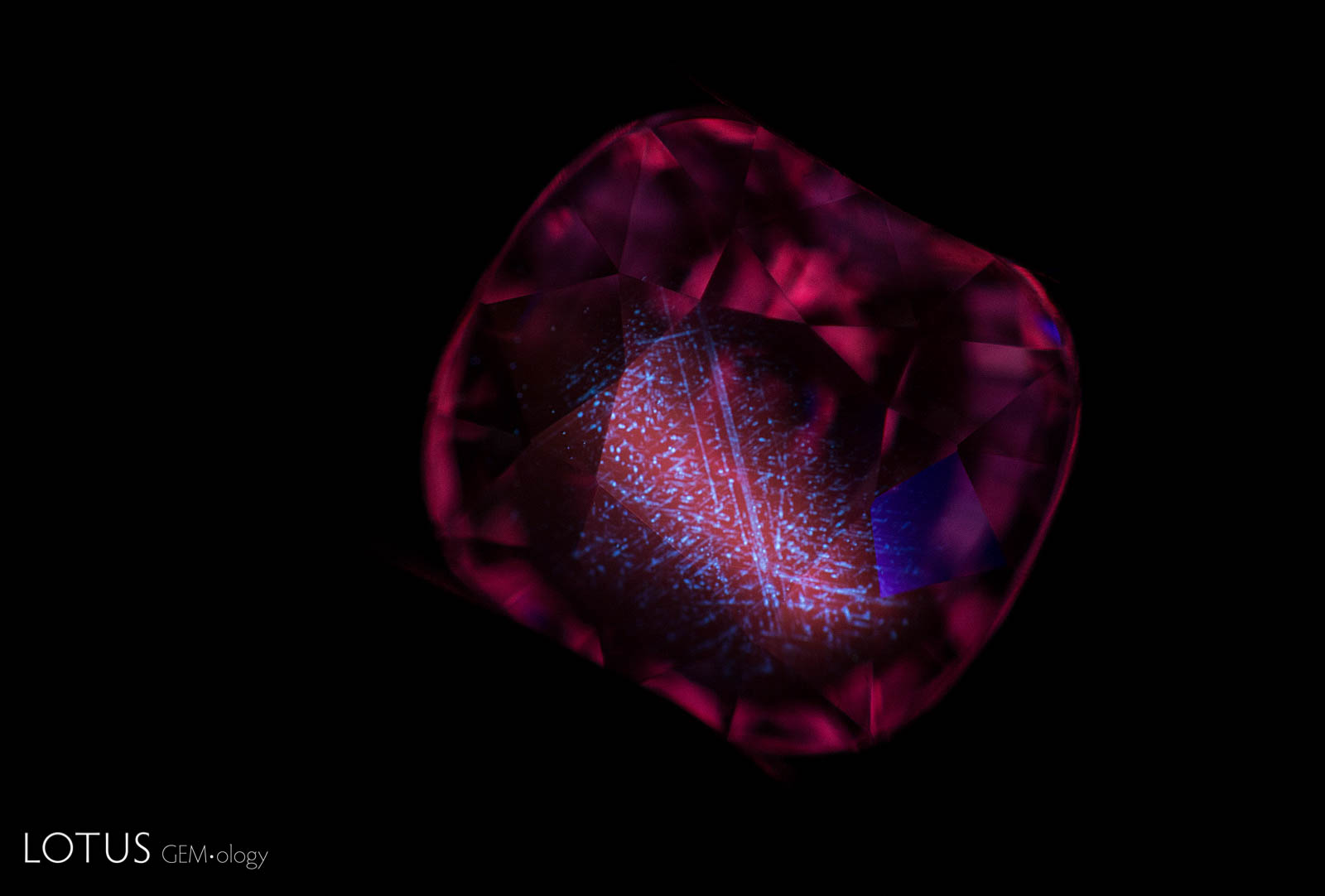
Chalky shortwave fluorescence follows the pattern of partially dissolved silk in this heated pink sapphire.
Natural Sapphire •
Myanmar (Burma); Mogok/Namya •
Enhancements:
Heat (H) •
Lighting Conditions:
Ultraviolet: Shortwave
Photographer:
E. Billie Hughes •
Image Number:
A-002-7230-2
“Banner-like” fingerprints are often found in Burmese sapphire, where inclusions grow in between twin planes, creating an elongated appearance.
Natural Sapphire •
Myanmar (Burma); Mogok •
Enhancements:
None Detected (None) •
Lighting Conditions:
Fiber Optic: Diffuse Oblique
Photographer:
E. Billie Hughes •
Image Number:
A-002-7690-1
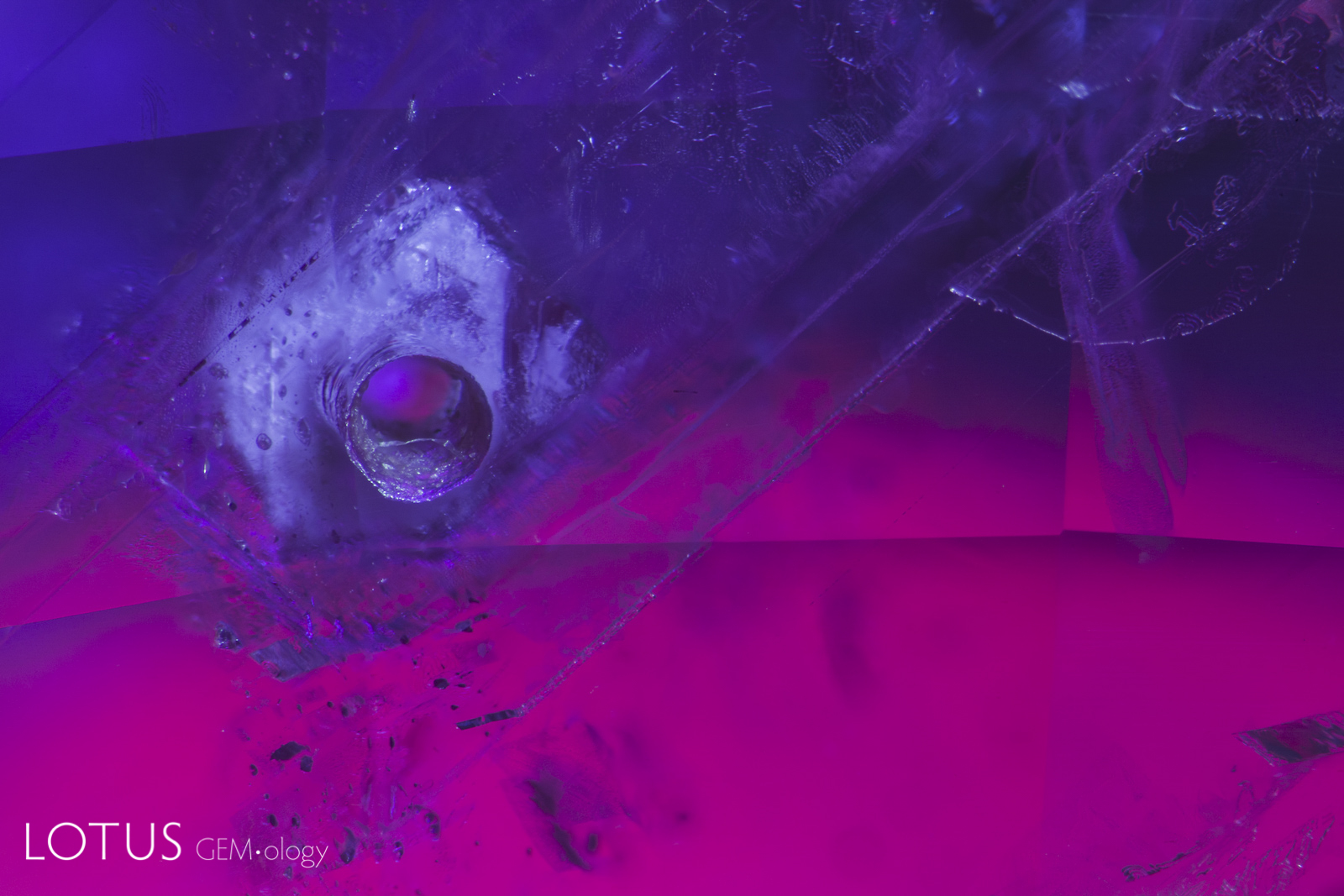
This Burmese pink sapphire has an unusual feature: a drilled hole that extends from the surface into a crystal. We suspect this may have been done to clear out any debris inside the crystal with acid cleaning, making the crystal less noticeable.
Natural Sapphire •
Myanmar (Burma); Mogok/Namya •
Enhancements:
Heat (H) •
Lighting Conditions:
Diffuse Light Field + Fiber Optic
Photographer:
E. Billie Hughes •
Image Number:
A-002-7563-1
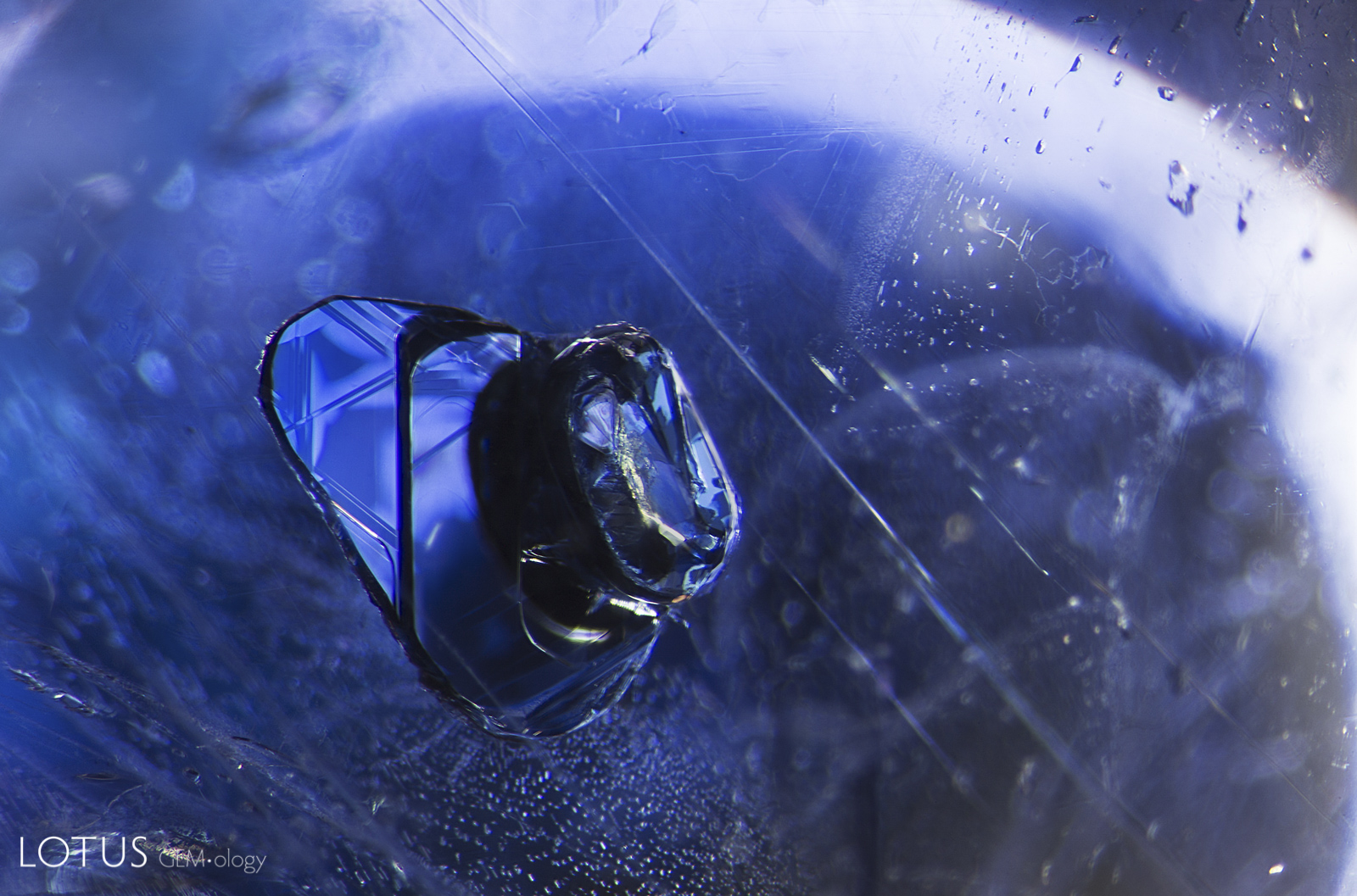
In some sapphires, negative crystals are found flattened in the plane of the basal pinacoid. This lovely iridescent example in a blue sapphire from Myanmar’s Mogok Stone Tract is surrounded by zoned clouds of rutile dust. Negative crystals generally cannot take heat treatment and if they have no open path to the surface, will burst during treatment.
Natural Sapphire •
Myanmar (Burma); Mogok •
Enhancements:
None Detected (None) •
Lighting Conditions:
Fiber Optic: Oblique
Photographer:
Richard W. Hughes •
Image Number:
A-002-6867-1
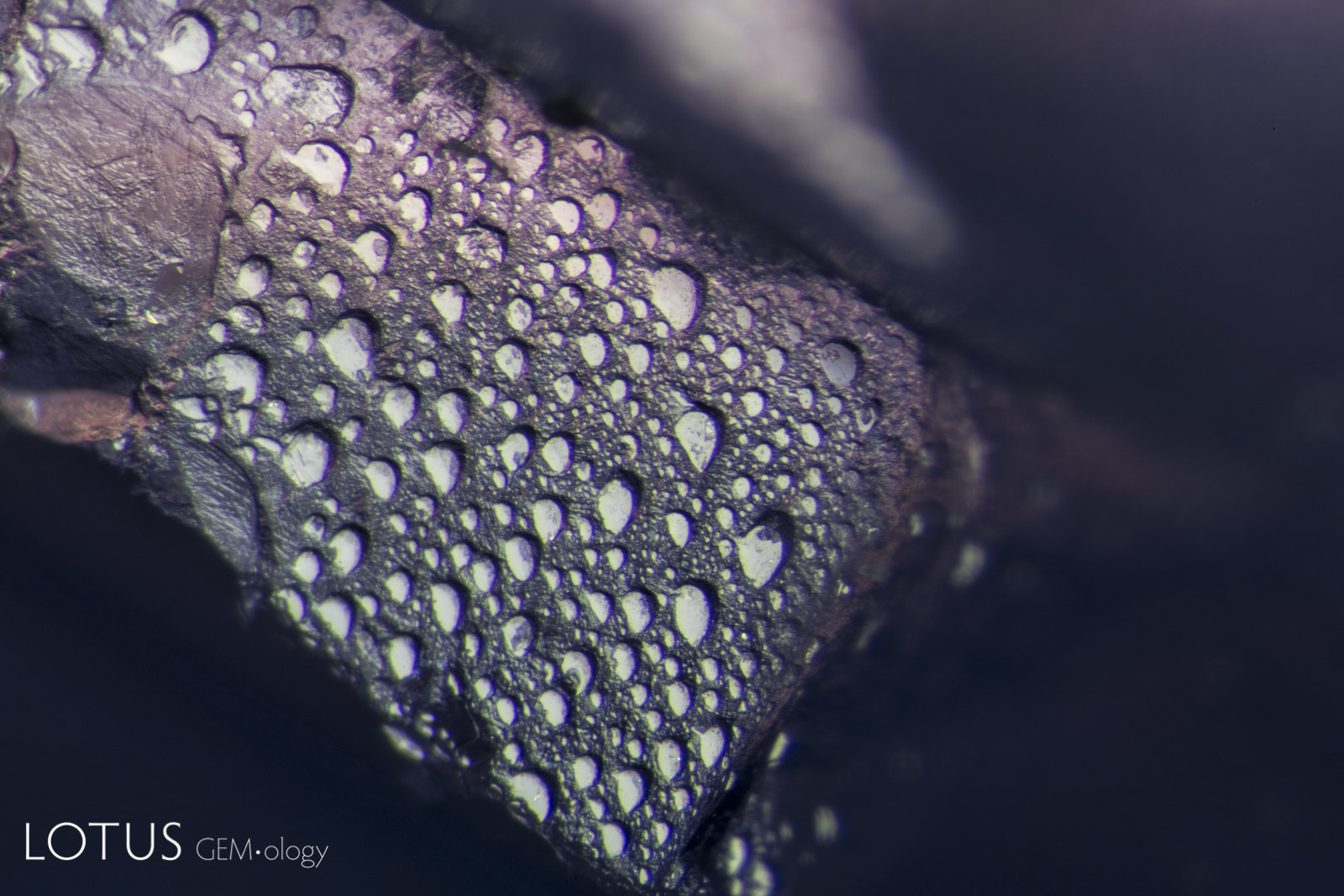
These “folded” fingerprints that appear like little pleats or creases are thought to be an indication of Burmese origin in sapphire.
Natural Sapphire •
Myanmar (Burma); Mogok •
Enhancements:
None Detected (None) •
Lighting Conditions:
Fiber Optic: Diffuse Oblique
Photographer:
E. Billie Hughes •
Image Number:
A-002-4235-1
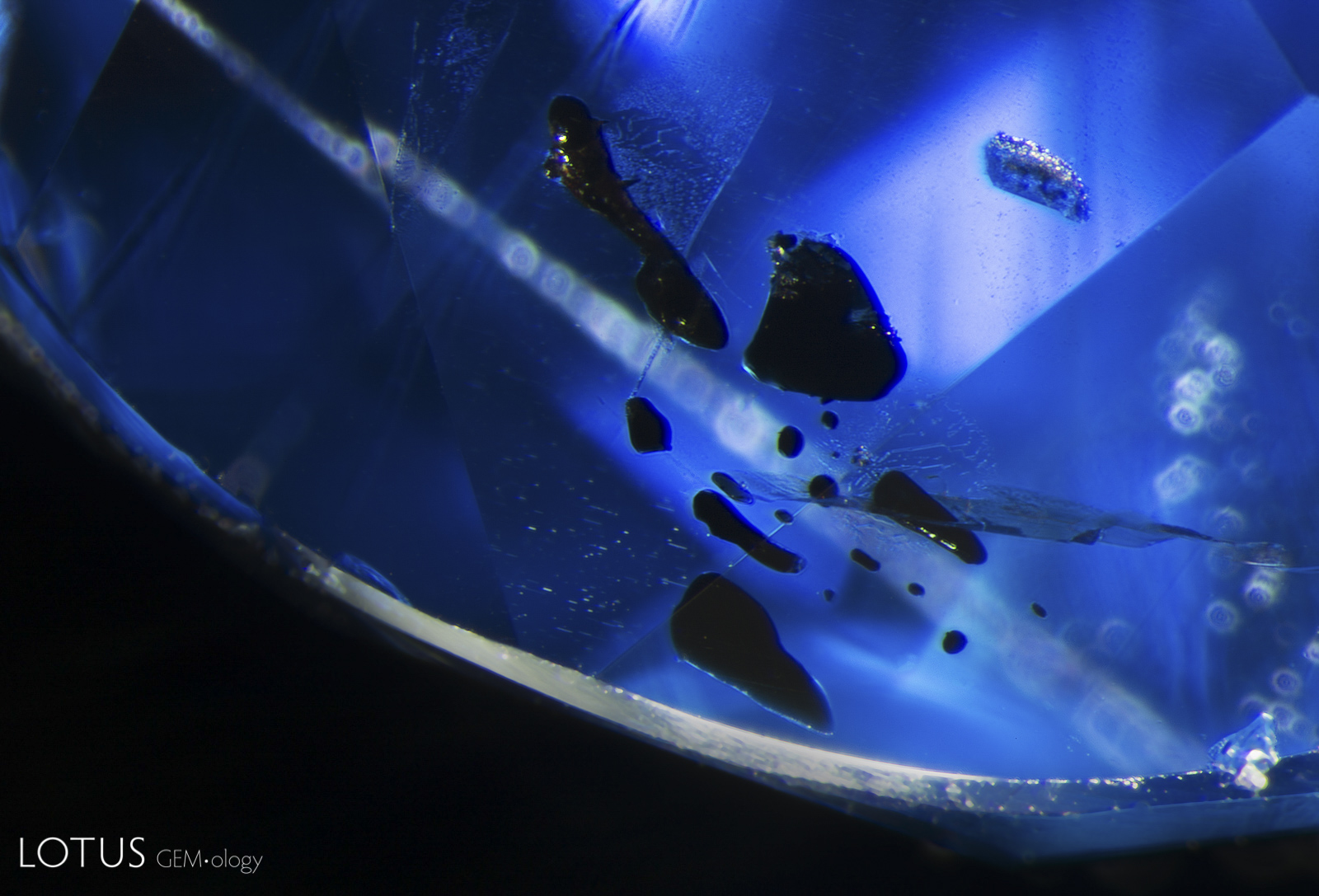
A cluster of dark, irregularly shaped crystals in an untreated Burmese sapphire.
Natural Sapphire •
Myanmar (Burma); Mogok •
Enhancements:
None Detected (None) •
Lighting Conditions:
Fiber Optic: Oblique
Photographer:
E. Billie Hughes •
Image Number:
A-002-3738-1
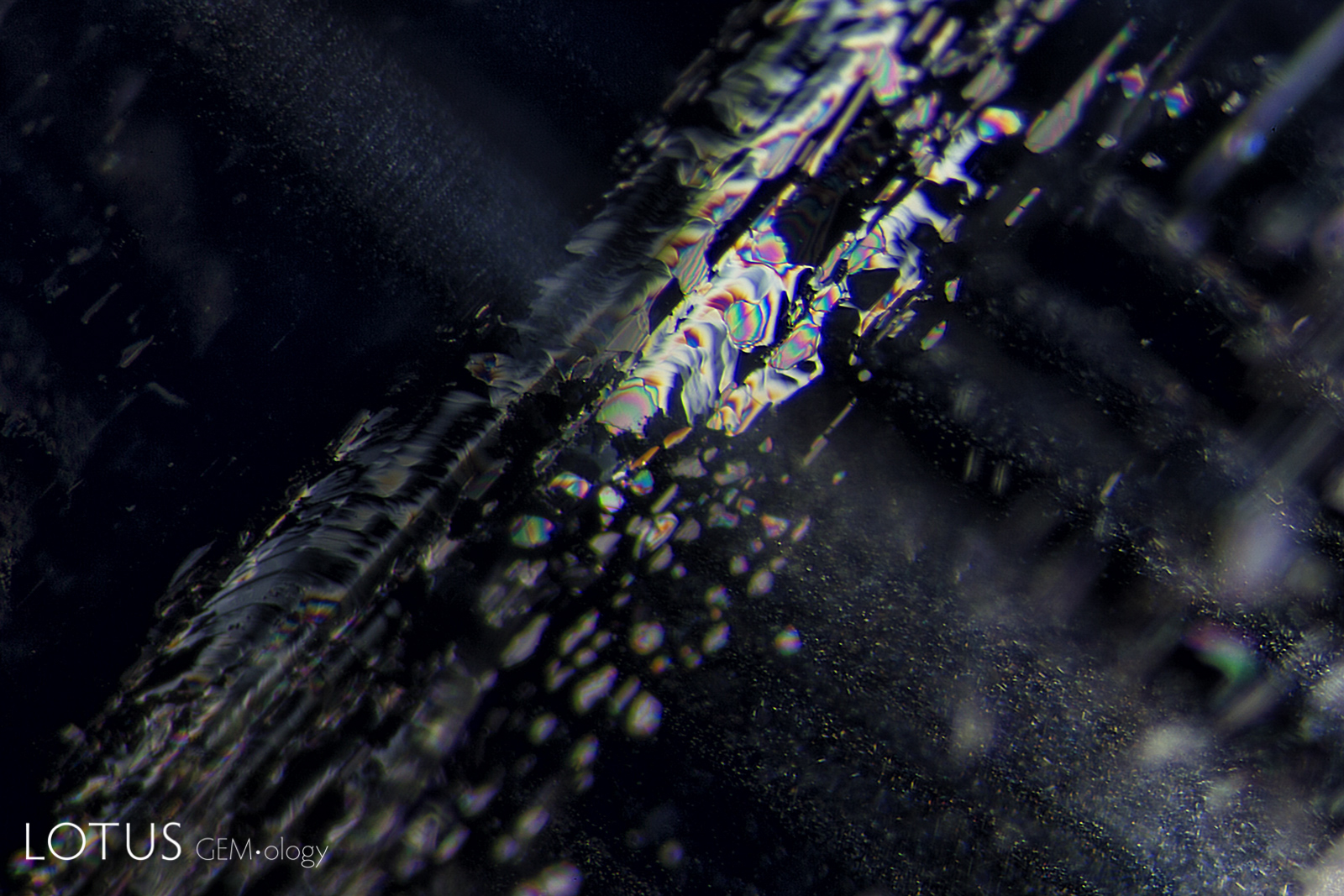
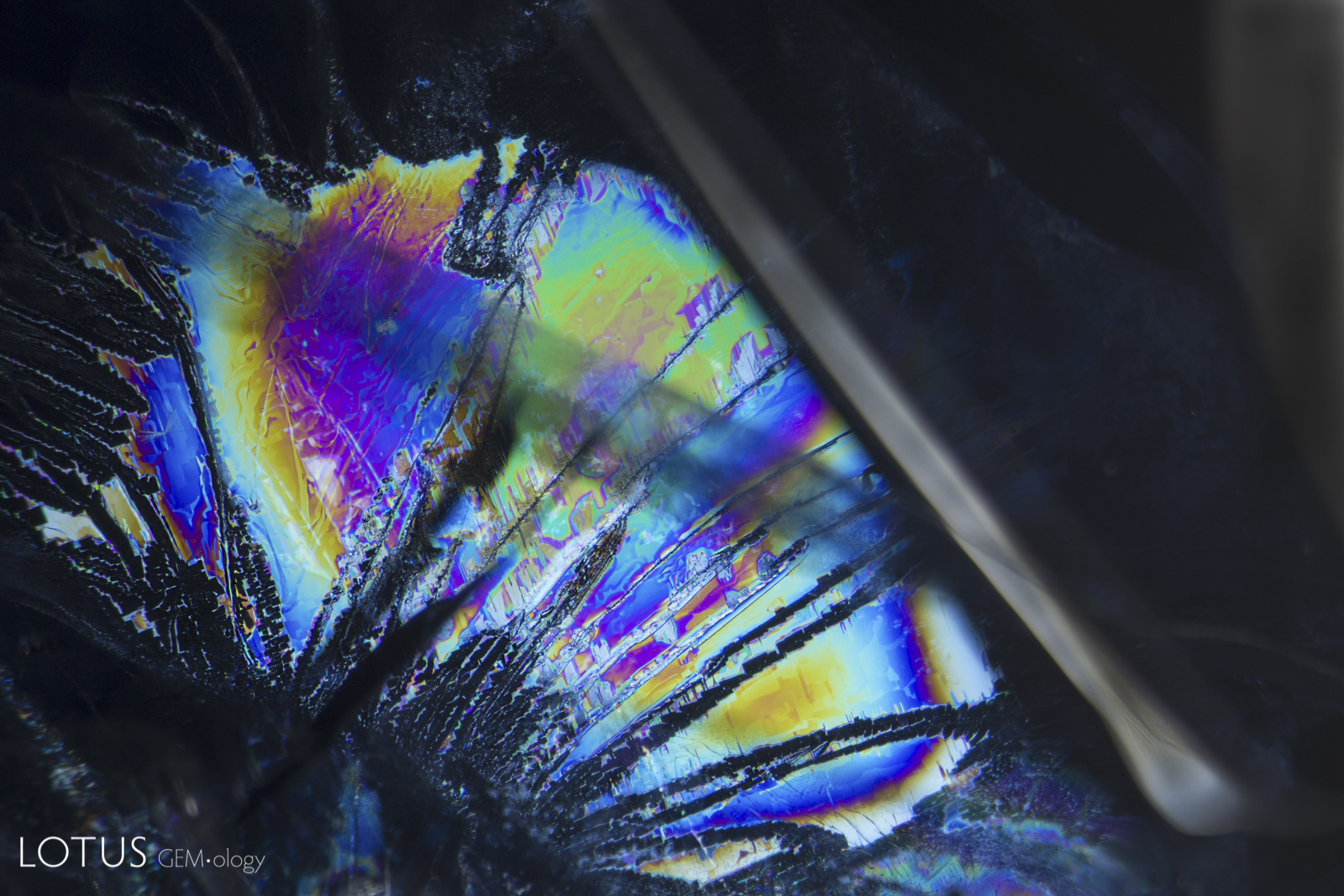
When a crystal grows, surface irregularities may create conditions where fluids can be trapped, as we can see in these iridescent thin films in a sapphire from Myanmar’s Mogok Stone Tract. They all reflect light at the same time because their crystal faces are in an identical orientation.
Natural Sapphire •
Myanmar (Burma); Mogok •
Enhancements:
None Detected (None) •
Lighting Conditions:
Fiber Optic: Diffuse Overhead
Photographer:
Richard W. Hughes •
Image Number:
A-002-3339-1
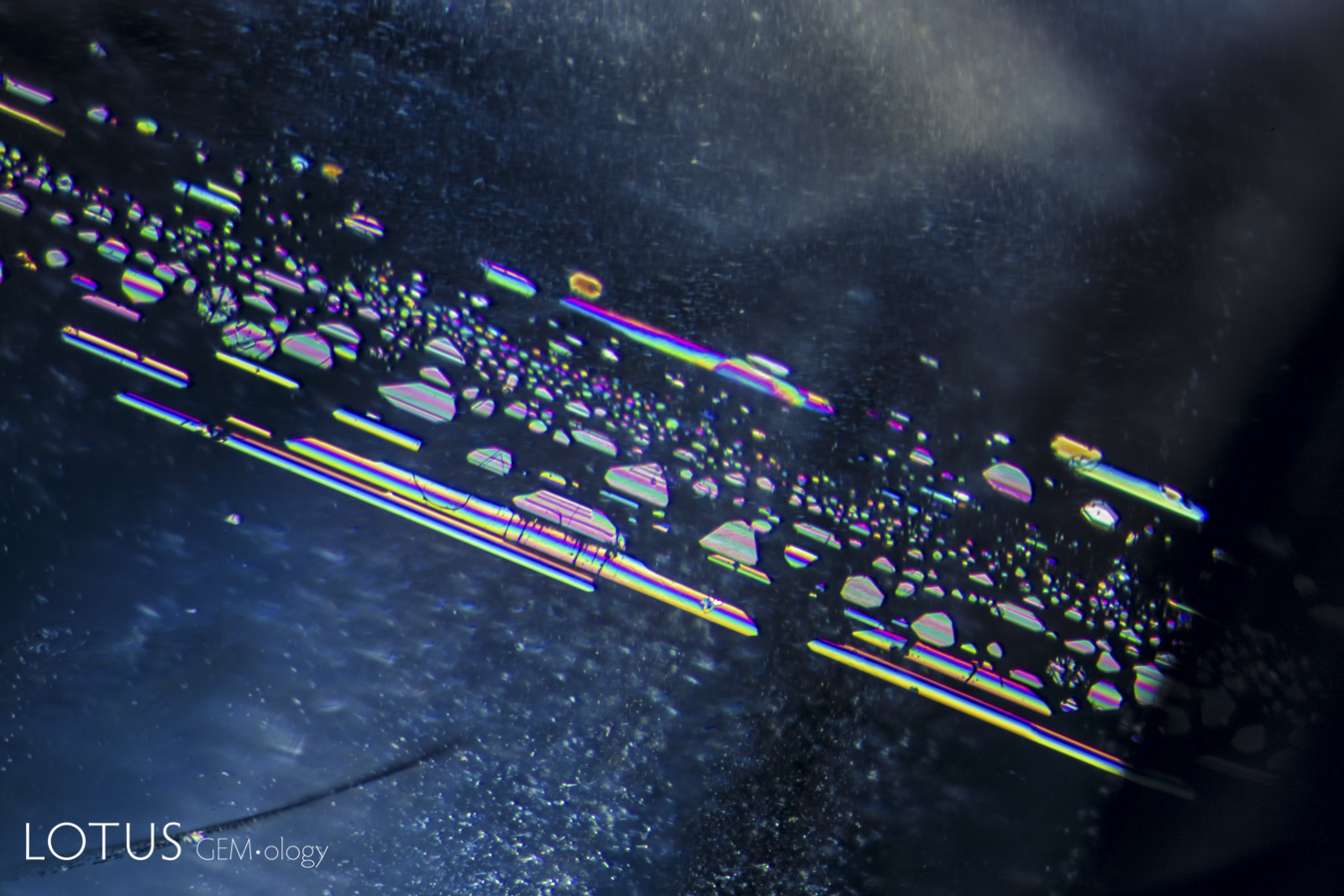
Striking iridescence in a healed fissure within an unheated Burmese sapphire.
Natural Sapphire •
Myanmar (Burma); Mogok •
Enhancements:
None Detected (None) •
Lighting Conditions:
Fiber Optic: Diffuse Oblique
Photographer:
Patharaphum Sudprasert •
Image Number:
A-001-9912-1
Roedder, E. (1962) Ancient fluids in crystals. Scientific American, Vol. 207, pp. 38–47; RWHL*.
A high-relief crystal shines in this unheated sapphire from Burma.
Natural Sapphire •
Myanmar (Burma); Mogok •
Enhancements:
None Detected (None) •
Lighting Conditions:
Dark Field + Diffuse Fiber Optic
Photographer:
E. Billie Hughes •
Image Number:
A-001-5566-1
Etch marks of the surface of a natural (in the left portion of the photo), along with a fingerprint inclusion within the gem itself (right side of the photo). Note the identical pattern of the etch marks and the negative crystals within the fingerprint, both reflections of the underlying atomic symmetry.
Natural Sapphire •
Myanmar (Burma); Mogok •
Enhancements:
None Detected (None) •
Lighting Conditions:
Dark Field
Photographer:
E. Billie Hughes •
Image Number:
A-001-5334-4
Etch marks of the surface of a natural on a sapphire from Myanmar’s Mogok Stone Tract. The symmetry of the etch marks reveals the underlying atomic symmetry.
Natural Sapphire •
Myanmar (Burma); Mogok •
Enhancements:
None Detected (None) •
Lighting Conditions:
Fiber Optic: Diffuse Overhead
Photographer:
Richard W. Hughes •
Image Number:
A-001-5334-3
Etch marks of the surface of a natural (white areas in the upper left portion of the photo), along with a fingerprint inclusion within the gem itself (right side of the photo). Note the identical pattern of the etch marks and the negative crystals within the fingerprint, both reflections of the underlying atomic symmetry.
Natural Sapphire •
Myanmar (Burma); Mogok •
Enhancements:
None Detected (None) •
Lighting Conditions:
Dark Field + Diffuse Fiber Optic
Photographer:
Richard W. Hughes •
Image Number:
A-001-5334-2
Burmese sapphire inclusions may include mineral crystals, rutile silk, healed fissures, fluid inclusions, negative crystals, growth features and other internal features formed during or after crystal growth. Such features are important to gemologists because they can provide evidence useful in identifying sapphire and evaluating a possible Burmese origin.
Burmese Sapphire Inclusion Photomicrographs
The Hyperion Burmese sapphire gallery includes microscopic features documented in sapphires from Myanmar (Burma). Each entry is accompanied by descriptive information and, where available, references to the gemological literature.
What Inclusions Can Reveal About Burmese Sapphire
Inclusions are an important part of geographic origin determination in sapphire. Their form, composition, orientation and associations can provide evidence that, when considered together with other gemological properties, may support or contradict a Burmese origin.
Hyperion combines inclusion photomicrography with supporting gemological information so that individual features can be compared with documented examples from Burmese sapphires.
About Hyperion
Hyperion is the Lotus Gemology searchable inclusion database. It allows users to browse gemstone inclusions by gem type, geographic origin, treatment and keyword.