Ceylon Sapphire Inclusions
Explore Ceylon sapphire inclusions in Hyperion, the Lotus Gemology inclusion database. Hyperion contains photomicrographs of inclusions and internal features in natural sapphires from Sri Lanka (Ceylon), documented with information on treatment, lighting conditions, field of view, photographer and published references.
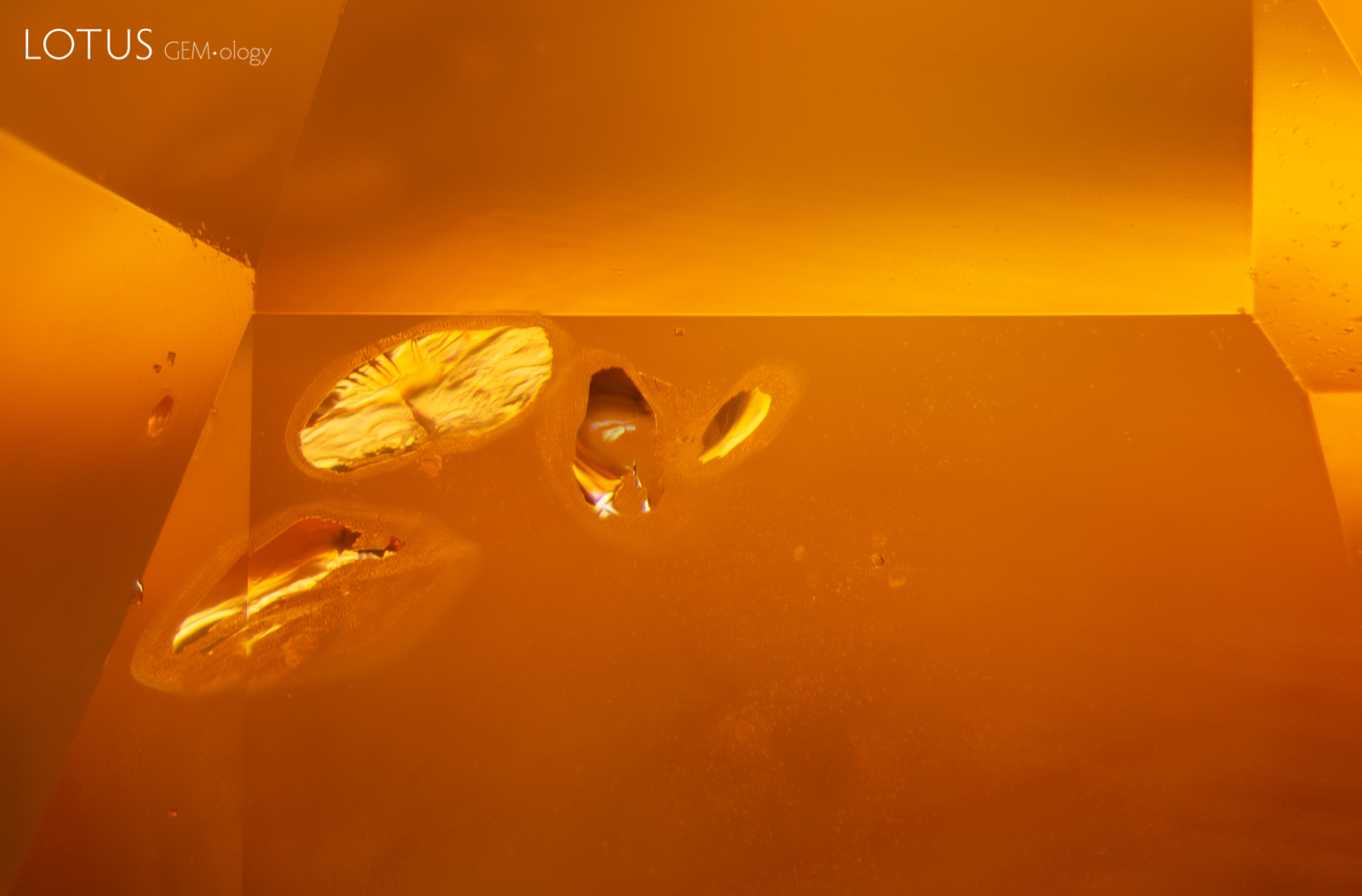
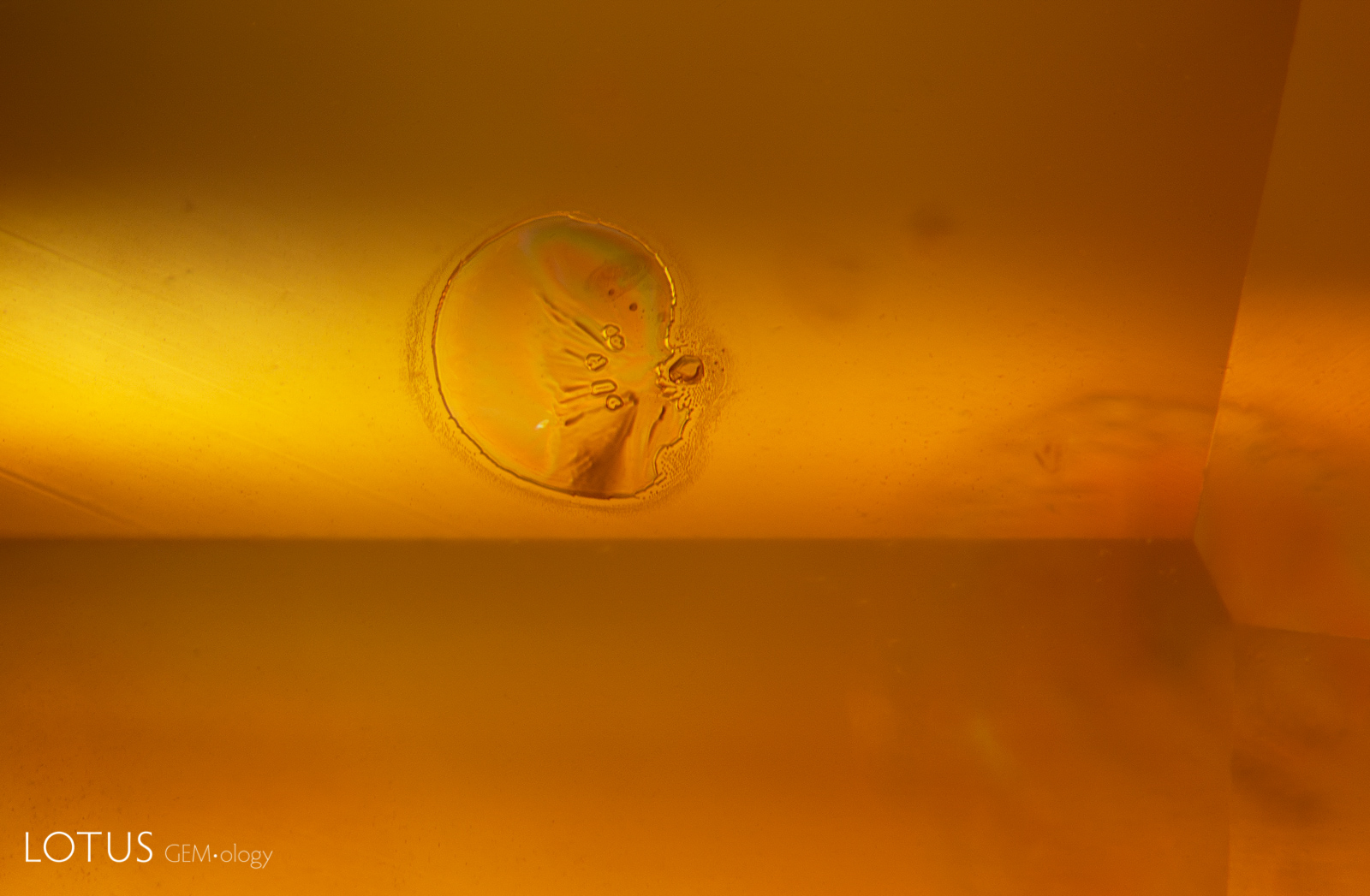
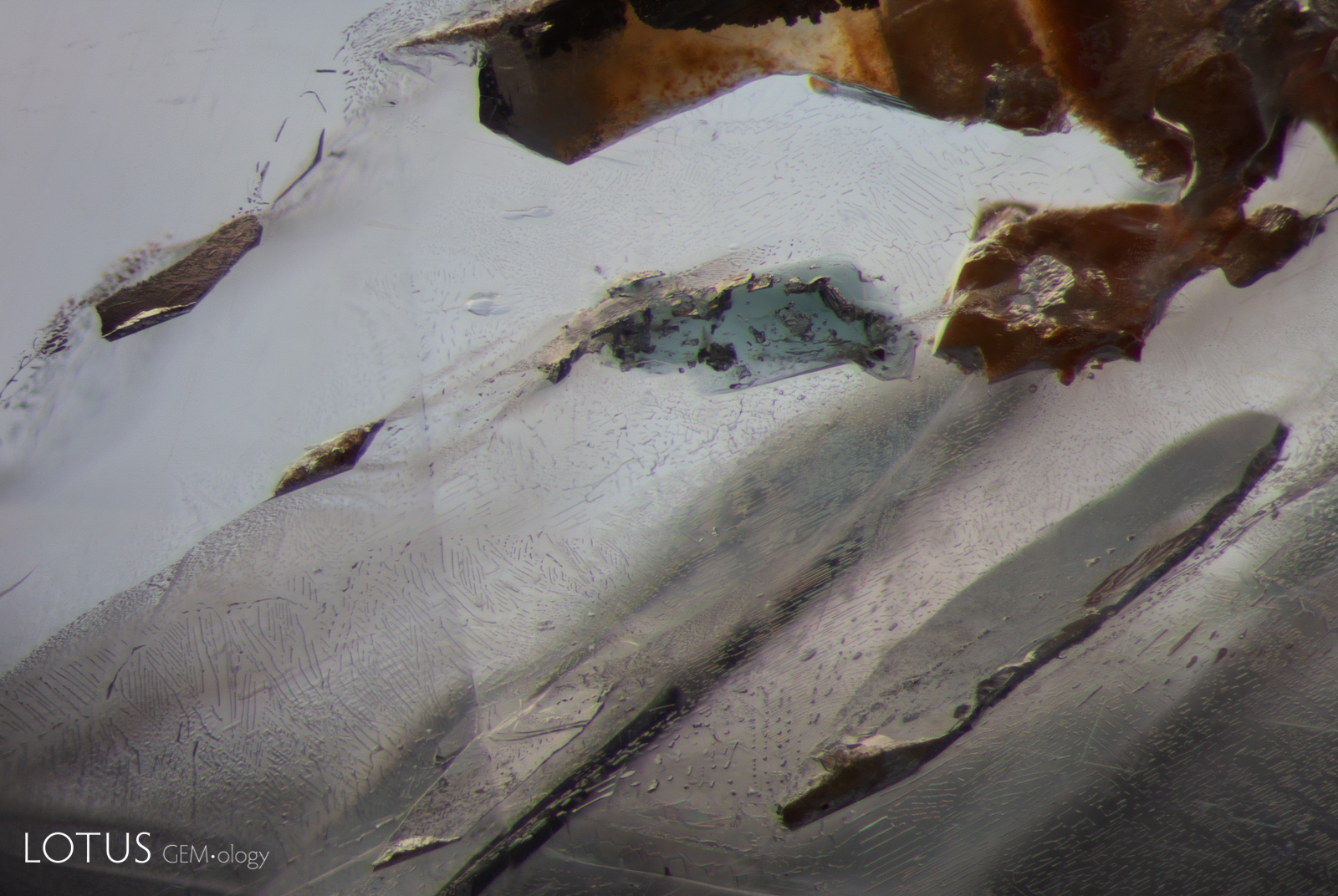
The glassy discoids shown here provides strong evidence that their yellow sapphire host was heated.
Natural Sapphire •
Sri Lanka (Ceylon) •
Enhancements:
Heat (H) •
Lighting Conditions:
Dark Field + Diffuse Fiber Optic
Photographer:
E. Billie Hughes •
Image Number:
A-004-0794-2
• Field of View = 4mm
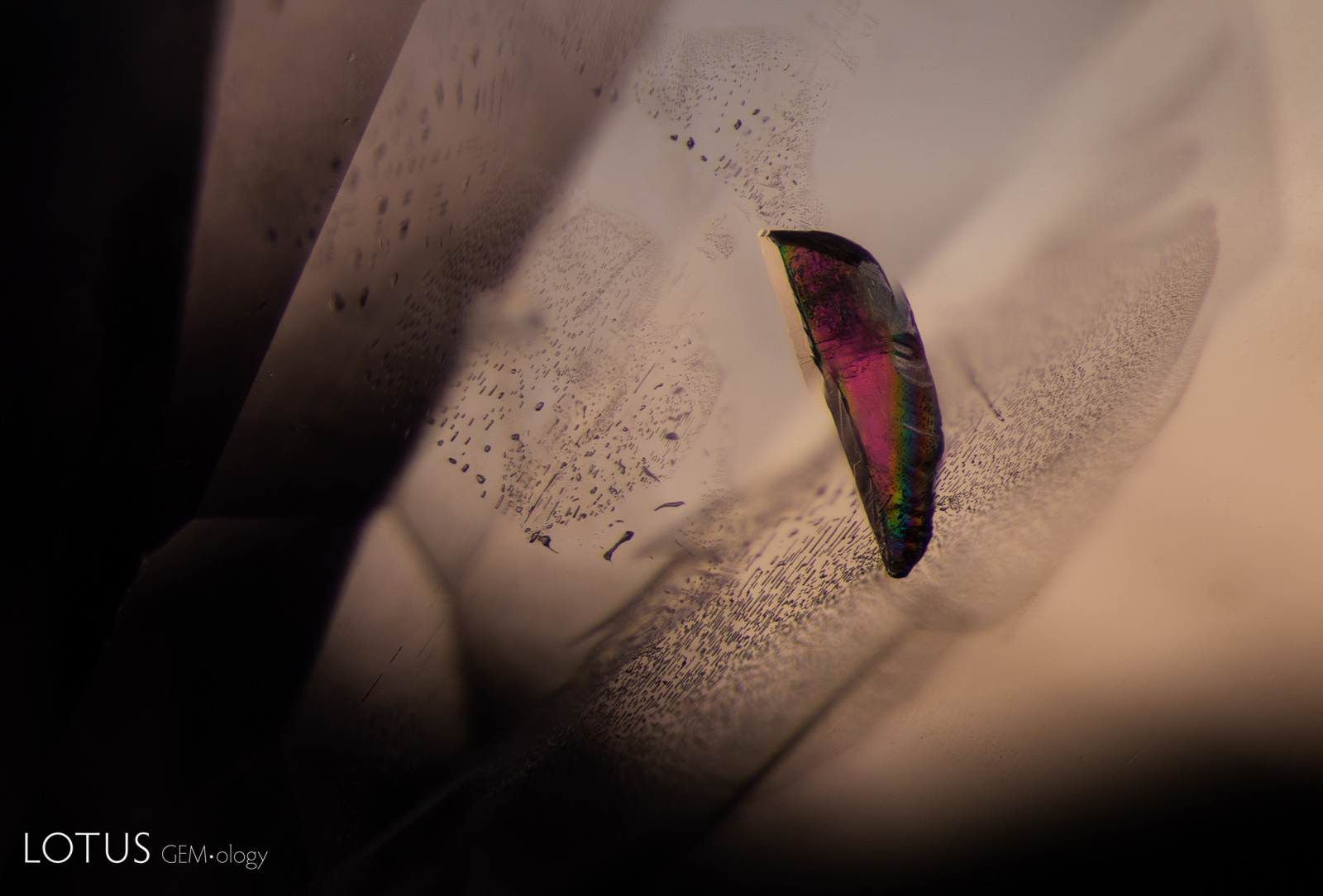
The melted crystal shown here provides strong evidence that its yellow sapphire host was heated.
Natural Sapphire •
Sri Lanka (Ceylon) •
Enhancements:
Heat (H) •
Lighting Conditions:
Dark Field + Diffuse Fiber Optic
Photographer:
E. Billie Hughes •
Image Number:
A-004-0794-1
• Field of View = 3.5mm
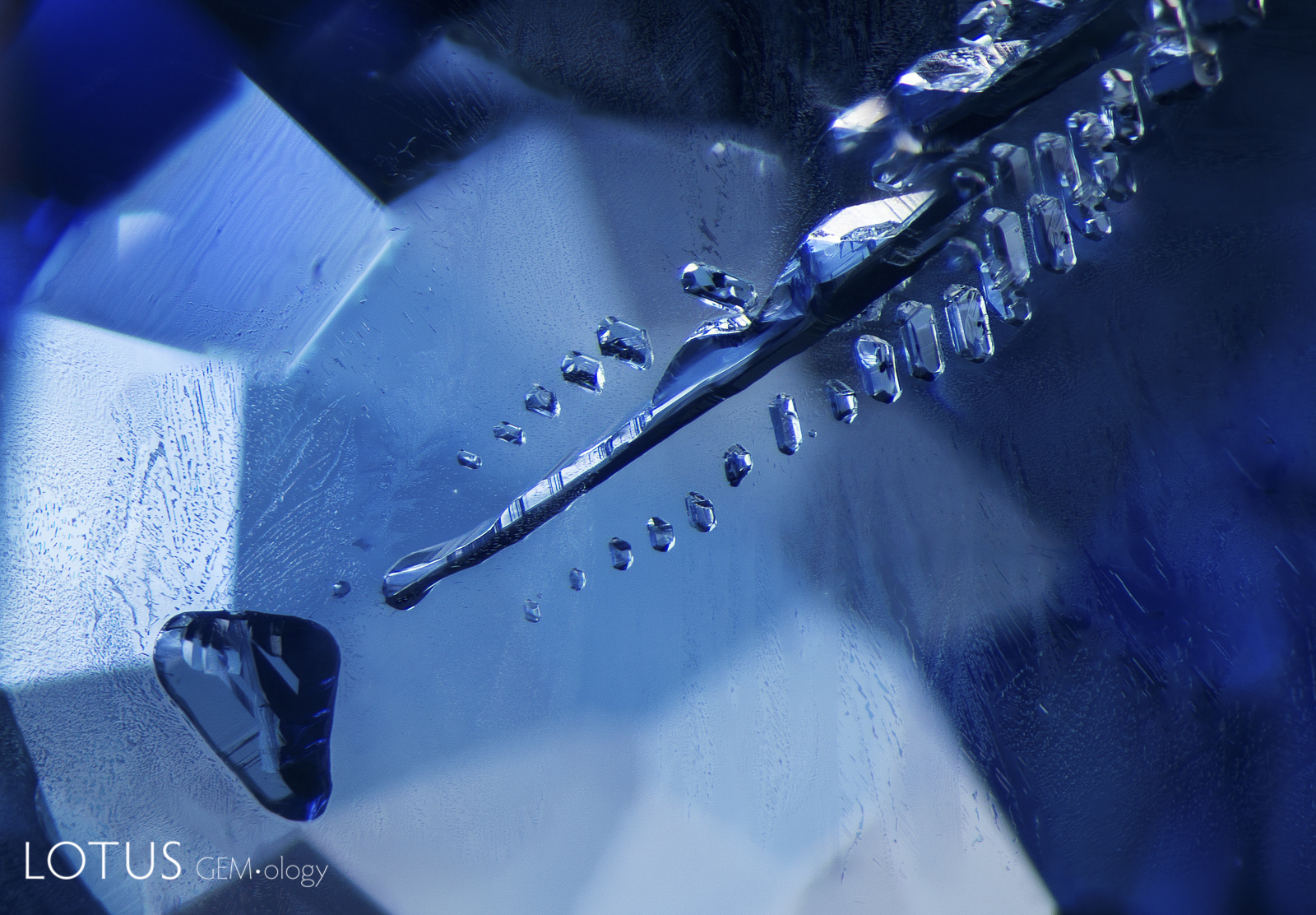
A cluster of negative crystals appears to pierce the center of this sapphire.
Natural Sapphire •
Sri Lanka (Ceylon) •
Enhancements:
None Detected (None) •
Lighting Conditions:
Diffuse Light Field + Diffuse Fiber Optic
Photographer:
E. Billie Hughes •
Image Number:
A-003-9568-1
• Field of View = 5mm
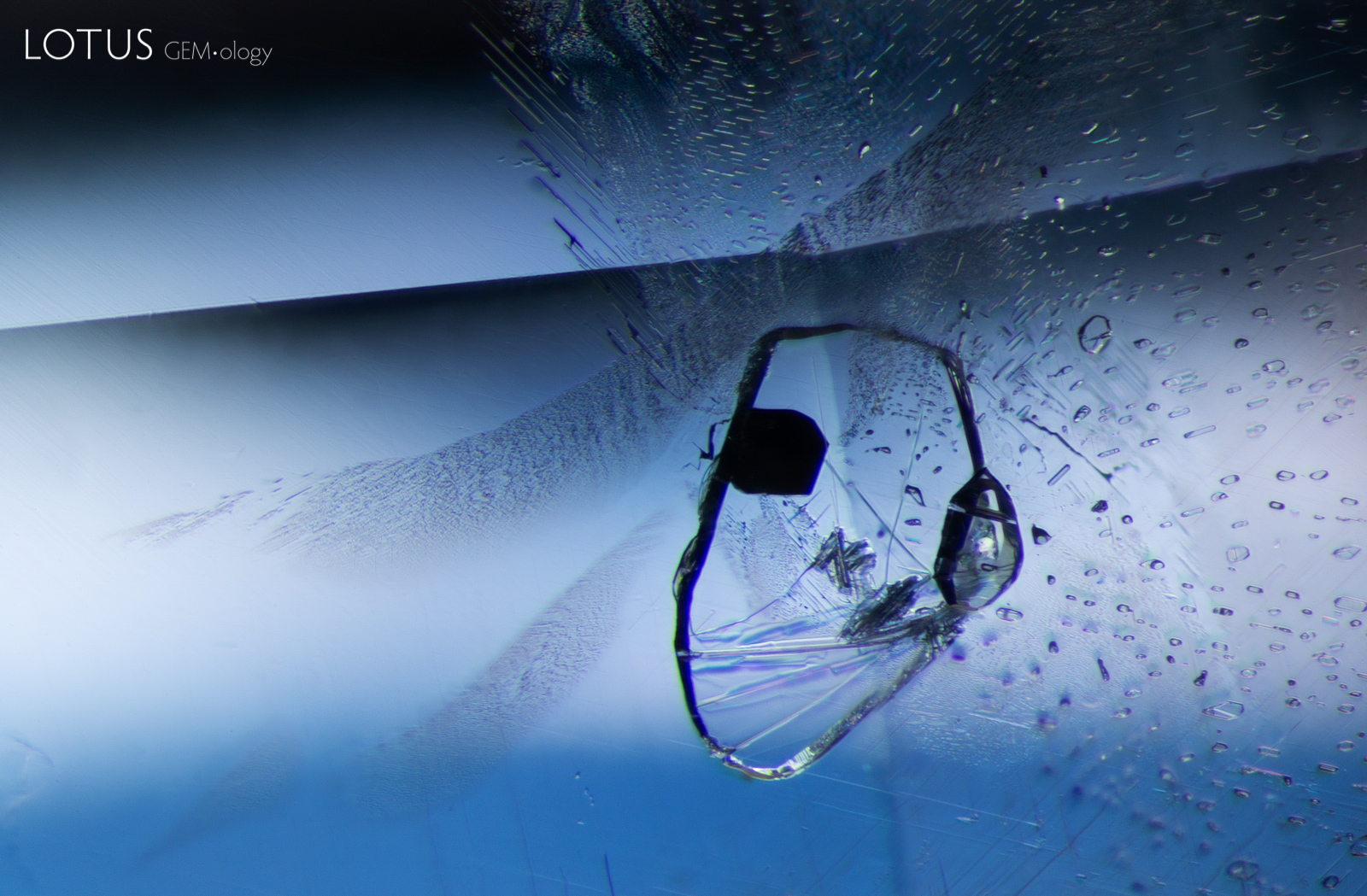
This negative crystal in sapphire contains what are likely a dark graphite platelet and diaspore needles insdie.
Natural Sapphire •
Sri Lanka (Ceylon) •
Enhancements:
None Detected (None) •
Lighting Conditions:
Diffuse Light Field + Diffuse Fiber Optic
Photographer:
E. Billie Hughes •
Image Number:
A-003-9664-1
• Field of View = 2.5mm
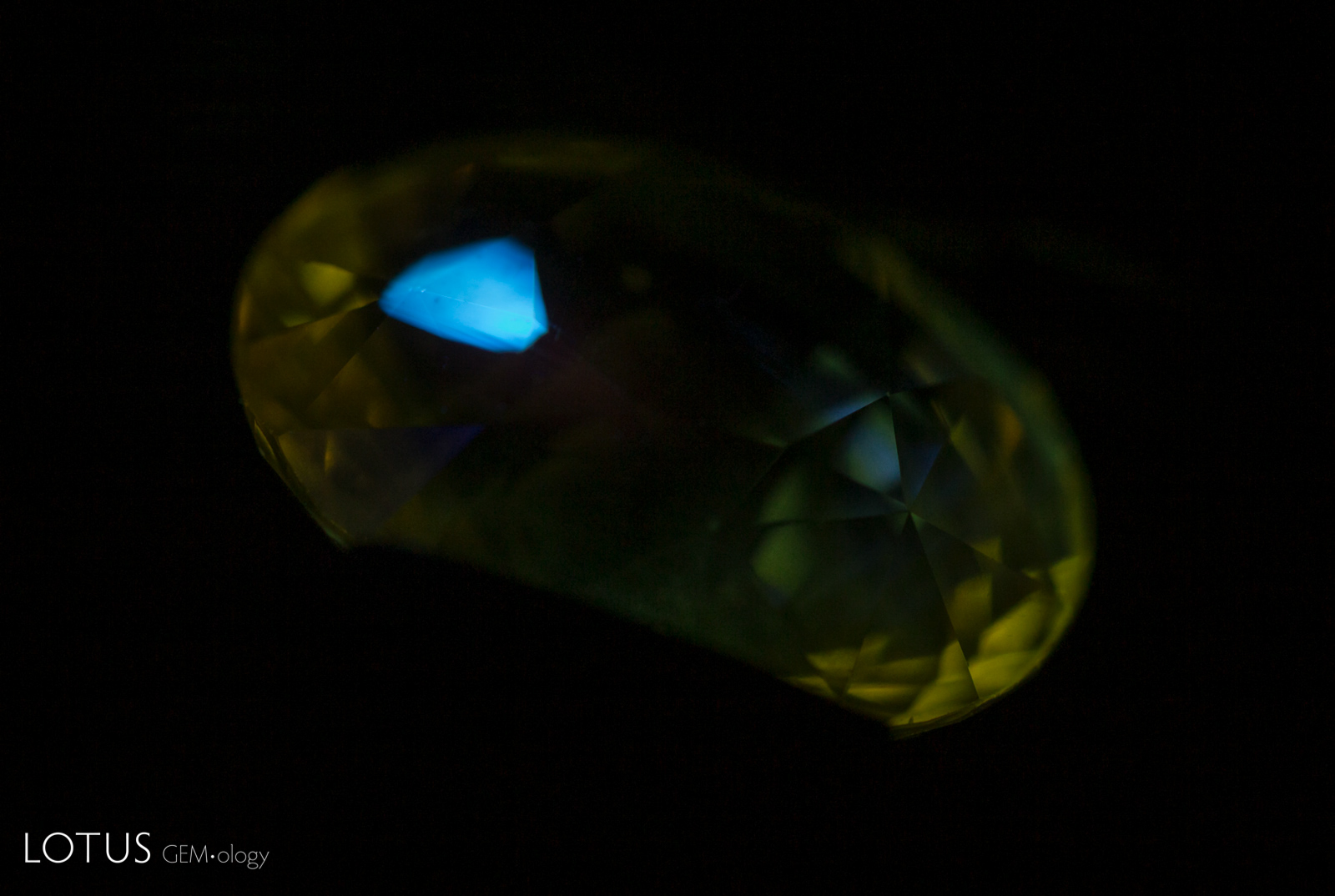
A small, chalky fluorescent patch can be observed when carefully examining this heated yellow sapphire in short wave UV illumination.
Natural Sapphire •
Sri Lanka (Ceylon) •
Enhancements:
Heat (H) •
Lighting Conditions:
Ultraviolet: Shortwave
Photographer:
E. Billie Hughes •
Image Number:
A-003-9608-1
When we examine this sapphire from Sri Lanka, the euhedral crystal pictured here stood out immediately. Analysis with micro Raman confirmed that the crystal is apatite.
Natural Sapphire •
Sri Lanka (Ceylon) •
Enhancements:
None Detected (None) •
Lighting Conditions:
Darkfield + Diffuse Fiber Optic + Shadowing
Photographer:
E. Billie Hughes •
Image Number:
A-003-8555-1
• Field of View = 3.5mm
Ensconced between fingerprints and negative crystals in this sapphire is a green spinel crystal, which was identified with micro Raman.
Natural Sapphire •
Sri Lanka (Ceylon) •
Enhancements:
None Detected (None) •
Lighting Conditions:
Diffuse Light Field + Blue Filter
Photographer:
E. Billie Hughes •
Image Number:
A-003-8554-1
• Field of View = 3mm
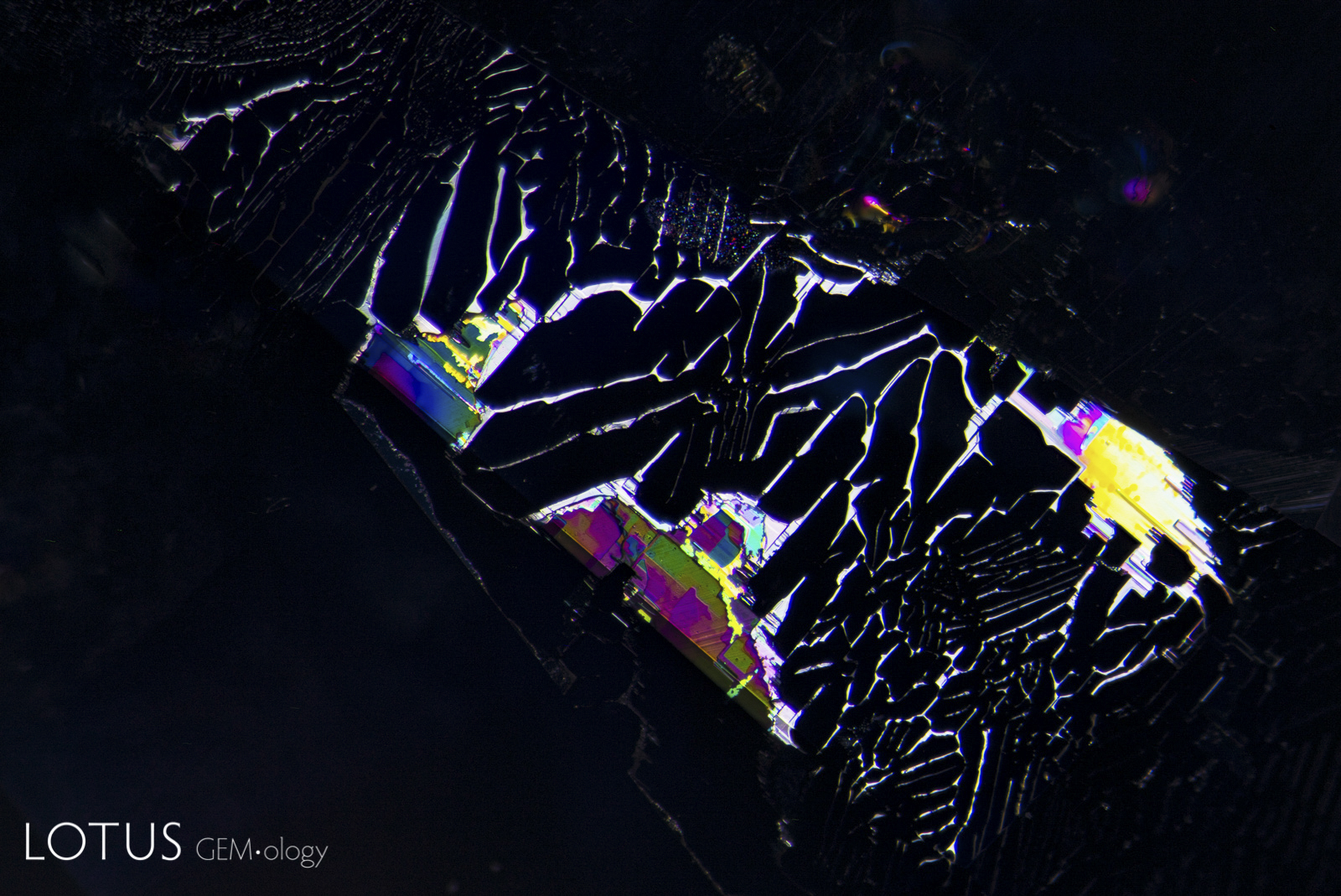
Between crossed polars, this apatite crystal (identified with micro Raman) displays bright interference colors.
Natural Sapphire •
Sri Lanka (Ceylon) •
Enhancements:
None Detected (None) •
Lighting Conditions:
Light Field + Crossed Polars
Photographer:
E. Billie Hughes •
Image Number:
A-003-8458-1
• Field of View = 3.5mm
The healing pattern of this healed fissure in a Sri Lankan sapphire suggests it lies along a pyramid face, oblique to the c-axis. Should it lie perpendicular to the c-axis, the healing would reveal triangular or hexagonal healing; if parallel to the c-axis, the healing would be rectangular. Thus the nearly rectangular healing reveals its orientation along a pyramid face close to the c-axis. The use of oblique illumination reveals far more surface detail than ordinary dark or light field.
Natural Sapphire •
Sri Lanka (Ceylon) •
Enhancements:
Heat (H) •
Lighting Conditions:
Fiber Optic: Diffuse Oblique
Photographer:
Richard W. Hughes •
Image Number:
A-003-7802-1
• Field of View = 5.5mm
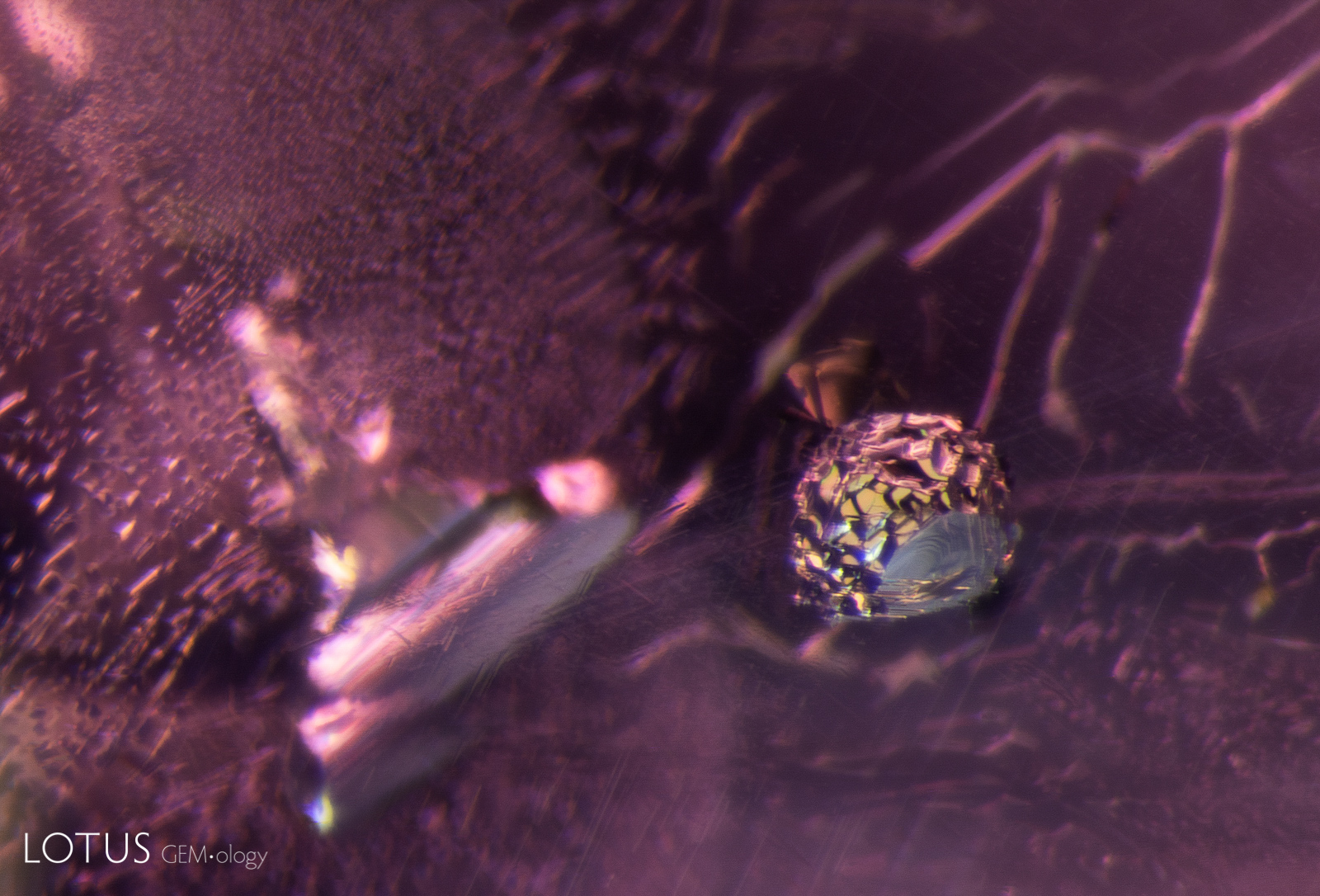
This violet sapphire contained many interesting inclusions, including this rounded metallic crystal. Although we were not able to confirm its identity with Raman spectroscopy, from its appearance we can infer that it’s likely a sulphide.
Natural Sapphire •
Sri Lanka (Ceylon) •
Enhancements:
None Detected (None) •
Lighting Conditions:
Dark Field + Diffuse Fiber Optic
Photographer:
E. Billie Hughes •
Image Number:
A-003-7626-2
• Field of View = 1.5mm
The violet sapphire pictured here contained many brown, transparent crystals. These were identified as phlogopite mica with Raman spectroscopy.
Natural Sapphire •
Sri Lanka (Ceylon) •
Enhancements:
None Detected (None) •
Lighting Conditions:
Dark Field
Photographer:
E. Billie Hughes •
Image Number:
A-003-7626-1
• Field of View = 3mm
These small black crystals, likely uraninite, are surrounded by an unusual red halo. They are set against a fine fingerprint with small negative crystals that show no signs of heat damage.
Natural Sapphire •
Sri Lanka (Ceylon) •
Enhancements:
None Detected (None) •
Lighting Conditions:
Dark Field
Photographer:
E. Billie Hughes •
Image Number:
A-003-7627-1
• Field of View = 2.5mm
Ceylon sapphire inclusions may include mineral crystals, rutile silk, healed fissures, fluid inclusions, negative crystals, growth features and other internal features formed during or after crystal growth. Such features are important to gemologists because they can provide evidence useful in identifying sapphire and evaluating a possible Sri Lankan origin.
Ceylon Sapphire Inclusion Photomicrographs
The Hyperion Ceylon sapphire gallery includes microscopic features documented in sapphires from Sri Lanka (Ceylon). Each entry is accompanied by descriptive information and, where available, references to the gemological literature.
What Inclusions Can Reveal About Ceylon Sapphire
Inclusions are an important part of geographic origin determination in sapphire. Their form, composition, orientation and associations can provide evidence that, when considered together with other gemological properties, may support or contradict a Sri Lankan origin.
Hyperion combines inclusion photomicrography with supporting gemological information so that individual features can be compared with documented examples from Ceylon sapphires.
About Hyperion
Hyperion is the Lotus Gemology searchable inclusion database. It allows users to browse gemstone inclusions by gem type, geographic origin, treatment and keyword.