Ceylon Sapphire Inclusions
Explore Ceylon sapphire inclusions in Hyperion, the Lotus Gemology inclusion database. Hyperion contains photomicrographs of inclusions and internal features in natural sapphires from Sri Lanka (Ceylon), documented with information on treatment, lighting conditions, field of view, photographer and published references.
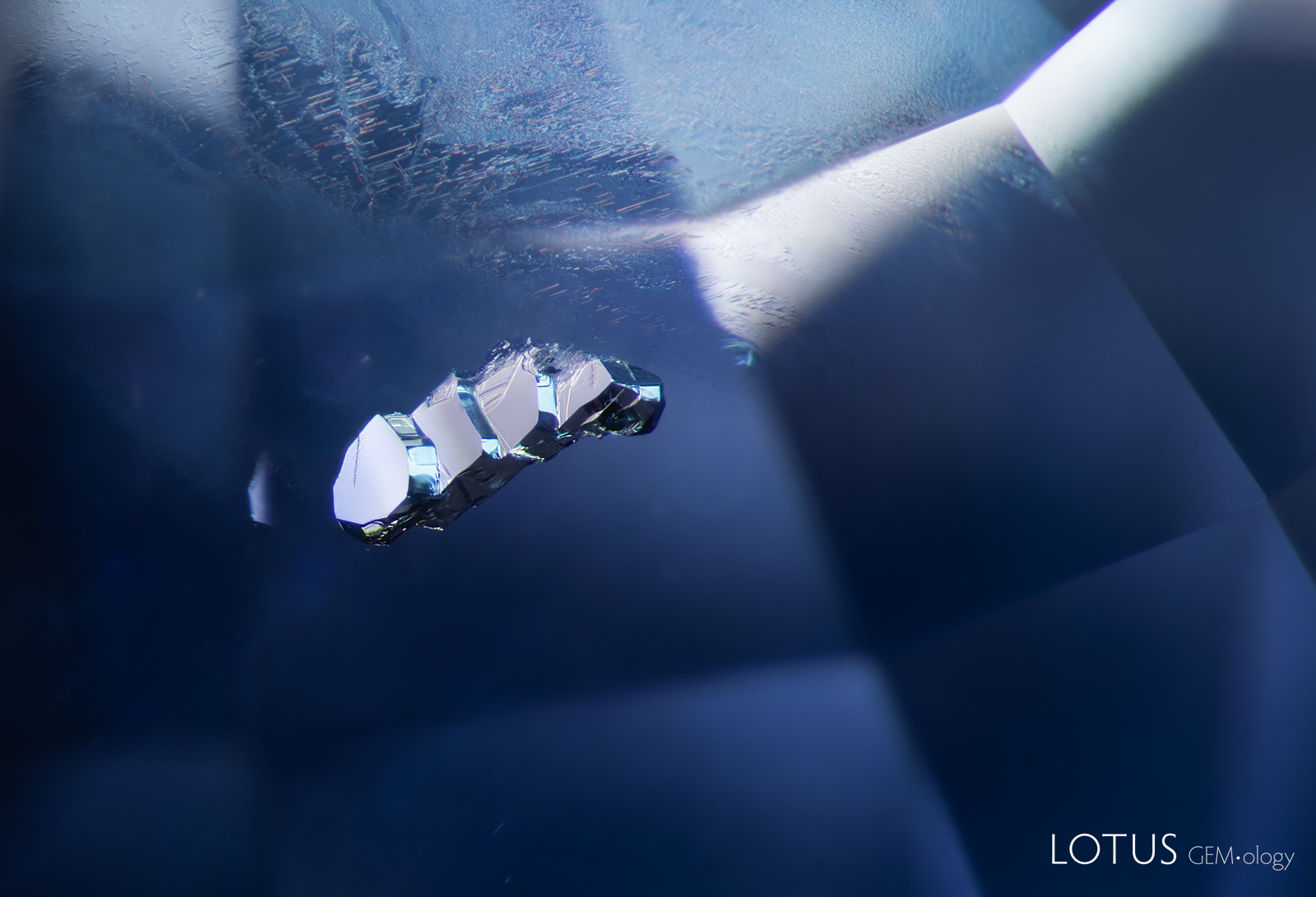
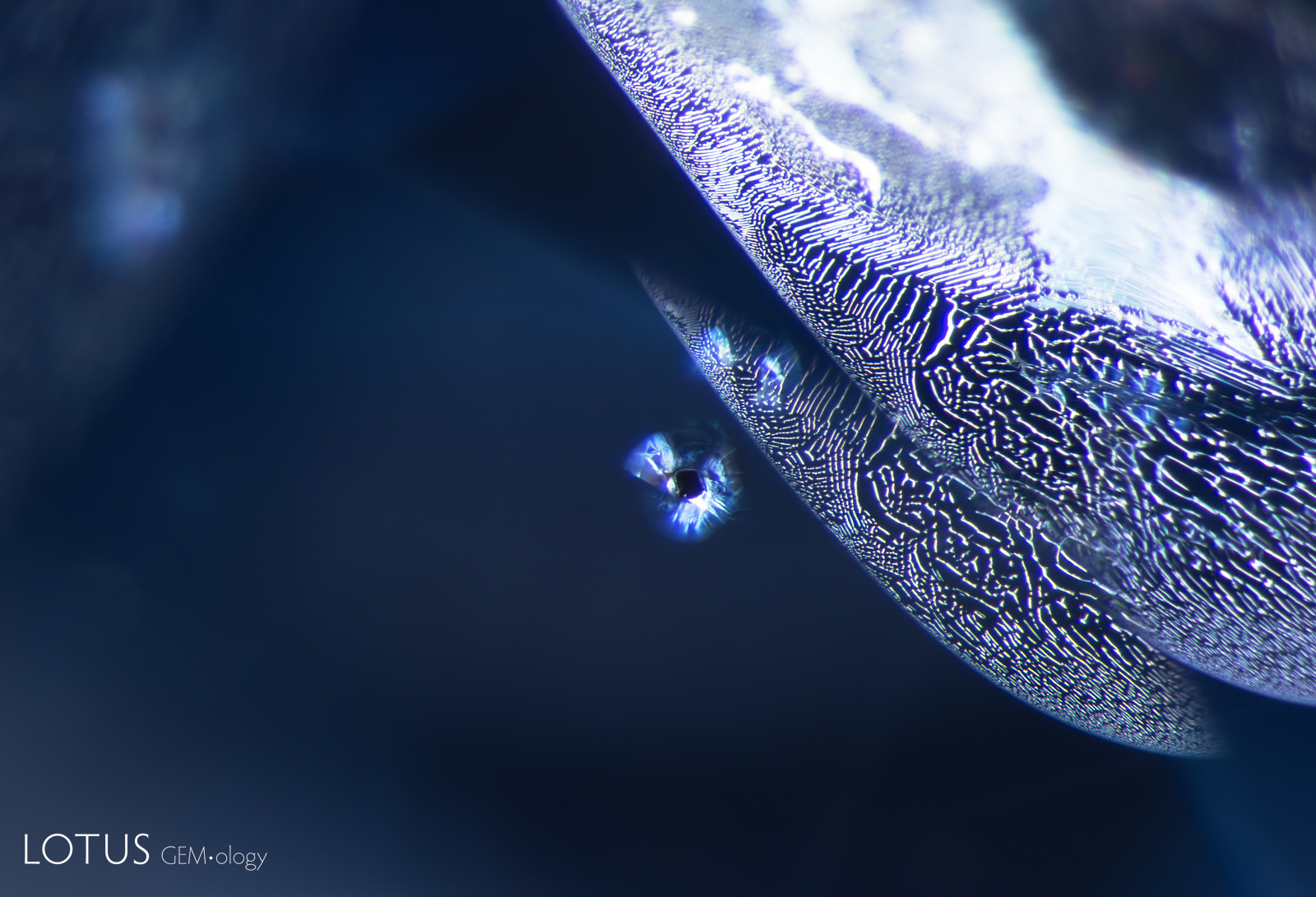
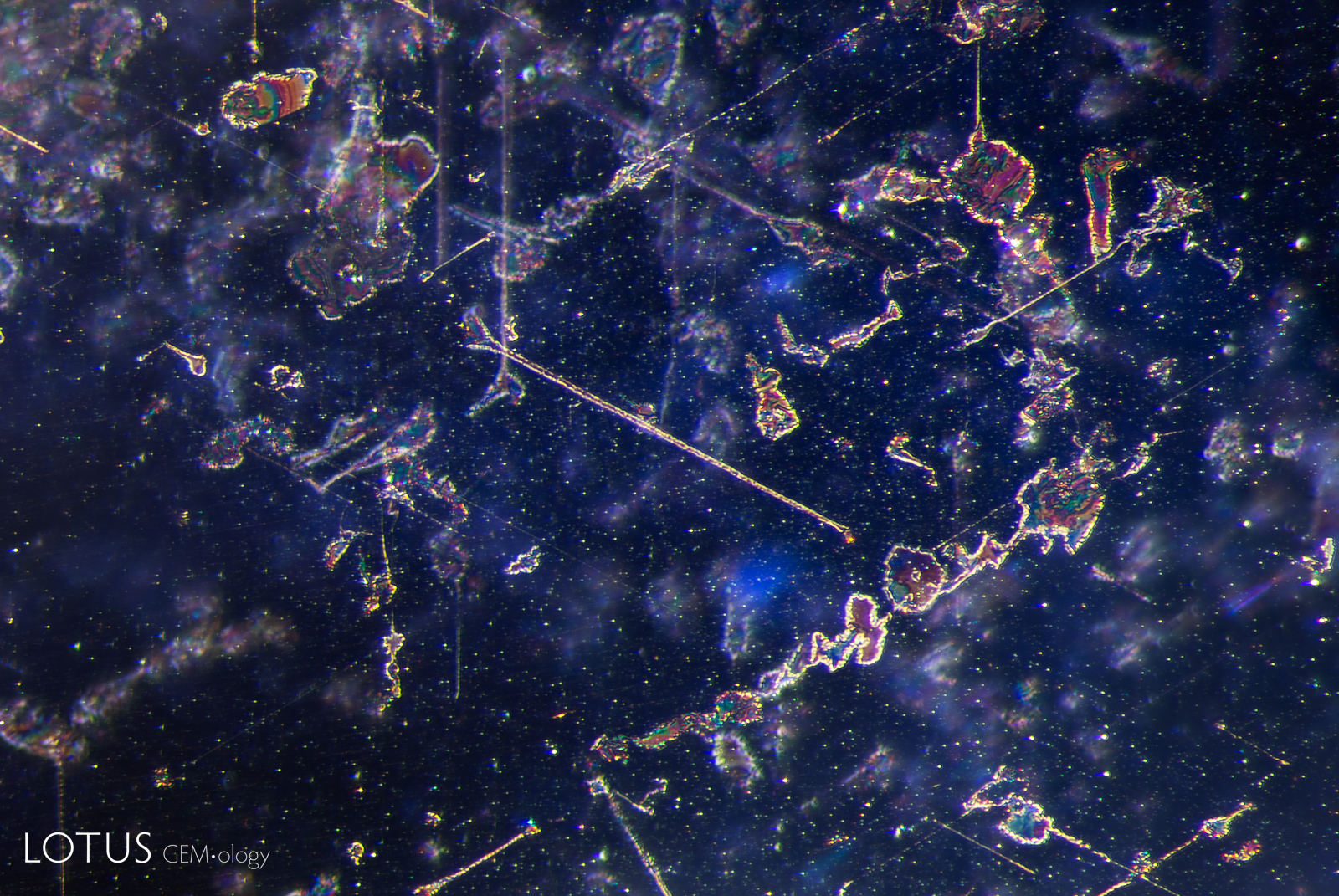
This cluster of melted crystals with a frosty “snowball” appearance and glassy discoid around them is a clear sign that their sapphire host has been heat treated.
Natural Sapphire •
Sri Lanka (Ceylon) •
Enhancements:
Heat (H) •
Lighting Conditions:
Dark Field + Diffuse Fiber Optic
Photographer:
E. Billie Hughes •
Image Number:
A-003-0140-1
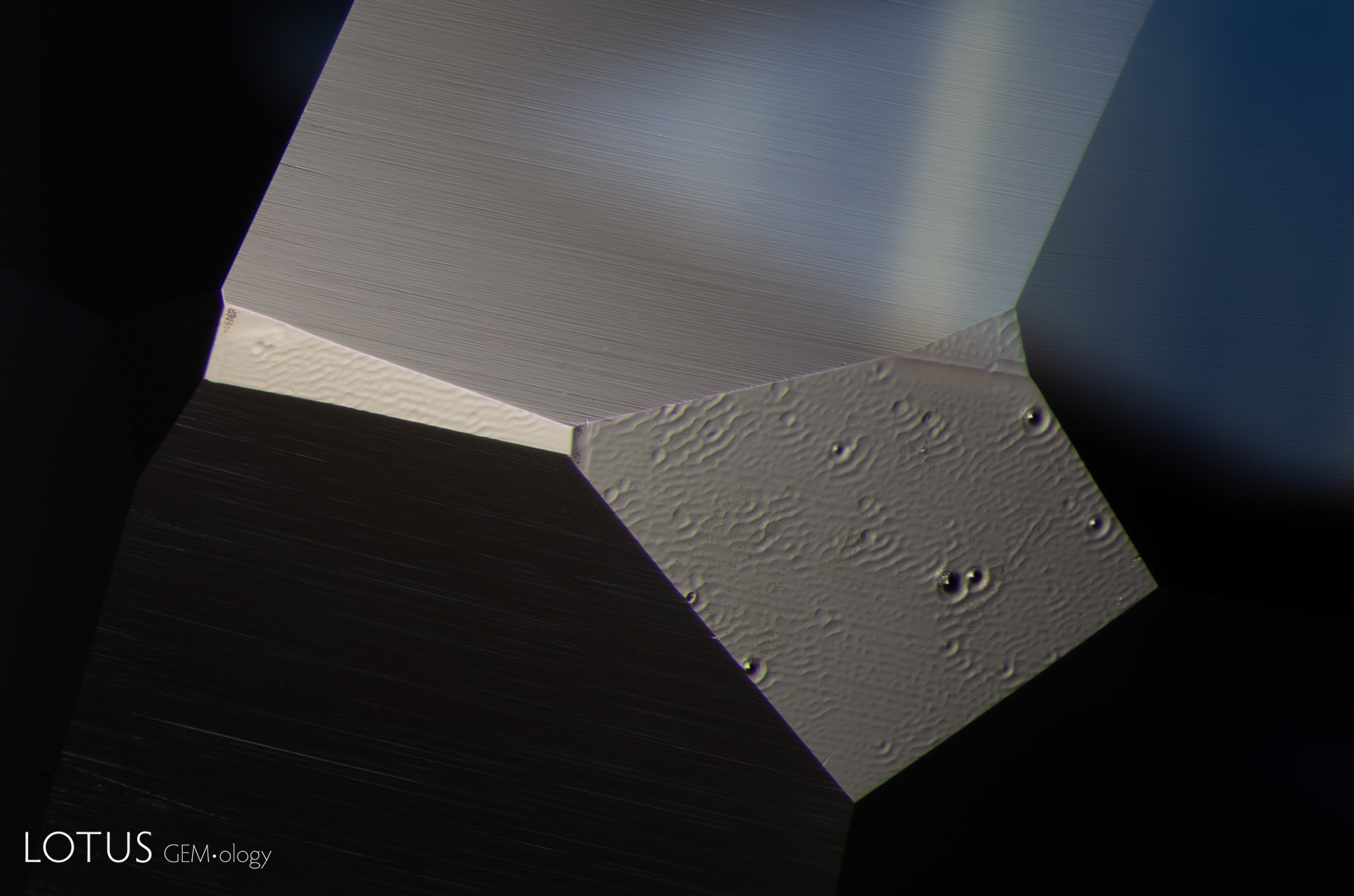
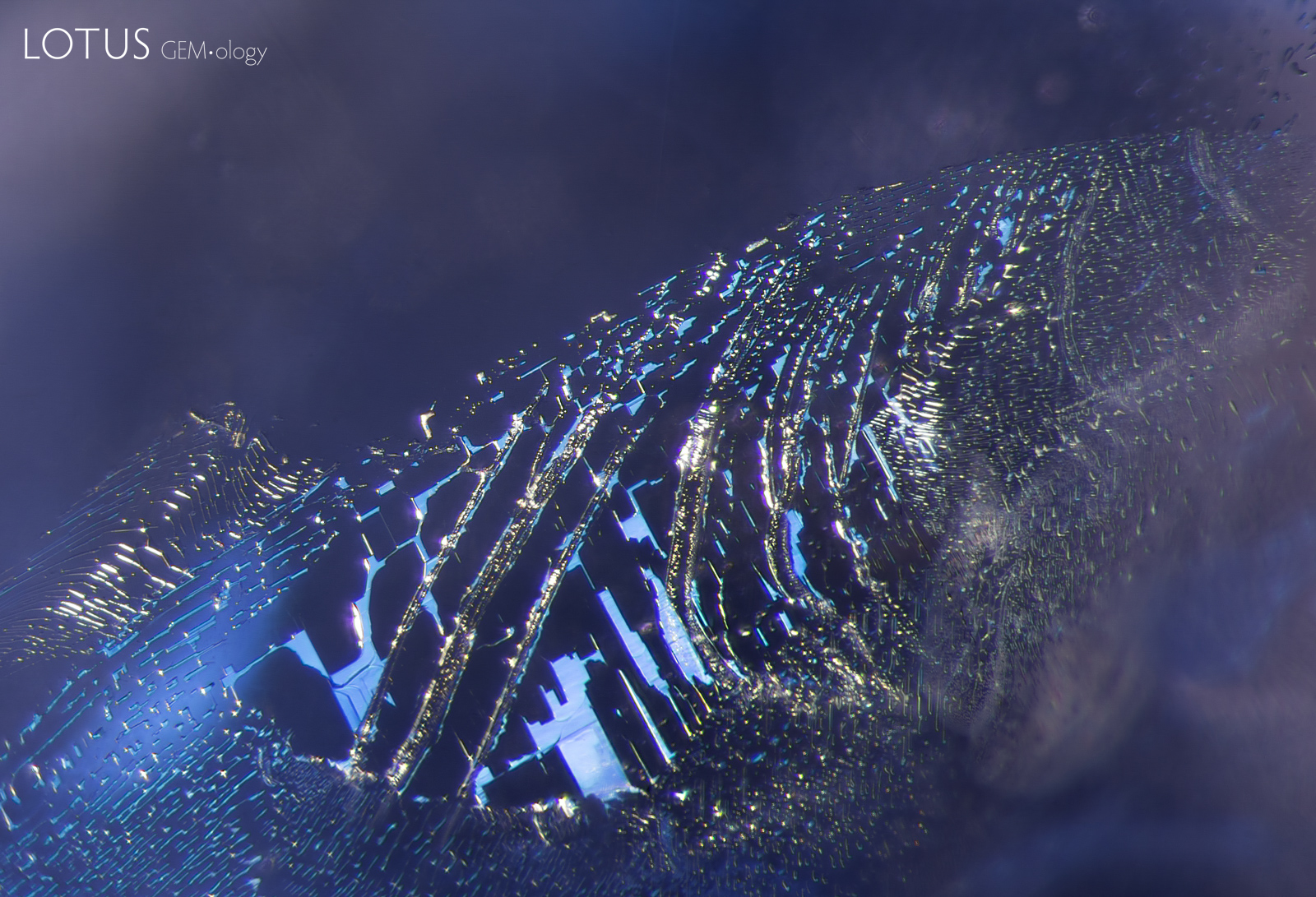
A terrace-like structure on this stacked negative crystal creates a distinctive internal landscape in this untreated sapphire from Sri Lanka. The large flat faces are basal pinacoid faces, which lie perpendicular to the c-axis.
Natural Sapphire •
Sri Lanka (Ceylon) •
Enhancements:
None Detected (None) •
Lighting Conditions:
Diffuse Dark Field + Diffuse Fiber Optic + Blue Filter
Photographer:
E. Billie Hughes •
Image Number:
A-005-7622-1
• Field of View = 4.5mm
A tiny winged crystal, likely uraninite, peeks out from behind a fingerprint in this untreated Sri Lankan sapphire.
Natural Sapphire •
Sri Lanka (Ceylon) •
Enhancements:
None Detected (None) •
Lighting Conditions:
Diffuse Dark Field + Diffuse Fiber Optic + Blue Filter
Photographer:
E. Billie Hughes •
Image Number:
A-005-7587-4
• Field of View = 3.7mm
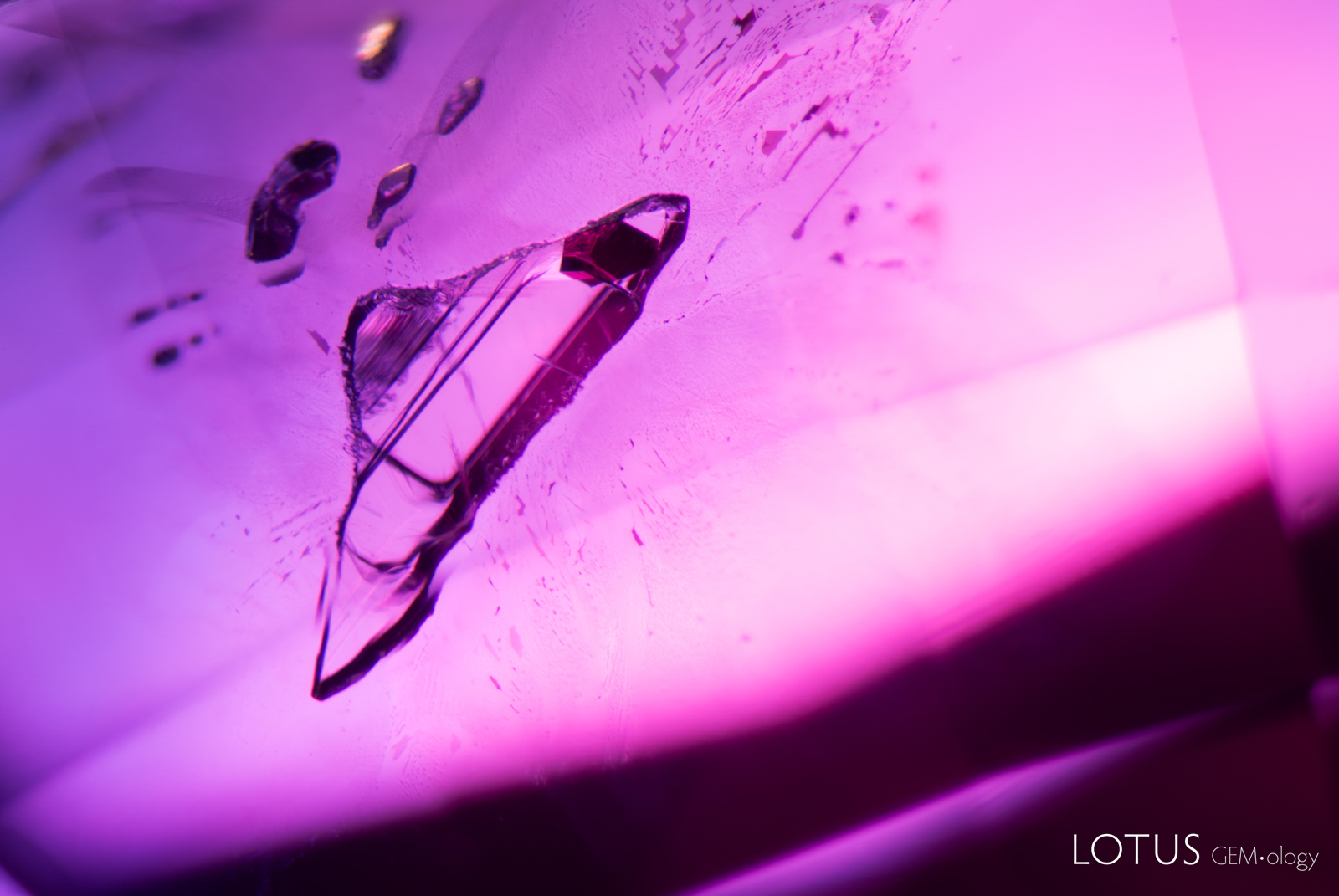
As the gas bubble contracts under fiber-optic light heating, only prismatic dark crystals and diaspore needles remain in this negative crystal.
Natural Sapphire •
Sri Lanka (Ceylon) •
Enhancements:
None Detected (None) •
Lighting Conditions:
Dark Field + Diffuse Fiber Optic + Shadowing
Photographer:
Natcha Rattana-anan •
Image Number:
A-005-6712-3
• Field of View = 3.6mm
• Magnification = 5x
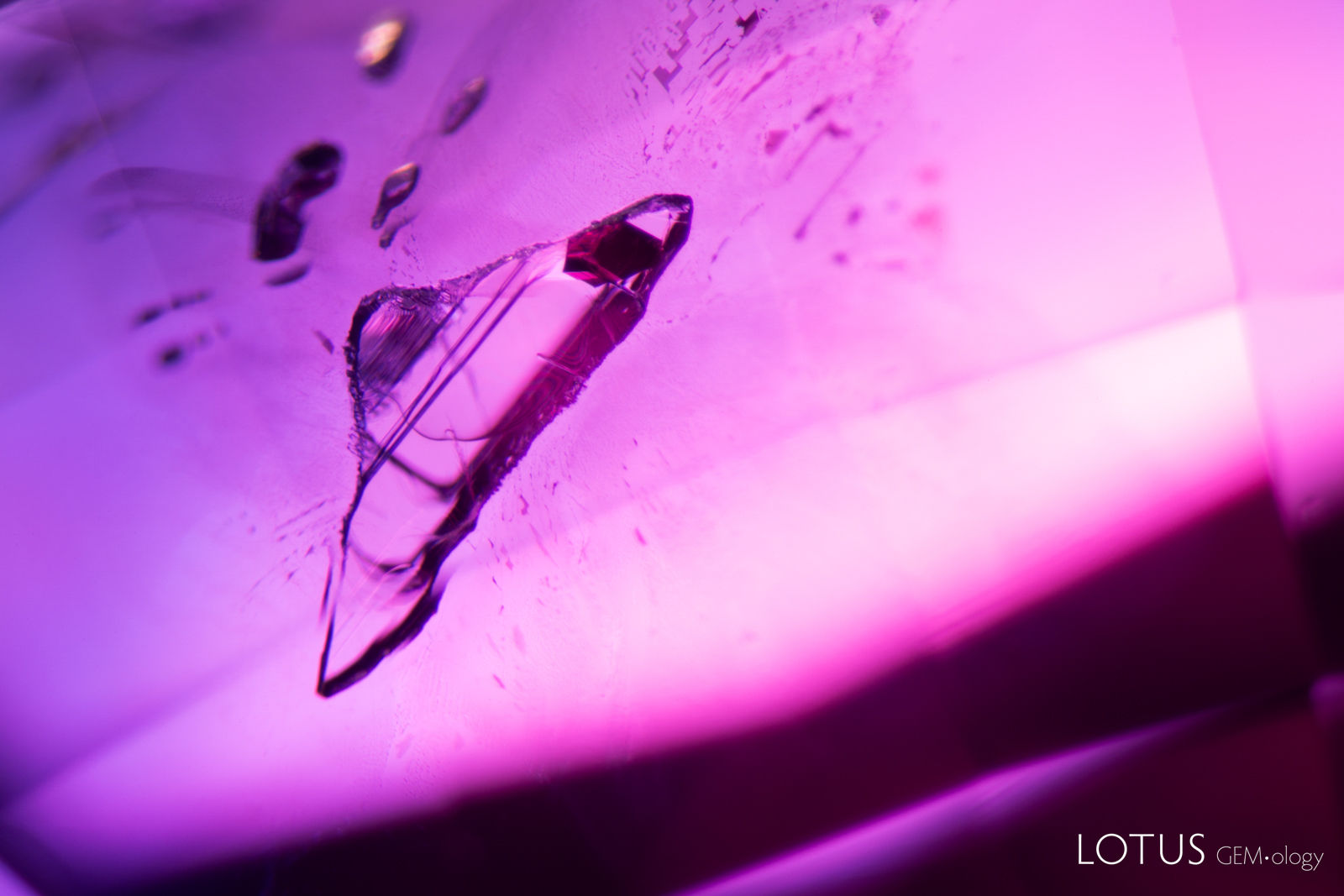
This negative crystal within a ruby contains a gas bubble, which contracts under heating from the fiber-optic light, accompanied by prismatic dark crystals and fine diaspore needles.
Natural Sapphire •
Sri Lanka (Ceylon) •
Enhancements:
None Detected (None) •
Lighting Conditions:
Dark Field + Diffuse Fiber Optic + Shadowing
Photographer:
Natcha Rattana-anan •
Image Number:
A-005-6712-2
• Field of View = 3.6mm
• Magnification = 5x
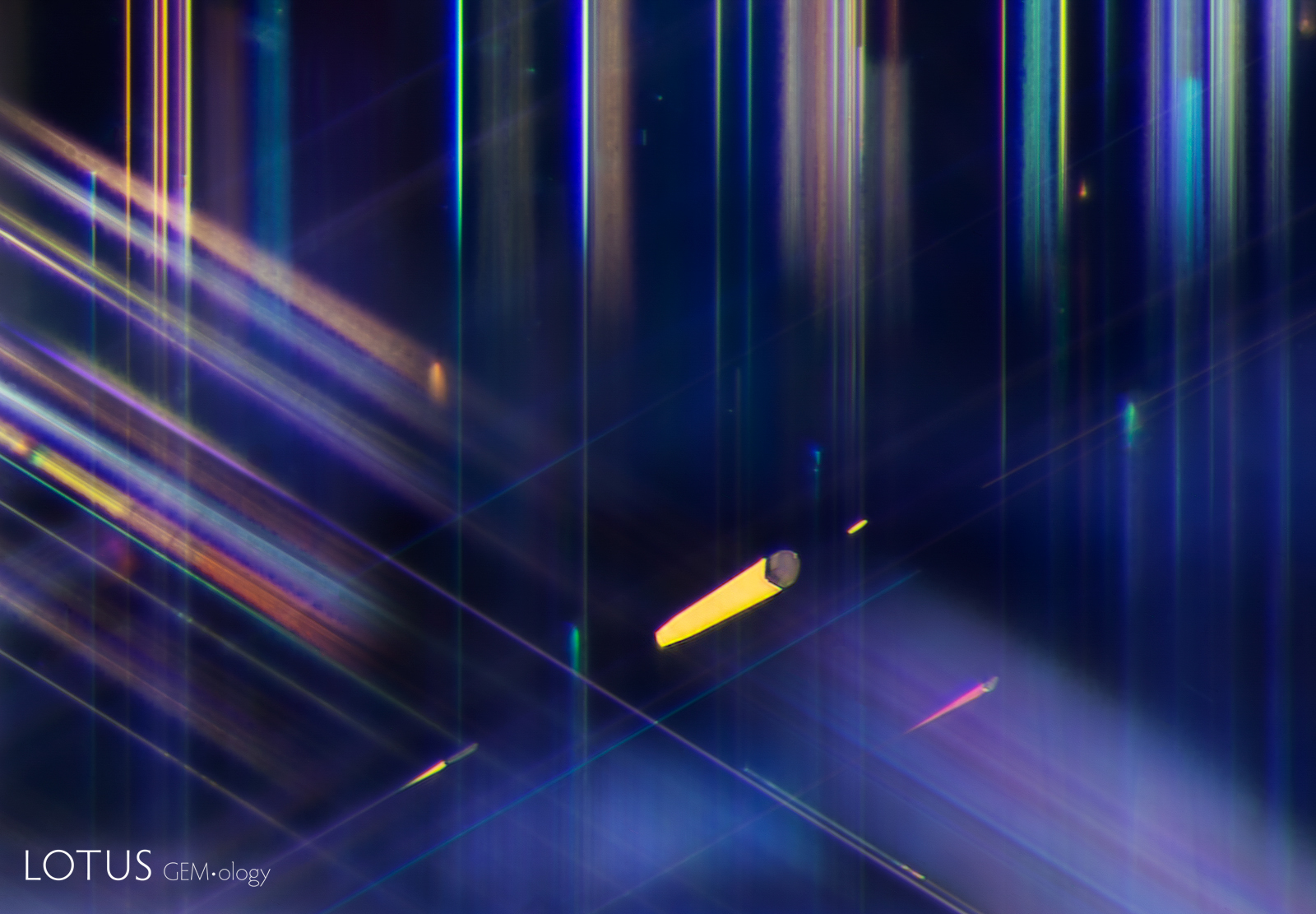
Exsolved rutile silk in Ceylon blue sapphire. The rutile unmixes in three directions at 60/120° in the plane of the basal pinacoid.
Natural Sapphire •
Sri Lanka (Ceylon) •
Enhancements:
None Detected (None) •
Lighting Conditions:
Photographer:
Wimon Manorotkul •
Image Number:
P-10018-1
Exsolved rutile silk in Ceylon blue sapphire. The rutile unmixes in three directions at 60/120° in the plane of the basal pinacoid.
Natural Sapphire •
Sri Lanka (Ceylon) •
Enhancements:
None Detected (None) •
Lighting Conditions:
Photographer:
Wimon Manorotkul •
Image Number:
P-10018-2
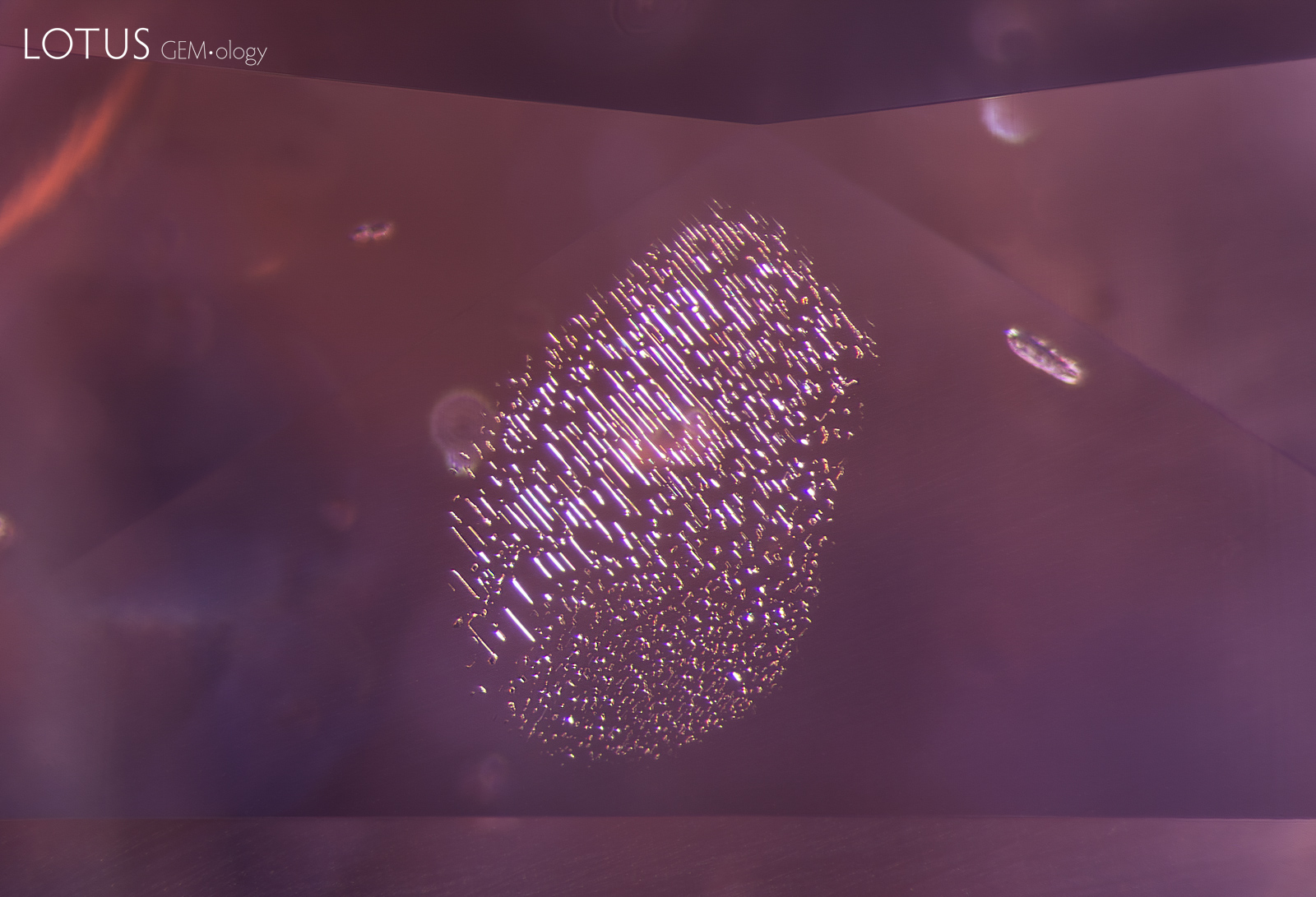
A subtle sign of treatment. Ruby and sapphire surfaces often develop a melted texture when heated, sometimes forming “frozen” droplets that resemble water but cannot be wiped away. To minimize this appearance, stones are frequently repolished. In this case, a few facets were missed, leaving behind telltale signs of heat treatment.
Natural Sapphire •
Sri Lanka (Ceylon) •
Enhancements:
Heat (H) •
Lighting Conditions:
Dark Field + Overhead Fiber Optic
Photographer:
E. Billie Hughes •
Image Number:
A-005-6905-1
• Field of View = 4mm
A bubble is present in this cavity in a blue sapphire treated with heat and pressure. With the gentle heat of a hot point, we observed that the bubble is mobile. It is unusual to see a mobile bubble present in a heated sapphire, as they may make cavities explode when heated, but it is possible that the addition of pressure kept this inclusion intact.
Natural Sapphire •
Sri Lanka (Ceylon) •
Enhancements:
Heat (H) •
Lighting Conditions:
Light Field (Transmitted Light)
Photographer:
E. Billie Hughes •
Image Number:
A-005-6408-1
• Field of View = 1.6mm
[various authors] (2019) Squeezing sapphire: Pressure-heated sapphire.
These dotted outlines, sometimes called “crop circles,” can occasionally be found in blue sapphires heated at high temperatures. While frequently associated with beryllium diffused stones, they are not conclusive evidence of diffusion treatment. The stone pictured here was heated, but showed no evidence of beryllium diffusion.
Natural Sapphire •
Sri Lanka (Ceylon) •
Enhancements:
Heat (H) •
Lighting Conditions:
Dark Field + Oblique Fiber Optic
Photographer:
E. Billie Hughes •
Image Number:
A-005-6689-1
• Field of View = 2mm
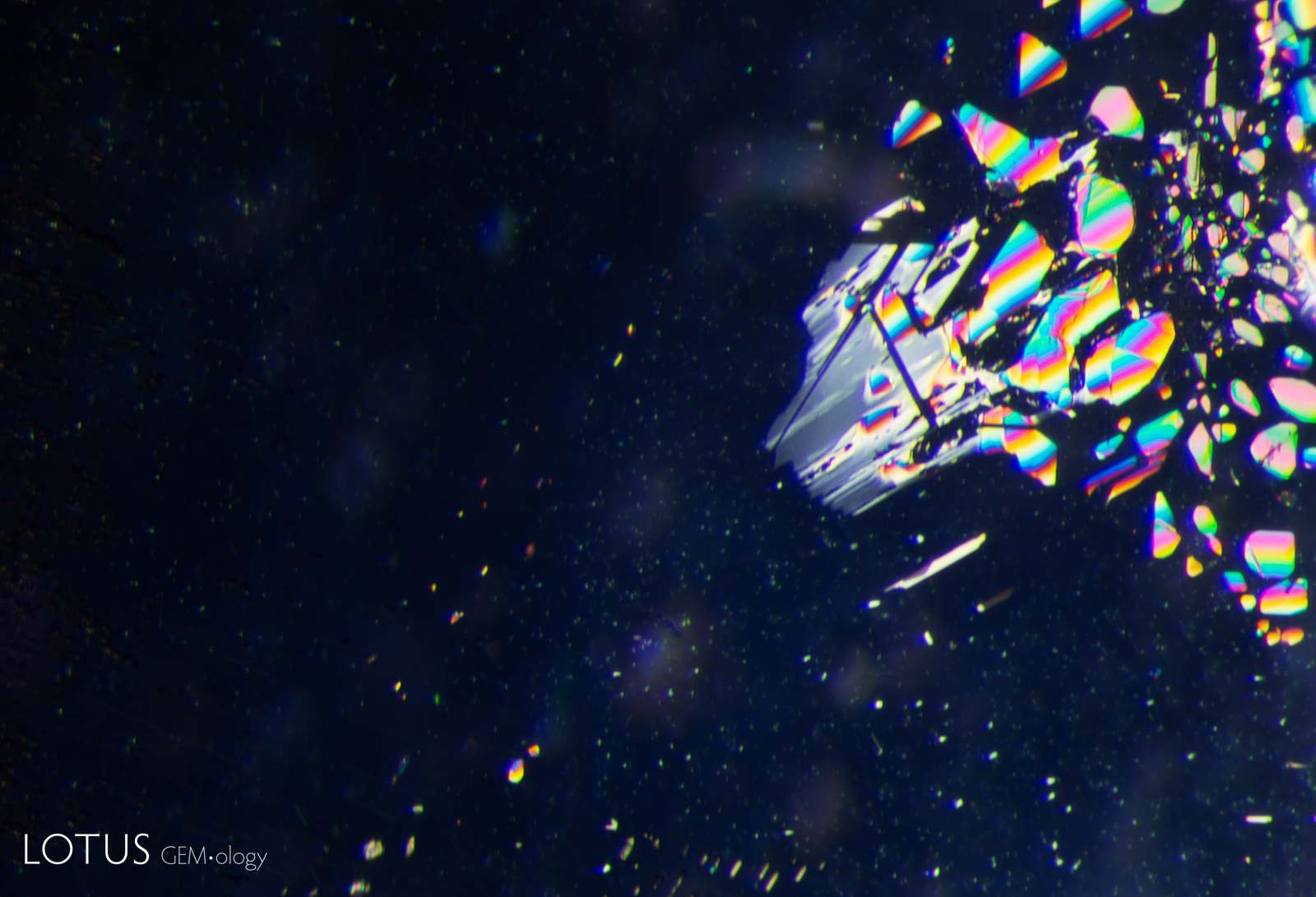
Rainbow connection. Microscopic thin films create an iridescent burst of color in this untreated sapphire.
Natural Sapphire •
Sri Lanka (Ceylon) •
Enhancements:
None Detected (None) •
Lighting Conditions:
Dark Field
Photographer:
E. Billie Hughes •
Image Number:
A-005-6202-3
• Field of View = 1.5mm
A small platelet is surrounded by rutile silk in this unheated sapphire.
Natural Sapphire •
Sri Lanka (Ceylon) •
Enhancements:
None Detected (None) •
Lighting Conditions:
Fiber Optic: Oblique
Photographer:
Natcha Rattana-anan •
Image Number:
A-005-5859-1
• Field of View = 1.6mm
Ceylon sapphire inclusions may include mineral crystals, rutile silk, healed fissures, fluid inclusions, negative crystals, growth features and other internal features formed during or after crystal growth. Such features are important to gemologists because they can provide evidence useful in identifying sapphire and evaluating a possible Sri Lankan origin.
Ceylon Sapphire Inclusion Photomicrographs
The Hyperion Ceylon sapphire gallery includes microscopic features documented in sapphires from Sri Lanka (Ceylon). Each entry is accompanied by descriptive information and, where available, references to the gemological literature.
What Inclusions Can Reveal About Ceylon Sapphire
Inclusions are an important part of geographic origin determination in sapphire. Their form, composition, orientation and associations can provide evidence that, when considered together with other gemological properties, may support or contradict a Sri Lankan origin.
Hyperion combines inclusion photomicrography with supporting gemological information so that individual features can be compared with documented examples from Ceylon sapphires.
About Hyperion
Hyperion is the Lotus Gemology searchable inclusion database. It allows users to browse gemstone inclusions by gem type, geographic origin, treatment and keyword.