Ceylon Sapphire Inclusions
Explore Ceylon sapphire inclusions in Hyperion, the Lotus Gemology inclusion database. Hyperion contains photomicrographs of inclusions and internal features in natural sapphires from Sri Lanka (Ceylon), documented with information on treatment, lighting conditions, field of view, photographer and published references.
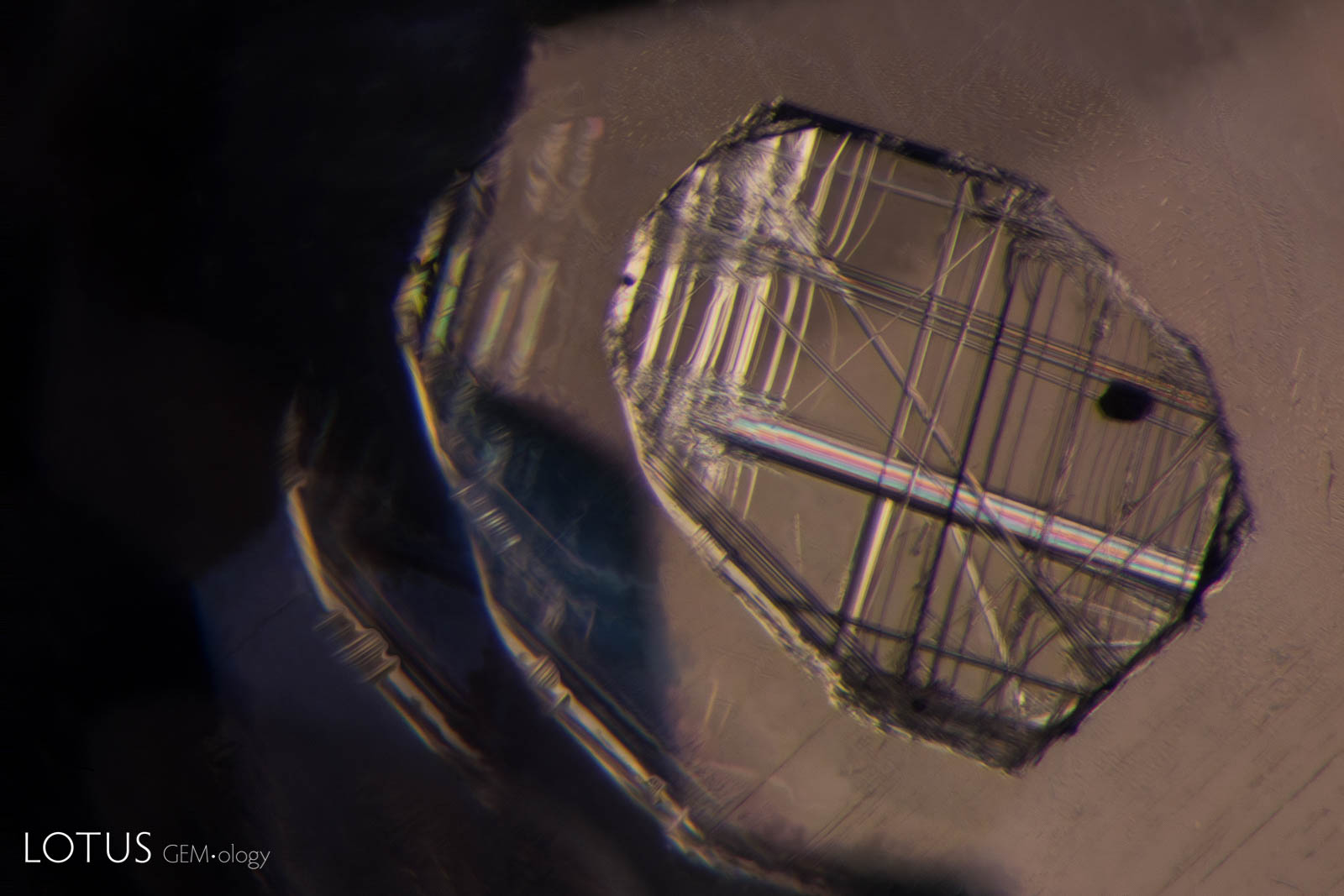
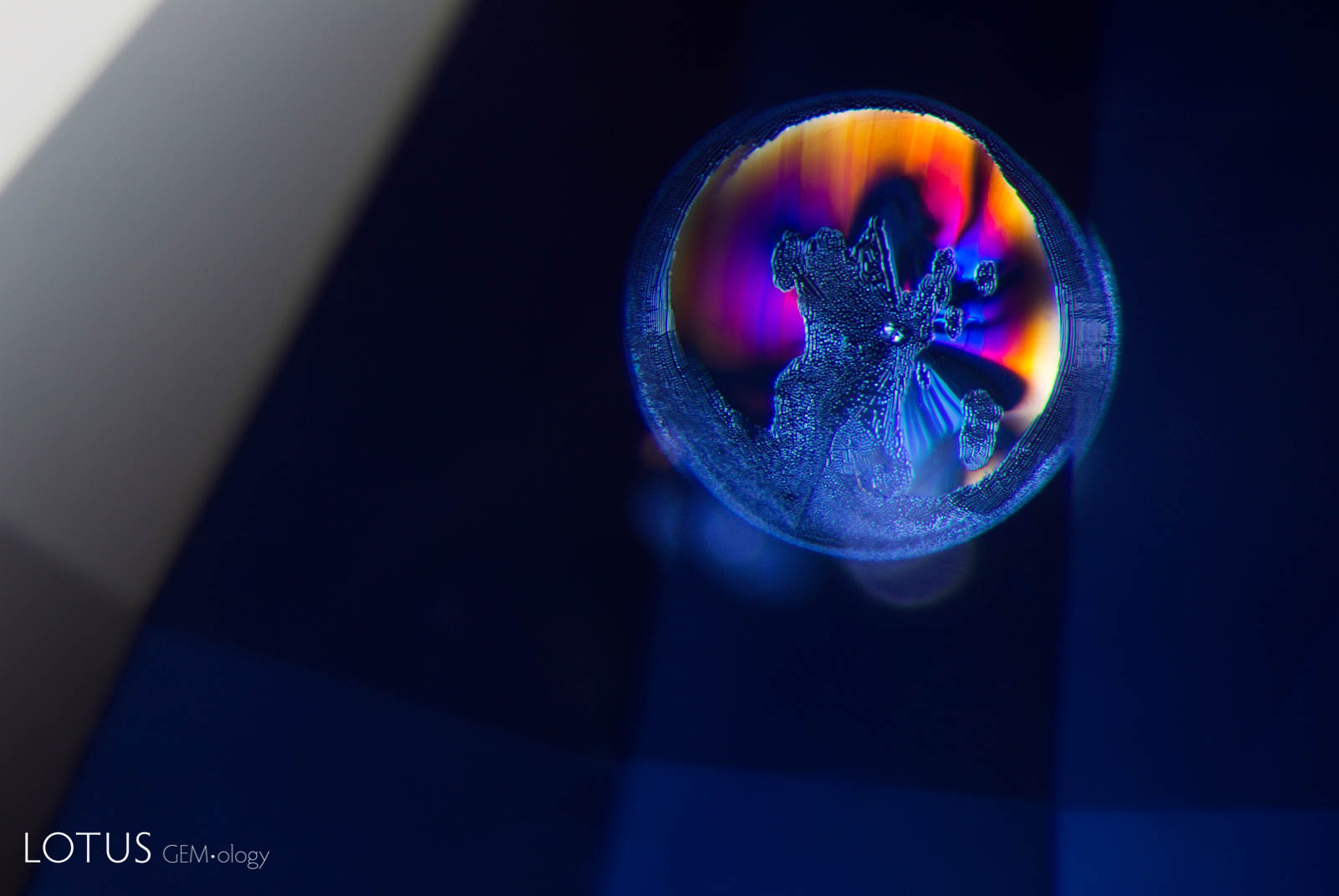
Negative crystal containing birefringent diaspore needles needles and a small graphite plate; unheated Sri Lanka sapphire
Natural Sapphire •
Sri Lanka (Ceylon) •
Enhancements:
None Detected (None) •
Lighting Conditions:
Dark Field + Crossed Polars
Photographer:
E. Billie Hughes •
Image Number:
R-003-1678-1
Unusual birefringent crystals in a low-relief partially healed fissure in a sapphire treated with high-temperature heat plus modest pressure (HT+P). When tested with Lotus Gemology’s microraman, they proved to be corundum. It is thought that they crystallized during the treatment process.
Natural Sapphire •
Sri Lanka (Ceylon) •
Enhancements:
Heat (H) •
Lighting Conditions:
Light Field (Transmitted Light)
Photographer:
E. Billie Hughes •
Image Number:
A-003-3171-2
• Field of View = 4mm
Unusual birefringent crystals in a low-relief partially healed fissure in a sapphire treated with high-temperature heat plus modest pressure (HT+P). When tested with Lotus Gemology’s microRaman, they proved to be corundum. It is thought that they crystallized during the treatment process.
Natural Sapphire •
Sri Lanka (Ceylon) •
Enhancements:
Heat (H) •
Lighting Conditions:
Diffuse Light Field + Crossed Polars
Photographer:
E. Billie Hughes •
Image Number:
A-003-3171-1
• Field of View = 4mm
A metallic black plate was found in this untreated Sri Lankan sapphire. Microraman analysis in Lotus Gemology’s Bangkok lab showed it to be graphite.
Natural Sapphire •
Sri Lanka (Ceylon) •
Enhancements:
None Detected (None) •
Lighting Conditions:
Dark Field
Photographer:
Richard W. Hughes •
Image Number:
A-003-3502-2
Gübelin, E.J. and Koivula, J.I. (1986) Photoatlas of Inclusions in Gemstones, Volume 1. Basel, Switzerland, ABC Edition, 532 pp.; RWHL*.
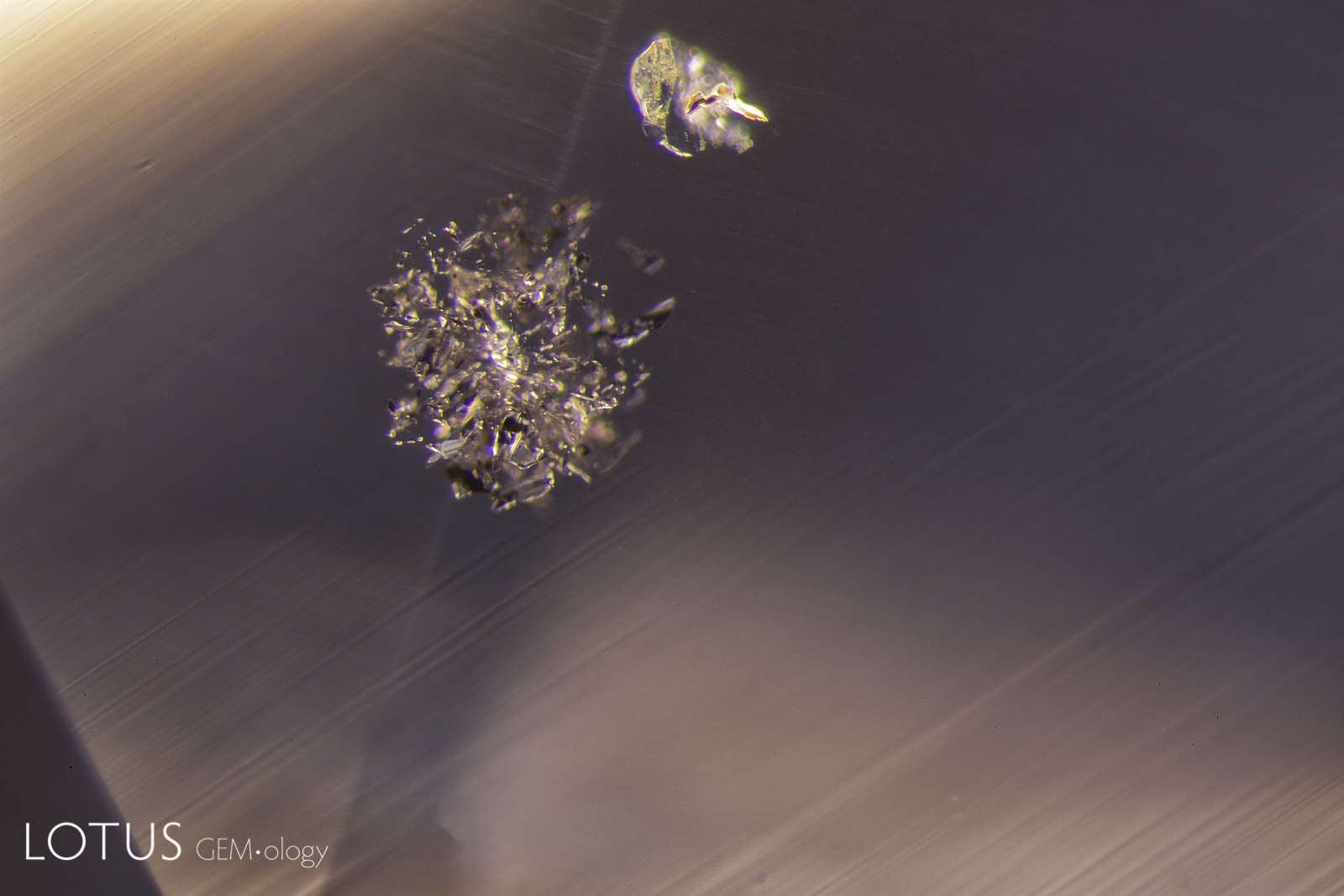
A cluster of small metallic black plates was found in this untreated Sri Lankan sapphire. Microraman analysis in Lotus Gemology’s Bangkok lab showed them to be graphite.
Natural Sapphire •
Sri Lanka (Ceylon) •
Enhancements:
None Detected (None) •
Lighting Conditions:
Dark Field
Photographer:
Richard W. Hughes •
Image Number:
A-003-3502-1
Gübelin, E.J. and Koivula, J.I. (1986) Photoatlas of Inclusions in Gemstones, Volume 1. Basel, Switzerland, ABC Edition, 532 pp.; RWHL*.
Angular cloud of particles in sapphire. Such dense “texture clouds” are often a sign of high-temperature heat treatment; FOV~ 7 mm
Natural Sapphire •
Sri Lanka (Ceylon) •
Enhancements:
Heat (H) •
Lighting Conditions:
Fiber Optic: Oblique
Photographer:
E. Billie Hughes •
Image Number:
A-003-1067-1
The fingerprint in this sapphire shows clear signs of heat alteration. Note the frosty, hazy appearance between the negative crystals, which results from micro-fractures to release the pressure caused by heating; also note that each negative crystal tube has begun to neck down and become more rounded.
Natural Sapphire •
Sri Lanka (Ceylon) •
Enhancements:
Heat (H) •
Lighting Conditions:
Dark Field + Diffuse Fiber Optic
Photographer:
E. Billie Hughes •
Image Number:
A-003-0523-1
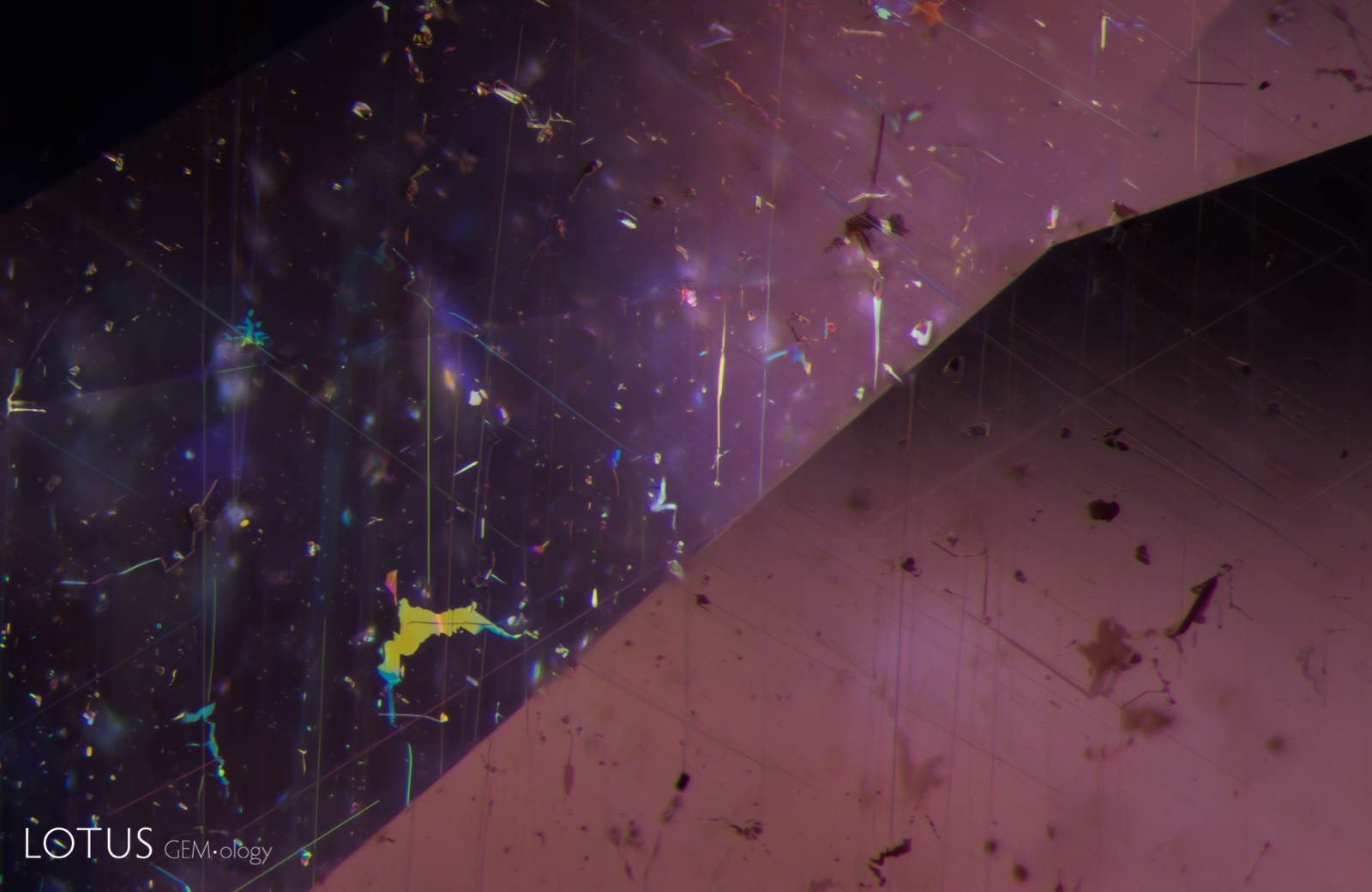
Iron rich sapphire often contain “silk” in the form of these irregularly shaped platelets. Notice that reflected light can produce a variety of interference colors (left side of image) while transmitted light shows that the platelets have a brown body color (right side of image).
Natural Sapphire •
Sri Lanka (Ceylon) •
Enhancements:
None Detected (None) •
Lighting Conditions:
Diffuse Light Field + Fiber Optic
Photographer:
E. Billie Hughes •
Image Number:
A-002-9496-2
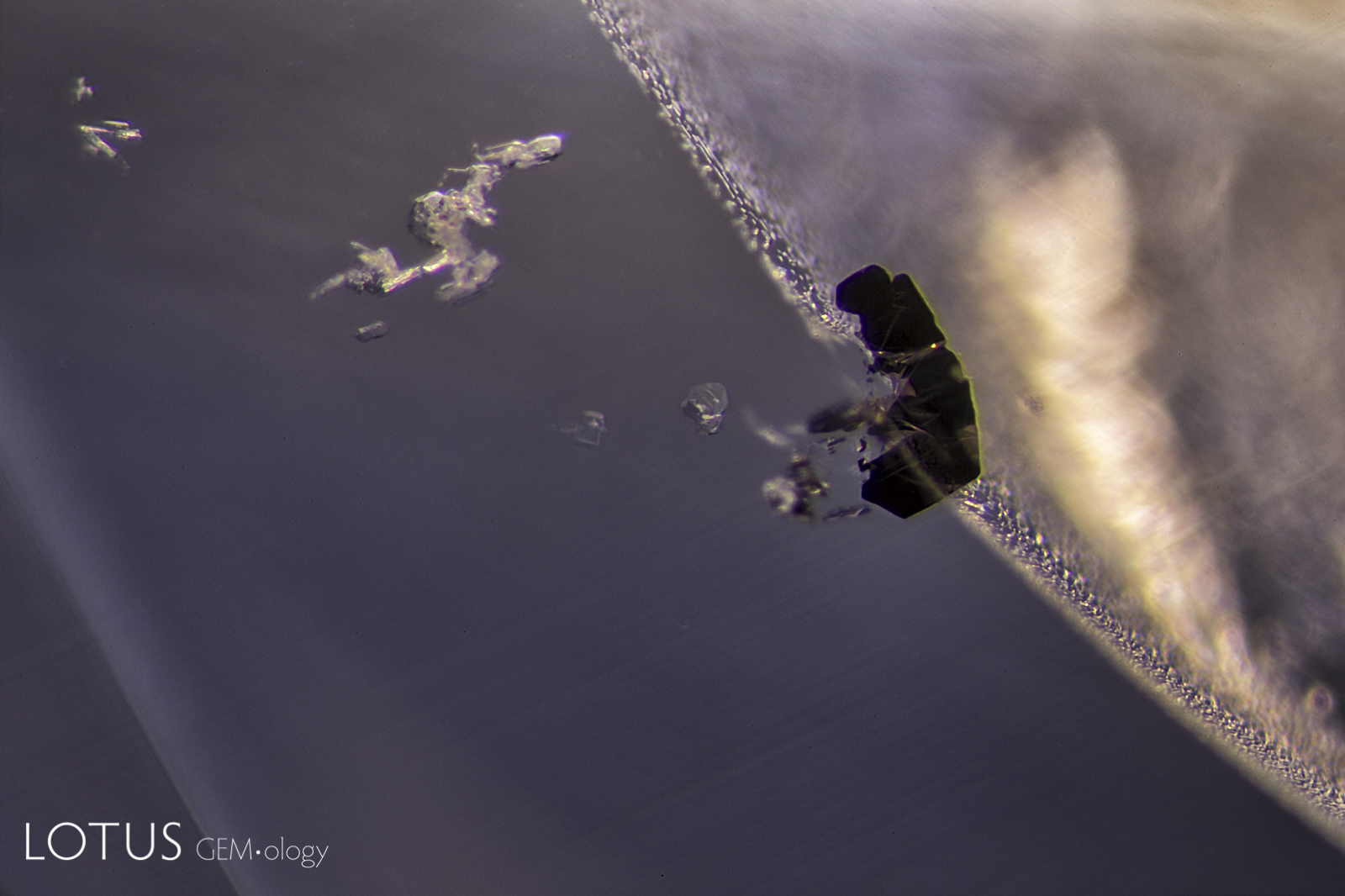
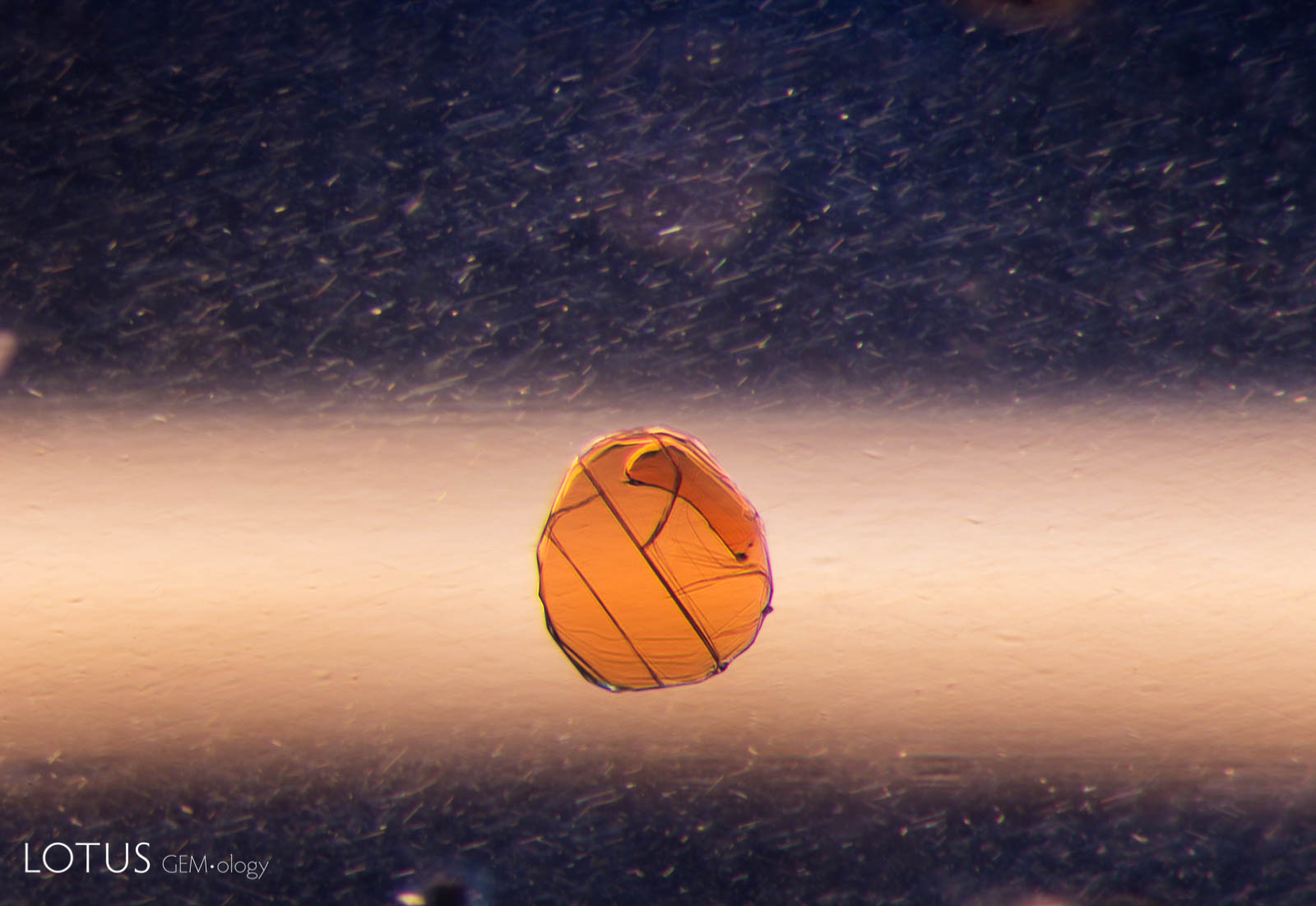
The melted, shiny fissure around this small crystal represents clear evidence that the sapphire host has been heat treated.
Natural Sapphire •
Sri Lanka (Ceylon) •
Enhancements:
Heat (H) •
Lighting Conditions:
Fiber Optic: Diffuse Oblique
Photographer:
E. Billie Hughes •
Image Number:
A-002-9394-1
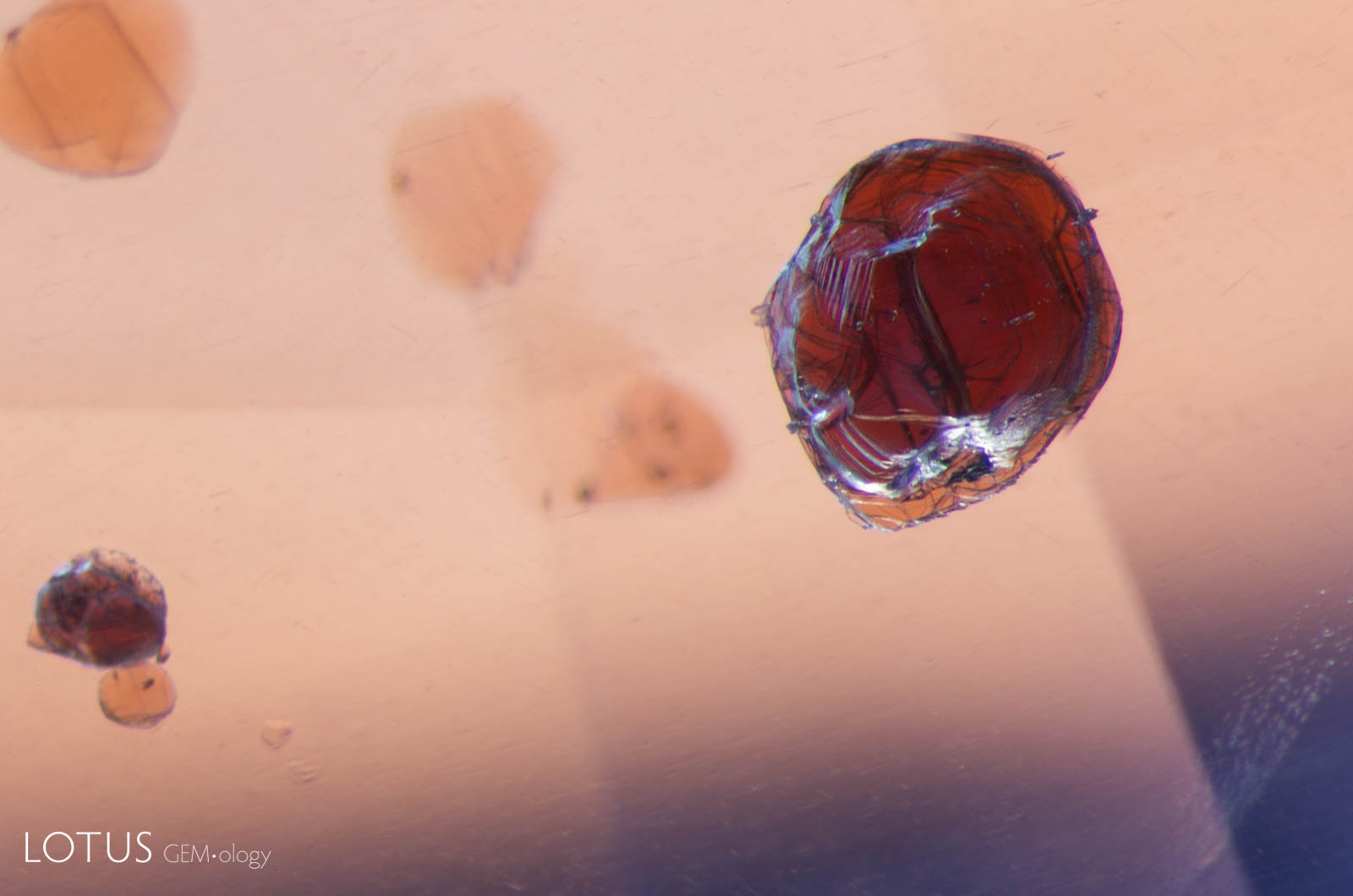
These brown crystals (probably phlogopite mica) show no signs of heat damage in their Sri Lankan sapphire host.
Natural Sapphire •
Sri Lanka (Ceylon) •
Enhancements:
None Detected (None) •
Lighting Conditions:
Diffuse Light Field + Fiber Optic
Photographer:
E. Billie Hughes •
Image Number:
A-002-8724-2
These brown crystals (probably phlogopite mica) show no signs of heat damage in their Sri Lankan sapphire host.
Natural Sapphire •
Sri Lanka (Ceylon) •
Enhancements:
None Detected (None) •
Lighting Conditions:
Diffuse Light Field + Fiber Optic
Photographer:
E. Billie Hughes •
Image Number:
A-002-8724-1
Abraded facet junctions on an untreated Sri Lanka sapphire. According to Robert Webster’s “Gems” (1st edition, 1962, p. 66): “Corundum is a hard stone, indeed the impure material is used as an abrasive, and is rated 9 on the scale of hardness devised by F. Mohs. Despite the hardness of the mineral, however, ruby and sapphire need to be handled with some care, for they are to a slight extent brittle and if dropped on a hard surface or given a sharp blow tend to develop internal flaws and cracks.”
Natural Sapphire •
Sri Lanka (Ceylon) •
Enhancements:
None Detected (None) •
Lighting Conditions:
Diffuse Overhead
Photographer:
E. Billie Hughes •
Image Number:
R-003-2383-1
Webster, Robert (1962) Gems: Their Sources, Descriptions and Identification. London: Butterworths, 792 pp., RWHL*
Ceylon sapphire inclusions may include mineral crystals, rutile silk, healed fissures, fluid inclusions, negative crystals, growth features and other internal features formed during or after crystal growth. Such features are important to gemologists because they can provide evidence useful in identifying sapphire and evaluating a possible Sri Lankan origin.
Ceylon Sapphire Inclusion Photomicrographs
The Hyperion Ceylon sapphire gallery includes microscopic features documented in sapphires from Sri Lanka (Ceylon). Each entry is accompanied by descriptive information and, where available, references to the gemological literature.
What Inclusions Can Reveal About Ceylon Sapphire
Inclusions are an important part of geographic origin determination in sapphire. Their form, composition, orientation and associations can provide evidence that, when considered together with other gemological properties, may support or contradict a Sri Lankan origin.
Hyperion combines inclusion photomicrography with supporting gemological information so that individual features can be compared with documented examples from Ceylon sapphires.
About Hyperion
Hyperion is the Lotus Gemology searchable inclusion database. It allows users to browse gemstone inclusions by gem type, geographic origin, treatment and keyword.