Heated Sapphire Inclusions
Explore inclusions in heat-treated sapphire in Hyperion, the Lotus Gemology inclusion database. Hyperion contains photomicrographs of inclusions and internal features in natural sapphires that have been subjected to heat treatment, documented with information on geographic origin, lighting conditions, field of view, photographer and published references.
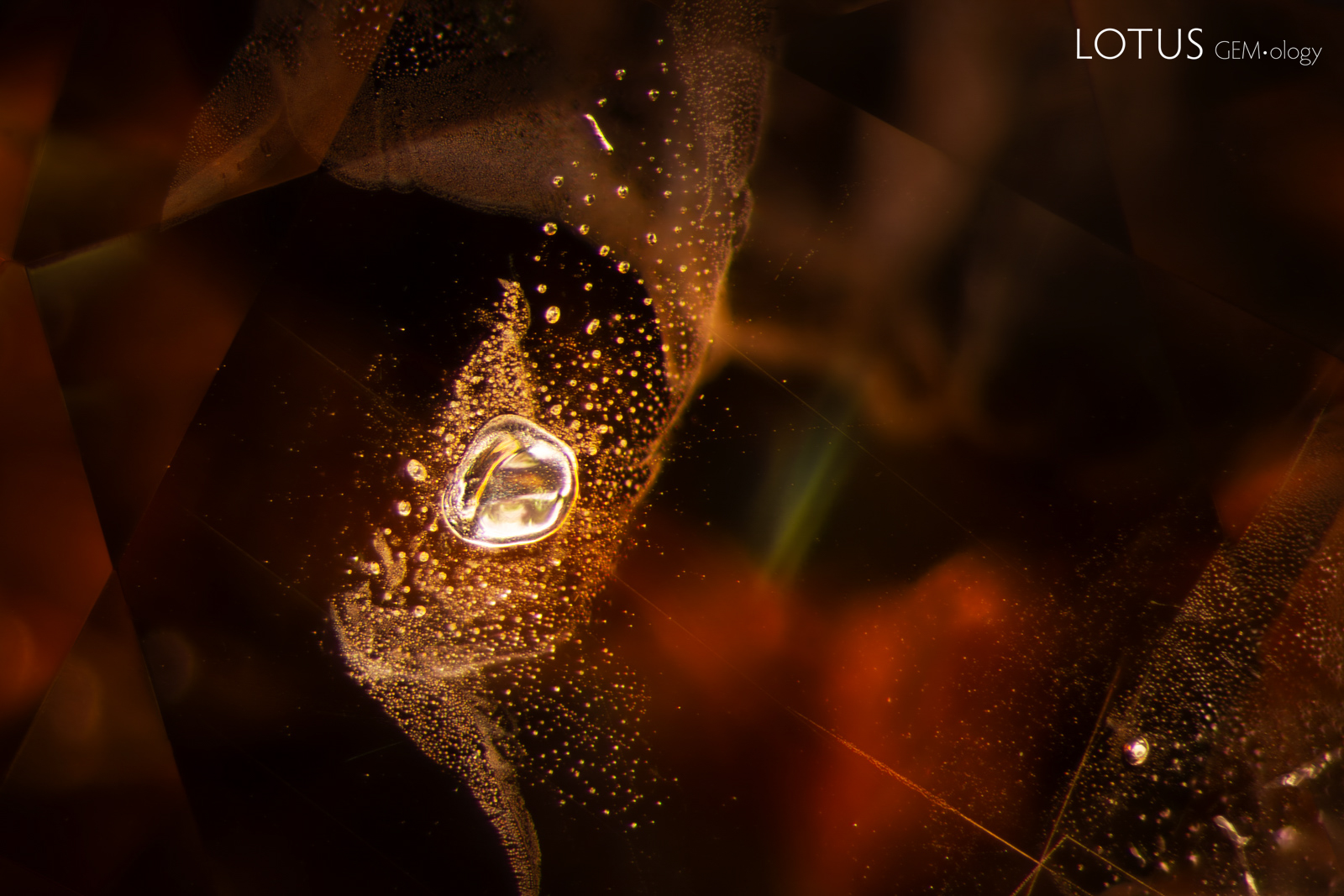
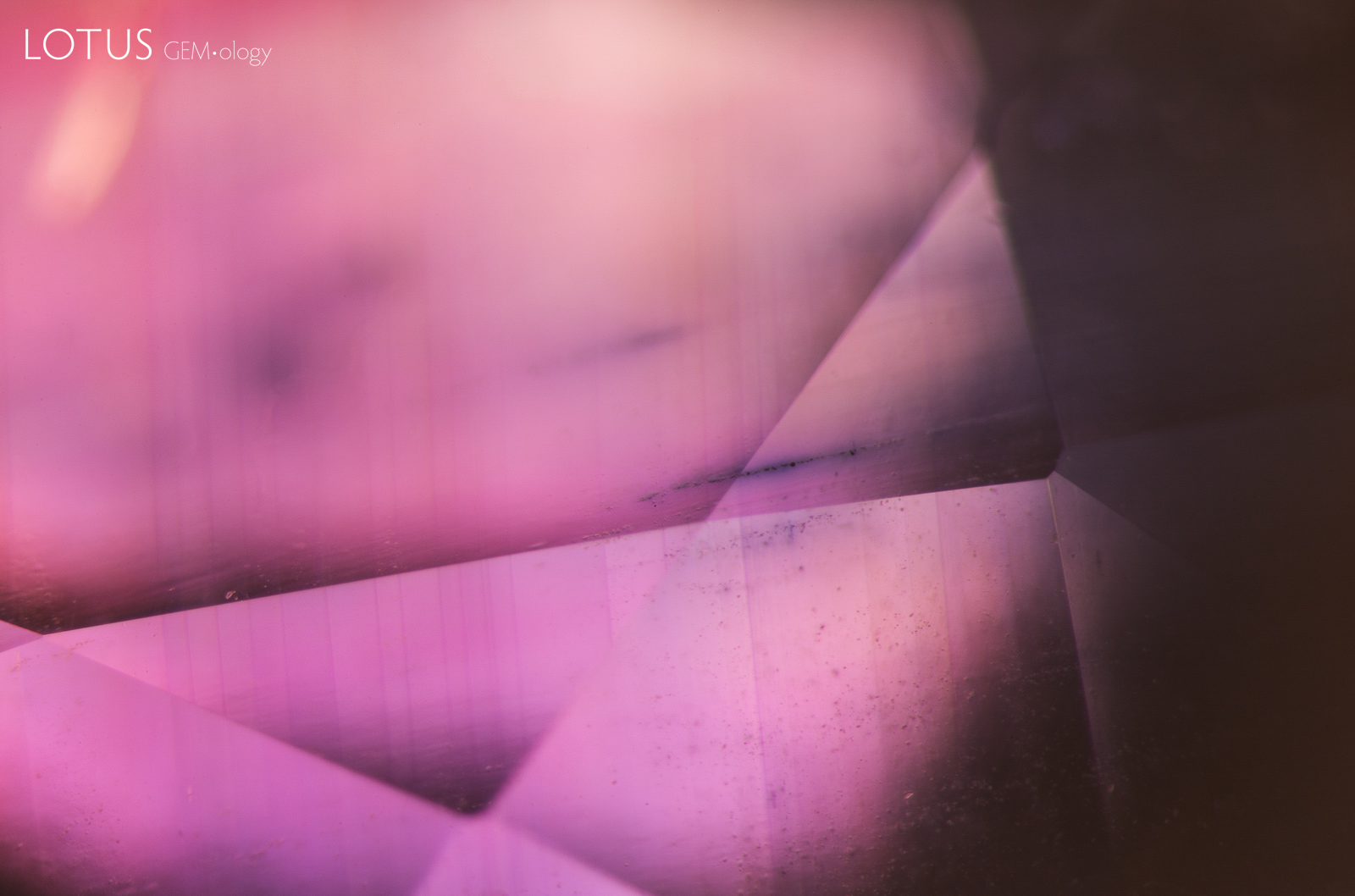
The melted, bubbly texture of this fingerprint provides evidence that this Montana sapphire was heated. Sample courtesy Mike Gray.
Natural Sapphire •
USA (Montana); Non-Yogo •
Enhancements:
Heat (H) •
Lighting Conditions:
Dark Field
Photographer:
E. Billie Hughes •
Image Number:
R-005-7878-1
• Field of View = 3.7mm
Palke, A., Renfro, N. et al. (2023) Gemological characterization of Montana sapphire form the secondary deposits at Rock Creek, Missouri River, and Dry Cottonwood Creek. Gems & Gemology, Vol. 59, No. 1, pp. 2–45.
Hughes, R.W., Manorotkul, W. and Hughes, E.B. (2017) Ruby & Sapphire: A Gemologist's Guide. Bangkok, Lotus Publishing, 816 pp.; RWHL*.
Gübelin, E.J. and Koivula, J.I. (2008) Photoatlas of Inclusions in Gemstones, Volume 3. Basel, Switzerland, Opinio Publishers, 672 pp.; RWHL*.
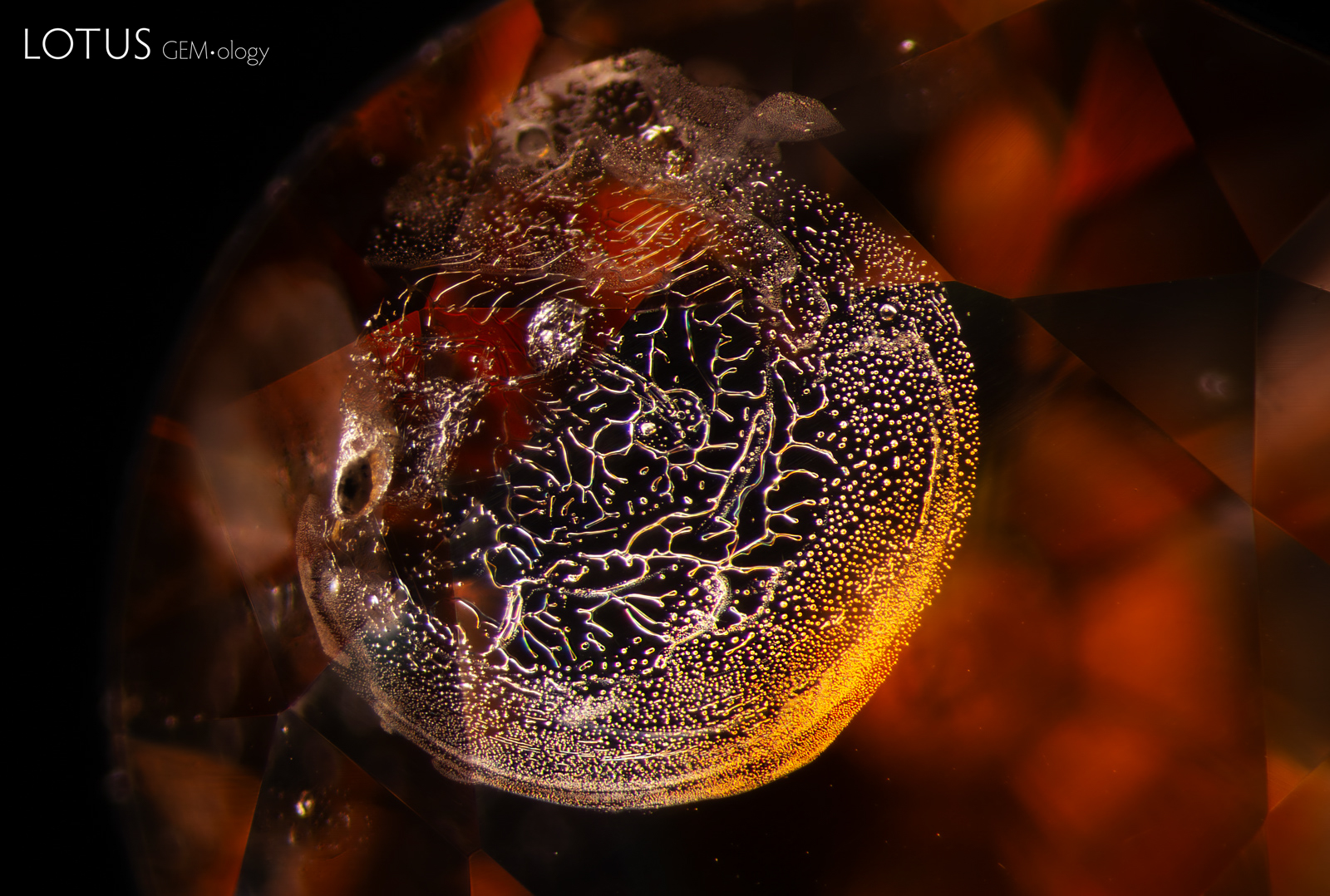
This heated Montana sapphire contains a melted crystal in the center of a bubbly fingerprint. Sample courtesy Mike Gray.
Natural Sapphire •
USA (Montana); Non-Yogo •
Enhancements:
Heat (H) •
Lighting Conditions:
Dark Field
Photographer:
E. Billie Hughes •
Image Number:
R-005-7880-1
• Field of View = 2.8mm
Palke, A., Renfro, N. et al. (2023) Gemological characterization of Montana sapphire form the secondary deposits at Rock Creek, Missouri River, and Dry Cottonwood Creek. Gems & Gemology, Vol. 59, No. 1, pp. 2–45.
Hughes, R.W., Manorotkul, W. and Hughes, E.B. (2017) Ruby & Sapphire: A Gemologist's Guide. Bangkok, Lotus Publishing, 816 pp.; RWHL*.
Gübelin, E.J. and Koivula, J.I. (2008) Photoatlas of Inclusions in Gemstones, Volume 3. Basel, Switzerland, Opinio Publishers, 672 pp.; RWHL*.
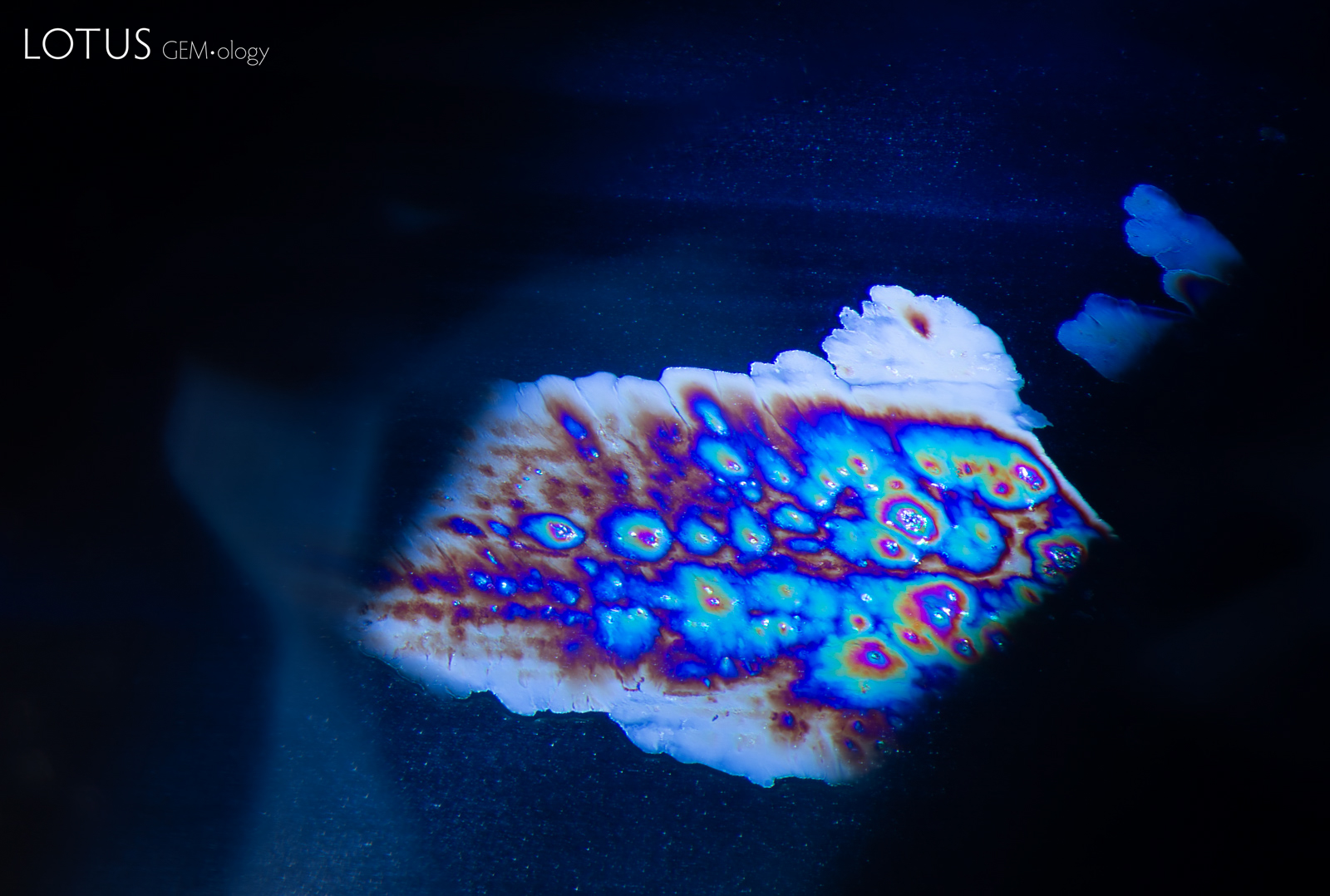
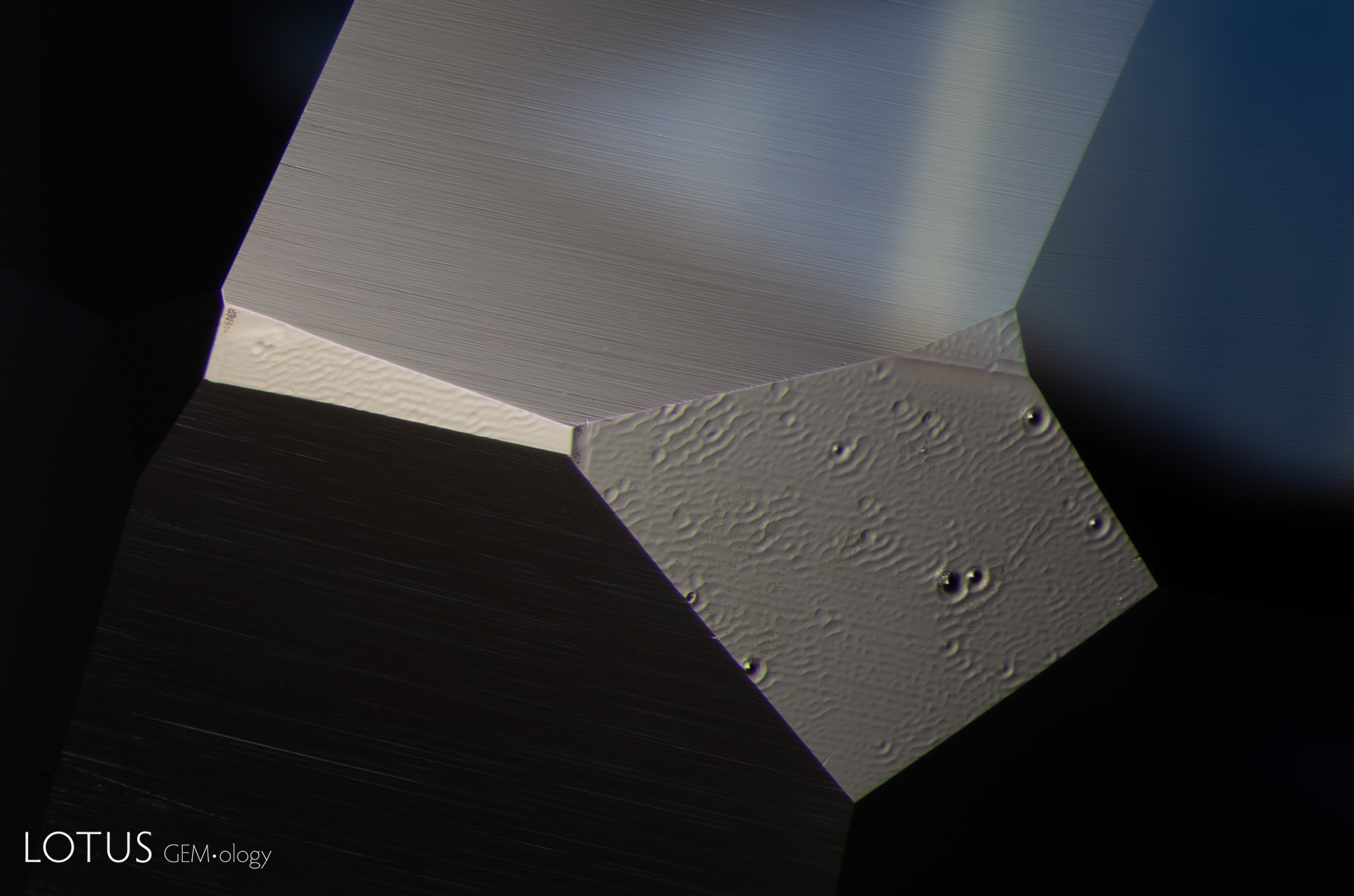
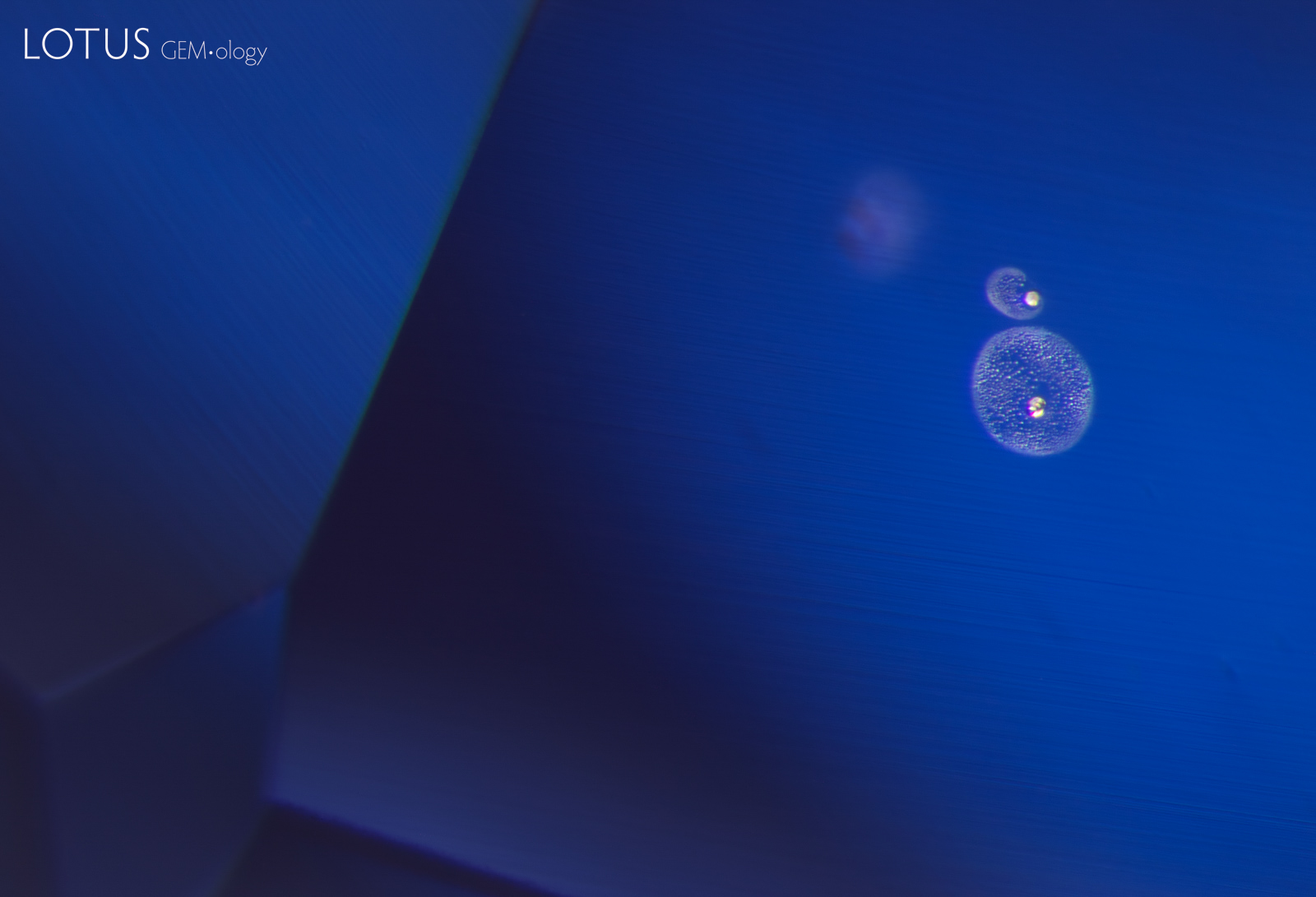
A subtle sign of treatment. Ruby and sapphire surfaces often develop a melted texture when heated, sometimes forming “frozen” droplets that resemble water but cannot be wiped away. To minimize this appearance, stones are frequently repolished. In this case, a few facets were missed, leaving behind telltale signs of heat treatment.
Natural Sapphire •
Sri Lanka (Ceylon) •
Enhancements:
Heat (H) •
Lighting Conditions:
Dark Field + Overhead Fiber Optic
Photographer:
E. Billie Hughes •
Image Number:
A-005-6905-1
• Field of View = 4mm
Hughes, R.W., Manorotkul, W. and Hughes, E.B. (2017) Ruby & Sapphire: A Gemologist's Guide. Bangkok, Lotus Publishing, 816 pp.; RWHL*.
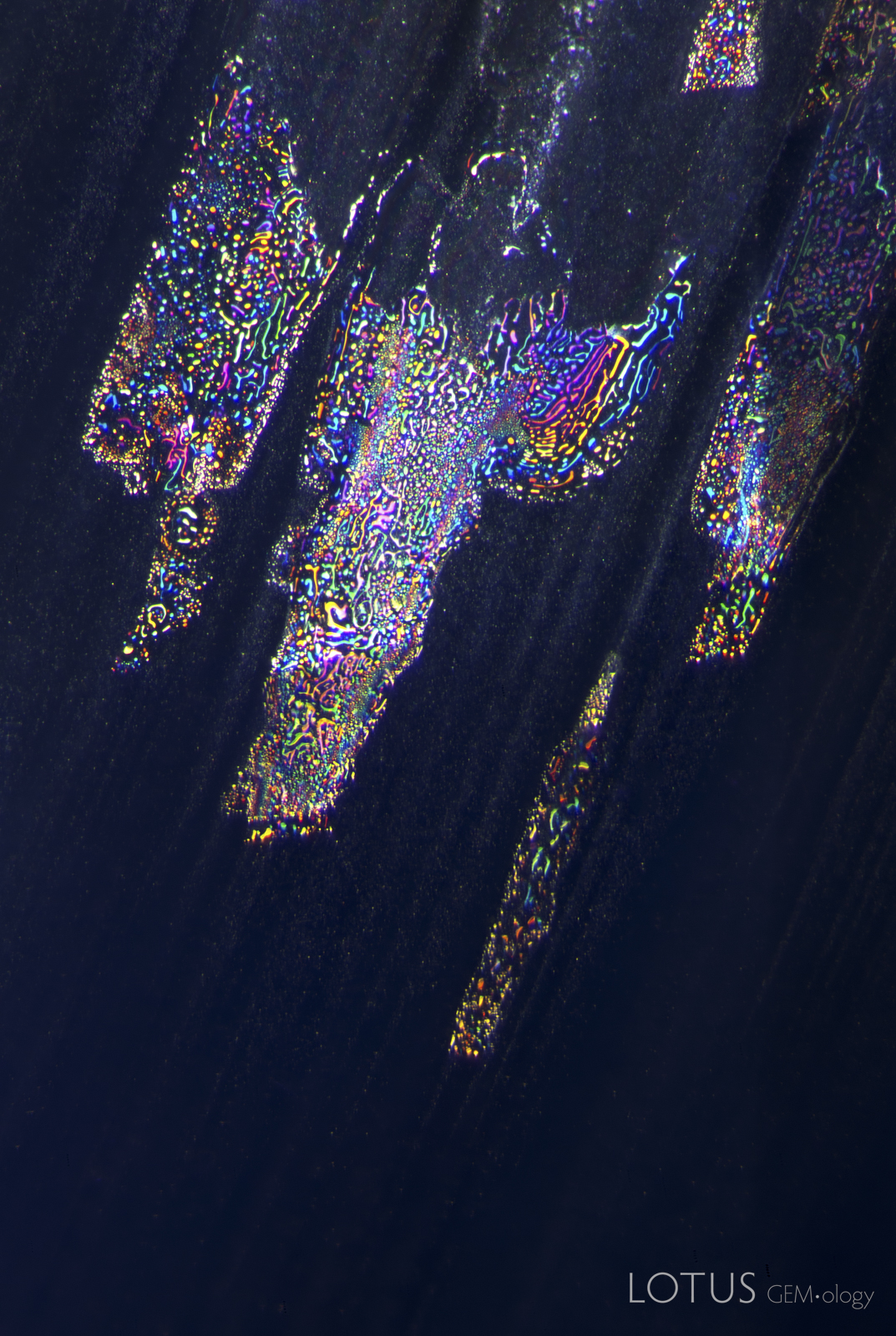
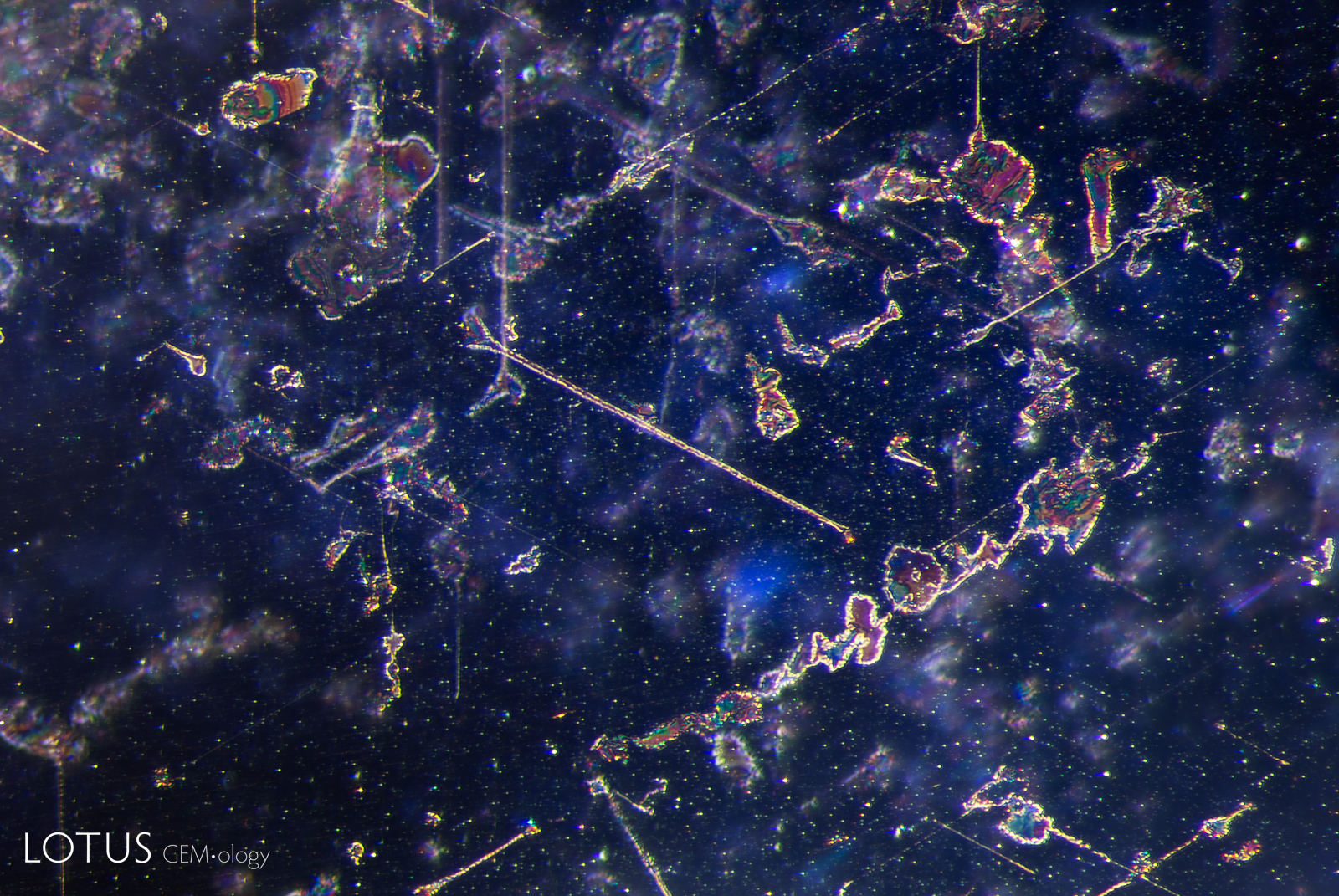
These dotted outlines, sometimes called “crop circles,” can occasionally be found in blue sapphires heated at high temperatures. While frequently associated with beryllium diffused stones, they are not conclusive evidence of diffusion treatment. The stone pictured here was heated, but showed no evidence of beryllium diffusion.
Natural Sapphire •
Sri Lanka (Ceylon) •
Enhancements:
Heat (H) •
Lighting Conditions:
Dark Field + Oblique Fiber Optic
Photographer:
E. Billie Hughes •
Image Number:
A-005-6689-1
• Field of View = 2mm
Hughes, R.W., Manorotkul, W. and Hughes, E.B. (2017) Ruby & Sapphire: A Gemologist's Guide. Bangkok, Lotus Publishing, 816 pp.; RWHL*.
Du Toit, G., Hughes, R.W. et al. (2006) Beryllium-treated blue sapphires. Bangkok, www.ruby-sapphire.com, RWHL.
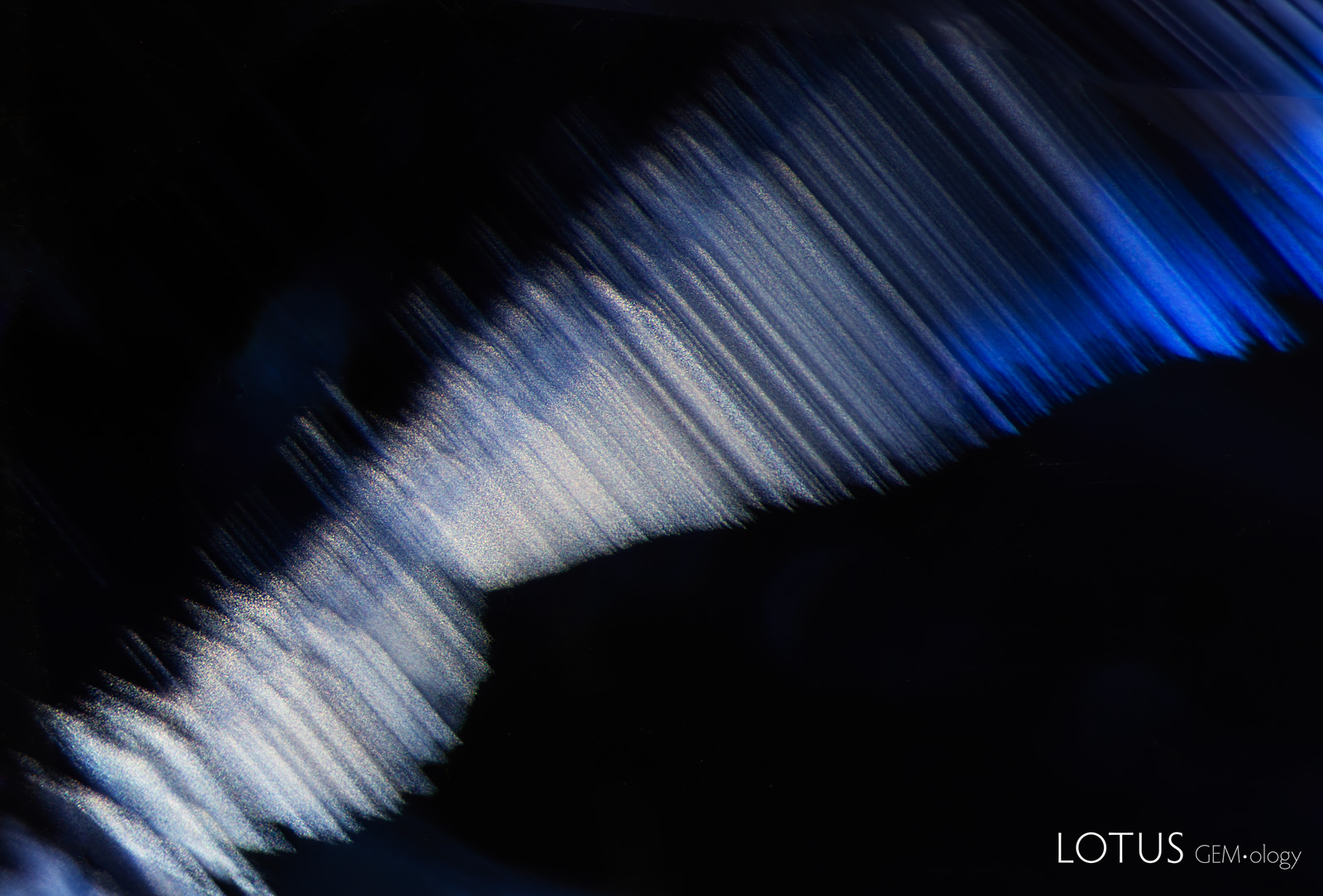
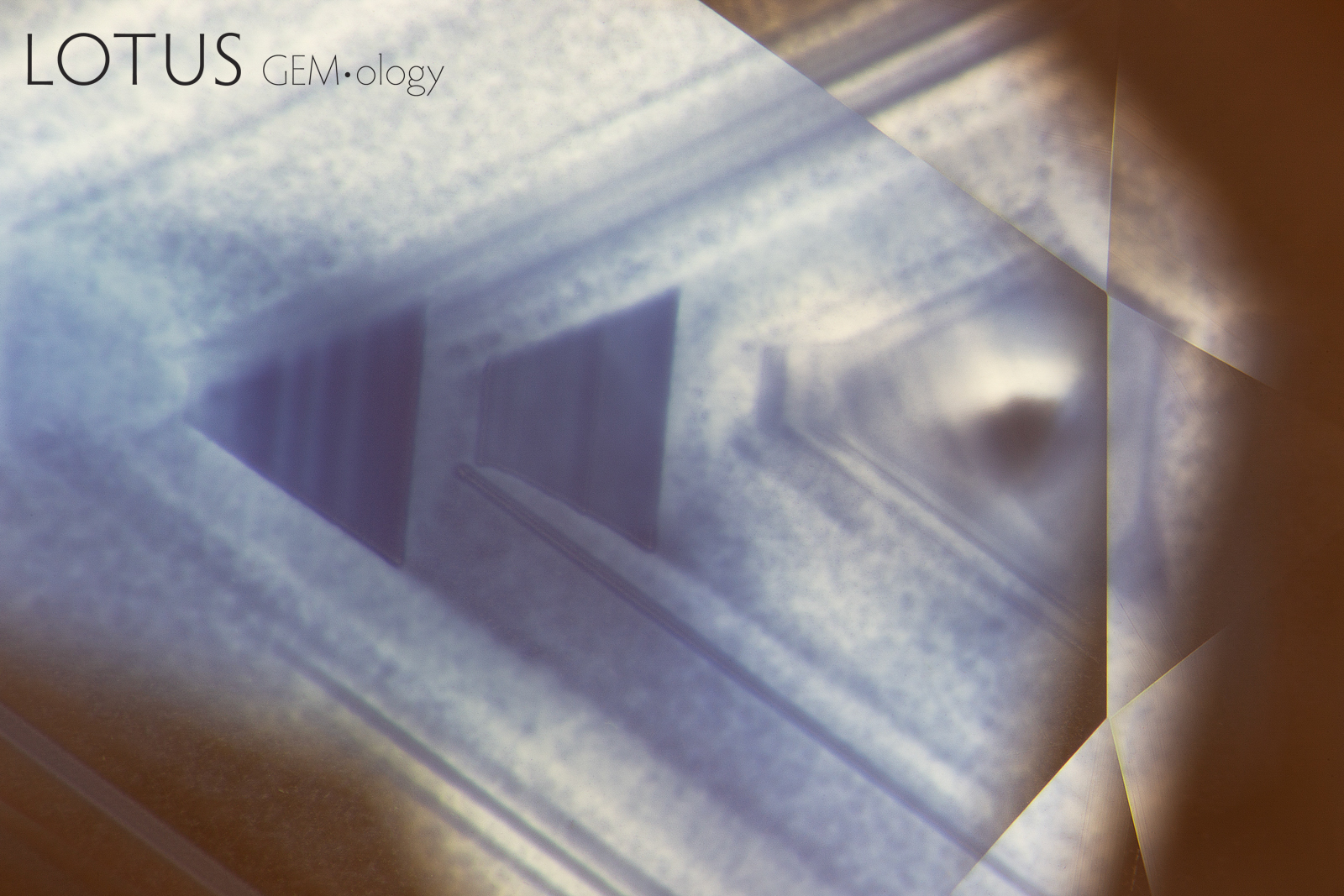
This high temperature heat-treated blue sapphire from a basalt-related source displays zoned internal diffusion. The high temperature (usually above 1600˚C) causes the rutile needles to dissolve and release titanium into the host sapphire, the titanium pairs with the iron in the stone and this creates blue color around the rutile silk remnants.
Natural Sapphire •
Basalt Related •
Enhancements:
Heat (H) •
Lighting Conditions:
Dark Field
Photographer:
Kaylan Khourie •
Image Number:
A-005-2573-1
• Field of View = 3.7mm
• Magnification = 4.8x
Hughes, R.W., Manorotkul, W. and Hughes, E.B. (2017) Ruby & Sapphire: A Gemologist's Guide. Bangkok, Lotus Publishing, 816 pp.; RWHL*.
Some of the small particles in this sapphire are surrounded blue color concentrations. Often termed “internal diffusion,” this occurs when titanium from rutile dissolves (enters into solid solution) into the surrounding sapphire as a result of heat treatment. Once in solid solution, the Ti atoms combine with Fe atoms, producing an intervalence charge transfer that absorbs light.
Natural Sapphire •
Pakistan (Kashmir); Batakundi •
Enhancements:
Heat (H) •
Lighting Conditions:
Diffuse Light Field (Transmitted Light)
Photographer:
E. Billie Hughes •
Image Number:
A-005-1643-1
• Field of View = 5.1mm
Hughes, R.W., Manorotkul, W. and Hughes, E.B. (2017) Ruby & Sapphire: A Gemologist's Guide. Bangkok, Lotus Publishing, 816 pp.; RWHL*.
In this sapphire originating from a basalt-related source, color concentrated in the cloudy zones suggests that it has been subjected to heat treatment. Also visible are zoned clouds of fine exsolved particles.
Natural Sapphire •
Basalt Related •
Enhancements:
Heat (H) •
Lighting Conditions:
Fiber Optic: Oblique
Photographer:
Richard W. Hughes •
Image Number:
A-004-9911-1
• Field of View = 7mm
Koivula, J.I. (1987) Internal diffusion. Journal of Gemmology, Vol. 20, No. 7/8, pp. 474–477; RWHL*.
Hughes, R.W., Manorotkul, W. and Hughes, E.B. (2017) Ruby & Sapphire: A Gemologist's Guide. Bangkok, Lotus Publishing, 816 pp.; RWHL*.
205 Total Images
Results: 1 – 12 | Page 1 of 18 Pages
Search the Complete Hyperion Database
Heat treatment can alter inclusions and other internal features in sapphire. Changes may include modification or dissolution of rutile silk, alteration of mineral crystals, decrepitation of fluid inclusions, changes to healed fissures and the formation of heat-related features. Such evidence can be important in determining whether a sapphire has been heated.
Heated Sapphire Inclusion Photomicrographs
The Hyperion heated sapphire gallery includes microscopic features documented in heat-treated natural sapphires. Each entry is accompanied by descriptive information and, where available, references to the gemological literature.
What Inclusions Can Reveal About Heat Treatment
Microscopic examination is an important part of detecting heat treatment in sapphire. The condition of mineral inclusions, rutile silk, fissures and other internal features can provide evidence of exposure to elevated temperatures. These features are evaluated together with other gemological observations when determining treatment status.
Hyperion combines inclusion photomicrography with supporting gemological information so that heat-related features can be compared with documented examples in treated sapphires.
About Hyperion
Hyperion is the Lotus Gemology searchable inclusion database. It allows users to browse gemstone inclusions by gem type, geographic origin, treatment and keyword.