Heated Sapphire Inclusions
Explore inclusions in heat-treated sapphire in Hyperion, the Lotus Gemology inclusion database. Hyperion contains photomicrographs of inclusions and internal features in natural sapphires that have been subjected to heat treatment, documented with information on geographic origin, lighting conditions, field of view, photographer and published references.
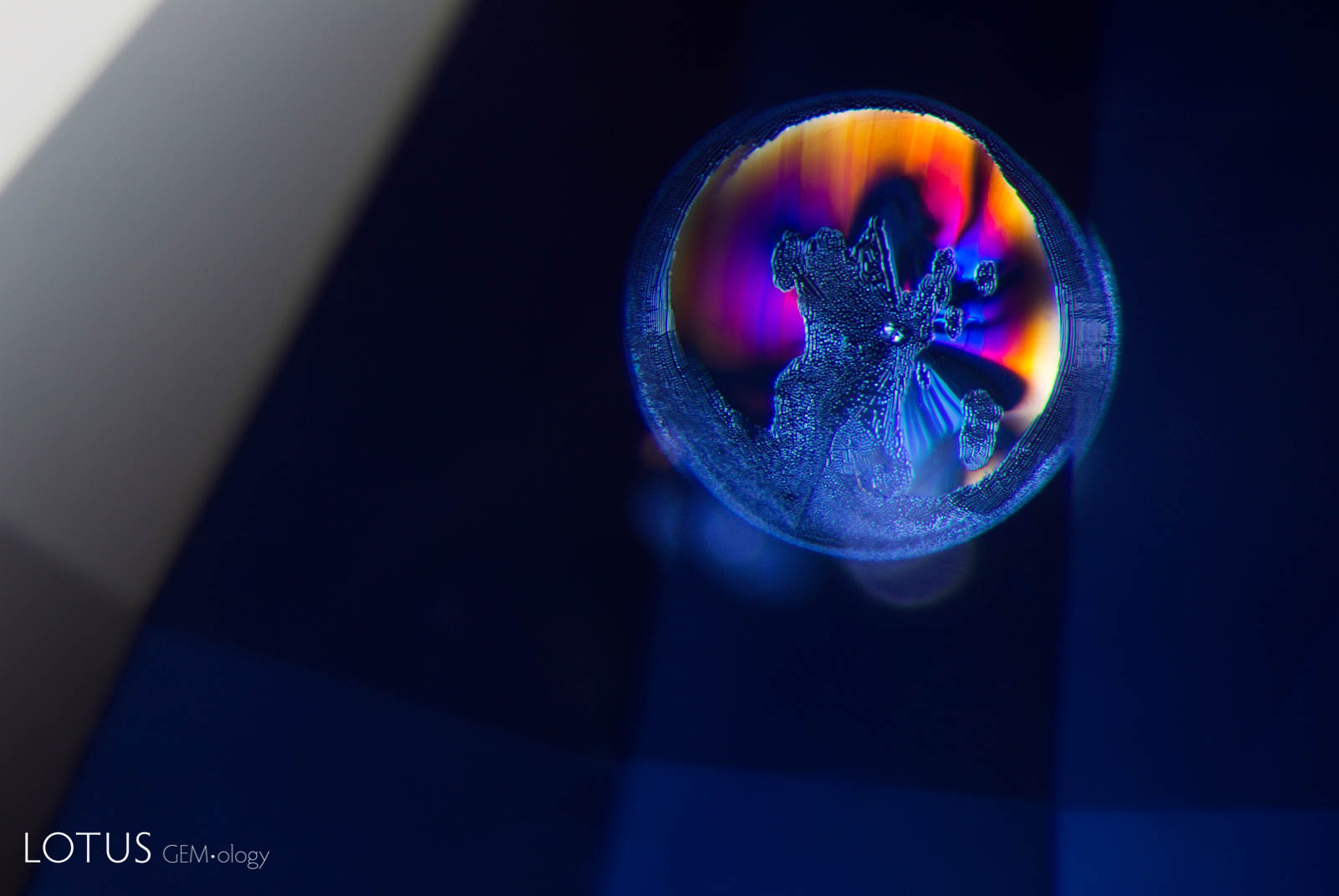
Unusual birefringent crystals in a low-relief partially healed fissure in a sapphire treated with high-temperature heat plus modest pressure (HT+P). When tested with Lotus Gemology’s microraman, they proved to be corundum. It is thought that they crystallized during the treatment process. FOV 2 mm
Natural Sapphire •
Madagascar •
Enhancements:
Heat (H) •
Lighting Conditions:
Diffuse Light Field + Crossed Polars
Photographer:
E. Billie Hughes •
Image Number:
A-003-3169-1
Unusual birefringent crystals in a low-relief partially healed fissure in a sapphire treated with high-temperature heat plus modest pressure (HT+P). When tested with Lotus Gemology’s microraman, they proved to be corundum. It is thought that they crystallized during the treatment process. FOV 2 mm
Natural Sapphire •
Madagascar •
Enhancements:
Heat (H) •
Lighting Conditions:
Diffuse Light Field (Transmitted Light)
Photographer:
E. Billie Hughes •
Image Number:
A-003-3169-2
Unusual birefringent crystals in a low-relief partially healed fissure in a sapphire treated with high-temperature heat plus modest pressure (HT+P). When tested with Lotus Gemology’s microraman, they proved to be corundum. It is thought that they crystallized during the treatment process.
Natural Sapphire •
Sri Lanka (Ceylon) •
Enhancements:
Heat (H) •
Lighting Conditions:
Light Field (Transmitted Light)
Photographer:
E. Billie Hughes •
Image Number:
A-003-3171-2
• Field of View = 4mm
Unusual birefringent crystals in a low-relief partially healed fissure in a sapphire treated with high-temperature heat plus modest pressure (HT+P). When tested with Lotus Gemology’s microRaman, they proved to be corundum. It is thought that they crystallized during the treatment process.
Natural Sapphire •
Sri Lanka (Ceylon) •
Enhancements:
Heat (H) •
Lighting Conditions:
Diffuse Light Field + Crossed Polars
Photographer:
E. Billie Hughes •
Image Number:
A-003-3171-1
• Field of View = 4mm
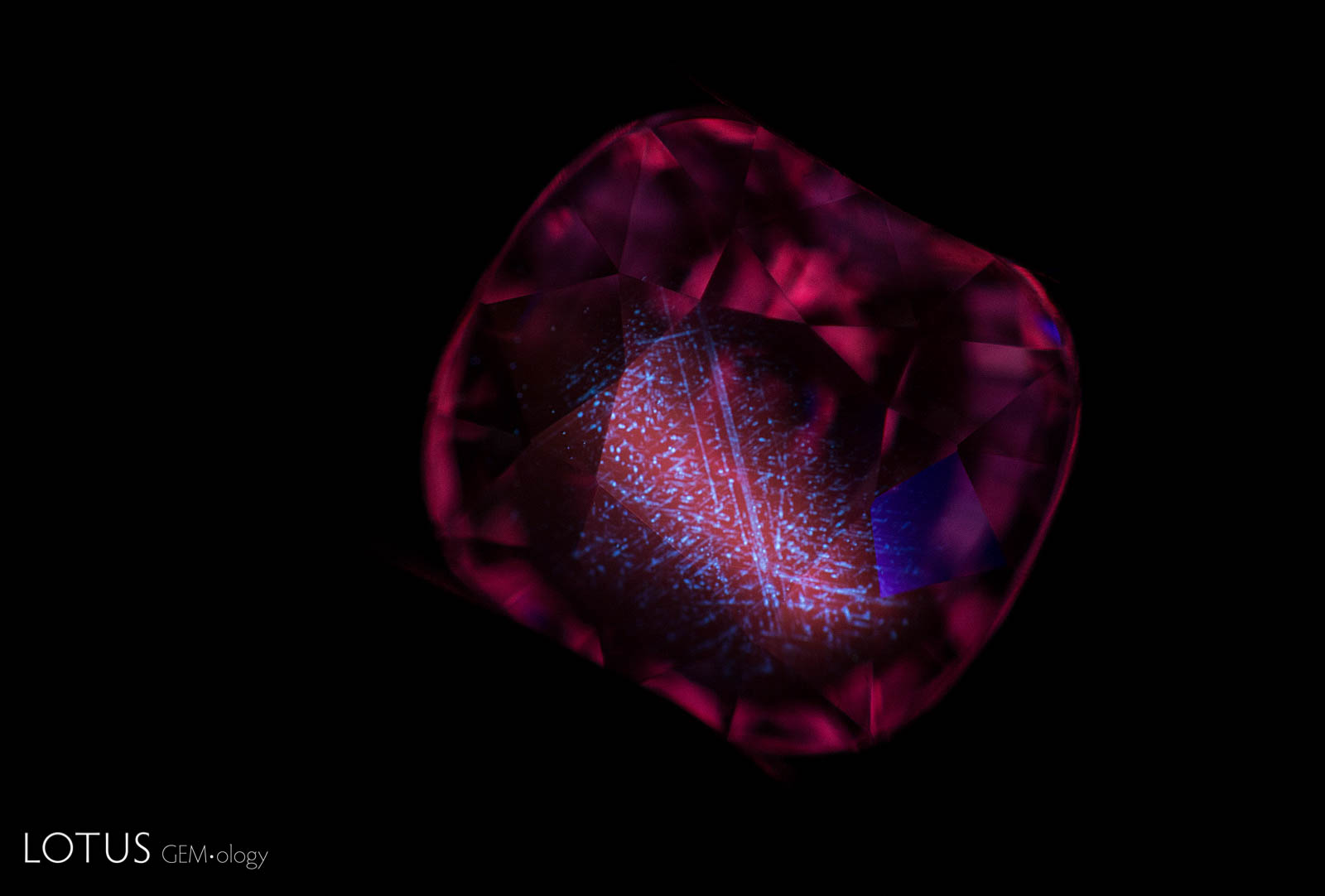
Examining the same stone with a powerful shortwave light source shows the chalky fluorescence in a similar pattern, confirming the heat treatment.
Natural Sapphire •
Basalt Related •
Enhancements:
Heat (H) •
Lighting Conditions:
Ultraviolet: Shortwave
Photographer:
E. Billie Hughes •
Image Number:
A-003-3523-1
In this heated sapphire, one can clearly see “ink spot” internal diffusion, caused when the heat treatment partially dissolves the rutile silk, sending titanium into solid solution. This is a sure sign of high-temperature heat treatment. Check the next photo for the appearance in shortwave ultraviolet light.
Natural Sapphire •
Basalt Related •
Enhancements:
Heat (H) •
Lighting Conditions:
Dark Field
Photographer:
Richard W. Hughes •
Image Number:
A-003-3523-2
Angular cloud of particles in sapphire. Such dense “texture clouds” are often a sign of high-temperature heat treatment; FOV~ 7 mm
Natural Sapphire •
Sri Lanka (Ceylon) •
Enhancements:
Heat (H) •
Lighting Conditions:
Fiber Optic: Oblique
Photographer:
E. Billie Hughes •
Image Number:
A-003-1067-1
Sapphires treated with high temperatures and modest pressure (HT+P) sometimes contain ghost-like fingerprints with low relief crystals, when viewed in transmitted light. In crossed polars, these crystals stand out clearly and are birefringent. Using Lotus Gemology’s micro Raman unit, we have identified these crystals as recrystallized corundum.
Natural Sapphire •
Not Determinable •
Enhancements:
Heat (H) •
Lighting Conditions:
Light Field (Transmitted Light)
Photographer:
E. Billie Hughes •
Image Number:
A-003-1024-2
Sapphires treated with high temperatures and modest pressure (HT+P) sometimes contain ghost-like fingerprints with low relief crystals, when viewed in transmitted light. In crossed polars, these crystals stand out clearly and are birefringent. Using Lotus Gemology’s micro Raman unit, we have identified these crystals as recrystallized corundum.
Natural Sapphire •
Not Determinable •
Enhancements:
Heat (H) •
Lighting Conditions:
Diffuse Light Field + Crossed Polars
Photographer:
E. Billie Hughes •
Image Number:
A-003-1024-1
The fingerprint in this sapphire shows clear signs of heat alteration. Note the frosty, hazy appearance between the negative crystals, which results from micro-fractures to release the pressure caused by heating; also note that each negative crystal tube has begun to neck down and become more rounded.
Natural Sapphire •
Sri Lanka (Ceylon) •
Enhancements:
Heat (H) •
Lighting Conditions:
Dark Field + Diffuse Fiber Optic
Photographer:
E. Billie Hughes •
Image Number:
A-003-0523-1
The melted, shiny fissure around this small crystal represents clear evidence that the sapphire host has been heat treated.
Natural Sapphire •
Sri Lanka (Ceylon) •
Enhancements:
Heat (H) •
Lighting Conditions:
Fiber Optic: Diffuse Oblique
Photographer:
E. Billie Hughes •
Image Number:
A-002-9394-1
Chalky shortwave fluorescence follows the pattern of partially dissolved silk in this heated pink sapphire.
Natural Sapphire •
Myanmar (Burma); Mogok/Namya •
Enhancements:
Heat (H) •
Lighting Conditions:
Ultraviolet: Shortwave
Photographer:
E. Billie Hughes •
Image Number:
A-002-7230-2
Heat treatment can alter inclusions and other internal features in sapphire. Changes may include modification or dissolution of rutile silk, alteration of mineral crystals, decrepitation of fluid inclusions, changes to healed fissures and the formation of heat-related features. Such evidence can be important in determining whether a sapphire has been heated.
Heated Sapphire Inclusion Photomicrographs
The Hyperion heated sapphire gallery includes microscopic features documented in heat-treated natural sapphires. Each entry is accompanied by descriptive information and, where available, references to the gemological literature.
What Inclusions Can Reveal About Heat Treatment
Microscopic examination is an important part of detecting heat treatment in sapphire. The condition of mineral inclusions, rutile silk, fissures and other internal features can provide evidence of exposure to elevated temperatures. These features are evaluated together with other gemological observations when determining treatment status.
Hyperion combines inclusion photomicrography with supporting gemological information so that heat-related features can be compared with documented examples in treated sapphires.
About Hyperion
Hyperion is the Lotus Gemology searchable inclusion database. It allows users to browse gemstone inclusions by gem type, geographic origin, treatment and keyword.