Heated Sapphire Inclusions
Explore inclusions in heat-treated sapphire in Hyperion, the Lotus Gemology inclusion database. Hyperion contains photomicrographs of inclusions and internal features in natural sapphires that have been subjected to heat treatment, documented with information on geographic origin, lighting conditions, field of view, photographer and published references.
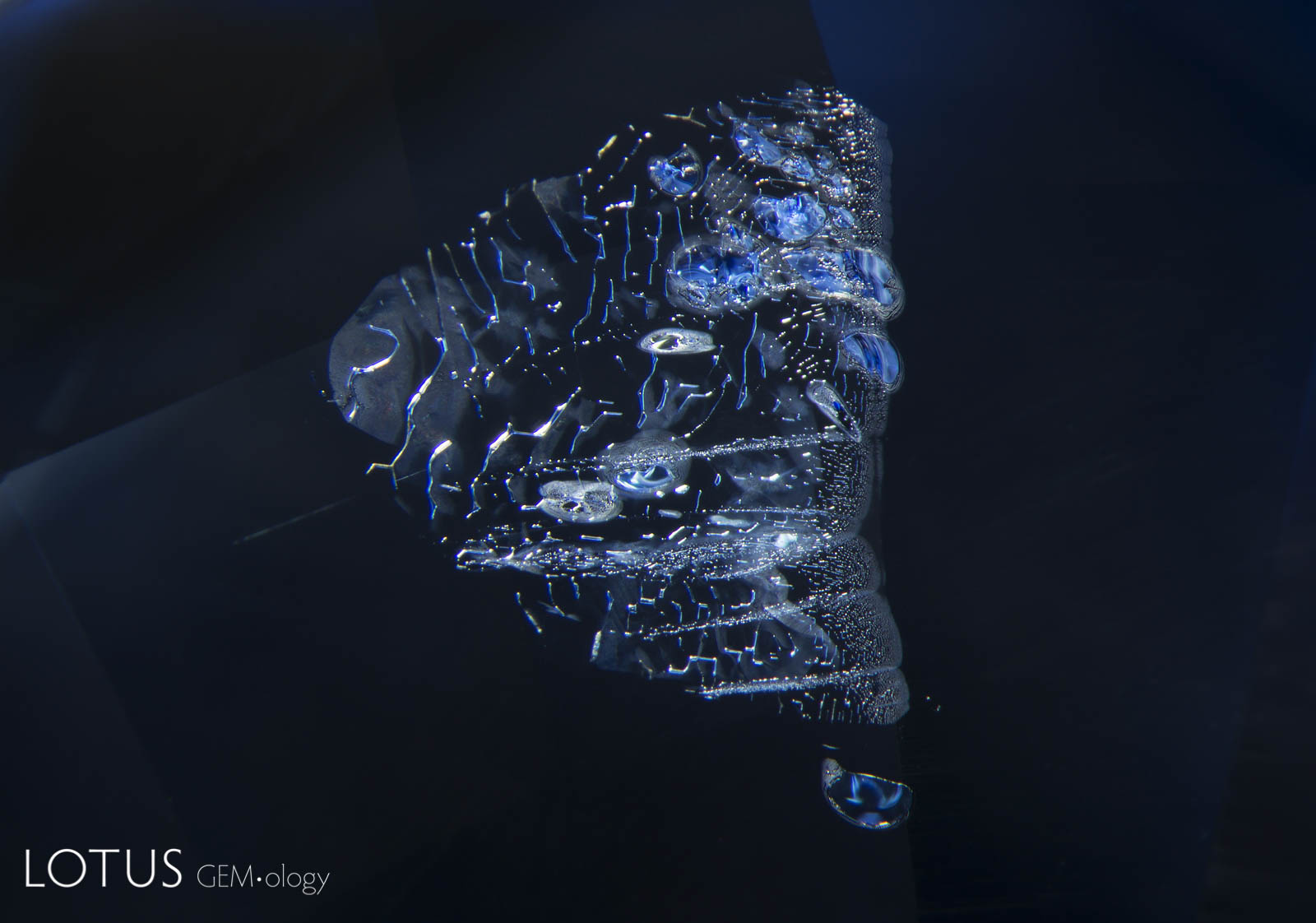
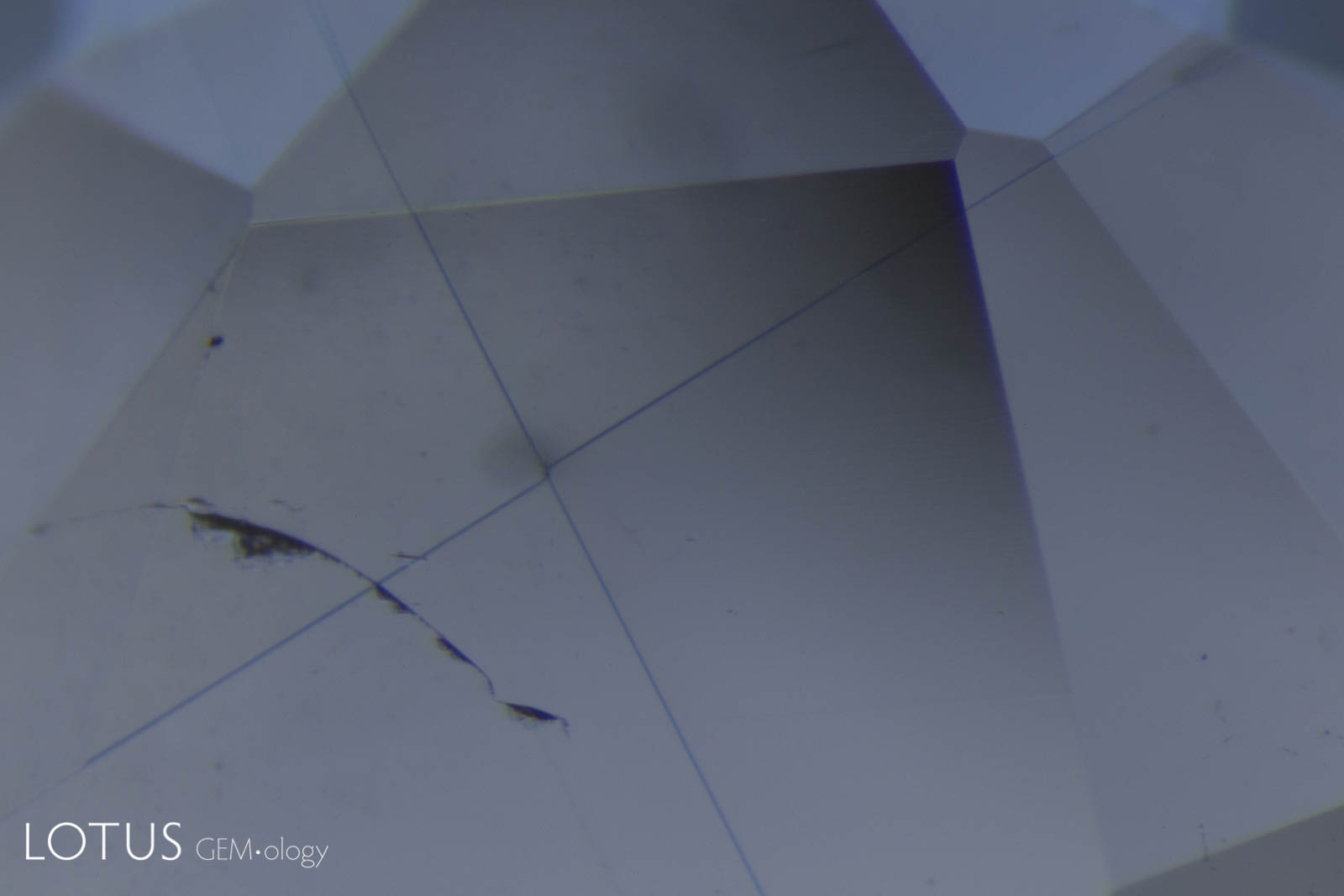
Irregular inclusions of unknown nature lying in the basal plane are seen in reflected light within this heat-treated Sri Lanka sapphire. These have sometimes been associated with beryllium diffusion, but are not diagnostic for it.
Natural Sapphire •
Sri Lanka (Ceylon) •
Enhancements:
Heat (H) •
Lighting Conditions:
Fiber Optic: Diffuse Overhead
Photographer:
Richard W. Hughes •
Image Number:
P-10129-1
http://www.ruby-sapphire.com/beryllium-treated-blue-sapphire.htm
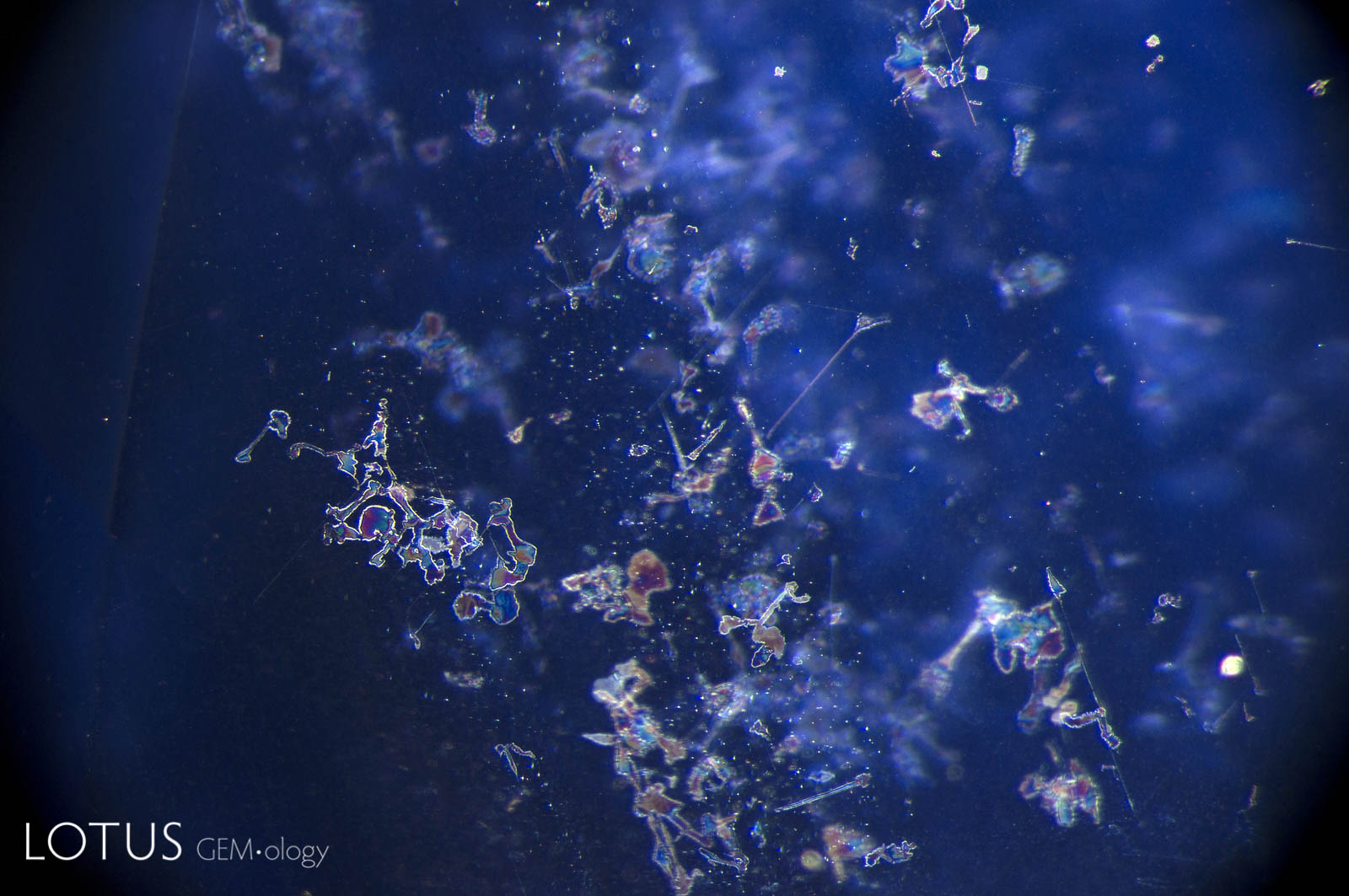
When Sri Lankan yellow sapphires with exsolved particles are heat treated, magnesium exits the particles and creates yellow-producing trapped-hole color centers. The result is color concentration around the particles, a process termed “internal diffusion” by gemologist, John Koivula.
Natural Sapphire •
Sri Lanka (Ceylon) •
Enhancements:
Heat (H) •
Lighting Conditions:
Fiber Optic: Oblique
Photographer:
Richard W. Hughes •
Image Number:
A-001-1406-2
Koivula, J.I. (1987) Internal diffusion. Journal of Gemmology, Vol. 20, No. 7/8, pp. 474–477; RWHL*.
When Sri Lankan yellow sapphires with exsolved particles are heat treated, magnesium exits the particles and creates yellow-producing trapped-hole color centers. The result is color concentration around the particles, a process termed “internal diffusion” by gemologist, John Koivula.
Natural Sapphire •
Sri Lanka (Ceylon) •
Enhancements:
Heat (H) •
Lighting Conditions:
Diffuse Light Field (Transmitted Light)
Photographer:
Richard W. Hughes •
Image Number:
A-001-1406-1
Koivula, J.I. (1987) Internal diffusion. Journal of Gemmology, Vol. 20, No. 7/8, pp. 474–477; RWHL*.
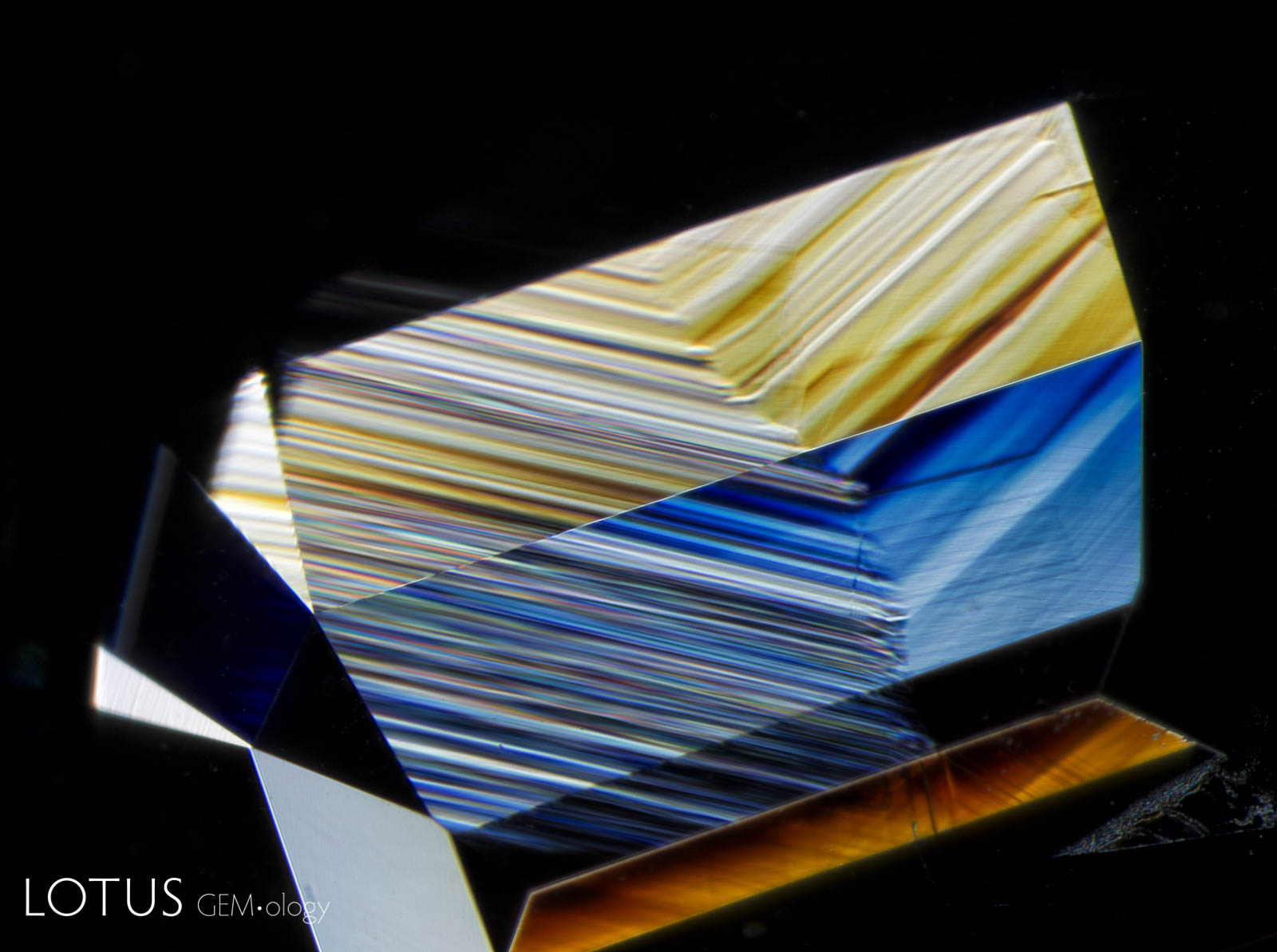
Crossing twin planes in a sapphire from a basaltic source. These are secondary glide twins, created by pressure after the stone grew, and form parallel to the rhombohedron faces, intersecting at 86.1 and 93.9°.
Natural Sapphire •
Not Determinable •
Enhancements:
Heat (H) •
Lighting Conditions:
Diffuse Light Field (Transmitted Light)
Photographer:
Richard W. Hughes •
Image Number:
A-001-1099-1
Hughes, R.W. (1997) Ruby & Sapphire. Boulder, CO, RWH Publishing, 512 pp.; RWHL*.
When a rutile-silk containing sapphire (such as this stone from Nigeria) is heated, the titanium from the rutile moves into solid solution in the sapphire, coloring the area around the rutile blue, creating a distinctive “ink spot” internal diffusion pattern.
Natural Sapphire •
Thailand (Siam); Bo Ploi •
Enhancements:
Heat (H) •
Lighting Conditions:
Diffuse Light Field (Transmitted Light)
Photographer:
Richard W. Hughes •
Image Number:
A-001-1022-1
Koivula, J.I. (1987) Internal diffusion. Journal of Gemmology, Vol. 20, No. 7/8, pp. 474–477; RWHL*.
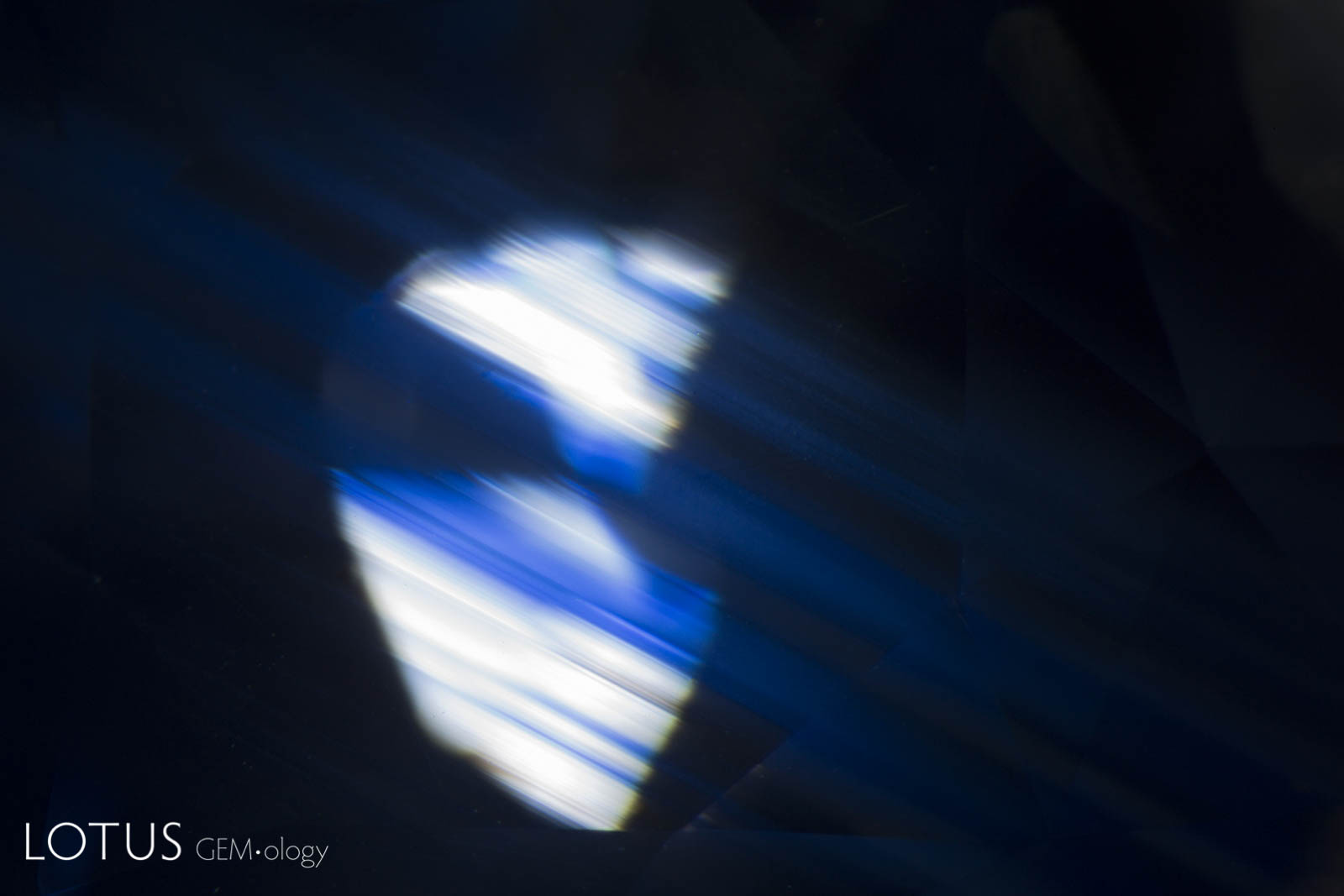
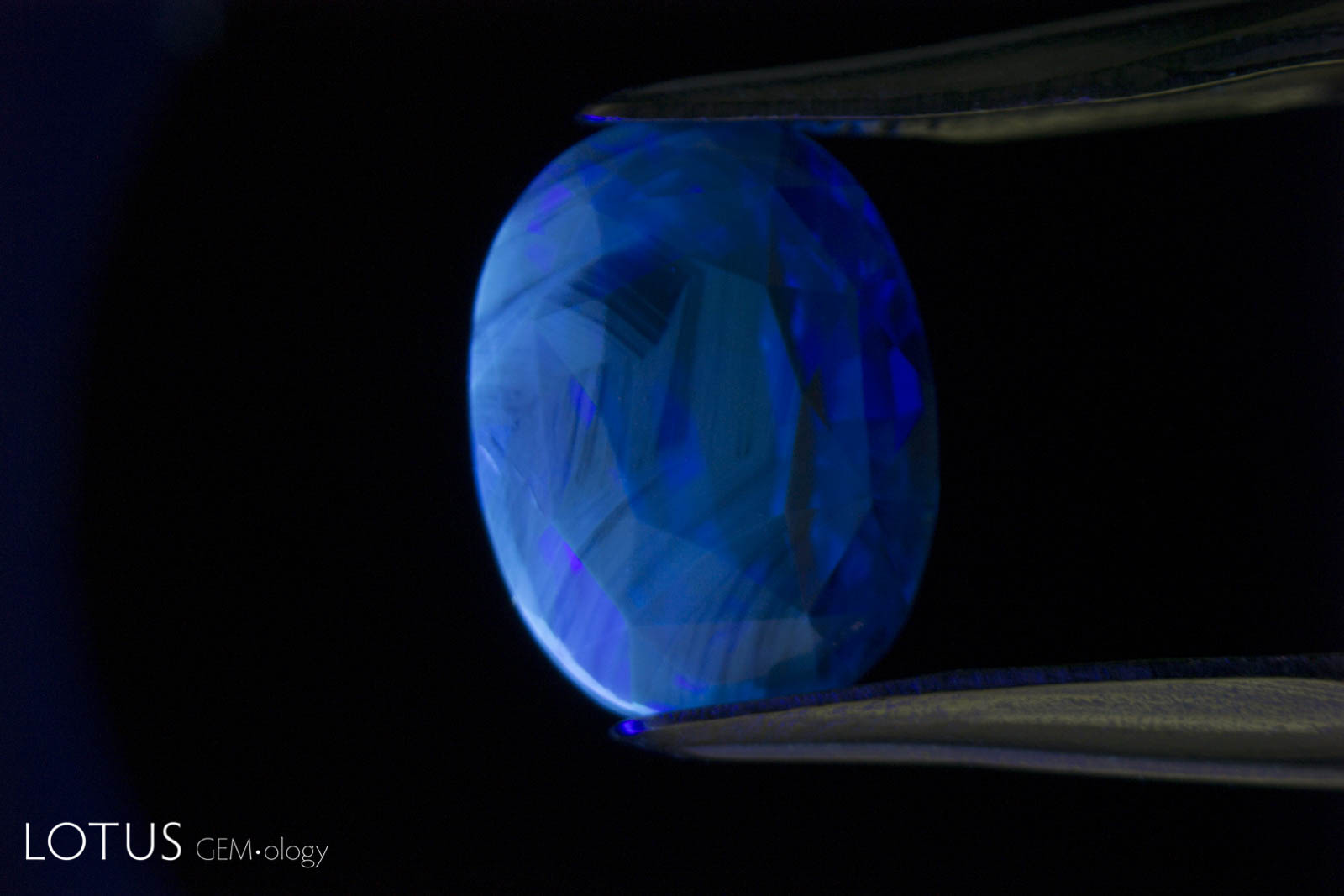
Pink sapphires from Sri Lanka are routinely heated at relatively low temperatures (>1200°C) to drive off the blue tint. While this rarely changes the inclusions, it can be unmasked by reference to the shortwave ultraviolet fluorescence, which often develops chalky zones, as shown in this stone.
Natural Sapphire •
Sri Lanka (Ceylon) •
Enhancements:
Heat (H) •
Lighting Conditions:
Ultraviolet: Shortwave
Photographer:
Richard W. Hughes •
Image Number:
A-001-0957-1
Hughes, R.W. and Emmett, J.L. (2005) Heat Seeker: UV fluorescence as a gemological tool. The Guide, Vol. 24, No. 5, Part 1, Sept.–Oct., pp. 1, 4–7; RWHL*.
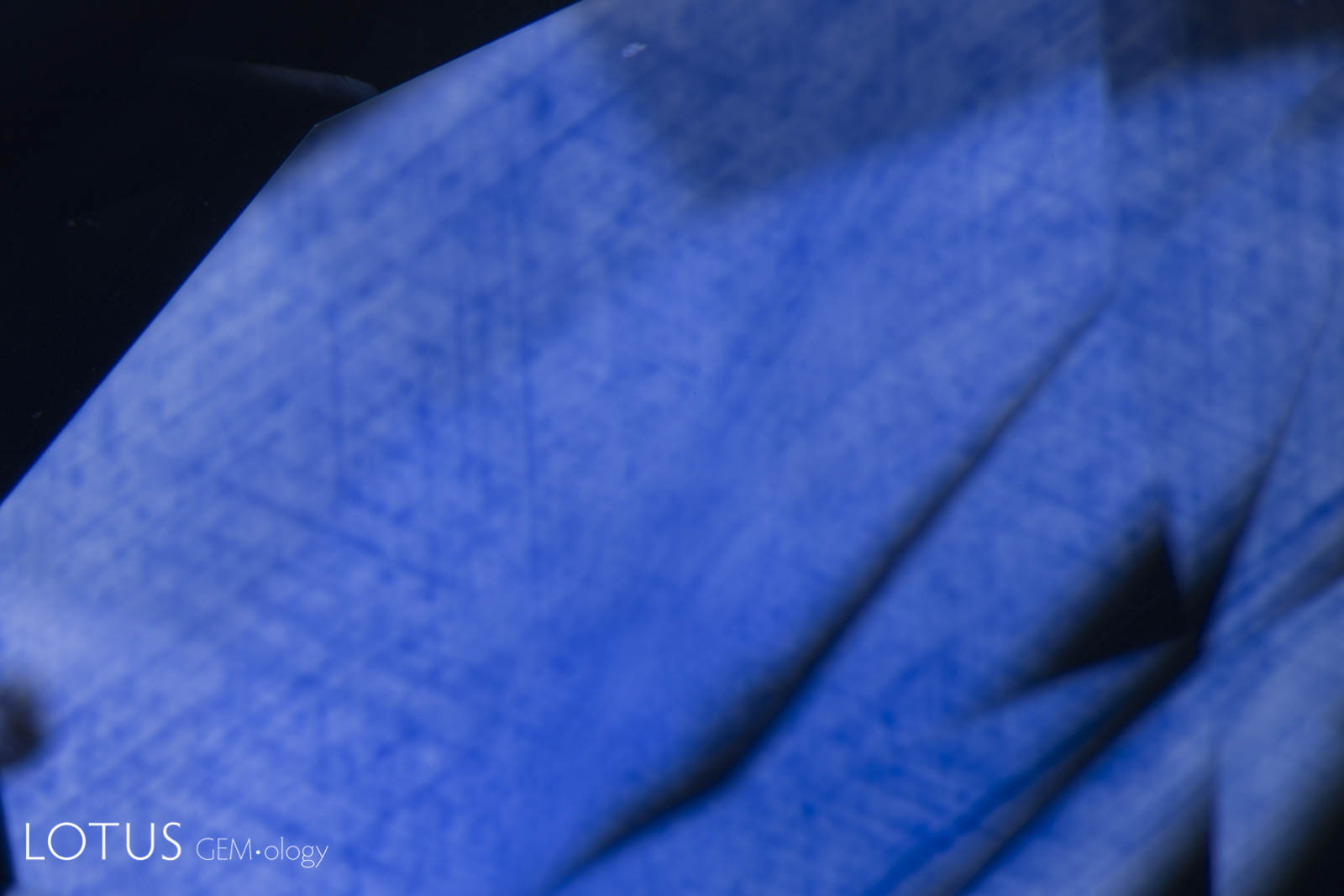
When low-iron sapphires are heat treated, a chalky shortwave fluorescence often develops. This generally is related to colorless or lightly colored regions of the gem, and so follows the crystallographic structure, as is seen here. This is strong evidence of heat treatment.
Natural Sapphire •
Sri Lanka (Ceylon) •
Enhancements:
Heat (H) •
Lighting Conditions:
Ultraviolet: Shortwave
Photographer:
E. Billie Hughes •
Image Number:
A-001-1014-1
Hughes, R.W. and Emmett, J.L. (2005) Heat Seeker: UV fluorescence as a gemological tool. The Guide, Vol. 24, No. 5, Part 1, Sept.–Oct., pp. 1, 4–7; RWHL*.
When a rutile-silk containing sapphire (such as this stone from Sri Lanka) is heated, the titanium from the rutile moves into solid solution in the sapphire, coloring the area around the rutile blue, creating a distinctive “ink spot” internal diffusion pattern.
Natural Sapphire •
Sri Lanka (Ceylon) •
Enhancements:
Heat (H) •
Lighting Conditions:
Light Field + Oblique Fiber Optic
Photographer:
Richard W. Hughes •
Image Number:
A-001-0988-2
Koivula, J.I. (1987) Internal diffusion. Journal of Gemmology, Vol. 20, No. 7/8, pp. 474–477; RWHL*.
193 Total Images
Results: 157 – 168 | Page 14 of 17 Pages
Heat treatment can alter inclusions and other internal features in sapphire. Changes may include modification or dissolution of rutile silk, alteration of mineral crystals, decrepitation of fluid inclusions, changes to healed fissures and the formation of heat-related features. Such evidence can be important in determining whether a sapphire has been heated.
Heated Sapphire Inclusion Photomicrographs
The Hyperion heated sapphire gallery includes microscopic features documented in heat-treated natural sapphires. Each entry is accompanied by descriptive information and, where available, references to the gemological literature.
What Inclusions Can Reveal About Heat Treatment
Microscopic examination is an important part of detecting heat treatment in sapphire. The condition of mineral inclusions, rutile silk, fissures and other internal features can provide evidence of exposure to elevated temperatures. These features are evaluated together with other gemological observations when determining treatment status.
Hyperion combines inclusion photomicrography with supporting gemological information so that heat-related features can be compared with documented examples in treated sapphires.
About Hyperion
Hyperion is the Lotus Gemology searchable inclusion database. It allows users to browse gemstone inclusions by gem type, geographic origin, treatment and keyword.
Search the Complete Hyperion Database