Heated Sapphire Inclusions
Explore inclusions in heat-treated sapphire in Hyperion, the Lotus Gemology inclusion database. Hyperion contains photomicrographs of inclusions and internal features in natural sapphires that have been subjected to heat treatment, documented with information on geographic origin, lighting conditions, field of view, photographer and published references.
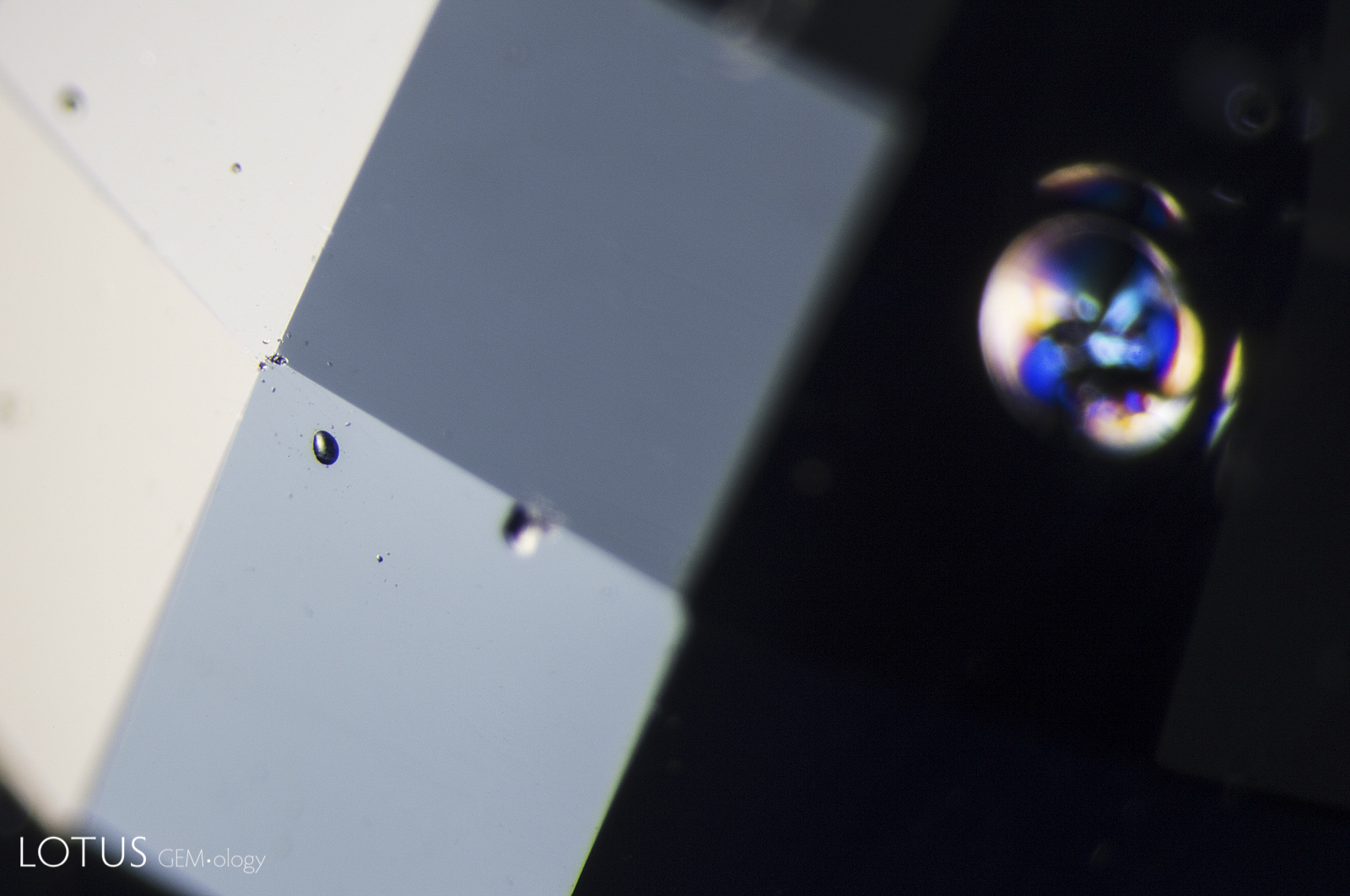
In the foreground on the left, a spall mark is visible, providing a piece of evidence that this stone was heated. Although it looks like a small water droplet, it is “frozen” in place and cannot be rubbed or scraped off. In the background, we also see a shiny melted crystal “discoid,” confirming that the stone is heated.
Natural Sapphire •
Sri Lanka (Ceylon) •
Enhancements:
Heat (H) •
Lighting Conditions:
Fiber Optic: Diffuse Overhead
Photographer:
E. Billie Hughes •
Image Number:
A-001-5147-1
Heat-altered fingerprint in a heat-treated yellow sapphire from Sri Lanka. Note the small burst clouds around the fingerprint channels.
Natural Sapphire •
Sri Lanka (Ceylon) •
Enhancements:
Heat (H) •
Lighting Conditions:
Dark Field
Photographer:
Richard W. Hughes •
Image Number:
A-001-4574-1
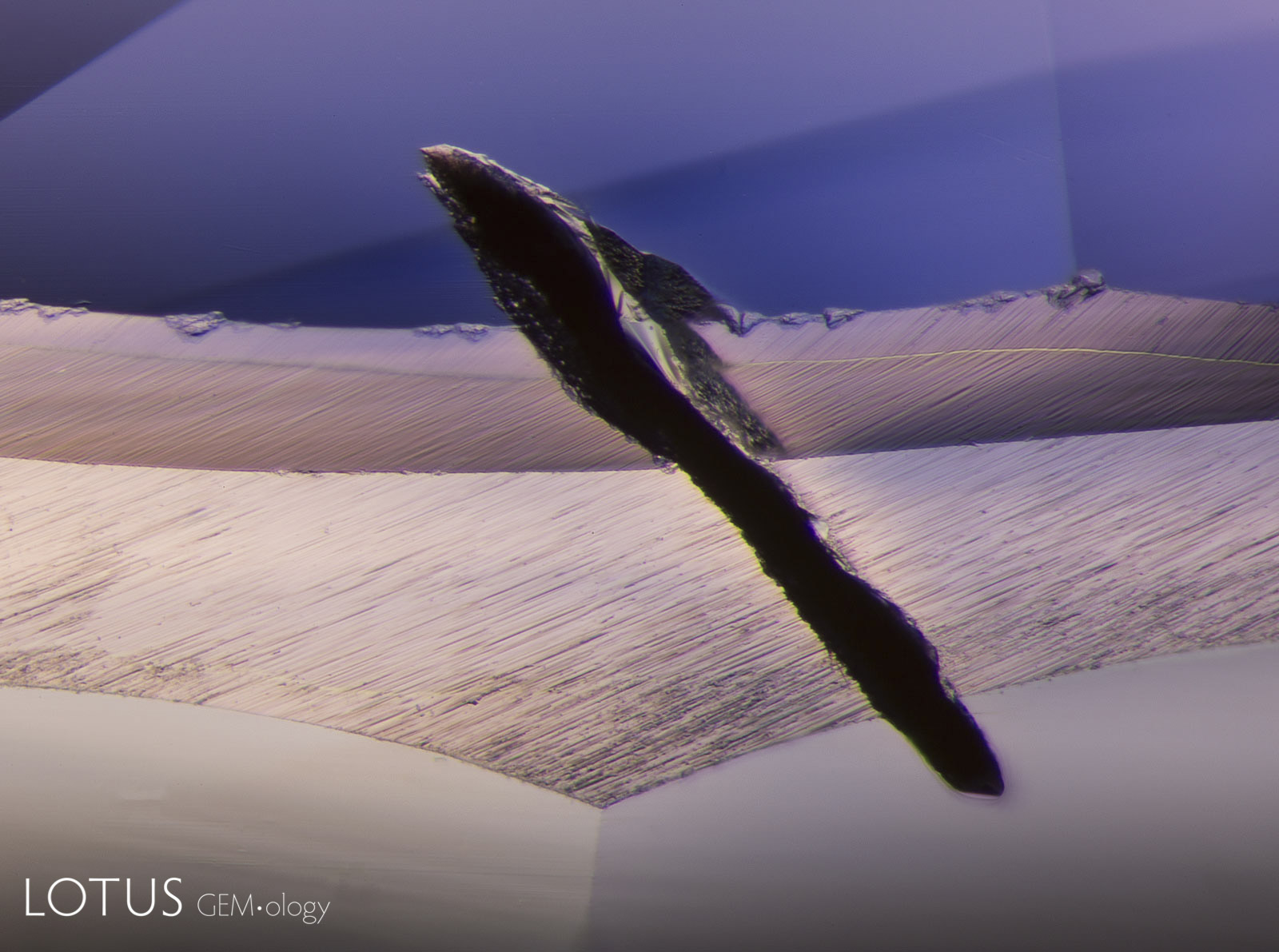
A narrow and deeply indented natural on the girdle of a Madagascar sapphire. These features are quite common on Madagascar sapphires of all colors.
Natural Sapphire •
Madagascar •
Enhancements:
Heat (H) •
Lighting Conditions:
Diffuse Light Field (Transmitted Light)
Photographer:
E. Billie Hughes •
Image Number:
A-001-3921-1
When a rutile-silk containing sapphire is heated, titanium from the rutile dissolves into the surrounding sapphire. Once in solid solution, the titanium reacts with iron, creating a blue color. The result is tiny blue halos surrounding the remnants of the rutile silk, a process dubbed “inkspot internal diffusion” by John Koivula. This partially dissolved silk with blue color concentrations is a clear sign that the sapphire was heated.
Natural Sapphire •
Sri Lanka (Ceylon) •
Enhancements:
Heat (H) •
Lighting Conditions:
Diffuse Light Field (Transmitted Light)
Photographer:
E. Billie Hughes •
Image Number:
A-001-3417-1
Koivula, J.I. (1987) Internal diffusion. Journal of Gemmology, Vol. 20, No. 7/8, pp. 474–477; RWHL*.
Hughes, R.W. (1997) Ruby & Sapphire. Boulder, CO, RWH Publishing, 512 pp.; RWHL*.
A melted “snowball” crystal is ensconced in heat-altered fingerprints in this heated sapphire from Sri Lanka. Such “snowballs” and bubbly fingerprints are typical of stones heated at high temperatures.
Natural Sapphire •
Sri Lanka (Ceylon) •
Enhancements:
Heat (H) •
Lighting Conditions:
Dark Field
Photographer:
E. Billie Hughes •
Image Number:
A-001-3338-1
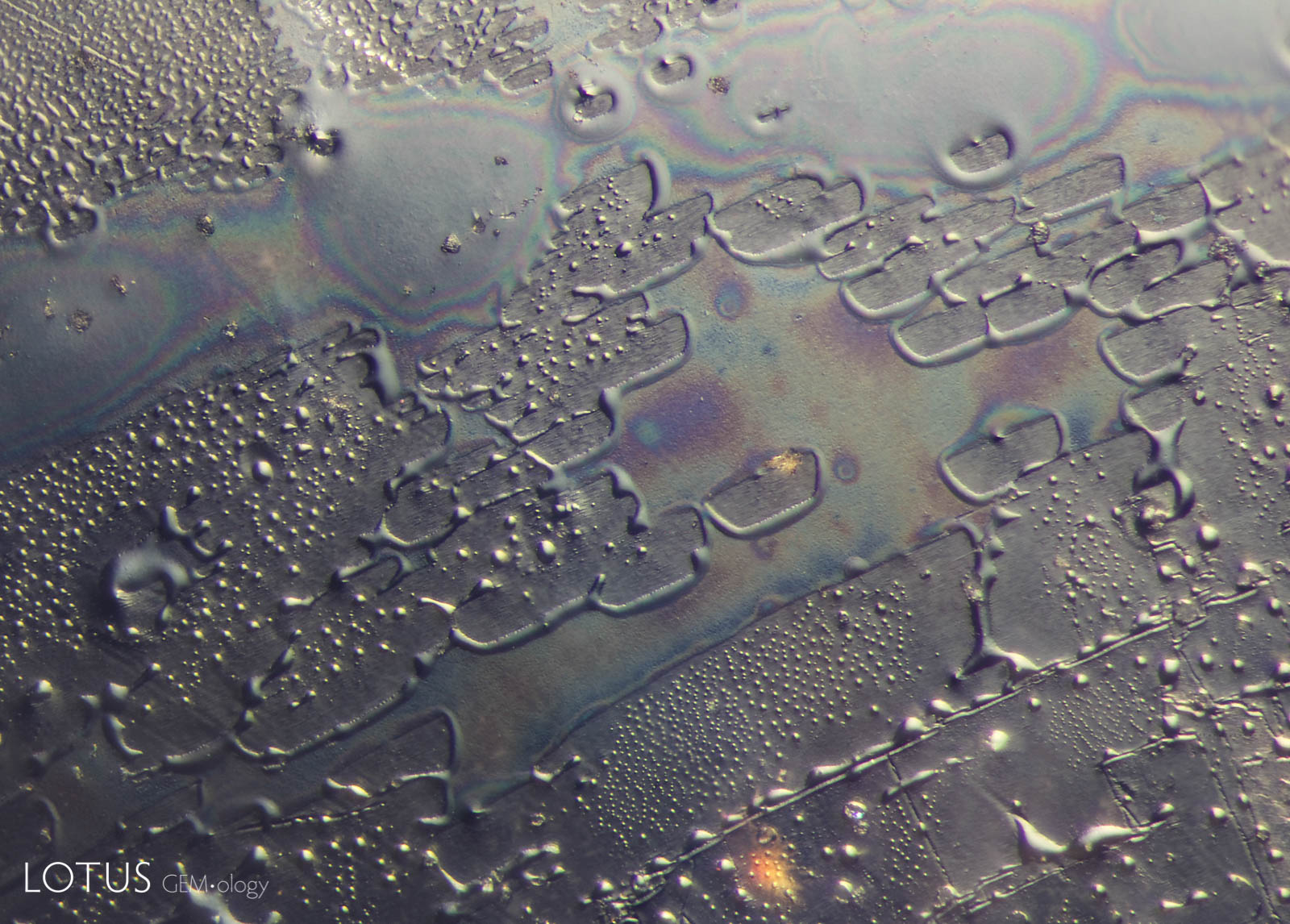
These droplet-like surface markings may superficially look like water or oil, but they cannot be wiped or scraped off. They are actually spall marks, a result of heat treatment that affects the surface of the stone. Often a heated stone will be repolished to remove such markings.
Natural Sapphire •
Sri Lanka (Ceylon) •
Enhancements:
Heat (H) •
Lighting Conditions:
Fiber Optic: Diffuse Overhead
Photographer:
E. Billie Hughes •
Image Number:
A-001-3260-2
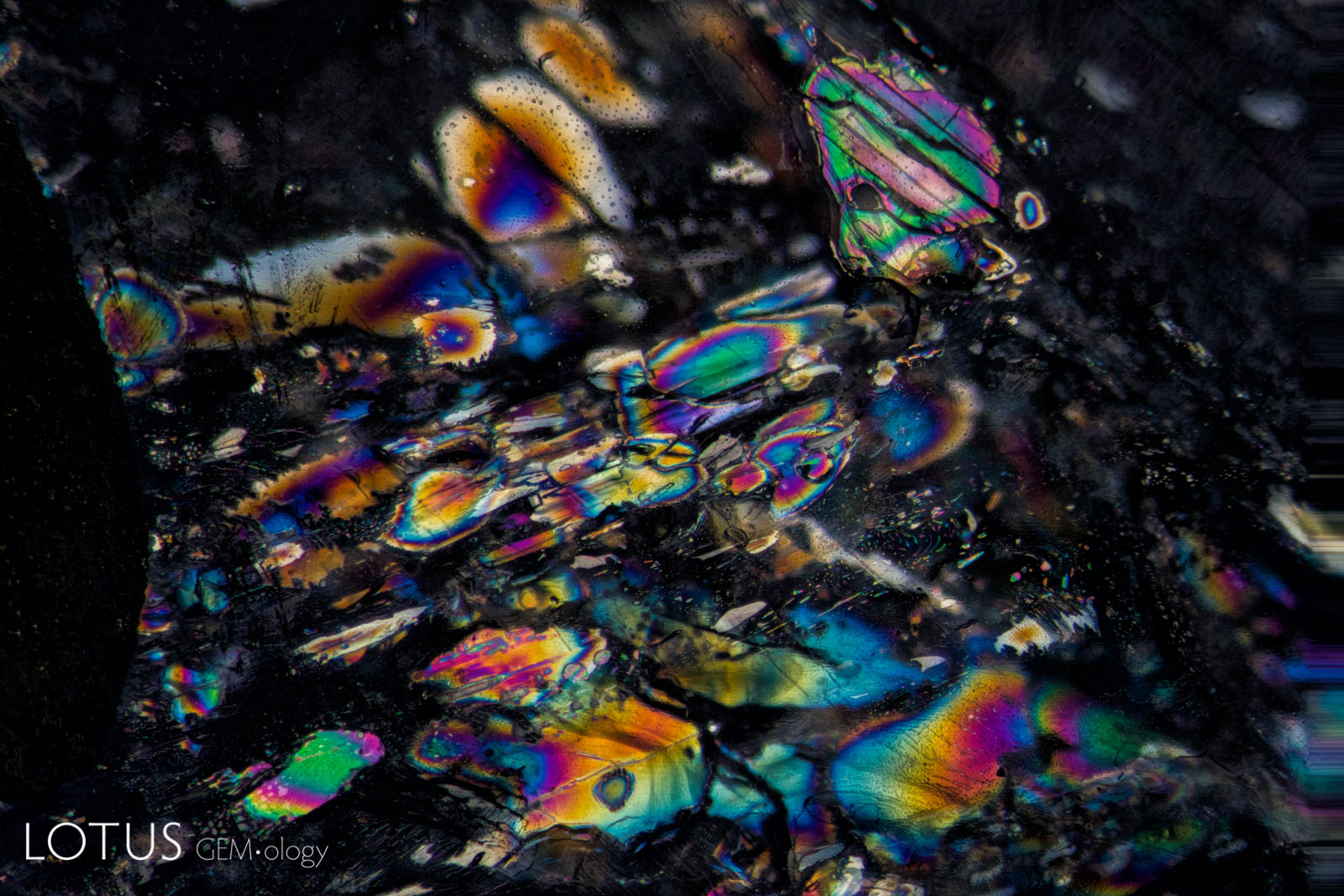
Iridescent fissures light up the interior of this heat-treated Ceylon sapphire in a spectacular display of colors.
Natural Sapphire •
Sri Lanka (Ceylon) •
Enhancements:
Heat (H) •
Lighting Conditions:
Fiber Optic: Diffuse Overhead
Photographer:
Richard W. Hughes •
Image Number:
A-001-3260-1
Koivua, J.I. (2007) Photographing gems. In Focus, No. 7, September, pp. 24–59; RWHL**.
A melted “snowball” crystal is surrounded by a fingerprint showing many small bubbles, a sign of heat alteration. This inclusion is typically found in heated Sri Lankan sapphire.
Natural Sapphire •
Sri Lanka (Ceylon) •
Enhancements:
Heat (H) •
Lighting Conditions:
Dark Field + Oblique Fiber Optic
Photographer:
E. Billie Hughes •
Image Number:
A-001-3406-1
The shiny, droplet-like marks on the surface may look like water or oil, but they are actually spall marks. They do not rub or scrape off, but are fused onto the surface as a result of heat treatment. This example is on a heated Madagascar pink sapphire.
Natural Sapphire •
Madagascar •
Enhancements:
Heat (H) •
Lighting Conditions:
Dark Field + Oblique Fiber Optic
Photographer:
E. Billie Hughes •
Image Number:
A-001-3337-1
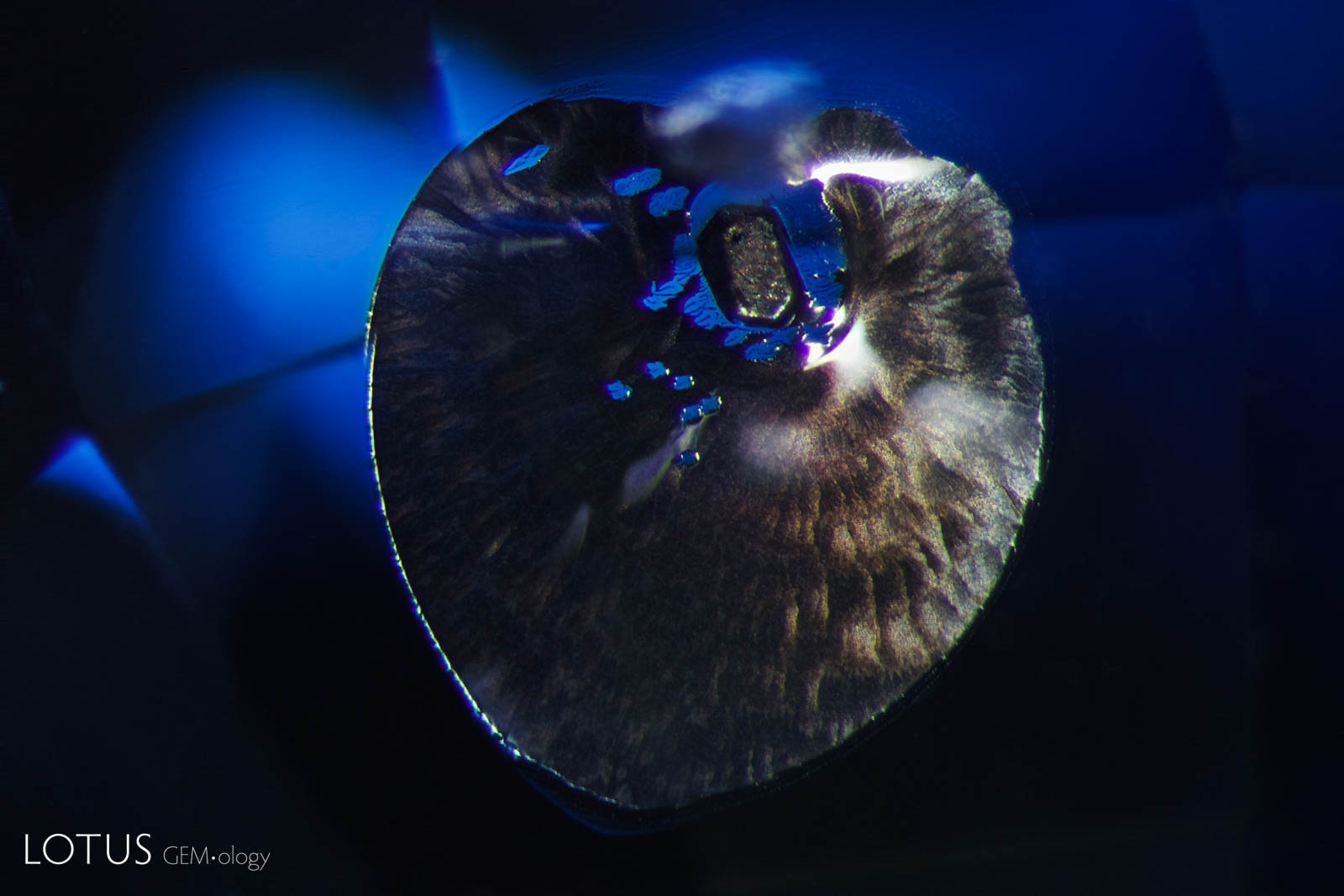
A melted crystal surrounded by an unusual bronze discoid with a glassy surface. This shiny, glassy appearance provides evidence that the stone was heated.
Natural Sapphire •
Sri Lanka (Ceylon) •
Enhancements:
Heat (H) •
Lighting Conditions:
Fiber Optic: Diffuse Oblique
Photographer:
E. Billie Hughes •
Image Number:
A-001-3103-1
Melted crystals with a frosted surface, surrounded by heat-altered fingerprints in a heat-treated sapphire from Sri Lanka. Note the hexagonal symmetry of the fingerprint, which shows that it lies in the basal plane.
Natural Sapphire •
Sri Lanka (Ceylon) •
Enhancements:
Heat (H) •
Lighting Conditions:
Dark Field + Oblique Fiber Optic
Photographer:
E. Billie Hughes •
Image Number:
A-001-3197-2
Hughes, R.W. (1997) Ruby & Sapphire. Boulder, CO, RWH Publishing, 512 pp.; RWHL*.
A heat-altered fingerprint at the culet of a heat-treated sapphire from Sri Lanka. Note the small microfractures and discoids that result from explosion of the individual negative crystal channels that make up the fingerprint.
Natural Sapphire •
Sri Lanka (Ceylon) •
Enhancements:
Heat (H) •
Lighting Conditions:
Dark Field
Photographer:
Richard W. Hughes •
Image Number:
A-001-3197-1
Hughes, R.W. (1997) Ruby & Sapphire. Boulder, CO, RWH Publishing, 512 pp.; RWHL*.
Heat treatment can alter inclusions and other internal features in sapphire. Changes may include modification or dissolution of rutile silk, alteration of mineral crystals, decrepitation of fluid inclusions, changes to healed fissures and the formation of heat-related features. Such evidence can be important in determining whether a sapphire has been heated.
Heated Sapphire Inclusion Photomicrographs
The Hyperion heated sapphire gallery includes microscopic features documented in heat-treated natural sapphires. Each entry is accompanied by descriptive information and, where available, references to the gemological literature.
What Inclusions Can Reveal About Heat Treatment
Microscopic examination is an important part of detecting heat treatment in sapphire. The condition of mineral inclusions, rutile silk, fissures and other internal features can provide evidence of exposure to elevated temperatures. These features are evaluated together with other gemological observations when determining treatment status.
Hyperion combines inclusion photomicrography with supporting gemological information so that heat-related features can be compared with documented examples in treated sapphires.
About Hyperion
Hyperion is the Lotus Gemology searchable inclusion database. It allows users to browse gemstone inclusions by gem type, geographic origin, treatment and keyword.