Basalt-Related Sapphire Inclusions
Explore basalt-related sapphire inclusions in Hyperion, the Lotus Gemology inclusion database. Hyperion contains photomicrographs of inclusions and internal features in natural basalt-related sapphires, documented with information on geographic origin, treatment, lighting conditions, field of view, photographer and published references.
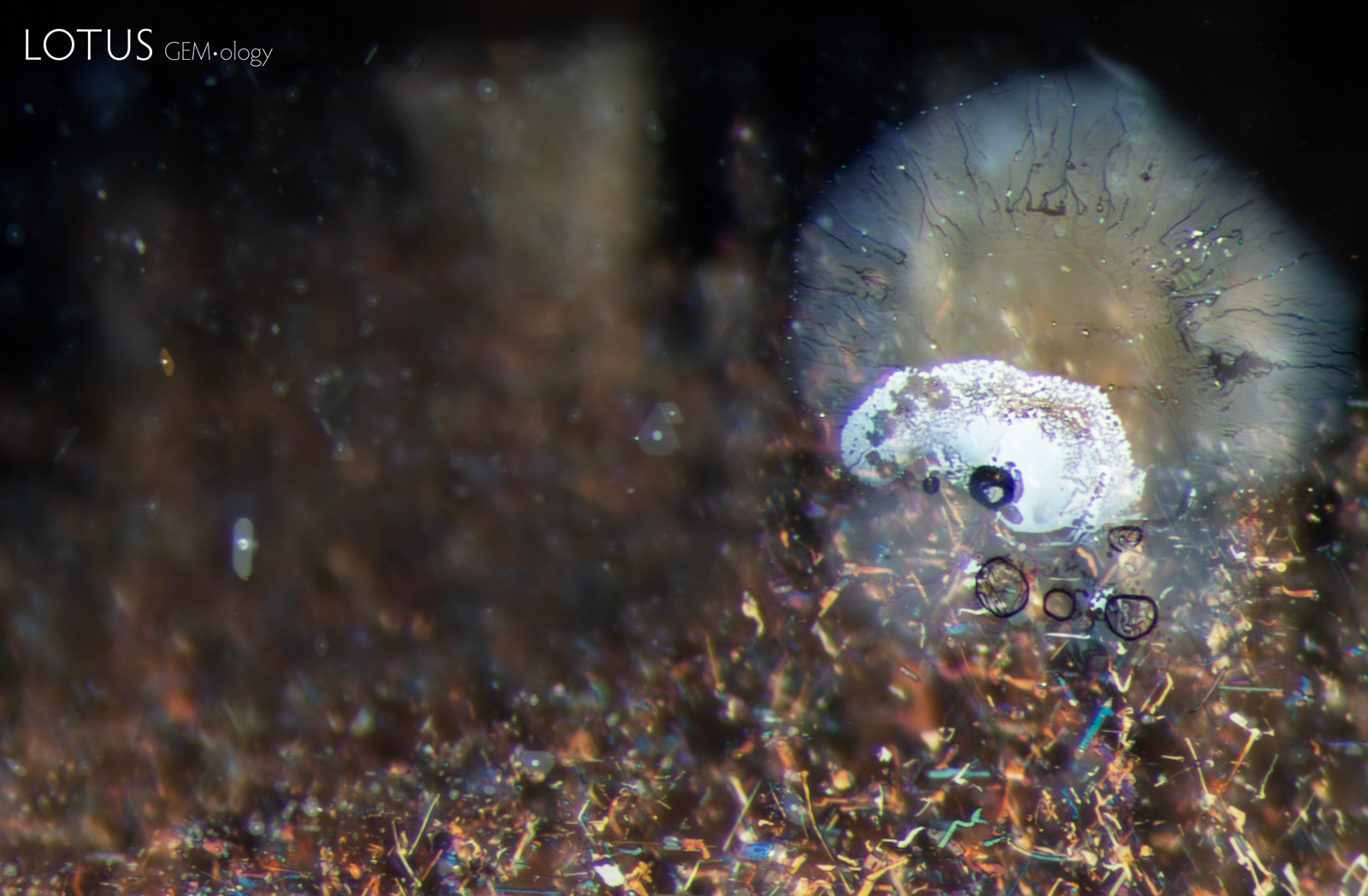
This basalt related sapphire contains a richly varied inclusion scene. We can observe negative crystals, thin films, as well as irregular “silk” particles in this stone.
Natural Sapphire •
Basalt Related •
Enhancements:
None Detected (None) •
Lighting Conditions:
Fiber Optic: Diffuse Oblique
Photographer:
E. Billie Hughes •
Image Number:
A-006-0383-1
• Field of View = 1.7mm
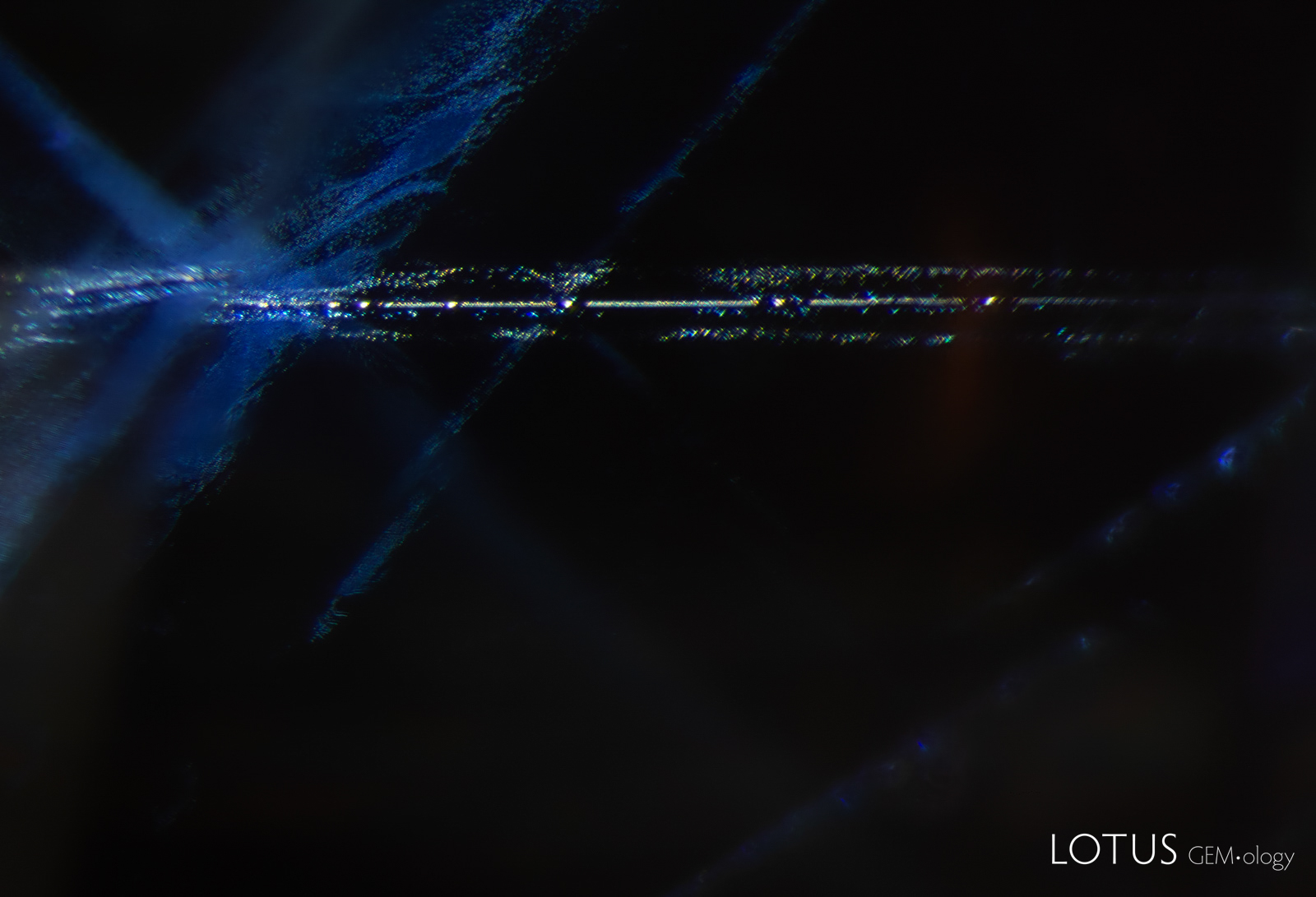
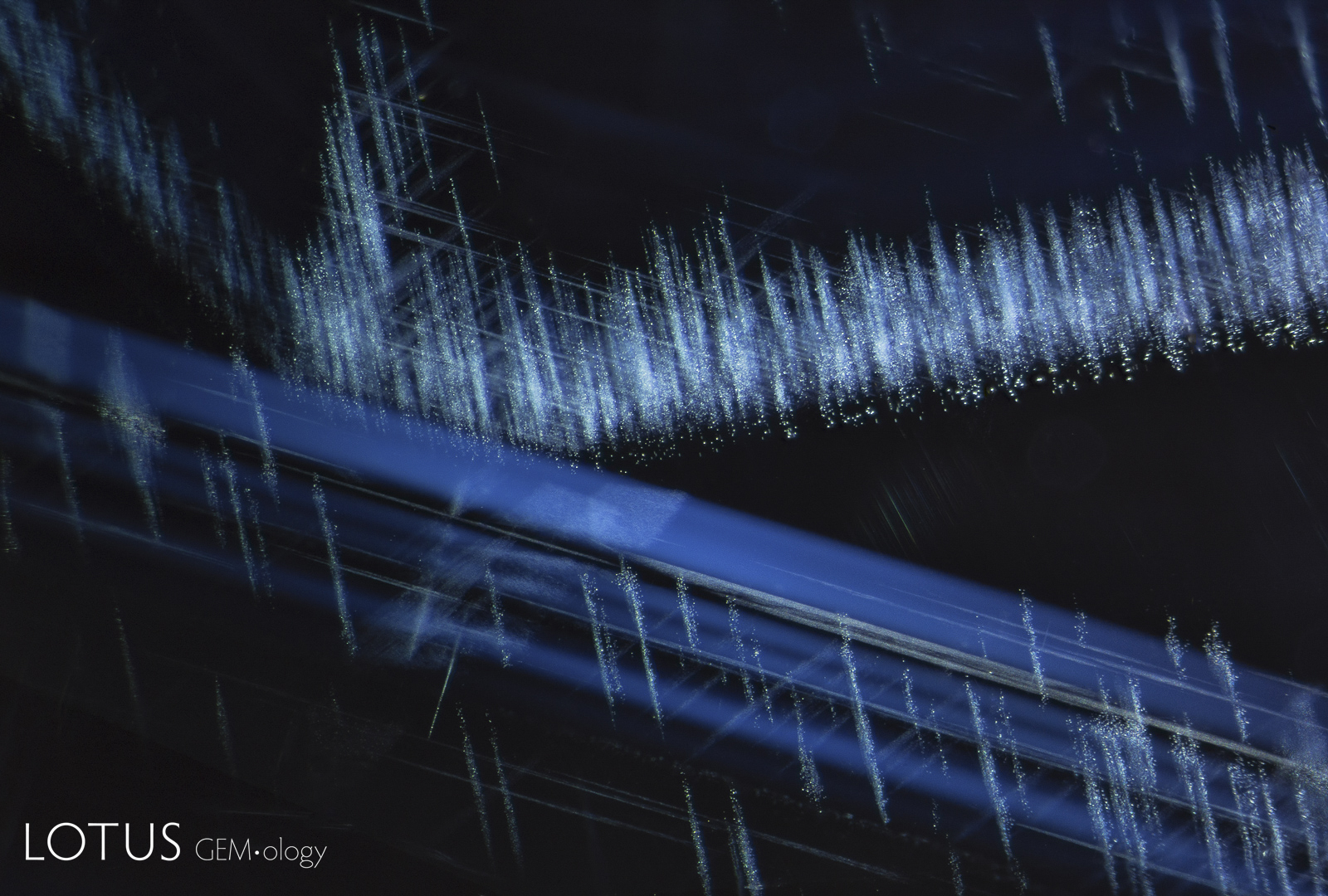
Appearing like stardust against the night sky, streams of tiny particles can be seen in the interior of this blue sapphire.
Natural Sapphire •
Basalt Related •
Enhancements:
None Detected (None) •
Lighting Conditions:
Fiber Optic: Oblique
Photographer:
E. Billie Hughes •
Image Number:
A-005-2797-1
• Field of View = 3mm
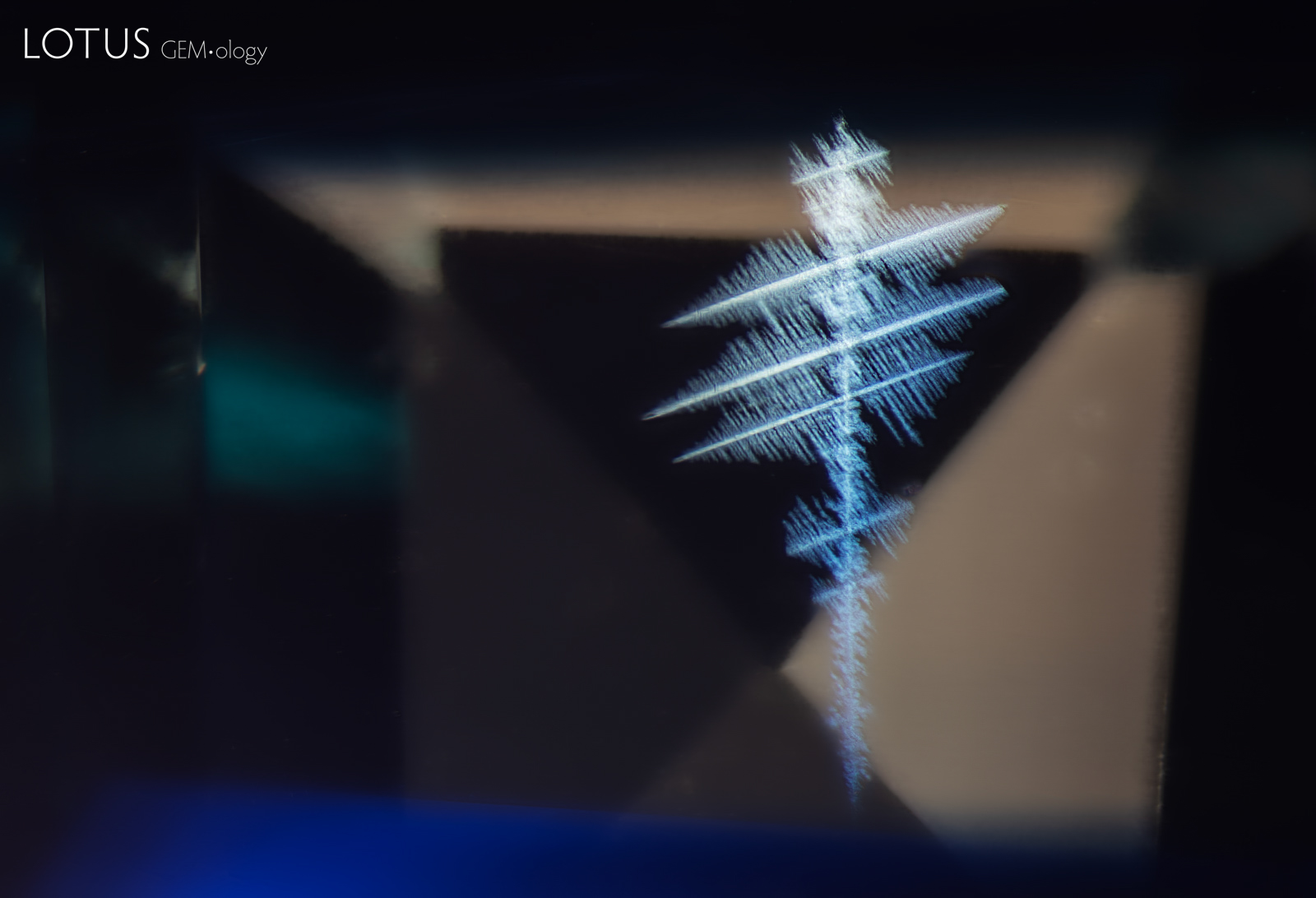
An angelic form of dislocation needles rises from the depths in this basalt-related sapphire.
Natural Bi-Color Sapphire •
Basalt Related •
Enhancements:
None Detected (None) •
Lighting Conditions:
Fiber Optic: Diffuse Oblique
Photographer:
E. Billie Hughes •
Image Number:
A-005-5461-1
• Field of View = 4mm
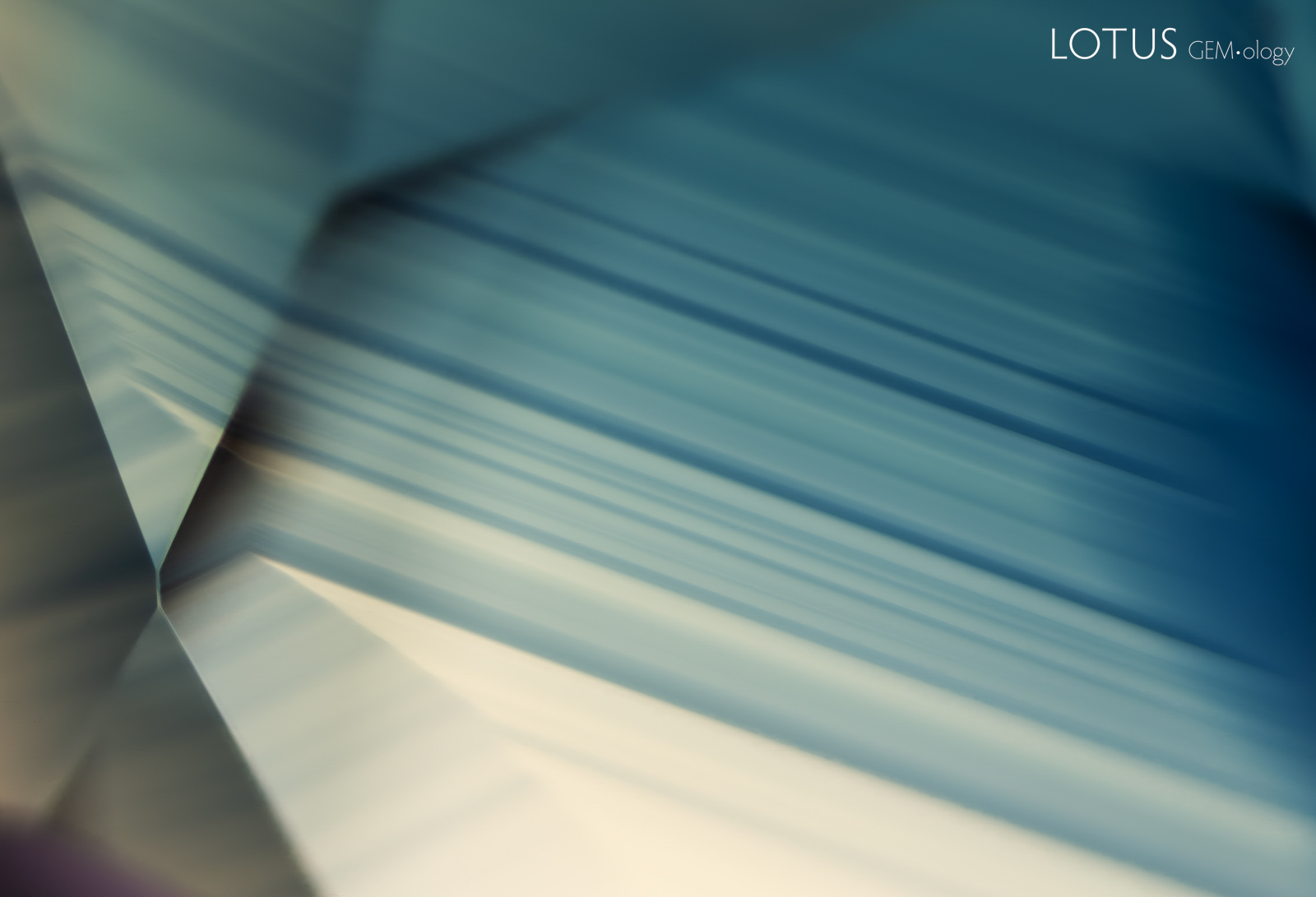
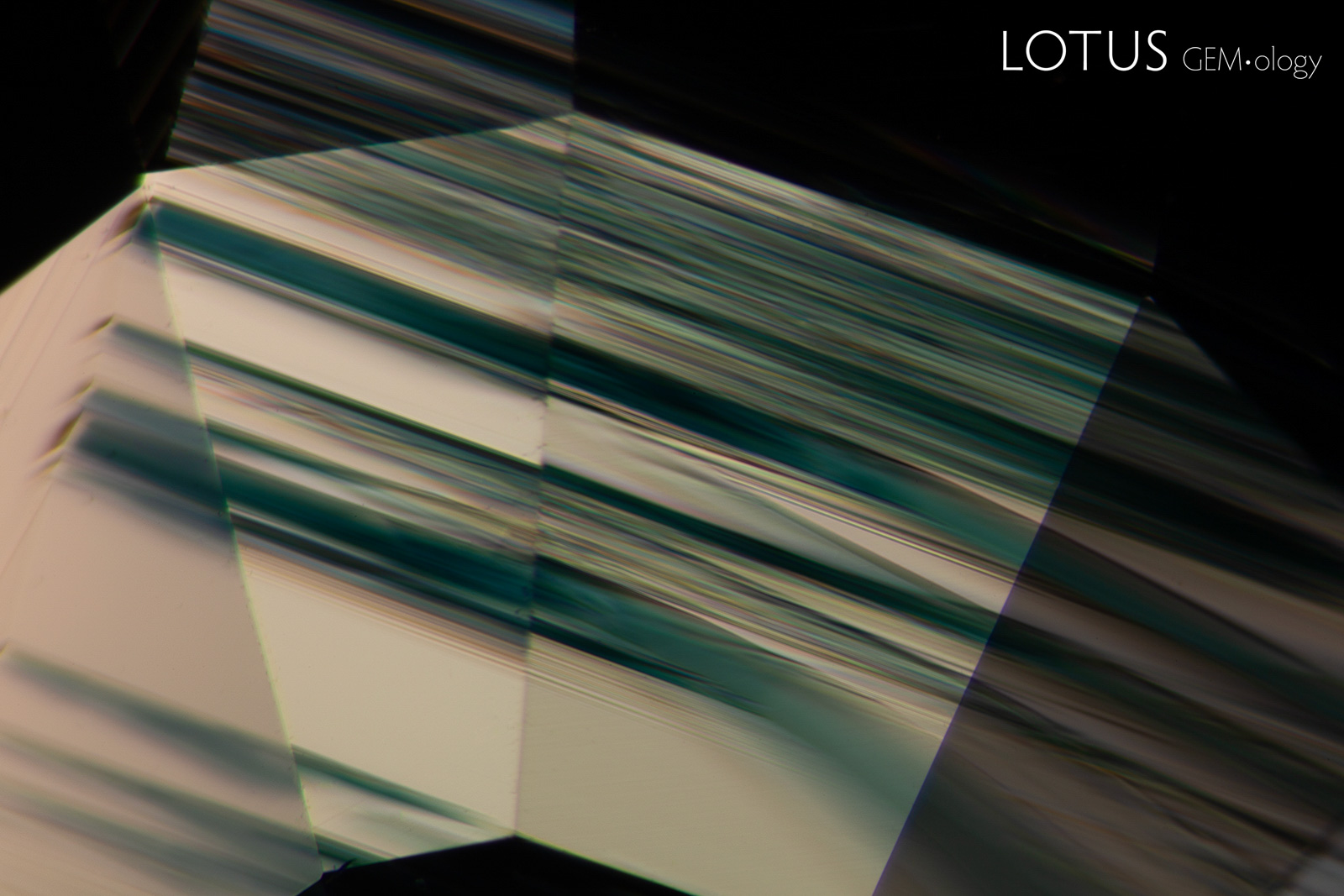
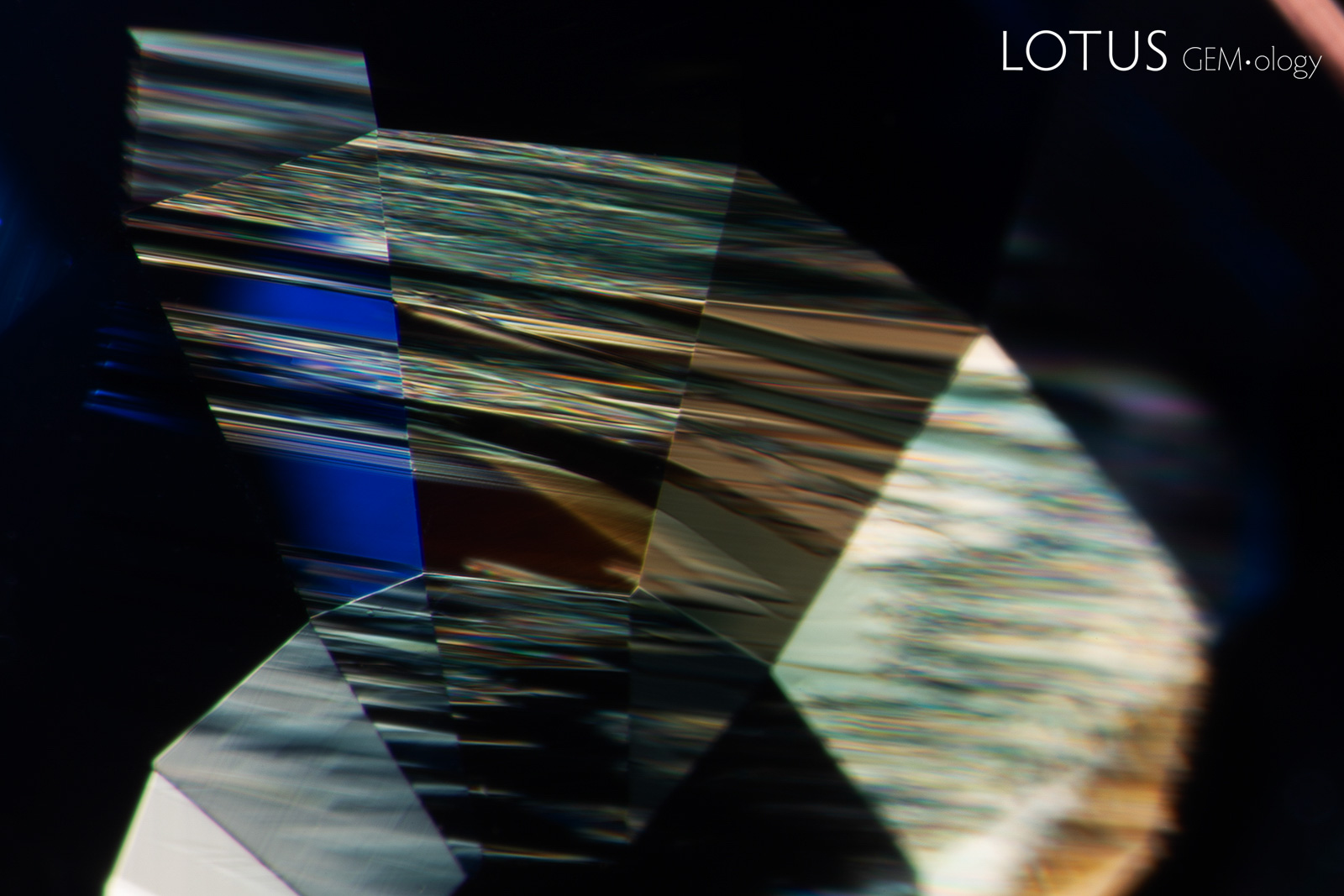
Angular color zoning in a basalt related sapphire. In some cases these color zones can create a “parti-color” appearance.
Natural Parti-Color Sapphire •
Basalt Related •
Enhancements:
None Detected (None) •
Lighting Conditions:
Diffuse Light Field (Transmitted Light)
Photographer:
E. Billie Hughes •
Image Number:
A-005-4724-1
• Field of View = 5.6mm
This high temperature heat-treated blue sapphire from a basalt-related source displays zoned internal diffusion. The high temperature (usually above 1600˚C) causes the rutile needles to dissolve and release titanium into the host sapphire, the titanium pairs with the iron in the stone and this creates blue color around the rutile silk remnants.
Natural Sapphire •
Basalt Related •
Enhancements:
Heat (H) •
Lighting Conditions:
Dark Field
Photographer:
Kaylan Khourie •
Image Number:
A-005-2573-1
• Field of View = 3.7mm
• Magnification = 4.8x
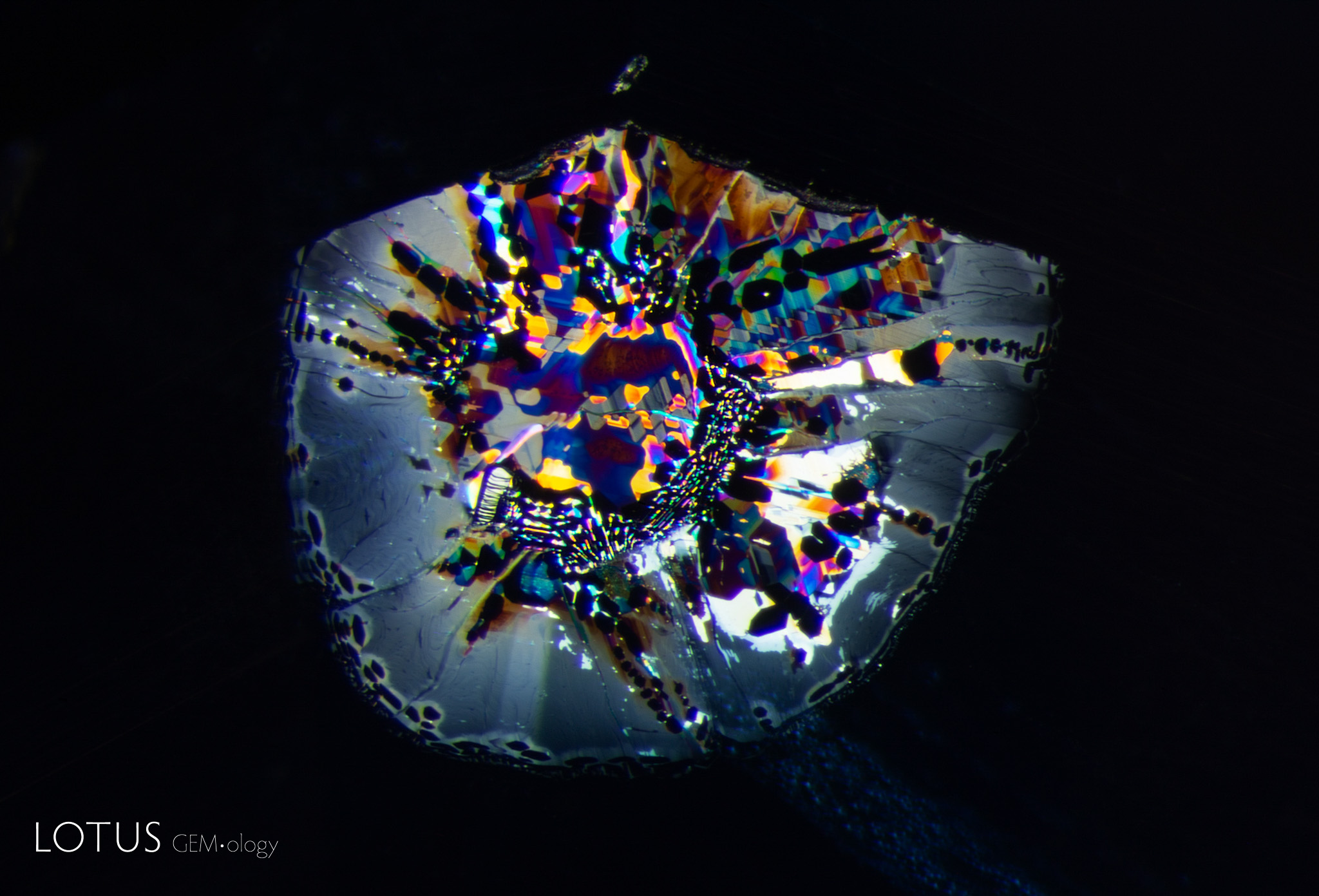
High temperature heat treatment melted the surface of this sapphire, resulting in recrystallized corundum at and just below the surface.
Natural Sapphire •
Basalt Related •
Enhancements:
Heat + Diffusion of external coloring agents (H-D) •
Lighting Conditions:
Light Field (Transmitted Light)
Photographer:
E. Billie Hughes •
Image Number:
A-005-1560-1
• Field of View = 7.2mm
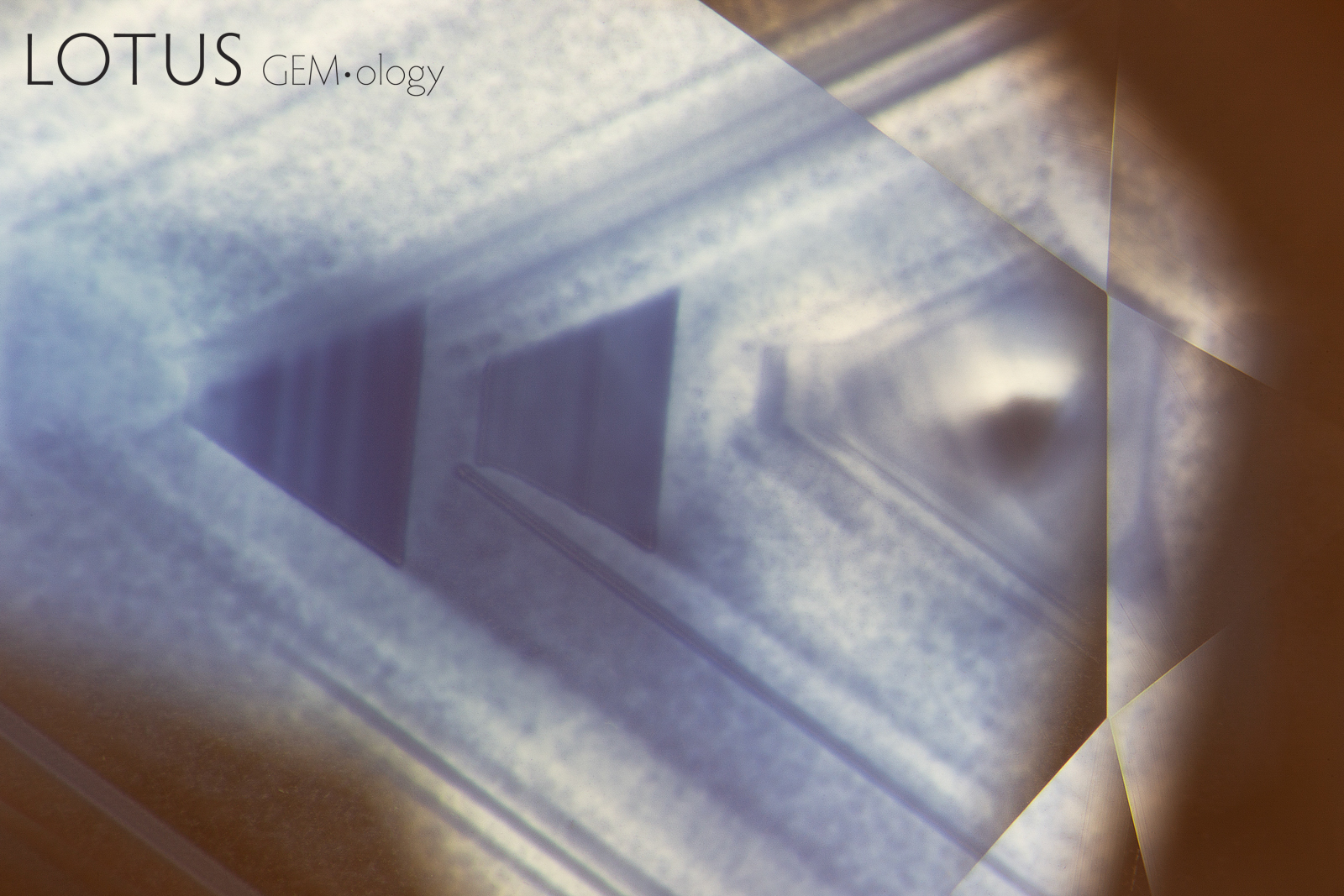
In this sapphire originating from a basalt-related source, color concentrated in the cloudy zones suggests that it has been subjected to heat treatment. Also visible are zoned clouds of fine exsolved particles.
Natural Sapphire •
Basalt Related •
Enhancements:
Heat (H) •
Lighting Conditions:
Fiber Optic: Oblique
Photographer:
Richard W. Hughes •
Image Number:
A-004-9911-1
• Field of View = 7mm
Koivula, J.I. (1987) Internal diffusion. Journal of Gemmology, Vol. 20, No. 7/8, pp. 474–477; RWHL*.
Extremely distinct growth/color-zoning in this blue sapphire of basalt-related growth origin.
Natural Sapphire •
Basalt Related •
Enhancements:
None Detected (None) •
Lighting Conditions:
Dark Field
Photographer:
Kaylan Khourie •
Image Number:
A-004-9142-9
• Field of View = 2.6mm
• Magnification = 4.5x
This blue sapphire of basalt-related growth origin has milky bands of fine particles that are stratified between extremely distinct growth-zoning.
Natural Sapphire •
Basalt Related •
Enhancements:
None Detected (None) •
Lighting Conditions:
Dark Field + Fiber Optic: Oblique
Photographer:
Kaylan Khourie •
Image Number:
A-004-9142-8
• Field of View = 3.4mm
• Magnification = 3.5x
Iridescent thin films surround a small negative crystal in this basalt related sapphire. Note the hexagonal shapes present, which echo the crystal structure of the corundum host.
Natural Sapphire •
Basalt Related •
Enhancements:
None Detected (None) •
Lighting Conditions:
Fiber Optic: Diffuse Oblique
Photographer:
E. Billie Hughes •
Image Number:
A-004-8214-1
• Field of View = 2mm
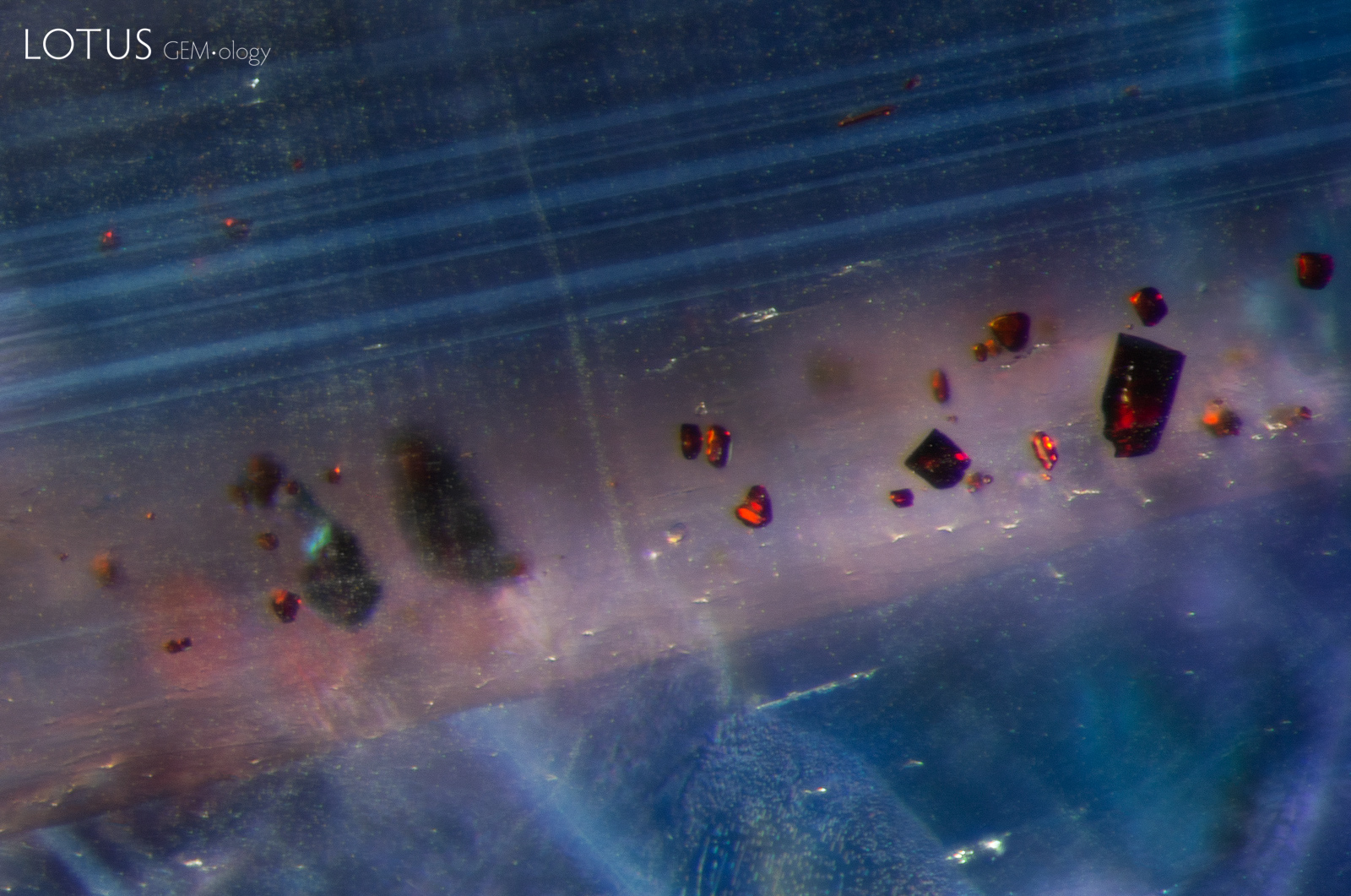
A sprinkling of orangey red crystals can be observed in this basalt related sapphire. The crystals are likely pyrochlore.
Natural Sapphire •
Basalt Related •
Enhancements:
None Detected (None) •
Lighting Conditions:
Dark Field + Diffuse Fiber Optic
Photographer:
E. Billie Hughes •
Image Number:
A-004-7336-2
• Field of View = 2mm
Viewed under the microscope this sapphire displays straight zoned bands of fine texture clouds, giving the stone a soft glow.
Natural Sapphire •
Basalt Related •
Enhancements:
None Detected (None) •
Lighting Conditions:
Dark Field + Diffuse Fiber Optic
Photographer:
E. Billie Hughes •
Image Number:
A-004-1939-1
• Field of View = 5.5mm
Basalt-related sapphire inclusions may include mineral crystals, healed fissures, fluid inclusions, negative crystals, growth zoning and other features formed during or after crystal growth. Such features are important to gemologists because they can provide evidence useful in identifying sapphire and evaluating its geological origin.
Basalt-Related Sapphire Inclusion Photomicrographs
The Hyperion basalt-related sapphire gallery includes microscopic features documented in sapphires associated with basalt-related deposits. Each entry is accompanied by descriptive information and, where available, references to the gemological literature.
What Inclusions Can Reveal About Basalt-Related Sapphire
Inclusions are an important part of determining the geological origin of sapphire. Their form, composition, orientation and associations can provide evidence that, when considered together with other gemological properties, may support or contradict a basalt-related origin.
Hyperion combines inclusion photomicrography with supporting gemological information so that individual features can be compared with documented examples from basalt-related sapphires.
About Hyperion
Hyperion is the Lotus Gemology searchable inclusion database. It allows users to browse gemstone inclusions by gem type, geographic origin, treatment and keyword.